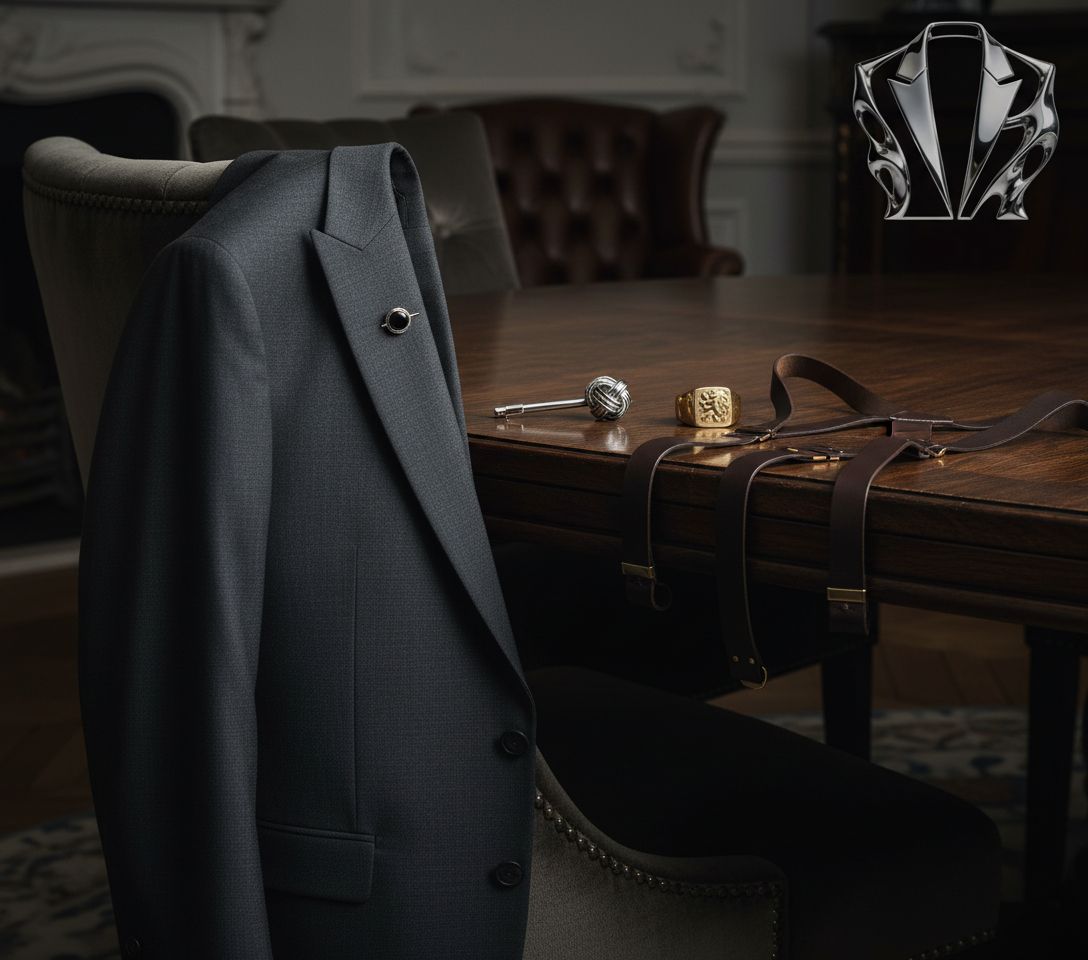
Accessories don’t feel optional right now. Men are dressing simpler—clean denim, plain knits, neutral tailoring—while the “finish” has moved to the details. A single strap across the chest, a quiet watch on a bare wrist, a ring that looks like it’s been worn for years. Those choices read like intent, not effort. In a climate where trends burn fast, smart accessories hold the line. They don’t shout, they signal. They also travel well between situations: office to dinner, weekend to event, coat season to heat. Men Fashion has leaned into this shift because it’s the most realistic way to look sharper without rebuilding a wardrobe.
The point of smart accessories
The phrase smart accessories isn’t about gadgets. It’s about selection with a reason behind it—what the item does for proportion, texture, and mood. A scarf changes a plain coat into something styled. A watch can make casual clothes look deliberate.
Smart accessories also create continuity. A man who always wears a certain metal tone, a certain leather shade, a certain profile of eyewear looks consistent across outfits. That consistency reads as taste. Men Fashion has started treating accessories like punctuation: small, controlled, and more powerful than a loud sentence.
Most style failures aren’t about owning the wrong pieces. They come from random pieces that don’t talk to each other. When smart accessories work, they feel like they belong to the same life.
Proportion decides whether it looks expensive
Fit gets discussed, but proportion is where accessories either elevate or sabotage. Oversized sneakers with a tiny watch can make the wrist look narrow. A thick chain on a slim frame can look borrowed. Balance matters more than brand.
If you’re broad-shouldered, a slightly bigger watch case or chunkier ring can hold its own. If you’re lean, a refined profile tends to read sharper. Smart accessories respect your scale, not the product photo.
Men Fashion editors notice this in street shots: the men who look “put together” aren’t necessarily dressed up. They’re scaled correctly. The accessory doesn’t dominate the outfit; it completes it.
The metal-tone rule people ignore
Mixing metals isn’t a crime, but careless mixing looks like clutter. Choose a dominant metal tone—silver, gold, gunmetal, or mixed but intentional—and let it lead. Then treat everything else as supporting cast.
If your belt buckle is bright silver, your watch and rings will feel calmer in the same family. Gold can work with warm neutrals and earthy shades. Gunmetal plays well with charcoal, black, and denim. Smart accessories feel coordinated even when they’re minimal.
This matters because metal is the most visible “hard” element in an outfit. Men Fashion sees it as the easiest way to create a quiet signature without dressing loud.
Leather harmony is more important than matching
The old advice says belt must match shoes. Real life is messier: sneakers, boots, loafers, mixed leathers, suede, rubber soles. Instead of perfect matching, aim for harmony—similar warmth, similar intensity.
A deep chocolate belt doesn’t need to mirror a tan boot exactly, but it shouldn’t fight it. Black leather looks clean when the other leather elements stay dark, even if textures change. Smart accessories work when they keep the palette calm while allowing material variety.
Men Fashion stylists often pick one “anchor” leather tone for a day and let everything else echo it softly.
Watches still carry weight in a casual world
Watches became optional once phones took over. That’s exactly why they matter again. A watch signals that you choose details for yourself, not because you need them.
It doesn’t have to be luxury. A slim field watch can sharpen denim and a tee. A dress watch can make a knit polo and trousers look ready for a meeting. A sport watch works when the outfit already has structure—jacket, boots, heavy denim—so it doesn’t feel like gym gear.
Smart accessories like watches succeed when they match the outfit’s seriousness. Men Fashion tends to avoid overly shiny cases in casual looks; they look like they’re trying too hard.
Sunglasses are a face-shape decision, not a trend
Eyewear is one of the only accessories that changes your face. That’s why trend-chasing here is risky. A frame that fights your features will make everything else look off.
The best approach is to pick a silhouette that flatters your face and then adjust the “fashion” through small details—lens tint, frame thickness, metal vs acetate. Smart accessories don’t distract from you; they clarify you.
Men Fashion readers who settle on one signature frame often look more modern than the guy cycling through every viral shape. Consistency ages well.
Bags moved from practical to status signal
A bag used to be a necessity. Now it’s a visible part of the outfit: tote, briefcase, crossbody, backpack. The wrong bag can downgrade an otherwise polished look faster than people admit.
A structured tote can sharpen minimal outfits. A clean backpack works when it’s sleek and not overbuilt. A crossbody looks best when it sits flat and doesn’t bounce like sports gear. Smart accessories consider how the bag cuts the body—across the chest, on the shoulder, at the hip.
Men Fashion has been watching the shift: bags have become one of the most social-media-visible signals of taste because they’re large enough to register from a distance.
Belts: either invisible or intentional
Many belts exist only because trousers have loops. That’s where outfits go to die—an accidental belt with cheap hardware. If a belt isn’t adding value, make it disappear: minimal buckle, neutral leather, no loud stitching.
If it is adding value, be deliberate. A textured leather belt can make plain trousers feel richer. A woven belt can soften a summer look. A statement buckle can work, but only if the rest of the outfit is restrained. Smart accessories don’t compete with your clothes; they choreograph the attention.
Men Fashion tends to treat belts as either silent support or the one controlled “edge” of the outfit. Nothing in between.
Jewelry that looks lived-in beats jewelry that looks new
Men’s jewelry fails when it looks like it was bought for a photoshoot and worn once. The pieces that elevate an outfit feel personal—simple rings, a chain that sits correctly, a bracelet that doesn’t rattle.
Texture helps. Matte finishes, brushed metal, subtle patina, leather mixed with metal. Smart accessories often avoid perfectly mirrored shine in daylight; it reads flashy, not considered.
Men Fashion sees the best results when jewelry is limited but consistent. One ring and a watch can say more than five pieces fighting for attention.
Hats are seasonal tools, not personality costumes
A hat can be the easiest style win or the quickest way to look like you’re acting. The difference is whether it fits the day, the outfit, and the weather.
Beanies work when fabrics are heavier and the silhouette is relaxed. Caps work when the outfit is casual and the brim doesn’t break the proportions. A structured hat can look strong with tailoring, but only if the outfit is built for it. Smart accessories don’t override the wearer.
Men Fashion generally avoids hats that feel like a “character.” The goal is to look like you, just sharper.
Scarves, ties, and pocket squares: the forgotten finish
Formal accessories got sidelined, but they’re returning in quieter forms. A scarf can replace a statement jacket. A knit tie can soften a suit. A pocket square can add texture without shouting color.
The trick is restraint. Keep patterns small, keep contrast moderate, keep fabric quality high. Smart accessories in this lane work like seasoning—enough to change the dish, not enough to mask it.
Men Fashion has noticed that men who master these details don’t look more formal; they look more composed. That’s the difference.
When “smart” means knowing when to stop
The final move is subtraction. If you can’t explain why an accessory is there—proportion, texture, function, continuity—remove it. A clean outfit with one strong detail reads more confident than an outfit full of signals.
Smart accessories aren’t about collecting. They’re about editing. That’s why they’re powerful right now: editing is rare, and it’s visible.
Men Fashion keeps coming back to the same truth. The clothes can be basic, even repetitive. The finishing choices make the outfit feel like it belongs to someone.
Conclusion
The men who look consistently sharp aren’t chasing constant newness. They’re building a small system: a few smart accessories that repeat across outfits, seasons, and settings without feeling forced. The best pieces carry function, fit your proportions, and reinforce a quiet identity. Men Fashion is watching the culture move this way because it’s realistic and sustainable—less wardrobe churn, more intentional choices. The result isn’t “dressed up.” It’s simply a better version of everyday dressing, with details that hold their value over time.
Do smart accessories work with basics?
Yes. Smart accessories make basics feel intentional by adding structure, texture, or contrast without changing the outfit’s simplicity. One strong piece is enough.
How many accessories should a man wear daily?
Usually one to three. A watch, ring, or clean chain works. Smart accessories lose impact when they crowd the outfit and compete.
Can I mix gold and silver jewelry?
You can, but keep one dominant. Smart accessories look best when metal tones feel planned, not random, and finishes share a similar level of shine.
What’s the easiest accessory to upgrade first?
A watch or eyewear. Smart accessories that sit near the face or wrist get noticed most and quickly change how polished you look.
Do bags count as accessories in Men Fashion?
Absolutely. Smart accessories include bags because they shape your silhouette and signal taste. A clean bag can elevate even a simple outfit.
Should belt and shoes match exactly?
Not exactly—aim for harmony. Smart accessories work when leather tones feel related and don’t clash in warmth or intensity.
Are rings too flashy for everyday wear?
Not if they’re simple. Smart accessories like a plain band or signet can look grounded and personal, especially in matte or brushed finishes.
What sunglasses shape is safest?
Classic shapes that suit your face—wayfarer-style or mild aviator variants. Smart accessories should flatter features more than chase trends.
Can smart accessories improve streetwear?
Yes. A clean watch, refined chain, or sleek bag can sharpen streetwear. Smart accessories add control to otherwise relaxed silhouettes.
How do I choose a bracelet that looks masculine?
Focus on materials: leather, matte metal, or minimal links. Smart accessories should sit close to the wrist and avoid loud charms or shine.
Do scarves still look modern?
They do when simple and well-textured. Smart accessories like neutral scarves elevate coats and knits without looking formal or old-fashioned.
What hat works best with tailoring?
Usually none, but a minimal wool cap can work in winter. Smart accessories should support the outfit’s seriousness, not introduce a costume vibe.
Is a chain necklace acceptable at work?
In many settings, yes if subtle. Smart accessories for work should stay under the collar or sit flat, with minimal shine and no oversized links.
How can I make accessories look expensive?
Prioritize fit and finish. Smart accessories look premium when they sit correctly, use restrained hardware, and avoid obvious logos or cheap plating.
Are smart accessories seasonal?
Many are. Smart accessories like scarves, gloves, and heavier watches suit winter, while woven belts, lighter frames, and minimal jewelry suit summer.
What’s the biggest accessory mistake men make?
Wearing random pieces together. Smart accessories require continuity—metal tone, leather family, and a consistent level of formality across the look.
Can I wear a smartwatch and still look stylish?
Yes, if the band and case are clean and understated. Smart accessories succeed when the tech doesn’t dominate the outfit’s overall mood.
How do I pick a bag for daily use?
Choose a shape that matches your lifestyle and outfit style. Smart accessories like structured totes or sleek backpacks look better than bulky, overbuilt designs.
Do pocket squares still matter?
They can, when subtle. Smart accessories like a textured pocket square add polish without needing bright colors or loud patterns.
What jewelry works best with denim?
Simple metal and leather pieces. Smart accessories that are matte or lightly textured pair well with denim’s rougher surface and casual tone.
Can accessories fix a boring outfit?
They can elevate it, not replace it. Smart accessories add focus and intention, but the base outfit still needs clean fit and good proportions.
How should accessories fit my body type?
Match scale. Smart accessories should complement your build—bigger frames and watches for broader bodies, slimmer profiles for leaner frames, always balanced.
Is it okay to repeat the same accessories daily?
Yes, and it often looks better. Smart accessories become part of your identity when repeated, especially if they’re timeless and consistent.
What colors are safest for accessories?
Black, brown, silver, and muted tortoise. Smart accessories in neutral tones integrate across outfits and allow clothes to carry the color story.
How does Men Fashion approach accessory trends?
With caution. Smart accessories should outlast short cycles, so trend elements work best as small details, not the foundation of your style.

