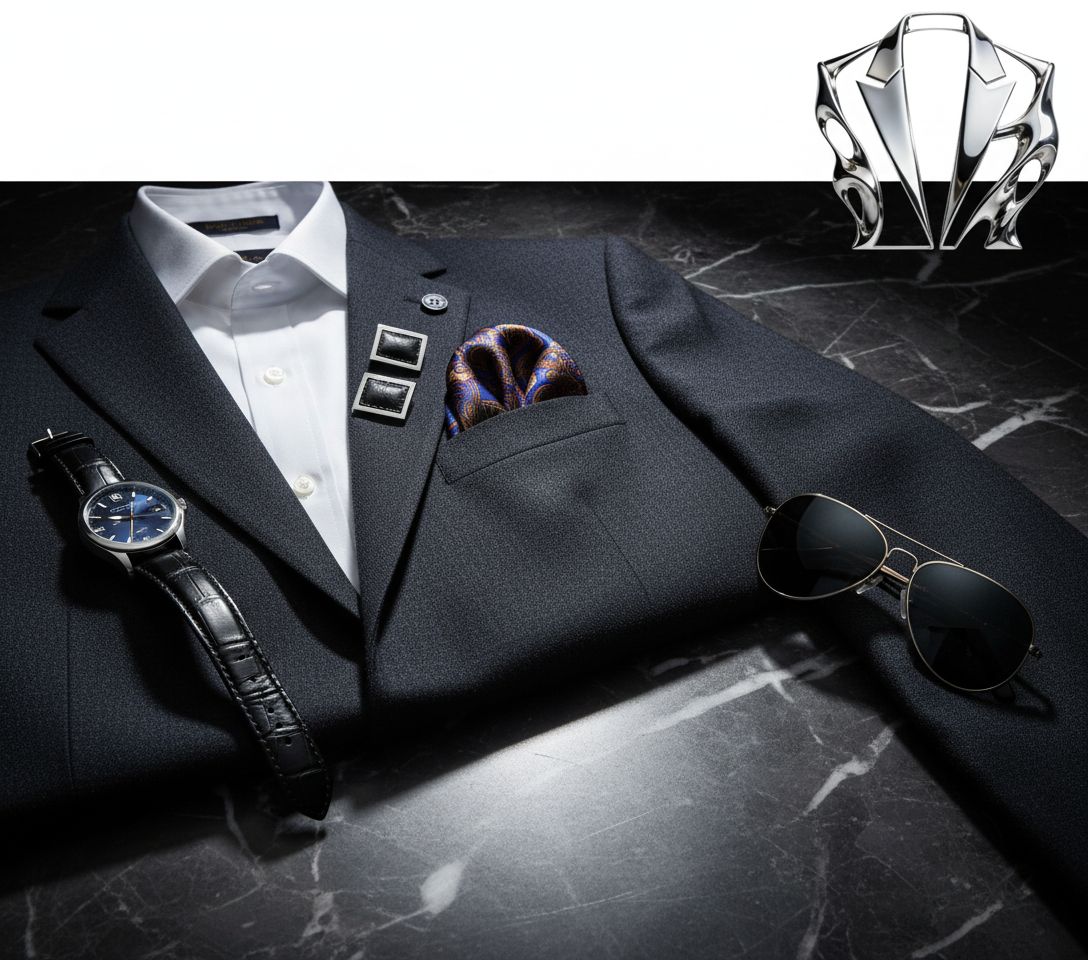
Accessories are having a louder moment because menswear itself has gone quieter. Neutral palettes, cleaner silhouettes, fewer logos. When the outfit stops shouting, the details start carrying meaning. That shift has changed how men buy, wear, and judge accessories. A watch is no longer just a timekeeper; it’s a signal of taste, restraint, and even routine. The same goes for belts, rings, bags, and sunglasses. Men Fashion has watched this turn happen in real time: the accessory isn’t the “extra” anymore. It’s often the headline, especially when you want polish without looking like you tried too hard.
The main job accessories do
The Ultimate Men’s Accessories Styling Guide works best when you treat accessories as problem-solvers, not decorations. They control proportion, create focal points, and quietly steer how expensive an outfit looks. A clean leather belt can rescue an otherwise forgettable pair of trousers. A watch can add intention to a plain tee. Sunglasses can fix a face-first imbalance when a jacket is minimal and the neckline is open.
Men Fashion often sees people overrate individual pieces and underrate the system. Accessories only look “high-end” when they look chosen, not accumulated. The best combinations feel like they belong to the same world: similar levels of formality, similar temperature, similar confidence. And when something clashes, it’s rarely the color alone. It’s the mood.
The formality ladder matters more than price
A common mistake is assuming cost equals correctness. The Ultimate Men’s Accessories Styling Guide has room for cheap and expensive pieces, but it has little patience for mismatched formality. A dress watch with a sporty nylon strap looks confused in a suit. A chunky athletic smartwatch can feel like a contradiction next to tailored trousers and loafers. The point isn’t to ban anything. It’s to acknowledge what the piece is saying.
Men Fashion tends to frame it as a ladder. At the top: formal leather, slim metal, quiet finishes. In the middle: casual leather, brushed metals, minimal branding. At the bottom: rubber straps, technical fabrics, loud hardware, oversized shapes. When you mix rungs, do it deliberately. Otherwise the outfit looks like it came from two different lives.
Watches that read like you meant it
The Ultimate Men’s Accessories Styling Guide treats watches as the most visible “taste test” because they sit in the line of sight during conversation. That’s why dial size, strap material, and case finish matter more than logos. Smaller and slimmer reads more classic. Brushed metal reads quieter than polished. Leather reads intentional in smart outfits, while steel reads versatile across the week.
Men Fashion also sees the silent watch mistake: a watch that dominates the wrist and steals attention from everything else. If your sleeves are structured and your trousers are clean, the watch should be the finishing note, not the chorus. And if you want a vintage vibe, commit to it with a strap and buckle that looks lived-in, not shiny-new.
Belts, buckles, and the quiet geometry of outfits
The Ultimate Men’s Accessories Styling Guide doesn’t treat belts as an afterthought. A belt cuts the body in half, so it changes your proportions whether you notice or not. Wide belts and loud buckles pull attention to the waist. Slim belts with discreet buckles let the outfit flow.
Men Fashion usually recommends matching the belt to the shoe in “signal,” not necessarily in exact color. A deep brown belt can live beside a lighter brown shoe if the finishes feel related. But a glossy belt buckle beside matte sneakers is rarely flattering. And if you’re wearing tailored trousers with side adjusters, consider skipping the belt entirely. That absence can look more expensive than any logo buckle.
Sunglasses: face framing that can’t be faked
The Ultimate Men’s Accessories Styling Guide treats sunglasses like a haircut: the shape either flatters you or fights you. The goal is not trend-chasing. It’s balance. Round frames can soften sharp jawlines. Angular frames can add structure to softer faces. Oversized frames can look stylish, but they also dominate your expression, which is a risky trade.
Men Fashion keeps coming back to one point: lens color reads as mood. Dark lenses feel classic and guarded. Lighter tints feel expressive and fashion-forward. Mirrored lenses feel sporty, sometimes aggressive. Put that next to your outfit’s tone and you’ll see why some sunglasses make you look composed while others make you look like you’re in costume.
Jewelry that doesn’t announce itself
The Ultimate Men’s Accessories Styling Guide isn’t anti-jewelry. It’s anti-noise. Rings, chains, and bracelets look best when they align with how you dress day-to-day. A minimal chain can sit naturally on a plain tee. A signet ring can add heritage to tailoring. A stacked wrist full of bangles can work, but only if the rest of the outfit has similar energy.
Men Fashion notices that most jewelry problems are about scale. Too thin and it looks tentative. Too thick and it looks like you’re auditioning for a role. Pick one anchor piece and let everything else orbit it. And if you’re mixing metals, do it like you meant to: repeat the mixed metals at least twice so it reads as a choice, not a mistake.
Hats that look intentional, not like a disguise
The Ultimate Men’s Accessories Styling Guide keeps hats in the “high-risk, high-reward” category. A cap can be effortless. It can also look like you borrowed it from someone else’s style. The trick is fit and context. A structured cap works with cleaner outfits. A softer, worn-in cap works with casual layers. Beanies look better when they match the season and the outfit’s texture.
Men Fashion often sees hats used to hide, which changes posture and presence. If you’re constantly adjusting the brim or pulling it down, the hat becomes the story. Better to choose one that sits naturally and doesn’t demand attention. The hat should support the look, not create anxiety.
Bags and wallets: the overlooked credibility test
The Ultimate Men’s Accessories Styling Guide treats bags as credibility signals because they’re practical and visible. A clean leather tote beside a messy outfit feels contradictory. A technical sling bag beside tailored clothing can work, but it changes the vibe into something more urban and modern. Backpacks are fine, but the shape and material matter. Bulky and sporty reads casual. Slim and structured reads professional.
Men Fashion also notices the small detail: hardware quality. Zippers, clasps, and stitching tell the truth faster than branding does. A simple canvas bag with sturdy hardware can look more reliable than a “luxury” bag with flimsy finishes. And wallets count too. A bulky wallet ruins the line of your trousers, even if nobody sees it directly.
Ties, pocket squares, and the art of restraint
The Ultimate Men’s Accessories Styling Guide doesn’t treat formal accessories as old-fashioned. It treats them as precision tools. A tie should relate to the shirt and jacket in texture and weight, not just color. A knitted tie reads more relaxed than a silk one. A pocket square should echo the outfit’s palette without matching the tie exactly.
Men Fashion keeps the rule simple: avoid twins. If the tie and pocket square look like they came from the same set, it can feel overly coordinated. Better to share one color note and let the patterns differ. And keep the knot proportional. Small collar, small knot. Wide collar, slightly larger knot. It’s boring advice until you see how often it fixes a look.
Matching metals, leathers, and finishes without looking rigid
The Ultimate Men’s Accessories Styling Guide pushes for coherence, not uniformity. Matching everything perfectly can look forced. But ignoring finishes can make you look careless. The middle ground is repeating cues. If your watch case is silver, echo that with a buckle or ring. If your shoes are suede, a suede belt can quietly reinforce the texture story.
Men Fashion tends to think in “finish families.” Matte with matte. Polished with polished. Soft leather with soft leather. Technical fabric with technical fabric. You can break the family rule, but do it like a stylist would: create one contrast point and keep the rest stable. Chaos is rarely flattering.
Seasonal accessories that actually respect the weather
The Ultimate Men’s Accessories Styling Guide has a seasonal backbone because accessories behave differently in heat and cold. In summer, lighter metals, thinner straps, breathable materials, and sunglasses become central. In winter, scarves, gloves, and heavier textures start carrying the outfit’s personality.
Men Fashion sees seasonal mistakes constantly. Heavy leather gloves in early autumn look theatrical. Thin sneakers and no socks in cold weather look uncomfortable, which undercuts style instantly. The best seasonal styling looks like you dressed for your day, not for a photo. Texture is the easiest seasonal lever: linen and canvas for warmth, wool and leather for cold, and suede as the bridge.
When accessories go wrong, it’s usually ego
The Ultimate Men’s Accessories Styling Guide ends up sounding like psychology because most accessory mistakes are about proving something. Too many logos. Too many loud pieces competing. Too much “statement” with nothing stable underneath. The fix is not to erase personality. It’s to choose where you want the eye to land.
Men Fashion often frames it as editing. Keep one hero accessory and let the rest support it. If the watch is the hero, let jewelry go quiet. If the sunglasses are the hero, keep the hat simple. If the belt buckle is dramatic, keep the shoe clean. The best-dressed men don’t own more confidence. They waste less of it.
Conclusion
The Ultimate Men’s Accessories Styling Guide isn’t about collecting more pieces. It’s about getting sharper with the ones you already have. Accessories work when they fit the outfit’s formality, repeat a few quiet cues, and feel like they belong to your life. Men Fashion sees the same truth across every style tribe: the cleanest looks usually have the strongest editing. Add intention, remove noise, and let the details do their work. The goal is not to look “styled.” The goal is to look settled.
Is there a simple rule for starting accessories?
Start with one strong piece and keep everything else quiet. A watch or belt is enough. Men Fashion prefers restraint over clutter.
How do I match accessories without looking over-coordinated?
Repeat finishes once or twice, then stop. The Ultimate Men’s Accessories Styling Guide favors coherence, not perfect matching across every item.
Can I mix gold and silver jewelry?
Yes, if you repeat the mix. Wear both metals in at least two places. Men Fashion sees it as deliberate when echoed, not accidental.
What watch works for most outfits?
A mid-size steel watch with a clean dial works widely. The Ultimate Men’s Accessories Styling Guide treats versatility as a real advantage for daily wear.
Should belt color exactly match shoe color?
Not always. Match the tone and finish more than the exact shade. Men Fashion notices mismatched gloss faster than small color differences.
How many rings are too many?
When your hands become the focus in conversation, it’s too many. The Ultimate Men’s Accessories Styling Guide usually keeps it to one or two rings.
Are bracelets still in style for men?
They are, but subtle ones age better. Men Fashion sees leather or minimal metal bracelets as safer than stacked, noisy combinations.
Do sunglasses need to match the outfit?
They should match the mood more than the color. The Ultimate Men’s Accessories Styling Guide treats lens tint and frame shape as the real drivers.
What bag looks professional without trying hard?
A slim, structured backpack or simple leather tote works. Men Fashion avoids bulky sporty shapes when the outfit is tailored.
How do I wear a chain without looking flashy?
Keep it thin and let it sit under the collar line. The Ultimate Men’s Accessories Styling Guide suggests avoiding large pendants in formal settings.
Can I wear a cap with smart casual outfits?
Yes, if it’s clean and structured. Men Fashion sees worn-out caps as casual-only, but crisp ones can work with minimal tailoring.
What scarf styles look modern on men?
Plain wool or cashmere in solid colors looks current. The Ultimate Men’s Accessories Styling Guide avoids loud patterns unless the outfit is very simple.
Should ties and pocket squares match?
They shouldn’t be identical. Men Fashion prefers one shared color note with different patterns or textures to keep it natural.
What’s the biggest accessory mistake in 2026 menswear?
Overstatement with no balance. The Ultimate Men’s Accessories Styling Guide sees too many “hero” pieces fighting at once as the main issue.
How do I choose a belt buckle size?
Let your build and trousers decide. Men Fashion keeps buckles smaller with tailoring and larger only with rugged denim or workwear.
Are leather bracelets okay with a suit?
Usually not, unless the suit is very casual. The Ultimate Men’s Accessories Styling Guide treats leather bracelets as off-duty signals.
Do I need a wallet if I carry a bag?
Not necessarily. Men Fashion often prefers a slim cardholder to keep pockets clean and trousers sitting properly.
How can accessories make a simple outfit look expensive?
Clean finishes and consistent formality do it. The Ultimate Men’s Accessories Styling Guide focuses on quiet hardware, good fit, and edited choices.
What jewelry works best with streetwear?
Chunkier pieces can work if the outfit is already bold. Men Fashion still advises one anchor piece so the look doesn’t become crowded.
How do I style a smartwatch without it looking awkward?
Pair it with technical or sporty outfits, or swap to a cleaner band. The Ultimate Men’s Accessories Styling Guide treats the strap choice as the fix.
Are beanies better folded or slouchy?
It depends on your outfit’s silhouette. Men Fashion often prefers a neat fold with clean layers and a slouch with more relaxed fits.
What color sunglasses are most versatile?
Dark neutral lenses and classic frames win. The Ultimate Men’s Accessories Styling Guide sees them as the safest across tailoring and casualwear.
Can I wear multiple necklaces?
You can, but keep them minimal and different lengths. Men Fashion views stacked heavy chains as a specific look, not an everyday default.
How do I avoid looking like I’m copying a trend?
Choose shapes that suit your face and wardrobe. The Ultimate Men’s Accessories Styling Guide treats personal proportion as more reliable than runway cycles.
What’s a safe accessory upgrade for beginners?
Upgrade your belt and watch first. Men Fashion sees those two items as the quickest way to sharpen an outfit without changing your whole style.

