
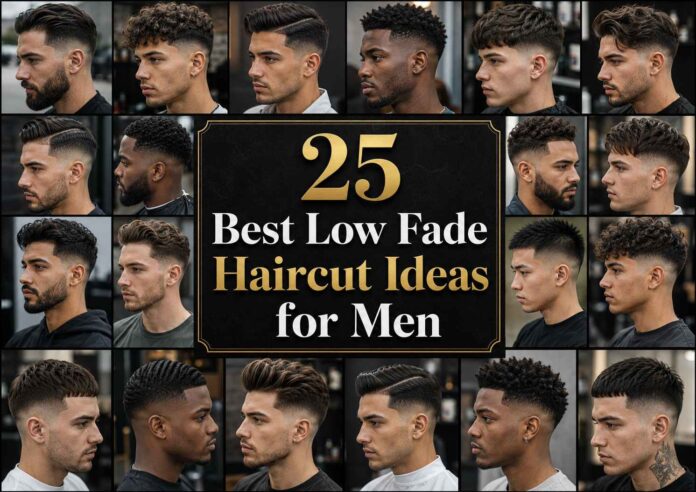
A low fade has a way of making almost any haircut look cleaner without removing too much weight from the sides. The blend begins close to the ears and neckline, then rises gradually into the longer hair above, creating softer contrast than a mid or high fade. That controlled shape is why it works with everything from buzz cuts and textured crops to curls, pompadours, braids, and longer swept styles.
For men comparing the best haircuts for men, a low fade is often a safe place to start because the top can be adjusted around hair texture, face shape, age, workplace needs, and daily styling time. These 25 ideas cover straight, wavy, curly, coily, thick, fine, and thinning hair. Some are sharp and short. Others keep enough length for movement and personality.
The strongest choice is not always the most dramatic one. A good low fade should support the haircut above it rather than become the entire haircut. Save the styles that match your natural texture, then show your barber the exact height, finish, and top length you want.
1. Low Skin Fade With a Number 2 Buzz Cut
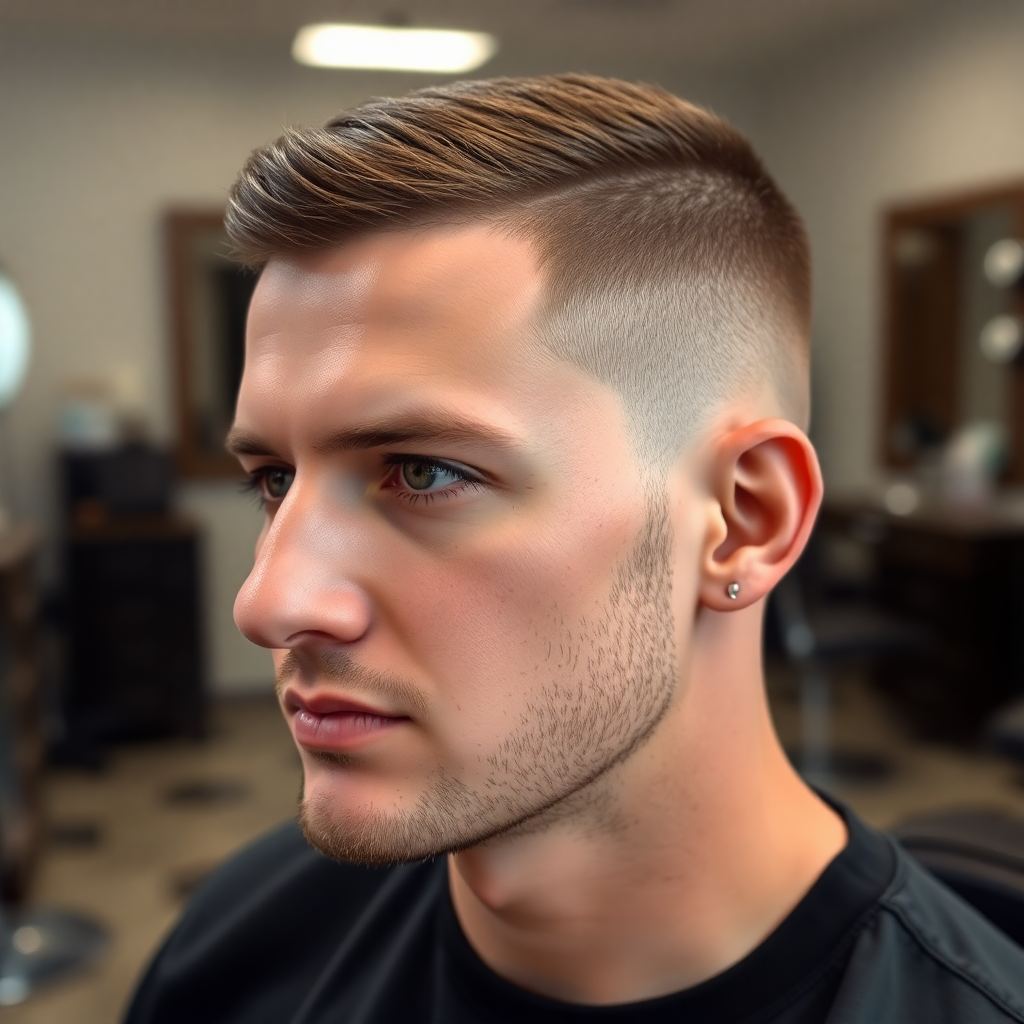
The top is clipped evenly with a number 2 guard, leaving short, visible stubble across the entire crown. Around the ears and lower neckline, the hair fades down to bare skin before blending into the buzzed top. A crisp front edge gives the cut a square, controlled finish, while a softer natural hairline creates a less severe look.
This is one of the strongest short haircuts for men who want almost no morning styling. It suits oval and square faces especially well because the close top exposes the natural head shape. Ask the barber to keep the fade low rather than carrying the skin section too high. The clean blend may need attention every two to three weeks.
2. Low Shadow Fade With a Short Crew Cut
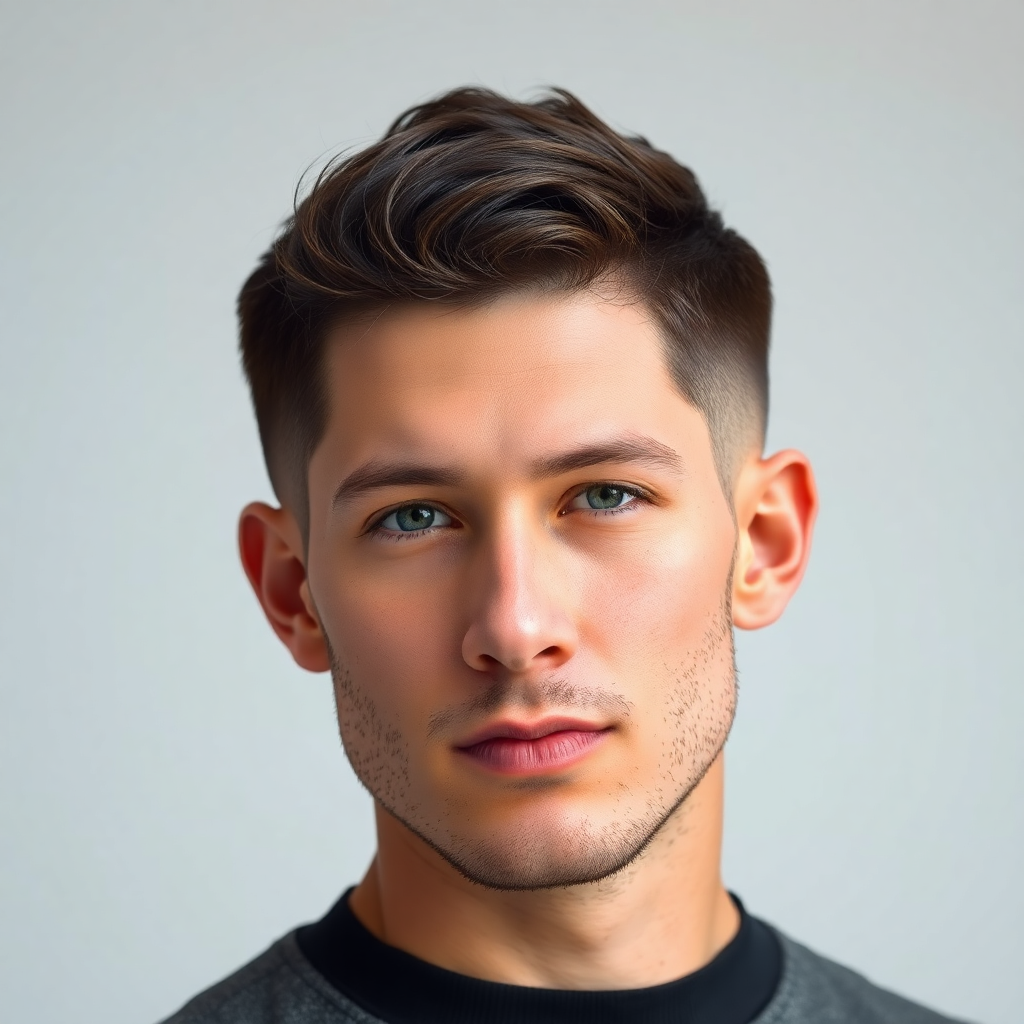
About one inch of hair remains at the front, then becomes gradually shorter toward the crown. The sides begin with dark stubble near the lower temples and blend smoothly into fuller hair above, creating a shadow effect without exposing much skin. The top is lightly textured and brushed forward with a small lift at the hairline.
Men who want a low maintenance men’s haircut without the stark appearance of a skin fade may prefer this version. It works well for professional settings and can give fine hair a fuller appearance because the sides retain some density. Ask for a low shadow fade with a softly tapered neckline. A small amount of matte paste can separate the top without making the hair appear stiff or shiny.
3. Low Drop Fade With a Textured French Crop
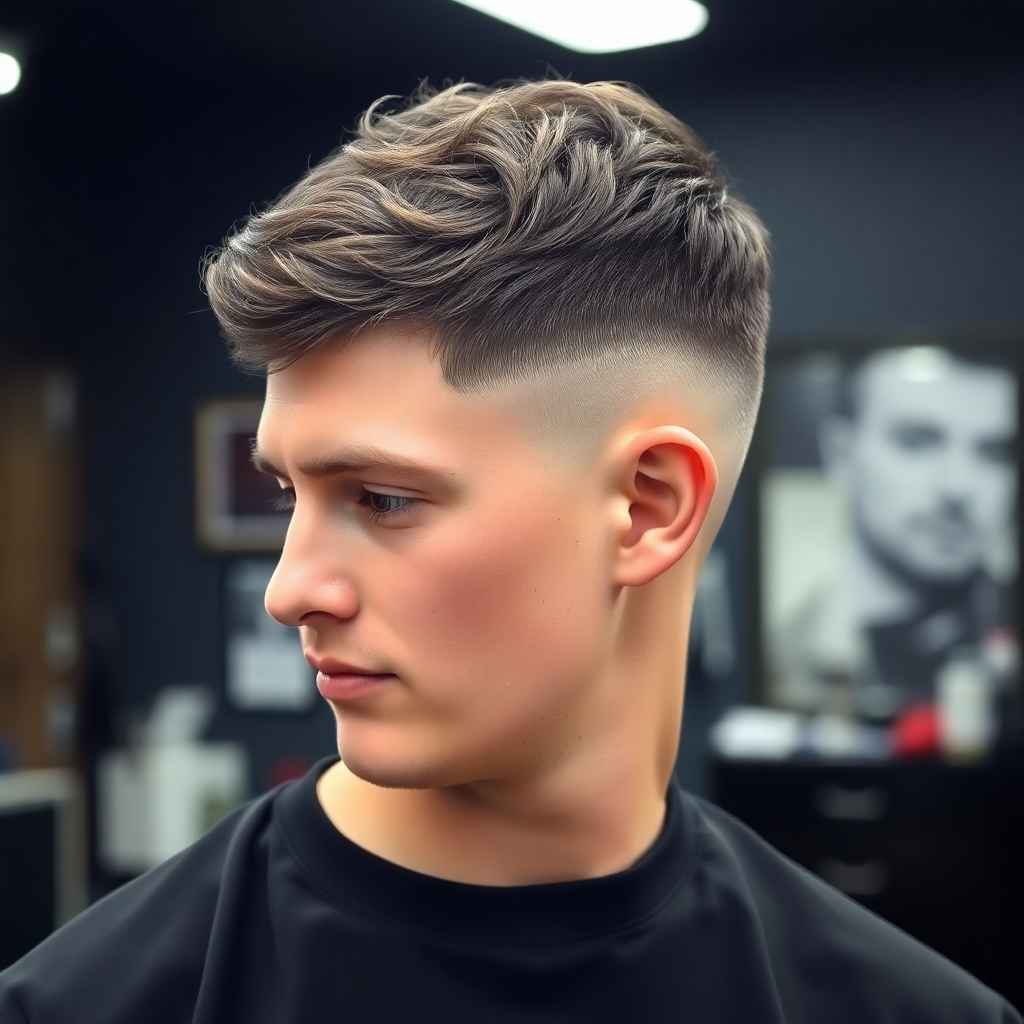
The top measures about one and a half inches and is cut into broken, uneven texture. Hair moves forward from the crown and finishes in a short, lightly jagged fringe across the forehead. The fade begins low near the temples, curves behind each ear, and drops lower toward the back of the head.
The curved fade shape follows the skull and keeps the haircut compact from every angle. It can suit a haircut for round face men because the textured top adds controlled height without creating extra width. Thick or straight hair holds the cropped shape easily, though wavy hair can add more movement. Tell the barber you want point-cut texture rather than a blunt, heavy fringe. Style with dry matte clay pressed forward through the fingertips.
4. Low Skin Fade With a Cropped Blunt Fringe
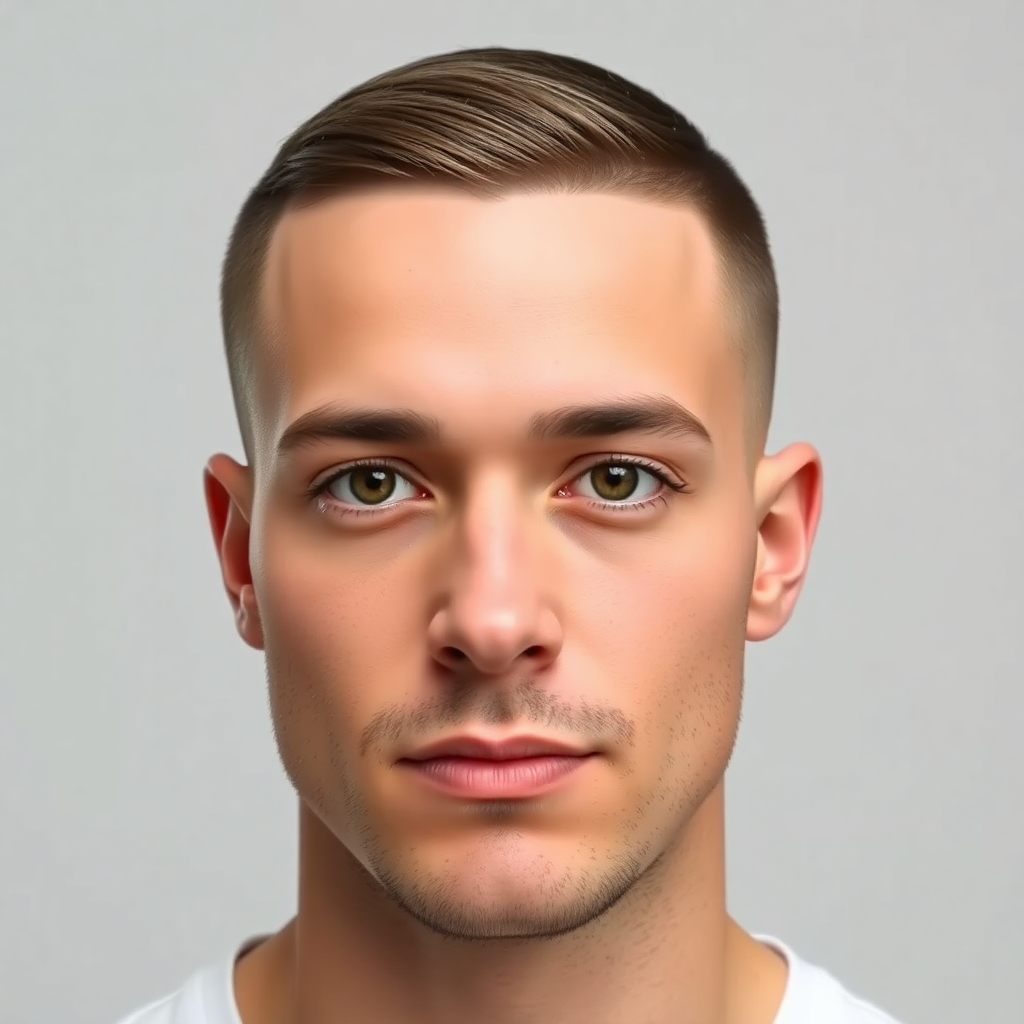
The top stays close to two inches long and lies forward in a dense, smooth layer. A short horizontal fringe creates a firm line across the upper forehead, while the low skin fade removes weight only around the ears and lower back. The contrast is clean, but the fuller upper sides stop the haircut from looking narrow.
This variation works best on straight, thick hair that naturally falls toward the face. It can also be useful among haircut ideas for men who prefer a defined shape without styling the hair upward. Men with long faces may appreciate the fringe because it reduces the amount of visible forehead. Ask the barber to soften the corners of the fringe if a strict straight line feels too severe. Blow-dry forward and use light styling cream for control.
5. Low Fade With a Short Caesar Cut
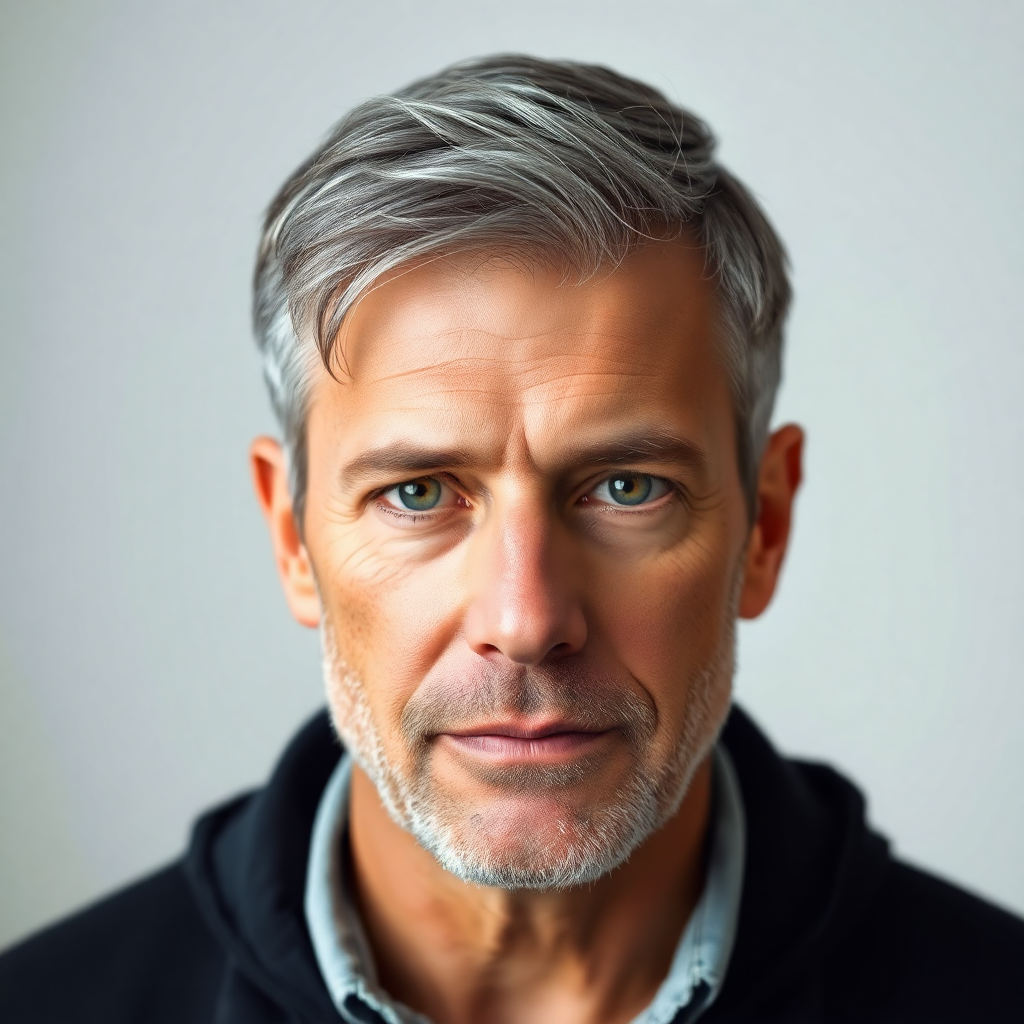
Short hair is combed forward from the crown and ends in a small, even fringe near the top of the forehead. The upper sides remain dark and connected to the top, while the fade begins close to the ears and gradually shortens into the neckline. Light scissor texture prevents the Caesar shape from looking flat or helmet-like.
This restrained version fits men who prefer classic haircuts for men with a cleaner modern outline. It may also help reduce the visual focus on an uneven front hairline because the short fringe sits forward rather than exposing the corners. Ask for one to one and a half inches on top with soft texture and no hard disconnection. A pea-sized amount of low-shine paste is usually enough. Avoid heavy gel, which can separate the fringe into thin sections.
6. Low Fade With an Ivy League Side Sweep
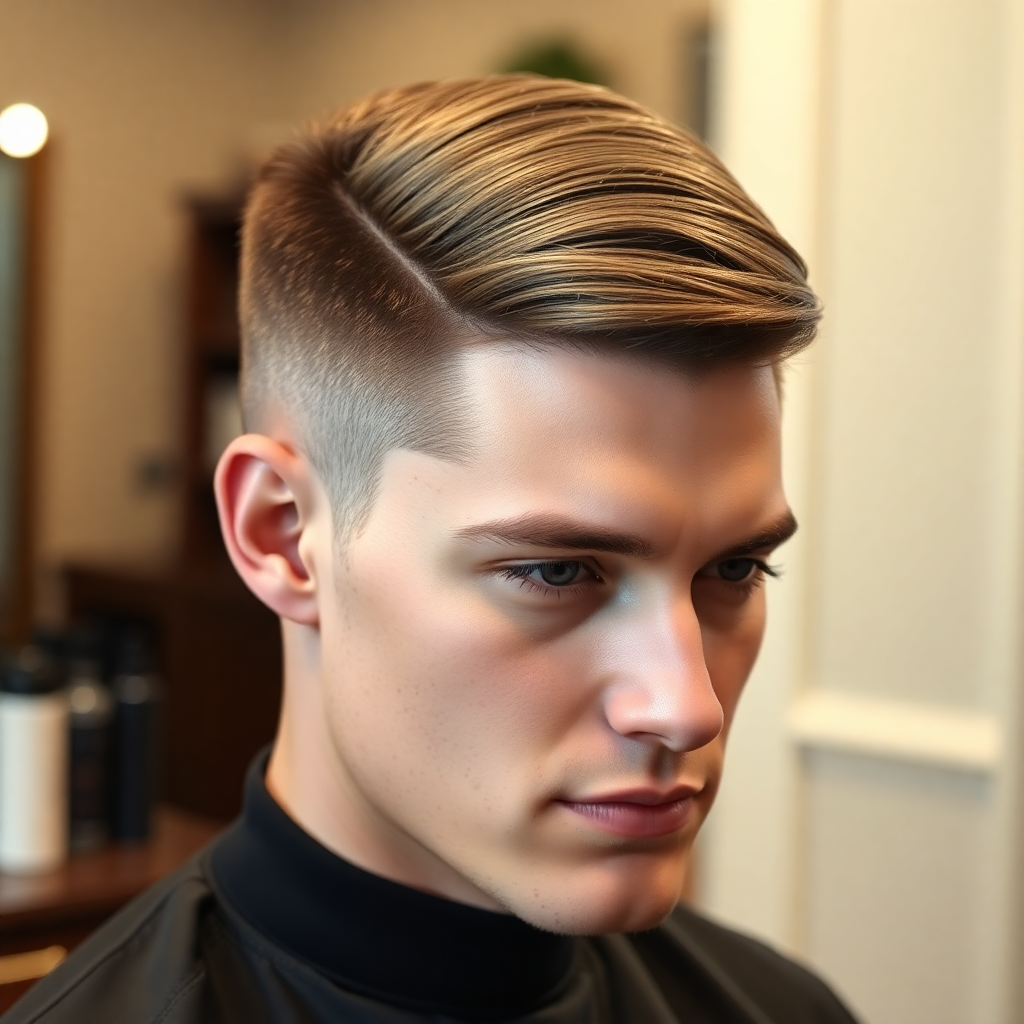
The top measures roughly two inches at the front and shortens gently toward the crown. Hair is directed diagonally to one side with a soft lift rather than a deep, rigid part. A low fade cleans the sideburns, ears, and neckline while leaving enough weight near the temples to keep the shape traditional.
The result sits comfortably between a crew cut and a longer side-part haircut. It is one of the more adaptable professional haircuts for men because it can look controlled during work hours and slightly looser on weekends. Oval, square, and heart-shaped faces usually carry the proportions well. Ask for scissor texture on top and a natural transition into the fade. Apply light cream, then comb the front sideways while allowing a few strands to separate.
7. Low Fade With a Defined Hard Side Part
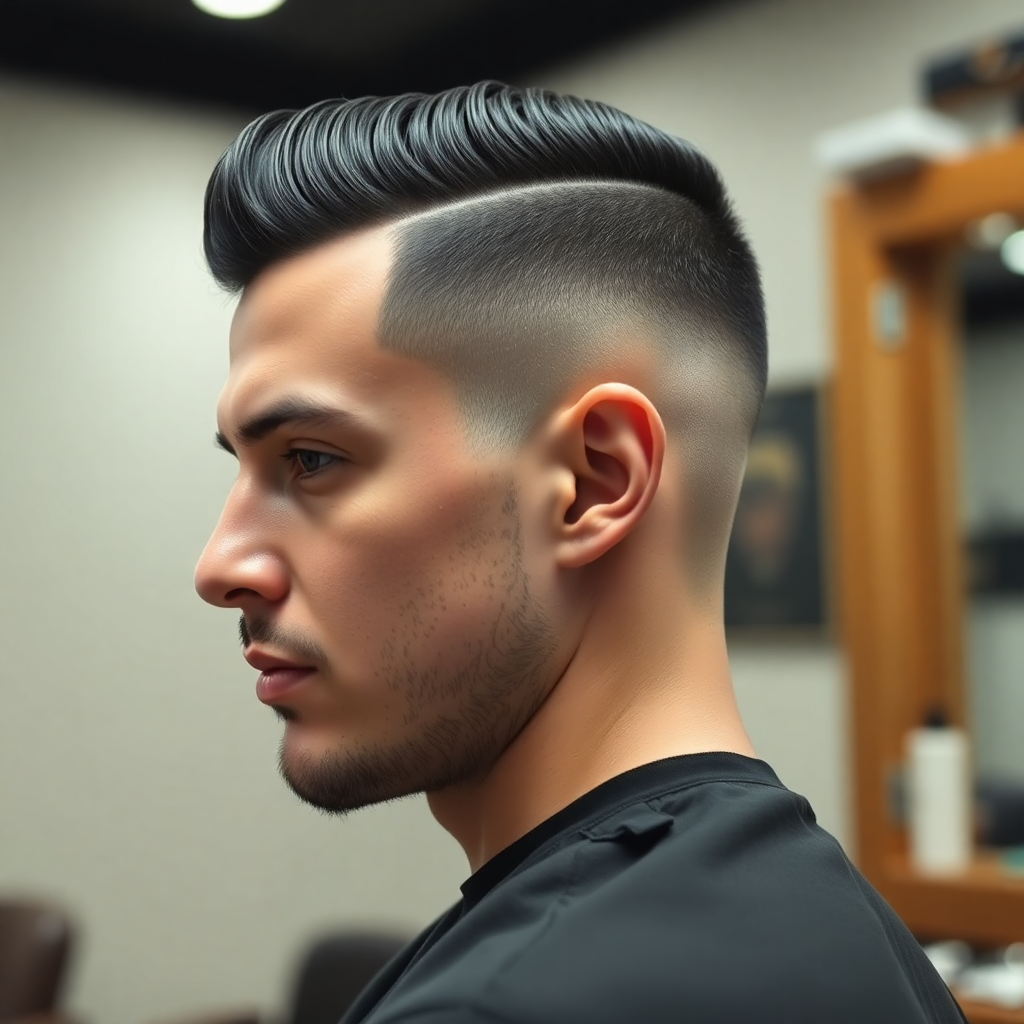
The hair is left around two to three inches long on top and combed firmly across the head. A narrow shaved line marks the side part, creating a clear divide between the styled top and the shorter side. Below it, the fade begins near the ear and blends into a dark upper section.
A hard part creates structure quickly, though it is less forgiving during the growing-out stage. The style works well as a haircut for square face men because the sharp part echoes a strong jawline. It also pairs naturally with tailored clothing and formal grooming. Tell the barber exactly where your hair already wants to separate before adding the razor line. A medium-hold pomade can maintain the direction, but keep the finish controlled rather than wet. The part line may need refreshing between full cuts.
8. Low Fade With a Natural Comb Over
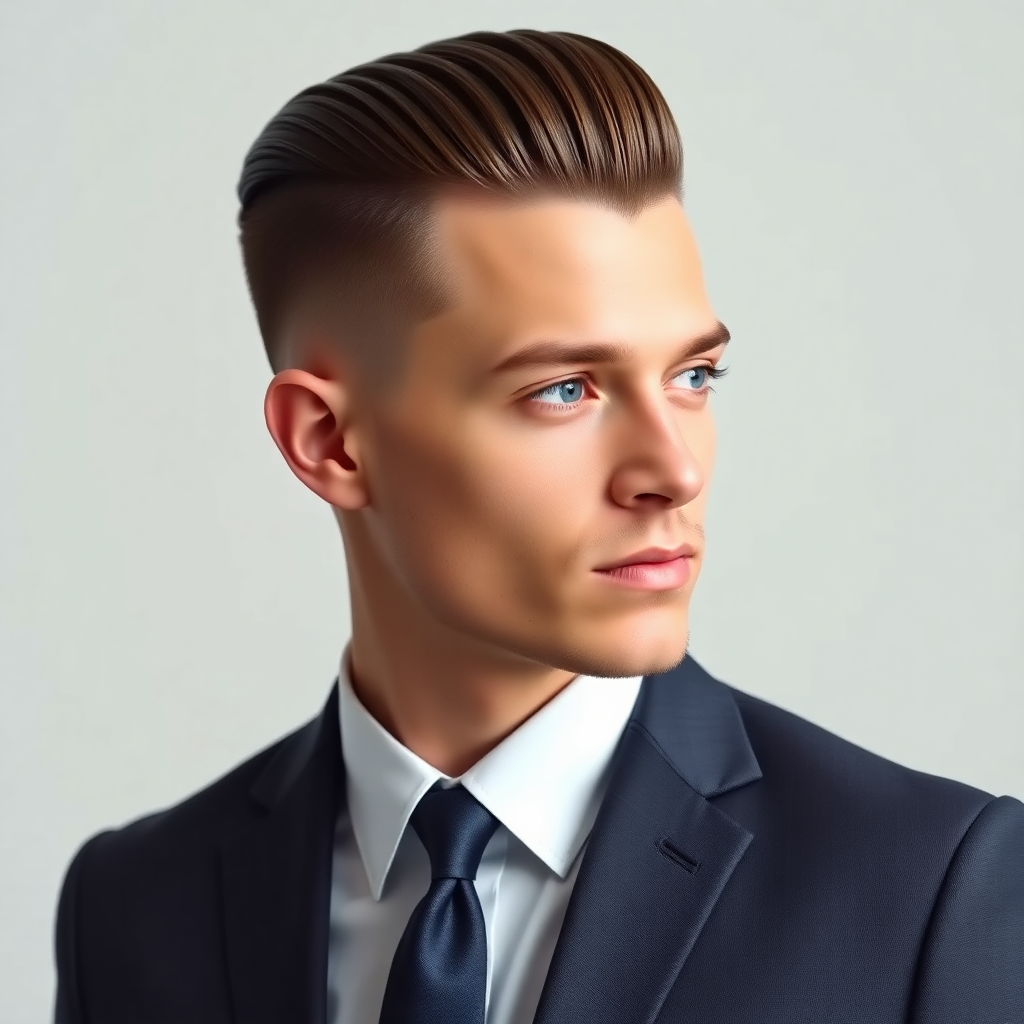
The top remains three inches long and is combed loosely from one side without a shaved part. Hair near the front rises slightly before flowing across, while the low fade creates a neat outline around the ears. The upper sides stay blended and full, giving the haircut a softer shape than a disconnected undercut.
Men seeking business haircuts for men may prefer this version because it looks polished without appearing overly sculpted. Straight and gently wavy hair are easy to direct, though dense hair may need internal weight removal. Ask the barber for a natural side part, scissor-cut top, and a low fade that preserves temple coverage. Blow-dry in the direction of the part with a vent brush, then finish with flexible paste. Too much product can flatten the front.
9. Low Fade With a Short Textured Quiff
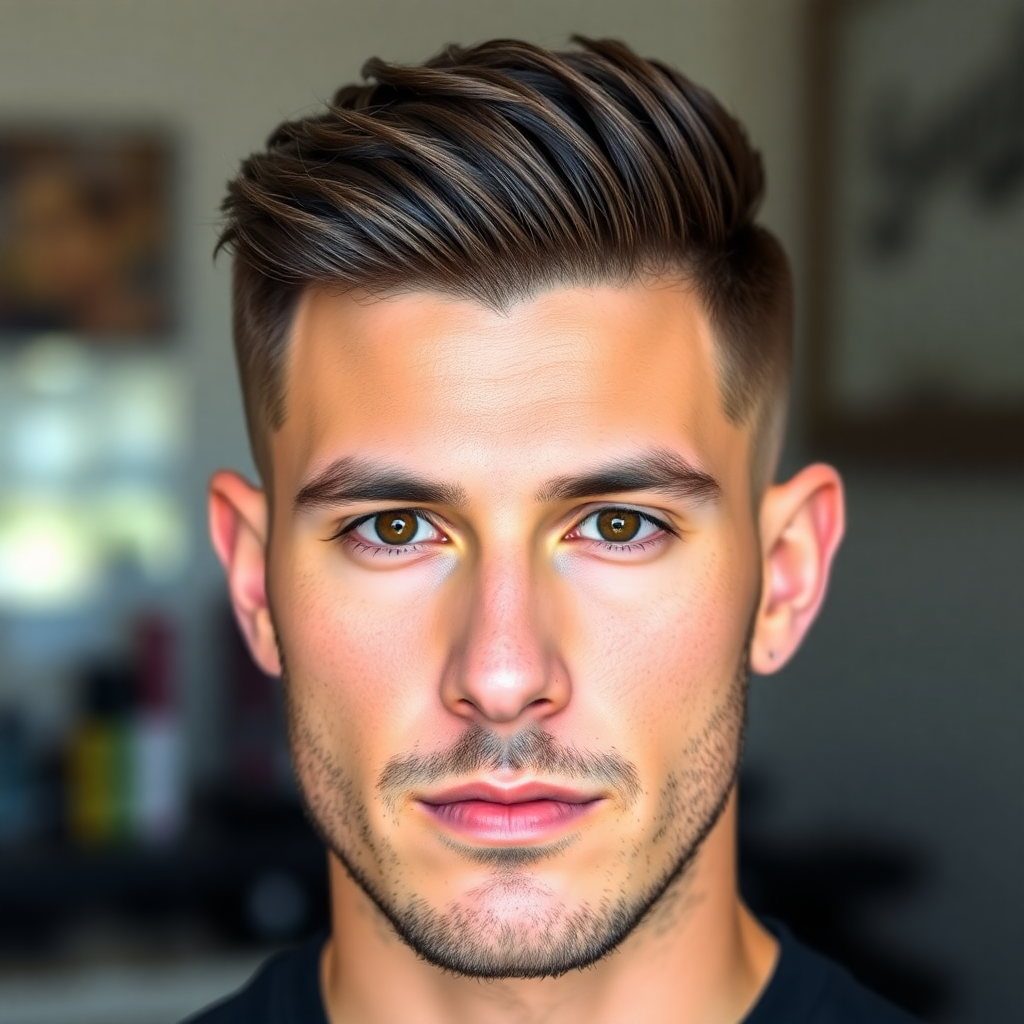
The front is kept about three inches long and lifted upward before leaning slightly back. Shorter layers through the crown prevent the top from becoming heavy, while choppy texture creates visible separation. The low fade begins below the temple and leaves a dark band around the upper sides for balance.
This is one of the more wearable modern haircuts for men who want height without maintaining a large pompadour. It can add length to round or wider face shapes, though men with long faces may want a lower front. Ask for a textured quiff with enough weight to stand naturally. Blow-dry the fringe upward using your fingers, then work matte paste through the ends. Dense hair may need thinning, while fine hair benefits from keeping the front slightly shorter.
10. Low Fade With a Spiky Textured Top
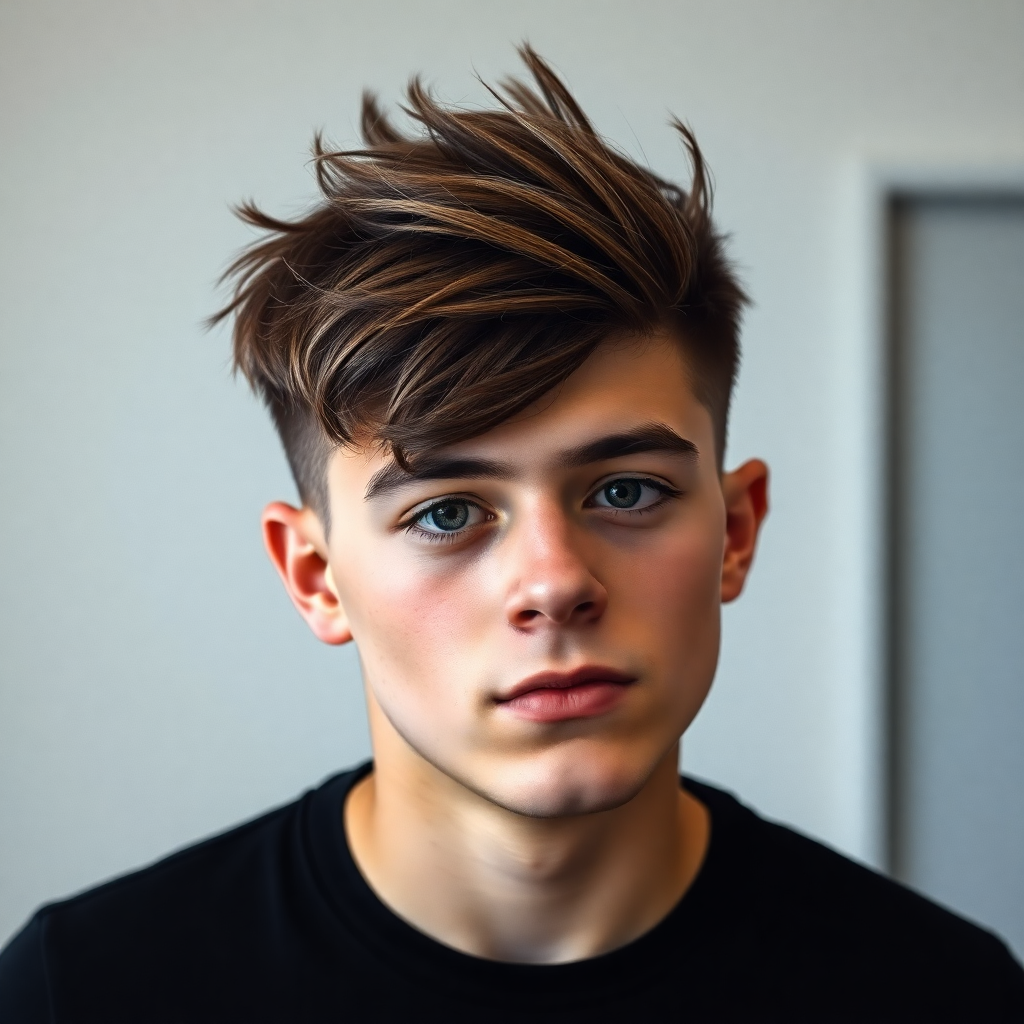
The top is cut between two and three inches with short, uneven layers that point upward and slightly forward. The spikes remain loose and separated rather than stiff. A low skin fade clears the lower sides, while a gradual dark blend near the temple keeps the haircut from resembling a high fade.
Straight, coarse hair often forms this texture with little effort. The style is also a practical choice among haircuts for teenage guys because it can be worn messy during the day and sharpened for an event. Ask the barber to cut texture with scissors instead of leaving every top section the same length. Warm a small amount of matte clay between the palms, then pinch selected pieces rather than coating every strand. Longer spikes may collapse on fine hair.
11. Low Fade With a Messy Layered Top
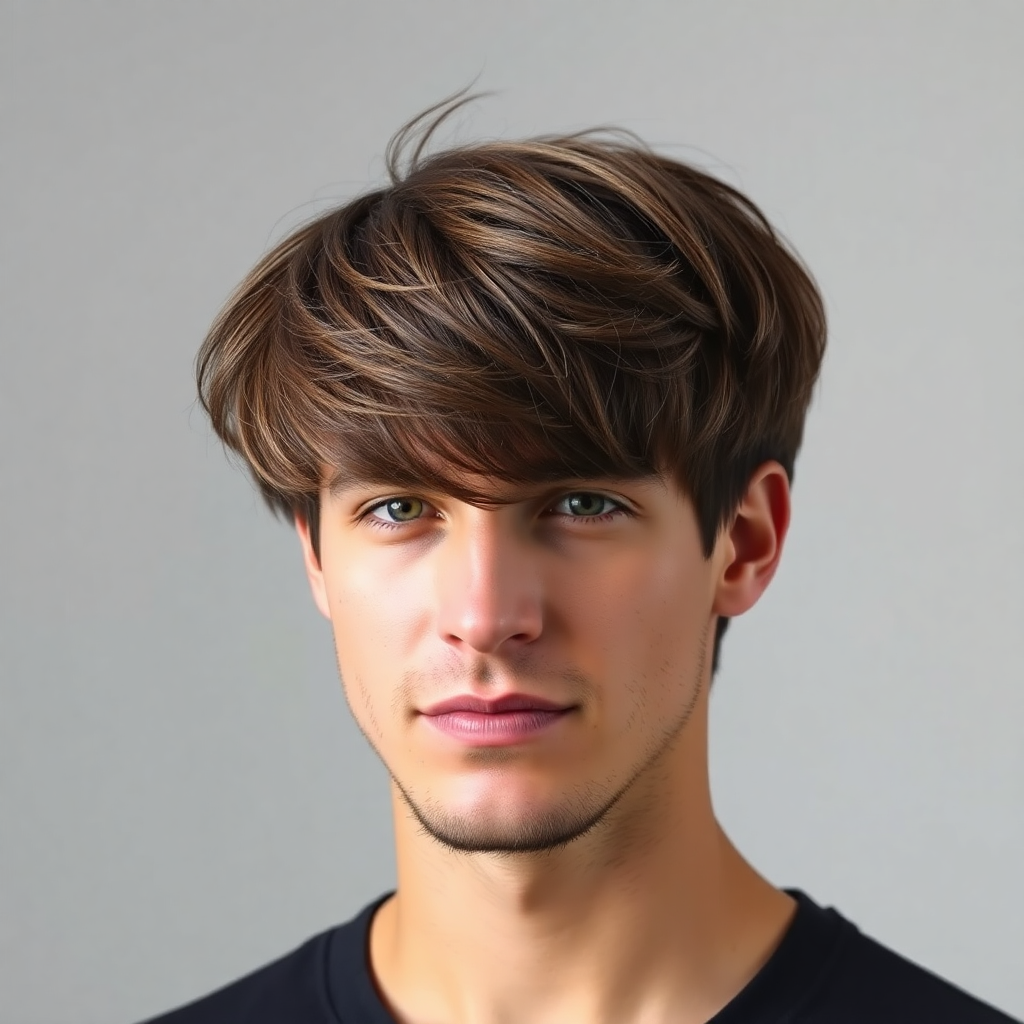
Three to four inches of hair remain across the top, with irregular layers creating a relaxed, slightly windswept shape. The fringe falls forward and to one side, while the crown carries natural volume. The low fade removes bulk around the ears but blends into longer upper sides without forming a hard shelf.
The relaxed finish makes this one of the easier stylish haircuts for men with thick or medium-density hair. Wavy texture adds character, though straight hair can gain movement through point cutting. Ask the barber to preserve length through the front and remove weight inside the top rather than thinning only the ends. Apply texture cream to damp hair and allow it to air-dry, or use a diffuser on low heat. The style loses its shape when overloaded with wax.
12. Low Fade With a Wavy Crop
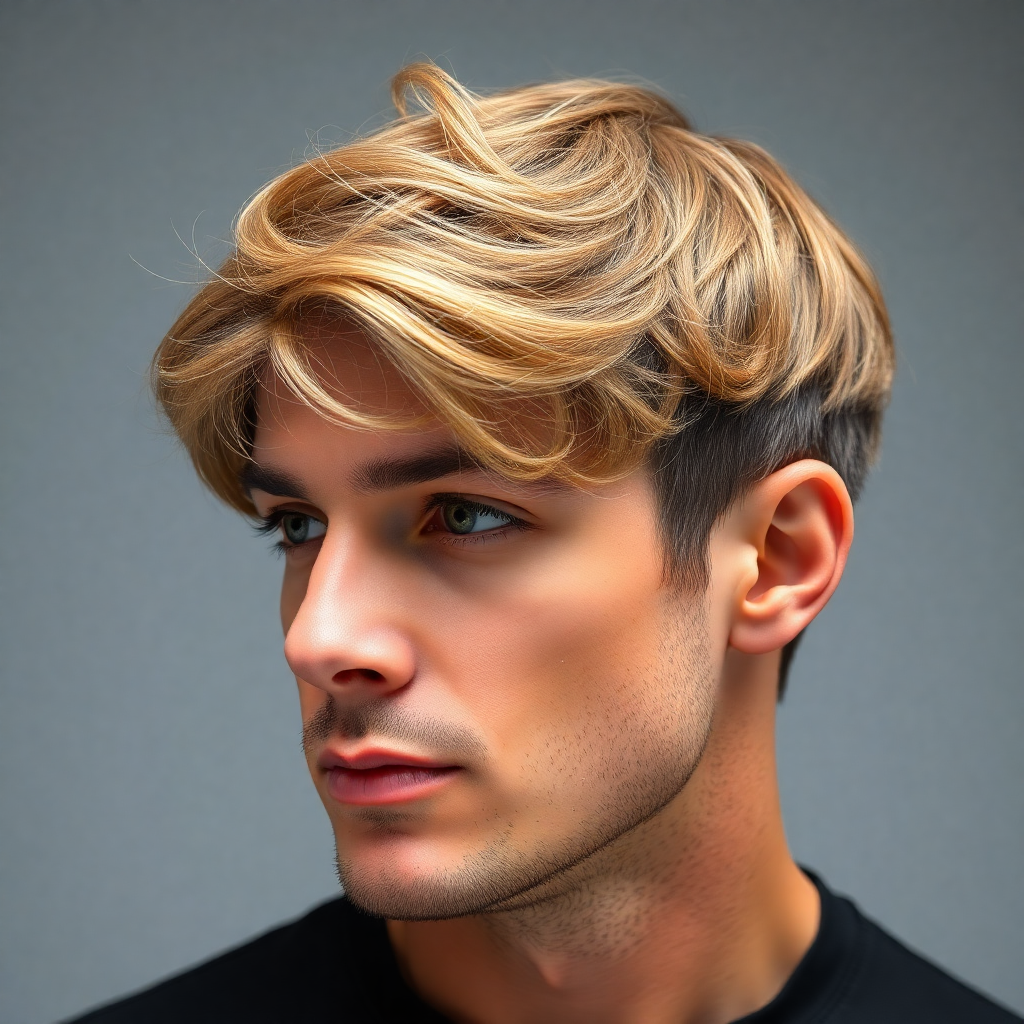
Natural waves cover the top at about two and a half inches, moving forward in loose bends rather than straight sections. A soft fringe rests unevenly near the upper forehead. The low fade hugs the ear and neckline, while a darker transition above it allows the waves to remain the main visual feature.
This shape is built for haircuts for wavy hair men who want texture without growing the top long. It can soften angular face shapes because the waves break up hard lines across the forehead. Ask the barber to cut the top while respecting the natural wave pattern and to avoid excessive thinning. Apply curl cream or light styling lotion while the hair is damp, then squeeze the waves into place. Brushing after drying can create unwanted volume and remove the definition.
13. Low Fade With Defined Curly Top
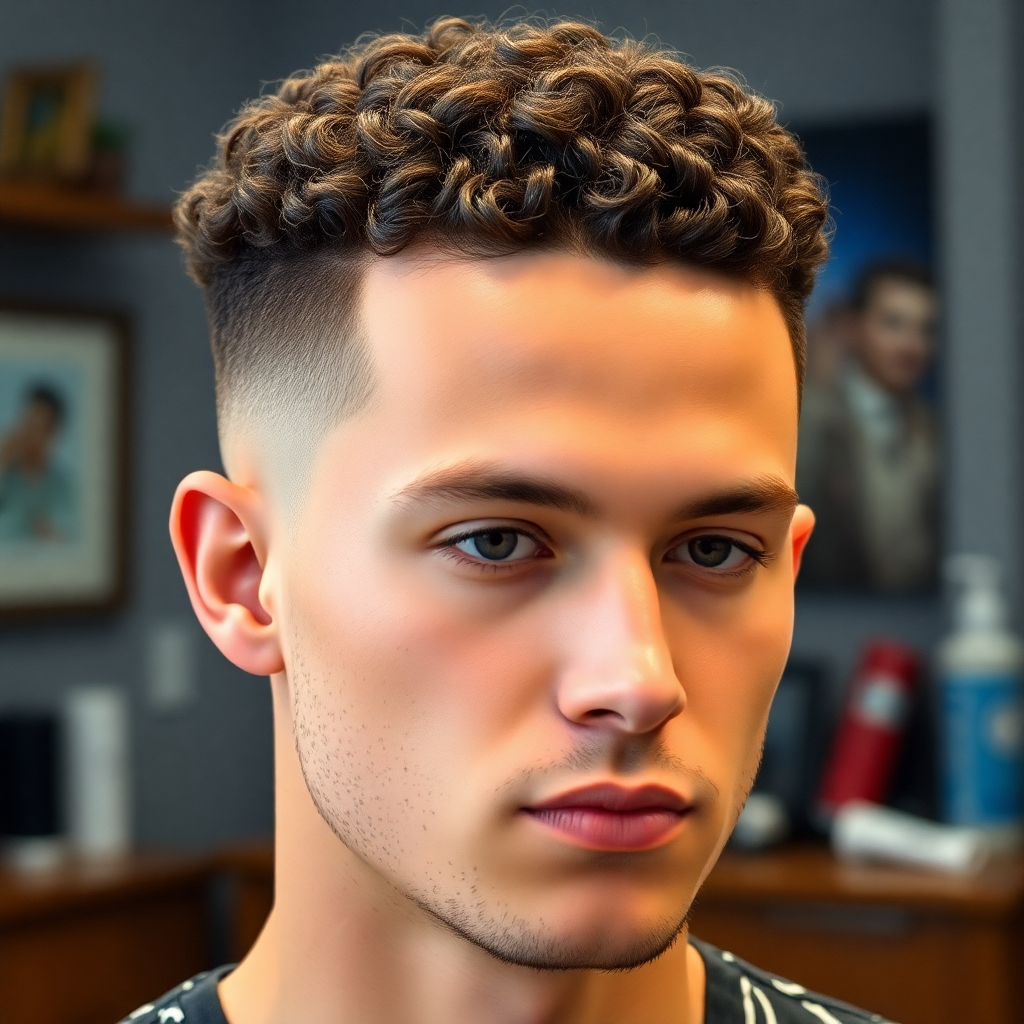
The top carries two to four inches of compact curls with clear separation and rounded volume. Curls near the front lean slightly toward the forehead, while the crown remains full. The sides taper rapidly only in the lower section, creating a low fade that protects the natural width around the upper head.
Among haircuts for curly hair men, this option balances a clean outline with visible natural texture. It suits oval, diamond, and longer faces, though the curl height can be adjusted for proportion. Ask the barber to shape the top curl by curl where possible and avoid cutting it too short while wet. Work a small amount of curl cream through damp hair, then use a diffuser or air-dry. Frequent combing can separate the curl groups and create a wider finish.
14. Low Fade With a Rounded Short Afro
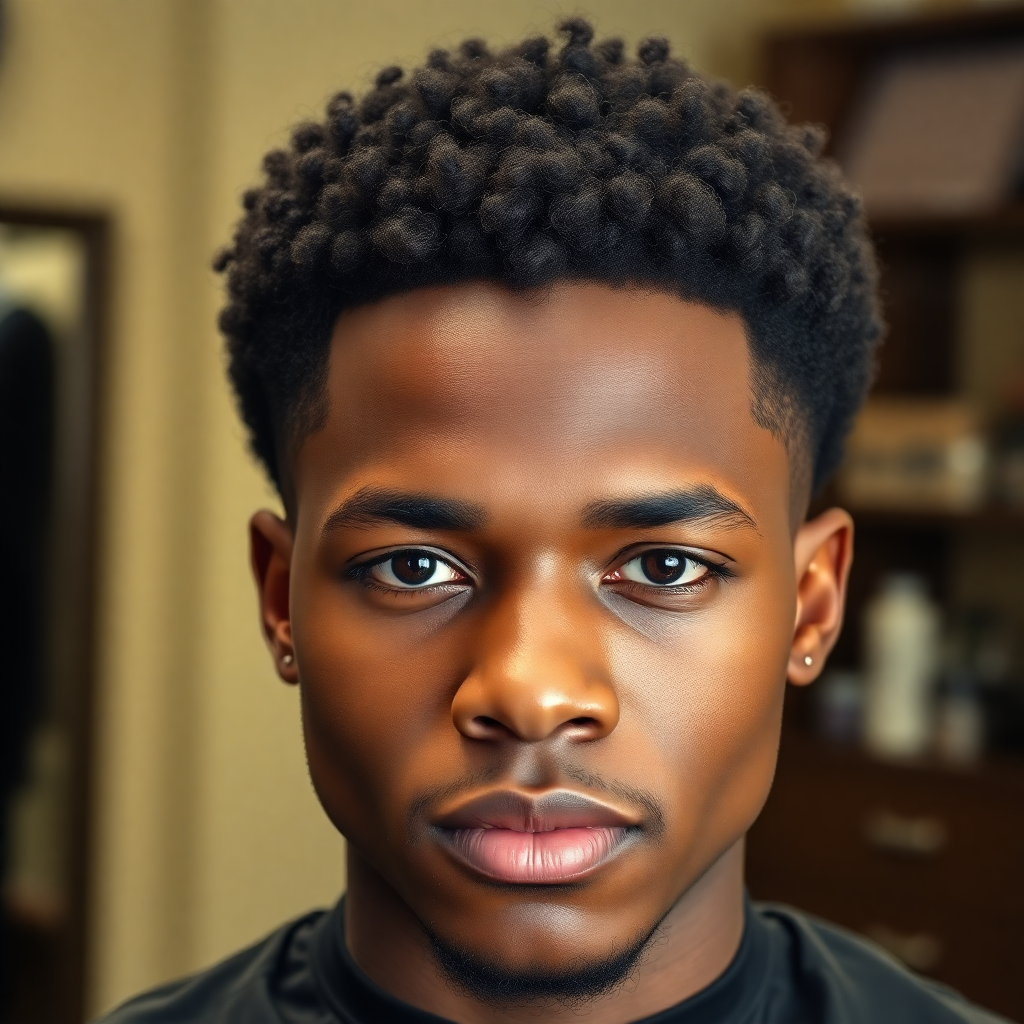
The top forms a compact rounded shape about two inches high, with even coily texture from the hairline to the crown. The upper sides retain enough density to continue the rounded silhouette. Near the ears and nape, a low fade gradually reduces the hair to skin, while a clean lineup frames the forehead.
This is a balanced choice within haircuts for black men because it keeps natural texture visible without requiring a tall shape. Round faces may benefit from slightly more height on top, while long faces can keep the profile lower. Ask the barber to maintain an even rounded contour and avoid taking the fade above the temple. A moisturizing styling cream can help keep coils defined. The lineup should follow the natural hairline rather than being pushed back for extra sharpness.
15. Low Drop Fade With Sponge Twists
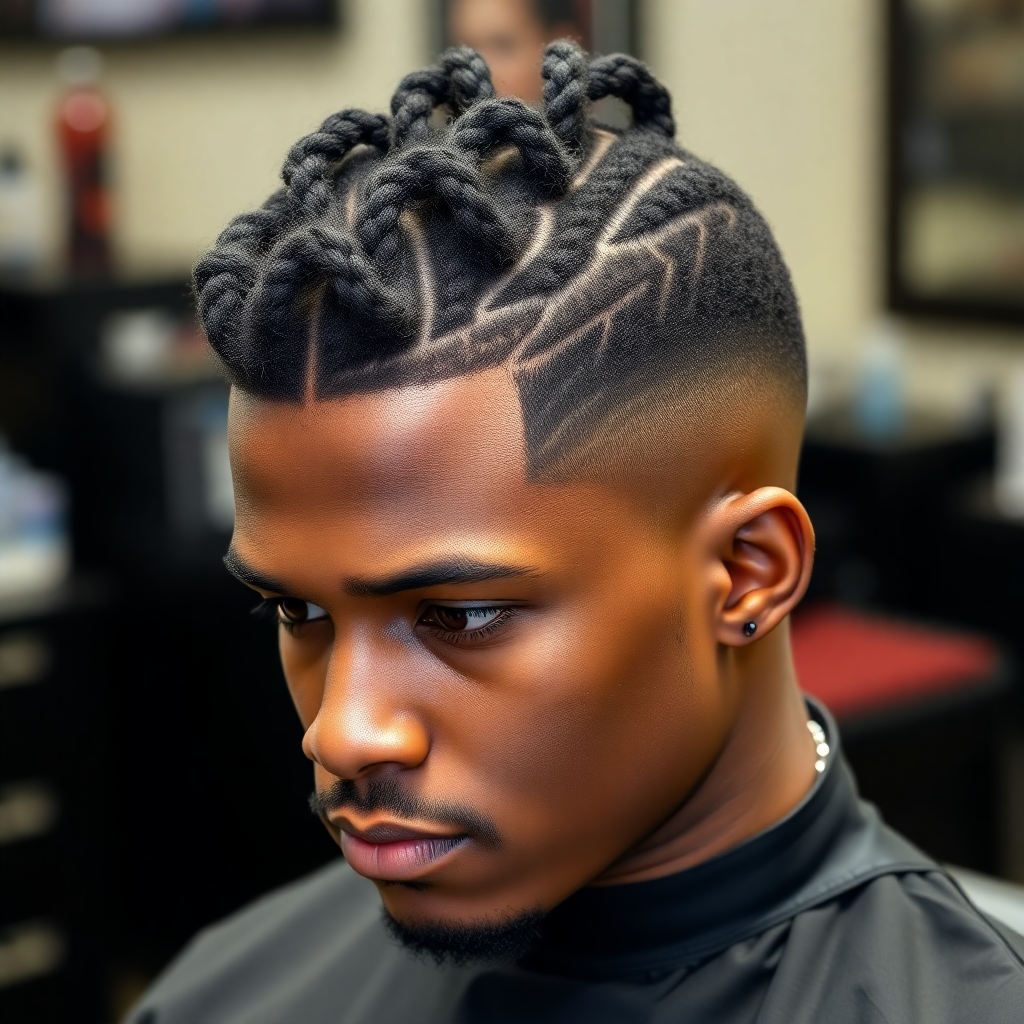
Short sponge twists cover the top in small, separated coils measuring about two to three inches. The twists form a textured rounded profile, while the low drop fade curves downward behind the ear and follows the lower back of the head. A precise front lineup gives the loose top a controlled frame.
The curved fade adds shape without removing the density needed for visible twists. It works well for young men who want movement and definition without committing to longer locs. Tell the barber to keep the upper side area dark and make the drop gradual rather than steep. Twist definition can be refreshed on slightly damp hair using a sponge or curl tool, but excessive rubbing may create frizz. Covering the hair at night can help preserve the pattern between styling sessions.
16. Low Fade With Brushed 360 Waves
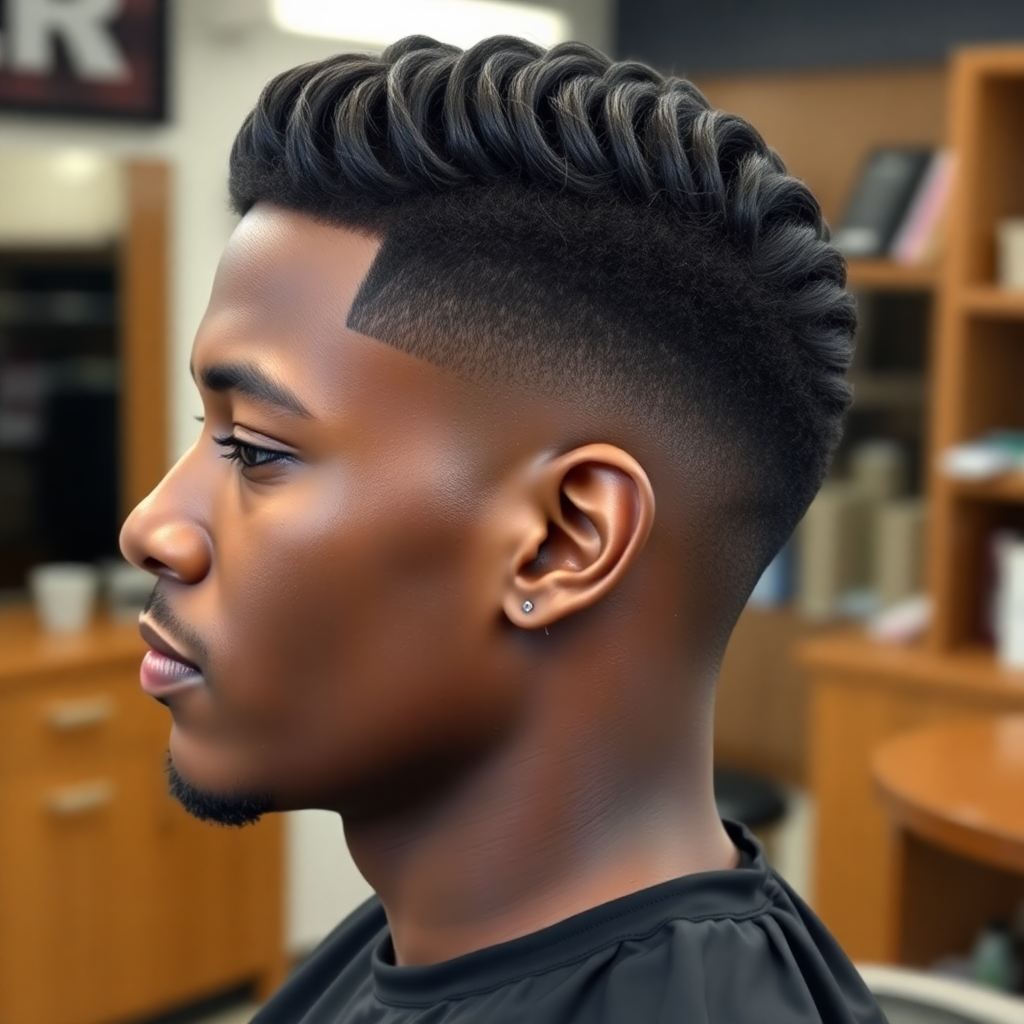
The top is kept short and brushed into visible wave patterns that travel from the crown toward the hairline, sides, and back. A low fade removes the wave pattern only near the ears and bottom neckline, leaving the upper sides dark enough for the circular design to remain connected. The hairline is edged neatly without appearing pushed back.
It can sit comfortably among fresh haircuts for men because the finished shape looks sharp while the top remains simple and natural. Ask the barber to preserve enough length for the wave pattern and keep the fade below the temple. Regular brushing, light moisture, and a smooth nighttime hair covering can help maintain the direction. Avoid requesting an aggressive skin fade if you want the waves to stay visible close to the ears.
17. Low Fade With a Textured Edgar Fringe
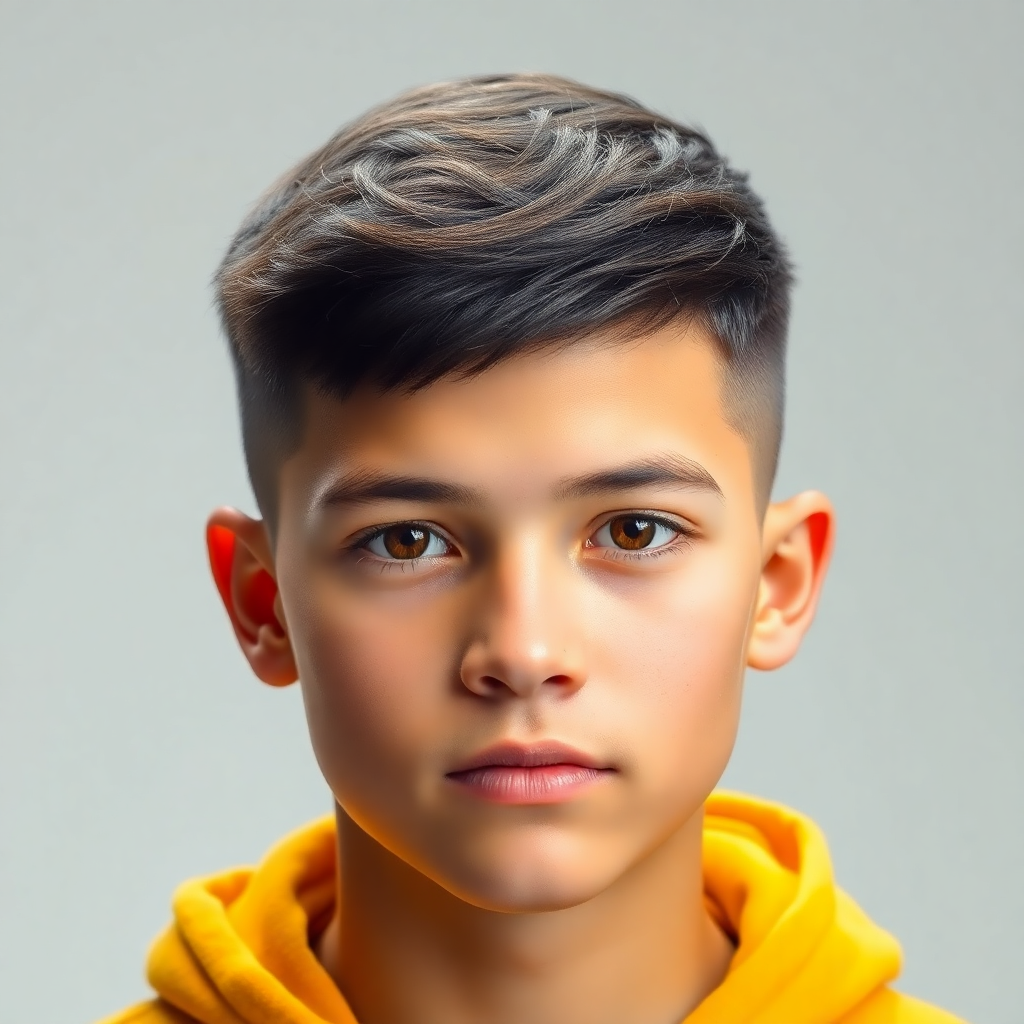
The top stays two to three inches long with dense, choppy texture moving toward the forehead. A short, straight fringe forms a visible line above the eyebrows, while the corners remain slightly softened. The low fade begins close to the ear and blends into fuller temple hair, keeping the upper sides dark and substantial.
This variation brings a cleaner outline to the modern Edgar shape without pushing the fade high around the head. Thick, straight hair creates the strongest block-like profile, while wavy hair gives the fringe a looser finish. Men with long faces may prefer less height through the crown. Ask for a textured top, a controlled forward fringe, and a low blend that does not remove the temple area. Matte styling powder can add separation without making the front appear greasy.
18. Low Fade With a Curly Forward Fringe
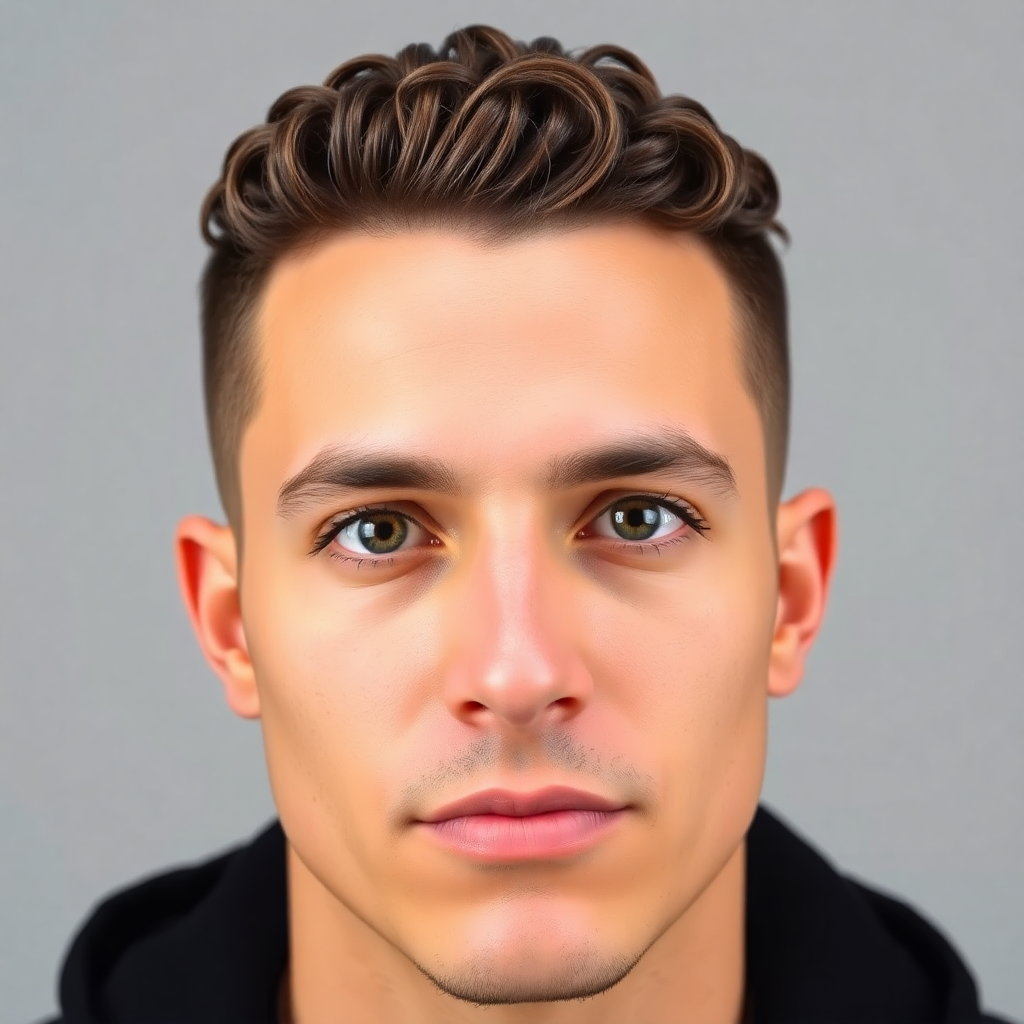
Three to four inches of curls remain on top and move naturally toward the forehead. The front curls hang in loose, defined sections, while the crown stays rounded and slightly elevated. A low fade clears the lower sides and neckline but preserves enough weight above the ears to connect smoothly with the curly top.
This option suits curly hair men who want their natural pattern visible from the front rather than pushed backward. The hanging fringe can soften a long forehead and bring attention toward the eyes. Ask the barber to shape the curls in their natural dry position and keep the front long enough to shrink into place. Apply curl cream to damp hair, then arrange the fringe with the fingers. Heavy wax may pull the curls down and remove their natural movement.
19. Low Fade With a Modern Slick Back
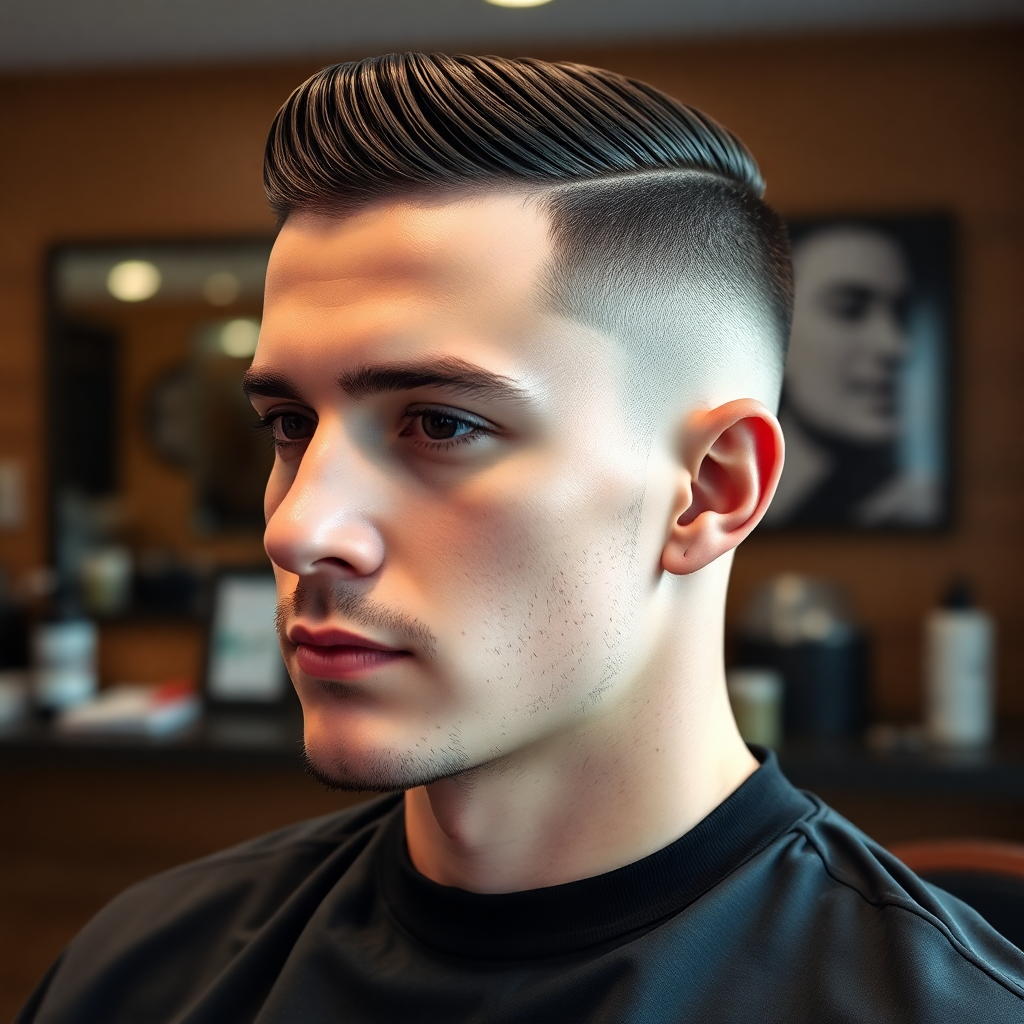
The top measures four to five inches and is directed backward from the forehead in smooth, connected layers. The front carries moderate lift rather than lying flat, while the crown follows the same backward flow. A low fade creates a neat edge near the ears and neckline, leaving fuller upper sides to support the longer top.
The shape works well for men who like classic structure but want a less rigid finish than older high-shine slick backs. It can suit oval and square faces, while men with long faces may keep the front lower. Ask for a connected scissor-cut top with enough length to comb backward and a low fade that blends into the upper sides. Blow-dry away from the face, then add a light cream or flexible pomade. Avoid dragging the hair tightly against the scalp.
20. Low Fade With a Voluminous Pompadour
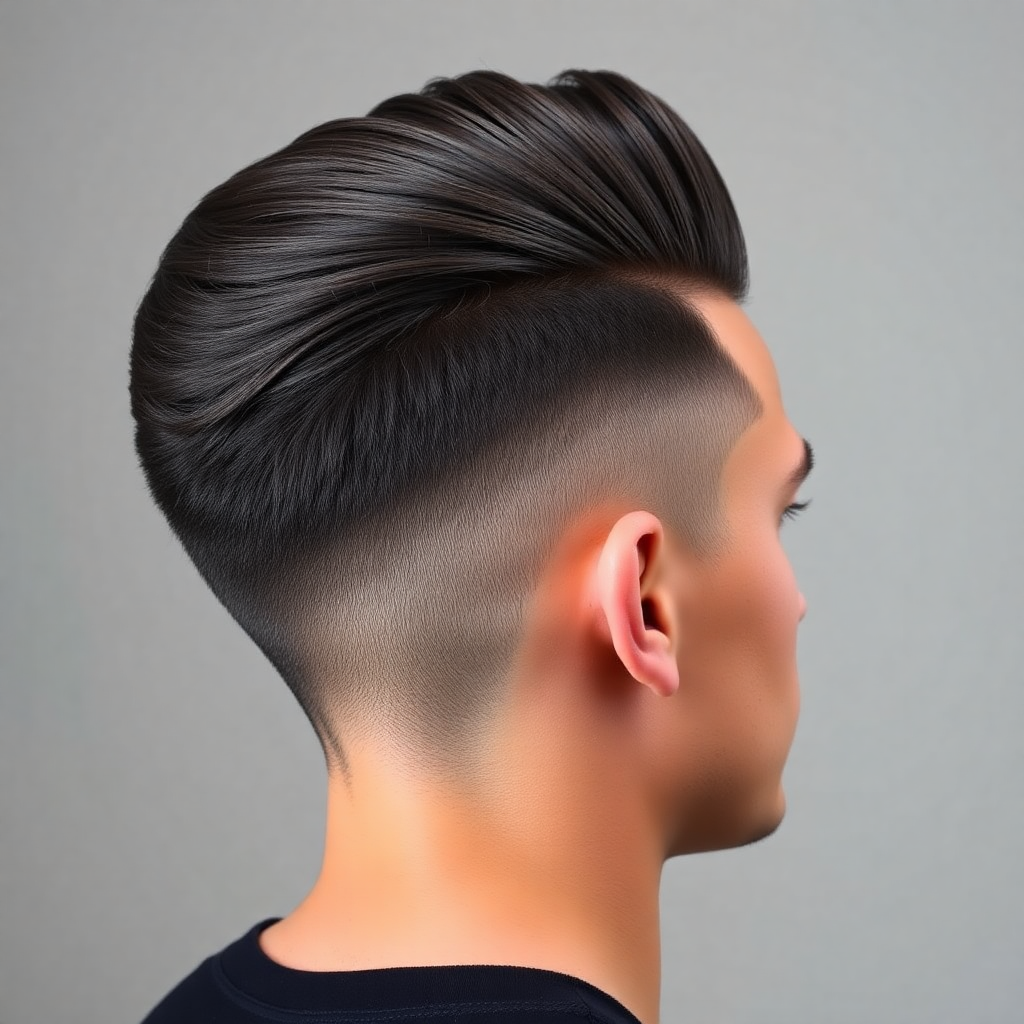
The front rises four to five inches above the forehead before curving backward into a shorter crown. The surface appears smooth but not flat, with controlled volume through the center. A low skin fade removes hair around the sideburns and lower neckline while keeping the upper sides darker to support the height above.
This is one of the more demanding stylish haircuts for men because the front needs shaping after washing. Thick, straight, or slightly wavy hair usually holds the rounded profile most easily. A haircut for oval face men can carry this height without much adjustment, while longer faces may need a shorter pomp. Ask the barber to leave enough front length for lift and remove internal bulk rather than thinning the outer surface. A blow-dryer and round brush create the shape before product is added.
21. Low Fade With a Loose Blowout Top
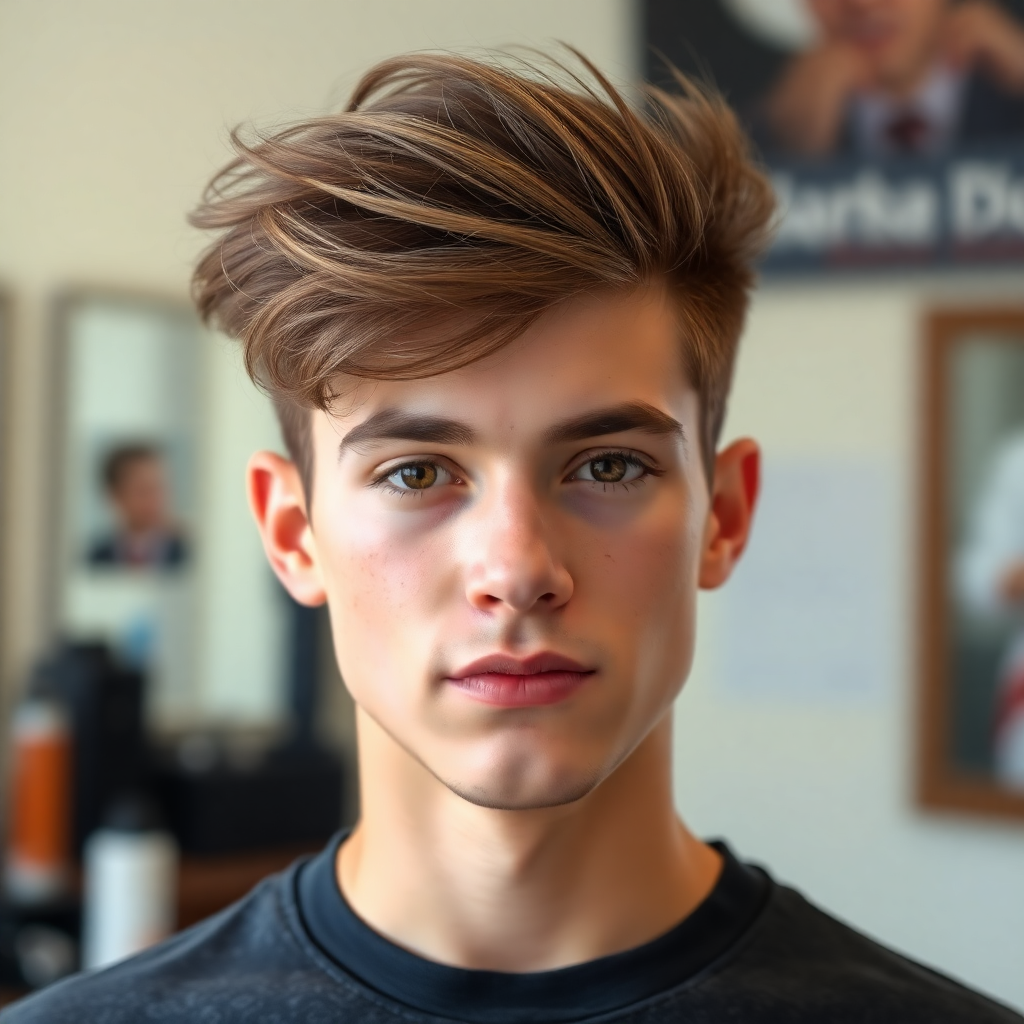
The top remains three to four inches long and rises upward in airy, separated sections. Hair near the front leans slightly back, while the sides of the top expand outward for a loose blowout effect. The low fade stays close to the ears and nape, creating a clean base beneath the fuller silhouette.
The style works best on dense straight or wavy hair that can hold volume without appearing stiff. It is among the more expressive haircuts for young men, though the finish can be made quieter by reducing the height. Ask the barber for layered top length with soft weight removal and a low fade that keeps the upper sides connected. Blow-dry from the roots using the fingers, then add a small amount of dry texture paste. Fine hair may need a shorter top to prevent collapse.
22. Low Fade With a Middle-Part Curtain Cut
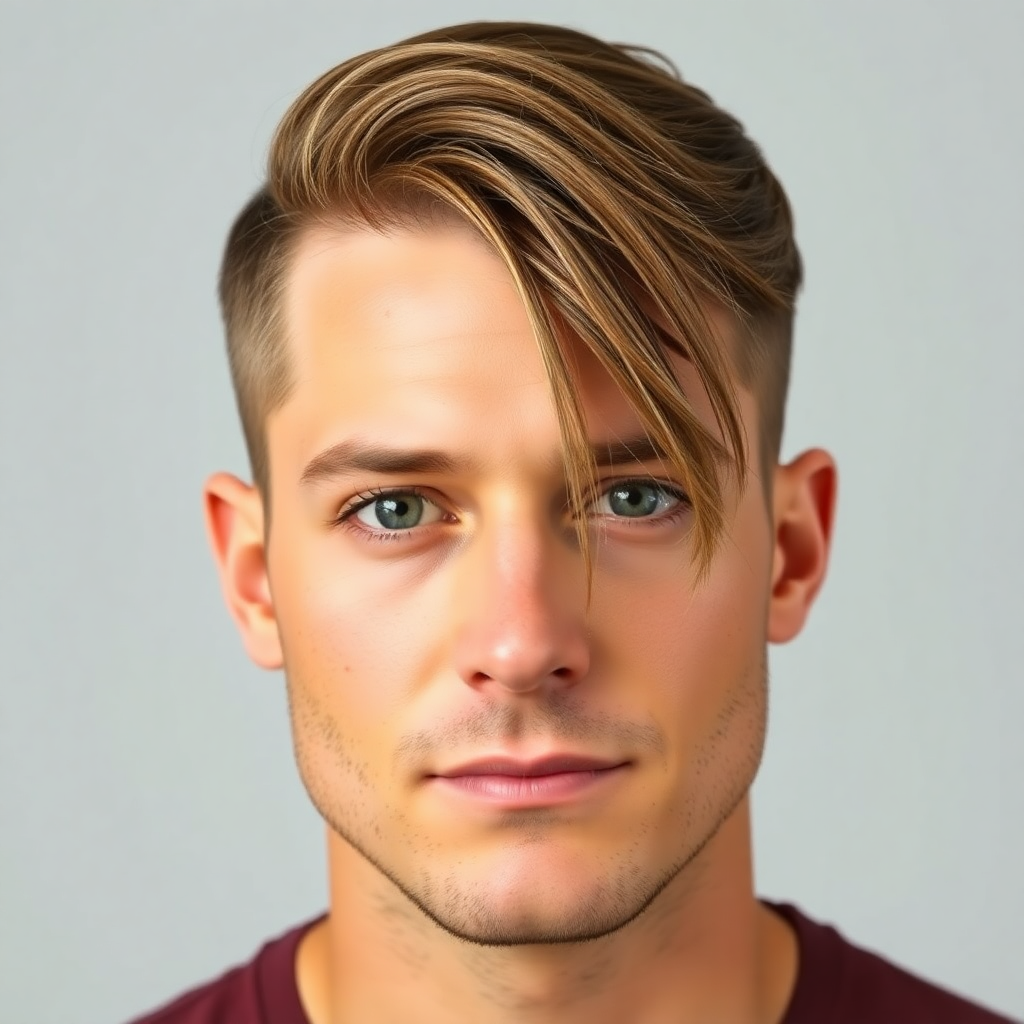
The top measures five to six inches and separates naturally through the center. Long front sections curve away from the face and fall near the cheekbones, while shorter layers around the crown prevent the shape from becoming flat. The low fade cleans the sideburns and lower sides without removing the longer hair above the temples.
This combination brings a sharper base to medium length hairstyles men often wear with relaxed movement. Straight and wavy textures can both carry the curtain shape, though wavy hair creates more natural bends. It may work well for a haircut for big forehead men because the front pieces frame part of the forehead without covering it completely. Ask for long center-parted layers with a low, subtle fade. Blow-dry the front away from the center using a brush or fingers.
23. Low Fade With Long Wavy Side-Swept Hair

Five to seven inches of wavy hair flow from a natural side part across the top. The front sweeps diagonally over one side with visible bends and soft volume, while the opposite side remains tucked back. A low fade appears only around the lower temple, ear, and neckline, preserving the weight needed for the longer style.
Men with naturally loose waves can achieve movement without building a highly structured shape. This option also suits haircuts for men with glasses because the clean lower sides keep longer strands from crowding the frames. Ask the barber to preserve the front length, add long layers, and keep the fade understated. A lightweight styling cream can control loose strands while leaving the waves touchable. The top may need a trim less often than the faded edges.
24. Low Fade With Straight-Back Cornrows
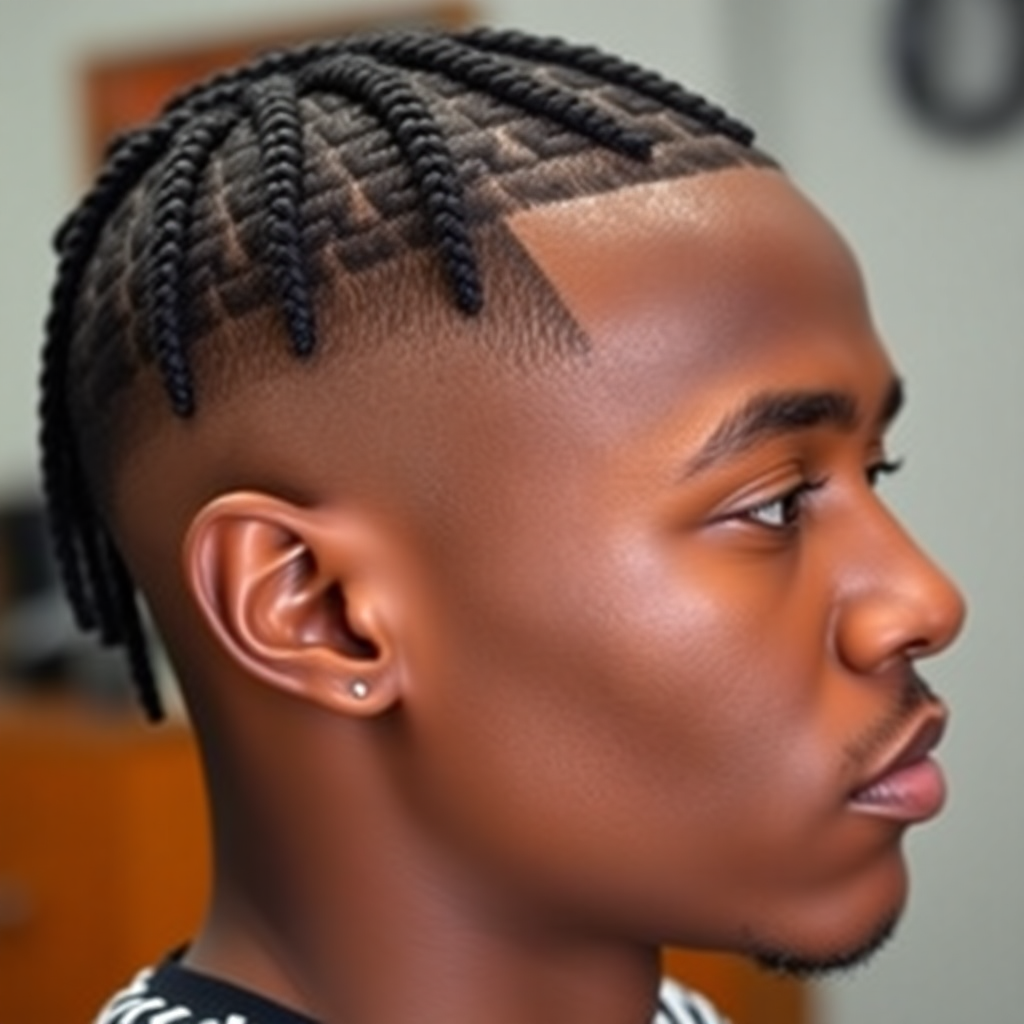
Several clean cornrows begin at the front hairline and travel in straight, evenly spaced lines toward the crown and back. The braids remain tight and symmetrical across the top, while the low fade removes hair around the lower temples, ears, and nape. A neat lineup defines the front without cutting into the braided sections.
The contrast between precise braids and a soft low blend creates a detailed style from every angle. It is a practical option for men who want longer top hair kept controlled, though braid tension and scalp comfort should always guide the final design. Ask the barber and braider to coordinate the parting area before the fade is taken too high. The edges may need cleaning sooner than the braids themselves. Keep the braid pattern neat without applying excessive heavy product around the hairline.
25. Low Fade With a Textured Modern Mullet
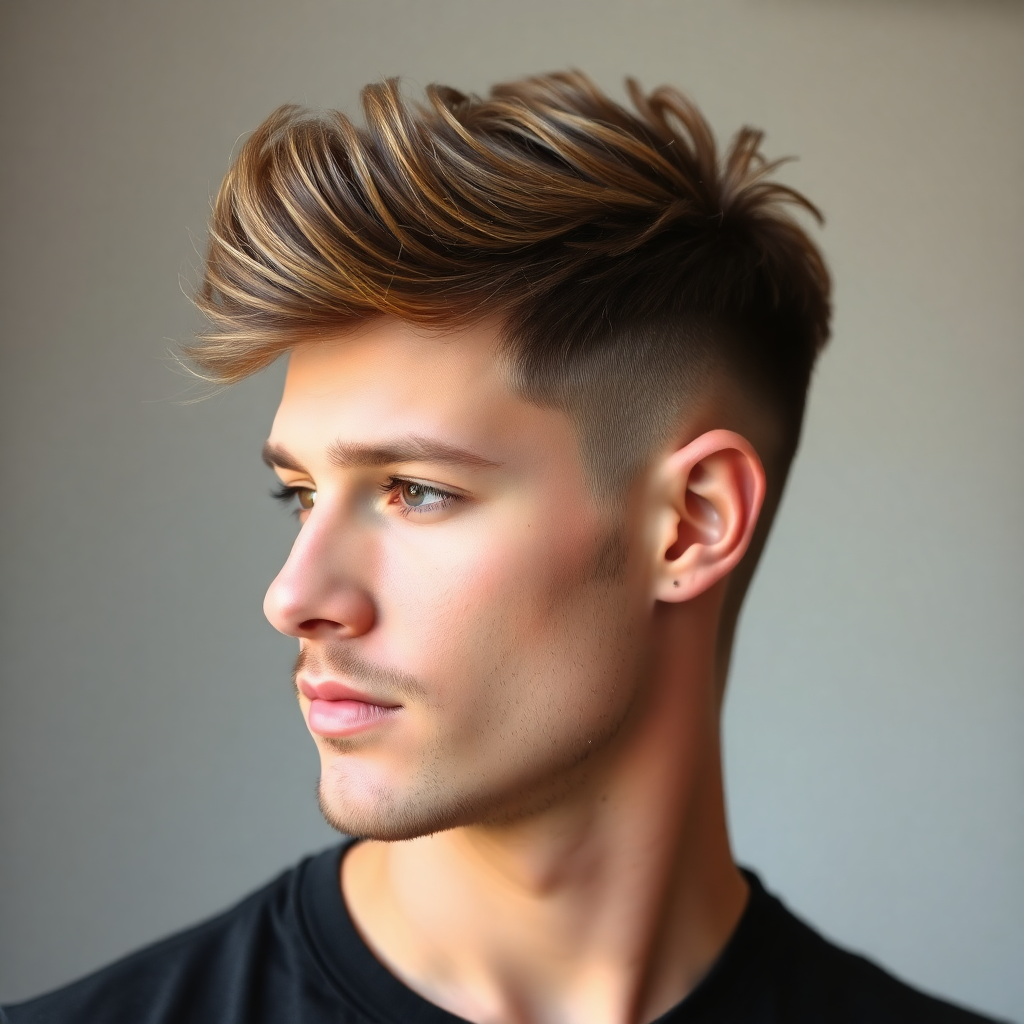
The front and crown stay three to four inches long with rough, separated texture, while the back extends several inches beyond the neckline. Hair around the ears is faded low and close, creating a narrow clean section between the fuller top and longer back. The fringe can sit forward in short pieces or lift slightly for a more open shape.
This is the most unconventional option in the list. It suits thick, wavy, or curly hair because natural texture helps the longer back feel intentional rather than flat. Men seeking trending haircuts for men may like the contrast, but conservative workplaces may call for a softer version. Ask for a low fade around the ears, connected texture through the crown, and visible length at the back. Use matte cream to separate the layers without creating stiff spikes.
Conclusion
Choosing among these 25 ideas comes down to three practical points: natural texture, facial proportions, and the amount of maintenance you are willing to accept. Short buzz cuts, crew cuts, Caesars, and crops need little daily styling but show faded growth sooner. Quiffs, pompadours, curtains, and longer wavy styles offer more movement, though they require extra drying and shaping. Curly tops, waves, twists, afros, and braids work best when the fade supports the natural pattern instead of removing too much weight.
The best haircuts for men are rarely chosen from the haircut name alone. The height of the blend, the amount of temple coverage, the front hairline, and the top length all affect how the result frames the face.
Before visiting the barbershop, save two or three reference images showing the front, side, and back. Explain which details matter most, and mention how much time you spend styling each morning. A low fade succeeds when the clean lower blend feels connected to the person wearing it, not pasted beneath a fashionable top.
Frequently Asked Questions
1. Is a low fade good for a round face?
A low fade can work well because it keeps some visual weight around the upper sides instead of narrowing the head too sharply. Pairing it with moderate height, a textured quiff, or an upward-styled front may create a longer-looking outline.
2. Which low fade haircut suits a square face?
Crew cuts, side parts, textured crops, and short quiffs often complement a strong jaw. Keeping the upper sides slightly full can balance broad facial proportions. A sharp lineup adds structure, while a softer hairline creates a less severe result.
3. What low fade works for an oval face?
Most low-fade variations can fit an oval face because the proportions are naturally balanced. The main choice is top length. A crop creates a compact look, while curtains, curls, a side sweep, or a pompadour add more personality.
4. Can a low fade suit a long face?
It can, but excessive height may make the face appear longer. A forward fringe, Caesar cut, wavy crop, or low-volume side part often creates better balance. Keeping some fullness near the temples can also reduce a narrow appearance.
5. What is a good haircut for chubby face men with a low fade?
A textured quiff, short pompadour, or brushed-up crop can add vertical shape. Avoid making the upper sides too wide. The fade should remain low and gradual so the haircut creates structure without making the cheeks appear broader.
6. Is a low fade suitable for men with a big forehead?
A cropped fringe, Caesar, textured Edgar, or curly forward fringe can cover part of the forehead. Men who prefer an open hairline can choose a side sweep with moderate volume rather than pushing the front straight upward.
7. How do I choose the best hairstyle for face shape?
Compare the width of the forehead, cheekbones, and jaw, then consider the face length. Use top height to add length, fringe to reduce visible forehead space, and side fullness to balance narrow features. Reference photos usually communicate the goal better than labels alone.
8. Does a low fade work with straight hair?
Straight hair shows clean outlines and precise texture well. Crops, comb overs, hard parts, quiffs, and slick backs are strong options. Ask for internal texture if the top feels heavy or falls into one solid block.
9. Which low fade is best for thick hair men?
Textured crops, layered quiffs, pompadours, messy tops, and longer side sweeps can control dense hair while keeping its natural body. The barber may remove weight inside the top, but excessive thinning can cause short pieces to stick outward.
10. Can men with fine hair wear a low skin fade?
They can, although exposed scalp on the sides may increase the visual contrast with a fine top. Leaving a soft shadow rather than bare skin can preserve a fuller appearance. Men’s Health has also noted that keeping some side length may help fine hair retain visible shape.
11. What low fade works for thin hair men?
A short crew cut, textured crop, compact side sweep, or choppy top can reduce the difference between dense and sparse areas. Matte products usually create a fuller appearance than wet gels, which may group strands together and expose more scalp.
12. Are low fades suitable for wavy hair?
A low fade can clean the edges while leaving enough upper-side weight for the wave pattern to move naturally. Wavy crops, loose quiffs, curtain cuts, and longer side sweeps are useful choices. Avoid thinning the top until the waves lose their shape.
13. What low fade is good for curly hair men?
Defined curly tops, forward curly fringes, rounded curls, and short curly crops pair naturally with a low fade. The top should be shaped around its dry curl pattern because curls often sit shorter after drying.
14. Can coily hair be worn with a low fade?
Coily hair works well with rounded afros, sponge twists, waves, short coils, braids, and other shaped tops. Keeping the fade low protects density near the upper sides and gives the texture a stronger frame.
15. What should I tell my barber when asking for a low fade?
Describe where the shortest area should begin, how much skin you want visible, and how dark the upper sides should remain. Then explain the desired top length and styling direction. Bringing clear front and side photos can prevent different interpretations.
16. What clipper guard should I request for a low fade?
The answer depends on whether you want skin, short stubble, or a darker finish. A skin fade reaches bare skin, while numbered guards leave measurable length. Barbering guides commonly separate fade styles by blend height and clipper length.
17. What does a number 1 low fade look like?
A number 1 guard leaves short visible hair rather than exposing bare skin. The barber blends that length upward into longer sections. It creates a softer, darker appearance and usually grows out less dramatically than a razor or zero fade.
18. What is a low skin fade?
The shortest section reaches bare or nearly bare skin around the lower sides and neckline. Hair then becomes gradually longer as the blend moves upward. The transition stays below the main temple area rather than climbing toward the crown.
19. What is a low drop fade?
A low drop fade curves downward behind the ears and sits lower at the back of the head. The rounded path follows the skull rather than creating a level line. It pairs well with crops, curls, twists, and fuller crown shapes.
20. Should I ask for a lineup with a low fade?
A lineup can sharpen the forehead, temples, and sideburn area, but it is optional. Ask for a natural edge if you prefer softer growth. Avoid pushing the line farther back than the natural hairline because future growth may make the difference visible.
21. How can I explain the top length to my barber?
Use inches, finger width, or a reference photo rather than saying “short” or “long.” Explain whether the hair should cover the forehead, stand upward, part to one side, or reach the eyebrows. Clear visual goals are easier to follow.
22. Which product works best for a textured low-fade haircut?
Matte paste, clay, or styling powder can create separation without a glossy finish. Fine hair often needs a lighter product, while dense hair may need firmer control. Start with a small amount and add more only where the shape loses definition.
23. Should I use pomade with a low fade?
Pomade works well for side parts, comb overs, slick backs, and pompadours. Choose the finish based on the haircut: low shine feels modern, while higher shine creates a more traditional appearance. Avoid applying so much that the top becomes flat.
24. Is hair clay good for short haircuts for men?
Clay can add dry texture and hold to crops, quiffs, spikes, and messy layered tops. Warm a small amount between the palms before applying. Work from the back toward the front so excess product does not collect at the hairline.
25. Do I need a blow-dryer for a low fade haircut?
The faded section needs no styling, but longer tops often benefit from controlled airflow. A blow-dryer can create lift in quiffs, shape a pompadour, open curtain sections, or direct a side sweep before product is applied.
26. What styling product should men with curly hair use?
A light curl cream, styling lotion, or soft-hold gel can support definition without forcing the curls into a rigid shape. Apply it while the hair is damp, arrange the curls with the fingers, and let them air-dry or use low diffuser airflow.
27. Can sea salt spray be used on a low-fade hairstyle?
It can add grip and loose texture to wavy, layered, or medium-length tops. Use it lightly because too much may leave some hair feeling dry or rough. A small amount of conditioning cream can soften the finish when needed.
28. How often should a low fade be trimmed?
Many men refresh a low fade every two to four weeks, depending on growth speed and how sharp they want the blend. Skin fades show new growth sooner, while shadow fades and longer tapers may remain balanced for more time.
29. How long does a low skin fade stay sharp?
The cleanest skin contrast may begin softening within the first couple of weeks as short hair becomes visible. The haircut can still look neat after that point, especially when the top and neckline grow in evenly.
30. Does a low fade grow out better than a high fade?
It often produces a softer growing-out stage because more hair remains around the upper sides. The result depends on blending quality, hair density, and top length. A gradual transition usually appears more natural as the shortest section becomes darker.
31. How can I grow out a low fade without awkward sides?
Allow the lower sides to gain length while keeping the neckline and area around the ears lightly cleaned. Ask for scissor blending rather than restarting the fade at every visit. Longer top layers can help cover uneven stages.
32. Can I maintain a low fade at home?
Cleaning the neckline or stray sideburn hairs is easier than rebuilding the blend. A professional fade requires controlled transitions around areas that are difficult to see. GQ’s barber guidance notes that fading involves skills developed through repeated training.
33. Should the top and low fade be trimmed on the same schedule?
Not always. A short crop may need top and side maintenance together, while curtains, curls, braids, or long waves can keep growing as the edges are refreshed. Tell the barber when you want only a fade cleanup.
34. Is a low fade suitable for haircuts for men over 30?
Age does not limit the fade. Men over 30 often choose crew cuts, Ivy League styles, textured crops, side parts, or natural comb overs because they combine a neat outline with manageable top length.
35. What low fade works for haircuts for men over 40?
A shadow fade with a crew cut, short side sweep, textured crop, or connected comb over can look mature without feeling dated. Keeping some upper-side density often creates a softer transition than a dramatic high-contrast skin fade.
36. Are low fades good haircuts for men over 50?
They can be, especially when the fade remains subtle and the top follows natural density. Short Caesars, crew cuts, layered side sweeps, and neat textured tops are common options among hairstyles for older men.
37. Can a low fade work with thinning hair men?
A short, textured top can reduce strong contrast between thinner and denser areas. Avoid leaving isolated long sections that need to be combed across large spaces. A shadow fade may appear softer than taking the lower sides fully to skin.
38. What low fade suits a receding hairline?
A short haircut for receding hairline concerns may include a Caesar, forward crop, buzz cut, or textured crew cut. Keeping the front natural often looks more balanced than creating a sharp artificial line beyond the existing hairline.
39. Can men with a widow’s peak wear a low fade?
Yes. Haircuts for men with widows peak can either display the natural point through a swept-back style or soften it with a crop and loose fringe. The fade height has less effect than the direction and length of the front.
40. What is the difference between a low fade and a mid fade?
A low fade begins close to the ears and lower neckline, preserving more fullness around the temples. A mid fade starts higher on the sides and creates stronger contrast. Both can use skin, zero, or longer guard lengths.
41. What is the difference between a low fade and a high fade?
A high fade removes much more side weight and begins near the upper temple area. A low fade keeps a darker frame around the head. The lower version generally connects more naturally with medium or long top styles.
42. Is a low taper the same as a low fade?
No. A low taper usually shortens limited areas near the sideburns and neckline while leaving most of the sides full. A low fade blends a broader section around the lower sides and back into progressively longer hair.
43. How is a French crop different from a Caesar cut?
A French crop often has stronger texture, more top length, and an uneven or styled fringe. A Caesar is usually shorter and more uniform, with hair directed forward into a compact fringe inspired by a classic shape.
44. What is the difference between a crew cut and an Ivy League haircut?
A crew cut is short on top with extra length near the front. An Ivy League keeps enough front and top length for a visible side sweep or part. Both pair naturally with a subtle low fade.
45. Is a low drop fade different from a regular low fade?
A regular low fade may follow a more level path around the head. A low drop fade curves downward behind the ear and sits lower at the back. The drop shape can emphasize curls, rounded tops, and textured crowns.
46. Are low fades still among popular men’s haircuts?
Low fades remain widely worn because they can be paired with many top styles instead of defining one fixed haircut. Current grooming coverage continues to discuss fade height as a major way to adjust the shape and contrast of a cut.
47. Can a low fade be worn in a professional workplace?
A shadow fade, crew cut, Ivy League, side part, comb over, or short textured crop can fit many workplaces. Keep the blend smooth, the neckline clean, and the top controlled when the setting expects conservative grooming.
48. Which low fades are good summer haircuts for men?
Buzz cuts, short crew cuts, French crops, Caesars, waves, and compact curly tops remove bulk around the lower sides while keeping the overall shape manageable. Men who spend time outdoors may also prefer a top that requires little heat styling.
49. Do low fades work with haircuts for men with beards?
They often create a clean transition between the haircut and facial hair. The sideburn can fade gradually into the beard rather than ending abruptly. Matching the beard density to the upper-side weight usually creates a more connected profile.
50. Which low fade should I save as men’s haircut inspiration before visiting a barber?
Save the style that matches your natural texture, preferred top length, and realistic morning routine. Include one front image, one side image, and one back view when possible. The most useful reference shows the fade height as clearly as the hairstyle above it.
Trending Haircuts and Hairstyles for Men
Explore modern fades, textured crops, classic styles, bold cuts, and fresh hairstyle inspiration for every hair type.