
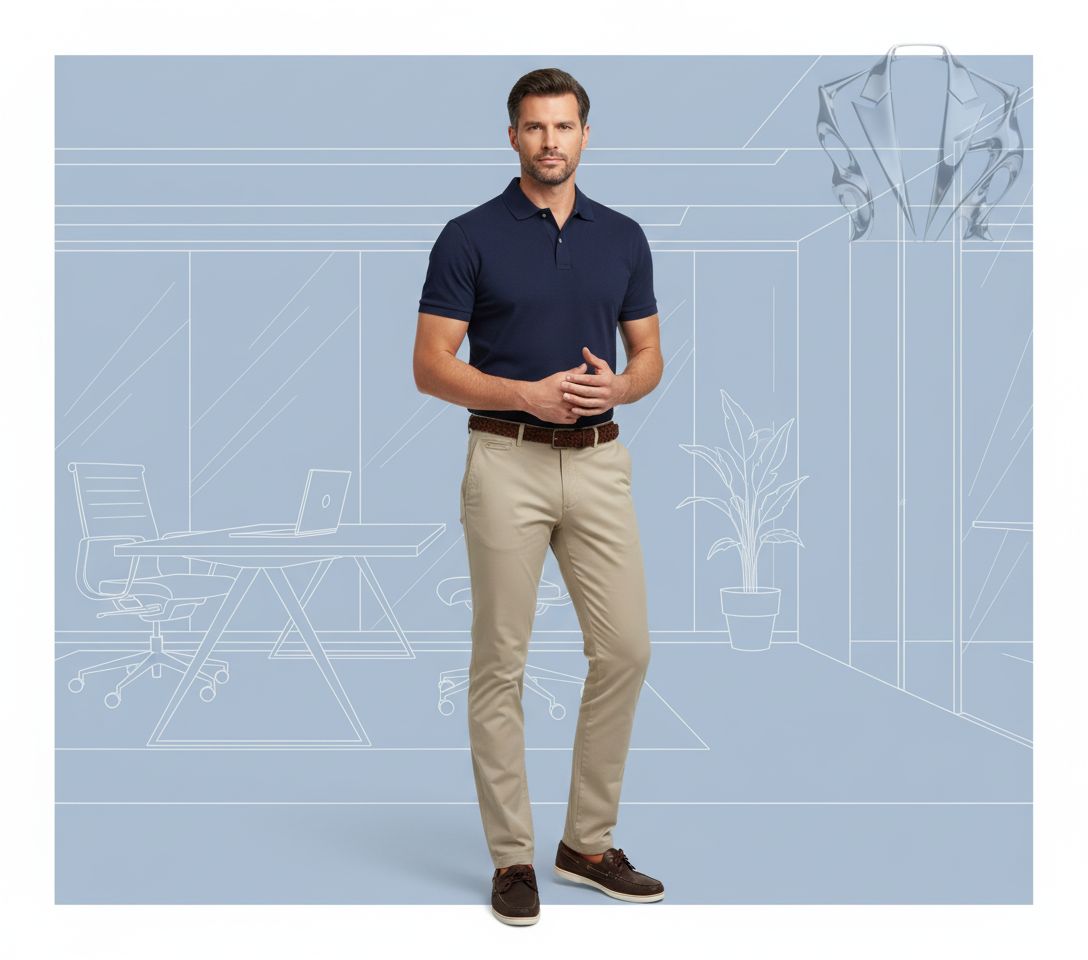
Smart casual style for professionals combines tailored structure with relaxed pieces that still look intentional. Start with a navy blazer, clean Oxford shirt, tapered trousers, leather loafers, and a restrained color palette. The honest catch is simple: smart casual isn’t one fixed dress code, so your workplace, industry, and daily schedule must guide every outfit.
I’ve spent more than a decade styling working men, reviewing office wardrobes, and correcting the small fit problems that make expensive clothing look careless. I’ve worn these combinations through client meetings, business dinners, long commutes, and offices where nobody could clearly explain what “smart casual” meant.
The smart casual style blueprint below gives you dependable starting points without turning your wardrobe into a collection of near-identical navy clothes.
| Situation | Reliable Outfit | Best Footwear | Main Risk |
|---|---|---|---|
| Regular office day | Oxford shirt, chinos, loafers | Penny loafers | Looking too preppy |
| Important meeting | Unstructured blazer, knit polo, wool trousers | Derby shoes | Dressing below the client |
| Creative workplace | Overshirt, crew-neck knit, tapered trousers | Minimal leather sneakers | Looking unfinished |
| Business lunch | Blazer, open-collar shirt, chinos | Suede loafers | Over-accessorizing |
| Casual Friday | Fine-gauge sweater, dark jeans | Chelsea boots | Wearing distressed denim |
| Office presentation | Textured jacket, plain shirt, tailored trousers | Leather derbies | Distracting patterns |
| After-work event | Knit polo, pleated trousers, loafers | Tassel loafers | Looking too formal |
| Warm-weather office | Linen-blend shirt, lightweight trousers | Suede loafers | Visible wrinkles |
| Cold-weather commute | Wool coat, roll-neck, tailored trousers | Sleek boots | Bulky layering |
| Remote video meeting | Collared knit, clean trousers | Clean sneakers | Dressing only above the waist |
What Smart Casual Actually Means at Work
Smart casual sits between a traditional suit and ordinary weekend clothing. It keeps the fit, polish, and visual discipline of businesswear while removing some of its stiffness. You may lose the tie, swap the suit jacket for a softer blazer, or replace dress trousers with chinos, but you don’t abandon standards.
The strongest smart casual style blueprint for professionals begins with context. A financial adviser meeting conservative clients needs more structure than a designer working in a studio. Both can dress smart casual, but their acceptable boundaries are different.
The Outfit Must Still Look Deliberate
The word “casual” causes most of the trouble. Men hear it and reach for whatever feels comfortable, even when the pieces have faded, stretched, or lost their original shape. Comfort matters, but professional smart casual should never look like clothing chosen in the dark five minutes before leaving home.
An outfit looks deliberate when its pieces share a similar level of refinement. A crisp shirt, tailored trousers, and polished loafers belong together. A sharp blazer worn over a gym T-shirt with running shoes creates visual conflict, even when every item is expensive.
This is where I’ve stopped recommending “dress it up with a blazer” as general advice. A jacket cannot rescue everything underneath it. Sometimes it makes the weak pieces more obvious.
Dress Codes Are Relative, Not Universal
Smart casual changes by industry, city, company culture, and even department. At one office, dark denim and clean sneakers may appear polished. At another, the same outfit may suggest you misunderstood the invitation.
Observe the strongest dressers one level above your role. Don’t copy them item for item. Study their degree of formality, how often they wear jackets, whether their shirts have collars, and how much personality appears in their shoes or accessories.
When uncertain, dress slightly above the average rather than far above it. A soft blazer can be removed. Loud sneakers and an untucked printed shirt are harder to correct once you’re already in the meeting.
Who Benefits Most From This Style
A professional smart casual wardrobe works best for people whose days move between different settings. You may start at a desk, meet a supplier after lunch, and attend an informal dinner without returning home. A rigid suit feels excessive, while ordinary casual clothing lacks enough authority.
This approach also suits professionals who want fewer clothes. Because the pieces share colors, fabrics, and proportions, one jacket can work with several trousers, shirts, and knits.
Professionals in Flexible Offices
Technology firms, marketing agencies, property businesses, modern retail offices, and creative companies often allow broad freedom. That freedom can become a trap. When everyone dresses differently, the person who looks consistently composed gains an advantage without appearing overdressed.
Your goal isn’t to become the office fashion character. You want to look ready. A navy overshirt over a knitted polo can feel relaxed at a shared desk, yet remain suitable for an unexpected visitor.
I’ve seen men buy ten statement shirts because their workplace had no strict policy. Six months later, they had plenty of clothing but almost no complete outfits. Flexible offices reward coordination more than novelty.
Managers, Consultants, and Client-Facing Specialists
Leadership roles require a little distance from pure casualwear. People notice whether a manager appears prepared, especially during difficult conversations, presentations, or negotiations. Clothing cannot create competence, but careless clothing can cast doubt on it.
For these professionals, the smart casual style blueprint should lean toward tailored trousers, collared knits, proper outerwear, and refined leather footwear. Jackets should remain available even when they aren’t worn every day.
A consultant may choose a textured blazer rather than a full suit. A department manager might wear a fine merino sweater over an Oxford shirt. The effect is approachable authority, not corporate costume.
The Foundation of a Reliable Wardrobe
A useful professional wardrobe isn’t built around individual “great pieces.” It’s built around combinations. Every purchase should connect with several things you already own, or it becomes an expensive wardrobe guest that never earns its space.
Keep the foundation neutral, then add personality through texture, proportion, and one controlled point of interest. This method may sound restrained. In practice, it gives you more wearable outfits than a wardrobe packed with competing colors.
Start With Jackets That Aren’t Suit Jackets
The easiest smart casual jacket is an unstructured blazer. It has softer shoulders, lighter construction, and less formality than a traditional business suit jacket. Navy remains the safest first choice because it works with grey, stone, olive, brown, cream, and dark denim.
Texture matters. Hopsack, brushed cotton, linen blends, and soft wool make a jacket look separate from matching suit trousers. A shiny, heavily padded suit jacket worn with chinos usually looks like half a suit because that’s exactly what it is.
Your second layer could be a chore jacket, overshirt, or refined bomber. Keep the pockets clean, the hardware quiet, and the fabric substantial enough to hold its shape. Thin nylon bombers often read too sporty for professional use.
Choose Shirts and Knits With Clean Collars
Oxford cloth button-down shirts are dependable because their texture reduces formality without looking careless. White, pale blue, and soft stripes handle most offices. A brushed cotton shirt works in colder months, while linen blends help during warm weather.
Knitted polos have become one of my most-used recommendations. They’re softer than dress shirts but more composed than basic polos. Look for a collar that sits properly beneath a jacket rather than collapsing into a wrinkled strip.
Crew-neck merino sweaters, mock necks, and fine cardigans also fit the blueprint. Avoid deep V-necks and bulky novelty knits. They tend to make the outfit feel dated or recreational.
Build Around Trousers That Hold Their Shape
Trousers carry more of the outfit than most men realise. A good shirt cannot compensate for sagging chinos or trousers that bunch heavily over the shoes. Look for a clean waist, enough room through the seat and thigh, and a controlled taper below the knee.
Start with charcoal or mid-grey wool trousers, navy chinos, and stone chinos. Olive can follow once the basics are covered. Dark brown is useful too, though it requires a little more care when matching shoes and jackets.
Pleats aren’t automatically formal or old-fashioned. A single forward pleat can improve comfort and create a cleaner line, especially for men with athletic thighs. The trick is proper rise and restrained volume, not squeezing every leg into a low-rise skinny cut.
Use Dark Denim Carefully
Jeans belong in some professional wardrobes, but not all denim is equal. Choose a dark, even wash with minimal fading, clean hems, and no distressing. Mid-rise straight or tapered fits are easier to combine with tailored clothing than tight spray-on jeans.
The contrast between denim and a blazer should feel intentional. A textured jacket, Oxford shirt, and suede loafers usually work better than a formal navy suit jacket, glossy dress shirt, and black jeans.
And check the office before assuming denim is welcome. “Casual Friday” does not always mean jeans, particularly in law, finance, government, or traditional client-facing businesses.
Shoes Set the Final Level of Formality
Shoes decide whether the outfit reads as professional, relaxed, or unfinished. They sit at the bottom of the body, yet they often become the first weak point people notice because worn soles, square toes, and dirty uppers are hard to ignore.
A strong smart casual style blueprint for professionals needs at least two footwear levels: one polished leather option and one relaxed option. That gives you enough range for ordinary workdays, presentations, dinners, and informal events.
Loafers and Derbies Do Most of the Work
Brown penny loafers are among the most adaptable office shoes. They work with wool trousers, chinos, and dark denim. Suede versions feel softer, while smooth leather offers more polish.
Derby shoes are slightly more substantial than many Oxfords and tend to suit smart casual combinations better. Choose rounded or gently almond-shaped toes. Avoid exaggerated points, heavy shine, and oversized soles unless your clothing deliberately supports that look.
Black shoes still have a place, especially with charcoal trousers and monochrome outfits. But medium and dark brown usually offer more flexibility for a first professional wardrobe.
Minimal Sneakers Need Stricter Standards
Sneakers work only when the office accepts them and the rest of the outfit carries enough structure. Plain leather sneakers in white, off-white, dark brown, navy, or black are the safest. Keep the sole profile modest and the branding quiet.
They must be clean. Not “clean enough.” Actually clean.
I’ve retired sneakers from work rotation before the uppers were worn out because the soles had yellowed and the shape had collapsed. That may seem wasteful, but professional sneakers live a harder life than weekend pairs. Once they look tired, the entire outfit follows.
Boots Can Sharpen Cold-Weather Outfits
Chelsea boots, sleek lace-up boots, and refined chukkas work well with tailored trousers and dark denim. They add visual weight beneath coats and heavier knitwear, which prevents winter outfits from looking top-heavy.
Avoid rugged work boots unless your field or environment supports them. Deep lug soles, contrast stitching, and bulky padded collars can overpower tailored clothing. A boot doesn’t need to look delicate, but it should share the same visual language as the trousers above it.
Professional Outfit Formulas That Rarely Fail
The most practical smart casual style blueprint is built from repeatable formulas. You don’t need to invent a new identity every morning. You need several combinations that can be adjusted through fabric, color, footwear, and outerwear.
Use these formulas as frameworks rather than uniforms. Once the proportions work, small changes keep them from feeling repetitive.
The Everyday Office Formula
Wear an Oxford shirt with tapered chinos and brown loafers. Add an unstructured navy blazer when you have a meeting, presentation, or client visit. Remove it at your desk.
This combination succeeds because each piece occupies the middle of the formality scale. Nothing feels ceremonial, yet nothing looks accidental. Pale blue and white shirts are easiest, while stone, navy, and olive trousers provide enough variation.
The drawback is predictability. If every man in your office dresses this way, add texture rather than louder color. Try a brushed Oxford, suede loafers, or a knitted tie on days when you need more presence.
The Modern Minimal Formula
Pair a fine-gauge crew-neck knit with tailored trousers and clean leather sneakers or loafers. A lightweight coat or overshirt finishes the look without forcing business formality.
This works well in design, technology, media, and modern service companies. The neckline stays clean on video calls, and the trousers stop the knit from drifting into weekend territory.
Fit becomes unforgiving here because the outfit has few distractions. A stretched collar, trousers with excess break, or a sweater that clings around the waist will show immediately. Simple clothing demands better condition.
The Client Meeting Formula
Combine a textured blazer with a plain shirt or knitted polo, wool trousers, and leather derbies. Keep the colors quiet enough that your face remains the focus.
For conservative clients, wear the shirt and choose darker trousers. For a relaxed lunch or creative presentation, the knitted polo may feel more natural. A pocket square is optional, though I’d skip one when the rest of the office never wears them.
This formula should make you feel prepared, not decorated. The second you start adjusting your cuffs, collar, and accessories every few minutes, the clothing is wearing you.
The Casual Friday Formula
Choose dark denim, a collared shirt or fine knit, and suede loafers, Chelsea boots, or clean sneakers. Add a chore jacket or relaxed blazer depending on the office.
The jeans must remain the most casual element. Once you add a graphic T-shirt, athletic footwear, and a hoodie, the outfit no longer has enough professional structure.
Casual Friday is also a poor day to test every trend at once. One relaxed change is enough. Keep the rest familiar.
The Warm-Weather Formula
Wear a linen-blend shirt or knitted polo with lightweight tailored trousers and loafers. An unlined jacket can be carried for air-conditioned rooms, formal conversations, or evening plans.
Pure linen feels excellent but wrinkles quickly. That isn’t automatically a problem; soft creasing is part of the fabric’s character. Deep, crushed folds around the waist and elbows are less charming in a client meeting.
Choose breathable trousers with enough room through the thigh. Tight summer clothing traps heat and shows perspiration faster, which defeats the reason you bought lightweight fabric.
The Cold-Weather Formula
Layer a fine roll-neck or crew-neck sweater beneath a wool coat, then add tailored trousers and sleek boots. A blazer can sit between the knit and coat when the occasion requires more structure.
Keep each layer relatively trim, but don’t size down until movement becomes difficult. Winter outfits often fail because men try to preserve a sharp silhouette with clothing that cannot accommodate the layers underneath.
The smartest investment is often the coat. People see it during the commute, at building entrances, and while you arrive. A worn technical jacket over good office clothing weakens the first impression before the coat comes off.
Fit, Color, and Fabric Decisions
Expensive clothing doesn’t guarantee a convincing result. Fit controls the outline, color controls the relationships between pieces, and fabric controls how formal or relaxed the whole outfit feels.
Get those three decisions right and a modest wardrobe can look considered. Ignore them, and even respected labels will struggle.
Prioritize Balance Over Tightness
Smart casual clothing should follow the body without tracing every line. Jacket shoulders should end close to your natural shoulder point. Shirts should allow movement across the back. Trousers should fall cleanly rather than grip the thigh and calf.
Many men confuse slim with sharp. I did too, until long workdays made it obvious that tight clothing wrinkles faster, pulls at buttons, and rarely looks relaxed. A little ease creates a straighter line.
Tailoring helps most at sleeves, trouser hems, and the waist of jackets. These visible adjustments often matter more than changing the entire garment.
Keep the Palette Controlled
Navy, charcoal, grey, brown, stone, white, pale blue, olive, and cream form a useful professional palette. They mix easily and allow texture to carry more visual interest.
You don’t need to dress without color. Burgundy knitwear, rust outerwear, forest-green trousers, or a muted blue overshirt can work well. Keep brighter shades to one main piece and surround them with quieter colors.
Black deserves care. An all-black outfit can look clean in creative settings, but cheap fabrics, lint, and fading become obvious. Mixing several slightly different blacks can also look accidental under strong office lighting.
Let Texture Replace Loud Patterns
Texture gives an outfit depth without demanding attention. Suede, brushed cotton, hopsack wool, ribbed knits, flannel, and pebbled leather all create subtle contrast.
Patterns should remain proportionate to the setting. Fine stripes, small checks, and muted herringbone are easy to manage. Large windowpanes and bright prints may dominate meetings, photographs, and video calls.
A useful rule is to let only one piece speak loudly. When the jacket, shirt, trousers, socks, and shoes all compete, the outfit loses hierarchy.
How to Build the Wardrobe Without Overspending
A smart casual style blueprint for professionals should reduce waste, not encourage endless shopping. Build by outfit function, beginning with the situations you face most often. A man who rarely attends formal meetings doesn’t need four blazers before buying proper everyday trousers.
Buy slowly enough to notice what you actually wear. Your early purchases will reveal whether you prefer shirts, knits, jackets, or lighter layers.
Audit Your Current Clothes First
Place your work clothing where you can see it. Remove pieces that no longer fit, need repair, show permanent stains, or haven’t been worn for a full working year. Be honest about fantasy clothing bought for a role or lifestyle you don’t have.
Then identify gaps in combinations. You may own eight shirts but only one pair of acceptable trousers. You may have several jackets with no shoes that suit them. The problem is often imbalance, not shortage.
Photograph the outfits that already work. This prevents unnecessary duplication and makes future shopping more focused.
Buy in the Right Order
Start with two pairs of trousers, three shirts or collared knits, one versatile jacket, and one pair of quality shoes. Add a second footwear option next, followed by seasonal knitwear and outerwear.
A practical first capsule might include charcoal wool trousers, navy chinos, white and blue Oxford shirts, a navy blazer, a knitted polo, and brown loafers. The exact pieces should reflect your climate and office.
Spend more where fit, wear, and repairability matter. Shoes, coats, jackets, and frequently worn trousers usually deserve a larger share of the budget. Trend-led shirts and seasonal accessories can cost less.
Test Every Purchase Against Three Outfits
Before buying something, name three complete outfits you can create with it immediately. Not imaginary future purchases. Clothes already hanging in your wardrobe.
This test has saved me from patterned jackets, unusually colored trousers, and beautiful shoes that matched almost nothing I owned. Admiring an item isn’t the same as having a use for it.
Also test movement. Sit, reach, walk, and bend your knees. Office clothing spends hours in chairs, cars, trains, and meeting rooms. A fitting-room mirror tells only part of the story.
Where Smart Casual Is Oversold
Smart casual is often presented as effortless freedom. It isn’t. The dress code removes clear rules while still expecting good judgment, which can make it harder than wearing a standard suit.
The system also gets marketed as an excuse to buy hybrid products that solve no real problem. Some do work. Plenty sit awkwardly between sportswear and tailoring.
A Blazer Doesn’t Make Every Outfit Professional
Throwing a blazer over a T-shirt has become the default visual shorthand for smart casual. Sometimes it works, particularly with a substantial plain T-shirt, relaxed tailoring, and refined shoes. Often it looks like two unfinished outfits forced together.
Thin undershirts, deep scoop necks, stretched collars, and bold graphics don’t improve beneath a jacket. The contrast usually makes them look cheaper.
Professionals in conservative roles should treat the T-shirt-and-blazer combination cautiously. It may be acceptable at an internal event and still feel misplaced during a serious client conversation.
Luxury Branding Cannot Replace Fit
Logos don’t create polish. A heavily branded belt, designer sneaker, or recognizable jacket may cost more than the rest of the outfit, yet still look awkward when the proportions are wrong.
I’ve returned premium pieces because the cut fought my wardrobe. That decision becomes easier once you stop treating the label as proof that the item belongs.
Quiet clothing also ages better in professional settings. People remember the man who dresses well more positively than the man who repeatedly displays what he paid.
Hybrid Clothing Often Solves the Wrong Problem
Sneaker-soled dress shoes, performance blazers, stretch dress shirts, and commuter trousers promise comfort with office polish. Some are useful for frequent travel or long days. Others look overly technical, shine under light, or develop an artificial drape.
The bigger issue is that comfort problems often come from poor fit. A correctly sized wool trouser can feel better than an extremely stretchy pair cutting tightly into the waist.
Don’t buy a technological solution before checking whether you need a better cut, softer construction, or more room.
Some Offices Still Require Business Dress
Smart casual isn’t suitable for every professional situation. Court appearances, formal financial meetings, diplomatic settings, senior interviews, ceremonies, and certain corporate events may still require a suit and tie.
Read the room before trying to modernize it. Being slightly overdressed is usually manageable. Appearing indifferent to the occasion is harder to recover from.
And when an invitation gives a clear dress code, follow it. Personal style works inside the social agreement, not against it.
Frequently Asked Questions
The questions below address the decisions professionals most often face while turning general smart casual advice into real weekday outfits.
What is smart casual style for professional men?
Smart casual style for professional men combines structured pieces such as blazers, collared shirts, tailored trousers, and leather shoes with more relaxed items like chinos, knitted polos, dark denim, or minimal sneakers. The outfit should look intentional, fit properly, and suit the formality of the workplace.
Can professionals wear jeans for smart casual?
Professionals can wear jeans when their workplace accepts denim. Choose a dark, even wash with no rips, heavy fading, or decorative stitching. Pair the jeans with a collared shirt, structured knit, overshirt, or textured blazer. Conservative offices and formal client meetings may still require trousers.
Are sneakers acceptable with professional smart casual outfits?
Sneakers are acceptable in many modern workplaces when they’re minimal, clean, and in good condition. Plain leather designs are easier to wear than running shoes or heavily branded pairs. Balance them with tailored trousers, a collared top, or a structured outer layer so the outfit retains professional intent.
Does a smart casual style blueprint require a blazer?
A blazer is useful but not mandatory. Overshirts, chore jackets, fine knitwear, and refined coats can provide enough structure for ordinary office days. Keep a versatile unstructured blazer available for meetings, presentations, lunches, and events where your usual outfit may need a quick increase in formality.
What colors work best for a professional smart casual wardrobe?
Navy, charcoal, mid-grey, stone, brown, white, pale blue, olive, and cream are dependable because they combine easily. Introduce stronger colors through one garment at a time, such as burgundy knitwear or a green overshirt. A controlled palette creates more outfits from fewer pieces.
Should a smart casual shirt be tucked in?
Tuck in dress shirts and longer Oxford shirts, especially with tailored trousers or a blazer. A shorter knitted polo or casual shirt can remain untucked when its hem ends around mid-fly and looks intentionally designed that way. Avoid long shirttails hanging beneath jackets or sweaters.
How many shoes does a professional smart casual wardrobe need?
Two pairs can cover most situations at the beginning. Choose brown loafers or derbies for polished days, then add clean leather sneakers, suede loafers, or sleek boots for relaxed outfits. Rotate them rather than wearing one pair daily, which helps the materials recover and extends their useful life.
How can professionals look smart casual without appearing overdressed?
Match the general formality of your office, then improve fit, condition, and coordination rather than adding formal accessories. A soft blazer, open-collar shirt, tailored trousers, and loafers usually feel approachable. Skip shiny fabrics, stiff suit jackets, elaborate pocket squares, and highly polished formal shoes.
What should professionals avoid in a smart casual outfit?
Avoid distressed jeans, gym shoes, stretched collars, visible undershirts, oversized logos, wrinkled trousers, novelty socks in serious settings, and suit jackets worn as casual blazers. One questionable item can sometimes pass, but several together make the outfit look careless rather than relaxed.
The best professional wardrobe is the one that removes hesitation before work. Create enough structure to be taken seriously, then leave enough ease to move through the day naturally. Your smart casual style blueprint should reflect your actual office rather than a staged campaign image. Tonight, assemble and photograph three complete outfits you can wear this week.
Essential Style Reports
Sharp fashion guides, wardrobe rules and accessory advice.