

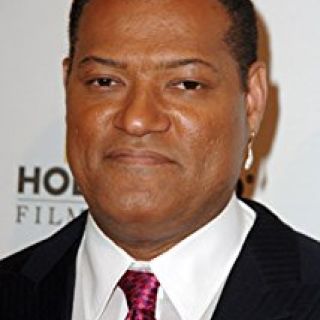
Laurence Fishburne has the kind of presence that makes simple clothing look deliberate. Decades of playing commanders, fathers, judges, mentors, and men under pressure have trained audiences to read authority in his posture before he speaks. That same quality shapes his public wardrobe. He rarely depends on loud logos. Instead, he works through proportion, rich color, confident tailoring, clean grooming, and one memorable detail.
The American actor, producer, playwright, and director is best known around the world as Morpheus in The Matrix, yet his career stretches from Apocalypse Now and Boyz n the Hood to Broadway, Black-ish, the John Wick films, The Amateur, and The Witcher. His style matters because it has aged with him rather than fighting time. Burgundy suits, deep navy tailoring, mandarin collars, tonal shirts, statement glasses, and relaxed travel clothing all fit the same idea: comfort should support dignity, not weaken it.
The clearest documented designer connection is Ozwald Boateng, though no reliable public record proves a fixed list of “favorite labels.” Fishburne’s better lesson is broader. Buy shape before status, use color with control, and let grooming complete the line of the outfit. This profile follows that practical angle while separating verified details from recycled celebrity claims.
Biography, Age & Background
Fishburne’s biography explains much of the gravity people associate with him. He began working while most children were still discovering what they liked, moved between the South and New York, and learned professional discipline inside demanding stage and film environments. Those experiences gave him an unusual mix of formality and street awareness. They also help explain why his modern image feels composed without appearing sheltered. At 64 in July 2026, he carries more than five decades of work into every public appearance, but his identity has never rested on a single franchise.
From Augusta to Brooklyn: A Childhood Shaped by Movement
Laurence John Fishburne III was born on July 30, 1961, in Augusta, Georgia. He was raised largely in Brooklyn after his mother, Hattie Bell, moved north following the separation of his parents. Public biographies describe her as a teacher, while the man Fishburne knew as his father, Laurence John Fishburne Jr., worked in juvenile corrections. The shift from Georgia to New York placed him between distinct regional cultures at an early age.
That background helps explain the balance in his public manner. He can project Southern formality without stiffness and New York directness without theatrical aggression. His clothes often follow the same pattern. A conventional suit may arrive in wine, purple, green, or midnight blue. A formal silhouette is softened by an open collar or dark knit.
The result is neither conservative nor rebellious. It is controlled, which is a more useful goal for most men than trying to look fashionable in every photograph.
Working Before Adulthood Changed His Discipline
Fishburne entered professional acting as a child and appeared on television and stage before taking the role of Mr. Clean in Francis Ford Coppola’s Apocalypse Now. He was younger than the production believed when he was cast, and the long shoot in the Philippines carried him through part of his adolescence. Later roles in Cornbread, Earl and Me, The Color Purple, School Daze, and King of New York built a foundation before his mainstream breakthrough years.
Starting that young did more than lengthen his résumé. It taught him how costume, posture, and voice work together. Fishburne has played figures whose clothing communicates rank before dialogue does: Furious Styles, Morpheus, Thurgood Marshall, Jack Crawford, and the Bowery King.
His own wardrobe often borrows that clarity. Jackets have defined shoulders, shirts sit cleanly at the neck, and accessories rarely compete. The practical lesson is simple: dress as though the room should understand your role before you explain it.
Reclaiming Laurence After Years as Larry
For much of his early screen career, he was credited as Larry Fishburne. By the early 1990s, as his work grew more substantial, he returned publicly to Laurence. That period overlapped with Boyz n the Hood, Two Trains Running, Deep Cover, and What’s Love Got to Do with It, projects that established him as a leading dramatic actor rather than a familiar supporting presence.
A name change does not create artistic maturity, but it can signal ownership. Fishburne’s later image feels built on that principle. He does not dress like a man borrowing a trend for one press cycle. Even his riskier looks seem connected to an established sense of self.
Men can apply the same idea without changing their names: remove wardrobe choices that belong to an outdated version of you. Keep what still fits your life, then sharpen the rest with better cloth, better alterations, and clearer intent.
Height, Weight & Body Measurements
Physical information about actors is often copied from one database to another until estimates appear official. Fishburne’s height has a reasonably consistent public listing, but current weight, chest, waist, shoe size, and other measurements are not confirmed by a reliable first-person or professional source. The useful subject is not a speculative number. It is how his broad frame, head shape, stance, and mature proportions interact with clothing. His strongest outfits respect scale through substantial lapels, balanced jacket length, and trousers that do not cling. That approach matters more than chasing a celebrity’s measurements.
What Is Laurence Fishburne’s Reported Height?
IMDb lists Fishburne at 6 feet and three-quarter inch, or about 1.85 meters. Other entertainment databases round him to 6 feet, which shows why a precise fraction should be treated as a reported figure rather than a medically verified measurement. On screen, footwear, camera angle, posture, and the height of fellow actors can also distort perception.
For menswear, the difference between 6 feet and 6 feet 1 inch matters less than vertical balance. Fishburne often wears jackets long enough to cover the seat and create a steady line from shoulder to thigh. That keeps a solid torso from looking square.
Men with a similar build should resist cropped suit jackets, narrow lapels, and low-rise trousers worn with short shirts. A moderate rise and a clean break make the body look composed rather than divided into competing blocks.
A Broad Frame That Favors Clean Tailoring
Fishburne’s public appearances show a substantial upper body, broad shoulders, and a grounded stance. He is not built like a runway sample, which is one reason his tailoring offers practical value. Dark navy suits, one-button evening jackets, mandarin-collar pieces, and structured two-button coats give his frame definition without trying to make it appear smaller. Getty’s red-carpet archive shows this pattern across years rather than in one isolated outfit.
The best jackets on him create room across the chest, then fall cleanly instead of pulling at the button. Wider men often make the mistake of sizing up everywhere, producing sleeves and hems that look loose.
Fishburne’s better looks suggest another route: fit the largest area, then have the waist, sleeve, and trouser line adjusted. Structure should guide the body, not squeeze it. A tailor cannot turn poor cloth into luxury, but correct balance can make a modest suit look considered.
Why Exact Weight and Measurements Remain Unconfirmed
No dependable current source publishes Fishburne’s verified weight, chest, waist, biceps, or shoe size. Websites that offer exact figures rarely explain when the measurements were taken, who took them, or whether they refer to a film role from decades earlier. Because body weight changes naturally, repeating a single number as permanent fact would create false precision.
His appearance in Clipped, where he played basketball coach Doc Rivers, also shows why visual comparison can mislead. Costume, padding, posture, movement, and character work all affect the silhouette.
For readers, the right takeaway is to measure their present body rather than shop according to a celebrity chart. Record shoulder width, jacket chest, natural waist, trouser rise, inseam, and preferred hem. Those numbers produce useful clothing decisions. A guessed celebrity weight does not.
Wife, Girlfriend & Family
Fishburne has lived much of his adult life in public, but he has generally kept family matters separate from promotion. Reliable reporting confirms two marriages, three publicly known children, and a later discovery about his biological father. It does not confirm a current wife or publicly established girlfriend as of July 2026. That distinction matters because celebrity profiles often convert silence into rumor. His family story is more meaningful when treated through confirmed relationships, fatherhood, and the way recent genealogy research changed his understanding of where he came from.
Two Marriages and His Current Public Relationship Status
Fishburne married Hajna O. Moss in the 1980s, and the couple later divorced. He married actress Gina Torres in 2002. They separated in 2016, announced the split in 2017, and completed their divorce in 2018. Public statements at the time emphasized continued care for their daughter and respect for the family they had built.
No solid current reporting confirms that Fishburne is remarried or has a publicly acknowledged girlfriend. The responsible wording, then, is that his present relationship status is private or unconfirmed.
This restraint also suits his public image. He attends premieres for work, often with colleagues or family, without turning companionship into branding. For style readers, that creates a useful contrast with celebrity couple dressing. His wardrobe must stand on its own, and it does.
Fatherhood Across Three Children
Fishburne is publicly known as the father of Langston, Montana, and Delilah. Langston and Montana are from his marriage to Moss, while Delilah is his daughter with Torres. Langston has worked as an actor and dancer, and Delilah has appeared with her father at public events, including coordinated formal looks that showed a playful family approach to clothing.
The children’s lives should not be reduced to extensions of his fame. What is relevant to his profile is the recurring connection to the arts. Fishburne began acting young, then raised children who have explored performance, dance, theater, and other creative work.
His red-carpet appearances with Delilah also reveal a warmer side of his style. Matching or related colors look less like image management and more like shared occasion dressing. The lesson is not to copy a celebrity family outfit. It is to coordinate tone without forcing identical clothes.
What Finding Your Roots Changed About His Family Story
In a 2025 episode of PBS’s Finding Your Roots, Fishburne learned the identity of his biological father after living for years with uncertainty. Reporting on the episode said he reacted with relief and strong emotion. He also spoke with affection about the man who raised him, including memories of being introduced to adult films and cinema culture.
The discovery adds depth to a public figure often associated with certainty and command. Identity, in his case, was still capable of changing late in life. That makes his current style feel less like armor and more like settled self-possession.
Mature menswear works best in the same way. It should leave room for revision. A man can keep his signature colors, glasses, or tailoring while admitting that his understanding of himself has moved. Consistency is valuable; rigidity is not.
Career, Income & Net Worth
Fishburne’s career is unusually wide: child actor, film lead, character actor, producer, playwright, director, Broadway performer, television regular, voice actor, and franchise presence. That range has likely created several income streams, but contracts, residuals, investments, property holdings, and private business arrangements are not publicly audited. His financial profile should therefore be read through career durability rather than an unsupported fortune figure. More than fifty years of credited work, major awards, studio films, premium television, and stage projects indicate strong earning power without revealing a confirmed bank balance.
The Run From Apocalypse Now to an Oscar Nomination
After his early work, Fishburne’s 1990s run changed his standing. Boyz n the Hood made Furious Styles one of his defining roles. Deep Cover gave him a morally tense lead, and August Wilson’s Two Trains Running brought him a Tony Award. His portrayal of Ike Turner in What’s Love Got to Do with It earned a Best Actor nomination at the 1994 Academy Awards.
This phase also fixed his association with authority, danger, and intelligence. Those qualities later became commercial assets. A Fishburne character could explain a complicated world, threaten its villains, or steady its hero.
In fashion terms, his career supplied a durable archetype: the commanding adult in excellent outerwear. It is easy to focus on Morpheus’s coat and glasses, but the deeper style asset is credibility. Clothing became memorable because the actor wearing it had already built weight into his screen presence.
Morpheus, Broadway, Television, and Long-Term Earning Power
The Matrix brought global recognition and a visual identity that remains part of popular culture. Fishburne later added major roles in CSI, Hannibal, Black-ish, the John Wick series, DC and Marvel projects, and Broadway productions including Thurgood and American Buffalo. In 2025, he appeared in The Amateur and joined The Witcher as Regis, showing that his franchise value remains active in his sixties.
Long careers are rarely built from one kind of paycheck. Acting fees, producing credits, voice work, theater, television contracts, and residual arrangements may all contribute, though his individual terms are private.
The career lesson resembles his wardrobe strategy: build several reliable foundations, then add selective risks. A navy suit is the equivalent of dependable television work. A patterned mandarin-collar set is closer to an unusual stage role. Both become stronger when the person knows when each belongs.
Why His Net Worth Cannot Be Confirmed Responsibly
Celebrity-finance sites publish estimates for Fishburne, but no official filing, audited statement, or direct disclosure confirms a precise net worth. Such numbers may overlook taxes, management fees, divorce settlements, ownership percentages, debt, residual structures, and changes in asset value. Presenting one estimate as fact would imply access that the public does not have.
A more defensible conclusion is that Fishburne has had a high-earning career with exceptional longevity. He has worked in large studio franchises, acclaimed independent films, network and streaming television, Broadway, and production.
That does not translate cleanly into a number. Readers should treat any exact fortune online as a media estimate, not a verified account. His strongest form of wealth on public display is career choice: the ability to move between commercial work and demanding material without losing authority.
House, Cars & Luxury Lifestyle
Fishburne’s lifestyle is less documented than his filmography. Older profiles connect him to New York, Los Angeles, travel, motorcycles, and an appreciation for privacy, but current property records and collections are not reliably described in major interviews. That gap should not be filled with speculative house prices or lists of cars pulled from fan pages. His visible version of luxury is more restrained: fine tailoring, cultural travel, long-term professional freedom, and selective personal passions. The distinction is useful because premium living does not always require constant proof through possessions.
A Private Approach to Homes and Real Estate
Public profiles over the years have placed Fishburne in both New York and Los Angeles, cities tied closely to his stage and screen work. Yet dependable current reporting does not offer a clear, updated inventory of homes, purchase prices, interior design, or real-estate investments. Any specific street address would also be inappropriate to repeat, even when older records can be found.
The absence of a house tour fits his wider image. Fishburne sells performances, not access to every room of his life. For a lifestyle audience, that restraint is worth noticing.
A well-designed home does not need to function as content. The same rule applies to a wardrobe: the best pieces can serve the owner for years without being posted, tagged, or explained. Privacy can be part of luxury because it protects attention, and attention is often scarcer than space.
Motorcycles, Freedom, and the Lifestyle Choice He Has Discussed
A detailed New Yorker profile reported that Fishburne learned to ride a motorcycle in the mid-1990s for the film Fled and later owned several bikes. He described riding in terms of freedom rather than speed and took extended trips, including routes in Europe and Florida. The profile connected that interest to his desire to move without an entourage.
That is one of the clearest publicly documented lifestyle passions associated with him. It also helps explain why long coats, boots, dark glasses, leather, and scarf-like layers feel natural around his image even when they are not literal riding gear.
Men should be careful here: costume imitation can become forced. The better move is to borrow function. Choose an outer layer that handles wind, shoes with stable soles, gloves that fit, and eyewear proportionate to the face. Practicality often creates more authentic style than themed dressing.
Luxury Without Constant Display
Fishburne attends international festivals, premieres, theater events, and awards ceremonies, so his work naturally places him around high-end hotels, formal clothing, and global travel. Getty’s event archive shows a wardrobe that can move from black tie to relaxed suiting without depending on visible monograms.
No reliable evidence supports a definitive list of his car collection, watch collection, private aircraft use, or favorite resorts. That uncertainty should remain visible.
What can be observed is a preference for experiences and clothing that age well: theater, cinema, motorcycles, tailoring, and travel linked to work. The modern lesson is to spend where use and identity meet. A good overcoat worn for ten winters carries more personal value than a flashy purchase that needs an audience.
Celebrity Fashion & Personal Style
This is where Fishburne offers his strongest value to a menswear reader. His wardrobe combines old-school authority with flashes of color, Afro-diasporic tailoring, stage confidence, and relaxed comfort. He can wear a conventional navy suit, a burgundy two-piece, a patterned mandarin-collar ensemble, or a pajama-like airport set without losing his identity. The connecting thread is scale. His clothes have enough visual weight for his frame and enough restraint for his manner. Rather than treating “premium” as a price tag, he treats it as presence, cloth, proportion, and finish.
The Ozwald Boateng Connection and His Clearest Label Preference
The strongest documented designer link is Ozwald Boateng, the British-Ghanaian tailor known for vivid color and sharp Savile Row structure. Fishburne has been quoted praising the effect of a Boateng suit, and he wore Boateng tailoring in his 2024 one-man stage project Like They Do in the Movies. That repeated connection makes Boateng a credible label associated with his taste, even though it does not prove an exclusive favorite.
Boateng’s work suits Fishburne because it respects tradition without draining it of personality. Strong shoulders, clean fronts, rich jewel tones, and African cultural awareness align with the actor’s build and artistic history.
Men seeking the same effect do not need the same label. Look for a jacket with a stable shoulder, enough lapel width, and color deeper than standard business blue. Plum, bottle green, oxblood, and ink can feel expressive while staying adult. Fit must remain calm; otherwise color starts shouting.
Why Color Works Better on Fishburne Than Safe Black
Fishburne wears black well, especially when the event calls for a tuxedo or a Morpheus-adjacent silhouette. Yet some of his most effective recent looks have used burgundy, purple, green, navy, and red accents. At The Amateur premiere in 2025, he appeared in a burgundy suit with a dark shirt and a green tie. A separate London appearance mixed green and purple, a risky combination that still worked because the shades were deep and the coat carried authority.
Color succeeds on him because it is anchored by dark foundations and simple shapes. He rarely combines an unusual hue with fussy tailoring, excessive jewelry, and loud footwear at the same time.
Readers can copy the method through a “one field, one accent” rule. Let the suit supply the main color, keep the shirt dark or quiet, and choose one controlled contrast at the tie, pocket square, glasses, or socks. Rich color looks expensive when the silhouette is uncluttered.
Three Modern Menswear Lessons From His Best Public Looks
The first lesson is to respect scale. Fishburne’s stronger jackets have enough length and lapel width to match his frame. The second is to separate comfort from carelessness. GQ once highlighted his navy, pajama-like airport outfit with slip-on shoes and a wine-colored scarf. The look was relaxed, but the tonal palette and drape made it intentional.
The third is to permit one theatrical element, as seen in his patterned mandarin-collar SAG Awards outfit with red lining and red shoes.
These lessons translate across budgets. A larger man can choose a fuller trouser instead of a tight taper. A traveler can wear a knit set in one dark color instead of mismatched sweats. A formal dresser can replace the standard bow tie with an interesting collar or subtle texture. Fishburne’s style is not about copying Morpheus. It is about building enough discipline that one unusual choice looks earned.
Hair, Beard & Grooming Style
Fishburne’s grooming has become simpler as his wardrobe has grown more expressive. A closely shaved head, neat facial hair, clear skin presentation, and strong glasses create a stable frame for changing suits and costumes. This is a smart mature strategy. Hair trends can date a man faster than tailoring, while a consistent grooming outline gives designers and stylists room to introduce color or pattern. Fishburne’s face also carries authority without heavy decoration, so the grooming works by removing distraction rather than adding products the public cannot verify.
The Shaved Head as a Signature Rather Than a Fallback
Fishburne has worn several hairstyles across his career, including cropped hair, textured period looks, and the distinctive styling attached to roles such as Cowboy Curtis. In recent years, the shaved or closely shaved head has become his main public look. It emphasizes his brow, eyes, cheek structure, and glasses while producing a clean vertical line above structured jackets.
The key is commitment. A shaved head looks strongest when the hairline is kept even and the scalp is treated as visible skin, though no reliable source confirms his products or personal routine.
Men considering the style should focus on regular maintenance, sun protection, and a finish that is neither dry nor excessively shiny. The face then needs balance through brows, glasses, or facial hair. Fishburne often uses all three in measured form, which keeps the look expressive without appearing overworked.
How Gray Facial Hair Changes His Formal Image
Fishburne has moved between clean-shaven appearances, a mustache, a goatee, and a fuller gray beard. At the 2017 Governors Awards, the salt-and-pepper facial hair added texture to an otherwise black formal look. In later appearances, shorter gray growth has softened the severity of dark suits and a shaved head.
Gray facial hair can make tailoring feel richer because it introduces natural variation near the collar. It also exposes poor maintenance quickly.
Uneven cheek lines, a neglected neckline, or overly long growth can fight the precision of a suit. Fishburne’s best approach keeps the outline controlled while allowing the color to remain visible. Men can recreate the principle by trimming for shape rather than trying to hide every gray strand. Contrast is not the enemy. Disorder is.
Glasses, Skin Finish, and Restraint in Grooming
Eyewear is central to Fishburne’s image, both on screen and off. Morpheus’s stemless sunglasses became a defining costume detail, and Fishburne said in 2025 that he helped protect that design concept during production by insisting the glasses match the storyboards. In public life, he often wears substantial optical frames that fit the width of his face.
The eyewear lesson is more useful than hunting for an exact model. A broad face can support thicker frames, deeper lenses, and stronger bridges. Tiny glasses may look visually lost, while oversized fashion frames can compete with a formal suit.
Fishburne usually lands between those extremes. His grooming also avoids a glossy, over-produced finish. Readers should aim for clean skin, controlled facial hair, and frames adjusted so they sit level. Three quiet details can do more than a shelf of branded products.
Fitness, Diet & Body Transformation
Fishburne’s body has changed naturally across more than fifty years on screen, but he has not built his public identity around workout content. The best-documented physical preparation concerns The Matrix, where the cast trained for months to perform demanding fight choreography. More recent roles rely on presence, movement quality, costume, and acting rather than dramatic weight-loss campaigns. There is no reliable public evidence for a fixed diet plan, calorie target, supplement stack, or weekly gym schedule. His fitness story is therefore about role-specific work, durability, and adapting physical expression to age.
The Ten-Month Matrix Fight Preparation
At a 2025 New York Comic Con discussion, Fishburne said he and Keanu Reeves trained for about ten months for the famous dojo sequence: roughly six months before traveling to Australia and another four months before filming the fight. He recalled that the actors performed at full intensity during the shoot and finished bruised. He has also described the training as physically punishing enough to remain in the body years later.
The important point is not that readers should repeat film choreography. The production had specialist trainers, rehearsal time, safety systems, and a specific visual goal.
What transfers is the value of progressive preparation. Complex movement is built through repetition before speed. For ordinary fitness, that means learning form, increasing difficulty in stages, and respecting recovery. Fishburne’s experience also warns against romanticizing pain. Professional action work can leave lasting physical consequences even when it looks elegant on screen.
Aging on Screen Without Chasing a Younger Silhouette
Recent roles such as Doc Rivers in Clipped, Colonel Henderson in The Amateur, the Bowery King in John Wick, and Regis in The Witcher do not ask Fishburne to pretend he has the body of his 1999 self. They use age, voice, breadth, and accumulated authority as part of the character. His clothing follows that evolution through fuller jackets, comfortable trousers, knit layers, and strong outerwear.
This is a better model for mature men than permanent before-and-after thinking. Fitness can support mobility, energy, balance, and confidence without requiring a youthful outline.
Clothes should also be updated when the body changes. A slightly higher trouser rise, more room through the thigh, and a jacket that closes cleanly can create a stronger image than squeezing into an old size. Good aging is not visual surrender. It is accurate design.
What Is Known—and Not Known—About His Diet and Routine
Fishburne has not published a dependable current meal plan or recurring workout program. A casual interview reference to shopping for lower-fat yogurt is not enough to establish a diet philosophy, and scattered entertainment claims about meals or supplements lack the detail needed for responsible repetition.
No verified source supports exact calories, fasting schedules, branded powders, or a permanent training split.
The practical response is to leave the gap open. Readers can take inspiration from his professional discipline without pretending to know his kitchen. A sustainable routine should match age, medical history, schedule, and access to equipment. Walking, resistance work, mobility practice, sleep, and balanced meals are common foundations, but personal guidance belongs with qualified professionals. Fishburne’s public example supports consistency and adaptation, not a secret celebrity formula.
Conclusion
Laurence Fishburne’s style works because it begins before the clothes. The voice, posture, career history, and willingness to occupy space give a navy suit or burgundy jacket more force than a label could supply by itself. His strongest designer connection, Ozwald Boateng, makes sense for the same reason: Boateng’s tailoring combines structure, color, cultural confidence, and adult elegance rather than treating luxury as quiet invisibility.
His wider wardrobe offers a practical model for modern men. Match lapel and jacket scale to the body. Use deep color instead of relying on black for every important event. Keep travel clothes tonal. Allow one unusual detail to carry the outfit. Maintain grooming closely enough that a shaved head, gray beard, and glasses look intentional. Most of all, update style as life changes rather than preserving an old silhouette out of pride.
Fishburne’s premium quality is not perfection. Some combinations are bold enough to divide opinion, and some costume-linked looks would feel theatrical on an ordinary day. That is part of their value. He shows that mature menswear can be disciplined without becoming timid. The lasting lesson is to dress from earned identity, then let cloth, color, and fit make that identity visible.
Frequently Asked Questions
How Old Is Laurence Fishburne?
He was born on July 30, 1961, in Augusta, Georgia. As of July 16, 2026, he is 64 and will turn 65 later in the month. His professional career began in childhood, giving him more than five decades of stage and screen experience.
How Tall Is Laurence Fishburne?
IMDb lists him at 6 feet and three-quarter inch, or about 1.85 meters. Other sites round the figure, and no public medical measurement confirms it. His clothing choices matter more than the fraction: balanced jacket length and substantial lapels suit his broad proportions.
Is Laurence Fishburne Married Now?
He is not publicly confirmed as married as of July 2026. His marriage to Gina Torres ended in divorce in 2018, following an earlier marriage to Hajna O. Moss. No dependable current report identifies a wife or publicly acknowledged girlfriend.
How Many Children Does Laurence Fishburne Have?
He is publicly known as the father of three children: Langston, Montana, and Delilah. Langston and Montana are from his first marriage, while Delilah is his daughter with Gina Torres. Several of his children have shown interests connected to acting, dance, theater, or fitness.
What Is Laurence Fishburne’s Net Worth?
No audited public source confirms an exact figure. Online estimates should be treated as media calculations because his contracts, residuals, ownership stakes, debts, taxes, and investments are private. His long career across film, television, theater, voice work, and production points to substantial earnings, but not a verified total.
Where Does Laurence Fishburne Live?
Public reporting has connected him with New York and Los Angeles, but reliable current sources do not provide a complete, updated list of his residences. Private street addresses should not be repeated. Reports about any home value or property collection should be treated cautiously unless supported by current records.
What Is Laurence Fishburne’s Favorite Clothing Brand?
No confirmed list of favorite labels is public. Ozwald Boateng is the clearest documented designer connection: Fishburne has praised Boateng’s suits and worn his tailoring in performance. Beyond that, many red-carpet outfits are not publicly credited, so repeated visual preference is safer to discuss than guessed brand loyalty.
How Did Laurence Fishburne Train for The Matrix?
He said that preparation for the famous dojo fight with Keanu Reeves lasted about ten months, including six months before the cast reached Australia and four additional months before filming. The work involved specialist training and demanding choreography, and Fishburne later described its physical toll as long-lasting.
Celebrity Style Reports
Luxury looks, signature tailoring and timeless menswear inspiration.