
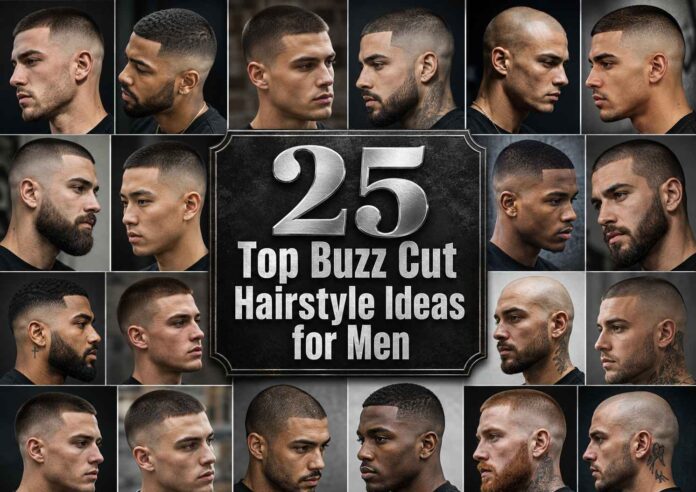
A buzz cut may look simple from across the room, but small changes in length, fade height, edge shape, and natural texture can give it a completely different character. The best buzz cut hairstyle ideas for men range from near-shaved military cuts to longer clipper styles that show waves, curls, and controlled texture. Current grooming coverage also points toward more customized buzz cuts, with greater attention to head shape, clean edges, and softer tapering.
This collection is designed for men with straight, wavy, curly, or coily hair, including anyone comparing low-maintenance men’s haircuts for work, warm weather, sports, or everyday wear. You will find close cuts that emphasize strong facial features, faded versions that create sharper contrast, and slightly longer options that provide more coverage.
Before choosing, look beyond the haircut name. Think about how much scalp exposure you prefer, whether you want frequent barbershop visits, and how your natural hairline affects the finished shape. These 25 ideas provide clear visual references, practical barber instructions, and realistic maintenance advice.
1. Induction Buzz Cut With Natural Edges
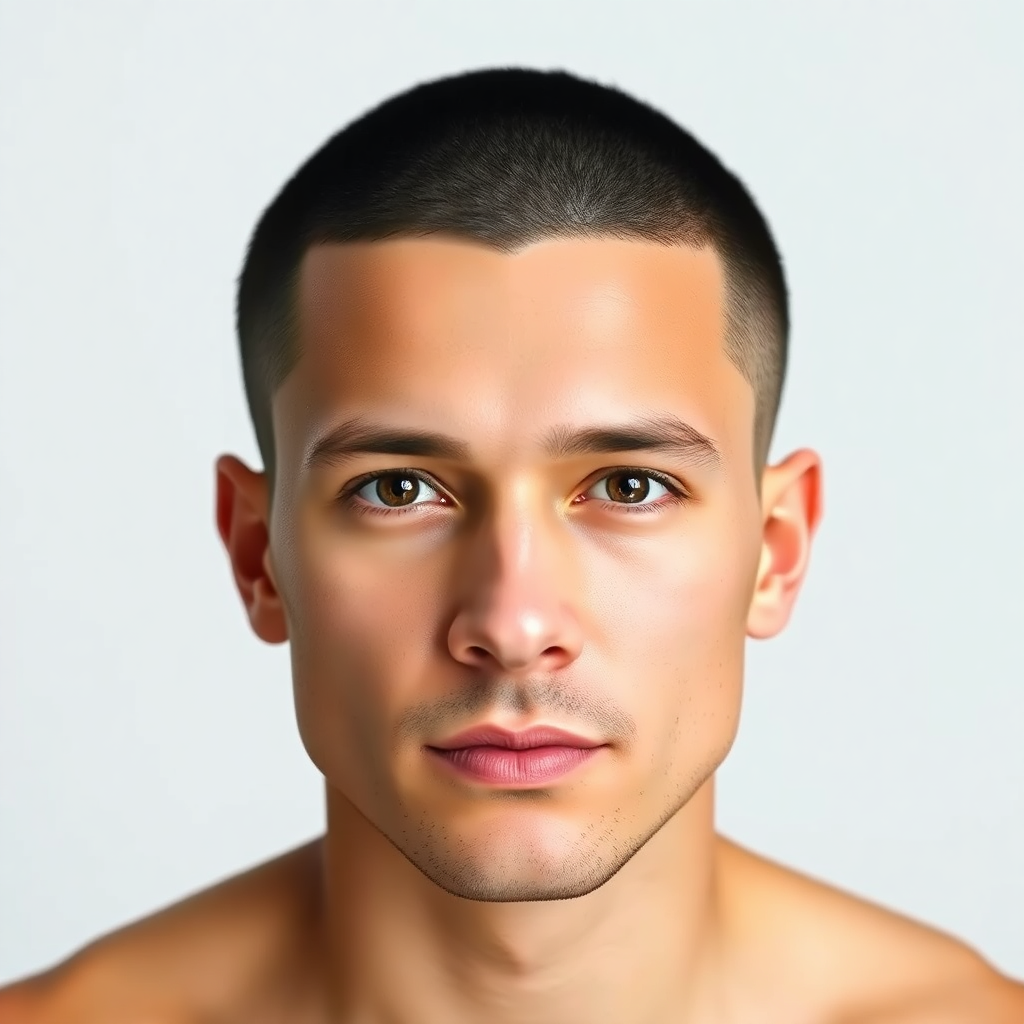
The hair is clipped extremely close at one even length across the top, sides, and back, usually leaving only a dark shadow over the scalp. No fade separates the sections, and the natural hairline remains visible without a sharp squared outline. The finish is clean, direct, and almost completely free from styling.
This cut suits men with balanced head shapes and those seeking one of the shortest low-maintenance men’s haircuts. It places full attention on the eyes, jawline, facial hair, and scalp shape. Ask the barber for an induction cut using the same short blade setting everywhere, then request natural edges rather than a hard lineup.
2. Zero-Guard Buzz Cut With Clean Neckline
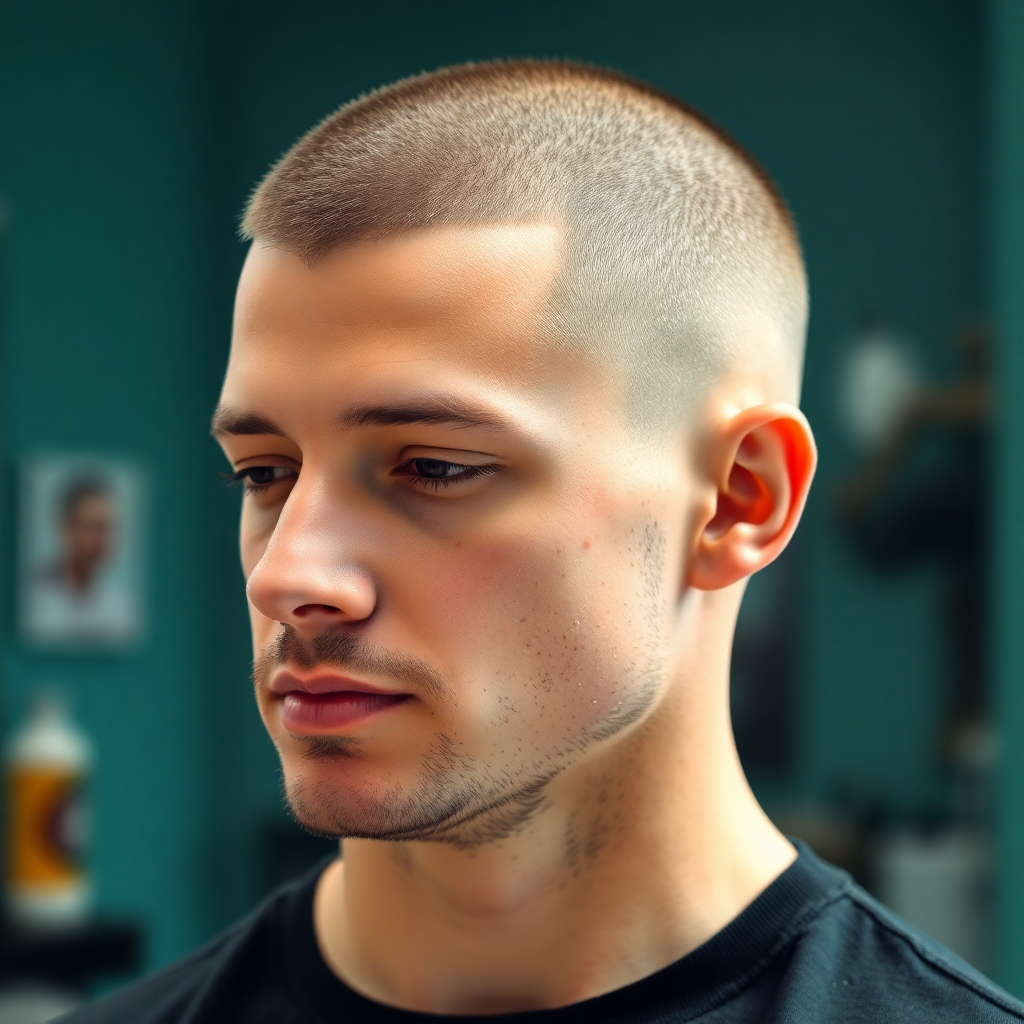
Nearly bare hair covers the entire head in a soft, even shadow created with a zero guard or close clipper blade. The top, temples, sides, and back remain the same length, while the neckline is cleaned carefully without adding a visible fade. Hair growth direction can still be seen under bright light.
Men who want a stronger result than a standard short haircut may prefer this stripped-back option. It can also reduce the visual contrast between thinner areas and fuller sections because little length remains anywhere. Tell the barber how much scalp visibility you are comfortable showing before the first pass. Frequent trimming is needed if you want the shadow to stay consistent.
3. Number One Burr Cut With Soft Hairline
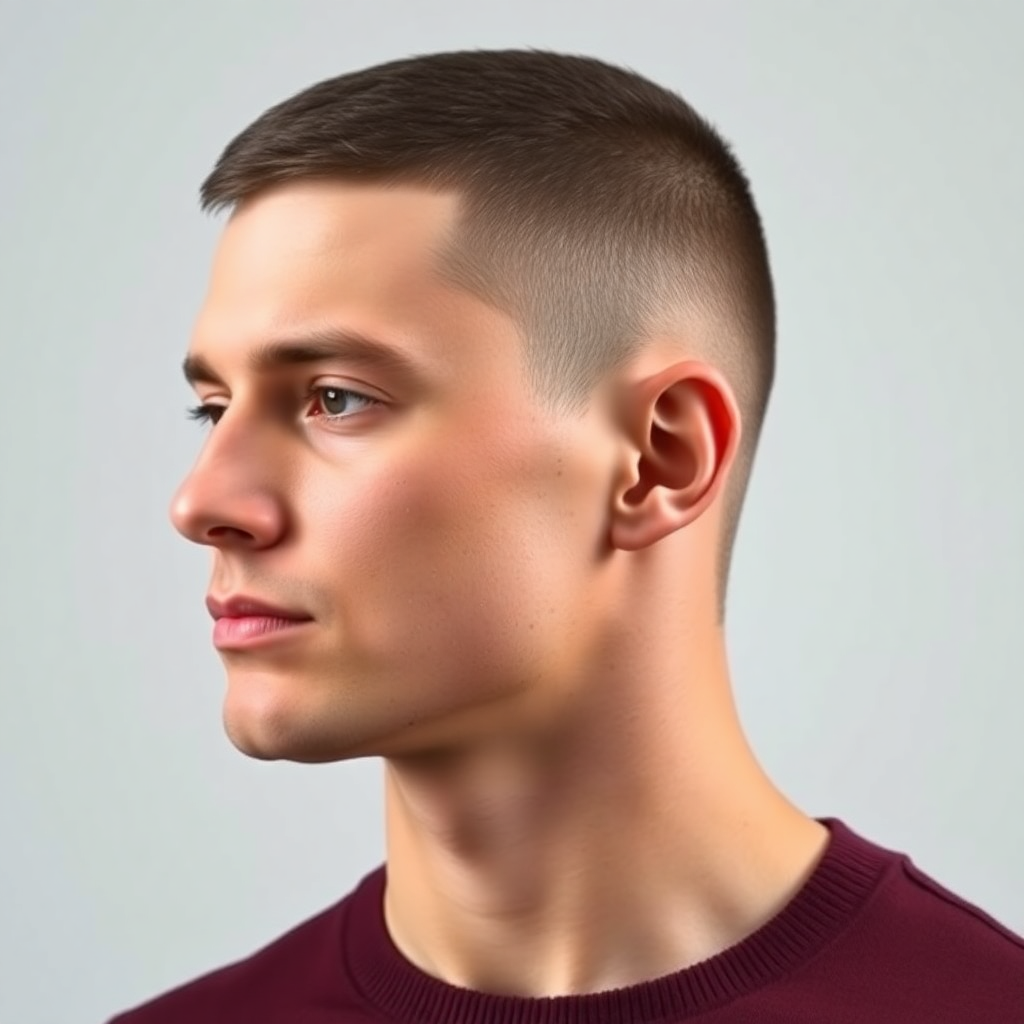
A number one guard leaves a thin layer of hair across the full head, creating more color and texture than a zero cut. The sides and top stay equal in length, the hair lies in its natural growth direction, and the front edge remains softly defined rather than sharply carved.
This burr cut works well for active men, warm climates, and anyone searching for easy hairstyles for men with almost no morning styling. It can suit thick, straight, or tightly coiled hair, although the final appearance changes with density. Ask for a number one all over and request careful blending around the ears. A trim every two or three weeks keeps the surface looking even.
4. Number Two Burr Cut With Tapered Sideburns
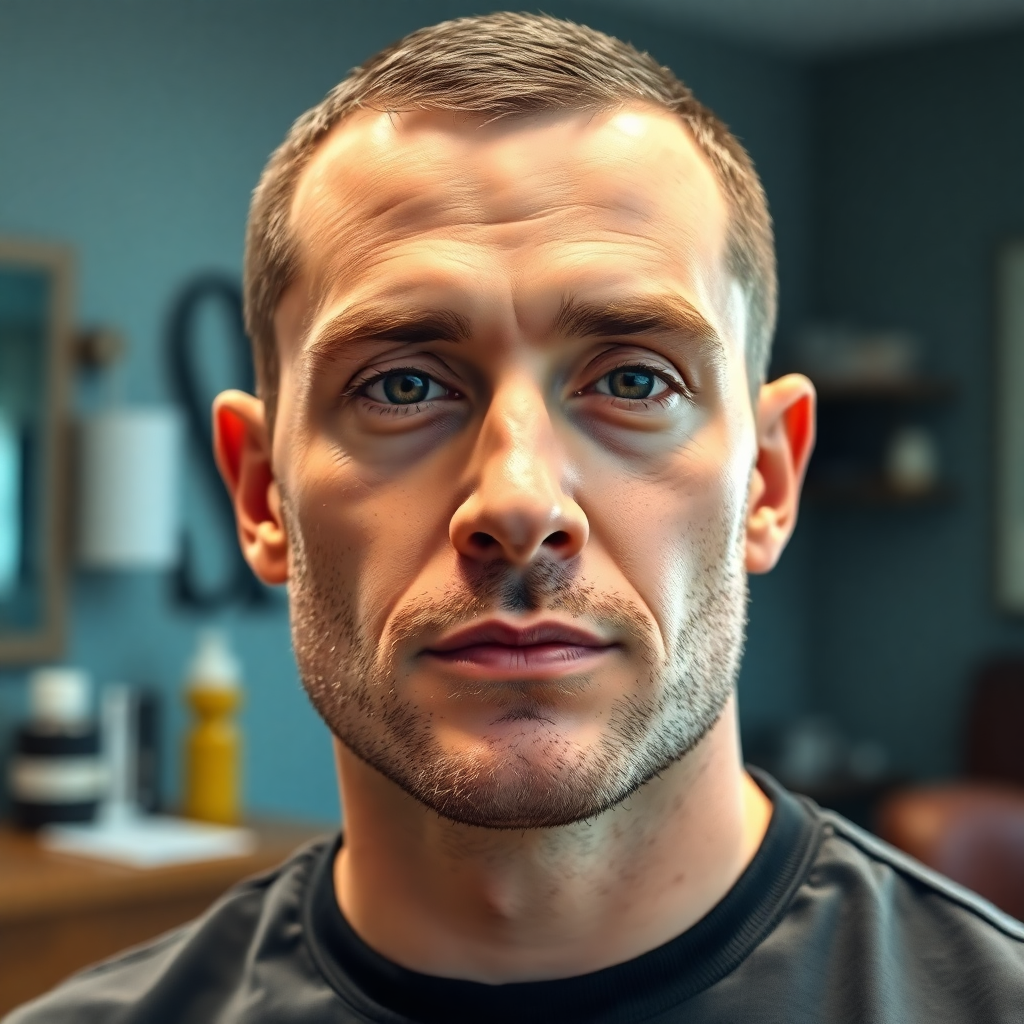
The top, sides, and back are clipped with a number two guard, leaving a short but clearly visible layer of hair. Natural texture begins to show across the crown, while the sideburns and lower neckline narrow gently for a cleaner frame. The hair remains flat with no need for directional styling.
This length offers more coverage than an induction cut without losing the practical feel associated with short haircuts for men. It is often easier to wear when scalp exposure is a concern. Ask the barber for a number two throughout with light tapering only at the sideburns and nape. Brush loose hairs forward after washing to check whether any uneven growth patterns need correction.
5. Uniform Number Three Buzz Cut
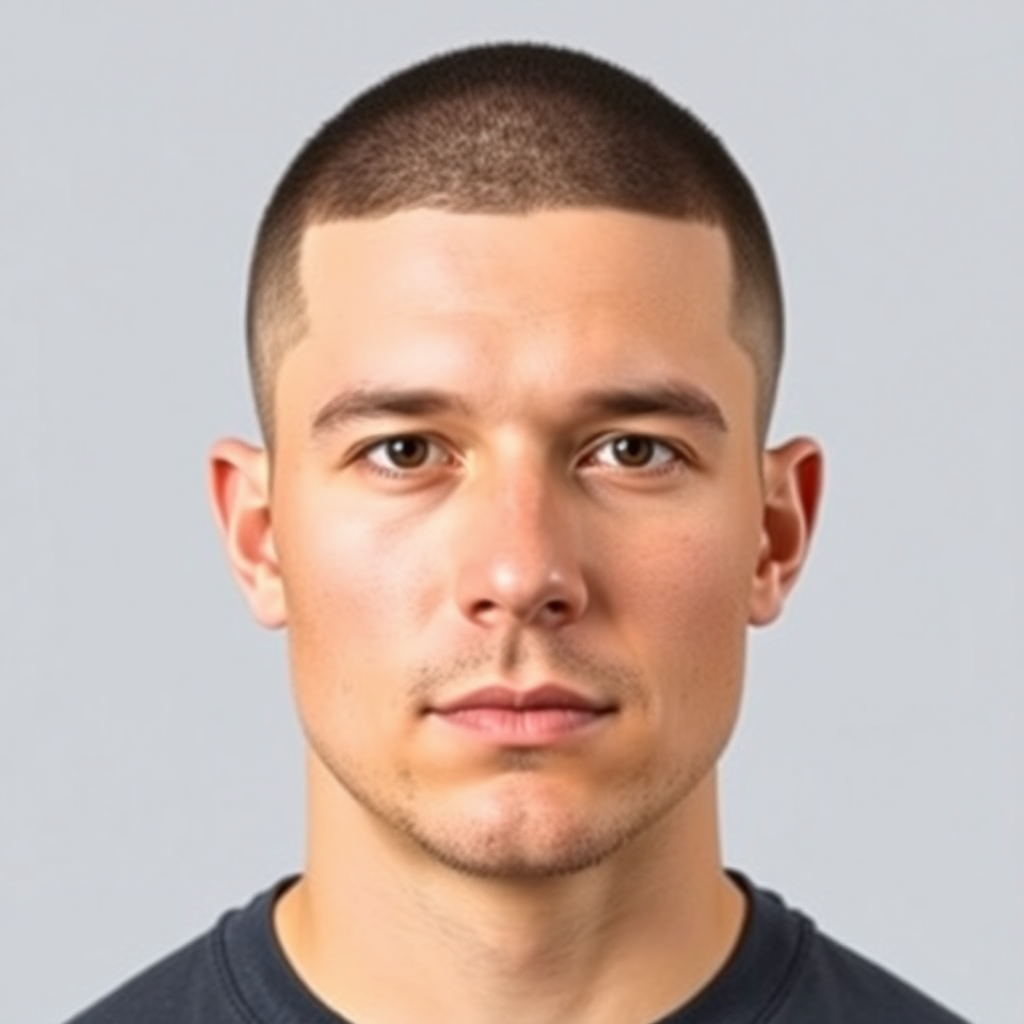
A number three guard leaves roughly enough length for the natural grain and color of the hair to become noticeable. The top flows forward according to its growth pattern, while the sides and back remain equally full without a fade. A lightly cleaned hairline keeps the shape neat but not overly sharp.
This is one of the most approachable haircut ideas for men trying a buzz cut for the first time. The extra coverage can soften prominent scalp contours and makes the change feel less severe. It suits straight, wavy, and dense hair especially well. Ask for a uniform number three and have the barber inspect the crown before cutting, since strong whorls may need a second pass from another direction.
6. Number Four Buzz Cut With Natural Texture
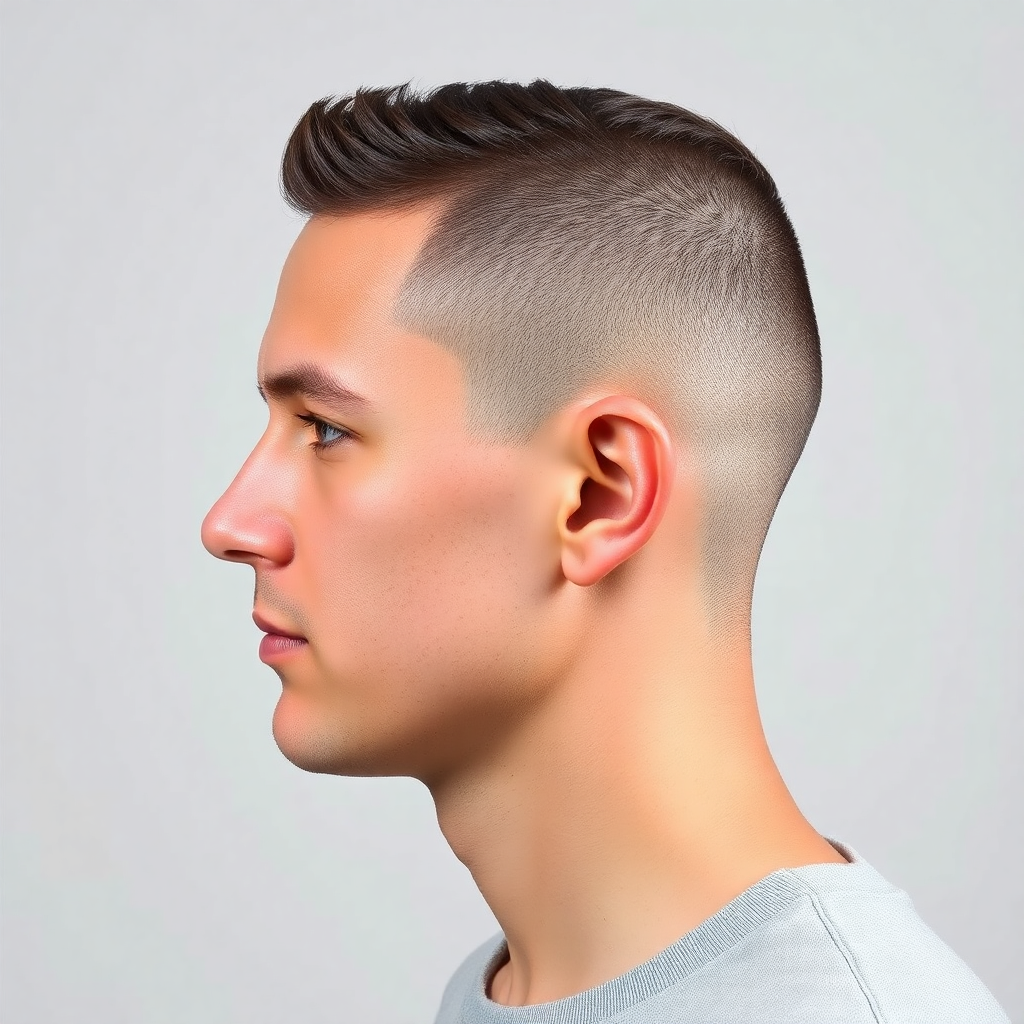
About half an inch of hair remains across the top, sides, and back, allowing subtle bends, waves, or coarse texture to stay visible. The surface follows the natural direction of growth instead of being brushed upward. The edges are cleaned around the ears and neck while the front hairline keeps its original shape.
Men who want a low maintenance men’s haircut without looking closely shaved may find this length easier to wear. It provides a little coverage for uneven density and feels less severe on long or narrow faces. Tell the barber you want a number four all over with no major fade. A small amount of lightweight cream can reduce dryness, although most hair types need no daily product.
7. Buzz Cut With Low Taper
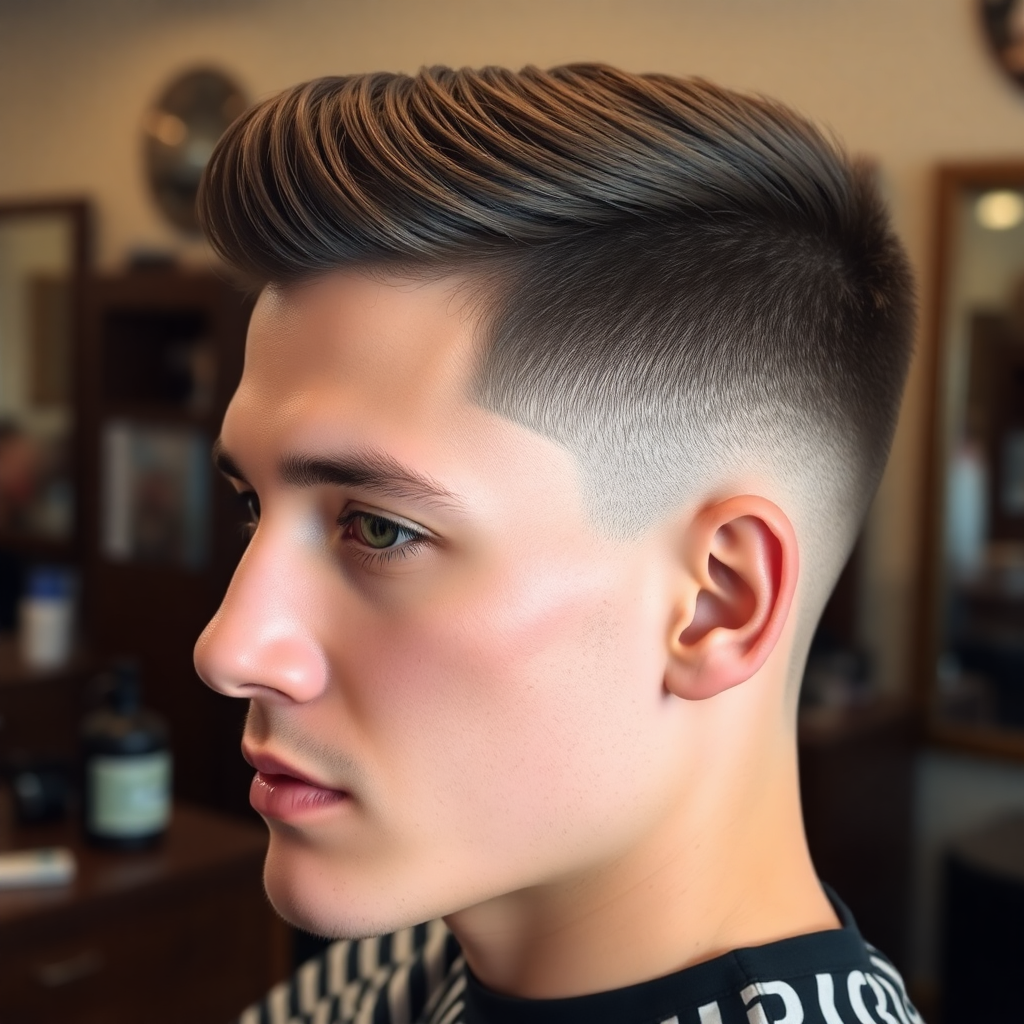
Short hair covers the top at a number two or three length, while the sideburns and neckline gradually shorten without removing much fullness from the sides. The taper stays confined to the lowest edges, leaving a natural transition near the temples. The front hairline may be softly cleaned or left untouched.
This restrained detail works well for professional haircuts for men because it grows out without creating a strong band of contrast. It can flatter oval, square, and longer face shapes while keeping the head from appearing overly narrow. Ask the barber for a low taper only at the sideburns and nape, not a full fade. Expect the lower edges to need attention before the top does.
8. Buzz Cut With Low Skin Fade
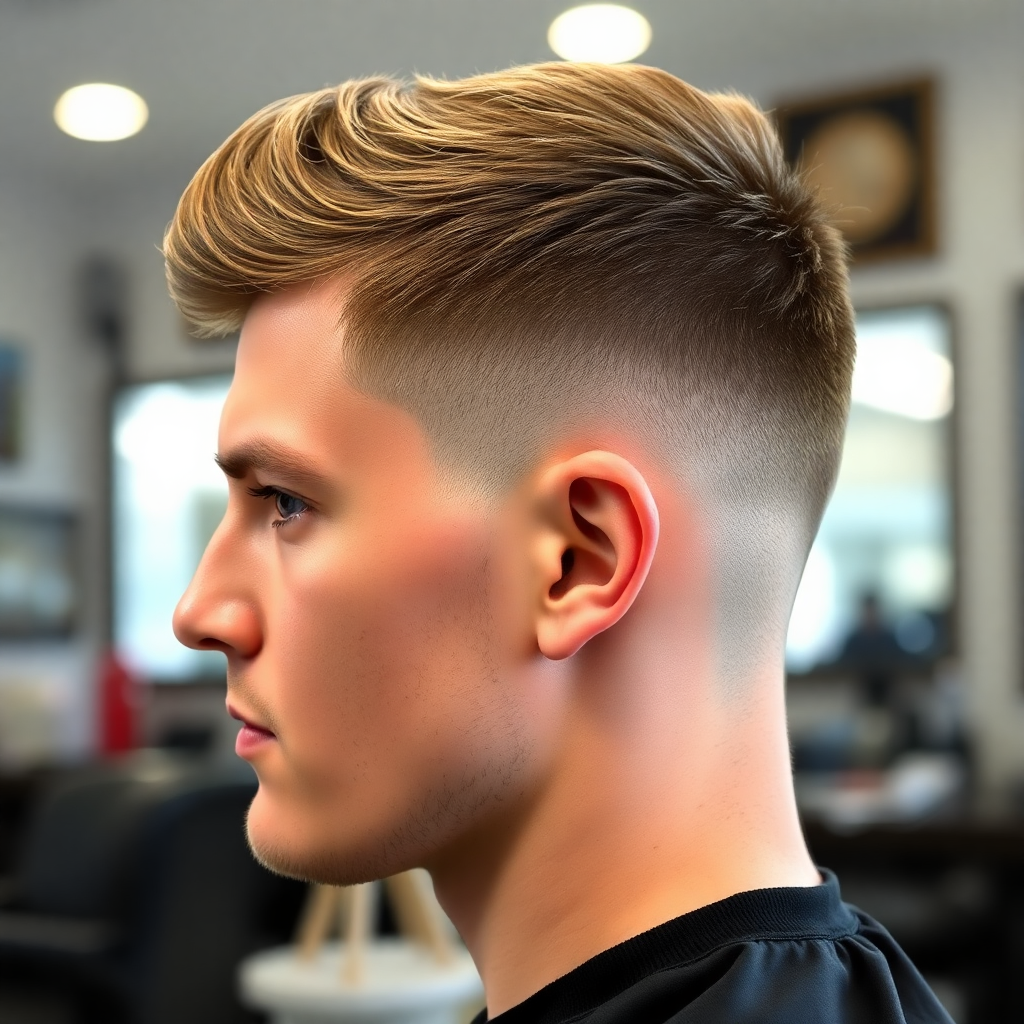
The top remains short and even at a number two or three length, while the sides fade down to bare skin only around the lower temples, ears, and neckline. Most of the side retains a dark layer of hair, creating a gradual transition rather than a dramatic high contrast. The top follows its natural grain.
A low skin fade adds structure while preserving width around the upper sides. That balance can work well as a haircut for long face men because it avoids extending the face with excessive height. Ask the barber where the skin section will begin before clipping starts. Fade terminology can vary, so a reference image gives clearer direction than the haircut name alone.
9. Buzz Cut With Mid Fade
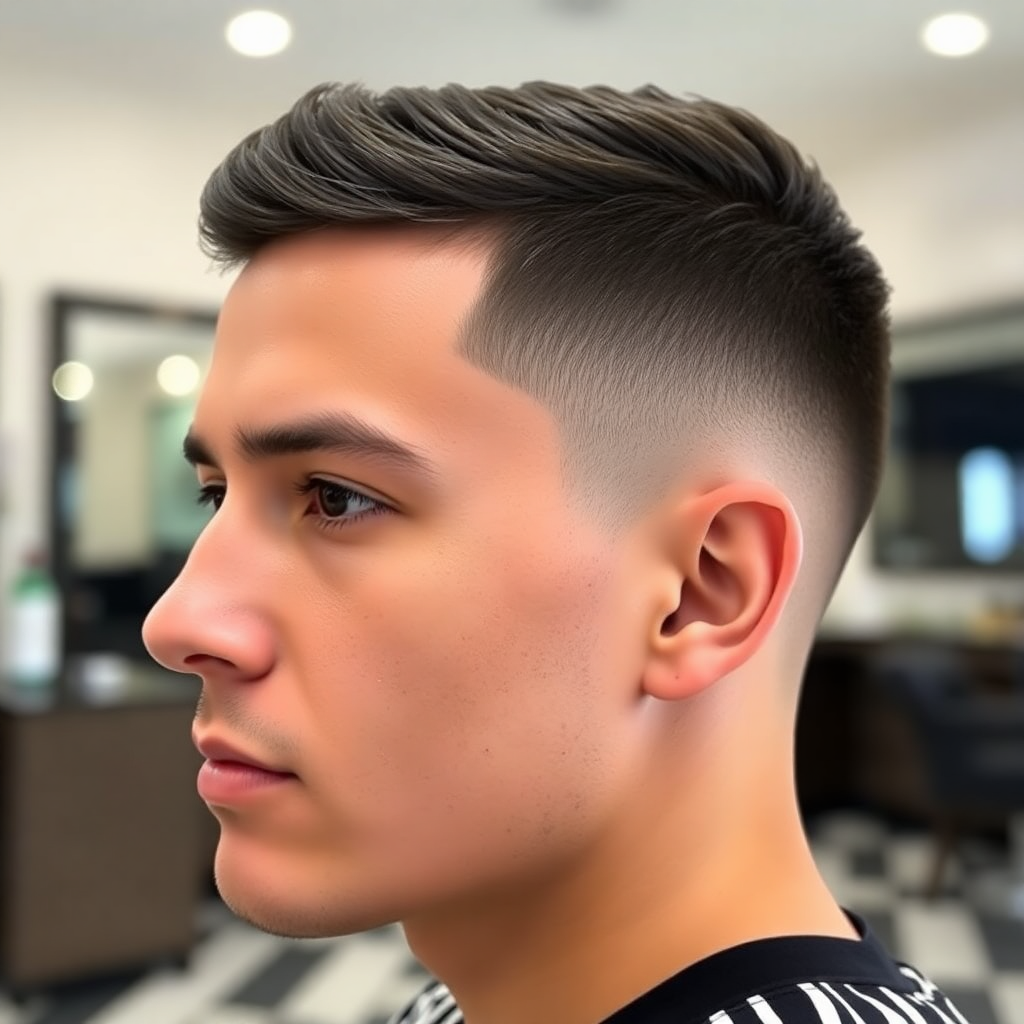
A dense number two or three top sits above a mid fade that begins near the temple area and blends down toward bare skin. The upper sides remain dark enough to connect naturally with the top, while the lower half looks lighter and cleaner. A neat front edge gives the haircut a controlled finish.
This version creates more contrast than a low fade without making the top look disconnected. It can strengthen the appearance of a haircut for round face men by removing some visual width from the sides. Ask for a smooth mid fade with no visible weight line beneath the top. The fade may lose its crispness within two weeks, even when the top still looks tidy.
10. Buzz Cut With High Skin Fade
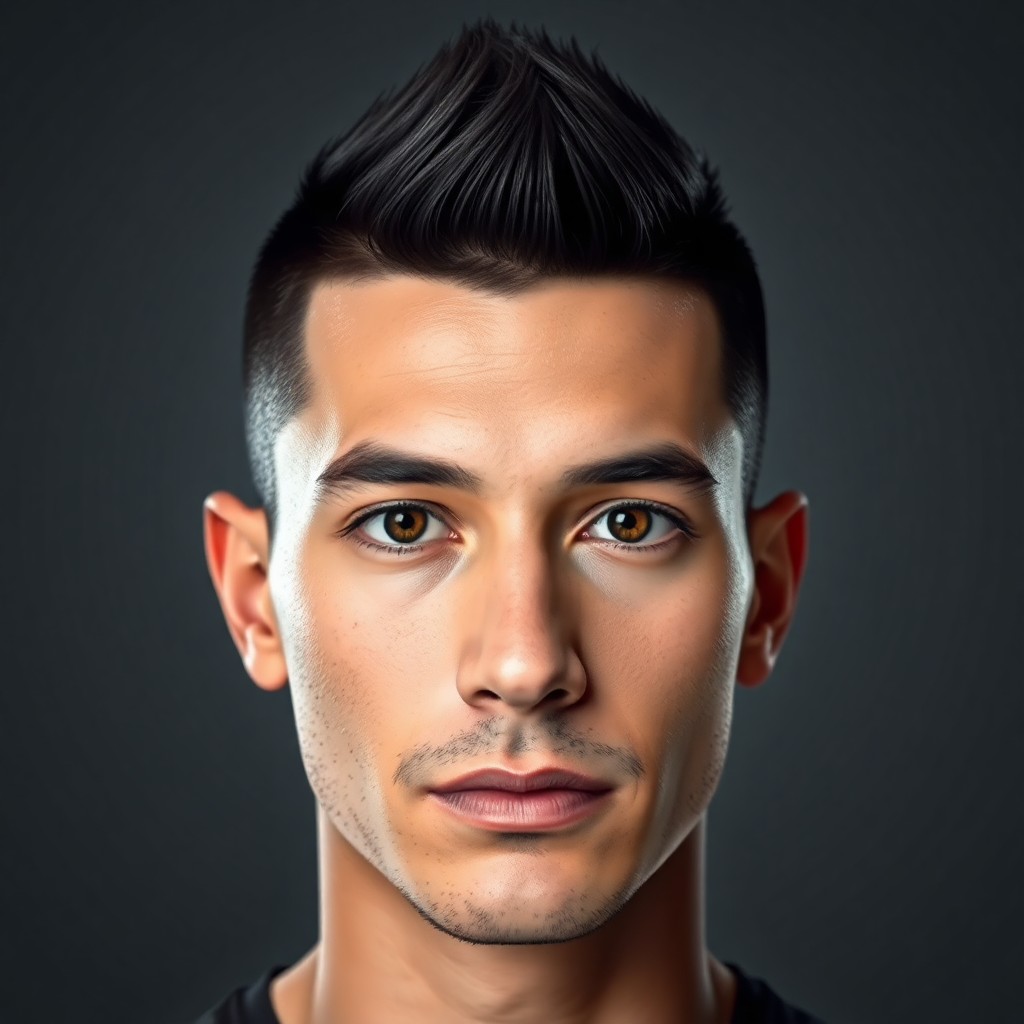
The top forms a compact panel of short hair, usually cut between a number two and number four, while the sides reach bare skin high above the temples. The transition occurs close to the upper head, creating strong separation between the dark top and clean sides. The front line is usually kept precise.
This high-contrast option suits men who prefer fresh haircuts for men with a bold barbershop finish. It can make a broad face appear slightly longer, though it may emphasize narrow head shapes. Tell the barber how high the fade should rise and whether you want a softer blend near the crown. The clean effect depends on frequent appointments, often sooner than a uniform buzz cut requires.
11. Buzz Cut With Drop Fade
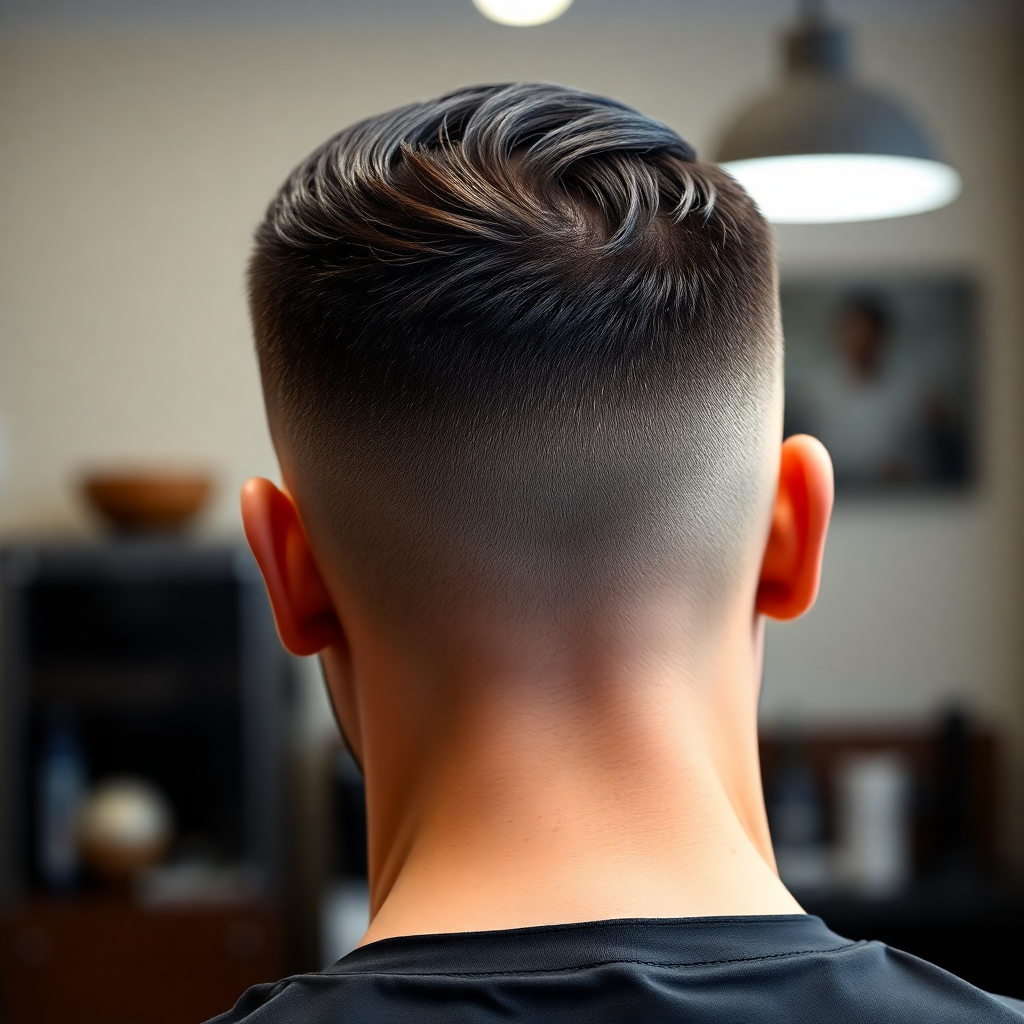
Short, even hair runs across the top while the fade curves downward behind each ear. The fade sits higher near the temples and drops lower toward the back of the head, following the skull rather than forming a straight horizontal line. The curved blend creates more shape around the crown and occipital area.
A drop fade can add visual depth to straight or thick hair without increasing top length. It is useful for men who dislike the flat outline created by some standard fades. Ask the barber to keep the drop smooth and symmetrical on both sides. Check the back view in a mirror before leaving, since the curved section defines the haircut more than the front does.
12. Buzz Cut With Burst Fade
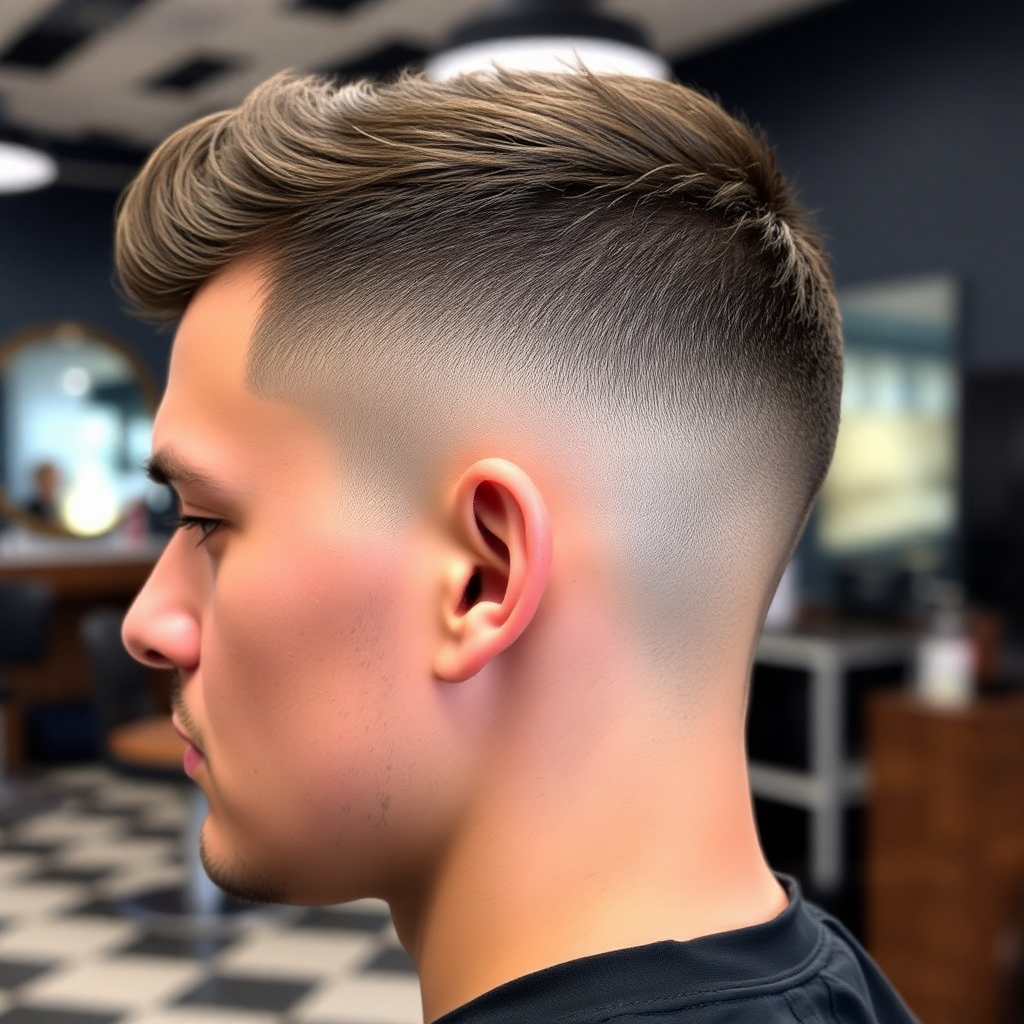
The top stays short and dense, while a rounded fade spreads in a semicircle around each ear. Hair remains darker toward the back and crown, creating a curved contrast rather than clearing the entire side. The shape looks especially distinct from a side angle, where the circular blend becomes visible.
This is one of the more expressive modern haircuts for men and works well with thick, curly, or coily texture. The remaining weight behind the ears can make the head look fuller than a high fade would. Ask for a compact burst fade rather than a long mullet shape if you want a true buzz-cut finish. Clean blending around the ear requires experienced clipper work.
13. Buzz Cut With Temple Fade
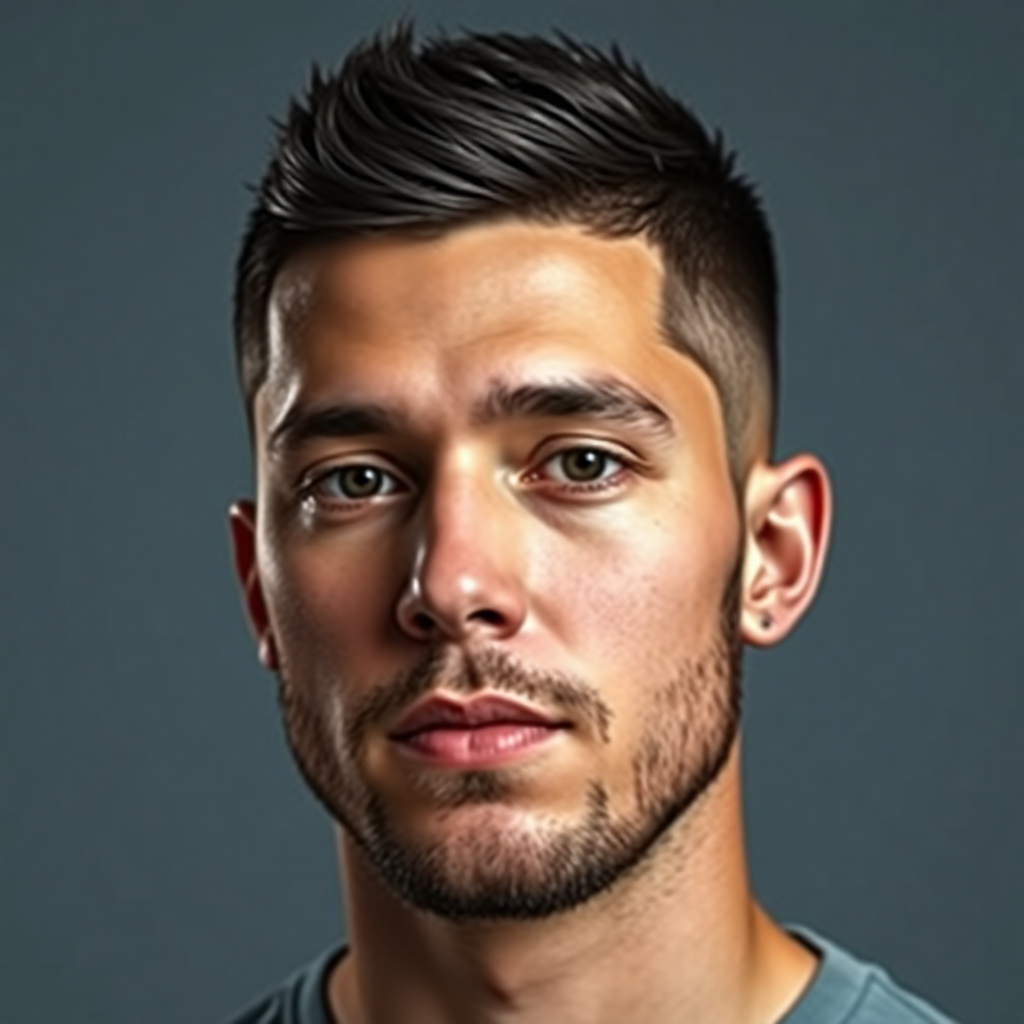
The top and most of the sides remain at a consistent short length, while only the temple corners and sideburn areas fade toward the skin. The transition is small and concentrated, leaving fullness above the ears and across the back. A clean forehead edge connects neatly with the faded temple area.
This option brings detail to a simple cut without changing the complete head shape. It is especially effective for dense or coily hair because the contrast near the temples appears clear against darker texture. Ask for a temple fade rather than a full low fade, and point out how far behind the temple you want the blend to extend. The style pairs naturally with a shaped beard.
14. Buzz Cut With Sharp Lineup
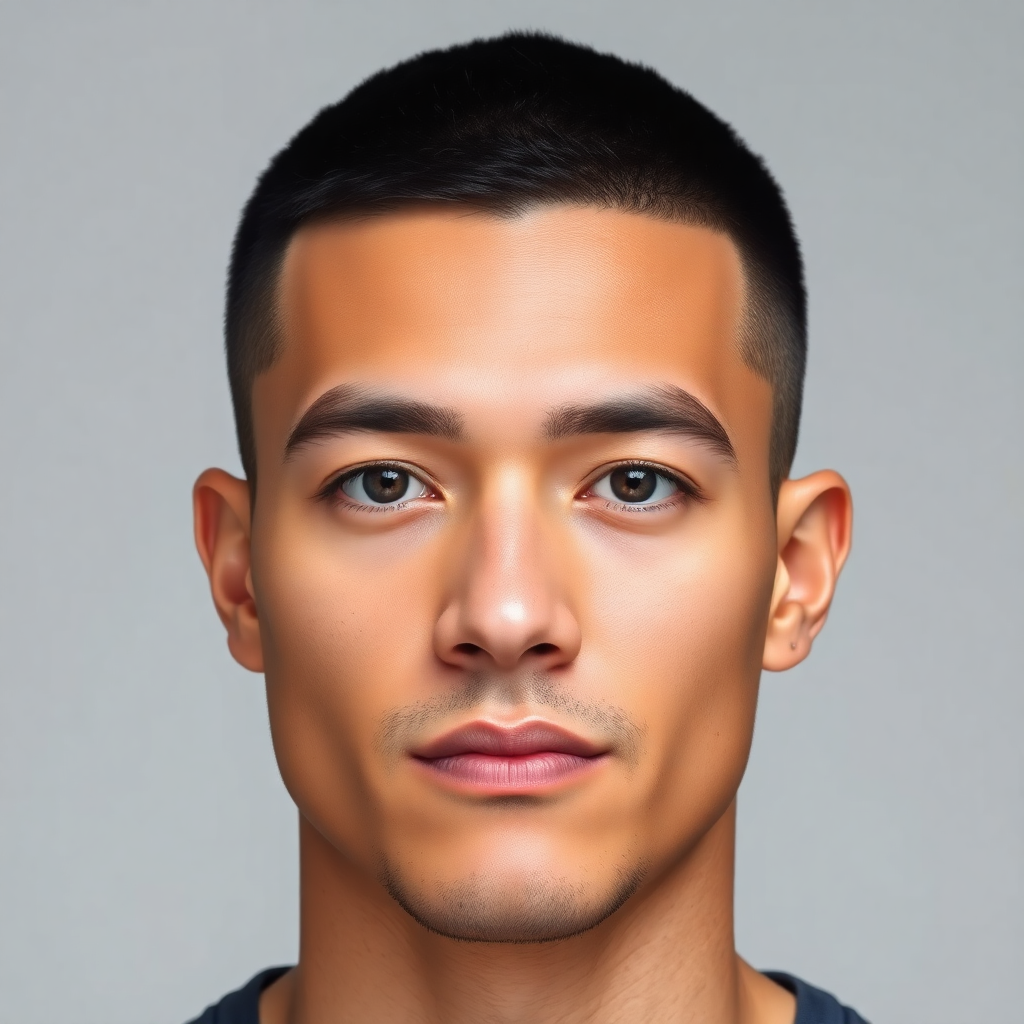
Short hair covers the top evenly, while the forehead edge is shaped into a straight horizontal line with clean right angles at both temples. The sides may remain uniform or carry a low taper, but the squared front outline becomes the main visual feature. Natural texture stays visible inside the defined border.
A lineup can give coily, curly, or dense straight hair a polished finish. Men with uneven natural corners should discuss how much hair will be removed before requesting an aggressive outline. Ask the barber to keep the line close to the existing hairline rather than pushing it backward for symmetry. Edge work may need refreshing before the rest of the haircut is ready for trimming.
15. Buzz Cut With Shaved Surgical Line
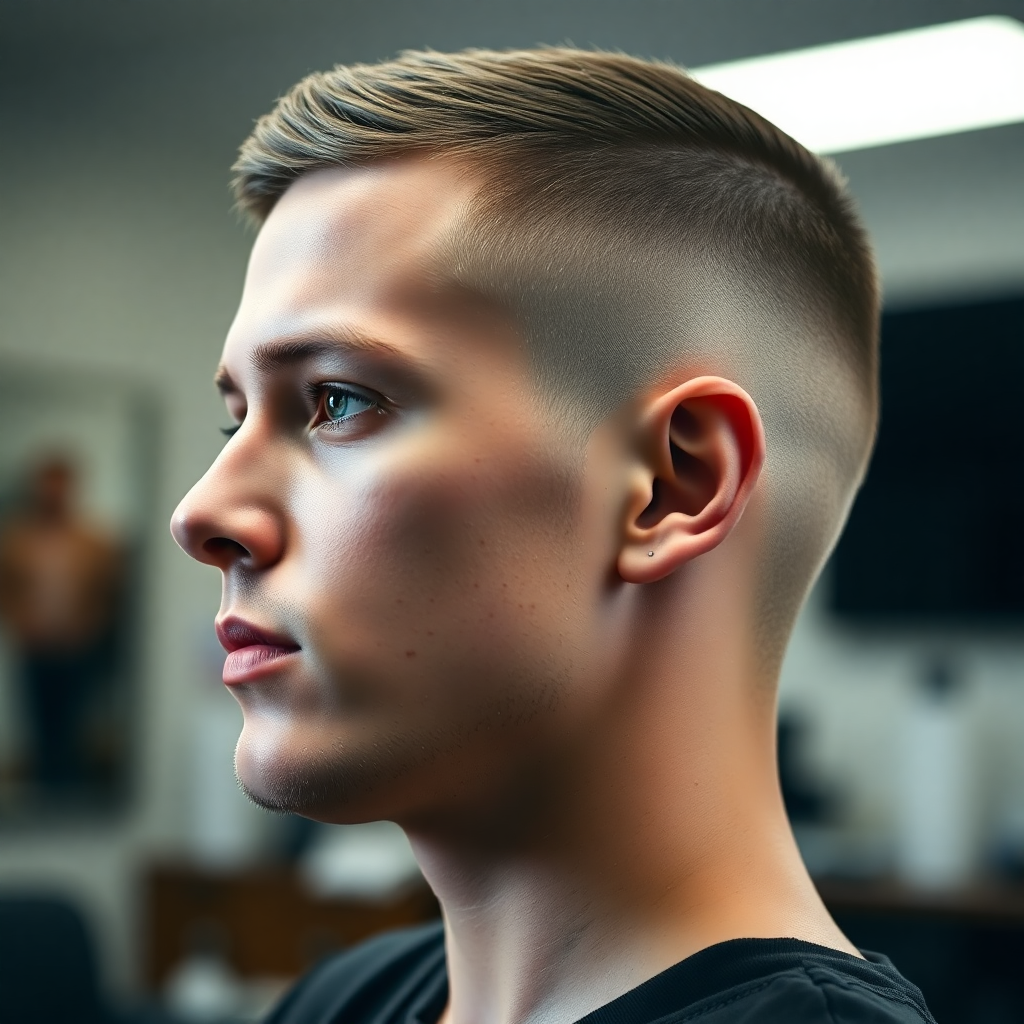
The top is clipped short and uniform, while a narrow shaved line runs above one temple and follows part of the fade. The sides blend from dark stubble into skin, and the line creates a visible break between sections without extending across the entire head. The front edge remains neat and angular.
This detail suits young men seeking a more graphic take on trending haircuts for men. It works best on dense hair because the shaved mark needs enough contrast to remain visible. Bring a reference showing the exact angle and length you prefer. The design softens as the hair grows, so expect it to lose definition faster than the surrounding buzz cut.
16. Buzz Cut With Shaved Hard Part
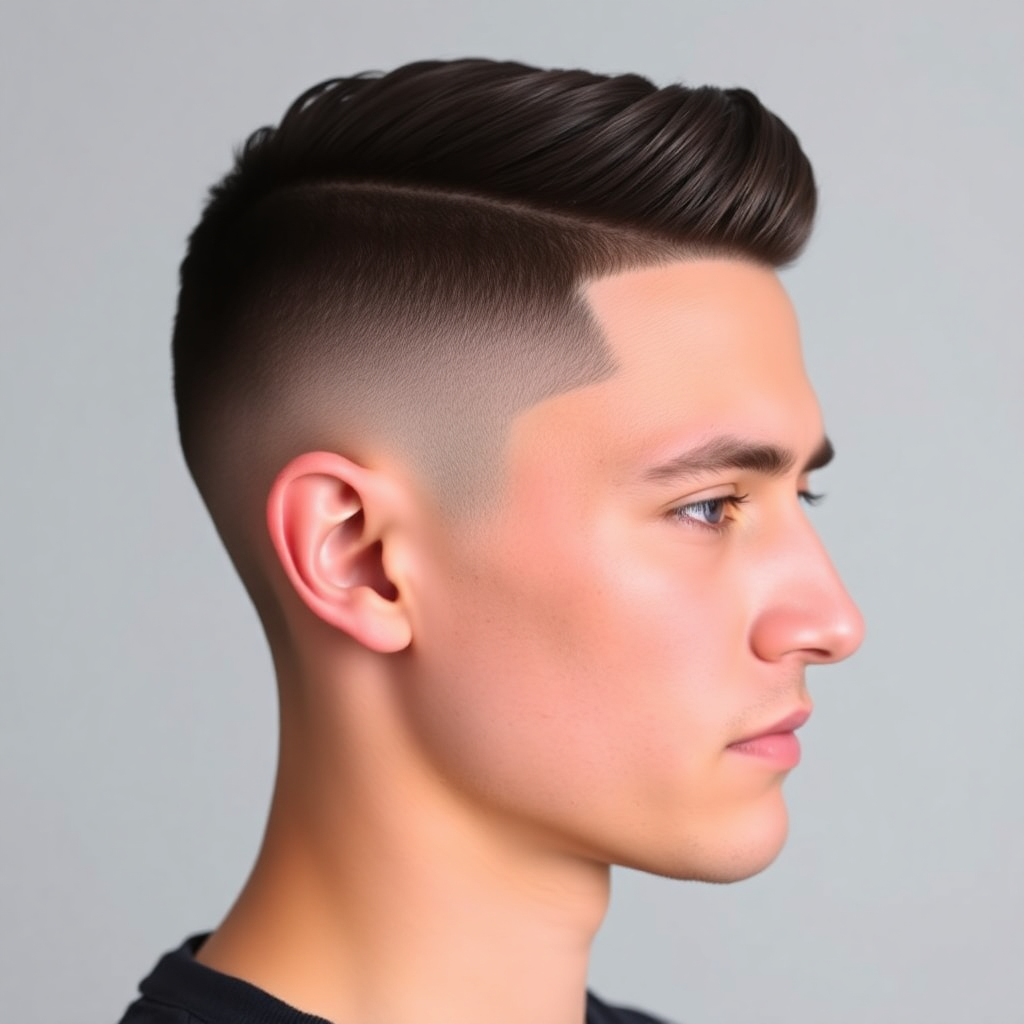
A number three or four buzz covers the top, while one side contains a narrow shaved part beginning near the front hairline and extending several inches toward the crown. The surrounding hair stays flat and follows its natural direction. A low or mid fade creates contrast beneath the deliberate parting line.
Unlike a standard hard part on longer hair, this version acts as a visual design rather than separating combed sections. It suits men who want recognizable style without daily product. Ask the barber to keep the line narrow and place it according to your natural growth pattern. A wide channel may look heavy as it grows back, so conservative placement is often easier to maintain.
17. Textured Buzz Cut With Scissor-Softened Top

The sides are clipped short with a low taper, while the top remains around half an inch long and is lightly softened to remove bulk. Small irregular pieces create a matte, broken texture instead of a perfectly level clipper surface. The hair points slightly forward and upward without forming spikes.
This cut offers extra movement for thick hair while remaining shorter than a crew cut. It can be a useful choice among haircuts for thick hair men who find uniform buzz cuts too dense around the crown. Ask the barber to leave enough top length for subtle texture and avoid heavy thinning near the hairline. A fingertip amount of matte paste can separate the surface when desired.
18. Wavy Buzz Cut With Soft Taper
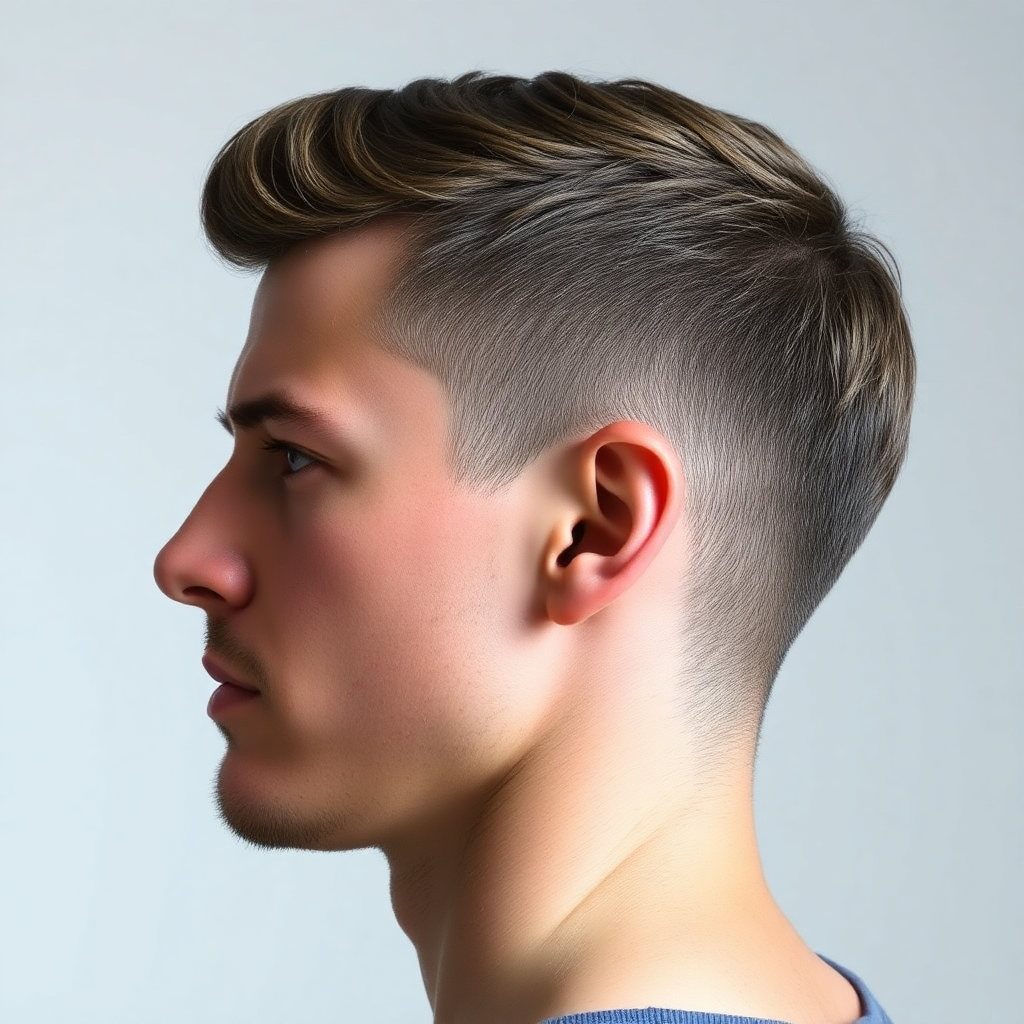
The top is left between a number four and number six length so shallow natural waves remain visible across the surface. The hair follows its growth direction toward the forehead, while the sides shorten gradually into a soft taper near the ears and neck. No hard line separates the top from the sides.
Among haircuts for wavy hair men, this option keeps natural movement without requiring enough length for full styling. It tends to suit oval and square faces because the light wave pattern adds texture without much height. Ask the barber to inspect how the waves form before choosing a guard. Brushing the hair flat while damp can help the pattern settle evenly as it dries.
19. Curly Buzz Cut With Low Fade
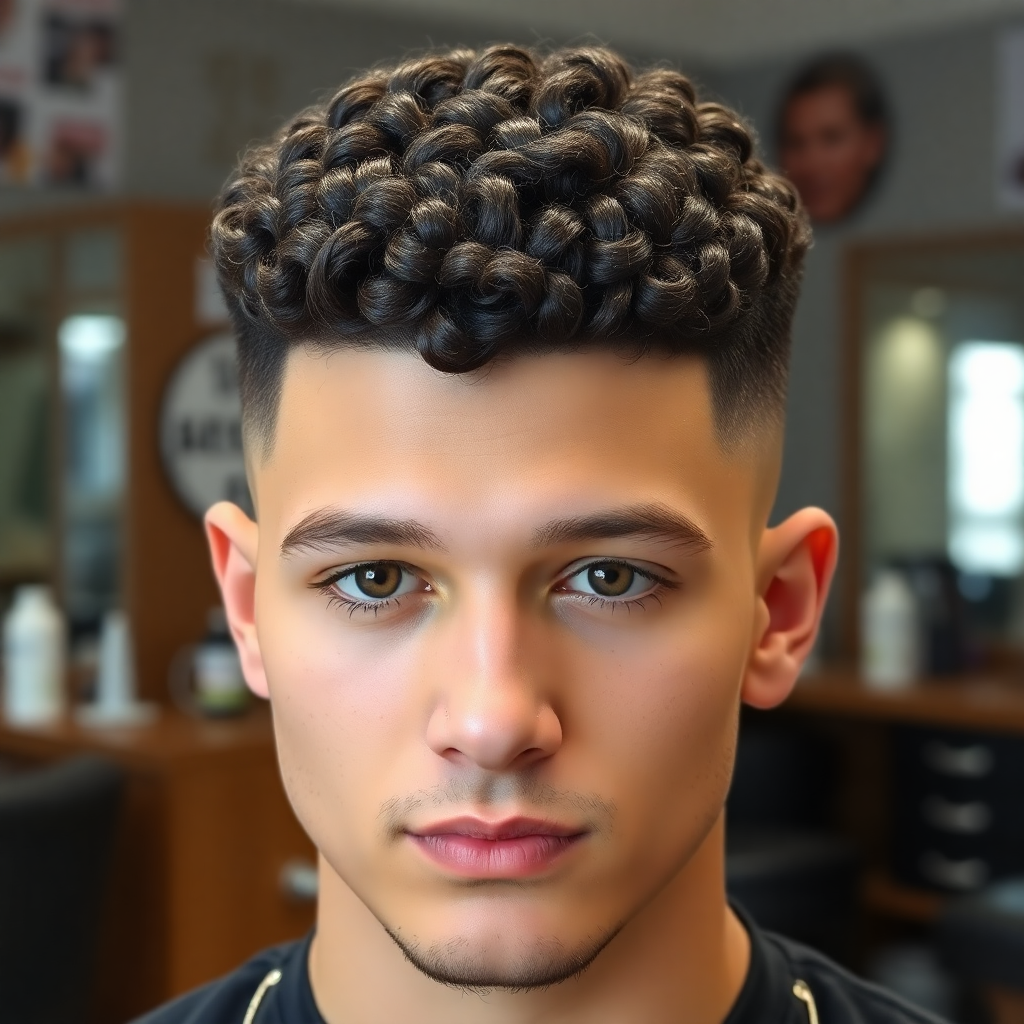
Tight curls remain visible across the top at roughly half an inch, while the sides transition into a low fade near the ears and neckline. The curls form a compact textured surface with no combed direction, and the front edge may stay natural or receive a light lineup. The fade remains low enough to preserve side fullness.
This cut gives curly hair men a short option without removing every sign of their curl pattern. It can also reduce daily detangling while keeping the texture recognizable. Ask the barber to cut the top when dry or account for curl shrinkage before choosing the final length. A light moisturizing styling cream can reduce a rough appearance without flattening the curls.
20. Coily Buzz Cut With Crisp Edge-Up
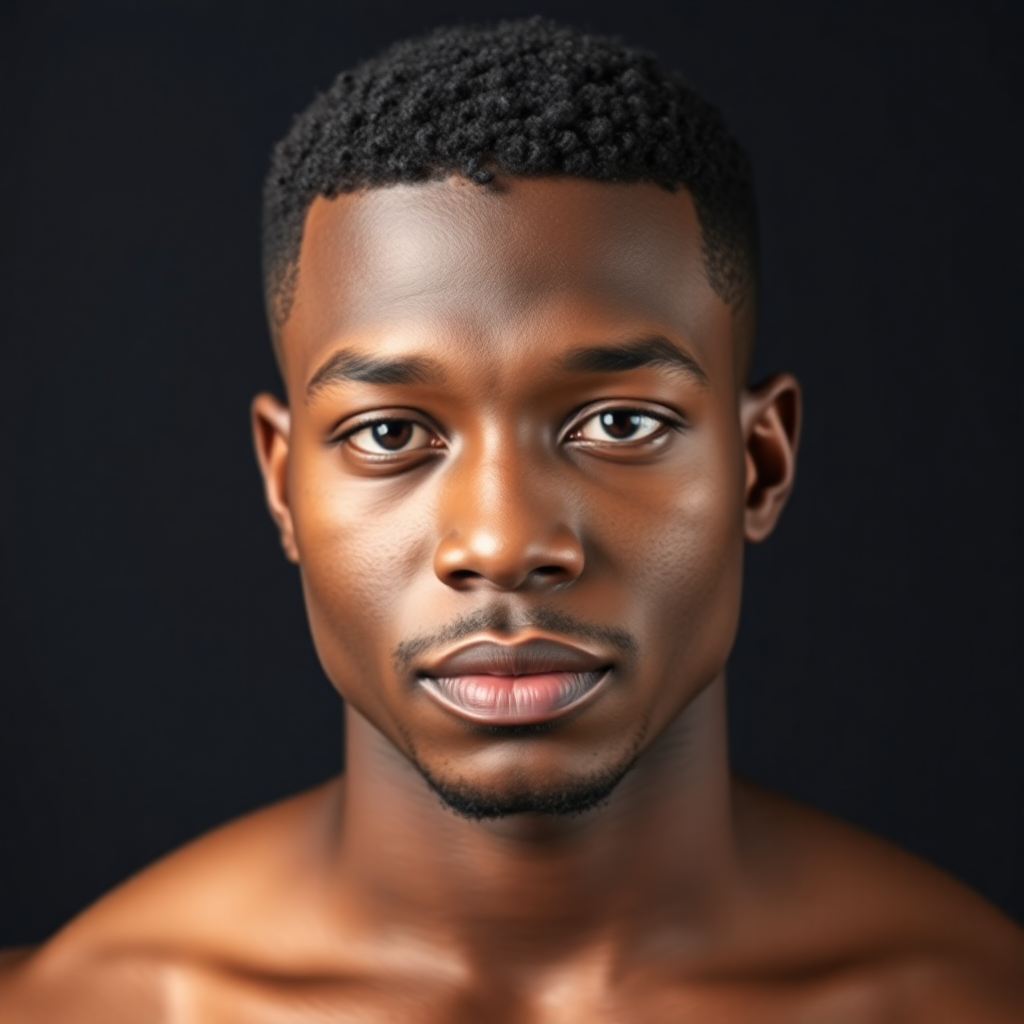
Dense coils cover the top in a short, even layer, while the sides gradually blend into a low temple fade. The forehead line is straight and clean, with sharp corners connecting to the faded temples. Natural coily texture remains visible throughout the top rather than being clipped down to a flat shadow.
This is a strong option among haircuts for Black men because it combines natural texture with precise edge work. It can suit teenage guys, working professionals, and older men depending on the chosen length. Ask the barber to preserve the natural position of the hairline while creating the edge-up. Daily brushing and light moisture help keep loose strands settled between appointments.
21. Short 360 Waves Buzz Cut
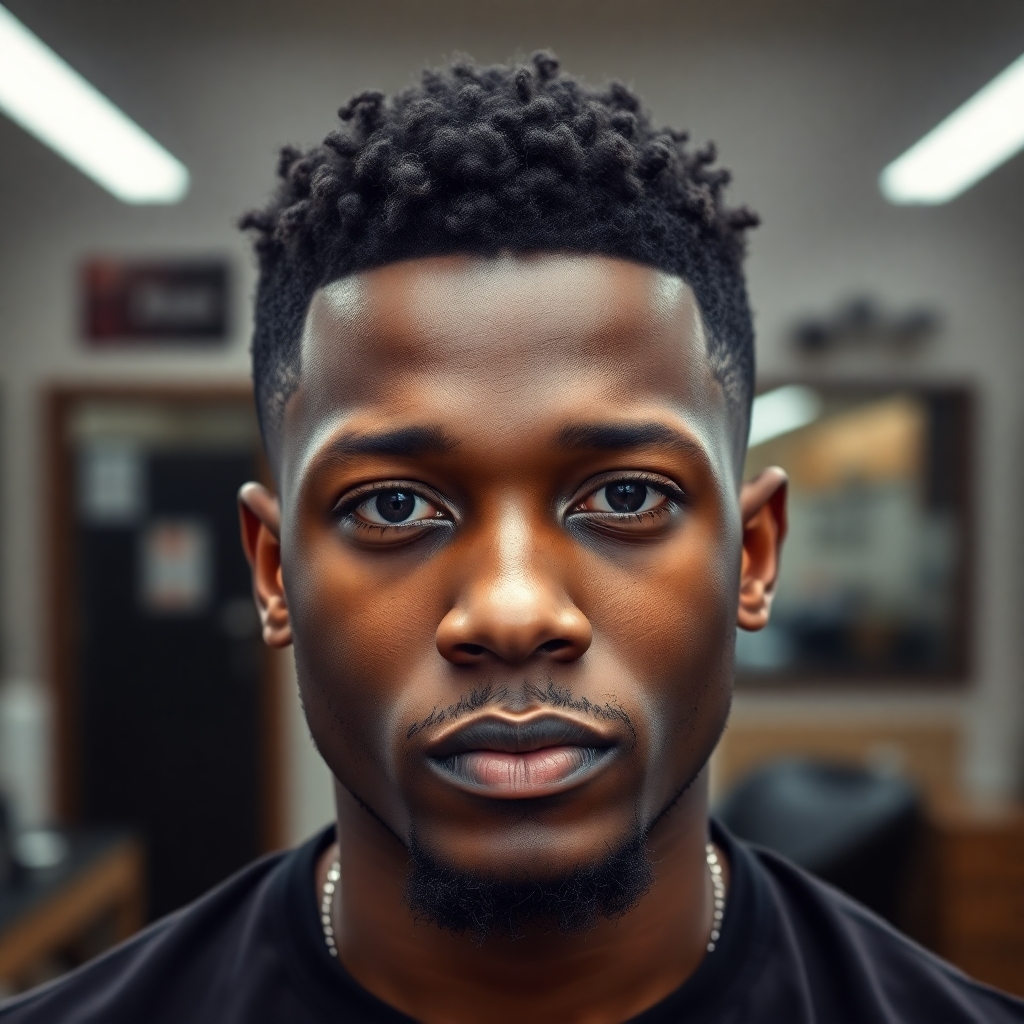
The hair is clipped low enough to stay controlled but long enough for a visible ripple pattern to travel from the crown toward the forehead, sides, and back. The waves follow a circular growth direction, while a low taper cleans the sideburns and neckline. A precise lineup frames the forehead without cutting into the pattern.
This style requires more routine care than a standard buzz cut because the wave formation depends on consistent brushing and controlled length. It works with tightly curled textures that can form connected wave patterns. Tell the barber you are maintaining waves before any cutting begins. Removing too much length may reduce pattern visibility, while leaving uneven areas can interrupt the flow.
22. Buzz Cut Shaped Around a Widow’s Peak
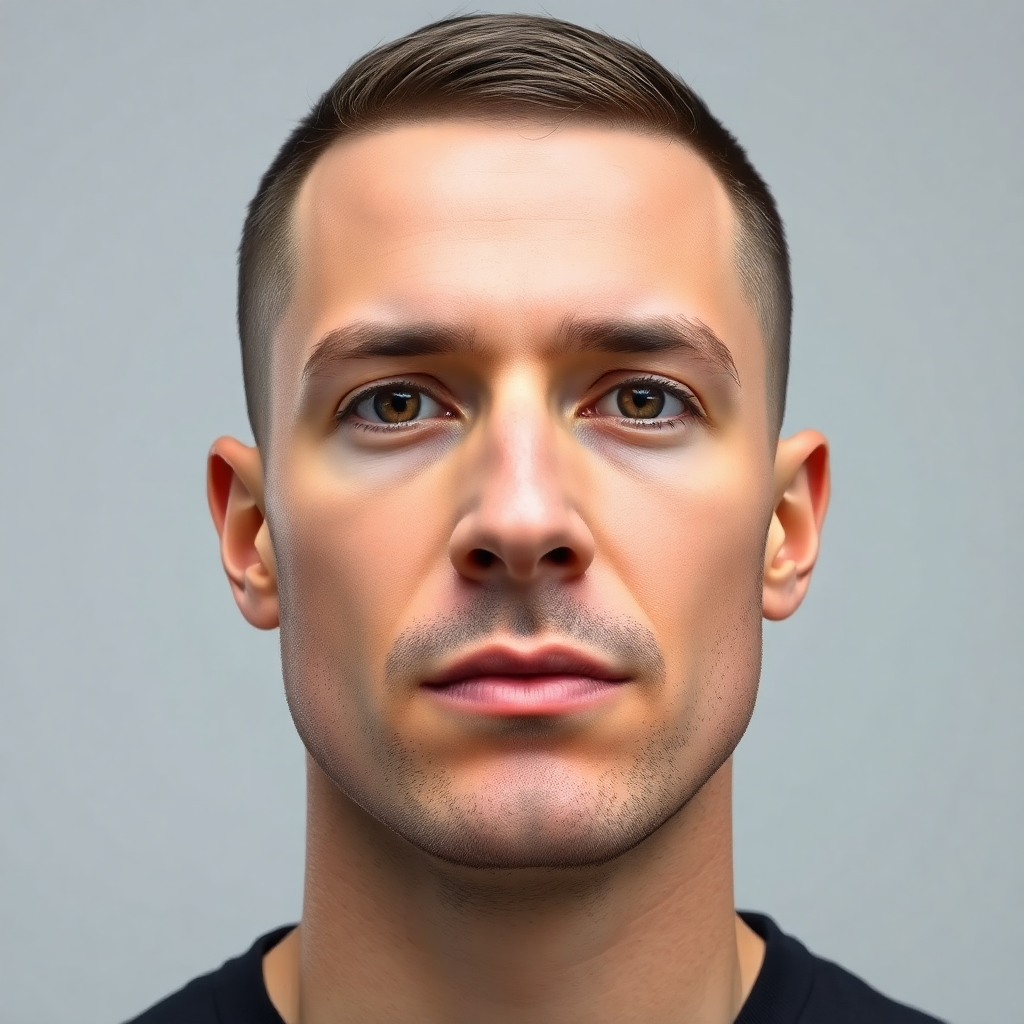
Short hair remains even across the head, while the front edge follows the natural V-shaped point at the center of the forehead. The barber cleans loose hairs around the temples without squaring away the peak. A low taper or uniform side length keeps attention on the natural hairline rather than hiding it.
Many haircuts for men with widows peak look stronger when the natural point is treated as part of the design. The short length creates an intentional frame and avoids forcing the hair into an unnatural direction. Ask the barber to preserve the center point and avoid cutting the corners too deeply. A number two or three often provides enough density to show the shape clearly.
23. Buzz Cut for a Receding Hairline
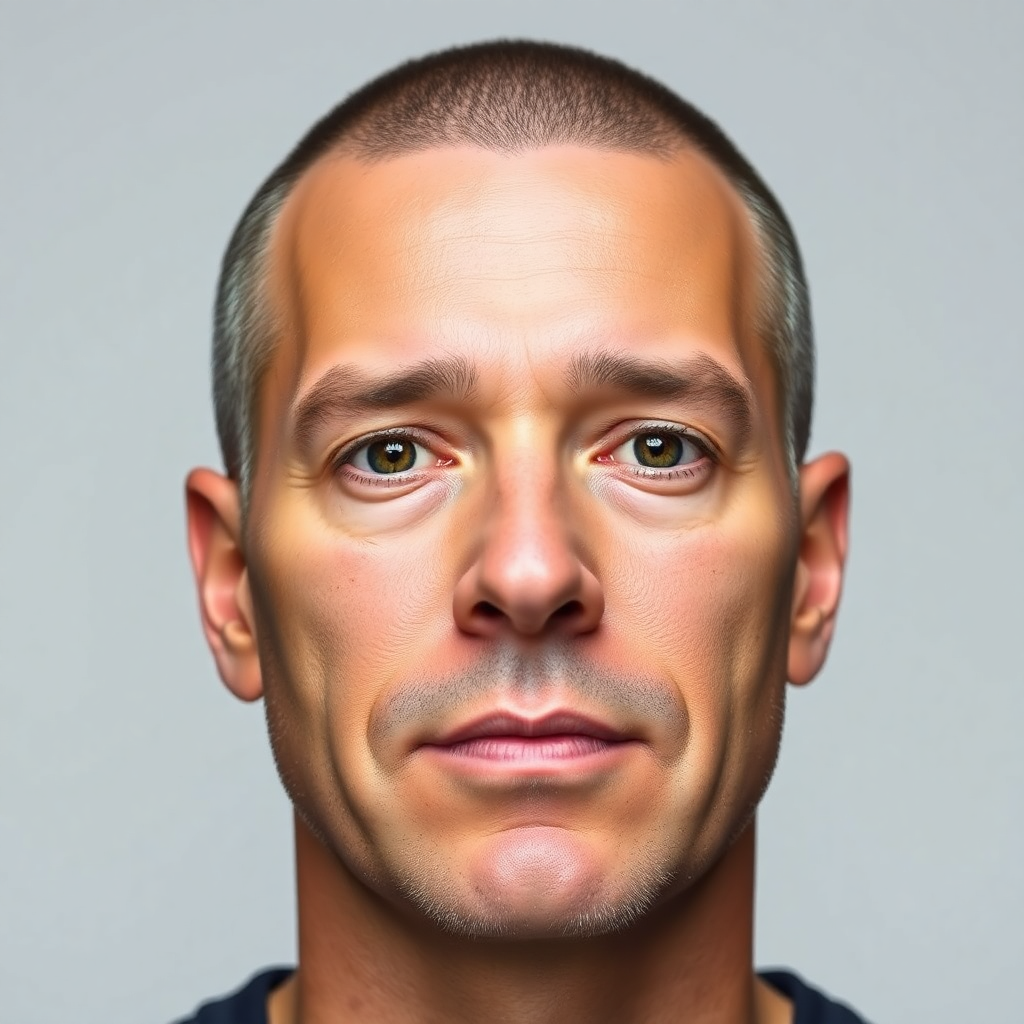
The top is cut to a short number one or two length, reducing the difference between denser areas and the thinner temple corners. The sides stay equally short or taper slightly near the ears, while the front hairline remains natural instead of being forced into a wide squared outline. The finish looks even and understated.
A short haircut for receding hairline concerns can make changing density appear less separated because no long section sits beside a thinner one. It does not hide every hairline pattern, but it can create a more consistent visual surface. Ask the barber to avoid pushing the front edge backward. Start slightly longer if you are uncertain, since more length can always be removed during the appointment.
24. Bleached Buzz Cut With Dark Root Shadow
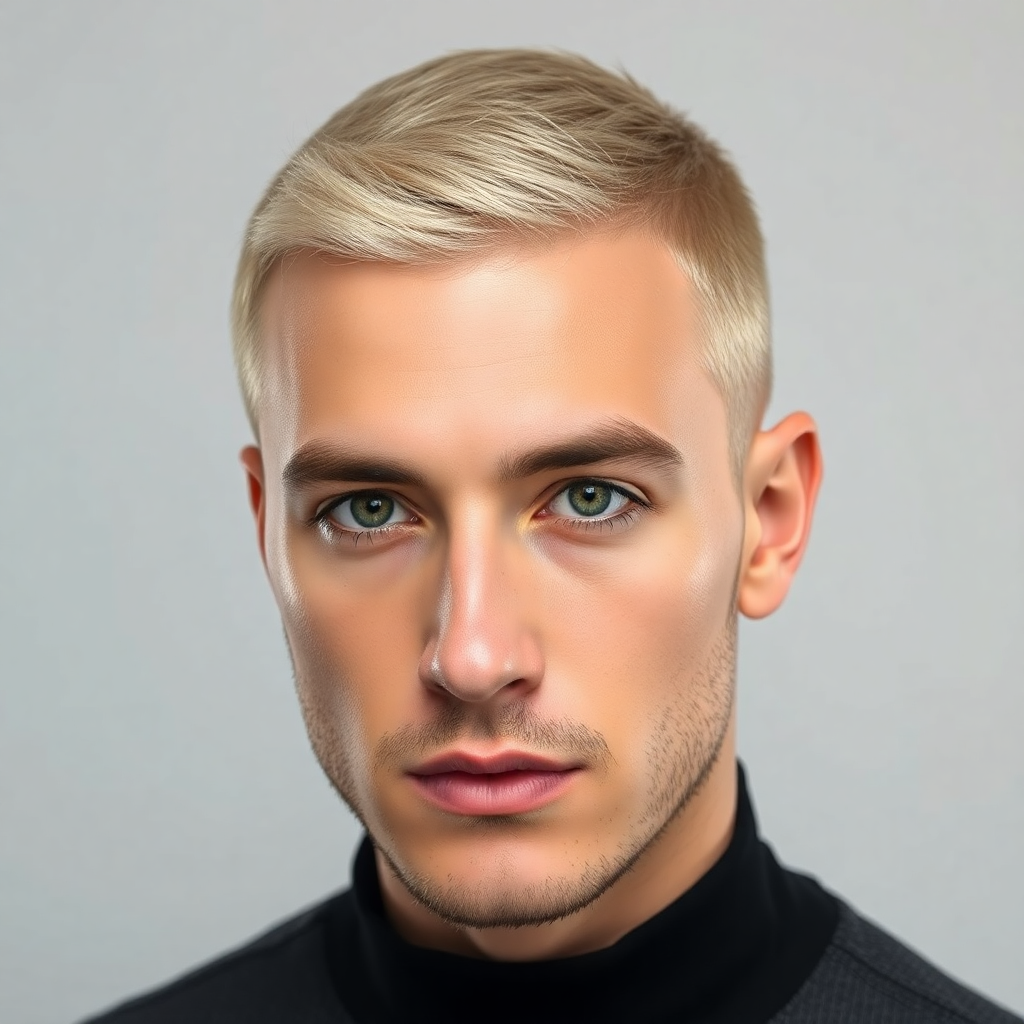
The hair is clipped to a short number two or three length and colored a pale blond tone, while a faint darker root shadow adds depth across the scalp. The sides may carry a low fade, and the hairline stays clean without becoming overly geometric. The short texture gives the color a soft, grainy appearance.
This expressive option changes the visual impact of a basic buzz without adding styling time. It can look striking against dark eyebrows or facial hair, though lightening services require more care than an untreated clipper cut. Discuss color suitability, scalp condition, and maintenance with a qualified color professional. Keep the haircut and color appointments separate when more control over the result is needed.
25. Long Buzz Cut With Tapered Sides
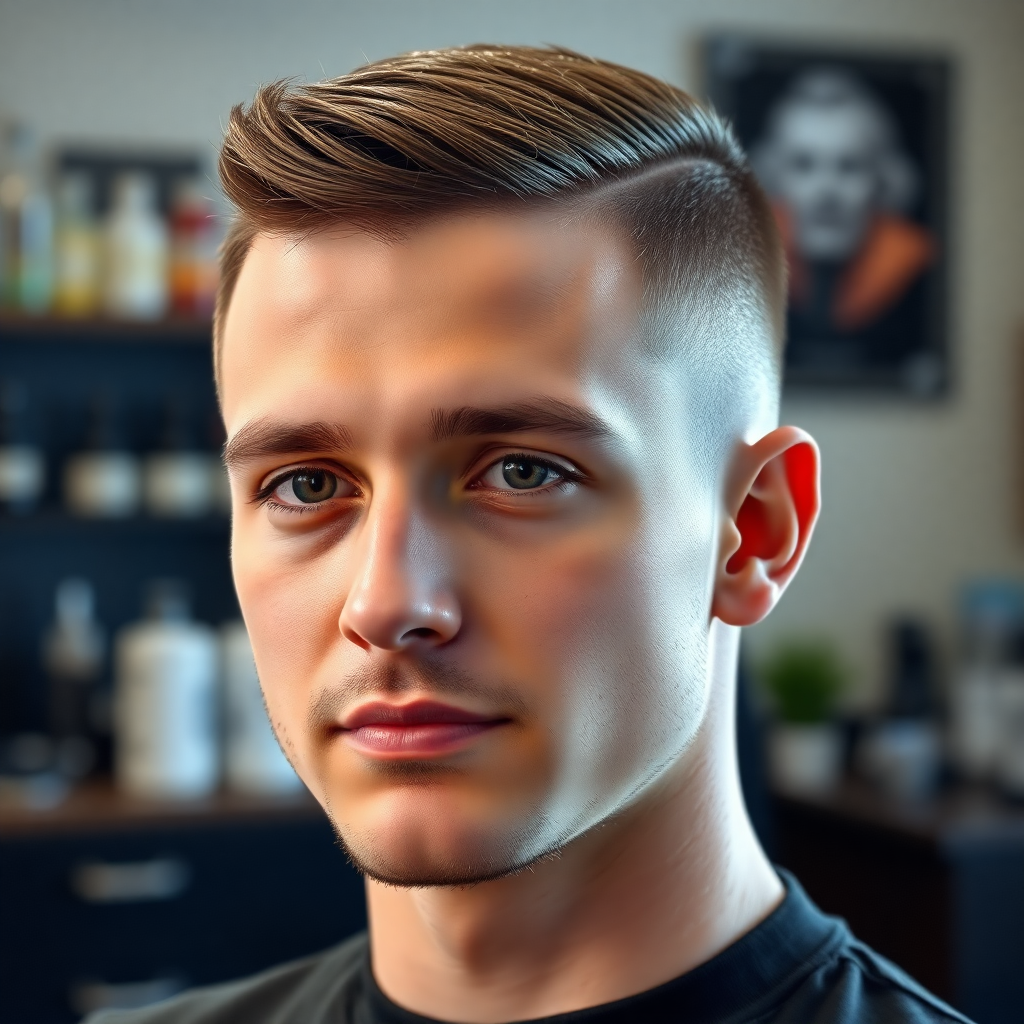
The top remains between three-quarters of an inch and one inch, creating a dense brushed surface that can move slightly forward or upward. The sides are shorter but not shaved, blending through a soft taper toward the ears and neckline. Natural texture is visible, and the front edge stays flexible rather than sharply boxed.
This longer interpretation sits between a traditional buzz and a short crew cut. It suits men who want men’s haircut inspiration with more coverage and less scalp exposure. Straight, wavy, and thick hair can all show distinct texture at this length. Ask for a long clipper cut with a gradual taper and enough top length to follow the natural growth pattern. A light matte cream can control uneven sections.
Conclusion
Choosing between these short styles depends less on finding the boldest fade and more on understanding which details support your natural features. Uniform cuts offer simple upkeep and balanced growth, while low tapers preserve softness around the sides. Mid and high fades create stronger contrast but demand more frequent cleanup. Longer buzz lengths reveal waves, curls, and density, whereas number one or two cuts place greater attention on the head shape and hairline.
The strongest buzz cut hairstyle ideas for men should also match daily life. A natural number three may be practical for a busy work schedule, while a sharp lineup, skin fade, or shaved design makes more sense for someone comfortable returning to the barbershop often. Face shape matters, but hair growth direction and personal preference matter as well.
Save two or three reference images before your appointment: one showing the front, one showing the fade height, and one showing the preferred top length. A buzz cut may remove most styling decisions, yet its smallest details often reveal the clearest sense of personal style.
Frequently Asked Questions
1. Which buzz cut works best for a round face?
A mid or high fade with a slightly longer top can reduce visual width at the sides and create a more vertical outline. Avoid removing too much length from the top if your goal is to make the face appear longer.
2. Is a buzz cut suitable for an oval face?
Most buzz-cut lengths work well with balanced oval proportions. A uniform number two or three keeps the result classic, while a low fade adds definition without changing the natural balance of the face.
3. What buzz cut suits a square face?
Short uniform cuts and low fades often complement a strong jawline. Keeping some density near the upper sides can maintain balanced proportions, while a clean hairline may echo the angular structure of the face.
4. Can a buzz cut work as a haircut for long face men?
A uniform buzz or low taper can work because it keeps some width around the sides. High skin fades may make the face appear longer by removing side volume, so compare both shapes before choosing.
5. What is a good haircut for chubby face men who want short hair?
A buzz cut with a mid fade and a slightly longer top can add structure without creating extra width. A neatly shaped beard may also strengthen the jaw area when its length remains balanced.
6. Is a buzz cut the best hairstyle for face shape concerns?
No single haircut suits every facial structure. Buzz-cut length, fade height, hairline shape, facial hair, and head proportions all affect the result, so small adjustments often matter more than the basic haircut name.
7. Does a buzz cut suit men with a big forehead?
It can create an intentional, balanced appearance because the short top removes the contrast caused by longer hair. Leaving the natural hairline untouched usually looks softer than forcing a sharp outline across a high forehead.
8. Are buzz cuts good haircuts for straight hair men?
Straight hair forms a smooth, even surface at short lengths and shows clean clipper work clearly. Number three and four cuts reveal more natural grain, while shorter guards create a consistent shadow over the scalp.
9. Can wavy hair keep texture in a buzz cut?
Waves usually become visible when enough length remains, often around a number four guard or longer. Cutting too close may remove the visible bend, leaving only a uniform short texture until the hair grows.
10. What length works for haircuts for curly hair men?
A half-inch top often preserves compact curl definition while remaining easy to manage. Curl patterns shrink differently, so the barber should assess the hair in its natural state before selecting a guard or final length.
11. Do coily hair types look good with a buzz cut?
Coily texture creates visible depth even at short lengths. A lineup, temple fade, or low taper can add definition, while leaving the top slightly longer may preserve more of the natural coil pattern.
12. Are buzz cuts suitable haircuts for thick hair men?
Short clipping removes much of the bulk that can make dense hair difficult to control. A textured longer buzz may also reduce heaviness while preserving enough length for the hair’s natural character to remain visible.
13. Can men with fine hair wear a buzz cut?
A short, even length may reduce the contrast between fine and dense sections. Bright lighting can make the scalp more visible, so beginning with a number three before going shorter allows a more cautious comparison.
14. What guard number creates a traditional buzz cut?
Numbers two and three are common starting points because they leave visible hair while remaining clearly short. Guard lengths vary slightly by clipper system, so show the barber a reference rather than relying on the number alone.
15. What does a number one buzz cut look like?
It leaves a thin layer of short hair with noticeable scalp visibility. Natural growth direction remains faintly visible, and dark hair often creates a stronger shadow than blond, gray, or low-density hair.
16. How short is a number two buzz cut?
A number two typically leaves about one-quarter inch of hair, although clipper systems can differ. The result provides more coverage than a number one while keeping the surface short and easy to maintain.
17. What should I tell my barber when asking for a buzz cut?
Specify the guard length on top, whether the sides should match or fade, the preferred fade height, and how you want the hairline treated. Bring clear images showing several angles whenever possible.
18. Should a barber cut a buzz cut with or against the hair growth?
Clippers often move against the growth direction to produce an even length. Strong crowns and unusual growth patterns may require passes from more than one angle so longer patches are not left behind.
19. What is the difference between a taper and a fade?
A taper usually shortens hair gradually near the sideburns and neckline while keeping more fullness across the sides. A fade removes more length over a larger area and may blend all the way to bare skin.
20. What is the difference between a low, mid, and high fade?
The names describe where the main transition begins. A low fade stays near the ears, a mid fade rises toward the temples, and a high fade removes more hair from the upper sides.
21. Is a skin fade the same as a zero fade?
Both terms describe an extremely short lower section, but barber usage can vary. Some zero fades retain faint stubble, while skin fades may finish with a foil shaver or razor-close appearance.
22. Can I ask for a natural hairline with a buzz cut?
Yes. Tell the barber to clean stray hairs without creating a hard squared outline. Natural edges often grow back more softly and may suit uneven corners, widow’s peaks, or mature hairlines.
23. Does a short buzz cut require styling products?
Most close cuts need no hold product. A light moisturizer or non-greasy conditioning product may help dry hair feel softer, while longer textured buzz cuts can use a small amount of matte cream.
24. Should I brush a buzz cut?
Soft brushing can remove loose hairs and help longer buzz cuts lie in a consistent direction. Regular brushing is more important for men developing wave patterns because direction affects the finished appearance.
25. Can hair wax be used on a long buzz cut?
A small amount can separate texture when the top is long enough to move. Heavy wax may make short hair look greasy or uneven, so begin with less product than you would use on a longer hairstyle.
26. Do I need a hair dryer for a buzz cut?
Most buzz cuts dry quickly without tools. A dryer may help lift a longer number six or one-inch top, but close number one through four cuts rarely gain much benefit from heat styling.
27. How often should a buzz cut be trimmed?
Uniform cuts often stay presentable for two to four weeks, depending on growth speed and preferred sharpness. Skin fades and lineups may appear softer sooner because their contrast changes as short hair returns.
28. How often should a lineup be refreshed?
Sharp edges may begin losing definition within one or two weeks. Frequent correction can gradually move the hairline backward if handled aggressively, so ask the barber to follow the natural boundary.
29. Can I maintain a buzz cut at home?
A single-length cut is one of the easier home options when you have reliable clippers, good lighting, and mirrors. Fades, curved blends, lineups, and design work are harder to keep symmetrical without practice.
30. What happens when a buzz cut grows out?
The sides may begin to look wide before the top gains enough length to style. Light tapering around the temples and neckline can create a cleaner shape while the rest continues growing.
31. How long does it take to grow a buzz cut into a crew cut?
Timing varies with growth rate and starting length. Regular cleanup around the sides can maintain shape during the transition, while the top is left untouched until it has enough length for light styling.
32. Why does my growing buzz cut look uneven?
Different areas can grow in separate directions or appear denser because of natural texture. Crown whorls, cowlicks, and faded sides may also create temporary contrast as the haircut becomes longer.
33. Is a buzz cut good for summer?
Short length allows quick washing and reduces the need for heat styling, making it a practical summer haircut for men. The scalp remains more exposed, so normal sun-protection habits become more important outdoors.
34. Can buzz cuts work as haircuts for thinning hair men?
An even short length may reduce the visible difference between fuller and thinner sections. Results depend on density, hair color, and scalp contrast, so beginning with a longer guard can help assess the appearance.
35. Are buzz cuts suitable hairstyles for balding men?
Many men choose close cuts to create a more consistent transition between remaining hair and areas with less density. The haircut changes the visual contrast but does not affect the underlying pattern of hair loss.
36. What buzz length is best for a receding hairline?
Numbers one through three are common choices because they keep the top close to the temple areas. The best length depends on density and scalp visibility, so test a longer guard before moving shorter.
37. Should a receding hairline receive a sharp lineup?
A conservative cleanup may look natural, while forcing square corners can remove additional hair from already mature temples. Ask the barber to preserve the existing boundary and avoid creating an artificial front line.
38. Are buzz cuts good haircuts for men over 40?
They can provide a clean, direct appearance with little daily styling. A number two or three with a soft taper often feels less severe than a high skin fade while remaining neat for work.
39. Can a buzz cut suit haircuts for men over 50?
Yes. Natural gray color can create attractive texture across a short surface, while a soft taper keeps the outline controlled. Leaving slightly more length may provide additional coverage when density varies across the scalp.
40. Do buzz cuts work as hairstyles for older men?
Simple clipper cuts can reduce styling time and place attention on facial features. Natural hairlines and softer edges often grow out more comfortably than heavily carved lineups that require frequent correction.
41. What is the difference between a burr cut and a buzz cut?
Buzz cut is a broad category covering several short clipper styles. A burr cut usually refers to an even, close length across the entire head, commonly produced with a number one or two guard.
42. How is a crew cut different from a buzz cut?
A crew cut keeps enough length on top for some direction, lift, or texture while the sides remain shorter. A traditional buzz cut is more uniform and usually offers little styling movement.
43. What is the difference between a buzz cut and an induction cut?
An induction cut is one of the shortest buzz variations and keeps nearly the same close length everywhere. Other buzz cuts may use longer guards, fades, tapers, lineups, texture, or design details.
44. Is a long buzz cut the same as a short crew cut?
The styles can overlap. A long buzz usually follows the head shape with limited top styling, while a crew cut often contains more length toward the front and a clearer graduation from top to sides.
45. Are buzz cuts among popular men’s haircuts in 2026?
Buzz cuts remain visible in current men’s grooming coverage, with greater focus on customized fade placement, precise outlines, natural head shape, and optional color. Personal suitability still matters more than trend status.
46. Can a buzz cut be worn in a professional workplace?
A uniform number two or three, soft taper, or low fade generally creates a restrained appearance. Workplace expectations differ, so avoid shaved designs or extreme color when a conservative grooming standard is required.
47. Do buzz cuts work as business haircuts for men?
Clean edges and controlled side length can make a buzz cut suitable for many business environments. Softer tapers often appear more traditional, while high skin fades create a sharper and more noticeable contrast.
48. Which buzz cuts pair well with beards?
Low tapers and temple fades can connect smoothly into short or full facial hair. Keep the beard outline intentional so the transition appears planned rather than leaving a heavy block at the sideburn.
49. Can men with glasses wear buzz cuts?
Yes. Removing longer hair brings more attention to the frames, eyebrows, and face shape. Choose frame width and fade height together so the temples do not appear crowded or overly narrow.
50. Are buzz cuts good haircuts for teenage guys and young men?
They offer easy upkeep and many ways to add personality through fades, lineups, texture, color, or small shaved details. School grooming rules and maintenance needs should be considered before selecting a high-contrast design.
Trending Haircuts and Hairstyles for Men
Explore modern fades, textured crops, classic styles, bold cuts, and fresh hairstyle inspiration for every hair type.