
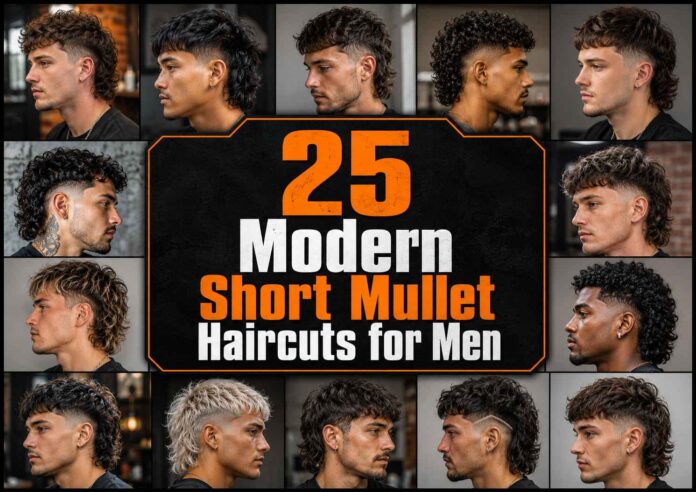
The modern mullet has moved far beyond the stiff, exaggerated shape many people remember from past decades. Current versions are shorter, softer, and easier to wear, with controlled length at the back, natural texture on top, and cleaner work around the ears. Recent men’s grooming coverage has also pointed toward less severe mullets with relaxed layers, softer outlines, and movement that looks natural rather than heavily styled.
These short haircuts for men are designed for anyone who wants visible personality without growing a long tail. The ideas below cover straight, thick, fine, wavy, curly, and coily textures, along with subtle office-friendly cuts and sharper barbershop styles. Some keep the mullet shape almost hidden, while others use fades, blunt fringe, spikes, or disconnected sides to make it more obvious.
The strongest short mullets balance three areas: a top that works with your natural texture, sides that support your face shape, and enough length behind the ears to create the signature profile. These 25 options give you clear visual references and practical details to take to your next appointment.
1. Baby Mullet With a Low Taper
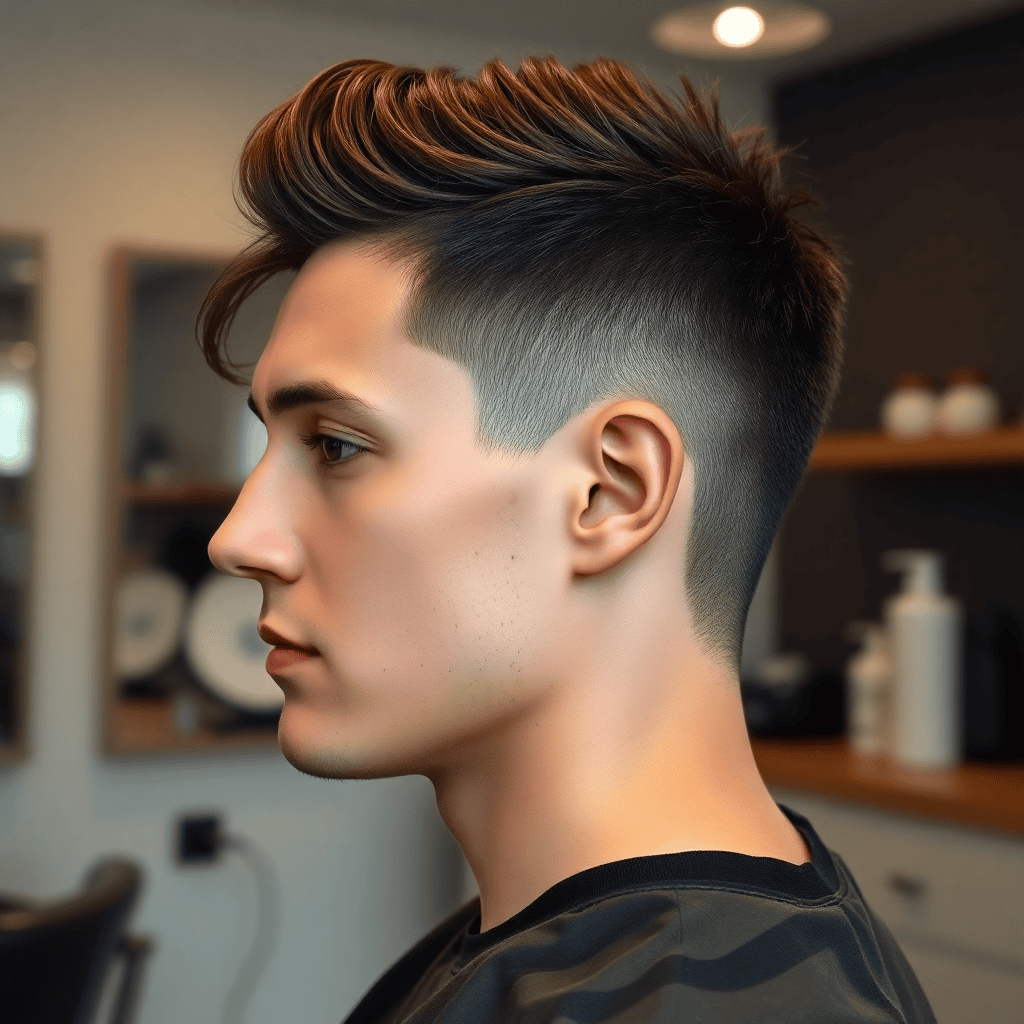
The top stays about two to three inches long with soft, broken layers that move forward and slightly to the side. Around the temples and sideburns, a low taper gradually shortens the hair without exposing much skin. The back extends only an inch below the natural neckline, creating a small flick rather than a long tail. A natural hairline keeps the finish relaxed and avoids making the cut appear overly sharp.
This subtle version works well for straight or lightly wavy hair and is one of the easier haircut ideas for men trying a mullet for the first time. Ask the barber to preserve weight behind the ears while keeping the neckline soft. A small amount of light styling cream adds separation without making the layers stiff. Most men can refresh the taper every three to four weeks while allowing the back to grow longer between visits.
2. Buzzed Short Mullet With a Sharp Lineup
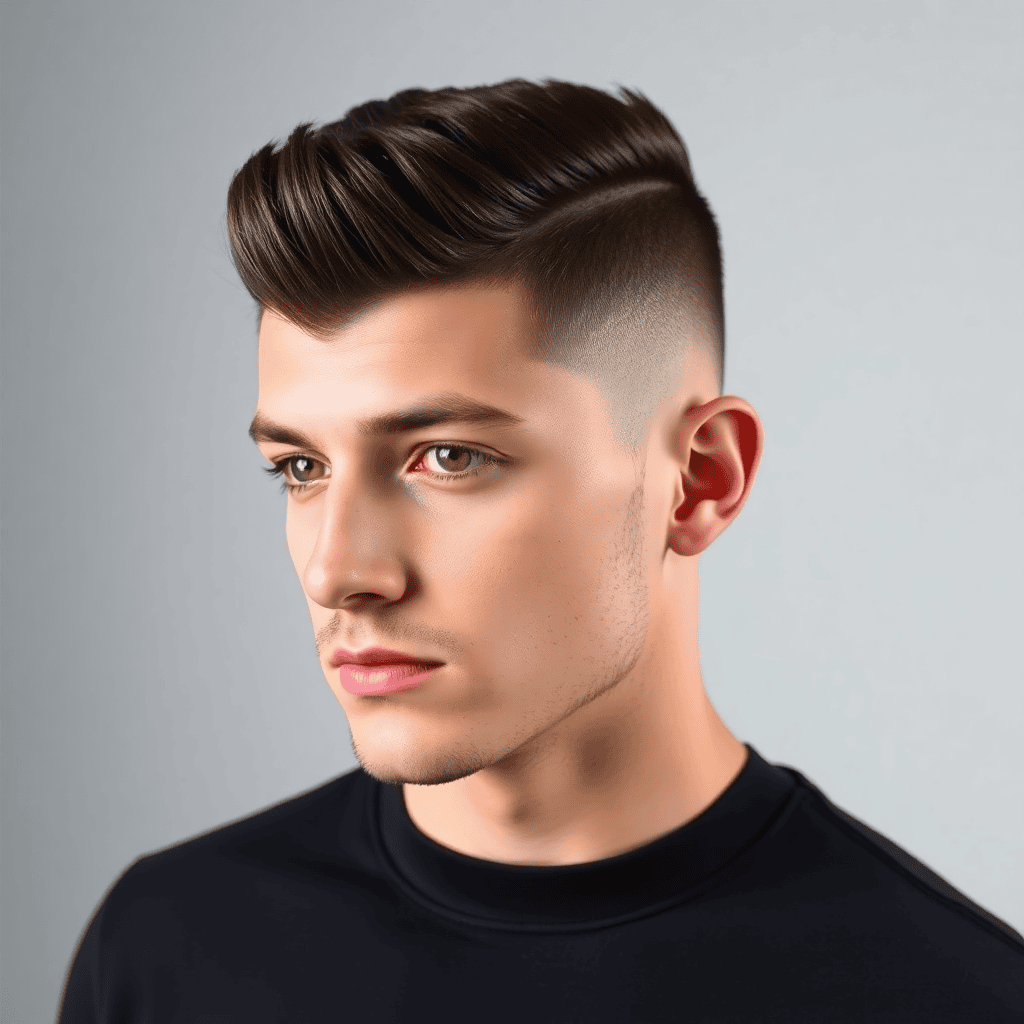
The crown and top are clipped close, usually between a number two and number four guard, while a narrow panel of longer hair remains through the back. The sides are kept equally tight, making the short rear section stand out through shape rather than extra length. A straight forehead lineup and clean temple corners give the front a precise finish. From the side, the silhouette looks close to a buzz cut until the compact tail becomes visible.
Men with dense, straight, or tightly curled hair can wear this style with little daily effort. It also suits square and oval faces because the clean front edge emphasizes the jaw and forehead structure. Tell the barber you want a buzzed top that connects into a short mullet panel instead of a full mohawk strip. The lineup may need attention every two weeks, though the rest can grow slightly without losing its form.
3. Textured Crop Mini Mullet
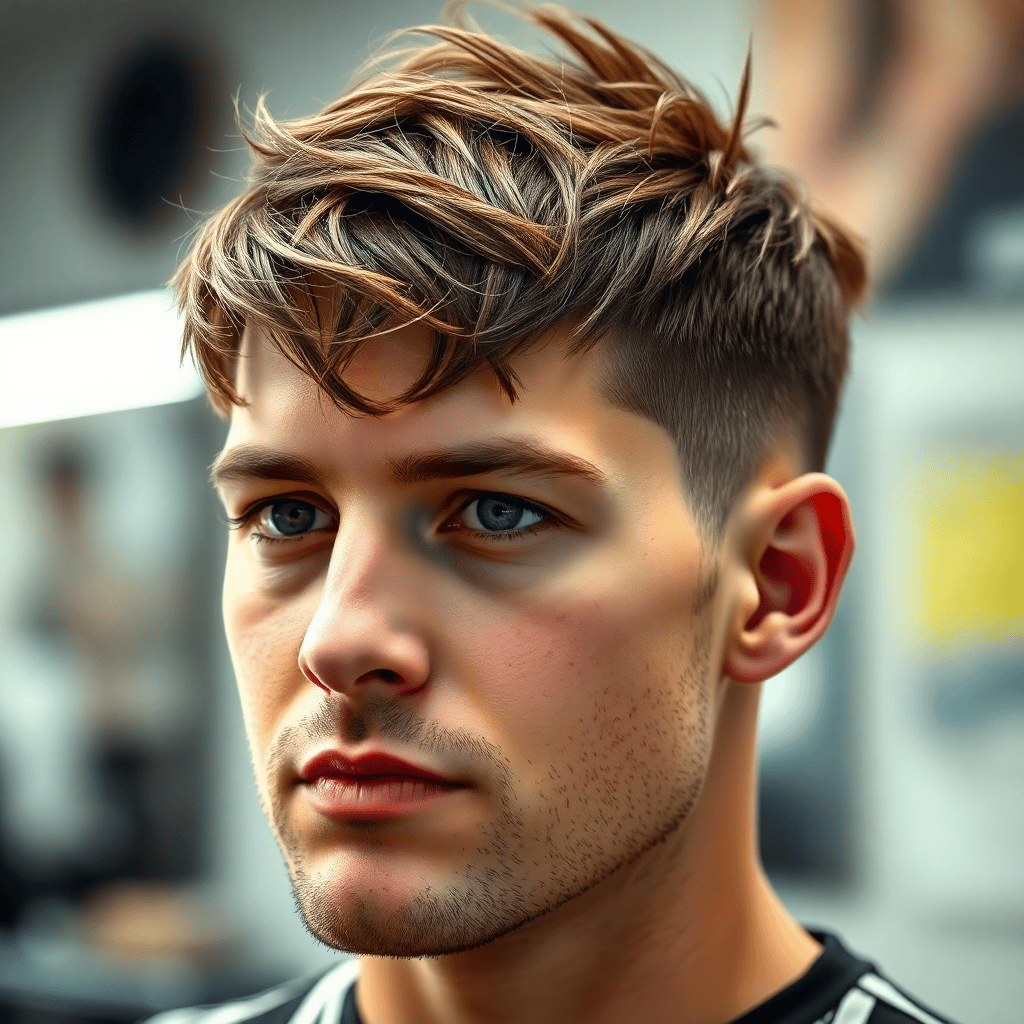
Choppy layers cover the top at roughly two inches, with a short uneven fringe resting above the eyebrows. The sides are scissor-cut close enough to expose the ear shape but retain a soft layer of texture. Behind the ears, the hair becomes gradually longer and finishes in a lightly feathered section at the upper neck. The contrast remains controlled, giving the cut a cropped front and a compact mullet profile.
This combination is useful for thick hair that tends to sit heavily when cut to one length. The broken texture removes bulk and makes the top easier to move with the fingers. Ask for point-cut layers and a fringe with irregular edges rather than a solid horizontal line. A dry texture paste can separate the tips, but applying too much may flatten the shape. The cut usually holds well for four to five weeks before the sides become bulky.
4. Caesar Fringe With a Short Mullet
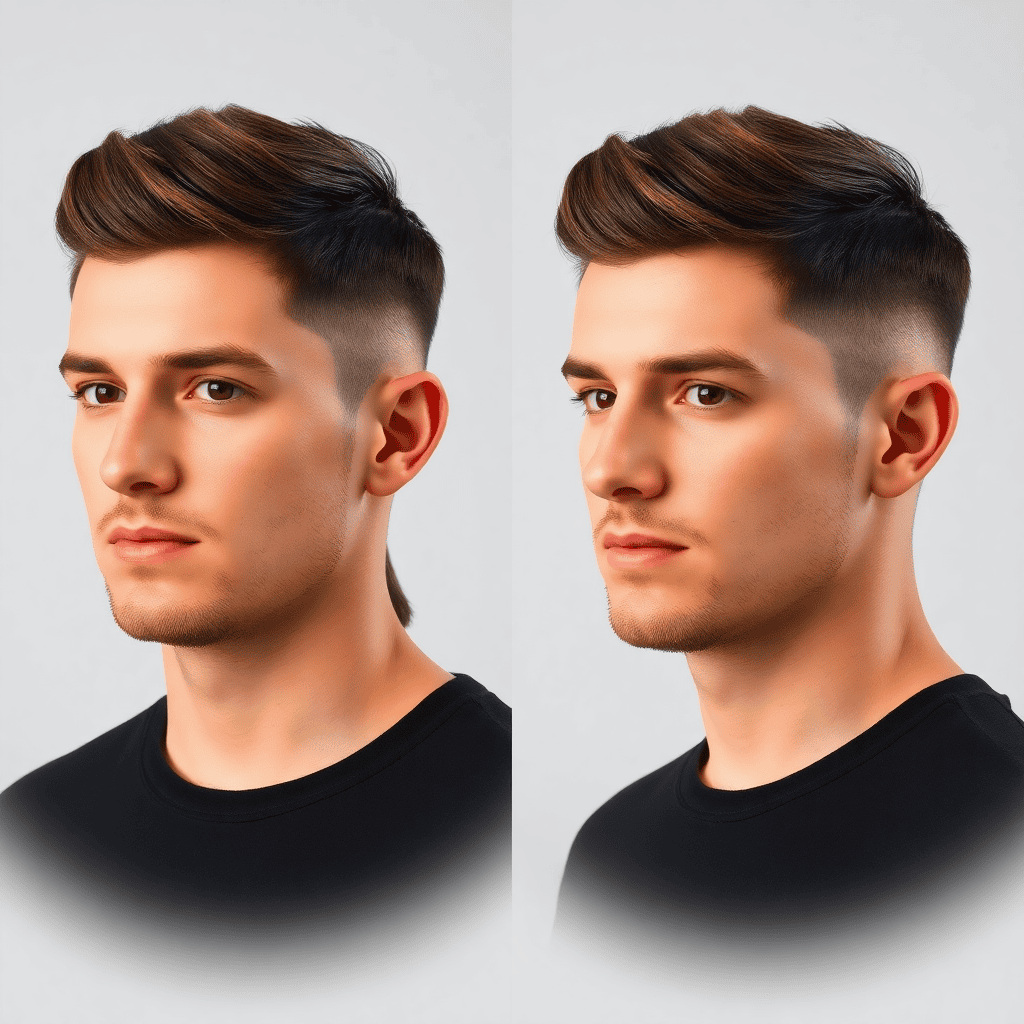
A short horizontal fringe sits across the upper forehead while the top carries compact forward-facing layers. The sides remain close and evenly blended, usually without a dramatic skin fade. At the back, a small section extends past the neckline and curves inward toward the neck. The result combines the firm front outline of a Caesar cut with the softer rear movement of a modern mini mullet.
This shape can work well for men who prefer short styling time or want the forehead partly covered. It may also provide a practical option among short haircut choices for a receding hairline because the forward direction reduces the need to expose the corners. Ask the barber to keep the fringe lightly textured so it does not resemble a heavy straight block. A pea-sized amount of matte clay can hold the front in place while leaving the back loose.
5. French Crop With a Tapered Mullet Back
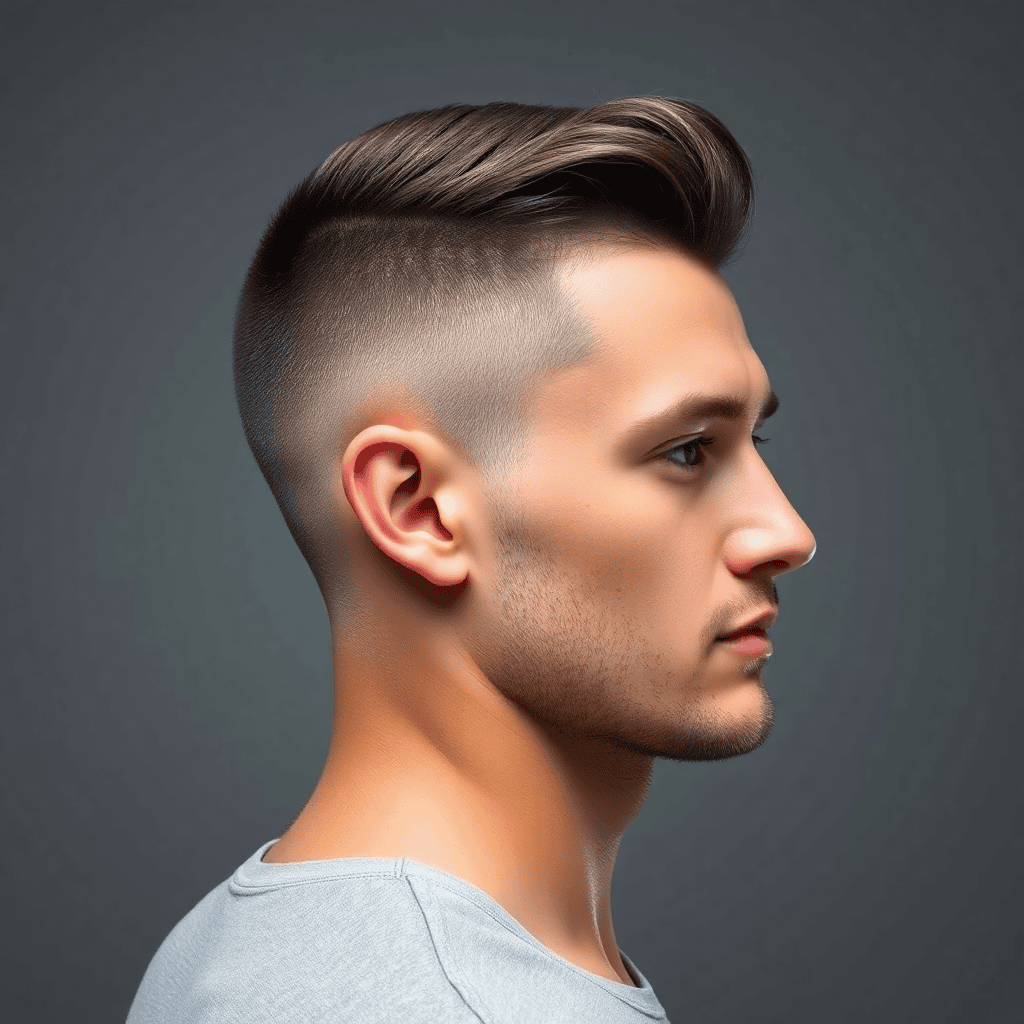
The top measures about two to three inches and is brushed forward into a blunt yet lightly broken fringe. The temples taper gradually toward the skin, while the area above the ears keeps enough weight to connect with the crown. The rear grows longer in stages and ends in a short rectangular section at the neck. From the front, it resembles a clean French crop; the mullet influence appears mainly from the side and back.
This balanced shape suits men who want stylish haircuts for men without committing to a dramatic rear section. Straight and thick hair show the fringe clearly, though soft waves add useful movement. Request a textured crop front, tapered temples, and preserved length through the lower crown. Blow-dry the top forward with low heat, then work a small amount of matte paste through the ends. A neckline cleanup every few weeks keeps the rear intentional.
6. Crew-Cut Mullet With Natural Sides
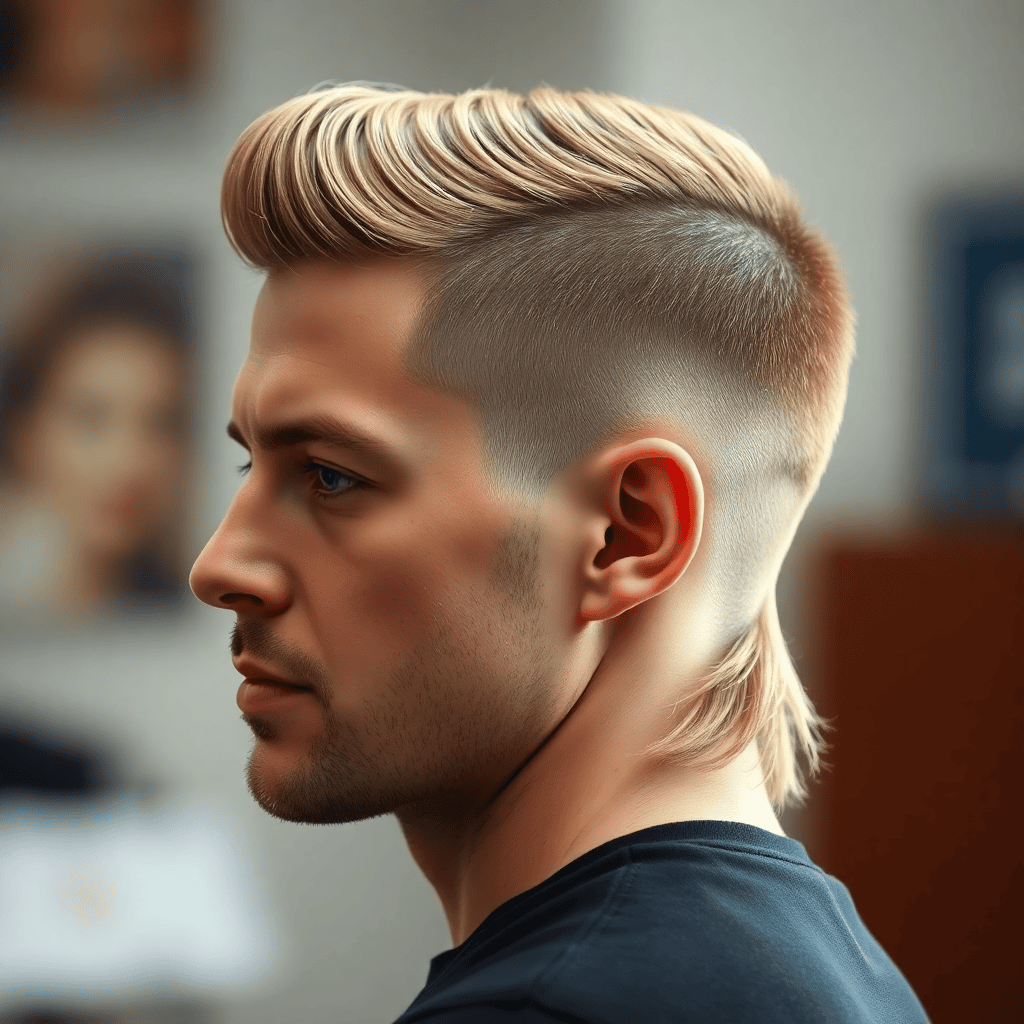
The front begins around one and a half inches and becomes slightly shorter toward the crown, following the familiar slope of a crew cut. Instead of ending neatly at the rear, the crown feeds into a short layered tail that reaches the upper neck. The sides are clipped but not faded to skin, leaving a natural shadow around the temples and ears. A lightly tapered neckline prevents the back from looking unfinished.
This is one of the more practical modern haircuts for men who prefer a familiar shape with a small change in profile. It works with straight, coarse, and mildly wavy textures and can suit active routines. Ask the barber to build a crew-cut silhouette in front while leaving the occipital area and nape longer. Use a small amount of styling cream to lift the front. The sides may need trimming before the rear, so explain that you are intentionally growing the mullet section.
7. Ivy League Mini Mullet
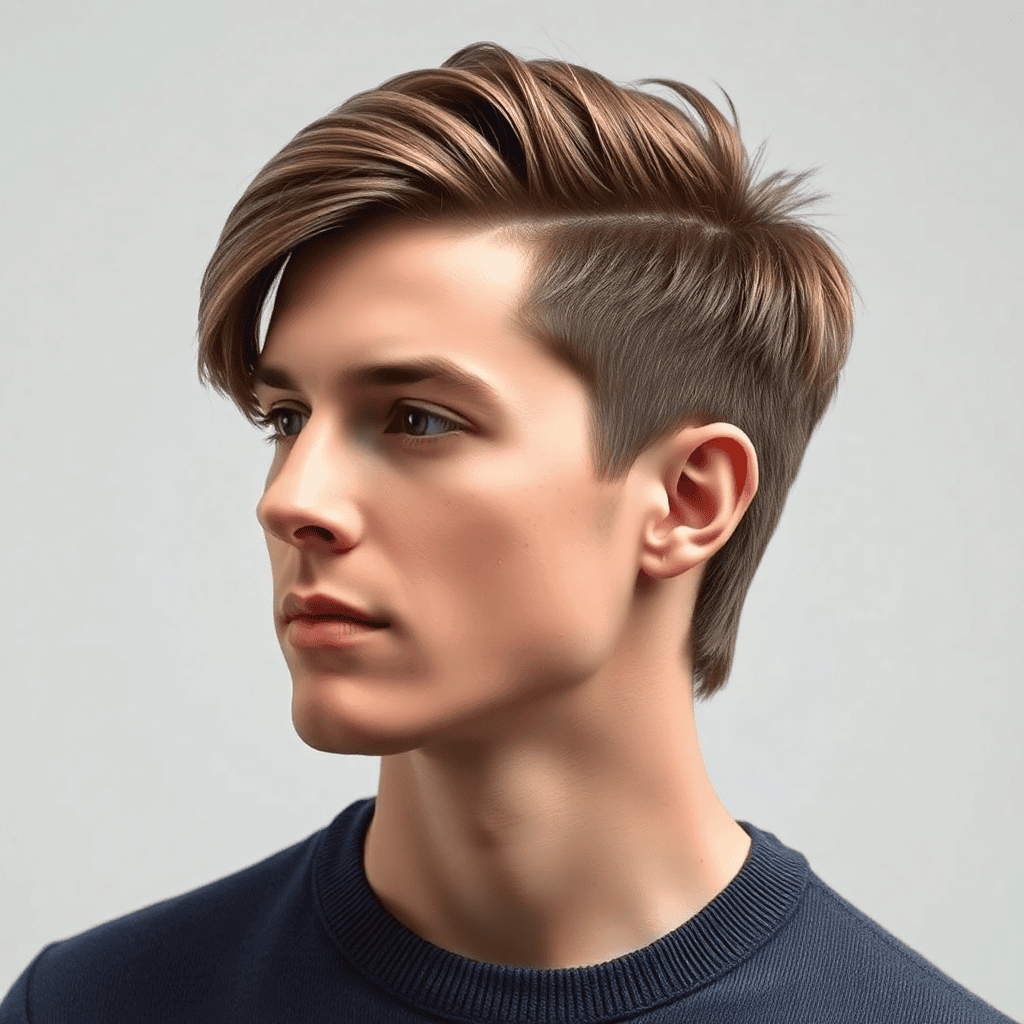
The front remains three inches long and is combed diagonally into a controlled side sweep. The top shortens toward the crown, while the sides taper neatly around the ears without becoming bare. A narrow rear section extends below the neckline with softly trimmed ends. The combination looks polished from the front but gains a more relaxed character when viewed from behind.
Men seeking professional haircuts for men may prefer this restrained version because the contrast stays low. Oval, square, and longer faces can benefit from the side movement, while fine hair often appears fuller when the front is lifted slightly. Tell the barber to keep an Ivy League shape through the front and sides but leave a modest amount of length at the nape. A lightweight cream or low-shine pomade controls the part without removing natural movement. Regular side trims help preserve its cleaner appearance.
8. Low-Fade Short Mullet
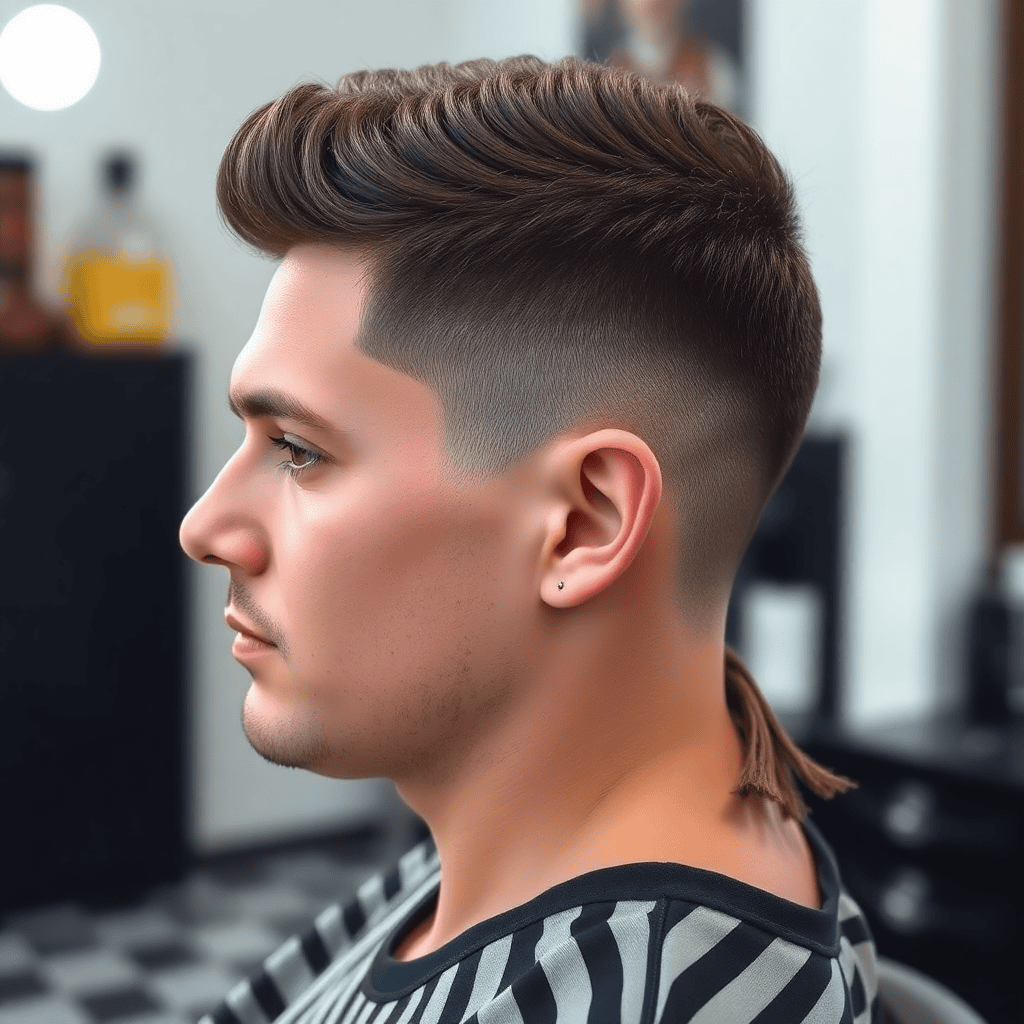
The top carries two to three inches of textured length, styled upward near the front and loosely toward the crown. A low fade begins close to the ears and stays below the temple line, leaving visible weight through the upper sides. The back remains longer from the crown downward and forms a short tapered tail. The fade creates clean separation without removing the rounded shape that makes the haircut read as a mullet.
This version suits men who enjoy fresh haircuts for men but want more personality than a standard faded crop. It can add structure around round faces when the front is styled with moderate height. Ask for a low fade that follows the ear while preserving the back panel. Do not let the barber fade too far into the rear, or the mullet may resemble a narrow mohawk. Matte clay gives the top enough hold while maintaining visible texture.
9. Mid-Fade Textured Mullet
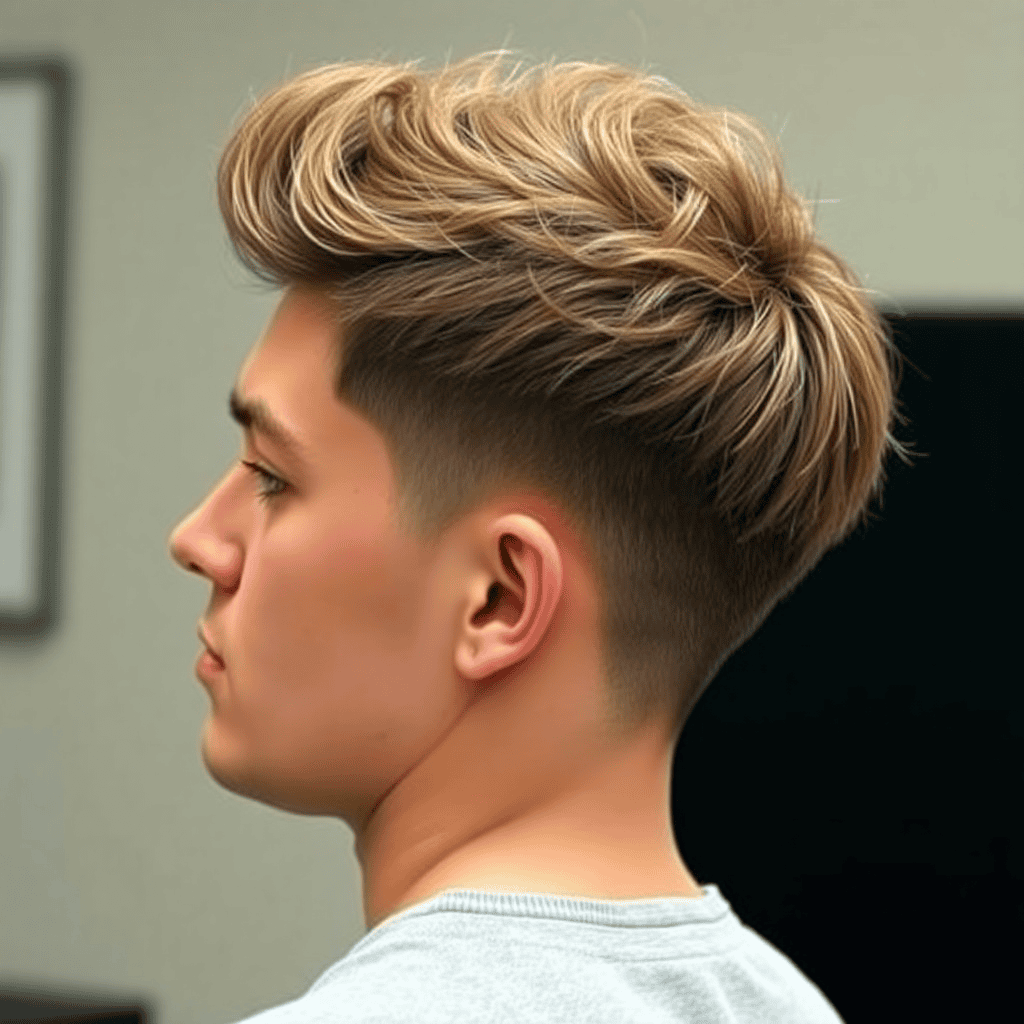
Layers across the top measure about three inches and point in several directions for a rough, separated finish. The mid fade begins around the temple area and blends down toward the skin above the ears. Behind the fade, a wider section of hair remains through the crown and upper neck, creating a clear but balanced mullet shape. The neckline is lightly tapered instead of squared off.
This style has more contrast than a low-fade version and often suits thick or wavy hair that can hold visible texture. Men with oval or square faces can use the higher side removal to emphasize the cheekbones and jaw. Ask the barber to keep the rear wide enough to connect naturally with the crown. A texture powder can add lift, followed by a light paste on the ends. The fade will usually look sharpest when cleaned every two to three weeks.
10. High-Fade Spiky Short Mullet
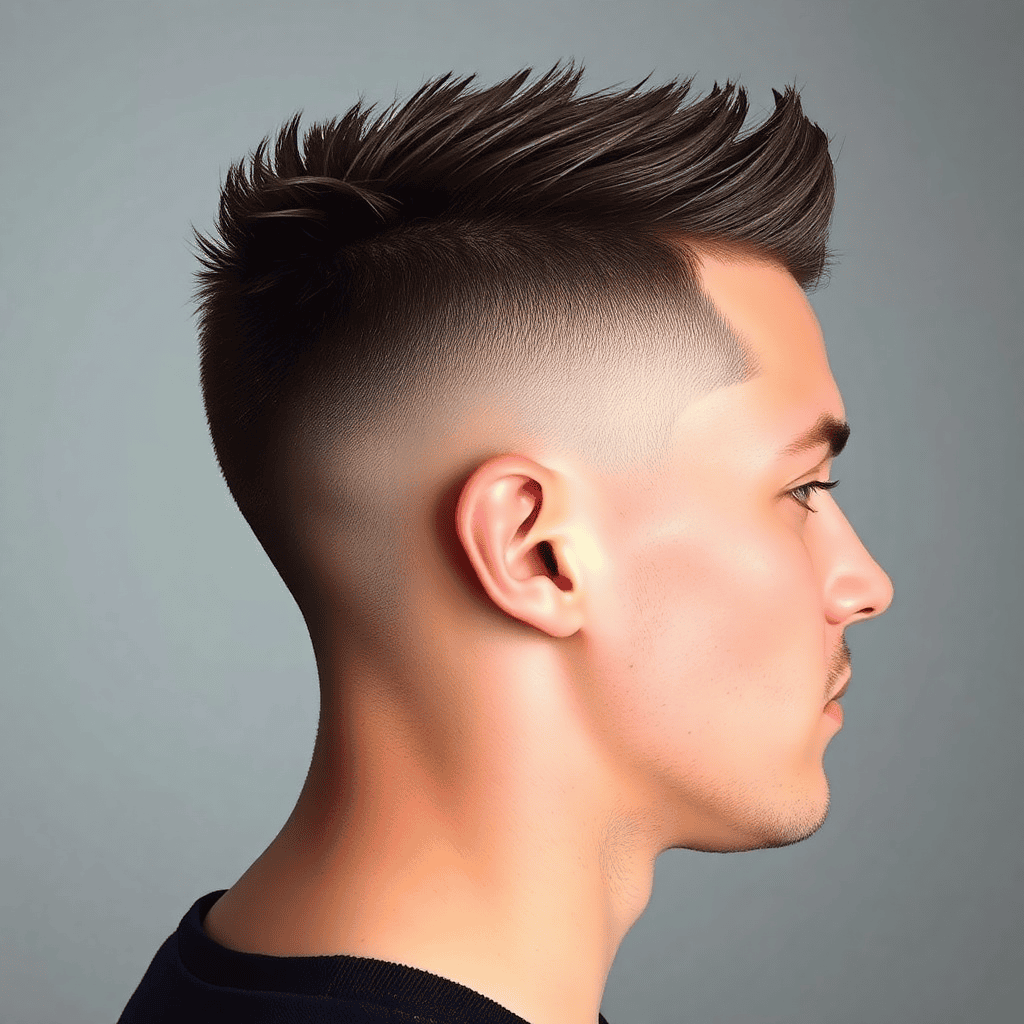
The top is cut into short pointed layers ranging from one and a half to three inches, with the front styled upward and slightly forward. A high fade removes most side weight above the temples, exposing a strong contrast between the top and skin. The rear stays narrow but visibly longer, ending in textured points at the upper neck. The profile feels sharper and more athletic than softer mini mullets.
This bold option works best with dense straight hair that can hold spikes without heavy product. It may lengthen the appearance of a round face because of the height on top and reduced width at the sides. Ask the barber to preserve enough crown length so the back does not look detached. Use a small amount of firm matte paste and pinch individual sections rather than coating the entire top. The fade requires regular cleanup to retain its strong outline.
11. Burst-Fade Mini Mullet
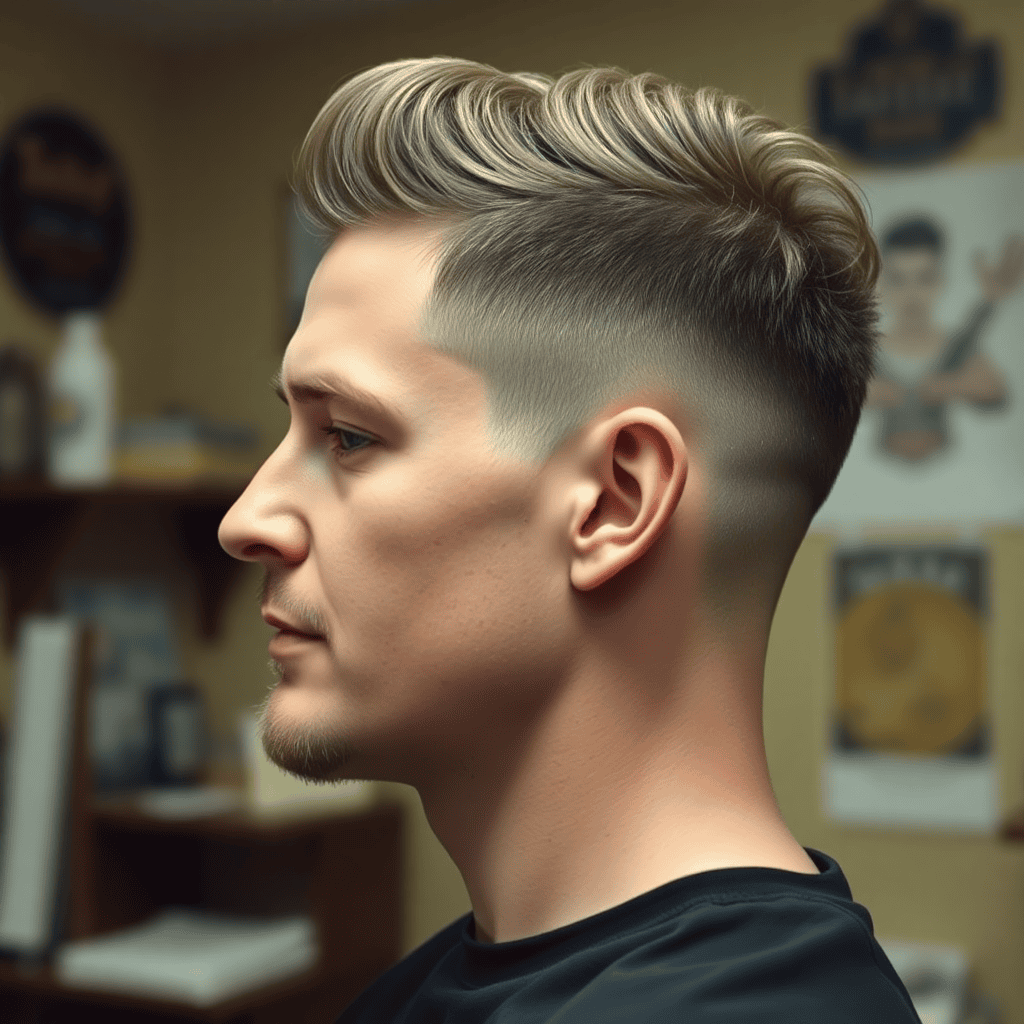
The top stays two to four inches long with loose texture, while the fade curves closely around each ear in a rounded arc. Hair remains fuller at the temples, crown, and back, creating a wider central shape. The rear section reaches the upper neck and narrows gently toward the bottom. A burst fade concentrates the shortest area around the ear instead of carrying an even fade across the entire side.
This is among the popular men’s haircuts connected with modern mullet styling because it creates definition while protecting rear length. Curly, wavy, and thick textures show the rounded shape especially well. Tell the barber how high you want the burst to rise and request a broad connection through the crown. Curl cream or texture cream can control the top without making it rigid. Check the side profile before leaving, since the curve around the ear defines the cut.
12. Drop-Fade Short Mullet
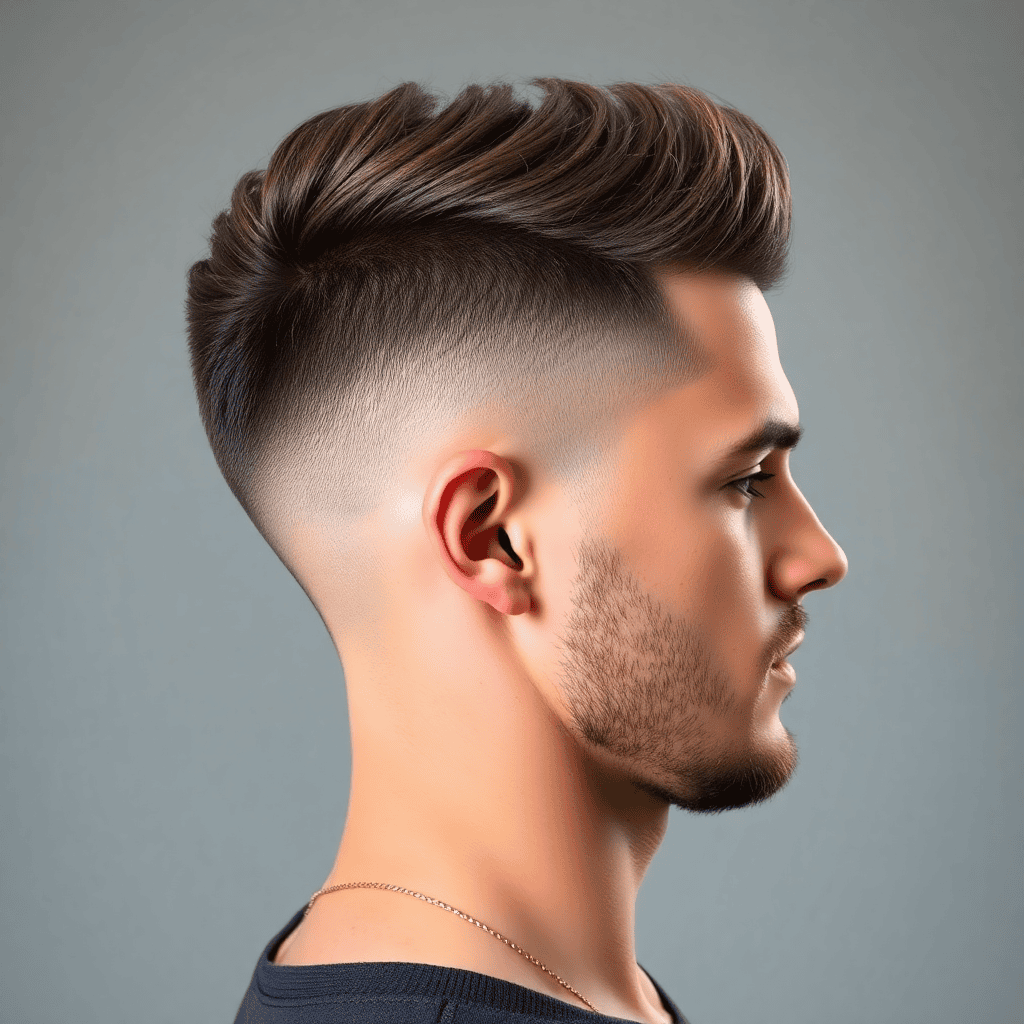
The hair on top measures roughly three inches and is styled into loose forward texture. The fade begins near the temples, then curves downward behind the ears, following the shape of the head. That lower rear path leaves more dark weight around the crown and creates a strong transition into the short mullet tail. The back ends with natural feathering rather than a hard horizontal neckline.
A drop fade can help the haircut look fuller from the side because it preserves more hair behind the ear. It fits thick, straight, and wavy textures and can soften the appearance of a long head shape when the top is not styled too high. Ask the barber to drop the blend low behind the ear and avoid cutting into the center rear section. A light sea-salt spray can support movement, though coarse hair may respond better to styling cream. Shape checks are useful every three weeks
13. Temple-Fade Mullet With Full Sides
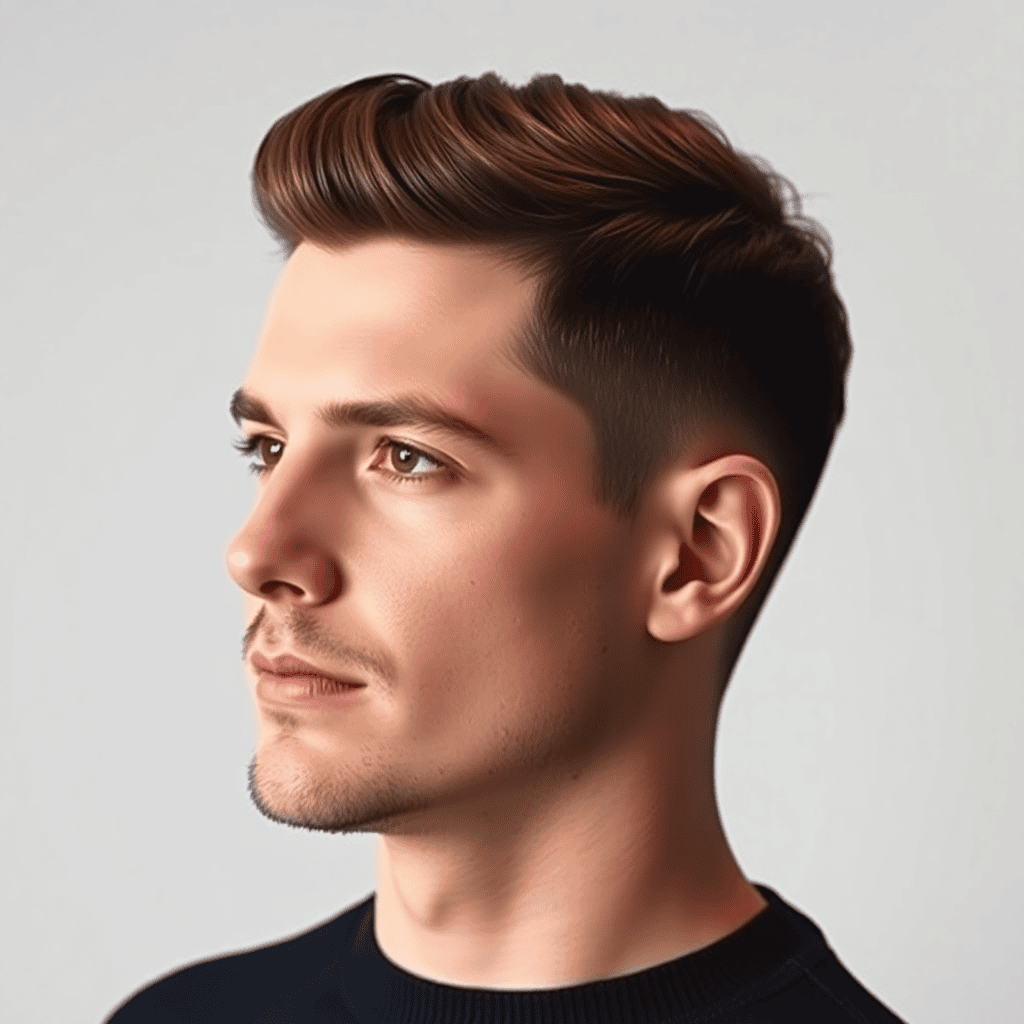
The top and sides remain relatively full, with two to four inches of layered hair forming a rounded silhouette. Only the temple corners and sideburns are faded closely, leaving the area above and behind the ears mostly scissor-cut. The back flows from the crown into a compact neck-length section with soft ends. This limited fade adds neatness at the front without removing the fuller character of the haircut.
Men with fine hair may appreciate the extra side weight because an aggressive fade can expose too much scalp. The shape also works for wavy hair and men who prefer a lower-maintenance haircut that grows out without a strong fade line. Ask for a temple fade rather than a complete side fade, and show where you want the longer rear section to finish. A light mousse can add body before air-drying or blow-drying. The temple area may be cleaned separately between full cuts.
14. Soft Shadow-Taper Mullet
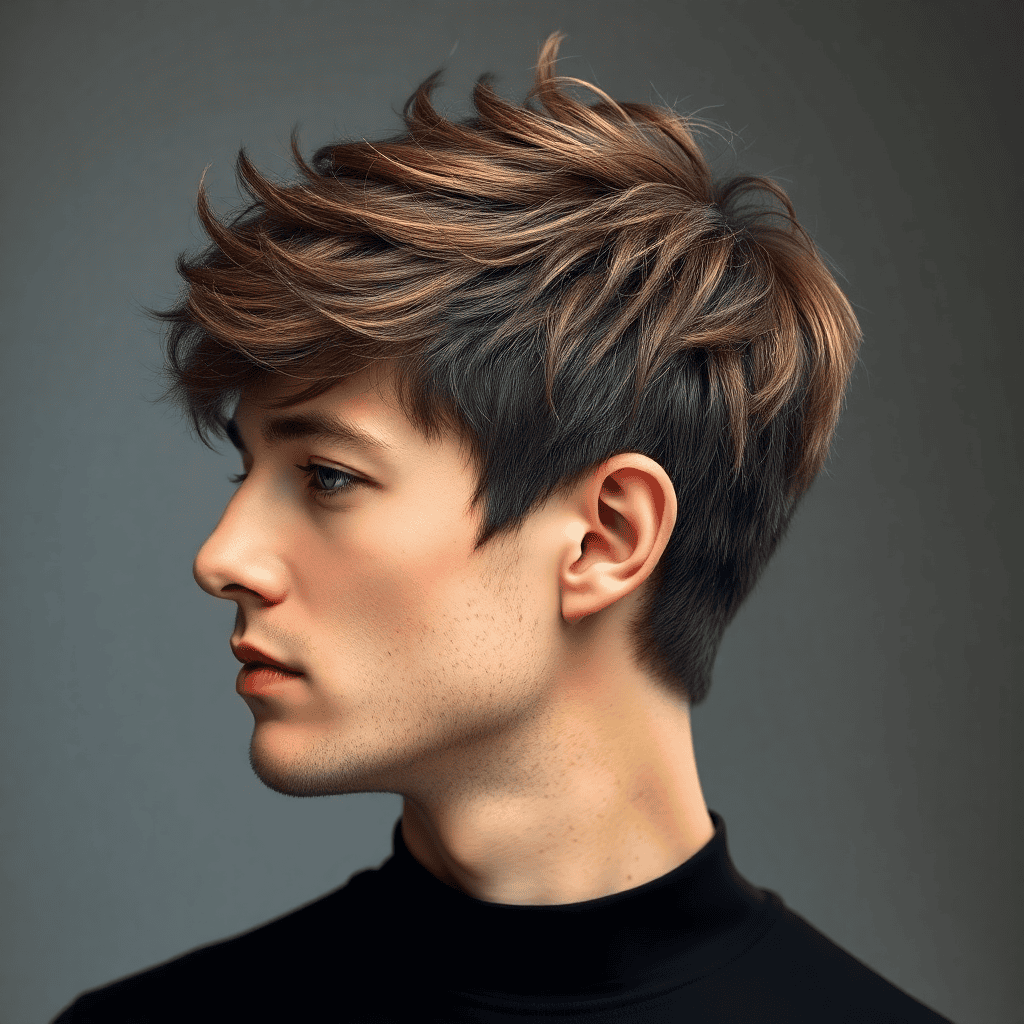
The top is layered at three to four inches and falls naturally with no fixed part. The sides shorten gradually but never reach bare skin, leaving a dark shadow around the temples, ears, and neckline. The rear extends slightly below the natural hairline and bends outward in light, wispy pieces. There are no sharp edges, making the transition between short and long areas appear smooth.
This softer direction fits the relaxed side of men’s hairstyles 2026 and works well for men who dislike frequent fade appointments. Wavy and medium-density straight hair can create the airy movement with limited product. Ask for scissor-over-comb work on the sides, a subtle taper at the edges, and internal layers through the back. Styling cream applied to damp hair supports the natural shape. Avoid heavy wax, which can gather the wispy sections into thick strands and reduce softness
15. Choppy Straight-Hair Short Mullet
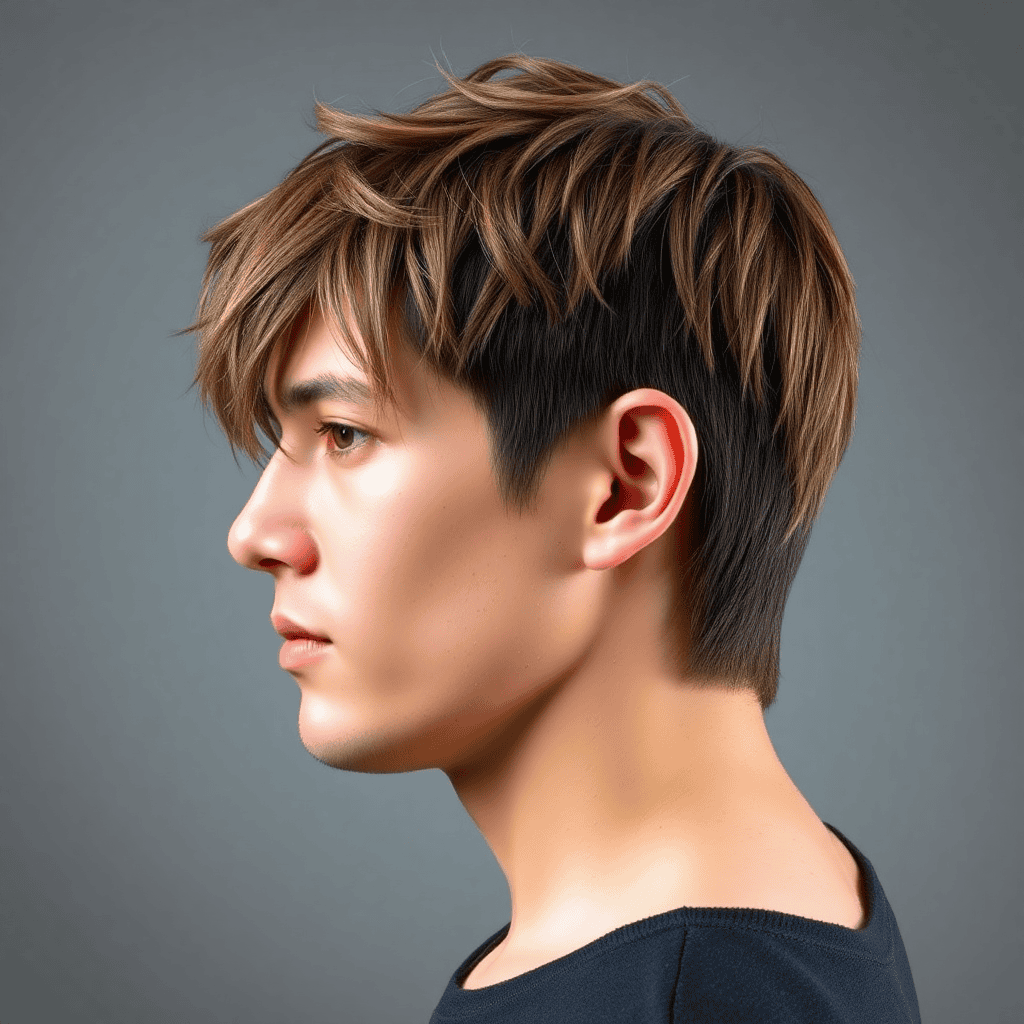
Uneven layers break up the top from the fringe to the crown, with most sections measuring two to four inches. The sides sit close but retain visible choppy pieces above the ears. At the back, short pointed layers extend downward and separate into narrow strands around the neckline. The finish looks dry, rough, and intentionally irregular instead of smooth or polished.
Among haircuts for straight hair men, this variation creates movement without requiring natural waves. It suits medium-to-thick density because the barber can remove weight while preserving enough hair for visible separation. Ask for razor texture or point cutting, depending on how your hair responds, and request disconnected-looking tips without removing the full rear shape. Work matte paste between the fingers and touch only the ends. Excess product can cause the layers to collapse into flat sections.
16. Natural Wavy Short Mullet
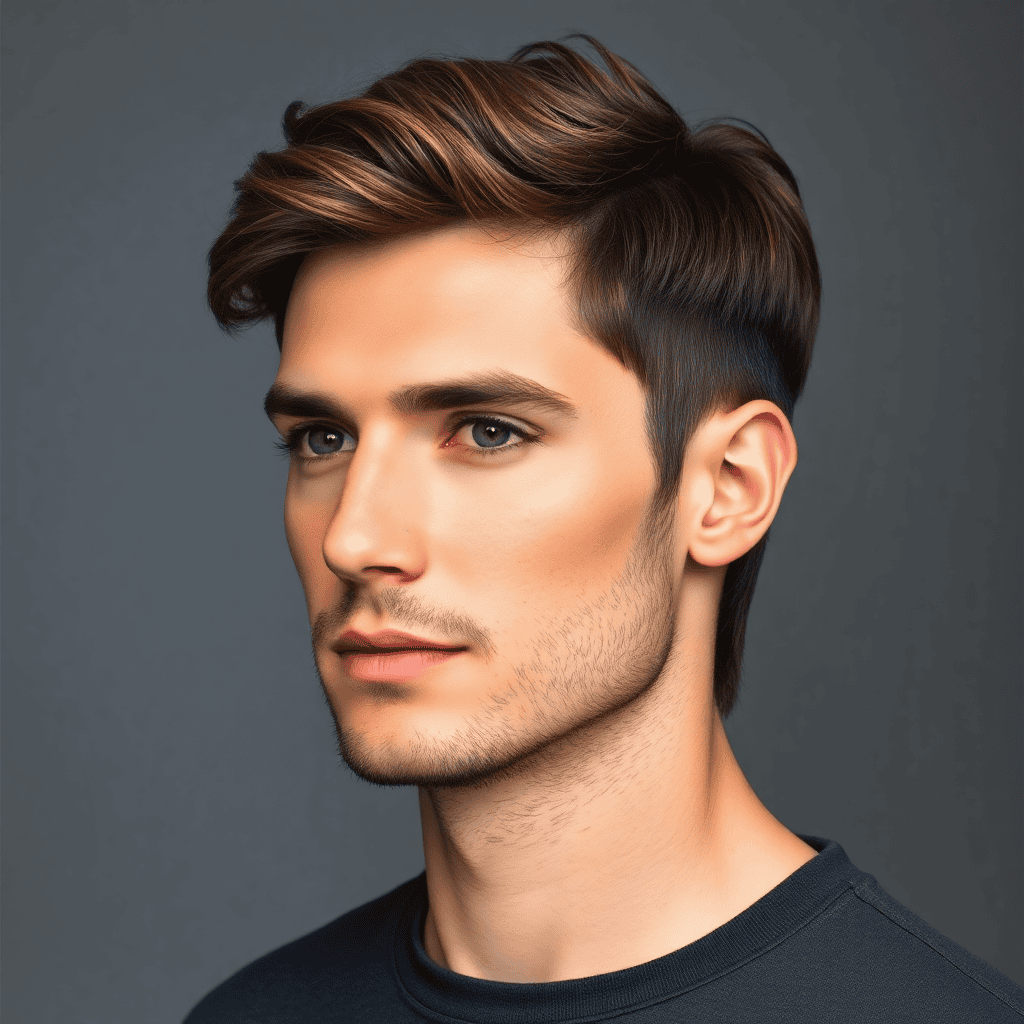
Loose waves remain three to five inches long across the top, creating visible bends and soft volume. The sides are shortened with scissors around the ears but remain long enough for the wave pattern to continue. The back grows into a layered section that touches the upper neck, where the ends turn outward naturally. The hairline stays soft, with no hard lineup or exposed skin fade.
This is one of the most natural haircuts for wavy hair men because the cut follows the existing movement instead of forcing a rigid shape. Oval, square, and narrow faces can carry the balanced width well. Ask the barber to cut the hair close to its natural dry position, especially if the waves shrink after drying. Apply a small amount of curl cream or light styling lotion and let the hair air-dry. Frequent brushing may stretch the waves and make the back appear uneven.
17. Curly Short Mullet With Tapered Temples
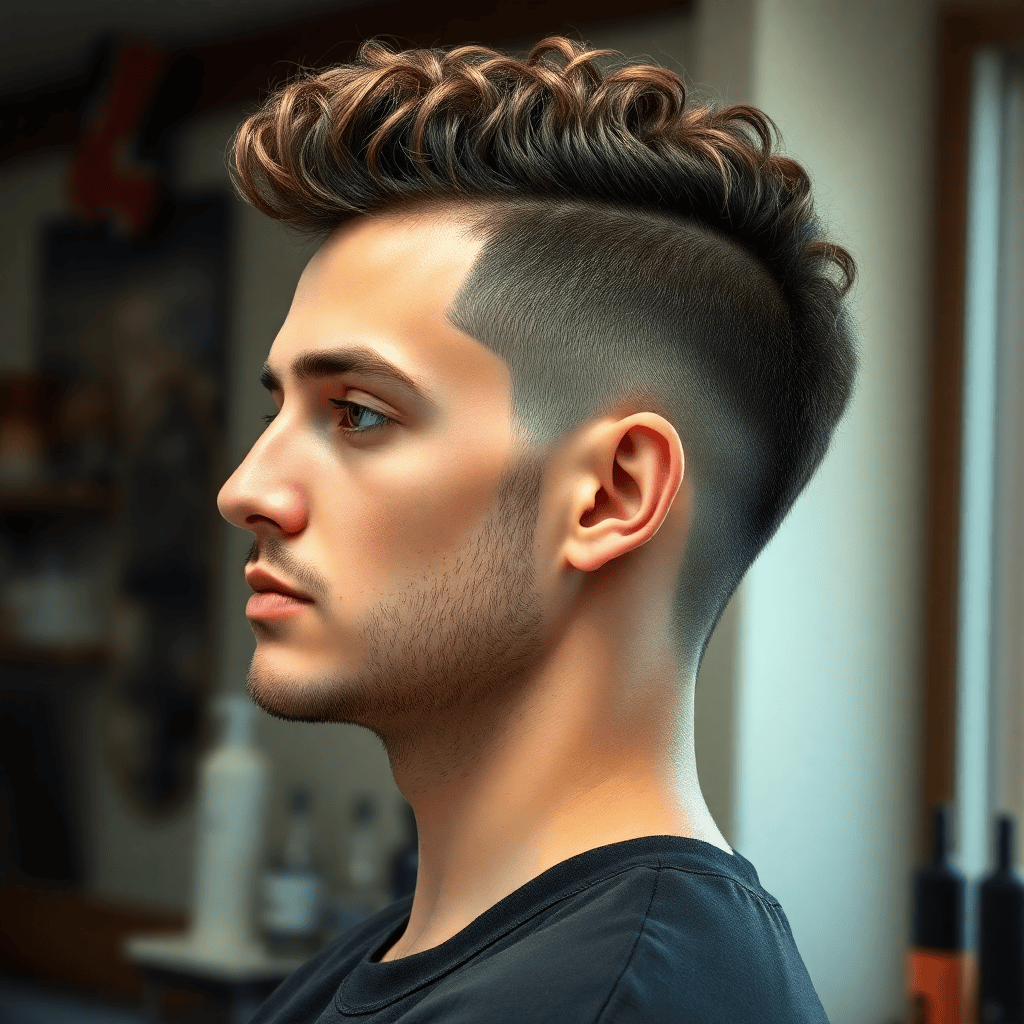
Defined curls cover the top at approximately three to four inches, forming a rounded but controlled shape. The temples and sideburns taper closely while curls remain visible above and behind the ears. The crown connects into a compact curly tail that reaches the upper neck. Each area keeps enough length for the curl pattern to remain recognizable rather than becoming fuzzy or overly cropped.
This variation works well within haircuts for curly hair men because the shorter sides reduce bulk while the rear preserves movement. Men with round faces may prefer extra height through the top, while longer faces can keep the crown flatter. Ask the barber to shape the curls in their natural state and avoid thinning the ends too aggressively. Curl cream followed by gentle scrunching can support definition. Drying with a diffuser on low airflow may reduce disturbance and help maintain the intended outline
18. Coily Burst-Fade Short Mullet
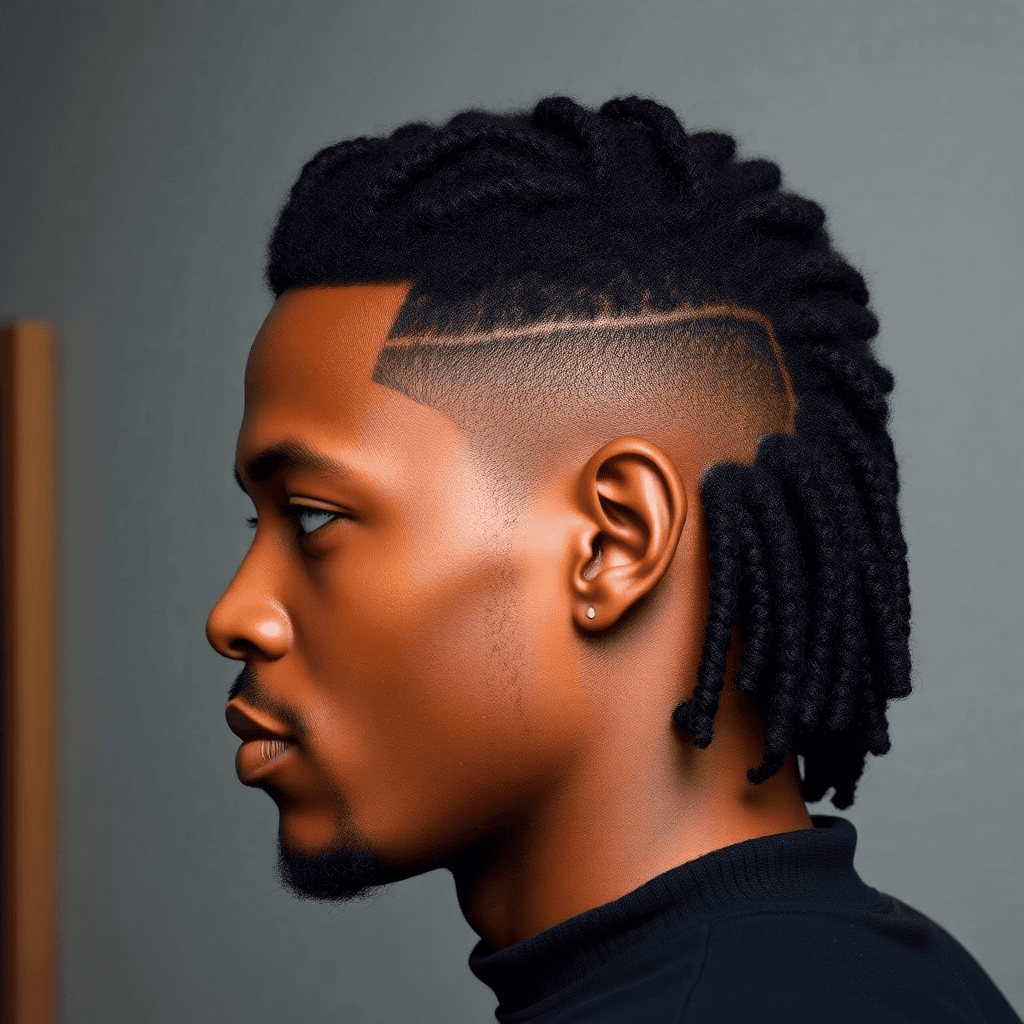
Tight coils form a compact top about two to three inches high, with a clean but natural front edge. A rounded burst fade curves around the ears and leaves density through the crown. The back continues in a short coiled panel that becomes slightly narrower near the nape. The contrast between the faded ear area and the textured center creates a clear mullet profile without requiring long hair.
This option adapts the shape for tightly coiled textures and can be included among expressive haircuts for Black men. The top height can be adjusted for round, oval, or longer face shapes. Ask the barber to maintain visible coil length through the crown and avoid carrying the fade too far backward. A moisturizing styling cream suited to your hair routine can help keep the coils defined. Protecting the shape from heavy compression during sleep may also make morning restyling easier
19. Messy Shag Mini Mullet
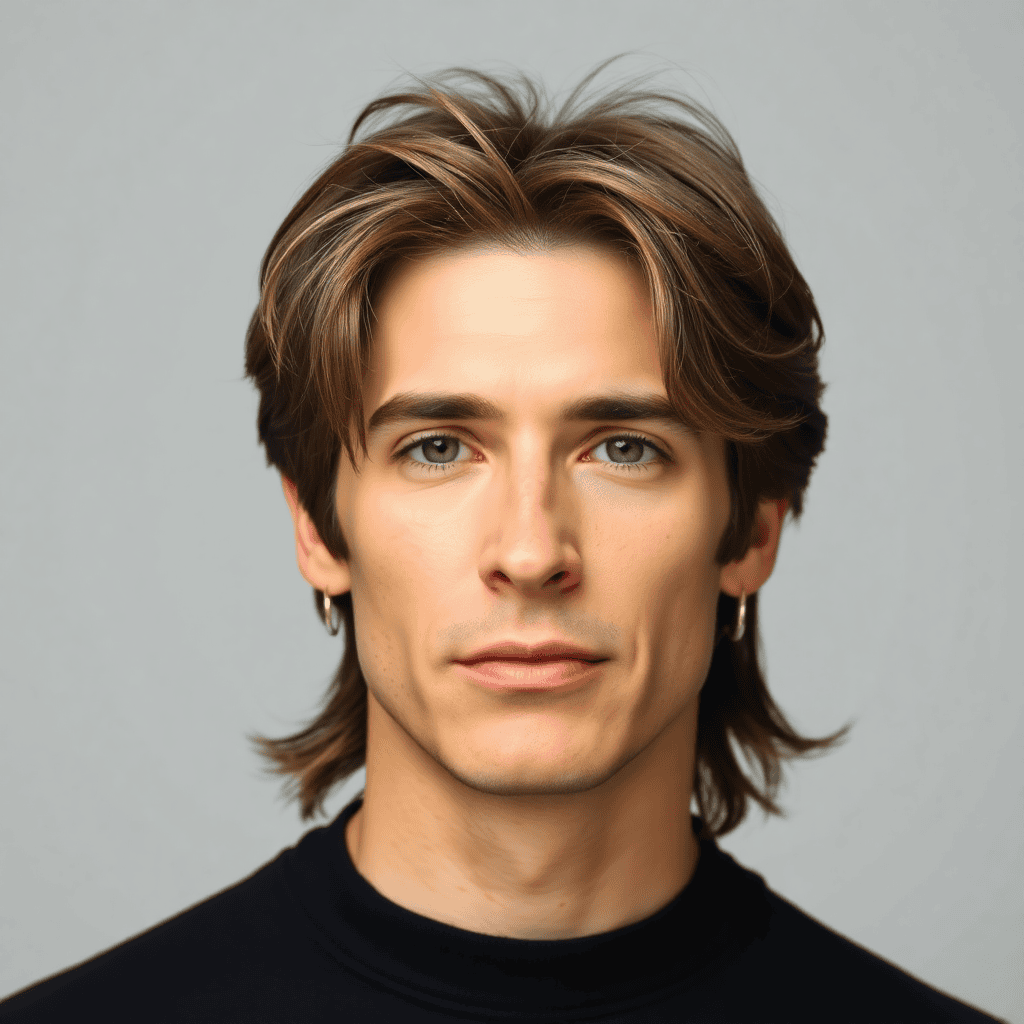
The top ranges from three to five inches with many light layers falling across the forehead and around the temples. The sides cover part of the upper ears, then blend into a feathered back that reaches the upper neck. There is no clear fade line. Instead, the entire haircut moves through uneven, airy sections that create a soft shag shape with a short mullet outline.
This cut suits medium-density wavy hair and men who prefer cool hairstyles for men with a casual finish. It can soften square facial angles because the layers break up hard lines around the temples. Ask for internal layering, a loose fringe, and a back that remains short enough to avoid reaching the shoulders. Texture spray can support separation, but the cut should still move when touched. A trim every six to eight weeks can remove heavy ends while preserving the shaggy character.
20. Mod-Inspired Soft Mullet
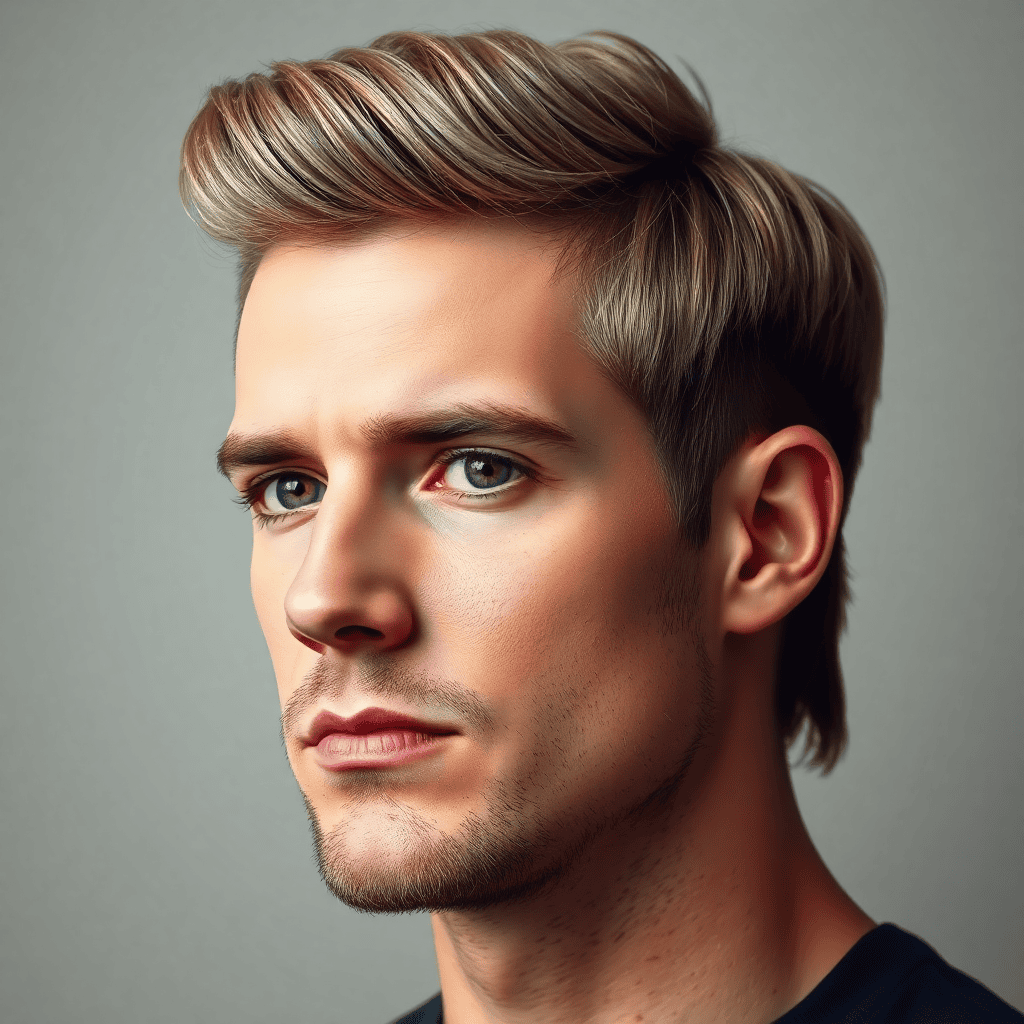
A long rounded fringe sweeps across the forehead, while layered hair follows the head shape from the temples to the crown. The sides cover the upper ear edges and remain soft rather than faded. At the back, thin layers extend to the upper neck and form light points around the collar line. The front resembles a modern mod cut, while the extra rear movement gives it a subtle mullet profile.
This is a useful source of men’s haircut inspiration for anyone who prefers fashion-led hair without sharp barbershop edges. Straight hair with slight movement works well, though soft waves can add depth. Ask for a rounded fringe, connected side layers, and wispy length at the nape. Blow-dry forward using the fingers instead of creating a rigid shape with a brush. A flexible styling cream keeps the hair controlled while allowing the fringe and back to shift naturally
21. Side-Parted Short Mullet
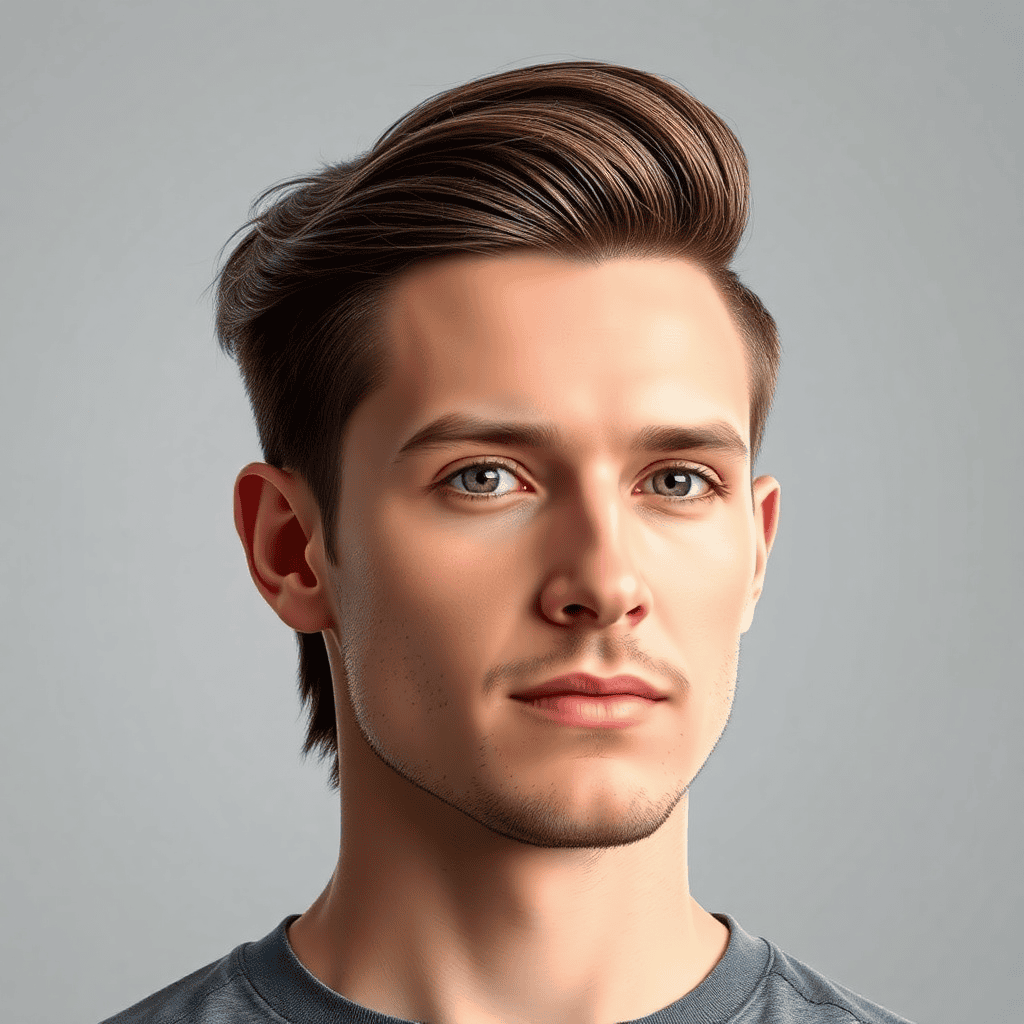
The top remains three to four inches long and separates along a soft side part. One side sweeps across the top with mild volume, while the opposite side lies closer to the head. The temples are tapered neatly, and the area behind the ears remains connected to a short layered back. The mullet tail sits close to the neck, keeping the profile controlled rather than wide.
Men over 30 or men who want a more ordered version may find this shape easier to match with work clothes. It suits straight and wavy hair, especially when the natural growth pattern already favors one side. Ask the barber to create a movable part rather than shaving a hard line into the scalp. Use low-shine cream and guide the hair with a blow-dryer at medium heat. Keeping the part slightly loose prevents the style from looking too formal for the textured rear.
22. Slicked-Back Short Mullet
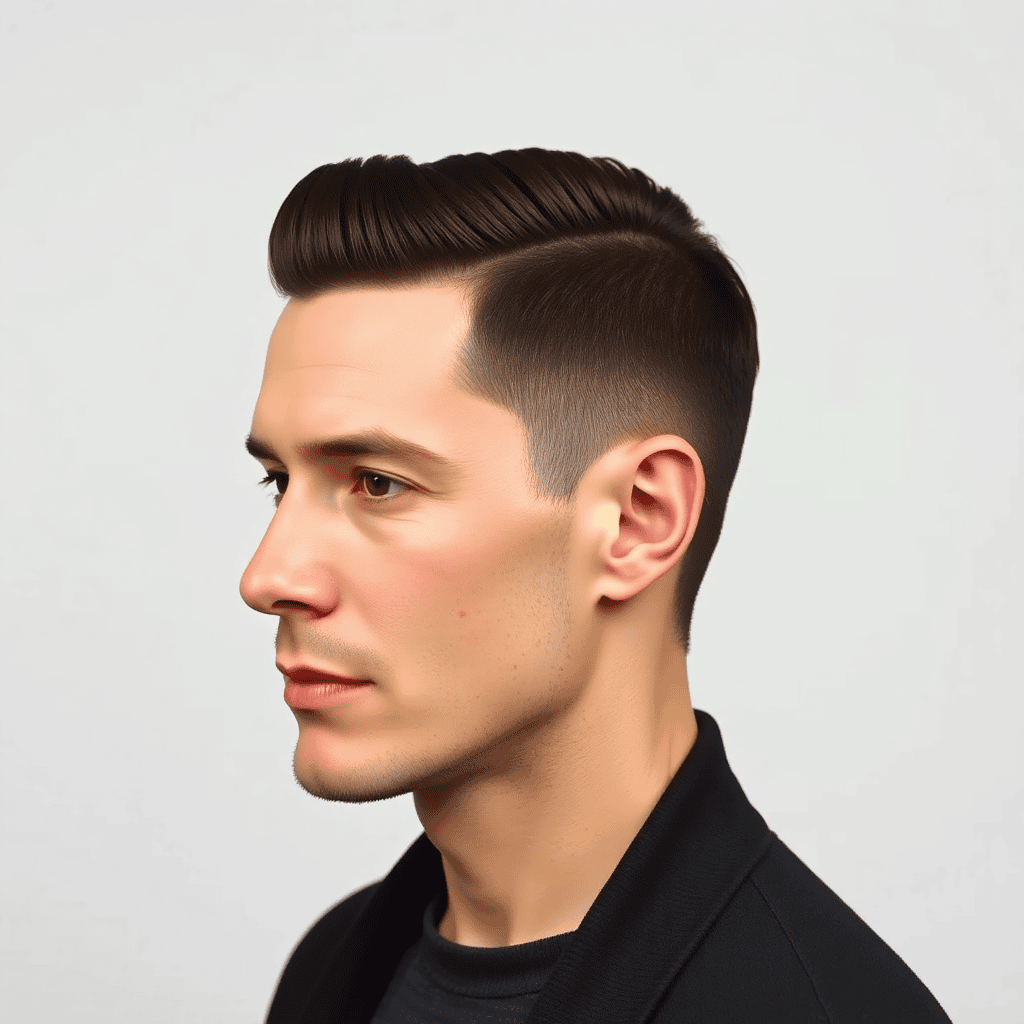
Four inches of top length is directed backward from the forehead, creating a smooth flow into the crown. The sides are tapered close near the temples but retain enough hair above the ears to support the backward direction. At the nape, the mullet section extends slightly and follows the neck with softly trimmed ends. The front hairline remains exposed, giving the style a cleaner and more mature appearance.
This version can work among business haircuts for men when the rear is kept restrained and the finish is not overly wet. Thick straight hair often holds the backward shape well, while wavy hair creates a softer result. Ask for long connected layers on top and a short nape extension rather than a separated tail. Apply light pomade or styling cream to damp hair, then comb backward. Loosen the surface with the fingers so the top keeps some natural texture.
23. Faux-Hawk Short Mullet
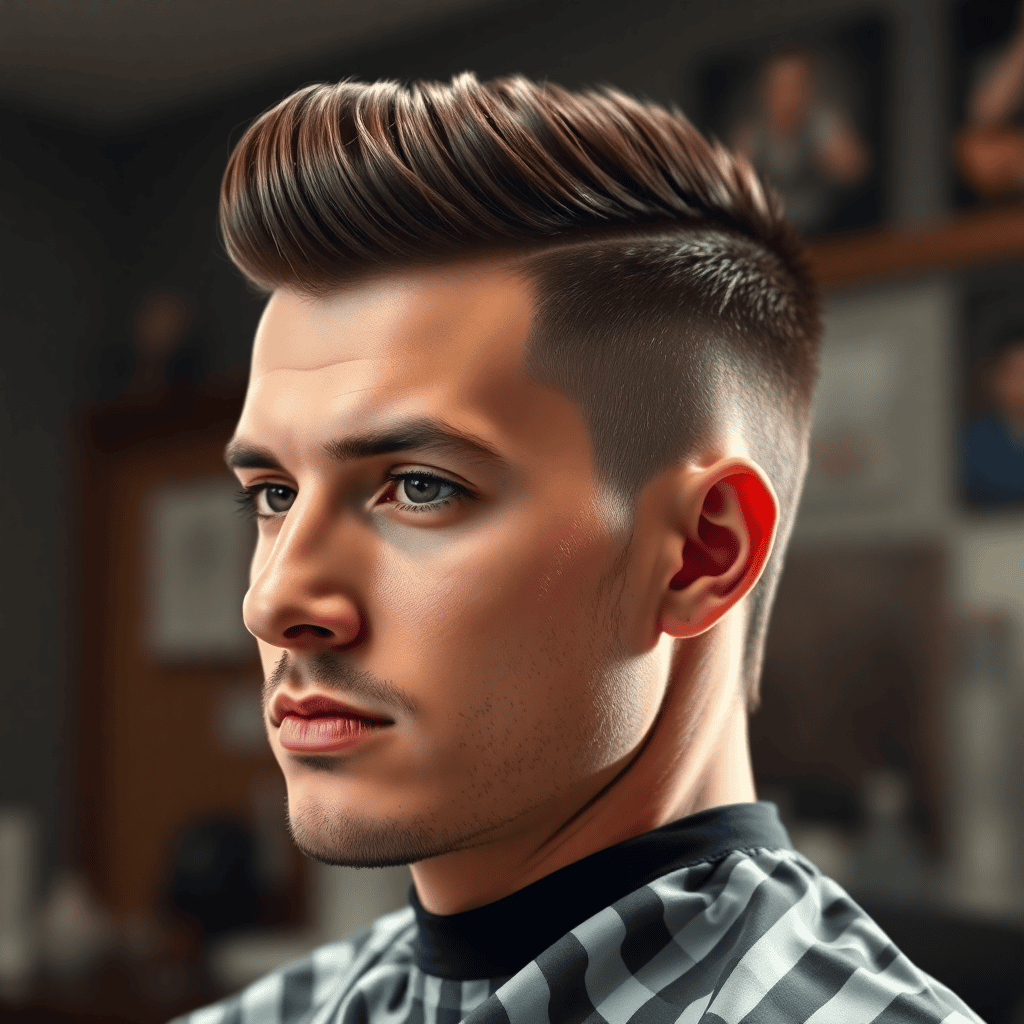
The center top remains three to four inches long and is styled upward into a textured ridge from the forehead toward the crown. The sides are cut shorter but maintain a soft blend rather than dropping directly to skin. Behind the crown, the raised center narrows into a short pointed mullet tail. The result suggests a faux hawk from the front and a compact mullet from the side.
Men with thick or coarse hair can often build the center shape without using large amounts of product. The extra height may help balance a round face, though men with long faces should keep the ridge lower. Tell the barber you want a broad faux-hawk center with connected length through the rear, not a thin mohawk strip. Blow-dry the hair upward, then pinch selected sections with firm matte clay. Allow some irregularity so the ridge does not look like one solid peak.
24. Short Mohawk Mullet With Skin Sides
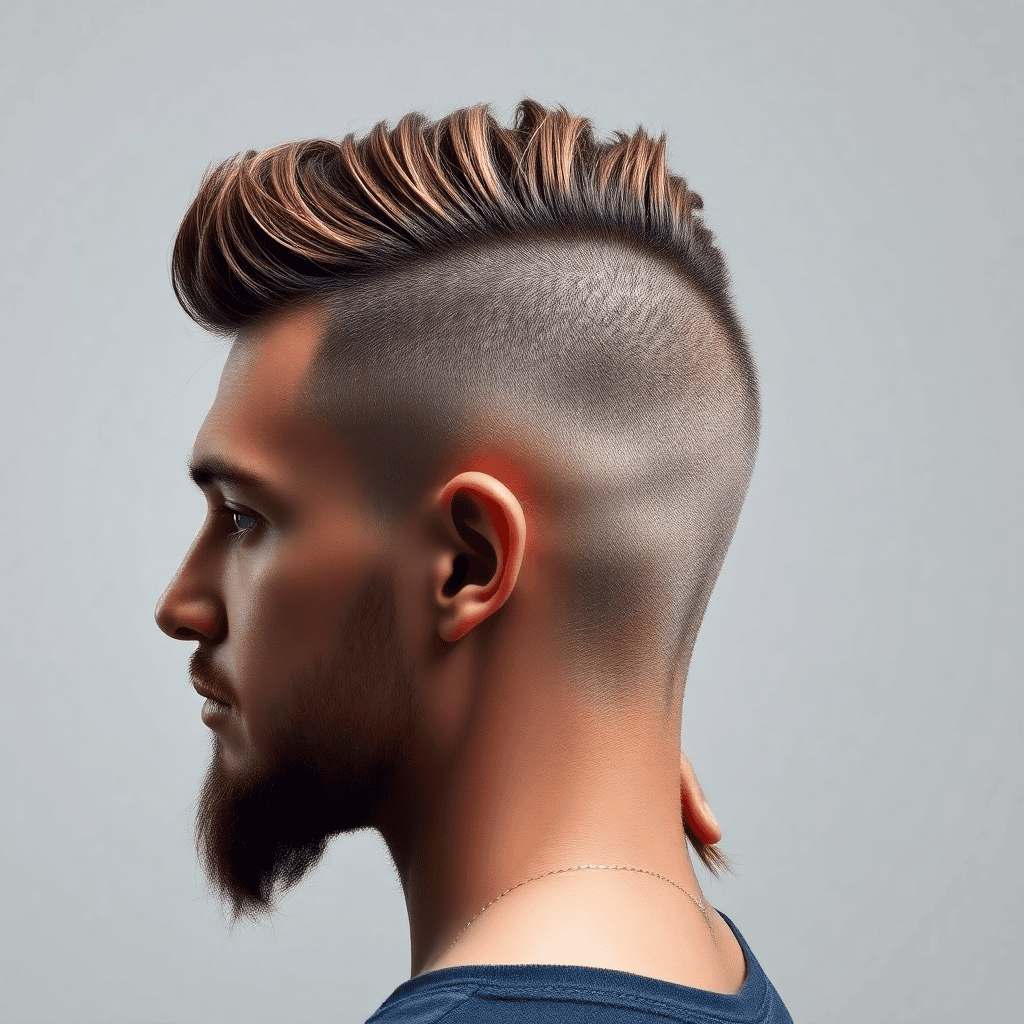
A defined strip of hair runs from the forehead to the nape, measuring roughly two inches at the front and becoming longer toward the crown. Both sides are faded down to skin, leaving a strong separation from the center panel. The rear section extends below the natural neckline and ends in short pointed texture. From every angle, the center strip remains visible and creates a bold, narrow silhouette.
This is one of the more daring trending haircuts for men and requires frequent maintenance to preserve the contrast. Thick straight, curly, and coily textures can all work, though the center width should be adjusted to the hair pattern. Ask the barber to keep the strip broad enough to avoid an overly thin punk shape unless that is your goal. Firm paste can shape straight hair, while curl-focused cream may suit textured hair. The skin sides may need cleaning every two weeks.
25. Disconnected Undercut Short Mullet
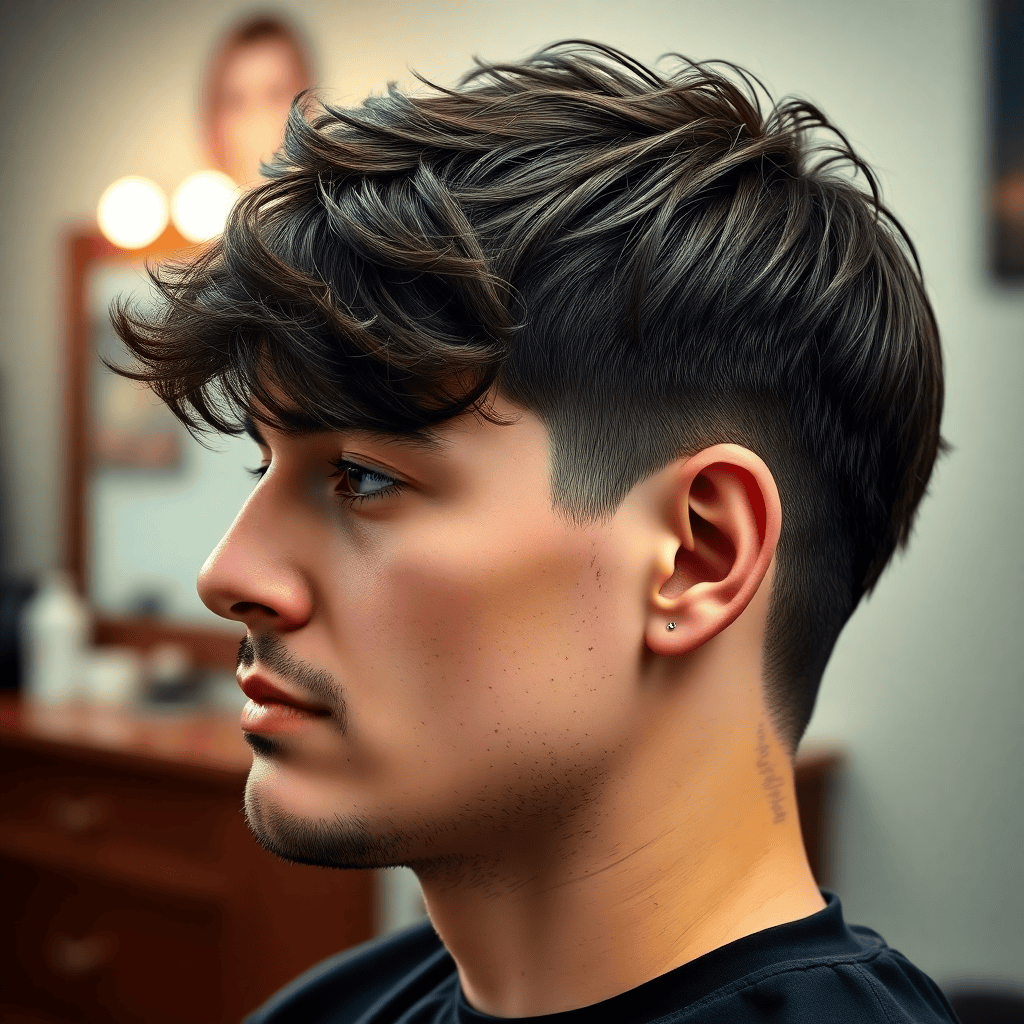
The top remains four to five inches long with loose layers that can fall forward, sweep sideways, or push backward. Beneath it, the sides are clipped short in a clear undercut with little blending between the lengths. The crown stays connected to a thick short mullet section that reaches the upper neck. This creates visible separation above the ears and a stronger block of movement through the back.
The disconnected shape suits men who want new hairstyles for men with a sharper fashion influence. Dense straight and wavy hair provide enough weight for the upper section, while fine hair may need a softer transition. Ask the barber to preserve a clear shelf above the clipped sides but blend the crown into the back. A light texture spray and flexible paste can keep the long top movable. Expect the undercut to require regular cleanup while the top and rear continue growing.
Conclusion
Choosing between these cuts starts with deciding how visible you want the mullet shape to be. A baby mullet, shadow taper, or Ivy League variation keeps the rear controlled and can fit cleaner wardrobes or conservative workplaces. Burst fades, high fades, faux hawks, and disconnected undercuts create stronger contrast and require more frequent edge maintenance.
Hair texture should guide the details. Straight hair often benefits from choppy layers, waves respond well to soft scissor work, and curls or coils need enough retained length to preserve their pattern. Face shape matters as well: height can add length to a round face, while fuller sides and lower styling can balance a longer face. Among short haircuts for men, the modern mullet stands out because small changes at the temples, crown, and neckline can produce a noticeably different result.
Before visiting the barbershop, save two or three reference images showing the front, side, and back. Explain which details you want to copy and which you want adjusted. The most successful short mullet is not the longest or sharpest one; it is the version whose rear profile still looks intentional after several weeks of growth.
Frequently Asked Questions
1. Which short mullet works best as a haircut for round face men?
Choose a version with moderate height on top and reduced width around the temples. A mid fade, low fade, or textured faux-hawk mullet can create a longer visual line. Avoid building excessive volume directly above the ears because added side width may make the face appear rounder.
2. What short mullet suits an oval face?
Most variations can work because an oval face usually accommodates several combinations of height and side length. A soft taper, textured crop mullet, or wavy mini mullet maintains balanced proportions. Keep the cut aligned with the hair texture and preferred maintenance level rather than changing the natural shape too aggressively.
3. What is a suitable haircut for square face men who want a mullet?
Soft layers can balance a strong jaw without hiding it. Consider a wavy short mullet, shag mini mullet, or shadow-taper version with movement around the temples. A rigid high fade with a sharply boxed top may emphasize angular lines more than desired.
4. Can a short mullet work as a haircut for long face men?
Keep the top relatively low and preserve moderate fullness around the sides. A mod-inspired mullet or scissor-cut wavy version can add horizontal balance. High spikes and narrow skin-faded sides may create extra vertical emphasis, so adjust those features rather than rejecting the haircut entirely.
5. Which short mullet is a good haircut for chubby face men?
A textured top with slight height and clean lower sides can add definition. Low or mid fades often provide enough structure without making the center strip appear too narrow. A well-shaped beard may also strengthen the lower outline when it is balanced with the haircut.
6. How do I choose the best hairstyle for face shape?
Compare forehead width, cheek width, jaw shape, and overall face length, then adjust the haircut’s height and side volume. Reference photos are useful, but ask the barber to adapt the proportions. The same mullet can look different after changing only the fade height or crown volume.
7. Are short mullets good haircuts for thick hair men?
Thick hair provides enough density for visible layers and a full rear section. Internal weight removal may be needed so the crown does not become bulky. Choppy, faded, and wavy versions often work well because they turn natural density into shape rather than leaving one heavy block.
8. Which short mullet works for haircuts for thin hair men?
Choose a soft taper or scissor-cut mini mullet that preserves side and crown density. Heavy skin fades can expose more scalp and create excessive contrast. Light layering may support movement, but removing too much interior weight can make thin hair appear less full.
9. Can fine hair hold a textured short mullet?
Fine hair can hold softer texture when the layers are not cut too short or thinned excessively. A lightweight styling foam or texture powder may add lift. Keeping the rear compact prevents sparse ends from becoming obvious and helps the haircut maintain a cleaner outline.
10. What short mullet works best for straight hair?
Choppy crops, French crop mullets, side-parted versions, and disconnected undercuts all make use of straight hair’s clear lines. Ask for point-cut or razor-textured ends when extra movement is needed. A matte product can stop smooth hair from falling into one flat sheet.
11. Are short mullets suitable for wavy hair?
Natural waves create movement through the crown and rear with limited styling. Scissor-cut sides and layered backs usually preserve the wave pattern better than extremely short clipping. The barber should account for how much the hair changes between wet and dry conditions before setting the final length.
12. Can men with curly or coily hair wear a mini mullet?
Curly and coily textures can create a strong rounded top and a defined rear shape. Enough length must remain for the natural pattern to form. Temple tapers and burst fades are common choices because they clean the ear area while retaining density through the crown and back.
13. What should I tell my barber when asking for a short mullet?
Describe the preferred top length, side treatment, and exact stopping point at the back. State whether you want a soft connection or sharp contrast. Show front, side, and rear references because the word “mullet” can describe many different shapes.
14. What guard number should I request for short mullet sides?
A number one leaves roughly one-eighth inch, a number two leaves about one-quarter inch, and higher guards retain more coverage. Guard choice depends on desired contrast and hair density. Ask the barber to show where the shortest area will sit before clipping the entire side.
15. What is the difference between a taper and a fade?
A taper usually shortens hair gradually near the temples and neckline while keeping more coverage across the sides. A fade creates a broader transition and may reduce the hair to skin. Barber terminology varies, so a reference photo is more dependable than relying on the term alone.
16. How high should the fade sit on a short mullet?
A low fade keeps more side weight, a mid fade creates clearer contrast, and a high fade exposes more of the upper side. The correct height depends on face length, head shape, and desired boldness. The fade should not remove the rear connection unless a narrow mohawk effect is intended.
17. Should the neckline of a short mullet be tapered or left natural?
A tapered neckline produces a cleaner finish and controls the lowest section. A natural neckline creates softer growth and may suit shaggy or wavy versions. Avoid trimming the back into a standard squared neckline if you want the extended mullet shape to remain visible.
18. How do I ask for a burst-fade mullet?
Request a rounded fade that curves closely around the ear while keeping length through the crown and center back. Explain how high the curve should rise. Showing a side-profile image helps because the position and width of the burst change the entire silhouette.
19. Should a short mullet have disconnected sides?
Disconnection creates stronger contrast and a more fashion-led appearance. Connected sides grow out more smoothly and often require less correction. Choose the disconnected option when you want the longer top to sit clearly above clipped sides rather than blend gradually into them.
20. What product is best for a textured short mullet?
Matte paste or clay can create separation on straight, dense hair. Styling cream is often better for softer waves and flexible movement. Begin with a small amount and add more only where needed because excessive product can flatten short layers and make the rear appear greasy.
21. Should I use sea-salt spray on a short mullet?
Sea-salt spray can add dry movement and grip to straight or wavy hair. Use a light application because frequent heavy use may leave some hair types feeling rough. Men with dry curls may prefer a more moisturizing styling product that supports definition without creating stiffness.
22. Is a hair dryer needed for styling a mini mullet?
A dryer helps direct the top, add height, or control a side part, but many soft mullets can air-dry. Use moderate heat and guide the hair with the fingers. A diffuser may be useful for curls because it reduces direct airflow that can disturb the pattern.
23. Can pomade be used on a short mullet?
Pomade works for slicked-back or side-parted versions that need shine and control. Heavy pomade may make a messy crop or shag look flat. Choose the finish based on the haircut: low-shine products appear more relaxed, while higher shine creates a dressier result.
24. How do I create messy texture without making the hair stiff?
Dry the hair in different directions, then apply a small amount of flexible paste only to selected sections. Pinch the ends rather than coating the roots. Leaving some areas untouched creates variation and prevents every strand from locking into the same pattern.
25. What styling tools help maintain a short mullet?
A hair dryer, vent brush, wide-tooth comb, and fingers cover most needs. Straight hair may respond well to a vent brush, while curls often need less brushing. Use tools to support the natural pattern rather than forcing the haircut into a shape it cannot hold.
26. How often should a short mullet be trimmed?
Most men schedule a shape check every four to six weeks. Skin fades and sharp lineups may need attention after two or three weeks, while soft tapers can grow longer. Tell the barber to trim the sides without removing unnecessary length from the rear section.
27. How long does it take to grow a mini mullet?
The timing depends on the starting cut, natural growth pattern, and desired rear length. Men beginning with a short crop may need several months before the back extends clearly beyond the neckline. Maintenance cuts should protect the growing crown and nape rather than repeatedly shortening them.
28. How can I grow out a short mullet without looking untidy?
Keep the temples, sideburns, and hair around the ears controlled while allowing the crown and back to gain length. Small shape adjustments prevent bulky areas from taking over. Bring growth-goal photos so the barber understands which sections should remain untouched.
29. Is a short mullet a low maintenance men’s haircut?
Soft tapers and naturally textured mini mullets can require limited daily work. Skin fades, lineups, and sharply disconnected sides need more frequent appointments. Product use also varies; a wavy air-dried version may need less styling than a spiky or slicked-back cut.
30. What causes a short mullet to lose its shape?
Excess weight often collects above the ears or around the lower crown. The rear may also become wide instead of extending downward. A maintenance trim should remove bulk from supporting areas while preserving the length that creates the mullet profile.
31. Can I turn a short mullet back into a regular haircut?
The rear can be shortened to match the sides, creating a crop, crew cut, taper, or short shag. The transition is easier when the mullet is compact. A longer back may require one shorter reset cut or a gradual blending plan over several appointments.
32. Can a short mullet work for a receding hairline?
Forward texture, a short fringe, or a loose side sweep may reduce emphasis on the corners. A Caesar or French crop mullet is often easier to arrange than a fully slicked-back style. Hairline patterns differ, so choose a direction that follows natural growth rather than forcing coverage.
33. Which short haircut for receding hairline pairs well with a mullet back?
A textured crop with a short irregular fringe can connect naturally to a compact rear section. Keep the front light rather than forming a thick straight block. A subtle temple taper may create neat edges without exposing more of the hairline than desired.
34. Can men with thinning hair wear a short mullet?
A soft mini mullet may work when the crown retains enough coverage. Avoid removing excessive interior weight or creating extreme contrast between bare sides and a thin top. A barber can shape the existing density, though a haircut cannot change the underlying amount of hair.
35. Are short mullets suitable haircuts for men over 40?
Age does not set a fixed limit. A shadow taper, side-parted mini mullet, or restrained wavy version can appear controlled while keeping some individuality. Match the rear length and finish to personal style, workplace expectations, and the amount of maintenance you prefer.
36. What short mullet works for haircuts for men over 50?
Softer outlines often grow out more comfortably and avoid demanding frequent fade appointments. An Ivy League mini mullet, natural taper, or layered side-parted version can retain movement without extreme contrast. Keeping the back tidy usually matters more than making it unusually short.
37. Can hairstyles for older men include a modern mullet?
A modern mullet can be adapted with modest rear length, gentle tapering, and natural texture. Gray or mixed-color hair may make layers more visible, which can add depth. The strongest version is usually shaped around current density and growth patterns rather than copied without adjustment.
38. What is the difference between a baby mullet and a full mullet?
A baby mullet has a small amount of added length behind the ears and at the nape. A full mullet creates a longer, more obvious rear section. The baby version blends more easily into short cuts and can be converted back to a standard style with less length removal.
39. How is a short mullet different from a shag?
A short mullet usually has clearer contrast between the sides and back. A shag relies on layered movement throughout the top, sides, and rear. Many modern cuts combine both ideas, creating fuller side layers with a slightly extended nape rather than a sharply separated tail.
40. What is the difference between a crop mullet and a Caesar mullet?
A crop mullet often uses a broken, irregular fringe and more texture through the top. A Caesar mullet usually has a shorter, more horizontal forward fringe. Both can connect to tapered sides and a compact back, but the front outline creates a different visual effect.
41. Is a burst fade different from a drop fade?
A burst fade forms a rounded short area around the ear. A drop fade travels around the side and descends lower behind the ear. Both can support a mullet, though a burst often creates a stronger central strip while a drop fade preserves more rear-side weight.
42. Is a faux-hawk mullet the same as a mohawk mullet?
A faux hawk keeps blended or shortened sides and creates the center ridge mainly through styling. A mohawk mullet usually removes much more side hair and leaves a clearly defined central strip. The faux-hawk version is easier to soften when a less dramatic finish is needed.
43. How is a taper mullet different from a fade mullet?
A taper mullet keeps more hair through the sides and shortens mainly near the edges. A fade mullet creates a larger area of close blending and stronger contrast. Tapers tend to grow out softly, while fades maintain their cleanest appearance with more frequent barber visits.
44. Is a short mullet the same as a wolf cut?
A wolf cut usually carries more volume and blended shag layers across the entire head. A short mullet places stronger emphasis on shorter sides and added rear length. Some styles overlap, especially when a shaggy top flows into a lightly extended nape.
45. Are short mullets still among trending haircuts for men?
Short, soft, and mini mullet variations remain visible in 2026 grooming coverage, often with natural layers and less severe contrast than older versions. Trends change, so choose a version that fits personal style rather than relying only on current popularity.
46. Can a short mullet look professional at work?
A restrained back, clean temples, and controlled top can make the haircut suitable for many workplaces. Side-parted, Ivy League, and shadow-taper versions draw less attention than skin-faded mohawk shapes. Workplace standards differ, so consider the usual grooming expectations in your field.
47. Which short mullet pairs well with a beard?
Low-fade, burst-fade, and shadow-taper mullets can connect naturally with facial hair. Ask the barber to balance the sideburn transition so the haircut and beard do not appear separated. Fuller beards often suit softer tops, while short beards can match sharper faded sides.
48. Are short mullets suitable haircuts for men with glasses?
Glasses can pair well with a mullet when the side volume does not crowd the frames. Temple tapers and soft fades create space around the arms of the glasses. Larger frames may balance a fuller shag mullet, while narrow frames often match cleaner cropped versions.
49. Are short mullets good haircuts for teenage guys?
Mini mullets, textured crop mullets, and burst-fade versions offer visible style while keeping the overall length manageable. School grooming rules may affect fade height, color, or rear length. Starting with a subtle version allows the shape to become more pronounced during later cuts.
50. How do I choose between subtle and bold modern mullets?
Choose a subtle cut when you prefer softer growth, less contrast, or easier workplace styling. Select a bold version when you enjoy exposed fades, disconnected sides, or a clearly extended back. Compare side-profile photos because the silhouette often reveals the difference more clearly than the front view.
Trending Haircuts and Hairstyles for Men
Explore modern fades, textured crops, classic styles, bold cuts, and fresh hairstyle inspiration for every hair type.