
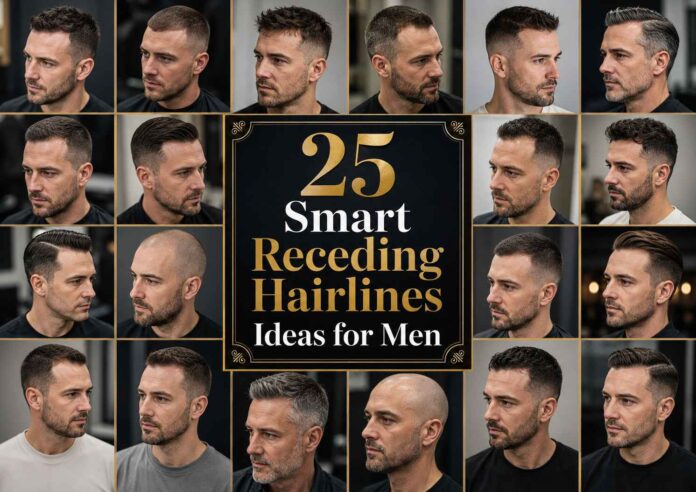
A changing hairline does not mean your haircut choices have to shrink. The right shape can reduce the contrast around the temples, make thin areas look more balanced, or turn a mature hairline into a deliberate part of your style. For many men, a short haircut for receding hairline changes is the easiest place to start because controlled length creates a cleaner, more even appearance.
These ideas cover straight, fine, thick, wavy, curly, and coily textures, with options ranging from clipper-short cuts to longer styles that soften the corners. Recent grooming coverage continues to feature buzz cuts, crew cuts, Caesar cuts, and curtains among adaptable men’s styles, while thinning-hair guidance stresses choosing around density, texture, recession pattern, and head shape rather than expecting one haircut to suit everyone.
The 25 options below include low-maintenance cuts, professional shapes, textured styles, and modern variations. Each one explains what the finished haircut should look like, who may wear it best, and what to discuss during a barbershop visit.
1. Clean Shaved Head With Natural Hairline
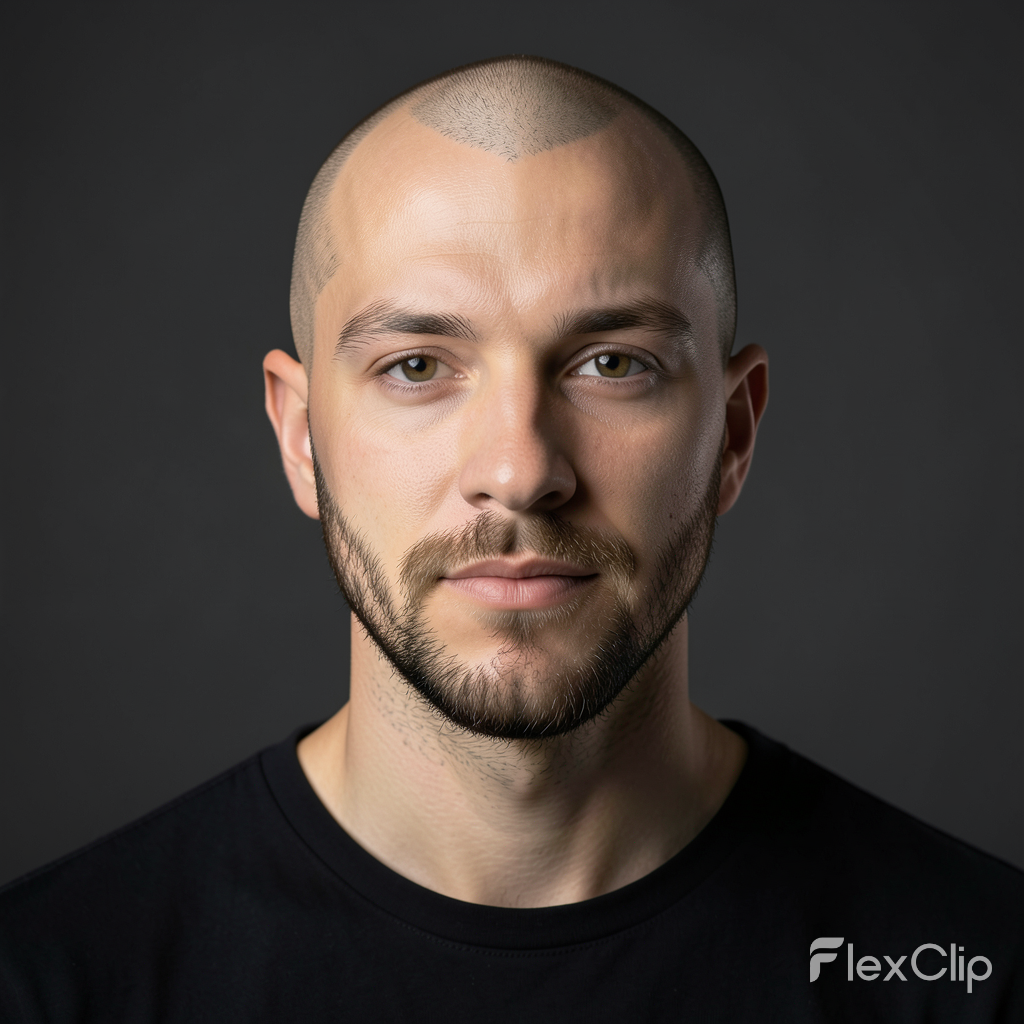
The entire head is shaved close to the scalp with an even, smooth finish from the forehead to the neckline. No attempt is made to redraw or conceal the temples, so the natural hairline becomes part of a sharp, intentional appearance. A short beard or clean facial shave can change the overall mood without affecting the simplicity of the cut.
This option suits men with advanced recession, uneven density, or thinning across several areas. It also works well for oval and square faces because the head shape remains fully visible. Ask the barber for a close clipper shave before deciding whether you want a razor finish. Regular scalp grooming keeps the result neat, while a faded beard can add structure around the jaw.
2. Even Number One Buzz Cut
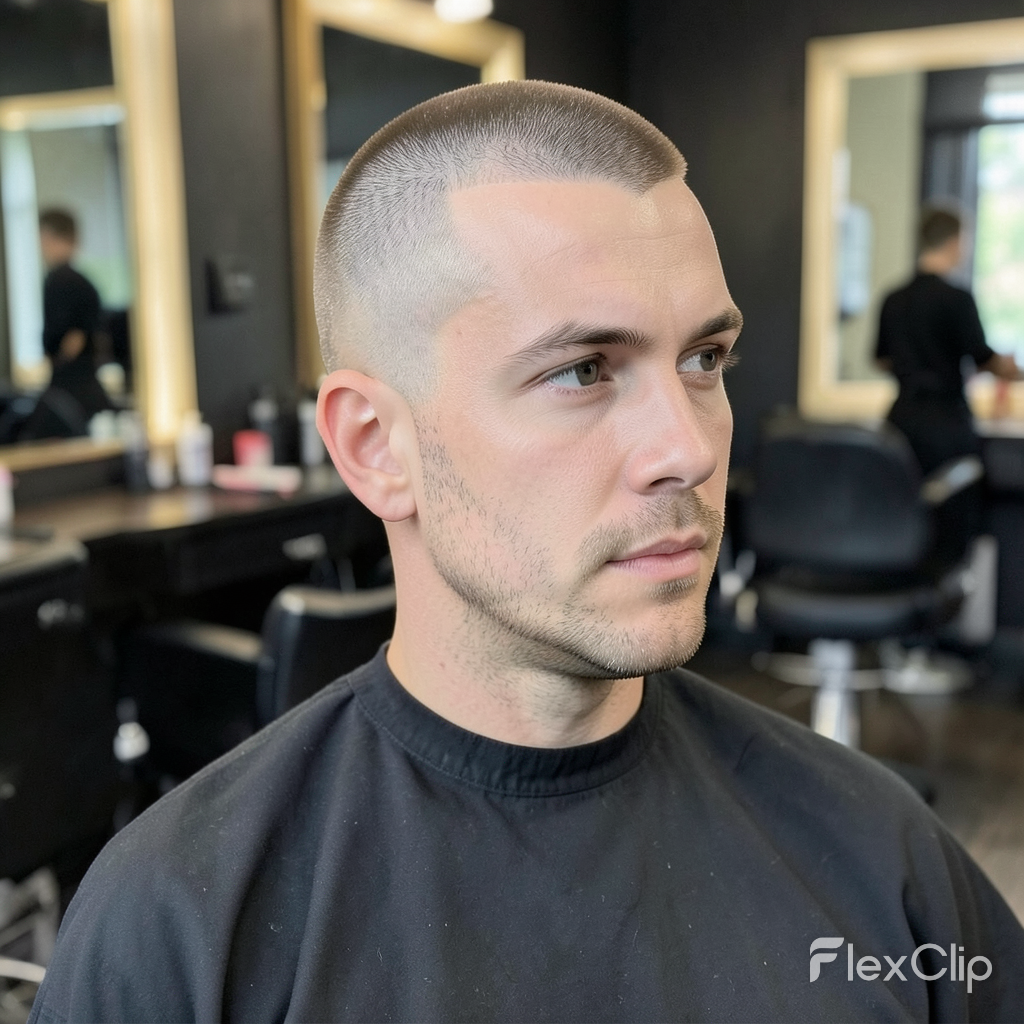
Hair is clipped to one uniform short length across the top, sides, crown, and back. The surface appears lightly textured rather than completely bare, while the natural temple recession remains visible without creating a strong difference between longer and thinner areas. The edges around the ears and neckline are cleaned without drawing an artificial front line.
An even buzz is among the easiest haircuts for thinning hair men can maintain. It suits straight, wavy, curly, and coily textures because little daily styling is required. Men with balanced or angular head shapes often carry the exposed silhouette well. Tell the barber you want one guard length everywhere with soft natural edges. A trim every two to four weeks keeps the finish consistent, although the cut grows out evenly.
3. Short Buzz Cut With Temple Taper
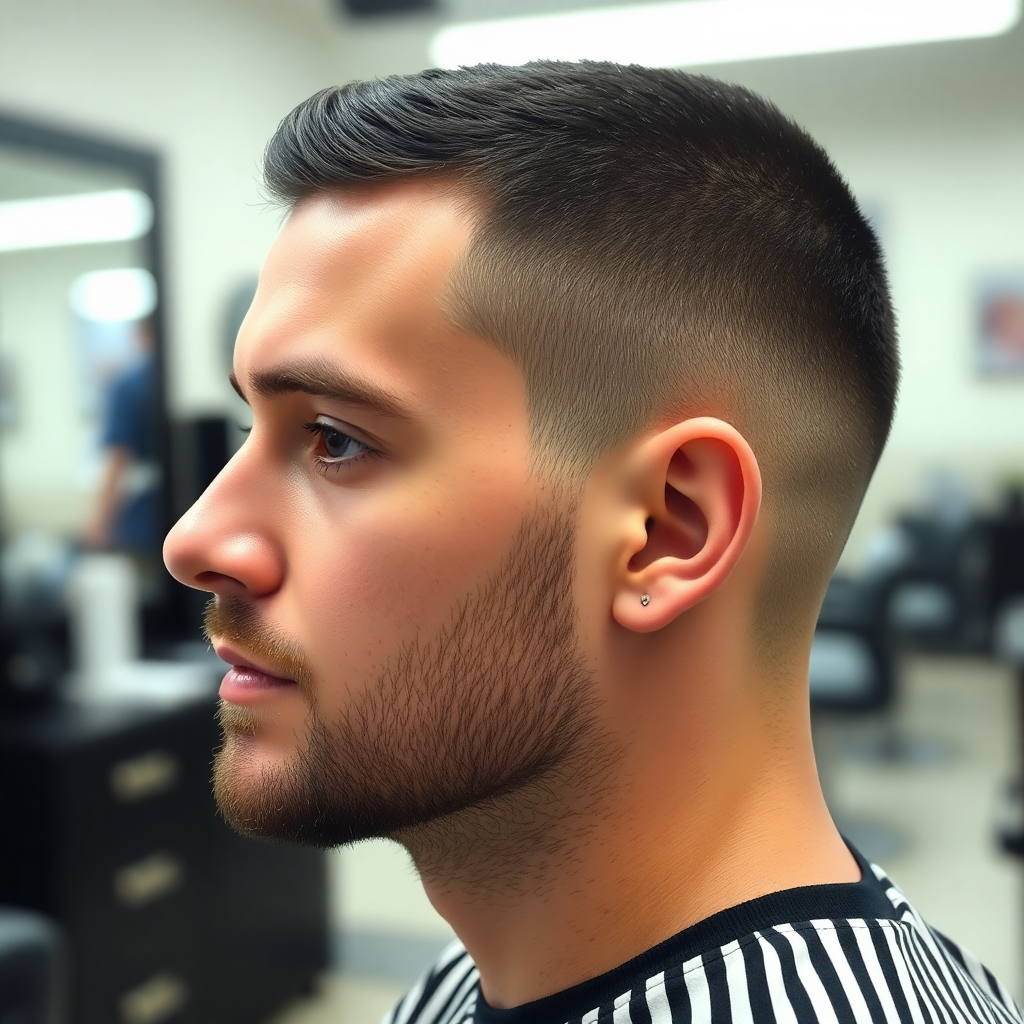
The top is buzzed evenly and left slightly darker than the sides. Around each temple, the hair gradually shortens into a subtle taper that follows the existing hairline rather than forcing sharp corners. The neckline receives the same controlled transition, creating a finished appearance without the contrast of a full skin fade.
A temple taper can make a simple buzz feel more personal while keeping maintenance low. It often suits men with mild recession and enough density to create an even shadow across the top. The style can also connect neatly with facial hair, making it useful among haircuts for men with beards. Ask for a natural temple taper and avoid an overly high front lineup. A soft edge usually ages better as the haircut grows.
4. Buzz Cut With Low Skin Fade
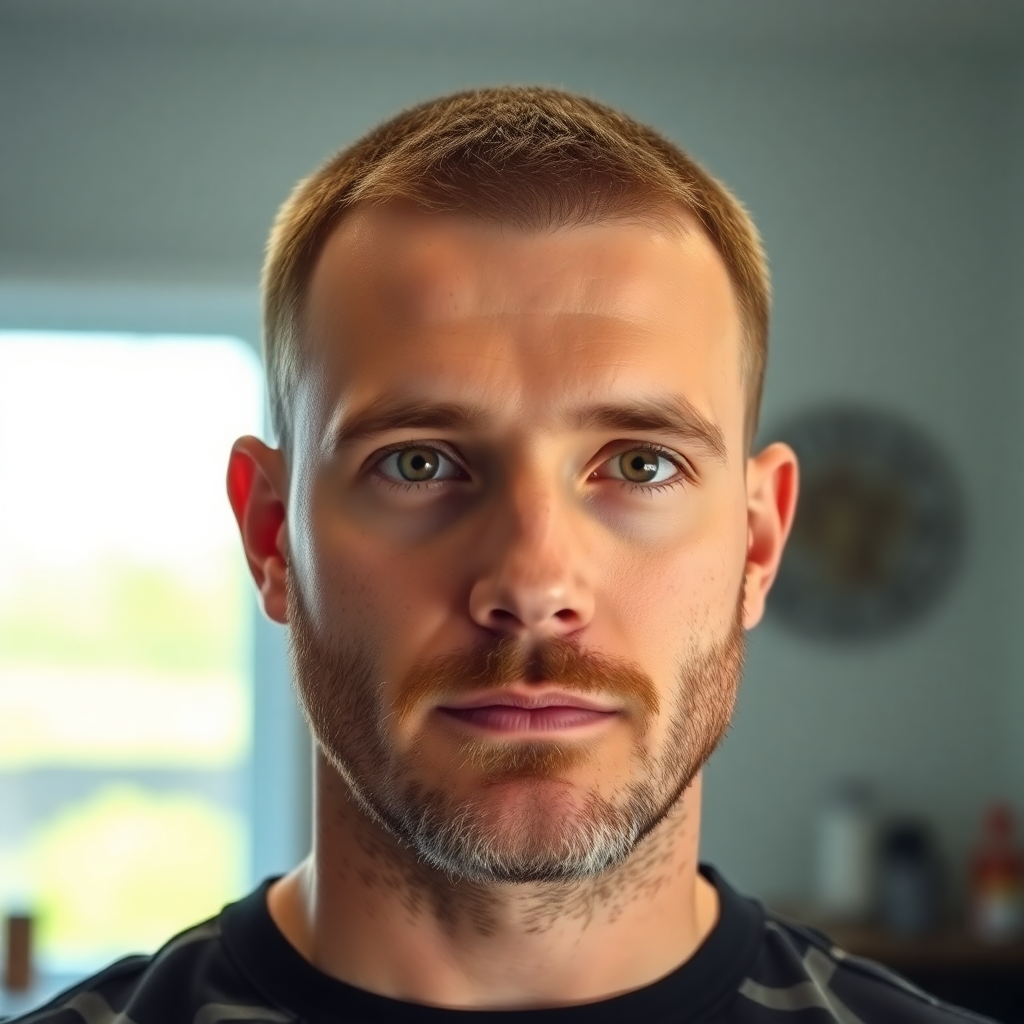
The top is clipped short but left visibly darker, while the fade begins close to the ears and neckline. Hair gradually blends from bare skin into the short top without climbing high into the temples. The front edge remains natural, allowing the low fade to supply detail without emphasizing the width of the recession.
This variation works for men who like clean barbershop haircuts for men but do not want a severe contrast near the forehead. Square and oval faces often suit the compact shape, while a low fade can preserve some visual width for longer faces. Ask the barber to keep the fade low and avoid carving deeply into the corners. The sides may need refreshing every two or three weeks to maintain the transition.
5. High and Tight With Soft Front Edge
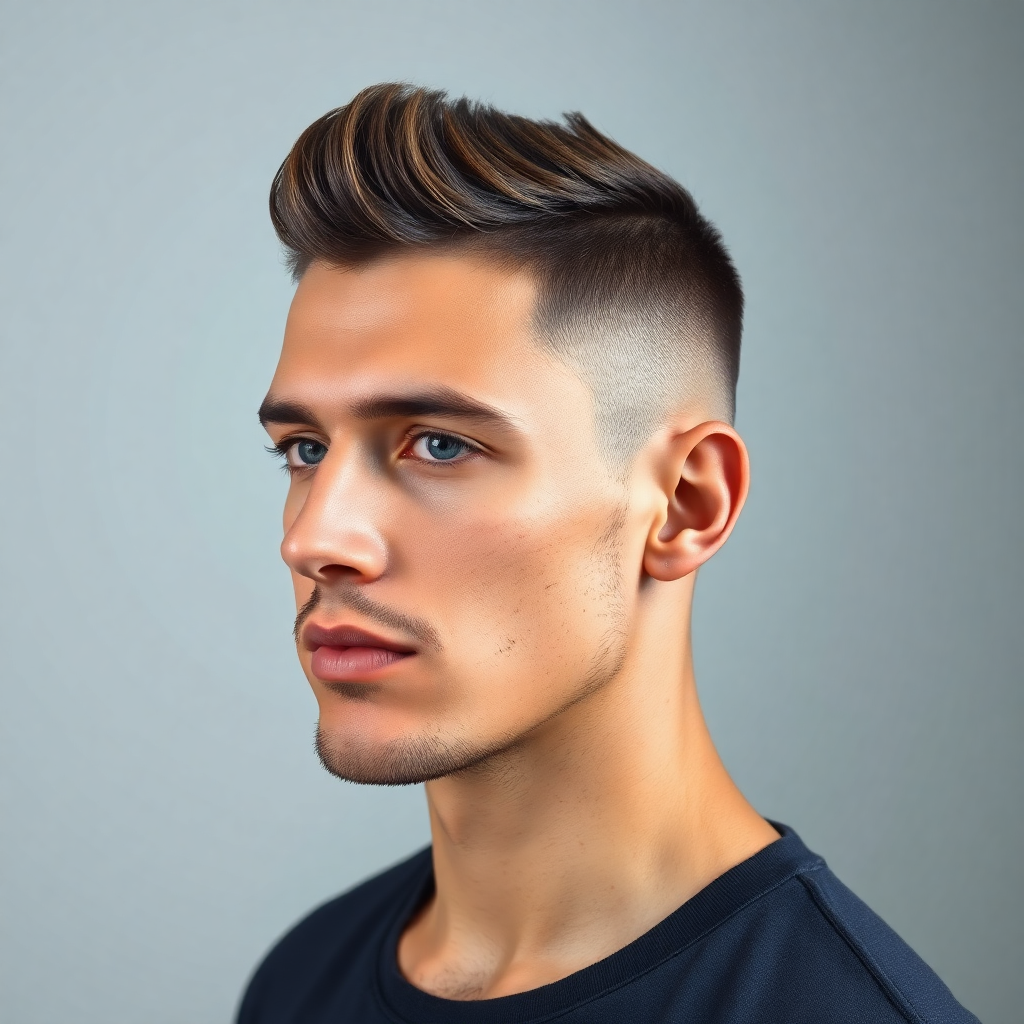
The sides and back are clipped close from a high point near the temples, leaving a compact strip of short hair across the top. Instead of forming a hard rectangular lineup, the front follows the existing hairline with a lightly softened edge. The top can lie naturally or carry a small amount of dry texture.
This military-inspired shape suits men who prefer short haircuts for men with little morning work. It can reduce the visual weight of deep temple corners because most of the haircut is already short. Round faces may benefit from leaving a little extra height on top. Ask for a high fade with a short, blended top and natural front boundary. The contrast is bold, so men with limited top density may prefer a lower fade.
6. Classic Crew Cut With Tapered Sides
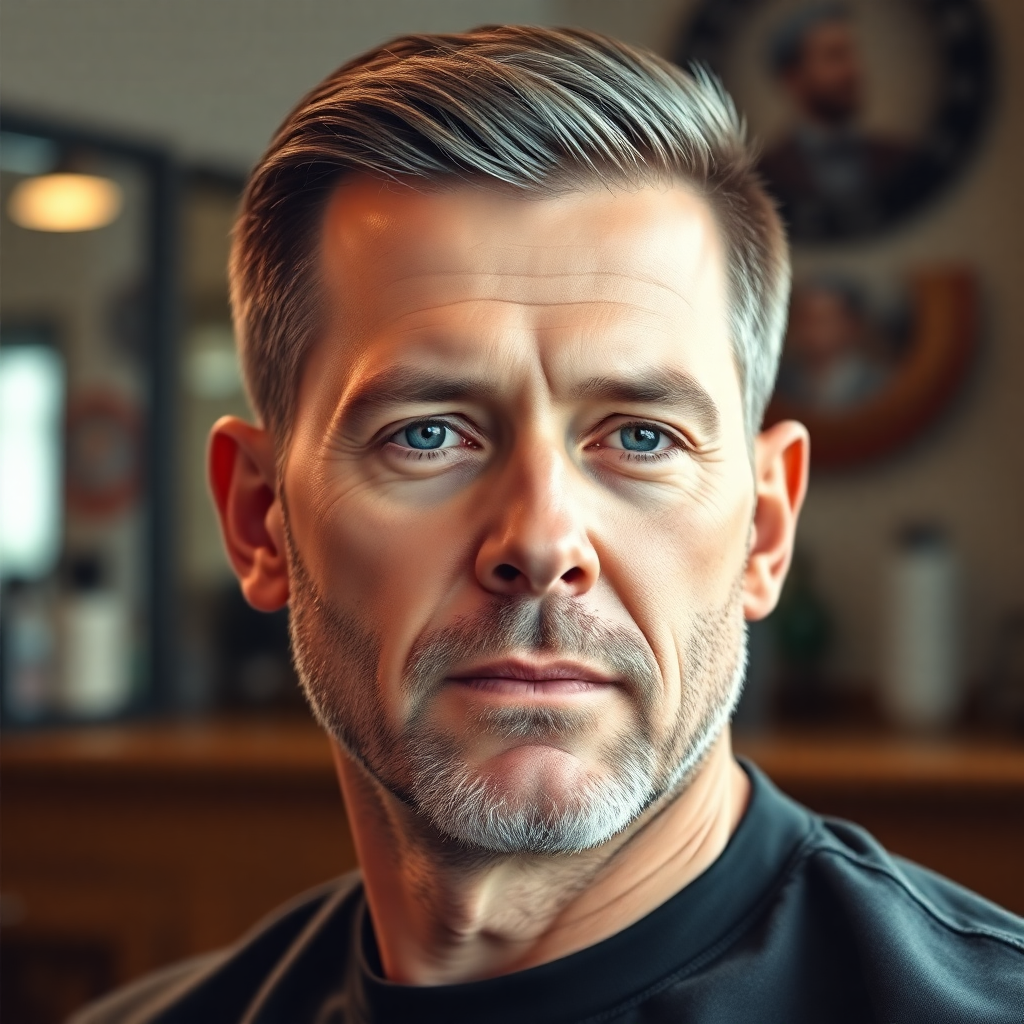
Hair measures longer at the front and gradually becomes shorter toward the crown. The sides are scissor-cut or clipper-tapered rather than shaved, creating a smooth connection between the top and lower hairline. The front is lifted slightly and angled toward one side, keeping the shape controlled without exposing every detail at the temples.
The crew cut remains one of the more adaptable classic haircuts for men because length can be adjusted around density. It suits oval, square, and round faces, and it can be softened for men over 40 who want a mature shape without appearing severe. Ask the barber to preserve texture through the front and avoid thinning shears on already fine areas. A small amount of matte paste can hold the direction.
7. Textured Crew Cut With Mid Fade
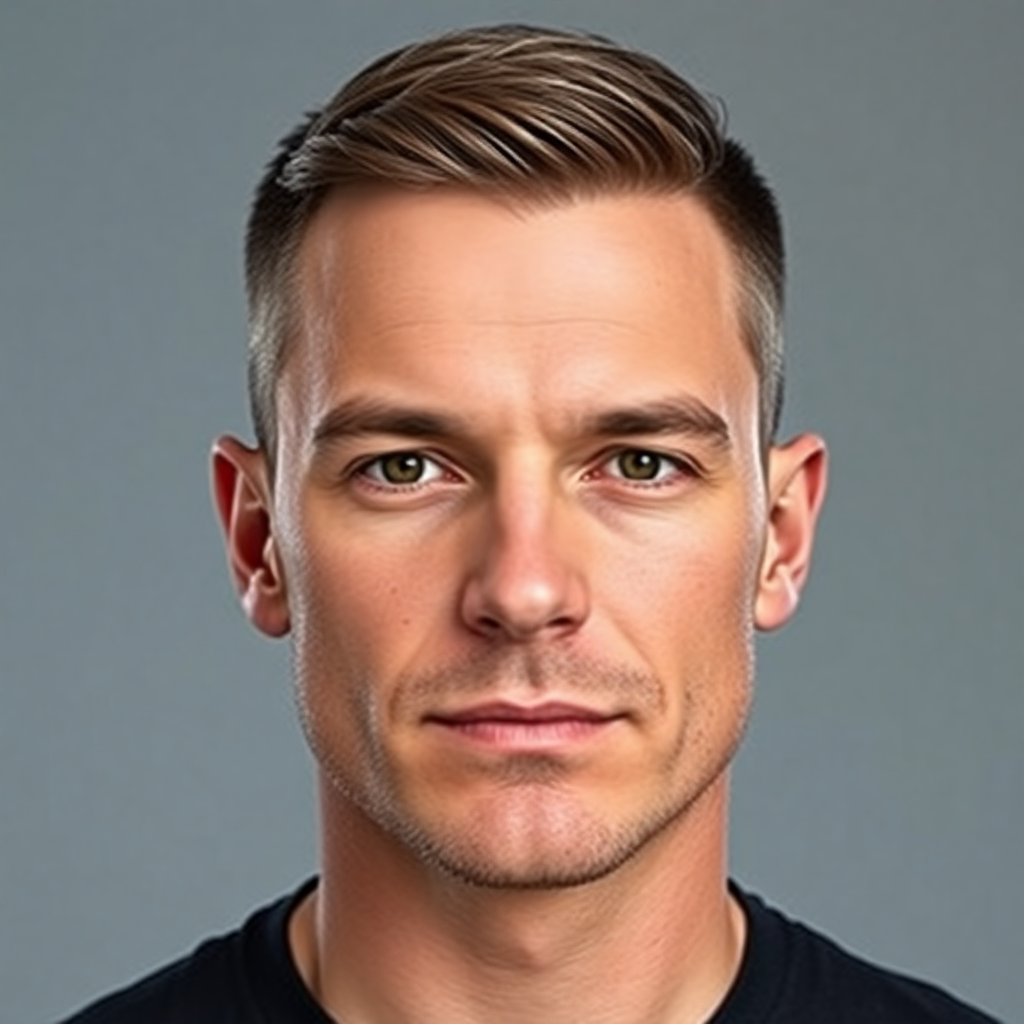
The top remains around one to two inches long, with short irregular layers that produce a broken, matte surface. A mid fade begins near the middle of the sides and blends upward into the textured top. The front is moved diagonally rather than pushed directly back, helping interrupt the outline of an M-shaped hairline.
This version gives the traditional crew cut more movement and fits men seeking modern haircuts for men without long styling sessions. Thick or slightly wavy hair creates texture easily, while fine hair may need a light styling powder. Ask for point-cut texture rather than heavy thinning, since removing too much density can expose more scalp. The fade requires regular cleanup, but the top can grow for several weeks.
8. Short Caesar Cut With Blunt Fringe
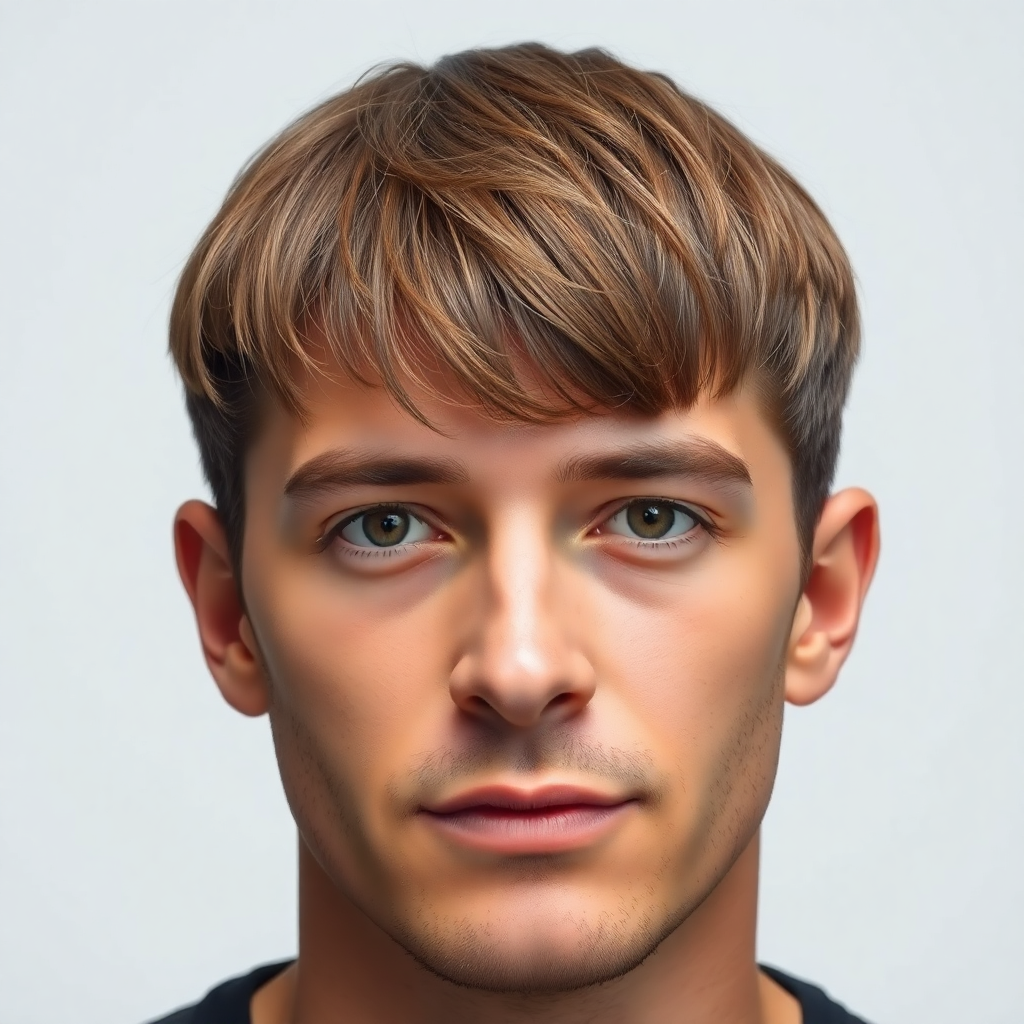
The top is kept short and brushed forward from the crown, ending in a compact horizontal fringe across the upper forehead. The sides remain close and softly tapered, while the front edge is textured enough to avoid looking heavy or helmet-like. Forward direction brings visual coverage toward the corners without requiring long hair.
A Caesar can suit straight, fine, or moderately thick hair and is often considered among practical haircuts for fine hair men can style quickly. It may also shorten the appearance of a longer forehead. Ask the barber for a short Caesar with a soft, irregular fringe rather than a rigid straight line. Use a small amount of matte cream and move the hair forward with your fingers instead of flattening it with a comb.
9. Modern Caesar With Low Fade
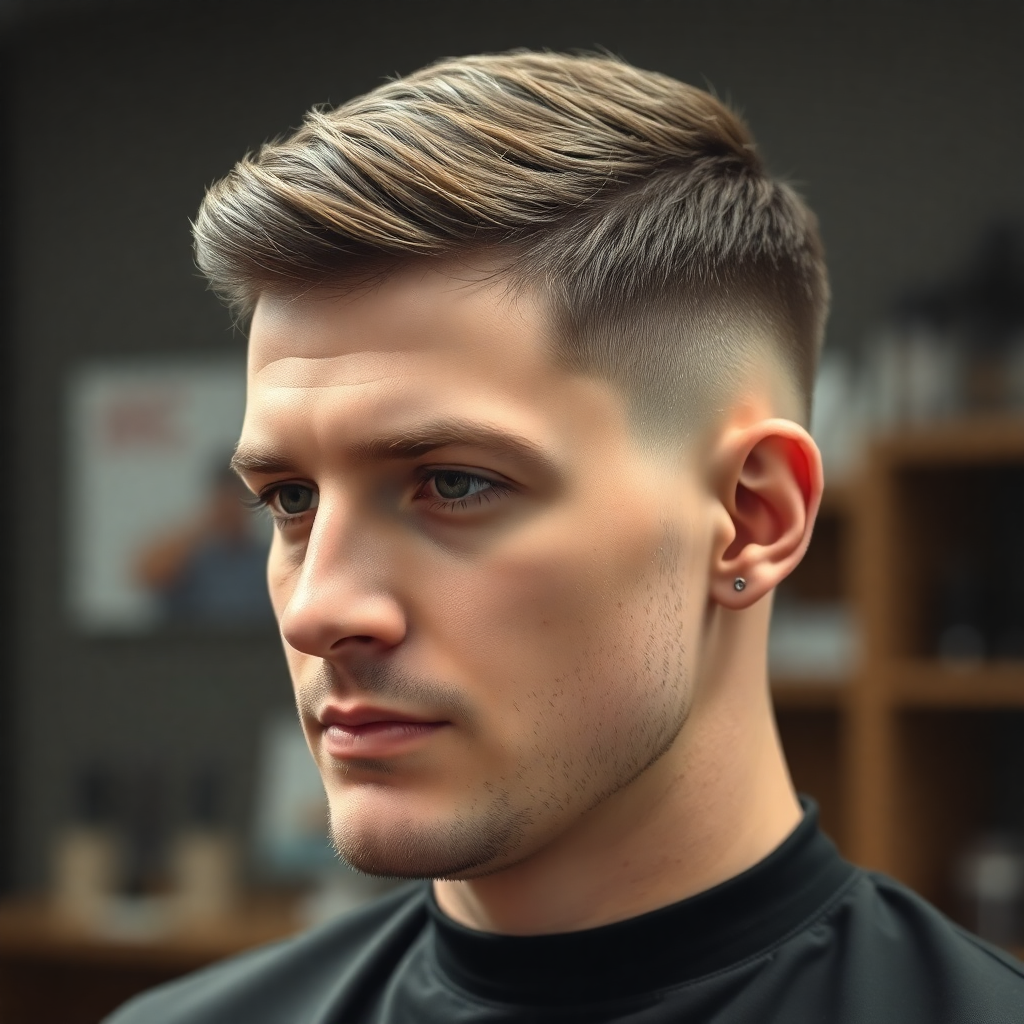
Short layered hair moves forward across the top and finishes in a narrow textured fringe. A low fade cleans the sides around the ears while leaving some weight near the temples. The combination produces a compact outline with a softer front and sharper lower edges, making the haircut look current without becoming extreme.
This is useful for men who want more detail than a traditional Caesar but still need an easy hairstyle for men with limited daily work. Straight and slightly wavy textures usually form the fringe with little effort. Tell the barber to keep enough weight above the fade so the sides do not appear hollow. Dry the fringe forward, then separate a few small sections with matte paste. Heavy wet gel may expose gaps between finer strands.
10. French Crop With Choppy Forward Texture
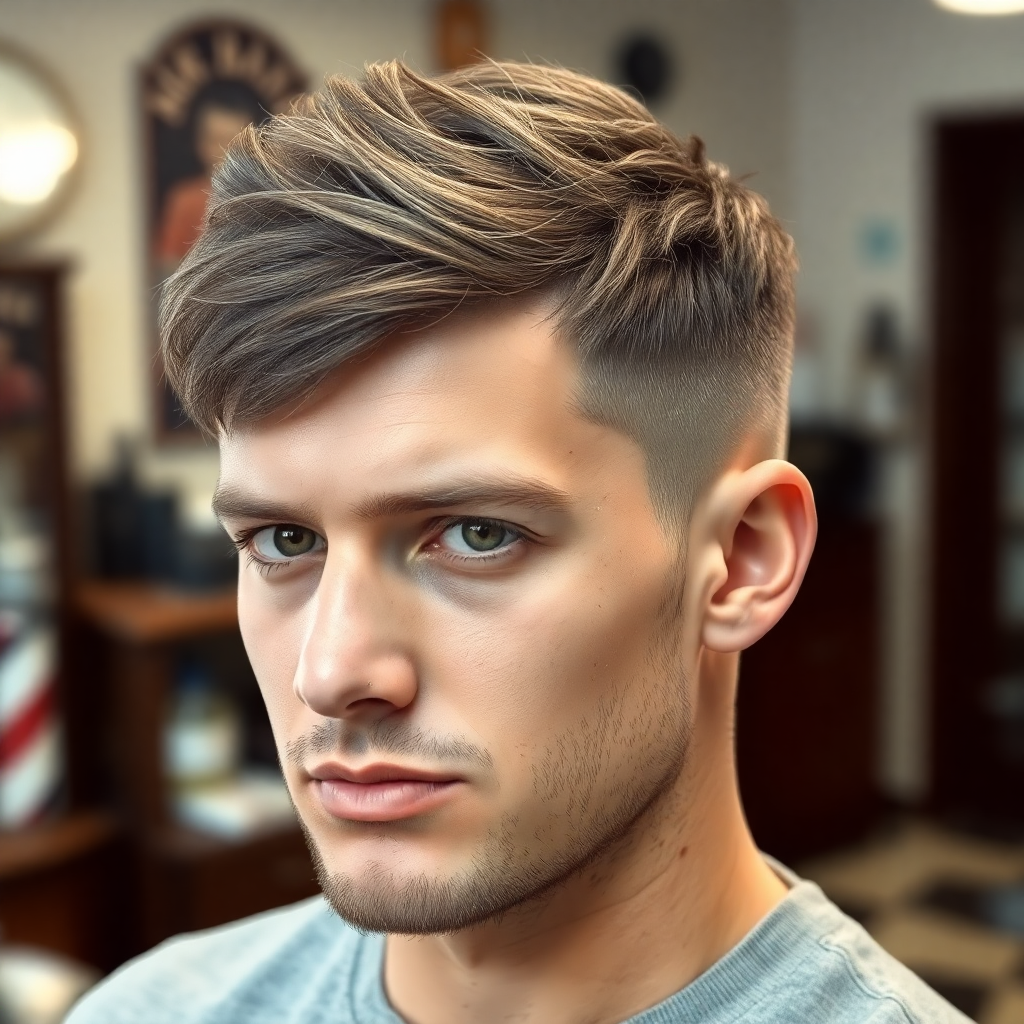
The top is cut into short uneven layers and directed toward the forehead, while the fringe ends in rough, broken points. Sides are faded low or mid, creating a clear contrast beneath the fuller top. Rather than hiding the hairline under a solid band, the choppy finish creates movement across the front and softens irregular corners.
The French crop works well for straight, wavy, and moderately thick textures. It is also one of the popular men’s haircuts often chosen by men who want a clean outline with a relaxed surface. Ask for point cutting through the top and a fringe that follows your natural density. A matte clay or texture powder can separate the layers. Avoid combing every strand into the same direction, since controlled irregularity is the main advantage.
11. Textured Crop With Low Taper Fade

Hair on top stays around two inches long and is cut into soft layers with visible separation. The front moves forward and slightly to one side, while a low taper fade shortens only the sideburns and neckline. Extra weight remains above the ears, producing a gentler outline than a high or skin fade.
Men with fine or thinning hair may prefer this lower-contrast shape because the top does not appear isolated from bare sides. A textured crop is widely recommended as a smart option when density is changing because short layered movement can direct attention toward fuller areas. Ask for light point cutting and tell the barber where your hair naturally separates. Use dry product sparingly so strands remain flexible instead of grouping into visible sections.
12. Forward-Brushed Crop With Temple Fade
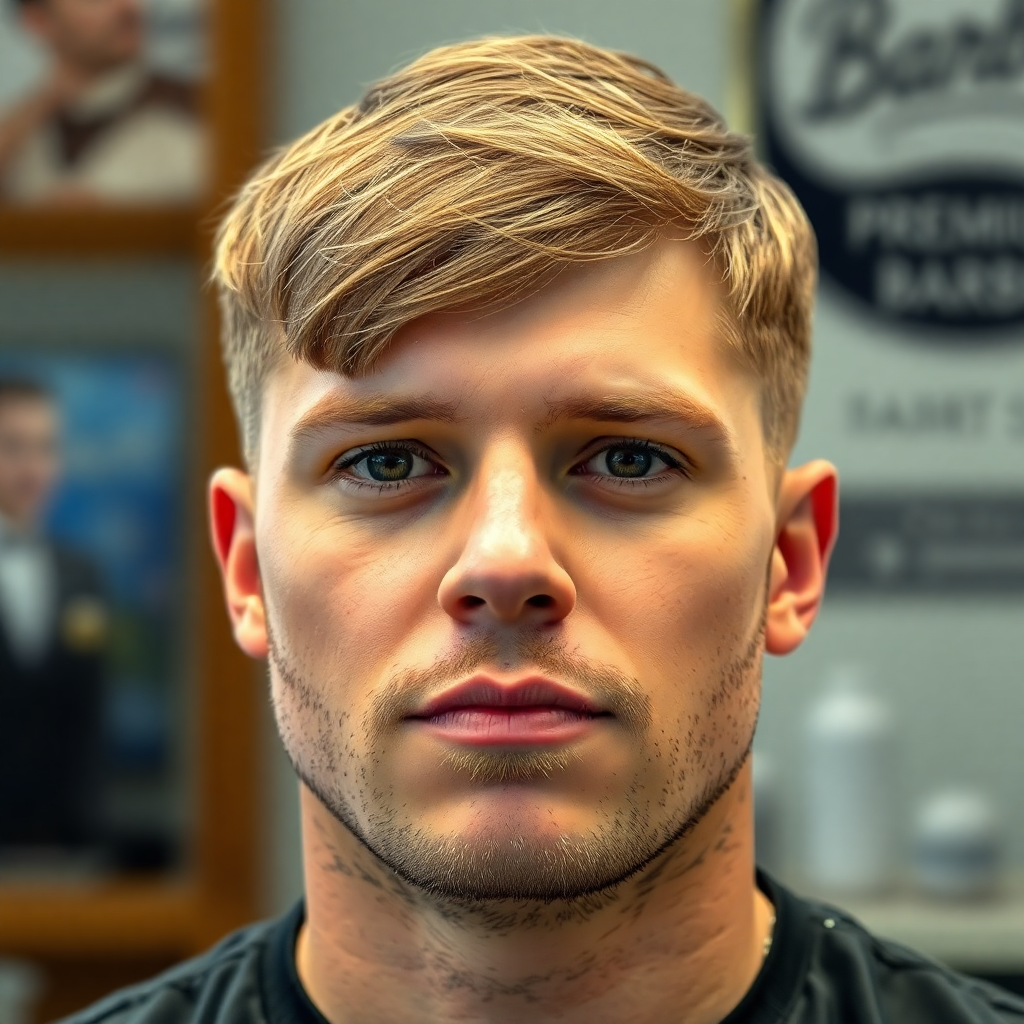
The top remains short to medium in length and lies forward in broad, natural sections. A small temple fade removes weight beside the forehead without continuing high around the full sides. The front edge is irregular and light, allowing a few strands to rest over the corners instead of forming a dense straight fringe.
This cut suits men who want coverage without looking as though they are trying to hide the hairline. Straight and wavy hair can hold the forward direction, while a longer face may benefit from the reduced height. Tell the barber to preserve density through the frontal area and limit the fade to the temples and sideburns. A vented brush can guide the hair forward during drying, followed by a light matte cream for control.
13. Short Spiky Texture With Mid Taper
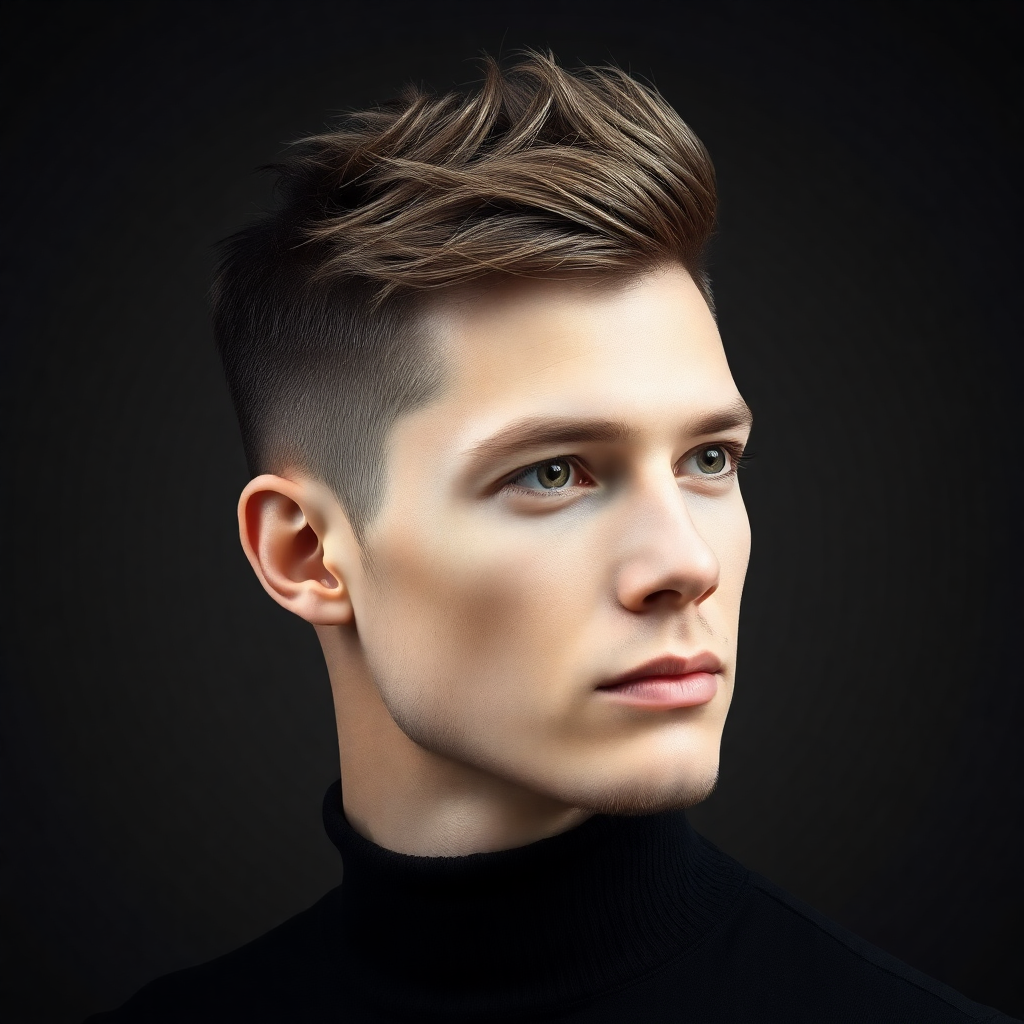
The top is cut into short graduated layers, with the longest pieces near the front. Hair is lifted into loose angled points rather than stiff vertical spikes, while the sides transition through a smooth mid taper. The front texture moves diagonally across the hairline, creating depth without opening large spaces between strands.
This style fits dense fine hair, straight hair, or hair with a slight bend. It can add energy to haircuts for young men, although the restrained shape also works in casual offices. Ask for short point-cut layers and explain that you want flexible texture rather than sharp gel spikes. Dry the hair upward and slightly sideways with your hands. Finish with a small amount of low-shine paste applied near the roots.
14. Side-Parted Crew Cut With Scissor Taper
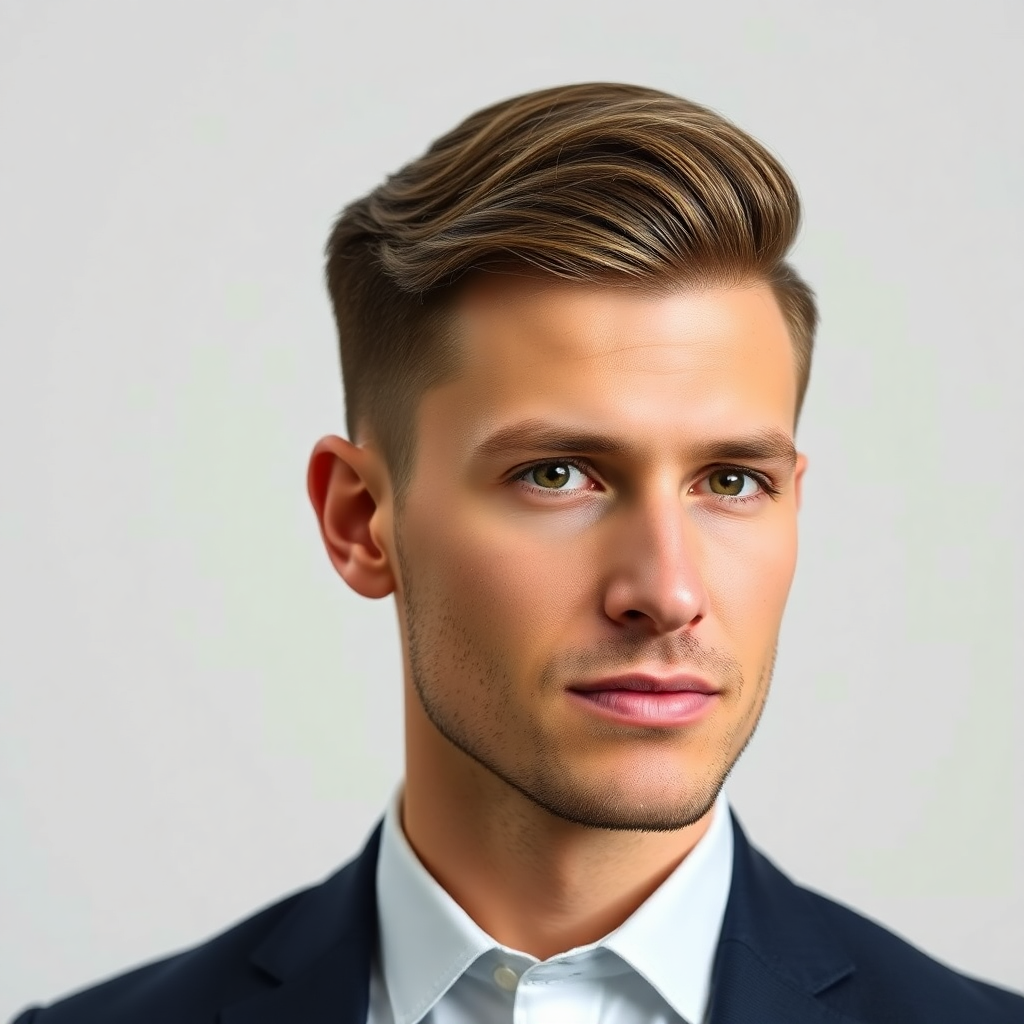
The front measures around two inches and follows a soft side direction without a shaved hard part. Hair gradually shortens toward the crown, while the sides are shaped with scissors and a low clipper taper around the ears. The result appears fuller and less aggressive than a high fade, with a natural line across the temples.
This is a strong option among professional haircuts for men because the side direction looks organized without requiring a polished comb-over. It often suits oval, square, and heart-shaped faces. Men with fine hair should ask the barber to maintain weight instead of removing bulk across the top. Apply light styling cream, then separate the front with fingers so the part remains soft. A sharply drawn part may call more attention to uneven recession.
15. Ivy League Cut With Diagonal Front Sweep
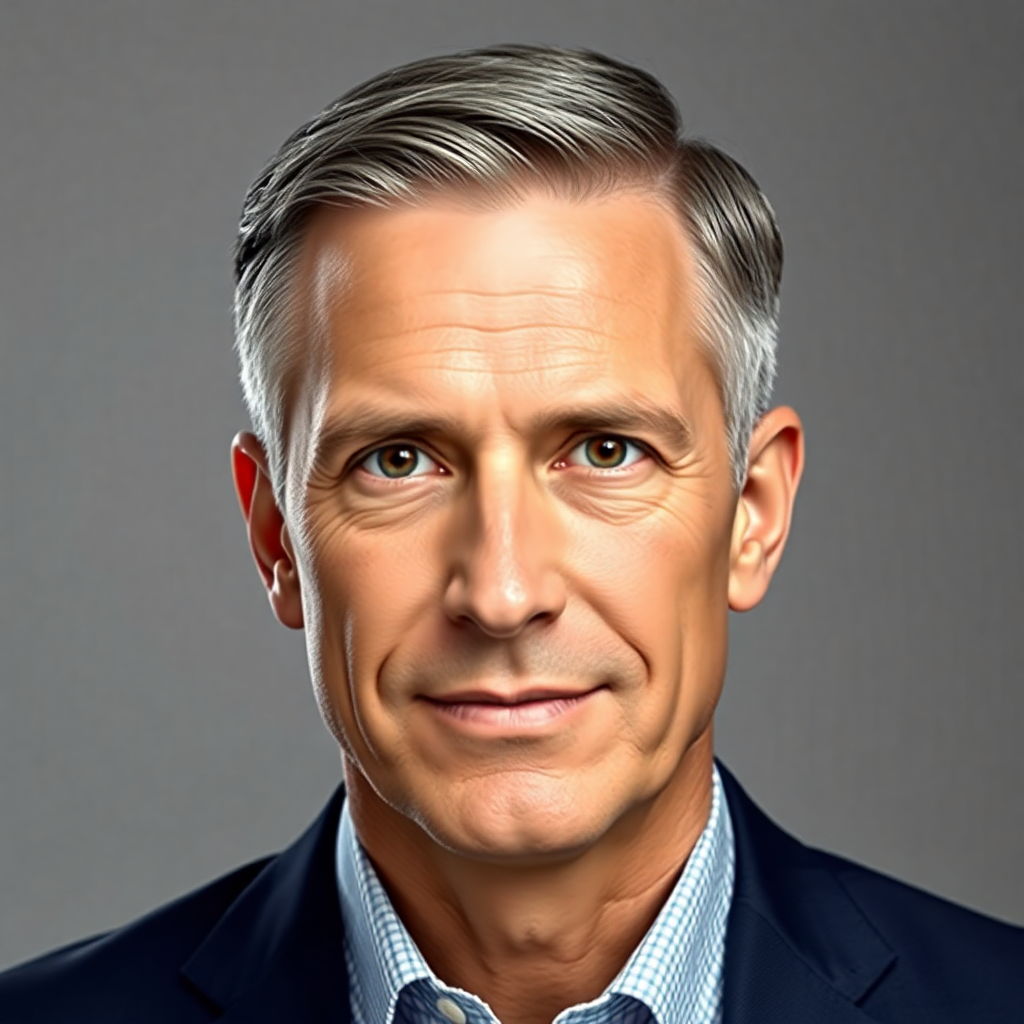
The Ivy League keeps the sides short and tapered while leaving enough length across the front to form a controlled side sweep. Hair moves diagonally from the fuller side toward the opposite temple, with a soft matte finish rather than a glossy, tightly combed surface. The crown stays compact so the haircut retains a neat outline.
Men wanting business haircuts for men may appreciate this balance between a crew cut and longer side part. It works best when the frontal area still has useful density and can be directed without stretching thin strands across a wide gap. Ask for an Ivy League with a natural part and textured front. Use a small amount of pliable paste, starting at the back before touching the hairline.
16. Regulation Cut With Natural Side Direction
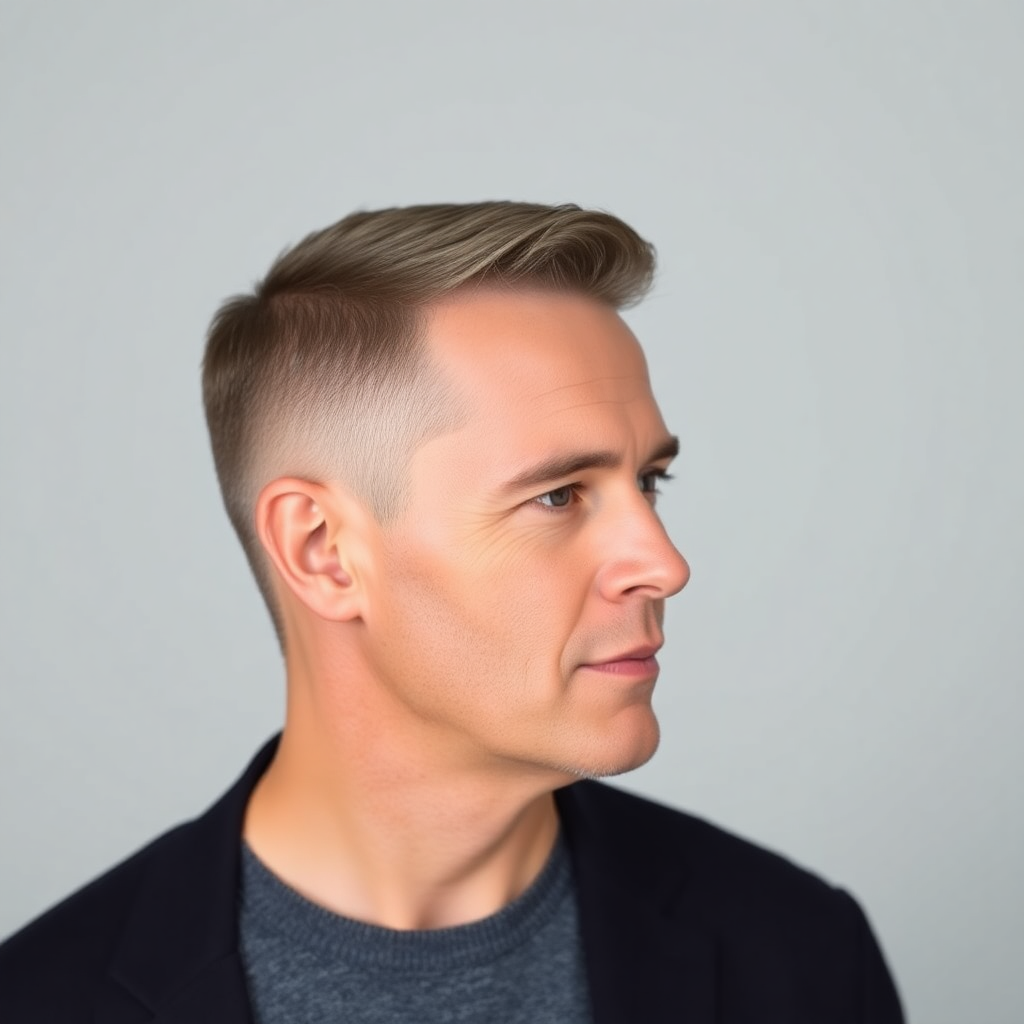
The sides are neatly tapered and remain slightly longer than a skin fade, while the top follows a short side direction. The front carries modest height near the fuller section and gradually settles toward the recessed corner. No hard part or sharp artificial lineup is added, giving the haircut a calm, traditional finish.
A regulation cut suits conservative workplaces, formal clothing, and men who prefer a familiar shape. It can be adapted for haircuts for men over 40 by leaving softer edges and avoiding excessive contrast. Straight and lightly wavy hair are easiest to control, although coarse hair can be shaped with additional texture. Ask the barber for a classic taper with a natural side part. Regular trims every four weeks keep the outline disciplined.
17. Short Quiff With Tapered Sides
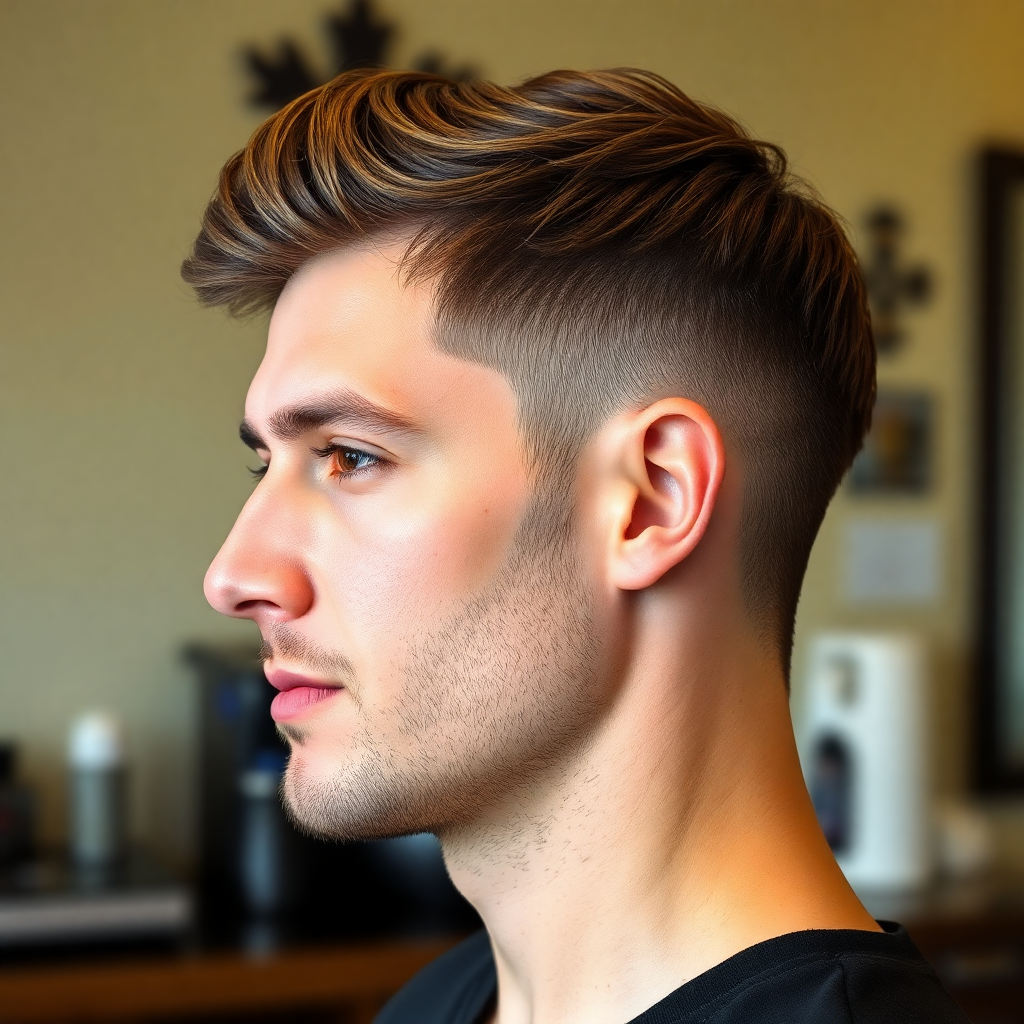
The front is left around two to three inches long and lifted into a low, rounded quiff. Rather than standing straight upward, the hair angles backward and slightly toward one side. The sides receive a gradual taper with enough remaining weight to prevent the top from appearing disconnected from the hairline.
A modest quiff can add height to rounder faces and make fuller frontal sections the visual focus. It works best when recession is mild and the center hairline remains dense. Ask the barber to keep the quiff low and textured, since excessive height may reveal more scalp near the corners. Dry the front from the roots with moderate airflow, then shape it using a small amount of matte paste. This cut requires more styling than a crop or crew.
18. Messy Quiff With Low Fade
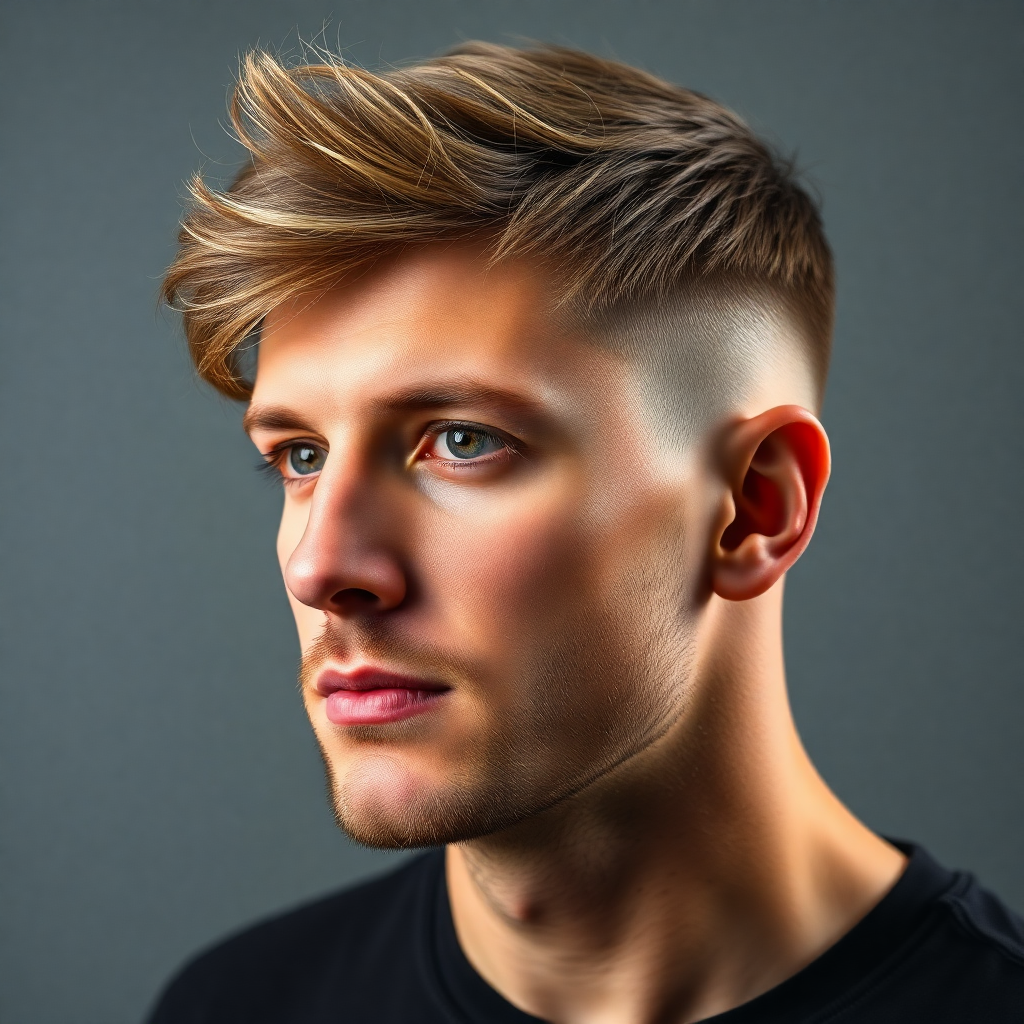
Hair on top remains three inches long near the front and is layered to create loose height. The quiff bends upward, backward, and sideways in uneven sections, while a low fade keeps the lower sides clean without removing all weight near the temples. The finished surface appears airy and informal rather than sculpted.
This style can suit wavy hair or thick straight hair that holds movement naturally. It adds dimension to a round face but may require daily drying, making it less suitable for anyone seeking a low maintenance men’s haircut. Ask for lightweight texture through the top and a low fade that stays beneath the temple recession. Use a blow dryer and fingers, then apply a dry paste without pressing the hair flat.
19. Low Taper Comb-Over With Soft Part
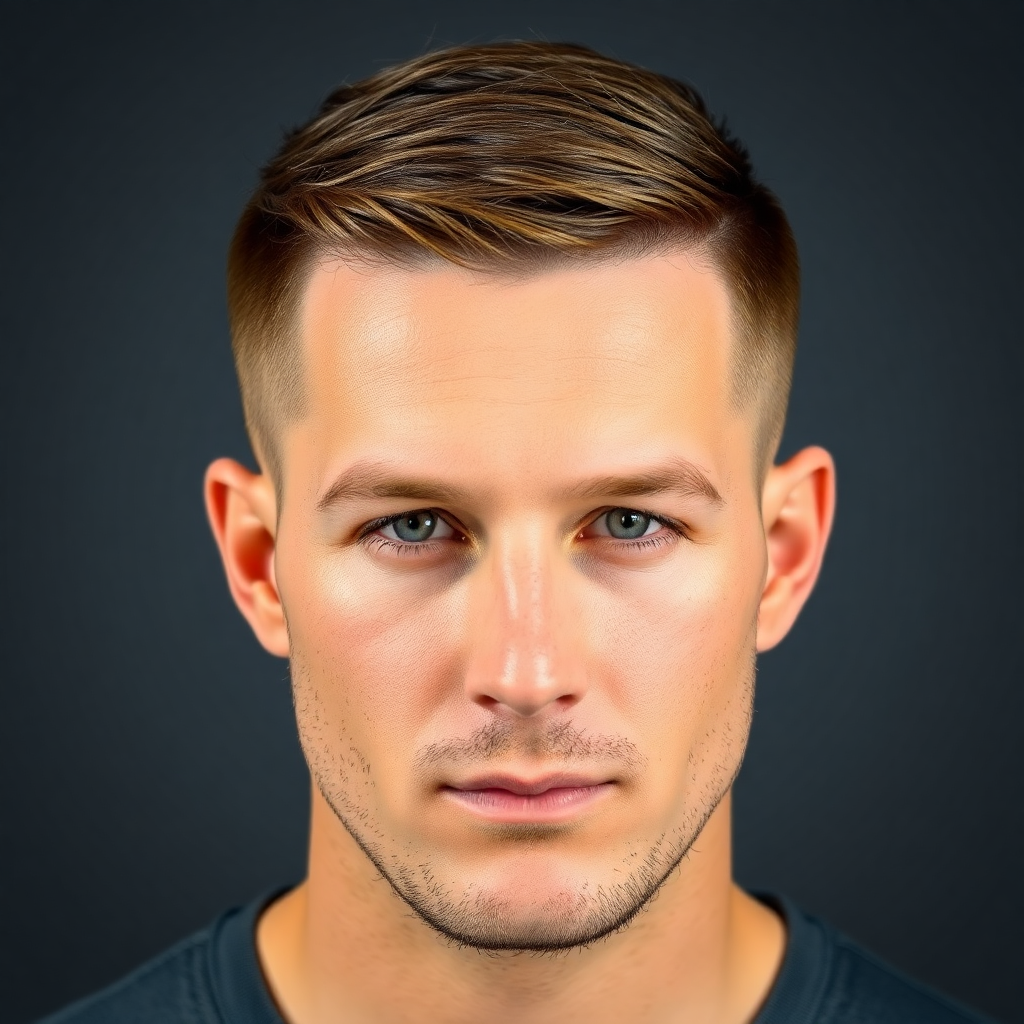
The top remains medium-short and follows a loose side direction from a natural part. Instead of stretching long strands across the entire forehead, the hair is moved diagonally and allowed to keep light texture. A low taper cleans the sideburns and neckline while maintaining moderate fullness around the upper sides.
The shape can work when one recessed corner is deeper than the other and the top still has consistent density. It also fits men looking for stylish haircuts for men that can move between office and evening settings. Ask for a soft part rather than a razor line, and avoid leaving the top excessively long. Use a wide-tooth comb for initial direction, then loosen the surface with fingers. A rigid, glossy finish can make thin sections easier to notice.
20. Side-Swept Textured Fringe
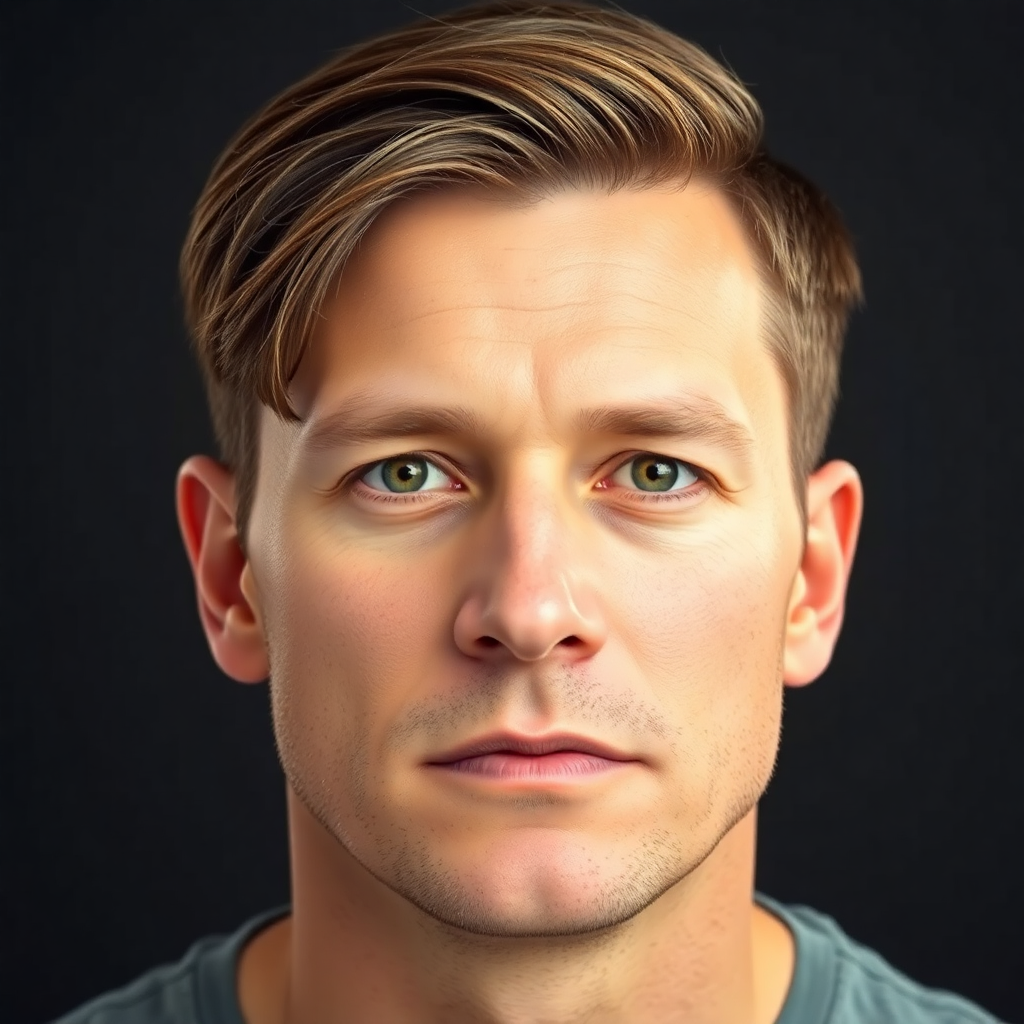
The top is layered from the crown toward a longer fringe that moves diagonally across part of the forehead. The sides are trimmed short with a gentle taper, while the fringe remains broken and lightweight rather than forming one solid curtain. A few separated pieces soften the recessed area without covering the entire face.
This style suits straight or wavy hair with enough frontal length to move naturally. It can be useful as a haircut for big forehead men because the diagonal fringe reduces the amount of exposed vertical space. Ask the barber to keep the fringe light and avoid removing too much density near the hairline. Dry it across the forehead using fingers, then use a flexible cream. Frequent touching may separate fine strands and reduce coverage.
21. Short Curtains With Tapered Sides
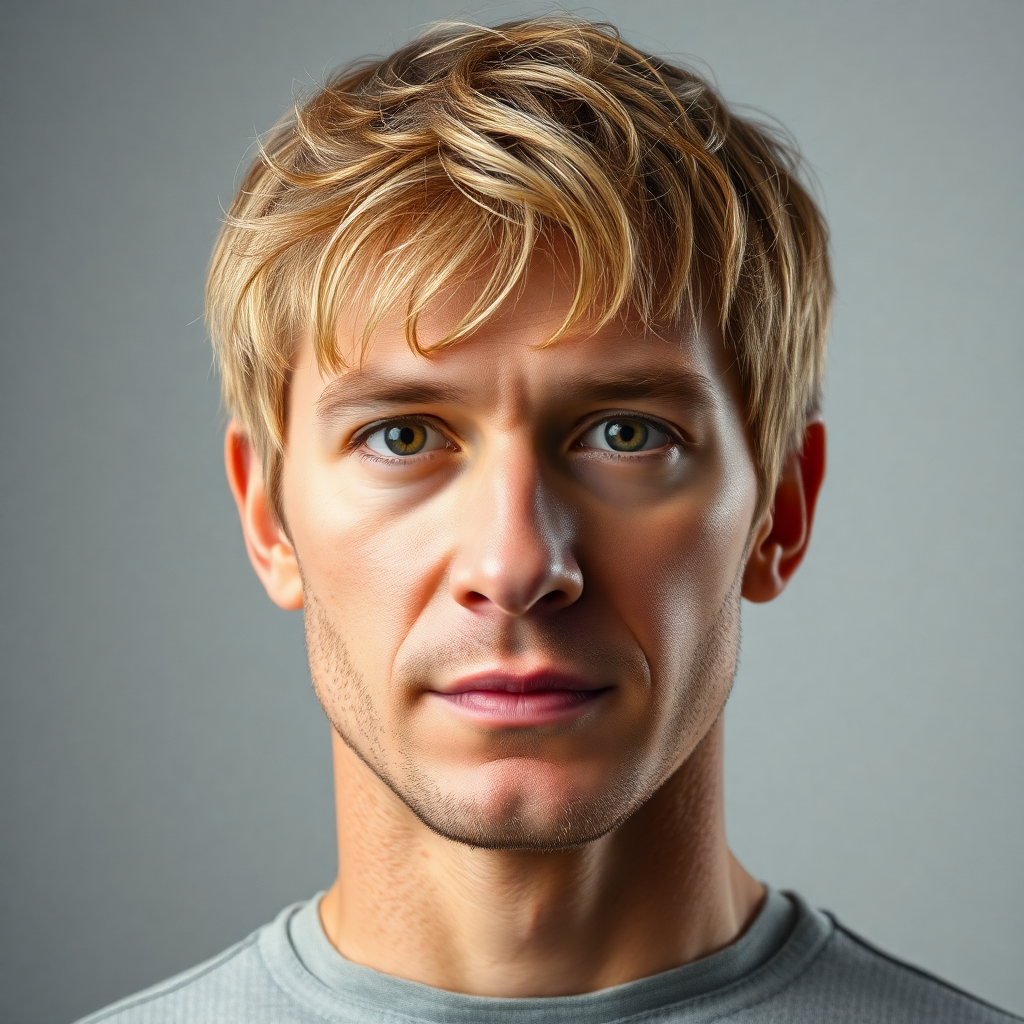
Hair measures three to four inches across the front and separates near the center into two loose curtains. Each side bends outward and slightly downward, resting near the recession points without forming a heavy fringe. The sides are tapered rather than tightly faded, preserving a connected flow between the longer top and shorter lower sections.
Short curtains can soften a widow’s peak or early temple recession when the front retains enough density. The style appears in current men’s hairstyles 2026 coverage as a flexible way to work around recession points while maintaining movement. Straight and wavy hair usually form the shape most easily. Ask for layered curtains with a natural center opening. Blow-dry each side away from the part using low heat and a light cream.
22. Wavy Textured Top With Low Fade

Natural waves remain two to four inches long across the top, creating soft bends that move forward and sideways. A low fade begins beneath the temples and blends into the longer upper sides. The front is allowed to fall unevenly, with some waves approaching the forehead while others lift away from it.
This shape highlights texture rather than trying to draw a new hairline. It suits men searching for haircuts for wavy hair men and can make changing density less obvious because the surface is naturally varied. Ask the barber to remove excess weight without thinning the frontal area too aggressively. Apply a lightweight curl or texture cream to damp hair, then let it air-dry or use a diffuser. Brushing after drying can remove useful wave definition.
23. Curly Crop With Temple Taper
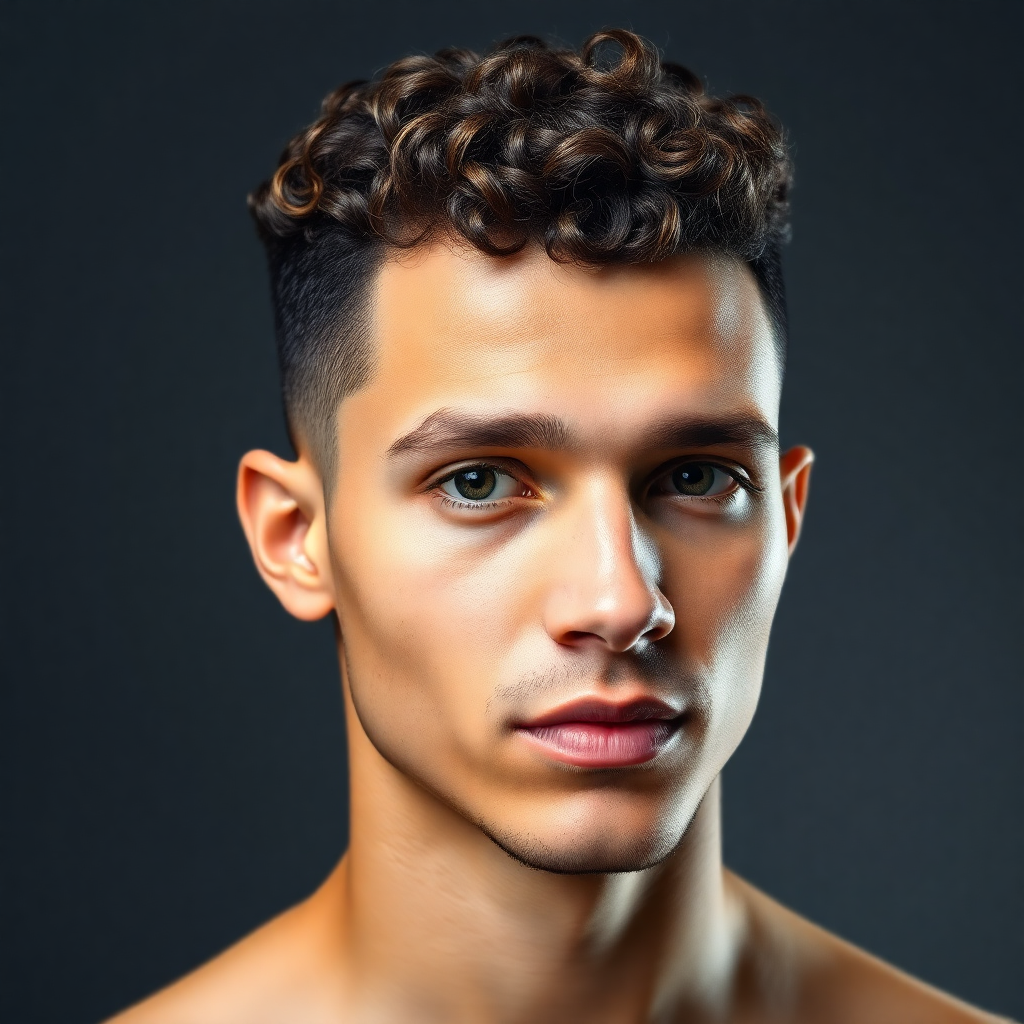
Curls remain short and rounded across the top, with enough length to show individual coils and bends. The front falls slightly forward in an irregular curly edge, while a temple taper removes bulk beside the forehead and blends into the sideburns. The remaining sides stay connected rather than dropping immediately to bare skin.
This cut works well among haircuts for curly hair men because natural texture interrupts the outline of the hairline. Men with oval, long, or angular faces can adjust the top height to maintain balance. Ask the barber to shape the curls in their dry or near-dry state so the final length is easier to judge. Use a small amount of curl cream and avoid heavy products that pull the front downward.
24. Short Natural Afro With Low Taper
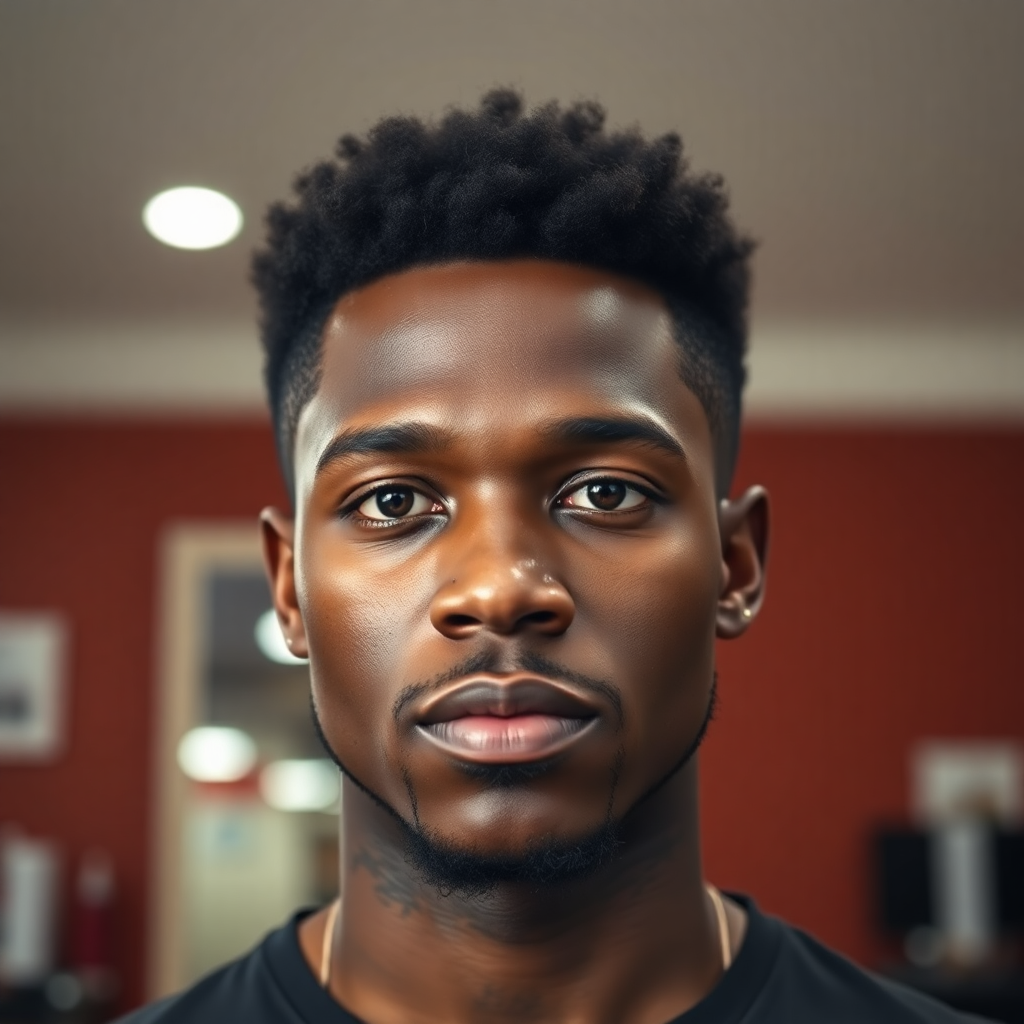
Coily hair forms a compact rounded top with a consistent shape from the front toward the crown. A low taper cleans the temples, sideburns, and neckline without cutting high into the upper sides. The front edge follows the natural mature hairline rather than being pushed backward to create artificially sharp corners.
This option allows natural texture to remain visible while keeping the haircut controlled. It can suit men seeking haircuts for black men that work in professional and casual settings. Ask the barber to preserve density across the top and discuss how much front shaping your natural hairline can support. A soft lineup is often less demanding as the cut grows. Moisture-focused styling and gentle picking can maintain the rounded form without flattening the coils.
25. Medium Brushed-Back Layers With Natural Widow’s Peak
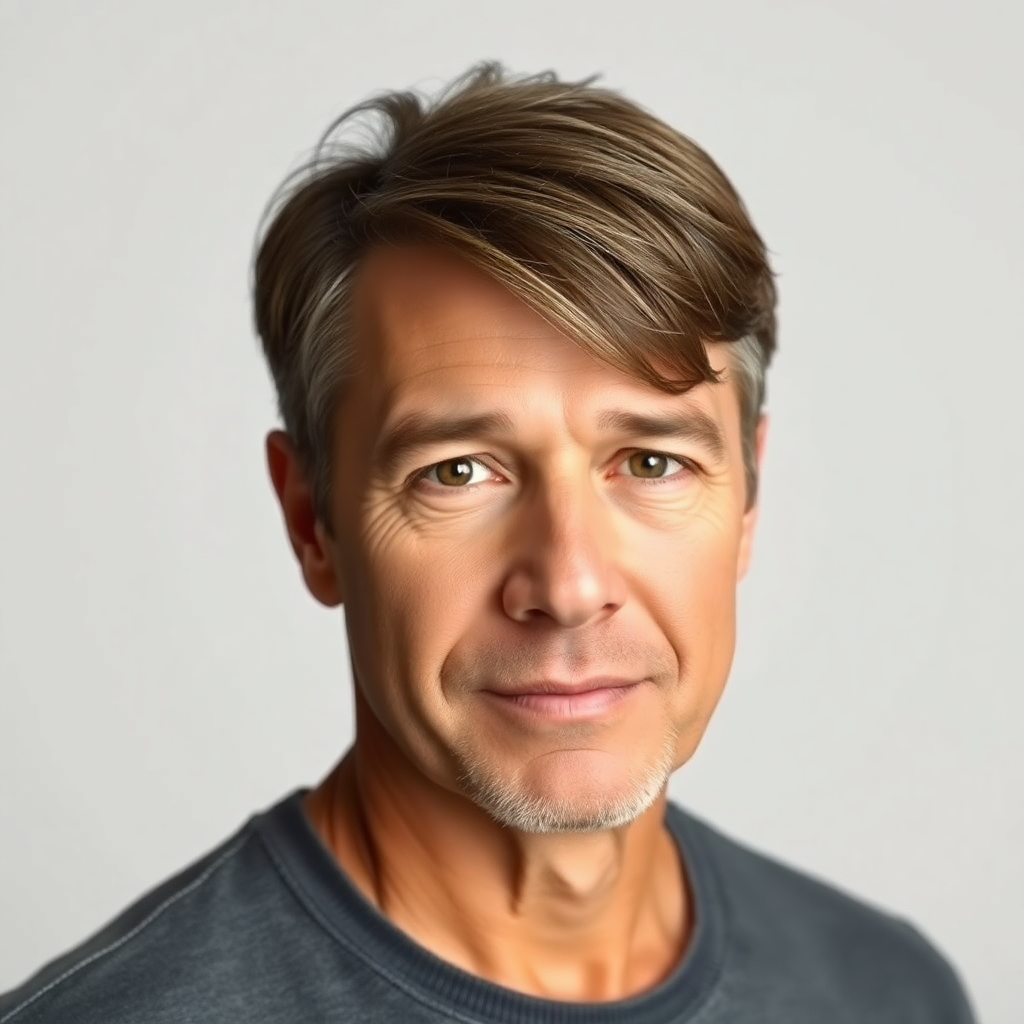
The top remains four to five inches long and is cut into flowing layers that move backward from the forehead. The sides are scissor-tapered with enough length to tuck behind the ears or sweep toward the back. Rather than hiding the hairline, the styling opens the forehead and allows a widow’s peak or mature temple shape to become part of the silhouette.
This longer option suits thick, wavy, or dense straight hair. It can look distinguished among haircuts for men over 50, although it needs more styling and may not work well when frontal density is limited. Ask for soft layers that follow natural growth instead of a disconnected undercut. Use a light cream and dry the hair backward with fingers. Keep some movement so the style does not resemble a rigid slick-back.
Conclusion
Choosing among these ideas starts with an honest look at where the hairline is changing and how much density remains across the front, crown, and sides. Short buzz cuts and crops reduce contrast and need little styling. Caesar cuts and textured fringes direct hair forward, while Ivy League cuts, short quiffs, and side sweeps preserve more length for men who still have a fuller frontal section. Curly, wavy, and coily textures can often use natural movement to create shape without forcing the hair into an unnatural pattern.
Face shape matters as well. Added height can lengthen a round face, while a low fringe may balance a longer forehead. Maintenance should influence the decision as much as appearance. A short haircut for receding hairline changes may need little daily work, but skin fades require frequent barbershop cleanup.
Before your appointment, save two or three reference images showing men with hair density and recession patterns close to your own. Discuss the front edge before the barber begins, since preserving natural growth is often more useful than forcing a sharp new outline. A mature hairline usually looks strongest when the haircut works with its direction instead of arguing against it.
Frequently Asked Questions
1. What haircut works well for a round face with a receding hairline?
Short sides with moderate height on top can give a round face more vertical structure. A textured crew cut, controlled quiff, or high-and-tight may work well. Avoid making the top wide and flat, since that can increase the appearance of facial width.
2. Which haircut suits an oval face with temple recession?
Oval faces can support buzz cuts, Caesar cuts, textured crops, crew cuts, and medium brushed-back styles. Choose according to hair density and maintenance rather than face shape alone. Keeping the front natural often creates a more balanced result than forcing a sharp lineup.
3. What is a good haircut for square face men with a mature hairline?
Crew cuts, even buzz cuts, Ivy League styles, and short brushed-back layers can complement a defined jaw. A softer taper may preserve balance if the face already has strong angles. Extremely sharp corners around the forehead are not required for a structured appearance.
4. Which style can balance a long face and receding temples?
A Caesar, French crop, short curtain style, or side-swept fringe can reduce the amount of visible forehead without adding excessive height. Keep some fullness at the sides and avoid an extremely high fade paired with a tall quiff.
5. What is the best hairstyle for face shape when the hairline is uneven?
Start with the natural proportions of the face, then adjust for the recession pattern. A barber can use side length, fringe direction, and top height to improve balance. An uneven hairline often responds better to texture than a rigid, symmetrical front edge.
6. Can a haircut for big forehead men also soften receding corners?
A textured fringe, Caesar cut, French crop, or short curtain style may reduce visible forehead space. The front should remain light and natural rather than dense and perfectly straight. Longer fringes require enough remaining density to avoid forming thin, separated sections.
7. What are useful haircuts for straight hair men with recession?
Straight hair works well with crew cuts, textured crops, Caesars, Ivy League cuts, and controlled side sweeps. Adding point-cut texture can prevent the surface from appearing flat. Fine straight hair often looks fuller with matte styling rather than a wet, separated finish.
8. Which cuts suit wavy hair and a mature hairline?
Wavy crops, loose quiffs, medium brushed-back layers, and side-swept styles allow natural bends to soften the front. A low taper can create a clean outline without removing too much side weight. Keep enough length for the wave pattern to remain visible.
9. Can curly hair cover receding temples naturally?
Short curls can fall forward or outward around the temple area, reducing the sharpness of the hairline. A curly crop with a temple taper often maintains useful texture. Results depend on curl direction and density, so the barber should shape around natural growth.
10. What haircut works for coily hair with mild recession?
A short natural Afro, even buzz, wave cut, or compact coily crop can create a balanced silhouette. A soft temple taper adds detail without pushing the hairline backward. Discuss the lineup before cutting so the natural front edge is preserved.
11. Which haircuts for thin hair men create a more even appearance?
Buzz cuts, crew cuts, short Caesars, and lightly textured crops can reduce the difference between dense and sparse areas. Keeping the sides controlled may help the top appear more balanced. Heavy product and long separated strands can make scalp visibility more noticeable.
12. Are short cuts better for fine hair?
Short length often prevents fine strands from becoming flat or stringy, although the ideal cut depends on density. A textured crew, crop, or Caesar can maintain movement. Ask the barber not to remove unnecessary weight from already fine sections.
13. Can thick hair work with a receding hairline?
Thick hair provides several styling options, including textured crops, short quiffs, side sweeps, curtains, and brushed-back layers. Removing excess bulk may improve shape, but the frontal area should retain enough density to support the chosen direction.
14. How should I explain my receding hairline to a barber?
Point out the areas you want softened, covered, or left visible. Explain your normal styling routine and how much maintenance you accept. Ask how the proposed cut will follow your growth pattern instead of requesting a style name without discussing the front.
15. What does a natural hairline mean in barbering?
A natural hairline follows the existing growth boundary with minimal reshaping. Stray hairs may be cleaned, but the edge is not pushed backward to create artificial symmetry. This approach can grow out more softly when the temples are already changing.
16. Should I ask for a hard lineup on a receding hairline?
A hard lineup can create definition when density supports it, but aggressive reshaping may remove useful hair from the corners. Ask the barber to show where the new edge would sit before trimming. A soft natural finish may require less upkeep.
17. Which clipper guard should I request for a buzz cut?
Choose the length according to scalp visibility, head shape, and personal comfort. Lower guard numbers create a closer finish, while higher settings leave a darker surface. Ask the barber to test a longer setting first because additional length can always be removed.
18. What should I tell the barber when asking for a French crop?
Request short textured layers on top, a forward direction, and a broken fringe rather than a heavy straight line. Specify whether you prefer a taper, low fade, or mid fade. Explain how much temple coverage you want before the front is cut.
19. How do I ask for a crew cut that does not expose my temples?
Ask for extra length through the front, a soft diagonal direction, and tapered sides rather than a high skin fade. Tell the barber to follow the natural hairline. Bringing a reference image with a similar recession pattern can improve communication.
20. What is the difference between a taper and a fade?
A taper usually shortens hair gradually around limited areas such as the temples, sideburns, and neckline. A fade creates a more visible transition across a larger section of the sides and back. Barber terminology can vary, so reference images help clarify the desired result.
21. Which styling product works for a textured crop?
A light matte paste, clay, or texture powder can create separation without adding a wet shine. Begin with a small amount and add more only where needed. Heavy application may group fine strands together and reveal more scalp between sections.
22. Is hair gel suitable for thinning or receding hair?
Gel can hold a defined shape, but strong wet finishes may separate strands and increase visible gaps. Men with changing density often prefer flexible products with low shine. Product choice remains personal and should match the intended style.
23. Should I use a blow dryer on a receding hairline?
A blow dryer can direct roots, create controlled volume, and shape a fringe or quiff. Use moderate heat and avoid pulling fragile-looking sections with force. Fingers or a vented brush usually create a softer finish than a tight round-brush style.
24. Can texture powder help fine hair look fuller?
Texture powder can add grip and reduce flatness, creating a more expanded surface appearance. Apply a small amount near dry roots and distribute it gently. Too much may make the hair stiff, dull, or difficult to restyle during the day.
25. Is matte product better than shiny pomade for thin hair?
Matte finishes often keep fine strands looking soft and separated without creating strong scalp contrast. Shiny pomade may suit classic side parts or slick styles when density is good. The better choice depends on hair texture and the desired finish.
26. What type of comb works for a soft side part?
A wide-tooth comb can establish direction without compressing every strand into a rigid line. After combing, loosen the surface with your fingers. Fine-tooth combs produce a sharper finish that may reveal uneven density around the part.
27. Should I style a receding hairline forward or backward?
Forward styling can soften temple corners, while backward styling may create a strong open appearance when the center remains dense. Neither direction is always better. Choose according to growth pattern, face shape, and how much of the natural hairline you prefer to show.
28. How often should a buzz cut be trimmed?
Many men refresh a buzz cut every two to four weeks, depending on how consistent they want the length to appear. Short hair shows growth quickly, although an even buzz usually grows out more smoothly than a detailed skin fade.
29. How often does a fade need maintenance?
A close fade may lose its sharp transition within a few weeks because the shortest sections become darker as they grow. Men who prefer a fresh barbershop finish often schedule more frequent side cleanups while leaving the top untouched.
30. Which cuts grow out smoothly between appointments?
Scissor tapers, crew cuts, Ivy League styles, low tapers, and medium layered cuts usually develop softer outlines as they grow. High skin fades create more visible contrast between fresh and grown sections, so their changes may appear sooner.
31. How can I grow a crop into a longer hairstyle?
Keep the top growing while asking the barber to maintain only the neckline, sideburns, and excess side bulk. Gradually allow the fringe and crown to connect. Light reshaping during the transition can prevent the haircut from becoming wide or uneven.
32. What is the easiest low-maintenance haircut for a receding hairline?
An even buzz, short crew cut, or compact Caesar usually needs little daily styling. A clean shave removes styling work but requires regular scalp grooming. Fades add barbershop maintenance even when the top itself is easy to manage.
33. Should I trim the top every time the sides are faded?
Not always. A barber can refresh the fade and lightly clean the top while preserving useful length. Explain whether you are maintaining the same style or growing into a longer cut. Repeated heavy trimming may delay the transition.
34. Can a haircut stop a receding hairline?
A haircut changes appearance and styling options but does not stop or reverse hairline movement. It can reduce contrast, redirect attention, or create a more intentional shape. Questions about hair-loss causes or treatment should be discussed with a qualified healthcare professional.
35. What are good hairstyles for balding men who want minimal styling?
A clean shave, even buzz, short crew cut, or close Caesar can reduce daily work. The choice depends on where density has changed and how much scalp coverage remains. Shorter cuts often create a more consistent surface across several areas.
36. Are haircuts for men over 50 different from younger men’s cuts?
The same haircut families can work at any age. Density, texture, lifestyle, workplace needs, and personal style matter more than a strict age rule. Softer tapers, natural edges, crops, crew cuts, and layered brushed-back styles are adaptable choices.
37. What styles suit early temple recession?
Textured crews, short Caesars, French crops, low quiffs, and short curtains can work with mild changes. Early recession does not always need to be covered. Some men prefer a clean taper that keeps the natural hairline visible.
38. Can a widow’s peak look good with short hair?
A widow’s peak can add shape to a buzz cut, crew cut, side part, or brushed-back style. Avoid assuming it must be hidden. A natural front edge often looks balanced when the surrounding haircut has clean proportions.
39. Are haircuts for men with widow’s peak suitable for deep recession?
Some are, although the remaining frontal density should guide the choice. Buzz cuts, Caesars, textured crops, and natural brushed-back styles can work at different stages. A barber can assess whether coverage or open styling will appear more balanced.
40. Should men with advanced thinning keep long hair?
Long hair may work when enough density remains and the texture supports movement. In other cases, additional length can increase the contrast between fuller and thinner sections. A shorter, more even shape may be easier to manage, but the decision is personal.
41. What is the difference between a Caesar cut and a French crop?
Both direct hair forward, but a Caesar usually has a shorter, more uniform top and a compact fringe. A French crop often includes stronger texture, more variation through the top, and a more noticeable contrast with faded or tapered sides.
42. How is a crew cut different from a buzz cut?
A buzz cut is commonly clipped close with similar length across most of the head. A crew cut leaves more length near the front and gradually shortens toward the crown, allowing limited styling and additional shape.
43. Is a low fade better than a high fade for receding temples?
A low fade preserves more hair near the upper sides and often creates a softer connection with the top. A high fade produces stronger contrast and exposes more of the temple area. The better option depends on density, head shape, and preferred style.
44. What is the difference between a taper fade and a skin fade?
A taper fade usually changes length gradually while retaining some hair through much of the transition. A skin fade blends down to bare or near-bare skin. Terminology differs among barbers, so showing the desired height and finish is useful.
45. Is a textured crop different from a short fringe haircut?
A textured crop describes the layered surface across the top and may include several fringe shapes. A short fringe haircut places more attention on the front edge. Many modern cuts combine both features, so the terms can overlap.
46. How does an Ivy League cut differ from a side-part haircut?
An Ivy League is a longer crew cut with enough front length for a short side direction. A traditional side-part haircut may retain more length across the entire top and create a stronger division between sections.
47. Which receding-hairline cuts fit a conservative workplace?
Crew cuts, Ivy League cuts, regulation styles, short Caesars, low tapers, and neat side sweeps usually fit formal settings. Keep texture controlled and select a finish that matches workplace expectations. A natural hairline can still appear polished.
48. Are textured crops still among trending haircuts for men?
Textured short styles remain visible in current grooming coverage because they can be adapted around hair type, face shape, and maintenance preferences. Trends change, but personal density and growth direction should guide the final choice.
49. Which receding-hairline haircut pairs well with a beard?
Buzz cuts, crew cuts, textured crops, short quiffs, and natural Afros can connect well with facial hair. A temple taper may create a smooth transition into the beard. Balance beard volume with the width and height of the haircut.
50. How do I choose between classic and new hairstyles for men?
Begin with hair density, natural texture, face proportions, maintenance time, and workplace needs. Then decide whether you prefer clean traditional lines or more visible texture. A current variation works best when it follows your existing growth rather than depending only on trend value.
Trending Haircuts and Hairstyles for Men
Explore modern fades, textured crops, classic styles, bold cuts, and fresh hairstyle inspiration for every hair type.