
Locs can look sharp, relaxed, artistic, or understated depending on their length, parting pattern, and the way the sides are shaped. A clean temple taper can make short locs feel crisp, while mature shoulder-length strands create movement without needing a dramatic fade. The best choice depends less on following one trend and more on matching the style to your hair density, face shape, daily routine, and preferred maintenance level.
This collection is designed for men searching for cool hairstyles for men with locs, from neat starter coils to long freeform looks. It covers tightly coiled hair, thick textures, developing starter locs, mature locs, and several fade combinations. Current loc styling continues to include freeform texture, high-top shapes, barrel twists, tapered hairlines, and two-strand arrangements.
Each of the following 25 ideas gives a clear visual direction, practical grooming advice, and enough detail to help you choose a useful reference image. Some options need frequent edge cleanups. Others gain character as they grow and become less controlled.
1. Short Sponge Freeform Locs With a Sharp Shape-Up
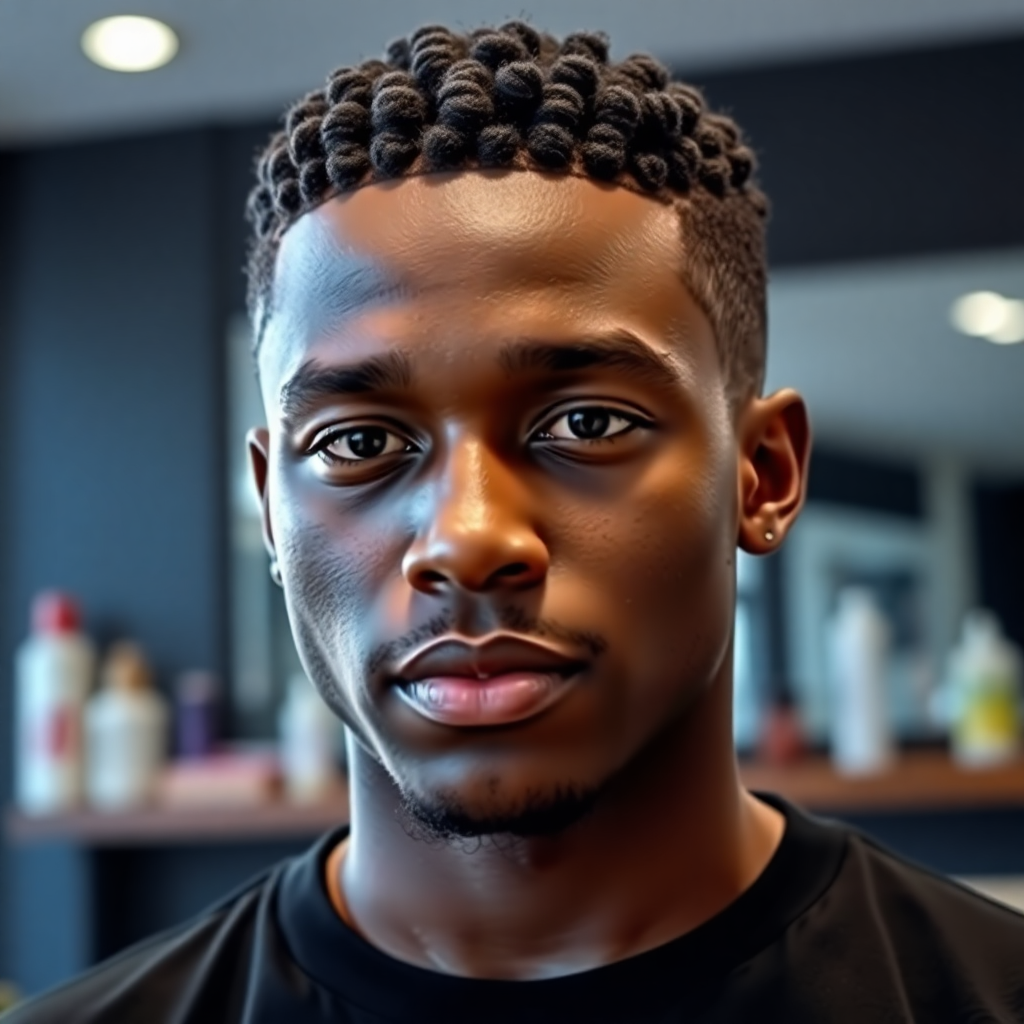
Short sponge locs sit one to three inches above the scalp with an irregular, coiled texture across the entire top. The sides remain softly tapered rather than fully faded, while a straight forehead line and clean temple corners give the loose texture a defined frame.
This style works well for tightly coiled hair because the natural pattern helps create separated sections without rigid parting. It is also a practical option for teenage guys and men beginning a freeform journey. Ask the barber to preserve the developing coils on top and clean only the perimeter. Light sponge work can guide the shape, but constant rubbing may create uneven tension.
2. Short Comb-Coil Starter Locs With a Low Taper
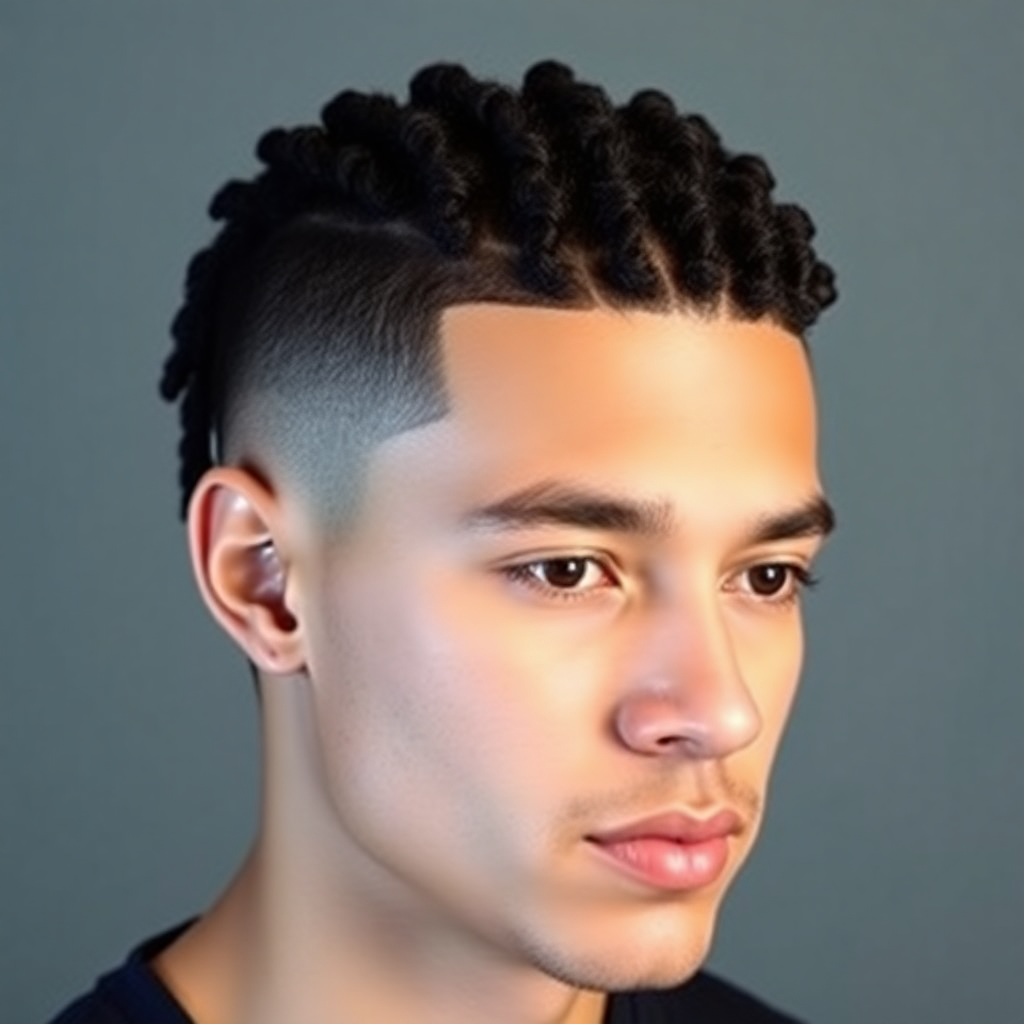
Small comb coils rise evenly from clean square or diamond-shaped scalp sections. The top stays about two to three inches long, while a low taper removes weight near the sideburns and lower neckline without cutting into the starter sections.
The organized parting gives this look a polished finish during the early stage of a loc journey. Comb coils are widely used as a starter method, especially when the natural curl pattern can hold the coil shape. Tell the loctician how thick you want the mature locs to become before choosing the section size. Protect the coils during sleep and avoid constant twisting between appointments.
3. Short Two-Strand Starter Locs With a Temple Taper
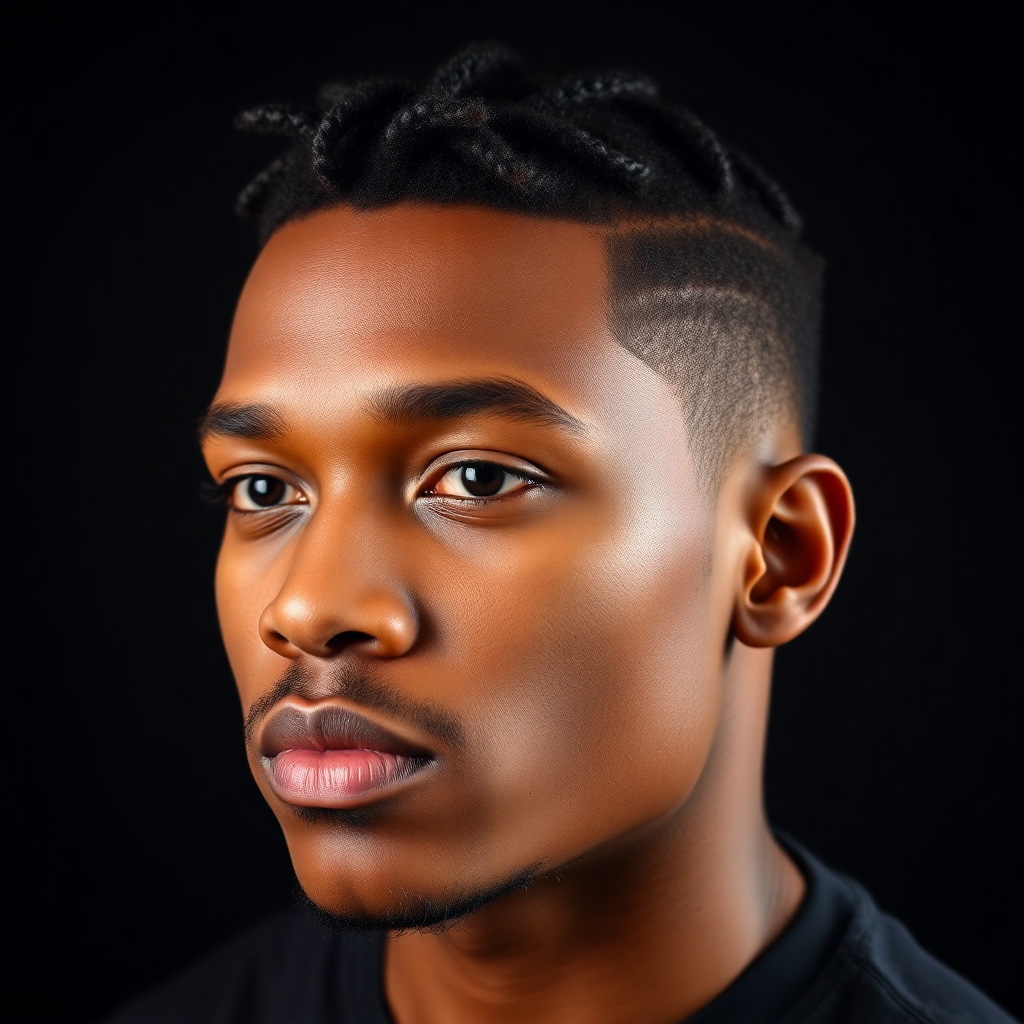
Short two-strand twists cover the top and back in thick rope-like sections measuring about three to four inches. A subtle temple taper softens the hair around the ears, while the natural hairline remains clean without appearing heavily pushed back.
The thicker sections create a fuller appearance than tiny coils, making this a useful choice among haircuts for thick hair men often consider. Two-strand twists can also remain in place as the hair begins forming locs, and they may produce a thicker finished shape. Ask for consistent medium-sized sections and enough room around the temples for future taper cleanups.
4. High-Top Short Locs With a Skin Fade
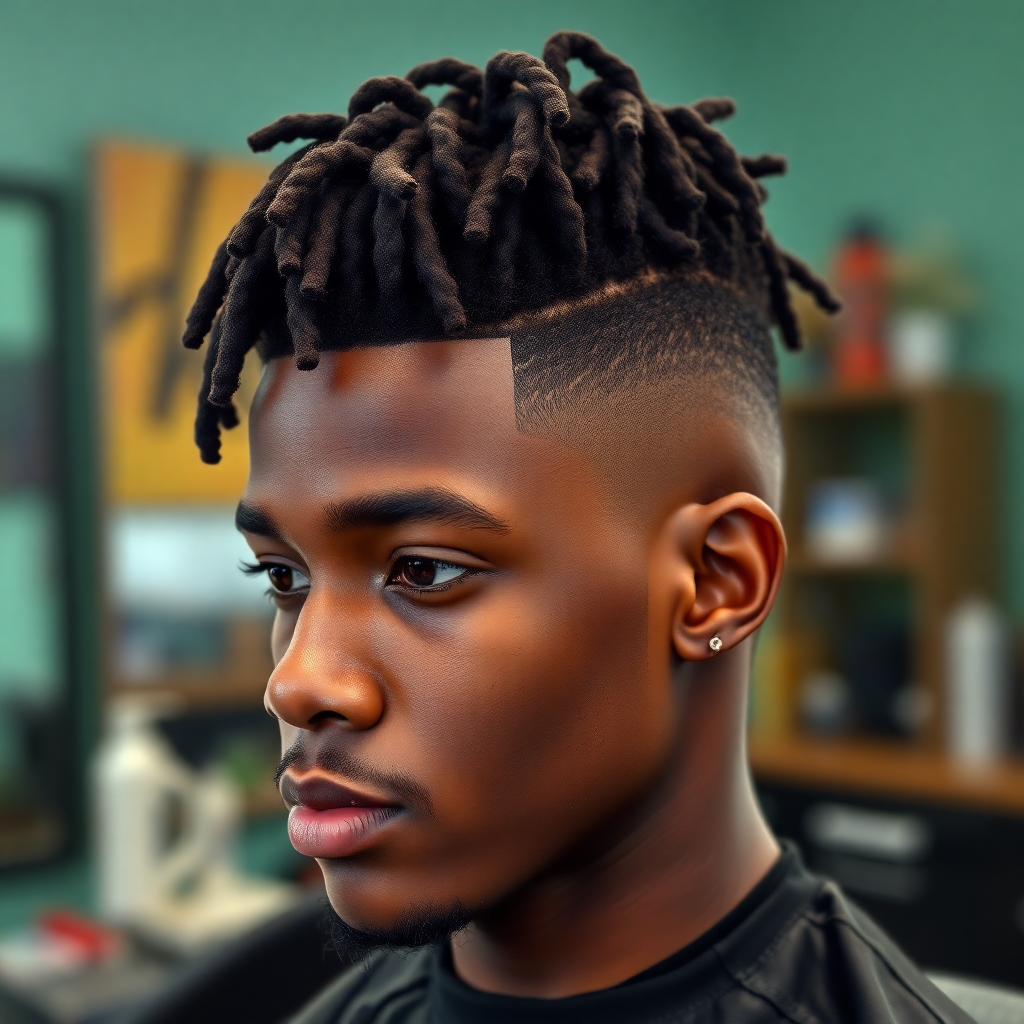
Compact locs stand upright across a tall rectangular top, usually between three and five inches long. The sides drop quickly into a close skin fade, creating a strong contrast between the dense textured top and the smooth area around the ears.
Men with round or wider faces may like the added height because it draws attention upward. The geometric outline also makes this one of the sharper barbershop haircuts for men who prefer a defined silhouette. Ask the barber to keep the corners of the high top balanced and avoid fading into the loc roots. The sides may need regular cleanup to preserve the contrast.
5. Short Locs With a Rounded Burst Fade
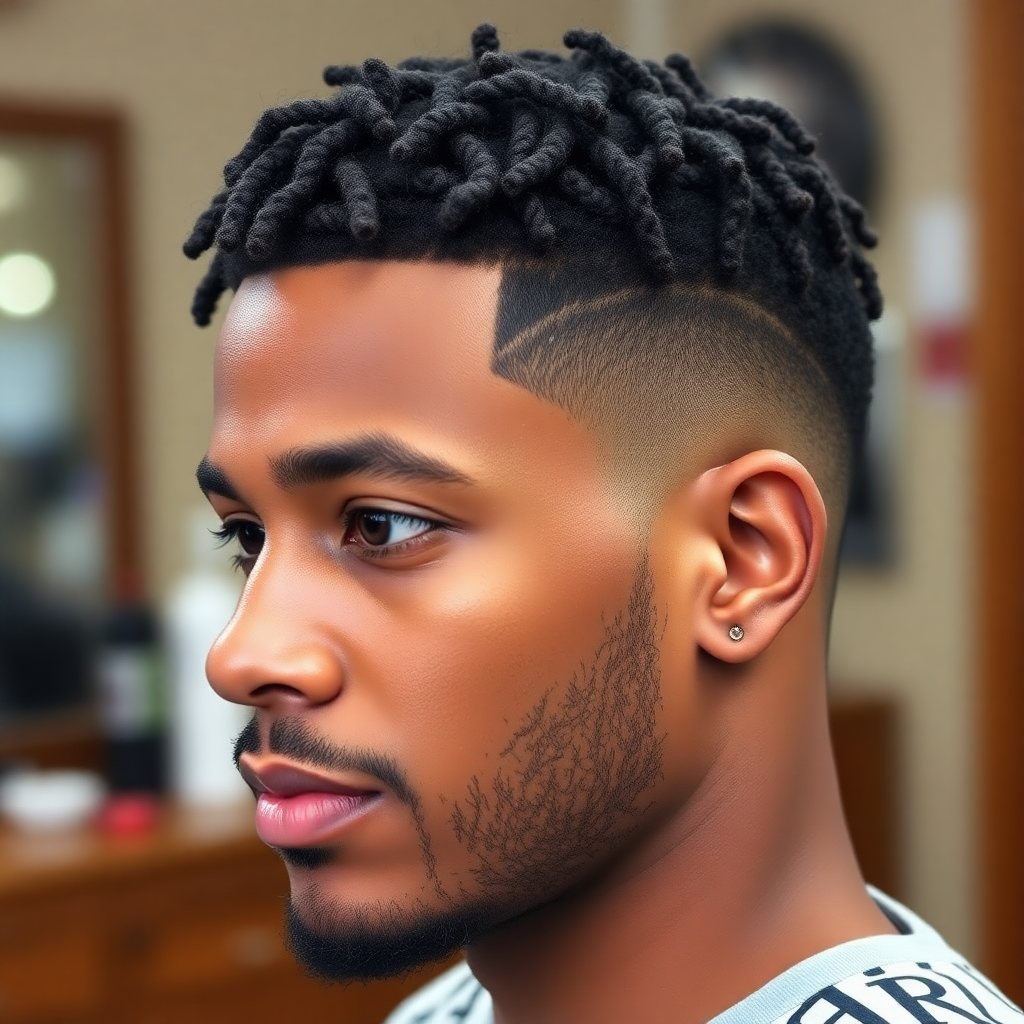
Short locs form a textured strip from the forehead toward the back, while a rounded burst fade curves closely around each ear. More length remains above the ears and toward the nape, giving the cut a soft mohawk influence without creating a narrow center ridge.
The curved fade can add structure to oval and square faces while keeping the top expressive. It also pairs naturally with a short beard because both shapes can connect through the sideburn area. Request a low or medium burst fade based on how much scalp contrast you want. A barber should preserve enough side density to keep the transition smooth.
6. Short Locs With a Drop Fade and Clean Line-Up
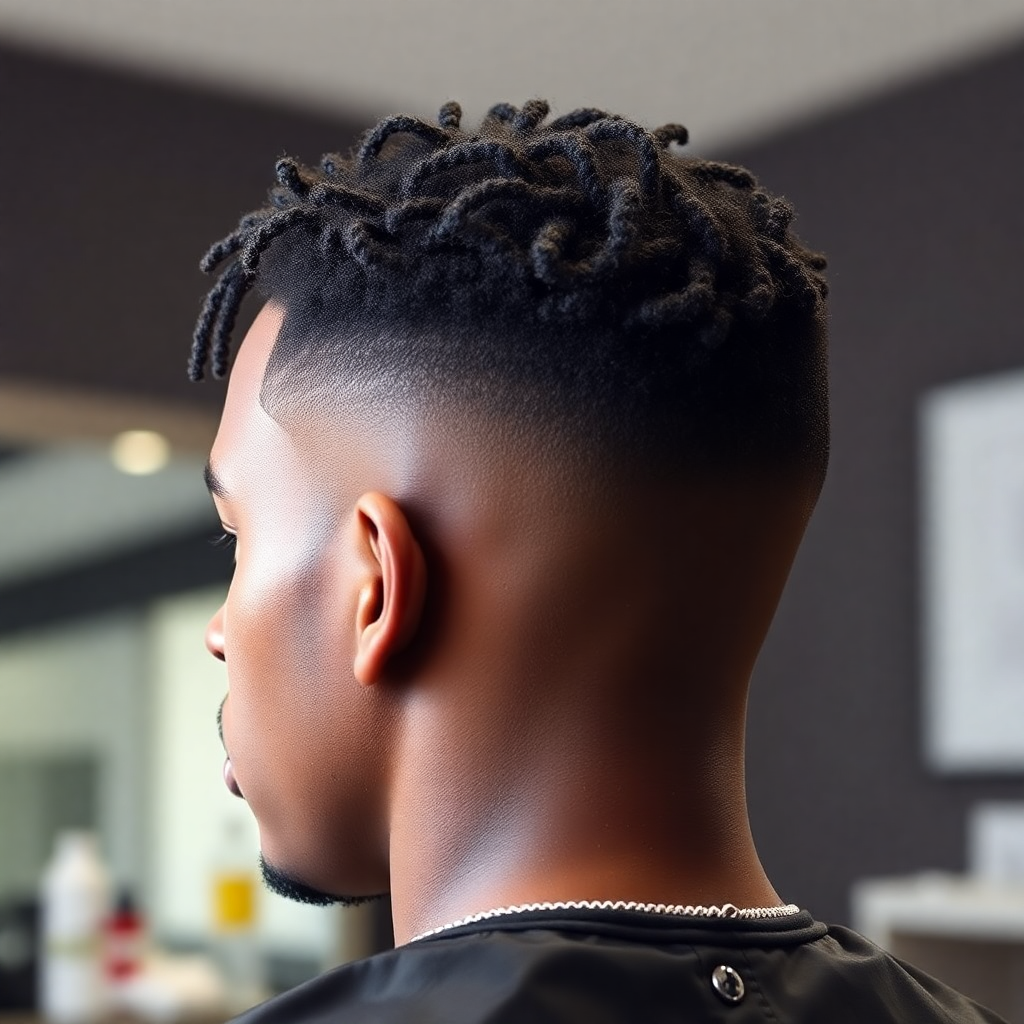
Defined locs cover the top in short separated strands that angle slightly forward. The fade begins near the temples, curves downward behind each ear, and follows the natural shape of the head before blending into a closely cut neckline.
A drop fade creates more depth at the back than a straight high fade. This can suit men with longer faces because the remaining weight near the rear prevents the haircut from looking too tall. Ask for a natural line-up that follows the existing hairline instead of forcing an overly straight edge. Short locs near the forehead can be directed forward for a textured finish.
7. Thick Short Locs With a Disconnected Undercut
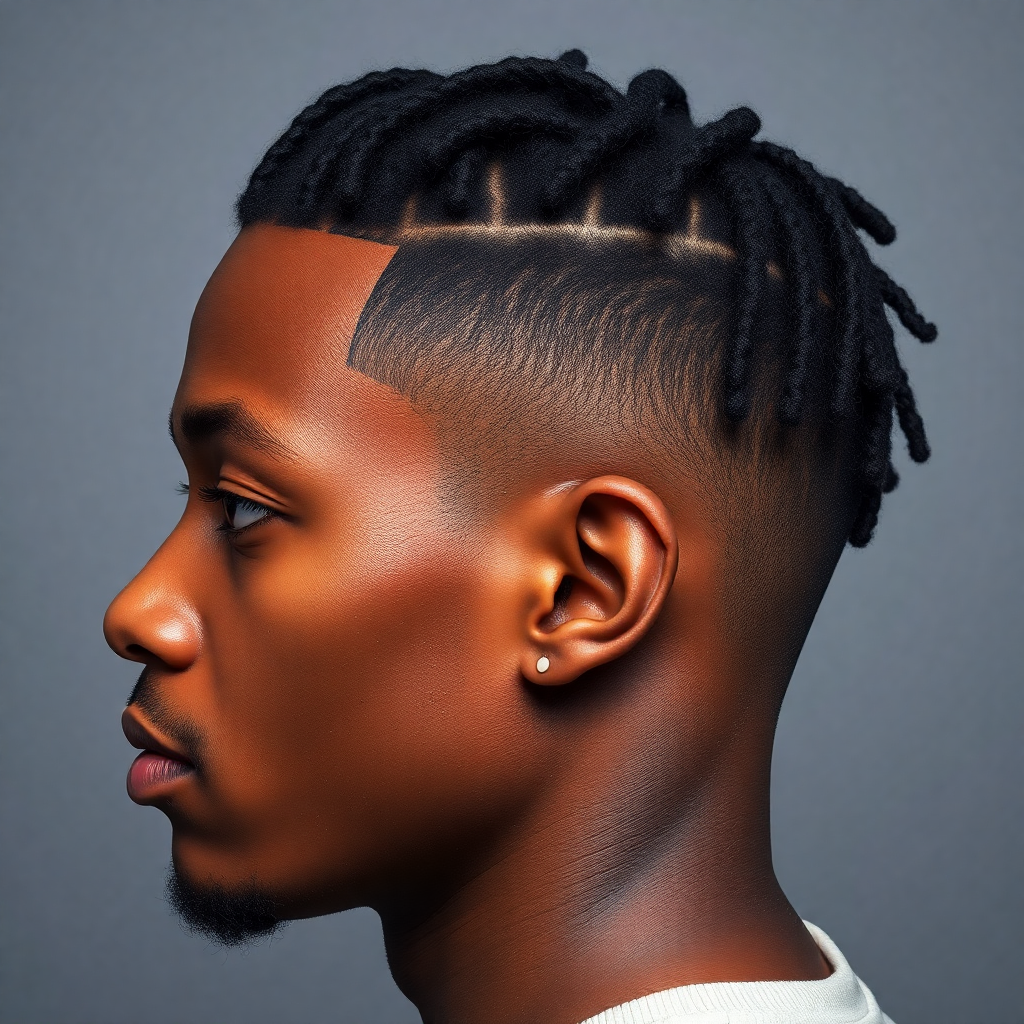
Chunky locs sit four to six inches long across the top with visible spacing between thick sections. The sides and back are clipped to one short, even length, creating a clear separation instead of the gradual blend seen in a fade.
The undercut removes bulk and places all visual weight on the locs. Men with dense hair may find the shape easier to manage, though the disconnected sides become obvious as they grow. Tell the barber whether you plan to maintain the undercut long term because rebuilding locs along the sides takes patience. Pulling the top loosely backward can reveal the strong outline.
8. Mini Freeform Locs With a Natural Hairline
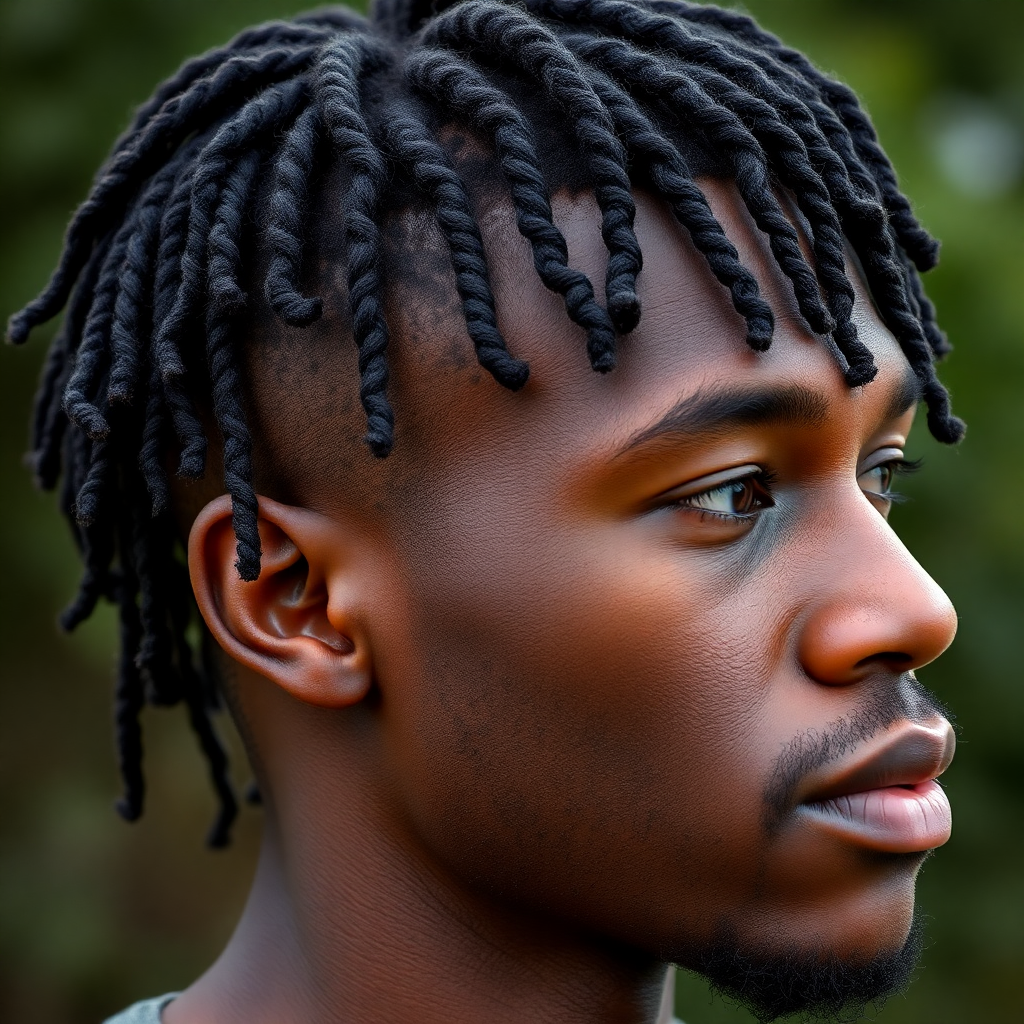
Mini freeform locs create a dense field of narrow, irregular strands across the full scalp. The hairline remains soft and natural, while the sides keep their original texture rather than being separated by a sharp fade or strong edge-up.
The loose formation gives every strand a different curve and direction. It suits men who prefer low manipulation and accept that the shape will change as the hair develops. Freeform locs form through limited section control rather than repeated structured parting. Separate sections only when needed to prevent unwanted joining, and discuss scalp care with an experienced loctician.
9. Medium Locs With a Low Taper Fade
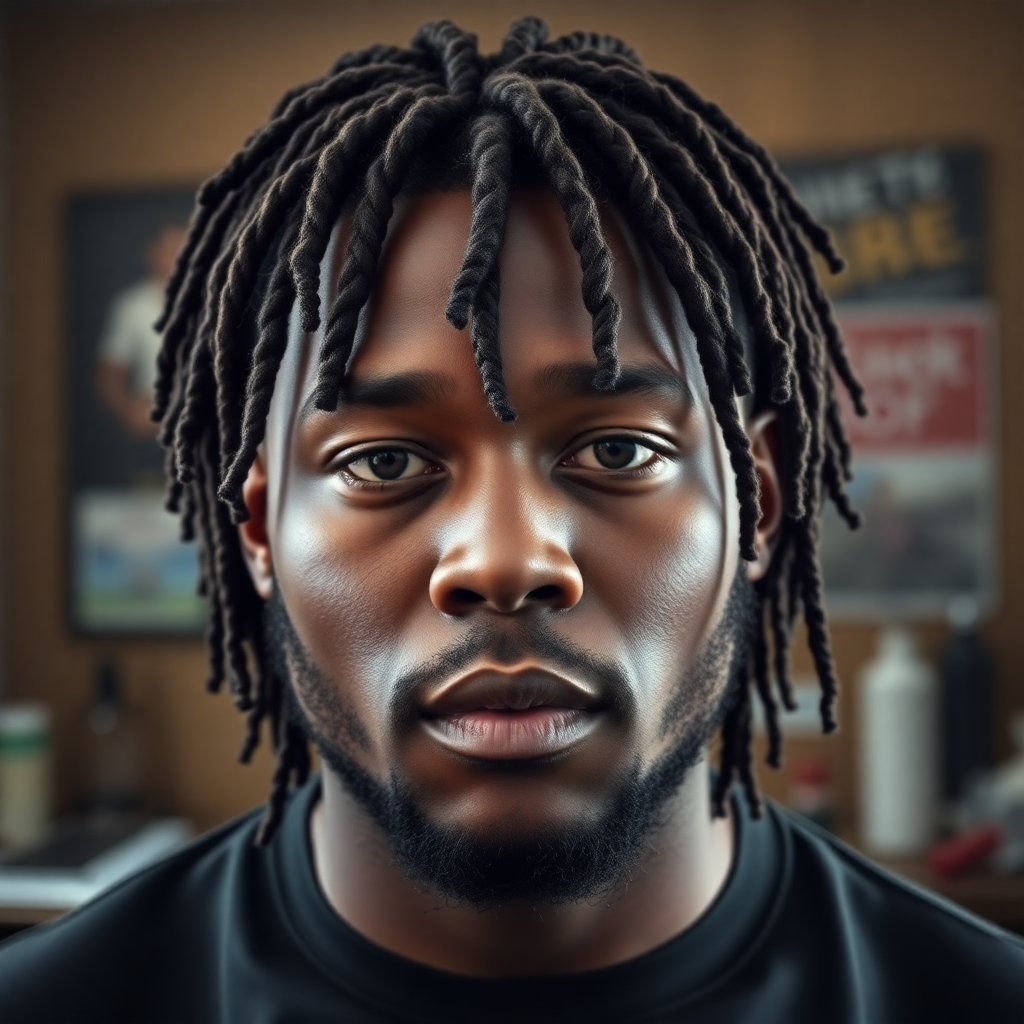
Medium locs fall four to seven inches around the forehead, temples, and upper neck. Only the sideburns and lowest part of the neckline are tapered, leaving most of the sides full so the locs retain a complete, rounded shape.
This balanced option works across many face shapes because it does not add extreme height or remove too much side volume. Men searching for modern haircuts for men often prefer this combination because the edges look fresh without changing the natural character of the locs. Request a low taper that stays below the root sections. A loose center or off-center fall keeps the style relaxed between maintenance visits.
10. Medium Forward-Swept Locs With a Textured Fringe
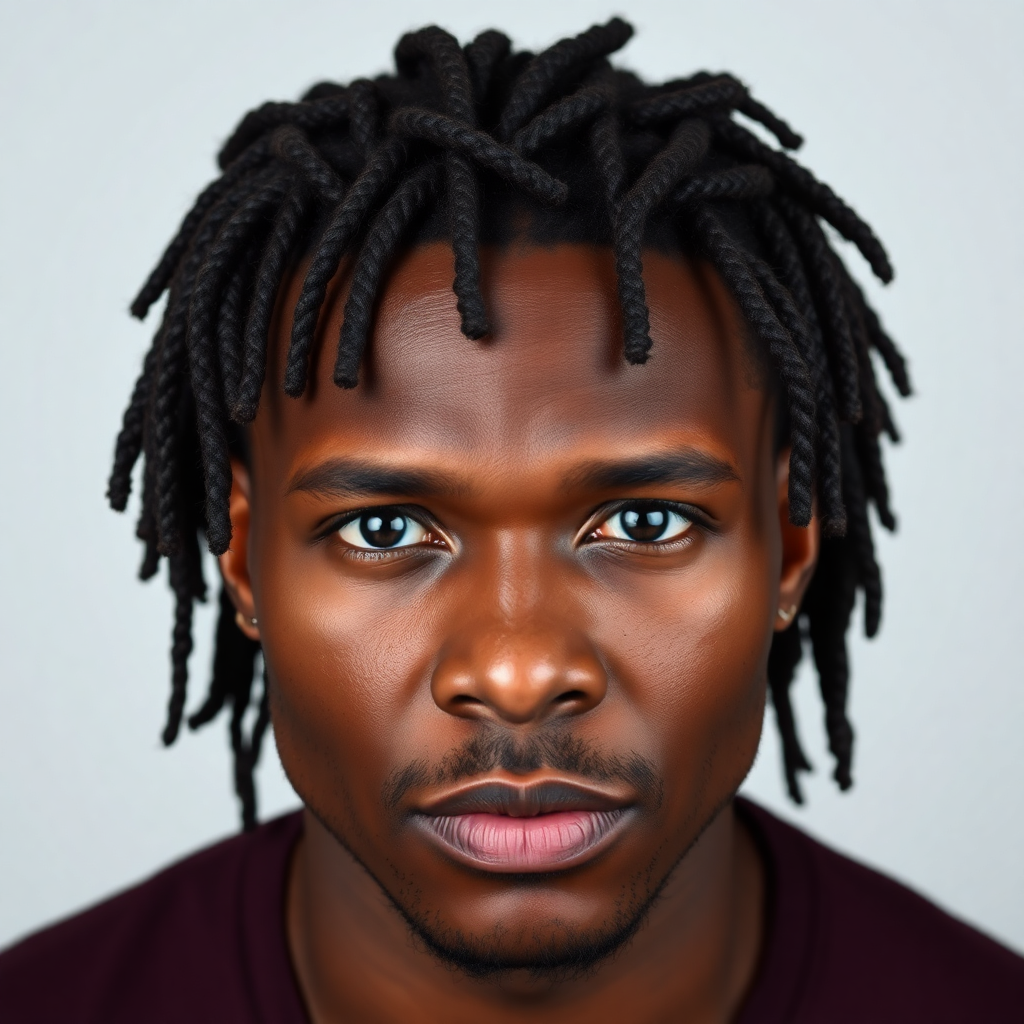
Medium locs angle from the crown toward the forehead, forming a broken fringe above the eyebrows. The sides remain lightly tapered near the ears, while different loc lengths create an uneven front edge with natural movement.
The forward direction can soften a tall forehead and add width around the upper face. It may also suit men who dislike exposing a sharp front hairline. Keep enough length for the locs to bend rather than stand straight outward. Ask the loctician to position the front sections without placing constant tension at the roots. A few strands can rest lower than the others for a less arranged finish.
11. Side-Swept Locs With a Deep Side Part
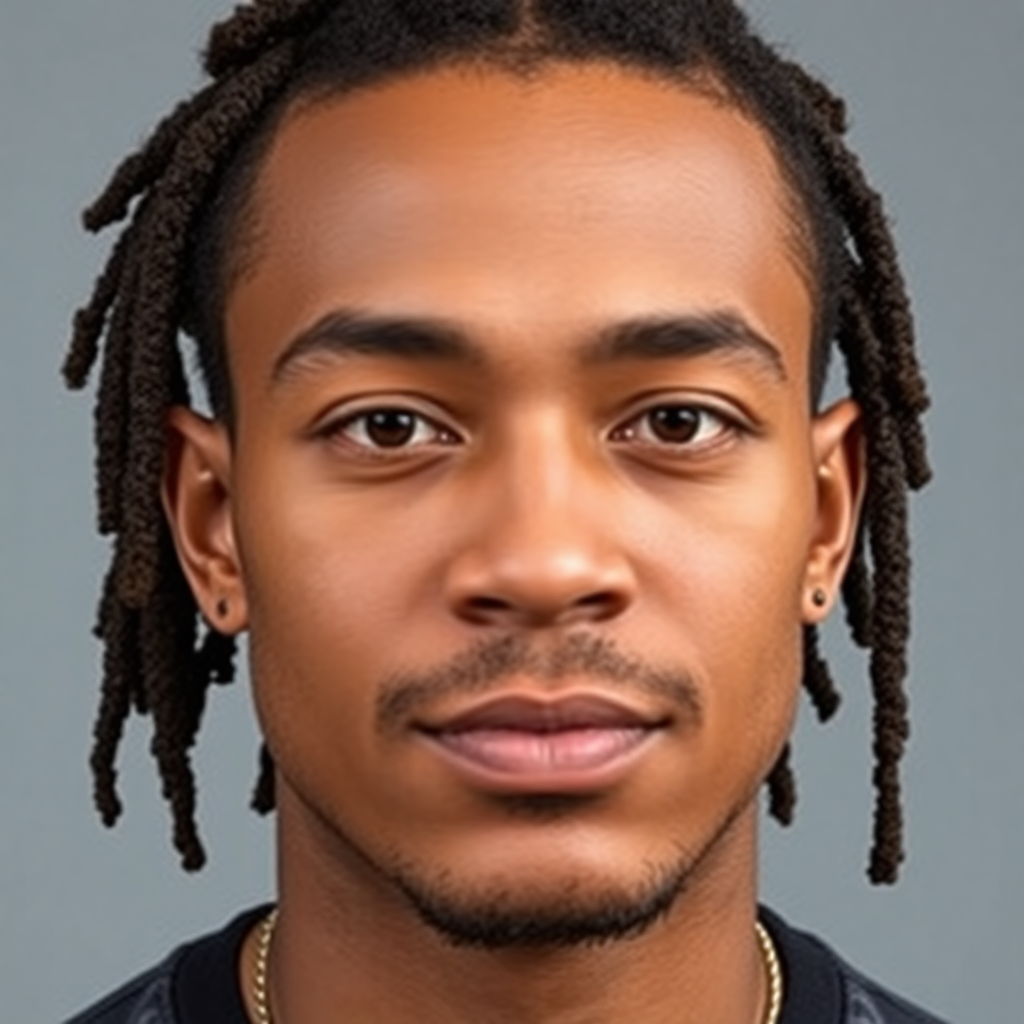
Medium locs begin from a visible deep side part and fall diagonally across the forehead toward one temple. The opposite side is tucked back to expose a low taper and a clean ear area, creating an intentionally uneven silhouette.
The diagonal flow can soften square facial angles and bring movement to dense locs. It also gives medium-length hair a styled appearance without tying it into an updo. Ask for a parting pattern that supports the preferred direction rather than forcing mature roots across the scalp. A loose side sweep is safer and more comfortable than pulling every strand tightly.
12. Half-Up Half-Down Medium Locs
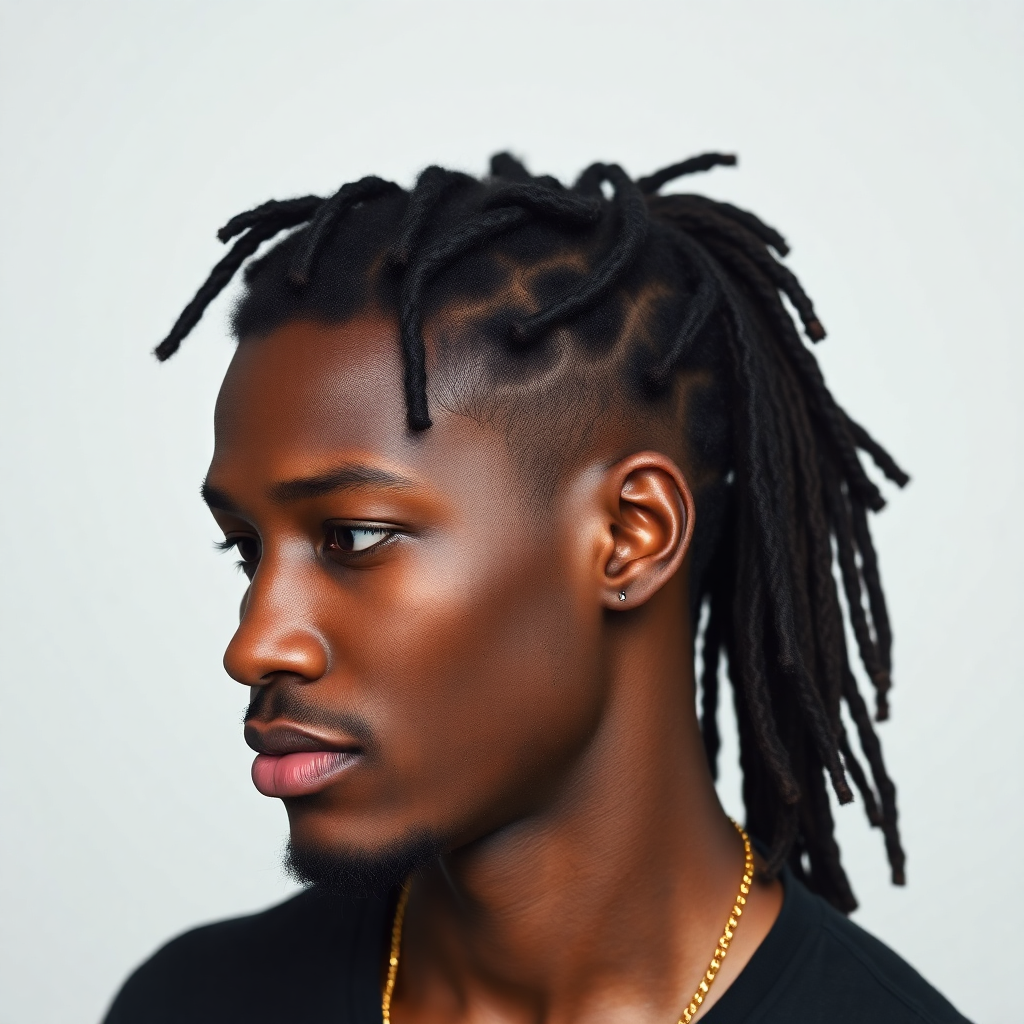
The upper section of the locs is gathered into a loose ponytail near the crown, while the lower half falls freely around the ears and upper neck. Front strands may remain loose to frame the forehead, and the sides keep their natural fullness.
This arrangement provides control without hiding the length. It works well for active days, casual workplaces, and men growing locs past the awkward in-between stage. Half-up styling can also create height without cutting the sides. Use a soft band that holds the locs without pinching the roots. Change the ponytail position rather than tying the same sections tightly each day.
13. Medium Locs in Two-Strand Rope Twists
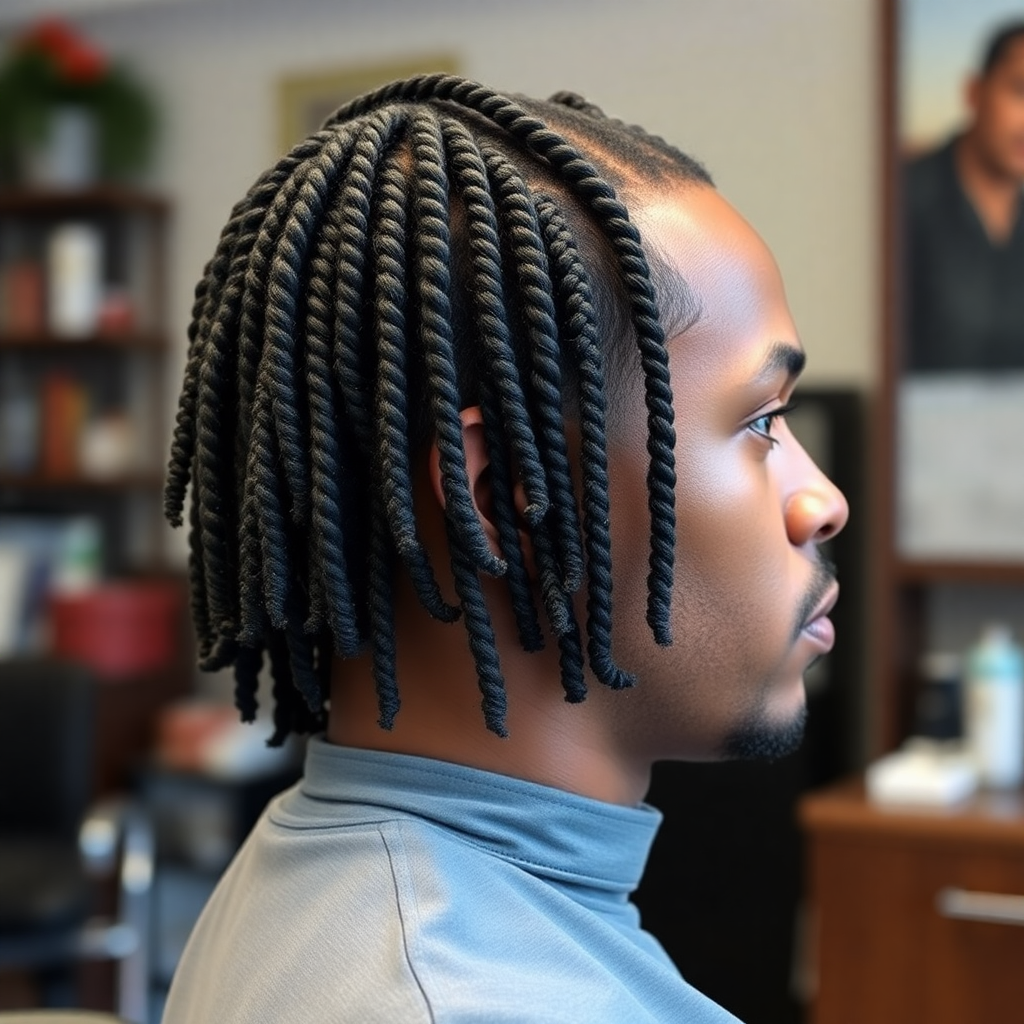
Pairs of mature locs are wrapped around each other from the roots to the ends, creating thick rope-shaped twists across the head. The finished sections hang toward the eyebrows, cheeks, and upper neck with a repeated spiral texture.
This temporary style gives medium locs a more organized shape and can later leave a loose crinkled pattern after removal. Men who want fresh haircuts for men without cutting their locs may prefer this type of restyling. Request balanced tension and medium-sized pairs so the scalp does not feel overly tight. The roots should look neat while still allowing comfortable movement.
14. Double Barrel Twist Locs With a Low Taper
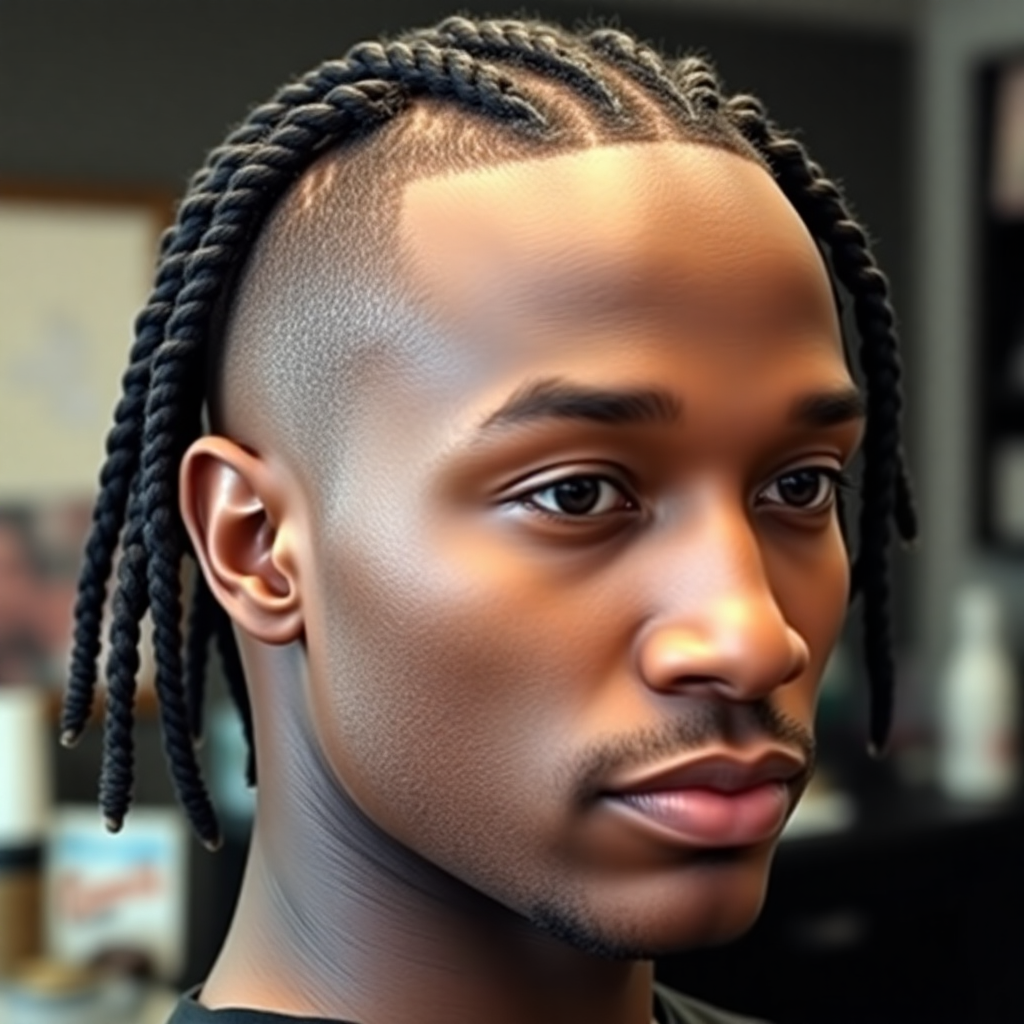
The locs are divided into two large sections and woven backward into raised cylindrical twists. Each barrel begins near the front hairline and follows the scalp toward the rear, while a low temple taper keeps the sides clean.
The paired shape creates a strong center balance and keeps medium or long locs away from the face. Barrel styling uses overlapping locs to form its recognizable raised rope pattern. This option looks detailed but may feel firm during the first few days. Ask for secure hold without painful root tension, especially near the front corners.
15. Four Barrel Twists With Tapered Sides
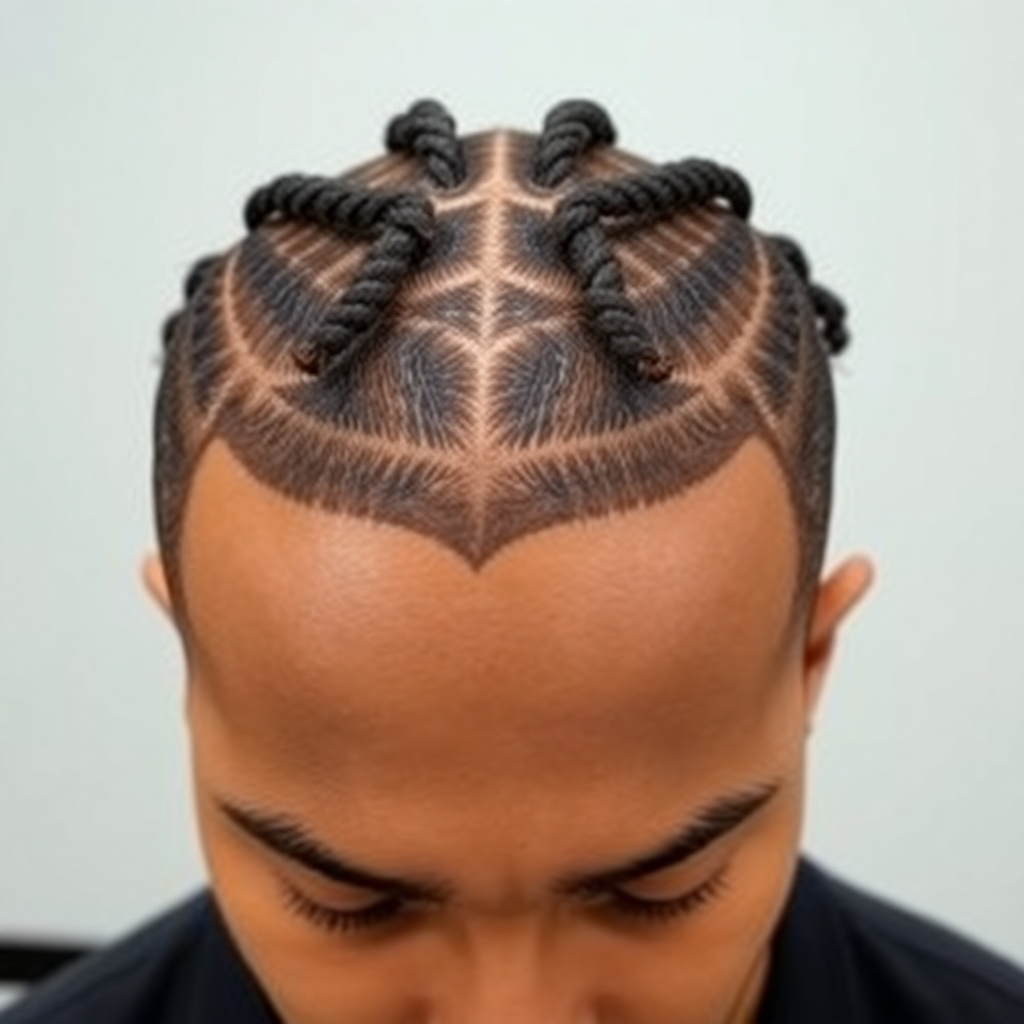
Four raised barrel rows travel from the front of the scalp toward the crown in evenly spaced lines. The locs feed into thick woven patterns, while a clean temple taper and softly faded neckline frame the detailed top.
Using four sections produces more visible scalp patterning than the double-barrel version. It can suit men who want a structured look for an event, workweek, or photo session without shortening mature locs. Ask the stylist to keep each row similar in width and follow the head shape. This arrangement needs careful removal so individual locs are not pulled or tangled.
16. Braided Loc Rows Into a Low Ponytail
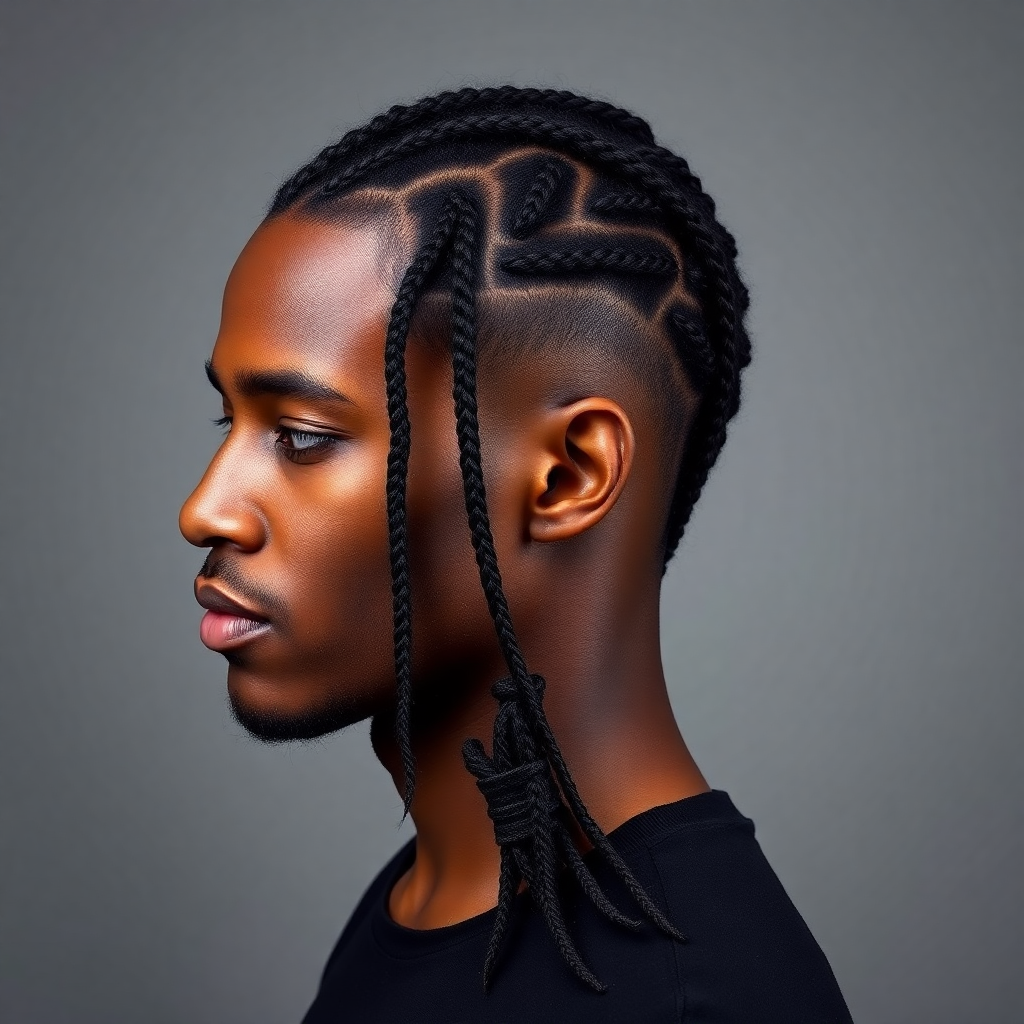
Longer locs are arranged into several neat rows that travel backward across the scalp and meet in a low ponytail at the nape. The temples have a restrained taper, while the braided sections create clean lines from the forehead to the back.
This style controls length and exposes the face without placing the ponytail high on the crown. It pairs well with oval, round, and square faces because the scalp pattern can be adjusted to change the visual width. Ask for rows that follow the natural parting and do not pull tightly along the hairline. A low tie keeps the finished shape calm and wearable.
17. Loc Mohawk With a Rounded Burst Fade
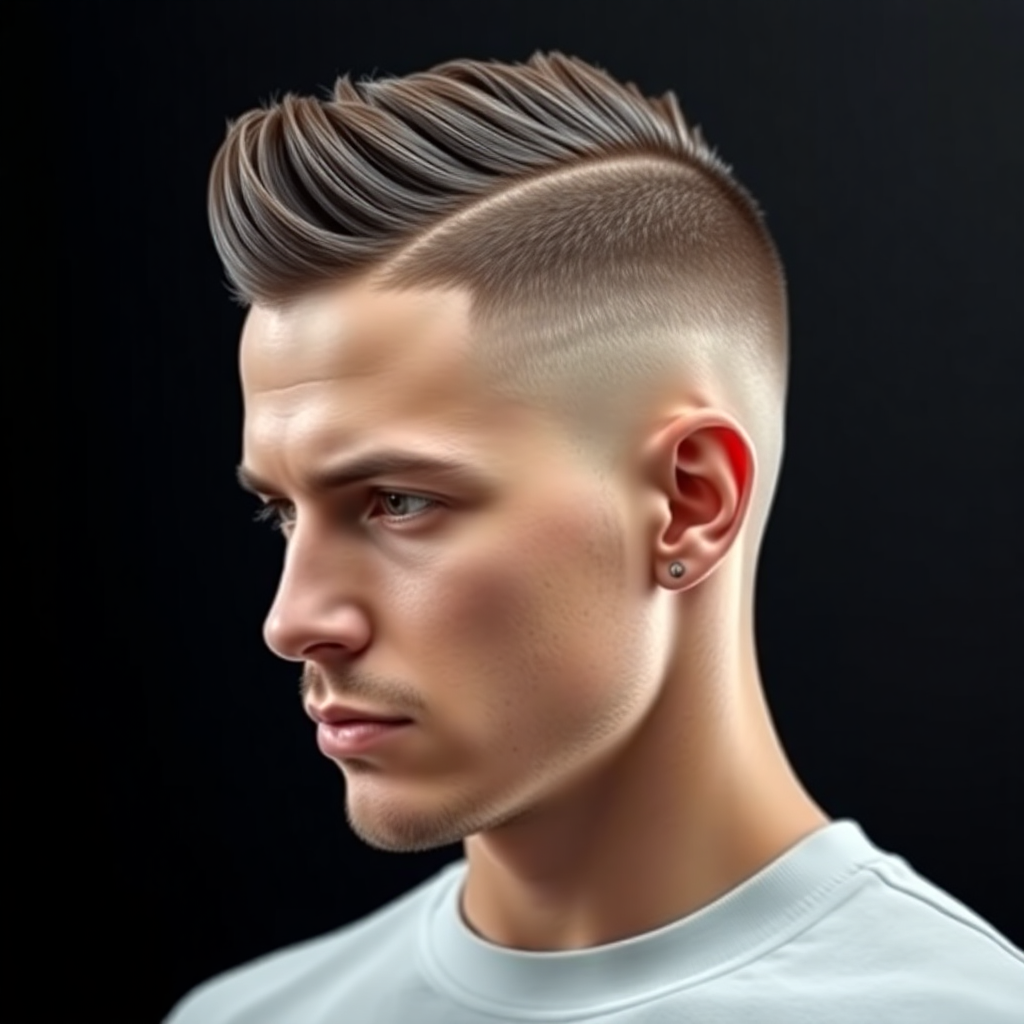
Medium locs form a wide textured strip from the forehead through the crown and toward the nape. A burst fade curves around both ears, leaving controlled length at the back so the profile resembles a modern mohawk rather than a disconnected high top.
The shape adds attitude and works best for men comfortable with visible contrast. It can sharpen round faces by creating a longer vertical line, though tall faces may benefit from keeping the top lower. Ask the barber to show where the fade will end before cutting because the side loc sections may not be easy to restore. Keep the center loose rather than forcing every loc upright.
18. Crisscross Loc Updo With a Clean Taper
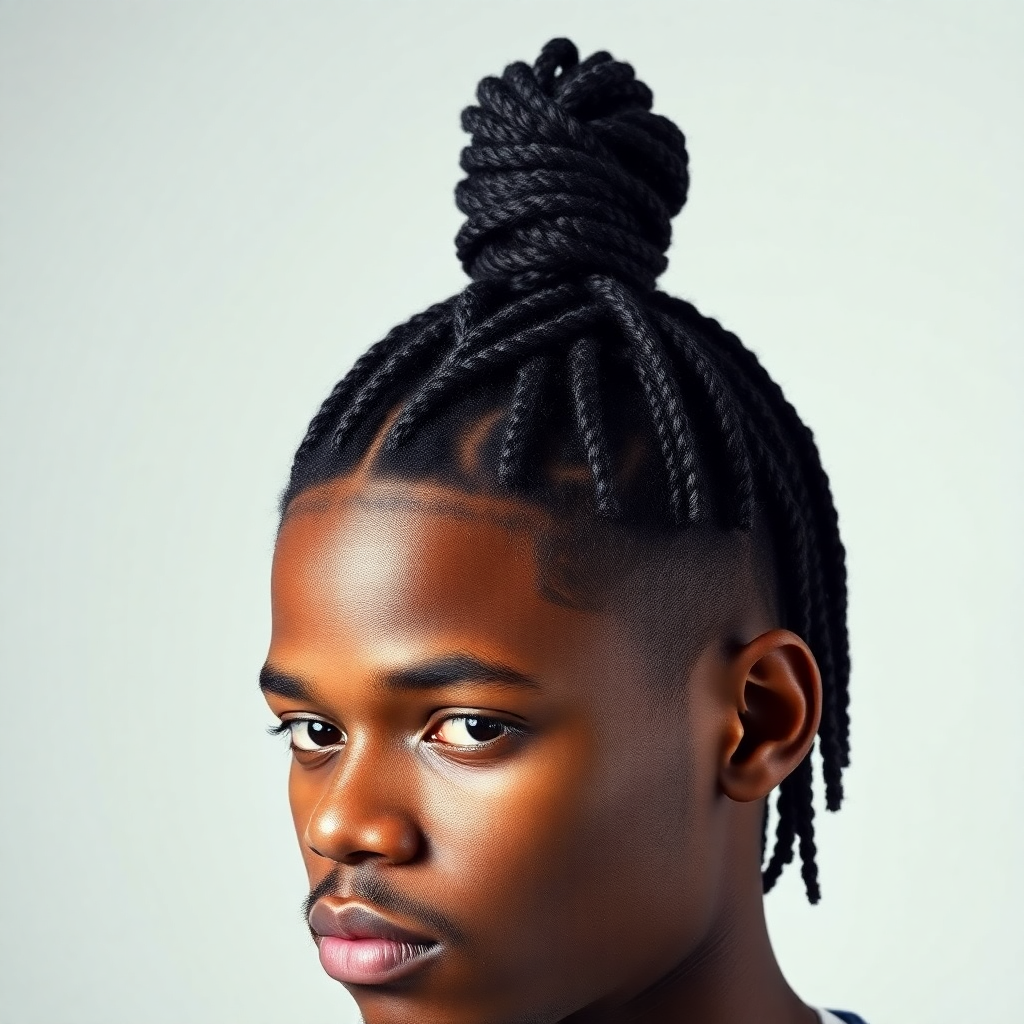
Medium-to-long locs cross diagonally over the scalp in a woven pattern before being secured near the crown. The front reveals organized sections, while a small temple and neckline taper keeps loose edge growth under control.
The crossing pattern creates more visual detail than straight backward rows. It is a strong choice for men who want men’s haircut inspiration for formal events, creative work, or editorial photos. The style depends on skilled section placement, so bring a clear reference image to a loctician. Avoid requesting an extremely tight finish; the pattern should stay secure without causing constant pulling.
19. High Loc Ponytail With Faded Sides
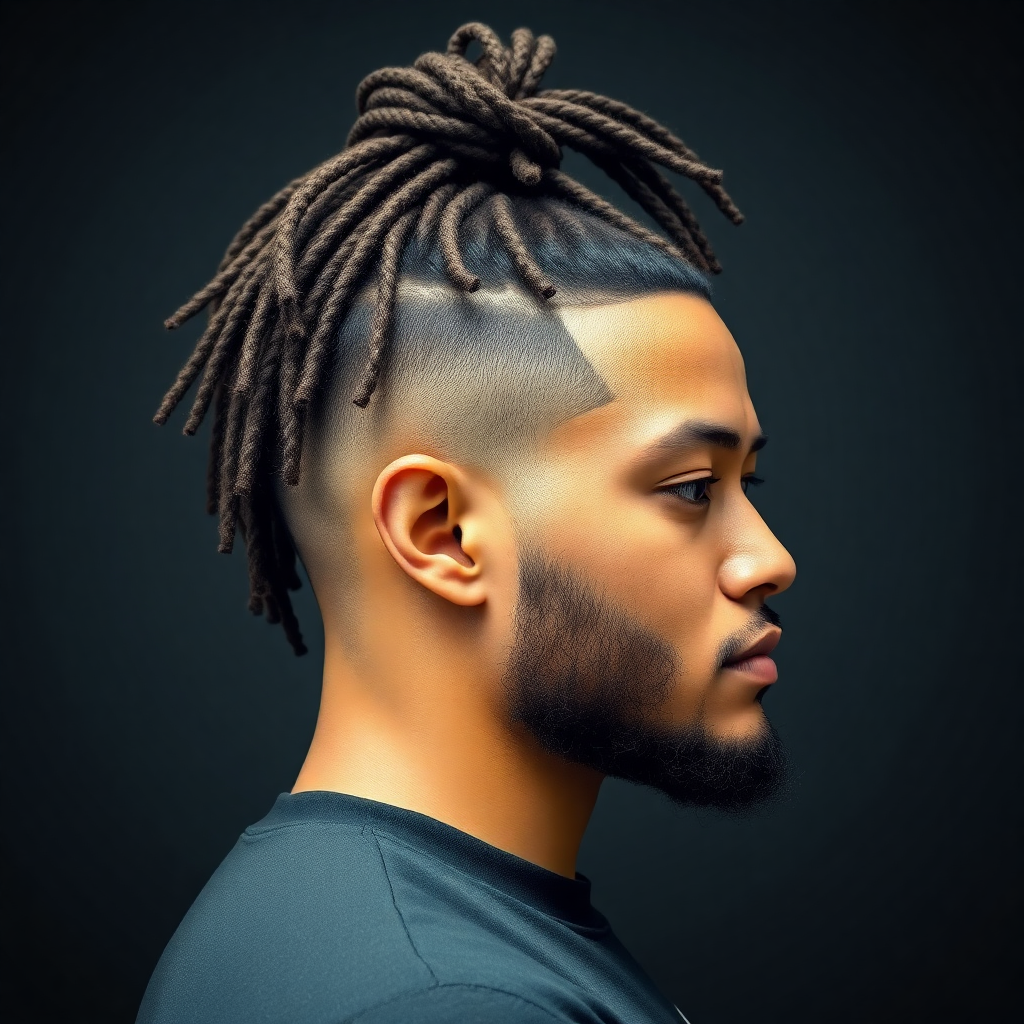
Long locs rise from the top and upper back into a high ponytail positioned near the crown. Several ends fall outward behind the head, while the lower sides are faded closely to create a light, athletic silhouette.
The elevated tie shows facial structure and pairs well with a full or shaped beard. It can also make dense long locs feel easier to control during warm weather. Ask the barber to keep the fade below the established root sections and preserve enough hair around the crown for a balanced base. Tie the ponytail with a wide soft band and avoid placing it in the same tight position daily.
20. Loc Top Knot With a Disconnected Undercut
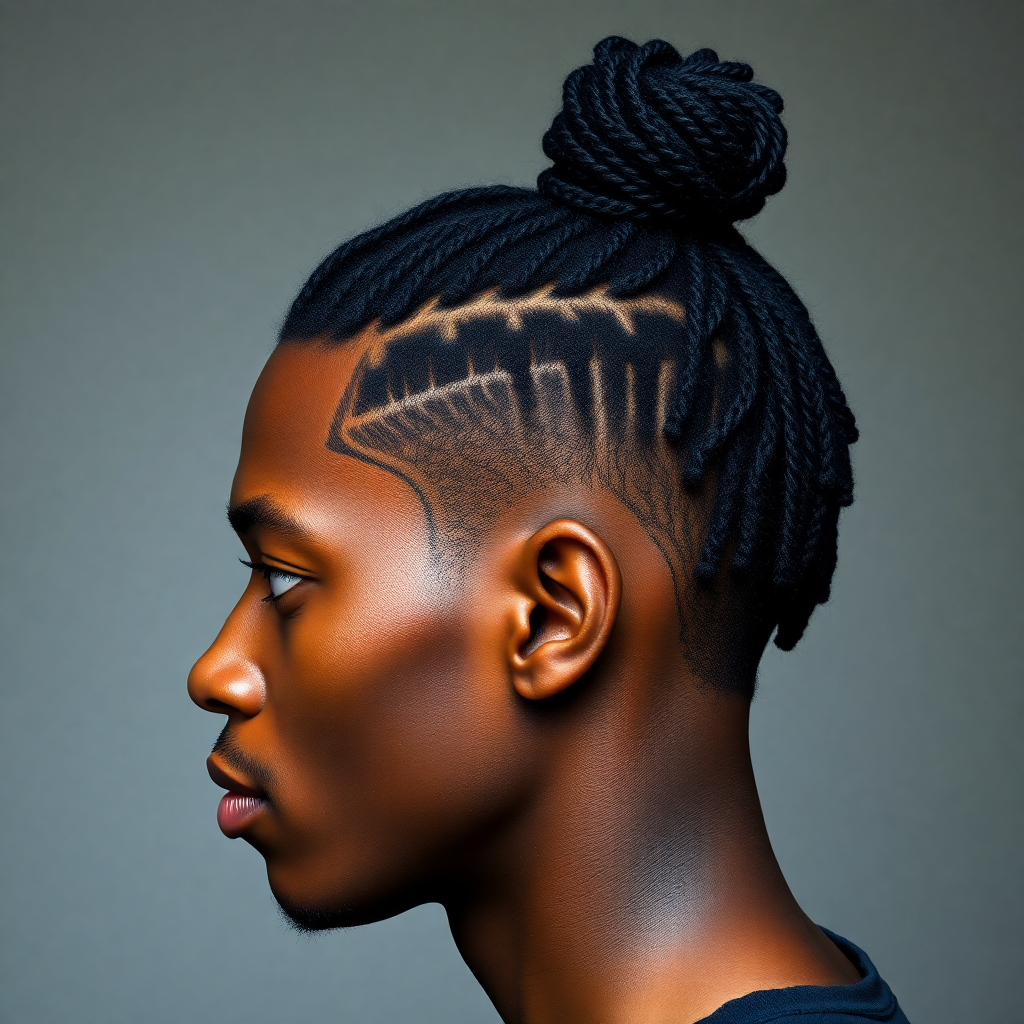
Long locs are wrapped into a compact round knot directly above the crown. The sides and back are clipped short at one even length, creating a bold separation between the smooth undercut and the dense bundle above.
The style keeps long hair fully off the neck and places attention on the head shape. It is one of the more demanding options because the undercut needs regular trimming, and growing the sides back into locs can take time. Ask for a lower undercut if you want more side coverage. The knot should be secure but not so tight that the front roots feel strained.
21. Full Loc Bun With a Temple Taper
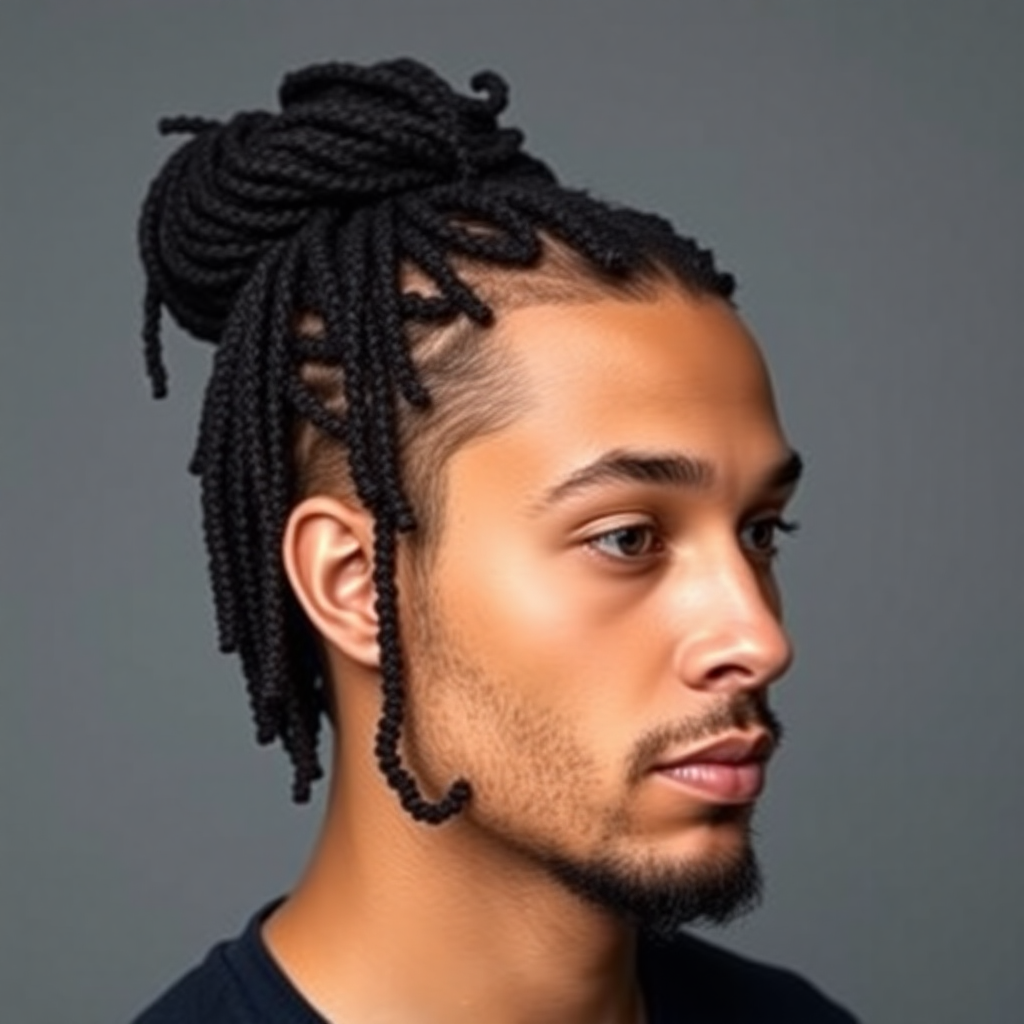
Shoulder-length locs are gathered into a broad bun at the middle back of the head. The sides remain full, while only the temples and lowest neckline receive a small taper, preserving the appearance of a complete loc set.
This is softer than a top knot with an undercut and transitions more easily between tied and loose styles. It suits professional haircuts for men when the workplace allows natural long hair but calls for a controlled presentation. Ask for a subtle edge cleanup rather than a high fade. A medium-height bun usually distributes the length more evenly than a tight knot placed at the crown.
22. Shoulder-Length Layered Locs With a Center Part
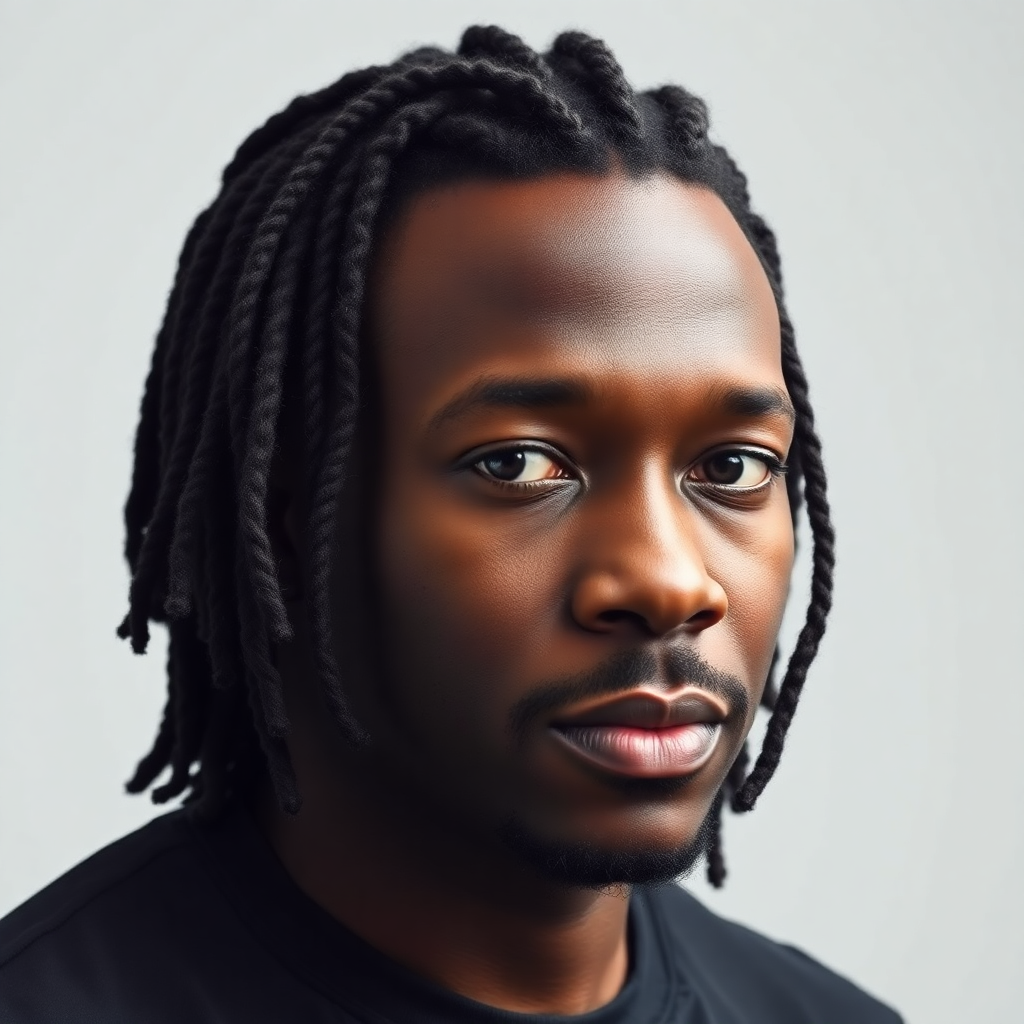
Mature locs fall to the shoulders in varied lengths, with shorter front strands resting near the cheekbones and longer pieces reaching the collar. A soft center part divides the hair evenly, while the sides remain full with no visible fade.
Layered lengths prevent the bottom from forming one heavy horizontal line. The center split can frame oval and square faces, though men with long faces may prefer an off-center part for less vertical emphasis. Ask the loctician to preserve healthy ends and remove only damaged or uneven length when needed. The style gains movement when the locs are allowed to fall naturally.
23. Shoulder-Length Crinkle Locs With Loose Waves
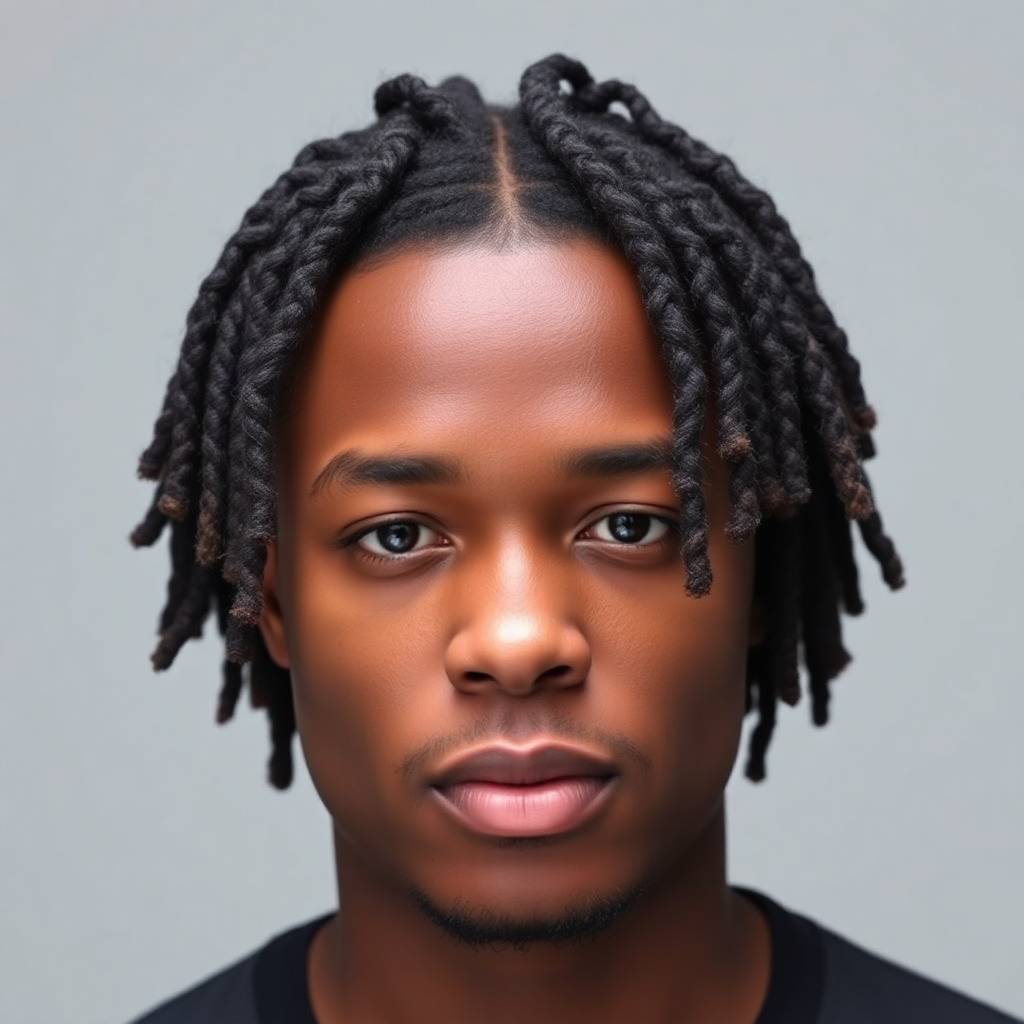
Long locs fall around the shoulders with repeated soft bends from root to end. The crinkled texture creates extra width and movement, while a natural center or side part allows several strands to frame the cheeks.
The waves are often created after locs have been held in twists or braids and later released. This style adds temporary texture without changing the permanent length. It can balance a narrow face by creating volume along the sides. Separate the released sections gently with the fingers instead of pulling through them with a comb. A light finish keeps the pattern flexible rather than stiff.
24. Long Freeform Locs With Natural Volume
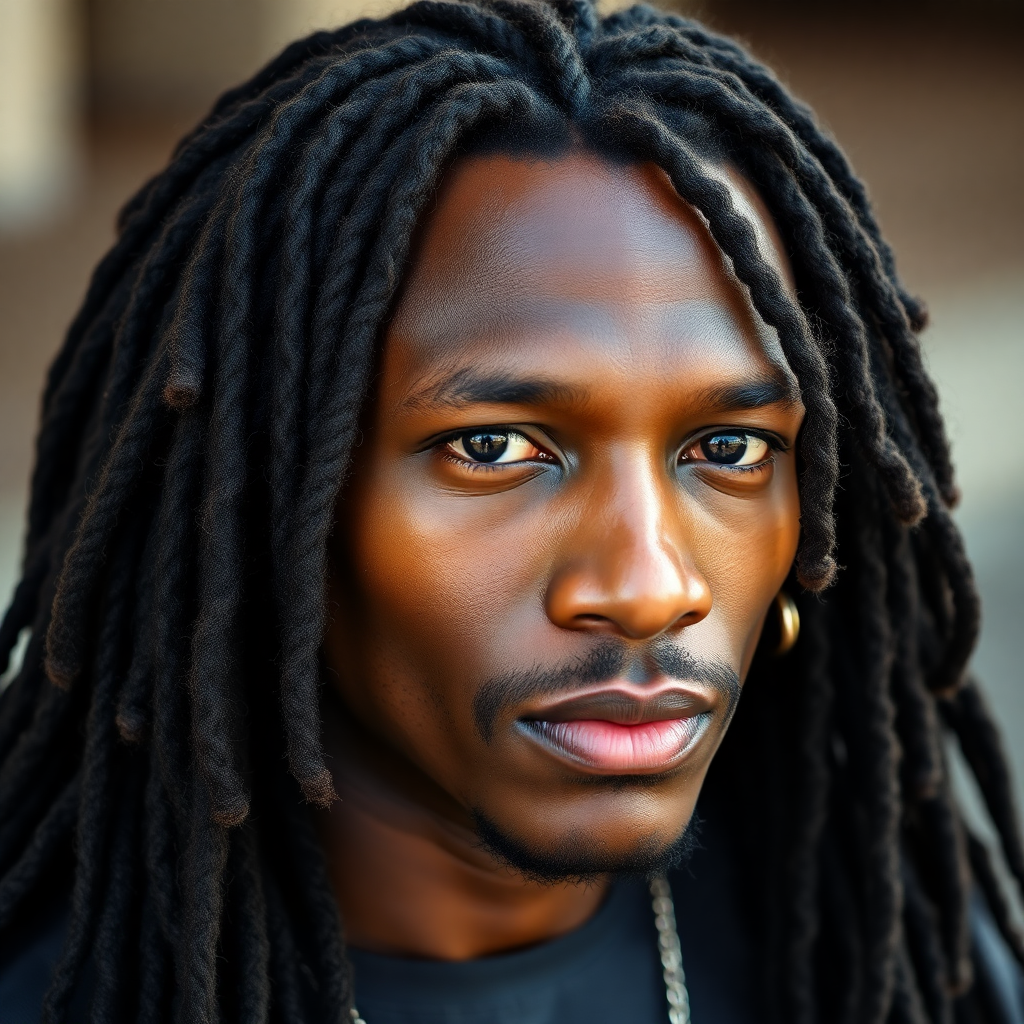
Long freeform locs fall beyond the shoulders in irregular widths, shapes, and directions. The roots retain natural volume, several sections join organically, and the hairline remains soft without a sharp fade or geometric parting system.
The result feels personal because the hair develops according to its own pattern. This look suits men who prefer minimal reshaping and are comfortable with changing texture throughout the loc journey. Freeform does not mean ignoring cleansing or scalp care. Separate only the areas you do not want joining and seek experienced guidance before cutting large connected sections. The full shape can become heavy as the length increases.
25. Waist-Length Locs With a Center Part and Metal Cuffs
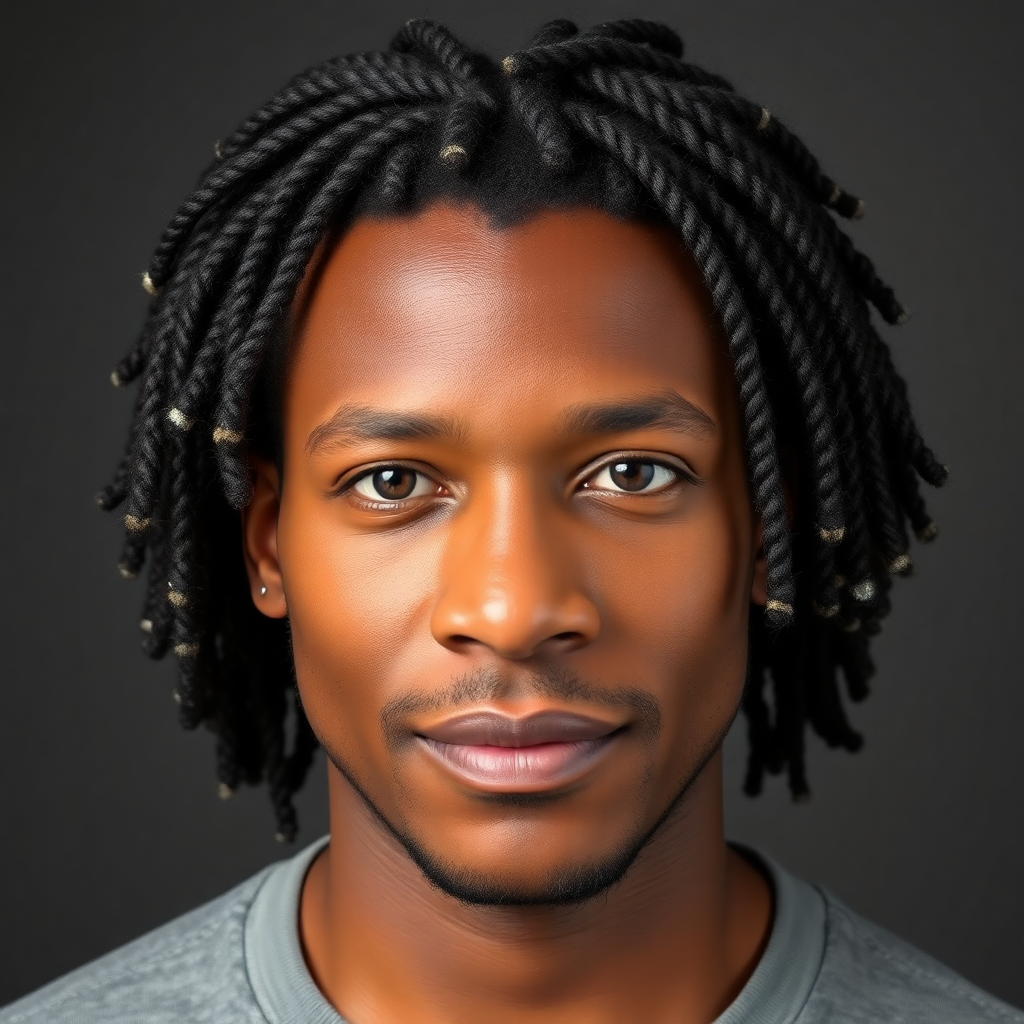
Extra-long mature locs fall from a clean center part past the chest toward the waist. The strands remain mostly uniform in thickness, while a few understated metal cuffs are placed through the lower lengths instead of crowding the roots.
The length creates a dramatic silhouette and allows ponytails, buns, braids, and layered arrangements. It also requires patience, thoughtful cleansing, and attention to the added weight. Ask a loctician to check weak sections before adding heavy accessories or tightly arranging the hair. Keep decorative pieces spaced apart and choose a part that feels comfortable rather than forcing a rigid line through mature roots.
Conclusion
The strongest loc style is usually the one that works with your existing density, root pattern, face shape, and willingness to maintain the details. Short high-top locs place more attention on fades and line-ups, while medium styles offer enough length for twists, barrels, and half-up arrangements. Long locs create the widest styling range but require more time during cleansing, drying, and careful handling.
Consider how often you want to visit a barber or loctician. A natural full-head shape can grow softly between appointments, while an undercut or skin fade loses its outline sooner. Men comparing cool hairstyles for men should also think about whether they want their locs hanging around the face, directed upward, pulled back, or left free.
Before your next appointment, save two or three reference images showing similar hair density and loc length. Choose one image for the overall shape and another for the fade, taper, or parting detail. A useful reference does more than show a finished style; it gives the professional a clear view of the structure needed to build it.
Frequently Asked Questions
1. Which dread hairstyle works well for an oval face?
An oval face can support short high-top locs, medium layered locs, ponytails, and long center-parted styles. Since the facial proportions are already balanced, focus on hair density and maintenance rather than correcting the face shape. Avoid excessive height only when the face is unusually narrow.
2. What is a good haircut for round face men with locs?
Height and controlled side volume can make a round face appear longer. A high-top loc fade, loc mohawk, or high ponytail may work well. Keeping the sides tapered also creates clearer angles around the temples without removing the natural texture on top.
3. Which loc style complements a square face?
Medium locs that fall around the temples can soften a strong jaw, while a low taper keeps the outline neat. Side-swept locs and shoulder-length layers add movement. A tall box-shaped high top may emphasize angular features rather than soften them.
4. What dread style can balance a long face?
Choose moderate height with some fullness beside the cheeks or temples. Medium loose locs, side-swept styles, and shoulder-length crinkle locs can add visual width. Avoid combining an extremely tall top with completely shaved sides when your goal is a shorter-looking facial outline.
5. Can forward locs work as a haircut for big forehead men?
Locs directed toward the forehead can create a broken fringe that reduces visible space above the eyebrows. Keep the front strands loose and varied in length. A severe pulled-back style may expose more forehead, especially when paired with a high taper.
6. Which dread style may suit a fuller or chubby face?
A medium high-top shape, raised ponytail, or loc mohawk can guide attention upward. Keep some clean definition around the temples rather than adding maximum width beside the cheeks. The best haircut for chubby face men still depends on head shape and beard style.
7. How do I choose the best hairstyle for face shape with locs?
Compare the width of your forehead, cheekbones, and jaw, then consider the face length. Add height when you want a longer appearance and retain side volume when you want more width. A barber can shape the perimeter, while a loctician can adjust the loc arrangement.
8. Which loc styles suit thick coily hair?
Thick coily hair can support chunky starter twists, high-top locs, freeform sections, and full shoulder-length styles. Larger sections create fewer, thicker locs, while smaller parts produce more individual strands. Discuss the desired mature size before beginning a new set.
9. Can men with thin or fine hair wear locs?
Locs may be possible, but section size and root density need careful assessment. Smaller sections are not automatically better because they may place stress on limited hair. Men researching haircuts for fine hair men should speak with an experienced loctician before choosing a dense style.
10. Can straight hair form dreadlocks?
Straight hair can be formed into locs through methods such as backcombing or crochet work, though the process and finished texture differ from tightly coiled hair. Seek a professional familiar with the hair type rather than copying a starter method designed for dense coils.
11. What loc styles work with naturally wavy hair?
Wavy hair can suit loose textured locs, layered shoulder-length sets, and crochet-formed sections. The roots may appear softer or less compact than tightly coiled hair. Haircuts for wavy hair men should account for how easily the root pattern loosens after washing.
12. Are two-strand starter locs suitable for curly hair men?
Two-strand starters can work well when the curl pattern holds the sections together. They often create a fuller appearance and can be worn as a finished twist style during early development. The final thickness depends on the section size, density, and maintenance approach.
13. Which loc method commonly works with tightly coiled hair?
Comb coils, two-strand twists, palm-rolled sections, and freeform methods are common starting options. Each produces a different parting pattern and mature appearance. Starter methods should be selected around hair texture, desired loc size, and the amount of structure you prefer.
14. Why are loc styles common among haircuts for Black men?
Tightly curled and coiled textures can hold many loc-forming methods naturally, including coils, twists, and freeform sections. Locs also carry deep cultural and personal meaning for many wearers. Style choices range from traditional full sets to modern tapers, fades, and arranged updos.
15. Should I begin starter locs with comb coils or two-strand twists?
Comb coils create a slim cylindrical appearance and clear parting from the beginning. Two-strand twists look fuller and may remain more stable on some textures. Your preferred mature thickness, curl pattern, and tolerance for early unraveling should guide the choice.
16. What clipper guard should I request beside my locs?
A number one guard leaves a short shadow, while higher guard numbers preserve more visible length. The correct choice depends on whether you want a fade, undercut, or soft taper. Ask the barber to avoid cutting into established loc sections near the transition.
17. What is the difference between a low, mid, and high fade with locs?
A low fade begins near the ears, a mid fade rises farther into the sides, and a high fade removes most side volume. Higher placement creates stronger contrast but may reduce the number of locs that can remain along the sides.
18. How is a taper different from a full fade?
A taper shortens small areas near the temples and neckline while keeping most side hair intact. A full fade blends a larger section of the sides into close-cut hair or skin. Tapers generally preserve a fuller loc silhouette and grow out less dramatically.
19. How should I ask a barber for high-top locs?
State the height you want to preserve, the fade level, and whether the top should stay square, rounded, or naturally uneven. Show a photograph with hair density similar to yours. Tell the barber not to cut above the established border of the loc sections.
20. Should a line-up follow the natural hairline?
A restrained line-up should sharpen existing edges without repeatedly moving them backward. Ask the barber to keep the corners natural when possible. A darker or straighter line is not always better, especially when preserving the front roots matters more than creating a severe outline.
21. Should I visit a barber or a loctician for loc maintenance?
A barber usually handles fades, tapers, line-ups, beards, and short perimeter work. A loctician focuses on root maintenance, section repair, loc styling, and long-term development. Some professionals offer both services, but confirm their experience before booking.
22. Does showing a reference photo help before getting a loc style?
A clear front and side image can explain length, section size, fade height, and styling direction faster than haircut terms alone. Choose references with hair density close to yours. A professional may still adjust the idea to fit your existing roots and head shape.
23. What styling products are commonly used on locs?
Light products that do not leave heavy residue are often preferred. Product choice depends on scalp needs, hair texture, maturity, and the maintenance method. Ask your loctician what works with your routine instead of layering several waxes, creams, and gels together.
24. Should locs look stiff after using styling gel?
A finished retwist may appear neat, but the locs should still move naturally once dry. Heavy product can leave residue and make the roots feel coated. Use only the amount needed for control and follow the care instructions given by your loctician.
25. Is hair oil enough to moisturize locs?
Oil mainly helps reduce moisture loss and add softness; it does not replace a suitable cleansing and hydration routine. Product needs differ between people. Apply small amounts when needed and avoid repeatedly coating the scalp if buildup or irritation appears.
26. How is a curl sponge used for short freeform locs?
Move the sponge gently in one consistent circular direction over short textured hair. The tool encourages sections to gather into small coils. Excess pressure or constant rubbing may create uneven areas, so short sessions are usually easier to control than aggressive daily use.
27. Should men cover locs while sleeping?
A satin or silk covering can reduce friction against bedding and help keep loose fibers away from the hair. Choose a bonnet, scarf, or loc cap with enough room for the length. Avoid a band that presses tightly around the hairline.
28. Can heat be used to dry long locs?
Controlled airflow may help dry dense locs after washing, especially when air drying would take too long. Use a comfortable temperature rather than intense heat. Make sure thick sections and roots are dry before tying the hair into a bun or covered style.
29. How often should men wash dreadlocks?
Washing schedules depend on scalp condition, activity level, loc maturity, and product use. Clean locs carefully and allow them to dry thoroughly. Starter locs may need a gentler technique to reduce unraveling, while mature locs often tolerate more direct cleansing.
30. How often should locs be retwisted?
Many maintenance guides place retwisting within a broad four-to-eight-week range, though growth rate, loc stage, styling habits, and personal preference can change the timing. Avoid booking only because the roots no longer look freshly arranged; excessive manipulation may not suit every set.
31. How often should faded sides be trimmed around locs?
A close fade may lose its clean gradient within a few weeks, while a soft taper can remain presentable longer. Schedule the perimeter around how sharp you prefer the outline. The loc maintenance appointment and barber visit do not always need to occur together.
32. Can an undercut be grown back into a full set of locs?
The short area must grow long enough to begin new loc sections, so the difference in length may remain visible for a long period. A loctician can discuss blending options, but the newer side locs will not immediately match mature top sections.
33. Is frizz normal between loc maintenance appointments?
Some loose hair and surface frizz are expected, especially during developing stages or after washing. A perfectly smooth appearance is not required for locs to look cared for. Avoid constantly twisting loose strands, since repeated handling may create unnecessary root tension.
34. What should I do when starter locs begin unraveling?
Limit unnecessary handling and contact the loctician when several sections are losing their structure. Some unraveling can occur depending on texture and starter method. Avoid repeatedly covering the area with heavy product or rebuilding every loose section without guidance.
35. How can long locs be made more comfortable during sleep?
Place the length above or beside the head rather than sleeping directly on a thick bundle. A loose satin covering can keep the strands together. Avoid a tight nightly ponytail that repeatedly pulls the same roots around the forehead and temples.
36. Are dread styles suitable for haircuts for thinning hair men?
Suitability depends on where density has changed and how much support remains at each root. Avoid assuming that thicker locs will hide every sparse area. An experienced loctician can inspect the sections and suggest lower-tension styling or adjustments without promising regrowth.
37. Which loc style may work with a receding hairline?
Forward-falling medium locs or a soft natural hairline may reduce attention on the front corners. Tight high ponytails can expose the temples more clearly. Men considering a short haircut for receding hairline concerns should avoid repeated tension across fragile front sections.
38. What loc styles work well as haircuts for men over 30?
Low-taper locs, medium two-strand styles, shoulder-length layers, and controlled buns can all suit men over 30. Choose according to work setting and maintenance time rather than age alone. A clean perimeter can make even loose freeform texture appear intentional.
39. Are locs suitable as haircuts for men over 40?
Age does not require a shorter loc style. Medium locs with a low taper, neat barrel arrangements, and mature shoulder-length sets can look balanced and polished. Consider density, scalp comfort, professional needs, and how much styling time fits your routine.
40. Which dread styles suit haircuts for men over 50?
Natural medium locs, low ponytails, layered mature locs, and subtle tapered edges can provide shape without demanding constant restyling. Men over 50 may prefer lighter arrangements that avoid tight pulling. Gray strands can remain visible as part of the finished texture.
41. Can long locs work as hairstyles for older men over 60?
Long locs can remain expressive at any age when the roots comfortably support the length. A loose bun or low ponytail may make daily handling easier. Regular professional assessment is useful when density changes or certain sections begin feeling weaker.
42. How long does it take starter locs to look mature?
The process varies widely with curl pattern, starter method, section size, maintenance, and individual hair behavior. Early locs often pass through loose, frizzy, and budding stages before becoming more settled. Avoid comparing your timeline with another person’s set.
43. What is the difference between freeform and semi-freeform locs?
Freeform locs develop with little control over section shape or root arrangement. Semi-freeform locs keep much of that natural character while allowing occasional separation or limited maintenance. The visual difference depends on how often the roots are organized.
44. How do barrel twists differ from two-strand loc twists?
Two-strand styling wraps pairs of locs around each other down their hanging length. Barrel twists build a raised woven structure that follows the scalp and gathers several locs into each row. Barrels usually create a more arranged updo with visible scalp direction.
45. Are starter locs the same as temporary two-strand twists?
Not always. Two-strand twists can be worn temporarily and later removed, or they can remain in place as the foundation for loc development. Tell the stylist your long-term plan because the section pattern and maintenance advice may differ.
46. Can locs work as professional or business haircuts for men?
Many workplaces accept locs in loose, tied, twisted, braided, or neatly tapered forms. A low bun, controlled ponytail, barrel arrangement, or clean full-head style can create an orderly presentation. Follow the written grooming rules of your specific workplace when they apply.
47. Which loc looks fit men’s hairstyles 2026?
Current style coverage features clean tapers, short freeform texture, high-top fades, barrel twists, two-strand arrangements, and longer natural locs. The better choice is still the one suited to your density and routine rather than the newest photograph online.
48. Which dread hairstyles pair well with beards?
High loc ponytails, low-taper medium locs, high-top fades, and shoulder-length layers can balance a beard. Keep either the hair or beard more controlled when both have heavy volume. Haircuts for men with beards often look connected through a clean sideburn transition.
49. Which loc styles complement men who wear glasses?
Pulled-back locs, half-up arrangements, low ponytails, and side-swept styles can keep strands away from the frames. Haircuts for men with glasses should leave comfortable space around the temples. Bring the glasses to the appointment so the finished side shape can be checked.
50. Which loc styles are practical summer haircuts for men?
High ponytails, loose buns, barrel twists, high-top locs, and tapered short styles keep more hair away from the neck and face. Avoid choosing a high-maintenance skin fade only for warm weather unless frequent barber visits already fit your schedule.
Modern Haircuts and Hairstyles for Men
Explore flattering cuts for different hair types, face shapes, lengths, textures, and personal styles.