

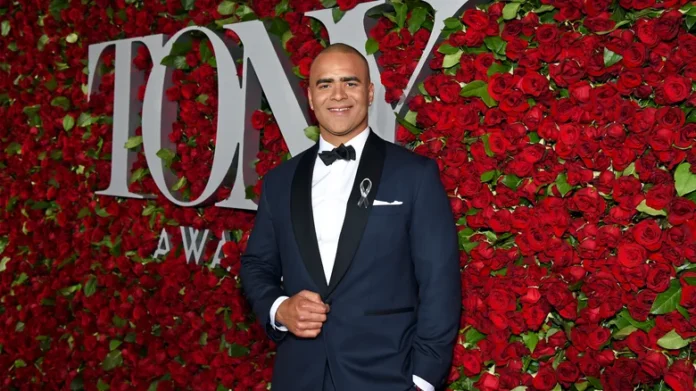
Bobby Flay has never dressed like a chef who expects to remain behind the kitchen doors. His television career turned him into a competitive showman, while restaurant openings, premieres, award ceremonies, racing events, and food festivals gave him a second stage on which clothing mattered. The result is a recognizable wardrobe built around dark tailoring, pale shirts, restrained accessories, and occasional flashes of color.
The New York-born chef, restaurateur, author, and television personality is 61 years old as of July 2026. His appeal stretches beyond recipes because he has spent more than three decades presenting food as entertainment. His public outfits follow the same pattern as his cooking: a dependable foundation, sharp contrast, and one detail designed to wake everything up. He is not a fashion radical, but he takes more risks than the standard navy-suit formula first suggests.
His strongest looks come when the fit is clean and the color story stays controlled. Gray three-piece tailoring, lavender shirts, bright pocket squares, open collars, pinstripes, and expressive ties have all entered the mix. Some experiments look polished; others compete for attention. That inconsistency is part of what makes Bobby Flay’s style useful to study. His wardrobe offers practical lessons about proportion, personality, and knowing when an outfit already has enough flavor.
Biography, Age & Background
Flay’s clothing makes more sense when viewed beside his New York upbringing and unconventional education. He did not enter the culinary world through a carefully planned academic path. His progress came through restaurant work, mentorship, competition, and a willingness to build a public identity around his profession. Those experiences produced a direct, energetic image that still appears in his television manner and wardrobe.
From a Manhattan School Dropout to a Culinary Graduate
Robert William Flay was born on December 10, 1964, in New York City and grew up on Manhattan’s Upper East Side. He left high school at 17 and later earned a GED. Early jobs included work at a pizza restaurant and an ice cream shop before he entered the kitchen at Joe Allen in Manhattan’s Theater District.
Joe Allen recognized his ability and helped fund his education at the French Culinary Institute. Flay became part of the school’s first graduating class in 1984. That practical route matters because his public style has never felt academic or overly precious. Even in formalwear, he tends to look like someone prepared to move, speak, cook, or compete rather than stand still for photographs.
He later worked with chef Jonathan Waxman, whom Flay credits as one of the main influences on his development. Waxman introduced him to Southwestern ingredients and an expressive approach to American cooking. The experience gave Flay a professional language that was bold without abandoning structure, a description that also fits many of his better outfits.
The Southwestern Point of View That Defined His Image
Mesa Grill opened in New York in 1991 and established the culinary identity most closely associated with Flay’s early career. Rather than presenting quiet, delicate food, he became known for smoke, chiles, grilling, saturated flavors, and vivid plating. The restaurant helped make him a nationally recognized chef before celebrity cooking became a crowded field.
That preference for contrast carried into his presentation. Dark jackets are often paired with light blue, pink, lavender, or crisp white shirts. Pocket squares supply a controlled burst of color. Striped ties or checks add movement when a plain suit might feel too reserved. The clothes are rarely experimental in construction; the risk usually arrives through combinations.
Mesa Grill’s success also established the confidence that later fueled Flay’s television persona. His wardrobe gradually shifted from working-chef practicality toward media-friendly polish, yet he kept enough informality to remain believable beside a grill. Even when wearing a three-piece suit, he seldom appears detached from his restaurant background.
How Competition Made Bobby Flay a Television Fixture
Flay began appearing on the Food Network during the channel’s early years and became one of its longest-standing personalities. His television credits have included Grillin’ & Chillin’, Boy Meets Grill, Throwdown! with Bobby Flay, Iron Chef America, Beat Bobby Flay, BBQ Brawl, and Bobby’s Triple Threat. His work has earned four Daytime Emmy Awards, and he received a star on the Hollywood Walk of Fame in 2015.
Competition changed more than his career. It gave his appearance an athletic quality. Rolled sleeves, fitted dark shirts, neat aprons, and clothing that permits quick movement became part of his screen identity. Away from the cooking station, the same competitive confidence appears in close-fitting suits and high-contrast combinations.
Flay has confirmed that the clothes seen on his programs belong to him. He has also said that he likes suits, though they are not sensible cooking clothes for most chefs. That admission explains the division in his wardrobe: functional dark layers while preparing food, then stronger tailoring for promotion, judging, dining, and public appearances.
Height, Weight & Body Measurements
Search interest in Flay’s height and weight often comes from viewers trying to understand how his suits achieve their trim appearance. Public photographs provide useful information about proportion, but celebrity measurement websites should not be treated like official records. His exact weight, chest, waist, shoe size, and other body measurements have not been reliably published by Flay or his representatives.
What Can Be Said About Bobby Flay’s Reported Height?
Several secondary profile sites list Flay at around 5 feet 11 inches, or approximately 180 centimeters. No authoritative personal biography, network profile, or verified interview appears to confirm that figure, so it should be described as a commonly reported estimate rather than an established measurement.
The estimate looks plausible beside other people in event photographs, though camera angles, footwear, and staging make visual comparisons unreliable. His current weight is even less certain. There is no dependable recent figure from Flay, Food Network, or another primary source, and published numbers found on celebrity databases frequently lack attribution.
The more useful observation is that he has a medium-height, lean frame with conventional menswear proportions. He does not need exaggerated tailoring to create presence. Clean shoulders, moderate jacket length, and trousers with little excess fabric do more for him than aggressive padding or dramatic cuts would.
A Lean, Straight Build That Favors Clean Tailoring
Flay’s body shape appears relatively straight through the torso, with moderate shoulders and a lean waist rather than a pronounced bodybuilder taper. That build works well with single-breasted, two-button jackets because the cut creates definition without forcing an artificial hourglass shape.
His stronger suits sit close to the shoulder, follow the chest, and then fall cleanly through the waist. The lapels are generally moderate rather than narrow, which keeps his head and shoulders balanced. A jacket that was too short or too tightly suppressed would make his torso look compact. Most of his successful formal outfits avoid that problem.
Trousers are another quiet strength. At his best-dressed appearances, the legs are straight or gently tapered and the hems do not collect heavily over the shoes. Men with similar proportions can borrow this approach without copying his colors: prioritize shoulder fit, leave enough room to button the jacket comfortably, and remove excess trouser length before spending money on louder accessories.
How Years in the Kitchen Affected His Posture
Professional cooking places the body in repeated forward positions. Flay has spoken about spending years bent over cutting boards and said that Pilates helped address a curve in his spine caused by that working posture. His routine has also included cardio and bodyweight exercise.
Posture has an immediate effect on clothing. Rounded shoulders can cause a jacket collar to pull away from the neck, create diagonal wrinkles across the back, and make the front panels hang unevenly. A more upright position allows the jacket to fall from the shoulder instead of collapsing toward the chest.
This helps explain why his later tailoring can appear cleaner even when the garments themselves are simple. Fitness has supported the clothes rather than becoming a separate display. For readers, the lesson is practical: tailoring cannot fully correct habitual posture. A well-cut jacket performs better when the wearer can stand naturally, keep the chest open, and let both arms rest without tension.
Wife, Girlfriend & Family
Flay’s family history has attracted steady attention because several relationships involved people from television, acting, food, or publishing. His current partnership is public, but he generally avoids turning private life into constant publicity. The most visible family relationship remains the bond with his daughter, Sophie, who has built a media career of her own.
Brooke Williamson and a Publicly Confirmed Partnership
Flay and fellow chef Brooke Williamson became a confirmed couple in March 2025 after years of friendship and professional overlap. Williamson is a Top Chef winner and a familiar presence across culinary competition programs, including Flay’s shows. Their shared profession gives the relationship a public dynamic different from a conventional celebrity pairing.
In 2026, they clarified that a diamond ring Flay gave Williamson represented commitment rather than an engagement. Both have said that they do not plan to marry and prefer a permanent partnership without a wedding. That distinction matters because engagement reports circulated after the ring appeared publicly.
Their event appearances also create an interesting style contrast. Williamson often chooses saturated colors, modern shapes, or relaxed tailoring, while Flay tends to remain within dark jackets and familiar menswear. The pairing works visually because neither appears dressed as an accessory to the other. Their clothing maintains two separate professional identities.
Sophie Flay and a Visible Father-Daughter Bond
Flay has one child, Sophie Flay, whom he shares with his former wife Kate Connelly. Sophie turned 30 in April 2026. She has worked as a journalist and moved into a national role with ABC News after years at ABC7 in Los Angeles. Bobby has frequently celebrated her professional progress in public posts and interviews.
Their relationship has also crossed into food media. They have appeared together in culinary content, interviews, travel features, and audio projects. The chemistry is less formal than a conventional celebrity-family appearance; Sophie often challenges or teases her father rather than treating his fame as untouchable.
From a lifestyle perspective, fatherhood softens Flay’s competitive public image. Pictures with Sophie usually show a more relaxed wardrobe: open collars, casual jackets, knitwear, or simple shirts rather than full formal tailoring. Those outfits often look more natural because the clothes match the setting. He appears best when the polished television personality gives way to an experienced New Yorker spending time with family.
Three Marriages and a Family Story Kept Mostly Private
Flay has been married three times. His first marriage was to chef Debra Ponzek in the early 1990s. He later married television host Kate Connelly, Sophie’s mother. His third marriage was to actress Stephanie March; that relationship ended in divorce in 2015. Public reporting has documented those marriages, but unsupported claims about their private difficulties should not be treated as established facts.
He was born to Bill and Dorothy Flay and has spoken about his father’s influence, including advice about work and long-term thinking. He was raised in an Irish-American Catholic family in Manhattan. Reliable public accounts focus more on his parents than on any extended family structure, and there is limited dependable information about siblings.
That relative privacy has helped keep his professional identity separate from family drama. His public wardrobe follows a similar boundary. Personal appearances may be relaxed, yet he rarely uses clothing to reveal an intimate or confessional side. The clothes remain controlled even when his life becomes news.
Career, Income & Net Worth
Flay’s finances cannot be reduced to a television salary. His career includes restaurant ownership, licensing, cookbooks, production, food brands, appearances, and partnerships. Some ventures have closed, while others have expanded or changed form. That constant revision is one reason estimates of his wealth vary and should never be mistaken for audited financial disclosure.
The Restaurant Decisions Behind His Long Career
Mesa Grill established Flay as a major New York restaurateur, but his portfolio has never remained fixed. Past restaurants have included Bolo, Bar Americain, Gato, Bobby Flay Steak, and Shark. Current concepts have included Amalfi by Bobby Flay, Brasserie B, Bobby’s Burgers, and other licensed or partnership-based operations. Food Network notes that Brasserie B opened at Caesars Palace in Las Vegas in December 2023.
Closures do not automatically signal career decline. Restaurant leases end, casino partnerships change, dining tastes move, and chefs redirect capital toward concepts with stronger growth potential. Flay’s shift from several large destination restaurants toward a mixture of premium dining and scalable burger locations shows a willingness to separate prestige from reach.
That balance also shapes his image. A chef tied only to fine dining might dress with more ceremony. Flay moves between casinos, television studios, grills, racetracks, festivals, and fast-casual openings, so his wardrobe needs several levels of polish without becoming costume-like.
Television, Cookbooks and Business Extensions
Television has supplied Flay with a scale that restaurants alone could not provide. Beat Bobby Flay turned his competitive reputation into a repeatable format, while Bobby’s Triple Threat positioned him as a mentor and curator of other chefs. New episodes and festival appearances in 2026 show that he remains active rather than trading only on an older catalog.
His publishing career is another substantial branch. The 2024 book Bobby Flay: Chapter One collected 100 dishes from across his restaurants and television history. The Associated Press described it as his 18th cookbook and a career retrospective organized around the food rather than a simple timeline.
Flay also entered pet food through Made by Nacho, a brand inspired by his late Maine Coon cat. Add paid appearances, production interests, restaurant partnerships, and potential licensing income, and it becomes clear why no single reported salary can explain his financial position.
How Much Is Bobby Flay Worth?
Several media outlets place Bobby Flay’s estimated net worth near $60 million in 2026. The figure is not an official statement from Flay, his accountant, or his companies. It should be read as an outside estimate based on visible businesses, property history, media work, and assumed contract earnings.
His actual net assets could be higher or lower. Restaurant ownership can involve investors, debt, licensing arrangements, operating expenses, and shared equity. Real estate values may rise on paper without producing cash. Television agreements also contain private terms that outside publications cannot verify.
What can be stated with confidence is that his income comes from several established channels. He has remained on national television for decades, published a large cookbook catalog, developed restaurant concepts in major hospitality markets, and expanded into consumer products. The durability of those channels matters more than a headline number.
House, Cars & Luxury Lifestyle
Flay’s lifestyle is expensive, but it remains closely connected to food, travel, design, and horse racing rather than constant displays of status. Publicly reported homes tend to feature professional-grade kitchens and strong entertaining spaces. Reliable reporting on a personal fleet of exotic cars or a major watch collection is far thinner.
A New York Home Base Designed Around Cooking
New York remains central to Flay’s identity. In a 2024 interview, he said he lived in the city with his cats Stella and Canelo. More recent videos have shown a carefully stocked apartment pantry filled with grains, pasta, spices, oils, vinegars, coffee, canned tomatoes, and professional filming supplies.
He previously owned a duplex in Manhattan’s Chelsea Mercantile building. Architectural Digest reported that the property sold for $5.6 million in 2021 after years of ownership and several listing attempts. The home included a large kitchen, entertaining area, billiards room, wet bar, and substantial storage.
His domestic style is polished without resembling a formal hotel. Kitchens carry visual weight, shelves are used rather than staged empty, and entertaining areas feel tied to actual meals. This is one place where his lifestyle and clothing align: both work best when luxury remains usable.
California and Hamptons Homes With Outdoor Kitchens
Flay has owned several properties beyond Manhattan. Architectural Digest reported a $6.5 million Los Angeles purchase in 2019, while People later covered his acquisition of another Los Angeles home for $7.6 million after the sellers added an outdoor kitchen designed around his wishes. Features included a pizza oven and an Argentine-style grill.
That midcentury Los Angeles property was publicly listed in 2024 for $9.25 million, according to MarketWatch. Property ownership can change, so older reports should not be read as proof that he still owns every home associated with his name.
He has also been linked to Hamptons properties with strong indoor-outdoor cooking areas. The repeated emphasis on grills, pizza ovens, open entertaining zones, and colorful kitchens shows where he chooses to spend. These are not generic trophy houses with unused chef’s kitchens. The cooking infrastructure is the main luxury.
Cars, Horse Racing and the Limits of Public Reporting
No strong public evidence confirms that Flay owns a large exotic-car collection. Individual vehicles may appear in photographs or property reports, but that does not establish ownership. The responsible conclusion is that his car preferences remain less documented than those of celebrities who actively present automobiles as part of their brand.
Horse racing is different. Flay has been involved in thoroughbred ownership and breeding, and his horses have achieved notable results. More Than Real won the 2010 Breeders’ Cup Juvenile Fillies Turf, while Pizza Bianca won the same race in 2021. He has also held an ownership interest in Belmont Stakes winner Creator.
Racing helps explain some of his more traditional event outfits. The sport brings tailored jackets, patterned ties, pocket squares, and polished shoes into settings where personality is welcome. His 2009 Kentucky Derby pinstripe suit and green-blue striped tie captured that balance, even though the competing patterns pushed close to excess.
Celebrity Fashion & Personal Style
Flay’s wardrobe is strongest when it communicates authority without making him appear over-styled. He returns to navy, charcoal, black, pale blue, and white because those colors work across television, dining rooms, and red carpets. His risks usually come from shirt color, checks, ties, pocket squares, or an extra waistcoat rather than unusual silhouettes.
The Signature Formula: Dark Tailoring and an Open Collar
A dark single-breasted suit is the foundation of Bobby Flay’s formal style. Navy and charcoal appear often, sometimes in subtle checks or pinstripes. White and light blue shirts provide contrast, while an open collar reduces the distance between celebrity guest and working chef.
One of his most dependable looks pairs a dark jacket with a pale open-neck shirt and a colored pocket square. At a 2015 Hearst event, he wore dark checked tailoring, a soft pink shirt, and a purple pocket square. The outfit had enough color for a media event but remained controlled because the suit carried the visual weight.
The open collar also suits his face and profession. A tight tie can make a television chef appear too corporate, while a deep unbuttoned neckline would feel affected. Flay normally stays in the useful middle. Men copying the approach should keep the collar structured, expose only one or two buttons, and make certain the shirt does not collapse beneath the jacket.
Fashion Risks That Worked and Choices That Became Busy
Flay takes fashion risks through combination rather than cut. A gray three-piece suit with a light purple shirt and matching pocket-square family is a good example. The waistcoat adds formality, while the softer shirt prevents the outfit from looking like conservative businesswear. It works because the suit remains neutral.
His Derby look was harder to control. The dark pinstripe suit, green-and-blue striped tie, white shirt, and event setting all made sense independently. Together, the two stripe directions competed. The outfit was energetic and appropriate for the occasion, but removing either the suit stripe or the tie stripe would have created a clearer focal point.
A black suit with a white tie at the James Beard Awards was another genuine risk. The near-monochrome contrast looked ceremonial, though a white satin tie can drift toward wedding attire under bright lights. His risk-taking is most successful when one element speaks loudly and the rest remain quiet.
Bobby Flay’s Best-Dressed Moments and What Men Can Copy
His clean black tuxedo at a 2013 Golden Globe after-party remains one of his strongest formal appearances. The jacket fit close without looking strained, the white shirt showed the right amount at the cuffs, and the black tie kept the focus on proportion. Nothing depended on novelty.
At the 2016 Café Society premiere, he wore a dark checked suit, white shirt, and blue tie. The pattern was subtle enough to read as texture from a distance, while the tie supplied color without fighting the suit. A gray suit with a pale blue open-collar shirt and matching pocket square at the Serena premiere offered an equally useful smart-casual formula.
The practical lesson is not to purchase the same clothes. Copy the hierarchy. Start with a properly fitted dark suit, select one color accent, and stop before every accessory demands attention. Flay’s best-dressed moments prove that personality can come from a lavender shirt or pocket square; it does not require an eccentric jacket.
Hair, Beard & Grooming Style
Flay’s grooming supports his clothing rather than competing with it. His hair has remained short, textured, and camera-friendly through most stages of his television career. Facial hair is usually absent or limited to light stubble, preserving the clear, energetic expression associated with his competitive screen persona.
The Short Textured Cut That Became His Trademark
Flay’s best-known haircut keeps the sides neat while leaving enough length on top to create texture and lift. Earlier appearances showed stronger reddish-brown color and more pronounced separation. Recent images reveal natural graying, but the underlying shape has changed little.
The cut works because it is neither severe nor floppy. Height through the top lengthens his face slightly, while controlled sides prevent additional width around the temples. It also survives movement in a kitchen better than a heavily sculpted style would.
Men recreating the shape should ask for a short, scissor-textured top with tidy sides rather than requesting an extreme skin fade. The finish should remain touchable and slightly irregular. No reliable source confirms which hair products Flay uses, so claims about a particular wax, pomade, or spray would be speculation. A light matte product would reproduce the visible effect without making the hair look wet.
Why a Clean Shave Fits His Camera Image
Flay appears clean-shaven at most major premieres, industry events, and television appearances. Light stubble occasionally appears in casual footage, but a full beard has not become part of his established image.
The clean shave exposes his jawline and keeps his expressions easy to read during competitive television. That matters in a format built around reactions, teasing, and quick exchanges. A dense beard could create a stronger, rougher identity, but it might also compete with the crisp suits and aprons that viewers already associate with him.
His approach offers a useful example for men with active, public-facing jobs. Facial hair does not need to become a signature simply because beards are fashionable. A consistent clean shave can look more distinctive when it matches the wearer’s work, haircut, and clothing. Skin preparation and a neat neckline matter more than forcing a beard that changes the entire balance of the face.
Low-Drama Grooming and Restrained Accessories
Flay’s grooming rarely suggests a long visible routine. His eyebrows remain natural, his complexion is not covered with an obvious camera finish, and his hair retains movement. No dependable public evidence confirms a skincare system, fragrance, cosmetic treatment, or personal barber responsible for the look.
Accessories are similarly controlled. Watches appear in public photographs, yet individual models should not be identified without clear documentation. He may add a pocket square, wedding-style band, bracelet, or watch depending on the period, but jewelry has never led the outfit.
This restraint is useful when shirts and ties carry color. A purple pocket square beside a lavender shirt already provides a focal point; additional bright jewelry would weaken the composition. For an everyday version of Flay’s grooming, keep the haircut maintained, shave or trim facial hair with clear edges, care for the skin, and allow one accessory to finish the outfit.
Fitness, Diet & Body Transformation
Flay’s work places him around food for long hours while demanding travel, filming, standing, and performance under pressure. His public fitness comments focus on consistency, portion awareness, cardio, and mobility rather than extreme muscle gain. The visible result is a stable, lean appearance that allows his wardrobe to remain relatively consistent.
Cardio, Pilates and Bodyweight Training
In a 2024 interview, Flay described a routine with three main parts: cardio, Pilates, and bodyweight exercises. His cardio sessions may involve running outdoors or using a treadmill for roughly 30 to 45 minutes. Pilates became especially important because it helped him address posture problems connected to decades spent leaning over work surfaces.
Earlier Food Network fitness content also described him as a runner and encouraged variety, cycling, low-impact activity, and workouts with other people. The advice was framed around maintaining interest rather than following a rigid celebrity program.
The routine supports his clothes in a subtle way. Cardio helps maintain a lean silhouette, while Pilates improves alignment and range of motion. Bodyweight training adds enough strength for long working days without pursuing a bulky build that would require constant changes to tailored clothing.
Eating Well Without Treating Food as the Enemy
Flay has consistently described moderation as more useful than banning entire food groups. In an earlier discussion of weight management, he said he reduced restaurant portions, stopped eating food that was not satisfying, avoided late-night meals, and kept running. He did not present carbohydrates or restaurant dining as forbidden.
His 2026 morning routine included espresso with plant-based milk and coconut yogurt with cinnamon and berries. Older interviews described yogurt, fruit, smoothies, and occasional richer breakfasts. These details show habits rather than a fixed medical or weight-loss prescription.
That distinction matters for a chef. Tasting food is part of his work, so an inflexible plan would be hard to maintain. Portion control, meal timing, and simple breakfasts give him room to cook and dine professionally without pretending every meal must be low-calorie.
A Transformation Based on Durability, Not a Dramatic Reveal
Flay has discussed weight changes at different points in his life, but no reliable current weight has been made public. His appearance has become leaner than it was during some earlier television periods, yet there is no verified recent transformation figure that should be presented as exact.
The more significant change involves function. He has described becoming more attentive to posture, flexibility, moderation, and exercise as he has aged. That is a durability story rather than a short campaign built for a shirtless photograph.
For readers, the useful lesson is modest. Choose movement that can be repeated, adjust portions without turning meals into punishment, and address the physical demands created by work. Flay’s current silhouette is not the product of one secret routine. It reflects habits that fit a schedule filled with kitchens, travel, television, and restaurants.
Conclusion
Bobby Flay’s public style succeeds because it stays connected to the man wearing it. He is a New York chef, competitive television host, restaurant operator, racing enthusiast, and frequent event guest. His clothes move between those roles without forcing a dramatic reinvention each time.
Dark tailoring provides consistency. Pale shirts keep his face bright on camera. Pocket squares, checks, purple tones, blue ties, and occasional three-piece suits introduce enough personality to prevent the wardrobe from becoming corporate. His risks are rarely radical, but they are genuine. A striped tie can collide with a pinstripe suit, and a white tie can feel too ceremonial. Those misses make his better decisions easier to understand.
His strongest appearances share three traits: accurate shoulder fit, controlled trouser length, and one clear accent. The black tuxedo, the dark checked premiere suit, and the gray open-collar combination all follow that rule. Grooming remains equally disciplined, with short textured hair and a mostly clean-shaven face.
The most useful lesson is restraint with character. A man does not need to remove every expressive detail from formalwear, nor does he need five of them at once. Flay looks best when his outfit behaves like a good plate: a strong base, clear contrast, and one finish that earns attention.
Frequently Asked Questions
How old is Bobby Flay?
Bobby Flay was born on December 10, 1964. He is 61 years old as of July 2026 and will turn 62 in December 2026. He was born in New York City and grew up on Manhattan’s Upper East Side.
How tall is Bobby Flay?
He is commonly reported to be around 5 feet 11 inches, or approximately 180 centimeters. That measurement has not been confirmed in a dependable official biography or direct interview, so it should be treated as a secondary-source estimate rather than a verified figure.
Is Bobby Flay married?
He is not currently married. Flay is in a publicly confirmed relationship with chef Brooke Williamson. In 2026, the couple said they view themselves as permanently committed but do not plan to marry. A diamond ring he gave Williamson was not an engagement ring.
Does Bobby Flay have children?
He has one daughter, Sophie Flay, with his former wife Kate Connelly. Sophie turned 30 in April 2026 and works as a journalist. Bobby has publicly supported her career and has appeared with her in food, travel, and media projects.
What is Bobby Flay’s estimated net worth?
Media estimates commonly place his wealth near $60 million in 2026. Flay has not publicly confirmed that number. His income is linked to television, restaurants, cookbooks, licensing, appearances, partnerships, and consumer businesses, so any outside total remains an estimate.
Where does Bobby Flay live?
He has maintained a home base in New York and has owned properties in Los Angeles and the Hamptons. Public reports show that some earlier homes were sold or listed, so old property articles do not establish his current holdings. His homes are known for serious kitchens and outdoor cooking areas.
What is Bobby Flay’s signature fashion style?
His signature wardrobe combines navy, charcoal, or black tailoring with white, blue, pink, or lavender shirts. He often adds a pocket square, patterned tie, or subtle check. Open collars and short textured hair keep the overall appearance polished without feeling overly formal.
What workout does Bobby Flay follow?
He has publicly described a routine that combines cardio, Pilates, and bodyweight training. Cardio may include outdoor running or treadmill sessions lasting around 30 to 45 minutes. He credits Pilates with improving posture affected by years of bending over kitchen workstations.
Celebrity Style, Streetwear and Tailoring Inspiration
Explore luxury layers, red carpet tailoring, signature accessories and modern everyday outfits from influential celebrity men.