
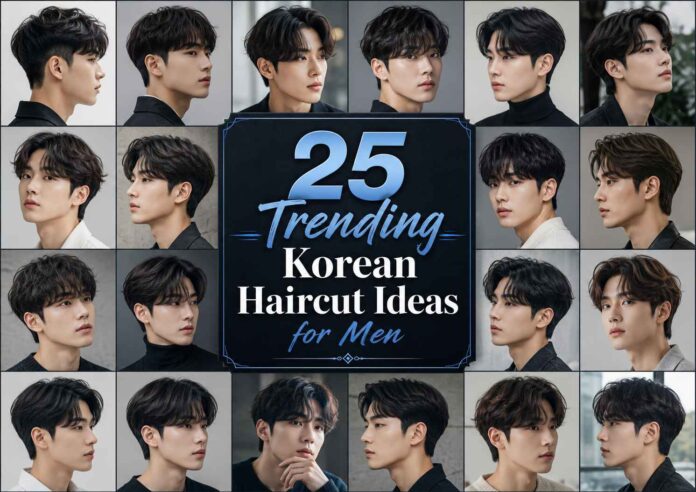
Korean men’s hair has become known for soft movement, controlled volume, clean outlines, and styling that frames the face instead of exposing every angle. The strongest looks feel polished without appearing stiff. Many are built around longer layers on top, carefully shaped fringe, and neat sides that keep the finished cut balanced.
These trending haircuts for men cover short, medium, and longer styles for straight, thick, fine, wavy, and naturally textured hair. Current Korean-inspired grooming guides continue to highlight the two-block cut as a foundation, with middle parts, comma fringe, textured tops, soft perms, and layered variations shaping many modern looks.
Some options below are clean enough for an office. Others lean toward K-pop styling, longer movement, or sharper editorial texture. Each idea explains the visible shape, the type of hair it works with, and what to discuss before your barber starts cutting. The goal is not to copy one exact celebrity look. It is to find a Korean-inspired shape that works with your face, natural growth pattern, daily routine, and preferred level of maintenance.
1. Short Two-Block Crop With Choppy Fringe
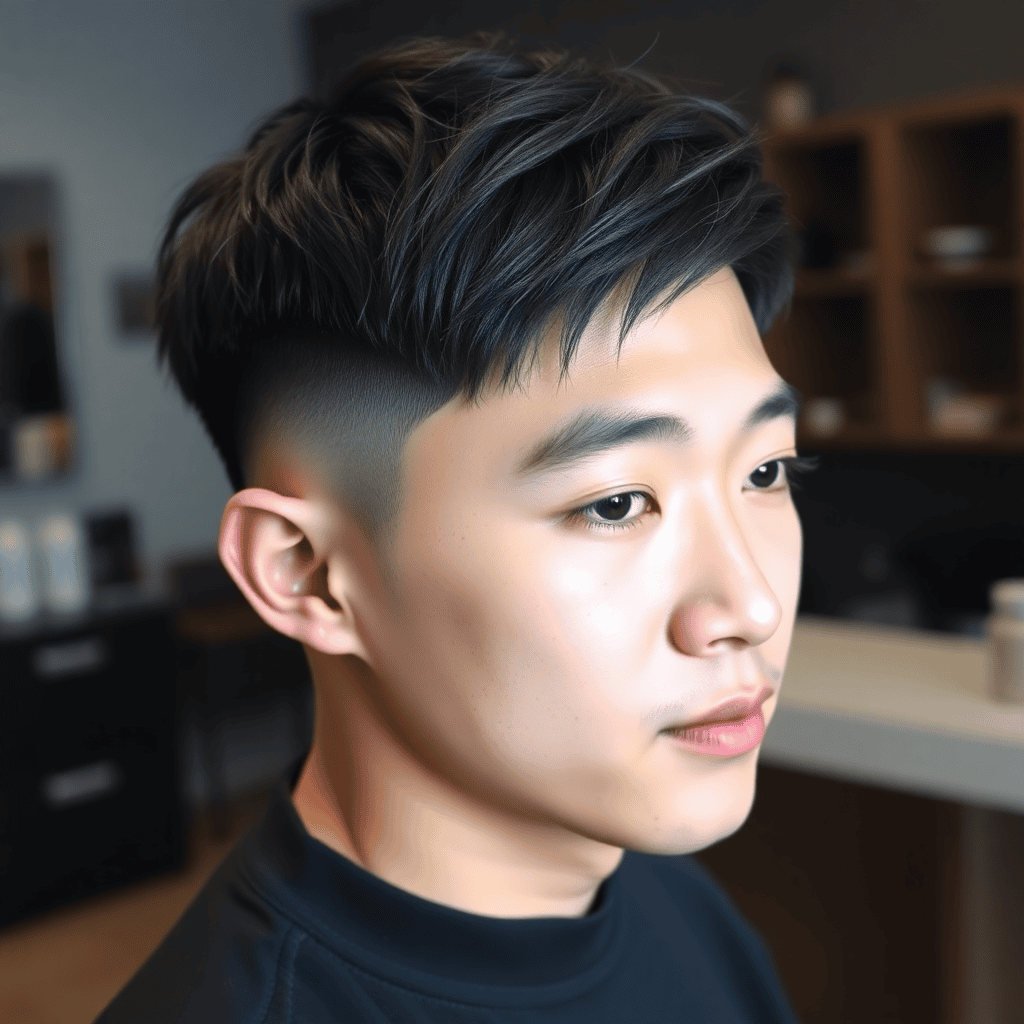
The top stays about two to three inches long, with short choppy layers directed forward toward the forehead. The sides and back are clipped close beneath the longer upper section, creating the clear contrast associated with a two-block cut. The fringe sits in uneven pieces rather than forming a heavy straight line, while the hairline remains natural and lightly softened.
This is one of the easier short haircuts for men who want Korean influence without keeping long curtain bangs. It works especially well on dense, straight hair because the top holds texture without needing heavy product. Ask the barber for short disconnected sides, a softly tapered neckline, and point-cut texture through the front. A small amount of dry styling paste can separate the fringe without making it shiny.
2. Tapered Korean Crop With Soft Micro Fringe
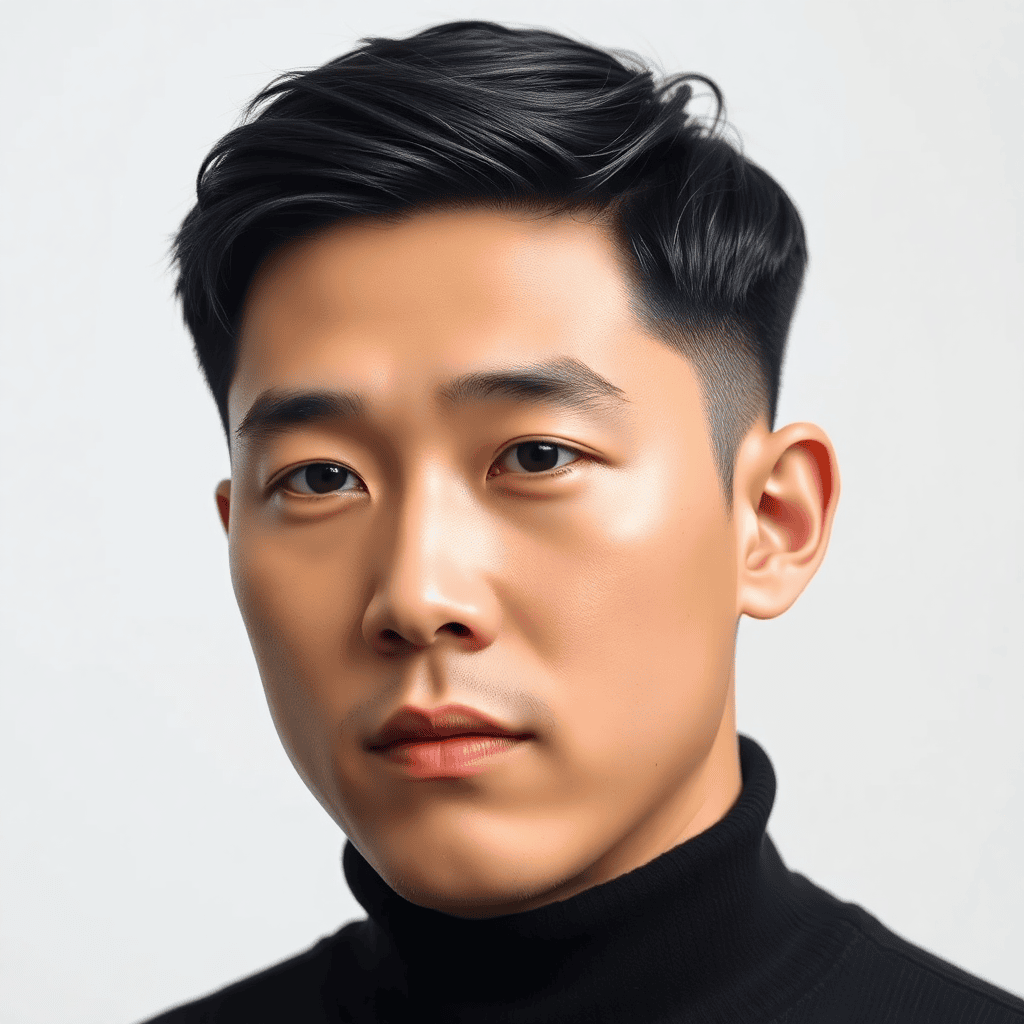
Short layers cover the top with slightly more length near the crown, while the sides narrow gradually around the ears instead of dropping into a sharp fade. The fringe ends high on the forehead in soft broken pieces. Its edges appear light and feathered, giving the cut a less severe finish than a blunt Caesar-style crop.
Men with fine or straight hair may find this shape easier to control because it does not depend on tall volume. It can also help balance a longer face by placing a visible horizontal line across part of the forehead. Tell the barber to keep the taper low, avoid removing too much weight near the temples, and soften the fringe with point cutting. Blow the top forward at low heat, then loosen it with your fingertips for a relaxed finish.
3. Textured Two-Block With Low Tapered Sides
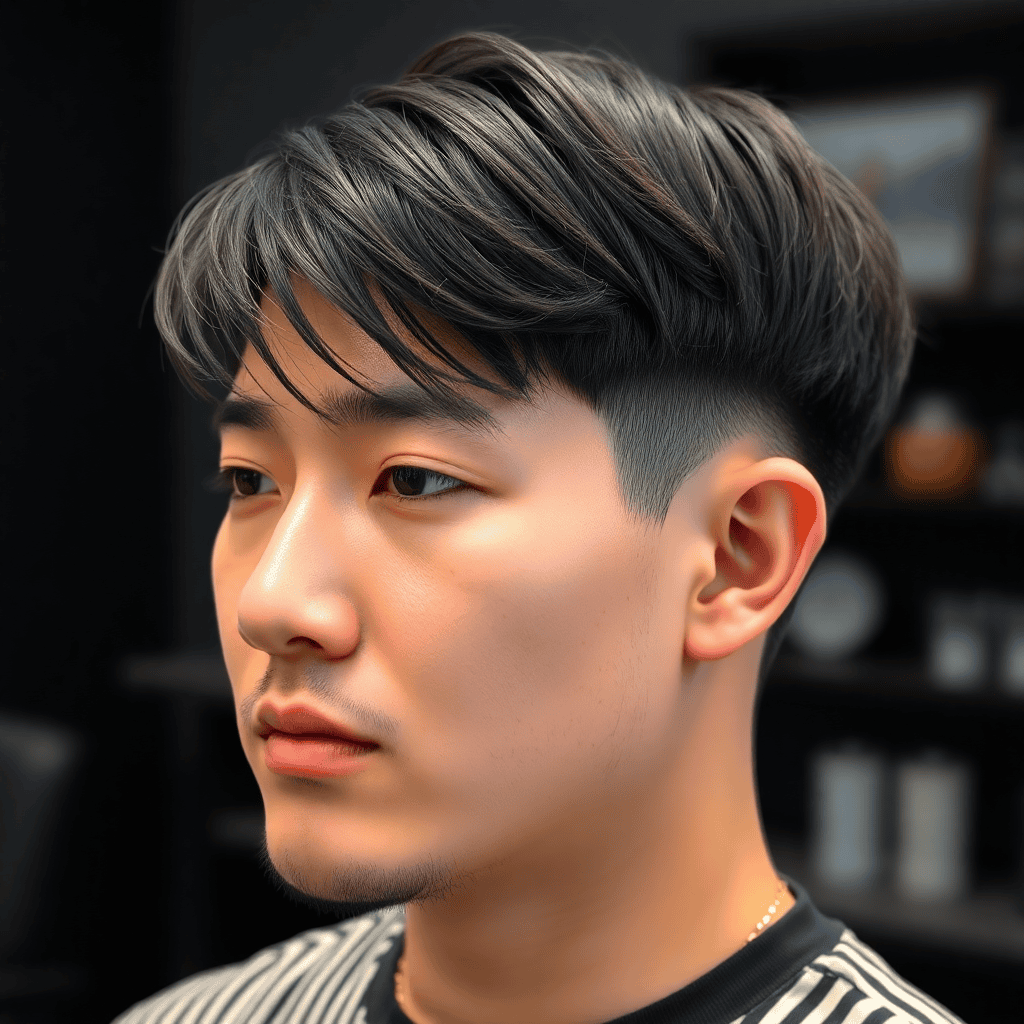
Three to four inches of layered hair remain on top, forming loose separated strands that move forward and slightly upward. The lower sides are cut short with a low taper around the sideburns and neckline, while extra weight remains above the temples. The transition is cleaner than a traditional disconnected two-block but softer than a high fade.
The shape suits men who want modern haircuts for men that can switch between casual and polished styling. Thick straight hair creates strong definition, while light waves add natural movement. Ask for internal layering through the top rather than aggressive thinning, which can make dense hair stick outward. Dry the roots upward with your fingers, then push the front into loose sections. The cut usually looks better with flexible texture than with a hard, fixed shape.
4. Short Comma Fringe With Neatly Tapered Sides
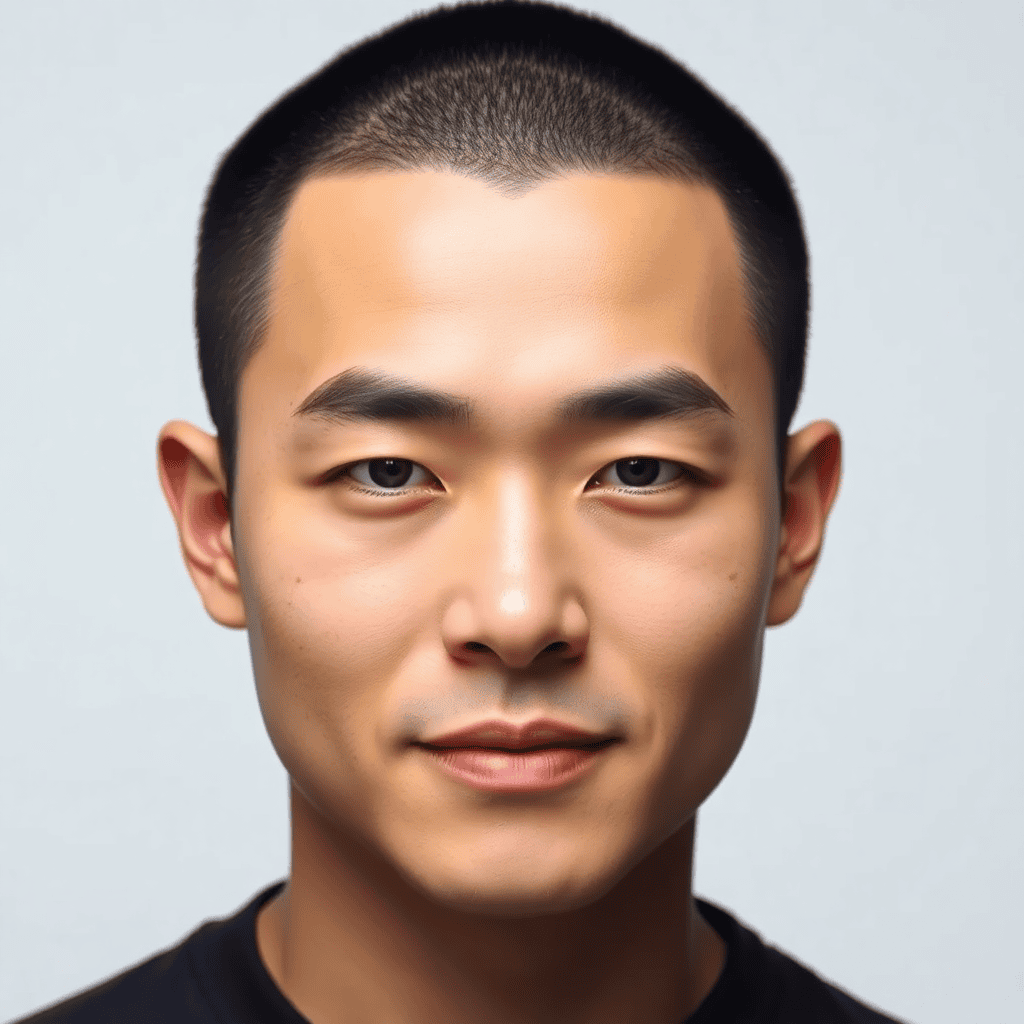
The top measures roughly three inches, with the front directed diagonally across the forehead. One narrow section curves inward near the eyebrow to form the recognizable comma shape. The sides stay short and tidy with a gentle taper, while the back follows the head closely without exposing much scalp.
Comma styling adds a clear Korean character to a compact haircut. Current style guides describe the look through its curved front section and longer upper shape, often paired with neatly controlled sides. It works well for an oval or square face because the curved fringe softens the forehead without hiding it completely. Ask the barber to leave enough front length for one inward bend. Use a small round brush while blow-drying, then pinch the curve into place with a light cream.
5. Side-Swept Two-Block With Natural Texture
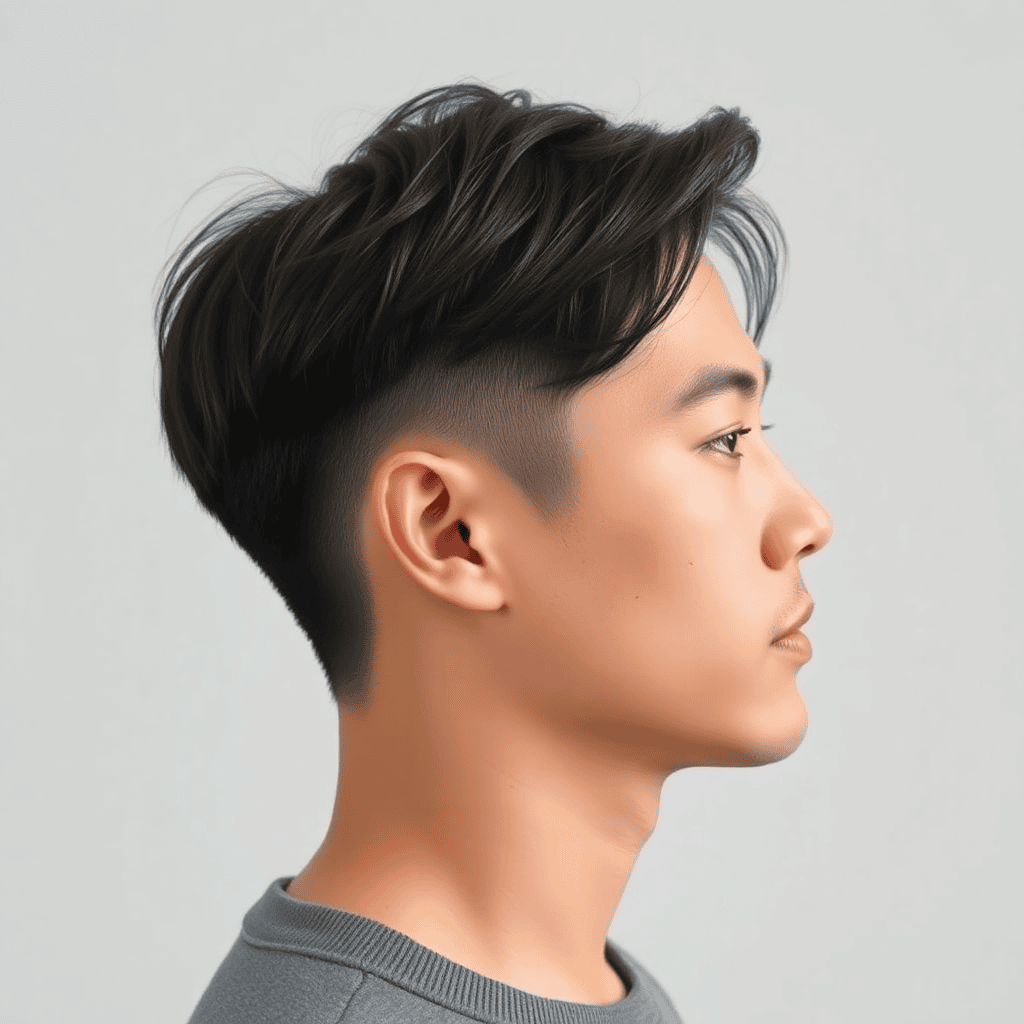
The upper hair stays four inches long and moves from a loose off-center part toward one side. Shorter sides sit beneath the top without a skin fade, allowing the longer layers to fall softly over the temple area. The front rises slightly at the roots before sweeping down, creating movement without a large pompadour shape.
This option brings a mature feel to Korean haircut ideas for men and can work well for men over 30 who prefer understated styling. Straight and slightly wavy hair both respond well, though thick hair may need weight removed inside the shape. Ask for a two-block foundation with blended edges and a longer diagonal fringe. Apply a lightweight styling cream to damp hair and guide the front sideways with warm air. Avoid flattening the top against the scalp because the cut depends on gentle root lift.
6. Clean Korean Side Part With Scissor-Tapered Sides
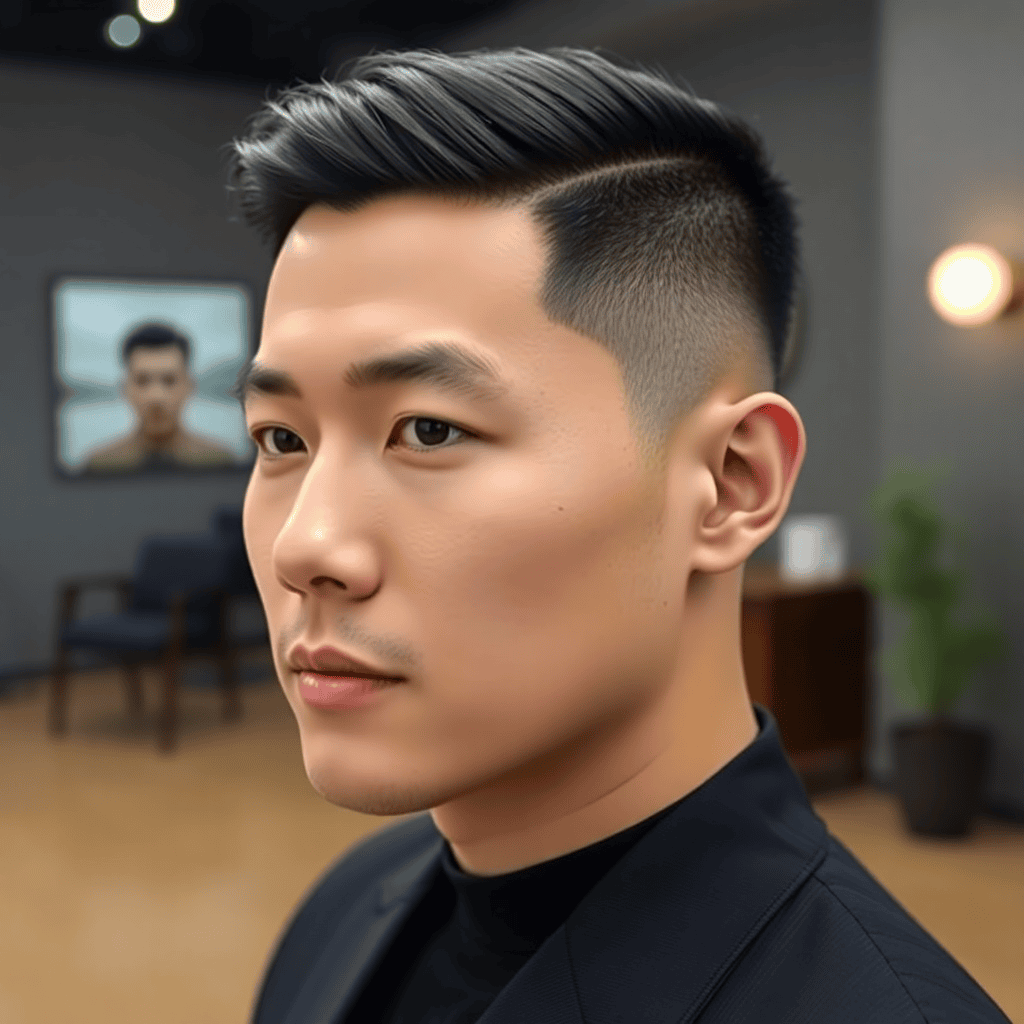
The top remains three to four inches long and follows a defined side part, with the front brushed upward before bending smoothly to the side. Scissor-cut sides stay fuller than a fade and follow the shape of the head. Around the ears and neck, the outline is neat but not sharply boxed.
Among professional haircuts for men, this version feels controlled without becoming rigid. It can suit square, oval, and round faces because the raised front adds structure while the side direction prevents excess width. Tell the barber that you want a soft Korean side part rather than a tight comb-over. Request natural movement through the top and enough side length to avoid scalp exposure. A vent brush and low-shine cream create the smooth finish, while a few loosened strands keep the style from looking overly formal.
7. Classic Two-Block With Straight Layered Fringe
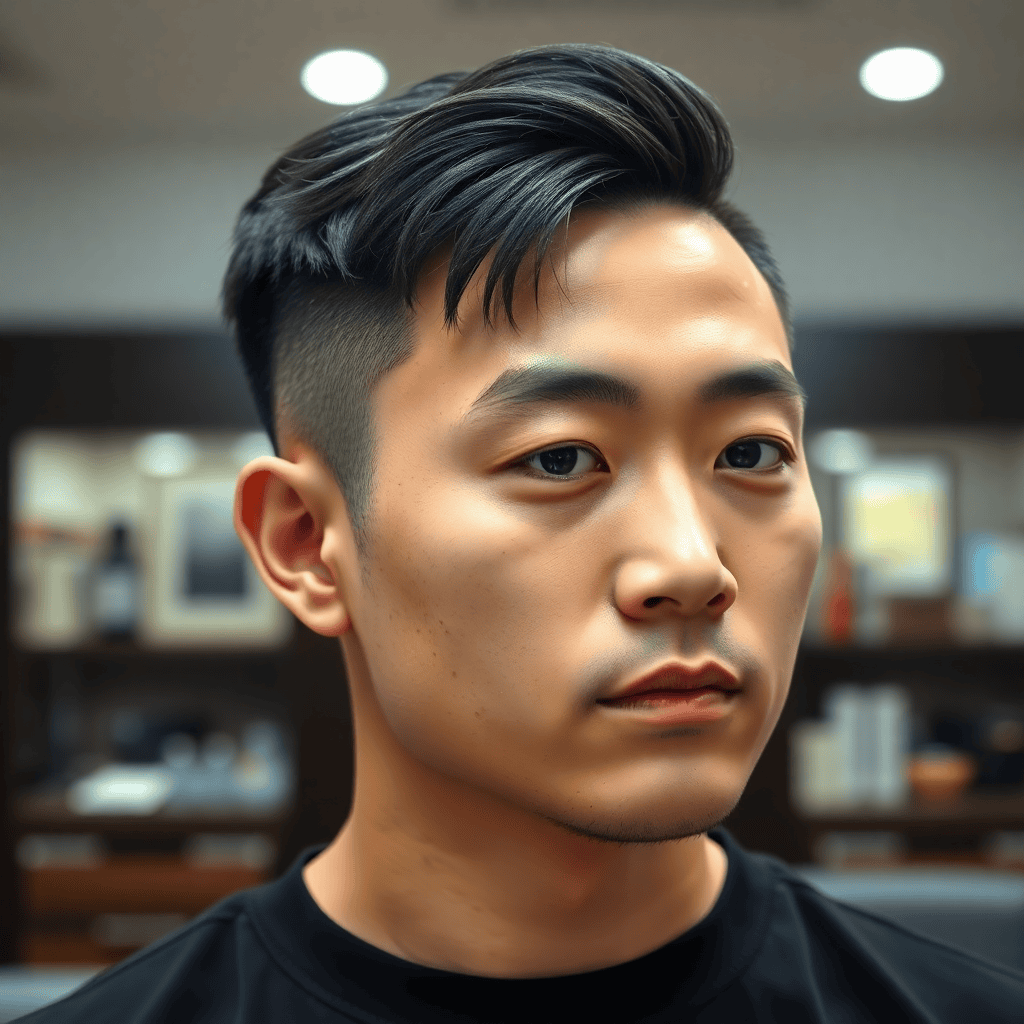
The upper section forms a rounded cap of layered hair about four inches long, while the lower sides and back are trimmed much shorter underneath. The fringe reaches close to the eyebrows and falls forward in soft, slightly separated strands. Rather than creating a hard bowl line, the top contains light layers that reduce bulk and allow movement.
The two-block remains one of the most recognizable Korean styles because its longer top can support many different finishes. This straighter version works well for thick hair and can reduce the visual height of a long face. Ask the barber to preserve weight near the crown while softening the fringe ends. Men with strong cowlicks may need more front length to control the direction. Blow-dry downward first, then lift the roots lightly with your fingers.
8. Korean 60/40 Part With Smooth Volume
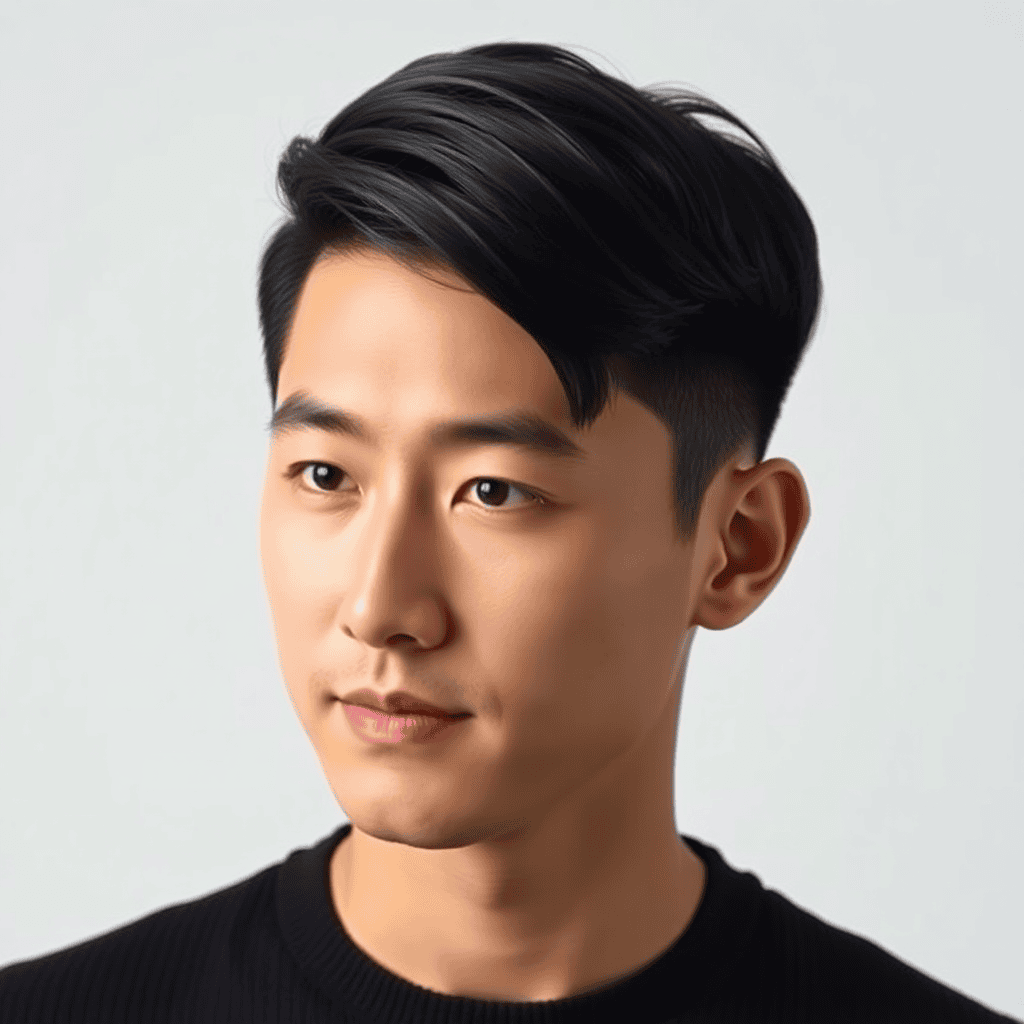
A slightly off-center part divides the top into a broader section and a narrower section. Both sides lift gently from the roots before curving away from the forehead. The hair measures four to five inches in front, while the sides remain compact and softly blended beneath the longer upper layers.
The 60/40 split offers more direction than a centered curtain cut while keeping the face open. It is useful for men who want stylish haircuts for men that remain suitable for work, dinners, or formal clothing. An oval face can carry the balanced shape easily, while a round face may benefit from extra height at the front. Ask the barber for long front layers and controlled weight around the temples. Use a round brush or curved vent brush to guide each section away from the part without creating stiff volume.
9. Two-Block Comma Hair With Curved Front Volume
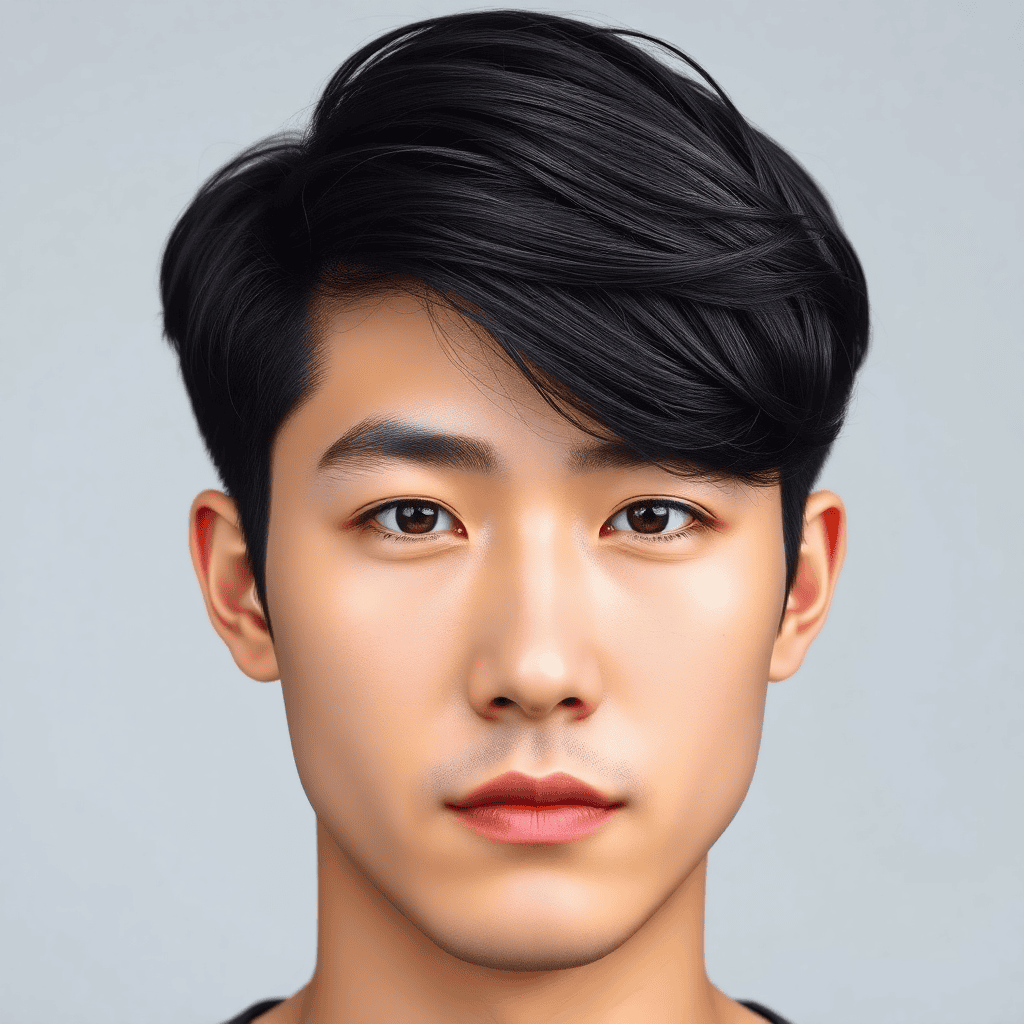
Longer top layers rise from an off-center part and sweep across the forehead, while one thick front section bends inward like a comma. The opposite side stays lifted and moves away from the face. Beneath the upper shape, the sides are trimmed short enough to reduce width but remain mostly hidden.
This fuller comma cut has more presence than the compact version and works best when the front reaches four to five inches. Thick straight hair holds the curve well, though fine hair may need a light styling foam for support. Request a two-block base with extra length at the front and a soft, rounded outline near the crown. The curved section should be shaped during blow-drying rather than pressed flat with heavy wax. Finish with a small amount of flexible product only where the bend needs control.
10. Middle-Part Two-Block Curtain Hair
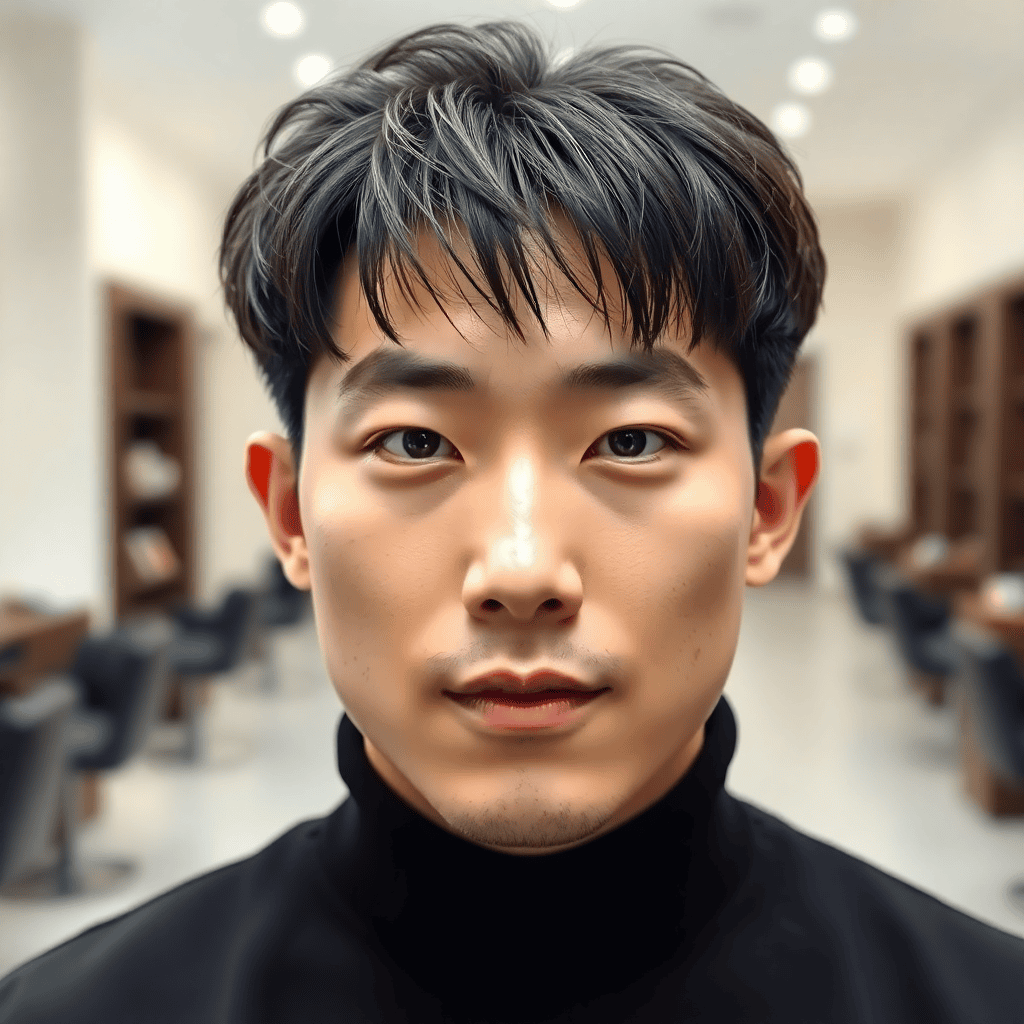
The front grows to cheekbone level and separates evenly through the center. Each side curves away from the forehead before falling beside the temples, creating the open shape associated with curtain hair. The lower sides are cut short beneath the longer panels, while the crown remains layered and lightly rounded.
Curtain hair uses medium-to-long fringe to frame both sides of the face, and Korean variations often combine that movement with a two-block base. This is strong men’s haircut inspiration for straight or slightly wavy hair. It can flatter round faces when the curtains fall downward rather than expanding outward. Ask for enough temple length to connect the front visually with the upper sides. A center part must be trained while the hair is damp, then lifted at the roots with warm air.
11. C-Curl Curtain Cut With Rounded Ends
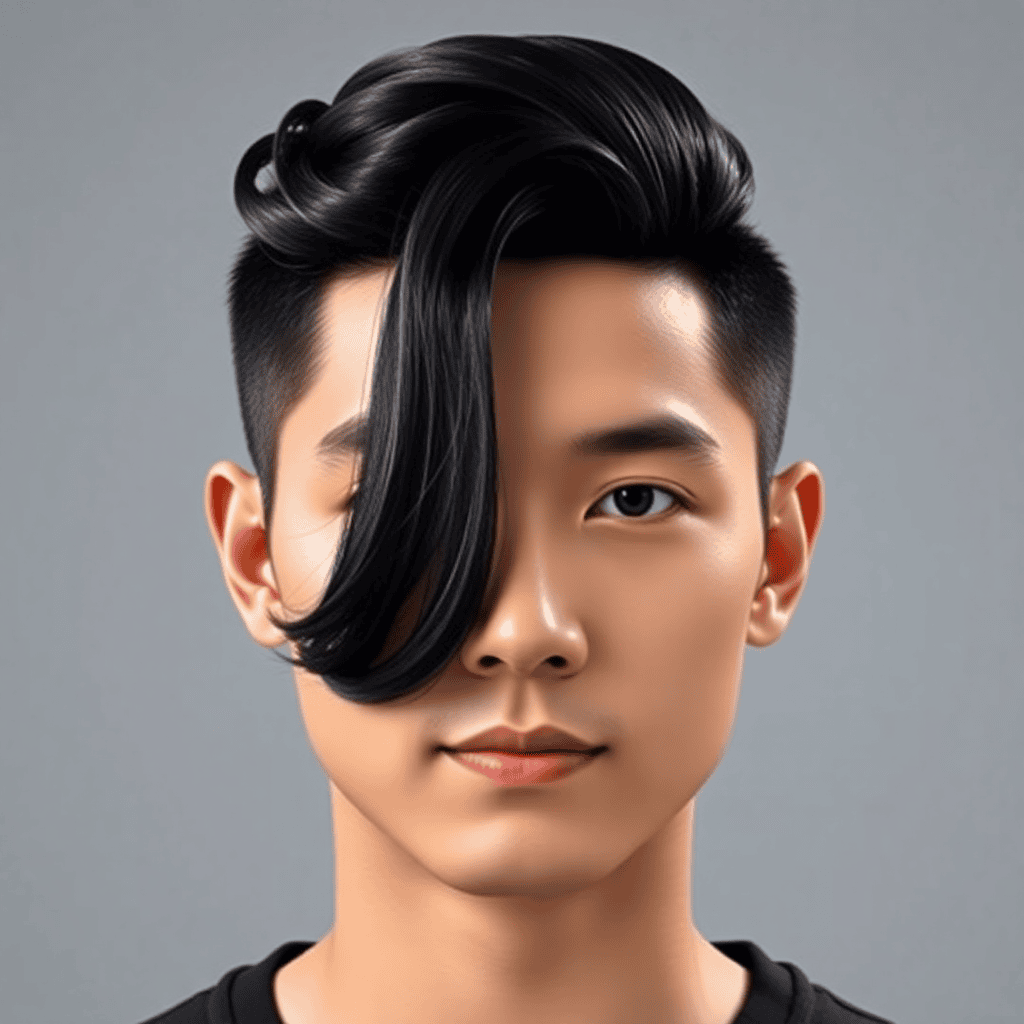
Medium-length front layers separate near the center and bend outward in smooth C-shaped curves. The ends turn gently toward the cheekbones, while the crown holds soft rounded volume. The sides remain moderately short behind the longer curtain panels, and the neckline is clean without being faded high.
The curved finish makes straight hair appear more fluid and can add width beside a long or narrow face. Men with naturally stiff hair may need heat styling or a salon texture service to hold the bend. Ask for layered curtains with longer pieces around the temples and no harsh thinning near the ends. Use a round brush to roll each front section away from the face, then let it cool before separating it. A light styling cream keeps the surface smooth while allowing the ends to move.
12. See-Through Fringe With Soft Tapered Sides
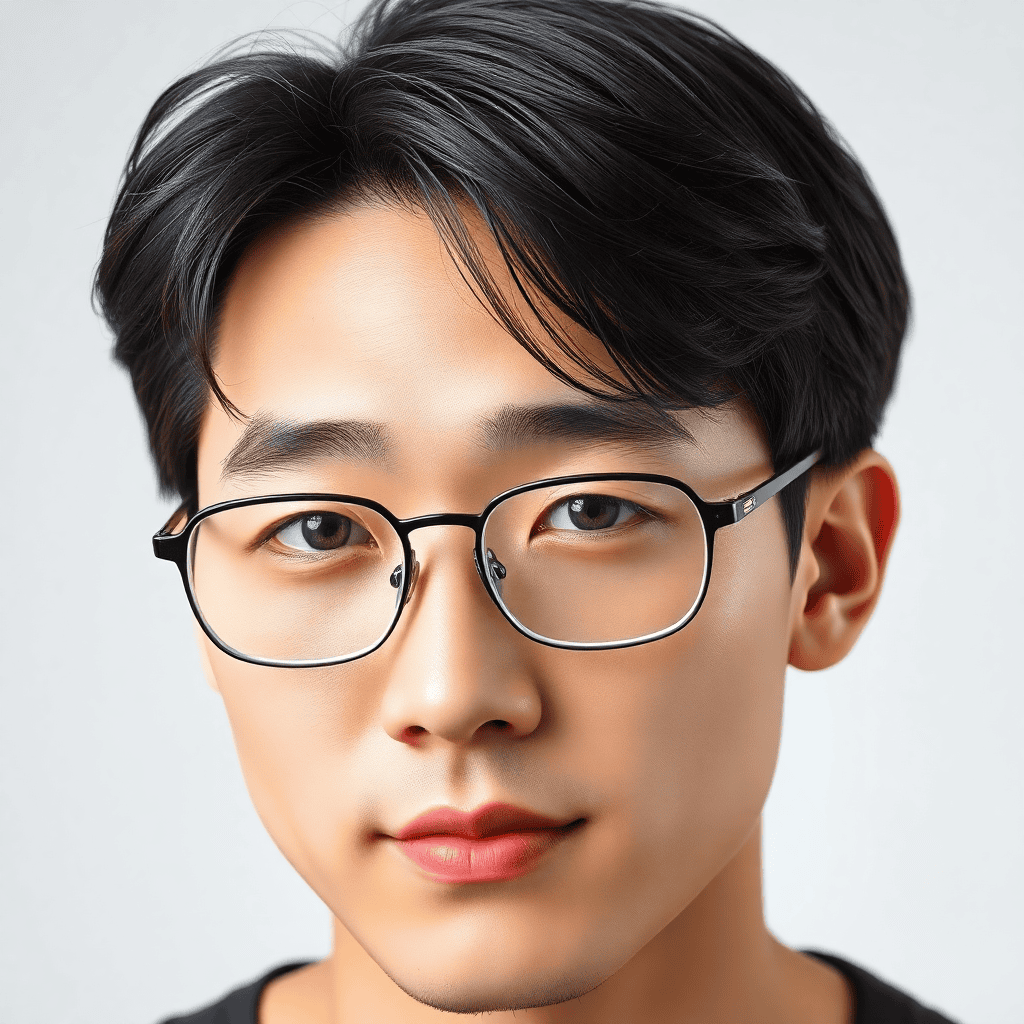
The top stays medium length with a light fringe that falls toward the eyebrows in thin, separated strands. Small spaces remain visible between the pieces, allowing parts of the forehead to show. The sides are tapered close around the ears but retain softness above them, while the crown carries gentle natural volume.
A see-through fringe can make dense straight hair feel lighter and less helmet-like. It also gives men with glasses room around the forehead without placing one heavy block of hair above the frames. Tell the barber to create airy fringe through selective point cutting rather than cutting the entire front thin. Over-thinning can leave gaps that are difficult to style. Dry the fringe forward, lift the roots briefly, and separate only a few pieces with clean fingertips.
13. Two-Block With Down-Styled Sides and Full Top
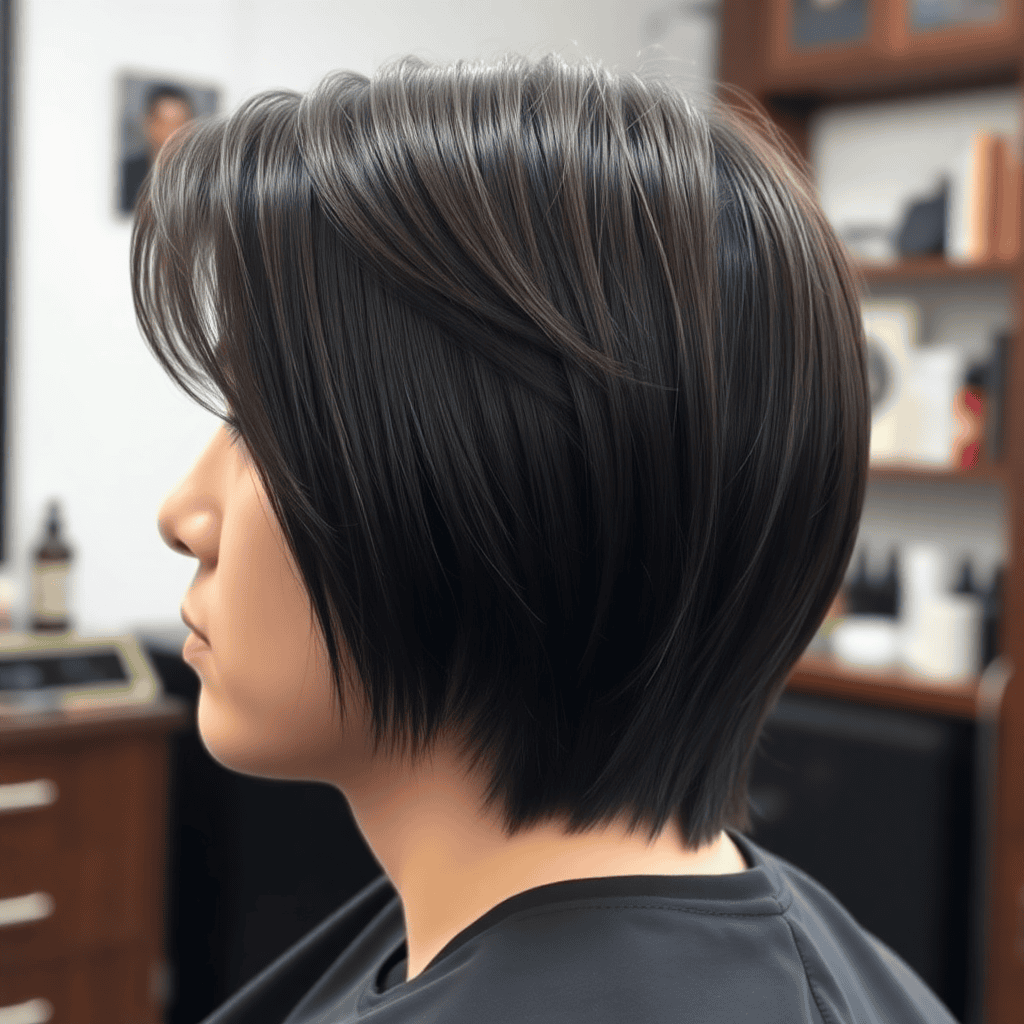
The top forms a smooth four-to-five-inch layer with visible fullness above the temples. Underneath, the sides are short and directed flat against the head rather than flaring outward. The front can sit softly across the forehead or separate into a loose off-center part, while the neckline remains narrow and tidy.
This shape addresses a common issue for thick, straight hair: side growth that pushes outward as it gets longer. The haircut itself should remove excess bulk without cutting the upper sides too high. Some clients pair the look with a salon down-perm service, but the cut should still be balanced without one. Ask the barber for close lower sides, preserved top weight, and clean blending near the back corners. At home, dry the side hair downward before adding volume to the top.
14. Soft Wave Perm Two-Block
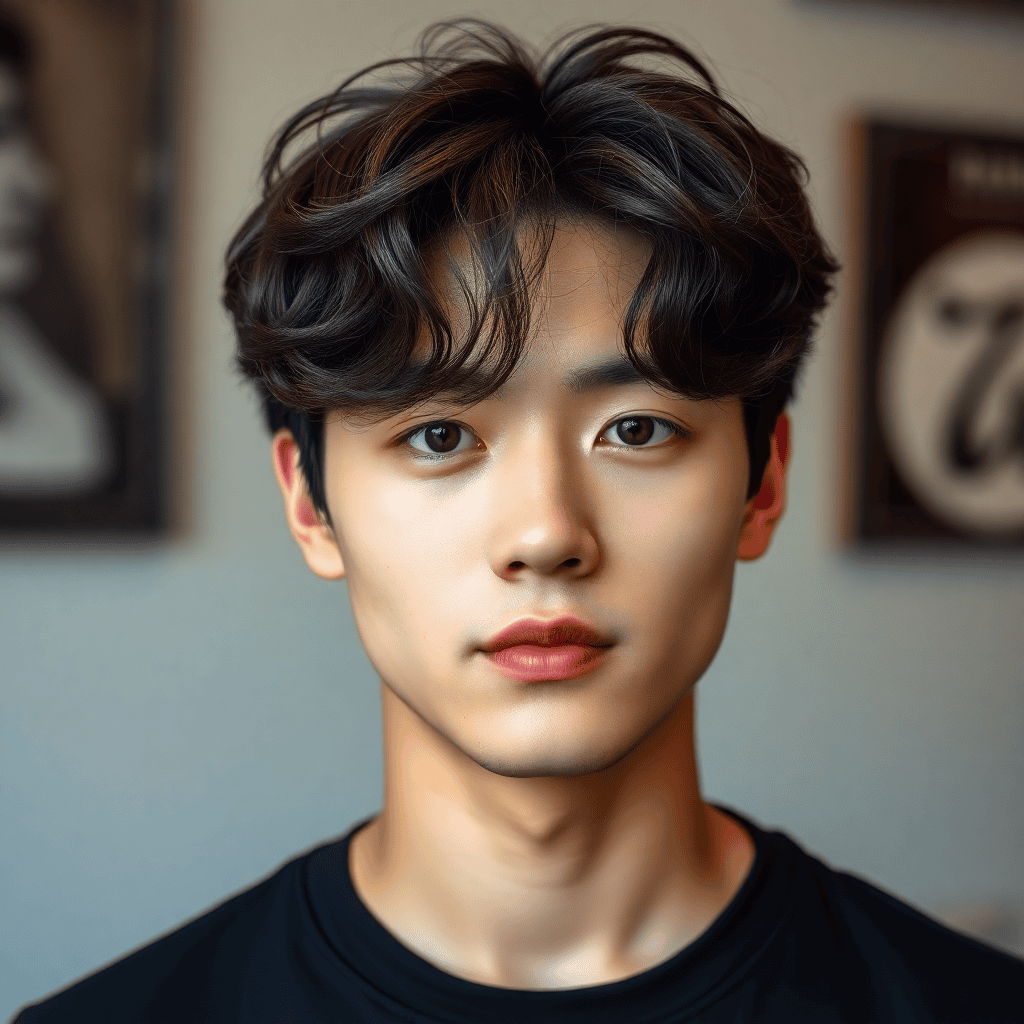
Loose S-shaped waves run through a four-to-five-inch top, giving the hair airy volume from the front to the crown. The sides remain short beneath the longer layers, but the contrast is softened because the waves fall slightly over the upper side area. The fringe bends naturally instead of sitting in one straight line.
This look can add shape to flat, straight hair and reduce the need to create every bend with a brush each morning. Men who already have natural waves may achieve a similar finish through layered cutting alone. Ask for a rounded two-block shape with enough length to show broad waves rather than tight curls. Styling should focus on keeping the pattern open. Scrunch a light curl cream or soft styling foam through damp hair, then dry gently so the waves stay separated rather than becoming fluffy.
15. Korean Shadow Perm With Textured Fringe
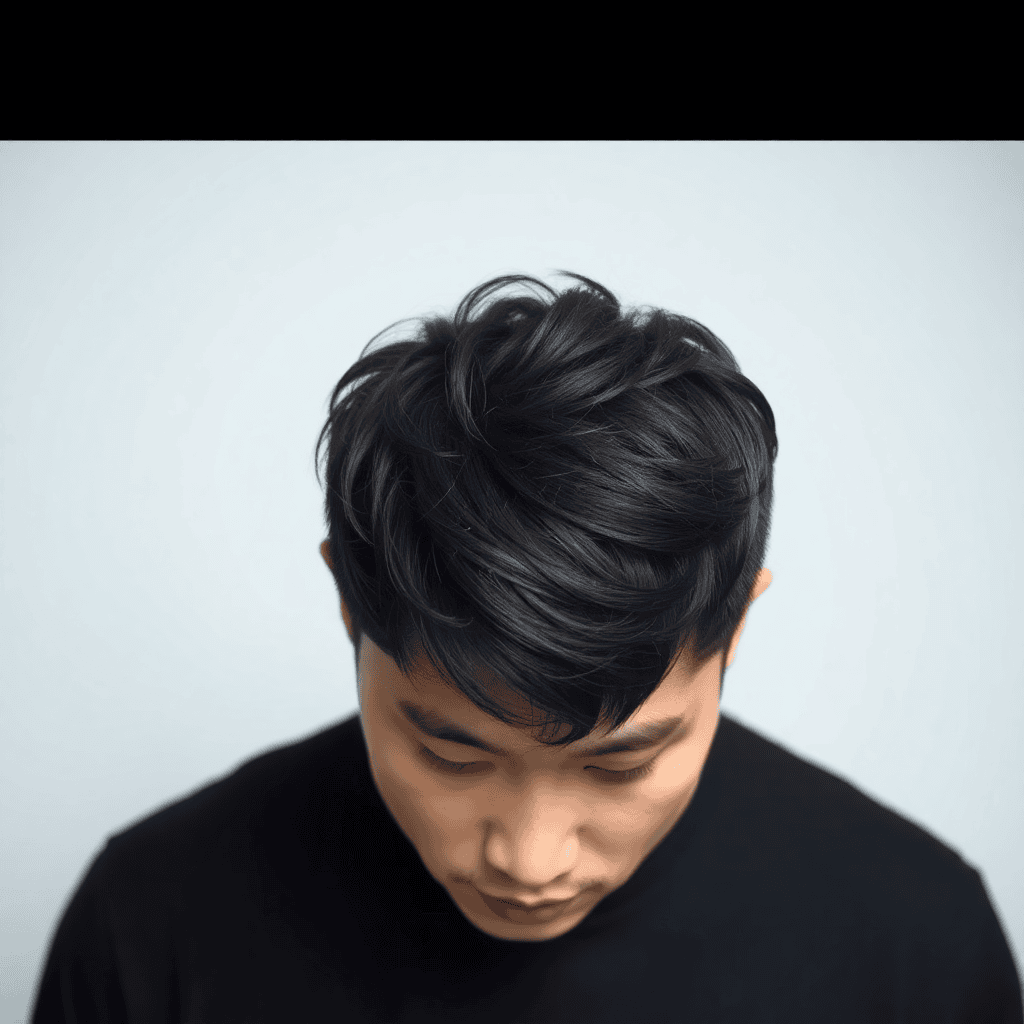
The top carries irregular soft bends that create shadow and depth without forming obvious ringlets. Hair remains four inches long through the crown and slightly longer at the fringe, where separate wavy pieces fall toward the eyebrows. The sides are compact, gently tapered, and blended into the textured upper section.
A shadow-style finish is useful for men who want movement that looks less structured than polished comma hair. It can make fine hair appear fuller because different bends catch light in separate directions. Ask the barber for medium layers and broken fringe rather than a blunt line. If requesting a texture service, bring a reference image because salon terminology can vary. At home, avoid combing the finished shape flat. Work a small amount of soft paste through the ends and arrange the fringe with your fingers.
16. Voluminous Korean Side Part With Soft Perm Texture
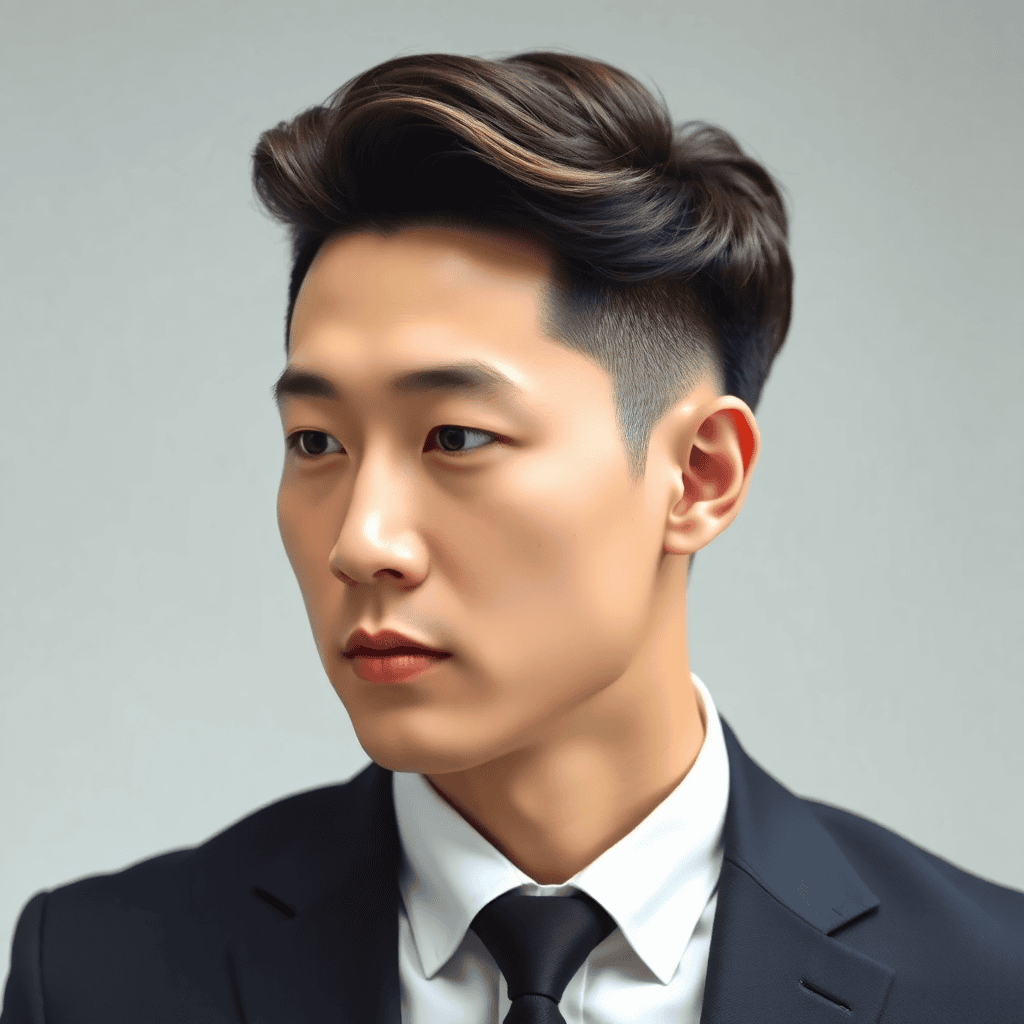
Five-inch top layers rise from a deep side part before forming broad, controlled waves. The front sweeps upward and backward, while the ends bend toward the side rather than hanging across the forehead. The sides stay shorter but retain enough fullness to connect smoothly with the upper shape.
This is one of the stronger business haircuts for men who want visible style without a sharp fade. The added lift can lengthen a round face, though men with a long face may prefer less height. Ask for a layered top, a clean scissor taper, and enough front length to form one broad wave. Blow-dry against the natural direction first to build lift, then guide the hair into place. A light cream or low-shine paste can control the surface without removing the soft movement.
17. Korean Dandy Cut With Rounded Layered Fringe
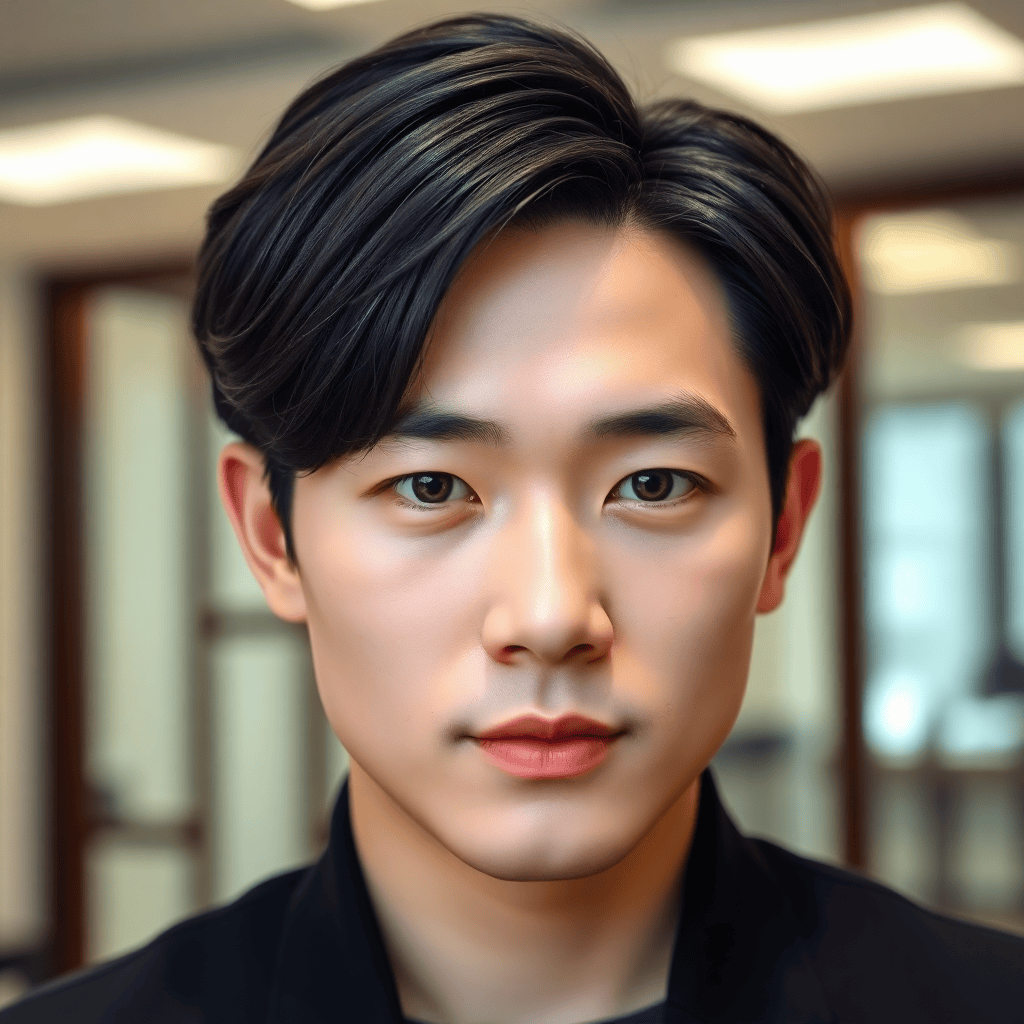
The hair forms a neat rounded outline with medium length on top and softly controlled sides. The fringe reaches the eyebrows in smooth layers, bending slightly inward at the ends. The crown is full but not tall, and the lower back narrows gently into a clean neckline.
The dandy cut sits between youthful fringe styling and a polished everyday haircut. It works well for straight, medium-to-thick hair and suits men who prefer an orderly shape without visible clipper contrast. Ask the barber for a rounded silhouette, light internal layering, and a fringe that remains movable rather than blunt. The style needs regular shaping because excess growth near the sides can make the outline too wide. Dry the fringe downward, then roll the ends slightly inward with a brush for its characteristic smooth finish.
18. Korean Leaf Cut With Flowing Side Layers
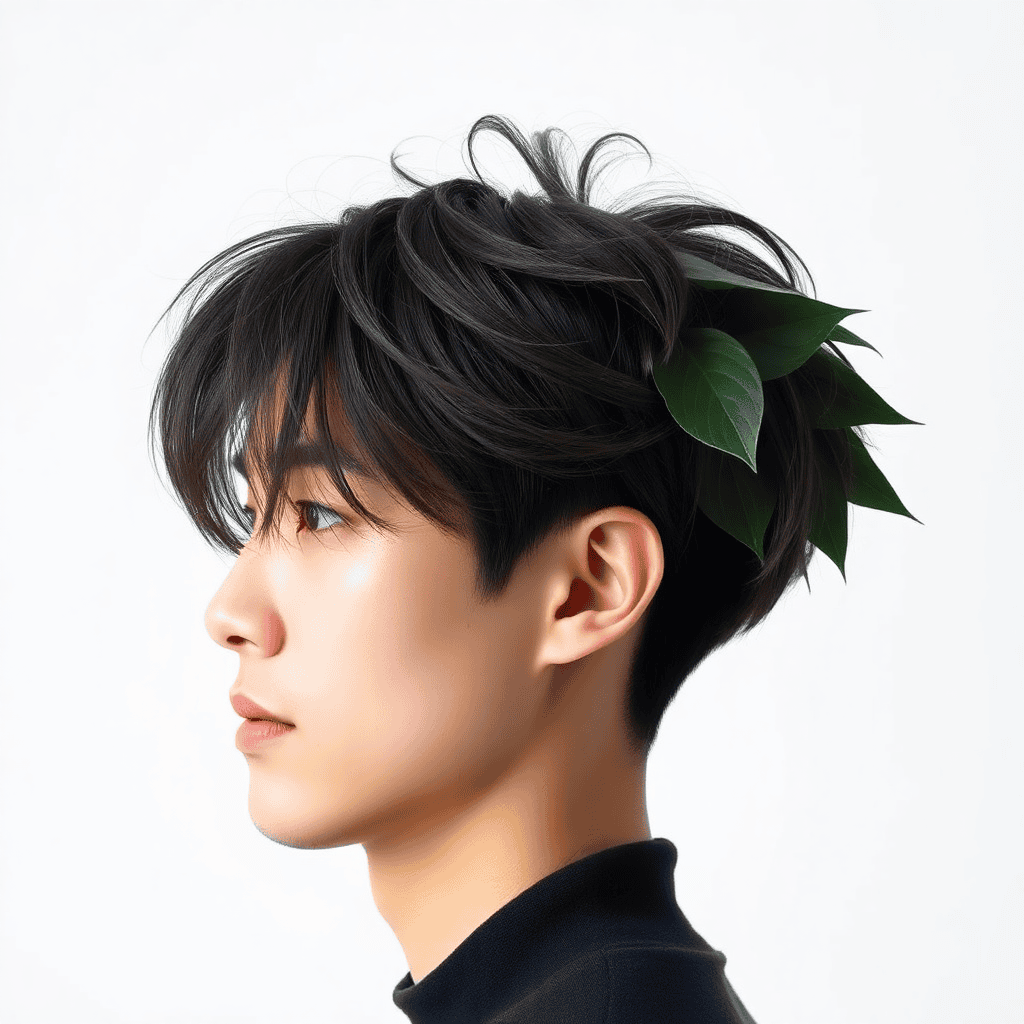
Long front sections divide near the center and sweep outward like overlapping leaves. The hair reaches around the cheekbones, with layered sides flowing backward toward the ears. The crown maintains light volume, while the neckline stays medium length and softly tapered rather than tightly clipped.
The leaf cut gives medium length hairstyles men can wear with movement while keeping the face visible. It often looks strongest on straight or gently wavy hair that bends smoothly at the ends. Men with a square face may like how the curved side layers soften the jaw area. Ask for long, connected front layers and feathered ends without removing too much density. Blow-dry the roots upward, guide the front away from the face, and allow a few strands to fall naturally for a less arranged finish.
19. Soft Korean Bowl Cut With Tapered Nape
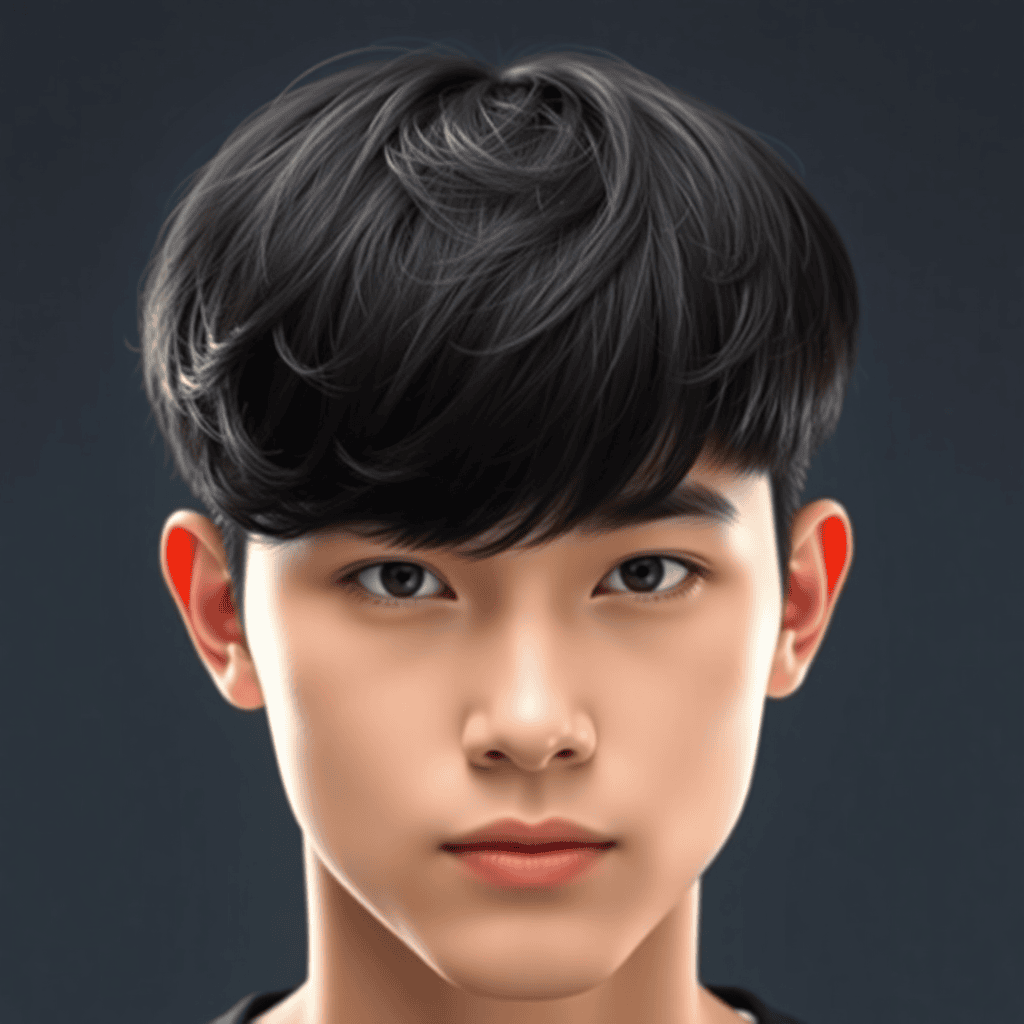
The upper hair creates a rounded shape from the crown to the fringe, but light layering breaks the edge so it does not resemble a hard traditional bowl. The fringe falls near the eyebrows, while the sides cover the upper ears and narrow gradually below. A short tapered nape keeps the back controlled.
This cut suits men who enjoy clean, youthful silhouettes and do not mind maintaining the rounded outline. Thick straight hair supports the shape naturally, although excess density should be removed inside rather than from the visible ends. Ask the barber for a soft bowl-inspired outline with textured perimeter work and a compact neckline. Styling is simple: dry the hair in its natural direction and smooth only the surface. Heavy wax can separate the shape too much and remove the soft, continuous finish.
20. Medium Layered Curtain Cut With Natural Waves
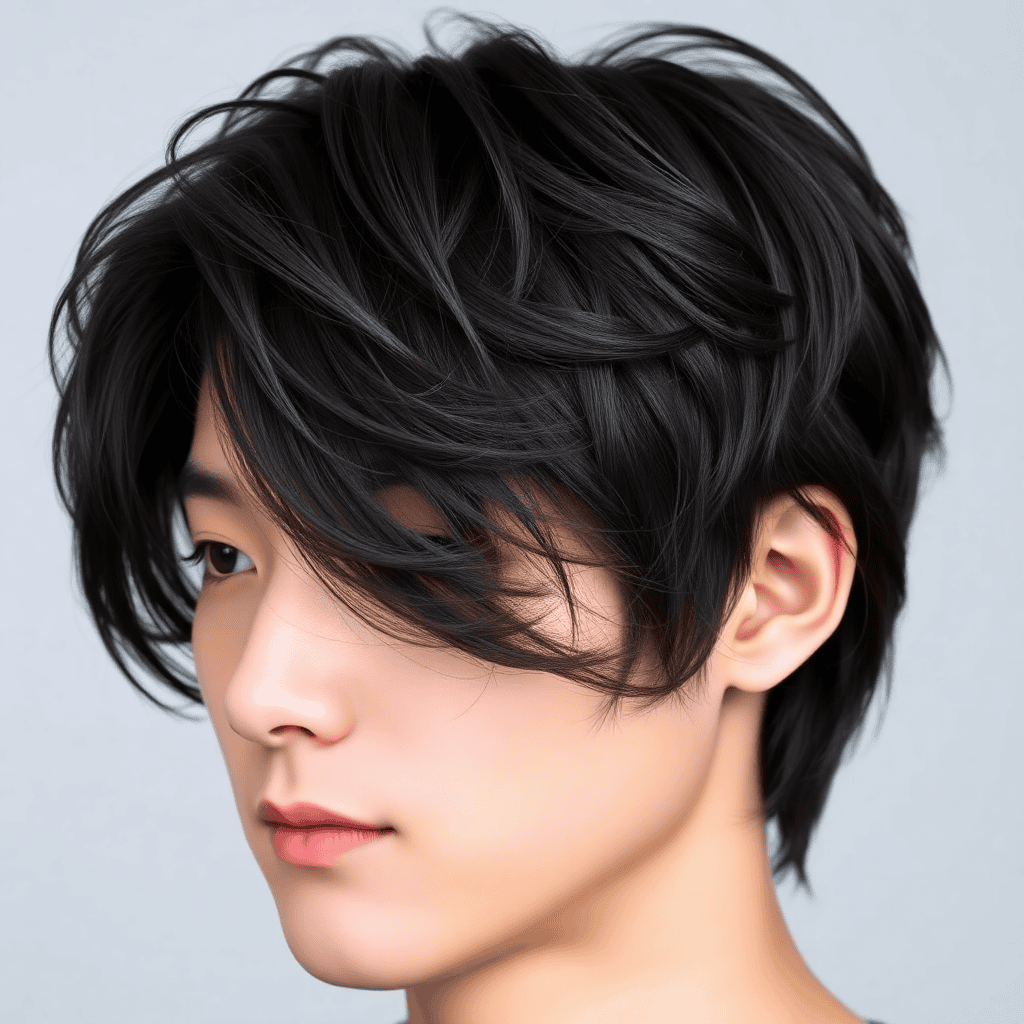
The hair reaches below the ears, with long layers beginning around the temples and continuing toward the back. A center part opens the forehead, while wavy curtain sections frame the cheekbones and jaw. The sides are not clipped short; instead, they connect into the longer back through soft scissor-cut layers.
This style suits haircuts for wavy hair men because natural bends create movement without requiring a highly arranged finish. It can also help balance a broader forehead when the front pieces remain close to the face. Ask for connected medium layers, light weight removal near the ends, and enough length behind the ears to maintain flow. Dry with a diffuser or low airflow, then use a light cream to define waves. Brushing after the hair dries may create more width than the cut needs.
21. Korean Shag With Wispy Fringe
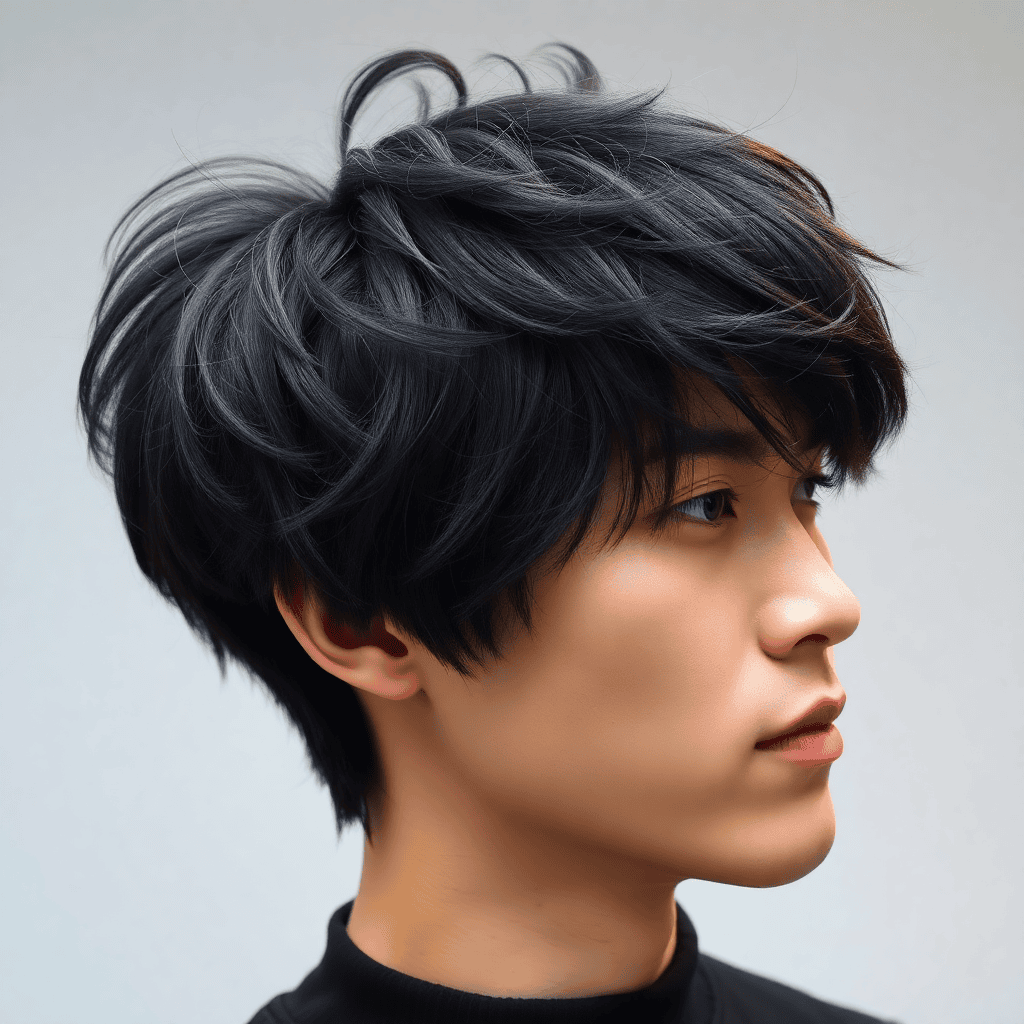
Layered hair reaches the ears and extends slightly over the neckline, with shorter pieces creating lift around the crown. The fringe is thin, uneven, and eyebrow length, while the side layers angle toward the cheekbones. The ends remain feathered and visible rather than blending into one smooth outline.
The Korean shag offers a lighter alternative to a heavy medium cut. It works best for straight or wavy hair with enough density to support many layers. Fine hair can wear the style, but excessive razor work may make the ends appear sparse. Ask for soft disconnected layers, a wispy fringe, and controlled length at the back. Styling should keep some irregularity. Dry the roots with your fingers, twist a few ends with light cream, and leave the rest loose rather than shaping every strand.
22. Korean Wolf Cut With Feathered Crown Layers
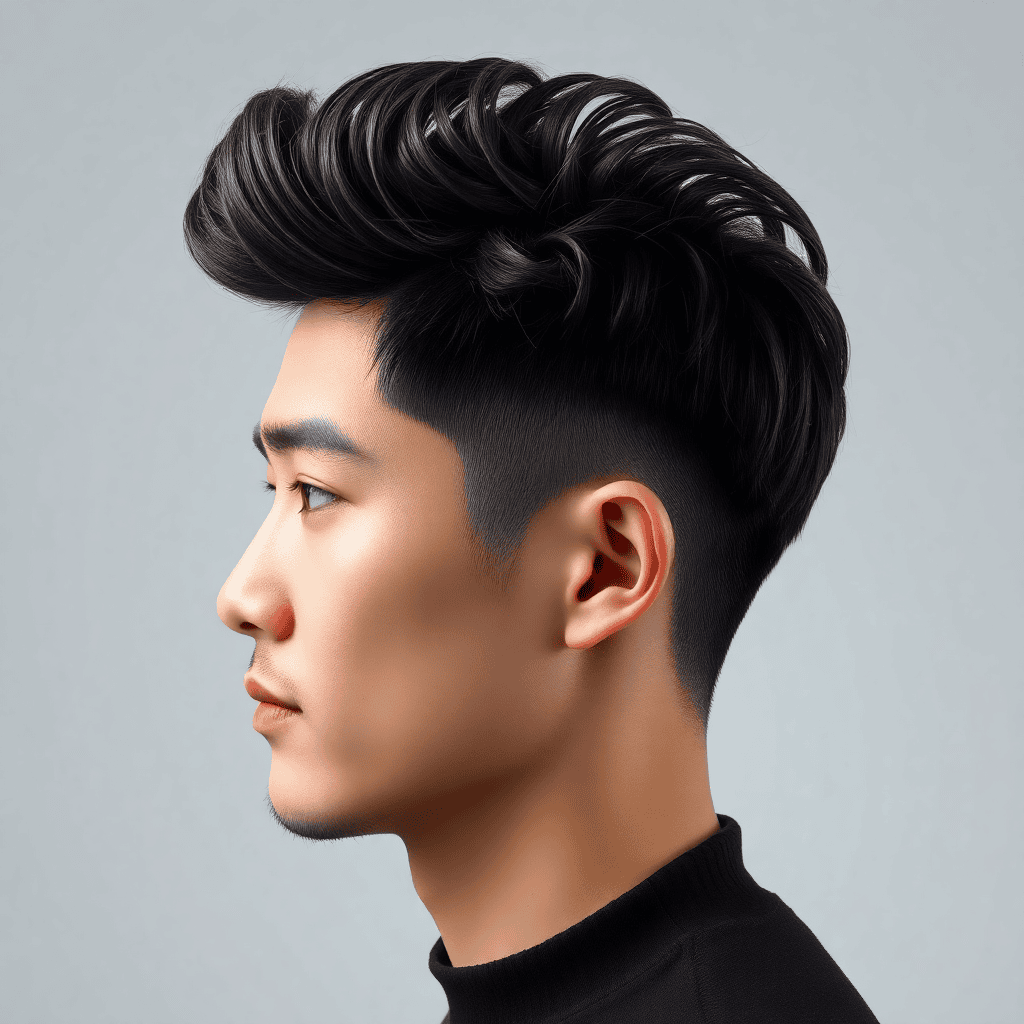
Shorter layers build volume around the crown, while longer pieces travel past the ears and extend down the nape. The fringe separates into soft textured sections, and the sides frame the cheekbones before narrowing toward the longer back. The outline looks intentionally shaggy but still shaped.
The wolf cut combines layered shag movement with a longer mullet-like rear section and has strong ties to modern K-pop styling. It performs well on medium-to-thick wavy hair because natural texture highlights the changing lengths. Ask for scissor-cut or razor-softened layers rather than tightly faded sides. Growth of at least several inches gives the barber enough material to build movement. Use light cream through the ends and avoid flattening the crown.
23. Soft Korean Mullet With Center-Parted Fringe
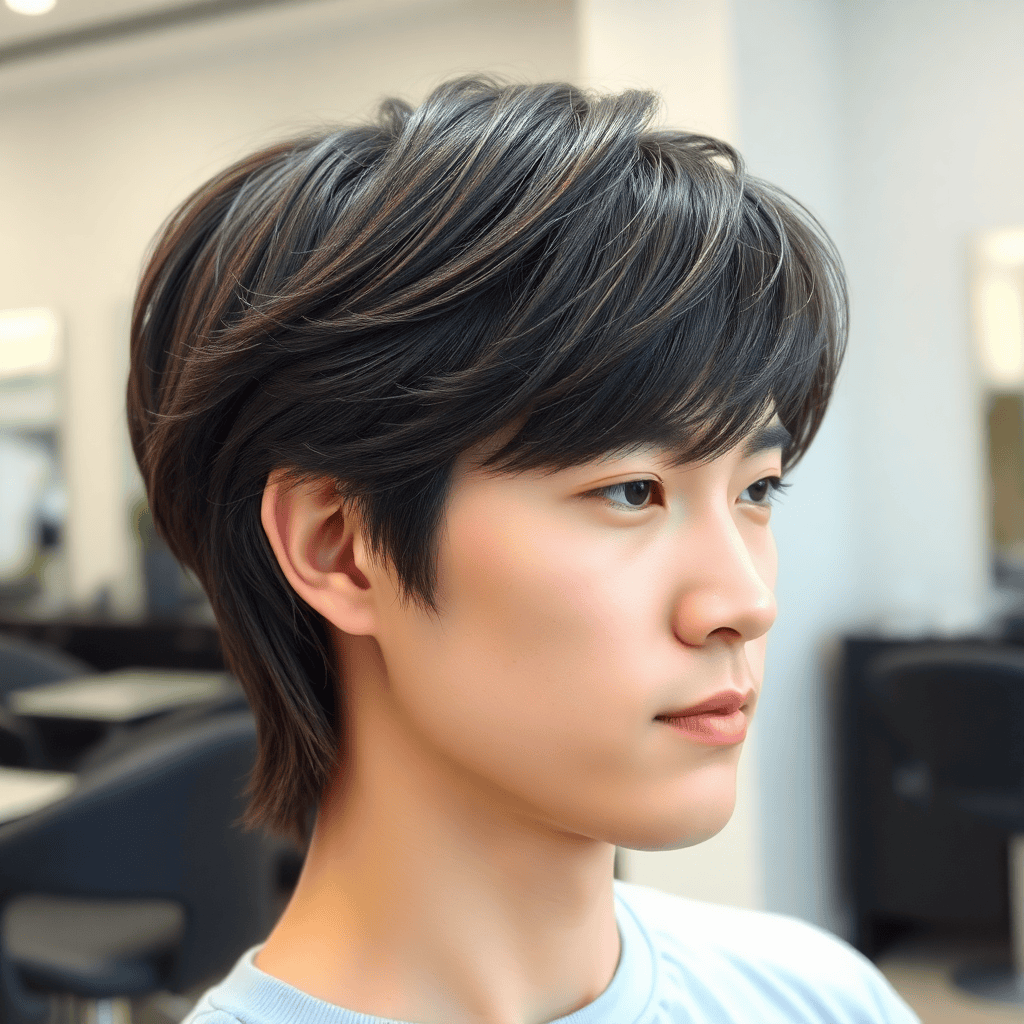
The front divides through the center into loose curtain pieces, while medium layers cover the ears and extend toward the collar. The back is visibly longer but remains soft and tapered instead of forming a narrow tail. Crown layers connect the shorter upper shape with the longer nape, creating controlled flow.
This is a restrained entry point for men interested in long hairstyles for men without committing to a dramatic mullet. Straight hair creates a cleaner outline, while waves produce a more relaxed finish. Ask for a soft Korean mullet with connected layers and minimal clipper work. The area behind the ears should remain light enough to avoid a bulky triangular shape. A trim around the fringe and side layers can refresh the haircut while allowing the back to continue growing.
24. Korean Hush Cut With Airy Face-Framing Layers
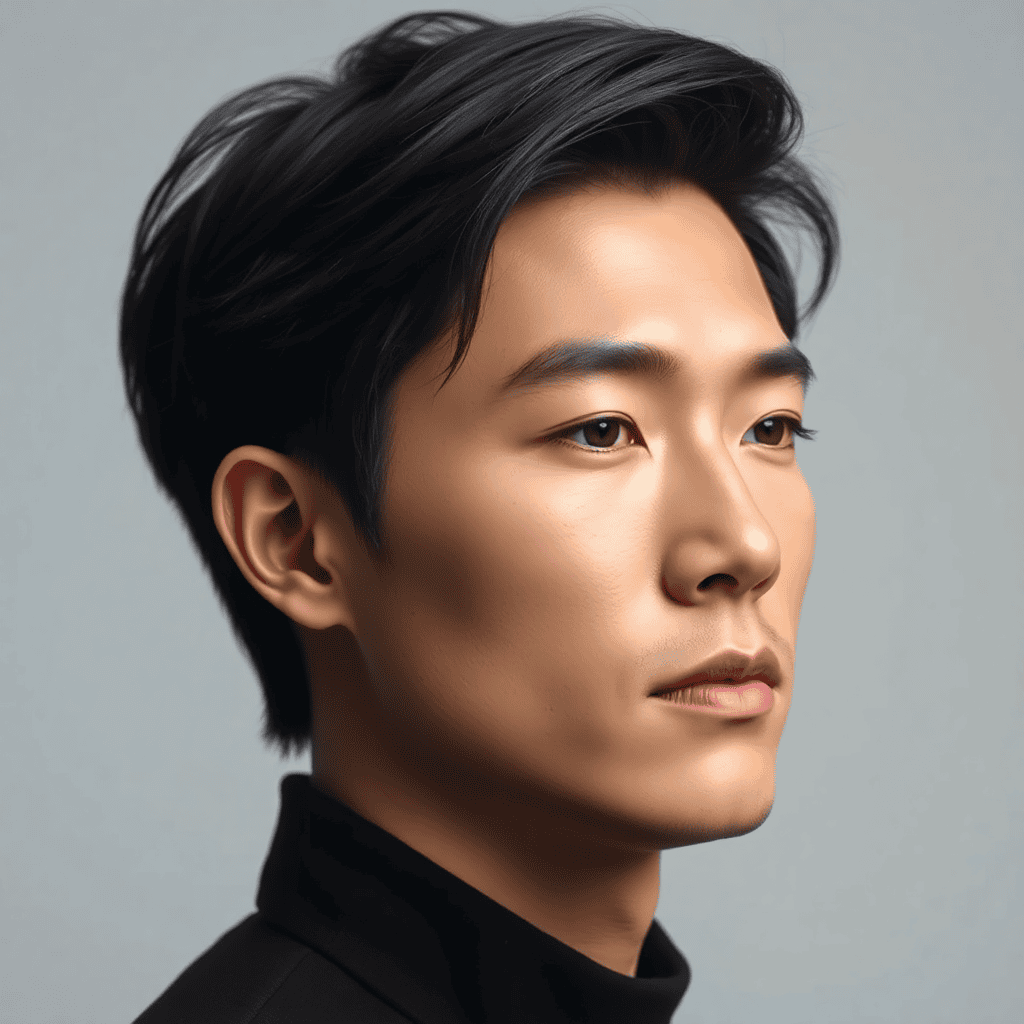
Medium-to-long hair falls toward the shoulders with light, flowing layers beginning near the cheekbones. The center or loose off-center part opens the forehead, while thin front pieces blend into longer sections around the jaw. The ends appear soft and feathered, with no heavy shelf between layer lengths.
The hush cut is associated with airy movement and subtler layering than a bold wolf cut. Men with medium or thick straight hair can use it to remove bulk while preserving length. Gentle waves make the layers more visible. Ask for soft face framing, blended internal layers, and a light perimeter rather than strongly disconnected sections. The finished style should move as one shape. Use a low-airflow dryer and a small amount of lightweight cream to keep the ends smooth.
25. Long Korean Center Part With Flowing Layers
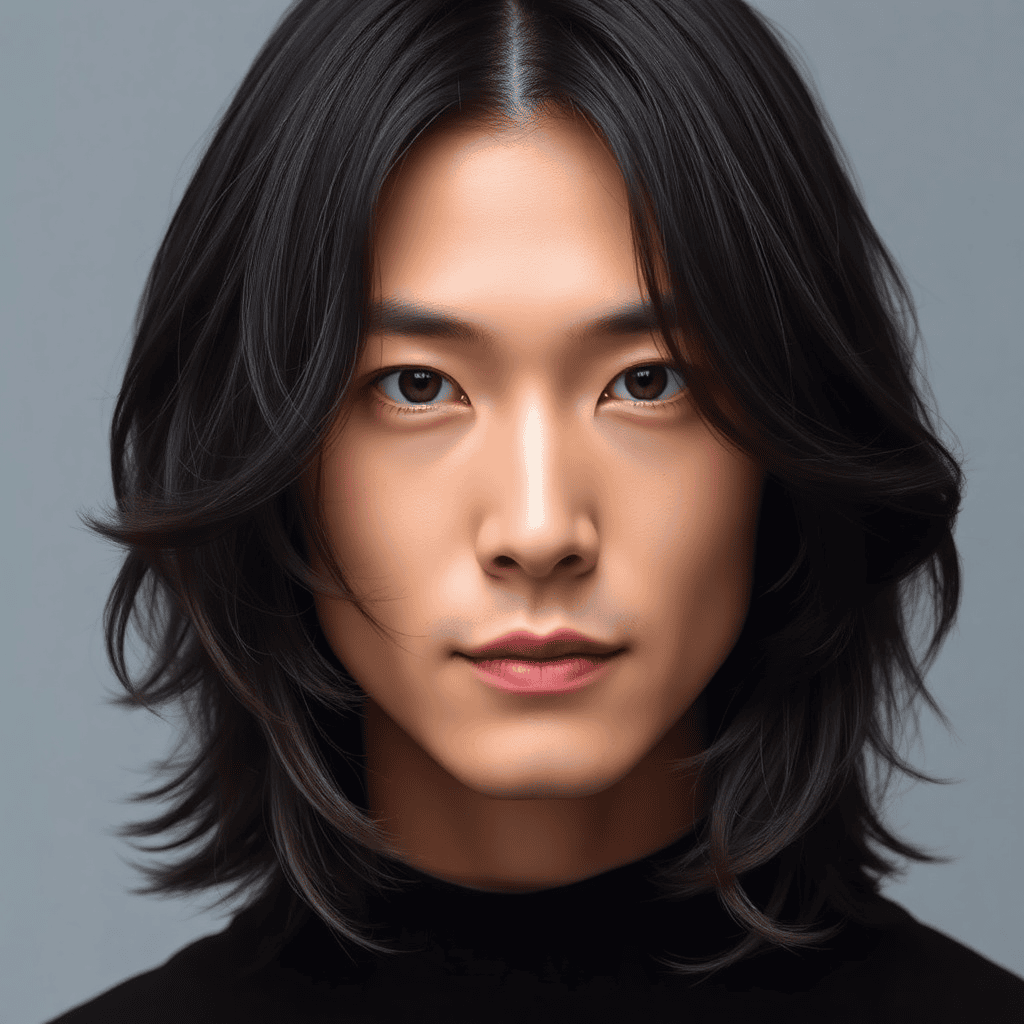
The hair reaches the shoulders with a clean center part and long layers that travel from the cheekbones through the ends. The front bends away from the face, while the sides fall behind the ears or remain loose beside the jaw. The back keeps enough density to look full, with subtle layering preventing a flat, heavy outline.
This is the longest option in the collection and suits men prepared for regular conditioning, careful detangling, and a longer drying routine. Straight hair creates a sleek finish, while broad waves add a softer editorial look. Ask the stylist to preserve the bottom edge while adding movement around the face and crown. Avoid excessive thinning because long hair can become weak-looking at the ends. A lightweight cream and gentle blow-drying keep the layers controlled without removing their natural movement.
Conclusion
Choosing between these cuts becomes easier once you separate appearance from daily effort. Short two-block crops and tapered fringe styles need regular edge cleanup but take little time to arrange. Comma hair, curtain cuts, and smooth side parts require more front length and a willingness to practice blow-drying. Shags, wolf cuts, mullets, and longer layered styles need patience during growth, yet their softer outlines can remain attractive between major trims.
Face shape should guide proportion rather than act as a strict rule. Extra height can add length to a round face, downward fringe can shorten the appearance of a long face, and curved layers can soften stronger jawlines. Hair density matters as well. Thick hair often needs hidden weight removal, while fine hair usually benefits from preserving structure.
Many trending haircuts for men look simple because the cutting work is hidden inside the shape. Before visiting a barbershop or salon, save two or three reference images showing the front, side, and back. Explain which details matter most instead of asking for a style name alone. A successful Korean-inspired haircut is rarely about copying every strand; it is about carrying the same balance into hair that grows in its own way.
Frequently Asked Questions
1. Which Korean haircut works best for a round face?
Cuts with moderate height and longer vertical lines often create useful balance. A lifted 60/40 part, side-swept two-block, or curtain style that falls close to the cheeks may work well. Avoid adding excessive width directly above the ears.
2. What Korean haircut can soften a square face?
Curved comma fringe, C-curl curtains, and medium face-framing layers can soften strong corners around the forehead and jaw. Keep some movement near the temples rather than choosing a sharply boxed outline with flat, rigid styling.
3. Which Korean haircut suits an oval face?
An oval face can usually carry short crops, two-block cuts, comma hair, curtains, and longer layers. Choose according to hair density and maintenance rather than relying only on face shape. Keep the finished proportions natural instead of adding unnecessary height.
4. What is a good Korean haircut for a long face?
A layered fringe, rounded dandy cut, or medium curtain shape can reduce the appearance of extra length. Lower volume at the crown and some controlled width near the temples often create a more balanced visual outline.
5. Can Korean haircuts work as a haircut for big forehead men?
Fringe-based options can cover part of the forehead while keeping movement around the face. See-through fringe gives light coverage, while a layered straight fringe provides more. Avoid cutting the front too short before checking how it settles naturally.
6. Which Korean style is a useful haircut for chubby face men?
A side part with gentle height or a longer curtain cut can create more vertical direction. Keep the upper sides controlled so the haircut does not add width at the cheeks. Soft face-framing pieces may also improve visual balance.
7. How do I find the best hairstyle for face shape?
Compare the width of your forehead, cheekbones, and jaw, then notice whether your face appears longer or wider. Use those observations as guidance, but include hair growth patterns and density before making a final choice.
8. Do Korean haircuts work for thick hair men?
Yes. Thick straight hair often supports two-block cuts, dandy styles, curtains, and comma fringe well. The barber may need to remove hidden bulk through internal layering while preserving enough weight to keep the surface smooth.
9. Which Korean styles are suitable haircuts for thin hair men?
Short textured crops, soft side parts, and lightly layered shadow styles can create movement without exposing too much scalp. Heavy thinning should usually be avoided because it removes density that fine or thin hair may need.
10. What are good Korean haircuts for fine hair men?
Choose shapes with controlled layering and moderate volume, such as a short tapered crop or soft side part. Lightweight styling foam may support the roots. Long, heavily feathered ends can sometimes make fine hair appear less full.
11. Are Korean styles good haircuts for straight hair men?
Straight hair works naturally with two-block cuts, dandy styles, comma fringe, leaf cuts, and smooth curtains. The main challenge is creating bends and root lift, which can often be managed with blow-drying and a light styling product.
12. Which Korean cuts work as haircuts for wavy hair men?
Medium curtains, soft shags, wolf cuts, and layered mullets can display natural waves clearly. Ask the barber to cut according to the dry movement pattern so the finished length does not rise more than expected.
13. Can men with curly hair wear Korean-inspired haircuts?
Curly hair can be shaped into layered curtains, curly two-block styles, or softer wolf cuts. The result will have more volume than a straight-haired reference, so the barber should adapt the outline instead of forcing identical strand placement.
14. Can coily hair be adapted into Korean haircut shapes?
Yes. The key is adapting the silhouette rather than copying straight-hair texture. A rounded layered top, controlled sides, tapered neckline, or center-directed shape can carry Korean influence while respecting the natural coil pattern.
15. What should I ask my barber for when requesting a two-block haircut?
Explain how long you want the top and how short the hidden sides should be. Mention whether you prefer a disconnected contrast or a softer blend. Bring front, side, and back references because two-block variations differ widely.
16. What guard number is commonly used on two-block sides?
The choice depends on how much scalp exposure you want. A number 2 or 3 can keep the lower section short while retaining coverage, though some styles use longer scissor work. Discuss the visual result rather than requesting one number automatically.
17. How do I ask for a Korean comma haircut?
Request enough front length to curve one section inward near the eyebrow. Explain which side should hold the comma shape and whether you want short tapered sides or a two-block base. A clear reference photo reduces confusion.
18. What should I tell a barber when asking for curtain hair?
Describe the desired part position, front length, and amount of movement around the cheekbones. Ask whether your current hair is long enough to separate naturally. Mention whether you want short hidden sides or fully connected medium layers.
19. What is point cutting in a Korean fringe?
Point cutting uses the tips of the scissors to soften the ends and reduce a heavy straight edge. It can create more separation in textured or see-through fringe. The amount should match the density of the hair.
20. Should Korean haircuts have a natural or sharp hairline?
Many softer Korean styles keep a natural front hairline because fringe covers or frames it. The sideburns and neckline may still be cleaned neatly. Sharper lineups create a different visual character and should be requested intentionally.
21. Is a taper the same as a fade?
No. A taper usually shortens hair gradually around limited areas such as the sideburns and neckline. A fade creates a broader transition on the sides and back, often reaching much shorter lengths and exposing more scalp.
22. What is the difference between a low, mid, and high fade?
A low fade begins close to the ears and neckline. A mid fade starts around the middle of the sides, while a high fade begins near the upper temples. Higher placement creates stronger contrast with the top.
23. What styling product works for Korean curtain hair?
A lightweight cream, soft paste, or flexible styling lotion can help control movement without freezing the curtains. Men who need more root support may apply a small amount of styling foam before blow-drying.
24. What product should I use for textured Korean fringe?
A low-shine paste or light texture cream can separate the ends. Begin with a small amount and apply it through the middle lengths before touching the fringe. Too much product may make thin sections clump together.
25. Is hair wax suitable for Korean hairstyles?
Hair wax can work for comma fringe, textured crops, and separated layers when used lightly. Choose the finish according to the style. Heavy wax may flatten soft perms, airy curtains, or fine hair.
26. Do I need a hair dryer for Korean men’s hairstyles?
Many styles become easier with a dryer because airflow can lift roots, direct the fringe, and create curved front sections. Short crops may air-dry well, while comma hair and curtains usually benefit from controlled heat styling.
27. How can I create Korean-style root volume?
Dry the roots in the opposite direction from where the hair will finish, then guide them back into place. Use moderate airflow and avoid pressing the hair flat with a brush. Let lifted sections cool briefly before rearranging them.
28. Should I use a round brush for comma hair?
A small round brush can help form the inward front curve. Wrap only the selected fringe section around the brush, apply warm air, and allow it to cool before releasing. Avoid making the curve too tight.
29. How often should a short two-block haircut be trimmed?
Many men refresh the lower sides and neckline every three to five weeks, depending on growth speed and preferred neatness. The longer top may need less frequent cutting. A quick cleanup can preserve the shape between full appointments.
30. How often should medium Korean curtain hair be cut?
A trim every six to ten weeks may keep the front and side layers balanced. Hair that grows evenly can go longer, while thick hair may need earlier weight control around the ears and crown.
31. How long does hair need to be for a Korean middle part?
The front usually needs enough length to reach at least the eyebrows and preferably farther when pulled down. More length allows the sections to bend away from the forehead and remain beside the face.
32. How do I grow out a short haircut into a two-block style?
Keep the top and upper sides growing while cleaning only the lower edges and neckline. Explain the long-term goal at each trim so the barber does not remove the length needed for the future upper shape.
33. How can I grow a two-block haircut into curtain hair?
Preserve the front, temple, and crown lengths while keeping the lower sides manageable. The fringe may feel awkward before it reaches eyebrow or cheekbone length. An off-center part can help during the transition.
34. Are Korean haircuts low maintenance?
Some are. Short crops and natural two-block styles can be easy hairstyles for men, while comma fringe, smooth curtains, and longer layered cuts may need daily drying. Maintenance depends more on the finish than the haircut name.
35. Which Korean cut is a low maintenance men’s haircut?
A short textured two-block with a natural fringe is among the simpler choices. It can follow the hair’s normal direction and needs little shaping. Keeping the top moderately short also reduces drying time.
36. Can Korean haircuts work for men with thinning hair?
Short textured tops and controlled side parts may create a balanced appearance without relying on excessive height. Avoid aggressive thinning techniques. A barber can adjust layering to preserve visible density and work with the natural pattern.
37. Which Korean style can suit a receding hairline?
A short textured fringe or loose side-swept top may soften the transition around the temples. Avoid forcing long strands across large areas because movement can expose them. Choose a shape that works when the hair shifts naturally.
38. Can comma hair work with a widow’s peak?
It can, depending on the growth direction. The curved fringe may be placed slightly to one side of the peak rather than fighting it. Keep enough front length for the hair to bend without separating unexpectedly.
39. Are Korean haircuts suitable for men over 40?
Yes. Soft side parts, scissor-tapered two-block variations, and controlled medium layers can look mature and current. Choose natural texture and balanced proportions rather than copying highly styled details that do not match your routine.
40. What are good Korean-inspired haircuts for men over 50?
A softly layered side part, compact textured crop, or fuller scissor cut can provide Korean influence without requiring long fringe. Preserving appropriate coverage and avoiding excessive thinning may help the haircut appear balanced.
41. Can teenage guys wear Korean haircut styles?
Two-block cuts, textured fringe, curtains, and soft perms are common choices for younger clients because they allow flexible styling. School rules and daily styling time should guide the final length and amount of contrast.
42. What is the difference between a Korean crop and a Caesar cut?
Both may use forward fringe, but a Caesar commonly has a shorter, more even top and a defined horizontal front. Korean crops often include softer layering, greater movement, and lighter separation through the fringe.
43. How is a two-block haircut different from an undercut?
A two-block usually keeps a rounded longer upper section that falls over distinctly shorter lower sides. An undercut can use a wider range of top shapes and often creates a sharper exposed disconnection around the head.
44. What is the difference between comma hair and curtain hair?
Comma hair emphasizes one inward-curving front section, often from an off-center part. Curtain hair separates into two sections that frame both sides of the face. Both require enough front length to hold their intended direction.
45. How is a Korean wolf cut different from a mullet?
A wolf cut emphasizes many shaggy layers, crown volume, and movement throughout the sides and back. A mullet places stronger attention on the contrast between a shorter front or sides and a visibly longer rear section.
46. Are Korean hairstyles part of men’s hairstyles 2026 trends?
Soft layers, textured fringe, curtain movement, two-block shapes, and longer flowing cuts continue to influence current men’s styling. The most wearable versions are adapted to natural density and face shape rather than copied without adjustment.
47. Which Korean cuts are suitable professional haircuts for men?
Soft side parts, neat 60/40 cuts, controlled dandy styles, and tidy two-block variations can fit many workplaces. Keep the fringe out of the eyes, maintain clean edges, and use flexible styling rather than an intentionally messy finish.
48. Can Korean haircuts be paired with beards?
Yes. Soft fringe can contrast well with a short structured beard, while longer layers often look balanced with light facial hair. Avoid allowing both the haircut and beard to become widest at the same point on the face.
49. What Korean styles work well as summer haircuts for men?
Short two-block crops, tapered textured cuts, and compact comma styles reduce bulk around the ears and neck. Men who prefer longer hair can keep curtain length while shortening the hidden lower sides for better airflow.
50. How should I choose between the best haircuts for men at my next appointment?
Start with hair type, natural growth direction, styling time, and workplace needs. Save reference images with similar density and texture to your own hair. Then ask the barber which proportions can be recreated without fighting your natural pattern.
Trending Haircuts and Hairstyles for Men
Explore modern fades, textured crops, classic styles, bold cuts, and fresh hairstyle inspiration for every hair type.