
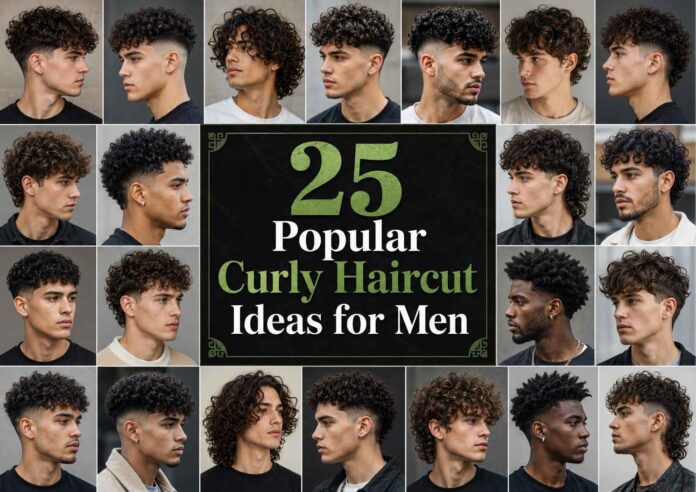
Curly hair carries movement, volume, and character before a barber makes the first cut. The challenge is not creating texture but shaping what is already there without removing the curl pattern that makes the hair distinctive. These haircuts for curly hair men cover short, medium, and long lengths, along with loose waves, defined ringlets, dense curls, and tight coils.
The strongest choice usually works with the natural direction of the hair rather than forcing every curl into a fixed position. Current men’s grooming trends also favor softer shapes, fuller texture, and cuts that grow out naturally instead of depending on extreme contrast. Whether you want a clean office cut, a low-maintenance style, or something more expressive, the right shape can make daily styling much easier.
The 25 ideas below move from short and controlled cuts toward longer, fuller styles. Each option includes clear visual details, suitability guidance, practical barber instructions, and a ready-to-use image prompt.
1. Short Curly Buzz Cut With Tapered Edges
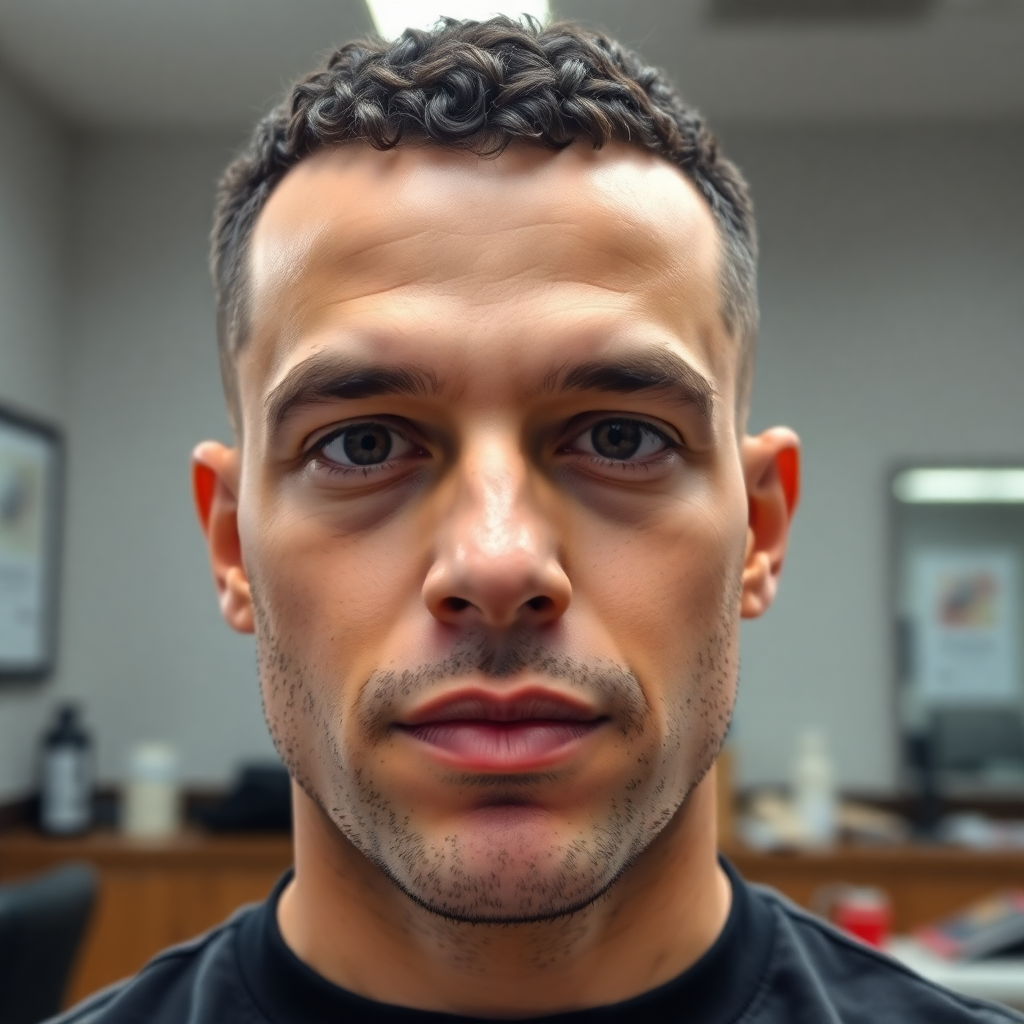
The top is clipped to roughly half an inch, leaving enough length for small bends and tight curl texture to remain visible. The temples and neckline are softly tapered rather than faded high, while the front hairline receives a clean but natural edge. The result is compact, even, and more textured than a standard military-style buzz cut.
This is one of the easiest short haircuts for men with dense curls or coils. It suits oval, square, and balanced round faces because the close shape keeps the head looking neat without adding width. Ask the barber to preserve a little curl on top and avoid pushing the front lineup too far back. A light moisturizing cream can reduce dryness without making the short curls appear shiny.
AI image prompt: Photorealistic front-angle portrait of a man with a half-inch curly buzz cut, softly tapered temples and neckline, natural sharp hairline, dark textured hair, clean barbershop background.
2. Curly Crew Cut With Low Taper
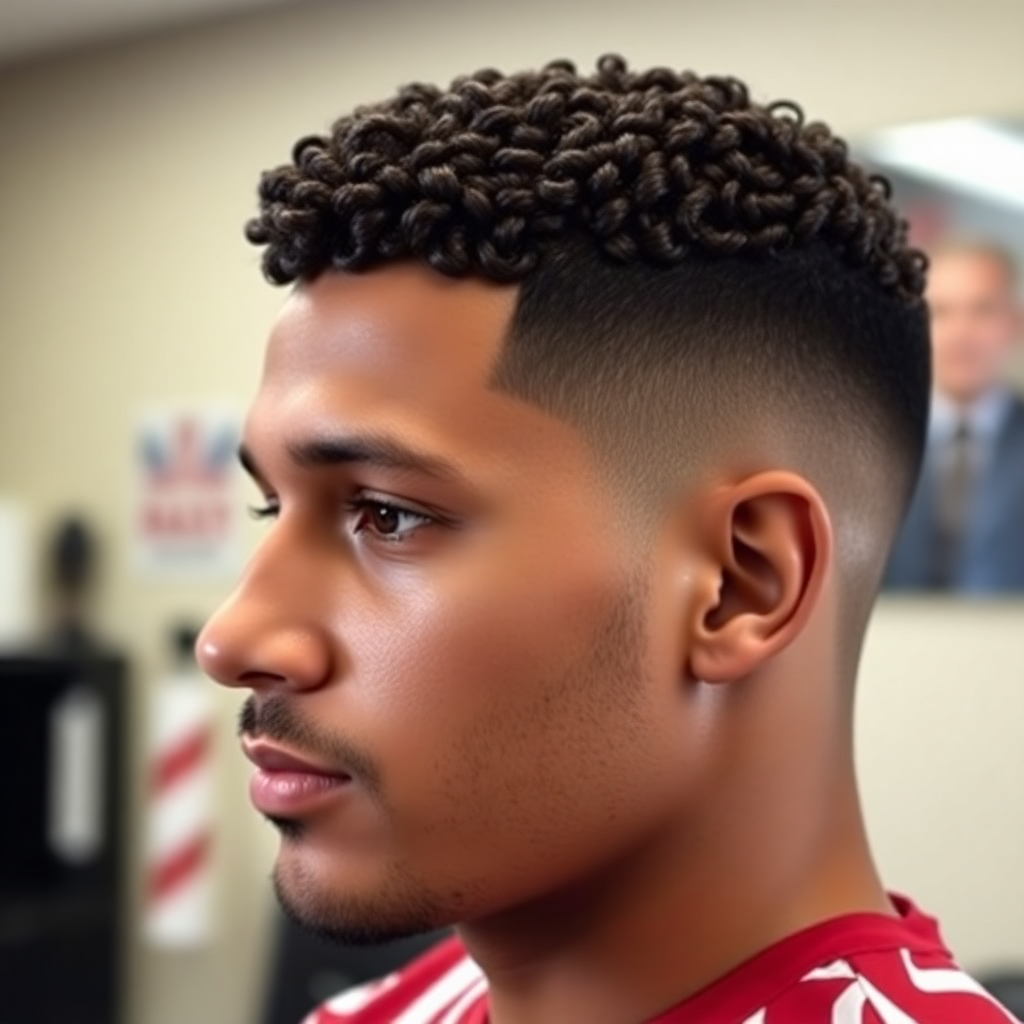
Short curls sit about one to one and a half inches long across the top, with slightly greater length near the front. The sides become gradually shorter around the sideburns and neckline through a low taper, but they remain full enough to connect naturally with the curly top. The finish looks clean without creating a hard separation.
Men who want a low maintenance men’s haircut may find this easier to wear than longer curl styles. The slight height can balance round faces, while the controlled sides complement square and oval features. Tell the barber to cut the top with scissors so the curl pattern stays soft instead of appearing uniformly clipped. Apply a small amount of curl cream to damp hair, then allow it to air-dry without repeated touching.
3. Curly Caesar Cut With Short Blunt Fringe
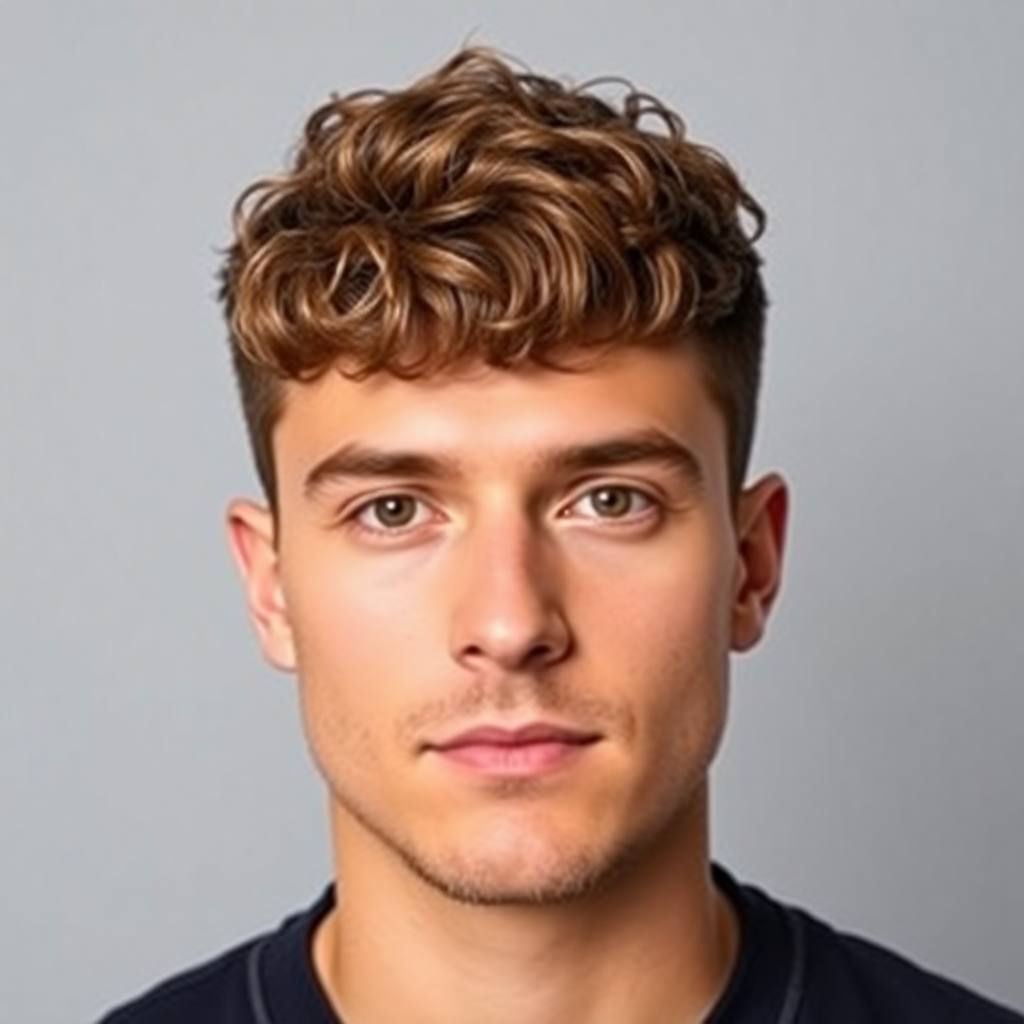
The curls are trimmed to about one inch across the crown and directed forward toward a short horizontal fringe. The sides remain slightly shorter and blend into a subtle taper near the ears. Instead of forming a perfectly straight line, the fringe has small curved sections that reveal the natural texture.
This variation works well for men who prefer classic haircuts for men but do not want to flatten their curls. The forward shape can soften a high forehead and provide visual coverage around an uneven front hairline. Ask for a textured Caesar with a short curly fringe rather than a hard, straight edge. Use a light styling cream and guide the hair forward with your fingers. Heavy wax may separate the fringe into thick pieces and remove its soft appearance.
4. Textured Curly Crop With Low Fade
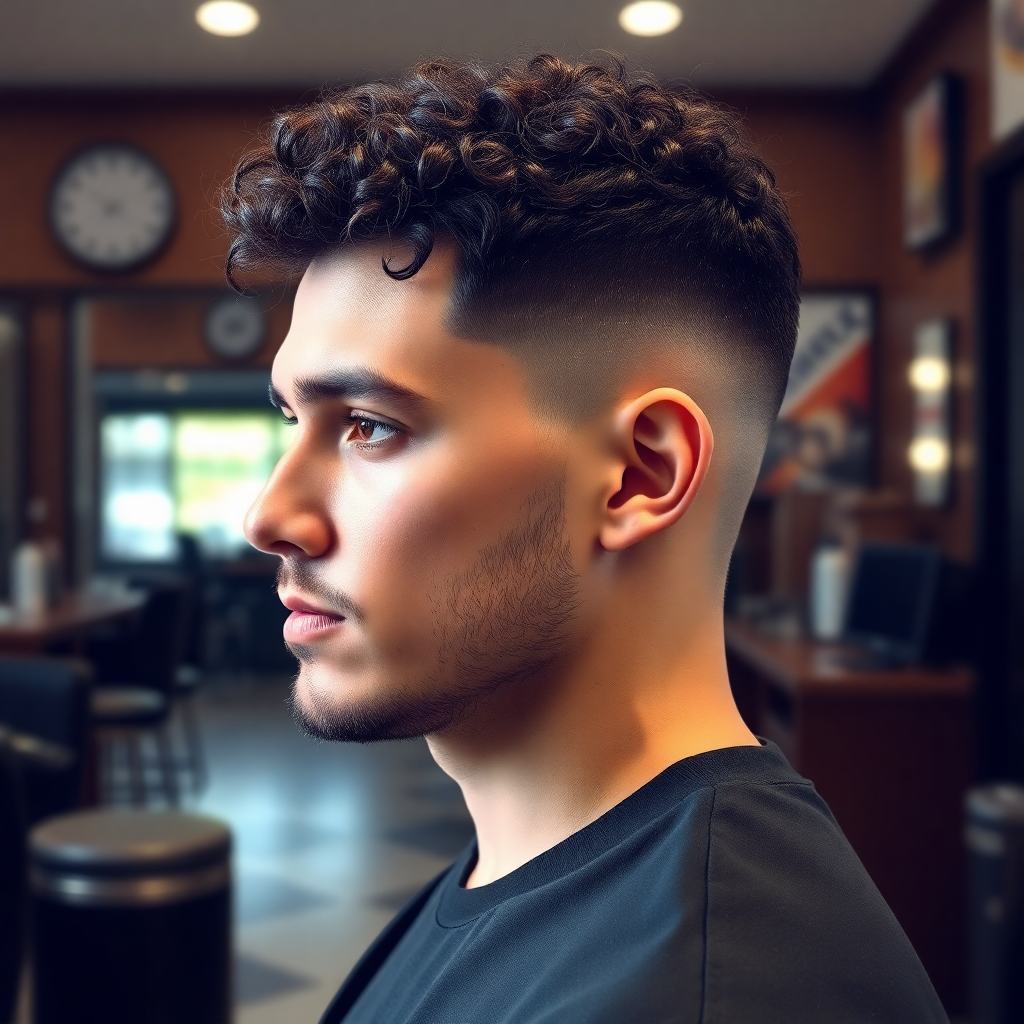
The top measures around one and a half inches and contains short, separated curls with a dry, textured finish. A low fade begins near the sideburns and follows the lower curve of the head, leaving some darkness above the ears. The front falls into an uneven curl fringe rather than a straight cropped line.
This cut combines natural movement with the cleaner outline found in popular men’s haircuts. It can add height to a round face without creating excessive volume, and the broken fringe may suit men with larger foreheads. Ask the barber to keep weight around the upper sides so the transition does not look disconnected. Work a small amount of matte curl paste through damp hair, then lift individual curls near the front while drying.
5. Curly French Crop With Temple Fade
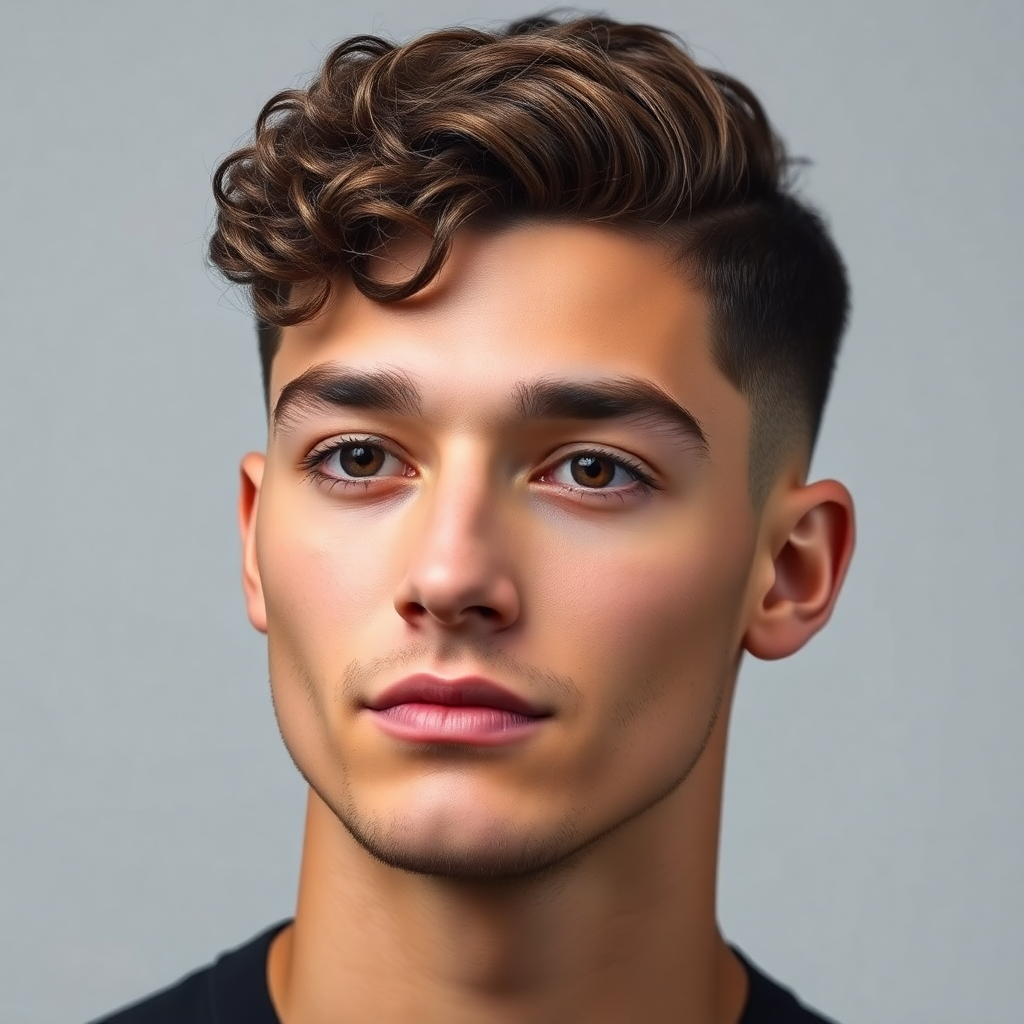
Compact curls cover the top at roughly two inches, while the front forms a soft fringe that rests near the upper forehead. The fade is concentrated at the temples and sideburns, leaving the remaining sides fuller and naturally connected. A clean neckline gives structure without removing all the density behind the ears.
The shape is useful for men who want stylish haircuts for men that remain easy to arrange in the morning. It can shorten the appearance of a long face because the curl fringe lowers the visual hairline. Request scissor-cut texture on top and a temple fade that stays low. After washing, press curl cream into the hair rather than combing it through. The cut normally looks better when a few curls sit irregularly instead of forming a uniform row.
6. High Curly Top With Skin Fade
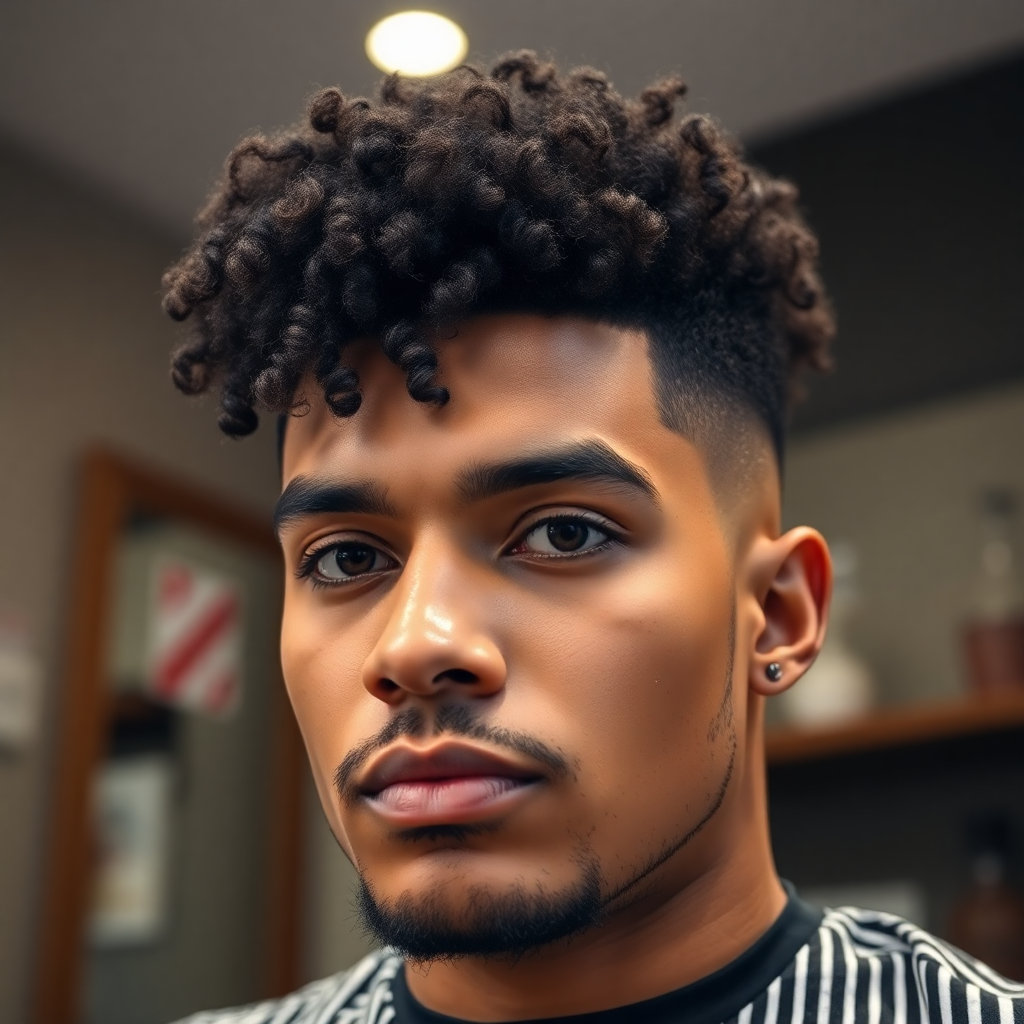
Dense curls rise two to three inches above the scalp and form a rounded, upright shape. The sides transition quickly from skin near the ears to short dark hair around the upper head. A defined front edge creates a clear border between the elevated curls and the forehead.
The strong contrast suits men with thick hair who enjoy sharp barbershop haircuts for men. Added height may lengthen a round or chubby face, though men with long faces may prefer a lower top. Ask the barber to keep the curl mass balanced from front to crown rather than leaving all the length near the forehead. A curl sponge can help organize tightly curled textures, while loose curls may need finger shaping and a light-hold cream.
7. Curly Top With Mid Drop Fade
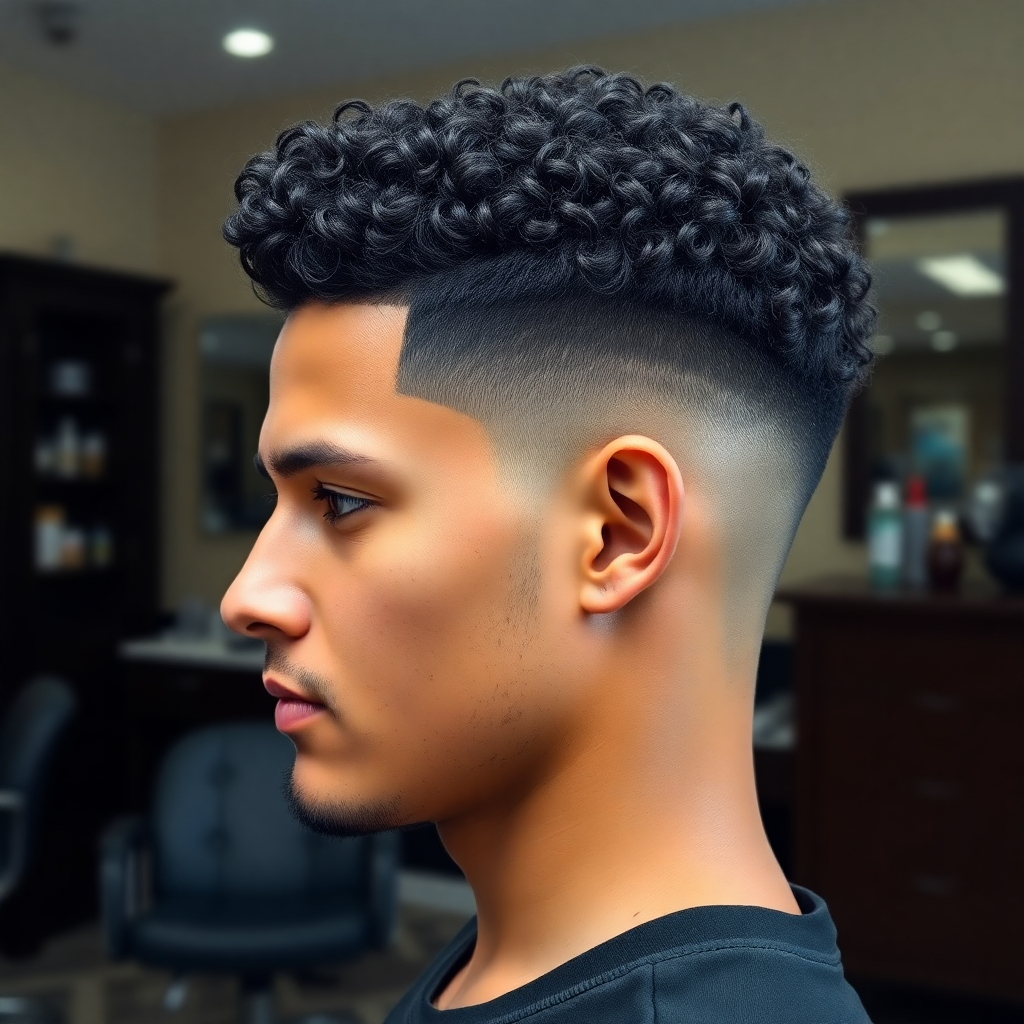
The top remains about two and a half inches long, displaying defined curls from the forehead through the crown. A mid fade begins around the temples, then curves downward behind each ear to preserve more hair near the back of the head. The dropped outline follows the natural shape of the skull.
This style offers clear contrast without making the back appear flat. It can complement oval and square faces, especially when the curls are kept moderately high rather than spread outward. Show the barber where you want the fade to dip behind the ear because drop placement changes the entire silhouette. Refresh the curl shape with water between wash days, then press in a small amount of leave-in conditioner. Curly hair often stays more defined when moisture is maintained.
8. Short Curly Quiff With Low Taper
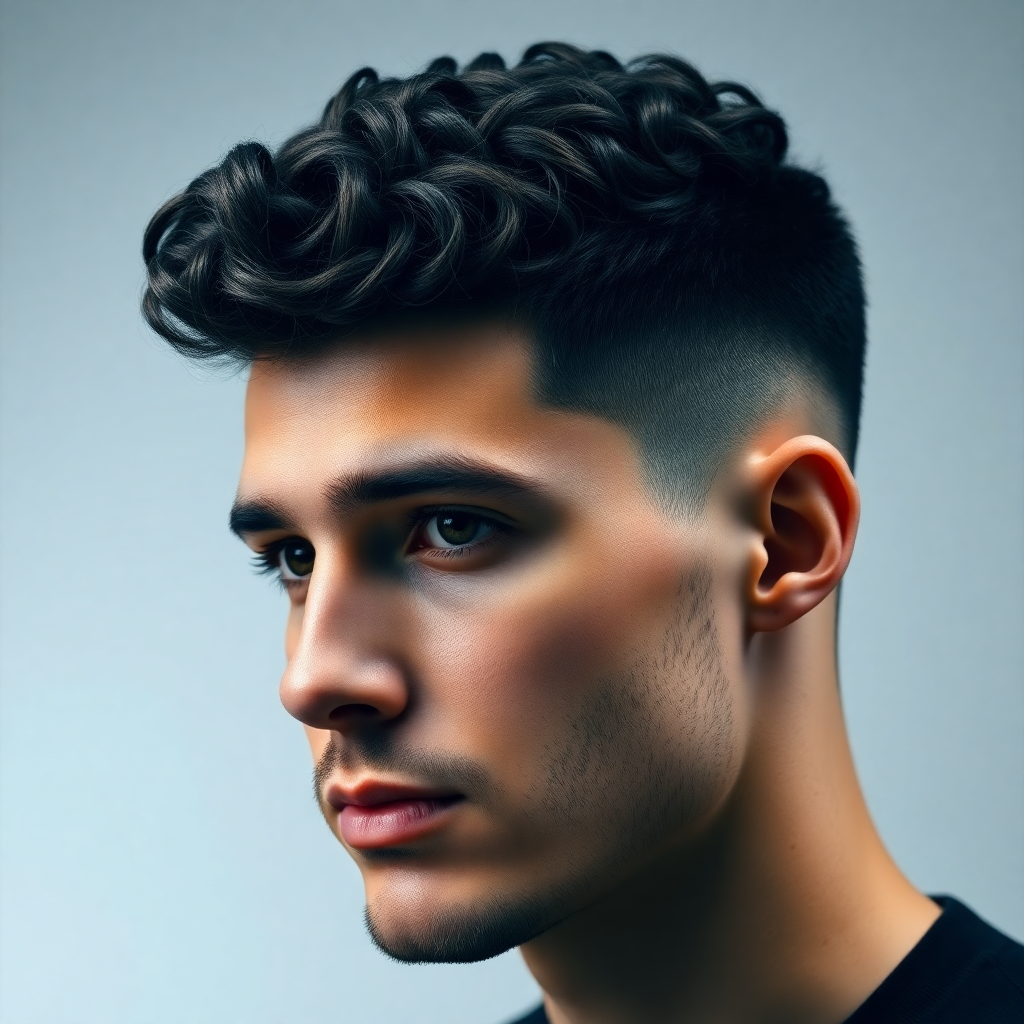
The sides stay short and softly tapered, while two to three inches of curl length remain across the top. Front curls are lifted upward and slightly backward to form a loose quiff rather than a stiff wave. The crown lies lower, creating a gradual rise toward the forehead.
This cut provides a polished shape for men who want professional haircuts for men without hiding natural texture. It works especially well on oval and square faces, while a lower front may better suit longer facial proportions. Tell the barber that the front needs enough length to bend backward naturally. Apply curl cream when damp, then use a diffuser on low airflow while gently lifting the roots. Avoid stretching the curls straight with a brush.
9. Curly Ivy League With Natural Side Direction
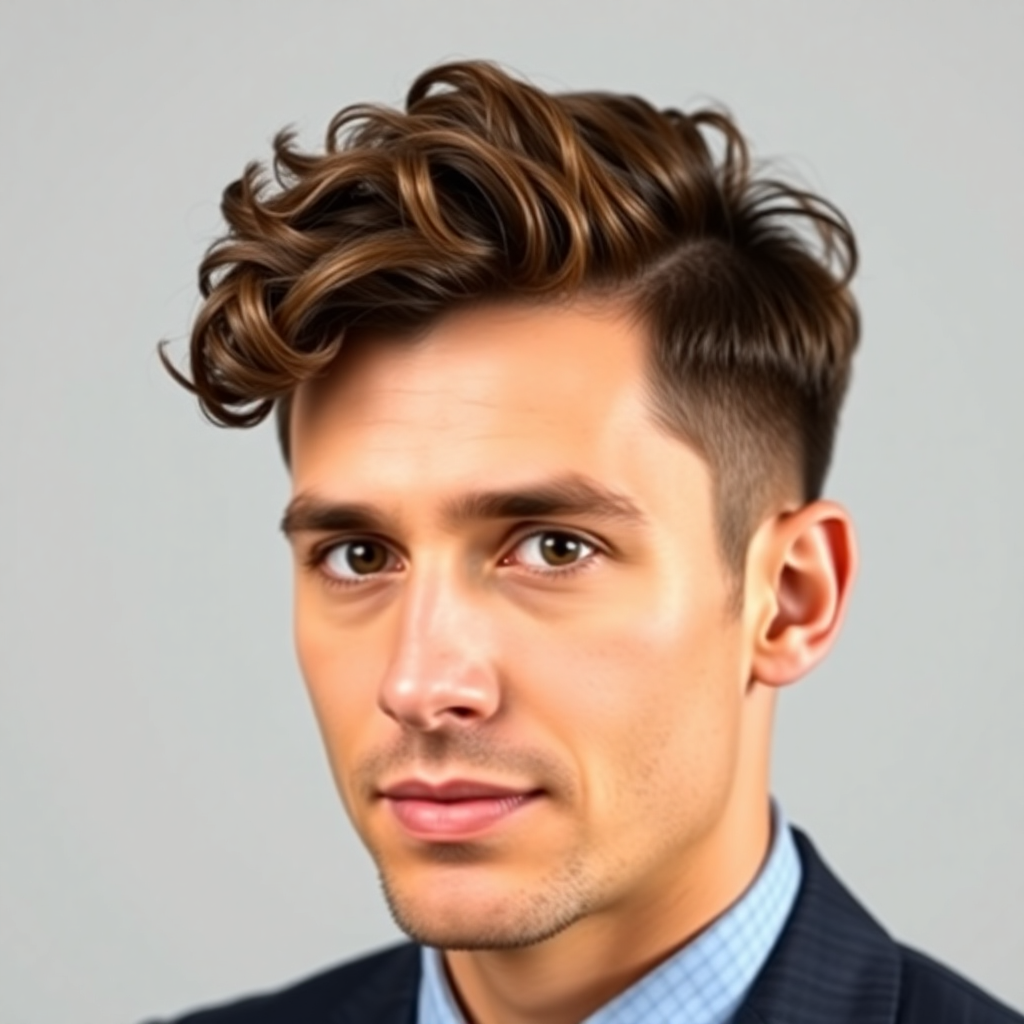
The top ranges from two inches near the crown to nearly three inches at the front. Curls move naturally toward one side without forming a hard part, while the sides are scissor-cut and lightly tapered around the ears. The outline appears tidy, but the upper texture remains relaxed and visible.
Men seeking business haircuts for men may appreciate the balance between structure and personality. The diagonal movement can soften a square forehead and add shape to oval faces. Ask for a long curly crew or curly Ivy League with enough front length to direct sideways. A light styling lotion usually provides more flexibility than firm pomade. Guide the curls while damp, then allow them to settle into their own bends rather than forcing a flat side sweep.
10. Curly Undercut With Voluminous Top
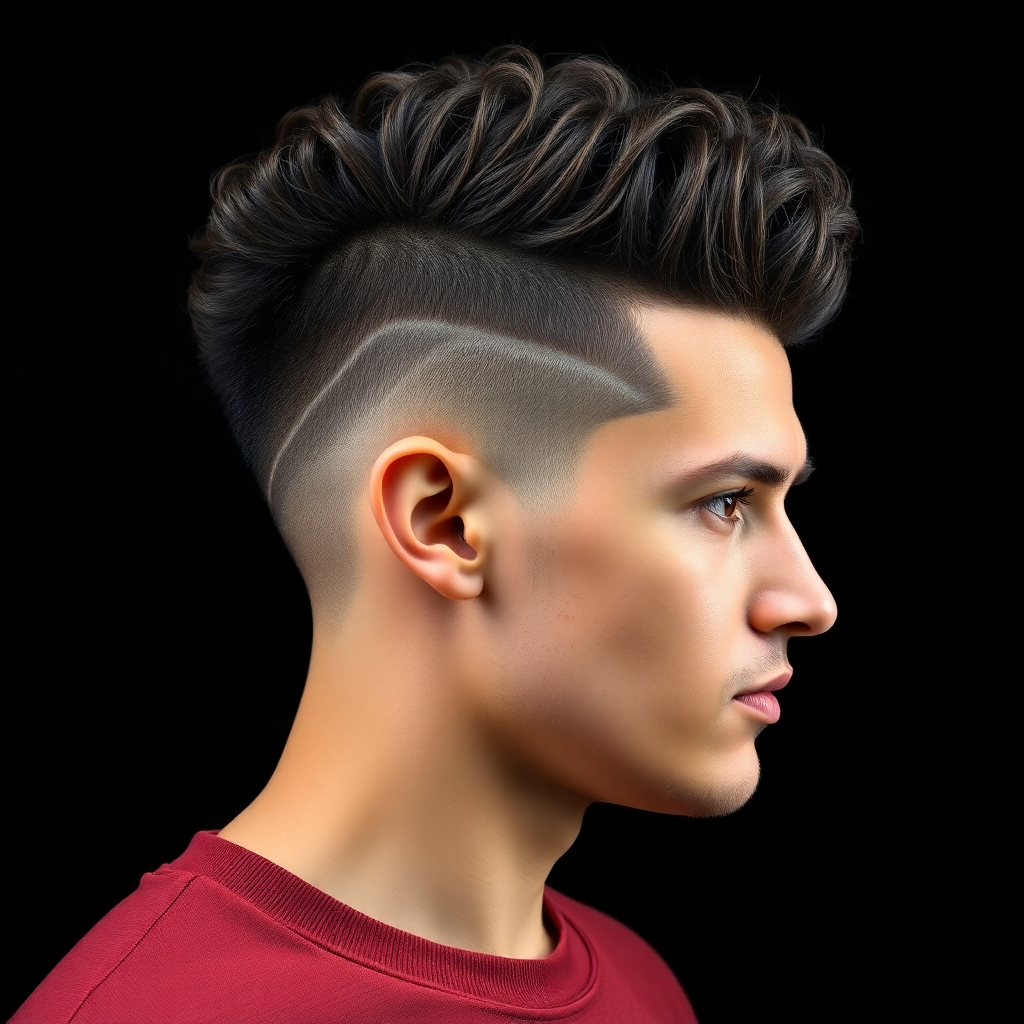
Three to four inches of curls form a full, elevated top, while the sides and back are clipped to one short, even length. The change between the top and sides is intentionally abrupt, creating a disconnected undercut with a bold horizontal weight line. The curls sit forward and upward rather than hanging over the sides.
The cut suits men with dense curls who want a strong modern shape. It can emphasize the upper head, making it useful for round faces, but the contrast requires regular side maintenance. Explain that you want a disconnected undercut rather than a blended fade. Keep the top hydrated and avoid removing too much internal weight, since aggressive thinning may cause loose ends and unwanted frizz.
11. Curly Faux Hawk With Burst Fade
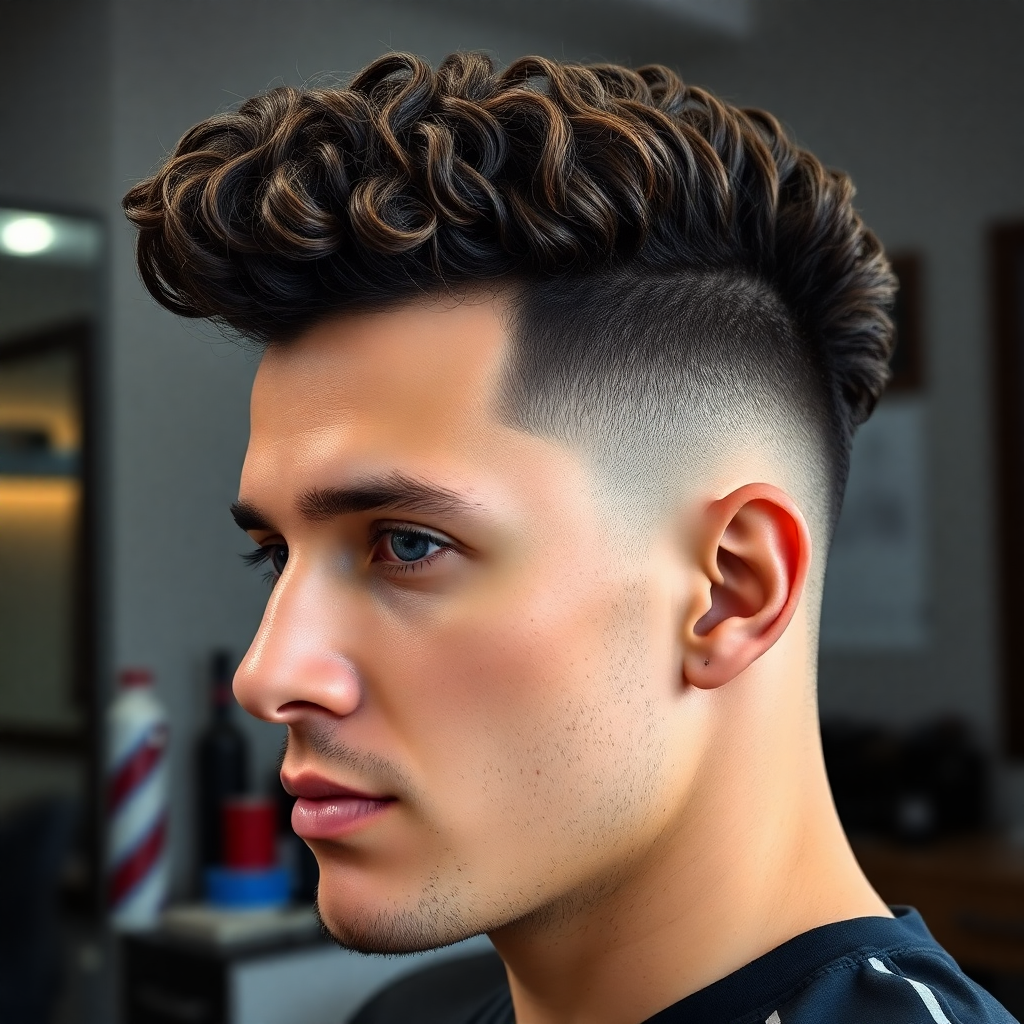
The curls form a raised strip from the forehead through the crown and continue with moderate length toward the back. A rounded burst fade circles each ear, while darker hair remains at the nape to support the faux-hawk outline. The central texture looks wide and wearable rather than narrow or spiked.
This is among the more expressive trending haircuts for men, and the rounded side detail works especially well with dense curls. A burst fade can preserve length through the top and back while cleaning the area around the ears. Ask the barber to keep the center broad enough for natural curl clumps. Shape the top with your hands and use flexible cream instead of firm gel, which can make the style rigid.
12. Curly Mohawk With Tapered Neckline
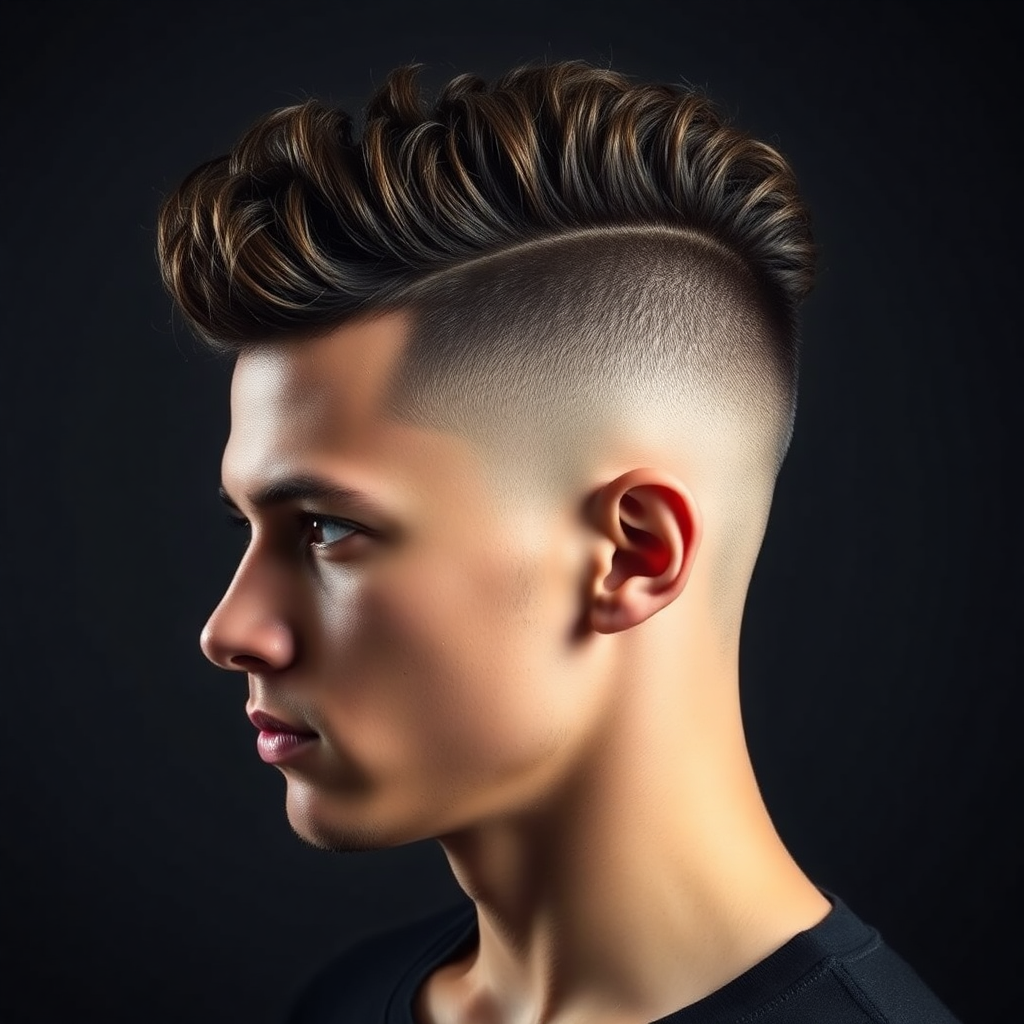
Longer curls create a defined central ridge measuring about three inches at the front and four inches near the crown. The sides are faded close, while a narrow section of curls continues down the back into a clean tapered neckline. The shape is dramatic but retains soft, rounded texture instead of sharp spikes.
Men with strong personal style may prefer this over more conventional modern haircuts for men. It often complements oval and round faces because the central height directs attention upward. Ask the barber to establish the desired width before removing the sides; an overly narrow strip can look harsher than expected. Define the curls in small groups using cream and finger twisting. Plan for frequent side cleanup if you want the contrast to remain sharp.
13. Curly Edgar Cut With Rounded Fringe
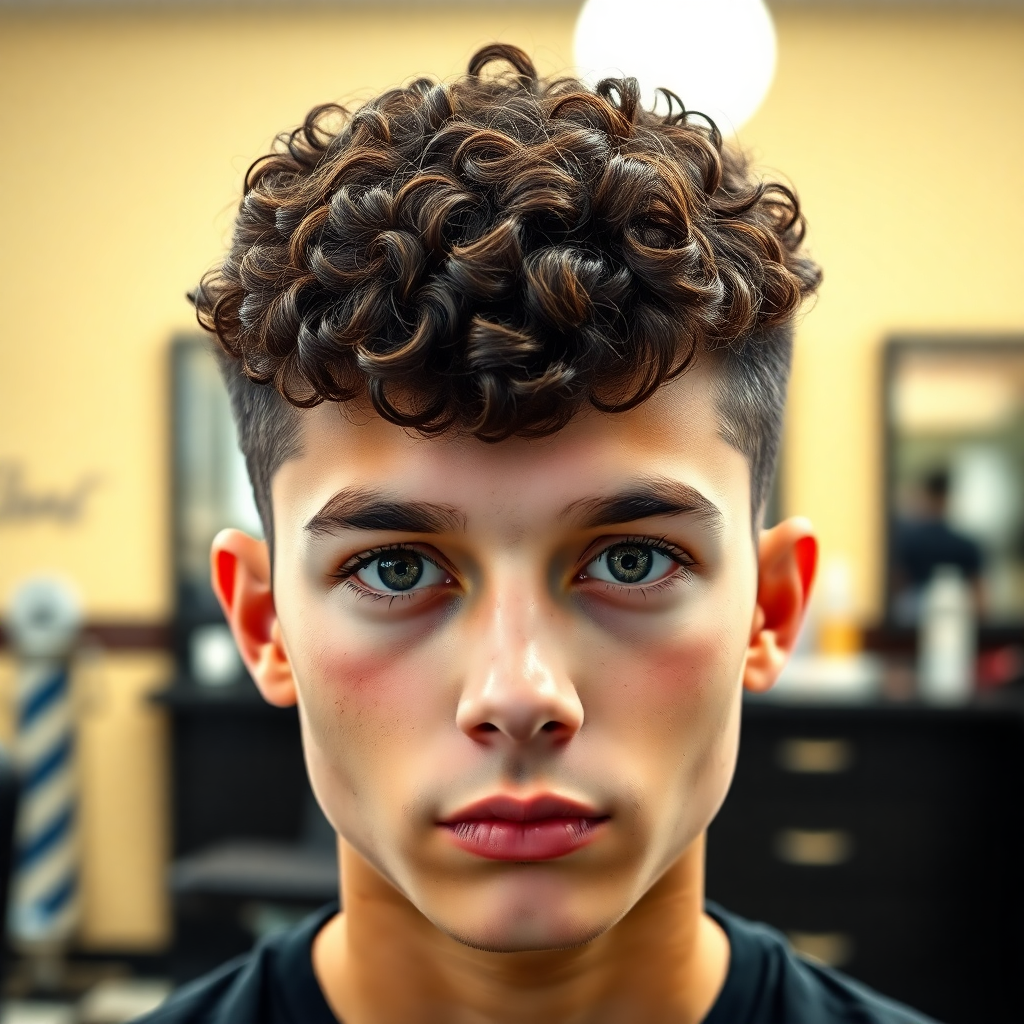
Thick curls sit two to three inches long across the top and move forward into a dense rounded fringe. The front edge follows a curved shape across the forehead rather than forming a rigid straight line. A mid taper cleans the temples and neckline while leaving weight above the ears.
The style gives the familiar Edgar silhouette a softer surface and works well for haircuts for teenage guys and young adults. Men with long faces may benefit from the lower fringe, though a heavy front can visually shorten an already round face. Request a rounded textured fringe and show the barber how much forehead you want visible. Scrunch in curl cream from the ends upward, then separate only a few front pieces for controlled definition.
14. Curly Fringe With Low Burst Taper
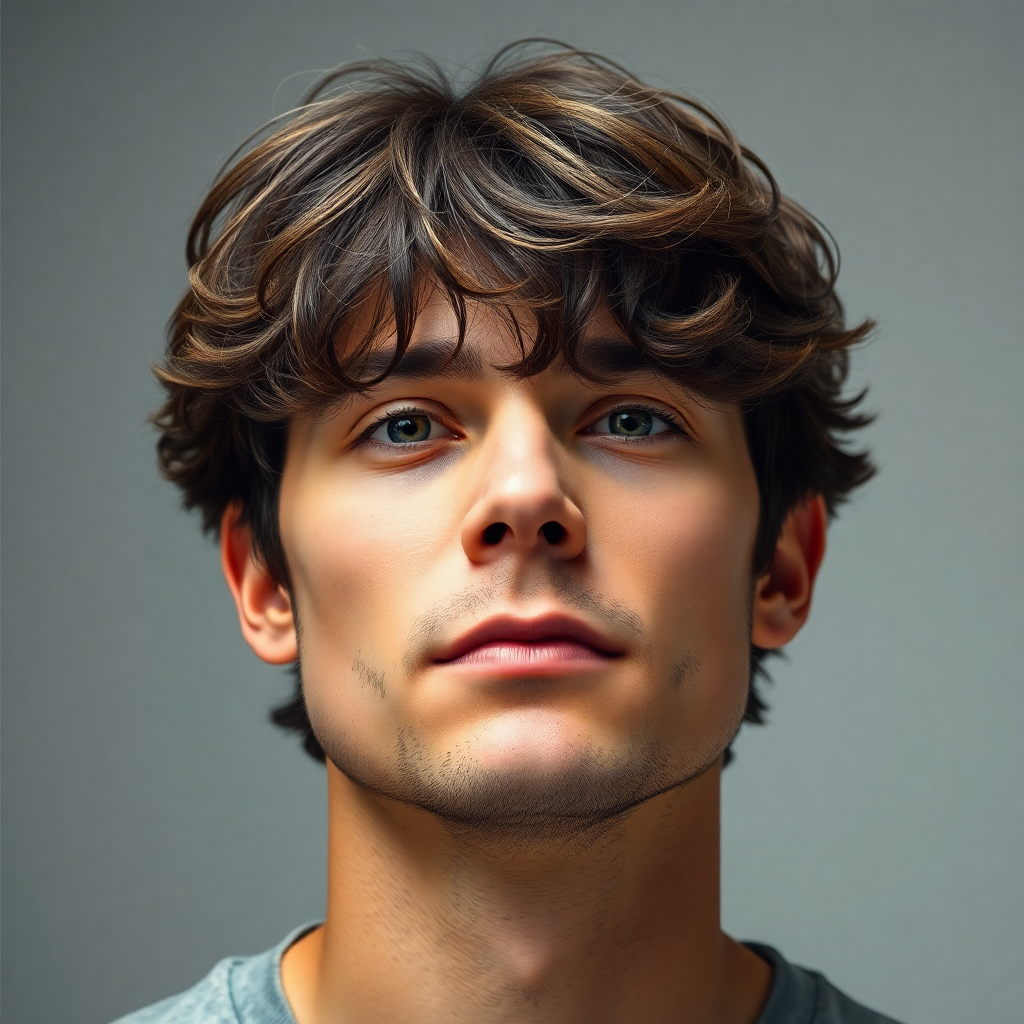
The top contains three to four inches of loose curls, with the longest pieces falling toward the center of the forehead. The sides remain full and softly blended, while a small burst taper cleans only the area around the ears. The neckline receives a matching taper that preserves natural volume at the back.
This relaxed shape suits men who enjoy new hairstyles for men but do not want most of the sides removed. The downward fringe can reduce the appearance of a high forehead and soften angular facial features. Tell the barber to remove bulk internally without cutting the front too short, since curls rise after drying. Apply a leave-in product, shake the roots lightly, and allow the fringe to fall without arranging every curl into place.
15. Curly Broccoli Cut With Tapered Sides
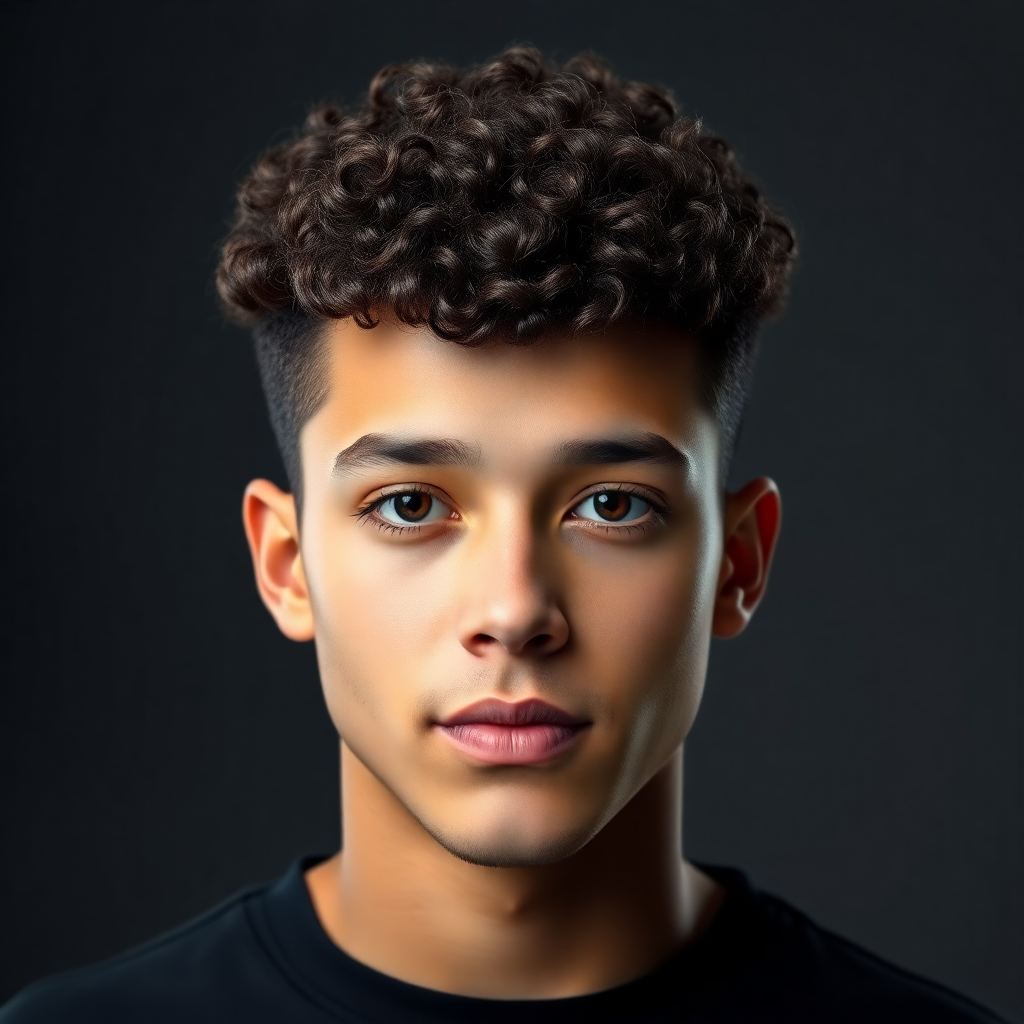
A rounded mass of three- to four-inch curls spreads across the top, with extra width near the front and temples. The sides narrow through a low taper but retain enough density to support the upper shape. Loose curl groups create a soft, cloudlike outline rather than a sharply squared top.
This style remains closely associated with haircuts for young men because it feels casual and intentionally oversized. It can balance longer faces, though men with broad round faces may prefer less width at the temples. Ask for layered curls with tapered sideburns rather than a high fade. Diffuse the hair with the head tilted forward to encourage volume, then use your fingers to open the top gently. Avoid heavy product near the roots.
16. Curly Mullet With Temple Fade
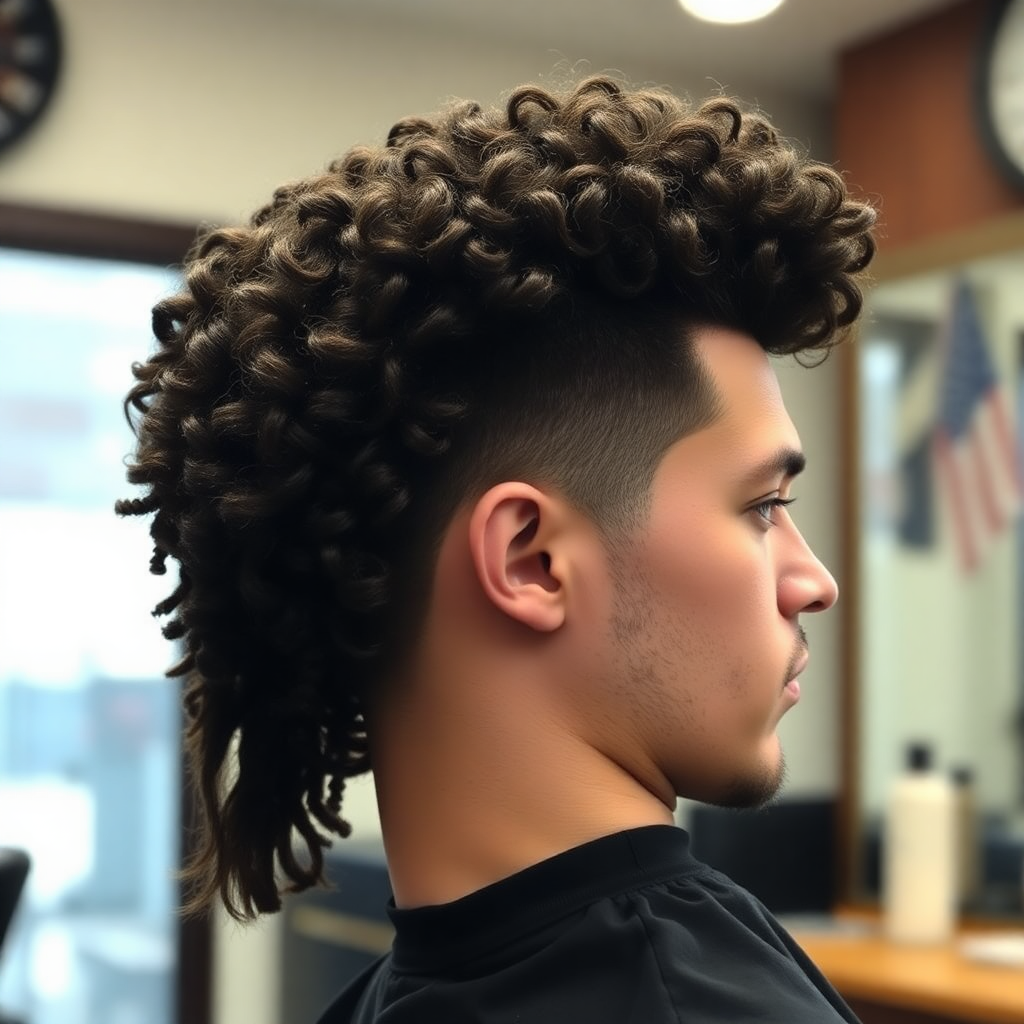
The front and top contain three inches of textured curls, while the back extends to the upper neck in loose layered ringlets. A compact temple fade creates clean detail near the face without removing the side length behind the ears. The neckline stays soft so the longer back can move naturally.
The cut combines current men’s hairstyles 2026 influences with a shape that can grow for several months between major reshaping appointments. Modern grooming coverage has highlighted softer mullets and longer, less rigid silhouettes among current men’s styles. Ask for visible length at the back but a controlled transition around the crown. Use curl cream throughout, paying extra attention to the ends near the neck, where friction from clothing may create frizz.
17. Curly Shag With Layered Fringe
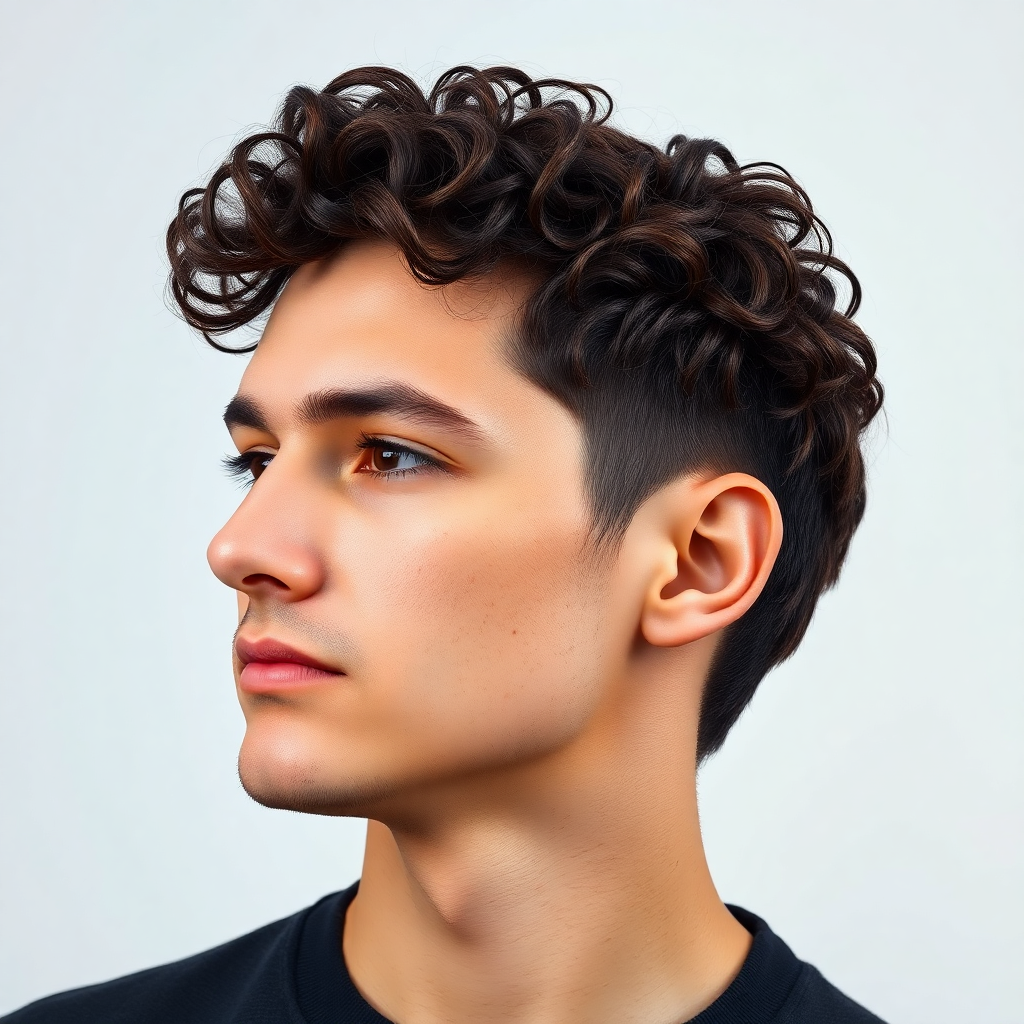
Medium curls fall between three and five inches, with shorter layers around the crown and longer pieces near the ears and nape. A loose fringe separates across the forehead, while the sides remain entirely scissor-cut. The layered outline creates movement without a visible fade or clipped section.
The shag works well for haircuts for wavy hair men as well as loose curl patterns that need shape rather than tight control. It can soften square faces and add width to narrow facial proportions. Request rounded internal layers while keeping enough weight at the ends to prevent a thin appearance. Styling should remain simple: apply a lightweight curl lotion, scrunch upward, and air-dry. The cut is meant to shift throughout the day rather than stay fixed.
18. Medium Curly Curtains With Center Part
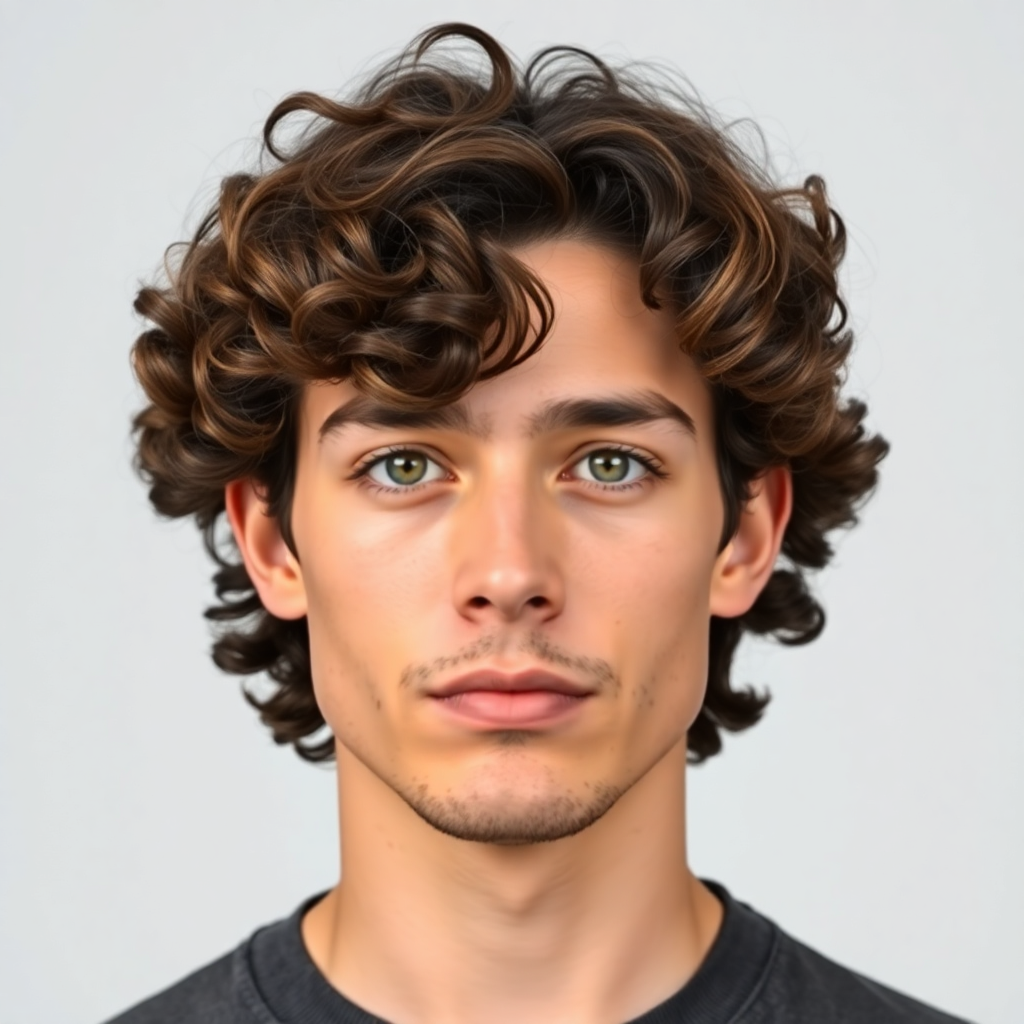
Four- to five-inch curls separate loosely at the center and curve away from the forehead. The sides reach the upper ears, while the back remains slightly shorter and rounded through the neckline. Face-framing curls create two soft sections rather than a flat, straight middle part.
This is a flexible choice among medium length hairstyles men can wear casually or in creative workplaces. It often complements oval, square, and heart-shaped faces because the open center reveals the forehead while the sides soften the cheek area. Ask for long layers that support a center opening without creating a triangular bottom. Set the part while the hair is wet, apply curl cream, and avoid combing after drying. A few irregular pieces make the style feel natural.
19. Medium Curly Side Part With Scissor-Cut Sides

The top stays four to five inches long and follows a natural side division without a shaved line. Full curls sweep diagonally across the upper head, while the sides are shortened with scissors and tucked neatly around the ears. The back retains moderate fullness and tapers gently at the neckline.
This polished shape can work as one of the more adaptable professional haircuts for men over 30 or men over 40. It suits oval and rectangular faces when the top is kept soft rather than excessively high. Ask the barber to find the natural growth split instead of carving a hard part into curly hair. Apply a flexible cream and direct the curls sideways while damp. A wide-tooth comb may help establish the part, but finger shaping should finish the style.
20. Rounded Curly Afro With Clean Taper
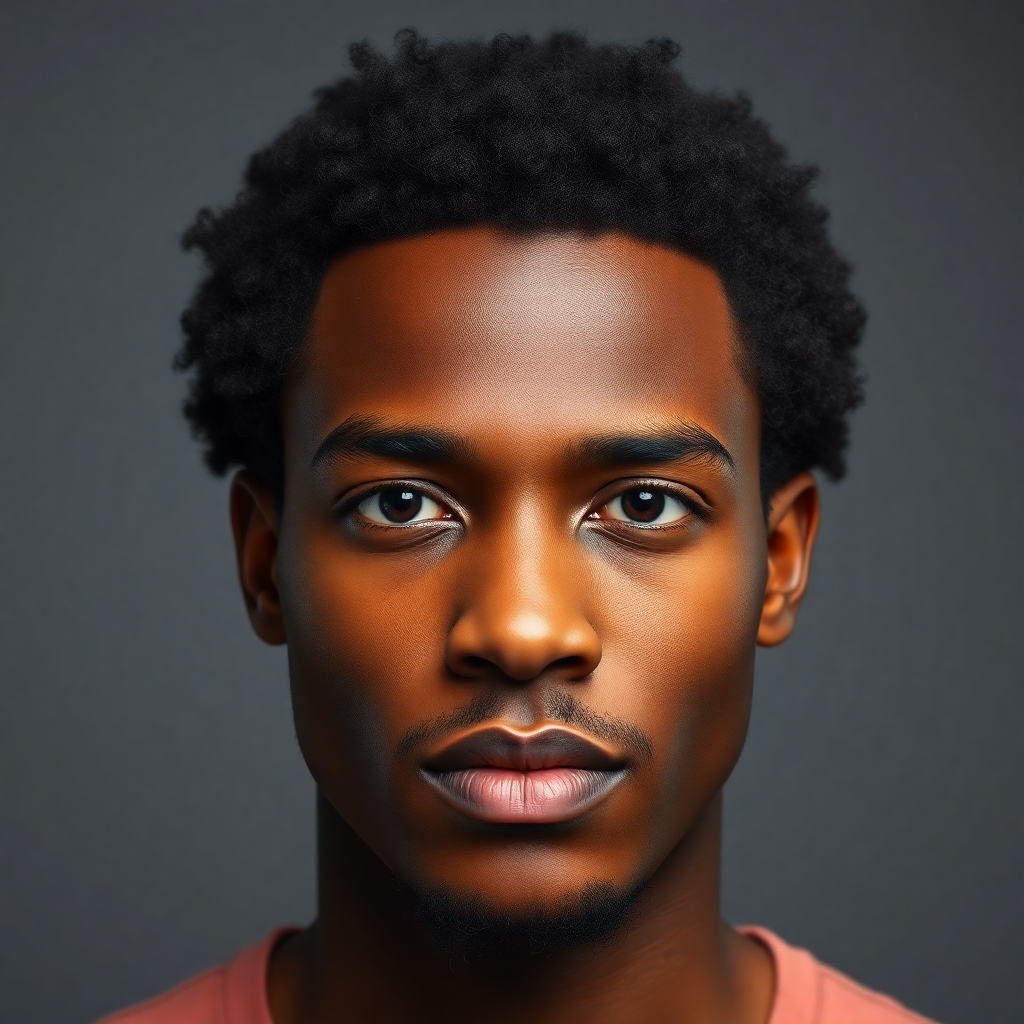
Tightly curled or coily hair forms an even rounded shape extending two to four inches from the scalp. The outline stays full through the top and upper sides, while small tapers at the temples and neckline create clean borders. The front hairline is lightly defined without appearing unnaturally dark or overly sharp.
This balanced shape is a lasting option among haircuts for Black men because it celebrates density while maintaining a controlled silhouette. The rounded volume can complement long and angular faces, while a slightly taller version may suit round features. Ask the barber to shape the hair in its dry state so the final outline reflects natural shrinkage. Use moisture-focused styling products and gently lift the roots with a wide pick without pulling through the ends.
21. Curly High-Top Afro With Low Fade
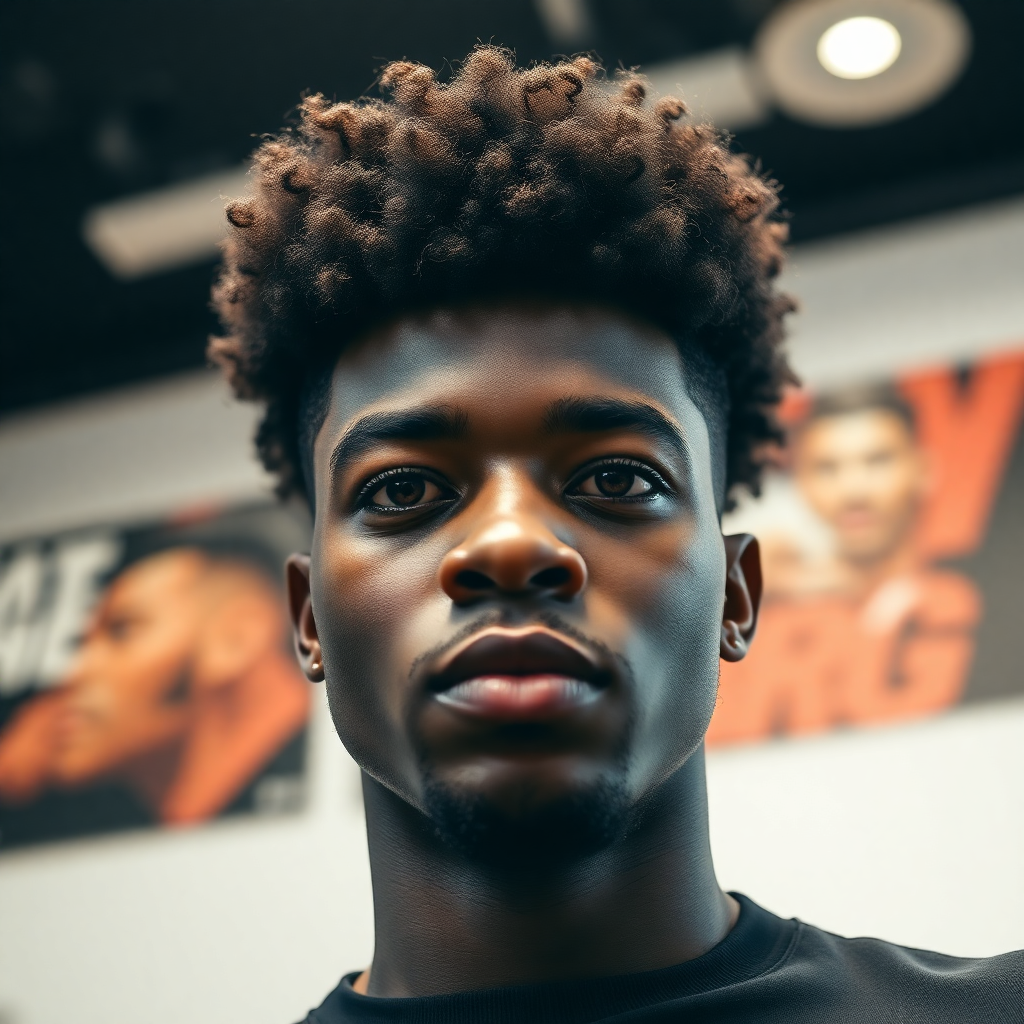
Dense coils rise four to five inches above the head in a softly squared shape. The top corners remain rounded, preventing the cut from looking rigid, while a low fade cleans the lower sides and gradually blends into the full upper section. A crisp front line adds structure beneath the vertical texture.
The extra height makes this a strong haircut for round face men because it lengthens the visual proportions of the head. Men with long faces may prefer a shorter top with more side fullness. Tell the barber whether you want a rounded or squared upper profile before shaping begins. A curl sponge may organize short coils, while longer textures can be separated by hand. Regular edge cleanups maintain the geometry even when the top continues growing.
22. Shoulder-Grazing Layered Ringlets
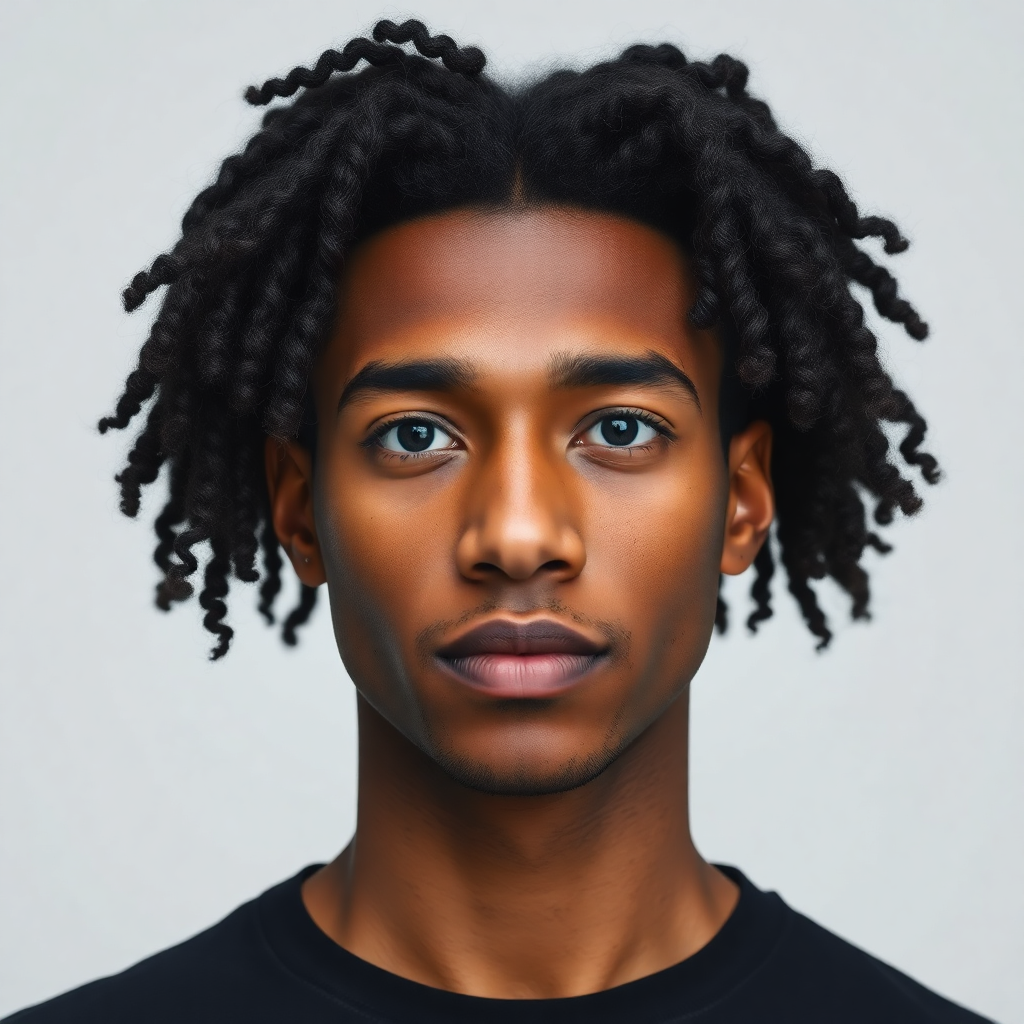
Defined ringlets extend from the crown to the shoulders, with shorter face-framing layers beginning near the cheekbones. The ends form a rounded perimeter rather than one heavy horizontal line. The sides remain full, and the natural hairline is left untouched because the style depends on flowing length rather than clipper detail.
This cut suits men with consistent medium or tight curls who want long hairstyles for men with visible movement. Layers can prevent the lower section from becoming overly wide, but removing too much weight may create a thin or uneven outline. Ask for long curl-by-curl layers and discuss how much shrinkage occurs after drying. Apply leave-in conditioner and curl cream in sections, then dry with low heat or allow the ringlets to form naturally.
23. Long Curly Flow With Ear-Tucked Sides
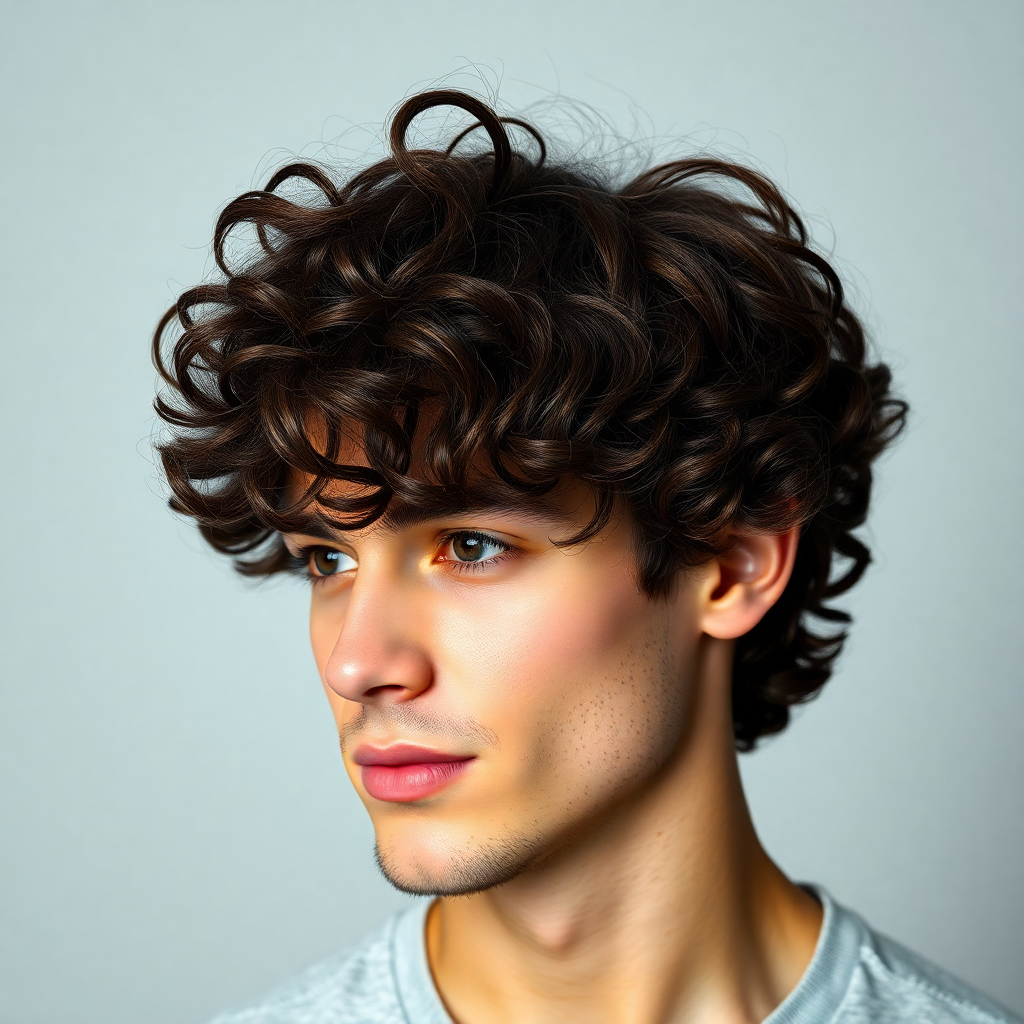
Five- to seven-inch curls sweep backward from the forehead and flow around the ears toward the upper neck. Several side sections are tucked loosely behind the ears, while the top retains natural lift and an irregular backward direction. The ends remain layered and soft rather than forming a heavy block.
Men who prefer easy hairstyles for men may enjoy this once sufficient length has grown, although the growing stage requires patience. The open forehead can highlight oval and square face shapes, while men with longer faces may keep a few curls forward. Ask for minimal layering around the top and controlled shaping through the back. Use a light cream on damp hair, then push the curls backward with your hands. Avoid brushing the finished style.
24. Long Curly Wolf Cut With Full Fringe
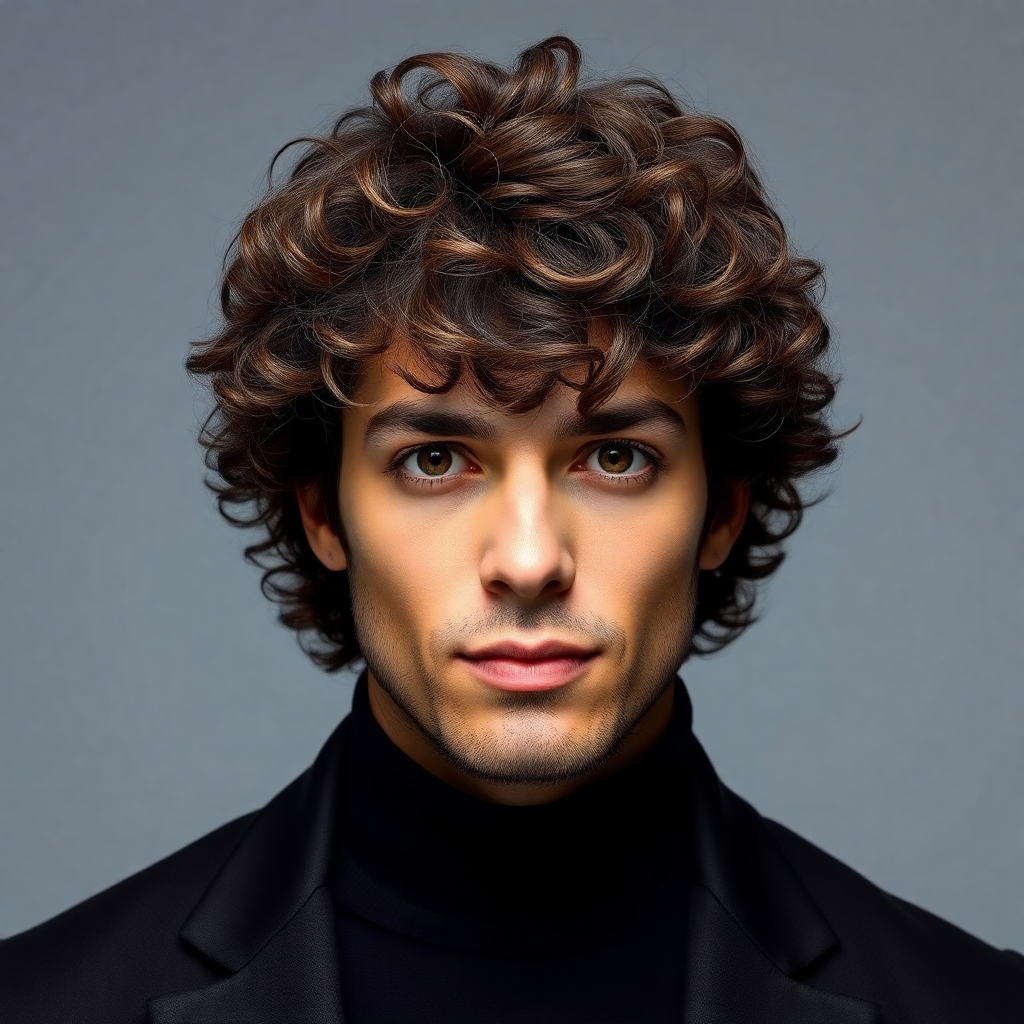
Layered curls create volume across the crown, while shorter pieces form a full broken fringe over the forehead. The sides narrow gradually around the cheeks, and longer curls extend toward the shoulders at the back. The silhouette combines a rounded upper section with a visibly lengthened nape.
This expressive cut works best on medium-to-dense hair that can support several layer lengths. It may flatter oval and long faces because the fringe reduces visible forehead height while side curls add width. Ask for a curly wolf cut with connected layers rather than a disconnected mullet. Apply styling cream from mid-length to ends, then diffuse the crown for lift. The cut can look uneven if the shorter layers are over-thinned, so preserve enough density.
25. Full Grown-Out Curls With Rounded Layers
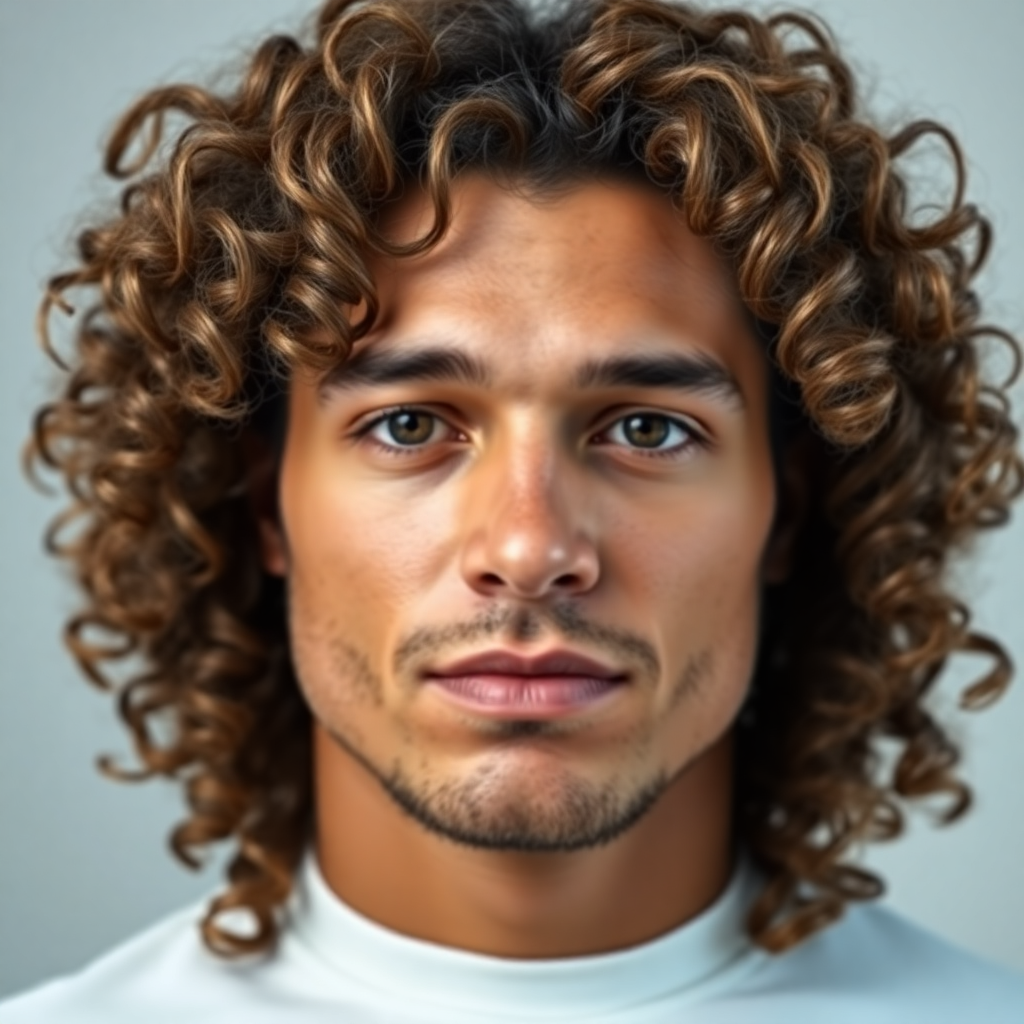
Long curls surround the head in a broad, natural shape, reaching the shoulders at the sides and slightly below them at the back. Rounded layers prevent the crown from lying flat, while longer outer ringlets frame the jaw and neck. There is no fade, taper, hard part, or sharply edged hairline.
The style is best for men prepared to maintain longer hair without forcing it into a rigid outline. Current long-hair guidance favors working with the natural curl pattern and allowing growth direction to influence the final shape. Ask for conservative rounded layers and removal of damaged ends rather than a major reduction in volume. Detangle gently while conditioned, apply curl product in sections, and let the finished shape remain slightly irregular. That natural variation gives the style much of its character.
Conclusion
Choosing among these cuts becomes easier when you begin with three practical questions: How much length does your curl pattern need to form? How often are you willing to visit the barber? Which proportions suit your face? Short crops and tapered crew cuts offer simple upkeep, while curly shags, mullets, and layered flow styles allow more movement. High tops create vertical height, whereas fringes and fuller sides can change how long or wide the face appears.
The strongest haircuts for curly hair men preserve enough weight for the curls to gather into a clear shape. Removing too much hair from the sides or thinning the top aggressively may produce a result that looks different once it dries. Your natural curl pattern, density, shrinkage, and growth direction matter more than copying every detail from one photo.
Before the next appointment, save two or three reference images that show the front, side, and back. Point out which details you like in each image, then ask how the shape can be adjusted for your own hair. A good curly haircut does not control every strand; it gives natural movement a better outline.
Frequently Asked Questions
1. Which curly haircut is best for a round face?
Cuts with moderate height and controlled side volume often create a longer visual outline. A curly quiff, high top, or textured crop may work well. Avoid adding excessive width directly beside the cheeks unless you want to emphasize the face’s natural roundness.
2. What is a good haircut for oval face men with curls?
Oval faces can support many curl shapes, including tapered crops, curly curtains, medium side parts, and longer layered styles. Keep the proportions balanced by matching the amount of top height to the length and width of the face.
3. Which curly haircut complements a square face?
Soft curls can balance a strong jawline. Medium layers, a loose curly fringe, or a scissor-cut side part may reduce the appearance of sharp angles. A close fade can also work when the top retains enough texture to avoid a severe outline.
4. What curly haircut works for a long face?
Fringes, medium shags, and styles with some fullness around the sides may create more balanced proportions. Limit extreme height at the crown because a tall quiff or narrow high top can make the face appear longer.
5. Can curly hair help cover a big forehead?
A textured curly crop, rounded fringe, Caesar cut, or curly wolf cut can place natural movement across part of the forehead. Ask the barber to account for shrinkage so the fringe does not become shorter than expected after drying.
6. What is the best hairstyle for face shape and natural curls?
The best option balances facial proportions while respecting curl density and growth direction. Face shape provides guidance, but it should not override how the hair naturally falls. A barber experienced with curls can adjust height, width, and fringe length together.
7. Which curly haircut can make a chubby face look longer?
Styles with added height and reduced bulk near the cheeks may create a more vertical appearance. A curly high top, short quiff, or elevated crop can work. Keep the side transition clean without making the upper section excessively narrow.
8. Which cuts work best for loose curly hair men?
Loose curls often respond well to layered curtains, flowing side parts, curly shags, and medium-length styles. Enough length is needed for the bend to appear. Cutting too short may leave the hair looking wavy or uneven rather than clearly curled.
9. What are suitable haircuts for thick hair men with curls?
Dense curls can support high tops, rounded afros, textured crops, wolf cuts, and full layered styles. Strategic layering may reduce excess bulk, but aggressive thinning can disturb the curl groups and create an uneven outer shape.
10. Can men with fine curly hair wear a fade?
A low taper or low fade can provide clean edges without exposing too much scalp. Keeping moderate fullness through the upper sides often creates a denser appearance than taking the fade high. The top should retain enough length for visible curl formation.
11. Do haircuts for thin hair men work differently when the hair is curly?
Curly texture may create visual volume, but the cut still needs to reflect the location and degree of thinning. Short textured tops and softly tapered sides may be practical. Avoid removing density from areas that already appear sparse.
12. What cuts suit men whose hair is between wavy and curly?
Medium shags, layered curtains, longer crew cuts, and textured side parts often support mixed patterns. Let the hair grow long enough for its natural bends to become visible before deciding whether a shorter or longer shape is more manageable.
13. Which curly styles work for tight coils?
Rounded afros, tapered afros, high tops, curly buzz cuts, and defined faux hawks can all suit tight coils. The ideal shape depends on density, shrinkage, and desired maintenance rather than curl tightness alone.
14. Can curly hair be cut into an undercut?
An undercut can create a strong contrast between long curls and uniformly short sides. It works best when the top is dense enough to support the disconnected shape. Growing it out may require patience because the side lengths differ greatly.
15. What should I tell my barber when asking for a curly haircut?
Describe the desired top length, side treatment, fringe position, and final shape. Mention how much the curls shrink after drying. Reference photos showing several angles are often more useful than relying only on a haircut name.
16. Should curly hair be cut wet or dry?
Both methods are used. Dry cutting allows the barber to see the natural position and shrinkage of individual curls, while damp cutting can help establish a balanced base shape. Many curl specialists combine the two methods.
17. What is a number 1 guard on the sides?
A number 1 clipper guard generally leaves hair around one-eighth of an inch long, though the finished appearance can vary with the tool and cutting direction. Ask the barber to show where that length will begin before the cut starts.
18. What does a number 2 guard look like with curly hair?
A number 2 generally leaves about one-quarter inch of hair. Some curl texture may remain visible, especially on dense or tightly coiled hair. The result usually appears darker and fuller than a number 1 guard.
19. How do I ask for a low taper on curly hair?
Request gradual shortening only around the temples, sideburns, and neckline while preserving fullness through most of the sides. Explain that you want a subtle transition rather than a fade extending high above the ears.
20. What does it mean to remove weight from curly hair?
Removing weight means reducing selected bulk so the curls fall with a more balanced shape. It may involve layering or careful internal cutting. It should not automatically mean heavy thinning, which can create short loose ends.
21. Should I ask the barber to thin out thick curls?
Discuss layering before requesting thinning shears. Controlled layers can reshape dense hair while preserving curl groups. Excessive thinning may cause frizz or an uneven surface, especially when many short hairs push away from longer curls.
22. What styling product is useful for short curly hair?
A lightweight curl cream or flexible styling lotion can add control without making short curls stiff. Start with a small amount on damp hair. Add more only where definition is needed because excess product may reduce volume.
23. Is gel suitable for men with curly hair?
Gel can provide stronger definition and humidity resistance, depending on the formula and hair type. Some gels dry with a firm outer layer that can be gently scrunched after the hair is fully dry to restore softer movement.
24. Should curly hair use cream, mousse, or pomade?
Cream often supports moisture and soft definition, mousse can add lighter volume, and pomade usually provides stronger direction or separation. The best choice depends on curl density, desired finish, and whether you prefer flexible or controlled styling.
25. Is a diffuser useful for curly hairstyles?
A diffuser spreads airflow across a wider area and can help dry curls with less disruption than a concentrated dryer nozzle. Use low or moderate airflow and avoid repeatedly moving the hair while it is drying.
26. Can I brush curly hair after it dries?
Dry brushing often separates curl groups and creates a fuller, softer, or frizzier appearance. Men seeking defined curls usually detangle while the hair is wet and conditioned, then use their fingers for small adjustments after drying.
27. How much styling product should men use on curls?
Begin with a small amount and distribute it evenly through damp hair. Longer or denser curls may need more than short, fine curls. Adding product gradually is easier than correcting hair that feels heavy or coated.
28. Can sea salt spray be used on curly hair?
Sea salt spray may add texture and a drier finish, but some curls already become dry easily. Use it sparingly and judge the result by how the hair feels. A moisturizing base product may help maintain softness.
29. How often should a short curly haircut be trimmed?
Short fades and sharp tapers may need edge maintenance every two to four weeks, depending on growth speed and preferred neatness. The top can sometimes go longer between cuts when the shape remains balanced.
30. How often should medium curly hair be reshaped?
Many medium styles can be reviewed around every six to twelve weeks. The timing depends on layering, density, and how the shape grows. Book earlier if the crown becomes flat or the sides begin expanding unevenly.
31. Do long curly hairstyles need frequent trims?
Long curls may need less frequent reshaping than a fade, but the ends should still be checked periodically. A conservative trim can maintain the outline while preserving length. The schedule varies with condition, layering, and styling habits.
32. How do I grow out a curly fade?
Allow the sides to gain length while receiving light neckline and sideburn cleanups. Ask the barber to blend obvious ledges without repeatedly cutting the upper sides short. The transition may look uneven for several weeks.
33. What is the easiest way to refresh curls in the morning?
Lightly mist flattened sections with water, apply a small amount of curl cream if needed, and reshape them with your fingers. Avoid fully soaking the hair unless the entire style has lost its pattern.
34. Why does a curly haircut look shorter after drying?
Curls contract as they return to their natural shape, creating visible shrinkage. The amount differs from one person to another. A barber should consider the dry length before setting a fringe or removing substantial length.
35. What makes a curly haircut low maintenance?
A shape that follows natural growth, avoids daily heat styling, and grows out evenly usually requires less work. Short crew cuts and longer rounded layers can both be manageable, though they involve different washing and trim routines.
36. What curly cuts suit haircuts for men over 40?
Short curly crops, tapered crew cuts, scissor-cut side parts, and medium layered styles can all work. Choose according to density, workplace needs, and preferred grooming time rather than following age rules alone.
37. Are longer curls suitable as hairstyles for older men?
Longer curls can look polished when the shape is maintained and the hair feels well cared for. Soft layers may prevent excess bulk. Personal style, hair density, and daily routine matter more than a fixed age limit.
38. Which curly styles work for haircuts for men over 50?
A textured crew, natural side part, short Caesar, or moderate layered cut may offer manageable shape. Men with fuller density can also wear longer curls. The cut should reflect current hair distribution rather than past density.
39. Can curly texture help with a receding hairline?
A forward curly fringe or short textured crop may reduce the visibility of some recession, depending on its location. Other men prefer a short cut that keeps the hairline open. Neither approach changes the hairline itself.
40. What are practical haircuts for thinning hair men with curls?
Short textured tops, soft tapers, and carefully shaped crops may help maintain a balanced appearance. Keep realistic expectations and avoid removing unnecessary density. The best design depends on where thinning occurs and how the curls group together.
41. Should hairstyles for balding men always be cut short?
Short cuts are common because they can reduce contrast between denser and thinner areas, but they are not mandatory. Some men prefer moderate curls where coverage remains strong. A barber can help evaluate the shape from every angle.
42. What is the difference between a low fade and a mid fade?
A low fade begins near the lower sideburn and ear area, preserving more darkness above. A mid fade starts higher around the side of the head and creates stronger contrast. Placement can change how wide the upper hair appears.
43. How is a high fade different from a low fade on curls?
A high fade removes more side volume and places greater attention on the curly top. A low fade keeps more fullness around the upper sides. The high version often looks sharper but may require more frequent maintenance.
44. What is the difference between a taper and a fade?
A taper usually shortens focused areas around the temples and neckline while leaving most side length intact. A fade generally removes more hair across a broader section and blends down toward close or bare skin.
45. How does a curly crop differ from a curly Caesar?
A curly crop often includes more broken texture, varied top length, and an irregular fringe. A Caesar usually follows a shorter, more consistent forward direction with a clearer fringe line. Modern versions can overlap.
46. Is a curly faux hawk different from a curly mohawk?
A faux hawk keeps a wider, softer center and usually blends more naturally into the sides and back. A mohawk creates a clearer central strip with stronger contrast. The faux version is generally easier to wear in conservative settings.
47. What curly men’s hairstyles 2026 look current?
Relaxed fringes, softer tapers, burst fades, layered shags, modern mullets, and fuller grown-out curls all reflect current interest in natural texture. Trend value should remain secondary to curl pattern, face shape, and maintenance needs.
48. Can curly hair look professional in an office?
Controlled crew cuts, low tapers, side-directed curls, medium layers, and neatly shaped longer hair can all suit professional environments. Clean edges and a balanced outline often matter more than whether the hair is naturally curly.
49. Which curly haircuts work well with beards?
High tops, tapered crops, curly quiffs, rounded afros, and medium flow styles can pair well with facial hair. Keep visual balance between the hair and beard so one does not overwhelm the face. A connected sideburn transition may create continuity.
50. How should men choose between popular men’s haircuts and a personal style?
Start with hair density, curl pattern, daily routine, and face proportions. Trends can provide reference ideas, but the final cut should be adjusted to natural growth. A personalized version usually remains wearable longer than an exact copy of a trend.
Trending Haircuts and Hairstyles for Men
Explore modern fades, textured crops, classic styles, bold cuts, and fresh hairstyle inspiration for every hair type.