
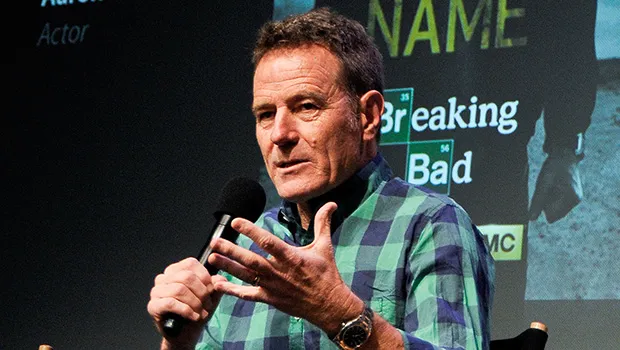
Bryan Cranston’s wardrobe works for the same reason his performances do: every choice feels intentional, yet little appears forced. He can wear a traditional black tuxedo without disappearing into it, then switch to muted plaid, brown double-breasted tailoring, or an unexpected colored tie without looking as though he is chasing a trend.
Best known for playing Hal in Malcolm in the Middle and Walter White in Breaking Bad, Cranston has built one of television’s rare careers in which comedy, drama, directing, producing, theater, and business all carry equal weight. His fashion identity follows a similar pattern. The foundation is classic menswear, but personality arrives through texture, proportion, facial hair, and restrained color.
At 70, he dresses like a man who understands his build, age, public image, and the demands of each event. His strongest outfits do not depend on oversized logos or headline-making luxury labels. They depend on jacket structure, correct trouser length, clean shirt collars, and one controlled point of interest. That balance between traditional tailoring and small fashion risks defines his public wardrobe.
Cranston’s biography also helps explain his style. Years of playing ordinary fathers, dangerous antiheroes, presidents, judges, and business executives have taught him how clothing changes posture and perception. His best-dressed moments reveal more than expensive suits. They show how mature men can remain polished, current, and individual without dressing younger than they are.
Biography, Age & Background
Cranston’s polished public image came after decades of uncertain work, financial pressure, family disruption, and small acting assignments. He was not introduced to audiences as a glamorous leading man. He earned recognition gradually, which may explain why his clothing still feels grounded. His background gives his formalwear an accessible quality: the suits are refined, but the person wearing them rarely looks distant or overly managed.
From Canoga Park to a Life Built on Character Work
Bryan Lee Cranston was born on March 7, 1956, in the Los Angeles area and turned 70 in March 2026. He grew up in Southern California in a family connected to entertainment. His mother worked as a radio actress, while his father pursued acting and held other jobs when steady roles did not arrive.
His childhood became difficult after his father left the family. Cranston has discussed the emotional and financial damage that followed, including the loss of the family home and periods spent living with grandparents. A 2026 interview also revisited how the family became separated during that period and how the experience changed his personality and sense of security.
Those details matter when examining his public identity. Cranston does not project the detached ease of someone raised inside permanent Hollywood privilege. Even in formal clothing, he tends to retain an open posture, an expressive face, and a slightly informal warmth. His tuxedos communicate achievement, but they seldom erase the working actor underneath.
The Police-Science Student Who Chose Acting
Acting was not Cranston’s original professional plan. He studied police science at Los Angeles Valley College and considered a future connected to law enforcement. An elective acting class changed that direction, while a long motorcycle trip with his brother helped confirm that performance offered the life he wanted.
Before stable acting work, he took an assortment of jobs, including security, restaurant, delivery, and camera-related work. He then developed his craft through theater, commercials, voice roles, soap operas, and television guest appearances. That long apprenticeship gave him a deep understanding of character construction.
Clothing became part of that process. Cranston learned to inhabit police officers, doctors, executives, fathers, criminals, and public figures before audiences associated him with one fixed image. His later fashion confidence makes sense in that context. He knows a brown suit communicates something different from a black tuxedo, and that a shaved head changes the force of a jacket collar. These are not abstract fashion ideas to an actor. They are tools he has used throughout his career.
How Comedy and Drama Reframed His Public Identity
Cranston’s first major wave of recognition came through Hal, the affectionate and chaotic father on Malcolm in the Middle. The role established him as a fearless physical comedian. Walter White then reversed that perception, turning the familiar sitcom father into one of television’s most unsettling dramatic figures.
That contrast reshaped how the public saw his face, body, and clothing. Hal’s outfits were intentionally ordinary and suburban. Walter White’s wardrobe moved from washed-out shirts and practical jackets toward darker colors, sharper silhouettes, the porkpie hat, and a more threatening visual identity. The performance earned Cranston four lead-actor Emmys, while his work as a producer contributed to additional wins for Breaking Bad.
His off-screen style became more visible during the same period. Awards ceremonies, film premieres, stage openings, and magazine appearances positioned him as a mature leading man rather than a character actor hidden inside a role. Instead of copying Walter White’s severity, Cranston developed a warmer style: classic tailoring, friendly color, polished shoes, and enough variation to keep the clothes from becoming predictable.
Height, Weight & Body Measurements
Cranston’s proportions help explain why conventional tailoring works well on him. He has enough height to carry longer jacket lines and double-breasted fronts, but he is not so tall that formalwear overwhelms the people beside him. His build has also changed for roles, making fit more meaningful than any single published weight figure.
Reported Height and On-Screen Proportions
Cranston is commonly listed at around 5 feet 10½ inches to 5 feet 11 inches, or roughly 179 to 180 centimeters. IMDb lists him at 5 feet 10½ inches, while several other public profiles round the figure to 5 feet 11 inches.
That height sits in a useful range for menswear. Standard suit proportions often work without dramatic alteration, though red-carpet tailoring still requires careful sleeve, trouser, and jacket adjustments. Cranston’s strongest jackets usually end at a traditional point rather than being cut unusually short. This gives him a balanced torso and avoids the compressed appearance that fashionable cropped jackets can create on mature men.
He also benefits from keeping trousers clean through the leg. A moderate rise and little excess fabric around the ankle lengthen his frame without creating an exaggerated slim fit. Men of similar height can take the same approach: correct shoulder width and trouser length will often do more for perceived height than narrow lapels, pointed shoes, or other visual tricks.
Why His Frame Responds Well to Classic Tailoring
Cranston has a medium frame with relatively balanced shoulders and torso proportions. He is neither known for a bodybuilder’s upper body nor an extremely thin runway silhouette. That gives him freedom to wear single-breasted, double-breasted, peak-lapel, and shawl-collar jackets without one format becoming mandatory.
His 2025 appearance at The Phoenician Scheme premiere offered a clear example. He wore a dark double-breasted suit with a white shirt and narrow black tie. The jacket’s overlapping front added authority, while the restrained color scheme kept the result from looking theatrical.
Double-breasted tailoring can add unwanted width when the waist is loose or the buttons sit poorly. Cranston’s better versions avoid that problem through controlled shaping and clean shoulders. The lesson is not that every man should buy a double-breasted suit. It is that the jacket must establish structure without fighting the wearer’s natural stance. His posture remains relaxed, so the suit looks like clothing rather than armor.
Weight Figures, Body Measurements and What Is Actually Known
No authoritative current source publishes Cranston’s weight, chest, waist, shoe size, or complete body measurements. Celebrity databases sometimes list estimates, but those numbers are often copied between sites without clear sourcing. Treating them as fixed facts would be misleading.
His weight has also changed for professional reasons. Cranston has discussed losing about 16 pounds for the second season of Your Honor so that the character’s grief, imprisonment, and physical decline would register onscreen. That temporary figure does not establish his normal weight or present-day condition.
Visual evidence provides a more useful style guide. His frame looks best when clothing follows his shape without gripping it. Jackets usually leave enough room across the chest for natural movement, while trousers remain tailored rather than narrow. Mature men often benefit from the same restraint. Extreme slim fits can exaggerate weight changes, while oversized suits may make the body look less defined. Cranston’s middle path is more forgiving and more durable.
Wife, Girlfriend & Family
Family is not merely a private detail in Cranston’s public story. His marriage, his daughter’s acting career, and his plans to slow down professionally have influenced how he discusses fame and success. His appearances with family members also reveal a less performative side of his style, where comfortable tailoring and understated clothing matter more than creating a solo red-carpet image.
A Marriage That Began on an Airwolf Set
Cranston has been married to actress Robin Dearden since July 1989. They met while working on a 1984 episode of Airwolf, in which he played a threatening character and she played one of the people caught in his storyline. Their unusual first meeting later became a frequently retold part of their history.
The marriage has lasted through his years of unstable employment, sitcom success, global recognition, Broadway work, and the cultural impact of Breaking Bad. Cranston has spoken openly about how fame can unbalance a relationship, particularly when one spouse becomes the focus of photographers and public attention.
That awareness affects his image. At joint appearances, he rarely dresses in a way that seems designed to overpower the moment. His formal clothing tends to be dependable and event-appropriate, allowing the couple to appear connected rather than staged as a celebrity and an accessory. The approach is useful beyond red carpets: a strong outfit should support the occasion and the people sharing it, not demand every available glance.
Taylor Dearden and an Acting Family Across Generations
Cranston and Dearden have one daughter, actress Taylor Dearden, born in 1993. She has developed her own screen career, including a prominent role as Dr. Melissa King in HBO’s medical drama The Pitt. Cranston has praised her ability and said she reached certain levels of acting skill earlier than he did.
His comments about Taylor often focus on work ethic rather than inherited status. He has described watching her understand the instability of an acting career because she witnessed his own slow progress and periods of rejection. That family perspective challenges the assumption that every Hollywood child experiences an effortless path.
It also fits Cranston’s broader style identity. He rarely uses clothing to present himself as the untouchable head of a celebrity dynasty. His wardrobe is established but approachable. A good suit, clean grooming, and one expressive detail are enough. That visual modesty supports the public role he appears most comfortable occupying: an experienced actor who still respects preparation, collaboration, and the uncertainty of the profession.
How Family Priorities Are Reshaping His Next Chapter
Cranston announced plans to pause acting after turning 70 rather than retire permanently. He explained that he wanted to spend an extended period focusing on his wife and restoring balance after years in which her schedule often adjusted around his career.
By 2025 and 2026, he was still working, promoting projects, attending ceremonies, discussing a possible move, and reflecting on downsizing. His 2026 return as Hal in Malcolm in the Middle: Life’s Still Unfair also showed that his planned pause was not a rejection of acting or earlier roles.
A slower lifestyle could influence his fashion in practical ways. Red-carpet tailoring may remain part of public work, but travel-friendly separates, soft jackets, knitwear, and relaxed trousers become more relevant when daily life is no longer organized around constant production. Cranston already appears comfortable in that territory. His casual image depends less on hype-driven sneakers and more on mature staples that can move between professional meetings, travel, dinners, and informal events.
Career, Income & Net Worth
Few actors have moved between broad television comedy, morally dark drama, political theater, voice work, directing, producing, and business with Cranston’s consistency. That range has created several income streams, though public estimates of his wealth remain unverified. His career value is easier to establish through documented work, awards, ownership interests, and longevity than through one speculative number.
Hal, Walter White and the Power of Range
Cranston worked for years before receiving the role that made him broadly recognizable. Hal on Malcolm in the Middle gave him seven seasons of physical comedy, emotional warmth, and family-centered storytelling. Walter White then revealed his ability to construct a long dramatic transformation with precise changes in voice, posture, facial tension, and wardrobe.
The Television Academy records seven career Emmy wins and 16 nominations, including his 2025 guest-actor win for playing Griffin Mill in The Studio. Four of those wins came for his lead performance in Breaking Bad, while two came through the series’ producing achievements.
That continued recognition matters because it prevents Cranston’s public style from becoming trapped in nostalgia. At recent events, he is not appearing only as the former Walter White. He remains a working performer with current projects and current awards attention. His clothing reflects that status: classic enough to honor his seniority, but updated through double-breasted cuts, sharper evening proportions, velvet textures, and selective color.
Broadway Authority and a Late-Career Emmy
Cranston’s stage career added another form of prestige. He won Tony Awards for playing Lyndon B. Johnson in All the Way and television anchor Howard Beale in Network. The roles required commanding physical presence, vocal control, and the ability to hold attention in a live theater without the close framing of a camera.
That stage experience appears in his formal posture. Cranston often stands squarely in a suit, allows the jacket to remain closed when appropriate, and avoids the exaggerated poses seen on fashion-first carpets. The clothing is presented through presence rather than modeling technique.
His 2025 Emmy win for The Studio was also meaningful because it returned him to comedy recognition after years in which dramatic roles dominated his reputation. The character’s extravagant Hollywood-executive look was more artificial than Cranston’s own clothing, but it demonstrated his continued willingness to use hair, tan, tailoring, and surface polish as comic material.
Earnings, Dos Hombres and the Limits of Net-Worth Estimates
Entertainment finance sites commonly estimate Bryan Cranston’s net worth at around $40 million and have reported peak Breaking Bad pay near $225,000 per episode. These figures are not official financial disclosures, so they should be treated as media estimates rather than audited facts.
His known income sources extend beyond acting fees. He has worked as a director, writer, producer, voice actor, stage performer, and author. He also co-founded Dos Hombres with Aaron Paul. Constellation Brands acquired a minority position in the mezcal company in 2021, and a further $15 million growth investment was reported in late 2025. The value of Cranston’s personal stake has not been publicly confirmed.
This distinction matters in celebrity wealth reporting. A successful company, property sale, or high episode fee does not reveal taxes, ownership percentages, expenses, investment losses, or contractual obligations. Cranston is clearly wealthy by ordinary standards, but the exact total remains private. His clothing supports that reading: expensive tailoring is visible, yet his public wardrobe does not depend on displaying wealth through constant brand identification.
House, Cars & Luxury Lifestyle
Cranston’s lifestyle is better documented through real estate and business than through collections of exotic cars or private aircraft. One former home received attention for its environmental design rather than excessive size, which fits his wider public image. He appears interested in comfort, craftsmanship, location, and practical purpose more than conspicuous consumption.
The Eco-Friendly Beach House He Helped Design
Cranston and Dearden purchased a Ventura County beach property in 2007 and replaced the existing structure with a custom home. The finished residence measured about 2,450 square feet and included three bedrooms, coastal views, an open living plan, and energy-conscious building systems.
The couple sold the house for approximately $5.45 million in 2021, above its reported asking price of $4.995 million. Architectural coverage highlighted features such as hydronic hot-water systems, efficient wall construction, polished concrete, glass, and materials chosen to reduce environmental impact.
The house offered a useful clue about Cranston’s taste. It was modern without being a giant celebrity compound. The visual appeal came from proportion, light, ocean views, and material choices. His fashion works in a similar manner. A strong line and a good surface often matter more than decoration. The comparison is especially clear in his black-tie clothing, where velvet, satin lapels, crisp cotton, and polished leather create depth inside a limited color palette.
Los Angeles, New York and the Move Toward Downsizing
Public reporting has connected Cranston and Dearden with homes in both Los Angeles and New York. In a 2026 interview, he discussed the possibility of letting an Los Angeles property go and moving toward a smaller, quieter setup. Other reports described the couple as dividing time between the two cities.
Those comments suggest that luxury, for Cranston, may increasingly mean control over time and space rather than accumulating larger properties. His earlier plans for an extended break and life abroad followed the same theme. He has reached a stage at which freedom from constant work may carry more value than adding another possession.
That attitude matches the strongest parts of his wardrobe. He does not seem interested in owning every trend. Instead, he returns to a compact language of dark suits, white shirts, evening jackets, muted checks, ties, and well-maintained shoes. A smaller wardrobe built around proven shapes can feel more luxurious than a crowded closet because each item has a clear purpose.
Cars, Watches and What His Public Lifestyle Does Not Confirm
No dependable public record confirms a large personal car collection, a private jet, or an extensive luxury-watch archive. Photographs, fictional vehicles, promotional appearances, and anonymous online claims are not enough to establish ownership.
He has been photographed wearing watches, and online watch communities have linked him and Aaron Paul with matching red-dial Rolex Oyster Perpetual models. The evidence supports saying they have appeared in similar watches, but details about purchase history or a wider collection remain unconfirmed.
This gap is worth stating because celebrity lifestyle articles often convert visibility into ownership. An actor photographed beside a car may be arriving in a studio vehicle. A watch may be loaned for an event. A suit may be selected by a stylist. Cranston’s known lifestyle is already substantial without invented additions: premium homes, extensive travel, high-level entertainment work, theater, business ownership, and access to luxury events. There is no need to add unsupported garages or aircraft.
Celebrity Fashion & Personal Style
Cranston’s fashion is strongest when it respects classic menswear and then introduces one point of resistance. The risk may be a quiet plaid, a brown double-breasted suit, velvet texture, a coral tie, or a severe black necktie where a softer choice was expected. He does not dress as a fashion provocateur. He dresses as a skilled traditionalist who occasionally moves one piece off center.
Why Restrained Tailoring Became His Signature
Dark tailoring forms the base of Bryan Cranston’s style. Black, charcoal, navy, deep brown, and muted gray appear often because they suit formal events, photograph well, and support his silver hair and expressive face. He tends to keep shirts light and clean, giving the face enough contrast to remain the focus.
His tuxedo at the 2025 Tony Awards followed this formula. The black jacket, white formal shirt, bow tie, waistcoat, and red pocket detail created a traditional evening look with one controlled accent. His 2026 BAFTA appearance returned to black tie with an even quieter presentation, using a dark velvet-looking dinner jacket, white shirt, bow tie, and high-waisted formal trousers.
The success lies in restraint. The red detail at the Tonys was small enough to energize the outfit without competing with the tuxedo. At the BAFTAs, texture replaced color as the point of interest. Men recreating the effect should choose one: color, pattern, shine, or texture. Using all four can turn mature formalwear into costume.
The Plaid Suit and Other Well-Judged Fashion Risks
One of Cranston’s most discussed fashion choices was the subtle plaid suit he wore during the Godzilla promotional period. The pattern appeared restrained at a distance but became clearer in closer photographs. GQ praised the outfit as a smart way to make plaid feel youthful without becoming loud.
He has also worn a brown Prada double-breasted suit with a blue shirt and patterned tie, as well as a gray outfit brightened by a coral-pink tie. These choices show his preferred risk level: the silhouette remains traditional while color or pattern creates personality.
That method is practical for men who work in conservative settings. A low-contrast check can replace a solid navy suit without becoming distracting. Brown tailoring can feel warmer than black, especially under evening light. A colored tie can refresh a familiar gray suit at modest cost. Cranston’s risks remain successful because he rarely combines an unusual suit, unusual shirt, loud tie, statement shoes, and heavy accessories in one look.
Bryan Cranston’s Best-Dressed Formula for Formal Events
Cranston’s best formal outfits usually contain five elements: a defined shoulder, traditional lapels, a clean white shirt, trousers with controlled break, and one finishing detail. The detail changes. It may be a bow tie, red pocket square, velvet jacket, satin lapel, muted check, or double-breasted front.
His 2016 Vanity Fair Oscar Party tuxedo used dark satin lapels and a bow tie, creating a polished surface without needing color. At the 2024 American Cinematheque Awards, he returned to a classic black tuxedo with a crisp shirt and neatly proportioned bow tie. The repetition did not feel lazy because the grooming, fabric, lapel treatment, and event atmosphere differed.
The wider lesson is consistency without duplication. A man does not need a radically new identity for every wedding, gala, or formal dinner. He needs a dependable silhouette and a few variables. Cranston changes the texture, tie, pattern, or facial hair while protecting the basic shape that suits him. That is how a signature style becomes recognizable rather than repetitive.
Hair, Beard & Grooming Style
Cranston’s face has changed dramatically across his career, often through hair and facial-hair decisions rather than prosthetics. A shaved head made Walter White look exposed before it became a symbol of power. Heavy beards communicated collapse in later dramatic work. Silver hair and a neat mustache now support a warmer, mature public image.
From Walter White’s Shaved Head to Silver-Haired Polish
The shaved head associated with Walter White remains Cranston’s most famous grooming transformation. Early in the series, baldness reflected illness and vulnerability. As the character became more powerful, the same look began to suggest severity, control, and danger.
Off-screen, Cranston’s natural hair creates a different effect. His recent style is short, brushed back, and lightly textured, with gray and silver tones left visible. The sides are kept neat without the stark skin fade often used by younger actors. This softens his features and works well with formalwear.
Men with similar hair should notice the shape rather than chase exact density. The top does not need extreme height. A modest lift at the front opens the face, while tidy sides prevent silver hair from appearing neglected. Cranston’s recent cut also balances his mustache. More volume at the top keeps facial hair from becoming the dominant horizontal line. The result feels finished but not overly sculpted.
The Mustache, Clean Shave and Beard as Character Tools
Cranston has moved between clean-shaven grooming, a mustache, a goatee, Walter White’s closely trimmed facial hair, and a full beard for dramatic roles. Each version changes how his jaw, mouth, and expressions read.
For Your Honor, he grew a large, unpolished beard as part of a character who had lost stability and purpose. Combined with weight loss and altered posture, the beard made the face appear narrower and more exhausted. Cranston later described the physical and dietary demands behind the role’s depleted appearance.
His current mustache presents the opposite message. It is shaped, gray, and controlled, adding character without covering the full face. The style pairs well with tuxedos because it offers visual identity inside otherwise traditional clothing. A mustache of this type needs clean boundaries around the lip and corners. Without maintenance, the same style can quickly move from distinguished to untidy, especially when the hair is light or silver.
Practical Grooming Lessons from a Face That Changes Easily
Cranston demonstrates that grooming should respond to face shape, hair color, clothing, and context. He does not maintain one beard simply because audiences once liked it. He changes the balance depending on whether he is working, attending an award show, appearing in a comedy, or preparing for a dramatic role.
His current silver hair and mustache suit structured clothing because both appear deliberate. When he wears glasses, the additional line across the face can make heavy facial hair unnecessary. When his beard is fuller, simpler clothing and softer hair prevent the upper body from looking crowded.
There is no reliable public confirmation that he follows a named skincare system, uses a specific fragrance, or depends on one grooming brand. His visible results can be explained without invented products: regular trimming, controlled hair shape, clean skin preparation, and an understanding of how facial hair changes expression. He also has a small Breaking Bad logo tattoo on his right ring finger, created to mark the end of the series.
Fitness, Diet & Body Transformation
Cranston is not known for promoting a celebrity fitness system or displaying an extreme gym-built physique. His physical work is tied more closely to character, stamina, and believable transformation. When he changes his weight, posture, or energy, the goal is usually to support a story rather than present an idealized body.
Acting Transformations Built Around Story, Not Vanity
Walter White’s transformation depended on more than shaving Cranston’s head. His posture, movement, clothing, and body language changed as the character became more dangerous. Early Walter often appeared folded inward, with rounded shoulders and clothing that weakened his silhouette. Later versions occupied more space.
Cranston has said he drew part of Walter’s physical bearing from memories of his father, whose posture seemed burdened by disappointment. That reference helped turn body shape into psychology rather than decoration.
This approach offers a useful distinction. Fitness for an actor does not always mean gaining visible muscle. Sometimes the work requires appearing tired, frightened, ordinary, older, or physically diminished. Cranston’s career shows control over movement rather than attachment to one heroic body type. Outside a role, he maintains a moderate build that allows him to look credible in comedy, drama, business clothing, and formal tailoring without an extreme physical identity controlling every part.
The 16-Pound Your Honor Weight Loss
For the second season of Your Honor, Cranston reportedly lost around 16 pounds. He wanted the character, Michael Desiato, to look as though grief, confinement, and hopelessness had stripped away his former life. The transformation included a thinner frame, visible ribs, altered movement, and a large beard.
He described the food restriction as difficult, especially when surrounded by meals he could not eat. Public interviews confirm the broad weight-loss goal, but they do not establish a safe plan that other people should copy. No verified day-by-day menu, calorie target, or supplement program has been released.
That boundary matters. A supervised transformation for a film or television schedule is not the same as a sustainable health routine. Cranston’s result worked because it served the character and lasted for a controlled production period. Readers should take inspiration from the commitment to preparation, not from attempting an undocumented rapid loss. Long-term fitness requires personal medical, nutritional, and lifestyle considerations that a celebrity interview cannot supply.
A Realistic View of His Diet, Training and Healthy Aging
No reliable public source confirms Cranston’s current weekly workout split, preferred gym exercises, normal calorie intake, supplement use, or everyday meal plan. Articles that present detailed “Bryan Cranston workouts” without direct sourcing should be treated cautiously.
What can be observed is professional stamina. Stage performances such as Network required repeated live appearances, strong voice control, movement, and sustained concentration. Film and television work also involve long days, travel, changing schedules, and repeated takes. His continued ability to manage those demands into his late sixties and at 70 suggests consistency, though it does not reveal a specific training method.
The practical model is moderate rather than extreme: maintain mobility, preserve enough strength for daily work, adjust food intake with care, recover between demanding periods, and avoid letting a temporary role transformation become a permanent expectation. Cranston’s tailoring also benefits from that stability. A relatively consistent everyday build allows suits to remain useful, while measured alterations can address smaller changes without rebuilding an entire wardrobe.
Conclusion
Bryan Cranston’s public image is built on contrast. He can be associated with suburban comedy and criminal menace, traditional black tie and muted plaid, a shaved head and softly styled silver hair. None of those identities fully replaces the others. They accumulate, giving his style more depth than a collection of designer labels could create.
His best outfits succeed because he understands proportion before novelty. Jackets sit cleanly on his shoulders. Trousers avoid excess fabric. Shirts brighten his face. Color appears in controlled amounts, while velvet, satin, checks, and double-breasted fronts supply texture or shape. Even his fashion risks remain connected to classic menswear.
The same principle runs through his lifestyle. His known homes emphasize thoughtful design. His business interests extend beyond acting, yet exact wealth remains private. His family has influenced his decision to slow down, while his career continues to produce new work and recognition.
For everyday men, the useful lesson is not to copy a specific tuxedo or buy the same watch. Build a dependable foundation, learn which jacket shape suits your frame, and change one detail at a time. Cranston looks distinctive because his clothes support the person wearing them. They never need to shout louder than he does.
Frequently Asked Questions
How old is Bryan Cranston?
Bryan Cranston was born on March 7, 1956. He turned 70 on March 7, 2026. He remains professionally active, although he has discussed taking an extended break from acting to spend more time with his wife and reconsider the pace of his career.
How tall is Bryan Cranston?
He is commonly reported to stand between 5 feet 10½ inches and 5 feet 11 inches, or about 179 to 180 centimeters. Small differences appear between public databases, but there is broad agreement that his height is close to 5 feet 11 inches.
Who is Bryan Cranston’s wife?
He has been married to actress Robin Dearden since July 8, 1989. They met while appearing in an episode of Airwolf during the 1980s. Cranston has spoken about protecting their relationship and creating more time for life together after decades of career demands.
Does Bryan Cranston have children?
Cranston and Robin Dearden have one daughter, actress Taylor Dearden. She was born in 1993 and has appeared in projects including Sweet/Vicious and The Pitt. Cranston has publicly praised her acting ability, preparation, and realistic understanding of the entertainment business.
What is Bryan Cranston’s net worth?
Celebrity finance publications often estimate his fortune at around $40 million. That amount has not been verified through official financial records. His income sources include acting, producing, directing, writing, theater, property transactions, and his ownership interest in the Dos Hombres spirits business.
Where does Bryan Cranston live?
Public reporting has linked him with residences in Los Angeles and New York, though his present living arrangements may change as he considers downsizing and taking time away from constant work. His former eco-conscious Ventura County beach house was sold for about $5.45 million in 2021.
What is Bryan Cranston’s signature fashion style?
His signature style combines traditional tailoring with one restrained point of interest. He often wears black or navy tuxedos, double-breasted suits, white shirts, polished shoes, and controlled accessories. Subtle plaid, brown tailoring, velvet texture, or a colored tie keeps the result individual without becoming flashy.
Did Bryan Cranston lose weight for Your Honor?
He said he lost roughly 16 pounds for the second season of Your Honor. The change was designed to show his character’s physical and emotional decline. Cranston has discussed the difficulty of the restricted eating period, but no reliable source provides a complete routine that others should follow.
Celebrity Style Reports
Designer labels, signature outfits and modern menswear inspiration.