
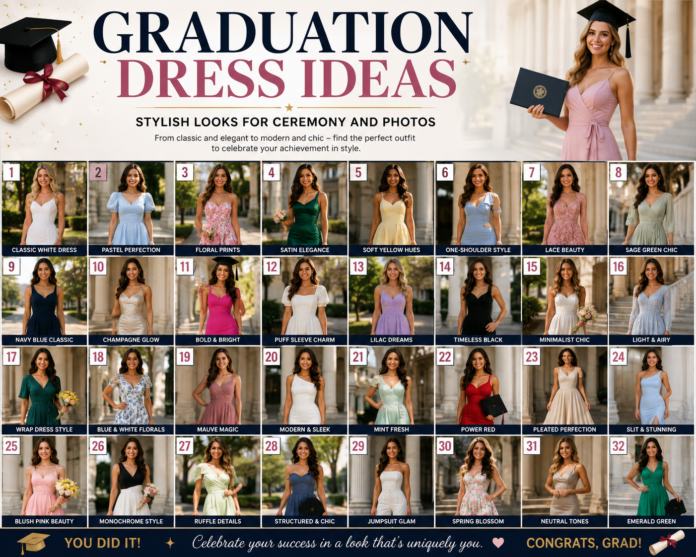
Graduation dressing has an unusual job: the outfit needs to look good underneath a cap and gown, survive hours of sitting and walking, and still photograph well once the robe comes off. The strongest graduation dress ideas balance those practical demands with enough personality to make the outfit feel worthy of the occasion.
For 2026, graduation and summer fashion coverage is leaning toward polished minis, clean midi silhouettes, white dresses with embroidery or texture, minimalist ’90s shapes, polka dots, soft draping, and fuller skirts. Current graduation edits also favor dresses that can be worn again rather than styles designed for a single ceremony.
The best choice, though, is not automatically the trendiest one. Hemline, neckline, fabric weight, graduation-gown color, ceremony location, weather, footwear, and the amount of walking involved can change which dress works best.
What Makes a Dress Work Well for Graduation?
Graduation gowns hide more of an outfit than many people expect. For much of the ceremony, photographs may show only the neckline, shoes, and a narrow section of the hem. Once the gown comes off, the complete dress becomes the focus.
That creates two different styling situations in the same day.
A dress with a clean neckline usually sits more comfortably beneath the gown than one covered in bulky shoulder details. Lightweight or medium-weight fabrics are also easier to manage than stiff layers that bunch beneath the robe.
Length deserves equal attention. A mini dress keeps the hem hidden beneath most gowns and gives the outfit a youthful feel after the ceremony. A midi offers more coverage and tends to photograph with a polished, balanced proportion. Floor-length dresses can work for formal graduations, but they require more attention to walking, stairs, crowds, and the length of the graduation robe.
Your school also has the final word. Check commencement instructions before deciding on unusually formal clothing, large accessories, difficult footwear, or anything that could interfere with academic regalia.
Graduation Dress Ideas That Look Good in Person and Photos
1. Simple White Mini Dress
Few graduation combinations are as recognizable as a white mini dress beneath a graduation gown. The contrast looks especially sharp beneath black, navy, burgundy, forest green, or other dark academic robes.
Keep the silhouette intentional rather than overly decorated. A square-neck mini, sleeveless shift, fitted A-line dress, or lightly structured design gives photographs clean lines without competing with the cap, cords, stole, or gown.
White dresses remain prominent across 2026 summer fashion coverage, with current options ranging from simple minis to poplin, embroidered, ruched, and draped silhouettes.
One practical issue: bright sunlight can make thin white fabric appear more transparent in photographs. Check the dress near a window before graduation day and choose appropriate undergarments rather than discovering the problem in outdoor photos.
2. Structured A-Line Midi
An A-line midi is useful when you want more coverage without moving into evening-gown territory.
The fitted upper section creates definition beneath the gown, while the skirt opens gradually from the waist. That shape also allows easier movement than a narrow pencil skirt when you are climbing stairs, crossing a stage, or walking across campus.
A midi length can be especially effective for family photographs because enough of the dress remains visible after you remove the gown without overwhelming the frame.
Current fashion coverage continues to treat midi dresses as one of the most adaptable dress lengths, especially for warm-weather dressing.
3. Satin Slip Dress
A satin or satin-look slip dress gives graduation photos a softer, more refined finish.
The strength of this style is its drape. Instead of relying on elaborate sleeves, heavy trim, or layers of fabric, the dress gets its character from the way the material falls over the body.
A midi slip generally feels more ceremony-appropriate than an extremely short version, especially for college commencements followed by dinners, receptions, or family celebrations.
Watch the fabric weight. Thin satin can crease easily after sitting through a long ceremony, and highly reflective material may catch direct sunlight differently from matte fabrics. A slightly heavier crepe-backed satin or lined slip often behaves better.
4. Embroidered White Dress
Embroidery gives a white graduation dress more dimension without requiring bold color.
Broderie anglaise, eyelet, floral embroidery, scalloped edges, or subtle tonal stitching can make an otherwise simple silhouette more interesting in close-up photographs. White embroidered minis have also appeared prominently in 2026 summer fashion coverage.
Because the fabric already contains detail, accessories can stay restrained. Small earrings, a slim bracelet, and straightforward shoes usually leave enough visual room for graduation cords and stoles.
Check how open the embroidery is before buying. Eyelet fabrics often contain small cutouts, so lining matters.
5. Square-Neck Fit-and-Flare Dress
A square neckline frames the upper body clearly, which matters when most ceremony pictures are taken while the gown is still on.
Pairing that neckline with a fit-and-flare skirt produces a defined waist without making the outfit feel stiff. It is also easy to adapt to different levels of formality. Cotton poplin feels fresh and daytime-oriented; crepe or satin moves the same basic shape toward dinner and evening celebrations.
Keep sleeves relatively smooth if the academic gown has narrow armholes. Dramatic puff sleeves may look attractive alone yet feel bulky once another layer is placed over them.
6. Polka-Dot Midi Dress
Graduation does not require white.
A small or medium-scale polka-dot dress gives photographs visible pattern while remaining easy to coordinate with a solid graduation gown. Polka-dot dresses have had a notable presence in spring 2026 fashion coverage, particularly in midi silhouettes.
Black and white creates the sharpest contrast. Navy and cream feels softer. Brown and ivory can look particularly good for outdoor ceremonies.
Avoid an overly dense combination of pattern, large jewelry, decorative shoes, honor cords, and a brightly colored stole. Something should remain quiet.
7. Minimalist ’90s-Inspired Midi
A sleeveless midi with a clean neckline and little decoration works particularly well for graduates who prefer understated clothing.
The silhouette does not depend on a single obvious trend, so graduation photos are less likely to feel visually dated later. Current 2026 fashion coverage has also highlighted a renewed interest in pared-back ’90s midi dresses.
Black, chocolate brown, navy, cream, pale yellow, dusty blue, or muted red can all work depending on the color of the academic gown.
The styling rule here is restraint. A clean dress loses its point when surrounded by oversized jewelry, several competing accessories, and elaborate footwear.
8. Drop-Waist Dress With a Fuller Skirt
A drop-waist silhouette moves the visual break below the natural waist before opening into a fuller skirt.
That produces a longer torso line and a slightly less expected shape than the conventional fit-and-flare graduation dress. Drop waists and amplified skirt proportions are among the silhouettes appearing in 2026 dress coverage.
This style becomes most visible after the graduation robe is removed, so it works particularly well if you plan to take a substantial set of portraits afterward.
Proportion is important. On a shorter dress, a dropped waist can lengthen the torso while leaving plenty of leg visible. On a midi, the same construction creates a more dramatic shape.
9. Soft Floral Dress
Florals make sense for spring and early-summer commencements, particularly outdoor ceremonies surrounded by trees, gardens, brick buildings, or older campus architecture.
Instead of treating every floral dress as interchangeable, look at the scale of the print.
Tiny florals create a softer effect from close range but may disappear in full-body photographs. Larger botanical prints remain more visible from a distance, although they can compete with colorful graduation regalia.
Spring 2026 dress coverage has included floral midis alongside cleaner minimalist silhouettes, so the look can feel current without relying on an extreme trend.
10. One-Shoulder Dress
An asymmetric neckline gives a simple dress immediate shape once the gown comes off.
For photographs, that asymmetry can be more interesting than adding a complicated print or heavy embellishment. It works particularly well in solid colors because the neckline becomes the detail.
The tradeoff appears during the ceremony. Your graduation gown will cover most of the one-shoulder construction, so buy this style because you like the post-ceremony outfit rather than expecting the neckline to be visible while receiving your diploma.
11. Halter-Neck Dress
A halter dress keeps the shoulders visually clean and places attention around the neckline.
Poplin versions work for daytime ceremonies, while satin or crepe can suit a more formal celebration afterward. A halter mini gives a youthful proportion; a halter midi feels slightly more composed.
Test the neckline with your graduation gown before the event. Some halters sit high enough to remain visible above the robe, while lower versions nearly disappear.
That small difference can change the appearance of every gown-on photograph.
12. Colorful Solid Midi
White may be common, but color often produces stronger contrast in photographs.
Butter yellow, powder blue, soft pink, cherry red, cobalt, sage, plum, or another solid shade can separate the graduate visually from a dark robe and neutral campus background.
Think about the gown before the dress. A red dress beneath a burgundy gown creates a different effect from a pale blue dress beneath the same robe.
You do not need an exact color match. In many cases, contrast photographs better than coordination.
Choosing a Graduation Dress Based on the Ceremony
A dress that works inside an air-conditioned auditorium may become uncomfortable on a football field in direct sun.
For a warm outdoor graduation, cotton poplin, linen blends, lighter crepe, chiffon, and other breathable or lightweight constructions are easier to manage beneath another layer of fabric. A graduation robe traps additional warmth, which makes an already heavy dress feel heavier.
Indoor ceremonies offer more freedom. Satin, fitted knits, longer sleeves, and slightly heavier fabrics become easier to wear when temperature and wind are controlled.
Consider the Graduation Gown Color
Try the gown over the dress before graduation morning.
That five-minute test can reveal more than an hour of online shopping.
Check whether the dress neckline sticks out awkwardly, whether sleeves bunch, whether the skirt protrudes beneath the gown, and whether the dress color shows through a lighter academic robe.
Then take a phone photo from the front and side.
Mirrors show you the outfit at close range. Graduation photographs often show it from several yards away.
Think About What Happens After the Ceremony
Some graduates take photographs, change clothes, and go home. Others move directly into a restaurant reservation, party, reception, campus event, or family gathering.
If the dress needs to cover the entire day, choose something that works beyond the stage.
A clean midi, slip dress, A-line silhouette, or simple mini usually transitions more easily than a heavily embellished occasion dress. Graduation-day clothing is more useful when you would willingly wear it again.
Best Graduation Dress Length for Photos
There is no single correct length, but each produces a different visual effect.
Mini dresses expose more leg beneath the gown and create a youthful look once the robe comes off. They are also practical when graduation gowns fall below the knee because competing hemlines are less noticeable.
Midi dresses give photographs a longer, cleaner line and work especially well for ceremonies followed by dinners or formal family celebrations.
Maxi dresses create the most dramatic standalone portraits, but they can overlap awkwardly with the graduation gown. Watch the combined lengths carefully.
A simple rule works surprisingly well: if the dress and robe have different hemlines, make the difference look deliberate rather than accidental.
What Colors Work Best for Graduation Dresses?
White remains a popular choice because it is easy to photograph, feels appropriate for spring and summer, and creates strong contrast beneath dark academic gowns. Current 2026 fashion coverage continues to show white minis, midis, embroidered dresses, poplin styles, and minimalist options across summer wardrobes.
It is far from the only option.
Pastels soften photographs and work particularly well outdoors. Dark colors create a more formal effect. Saturated shades make the graduate stand out when photographed among large groups wearing the same robe.
Prints require slightly more judgment because graduation outfits already contain several visual elements: cap, tassel, stole, cords, gown, diploma cover, flowers, and sometimes medals.
The busier the regalia, the more useful a visually calm dress becomes.
Graduation Shoes Matter More Than They Seem
The dress may receive most of the attention during shopping, but poor shoe selection can affect the entire day.
Graduates may stand in lines, walk across large campuses, climb stage steps, cross parking areas, and remain on their feet for photographs long after the ceremony ends.
For indoor ceremonies, pumps, slingbacks, ballet flats, loafers, kitten heels, or block heels can work depending on the outfit.
Outdoor ceremonies require more thought. Thin stilettos can sink into grass or become difficult on uneven surfaces. A block heel, wedge, flat, or supportive low heel gives the foot a broader base.
Break the shoes in before graduation day. A shoe that feels fine during a two-minute bedroom try-on can feel completely different after an hour of standing.
Keep Accessories Simple Around Graduation Regalia
Graduation already comes with accessories you cannot remove.
Honor cords add color. Stoles create vertical lines across the torso. Medals occupy the neckline. The tassel hangs near the face.
Your jewelry should work around those elements rather than fighting them.
Small hoops, studs, a restrained pendant, a thin bracelet, or one meaningful piece is usually enough. If you are receiving several cords or a decorative stole, you may not need a necklace at all.
Large statement earrings deserve another practical test: put on the graduation cap while wearing them. Tassels, hair, earrings, and cap edges can occupy the same small area surprisingly quickly.
Make the Dress Work for Graduation Photos
Photogenic clothing is not necessarily complicated clothing.
Shape tends to matter more.
A clearly defined neckline, intentional waist placement, clean hem, and fabric that does not wrinkle excessively usually show better from several distances than tiny decorative details.
Take test photographs outdoors if possible. Check the dress in direct light, shade, and flash. White and pale fabrics deserve particular attention because transparency or undergarment lines may appear in photos even when they are difficult to see indoors.
Consider movement too. Graduation photography rarely involves standing perfectly still. You may walk toward the camera, throw your cap, sit on steps, turn sideways, hug family members, or hold a diploma.
A dress should survive those poses without constant adjustment.
Graduation Dress Mistakes Worth Avoiding
Buying solely for photographs is one of the easiest mistakes.
Graduation is still a ceremony. You have to wear the outfit for hours before those ten perfect pictures happen.
Avoid a dress that constantly rides upward when sitting, a neckline that requires repeated adjustment, fabric that becomes uncomfortable beneath the gown, or shoes that make normal walking difficult.
Do not assume expensive fabric will behave better either. Some delicate satin dresses crease quickly, while a reasonably priced lined crepe or poplin dress can remain neat through an entire ceremony.
Another mistake is trying to match every accessory exactly. Matching dress, shoes, bag, nails, jewelry, flowers, and graduation regalia to one color can make the outfit look overly controlled.
Give the eye somewhere to rest.
Frequently Asked Questions
Should a graduation dress be white?
No. White is a popular graduation choice, particularly for spring and summer ceremonies, but it is not a universal requirement. Unless your school specifies otherwise, colors, pastels, dark neutrals, prints, and brighter shades can all work.
Is a mini dress appropriate for graduation?
A mini can work well when the length is comfortable for sitting, walking, climbing stairs, and taking photographs. Remember that the graduation gown will usually cover much of the dress during the ceremony, so test the combined lengths beforehand.
Is a midi dress good for graduation?
Yes. Midi dresses offer a useful middle ground between a short party dress and a formal maxi. They photograph well after the gown comes off and can transition easily into a restaurant dinner, reception, or family celebration.
What fabric is best for an outdoor graduation?
Lightweight cotton, poplin, linen blends, chiffon, and lighter crepe constructions can be easier to wear in warm weather. The graduation gown adds another layer, so heavy fabrics that feel comfortable alone may become noticeably warmer during an outdoor ceremony.
Can I wear a patterned dress to graduation?
Yes. Florals, polka dots, stripes, and other prints can work well, especially when the graduation gown is solid. If your regalia includes colorful cords, medals, or a decorative stole, a smaller or calmer pattern may keep the complete outfit from looking crowded.
What shoes should I wear for an outdoor graduation?
Choose footwear that suits the ground as well as the dress. Block heels, wedges, flats, loafers, or supportive low heels are easier to manage on grass and uneven surfaces than narrow stilettos. Comfort matters because commencement often involves substantial standing and walking.
Choosing the Graduation Dress You Will Still Like Later
The strongest graduation dress ideas are not necessarily the outfits with the most decoration. Graduation already provides plenty of visual symbolism through the cap, gown, cords, diploma, campus setting, and people around you.
Give the dress one clear job.
Maybe that means a white embroidered mini that shows beautifully once the gown comes off. Perhaps it is a fluid satin midi for a ceremony followed by dinner. A minimalist ’90s shape may suit someone who wants photographs that feel less tied to a specific trend, while a colorful A-line dress can bring personality to otherwise uniform academic regalia.
Think first about movement, temperature, gown color, fabric, and hemline. Then choose the detail that makes the outfit yours.
You should be able to cross the stage comfortably, take a hundred photographs without constantly fixing your clothes, and still want to wear the dress after graduation day is over.