
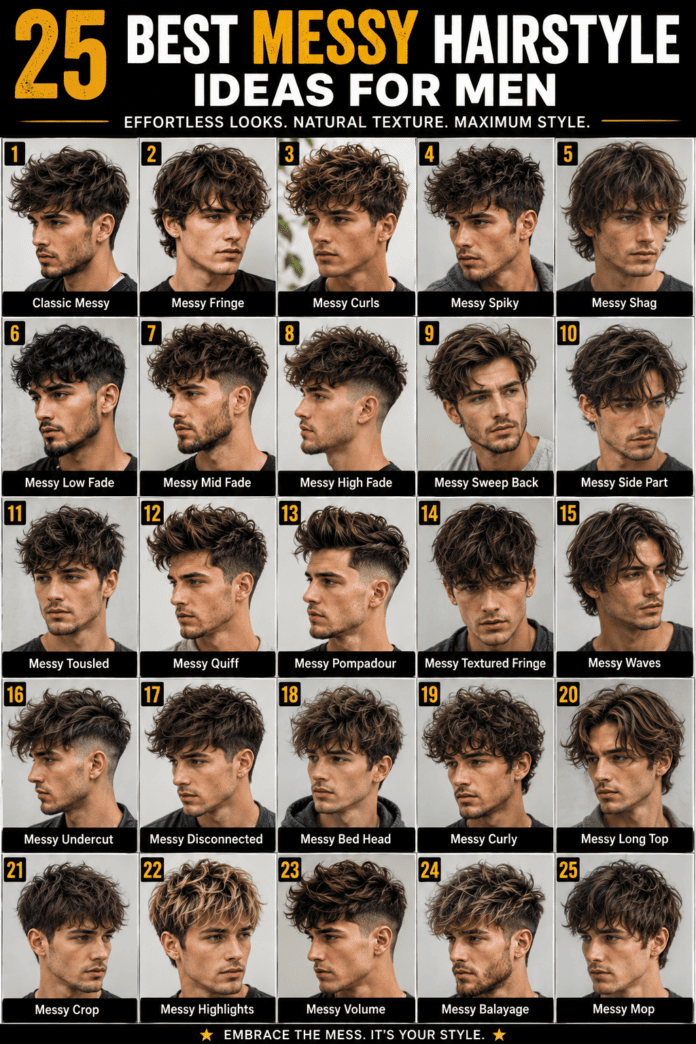
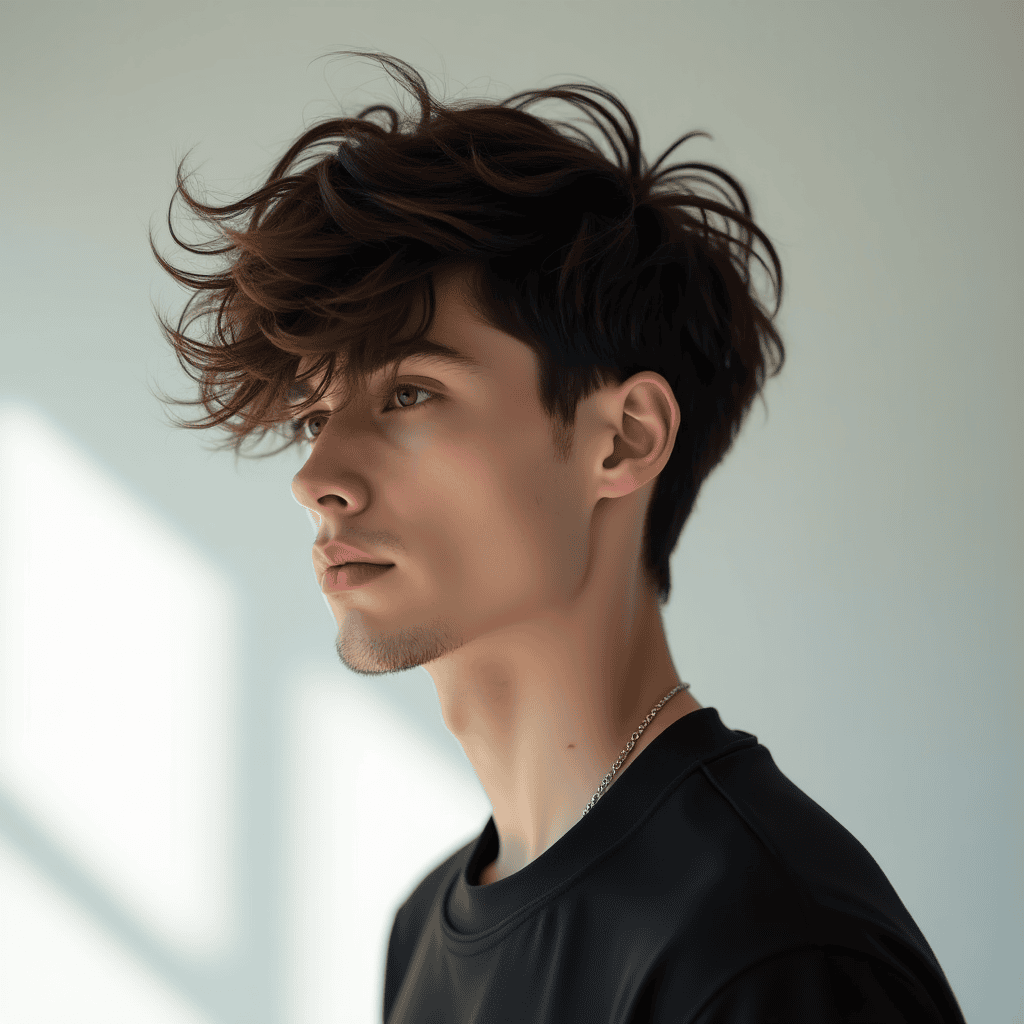
The strongest messy hairstyle ideas make texture look intentional rather than neglected. Start with the Textured Messy Crop for easy daily wear, the Messy Quiff for extra height, Tousled Fringe for a softer shape, or Bedhead Waves when natural movement is already doing half the work.
This guide approaches each look through practical barbering fundamentals: length distribution, weight, texture, product choice, and how the hair behaves once you leave the chair. The goal is controlled disorder—a style that still looks good after you run a hand through it.
| Quick Pick | Best For | Hair Length | Main Character |
|---|---|---|---|
| Textured Messy Crop | Low-maintenance styling | Short | Choppy and controlled |
| Messy Quiff | Added height | Short to medium | Lifted and loose |
| Tousled Fringe | Softer features | Short to medium | Forward texture |
| Bedhead Waves | Naturally wavy hair | Medium | Relaxed movement |
| Messy French Crop | Thick straight hair | Short | Broken fringe |
| Loose Messy Pompadour | Statement styling | Medium | High volume |
| Messy Curtains | Casual modern shape | Medium | Center movement |
| Shaggy Layers | Longer hair | Medium to long | Airy separation |
| Messy Slick Back | Smart-casual wear | Medium | Swept-back texture |
| Surfer Mess | Longer waves | Medium to long | Beachy looseness |
Short Messy Hairstyle Ideas That Stay Easy
Short hair is where messy styling makes the most practical sense. The right cut creates enough separation to look relaxed without demanding a full routine each morning.
1. Textured Messy Crop
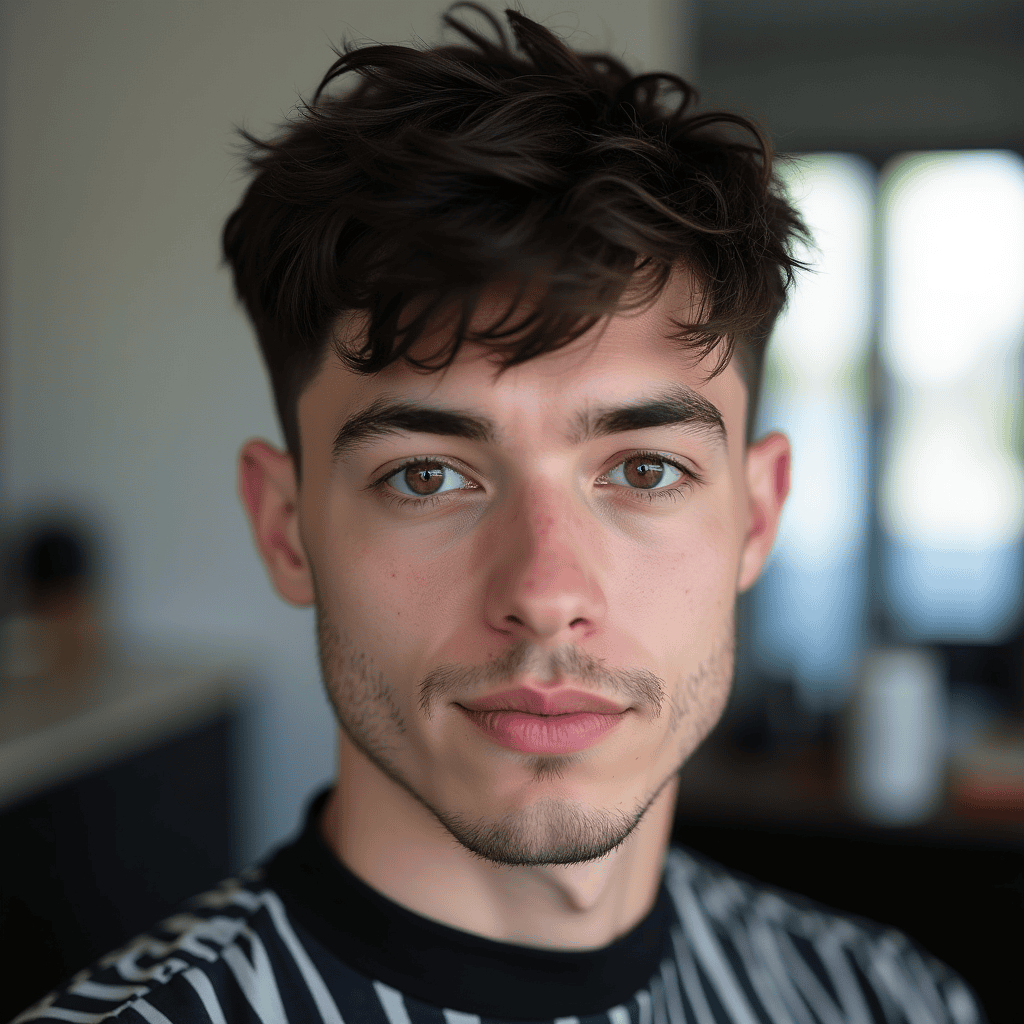
The textured messy crop keeps the sides compact while leaving the top broken into short, irregular sections. The crown carries subtle lift, while the front sits slightly forward instead of forming a straight fringe line. Choppy ends make the surface look rougher and more dimensional. It is one of those messy hairstyle ideas that still reads clean from across the room.
It works especially well on straight or slightly wavy hair with medium-to-thick density. Ask your barber for “a short textured crop with point-cut movement on top and a soft, uneven front.” A small amount of matte paste normally gives enough separation without locking every strand in place. Skip this version if your hair is extremely fine and tends to collapse immediately after styling.
2. Messy French Crop
A messy French crop keeps the familiar forward direction of the classic cut but removes its rigid geometry. The fringe breaks into small points across the forehead, while the top carries random separation instead of lying flat. Short faded sides make the disorder on top stand out more clearly. The finished silhouette stays neat even when individual strands refuse to cooperate.
Men with dense straight hair usually get the easiest result because the strands can hold a chopped shape. Tell the barber, “Keep the crop short, texture the top heavily, and leave the fringe irregular rather than blunt.” Styling can be as simple as working clay through dry hair and pushing sections in slightly different directions. The drawback is that an overgrown fringe can move from intentionally messy to simply heavy surprisingly fast.
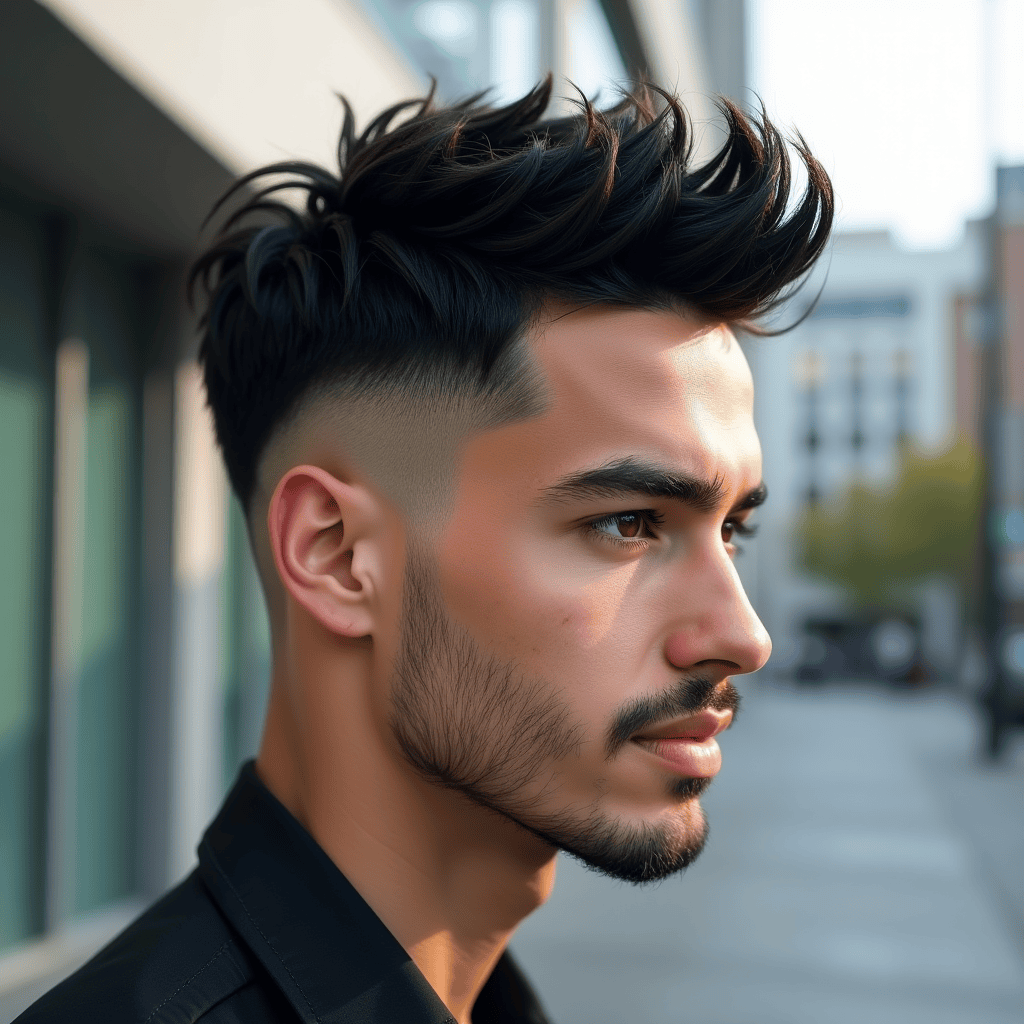
3. Spiky Messy Texture
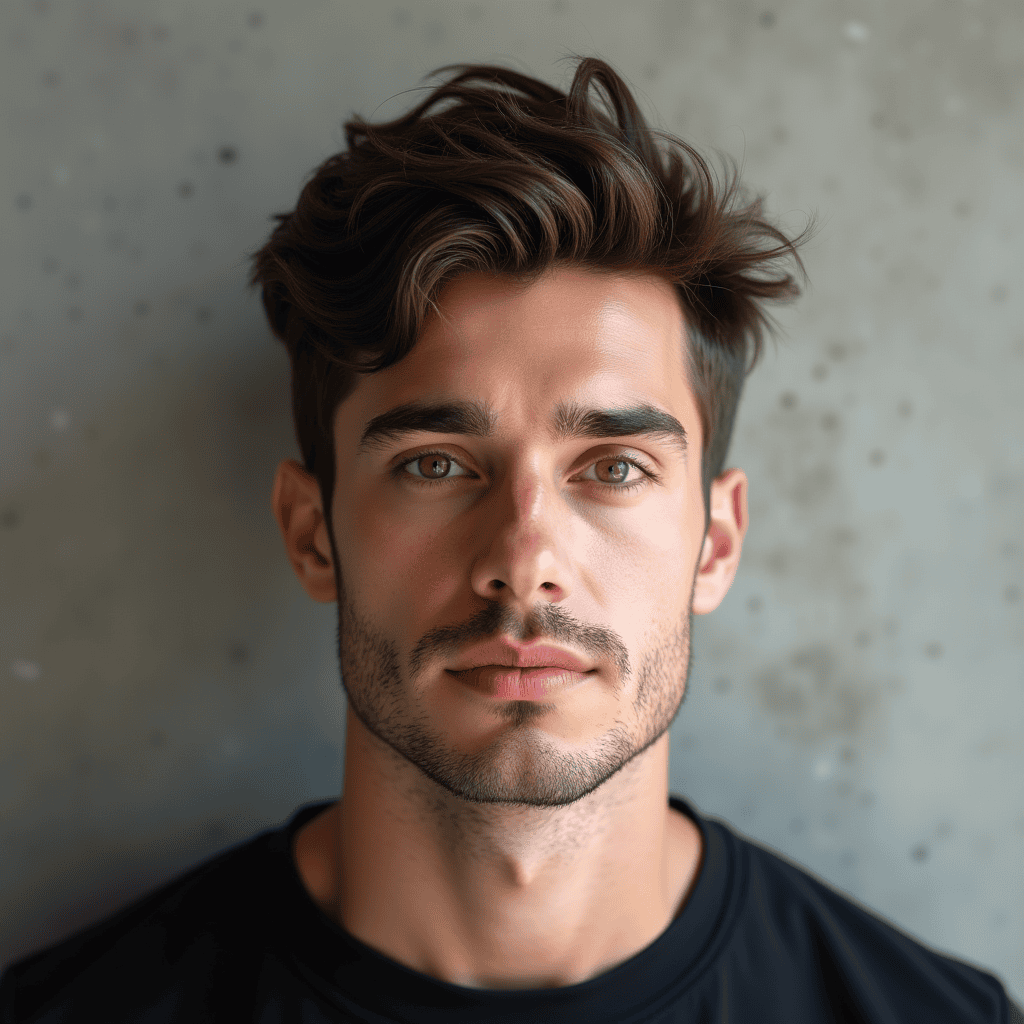
Spiky messy texture trades the hard gelled spikes of older styles for softer, randomly lifted pieces. The hair rises in different directions instead of forming matching points, creating a rough surface with plenty of visible separation. Keeping the sides shorter prevents the style from becoming bulky. The trick is making each spike look accidental without creating twenty identical spikes.
This cut suits coarse or naturally stiff hair because those textures already want to stand away from the scalp. Ask for “short textured layers that can be pinched upward without a disconnected spiky shape.” Use a dry paste on your fingertips and touch only selected sections rather than coating the entire head. Too much product turns this look crunchy, which kills the looseness that makes it work.
4. Messy Crew Cut
The messy crew cut adds character to a cut that can otherwise look almost military in its precision. The front remains a touch longer, giving you enough room to push a few pieces upward or diagonally. Texture through the center breaks up the uniform surface. From the side, the shape still follows the clean gradual rise expected from a crew cut.
It is useful for men who want a messy hairstyle without spending ten minutes arranging it. Ask the barber for “a classic crew shape with extra texture and enough front length to rough up with my fingers.” A little matte cream on dry hair is usually plenty. There is limited room for dramatic styling, so anyone chasing big movement should keep more length on top.

5. Short Messy Side Sweep
The short messy side sweep moves most of the top diagonally without creating a polished side part. A few strands cross the natural direction, and the front carries just enough lift to keep the hair from looking pasted down. The sides stay restrained while the top looks finger-combed. That contrast gives the cut a smart shape without removing its casual energy.
This is a good bridge for men who need something appropriate for work but dislike stiff styling. Ask for “a short layered top that can sweep sideways without a defined part, with softened texture through the front.” Light cream or paste works better than glossy pomade here. If your hair grows straight forward with a stubborn cowlick, expect the side direction to require more blow-drying.

Medium Messy Hairstyle Ideas With More Movement
A few extra inches change everything. Medium hair can bend, fall, split, and sweep, giving messy hairstyles much more visible movement than short cuts can produce.
6. Messy Quiff
The messy quiff lifts the front but refuses to hold a perfectly sculpted wall of hair. Height concentrates above the forehead, then gradually collapses into looser texture toward the crown. Some strands tilt sideways while others fall slightly forward. The result carries volume without the stiff architecture of a traditional quiff.
Oval, square, and round faces can all work with the shape because the front adds vertical emphasis. Tell your barber, “Leave enough length for a loose quiff, remove bulk internally, and keep the finish textured rather than polished.” Blow-dry the roots upward first, then disturb the shape with your fingers and a matte product. The downside is morning effort: without some heat, heavier hair may drop before lunch.
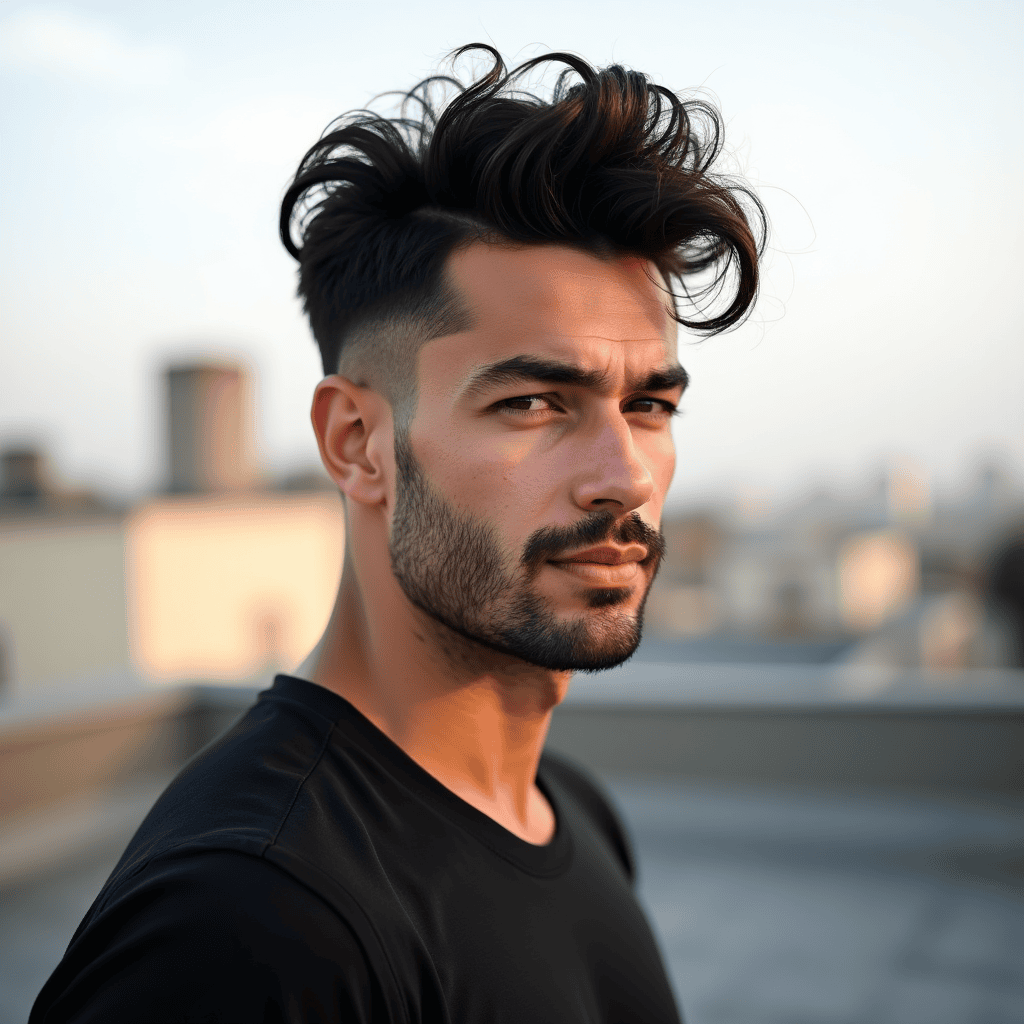
7. Tousled Fringe
A tousled fringe drops toward the forehead in separated sections rather than one dense curtain. The lengths around the front vary slightly, allowing some pieces to curve and others to sit straighter. More controlled sides stop the fringe from swallowing the face. It has a casual softness that feels less aggressive than styles built around height.
This shape can be especially useful on wavy hair because natural bends make the fringe look lived-in without much effort. Ask for “a layered fringe with enough weight to fall forward but enough texture to split into loose sections.” Style it with a light cream and avoid overworking the roots. Men who dislike hair touching their forehead will probably tire of this one quickly.
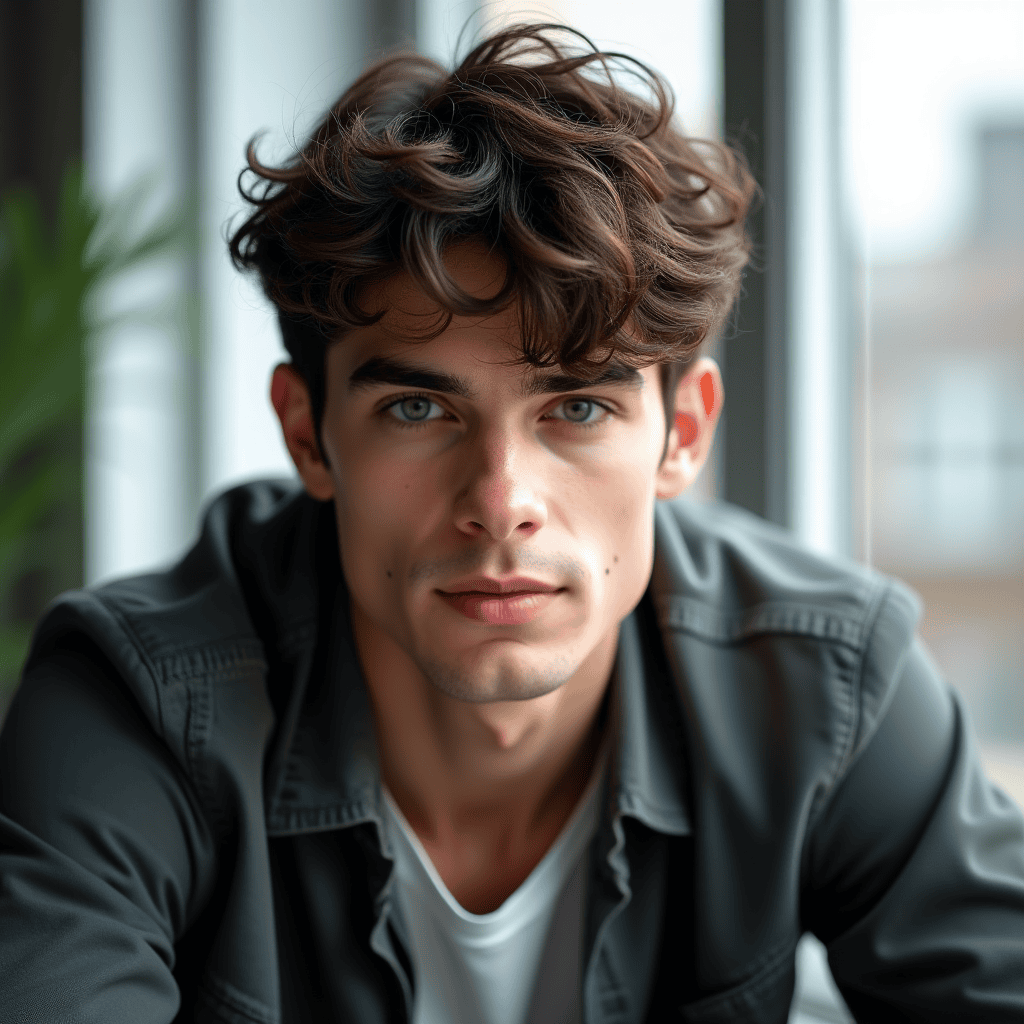
8. Bedhead Waves
Bedhead waves work because the overall outline remains attractive while the individual bends refuse to line up. The top carries loose S-shaped movement, the crown looks slightly rumpled, and a few pieces around the temples fall where they want. There should be air between sections rather than one solid block of hair. Done properly, it looks like you woke up with unusually cooperative genetics.
Naturally wavy hair gives you a major advantage here. Ask the stylist for “medium layers that encourage movement and remove heaviness without thinning out the ends too aggressively.” Scrunch a light styling cream into damp hair and let it settle rather than constantly touching it while drying. Straight hair can imitate the effect, but achieving it every morning may feel like too much work for something meant to look effortless.

9. Messy Curtains
Messy curtains split around the center but avoid the precise, symmetrical fall associated with a polished middle part. One side may sit slightly higher, while a few front strands cross the dividing line. Layers around the temples help the hair curve back naturally. The unevenness is what keeps the style modern rather than overly styled.
Medium straight, wavy, or gently curly hair can carry this shape as long as the front has enough length to bend away from the face. Ask for “soft curtain layers with texture through the ends and no hard center part.” A blow-dryer directed backward from the forehead establishes the shape, then your fingers can break it apart. If the front is too short, the sections may stick outward instead of falling naturally.
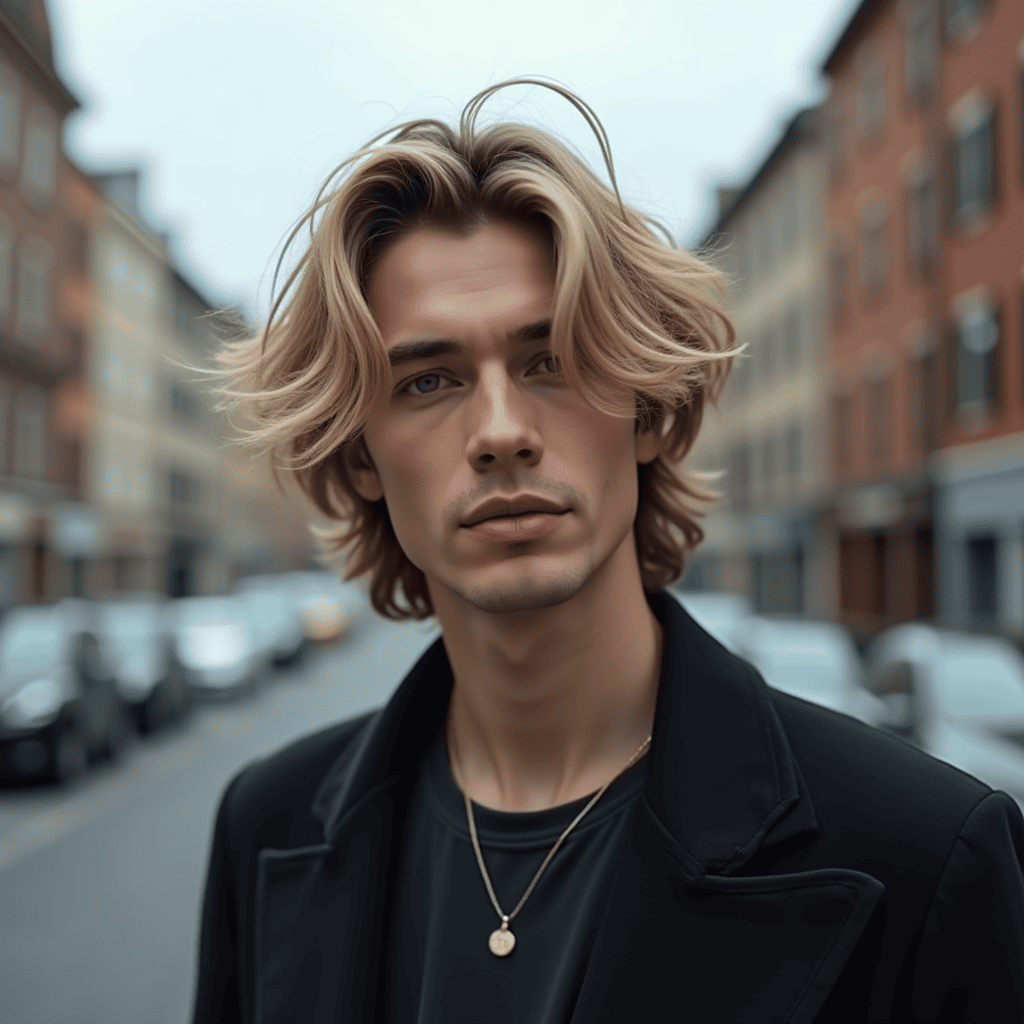
10. Messy Brush Back
The messy brush back moves the entire top away from the forehead but keeps visible gaps between sections. Unlike a slick back, it has lift at the roots and a dry, touchable surface. The sides can flow backward too or remain shorter for contrast. A few rebellious strands near the front stop the result from looking overly formal.
This works particularly well when you want medium hair off your face without committing to high shine. Tell your barber, “Keep enough top length to brush back, layer out the weight, and make sure it still separates when styled dry.” Use a blow-dryer and fingers rather than a fine comb. Fine hair may need a pre-styler for volume, while extremely thick hair needs proper weight removal or it can balloon outward.
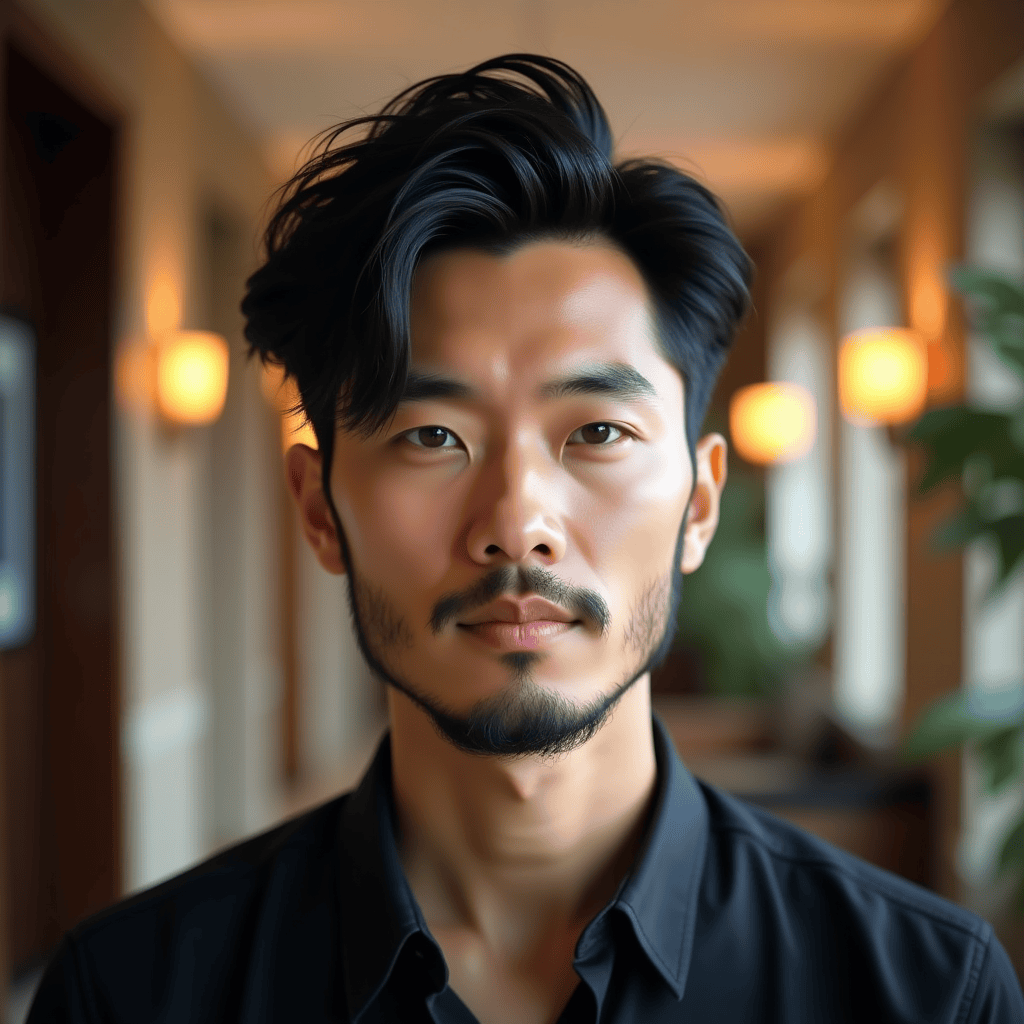
Messy Hairstyles With Fades and Strong Contrast
Messy tops become sharper when the sides are deliberately controlled. A fade, taper, or undercut creates a clean boundary that lets the texture above look even more relaxed.
11. Messy Top With Low Fade
A low fade keeps the tightest transition close to the ears while leaving more weight around the upper sides. Above it, the top breaks into rough, irregular texture with a slightly lifted front. Because the fade sits low, the haircut retains a fuller silhouette. That makes the contrast noticeable without turning the sides into the entire story.
It suits men who want tidy edges but prefer a softer shape than a high fade creates. Ask for “a low fade with textured length on top and enough weight left through the upper sides to blend naturally.” Matte clay can add definition while keeping the finish dry. You will need regular fade maintenance if you want the lower perimeter to remain crisp.
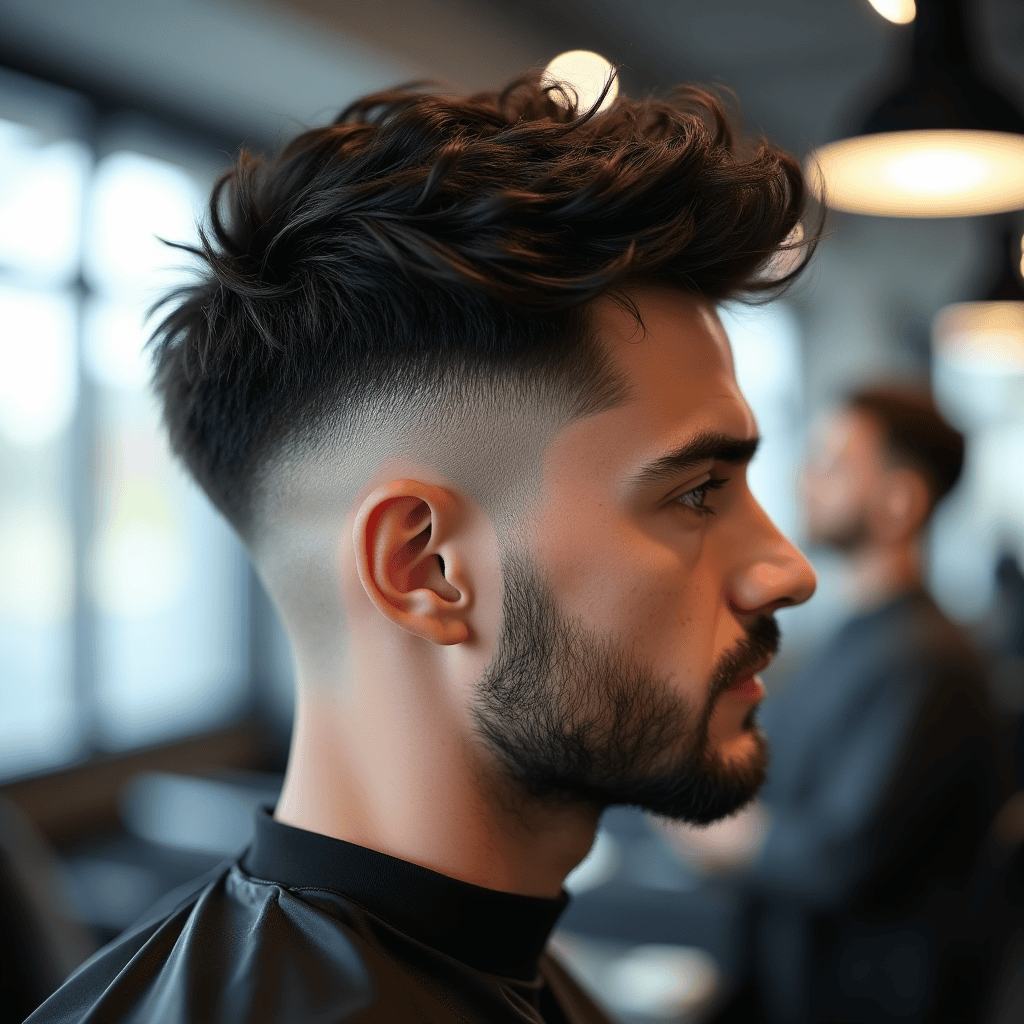
12. Messy Top With Mid Fade
The mid fade begins higher around the sides, exposing more scalp and creating a stronger visual jump into the textured top. The upper hair can remain chunky and forward or be pushed slightly upward. Keeping the top irregular prevents the haircut from becoming too precise. Front, side, and crown should each carry slightly different movement.
This option works well on thick hair that benefits from removing substantial side bulk. Tell the barber, “Give me a mid fade with a disconnected-looking textured finish on top, but keep the blend clean.” Styling takes little more than drying the top into shape and pinching sections with paste. The exposed sides make regrowth more obvious than it would be with a taper.
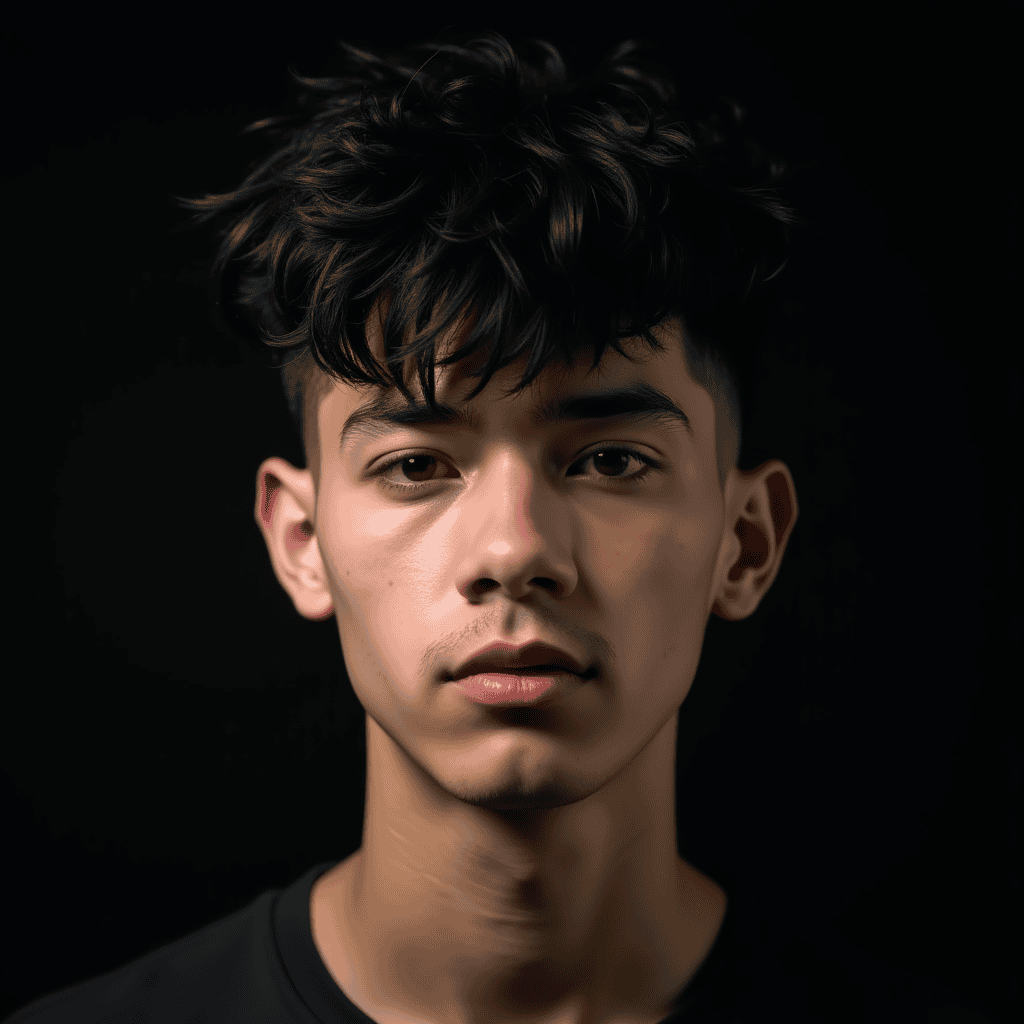
13. Messy Top With High Fade
A high fade removes almost all visual weight from the sides and concentrates attention on the top. The longer section looks deliberately rough, with chopped ends pointing forward, upward, and slightly sideways. That extreme difference in length gives even modest texture more impact. The overall haircut feels sharper and more graphic than relaxed.
Round and wider face shapes may appreciate the vertical emphasis, especially if the front is styled higher. Ask for “a high fade with two to three inches of textured length on top and no rounded bulk at the corners.” Dry clay gives the separation needed to keep the upper section defined. It is a bold cut, though, and men wanting subtle transitions should stay with a low fade or taper.
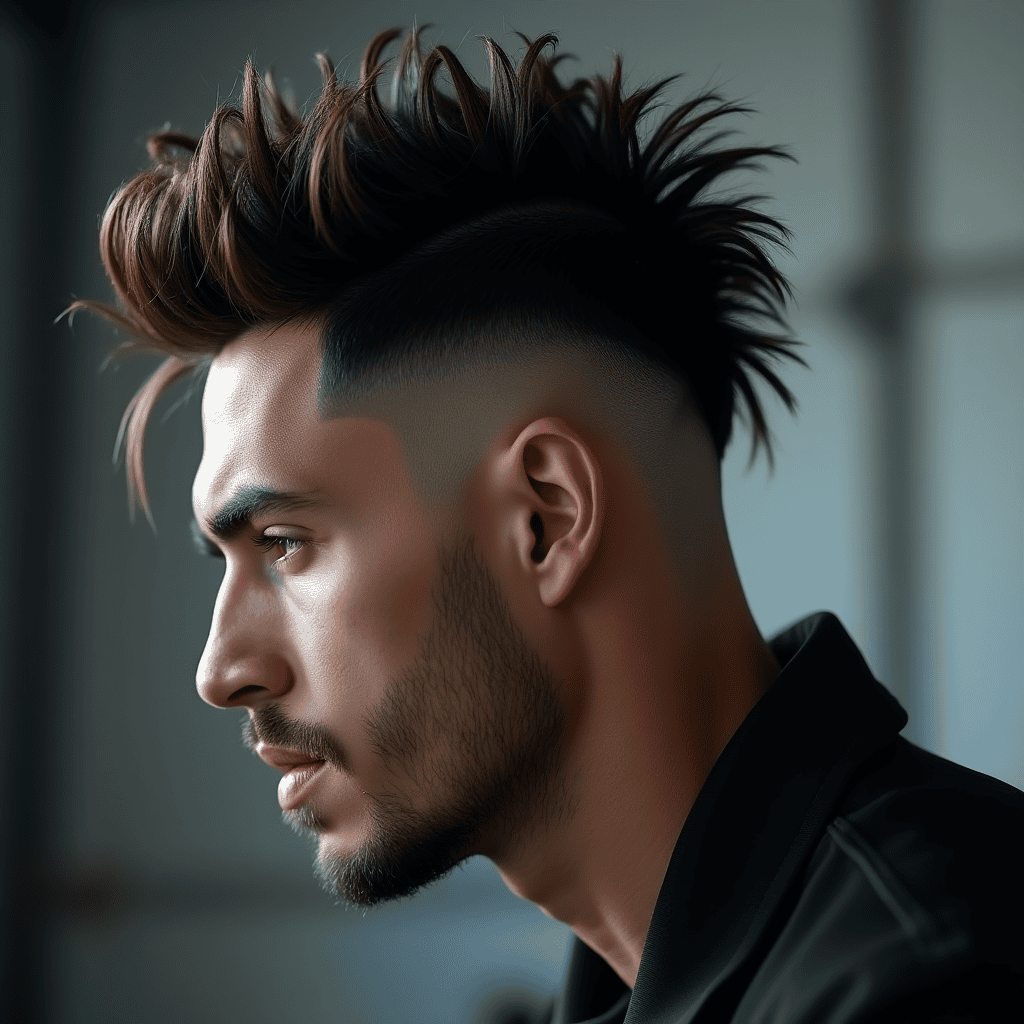
14. Messy Taper Hairstyle
The messy taper keeps the reduction concentrated around the neckline and sideburns instead of fading the full side panel. More hair remains around the temples, allowing the upper texture to blend into a natural masculine outline. The top can sit rumpled, side-swept, or lightly lifted. It feels less severe than most faded messy hairstyle ideas.
Men growing their hair longer often find this easier because it keeps the perimeter controlled without constantly cutting away the sides. Ask for “a natural taper at the sideburns and neck with scissor texture through the top.” You can work styling cream through with your fingers and leave the rest alone. The trade-off is less dramatic contrast if you like a visibly fresh barbershop finish.
15. Messy Undercut
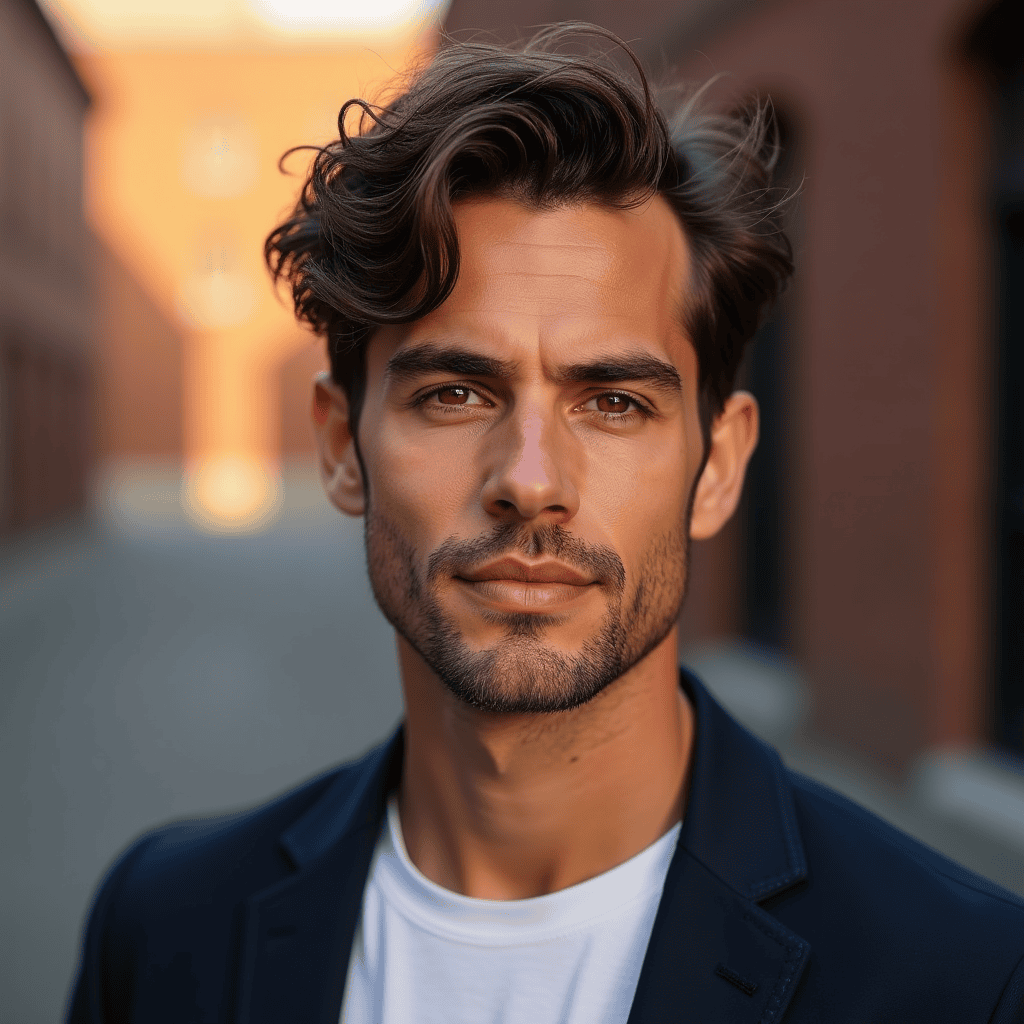
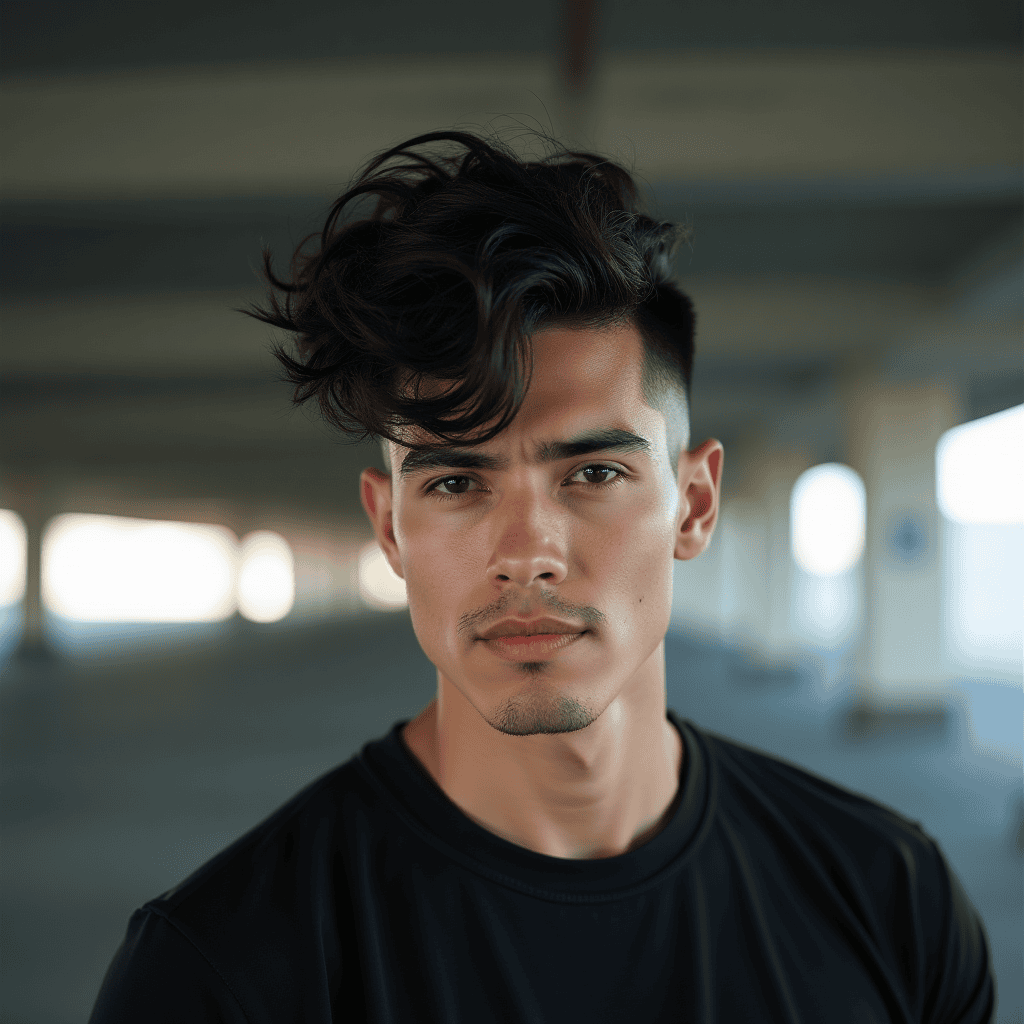
The messy undercut creates one of the clearest separations between controlled sides and loose top length. The sides stay uniformly short while the upper section hangs, lifts, and shifts independently. Instead of combing it into a perfect sweep, let some strands fall forward while others move backward. That inconsistency gives the undercut a less rigid personality.
Thick straight and wavy hair usually carries the top best because there is enough density to make the disconnected length obvious. Ask for “short undercut sides with the top left long and heavily textured so it can move in different directions.” A paste or pliable clay gives you freedom to restyle it during the day. Growing the sides back out can be awkward, which is the main commitment hidden inside this cut.
Longer Messy Hairstyles With Natural Flow
Longer hair should move. Trying to freeze every strand usually makes it look more artificial, while layered lengths give waves, curls, and straighter textures room to develop their own shape.
16. Shaggy Layered Hair
Shaggy layered hair gets its character from overlapping lengths rather than one clean perimeter. Shorter pieces around the crown create lift, while longer sections around the ears and nape swing outward. The ends should appear feathered and slightly separated. Its messy quality comes from movement across the entire head rather than one textured zone.
This style makes sense for men comfortable letting hair sit around their ears and face. Ask your stylist for “medium shaggy layers with movement through the crown and softer broken ends around the perimeter.” A lightweight cream helps reduce puffiness without flattening everything. Dense hair needs thoughtful layering; careless thinning can leave the ends looking wispy instead of intentionally shaggy.

17. Messy Surfer Hair
Messy surfer hair sits somewhere between grown-out waves and a deliberately layered medium cut. The front can bend backward from the face, the sides tuck loosely behind the ears, and the ends kick in different directions. Texture should look soft rather than product-heavy. Slight unevenness gives the style its familiar windswept feel.
Wavy hair is the obvious match, although straight hair with enough length can develop movement through layering and styling. Ask for “long, loose layers that keep weight through the ends but encourage natural bends around the face.” Sea-salt-style texture can help, but too much drying product makes longer hair feel rough. Men with naturally dry hair should favor conditioning and light cream over chasing an artificially gritty finish.
18. Messy Bro Flow
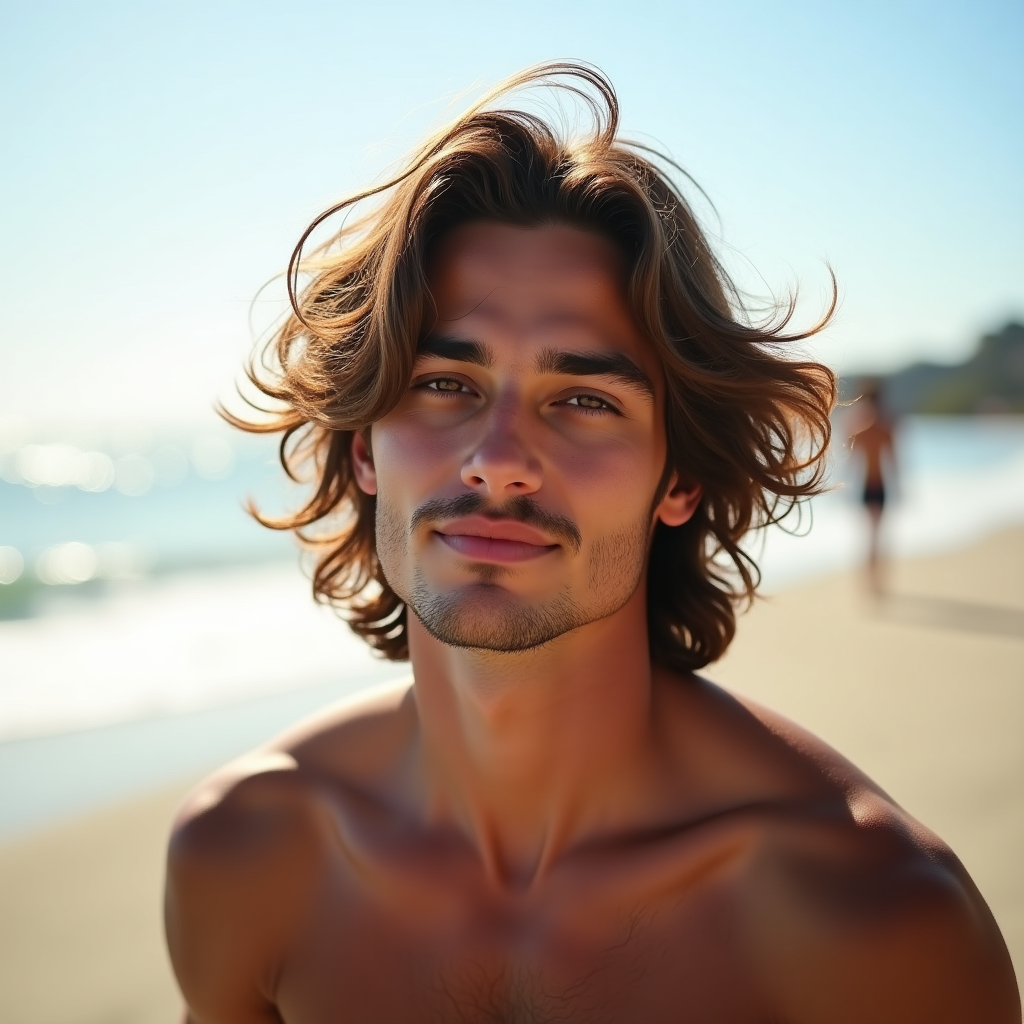
The messy bro flow pushes medium-to-long hair away from the face without forcing it into a slicked shape. The front rises naturally and drifts backward, while the sides curve around the ears. Layers create broad sections rather than tiny separated pieces. From the profile, the whole hairstyle appears to travel backward in one relaxed motion.
Men with medium-density straight or wavy hair can usually style this with minimal product once the cut has enough length. Tell the stylist, “I want a natural flow away from my face with long layers and enough weight to keep it from puffing up.” Blow-dry backward with your hands, then stop before the hair becomes too controlled. The awkward growing phase is unavoidable if you are starting from a short cut.
19. Long Messy Waves
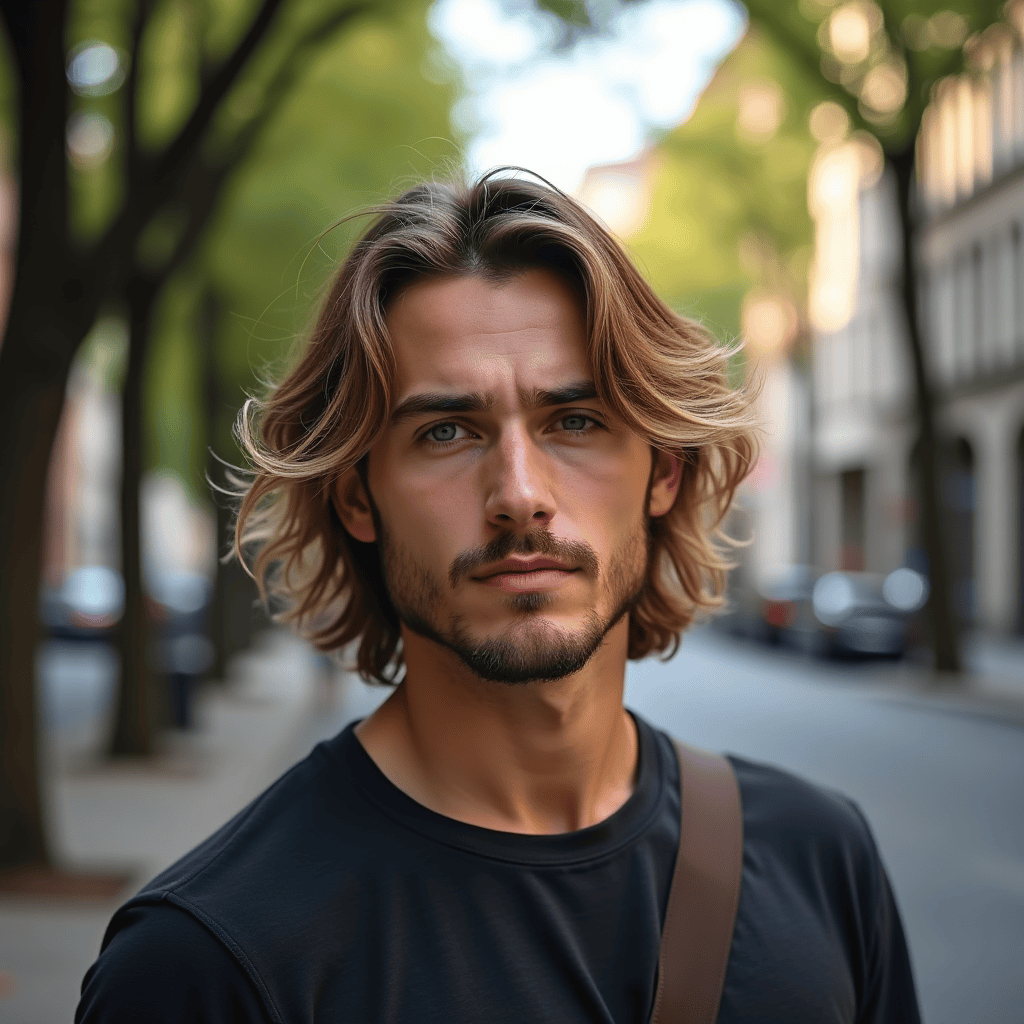
Long messy waves create larger bends that overlap through the sides and back, giving the hairstyle a broad, flowing texture. The front can fall around the cheekbones or be pushed loosely away from the forehead. Layering prevents the ends from forming one heavy triangular mass. A few uneven sections make the waves look natural rather than carefully arranged.
This works best when your hair already develops some bend at longer lengths. Ask for “long layers that preserve fullness while taking enough weight out to let the waves form.” Condition well and use a lightweight curl or texture cream on damp hair. The main drawback is drying time, especially with thick hair, so this is less low-maintenance than the relaxed appearance suggests.
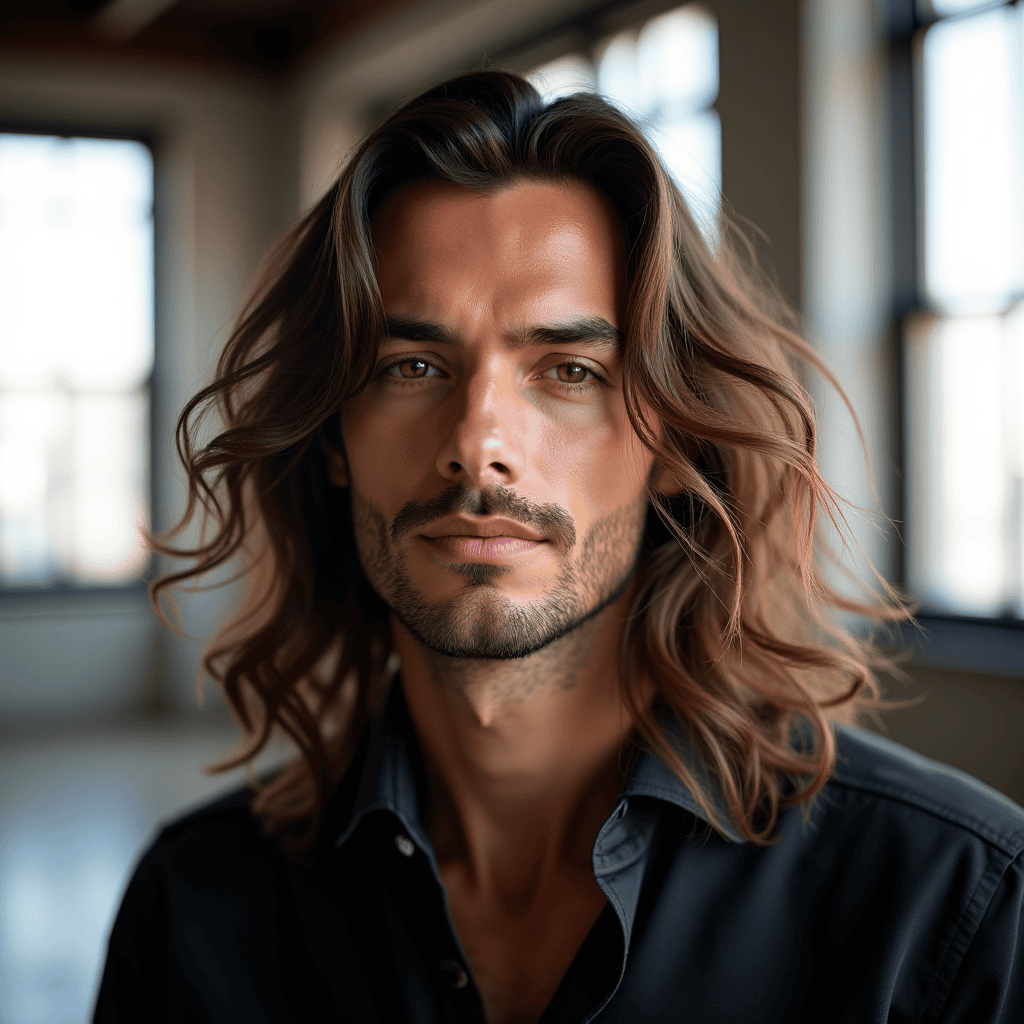
20. Messy Man Bun With Loose Strands
A messy man bun gathers most of the hair near the back of the crown while deliberately leaving a few sections free. Strands around the temples, ears, and nape soften the outline and keep the bun from looking formal. The knot itself should have visible texture rather than a perfectly smooth coil. It works because the looseness appears distributed instead of random.
You need enough length to tie the hair without pulling it painfully tight. Ask your stylist to “keep long layers around the face so a few pieces can sit naturally outside the bun.” Tie it with moderate tension and avoid repeatedly dragging every flyaway back into place. Constant tight tying can be uncomfortable, and this look loses its charm if the hairline is pulled completely flat.

Bolder Messy Hairstyle Ideas for More Personality
These styles ask more from the cut, the texture, or the person wearing them. They are still practical, but they make a stronger visual statement than a simple crop or tousled fringe.
21. Loose Messy Pompadour
A loose messy pompadour keeps the dramatic lift of a pompadour but breaks apart the smooth surface. The front rises high before bending backward, with visible channels and separated sections throughout. The sides can taper neatly while the top becomes progressively less controlled toward the crown. It looks best when the volume feels airy rather than shellacked.
Thick hair with some natural body is ideal because the shape depends on root support. Ask for “pompadour length in front, texture through the top, and a finish that can separate instead of combing into one solid shape.” Pre-dry the hair upward, then use a small amount of pliable product. Fine hair can achieve the silhouette, but maintaining that height for an entire day may become frustrating.
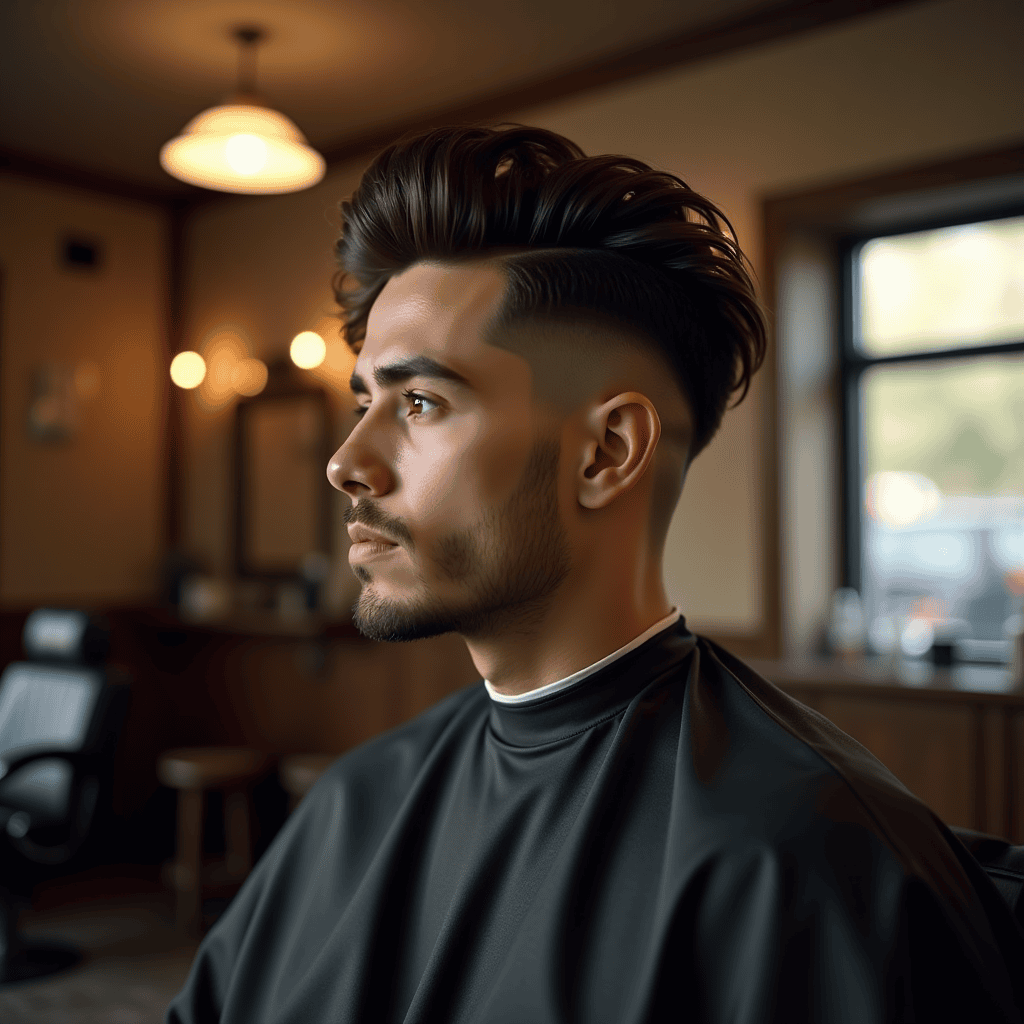
22. Messy Faux Hawk
The messy faux hawk concentrates texture through the center without creating the narrow, rigid ridge of a traditional mohawk. Hair near the front rises higher, while the center sections angle inward from both sides. The crown gradually softens so the shape does not end abruptly. Choppy tips make the central height feel more spontaneous.
Men with thick straight or coarse hair usually get the strongest hold. Tell your barber, “Keep textured length through the middle, taper the sides, and make the faux hawk broad enough to wear loose.” Pinch only a few sections together rather than building one sharp point from front to back. The style can look overworked quickly, so restraint with product matters more than perfect symmetry.
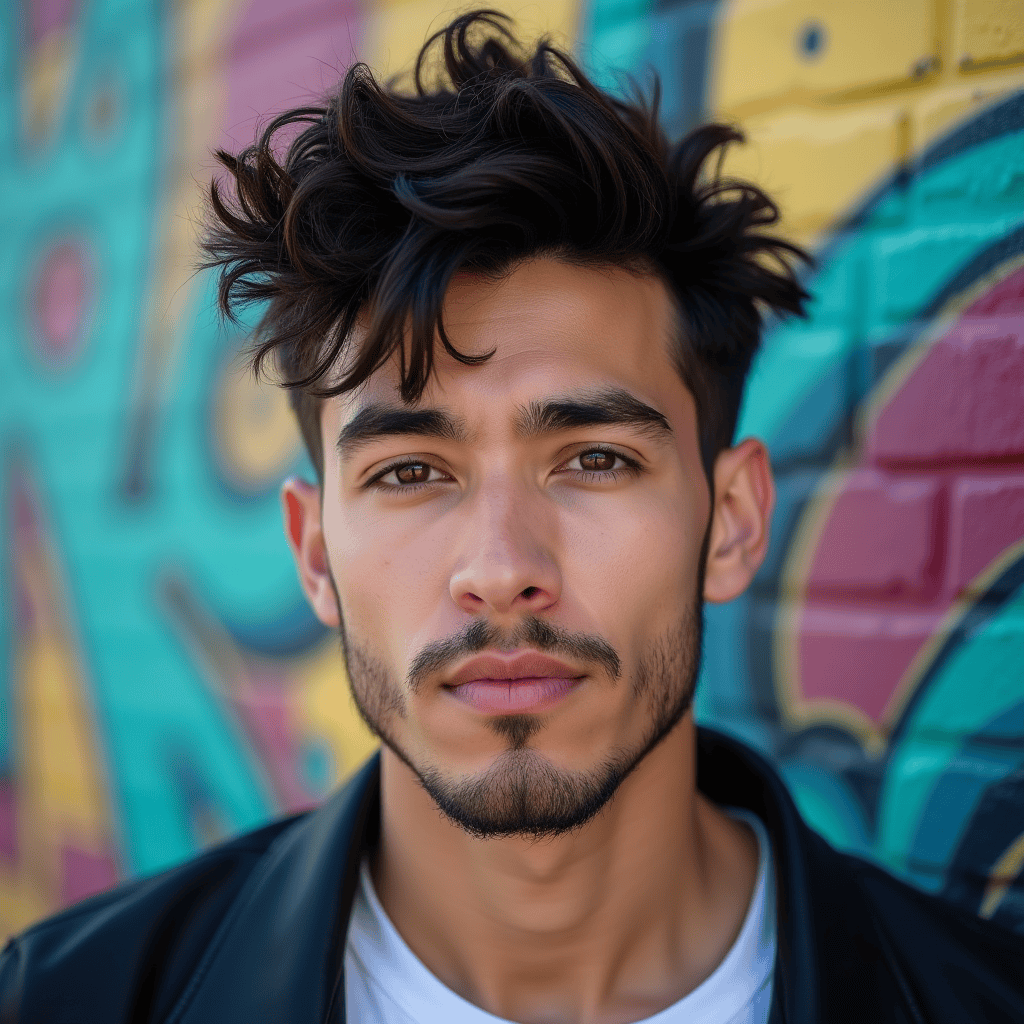
23. Messy Curly Top
A messy curly top lets individual curls remain visible instead of brushing them into a uniform mass. Some coils sit higher, others fall toward the forehead, and the crown retains natural irregularity. Shorter sides frame the texture without competing with it. The result should look springy and separated rather than fuzzy or heavily coated.
Curly and coily hair benefits most when the cut respects the natural curl pattern instead of forcing every section to equal length. Ask for “a shaped curly top with enough internal layering for definition and a clean but not overly high taper around the sides.” Apply product while the hair is damp and disturb it as little as possible while drying. Excessive touching can create more frizz than purposeful mess.
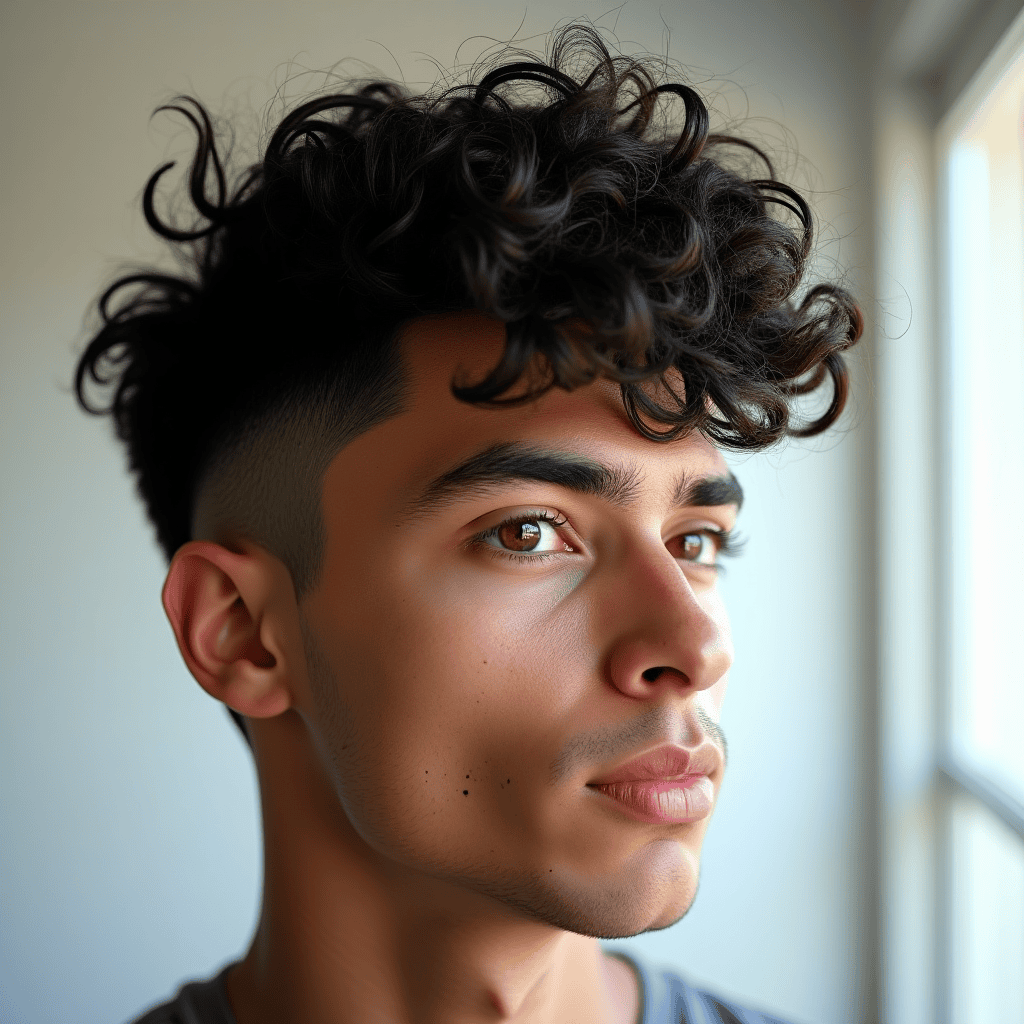
24. Messy Slick Back
The messy slick back keeps the backward direction of a classic slicked style while replacing the glassy surface with separated texture. The front sits lifted rather than plastered against the scalp, and finger-width channels run through the top. Several pieces can drift sideways around the temples. It feels dressed up enough for a jacket while still looking relaxed.
Straight and wavy medium-length hair handles the shape well. Ask for “a layered top long enough to push back with fingers, with enough weight removed to keep the finish separated.” Use a flexible cream or low-shine pomade instead of wet-look gel. The style struggles in heavy wind because every displaced strand becomes more noticeable once the general direction is backward.

25. Messy Wolf Cut
The messy wolf cut combines shorter volume around the crown with longer, lighter layers toward the sides and back. The top looks full and slightly unruly, while the perimeter narrows as it drops toward the neck. Face-framing pieces break around the temples and cheek area. Among modern messy hairstyle ideas, this is one of the most deliberately layered and noticeable shapes.
It suits men willing to keep more length and accept a haircut that will attract attention. Ask your stylist for “a masculine wolf cut with crown volume, broken face-framing layers, and length through the back without turning the ends too thin.” A light texture spray or cream normally does more for it than heavy wax. Skip it if you want a haircut that grows out quietly, because the layered silhouette stays obvious between appointments.
How to Choose the Right Messy Hairstyle
Start with your natural texture instead of the haircut you saw on someone with completely different hair. Straight hair responds well to crops, quiffs, side sweeps, and rough brush-backs. Wavy hair gives you an easier route into curtains, surfer styles, bro flow, and bedhead texture. Curly hair normally looks better when the cut creates shape while preserving individual curls.
Length matters next. Short messy hairstyle ideas are easier to reset after sleep, exercise, or wearing a hat, while medium styles give you more directions to work with. Longer styles rely heavily on layering because one-length hair can become wide and heavy instead of loose.
Bring two or three reference photos to your appointment, preferably showing the haircut from more than one angle. Instead of saying “make it messy,” describe what you actually want: “Keep the front loose,” “I want broken texture through the crown,” or “Leave enough length that I can push it in different directions.”
Face shape can guide the final adjustment rather than dictating the entire haircut. More height can visually lengthen a rounder face, while fringes and medium layers can soften a longer silhouette. Your barber can change the fringe length, side weight, and crown volume without abandoning the style you chose.
The most practical rule is to match the haircut to the amount of styling you will actually do. If you know you will spend two minutes on your hair, choose a textured crop or natural taper. A large quiff or loose pompadour may look better in the reference photo, but it asks more from you every morning.
Where Messy Hairstyles Usually Go Wrong
Messy hair fails when there is no underlying shape. Leaving every section longer and then rubbing product through it does not automatically create useful texture. A strong messy haircut still needs intentional length around the fringe, crown, sides, and perimeter.
Too much product causes another common problem. Heavy wax can glue separate strands together until the hair looks oily or stiff. Start with less than you think you need, spread it completely across your palms, and add a second small amount only if the first pass disappears.
There is also a difference between texture and damage. Dry, split, or neglected ends may create roughness, but they do not create the controlled separation these styles need. Regular trims still matter, especially with medium and long messy hairstyles.
The biggest mistake, though, is over-styling. If you spend ten minutes placing every strand exactly where you want it, you have removed the quality that made the haircut interesting. Establish the general shape, break it up with your fingers, and stop.
Frequently Asked Questions
What is the easiest messy hairstyle for men?
A short textured crop is one of the easiest choices because the cut creates most of the separation for you. Work a small amount of matte paste through dry hair, move the front and crown with your fingertips, and leave minor inconsistencies alone instead of correcting them.
How do men make straight hair look messy?
Straight hair usually needs texture in the haircut first. Point cutting, layering, or other barbering techniques can prevent the top from sitting like one solid sheet. Blow-dry in different directions for movement, then use a small amount of dry styling product to separate selected sections.
What product works best for messy hairstyles?
Matte paste, clay, lightweight styling cream, and texture products can all work depending on your hair. Fine hair generally needs something lighter, while dense short hair can handle firmer clay. The goal is flexible separation rather than making the entire style rigid.
Can messy hairstyles work with thin hair?
Yes, but shorter styles are often easier because long thin sections can separate too much and expose the scalp. A textured crop, short quiff, or gently tousled side sweep can create the appearance of movement without requiring huge volume.
Are messy hairstyle ideas suitable for work?
Many are. A short side sweep, messy taper, restrained quiff, or textured crop can remain professional because the overall silhouette stays controlled. Keep the neckline and sides tidy, avoid extreme volume, and use enough product to prevent the top from becoming chaotic during the day.
How long should hair be for a messy hairstyle?
There is no single required length. Short hair around one to three inches can create broken texture, while medium hair gives you fringes, curtains, quiffs, and flow. Longer hair opens up shaggy layers, waves, buns, and wolf-cut shapes.
How do I ask my barber for messy hair?
Describe the shape before using the word messy. Tell the barber where you want length, how you want the fringe to sit, and whether you prefer choppy or flowing texture. Showing reference photos is even better because “messy” means different things to different people.
Do messy hairstyles need a fade?
No. Fades create stronger contrast, but tapers, scissor-cut sides, undercuts, and longer layered sides can all support messy styling. Choose the side treatment based on how sharp you want the overall haircut to look and how often you are willing to maintain it.
How often should a messy hairstyle be trimmed?
Short faded cuts often start losing their intended outline sooner than longer layered styles. Instead of following one rigid schedule, book another cut when the sides begin changing the silhouette or the top becomes too heavy to create the movement you want.
Can curly hair use messy hairstyle ideas?
Curly hair is naturally suited to controlled messy styling because every curl already creates direction and variation. Focus on preserving curl definition while giving the overall haircut a clear shape. A curly top, layered medium cut, or longer textured style can all work without forcing the curls straight.
A good messy hairstyle should get easier once the haircut is right, not harder. Choose a version that already matches your natural texture, realistic morning routine, and preferred length. The best messy hairstyle ideas leave enough movement to change slightly from day to day without losing their shape. At your next appointment, show your barber one reference and ask exactly how they would adapt its length, texture, and fringe to your hair.
Best Men’s Hairstyle Reports
Explore sharp barber cuts, textured styles, fringe looks and relaxed men’s hairstyles for modern grooming inspiration.