

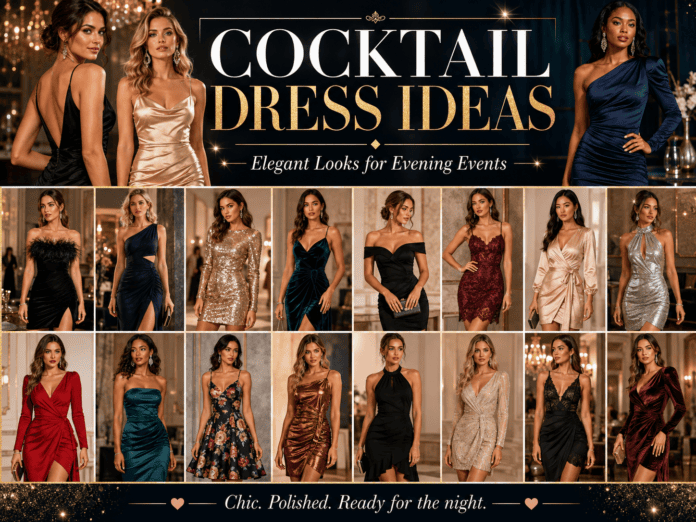
An evening invitation leaves plenty of room between a casual dinner dress and a full-length formal gown. That middle ground is where cocktail dressing works best. The strongest cocktail dress ideas combine a polished silhouette with enough personality to feel appropriate for dinner parties, receptions, holiday gatherings, work celebrations, and dressy nights out.
Length alone does not determine whether a dress works. Fabric weight, neckline, tailoring, color, footwear, and even the venue change how formal an outfit appears. A simple black midi can look sharper than an embellished mini if the cut is precise and the accessories are well chosen.
The goal is not to pile on decorative details. Evening dressing usually looks more considered when one feature carries the outfit: a strong shoulder, fluid satin, rich velvet, an asymmetric neckline, or restrained metallic texture.
What Makes a Cocktail Dress Work for an Evening Event?
Cocktail attire usually sits below black tie but above everyday party clothing. Knee-length, midi, and shorter dresses can all fit that space, depending on their construction and the event.
Fabric often changes the impression first. Crepe, satin, velvet, lace, chiffon, jacquard, and structured knits tend to read dressier under evening lighting than casual cotton jersey or lightweight daytime linen. Matte fabrics produce a quieter look, while satin and metallic surfaces reflect light and become more noticeable after dark.
Proportion matters too. A shorter hem can still look refined when paired with a higher neckline, long sleeves, or clean tailoring. A fitted midi may need little more than simple earrings and pointed shoes.
One detail frequently overlooked is movement. A dress that looks impressive while standing in front of a mirror may become irritating during dinner, dancing, or a long reception. Sit down, walk, raise your arms, and test the neckline before committing to the outfit.
Cocktail Dress Ideas for Polished Evening Looks
1. Bias-Cut Satin Midi
A bias-cut satin dress follows the body’s shape through the way the fabric is cut rather than through heavy seaming or rigid structure. The result is fluid instead of sharply fitted.
Deep navy, chocolate, burgundy, olive, and black work particularly well in evening settings. A champagne or pale silver version can also look sophisticated, though light satin tends to show wrinkles and undergarment lines more easily.
Because satin already catches the light, accessories can stay restrained. Thin earrings, a compact clutch, and streamlined heels are often enough.
2. One-Shoulder Crepe Dress
An asymmetric neckline provides visual interest without relying on sequins or complicated decoration. Crepe is particularly useful because its matte surface keeps a one-shoulder silhouette from becoming overly theatrical.
Look at the shoulder placement carefully. The neckline should remain stable when you move rather than requiring constant adjustment.
A one-shoulder dress also changes the jewelry equation. Long necklaces often compete with the neckline, while earrings or a cuff bracelet leave the shape of the dress visible.
3. Velvet Midi for Cold-Weather Evenings
Velvet earns its place during fall and winter because texture becomes the main decorative element. Wine red, midnight blue, forest green, plum, and black all develop noticeable depth under warm indoor lighting.
A velvet dress does not need elaborate construction. A clean square neckline, wrap shape, or softly fitted midi can provide enough detail.
The practical downside is temperature. Heavy velvet may feel uncomfortable at a crowded indoor reception, especially if the venue keeps the heat high. Choose lighter velvet constructions when you expect to spend most of the evening inside.
4. Modern Lace Sheath
Lace can move in two directions. Delicate all-over lace can feel romantic, while larger geometric patterns give the same material a more contemporary character.
A sheath silhouette works particularly well because its simple outline keeps the texture from overwhelming the outfit. Navy, black, deep red, and dark green offer an evening feel without requiring extra ornament.
Check the lining before buying. The placement of the lining around the neckline, back, and hem can dramatically change both coverage and formality.
5. Draped Jersey Dress
Not every evening dress needs stiff tailoring. A well-cut jersey dress can create shape through gathering, ruching, or controlled draping while remaining easier to move in than many structured designs.
This style works particularly well for dinners or celebrations where you may remain dressed for several hours. Strategic ruching around the waist can define the silhouette without producing the rigid feel of boning.
Fabric quality makes a major difference here. Thin jersey can cling unpredictably, while a denser material tends to hang more cleanly.
6. Sequins Used With Restraint
Sequins naturally suit evening lighting, but an entire outfit does not have to sparkle.
A dress with a sequined bodice and plain skirt, scattered embellishment, or tonal beading often feels more balanced than dense head-to-toe shine. If the dress is fully sequined, a simple silhouette keeps the texture from competing with an equally complicated shape.
Skip heavily embellished shoes when the dress already provides the reflective surface. Matte leather, suede, or understated metallic footwear usually creates a cleaner finish.
7. Fit-and-Flare With Architectural Structure
A fit-and-flare silhouette remains useful because it creates definition at the waist while leaving room through the skirt. The modern version relies less on excessive volume and more on controlled structure.
Look for princess seams, a defined waistband, pleating, or a shaped bodice. These construction details give the dress form without requiring heavy embellishment.
For an evening event, darker colors and richer fabrics keep the silhouette from reading like a daytime sundress.
8. The Minimal Black Midi
The black cocktail dress survives changing fashion cycles because shape can do most of the work.
A square neckline creates a different mood from a halter. A column silhouette feels different from an A-line cut. An open back can make an otherwise plain midi surprisingly dramatic.
Instead of treating black as a blank canvas for every accessory you own, choose one direction. Sculptural earrings and plain pumps create a sharper outfit than several competing necklaces, bracelets, metallic shoes, and a jeweled bag.
9. Jewel-Tone Slip Dress
Emerald, sapphire, ruby, aubergine, and deep teal bring more presence to a slip silhouette than many pale neutrals.
A slip dress is deceptively simple. The success of the outfit depends heavily on the fabric’s drape, where the neckline sits, and whether the skirt skims rather than pulls across the hips.
For cooler evenings, add a sharply cut blazer, cropped jacket, or lightweight wrap. A loose everyday cardigan usually reduces the formality.
10. Dress With a Sculptural Neckline
A strong neckline can replace jewelry entirely.
Folded fabric, an asymmetric collar, a softly draped cowl, a clean bateau neck, or an angular square neckline creates interest close to the face. This is particularly effective for monochrome dresses where texture and shape have to carry more of the design.
Keep hairstyle in mind. An updo exposes architectural necklines, while loose hair may partially hide the detail you chose the dress for.
11. Long-Sleeve Cocktail Midi
Long sleeves can create a striking evening silhouette because they balance exposed legs, an open back, or a fitted body.
A black long-sleeve mini with opaque fabric feels different from the same hemline in a strapless cut. Likewise, a long-sleeve midi in stretch crepe can look polished without requiring a jacket.
Sleeve construction deserves attention. Tight cuffs and narrow upper sleeves can restrict movement even when the rest of the dress fits correctly.
12. Metallic Fabric Without Heavy Embellishment
Metallic fabric offers another way to introduce shine. Instead of sequins sewn onto the surface, the textile itself reflects light.
Bronze, pewter, gunmetal, and muted gold often feel easier to style than extremely bright silver. A simple wrap or column shape prevents the material from becoming visually overwhelming.
Texture matters here. Some metallic fabrics are soft and fluid; others can feel stiff or scratchy. Comfort becomes particularly relevant at seated dinners where fabric stays in contact with the arms and legs for hours.
Match the Dress to the Actual Event
“Cocktail attire” gives direction, but the venue reveals how to interpret it.
A hotel reception beginning at 7 p.m. can support satin, velvet, darker colors, sharper tailoring, and more noticeable jewelry. A rooftop party may call for lighter fabric and shoes that remain manageable on hard outdoor surfaces. A restaurant celebration usually rewards polished clothing without requiring the drama of a gala dress.
Wedding cocktail attire requires another layer of judgment. The invitation, ceremony time, venue, and couple’s stated dress code should lead the decision. An evening ballroom reception usually permits a dressier interpretation than an afternoon garden ceremony.
Work-related evening events need slightly different boundaries. A striking color or interesting neckline can provide personality without introducing extremely sheer panels, very low cuts, or difficult-to-manage hems. Professional context does not require dull clothing; it requires control.
For holiday parties, texture becomes especially useful. Velvet, subtle shimmer, jacquard, satin, and restrained beading can create a seasonal evening look without depending on novelty patterns.
Color Choices Beyond Basic Black
Black remains dependable because it creates a clean visual line and combines easily with most accessories. It is not the only route to evening formality.
Deep red produces warmth and presence. Navy feels slightly softer than black while remaining easy to dress up. Forest green and aubergine become especially effective in velvet or satin. Chocolate brown works with gold, bronze, cream, and tonal accessories and can feel unexpectedly rich after dark.
Bright colors can work too. Cobalt, fuchsia, coral, and saturated green look strongest when the silhouette remains controlled. A bright color plus complicated ruffles, heavy embellishment, dramatic sleeves, and statement jewelry can push too many ideas into one outfit.
Pastels depend heavily on fabric and cut. Pale blue satin may read as evening wear, while a similar shade in cotton poplin may feel more appropriate for daytime.
Color should also be tested under artificial light. Some dark shades that appear distinct in daylight become nearly black indoors, while reflective fabrics can look brighter than expected under flash photography.
Choosing Shoes That Make Sense for the Venue
The most attractive shoe becomes the wrong shoe when the surface makes walking difficult.
Thin stilettos work well on smooth indoor flooring but can sink into lawns and unstable outdoor surfaces. Block heels spread weight across a larger area and are often easier to manage at garden venues.
Pointed pumps create a clean line with sheath and column dresses. Minimal sandals suit slip dresses and lighter evening fabrics. Closed-toe heels pair naturally with velvet, heavier crepe, and winter outfits.
Flats are also possible. Pointed slingbacks, polished ballet flats, and embellished low-heeled shoes can maintain the formality of the outfit when walking or standing matters more than added height.
Comfort should be tested before the event rather than during it. A shoe that becomes painful after fifteen minutes at home is unlikely to improve after three hours at a reception.
Accessories Should Finish the Dress, Not Compete With It
Start with what the dress already provides.
A high neckline covered in beading probably does not need a necklace. An understated strapless dress leaves more room for one. Large earrings work particularly well when the neckline is open and the hair is pulled away from the face.
Bags should remain proportionate to the event. A compact clutch, structured mini bag, or small shoulder bag usually looks cleaner with cocktail attire than a large everyday tote.
Metallic accessories do not need to match perfectly. Mixing metals can work when the combination looks intentional, but repeating one finish across every piece can sometimes feel overly coordinated. A gold earring beside a bag with subtle silver hardware rarely ruins an outfit.
Outerwear deserves the same attention as the dress, particularly in winter. A long wool coat generally works better over a polished midi than a bulky casual jacket. Cropped evening jackets can suit fuller skirts because they preserve the waistline instead of covering it.
Fit Matters More Than the Size Printed on the Label
Cocktail dresses tend to reveal fit problems quickly because many use cleaner, more fitted silhouettes.
Check the shoulder seams, bust, waist, hip area, zipper, and hem separately. A dress can technically close while still pulling across one area. Horizontal tension lines often reveal where the garment needs more room.
Alterations can make a moderately priced dress look far more considered. Adjusting straps, correcting a hem, taking in a waist, or refining the bust may change the entire proportion of the garment.
Undergarments should be chosen after the dress, not before it. The neckline, back depth, fabric thickness, and degree of stretch determine what support works without becoming visible.
Do the sitting test too. Some fitted dresses rise considerably when seated, and some necklines shift forward. Evening events involve more than standing for photographs.
How to Choose Between Several Good Cocktail Dress Ideas
When several dresses look appealing, remove the options that fight the event.
Start with dress code and venue. Then consider temperature, walking surfaces, expected time in the outfit, and how much movement the evening involves. Only after those practical limits are clear should color and decorative details decide between the remaining choices.
A strong evening outfit usually has a hierarchy. Perhaps the satin fabric is the focal point. Perhaps it is the asymmetric neckline. Maybe the dress is deliberately simple so bold earrings receive more attention. When every component tries to become the focal point, the outfit loses clarity.
The best cocktail dress ideas also leave room for the person wearing them. A dress should not demand constant pulling, covering, adjusting, or careful movement. Good tailoring and thoughtful proportions tend to look more polished than excess decoration.
For an evening event, choose the dress that fits the occasion first and your body comfortably second, then refine the look with shoes, jewelry, and outerwear. When those pieces support one another instead of competing, even a relatively simple cocktail dress can carry the entire night.