
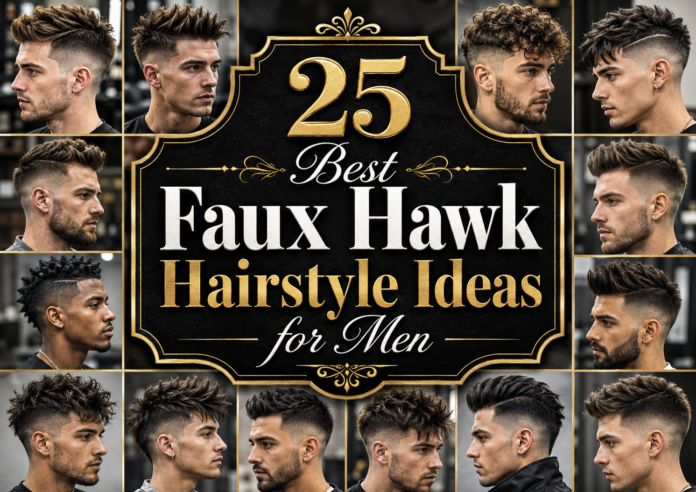
The strongest faux hawks don’t rely on extreme height. They work because the sides, center ridge, texture, and face shape feel balanced. For most men, the best Faux Hawk Hairstyle Ideas start with a textured short faux hawk, a low-fade version, a wavy faux hawk, or a longer brushed-up shape that can still look normal on an ordinary weekday.
I’ve cut variations of this shape on straight, wavy, curly, fine, and stubbornly thick hair for more than a decade. The mistake I see most often is treating a faux hawk as one haircut when it’s actually a family of shapes that can be conservative, messy, sharp, or deliberately dramatic.
| Style | Best For | Side Treatment | Center Length | Upkeep |
|---|---|---|---|---|
| Textured Short Faux Hawk | Most beginners | Low taper | Short | Low |
| Low-Fade Faux Hawk | Office-to-weekend wear | Low fade | Short-medium | Medium |
| Messy Faux Hawk | Thick casual hair | Tapered | Medium | Low-medium |
| Wavy Faux Hawk | Natural movement | Soft fade | Medium | Medium |
| Curly Faux Hawk | Defined curls | Taper/fade | Medium | Medium |
| Skin-Fade Faux Hawk | Sharp contrast | Skin fade | Short-medium | High |
| Long Faux Hawk | Statement styling | Short sides | Long | High |
| Slick Faux Hawk | Evening wear | Tapered | Medium | Medium |
| Spiky Faux Hawk | Coarse straight hair | Fade | Short-medium | Medium |
| Disconnected Faux Hawk | Bold modern shape | Very short sides | Medium-long | High |
Easy Faux Hawk Hairstyle Ideas for Short Hair
Short hair is where I send most first-time faux-hawk clients. These versions keep enough contrast through the middle to create the signature shape without turning every morning into a styling project. They also grow out more gracefully than the hardest skin-fade versions.
1. Textured Short Faux Hawk
A textured short faux hawk keeps the center only slightly longer than the sides, with broken-up texture rather than one stiff ridge. The front usually lifts a little higher while the crown settles down naturally, which stops the cut from looking like a miniature mohawk. Matte separation through the top gives it movement without making every strand point in the same direction.
It suits straight to slightly wavy hair and works well on oval, square, and rounder faces because the modest lift adds definition without exaggerating length. Tell your barber, “Keep the center longer, taper the sides, and leave enough texture to push everything slightly inward.” Styling is quick with a small amount of matte paste, though very fine hair can collapse if the top is left too long.
2. Low-Fade Faux Hawk
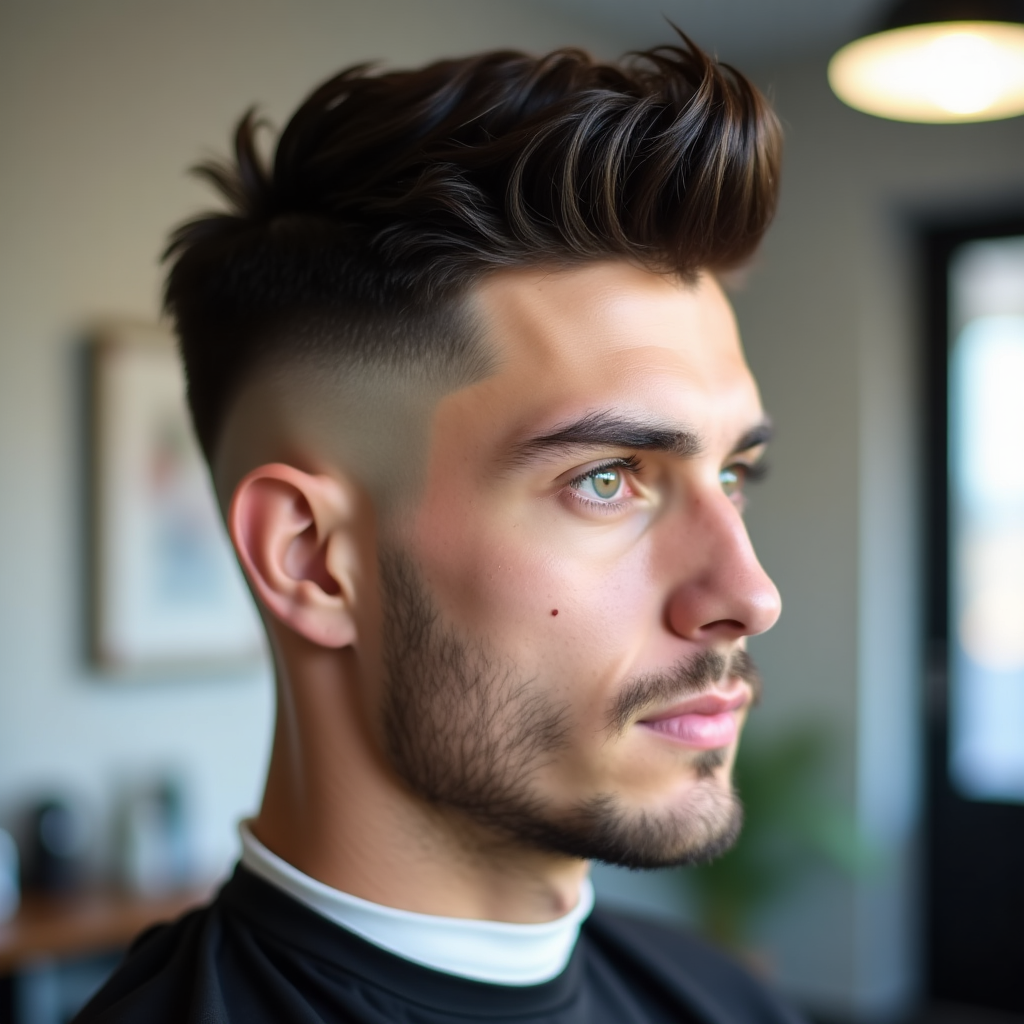
The low-fade faux hawk keeps the strongest contrast close to the ears and neckline rather than pushing it high up the head. Above that fade, the hair gradually builds into a fuller center strip with a soft peak toward the forehead. Visually, it reads cleaner and calmer than a high-fade faux hawk.
This is one of the safer Faux Hawk Hairstyle Ideas for men who need a haircut that behaves at work and still has personality after hours. Ask for “a low fade with the top kept textured and directed toward the middle, not shaved into a hard strip.” You will usually need a quick fade cleanup before the top actually needs cutting again, which is the annoying part if you like consistently crisp edges.

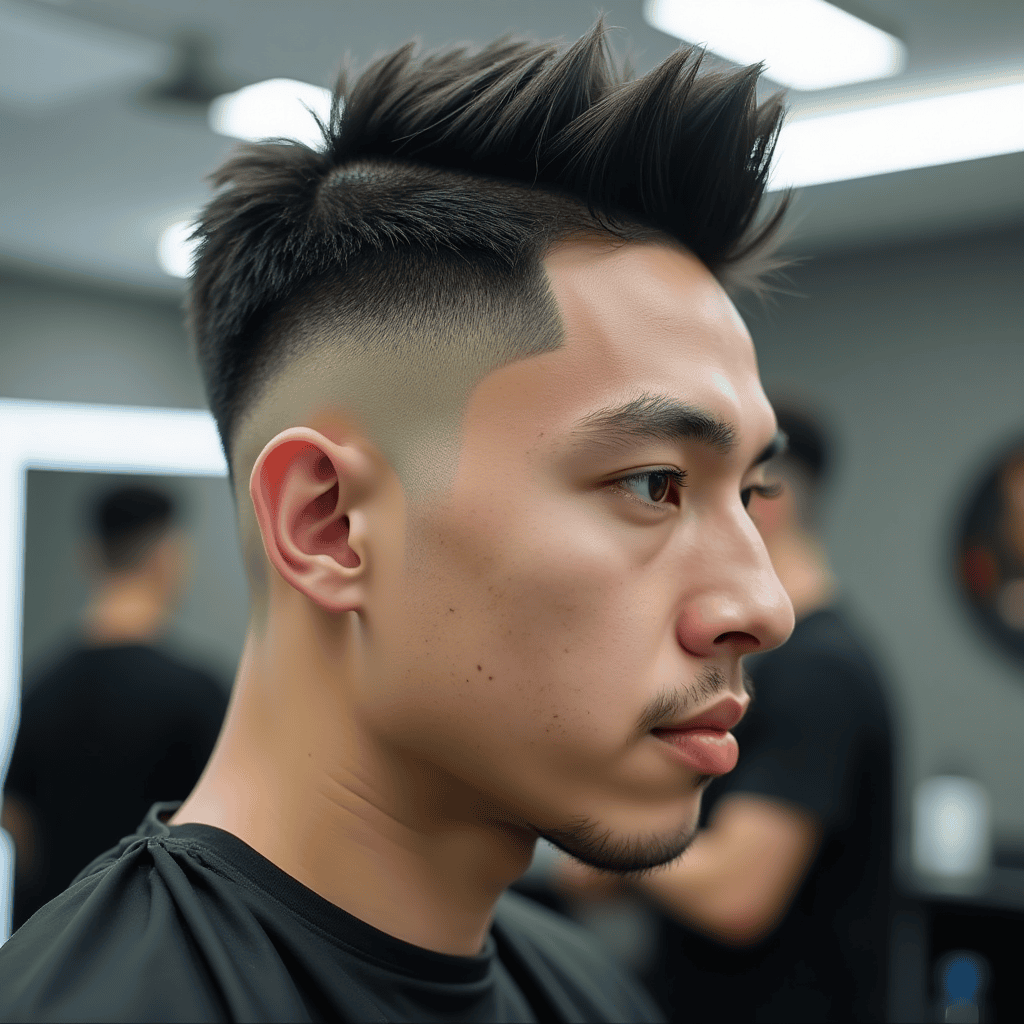
3. Short Spiky Faux Hawk
This version uses short pointed pieces instead of one continuous crest. The spikes angle loosely toward the center, with slightly more height in front and shorter separation near the crown. Keeping the sides tight makes those small pieces look sharper without requiring cartoon-level height.
It works best on straight or coarse hair that naturally holds shape. Ask your barber to “point-cut the top so I can create separate spikes toward the center, but keep the silhouette compact.” Use less product than you think; overloaded wax makes short spikes clump into heavy chunks, and that usually kills the texture.
4. Short Brushed-Up Faux Hawk
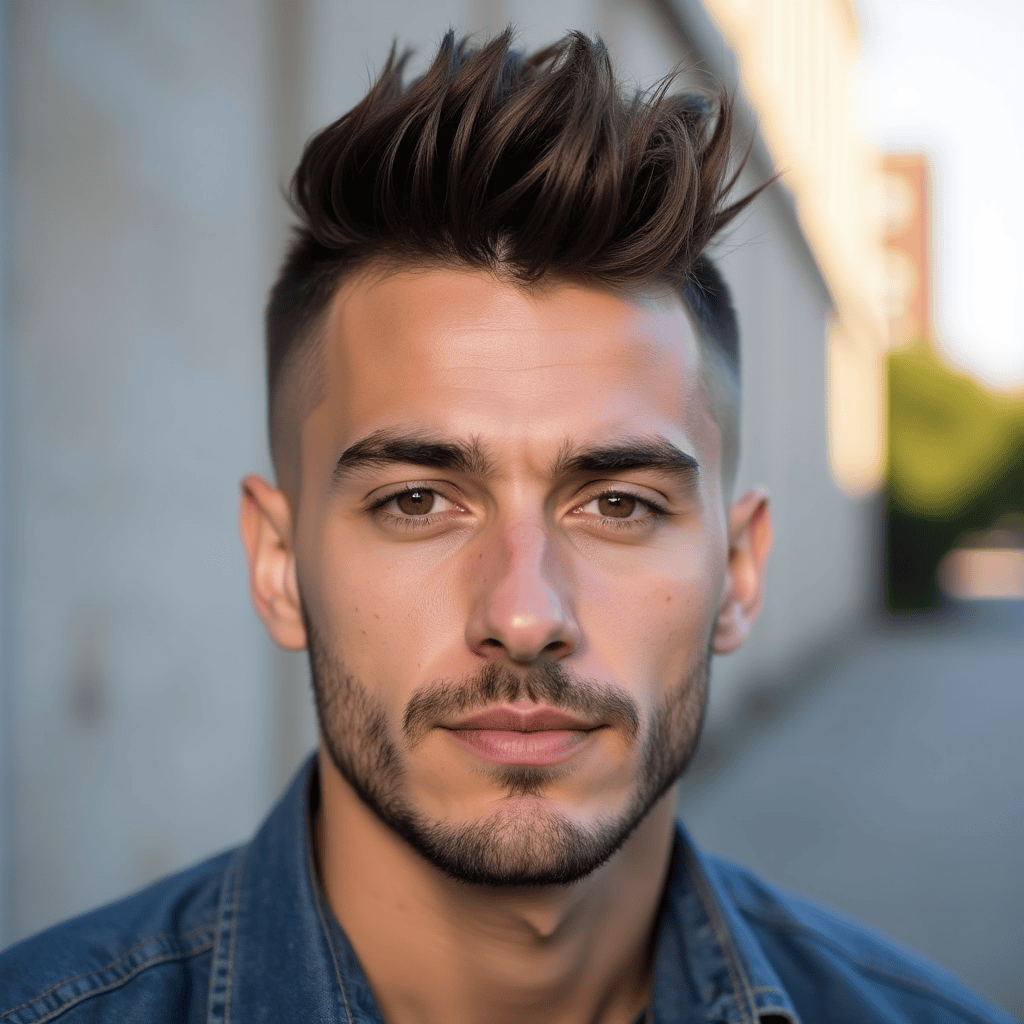
The brushed-up faux hawk looks softer because the hair rises rather than forming obvious spikes. From the front, the middle is tallest, then gently drops toward each temple while the sides stay tidy and close. The surface can remain slightly fluffy instead of sharply separated.
Men with medium-density straight hair get an easy win from this shape. Tell the barber, “Leave enough top length to brush upward and inward, with a gradual taper rather than a harsh disconnect.” A blow-dryer does more work than styling paste here, but anyone unwilling to spend two minutes directing the front may prefer a shorter textured cut.

5. Faux Hawk With Temple Fade
A temple-fade faux hawk removes weight specifically around the temple and sideburn area while leaving more substance around the rest of the sides. That small burst of contrast makes the center look taller than it actually is. From the profile, the transition is particularly clean.
This variation suits men who want definition without committing to a complete fade around the head. Ask for “a temple fade blended into short sides, then keep the center textured and slightly longer.” The fade loses its crispness quickly around the temples, so this isn’t my first pick for someone who stretches haircuts far apart.
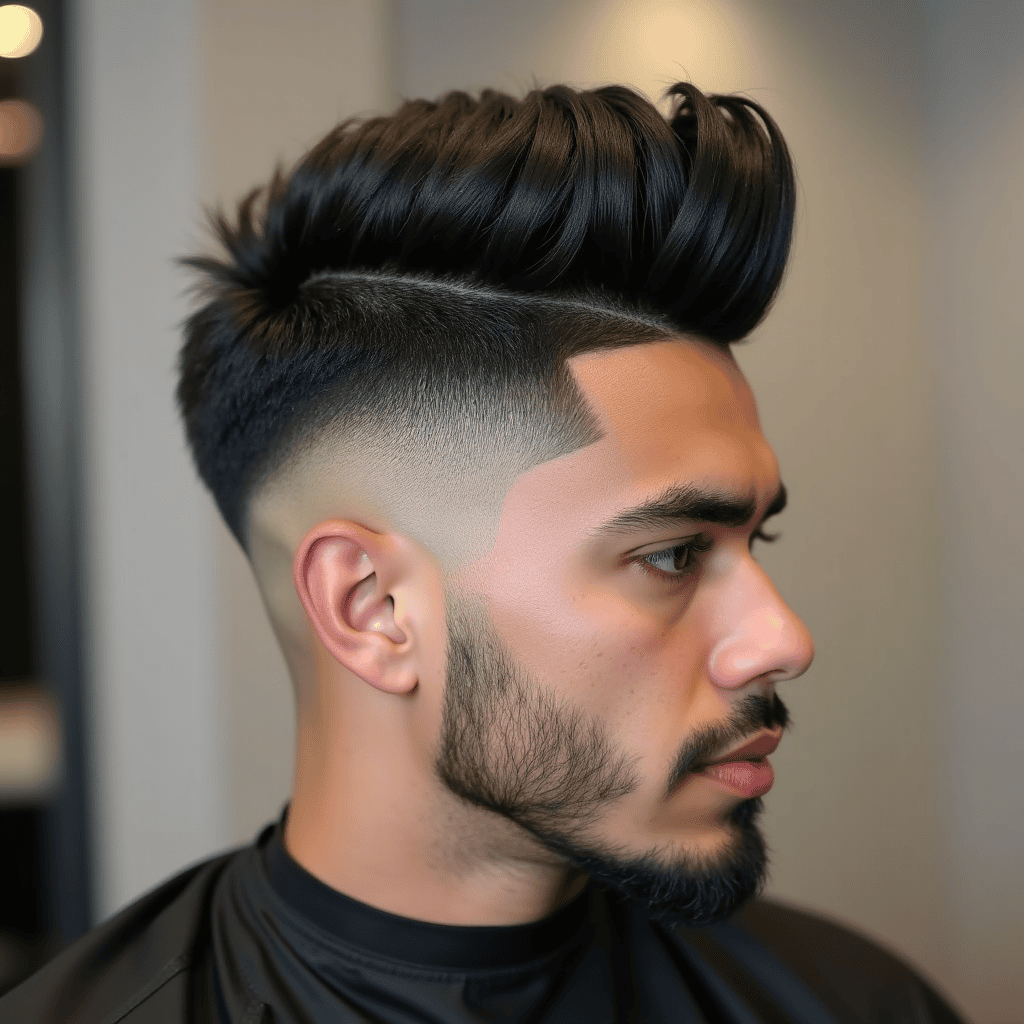
Medium-Length Faux Hawks With More Texture
Medium length gives the haircut more personality because the top can bend, separate, curl, or fall differently from day to day. These Faux Hawk Hairstyle Ideas suit men who care more about movement than perfectly rigid shape. They also give a barber more room to customize the silhouette.
6. Messy Faux Hawk
A messy faux hawk should look deliberately irregular rather than unfinished. The center rises in broken sections, some pieces lean forward, others twist sideways, and the crown can sit almost flat before the shape picks up again near the front. Tight but not overly polished sides keep that disorder believable.
Thick and medium-density hair responds best because it provides enough material for separation. Ask for “choppy texture through the top with enough length to rough it toward the middle using my hands.” The beauty is speed, but coarse hair can balloon outward if too much bulk is left over the upper sides.

7. Wavy Faux Hawk
Natural waves create a faux hawk that looks softer at the edges. Instead of sharp spikes, S-shaped bends travel upward and inward through the center while the sides stay gradually shorter. A little extra length in front lets the first wave become the visual focal point.
This is one of my favorite faux hawk variations because the hair does part of the styling for you. Ask for “enough length to keep my natural wave pattern, tapered sides, and a center shape that narrows slightly toward the crown.” Heavy pomade can flatten the waves, so men who prefer glossy styling may struggle to preserve the movement.
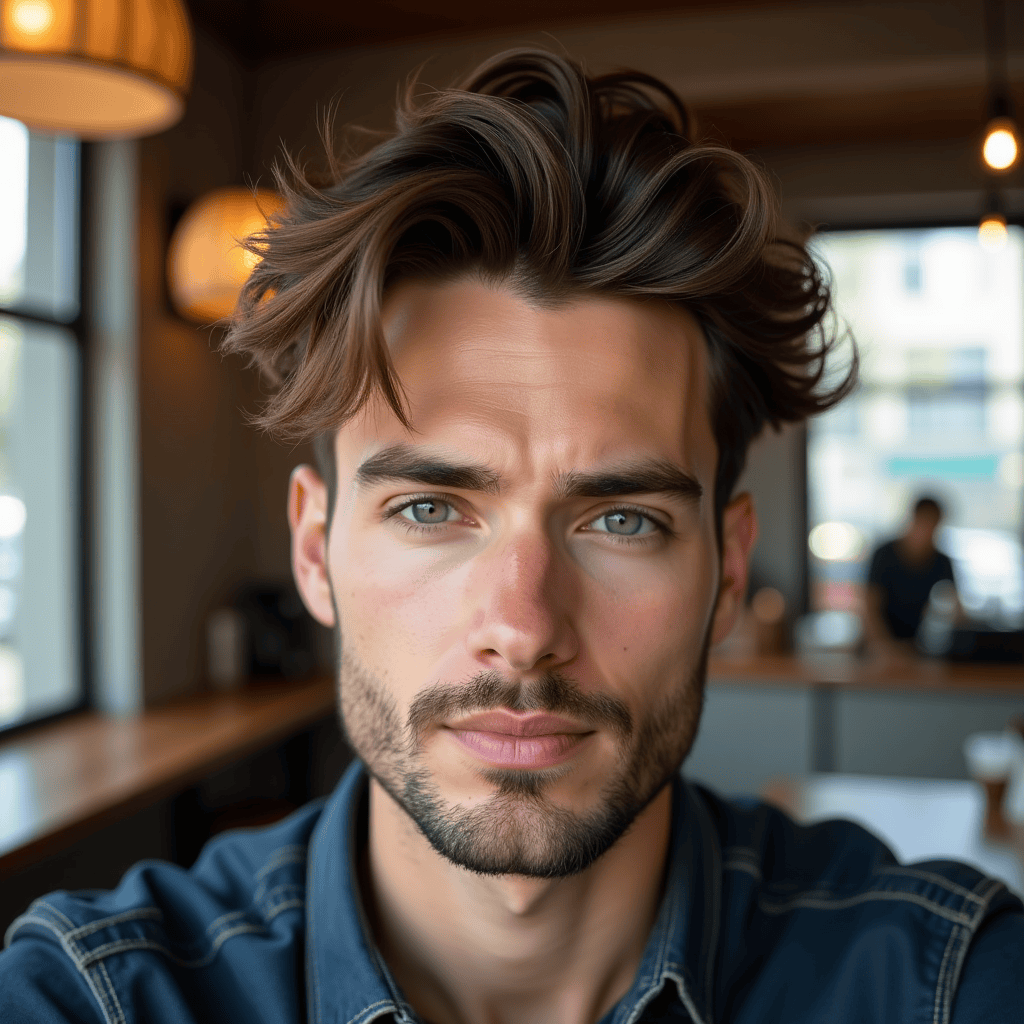
8. Layered Faux Hawk
Layers break the top into different lengths so the faux hawk has depth rather than one thick slab of hair. Shorter internal pieces support longer surface pieces, producing a ridge that looks airy through the front and more compact around the crown. From the side, those length changes become especially visible.
Medium to thick straight hair handles this technique well. Tell the stylist, “Build internal layers through the top so it lifts toward the center without thinning the ends too aggressively.” Over-layering fine hair is the danger; take out too much internal weight and the style can look sparse rather than textured.
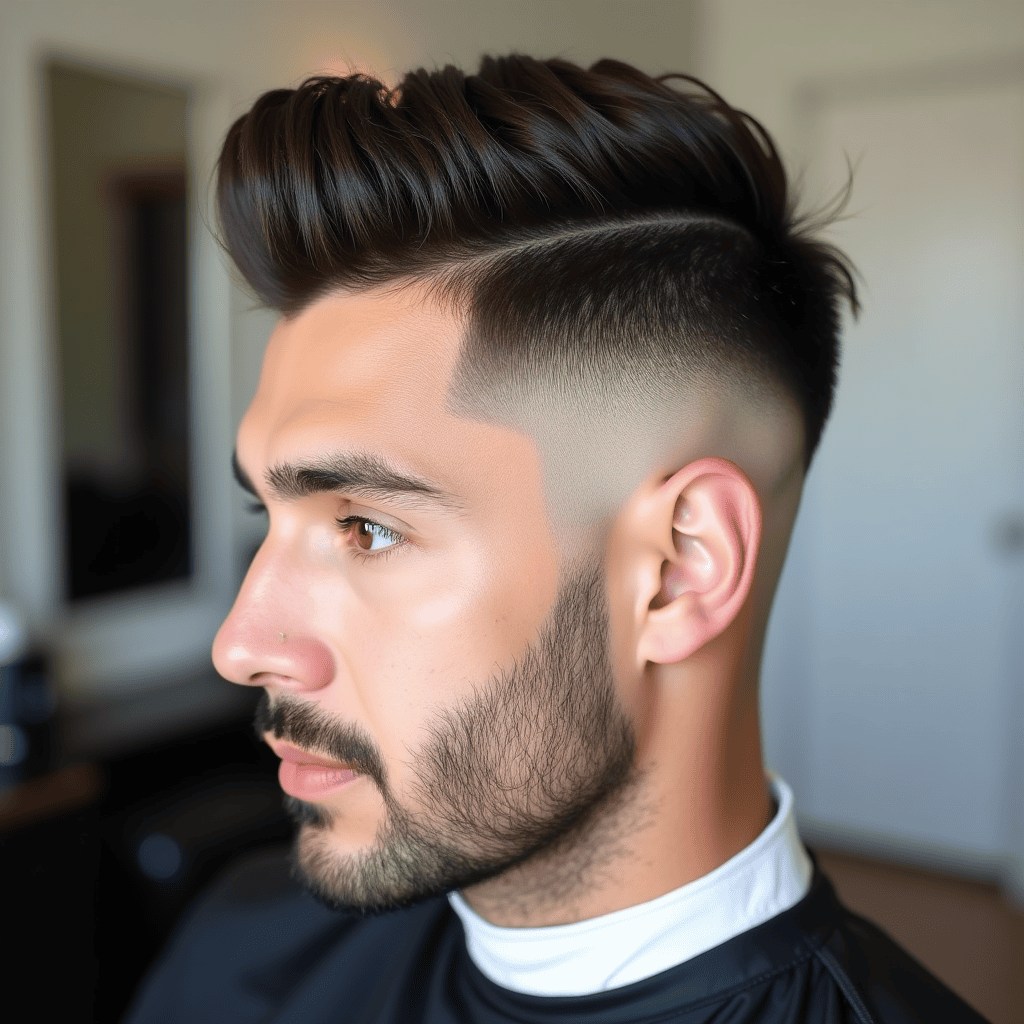
9. Forward-Swept Faux Hawk
Most faux hawks lift backward or straight up, but this version directs the texture forward before drawing the strands inward. The fringe ends in loose pointed pieces above the forehead, while the ridge becomes subtler farther back. It feels more casual and younger than a heavily sculpted crest.
Men with longer foreheads often like the front coverage because it doesn’t expose the entire hairline. Ask your barber for “textured medium length on top that I can push forward and toward the center, with tapered sides.” If your hair naturally grows strongly backward, forcing it forward every morning can become tedious.
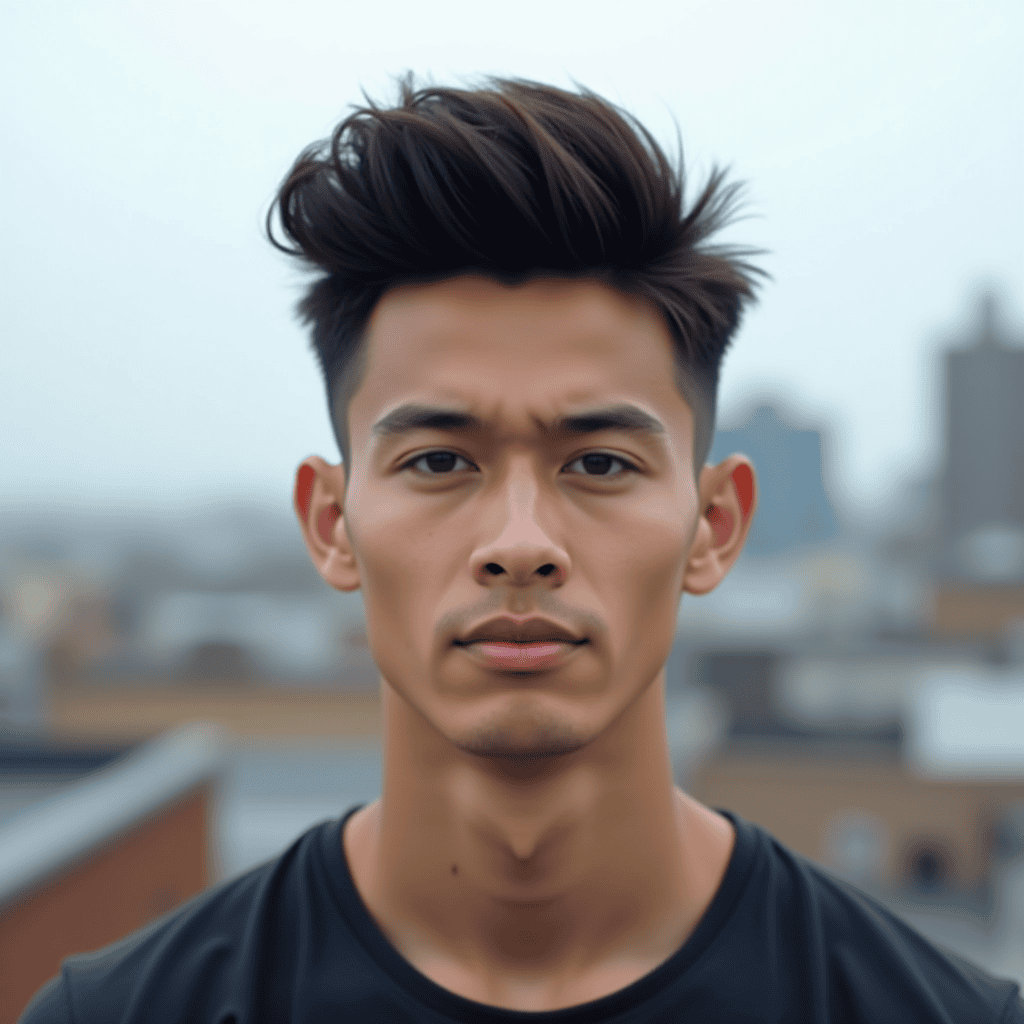
10. Tousled Faux Hawk With Taper
The tousled taper version keeps the edges conservative while allowing the top to look loose and slightly windswept. Rather than forming a narrow ridge, the middle area is broad, with pieces converging subtly toward the center. The neckline and sideburns stay clean without exposing much scalp.
This shape is useful for men testing Faux Hawk Hairstyle Ideas without wanting an obvious fashion haircut. Ask for “a classic taper around the edges, medium textured top, and enough central length to style loosely inward.” Its drawback is also its strength: if you barely style it, people may simply read it as a textured haircut rather than a faux hawk.

Faux Hawk Hairstyle Ideas for Curly and Thick Hair
Curly and thick hair can produce some of the best faux hawks because the volume is already present. The job is controlling width. If a barber leaves too much mass over the sides, the shape becomes round; remove that bulk strategically and the middle starts doing the visual work.
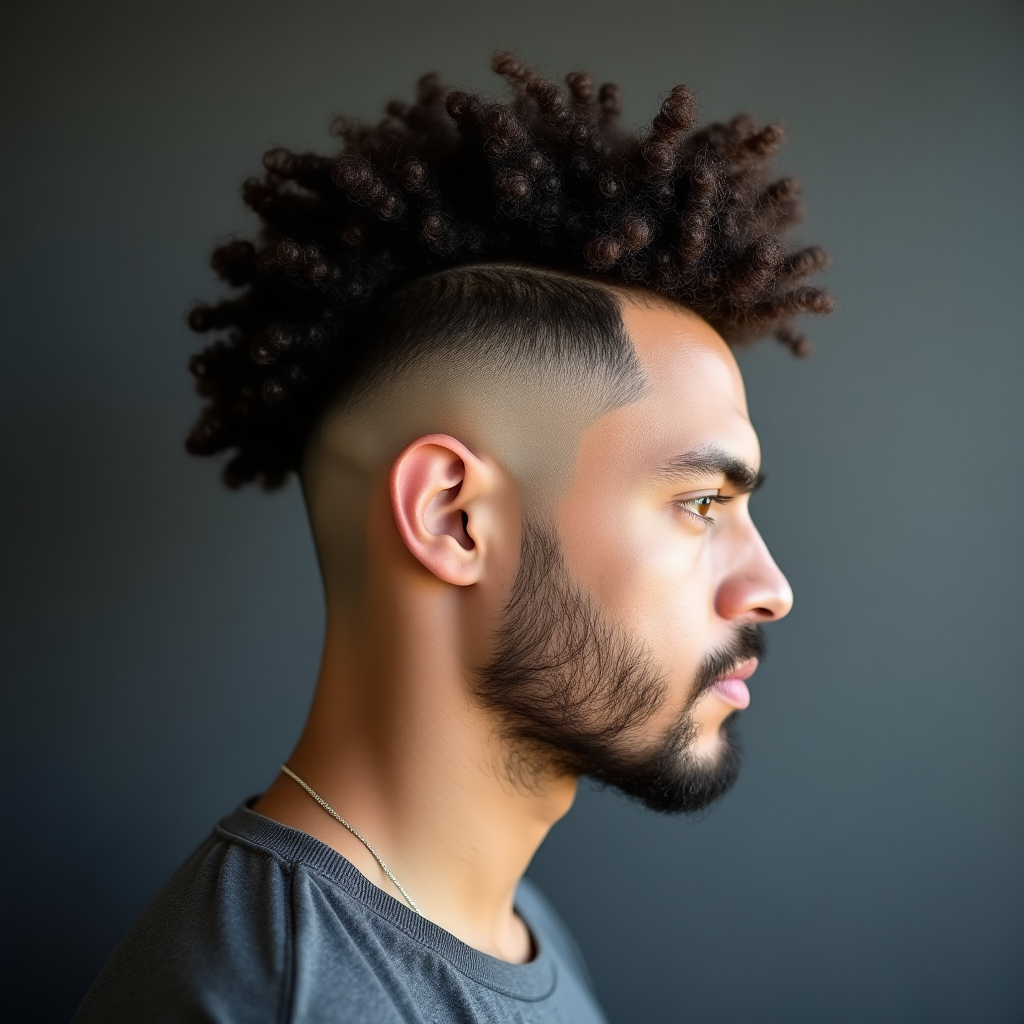
11. Curly Faux Hawk
A curly faux hawk lets individual curls form the ridge instead of forcing them into spikes. The curls can remain rounded and springy, with the highest concentration running from the forehead toward the crown. Tapered sides create enough narrowing to make that central volume obvious.
It suits naturally curly hair that already has a defined pattern. Ask for “keep my curls intact on top, reduce the side bulk, and create a gradual faux-hawk shape without thinning through the curl ends.” The biggest mistake is overworking the curls with heavy product, which can turn lively definition into stiff clumps.
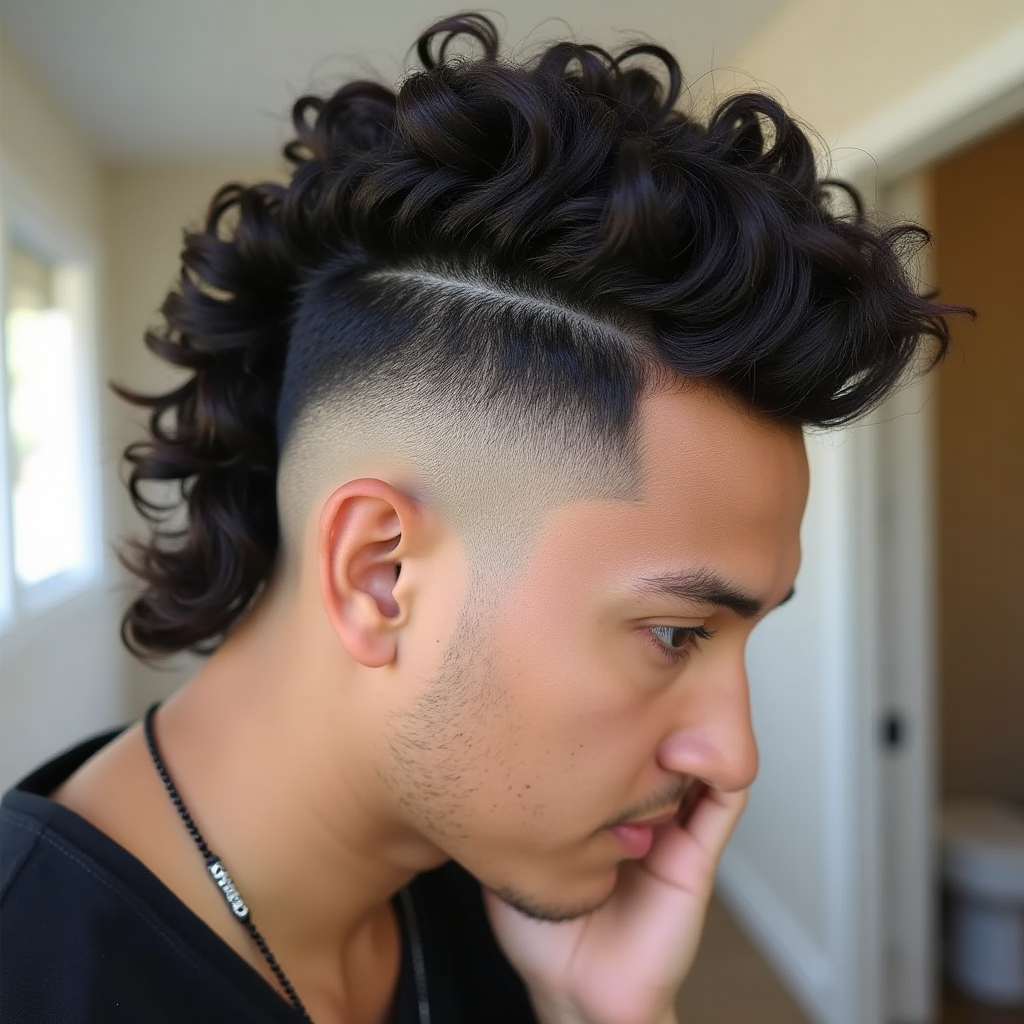
12. Curly Faux Hawk With Burst Fade
A burst fade curves around the ear while leaving more length behind it, which naturally frames a curly faux hawk. The center curls rise freely, while the curved fade opens up the side profile and makes the remaining volume look intentionally placed. The back can stay fuller than with a standard high fade.
Ask for “a burst fade around the ears with my curls left full through the middle and back.” This works particularly well for dense curls that can hold a recognizable center shape without being sculpted. The tradeoff is maintenance: once the fade grows fuzzy around the ear, the strong geometry disappears fast.
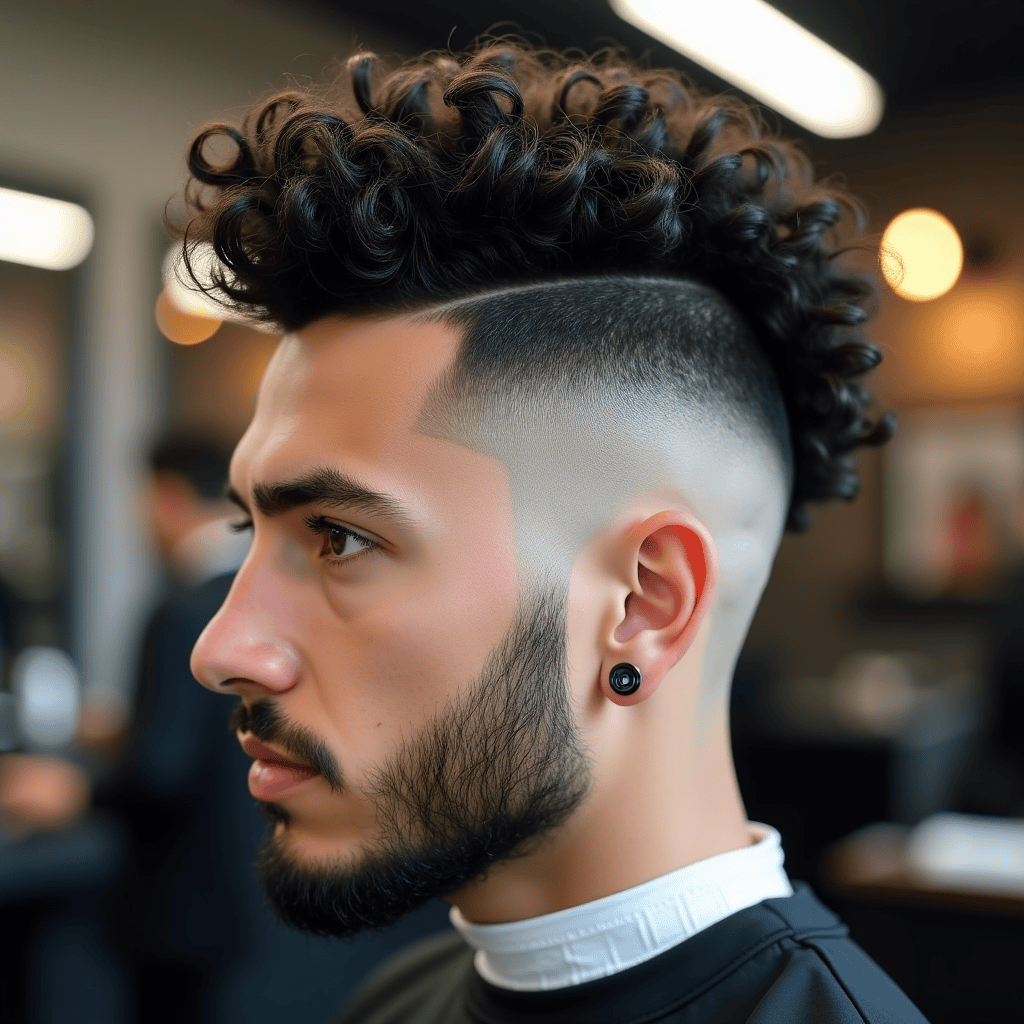
13. Coily Faux Hawk
Tightly coiled hair creates a compact faux hawk with excellent natural height. The central strip can stay dense and softly rounded while the side sections taper dramatically inward. Instead of trying to make every coil point, the haircut depends on the overall silhouette.
Tell your barber, “Keep strong coil density through the center, taper the sides closely, and preserve a rounded top rather than creating a flat strip.” This is one of those Faux Hawk Hairstyle Ideas where shape matters more than product. The only caution is removing too much width too high on the head, which can make the center look narrower than intende
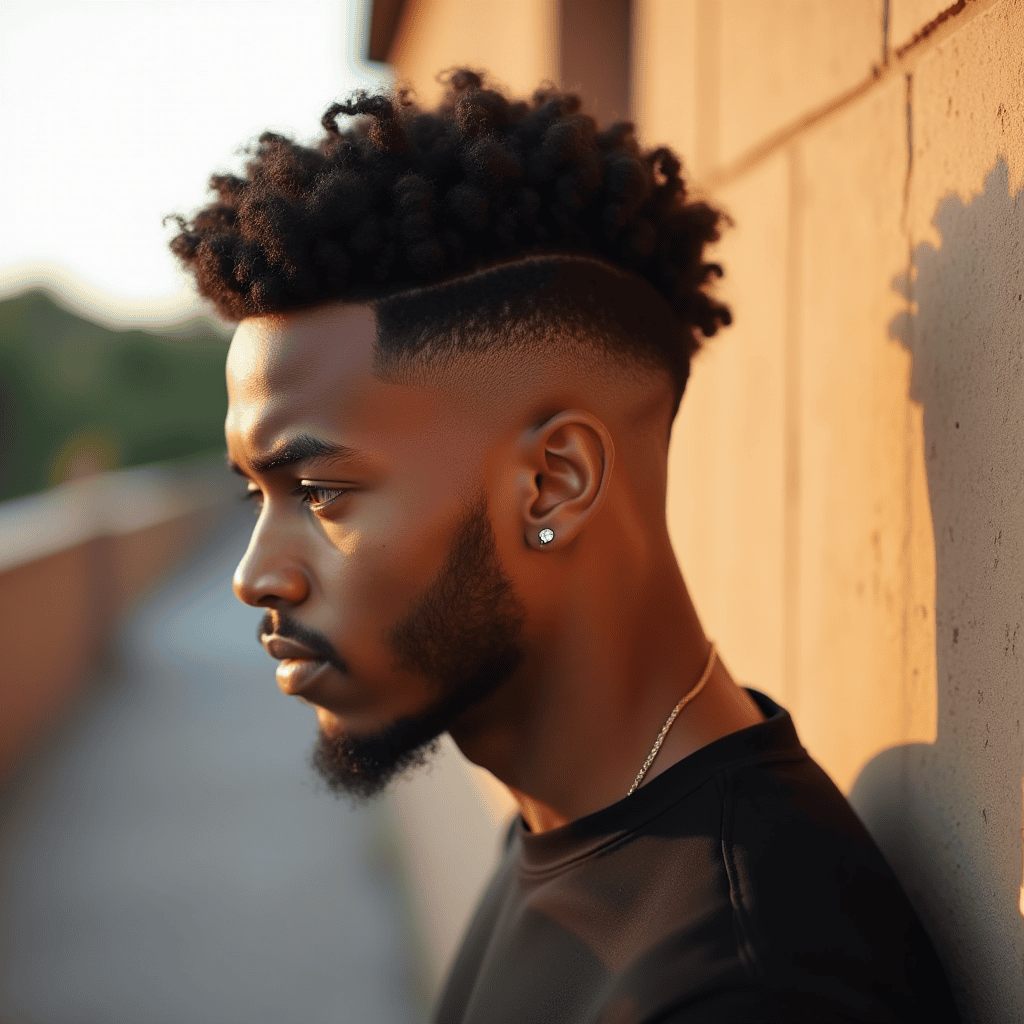
14. Thick Hair Faux Hawk With Scissor-Cut Sides
Not every faux hawk needs faded sides. This one keeps visible scissor-cut length around the temples while removing enough weight for the center to remain dominant. The result has a fuller, almost classic men’s-cut feel with a deliberate ridge running through the top.
Men with extremely thick hair often prefer this because the sides don’t expose the scalp. Ask for “scissor-cut sides with weight removed internally, longer textured hair through the middle, and a soft faux-hawk silhouette.” It can become bulky after several weeks, so it needs thoughtful debulking rather than simply chopping the perimeter shorter.
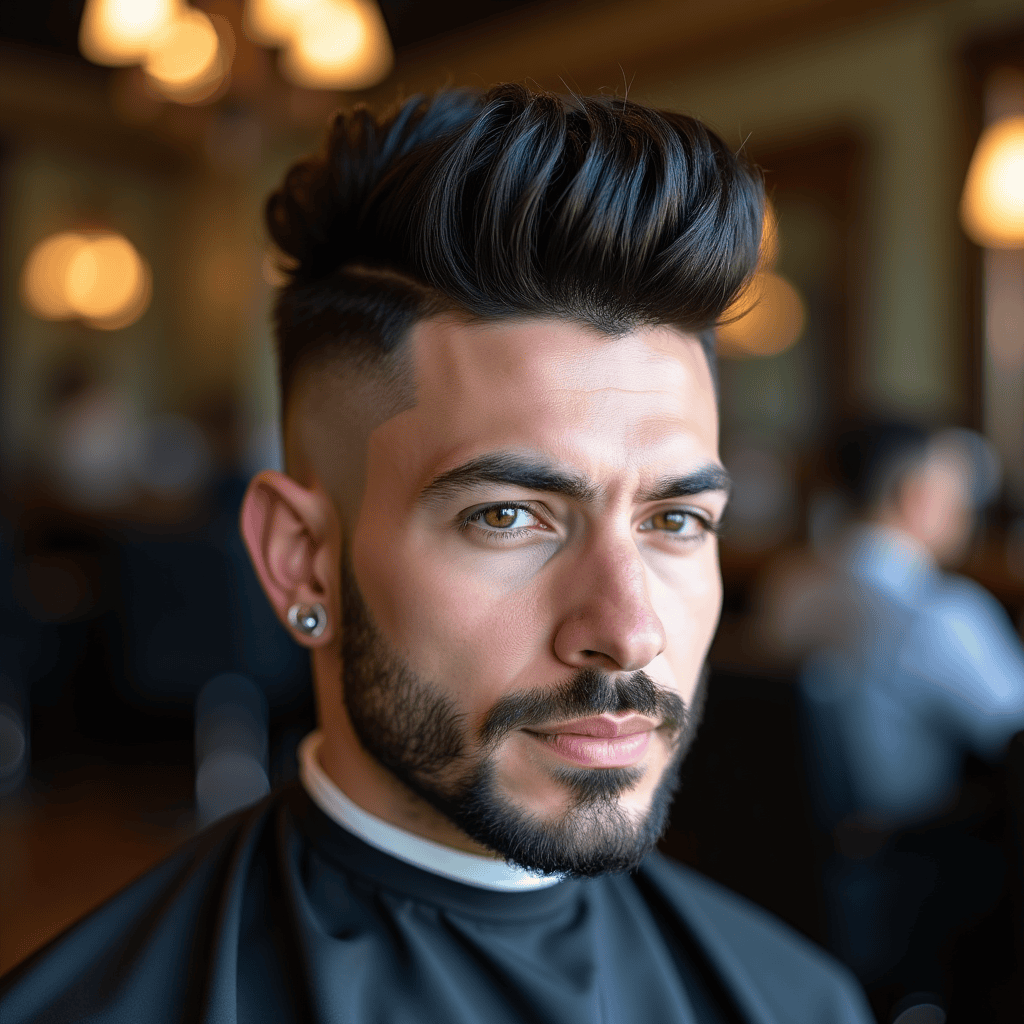
15. Curly Drop-Fade Faux Hawk
A drop fade dips lower behind the ear instead of following a straight horizontal line. Against curly volume, that downward curve makes the center look longer and more pronounced from the side. The curls stay highest from the front through the crown and taper gently toward the back.
It suits men who like a crisp haircut without flattening their natural pattern. Ask for “a drop fade that follows the head shape and leaves full curls in a faux-hawk line through the center.” Because the fade itself is part of the design, uneven grow-out becomes more noticeable than it would with a softer taper.
Sharper Fade-Based Faux Hawk Styles
A fade can turn a subtle faux hawk into something graphic. These versions create stronger contrast between the central shape and the scalp, so they look fresh immediately after a barber visit. They also expose sloppy blending quickly, which is why I wouldn’t choose the most aggressive version if appointments are infrequent.
16. Skin-Fade Faux Hawk
The skin-fade faux hawk takes the sides down to bare or nearly bare skin before blending upward into the longer top. That dramatic jump in length makes even a modest center ridge look tall. The front can be textured rather than spiked to keep the overall look modern.
Ask for “a clean skin fade with the blend kept below the main faux-hawk section, then leave enough top length for broken texture.” Men with dense hair get the strongest contrast. The downside is obvious after a couple of weeks: the skin section disappears quickly, and the haircut loses some of its precision.
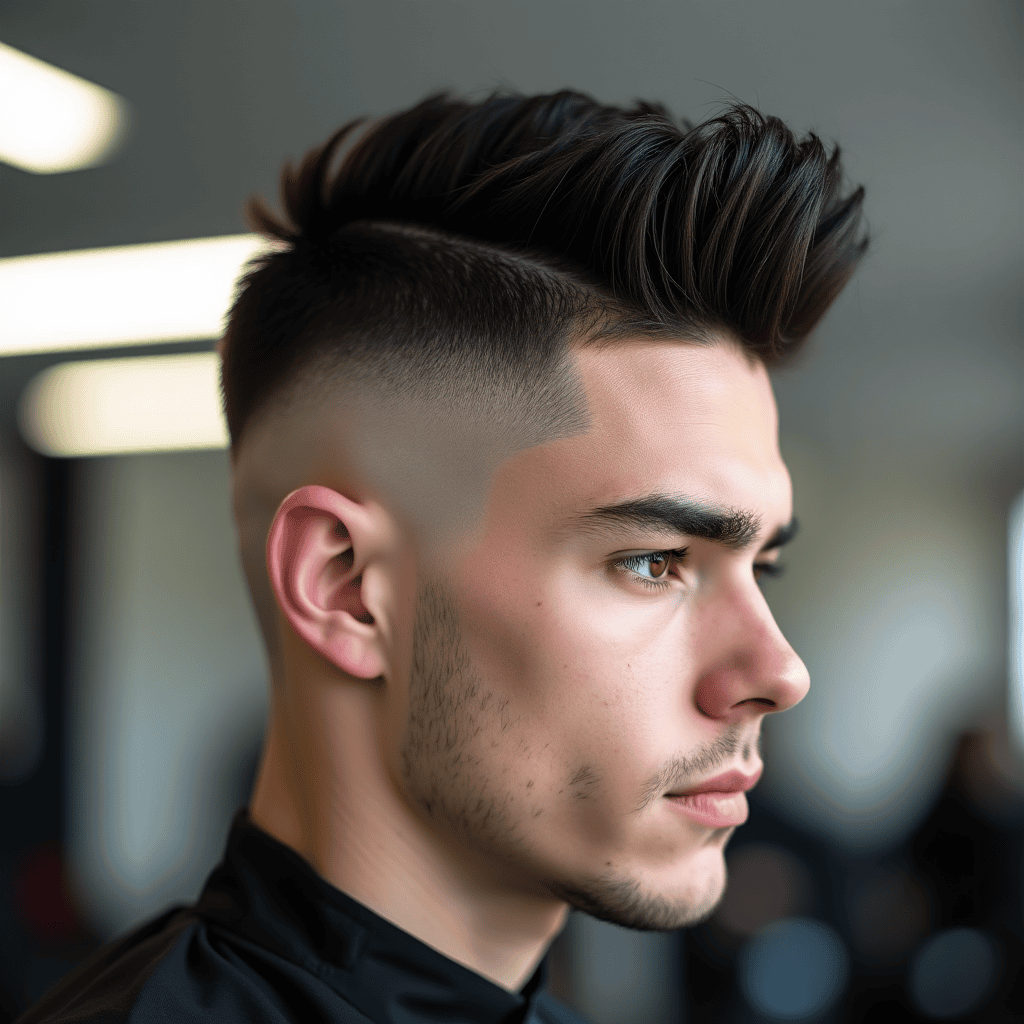
17. High-Fade Faux Hawk
A high fade removes more of the side mass and starts the transition near the upper temples. That produces a narrower, longer-looking central zone with stronger vertical emphasis. The ridge can stay fairly broad on top, but it still appears sharp because there’s so little visual weight around it.
This is a bolder option among modern Faux Hawk Hairstyle Ideas and tends to flatter men comfortable exposing more of the head shape. Ask for “a high fade that blends cleanly into a textured faux hawk, but don’t make the top strip too narrow.” The style can exaggerate a long face, so height through the front should be controlled carefully.
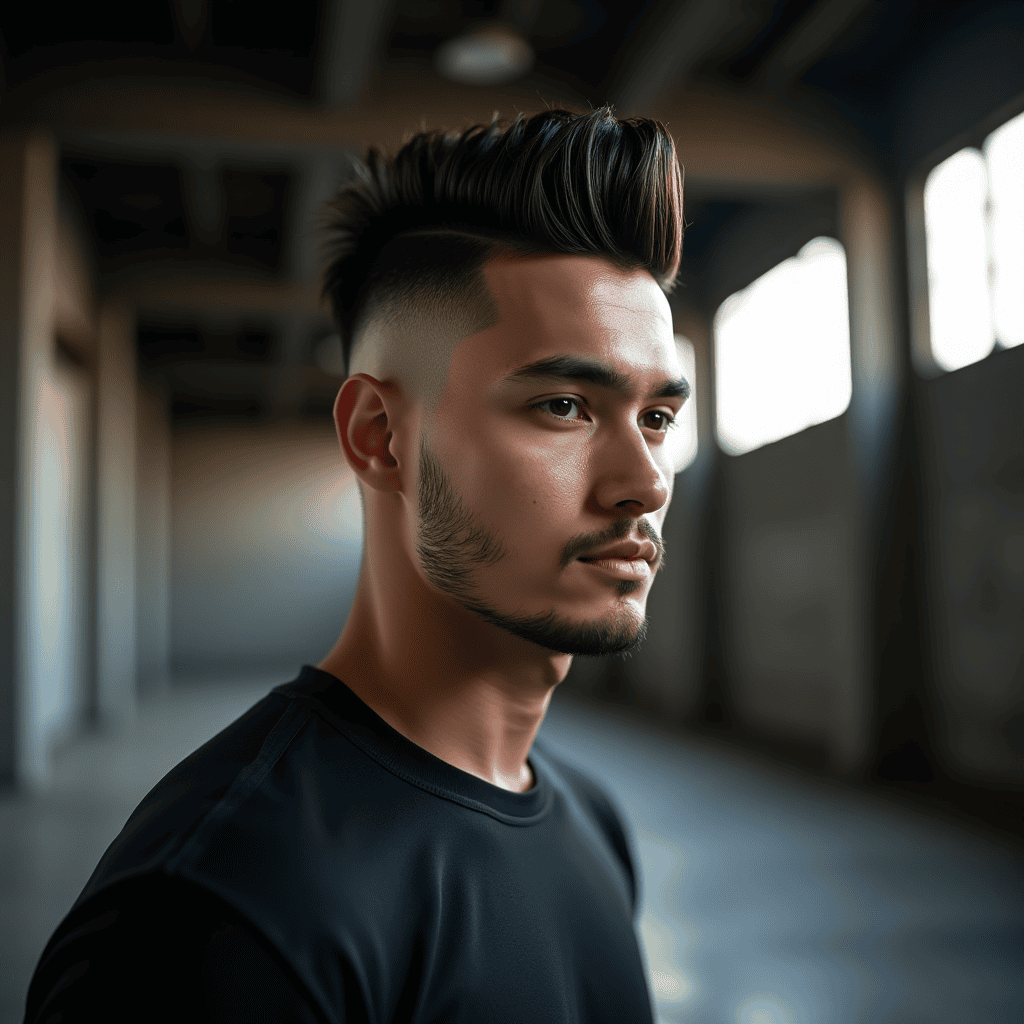
18. Mid-Fade Faux Hawk
The mid fade lands between subtle and aggressive, beginning around the middle of the sides before moving into the longer top. It leaves enough darkness above the ears to soften the haircut while still clearly separating the center. This makes the silhouette easy to read from both the front and side.
It is one of the most adaptable versions for average-density straight or wavy hair. Tell the barber, “Give me a mid fade and keep the top long enough to angle toward the middle without turning it into a narrow mohawk.” There isn’t much to dislike here, though men wanting either maximum subtlety or maximum drama may find it slightly too safe.
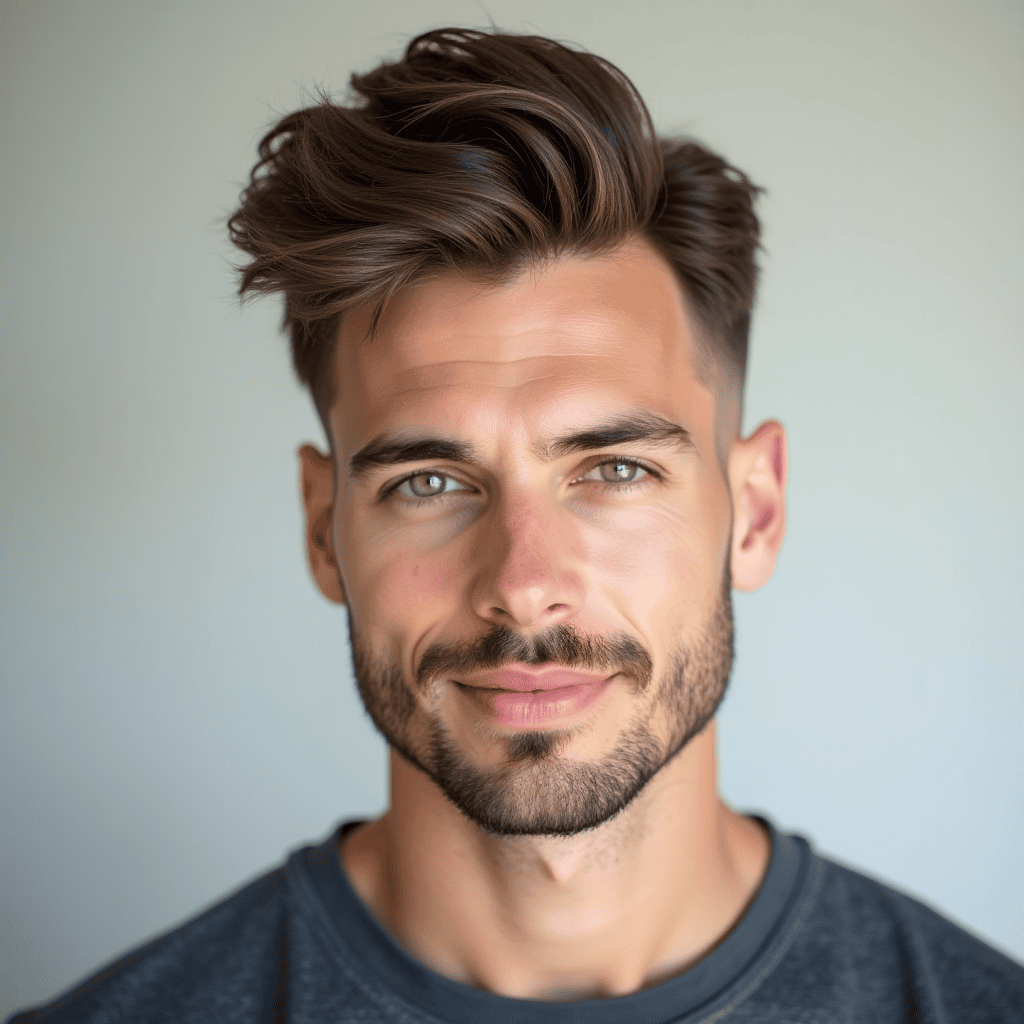
19. Disconnected Faux Hawk
A disconnected faux hawk deliberately limits the gradual blending between the sides and top. The sides stay extremely short while a visibly longer upper section creates an abrupt shelf of contrast. Styled inward, that longer section produces one of the boldest shapes in this list.
Ask for “a clear disconnect between the short sides and longer top, but leave enough width so the faux hawk doesn’t look like a narrow strip.” It suits thick hair and strong personal style more than conservative workplaces. Grow-out is the drawback; without frequent reshaping, the disconnect can look accidental rather than intentional.
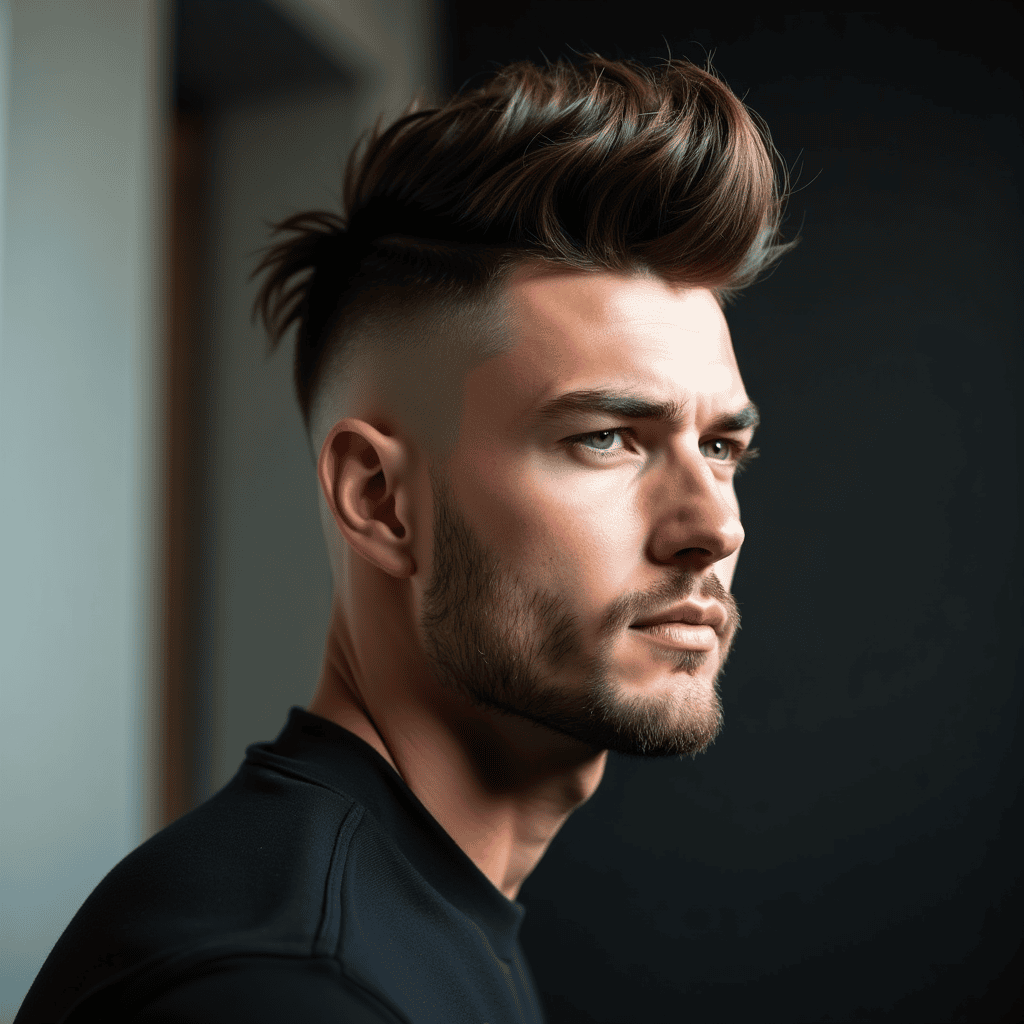
20. Faux Hawk With Hard Part Detail
A fine shaved part can sit beside the raised center, creating an extra line of contrast without changing the actual length pattern. I prefer a restrained version where the line follows the natural separation between the side and top rather than cutting deeply through the style. The center itself should remain textured so the haircut doesn’t become too geometric.
This works for men who enjoy sharp barber detailing and don’t mind maintaining it. Ask for “a faded faux hawk with one clean part line placed beside the center, kept narrow rather than exaggerated.” That line grows out fast, and trying to retrace it yourself at home is an excellent way to learn why barbers have steady hands.
Longer and More Statement-Making Faux Hawks
Longer hair turns the faux hawk from a haircut into a styling choice. These Faux Hawk Hairstyle Ideas need more blow-drying, product control, and willingness to restyle after hats, workouts, or rain. The payoff is flexibility: the same top length can often be worn flatter on quieter days.
21. Long Textured Faux Hawk
A long textured faux hawk carries several inches through the top, allowing strands to overlap, bend, and build visible height. The sides remain short enough to frame that volume, but the central mass looks softer than a stiff upright crest. From the side, it should arc rather than form a straight wall.
Thick hair is easiest to control at this length. Ask for “long textured layers through the center, shorter sides, and enough weight removal to create height without making the ends thin.” Expect actual styling time. If you want to leave the house with towel-dried hair and nothing else, this isn’t your haircut.
22. Slick Faux Hawk
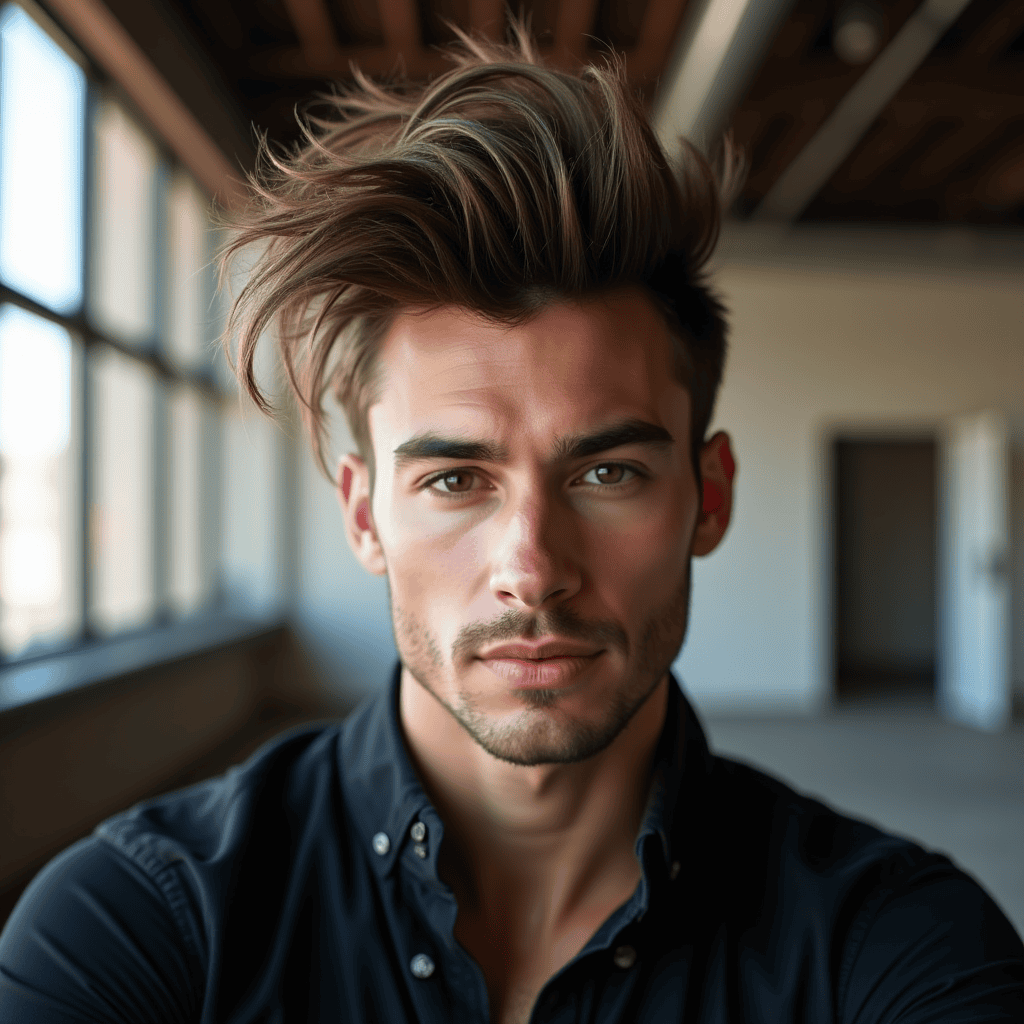
The slick faux hawk replaces dry texture with controlled direction and a light sheen. Hair from both sides of the top moves toward the center and slightly backward, producing a clean ridge without sharp spikes. The edges look smoother, making this easier to pair with tailoring or evening clothes.
Ask for “medium-long length through the top with neat tapered sides so I can comb everything inward and back.” It can work well for dinners, weddings, or shoots where a messy texture feels too casual. Skip heavy wet-look product unless you want the style to flatten; the whole shape depends on preserving some lift.
23. Pompadour Faux Hawk
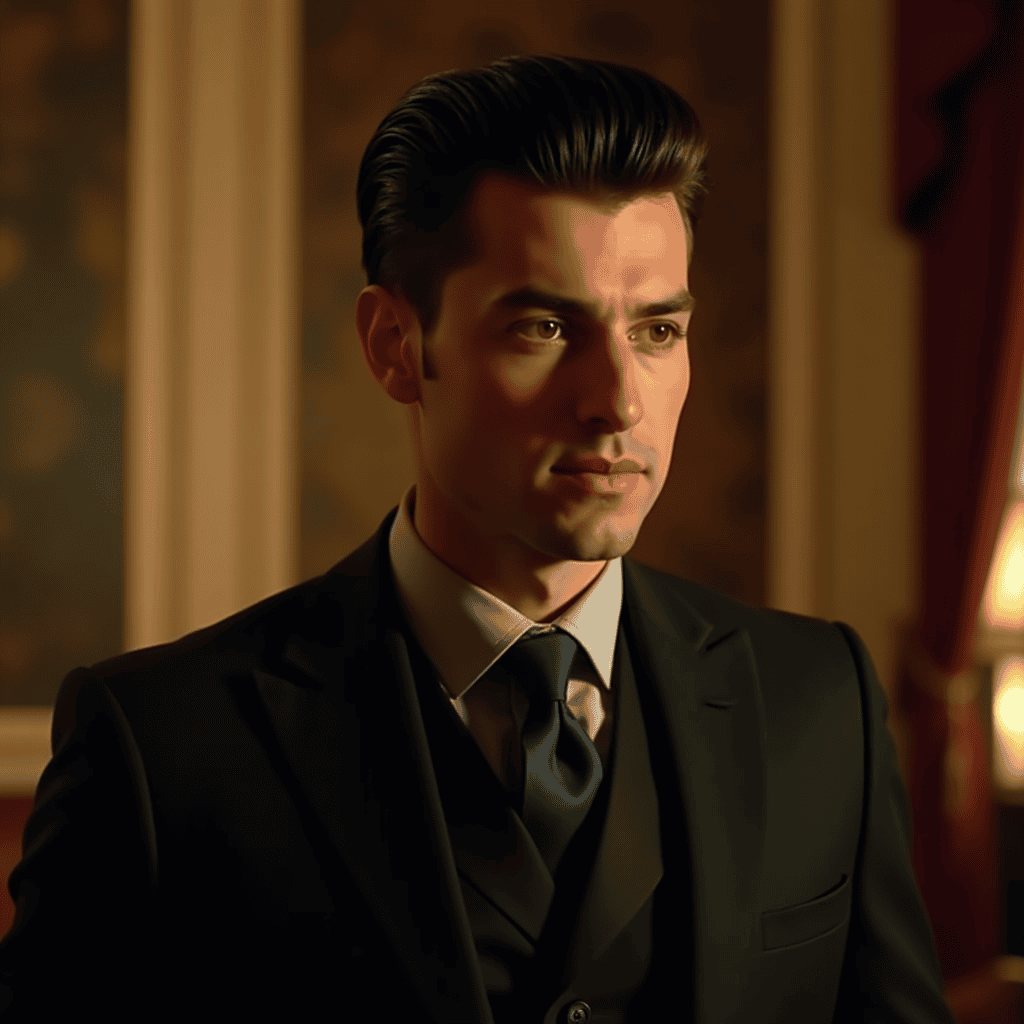
This hybrid puts more volume at the front, almost like a narrow pompadour, then gradually tightens the shape as it moves toward the crown. The front rolls upward and back while the outer top sections angle inward. That creates a tall opening without requiring equal height across the entire head.
Men with thick straight or lightly wavy hair get the best structure. Tell the stylist, “Keep enough front length for pompadour lift, but taper the volume toward a faux-hawk center behind it.” It’s impressive when styled properly, but humidity and fine hair can turn that big front section into a collapsed shelf by midday.
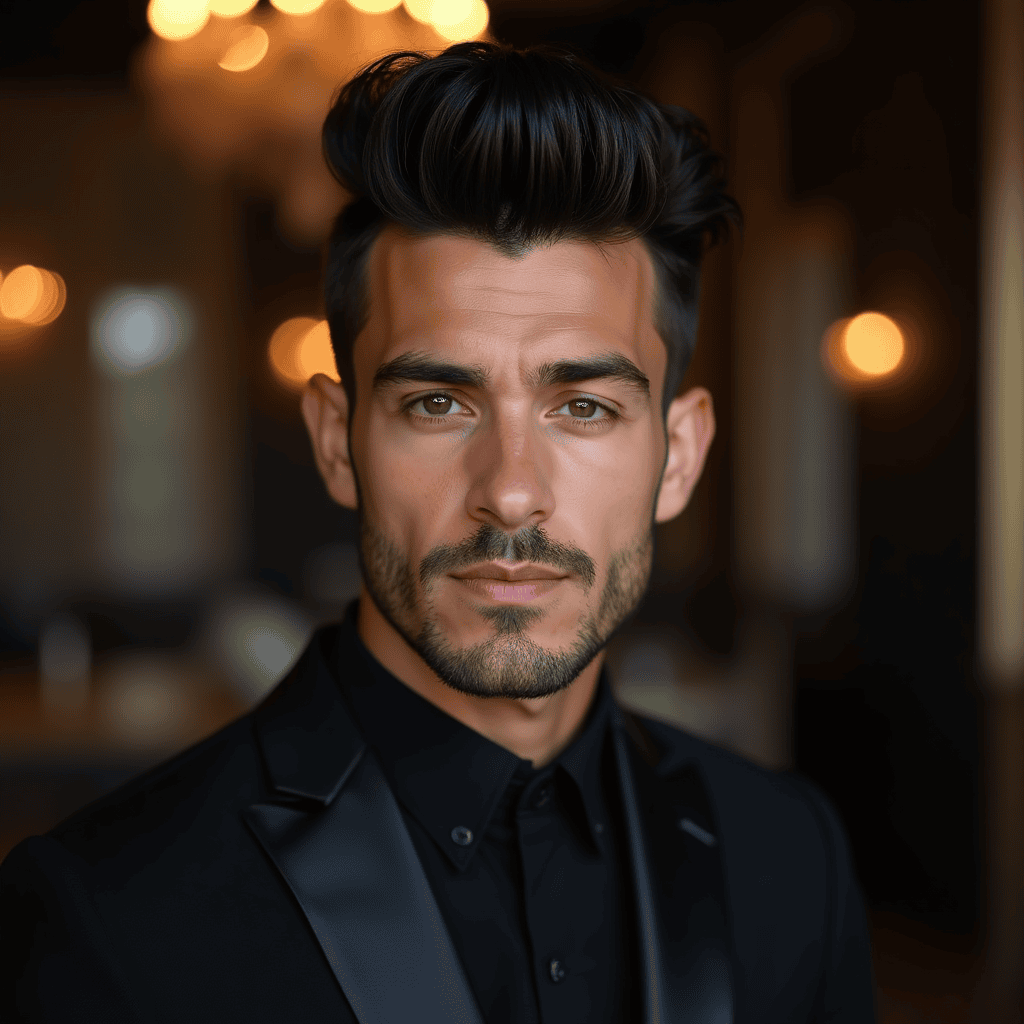
24. Swept-Back Faux Hawk
A swept-back faux hawk keeps the sides directed inward but sends the overall flow toward the back instead of vertically upward. The front rises only enough to establish height before laying into a loose center line. It looks more relaxed than a traditional slick-back because the top keeps visible separation.
This style suits men who want longer Faux Hawk Hairstyle Ideas without obvious spikes. Ask for “long top layers I can sweep back and inward, with tapered sides and no hard part.” It needs enough length to stay backward, but too much length adds weight and can pull the entire center flat.
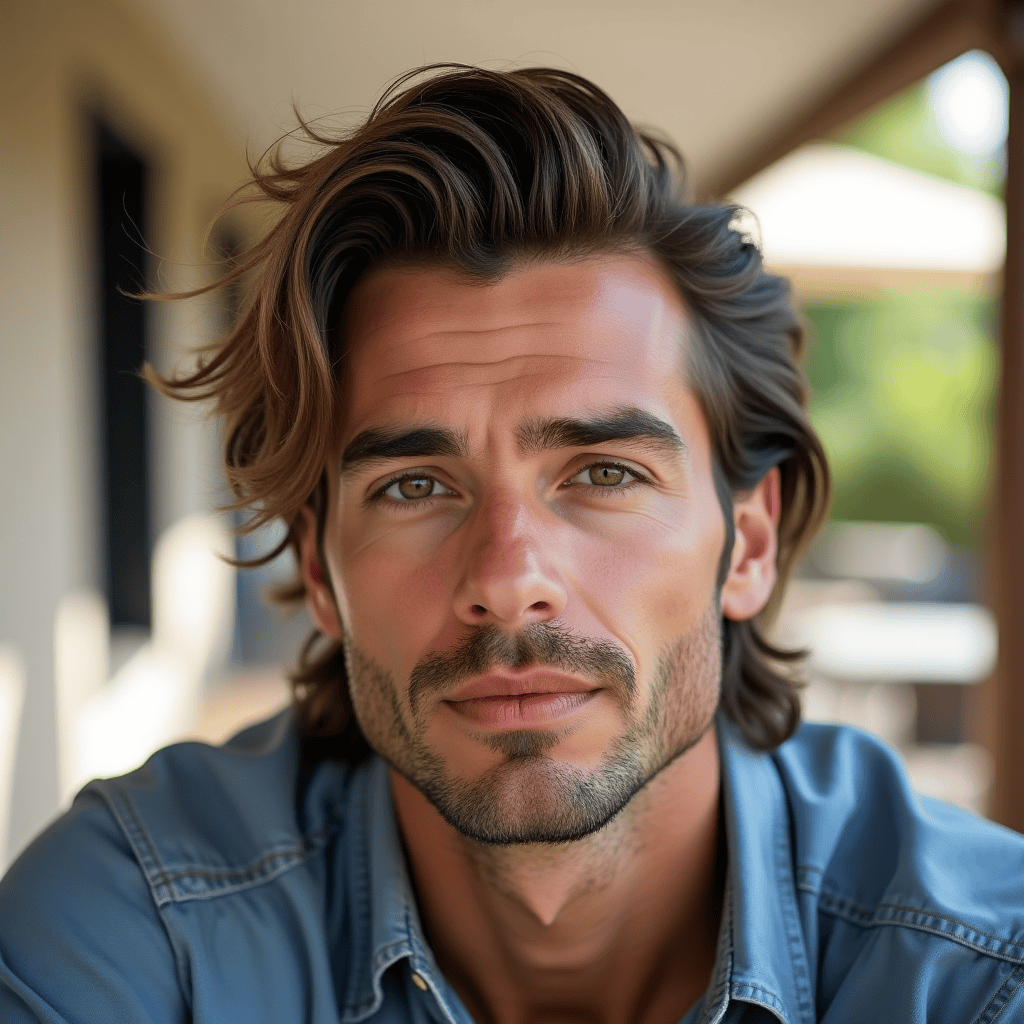
25. Dramatic Tall Faux Hawk
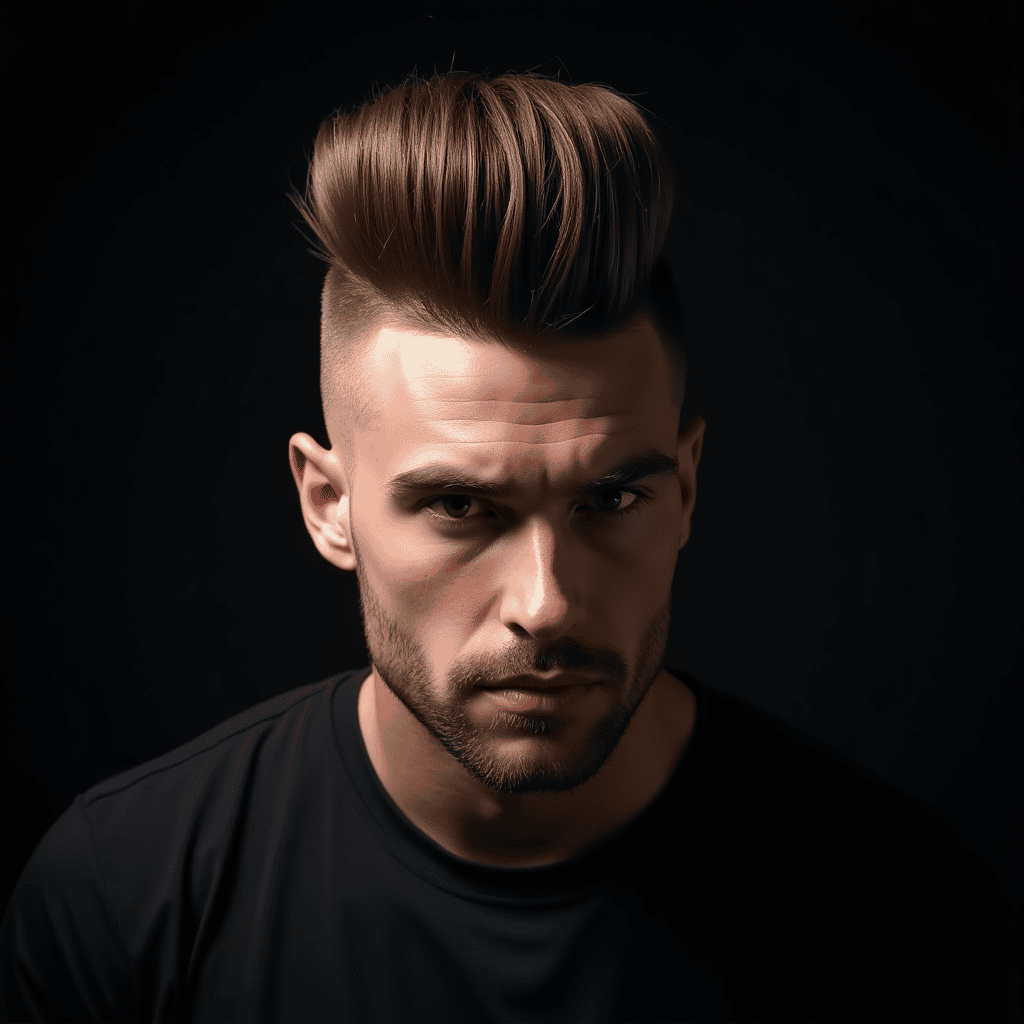
The tall faux hawk is the version people picture when they want the haircut to be noticed. The center rises clearly above the head, with the front and midsection carrying the most height while the ridge becomes shorter toward the crown. Close sides create the strongest possible contrast.
Only choose this if styling is part of the fun. Ask your barber, “Leave substantial length through the center for height, keep the sides tight, and texture the top so it can stand without becoming one solid fin.” Fine, limp hair usually fights the shape, and a tall faux hawk can look out of place when your wardrobe and routine are otherwise extremely conservative.
How to Choose the Right Faux Hawk Hairstyle
Start with your natural texture rather than a reference photo. Straight hair gives cleaner spikes and sharper separation, waves create softer movement, curls produce built-in volume, and coils create a strong sculptural silhouette without needing artificial height.
Face shape matters next. Rounder faces often benefit from controlled vertical lift, while longer faces usually look better with a broader, lower faux hawk. Square faces can carry both approaches, though I often keep the sides from becoming excessively bare because a little width preserves balance.
Bring two or three reference photos to your appointment, ideally showing the front and side rather than a single polished angle. Tell your barber how much time you’re willing to style each morning. That answer matters more than saying you want something “edgy.”
For weddings, interviews, professional photographs, or other occasions where you haven’t worn the style before, get the initial cut early enough to live with it before the event. A softer low-fade or tapered faux hawk also works more comfortably with tailoring because it adds personality without competing with the clothes.
Where Faux Hawk Hairstyles Commonly Go Wrong
The biggest mistake is narrowing the center too aggressively. A faux hawk doesn’t need a clearly isolated strip of hair. When the sides of the top are stripped away too high, the style can drift into full mohawk territory whether that was the plan or not.
Product is the second problem. I see men use enough wax for three haircuts because they’re trying to force height rather than building it with the cut and blow-drying direction. Heavy product makes the top separate into thick, shiny pieces and eventually pulls it downward.
There’s also the maintenance issue. Skin fades, hard parts, and extreme disconnections look incredible while they’re crisp, but they advertise every week of grow-out. A taper or low fade is less exciting on day one and often better on day twenty.
And some men simply don’t need a faux hawk. If your hair is extremely fine, your morning routine is nonexistent, or your workplace requires conservative grooming, a textured crop with slightly longer central volume may deliver most of the character with far less effort.
Frequently Asked Questions
The details matter more than the label with Faux Hawk Hairstyle Ideas because two cuts called the same thing can look completely different depending on the side length, fade height, hair texture, and amount of lift through the middle.
What is a faux hawk hairstyle?
A faux hawk keeps the middle of the hair longer and styles it upward or inward while leaving the sides shorter. Unlike a traditional mohawk, the sides usually aren’t shaved into a completely separate strip, so the transition looks softer and the haircut is easier to wear casually.
Is a faux hawk still fashionable for men?
Yes, especially in softer forms. Short textured tops, low fades, tapered sides, curly versions, and broader center shapes feel more current than extremely stiff spikes. The key is treating the faux hawk as a silhouette rather than forcing every strand into a pointed ridge.
What is the best faux hawk for short hair?
A short textured faux hawk with a taper or low fade is the easiest starting point. It creates visible central height without demanding much length or styling time. Men with coarse hair can push it slightly spikier, while fine hair usually benefits from softer broken texture.
What is the difference between a faux hawk and a mohawk?
A mohawk traditionally creates a much clearer central strip, often with heavily shaved sides. A faux hawk keeps more blending and usually relies on styling to create the center ridge. That makes it easier to flatten, sweep sideways, or wear as a conventional textured haircut.
Can men with curly hair wear a faux hawk?
Curly hair is excellent for a faux hawk because the natural pattern already provides height and movement. Keep the curls longer through the center and remove enough side bulk to create contrast. Avoid thinning the curl ends excessively, since that can weaken the shape.
Which face shape suits a faux hawk best?
Oval and square faces adapt easily to most versions. Round faces can benefit from moderate center height, while longer faces usually suit wider, lower shapes better than narrow vertical ones. A good barber adjusts the silhouette rather than applying the same faux hawk to everyone.
Does a faux hawk work with a receding hairline?
It can, depending on the recession pattern and remaining density. A textured forward or slightly diagonal faux hawk can be more forgiving than a rigidly vertical style. Avoid creating extreme height if it separates the front into thin sections and exposes more scalp than you want.
How long should hair be for a faux hawk?
Short versions can work with relatively modest top length, while medium and dramatic versions need enough hair to bend, overlap, or lift. The sides should be noticeably shorter than the center, but they don’t need to be shaved. Your natural texture affects how much length you actually need.
What product is best for styling a faux hawk?
Matte paste or clay works well for short textured versions, while lighter creams can suit waves and curls. Longer faux hawks may need blow-drying support before product is added. Start with a small amount; adding more is easy, removing too much product means washing your hair again.
Can a faux hawk look professional?
A low-fade or tapered version can. Keep the center broad, the height modest, and the finish controlled rather than aggressively spiked. I would save tall, disconnected, or heavily shaved versions for environments where creative grooming isn’t likely to clash with workplace expectations.
How often should a faux hawk be trimmed?
It depends on how precise the sides are. Skin fades and hard details show growth quickly, while tapered versions tolerate more time between cleanups. The top usually remains workable longer than the sides, so many men only need the perimeter refined before the overall shape needs rebuilding.
Is a faux hawk good for thick hair?
Thick hair is one of the easiest textures for a faux hawk because it naturally supports volume. The barber’s main job is removing internal weight so the center rises instead of spreading sideways. Scissor cutting, point cutting, and carefully placed texture can prevent a bulky helmet shape.
Can fine hair hold a faux hawk?
Fine hair can hold a shorter faux hawk if the top isn’t left excessively long. A lighter product and controlled blow-drying usually work better than heavy wax. Keep enough density through the center and avoid aggressive thinning, since fine hair needs every bit of structural support it can get.
What should I tell my barber when asking for a faux hawk?
Describe the fade or taper you want, how much center length you want to keep, and whether you prefer messy, smooth, curly, or spiky texture. Saying “faux hawk” alone leaves too much open to interpretation. A reference photo showing your preferred side profile helps even more.
Can a faux hawk be styled differently on formal days?
Yes. Many medium-length Faux Hawk Hairstyle Ideas can be brushed back, worn flatter, or directed into a cleaner central sweep for formal clothing. That flexibility is why I usually recommend keeping some blend through the sides instead of creating an aggressively disconnected strip.
A faux hawk works best when the haircut supports your real routine rather than the version of yourself who supposedly spends fifteen minutes styling every morning. Pick the side treatment first, decide how much height you can realistically manage, and bring that information to your barber. Your next step is simple: save the reference photo closest to your hair texture and ask how the barber would adjust its proportions for your head shape.
Best Men’s Hairstyle Reports
Discover bold cuts, long hairstyles, braided looks and modern men’s grooming inspiration.