
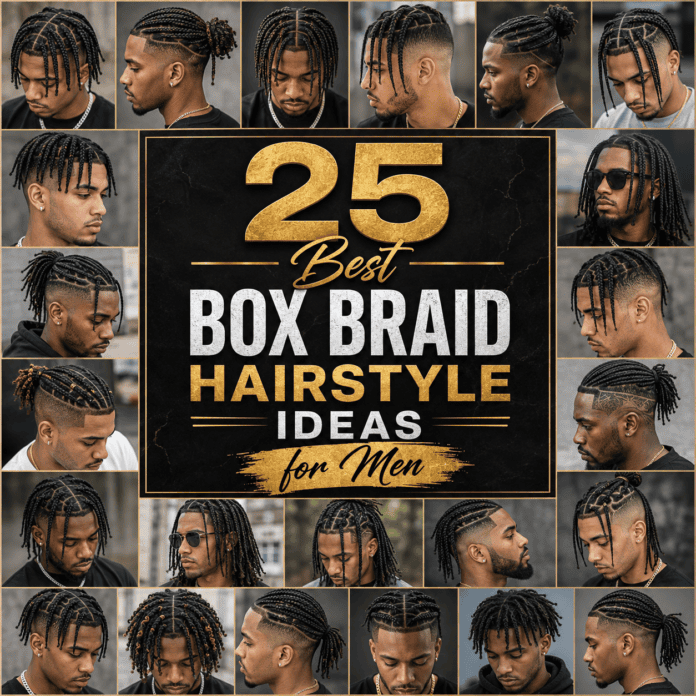
The strongest box braid hairstyle ideas for men balance clean sectioning, controlled length, and a shape that works with your face. Classic mid-length box braids, tapered box braids, center-part braids, and a pulled-back box braid ponytail are the safest starting points because they look intentional without demanding an extreme change.
This guide follows the practical standards a veteran barber and braider would use when judging proportion, parting, tension, movement, and everyday upkeep. The focus stays on hairstyles that photograph well but still make sense when you have to sleep, work, train, and get dressed around them.
The picks were organized from easier, more traditional shapes toward styles that need more length, sharper sectioning, added accessories, or more deliberate daily styling.
| Quick pick | Best for | Main visual effect | Upkeep |
|---|---|---|---|
| Classic Mid-Length Box Braids | First-time wearers | Balanced and versatile | Moderate |
| Short Clean-Part Braids | Active lifestyles | Crisp and compact | Easy |
| Shoulder-Length Braids | Medium to long hair | Natural movement | Moderate |
| Jumbo Box Braids | Bold proportions | Thick graphic sections | Moderate |
| Micro Box Braids | Detailed styling | Fine texture and movement | Higher |
| Taper Fade Box Braids | Clean sides | Strong top-to-side contrast | Moderate |
| Center-Part Box Braids | Symmetrical faces | Balanced framing | Easy |
| Triangle-Part Braids | Statement parting | Geometric scalp pattern | Higher |
| Box Braid Ponytail | Longer braids | Controlled, athletic shape | Easy |
| Box Braid Man Bun | Long hair | Compact tied-back finish | Moderate |
Classic Box Braid Hairstyle Ideas That Work Almost Anywhere
The easiest box braid hairstyle ideas usually earn their place through proportion rather than complicated details. These first looks keep the sectioning readable, the silhouette controlled, and the styling flexible enough for workdays, weekends, or a change in wardrobe without making your hair dictate every outfit.
1. Classic Mid-Length Box Braids
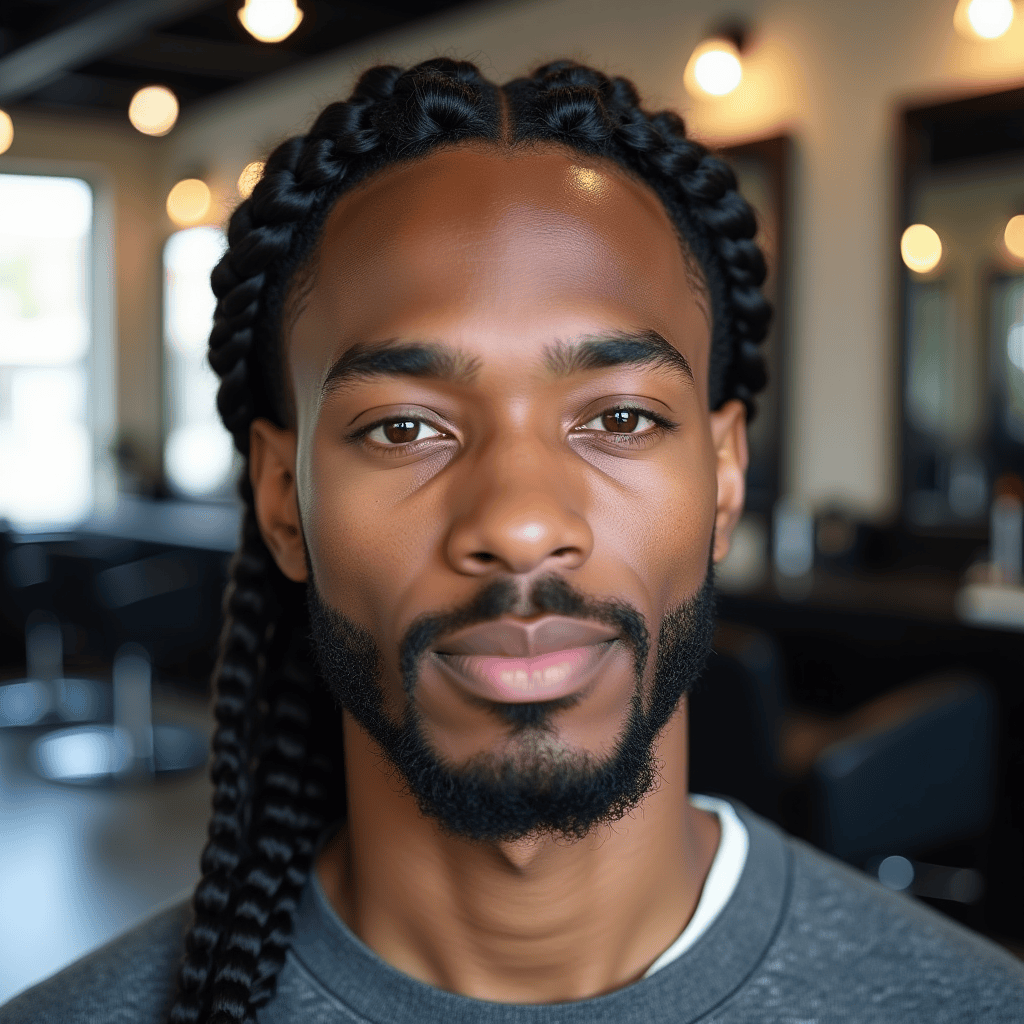
Classic mid-length box braids sit in the sweet spot between movement and control. The braids usually fall around the ears, jaw, or upper neck, with square parts visible enough to give the scalp a clean grid without making the pattern the entire story. Medium-width braids keep the look masculine and structured while still moving naturally when you turn your head. Against a simple crewneck, denim jacket, or clean white shirt, the shape reads polished without looking overworked.
This is one of the safest box braid hairstyle ideas for men with medium-length textured hair who want flexibility without committing to extra-long braids. Ask your stylist for “medium box sections with even braids that fall naturally around the jaw and neck.” Maintenance is manageable if you protect the braids at night and keep the parts tidy without constantly pulling them tight. The drawback is that the middle length can start looking fuzzy sooner than shorter braids if your natural texture expands quickly.
2. Short Box Braids With Clean Parts
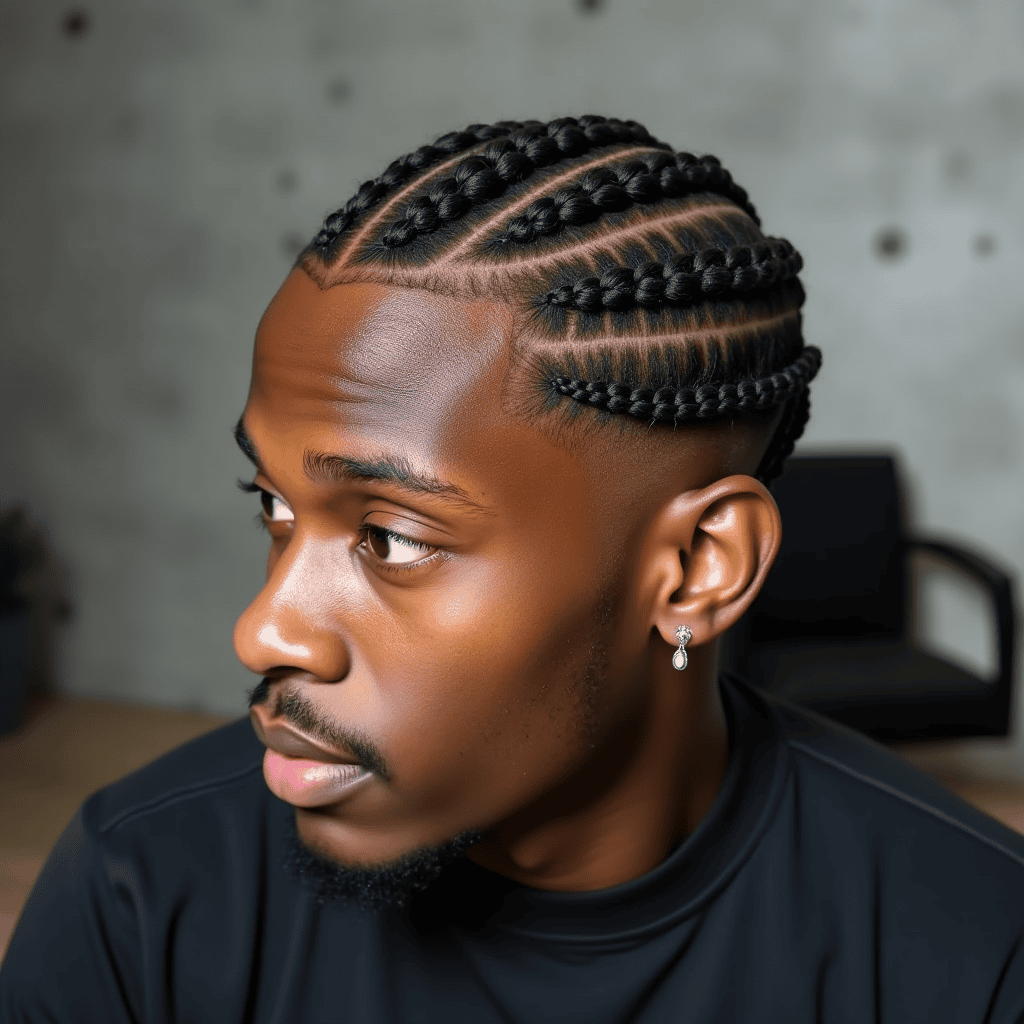
Short box braids put most of the visual weight on the parting. Each braid stays close enough to the head that the square sections remain easy to see, creating a graphic pattern across the scalp without needing extra length. The ends can stop around the ears or slightly above them, leaving the overall silhouette tight and compact. This works particularly well with minimal clothing because the precise geometry gives the look enough detail on its own.
Men who train often, wear hats, or dislike hair touching the neck tend to appreciate this version. Tell the barber or braider, “Keep the braids short, evenly spaced, and let the square parts stay visible.” Short braids are easier to manage than many longer box braid hairstyle ideas, though they can stick outward slightly when the hair is especially thick or springy. Skip this version if your goal is a lot of swing or enough length for ponytails and buns.
3. Shoulder-Length Box Braids
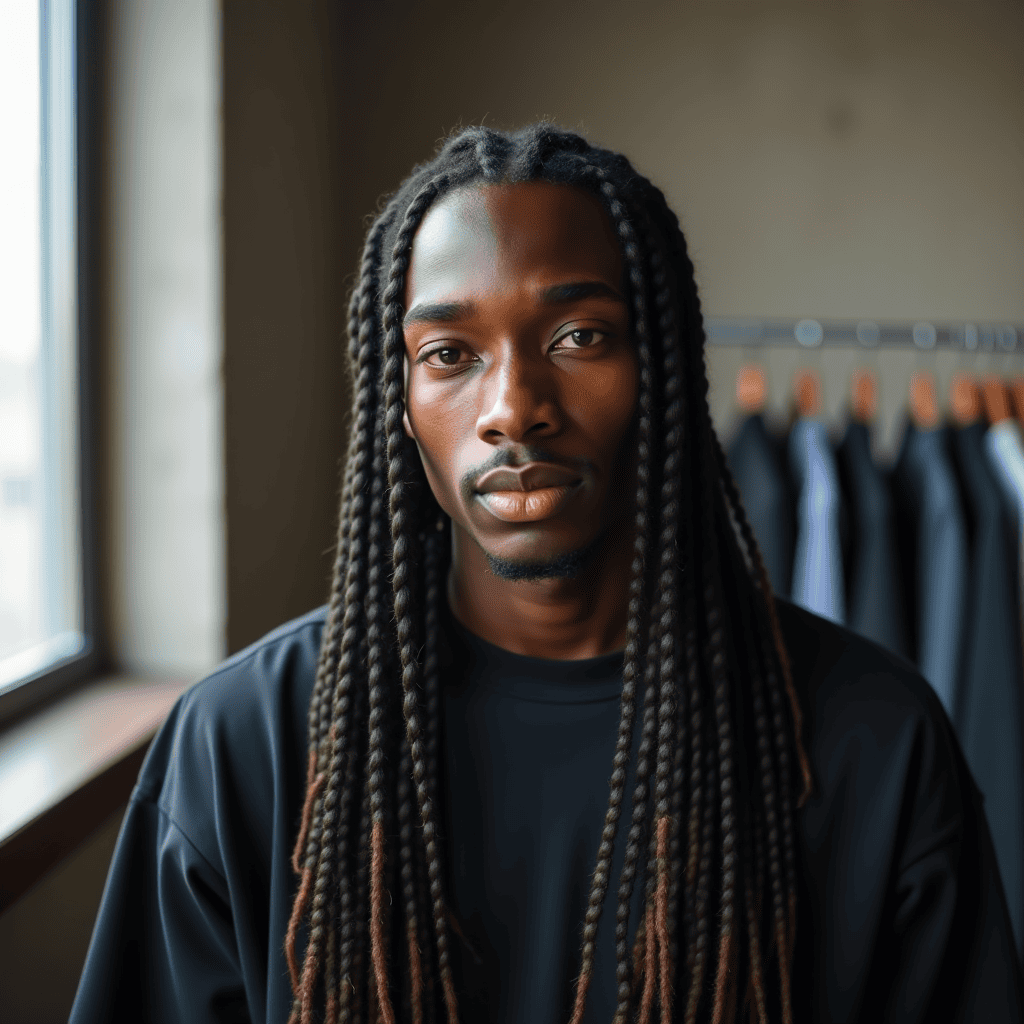
Shoulder-length box braids bring more movement into the style without crossing into dramatic waist-length territory. The braids hang past the jaw and sweep toward the shoulders, giving them enough weight to fall straighter while still showing individual texture. A clean center or loose natural part keeps the front from becoming too heavy. The longer outline works especially well with layered jackets, relaxed shirts, and open collars because the braids frame the clothing rather than disappearing into it.
This length suits oval, oblong, and broader face shapes because the falling lines visually narrow and frame the face. Ask for “medium box braids that finish around shoulder level with enough room to tie them back.” Shoulder-length box braid hairstyle ideas need more attention at night because friction against collars, pillows, and hoodies can roughen the ends. They are also heavier than short versions, so anyone who dislikes noticeable weight around the scalp may prefer the previous two looks.
4. Jumbo Box Braids
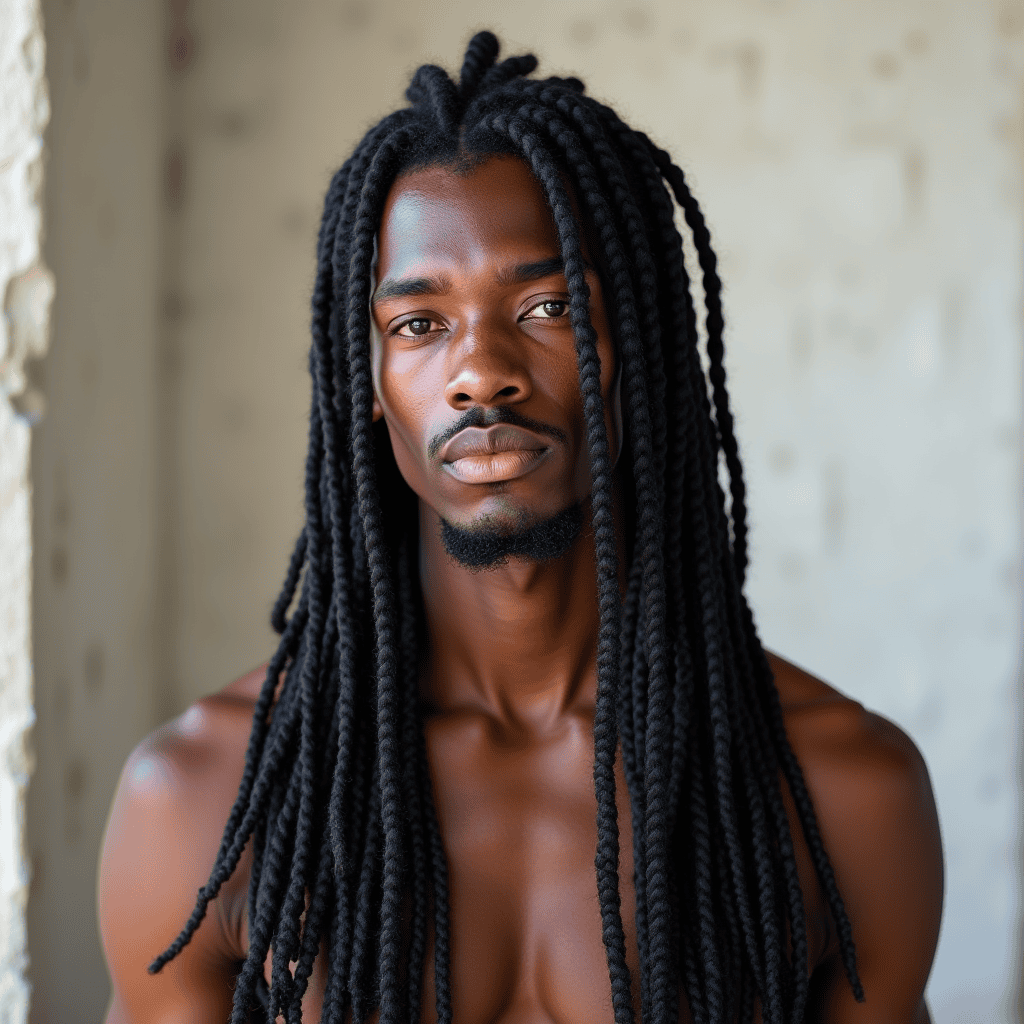
Jumbo box braids replace fine detail with bold shape. Larger square sections feed into thick braids that create strong lines from the scalp to the ends, so fewer individual braids are needed to build the complete look. The size makes every braid visible from across a room and works best when the sections remain consistent rather than randomly changing width. On longer hair, the result can feel almost sculptural.
Thick hair and larger head shapes tend to carry this style especially well because the proportions stay balanced. Ask the stylist for “large clean box sections with thick braids and consistent size from root to end.” Jumbo braids can be quicker to style than tiny box braid hairstyle ideas, but bigger sections also mean every crooked part becomes easier to notice. Men with shorter hair may need a braider to judge whether there is enough length to hold the larger sections neatly.
5. Micro Box Braids
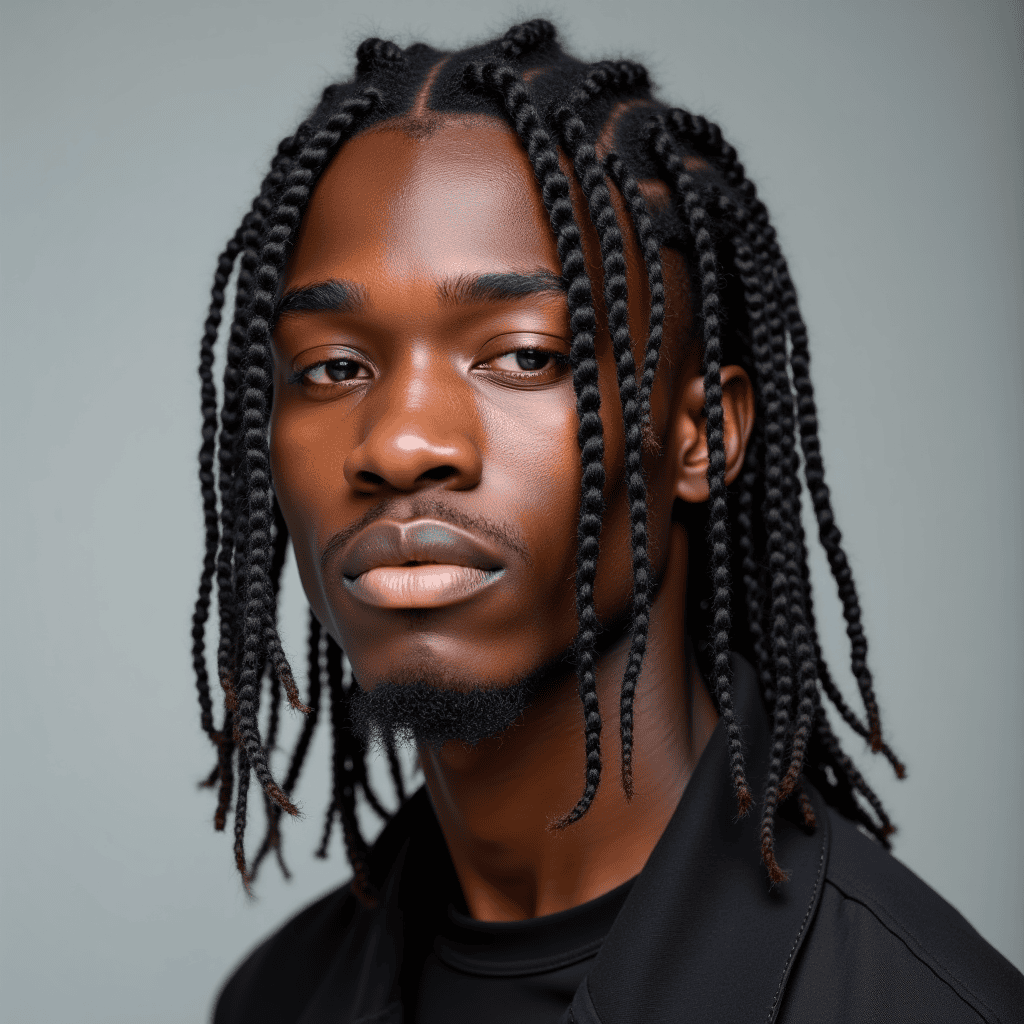
Micro box braids take the same square-section concept in the opposite direction. Tiny parts create a dense field of slim braids with far more individual movement than jumbo versions, especially once the length extends beyond the ears. From a distance the hair can look almost loose, while closer viewing reveals the detailed grid and hundreds of fine braided lines. This is the choice for someone who wants texture before bold shape.
Fine sections work best when there is enough natural density to avoid making the scalp look overly exposed. Tell your braider, “I want small box sections and narrow braids with consistent tension, but not a tight finish.” Among the more detailed box braid hairstyle ideas, this one takes patience both during installation and removal. The biggest drawback is time, and men who prefer quick appointments may find the level of detail unnecessary.
Box Braid Hairstyle Ideas With Fades and Sharp Sides
A fade changes the whole balance of box braids. Removing bulk from the sides makes the braided area look stronger and gives the hairstyle a cleaner outline around the ears and temples. These combinations make sense for men who already enjoy frequent barber appointments and do not mind keeping two different parts of the haircut on separate schedules.
6. Box Braids With a Taper Fade
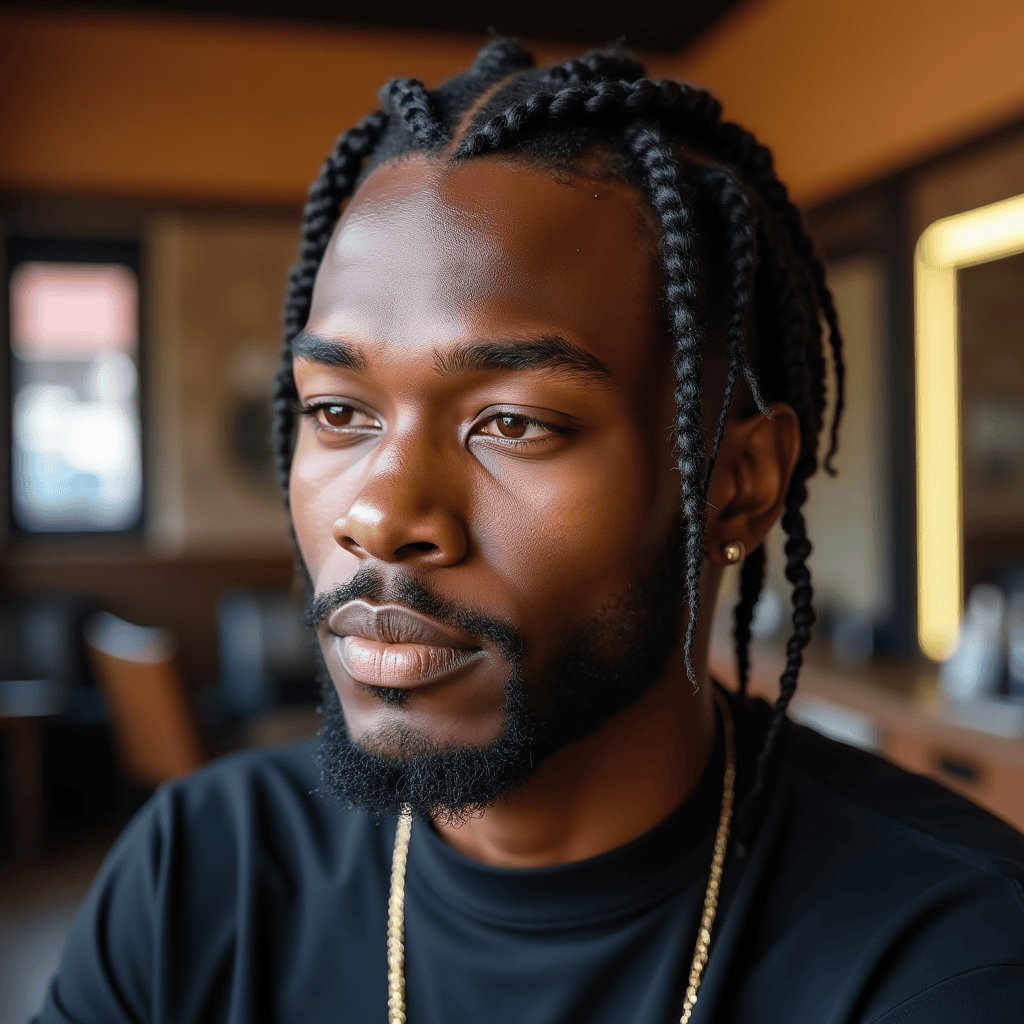
A taper fade keeps the braids dominant while quietly cleaning the edges. Hair shortens gradually around the temples and neckline, but most of the sides remain intact, so the transition feels restrained rather than dramatic. The box braids can fall forward, sideways, or backward depending on their length. This is one of those box braid hairstyle ideas that looks equally comfortable with a hoodie or a fitted blazer.
Round and square faces often respond well to the slightly tighter sides because the braid volume stays concentrated higher on the head. Ask for “box braids on top with a soft taper only at the temples and neckline.” The haircut is forgiving, but the fade will start losing definition before the braids need to come out. That means you may need a quick barber cleanup between braid appointments if you want the silhouette to stay sharp.
7. Box Braids With a Low Fade
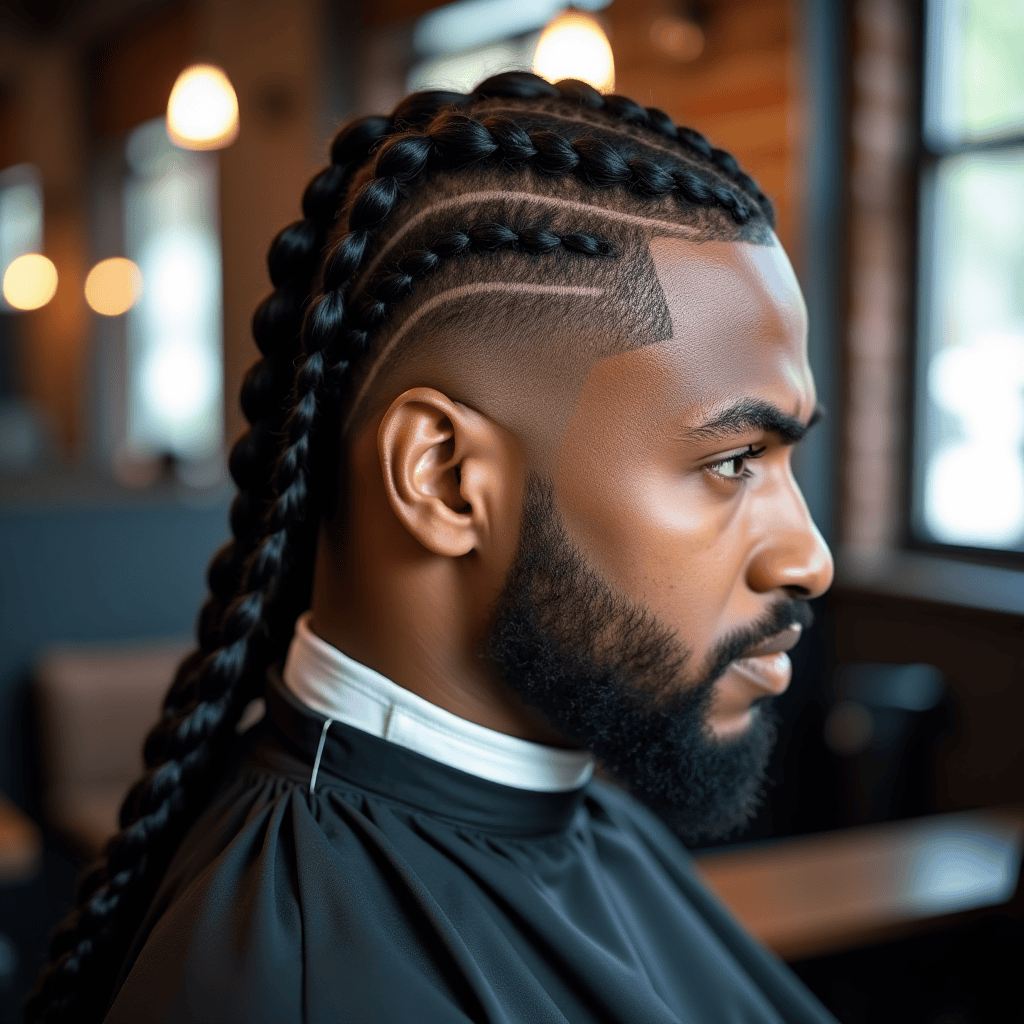
The low fade begins close to the ears and leaves more hair through the upper sides, which keeps the contrast controlled. Box braids rise above that clean lower border while the remaining side volume prevents the top from looking disconnected. The shape is especially strong from profile view because you can see the gradual transition from bare lower edge to fuller braided crown. It feels neat without turning the fade into the main feature.
Men easing into faded box braid hairstyle ideas should start here before trying a high fade. Ask the barber for “a low fade that stays under the braid line and keeps some weight through the upper sides.” The look works with most face shapes, but men with narrow faces should avoid taking the fade too high because extra height on top can exaggerate length. Keeping the fade fresh also means more regular clipper appointments.
8. Box Braids With a High Fade
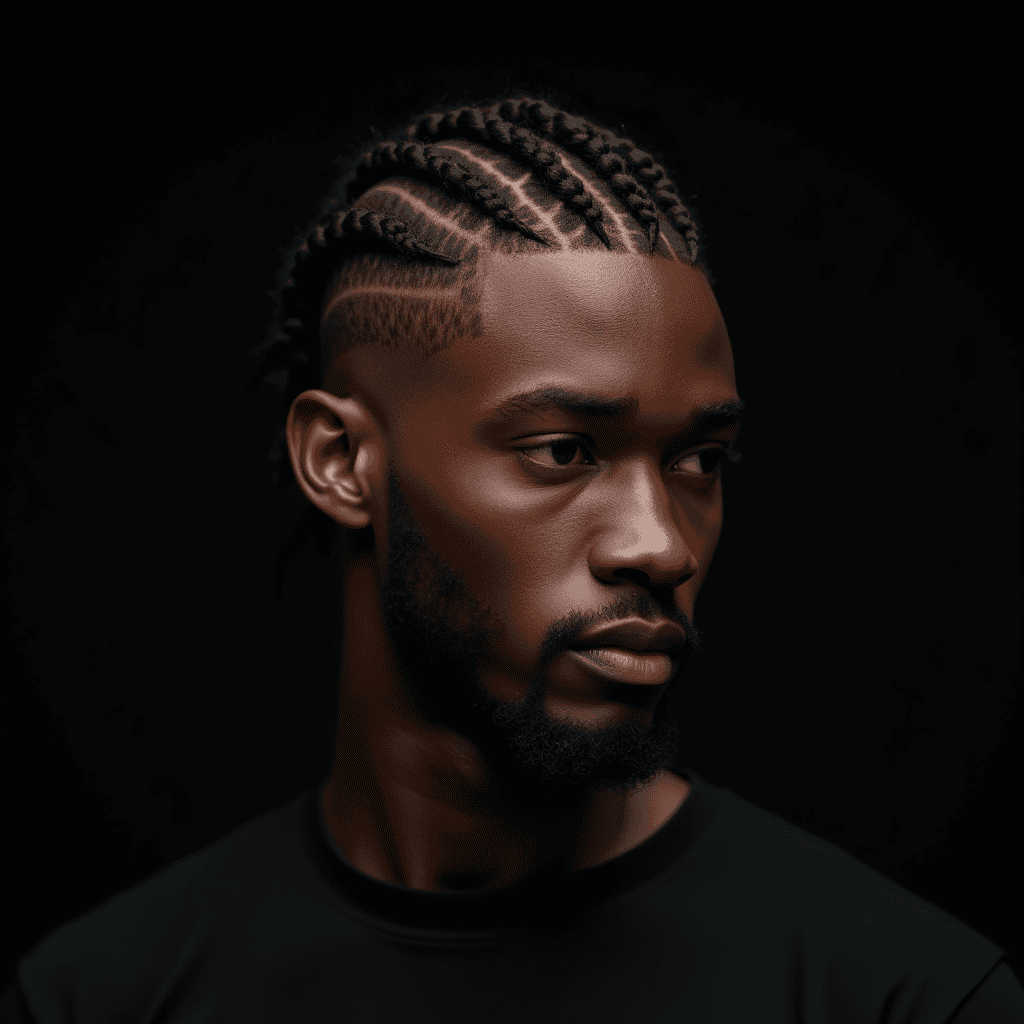
A high fade removes far more side volume and leaves the braided section sitting prominently on top. The contrast is obvious, especially when medium or longer braids fall over a closely clipped side panel. From the front, the hairstyle has height and width through the braid area while the temples remain tight. This is a stronger statement than a taper and looks particularly good when the top sections are perfectly aligned.
Choose this if you like sharp barbered shapes and do not mind frequent edge maintenance. Tell your barber, “Take the fade high but leave enough braided coverage on top so the shape doesn’t look too narrow.” A high fade makes box braid hairstyle ideas feel more modern, though it gives you less flexibility if you later decide to grow the sides back. The contrast can also become uneven quickly once the short hair begins growing out.
9. Box Braids With an Undercut
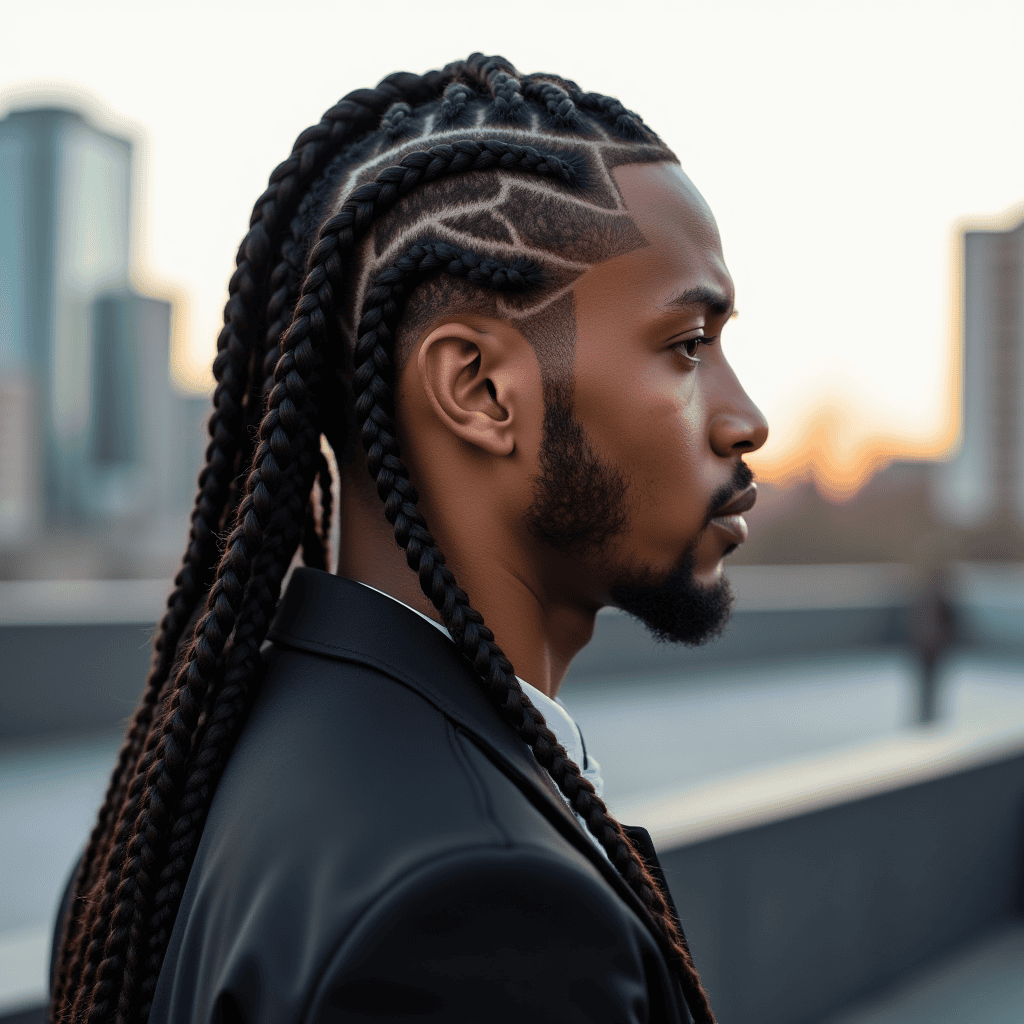
An undercut gives box braids a harder separation than a fade. Instead of gradually blending shorter hair into the top, the sides and back stay uniformly short beneath a clearly defined braided section. Longer braids can hang down and partially cover the undercut, then reveal it when pulled into a ponytail or bun. That hidden-versus-exposed contrast is the reason the style works.
This suits men who like changing the silhouette during the day without changing the actual braids. Ask for “a clean undercut beneath the braided section with enough top length to pull everything back.” It is one of the bolder box braid hairstyle ideas, and growing it out later can create an awkward stage because the side hair starts from a much shorter length. If you constantly switch between loose and tied styles, though, the undercut gives you two distinct looks in one haircut.
10. Box Braids With a Temple Fade
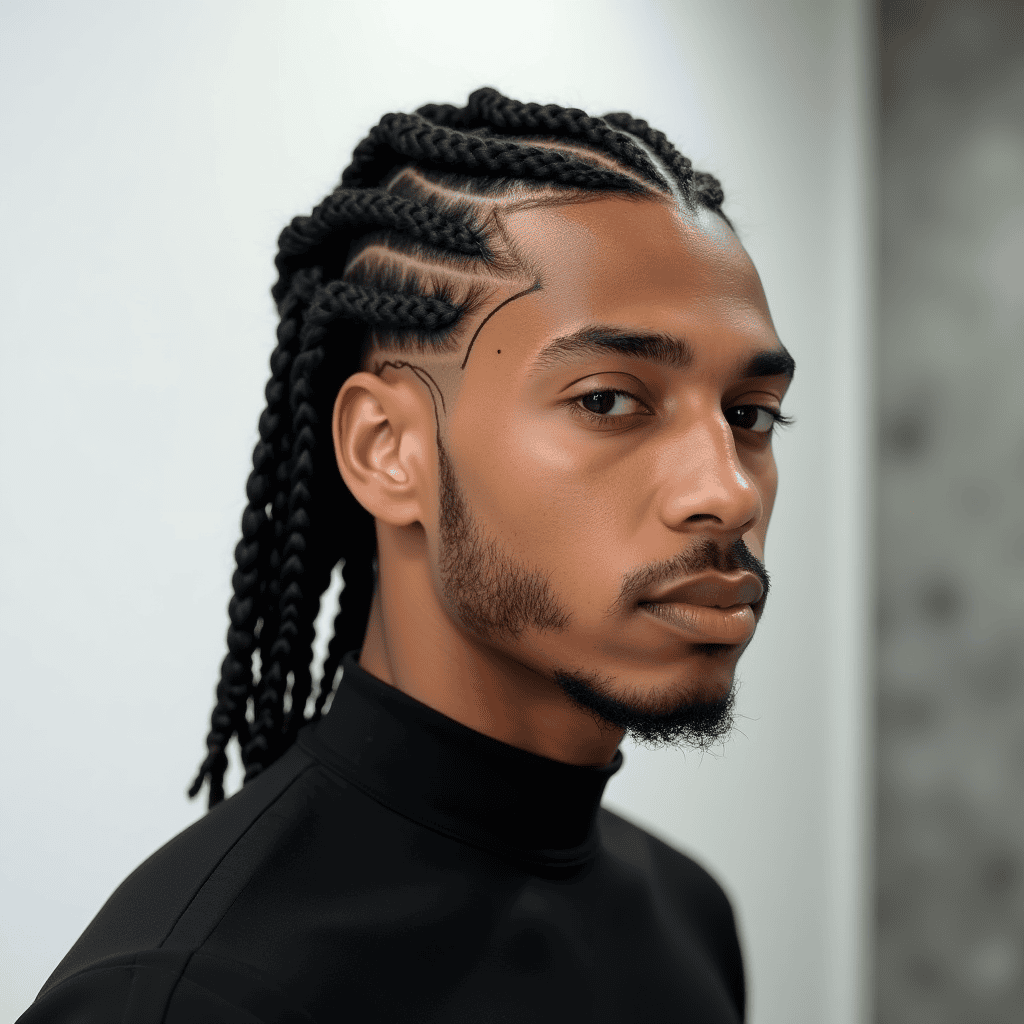
A temple fade cleans only the front corners of the hairstyle, leaving most of the side and back length untouched. The box braids begin behind a crisp hairline and continue across the head without the dramatic side exposure of a high fade. From straight on, the temple area looks controlled and precise while the rest of the hairstyle keeps a fuller natural shape. It is a small change, but a useful one.
Men who want braided hair without losing much side length should consider this before a larger fade. Ask for “a tight temple fade that cleans the corners without taking the sides down.” Because the clipped area is small, it works with short or long box braid hairstyle ideas and is relatively easy to grow out. The downside is that temple regrowth can become visible fast, so the clean front edge may need attention before the braid pattern does.
Geometric Box Braid Hairstyle Ideas Built Around Parting
Parting can change box braids as much as length. A traditional grid feels calm and orderly, while triangles, zigzags, and offset rows bring more movement before the braids even begin. These box braid hairstyle ideas suit men who care about what the hairstyle looks like from above and from the back, not only from the front.
11. Center-Part Box Braids
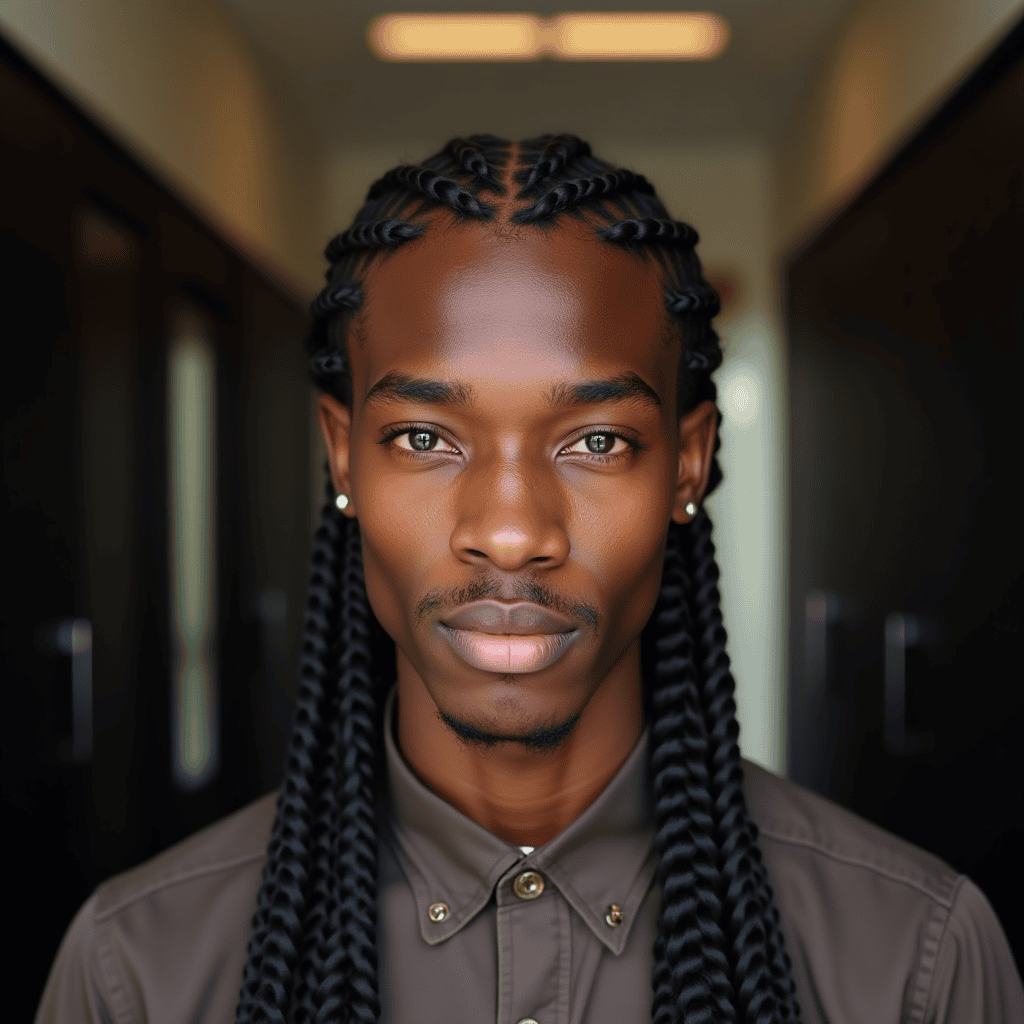
Center-part box braids create one clean dividing line down the middle with equal braid weight on both sides. The sections behind the part can stay traditionally square, giving the whole hairstyle a symmetrical, almost architectural balance. Longer braids fall beside the cheekbones while shorter versions frame the forehead and temples. The simplicity makes clothing choices easy because the hair is not competing with patterns or accessories.
Oval and square faces usually carry the symmetry naturally, while very long faces may look better with slightly more side volume. Tell your stylist, “Build the box sections around a straight center part and keep equal weight on both sides.” This is one of the easiest box braid hairstyle ideas to restyle into a half-up look or ponytail. The catch is that any crookedness in the center line becomes obvious, so accurate sectioning matters.
12. Side-Part Box Braids
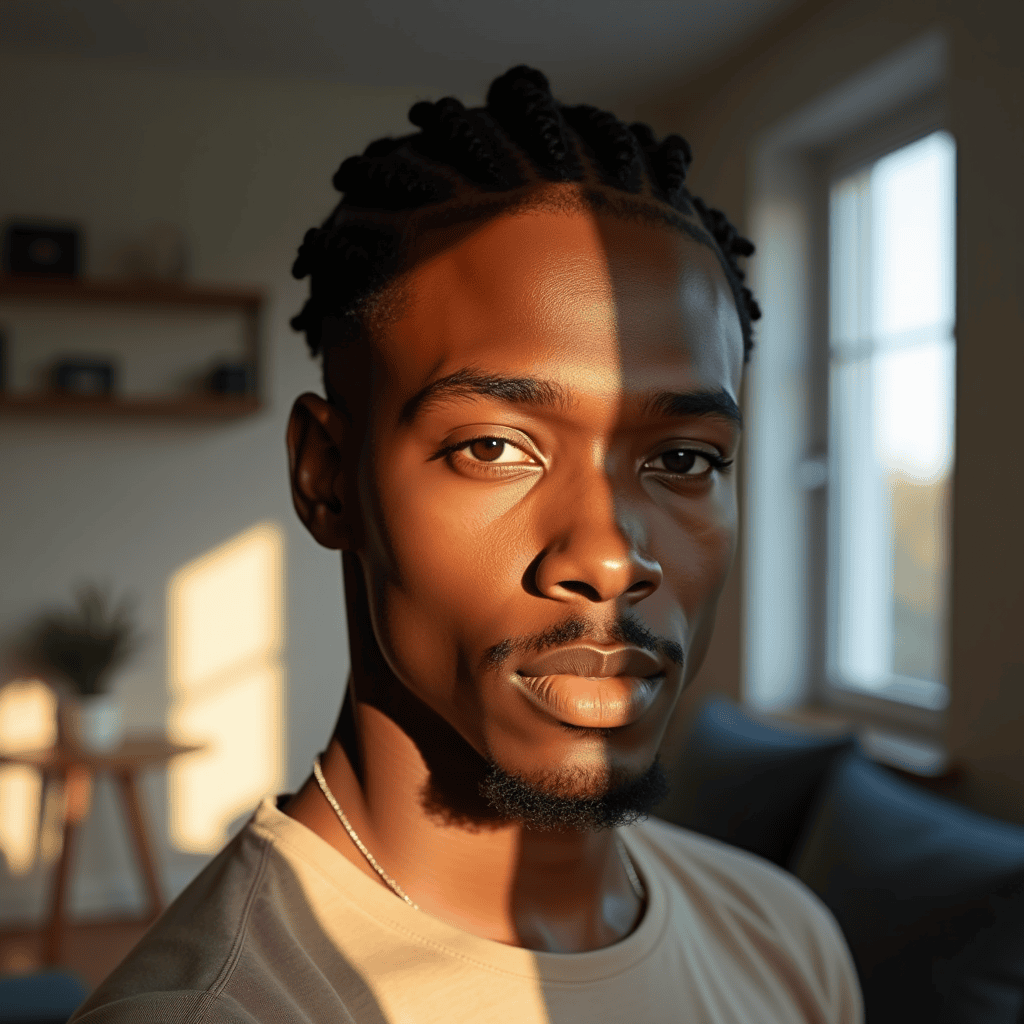
A side part moves the braid weight away from perfect symmetry and creates a stronger diagonal line across the front. One side carries more visible braids while the other exposes a little more scalp and facial structure. With medium or long braids, the heavier side can sweep across the forehead or fall near the cheek. The result feels looser than a center part even when every section is carefully measured.
This shape can soften square faces and bring useful width to longer faces because the braids do not fall in identical vertical lines. Ask for “a defined side part with box sections arranged so the heavier side falls naturally across the face.” Side-part box braid hairstyle ideas also pair well with a blazer or open-collar shirt because the asymmetry keeps formal clothes from feeling too stiff. The only irritation is that the heavier side may need occasional repositioning if the braids keep falling forward.
13. Triangle-Part Box Braids
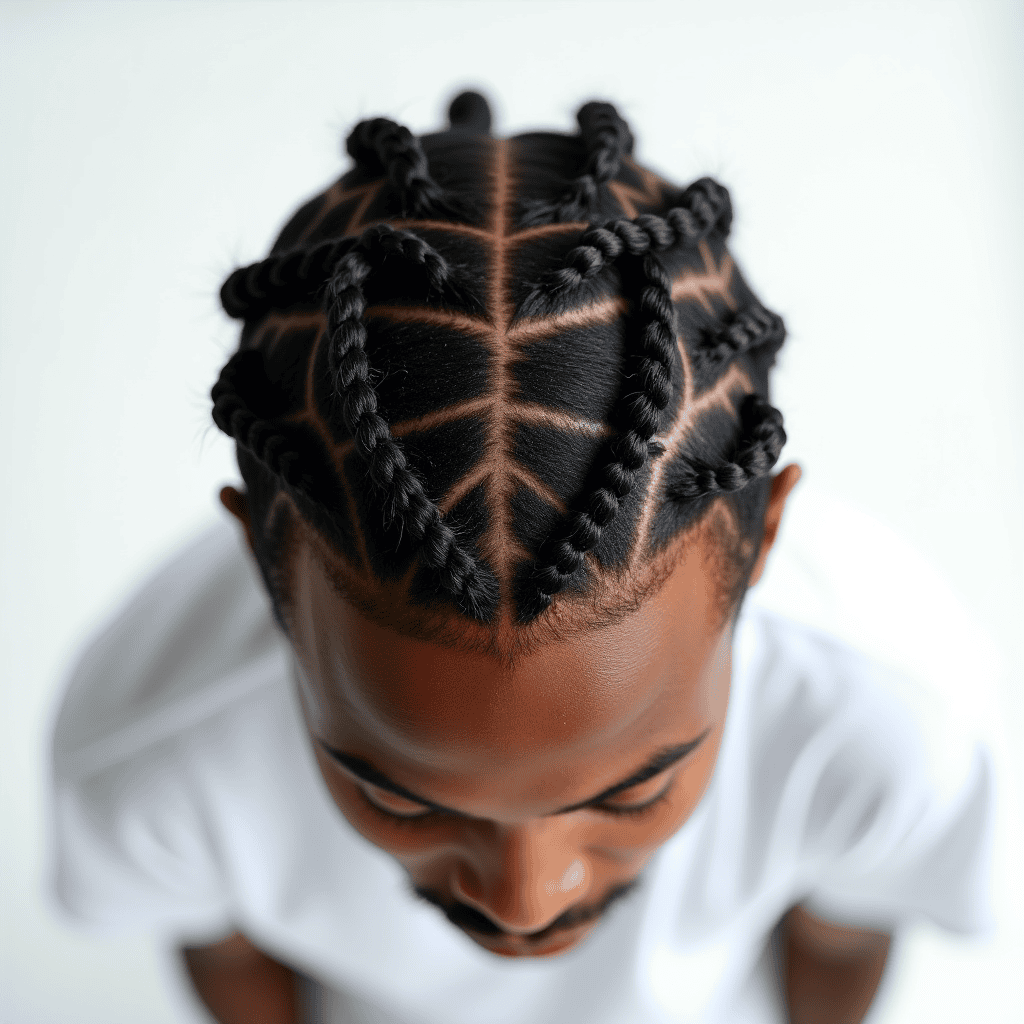
Triangle-part braids swap the normal square grid for sharp triangular sections that meet at clean points across the scalp. The individual braids may look conventional once they leave the root, but the pattern underneath immediately separates this style from standard box braids. The strongest versions use consistent triangle sizes so the geometry appears intentional from every direction. It becomes especially noticeable when the braids are pulled back.
This option suits someone who already likes box braids and wants a visible change without adding length or color. Tell the braider, “Use uniform triangle sections with clean points and medium braids so the parting stays visible.” Geometric box braid hairstyle ideas demand careful sectioning, so rushed work shows quickly. Triangle parts also tend to look busiest on very short braids, making medium length a safer balance for most men.
14. Zigzag-Part Box Braids
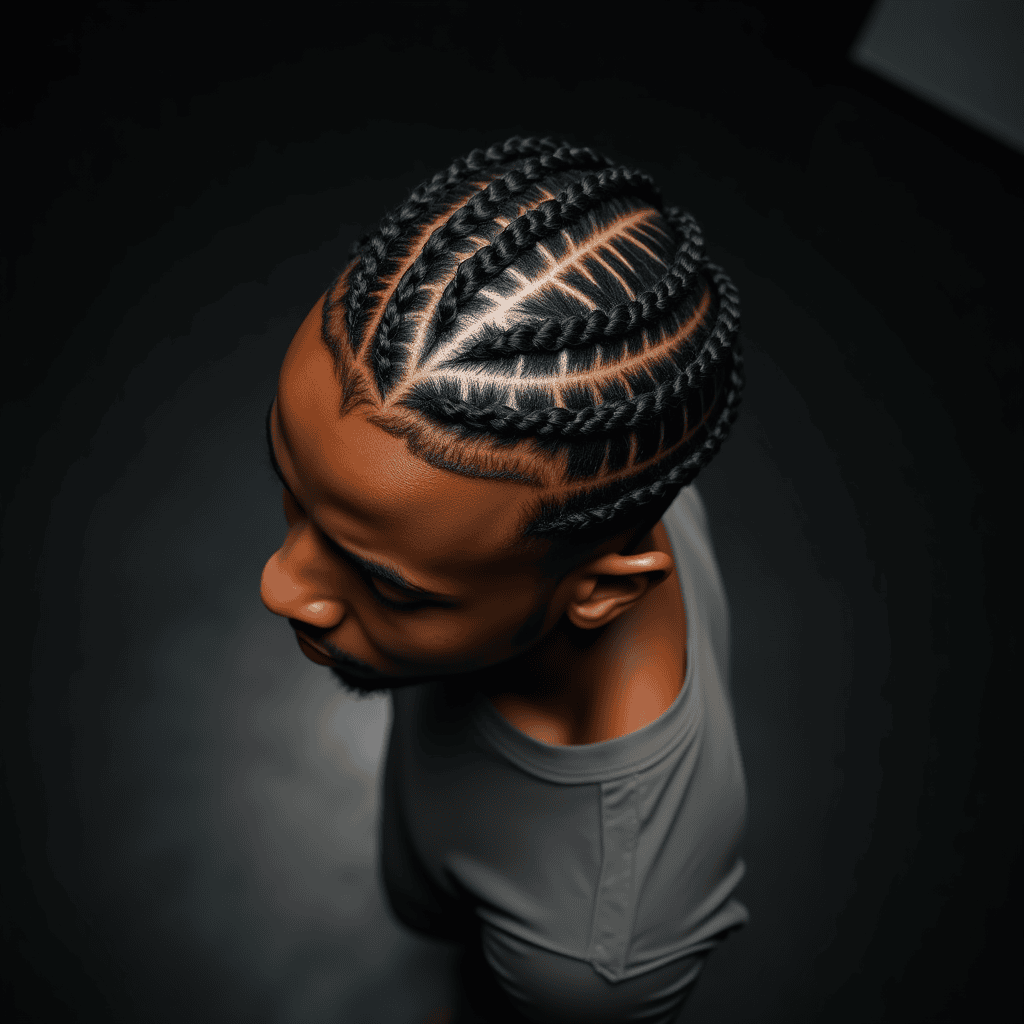
Zigzag parting creates movement across the scalp before the braids have moved at all. Instead of straight dividing lines, the sections meet along angular paths that shift left and right across the head. Medium braids let enough scalp show for the pattern to remain obvious without making the look too complicated. Seen from above, it has far more energy than a conventional square layout.
Choose this when the scalp design matters as much as the braids themselves. Ask for “clean zigzag part lines between medium box braids, with the pattern visible from the top and back.” This is not the quietest of the box braid hairstyle ideas, and it can clash with an already busy haircut design or heavy accessories. It also relies on accurate parting, so a skilled braider matters more here than with a simple straight grid.
15. Brick-Lay Box Braids
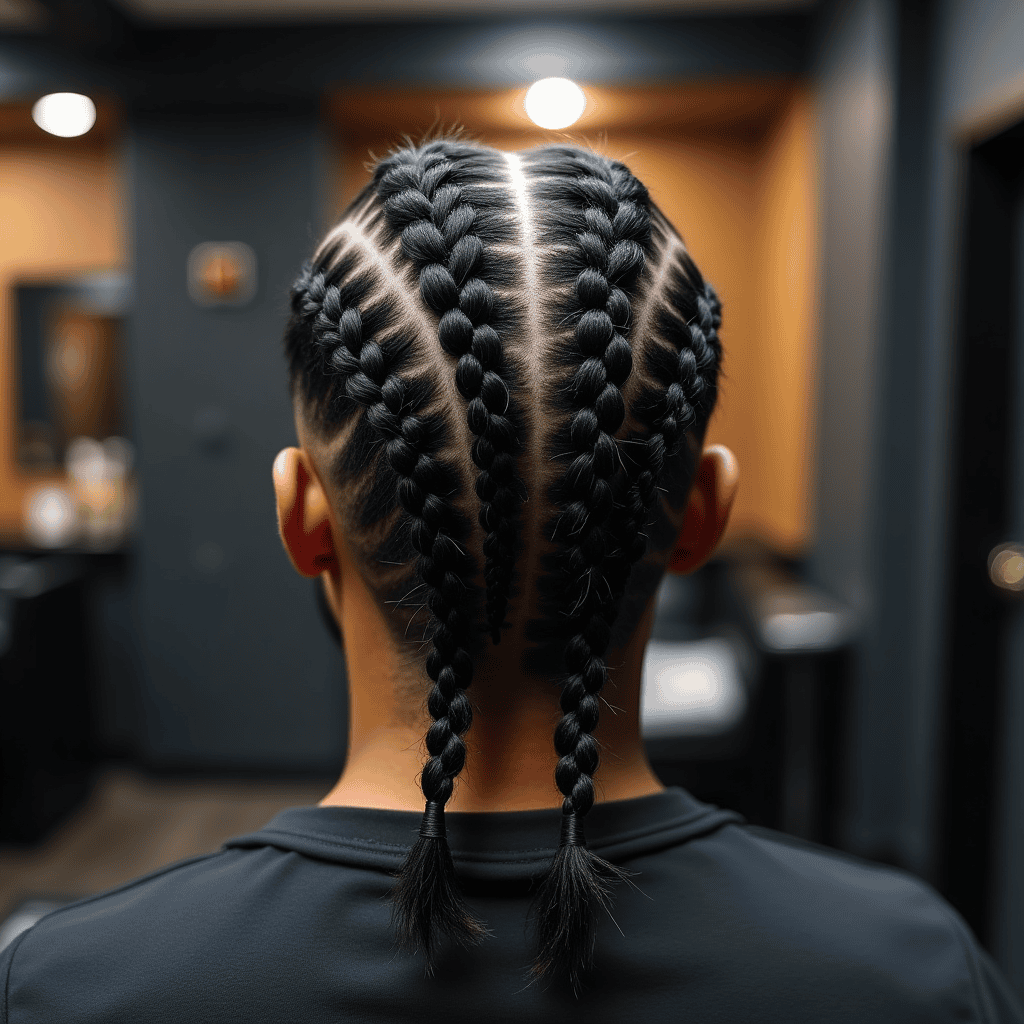
Brick-lay box braids offset each row so the sections sit between the boxes above and below them rather than lining up in straight columns. The effect is subtle from the front but becomes obvious across the crown and back, where the pattern resembles staggered brickwork. It also helps the braids fall with fewer obvious scalp channels, giving the style a slightly fuller appearance. That makes it useful for men who want visible sectioning without long straight part lines.
Ask for “staggered box sections in a brick-lay pattern so each row sits between the one above it.” This approach works particularly well with medium-density hair and mid-length box braid hairstyle ideas because the offset pattern distributes the braid positions evenly. It is less dramatic than triangles or zigzags, which some men will consider a benefit and others will find too subtle. Once the roots grow, the staggered structure also becomes less obvious.
Longer Box Braid Hairstyle Ideas With More Movement
Length changes how braids behave. Once they pass the jaw or shoulders, they can be swept, tied, layered over clothing, or moved completely away from the face. These versions of box braid hairstyles need more night protection and a little more patience, but they give you far more styling range.
16. Long Box Braids
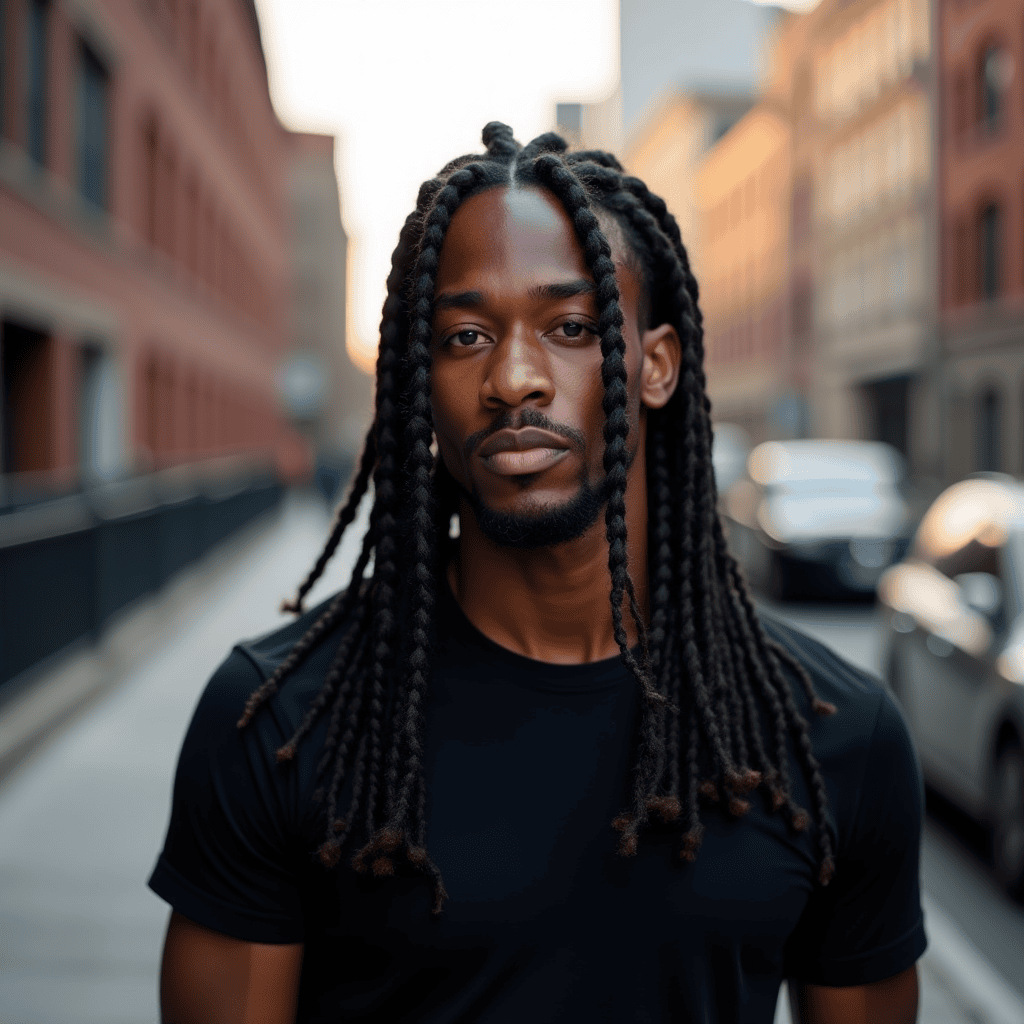
Long box braids create an unmistakable vertical shape, with individual braids falling past the shoulders and sometimes toward the chest. The extra length gives each braid more weight, which makes the style hang straighter and move in broad, controlled swings. Medium-sized sections keep the result from feeling overly dense. Worn loose over a dark tee or jacket, the lines become part of the outfit.
Men who want multiple styling options get more from this length than from short box braid hairstyle ideas. Ask your stylist for “medium long box braids with enough length to tie high or low without pulling at the front sections.” The obvious tradeoff is weight and friction against clothing, especially around hoodie collars and coat shoulders. If you hate rearranging your hair throughout the day, stopping closer to shoulder length may be smarter.
17. Chin-Length Box Braid Bob
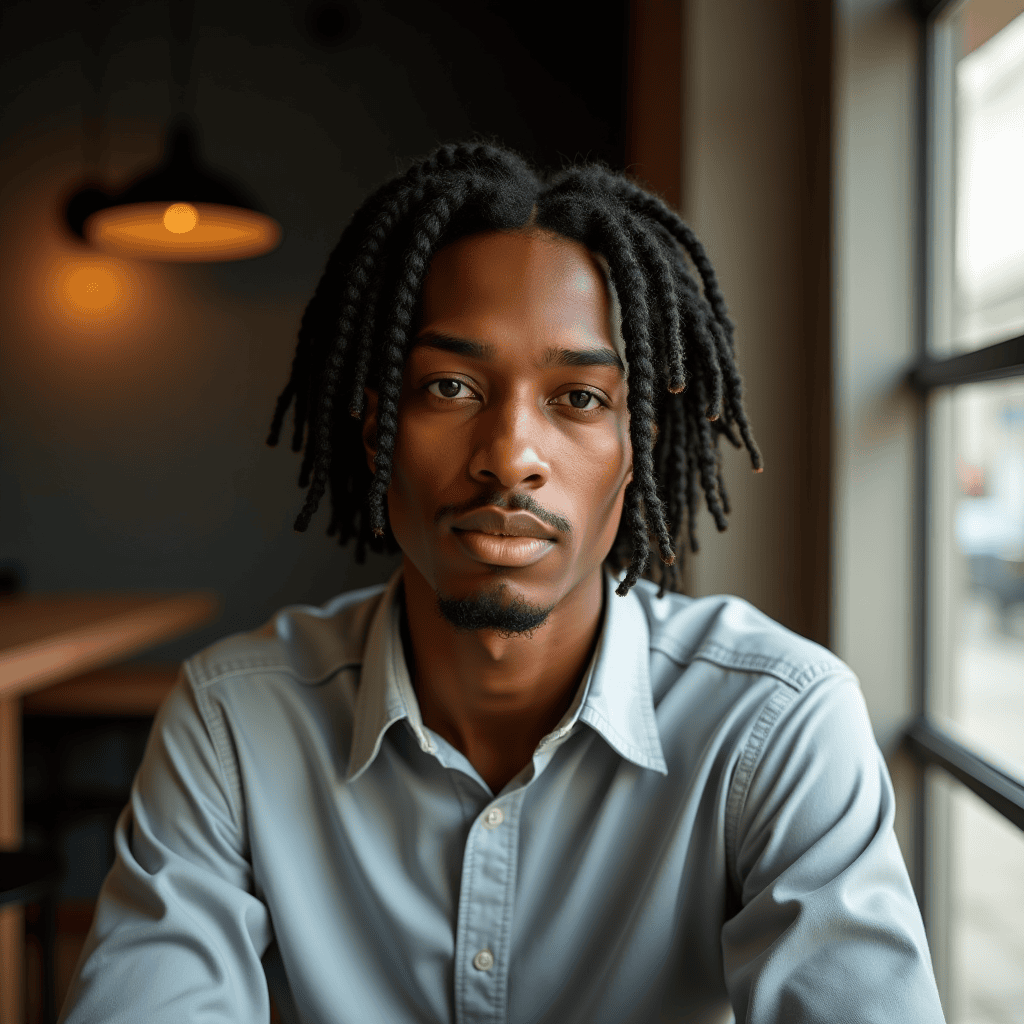
A chin-length braided shape creates a blunt visual boundary around the jaw without needing actual blunt-cut ends. The braids finish within a narrow length range, producing a compact frame that moves around the cheeks and lower face. A center part makes it more symmetrical, while a slight side part keeps the outline relaxed. The result feels fashion-aware without needing accessories or color.
This works particularly well for men who like the movement of medium braids but do not want anything touching the shoulders. Ask for “box braids that finish around chin length with a controlled, even overall shape.” Compared with many longer box braid hairstyle ideas, the length is easier around jackets and high collars. The main drawback is that ends sitting at the jaw can swing forward while eating, working at a desk, or training, so a small tie may still be useful.
18. Box Braids With Beads
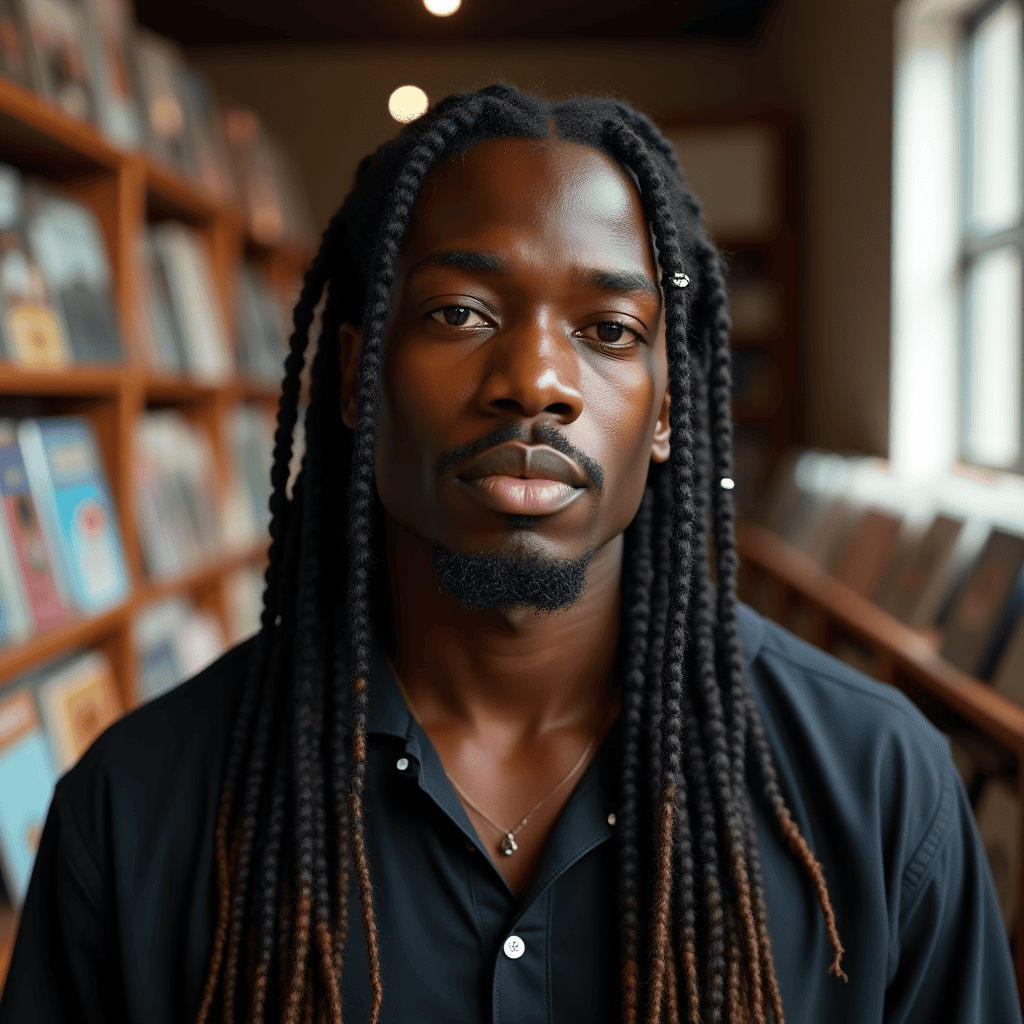
Beads add weight, sound, and visual punctuation to the ends of box braids. A restrained version uses only a few pieces placed on selected front or side braids rather than loading every strand. Wood-toned, matte, or simple metallic-looking beads can bring contrast without overwhelming the braid pattern. The key is spacing them intentionally so they look integrated rather than added at random.
Men who already wear jewelry or accessories confidently tend to carry this style better than someone looking for an invisible change. Tell the braider, “Keep the box braids clean and add a small number of simple beads to selected ends.” Accessorized box braid hairstyle ideas can feel personal, but extra weight near the ends may become annoying during workouts or sleep. If you wear over-ear headphones regularly, test bead placement before committing to a lot of them.
19. Box Braids With Subtle Color Extensions
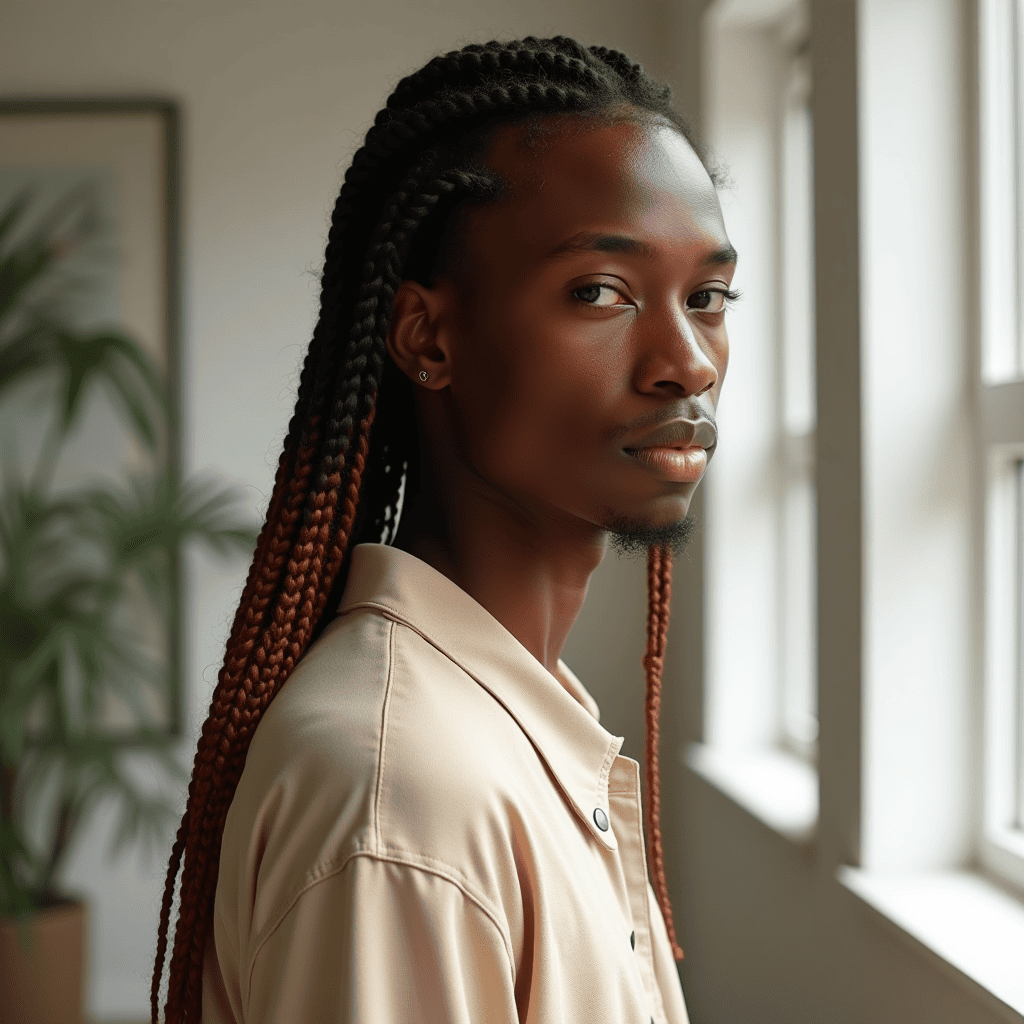
Subtle color extensions change the braid lengths without turning the roots into a block of bright color. Dark brown, muted copper, or another restrained shade can appear through selected braids or gradually toward the ends, creating contrast that becomes clearer as the hair moves. Keeping the base close to the natural hair color makes the transition feel deliberate. The effect is strongest on medium and longer braids.
If your wardrobe stays mostly neutral, a small amount of braid color can carry more visual interest than another accessory. Ask for “natural-looking color blended into selected box braids, with most of the root area staying close to my base color.” Color-based box braid hairstyle ideas are easy to overdo, especially when several shades compete at once. Bring a reference for the tone you want because verbal descriptions like “brown” or “copper” can mean wildly different things to different people.
20. Box Braids With Loose Ends
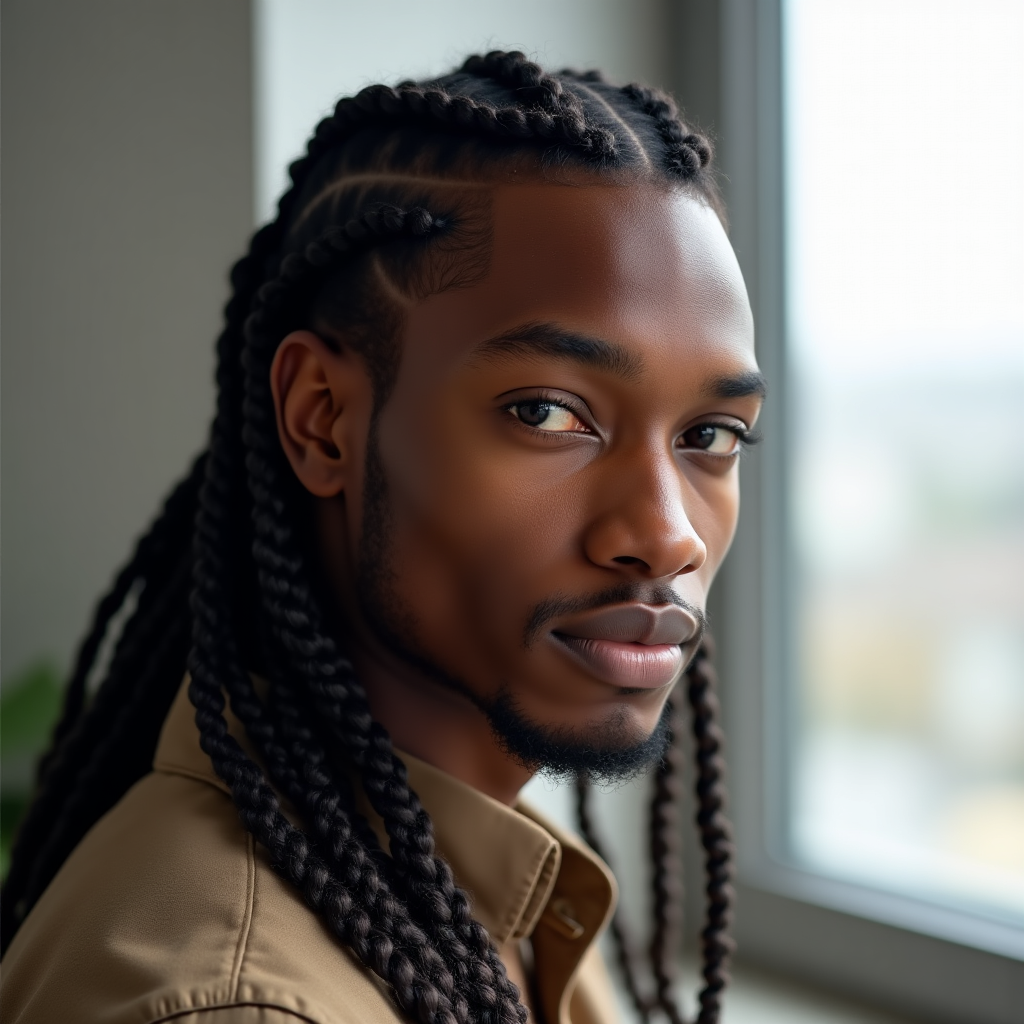
Loose-end box braids stop the braided structure before the final portion of the hair, allowing natural curls or textured ends to remain visible. The top and middle lengths stay organized into clear box braids, then soften near the bottom with a less rigid finish. That contrast brings more movement and reduces the straight, rope-like appearance of fully braided ends. It can look especially good around shoulder length.
This is best for men who want a softer finish and do not mind the ends behaving differently from the braided sections. Ask for “box braids with a controlled amount of natural texture left loose at the ends.” Among relaxed box braid hairstyle ideas, this one needs a little more attention because the loose texture can dry, tangle, or lose definition sooner than fully braided ends. Anyone wanting maximum consistency from root to tip should stay with a complete braid.
Tied and Pulled-Back Box Braid Hairstyle Ideas
Once the braids have enough length, tying them changes the hairstyle more than another parting pattern ever could. Pulling hair away from the face exposes the hairline, jaw, and sides, while leaving a few braids loose can keep the finish from feeling severe. These looks are practical for work, training, and warmer weather.
21. Half-Up Box Braids
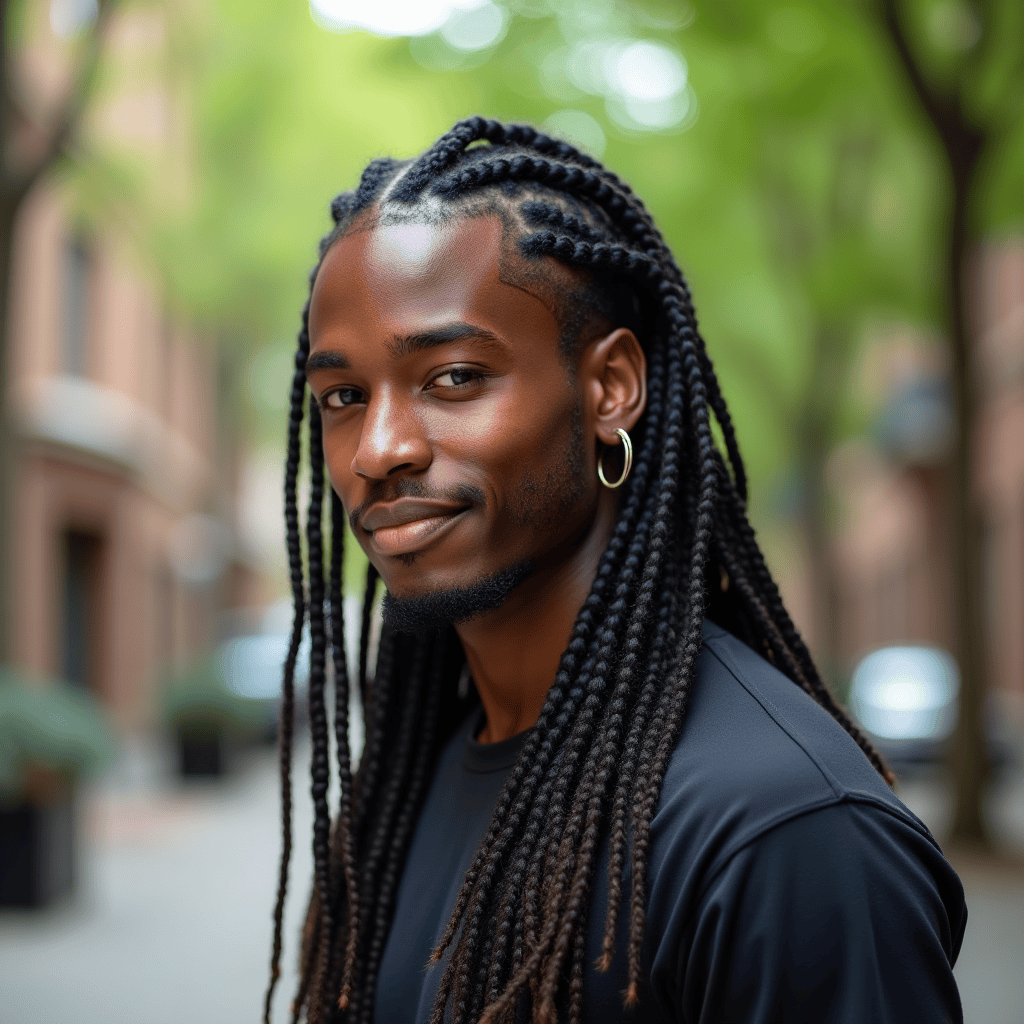
The half-up style gathers the upper section of the braids at the crown while leaving the lower half loose. From the front, it opens the forehead and lifts some weight away from the cheeks; from the back, you still get the movement of hanging braids. The tied section can sit low and relaxed rather than forming a tight knot. That balance keeps the hairstyle casual.
This is one of the more adaptable box braid hairstyle ideas for men who want to switch between loose and tied hair without changing the installation. Ask for enough braid length to gather the crown comfortably, then secure it without pulling hard at the hairline. The look suits most face shapes, though men with very long faces may prefer a lower tie rather than extra height on top. Avoid making the top section too tight simply to keep every small braid perfectly flat.
22. Box Braid Ponytail
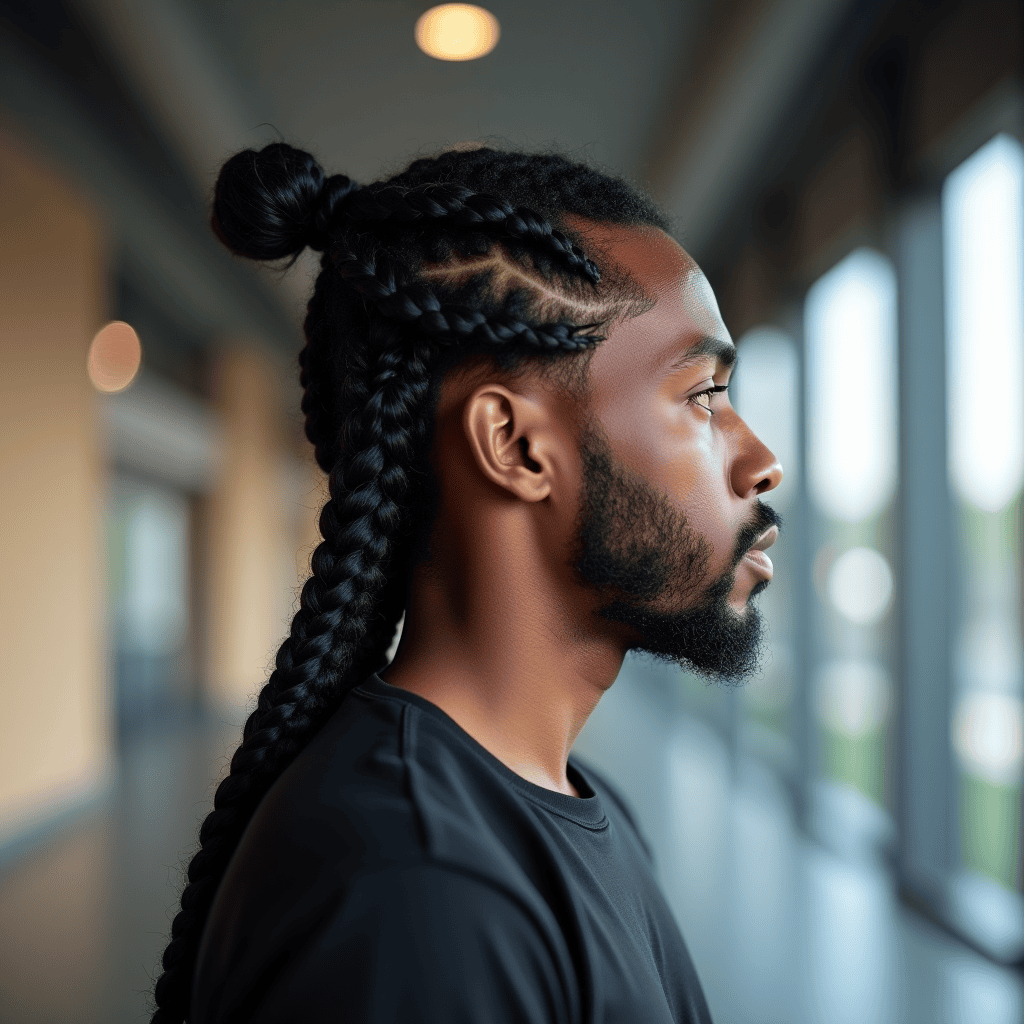
A box braid ponytail gathers most or all of the length behind the head and lets the braids fall together as one controlled bundle. A low ponytail feels understated and works easily with jackets, while a higher position creates more lift and exposes the sides. The square parts remain visible around the front and crown, so the style still looks structured even when the braids are pulled away.
Long-haired men who need a practical version of box braid hairstyle ideas should keep this option in mind. Ask your stylist to make sure the front sections can move backward comfortably, then use a soft tie rather than forcing a tight hold. Ponytails work well for commuting, training, or wearing collared clothing, but repeatedly pulling the same sections back hard can make the style uncomfortable. Change the tie position and keep the tension modest.
23. Box Braid Man Bun
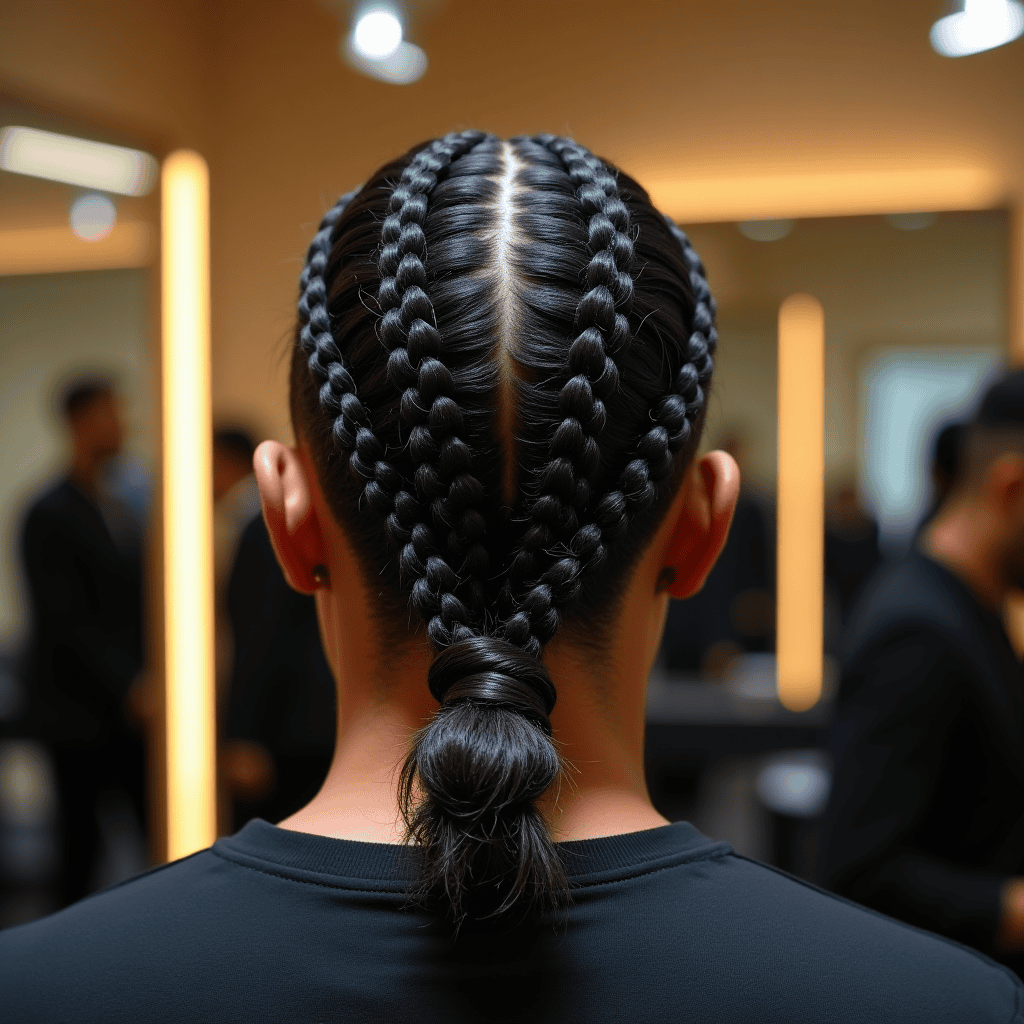
A box braid man bun wraps longer braids into a compact shape at the back or upper crown. The individual braid texture remains visible through the bun, which keeps it from looking like a smooth knot. A few front pieces can stay loose if you want softer framing, while pulling everything back creates a sharper outline. The style works best when the bun looks intentionally formed rather than oversized.
Tell your stylist you want enough length for “a comfortable braid bun that can sit at the back without putting heavy tension on the front.” Men with strong jawlines often like how fully pulled-back box braid hairstyle ideas expose the face, beard, and neckline. The drawback is weight: a large bundle of long braids can feel heavier when concentrated in one spot than when worn loose. A lower bun is usually easier for extended wear.
24. Pulled-Back Braids With Two Front Pieces
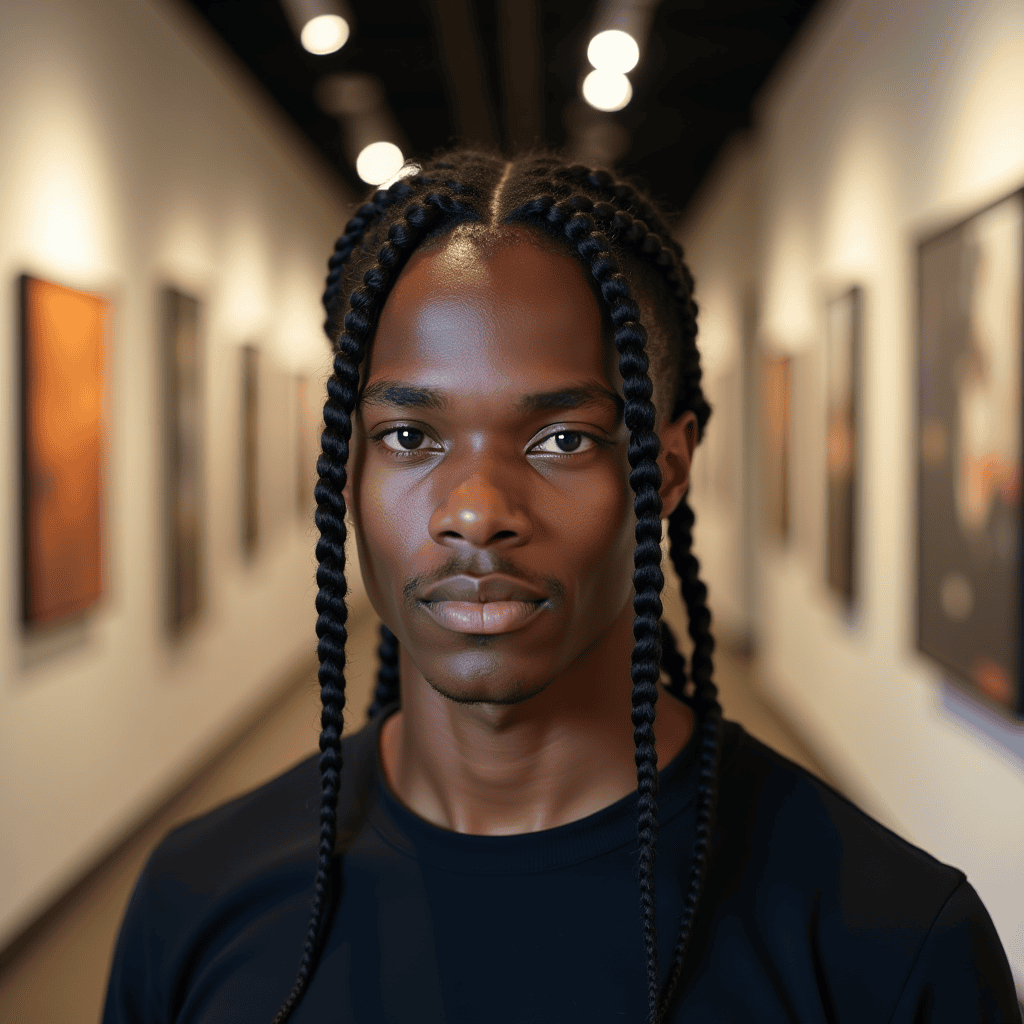
This style pulls most of the box braids backward while deliberately leaving two braids loose near the front. Those face-framing pieces break up the clean pulled-back shape and add movement beside the cheeks. The contrast works best when the loose braids are similar in thickness and length rather than randomly selected. From the front, the look feels relaxed; from the side, the tied shape keeps everything controlled.
This version suits men who find a full ponytail or bun slightly too severe. Ask for “two clean face-framing braids left loose while the rest can tie comfortably at the back.” It is one of the easier box braid hairstyle ideas to pair with smarter clothing because the hair stays mostly controlled around collars. The front pieces can become annoying during sports or windy weather, though, so they may need to join the rest when practicality matters more than the look.
25. Crown-Tied Box Braids
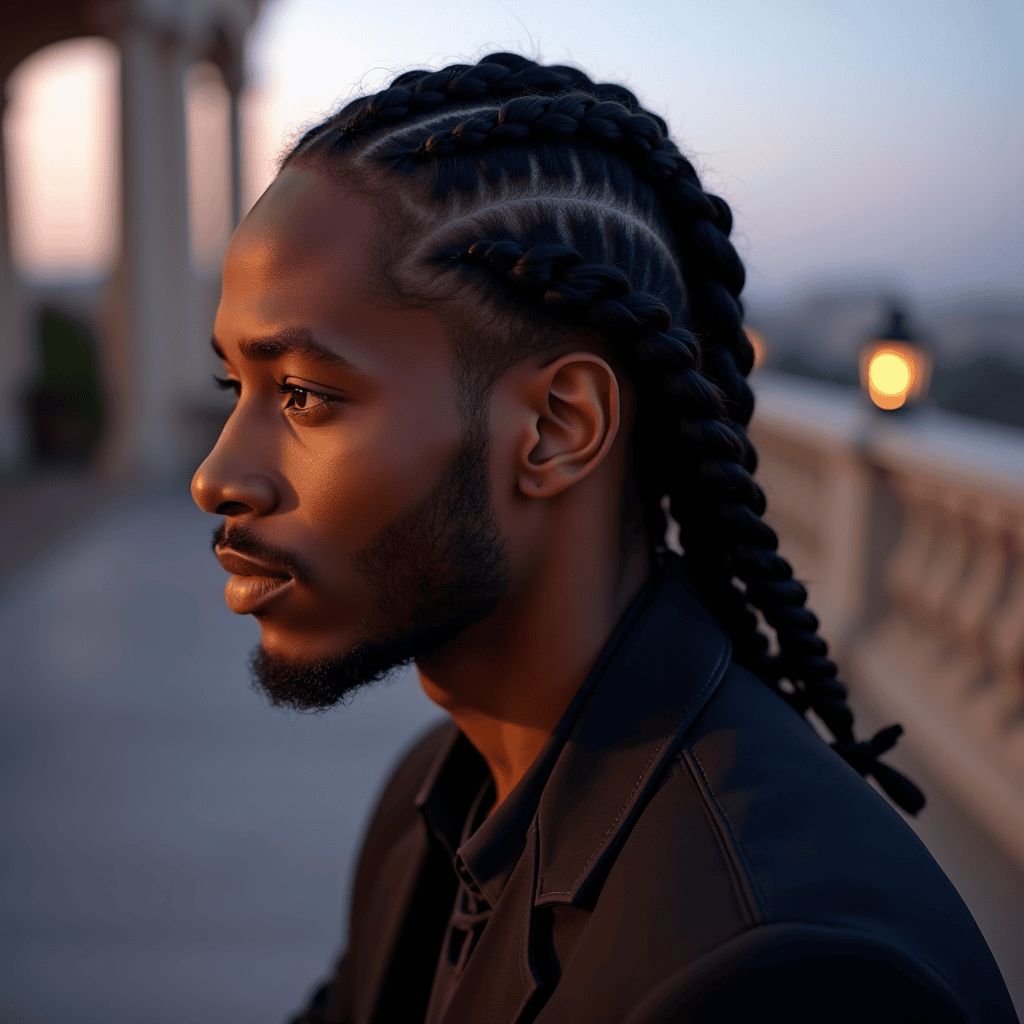
Crown-tied box braids gather selected lengths around the upper head to create a controlled circular shape while allowing some braids to remain free. The tied portion should follow the head rather than rising into a tall knot, which gives the style a broader, more deliberate silhouette. From different angles, the braid direction becomes part of the design. It is a fitting final step for someone who already understands how their braids behave.
This is among the more advanced box braid hairstyle ideas because it depends on adequate length and balanced placement. Ask your stylist, “Show me a crown-tied finish that sits comfortably around the upper head without pulling the front sections.” It works well for shoots, evenings out, or occasions where you want the hairstyle to read as intentional from every angle. For ordinary mornings, though, a basic ponytail takes far less effort.
How to Choose the Right Box Braid Hairstyle
Choosing between these box braid hairstyle ideas gets easier once you stop judging them only by the finished photo. Length, density, parting, lifestyle, and the amount of barber maintenance you are willing to accept matter more than whether a style looked good on someone else’s head.
Start With Your Actual Hair Length and Density
Shorter natural hair limits how much braid can be formed securely without extra help, while longer hair gives the stylist more room to create ponytails, buns, and shoulder-length shapes. Density matters too. Larger sections on lower-density hair can reveal more scalp than expected, while tiny sections on very dense hair can produce a heavier overall result.
Bring two or three reference images that show both the front and the scalp pattern. Instead of asking only for “box braids,” say whether you want short or long braids, square or geometric parts, and a full side or faded side. Clear visual instructions save far more trouble than trying to fix proportions after the braiding is finished.
Match the Shape to Your Face
Round faces often benefit from a little height or cleaner sides, which is why a taper or controlled top-heavy shape can work well. Longer faces usually need less vertical emphasis, making chin-length or fuller side shapes easier to balance. Square faces can handle both symmetry and stronger geometric sectioning.
Do not treat face-shape rules as laws. Hair density, forehead proportion, beard shape, and even eyewear can change how the braids frame you. If you are unsure, start with medium box braids and a moderate length before jumping into a high fade or dramatically long installation.
Think About What You Wear Most
Long braids can sit beautifully over a T-shirt and become irritating inside a high coat collar. Short versions stay out of the way but cannot create a full bun or ponytail. If you wear suits, uniforms, helmets, headphones, or gym gear regularly, include those details in the decision rather than treating the hairstyle separately from the rest of your week.
For a wedding, shoot, interview, or formal event, avoid experimenting with an unfamiliar braid size at the last possible moment. Give yourself enough time to see how the braids settle and how you prefer wearing them with the clothes you have planned. A hairstyle can look excellent by itself and still fight with a particular collar, hat, or neckline.
Know What to Say at the Appointment
Useful instructions are specific without trying to micromanage every movement of the stylist’s hands. Describe the braid width, target length, parting shape, whether you want the sides full or faded, and whether the finished braids must tie back. Mention any area where you do not want unnecessary tension.
A sentence such as “I want medium box sections, jaw-length braids, a soft temple taper, and enough looseness at the hairline for comfortable movement” gives a professional far more direction than a vague request for trendy braids. Bring clear references, but expect the stylist to adjust the proportions to your actual hair.
Where Box Braid Hairstyles Can Go Wrong
The weak versions of men’s box braid hairstyle ideas usually fail for practical reasons rather than fashion reasons. Excess tension, mismatched proportions, poor parting, or choosing more length than your routine can handle will bother you long after the excitement of the appointment wears off.
Going Too Tight for a Cleaner Look
Sharper does not mean tighter. Clean parting comes from careful sectioning and controlled braiding, not from pulling the roots as hard as possible. If the style feels excessively uncomfortable, tell the braider during the appointment instead of assuming discomfort is the price of neat hair.
A polished braid pattern should still allow normal facial movement and everyday comfort. Persistent scalp irritation or unusual discomfort is a reason to stop treating the issue as a styling problem and speak with an appropriate professional.
Choosing a Length You Will Never Wear Loose
Long braids look impressive in photographs, but they are a poor choice if you immediately tie them up every morning because the length annoys you. Start nearer the shoulders if you have never lived with long braided hair before. You can always choose more length next time.
The same logic applies in reverse. Men who constantly want to pull short braids into a bun may be happier waiting for more length rather than forcing an awkward tied shape.
Combining Too Many Features
A high fade, zigzag parts, extra-long braids, multiple colors, and heavy accessories can each work individually. Put everything into one hairstyle and the eye no longer knows where to settle. Pick one or two strong ideas and let the braid construction carry the rest.
The best box braid hairstyle ideas often have one obvious feature: exceptional length, clean geometry, a sharp fade, or an interesting tied shape. Restraint makes that feature easier to see.
Box Braid FAQs About Choosing a Style
Most questions before a first appointment come down to length, parting, and how dramatic the finished result will feel in everyday life. These answers cover the decisions that matter before anyone begins sectioning the hair.
What box braid hairstyle is best for men trying braids for the first time?
Medium-width, mid-length box braids are usually the easiest place to start. They show the square pattern clearly without creating the weight of very long braids or the commitment of micro sections. You can wear them loose, move them away from the face, and learn how your hair responds before choosing a more extreme version.
Do box braids look better short or long on men?
Neither length automatically looks better. Short braids emphasize the scalp pattern and facial structure, while long braids create more movement and offer ponytails, buns, and half-up styling. Choose according to your hair length, routine, clothing, and willingness to manage extra weight rather than treating length as a ranking.
What are the easiest box braid hairstyle ideas to maintain?
Short or medium box braids with straightforward square sections and no added accessories are usually easiest. A soft taper can keep the edges looking intentional, although the barbered areas may need attention before the braids do. More complicated parting, extra length, loose ends, and beads all add small maintenance demands.
Do box braids suit men with round faces?
They can. Braids that keep some height through the top or reduce bulk around the sides may create a more elongated outline, while very wide side-heavy shapes can emphasize facial width. A taper fade or medium braids directed slightly backward is a sensible starting point if you want a cleaner vertical shape.
Which parting pattern looks best with men’s box braids?
Traditional square parts are the safest choice because they look balanced from most angles and work with nearly every braid size. Triangle and zigzag sections make stronger statements, while brick-lay placement creates a subtler pattern. Choose based on how much scalp design you want visible rather than assuming the most complex parting looks best.
Can men with short hair get box braids?
It depends on how much usable length the braider has to work with and what finished style you want. Short natural hair may limit braid size and hold, while added hair can change the available options. A braider should examine your actual length and density before promising a particular reference-photo result.
Box Braid FAQs About Care and Styling
Once the braids are installed, daily habits determine whether they continue looking intentional or start becoming difficult to manage. Length and styling method make a noticeable difference in how much attention they need.
How long should men’s box braids be for a ponytail?
The braids need enough usable length to reach the chosen tie position without forcing the front sections backward. Shoulder-level braids often provide more flexibility than jaw-length versions, but head size and braid placement change the answer. Show your braider where you want the ponytail to sit before the installation begins.
Can box braids be worn with a fade?
Yes. Taper, low, high, and temple fades can all sit beside a braided top, but each creates a different amount of contrast. A taper preserves the most side hair, while a high fade creates the strongest separation. Remember that the clipped area usually needs maintenance sooner than the braids themselves.
Can I wear a hat over box braids?
That depends on braid volume, hat depth, and how the braids are arranged underneath. Short and medium styles are generally easier to fit than jumbo or tied-up braids. Avoid forcing a tight hat over a bulky style simply to make it fit, and bring any regularly worn work headgear into your planning before the appointment.
Are beads a good addition to men’s box braids?
Beads can work well when used selectively. A few pieces on front or side braids create enough contrast without taking attention away from the braid pattern. Consider how they interact with headphones, sleeping, work requirements, and training before adding many of them, since accessories change how the ends move.
Should box braids be tied up every day?
They do not need to be tied constantly unless your routine requires it. Loose braids distribute their weight differently from a ponytail or bun, so changing the position occasionally can also make the hairstyle feel less repetitive. Avoid repeatedly pulling the same front sections into an unnecessarily tight tie.
What should I ask for when booking box braids?
Give the stylist your approximate hair length, the braid size you want, your preferred finished length, and whether you want traditional square parts or another pattern. Mention fades, color, extensions, or accessories before the appointment rather than adding them halfway through. Bring reference photos showing several angles if possible.
A strong box braid appointment starts before the first section is made. Choose the length and parting that fit your normal week, save two or three realistic reference photos, and decide whether you want the sides full, tapered, or faded. When you book, ask whether the stylist can reproduce that braid size and overall shape comfortably on your current hair.
Best Men’s Hairstyle Reports
Discover bold cuts, long hairstyles, braided looks and modern men’s grooming inspiration.