
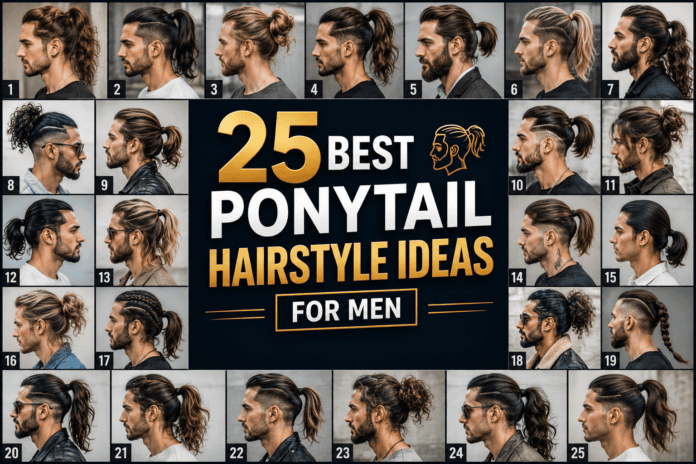
The strongest ponytail hairstyle ideas for men balance control with enough texture to keep the hair from looking flat. My top starting points are the Classic Mid Ponytail, Low Relaxed Ponytail, Textured High Ponytail, and Braided Ponytail. Each works with a different length, density, and level of daily effort.
I’ve worked around men’s cutting and long-hair styling for more than a decade, and ponytails expose haircut problems faster than most styles. I’ve tied, trimmed, layered, and reshaped enough long hair to know that placement matters nearly as much as length.
These picks were built around what actually changes the result: ponytail height, hair texture, face shape, layering, tension, and how much styling someone wants to do before leaving the house.
| Quick Pick | Best For | Hair Length | Styling Effort |
|---|---|---|---|
| Classic Mid Ponytail | Everyday wear | Medium-long | Low |
| Low Relaxed Ponytail | Casual styling | Medium-long | Low |
| Textured High Ponytail | Thick hair | Long | Medium |
| Half-Up Ponytail | Layered hair | Medium-long | Low |
| Slicked-Back Ponytail | Formal looks | Medium-long | Medium |
| Wavy Ponytail | Natural movement | Long | Low-medium |
| Braided Ponytail | Controlled length | Long | Medium |
| Undercut Ponytail | Strong contrast | Medium-long | Medium |
| Double-Braid Ponytail | Bold detail | Long | High |
| Bubble Ponytail | Statement styling | Long | Medium-high |
Classic and Easy Ponytail Hairstyle Ideas
The easiest ponytail hairstyle ideas depend more on proportion than complicated technique. A clean tie point, enough length around the temples, and a shape that works with the haircut underneath will usually beat excessive product or elaborate styling.
1. Classic Mid Ponytail
A classic mid ponytail sits around the center-back of the head, keeping the profile clean without pulling the hair sharply upward. The top stays smooth but not glossy, while the tied section falls naturally behind the neck. On straight or lightly wavy hair, the result looks balanced from the front and side. It’s one of the safest ponytail hairstyle ideas for someone growing long hair for the first time.
This version works especially well on oval, square, and longer face shapes and on hair that reaches several inches beyond the collar. Ask your barber or stylist, “Keep enough perimeter length for a full mid ponytail and clean up only the ends.” Trimmed ends help the tail look thicker. The drawback is that heavy layers can make shorter pieces fall loose around the sides.
2. Low Relaxed Ponytail
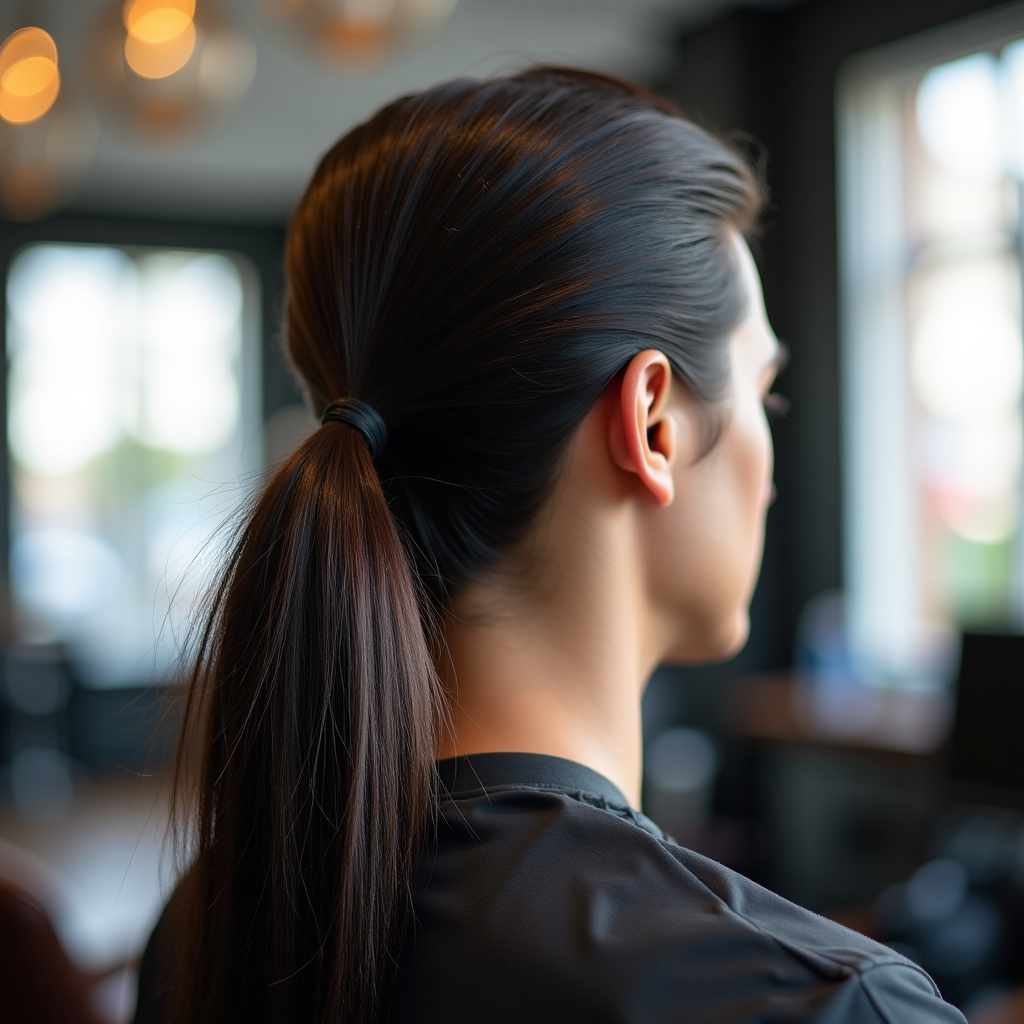
The low relaxed ponytail rests near the base of the skull, with a little natural looseness through the crown and sides. Instead of being pulled tight, the hair follows the shape of the head before gathering close to the neckline. A few subtle flyaways make the finish feel casual rather than unfinished. The lower tie point also lets longer hair hang with more visible length.
It suits medium-to-long straight, wavy, or slightly curly hair, particularly if you prefer a softer profile. Tell your stylist, “I want to wear this in a low ponytail, so don’t over-layer the sides or neckline.” Upkeep is simple because there’s little daily styling beyond brushing and tying. Fine hair can look thin in the tail, though, especially if too many layers have been cut into it.
3. Loose Collar-Length Ponytail
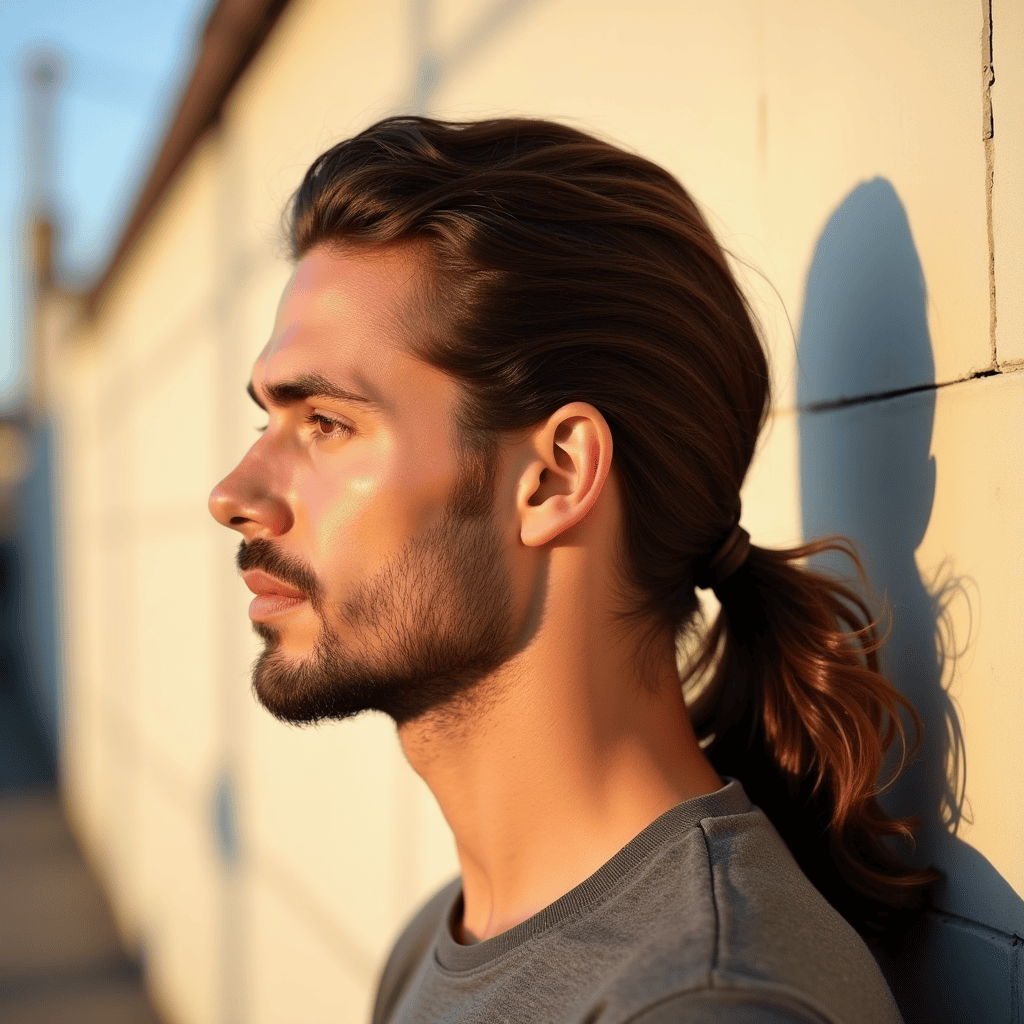
This ponytail is made from hair that has only recently become long enough to tie, so the tail stays short and compact behind the neck. The front and sides are gathered without forcing every shorter piece into the elastic. That creates a slightly undone outline around the ears and temples. For men in the awkward stage between medium and long hair, that imperfection can actually make the style work.
It’s best for straight or wavy hair with enough length to meet at the back but not enough for a dramatic tail. Ask, “Keep the back long enough to tie and only shape the front pieces so they fall naturally when loose.” A light cream can control escapees without hardening them. The obvious limitation is that shorter layers may slip out halfway through the day.
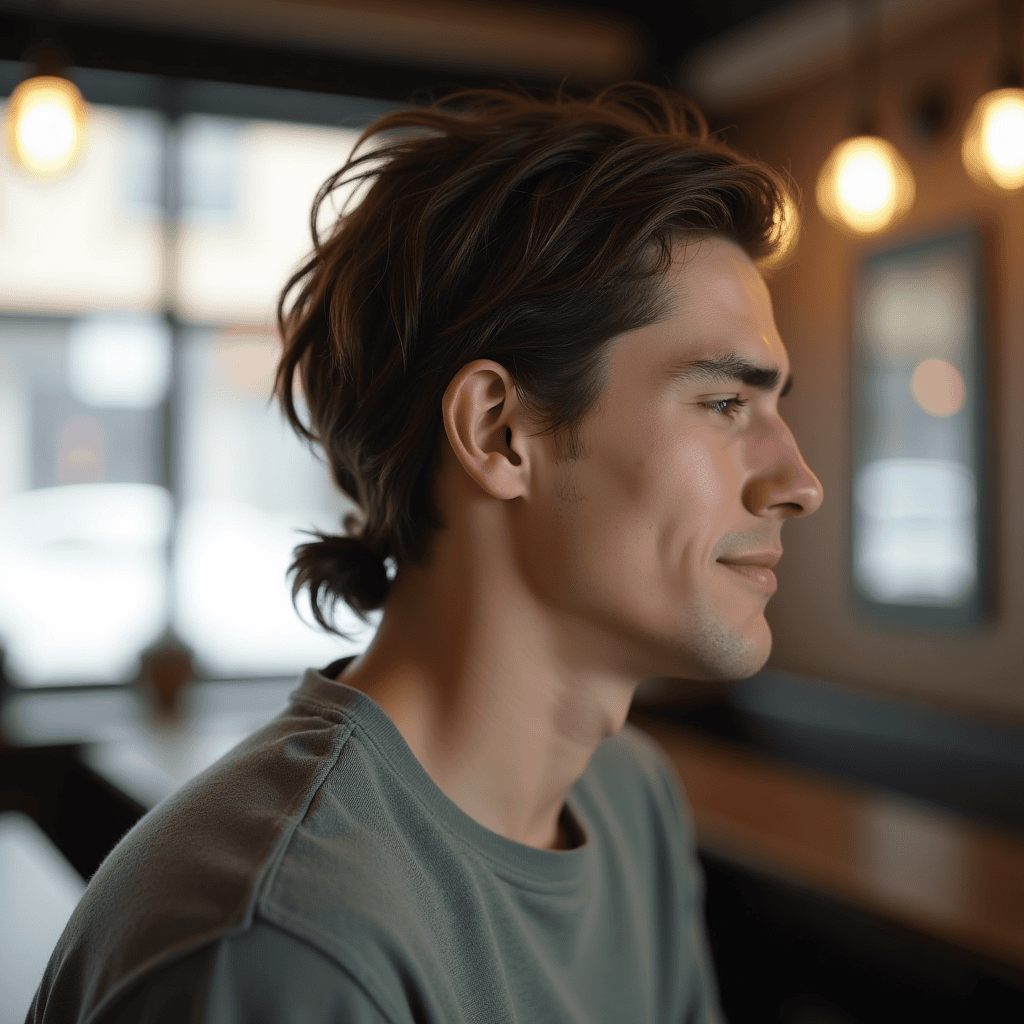
4. Half-Up Ponytail
A half-up ponytail gathers the top and side sections while leaving the lower half of the hair loose over the shoulders. Visually, it clears the face without hiding the length or texture underneath. The tied portion can sit around the crown or slightly lower depending on how much lift you want. Among practical ponytail hairstyle ideas, this one works well when a full tie feels too severe.
Medium-long and layered hair usually responds best because the upper sections can be controlled while shorter lower pieces stay intentionally loose. Tell your stylist, “I wear my hair half-up, so keep the lower perimeter strong and don’t thin the crown too aggressively.” The style takes seconds once the haircut supports it. It can look bulky on extremely dense hair unless some weight is removed internally.

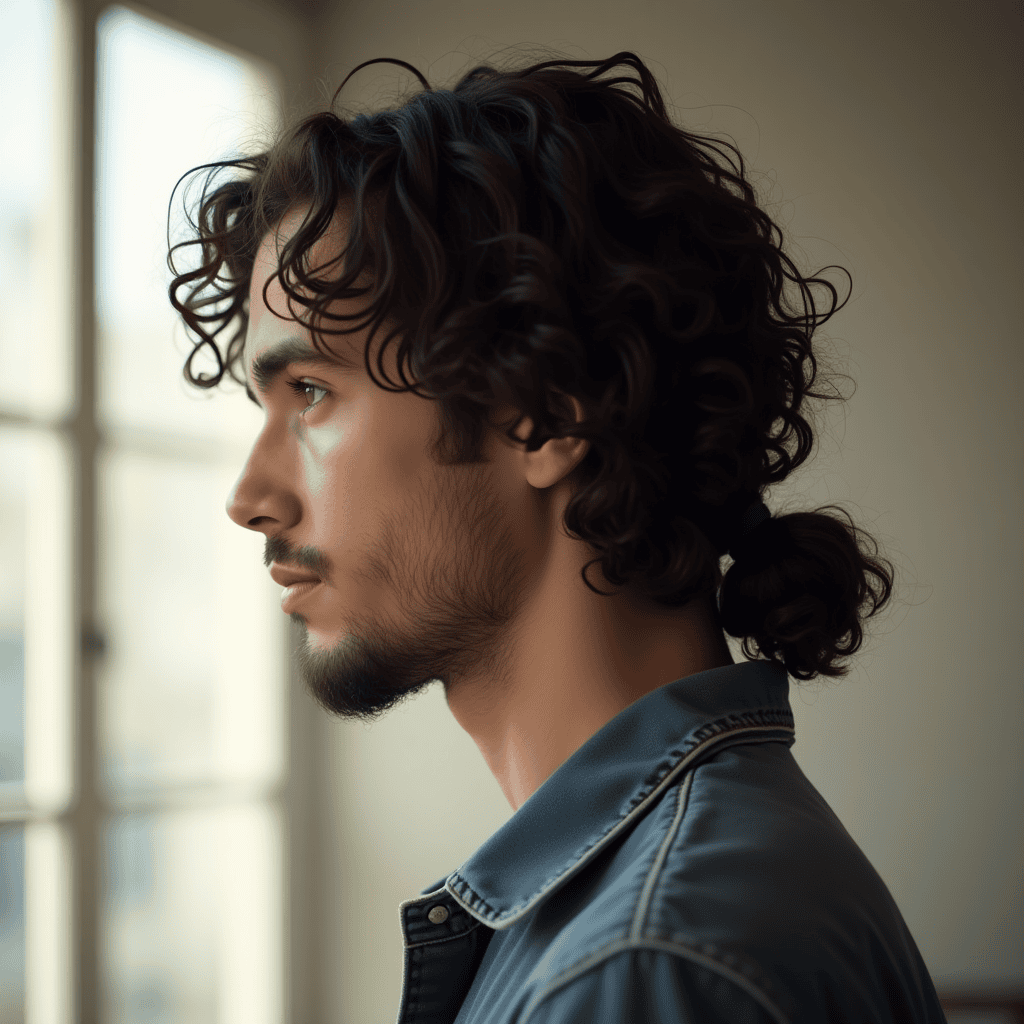
5. Natural Curly Low Ponytail
A curly low ponytail keeps the roots relatively untouched and lets the texture remain visible all the way into the tied length. The crown has rounded natural volume rather than being brushed flat. Around the face, small curls can remain loose while the main mass sits low behind the head. That contrast between controlled placement and visible curl pattern gives the style its character.
Men with medium-long curls or loose coils usually get the best result when the haircut preserves enough weight around the perimeter. Ask your stylist, “Shape my curls so I can tie them low without creating a thin tail.” Finger-detangling and a small amount of curl product are often enough for daily upkeep. Pulling curls too tightly can flatten the shape that makes this look worth wearing.
Textured and High Ponytail Hairstyle Ideas
Higher placement changes the silhouette fast. These men’s ponytail styles show more of the jaw, temples, and neckline while putting the volume at the back or crown. They tend to suit thicker hair because the tied section needs enough density to hold its shape.
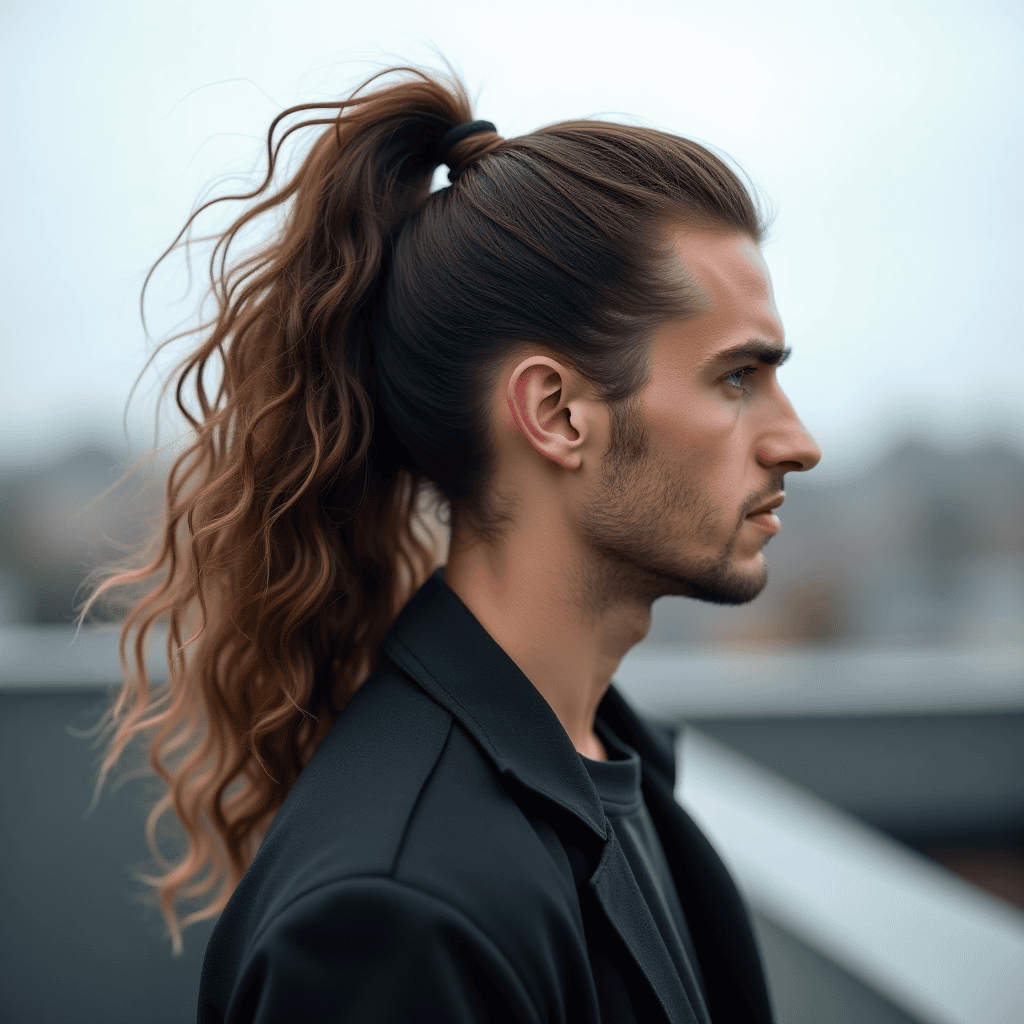
6. Textured High Ponytail
The textured high ponytail sits above the midpoint of the back of the head and keeps visible separation through the top. Instead of brushing every strand flat, the hair is directed backward with finger-made texture still showing. The tail drops from a higher point, making it look fuller and more energetic. Thick wavy hair gives this shape especially good movement.
It works for men who want their long hair to feel styled rather than simply tied away. Ask, “Keep enough length through the top and crown for a high ponytail, with light internal texture but no short layers.” A small amount of matte styling product can help maintain separation. The higher tension can become uncomfortable if you wear it tightly for a full day.
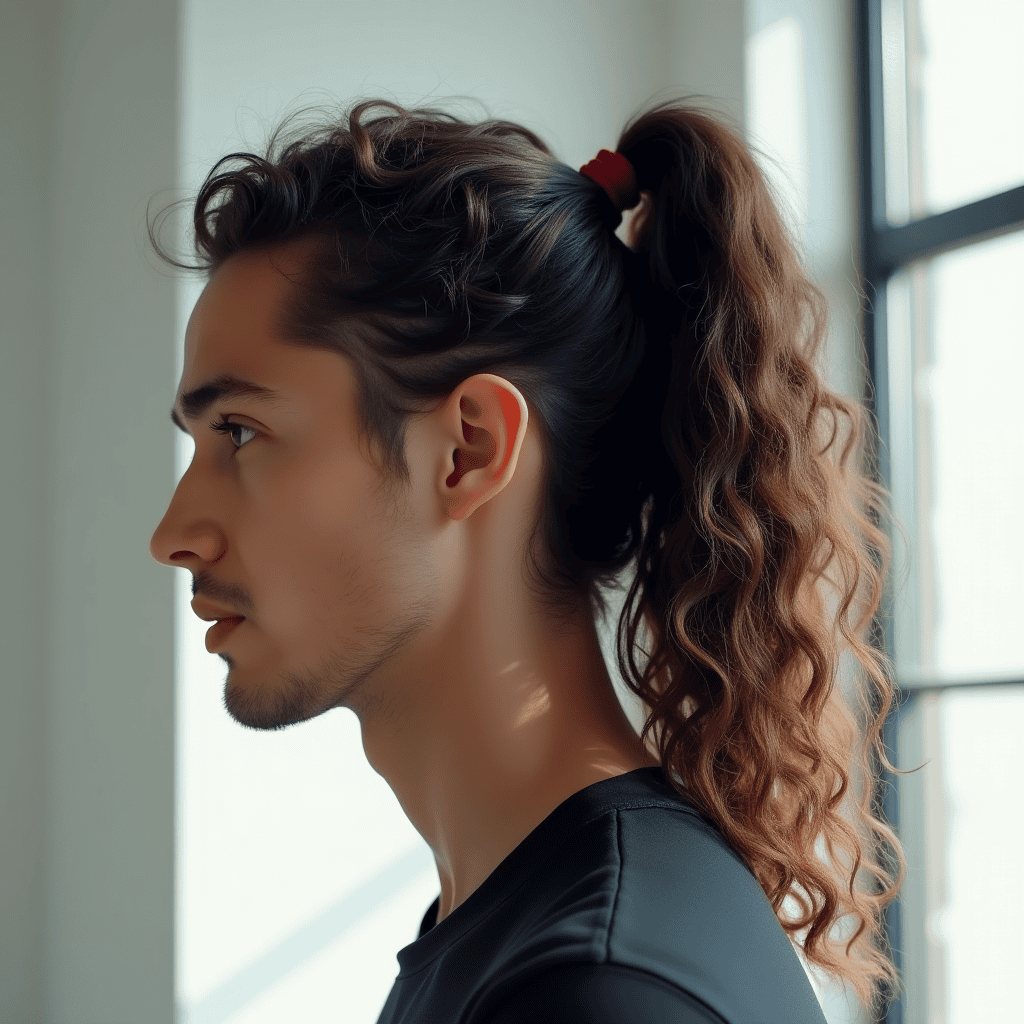
7. High Curly Ponytail
This version lifts curly hair toward the crown, creating a compact base with a full textured tail behind it. The roots stay controlled enough to expose the face, but the tied curls remain springy rather than stretched straight. From the side, the hairstyle has more vertical energy than a low curly ponytail. The shape can look especially strong with dense curls.
Ask for a cut that respects curl shrinkage and keeps the upper layers long enough to reach the tie point: “I want to tie my curls high without short pieces dropping out around the crown.” This look suits oval, round, and square faces because it adds height while opening the sides. It requires careful detangling, and very tight elastics can distort the curl pattern.
8. Wavy Surf Ponytail
The surf-inspired ponytail looks best when it isn’t perfectly controlled. Long waves are tied around the middle or lower back of the head, while the crown keeps soft bends and slightly irregular separation. Lighter ends or naturally sun-shifted tones can make the movement easier to see, but the cut matters more than color. The finish should look touched by wind, not polished into place.
Men with naturally wavy, medium-to-thick hair can wear this with almost no formal styling. Tell your stylist, “Keep the layers long and soft so the waves still fall together when I tie them back.” Salt spray can add grip occasionally, though using drying texture products every day is unnecessary. The drawback is that deliberately messy can turn scruffy fast if the ends are overdue for a trim.
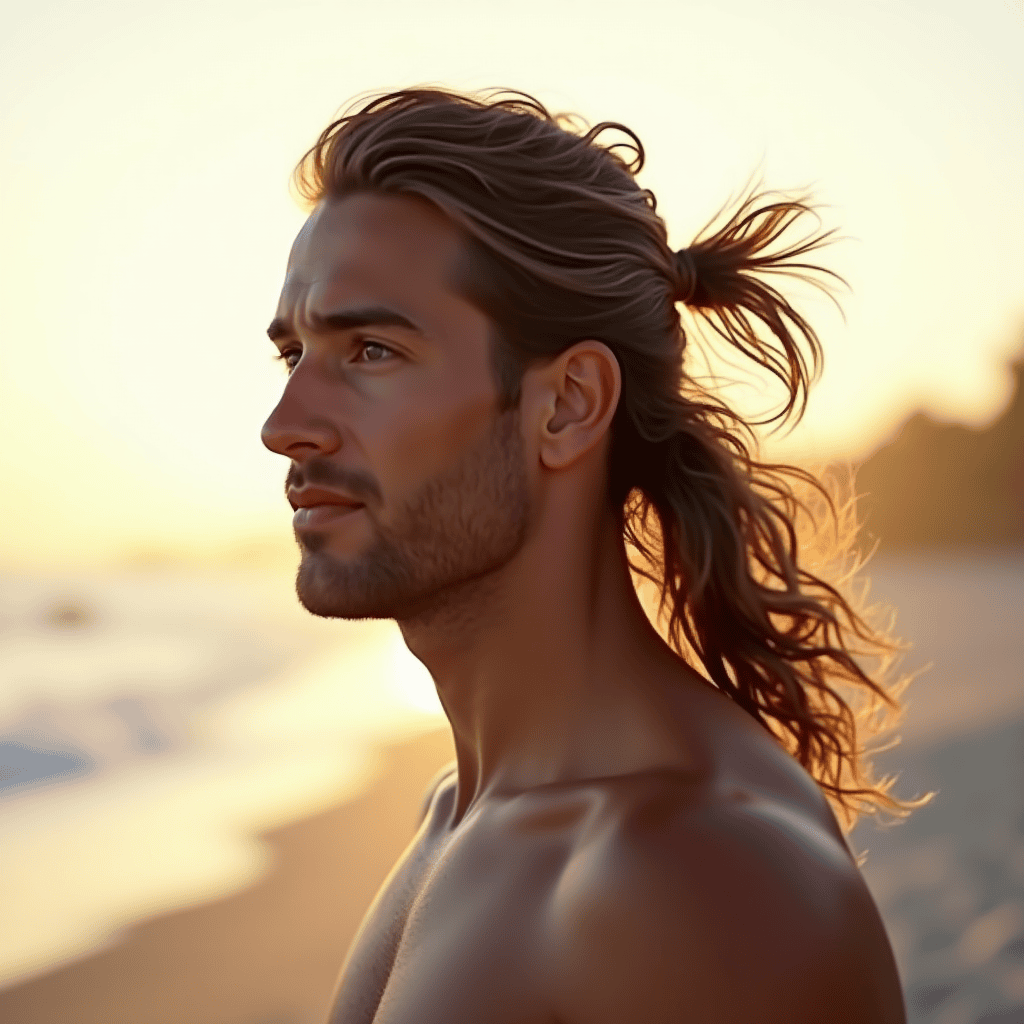
9. Voluminous Crown Ponytail
A voluminous crown ponytail keeps lift through the upper back of the head before the hair meets the elastic. The top isn’t teased into an exaggerated bump; it simply avoids being flattened against the scalp. That extra space gives the profile more structure, especially when the ponytail itself is thick and medium-high. It’s one of the more shape-conscious ponytail hairstyle ideas on this list.
This works best on dense straight or wavy hair that naturally holds some body. Ask, “Keep the crown long and full so I can tie it back without losing all the volume.” A blow-dryer directed backward can create the lift before tying. Fine, silky hair may collapse quickly, and forcing volume with too much product usually makes the roots look heavier instead.
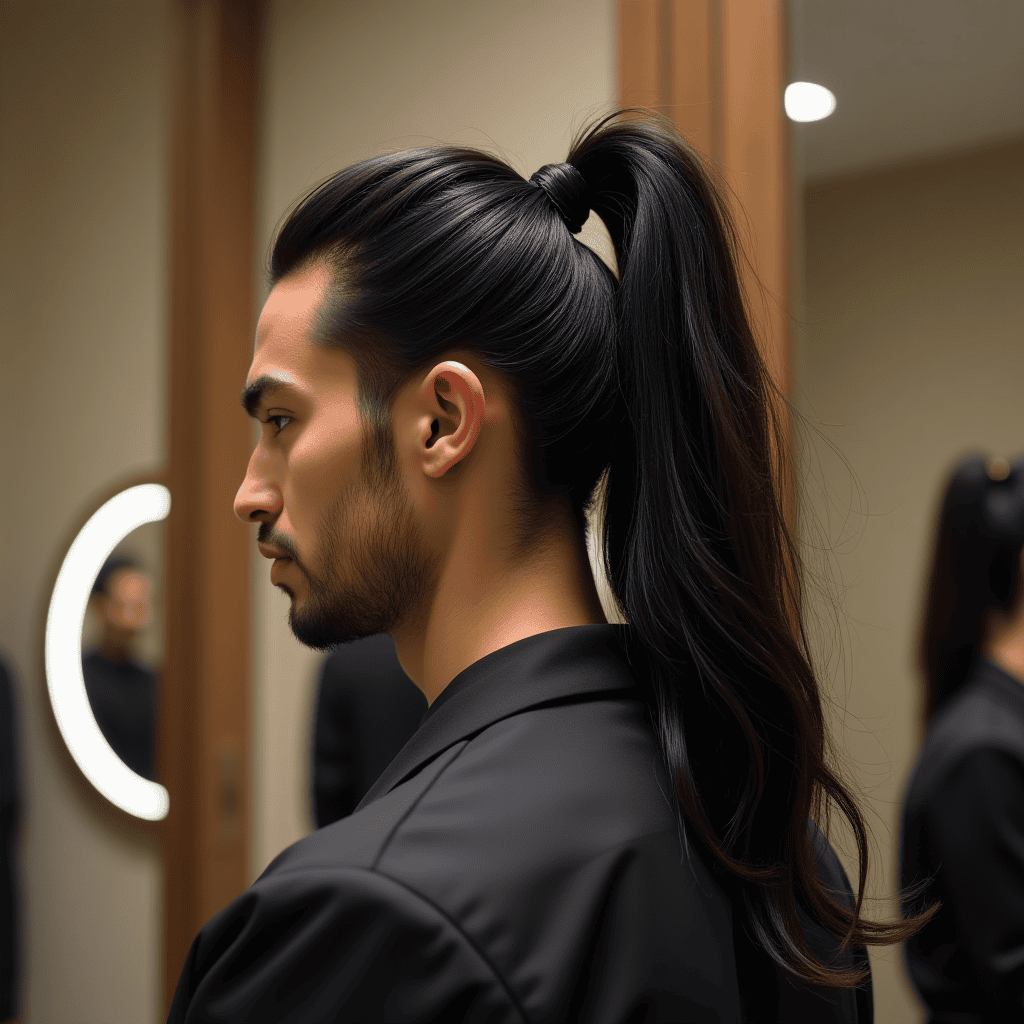
10. Layered Messy Ponytail
The layered messy ponytail uses shorter pieces as part of the design instead of trying to hide them. The main length ties at the back while sections around the ears, temples, and neckline sit loose. The tail itself has uneven movement because the layers break up its outline. Done well, it feels intentional and lived-in rather than careless.
It suits men whose long haircut already has movement and visible layering. Ask the stylist, “Keep the layers long enough to blend when loose, but let a few pieces fall naturally when it’s tied.” There’s little maintenance beyond keeping the ends healthy and shaping the front occasionally. Skip this if you need every strand controlled for work, sport, or formal dress.

Braided and Structured Ponytail Hairstyle Ideas
Braids add control and detail without requiring the hair to sit flat. These ponytail hairstyle ideas for men work particularly well with longer hair because there’s enough length for the braid pattern and the final tied section to read clearly.
11. Single-Braid Ponytail
A single-braid ponytail begins with the hair gathered at the back and then braided through most or all of the hanging length. The upper head remains simple, making the braid the visual focus. A slightly loose braid looks wider and more casual, while tighter sections create a cleaner geometric pattern. Long, dense hair gives the strongest result.
Ask your stylist, “Keep my ends strong and fairly even because I want to braid the ponytail after tying it.” Straight, wavy, and loosely curly textures can all work, although slippery hair may need a little grip. Once you learn a basic three-strand braid, maintenance is manageable. The limitation is time: braiding long hair every morning isn’t everyone’s idea of easy grooming.
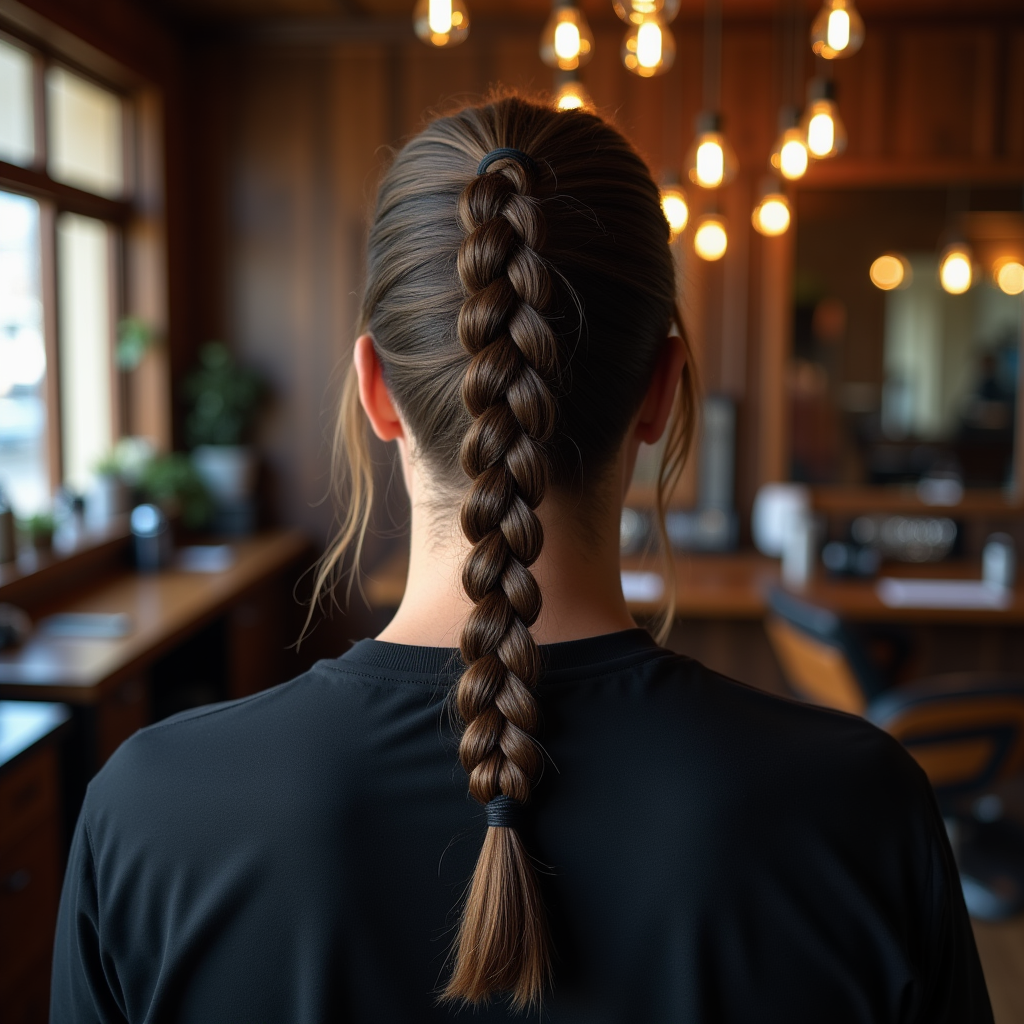
12. Braided Top Into Ponytail
This style starts with one defined braid running from the front or upper crown toward the back, where it joins the remaining hair in a ponytail. The contrast is the point: structured braid detail above, loose movement below. Depending on the braid width, it can be subtle or immediately noticeable. Keeping the sides relatively controlled prevents the top from becoming visually crowded.
It suits longer hair and anyone comfortable spending more than a minute on styling. Tell your stylist or braider, “I want one top braid feeding into a ponytail, with enough length left loose at the back.” The braid needs clean sectioning to look intentional. If your hair is heavily layered near the front, small pieces may escape and blur the pattern quickly.
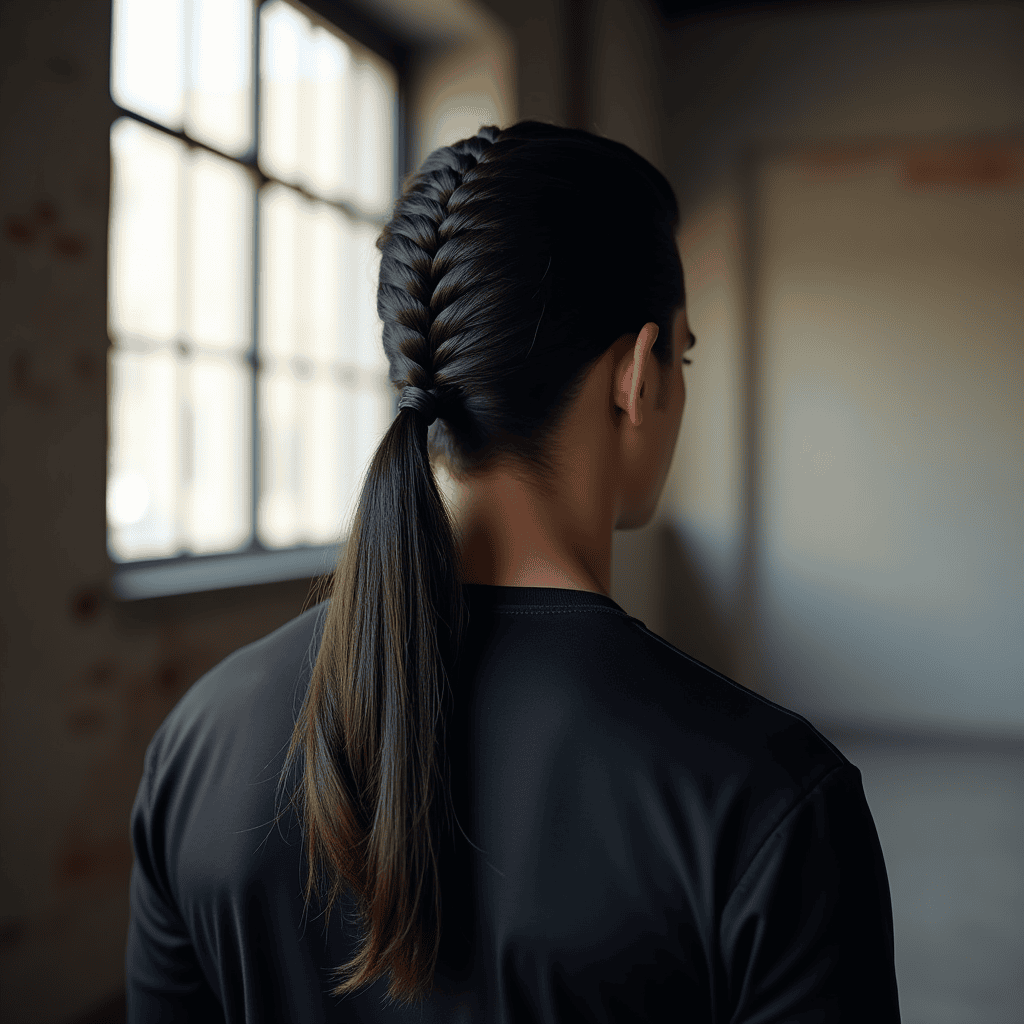
13. Double-Braid Ponytail
Two narrow braids run backward from either side of the upper head and meet the rest of the hair at a central ponytail. The symmetry creates a stronger graphic effect than a single braid, especially when the central length stays smooth. From the front, the braids frame the top without covering the entire scalp. From behind, they create two visible lines leading into one tail.
This is better for thick medium-long or long hair because each braid needs enough density. Ask, “Create two balanced braids feeding into one ponytail, but keep the remaining tail full.” It demands cleaner parting and more hand work than a basic ponytail. If you dislike precise styling or frequently rush out the door, another option will make more sense.
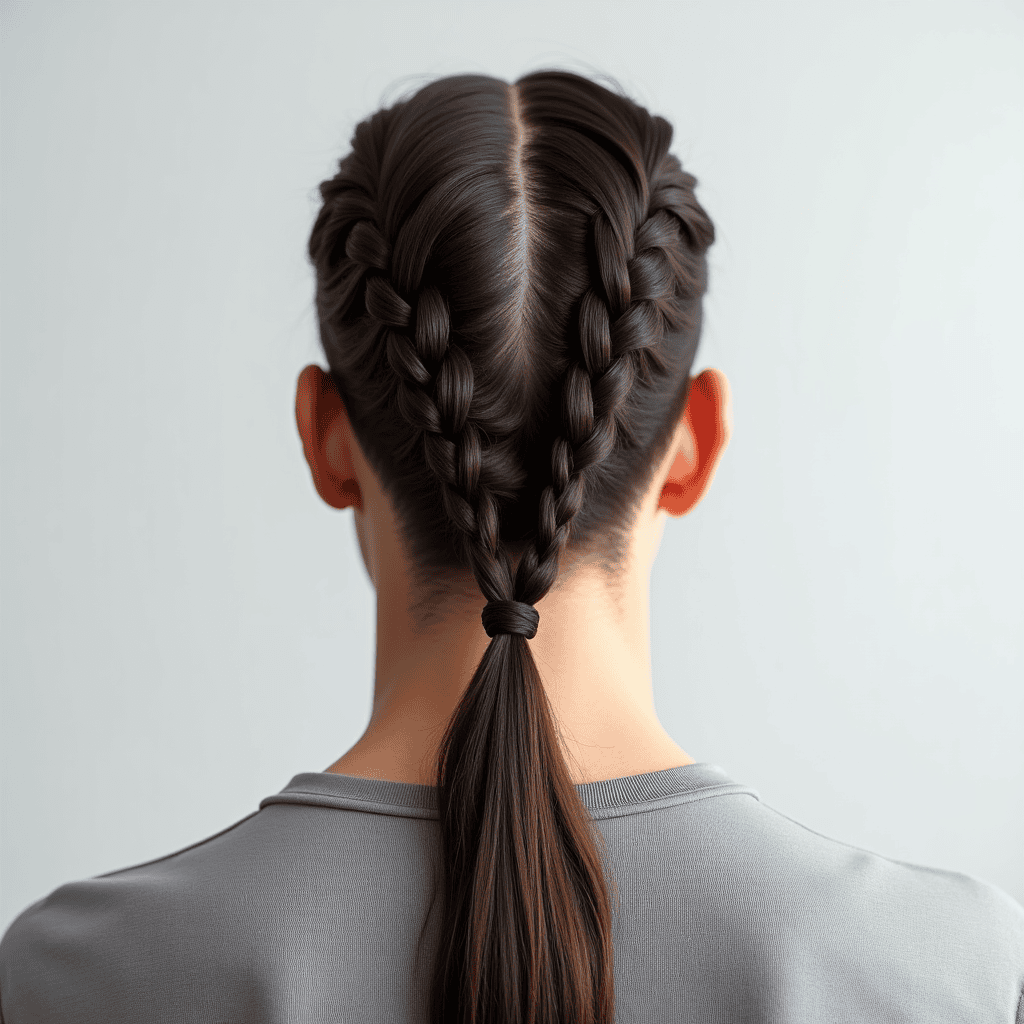
14. Twisted Side Ponytail
Instead of braiding, sections from both sides are twisted backward before meeting at the ponytail. The twists create rope-like texture across the sides and soften the transition into the tied length. Because they’re less intricate than braids, the result feels more relaxed. Slightly wavy hair makes the twists look fuller and hides small inconsistencies.
Men with medium-long hair can use this when they want detail without committing to elaborate braiding. Ask your stylist, “Show me a simple two-side twist that feeds into a low ponytail without pulling the front too tight.” It takes a little practice to keep both sides balanced. Very fine hair can cause the twists to collapse, especially without some natural texture.
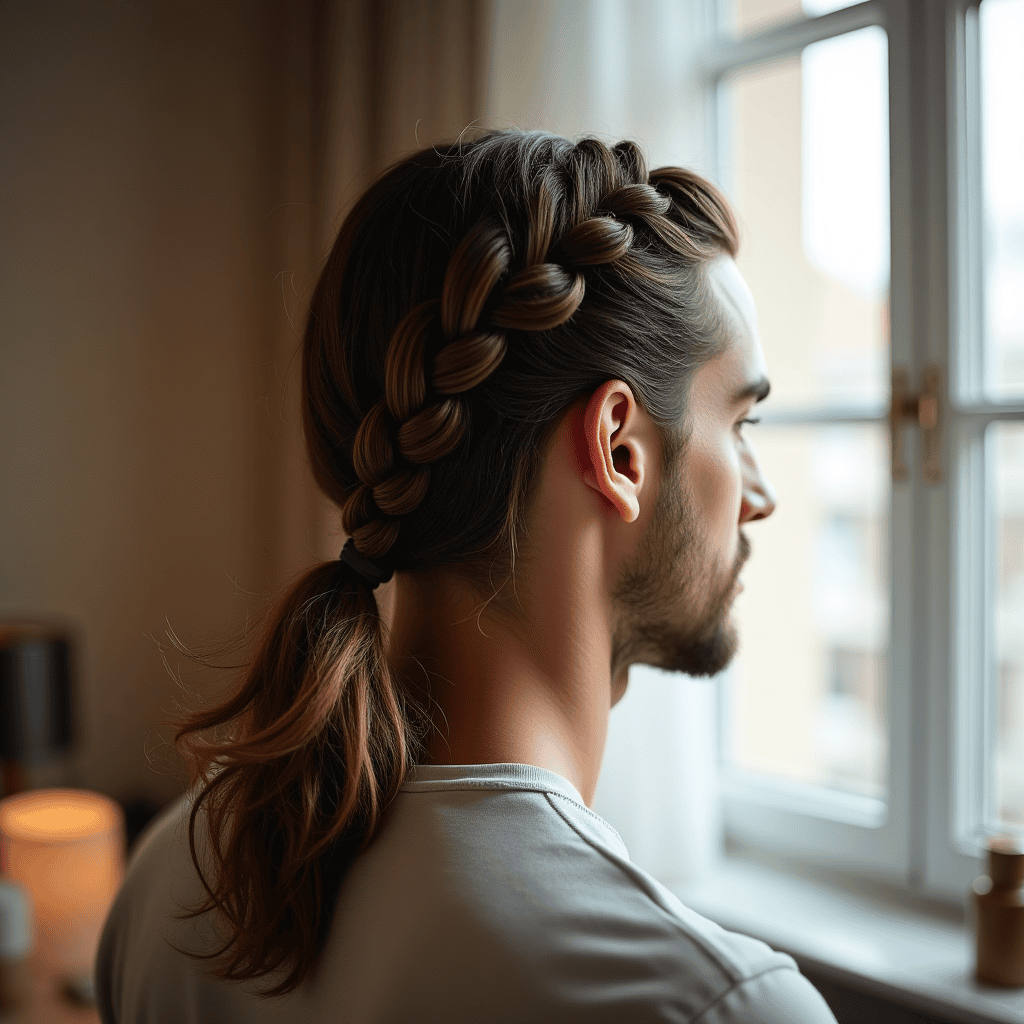
15. Rope-Braid Ponytail
A rope-braid ponytail divides the hanging hair into two sections that twist around each other, creating a cleaner spiral than a standard three-strand braid. The pattern reads strongly on long straight or gently wavy hair. Because the twist is continuous, it gives the ponytail a narrower, more sculpted outline from the back.
Tell your stylist, “Keep my perimeter full because I want enough density for a rope-braid ponytail.” It’s a good match for men who like structured long hairstyles but want something they can learn at home. The twist may loosen during the day unless the end is secured properly. Highly layered ends can also create small flyaways along the spiral.
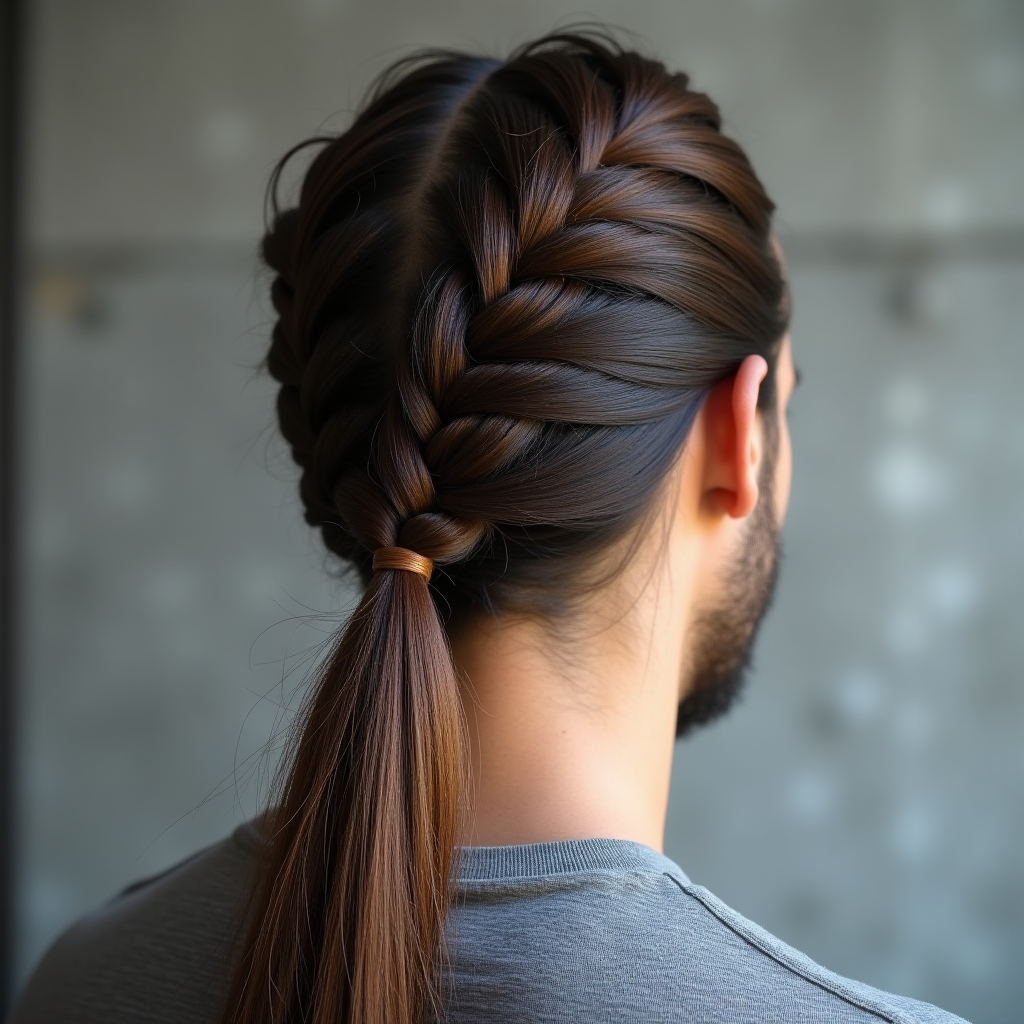
Clean and Formal Ponytail Hairstyle Ideas
Formal ponytail hairstyle ideas need tighter control around the hairline, cleaner ends, and a deliberate tie position. The goal isn’t to erase texture. It’s to make every visible choice look planned enough to work with tailoring, evening clothes, interviews, weddings, and other polished settings.
16. Slicked-Back Low Ponytail
The slicked-back low ponytail directs every major section backward before tying the hair close to the nape. The sides sit flat around the temples and ears, while the top follows a clean backward line with minimal volume. A natural or soft-sheen finish usually looks more modern than a hard wet effect. The tail remains simple and straight behind the neck.
Oval, square, and angular faces tend to carry this exposed shape well. Tell your stylist, “I need enough side and top length to pull everything into a clean low ponytail, with no short disconnected pieces.” A brush and small amount of styling cream handle most of the work. The style puts your hairline fully on display, so there’s nowhere for loose fringe to soften the front.
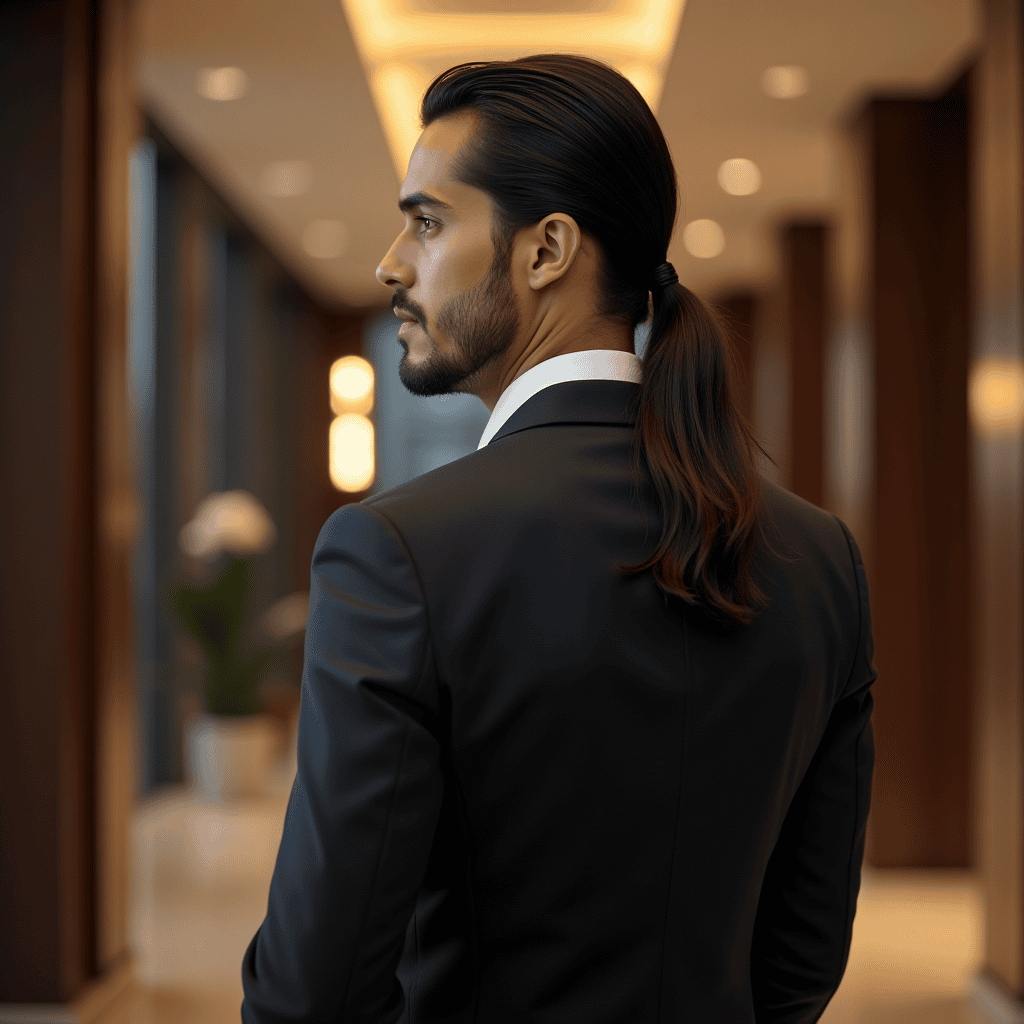
17. Clean Mid Ponytail With Center Part
A precise center part divides the front before both sides move backward into a mid-height ponytail. The part remains visible for several inches, giving the hairstyle more structure than a standard brushed-back version. The sides can sit close to the head without looking pasted down. Long straight hair shows the geometry most clearly.
This style works particularly well if you already wear a middle part when your hair is loose. Ask, “Keep the front balanced around a center part and make sure both sides reach a mid ponytail cleanly.” Maintaining the part takes little effort once the haircut is even. A strong cowlick can push one side upward and make the symmetry harder to hold.
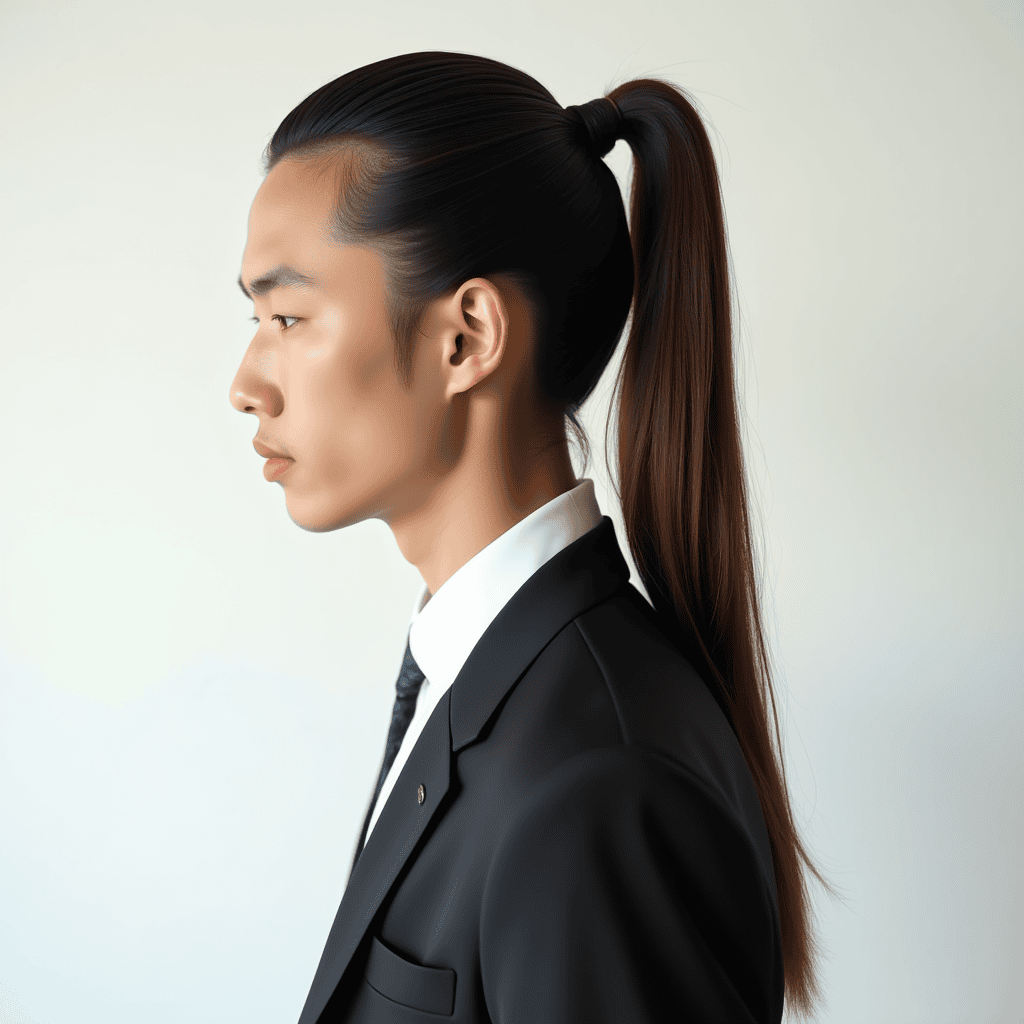
18. Brushed-Back Wavy Ponytail
This option keeps the polished direction of a formal ponytail without flattening natural waves. The front is brushed away from the face, then the movement becomes visible again through the crown and tail. The tie sits at mid or low height so the waves fall instead of sticking outward. It works particularly well when the hair has broad, loose bends.
Ask the stylist, “Keep my wave pattern intact and give me enough weight to brush everything back into a clean ponytail.” A wide-tooth comb is often better than brushing the entire length smooth. The style can expand in humid conditions, which may be either attractive or annoying depending on how controlled you want the finish.

19. Low Ponytail With Tucked Sides
Here, the side sections are pulled neatly behind the ears before joining a low ponytail, creating a crisp outline around the temples and cheekbones. The top retains a small amount of natural height. Because the side shape is so clean, the hairstyle pairs easily with glasses, facial hair, or structured clothing without adding visual clutter.
Men with straight or moderately wavy hair can wear it with little product. Ask, “Keep the side pieces long enough to tuck cleanly behind my ears and reach the low ponytail.” I’ve used this shape often when someone wants long hair to read tidier without actually cutting much off. The drawback is that short temple layers will keep slipping forward until they grow.

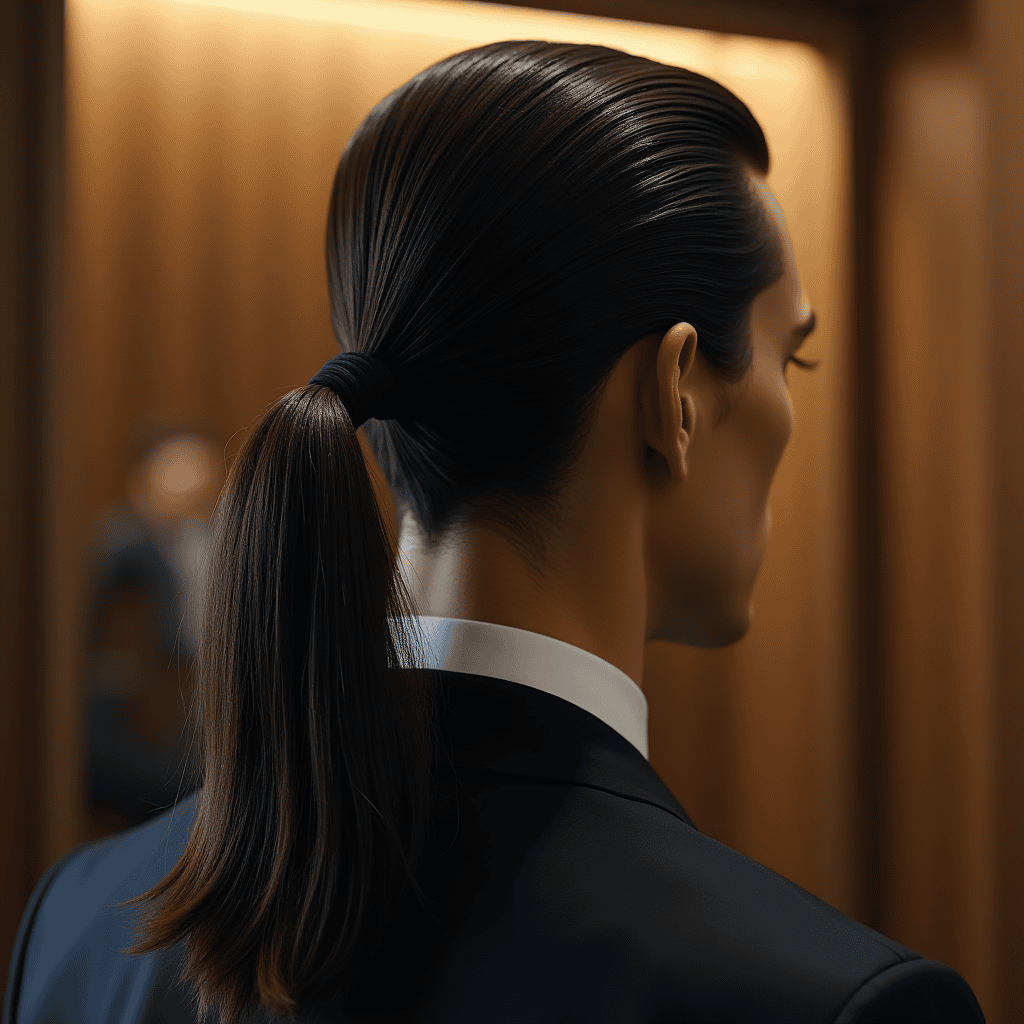
20. Wrapped-Base Ponytail
A wrapped-base ponytail hides the elastic with a narrow section of hair wound around the tie point. That small detail makes an otherwise basic ponytail look more finished. The best version keeps the wrap smooth and proportional rather than building a thick knot. With a low or mid placement, the effect is polished enough for dressier occasions.
It works best when you have enough length to spare a narrow strand without thinning the tail noticeably. Tell your stylist, “Keep the ponytail perimeter full because I want to wrap a small section around the base.” Securing the wrap takes slightly more work than using a plain elastic. Very slippery hair may need a discreet pin to keep the section from unwinding.
Bold and Advanced Ponytail Hairstyle Ideas
These are the ponytail hairstyle ideas that change the whole haircut rather than simply changing where the elastic sits. Undercuts, disconnected sections, extra-long lengths, and segmented tails have a stronger visual identity. They’re worth choosing because you like the look, not because you want the easiest possible routine.
21. Undercut Ponytail
An undercut ponytail keeps the top long while the lower sides and back are clipped noticeably shorter. When the hair is tied up, the contrast becomes obvious: long gathered length sits above closely cut panels around the head. When worn down, some versions hide much of the undercut. That flexibility has kept this look popular among men who want long hair with sharper edges.
Ask your barber, “Keep the top long enough for a full ponytail and disconnect it cleanly from the undercut underneath.” Decide how much short area you want before the clippers come out because growing it back takes patience. The upkeep is higher than a standard long haircut; the shorter sections need regular cleanup to keep the contrast intentional.
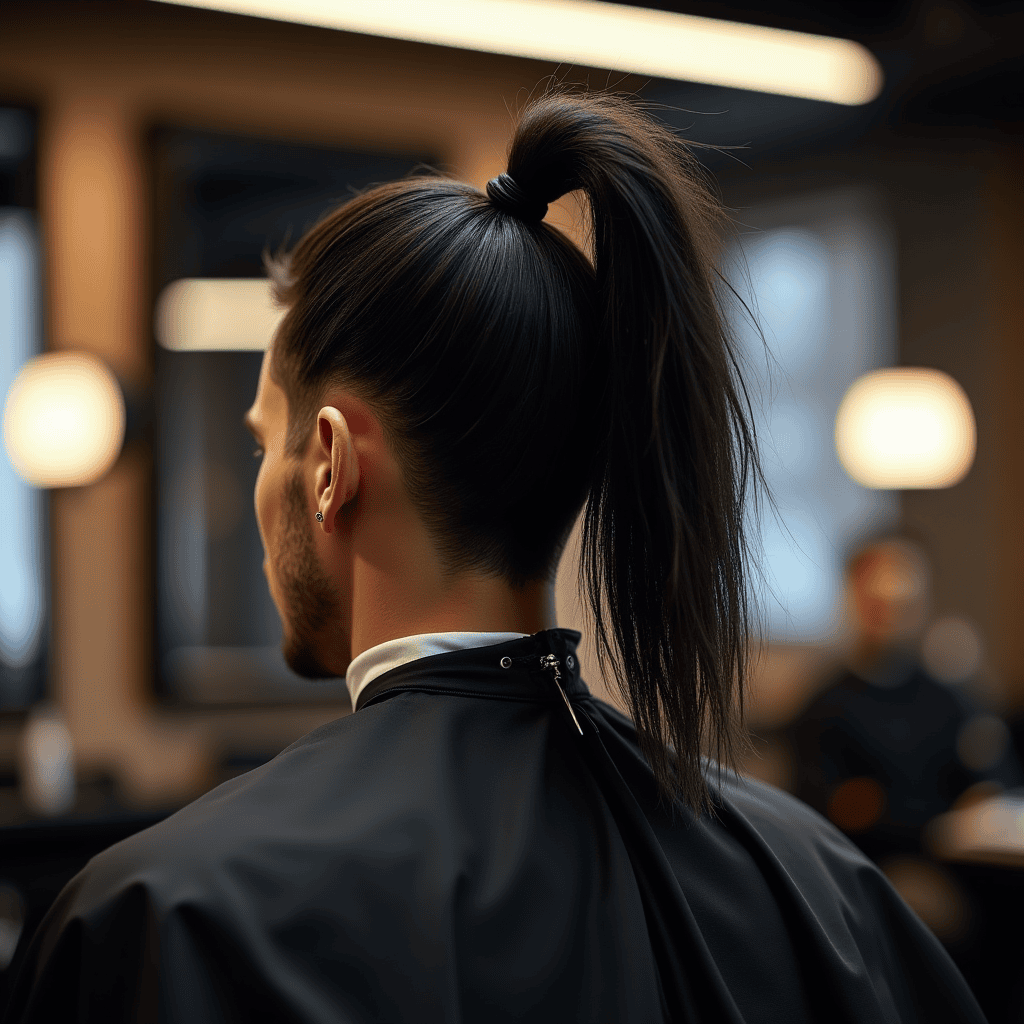
22. Temple-Fade Ponytail
A temple-fade ponytail keeps most of the hair long while introducing a small, clean fade around the temple and sideburn area. The change is less dramatic than a full undercut, but it sharpens the front outline immediately. With the rest tied backward, the fade becomes a crisp transition between facial hair, temple, and long top sections.
Men who want a cleaner perimeter without removing the whole lower section may prefer this approach. Ask your barber, “Keep the ponytail length intact and add a small temple fade without pushing it too far back.” The fade needs more frequent barber visits than the long hair itself. I go back and forth on this one because an overextended fade can throw off the balance quickly.
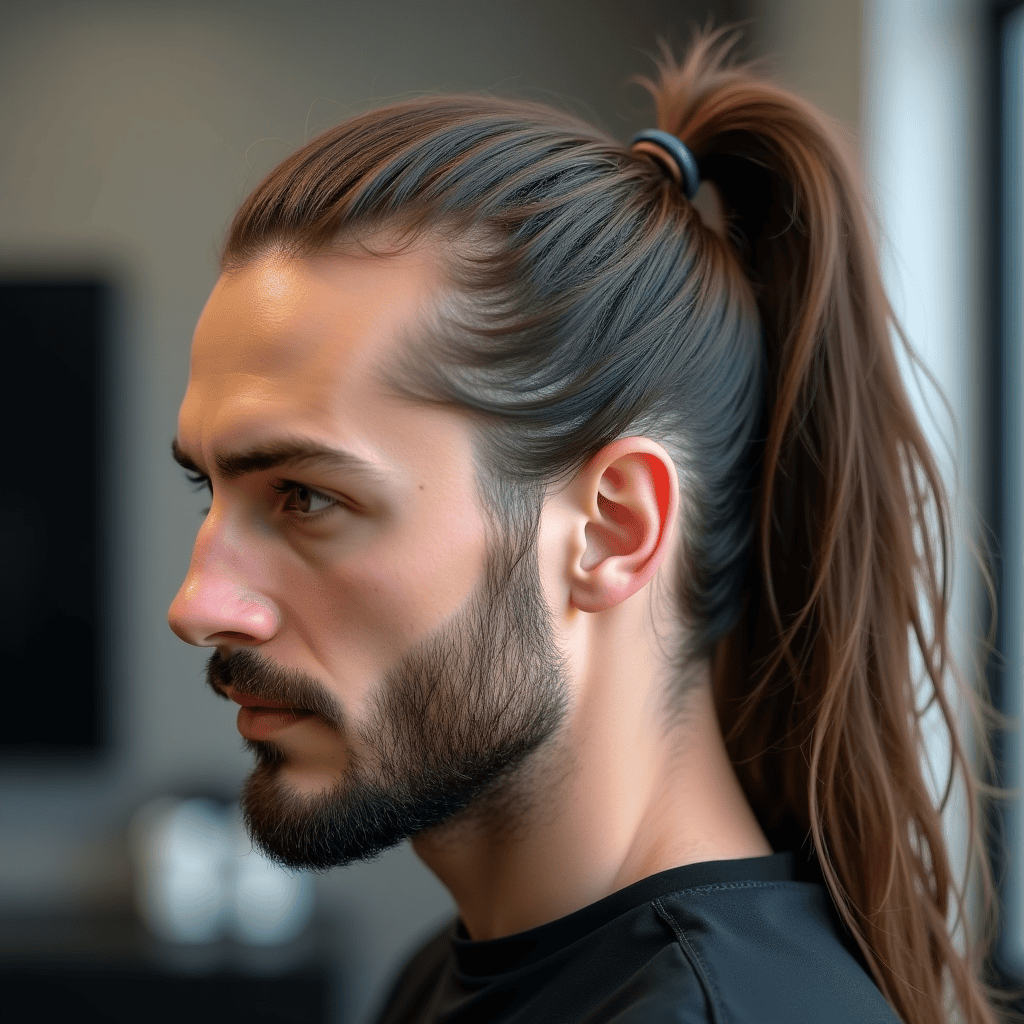
23. Extra-Long Straight Ponytail
The extra-long straight ponytail puts length ahead of complexity. Hair extending well beyond the shoulders is gathered into a simple low or mid tie, allowing the long straight tail to become the entire visual statement. Clean ends make a major difference because every uneven section is visible when the hair hangs as one narrow shape.
This ponytail works for men willing to commit to long-term length maintenance rather than constant restyling. Tell your stylist, “Preserve as much length as possible, remove damaged ends, and keep the perimeter dense for a long ponytail.” Brushing and careful detangling matter more as the hair grows. The drawback is practical: very long hair takes more time to wash, dry, and keep untangled.
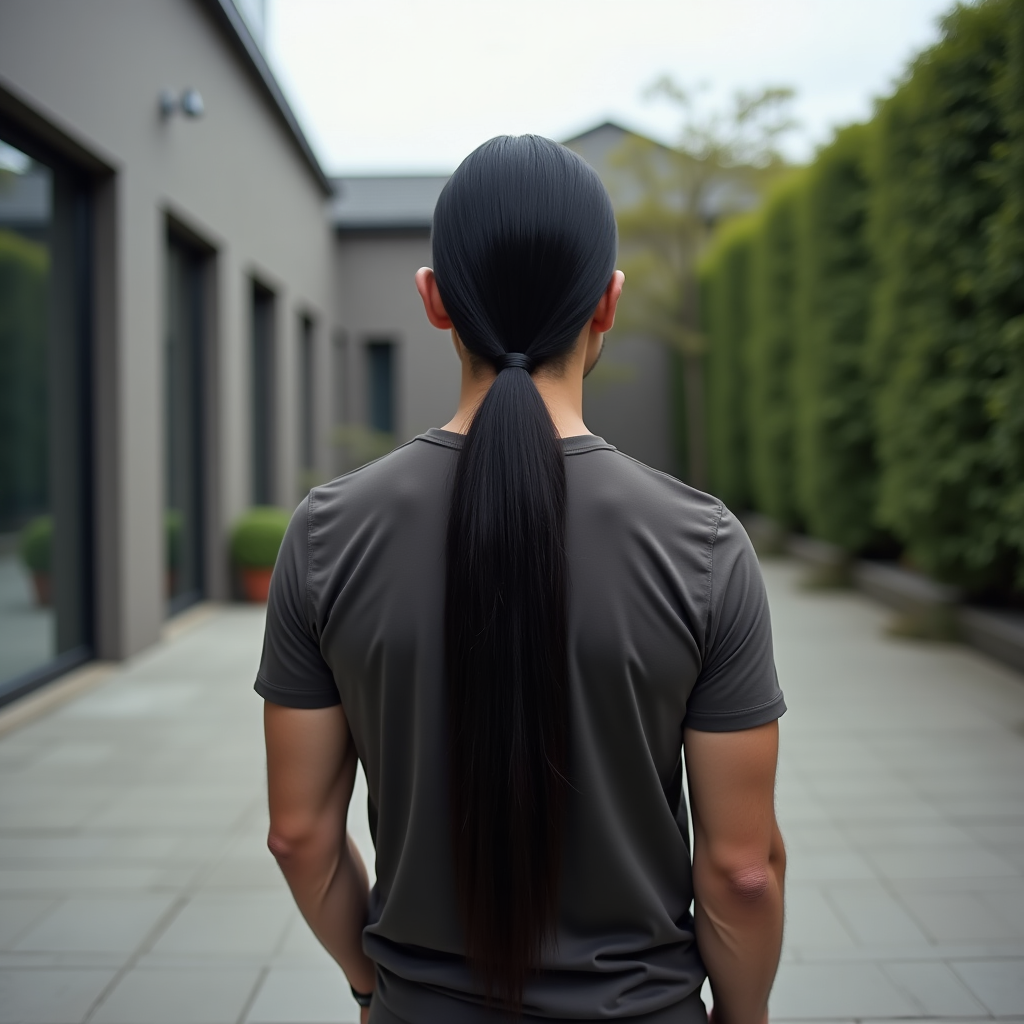
24. Bubble Ponytail
A bubble ponytail uses several elastics spaced down the length, with each section gently expanded to create rounded segments. The silhouette is graphic and unmistakable, turning a plain long ponytail into a series of controlled shapes. Keeping the bubbles moderate makes the style feel editorial without drifting into costume territory.
Long, thick hair gives you enough material to build several visible sections. Ask your stylist, “Keep my length full and minimally layered because I want to wear segmented ponytail styles.” Creating evenly sized bubbles takes a few minutes, especially at the back where visibility is limited. Short layers can poke through individual sections and interrupt the clean pattern.
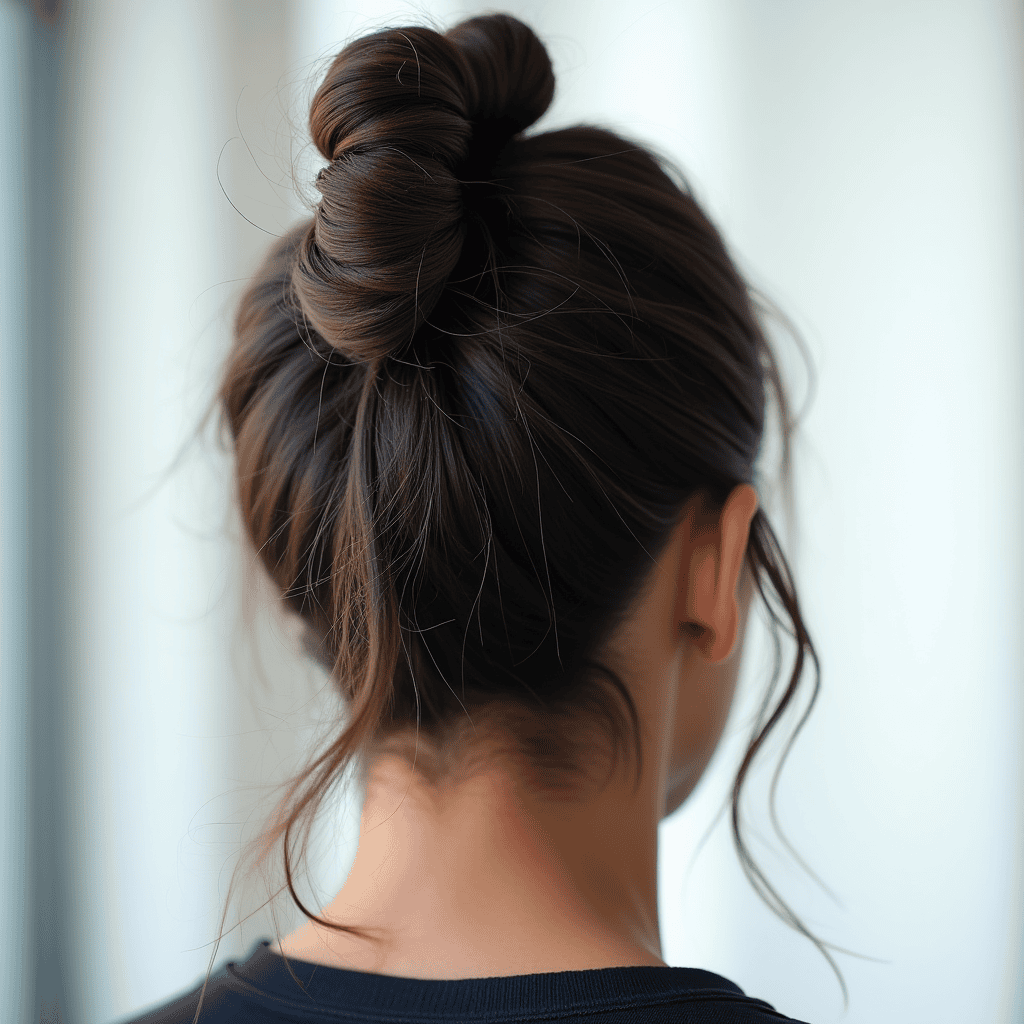
25. High Ponytail With Loose Front Strands
This high ponytail deliberately leaves two longer front sections outside the tie. The main body lifts toward the crown, while the loose pieces fall beside the face and break up the exposed hairline. With straight hair, the contrast looks clean and graphic. With waves, it becomes softer and more relaxed.
It suits men who like the height of a high ponytail but don’t want the entire face uncovered. Tell your stylist, “Leave long face-framing sections that can stay out when the rest goes into a high ponytail.” Those pieces need enough length to look intentional rather than accidental. They can also fall into your eyes, so this isn’t my first pick for training, outdoor work, or windy days.
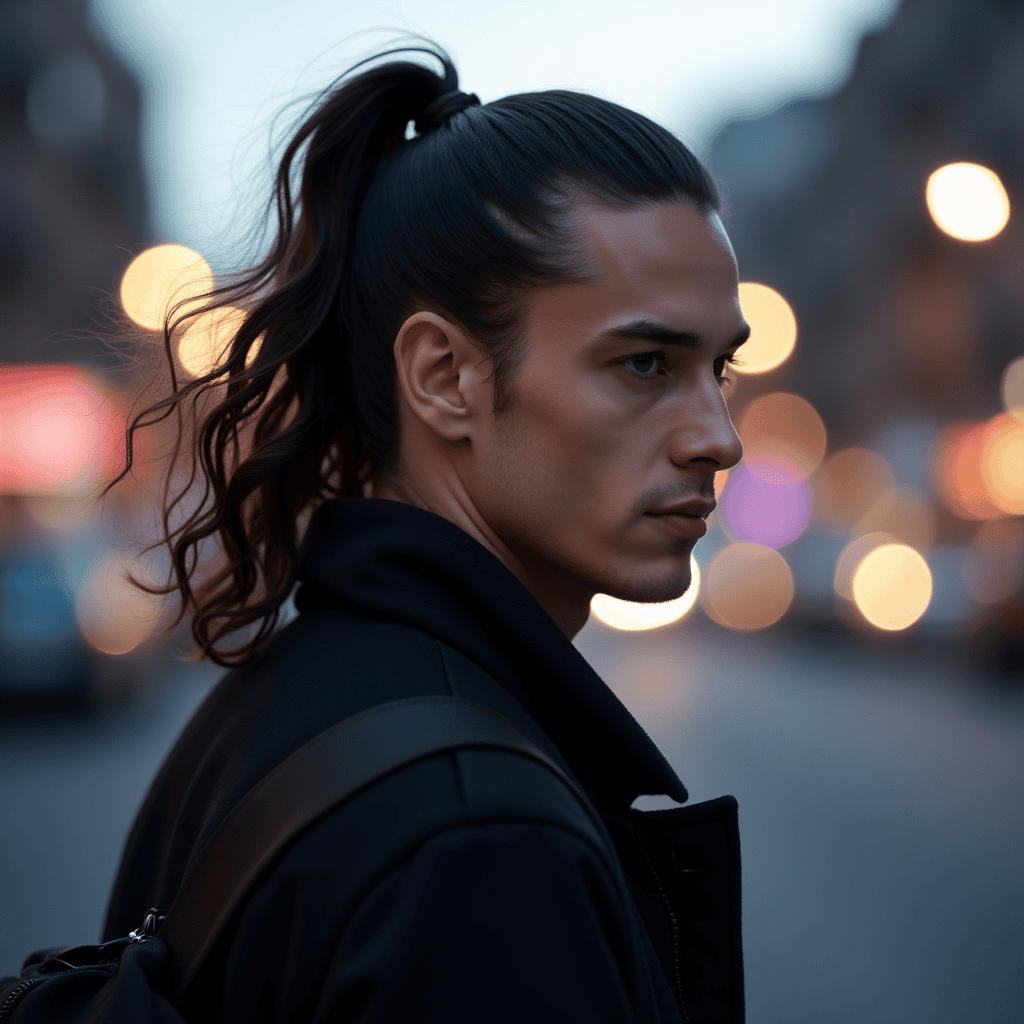
How to Choose the Right Ponytail Hairstyle
Start with where your hair can comfortably reach. Collar-length hair naturally favors a small low ponytail or half-up style, while shoulder-length hair opens the door to mid and high placement. Longer hair gives you enough material for braids, wrapped bases, bubbles, and other structured ponytail hairstyle ideas.
Texture changes the choice too. Straight hair shows clean lines and parting clearly, so center parts, slicked shapes, and wrapped bases stand out. Wavy and curly hair benefits from styles that leave movement visible rather than forcing every section flat. If you have thick hair, high ponytails usually look substantial. Fine hair often gains more from low placement and a less aggressive pull.
Face shape matters, but not in the rigid way online charts sometimes suggest. A high tie can visually add height, while a low ponytail creates a calmer horizontal line. Loose front pieces soften a fully exposed forehead and jaw. Try several positions in a mirror before deciding where your haircut should support the tie.
Bring two or three reference photos to a haircut and show your stylist how you actually wear your hair tied. Then say specifically where you want the ponytail to sit. If you switch between loose hair and tied styles, mention that too. A good long haircut has to work in both positions, not only while you’re sitting in the chair.
Where Ponytail Hairstyles Get Oversold
The biggest mistake is assuming every long haircut will automatically form a good ponytail. It won’t. Heavy short layering can leave half the haircut outside the elastic, while excessive thinning can turn a dense head of hair into a surprisingly weak-looking tail.
Another overstatement is that one tie position suits every occasion. A tight high ponytail may look sharp in a photo but feel annoying after several hours. An intentionally loose style may work on a weekend yet become distracting when you need your hair fully controlled.
Products get oversold too. You rarely need several creams, sprays, oils, and gels simply to tie long hair back. A suitable haircut, decent detangling, and the right elastic usually do more for everyday ponytail hairstyle ideas than a shelf full of styling products.
And avoid treating tightness as neatness. Pulling harder doesn’t automatically create a cleaner ponytail. Smoother sectioning, better brushing, and a sensible tie position usually produce a sharper result without making the style uncomfortable.
Frequently Asked Questions
These questions cover the practical issues that come up most often when men start wearing ponytails regularly, from minimum length and face shape to barber instructions and everyday upkeep.
What hair length do men need for a ponytail?
Most men need enough hair for the front and side sections to reach the back comfortably. A small low ponytail becomes possible before a full high ponytail. If several sections keep slipping out, a half-up style can bridge the gap while you continue growing the shorter areas.
Which ponytail hairstyle ideas work best for short long hair?
If your hair is only slightly beyond medium length, focus on a low mini ponytail, loose collar-length ponytail, or half-up ponytail. These styles don’t demand as much reach from the front and sides. Avoid forcing the tie higher until the shorter sections can reach without excessive tension.
What ponytail looks best on men with thick hair?
Thick hair handles high, textured, braided, and voluminous ponytails particularly well because the tail stays substantial after tying. A stylist can remove internal bulk if the crown becomes too heavy, but aggressive thinning should be avoided if maintaining a dense ponytail is one of your main goals.
Are low or high ponytails better for men?
Neither is automatically better. Low ponytails feel relaxed and usually require less control, while high ponytails create more height and expose the face. Your hair length also decides what is realistic. Try both positions before a haircut so your stylist can see where the hair naturally wants to gather.
What should I tell my barber if I want to wear a ponytail?
Explain exactly where you normally tie it and whether you also wear your hair loose. Ask the barber to preserve enough perimeter length for a full tail and avoid short layers that can’t reach the elastic. Showing a photo of your preferred ponytail shape makes the request clearer.
Which ponytail hairstyle ideas suit curly hair?
Low curly ponytails, high curly ponytails, and half-up styles usually preserve texture well. The main goal is avoiding a cut that removes so much weight that the tied section becomes thin. Let some curl definition remain visible around the crown rather than brushing everything completely flat.
Can men wear a ponytail with an undercut?
Yes. An undercut creates a strong contrast between long top hair and shorter sides or back. When the hair is tied, that contrast becomes much more visible. The main commitment is maintenance because the clipped sections need more frequent trimming than the long portion.
How do I make a men’s ponytail look more professional?
Choose a controlled low or mid tie, keep the sides neat, detangle the length, and make sure the ends are trimmed enough to look deliberate. Slicked-back, center-parted, tucked-side, and wrapped-base ponytails are particularly easy to pair with formal or professional clothing.
Should a ponytail be tight or loose?
It should be secure enough to stay in place without relying on excessive tension. A tighter appearance comes from controlled sectioning and brushing rather than pulling aggressively. If the style starts feeling uncomfortable soon after tying it, loosen the elastic or move the ponytail slightly lower.
How often should men trim long hair worn in a ponytail?
There isn’t one schedule for everyone because hair condition, length goals, texture, and styling habits differ. Watch the ends instead. When they begin looking thin, rough, or uneven, a small cleanup can make the tail appear much fuller without sacrificing much overall length.
What type of elastic is best for a men’s ponytail?
Use a smooth hair tie that holds securely without catching or aggressively gripping individual strands. The right size depends on your density. Thick hair usually needs a larger elastic, while fine hair needs something smaller so you aren’t wrapping the band around the ponytail an excessive number of times.
Can fine hair look good in a ponytail?
Yes, but placement and haircut shape become more important. A lower ponytail often makes fine hair appear more substantial because it doesn’t spread the strands as aggressively. Keeping the perimeter relatively full and avoiding excessive thinning can also make the tied length look denser.
Do ponytails work with layered men’s hair?
They can, provided the layers are long enough to reach the tie point or intentionally frame the face. Long layers add movement to the tail. Short layers create more loose pieces. Tell your stylist how often you wear a ponytail before asking for major layering.
What are the easiest ponytail hairstyle ideas for everyday wear?
A classic mid ponytail, low relaxed ponytail, half-up ponytail, and simple wavy ponytail require the least technique. They work because the hair’s natural length and texture do most of the visual work. Once the haircut supports the tie position, daily styling can take well under a few minutes.
How can I choose between a ponytail and a man bun?
Choose a ponytail when you want the length to stay visible and move freely. A bun contains more of the hair and creates a compact shape at the back. If you’re unsure, grow enough length for both and switch according to what you’re wearing and how much control you need that day.
The right ponytail should feel like part of the haircut rather than a way to rescue hair that has lost its shape. Before your next trim, tie your hair at the exact height you prefer and take a front, side, and back photo. Show those images to your barber and ask them to preserve the length that makes that position work.
Best Men’s Hairstyle Reports
Discover bold cuts, long hairstyles, braided looks and modern men’s grooming inspiration.