
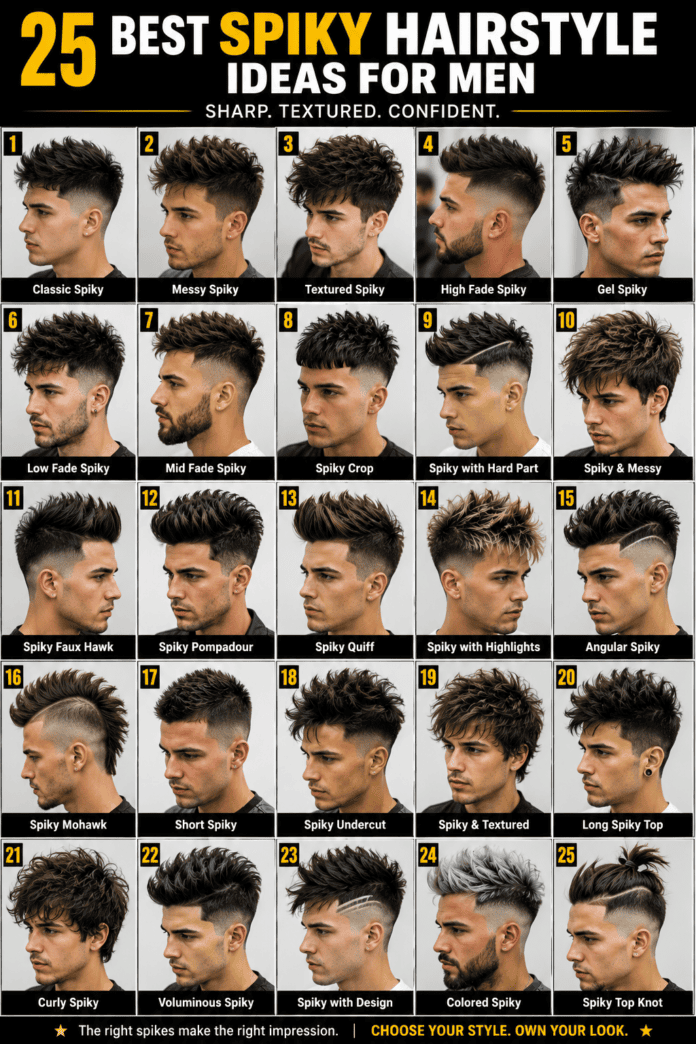
The strongest spiky hairstyle ideas for men right now are the Classic Short Spikes, Textured Spiky Crop, Spiky Quiff, and Messy Spiky Fade. They work because the shape comes from texture and direction rather than stiff, separated points, so the finish feels current while still giving the hair noticeable height and attitude.
I’ve spent more than a decade cutting and styling men’s hair, and spikes are one of those looks that expose a weak haircut fast. I’ve also stripped plenty of overworked styles back because the client needed less product, not more.
I chose these looks by balancing hair length, texture, face shape, styling time, and how forgiving the cut is between appointments. The best spiky hairstyle ideas should still look intentional after the first week, not only during the barber-chair reveal.
| Quick Pick | Best For | Ideal Hair Length | Hold Needed | Upkeep |
|---|---|---|---|---|
| Classic Short Spikes | Easy everyday styling | 1–2 inches | Medium | Low |
| Textured Spiky Crop | Thick or straight hair | 1.5–2.5 inches | Medium | Low |
| Spiky Quiff | Added height | 3–4 inches | Medium-high | Medium |
| Messy Spiky Fade | Casual texture | 2–3 inches | Medium | Medium |
| Crew Cut Spikes | Minimal morning work | 1–1.5 inches | Light-medium | Low |
| Low Fade Spiky Top | Clean sides | 2–3 inches | Medium | Medium |
| Faux Hawk Spikes | Stronger shape | 2.5–4 inches | High | Medium |
| Wavy Spiky Top | Natural movement | 2–4 inches | Medium | Medium |
| Disconnected Spiky Undercut | Maximum contrast | 3–5 inches | High | High |
| Side-Swept Spikes | Softer definition | 2.5–4 inches | Medium | Medium |
Classic and Short Spiky Hairstyle Ideas
Short spiky hairstyles are the safest starting point because the hair has less weight fighting against the direction you give it. These cuts also leave room for texture without forcing you into a complicated blow-dry routine every morning.
1. Classic Short Spikes
Classic short spikes work best when the points stay compact rather than standing like perfectly separated needles. The top sits around one to two inches long, with slightly shorter hair toward the crown and tidy sides that keep the silhouette controlled. Individual pieces lift upward at subtly different angles, leaving enough separation for the texture to show. The front can rise a little higher without turning into a full quiff.
This is one of the easiest spiky hairstyle ideas for straight, medium-density hair and suits most oval, square, and softly round faces. Ask your barber, “Keep the top short enough to spike with texture, and leave the sides clean without taking them too high.” A pea-sized amount of matte paste usually gives enough control, while heavy gel can make the sections look too deliberate. Skip it if you strongly dislike using any styling product at all.
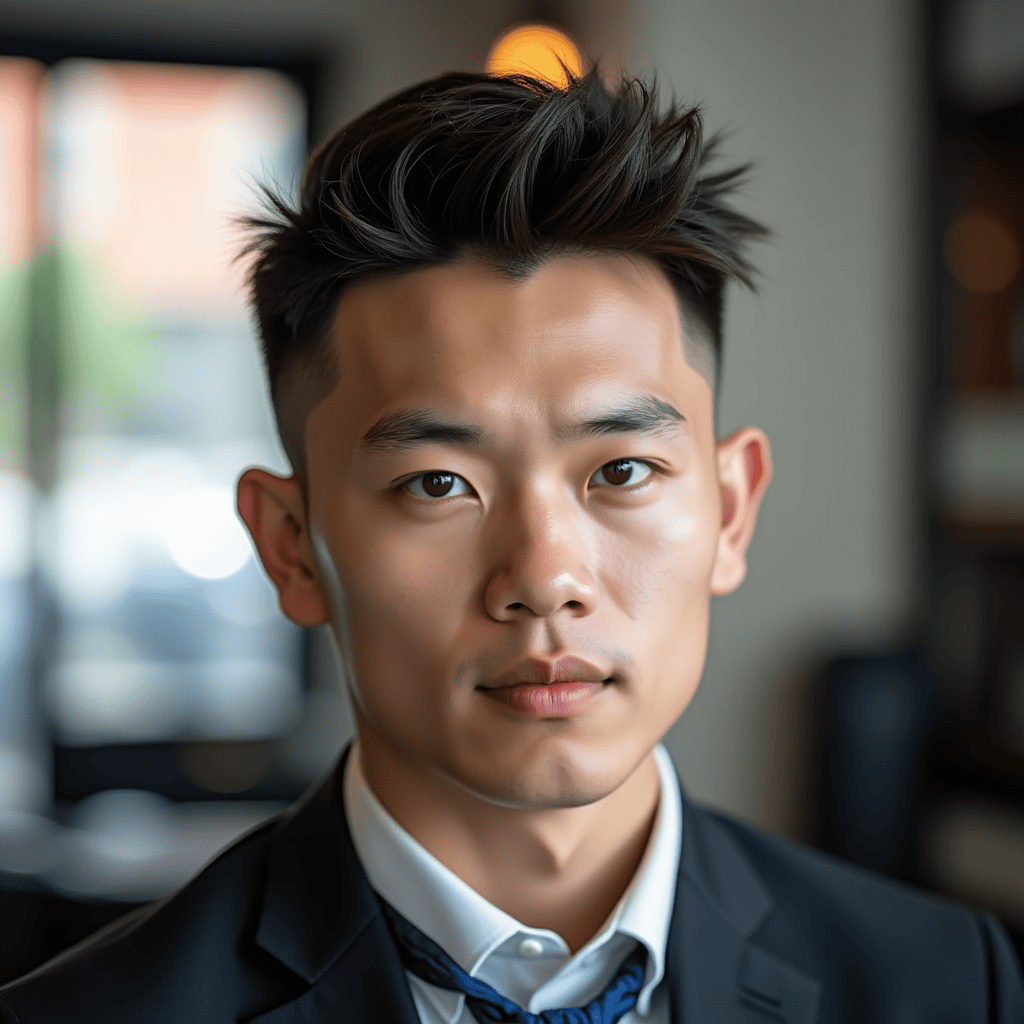
2. Textured Spiky Crop
The textured spiky crop keeps the outline short but breaks the top into rough, irregular sections. Hair through the crown points slightly forward while the front rises upward, creating movement without a tall profile. The finish should look dry and touchable, with small changes in direction replacing uniform spikes. Shorter sides sharpen the shape without stealing attention from the top.
Thick, straight hair handles this crop particularly well because the natural density gives each section enough substance to stand apart. Tell your barber, “Cut plenty of choppy texture through the top and leave enough length at the front for short spikes.” Styling takes a minute or two with clay worked from the roots outward. The drawback is that overgrown texture can become bulky quickly, especially around the crown.
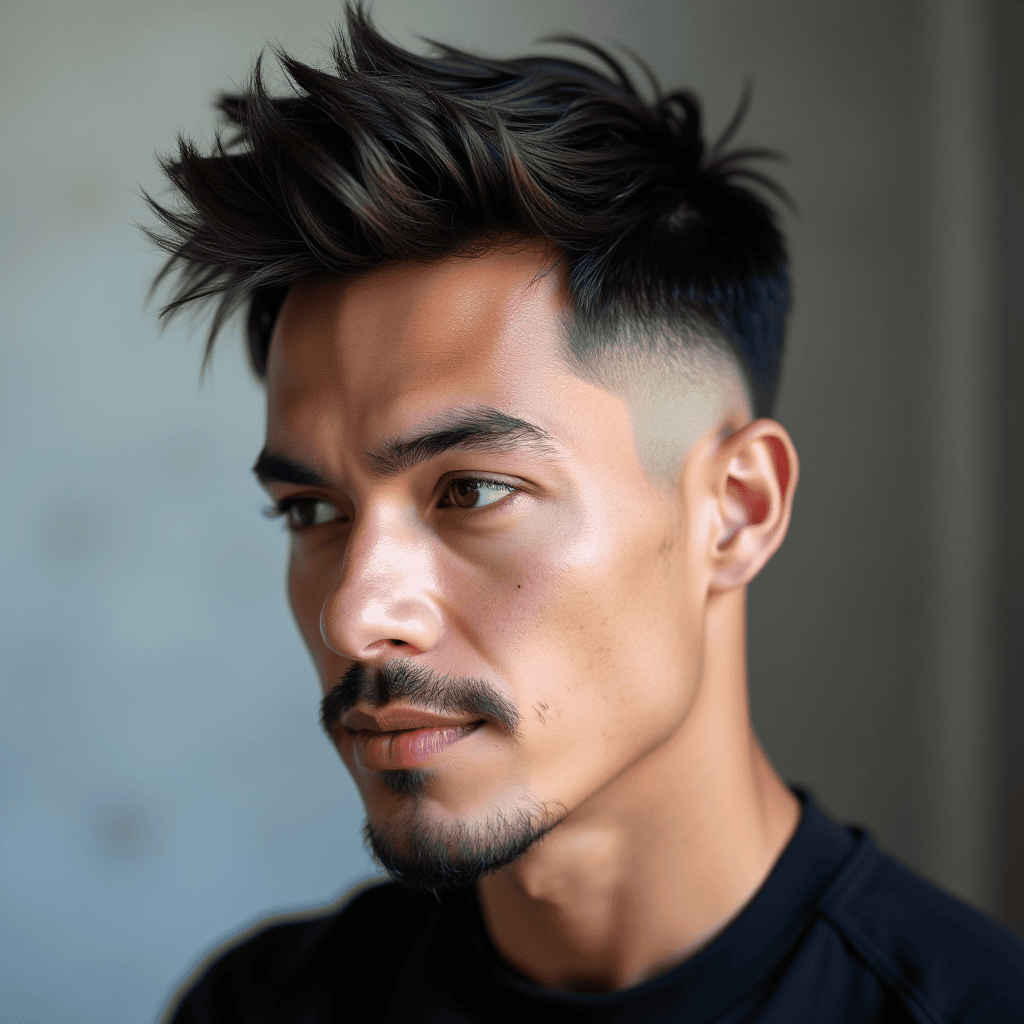
3. Crew Cut With Spiky Top
A crew cut with spikes takes the familiar close-cut shape and gives the front half more vertical direction. The crown stays short and controlled while the top gradually gains enough length toward the forehead to create a few defined peaks. The result has more structure than a messy crop but less height than a quiff. From the side, the profile should still read as compact and athletic.
Men with straight or slightly wavy hair who want a low-maintenance option usually get along with this cut. Ask for, “A crew cut with enough extra length through the front to push into short spikes.” You can style it with fingertips and a small amount of matte hair wax, making it practical before work or the gym. Coarse hair that grows strongly forward may need more blow-drying than the short length suggests.
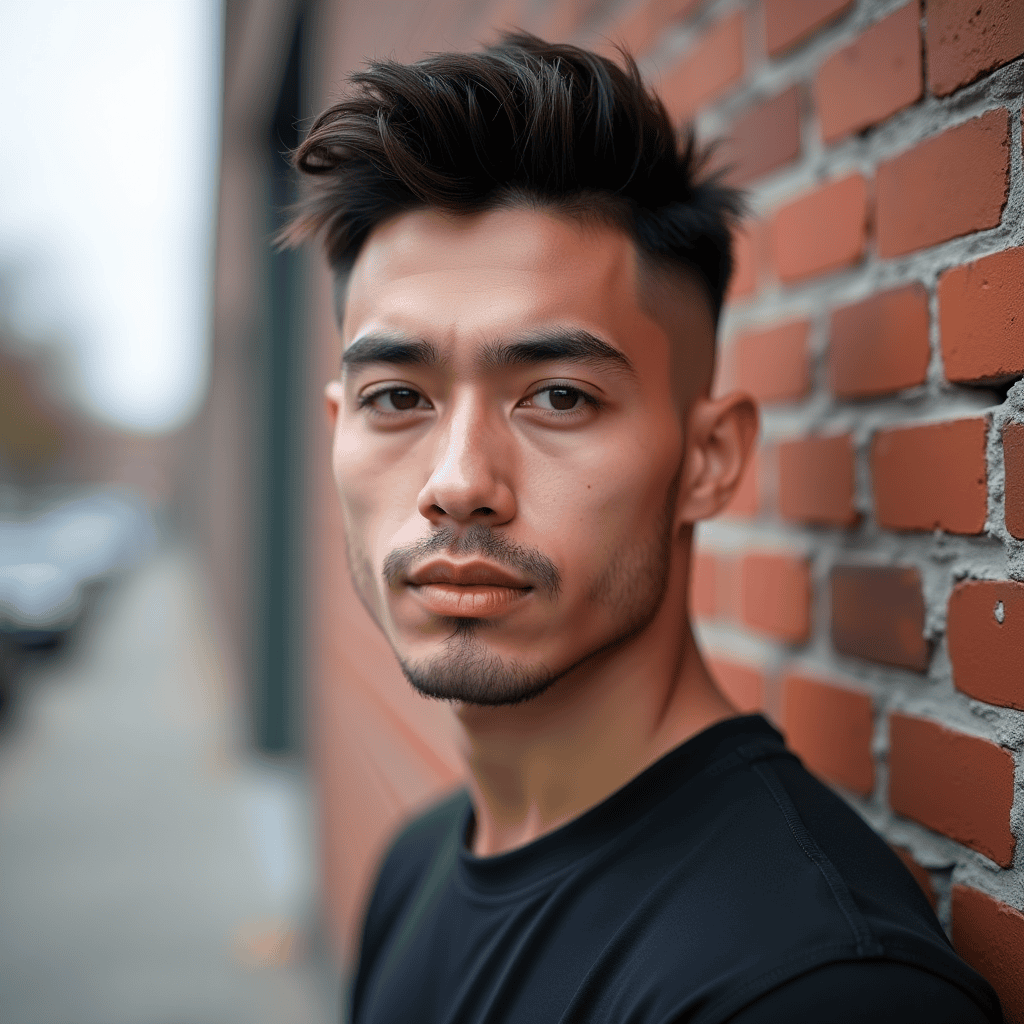
4. Ivy League Spikes
Ivy League spikes soften the usual preppy outline by lifting the front instead of combing it neatly to one side. The top remains long enough to show a gentle graduation from the shorter crown to the fuller hairline. Rather than forming sharp points everywhere, only a few pieces near the front break upward. The sides stay scissor-neat or lightly tapered for a polished shape.
This version works when you need spiky hairstyle ideas that can move between an office and a casual evening without a complete restyle. Ask your barber, “Cut an Ivy League shape, but leave texture and extra length in front so I can spike it instead of parting it.” Use light paste for work and add stronger definition later if you want it. Extremely fine hair may collapse unless you use a dryer for root lift.

5. Caesar-Inspired Spiky Fringe
A Caesar-inspired spiky fringe turns the normally flat forward edge into short, broken points. The top moves toward the forehead, but the last half-inch kicks upward and slightly sideways rather than sitting in a straight line. Choppy texture keeps the fringe from looking heavy. Closely tapered sides give the compact top a stronger frame.
The style is useful for straight hair and men who prefer keeping most of the forehead covered while still adding visible texture. Tell your barber, “Keep a Caesar-style forward top, but point-cut the fringe so I can lift it into small uneven spikes.” Maintenance is easy until the fringe grows past its ideal length, then the shape can start dropping into the eyes. It is less forgiving on hair that strongly curls at the front.
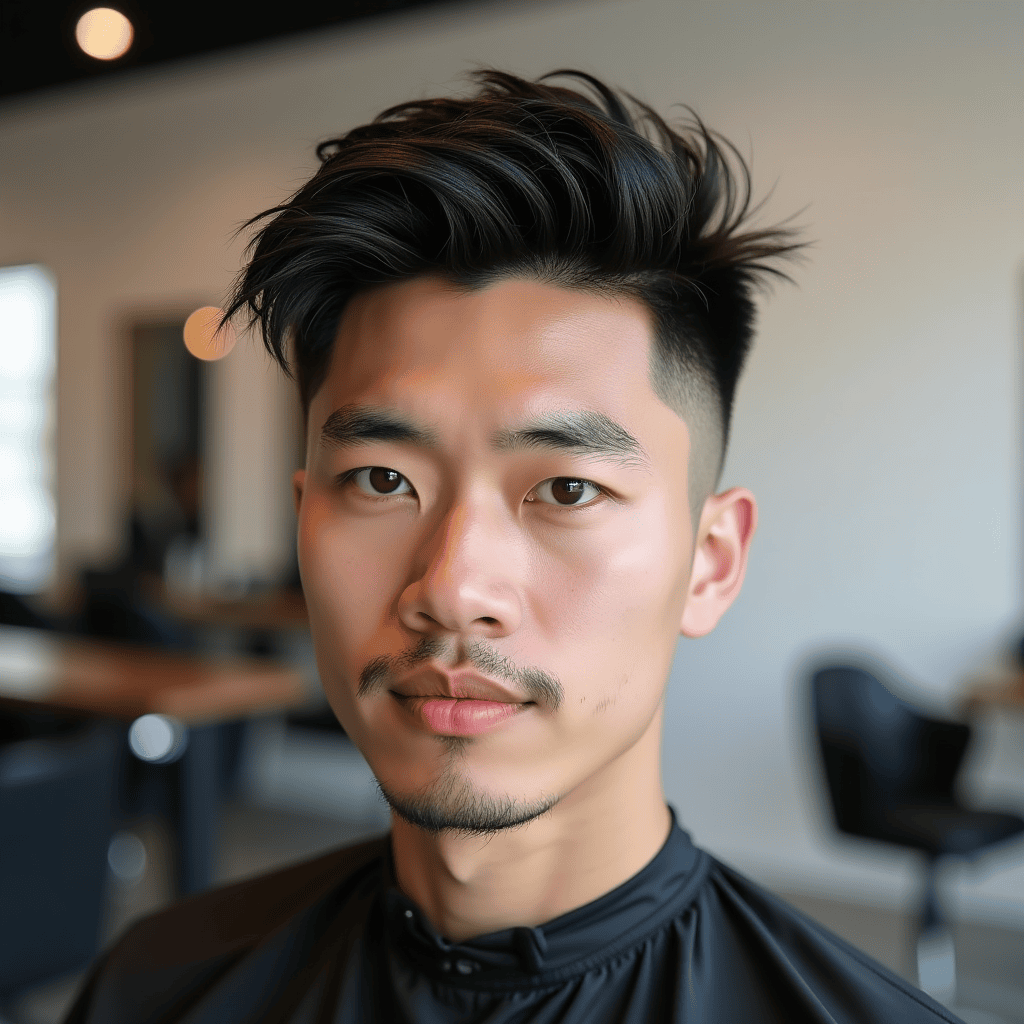
Fade and Taper Spiky Hairstyle Ideas
A fade changes how dramatic spikes appear because exposing more scalp on the sides makes even moderate height look taller. The choice between low, mid, high, and skin fades matters as much as the styling on top, especially if you are trying to balance a longer or rounder face.
6. Low Fade Spiky Top
A low fade spiky top keeps most of the visual weight around the temples while cleaning the lowest edge sharply. The spikes begin about two inches above the forehead and become softer toward the crown, creating a gradual change rather than an abrupt wall of height. Because the fade stays low, the head retains a fuller overall outline. That makes the top feel textured rather than aggressive.
This is among the most adaptable spiky hairstyle ideas for men who want a fade without showing too much scalp. Ask for, “A low fade that stays below the temple, with two to three inches on top and plenty of point-cut texture for spikes.” Expect to reshape the fade every few weeks if you like it crisp. The fuller sides can still feel heavy on extremely thick hair unless the barber removes some internal weight.
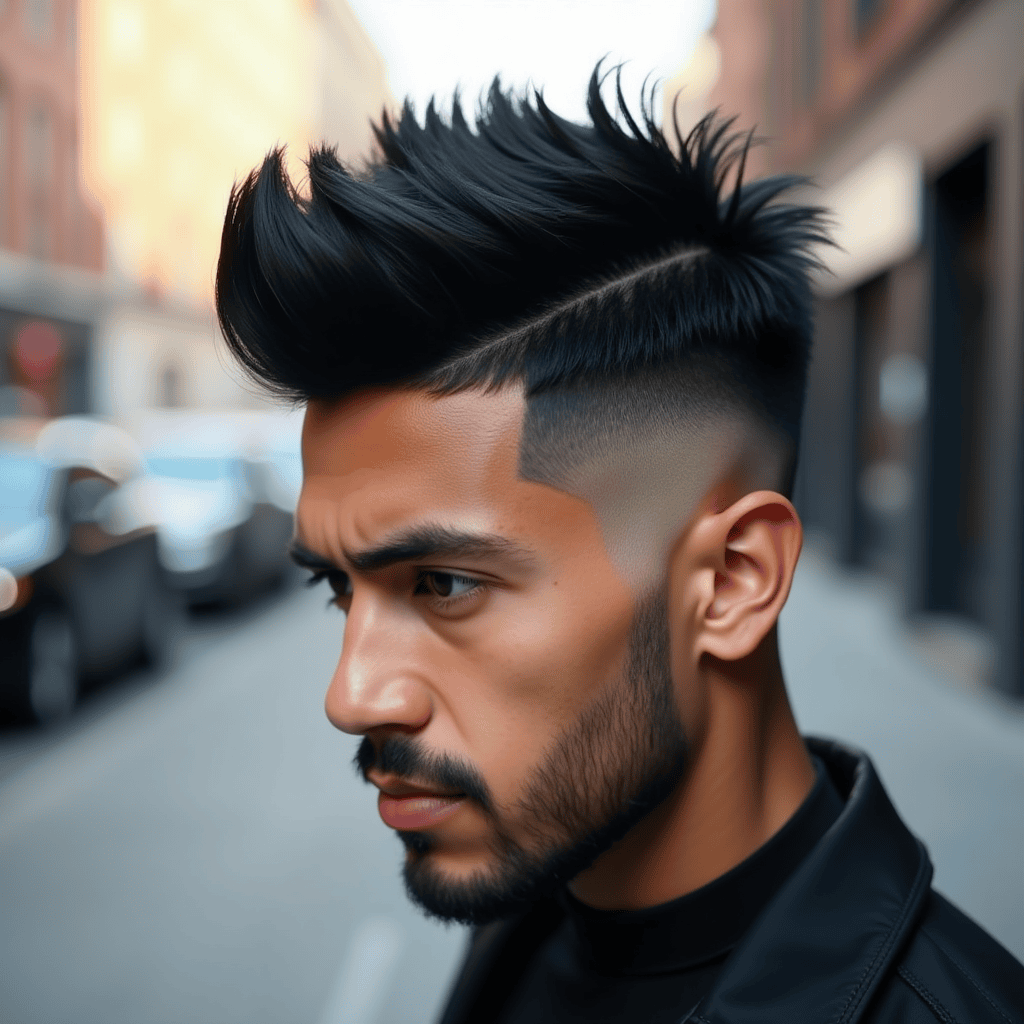
7. Mid Fade With Defined Spikes
The mid fade gives defined spikes a cleaner and more obvious frame than a low fade. Hair transitions down around the middle of the sides while the top stays noticeably longer, with narrow sections pinched upward from front to crown. The best version keeps the points different in thickness and height. Perfectly identical spikes make the cut look dated fast.
Medium-to-thick straight hair gives this style the strongest structure, though slight waves can add useful movement. Tell your barber, “Give me a mid fade and keep enough weight on top to create defined spikes without making them thin.” A dryer aimed upward at the roots makes styling faster before you add paste. The main downside is contrast: once the fade grows out, the whole haircut loses its sharpness sooner than a taper would.
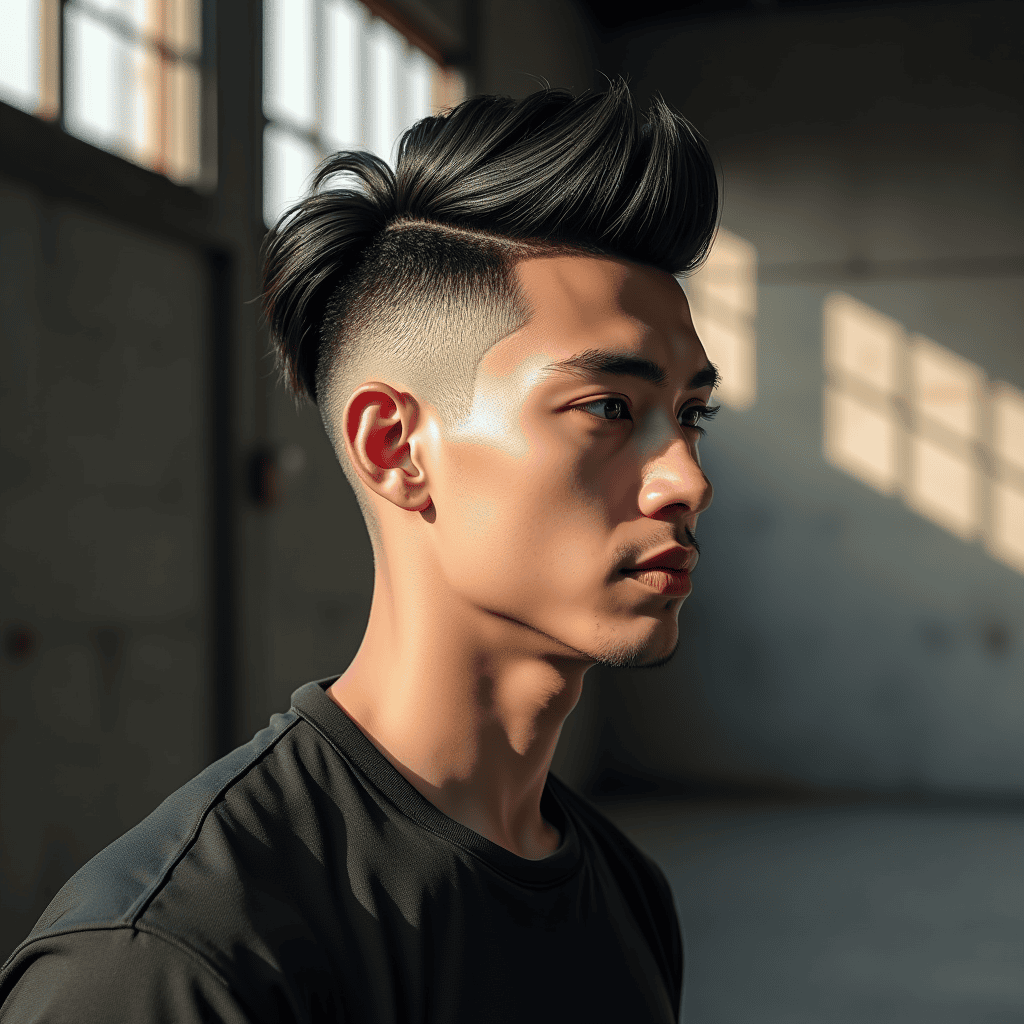
8. High Fade Sharp Spikes
High fade sharp spikes put almost all the volume on top by removing weight close to the upper temples. The exposed sides make two or three inches of hair appear dramatically taller, especially when the spikes point nearly straight upward. Keep the tips separated but not razor-thin. A slightly flatter crown prevents the haircut from turning into one continuous vertical block.
Square and oval faces usually carry this stronger silhouette comfortably, while very long faces may look even longer with excessive height. Ask your barber, “Take the fade high and keep the top thick enough for sharp upward texture, but don’t thin out the tips too much.” Strong hold helps, particularly in humid weather. The cut is not subtle, and the high fade demands more frequent cleanup if you want the contrast to stay fresh.
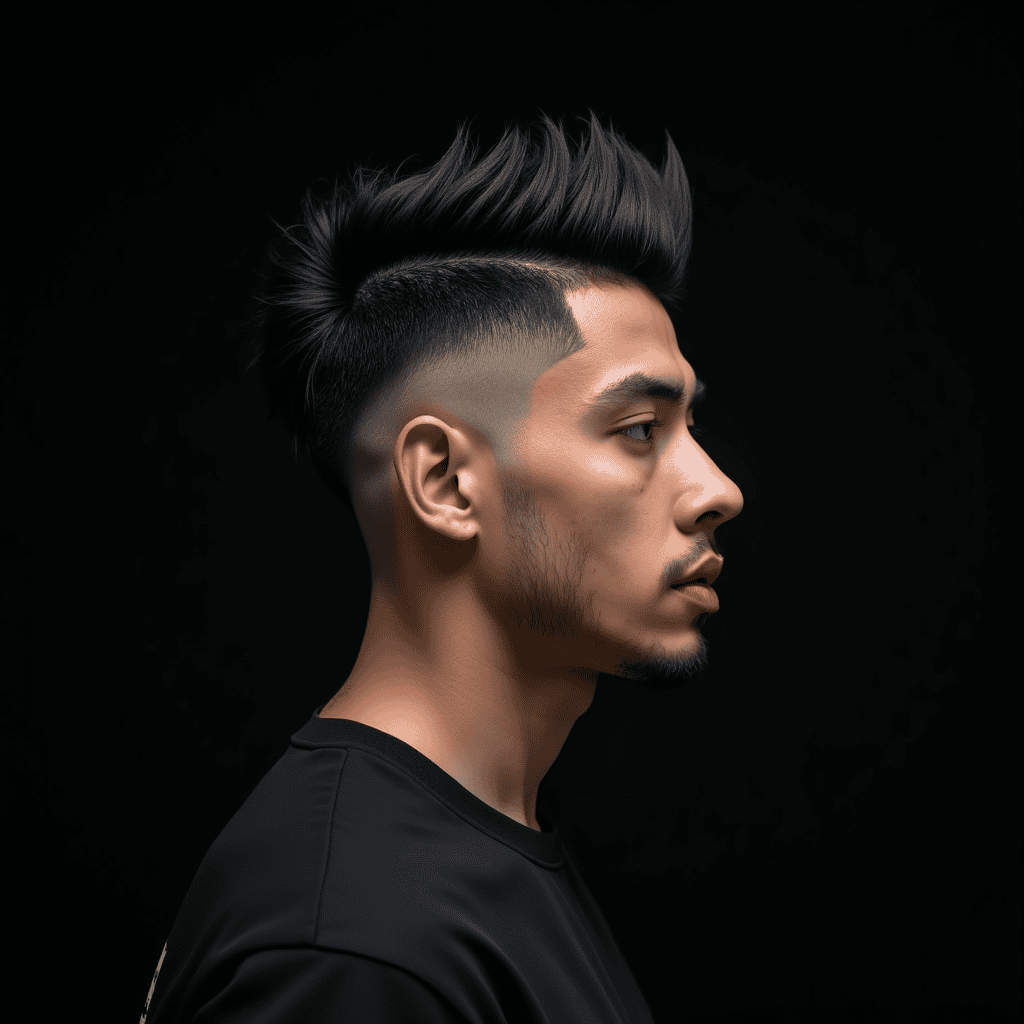
9. Skin Fade Messy Spikes
The skin fade messy spike combination mixes the cleanest possible sides with deliberately imperfect texture above them. Instead of pushing every strand upward, the top shifts forward, sideways, and diagonally with a few taller pieces around the front. That disorder is what keeps the contrast from feeling too severe. The finish works best matte rather than glossy.
For guys with dense hair, this is one of the spiky hairstyle ideas that can remove noticeable bulk while keeping personality on top. Say, “Skin fade the sides and leave the top textured enough for messy spikes that don’t all stand in one direction.” Styling is fast once the cut is right, but the fade starts looking softer as soon as new growth becomes visible. Sensitive scalps may also prefer a slightly longer taper instead of shaving down to skin.
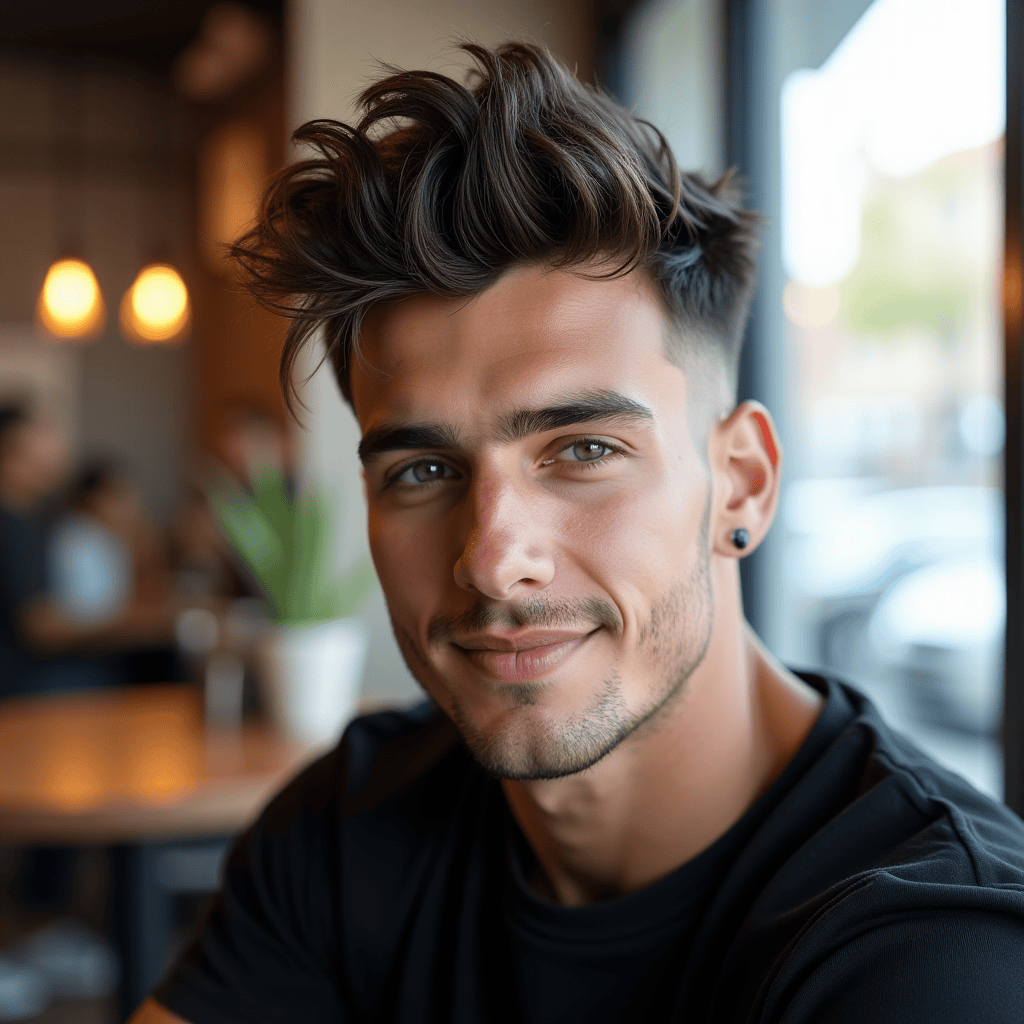
10. Drop Fade Spiky Texture
A drop fade curves lower behind the ear, which lets the spiky top keep more visual weight toward the back of the head. That curved line works especially well when the crown carries slightly longer, textured pieces rather than getting cut flat. The front can still rise, but the silhouette feels more connected from forehead to occipital area. From the side, the fade shape becomes part of the design.
Men with thicker hair and rounded head shapes often appreciate that extra structure at the back. Ask for, “A drop fade that follows behind the ear, with textured spikes on top and enough length left at the crown.” It takes a barber who understands the curve rather than simply running the same fade height around the head. If the drop is cut too dramatically, it can dominate the hairstyle instead of supporting it.
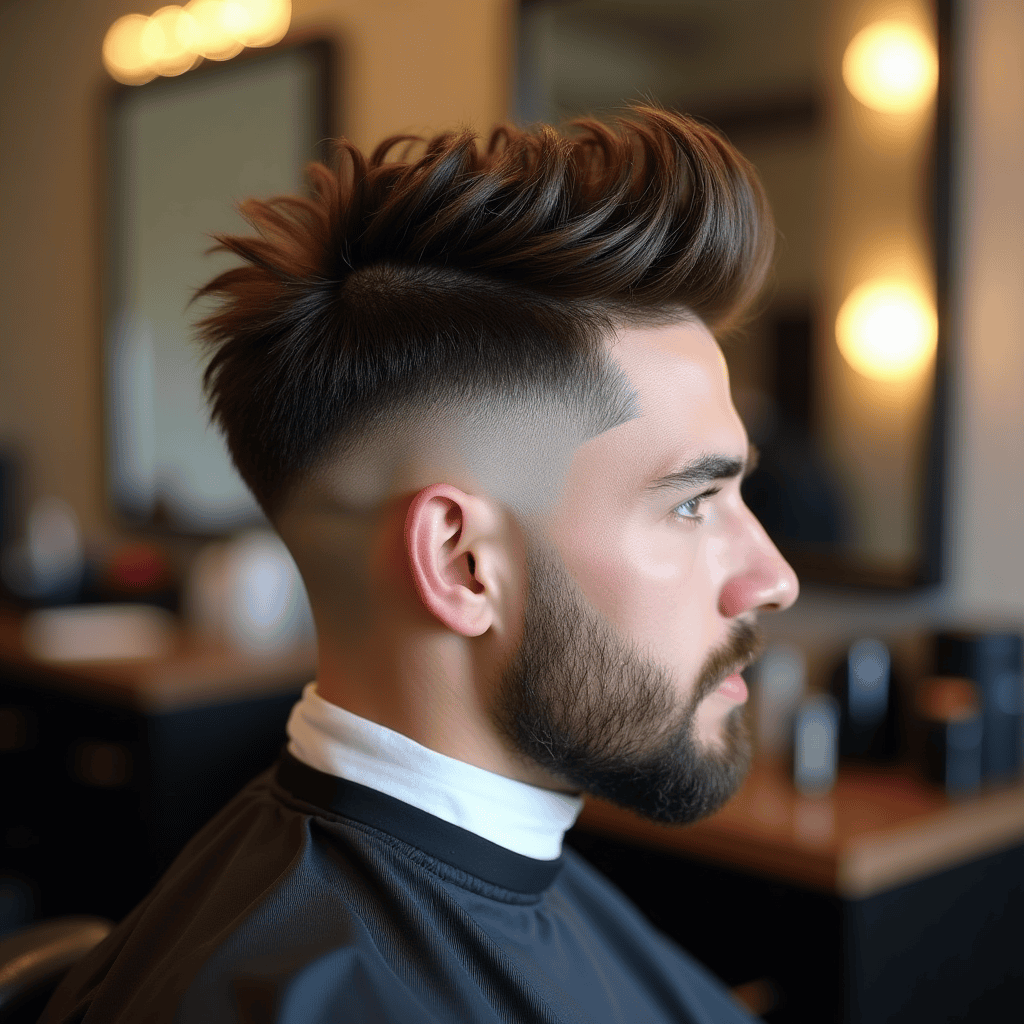
11. Taper Fade With Natural Spikes
A taper fade with natural spikes keeps the shortest hair around the sideburns and neckline while leaving more fullness through the sides. The top looks less sculpted than classic spikes, with individual sections following the hair’s natural growth before being encouraged upward. Nothing needs to sit at a perfect angle. The softer transition makes the finished cut easier to dress up.
If you are testing spiky hairstyle ideas for the first time, this is a sensible place to start because you are not committing to dramatically faded sides. Tell your barber, “Taper the sideburns and neckline, keep some weight through the sides, and texture the top so it can spike naturally.” You can wear it flatter on quieter days. The tradeoff is less contrast, so men looking for a sharp barbershop-fresh outline may find it too restrained.
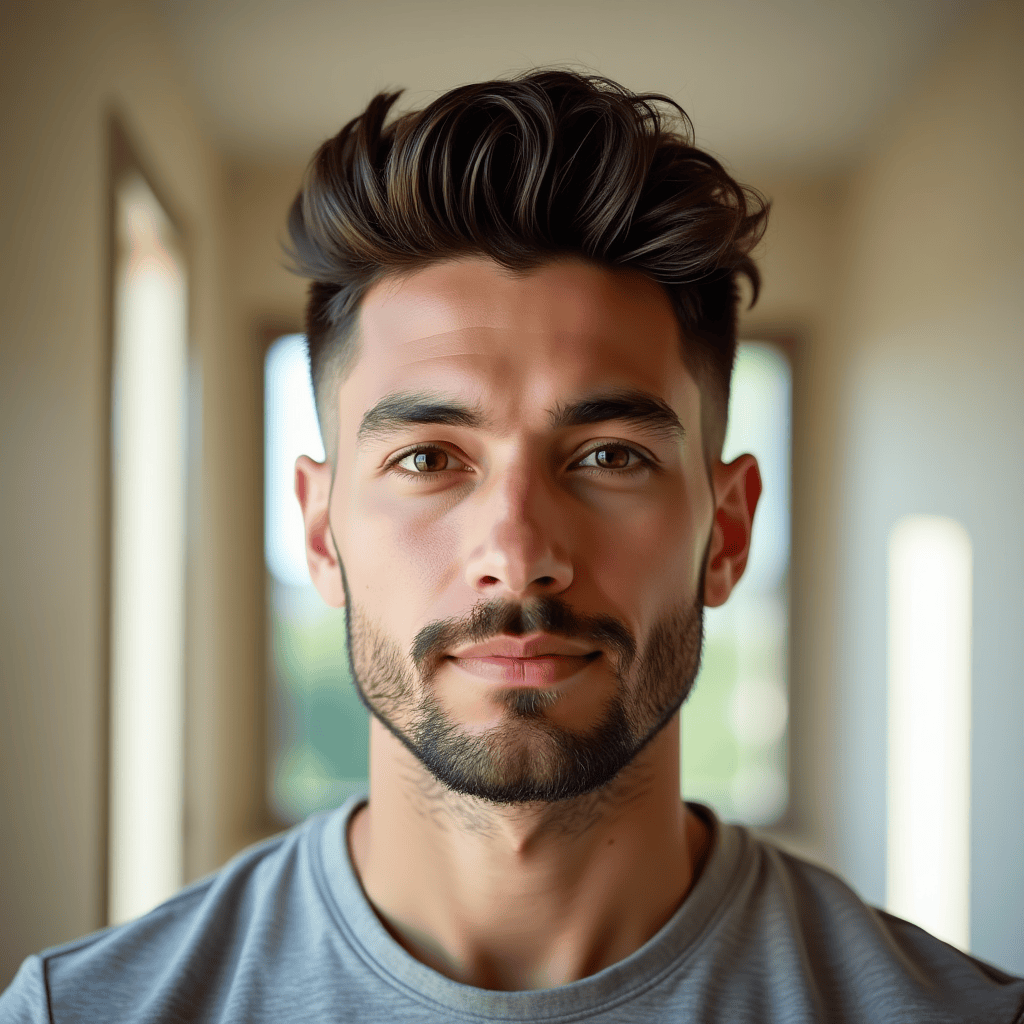
Medium-Length Spiky Hairstyle Ideas With More Volume
Once the top reaches roughly three inches or more, spikes stop behaving like tiny points and start becoming larger sections of directional volume. Blow-drying matters more here because longer hair carries extra weight, and the cut needs enough internal texture to keep the shape from collapsing.
12. Spiky Quiff
The spiky quiff combines a lifted front with broken, textured points instead of the smooth sweep of a traditional quiff. Hair rises highest around the hairline, then gradually lowers toward the crown. The front pieces can lean slightly backward or diagonally rather than pointing straight toward the ceiling. Shorter sides keep the volume concentrated where it matters.
This is one of the better spiky hairstyle ideas for men who want noticeable height without committing to a faux hawk. Ask your barber, “Leave three to four inches in front for a textured quiff and cut enough movement into it so the ends can separate into spikes.” Blow-drying from front to back does most of the work. Fine hair may need a pre-styler, while very heavy hair can drop unless some internal weight is removed.
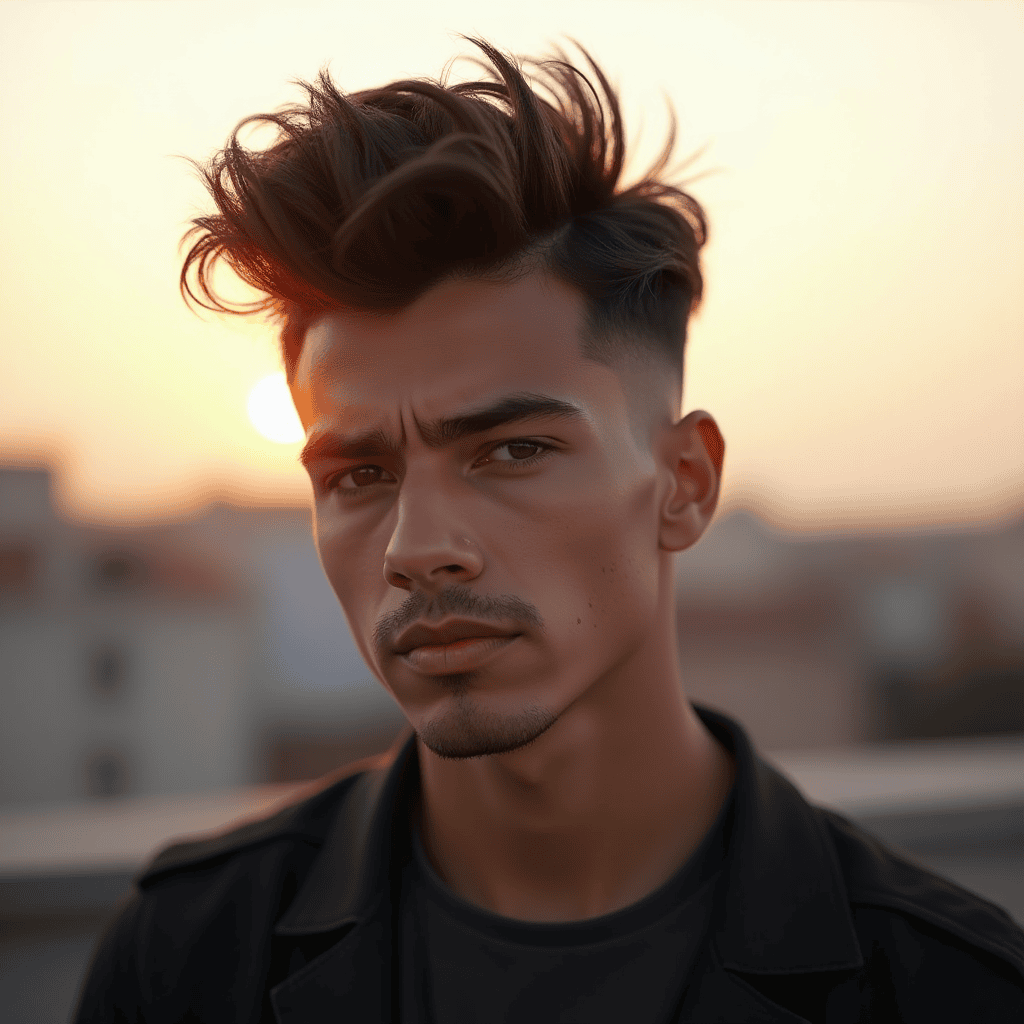
13. Spiky Pompadour
A spiky pompadour keeps the broad height and backward direction of a pompadour but breaks the surface into visible textured pieces. Instead of one polished wave, the front and middle form larger separated sections that lean back at slightly different angles. The sides can be tapered or faded, though leaving some fullness usually balances the bigger top. The shape should look airy, not shellacked.
Thick straight or wavy hair handles the volume best because it can hold shape without needing a mountain of product. Tell your barber, “Keep pompadour length through the front and top, but add enough texture that I can break the surface into spikes.” This style asks for a dryer and brush before product, so it is not a thirty-second haircut. Too much hair gel can also flatten the texture into one shiny mass.
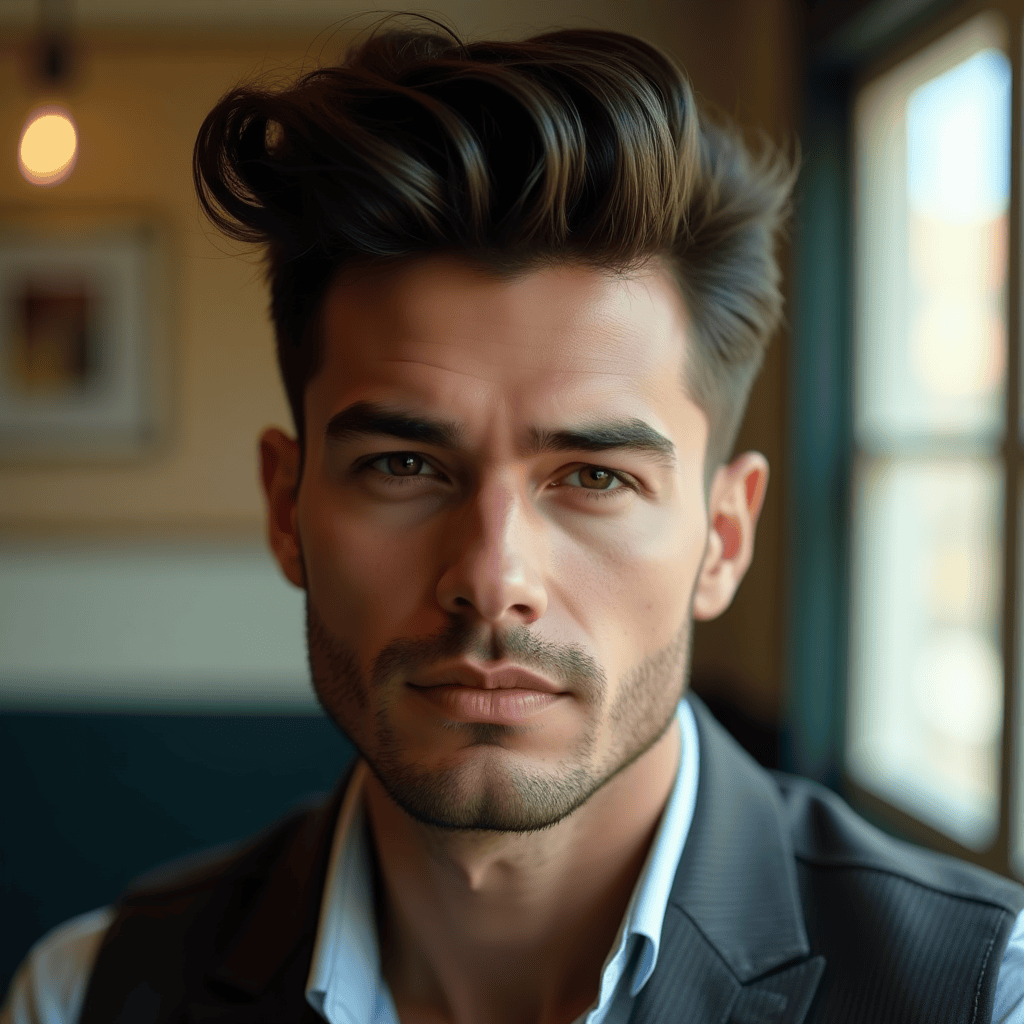
14. Faux Hawk Spikes
The faux hawk pulls the strongest spikes into the center line while leaving enough length around them to avoid a true mohawk outline. Hair near the temples moves diagonally inward, feeding into taller points from the front through the middle. The crown gets shorter so the shape tapers rather than continuing at one height. From the front, you should see a narrow peak without a shaved strip around it.
Men with medium-to-thick hair and a willingness to style for a few minutes can make this work well. Ask your barber, “Keep a textured center section long enough for a faux hawk, with the sides short but blended rather than disconnected.” Strong paste or clay helps pinch the central pieces together. The drawback is versatility: when left completely unstyled, an aggressively textured faux hawk cut can fall in odd directions.
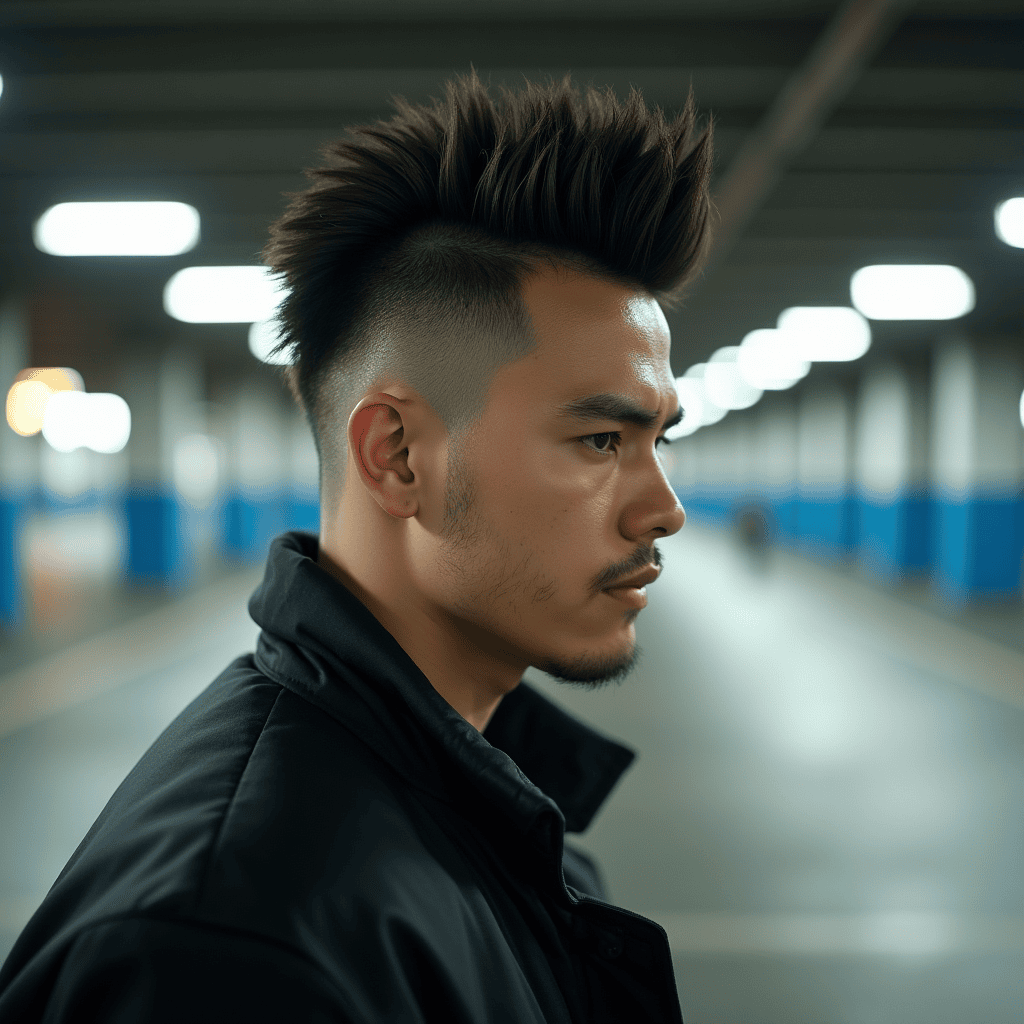
15. Mohawk-Inspired Spiky Strip
The mohawk-inspired spiky strip takes the center emphasis further by narrowing the visible top and reducing much more weight at the sides. The central hair forms several larger upright peaks instead of a continuous fin. Toward the back, those spikes become shorter so the silhouette does not look equally tall from front to neck. This is deliberately graphic rather than subtle.
It suits confident wearers with thick enough hair to keep the central strip substantial. Tell your barber, “Leave a narrow textured strip through the center for large spikes, but soften the transition enough that it still feels wearable.” Expect stronger hold and more deliberate sectioning with your fingers each morning. If your workplace expects conservative grooming, this is probably one to save for a more flexible setting.
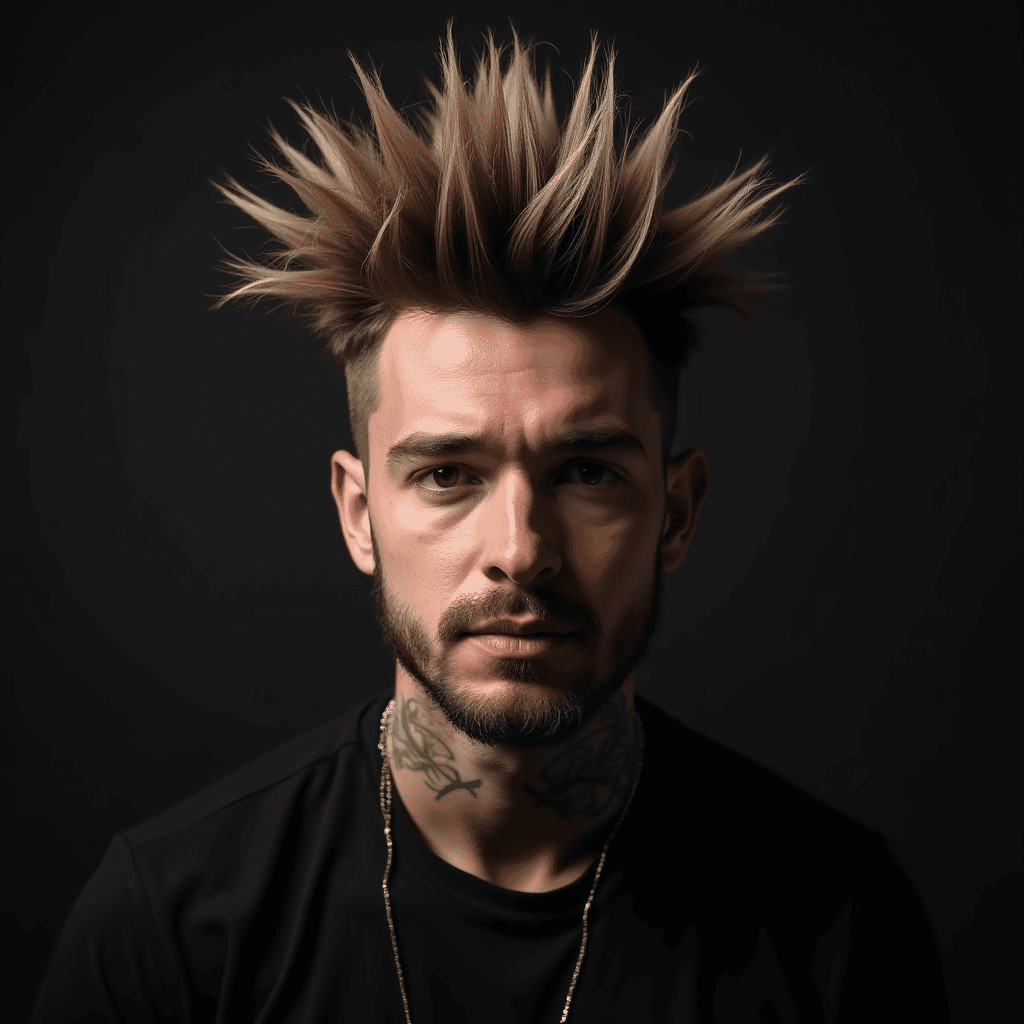
16. Brushed-Up Spiky Texture
Brushed-up spiky texture makes the entire top look fuller without separating every section into a hard point. Hair rises from the roots in one general upward direction, then the ends split naturally into small spikes. The front is only slightly taller than the middle, so the style feels broad rather than front-heavy. A soft taper keeps the perimeter neat.
This version works well on medium-density hair because the root lift creates the impression of greater volume. Ask your barber, “Keep the top around three inches, point-cut the ends, and leave enough weight so I can brush it up before adding texture.” Blow-dry upward with your fingers rather than a tight brush if you want a looser result. The style can puff outward on very coarse hair unless the side weight is carefully controlled.

Messy and Textured Spiky Hairstyle Ideas
Messier spikes are forgiving because they let natural bends and irregular growth patterns become part of the finish. The trick is creating controlled disorder: the haircut still needs a clear silhouette even when the individual strands point in different directions.
17. Messy Bedhead Spikes
Messy bedhead spikes look as though the hair has been pushed around with your hands rather than carefully placed in front of a mirror. The top stays medium-short, with sections tilting forward, upward, and sideways in different sizes. A couple of higher pieces near the hairline stop it from collapsing into ordinary tousled hair. Matte texture makes the randomness believable.
This is one of those spiky hairstyle ideas I go back and forth on because it looks effortless only when the underlying cut is precise. Ask your barber, “Give me choppy layers on top that can move in different directions, with slightly more length in front.” Styling can be as simple as rough-drying and twisting a few sections with paste. The risk is using too much product, which makes intentional mess look sticky and overhandled.

18. Choppy Spiky Fringe
The choppy spiky fringe keeps most of the movement right at the forehead. Short and medium pieces overlap along the front, with some pointing upward while others kick diagonally toward the temples. The rest of the top stays textured but flatter so the fringe remains the visual focus. That contrast gives the haircut movement without needing much overall height.
Straight and slightly wavy hair work best because the fringe needs to break into distinct pieces. Tell your barber, “Point-cut the fringe into uneven lengths and leave enough texture behind it that I can push some pieces up.” Styling is simple with light clay applied from underneath the front. Men with a strong cowlick at the hairline may find the direction unpredictable, which can either look great or fight the intended shape every morning.
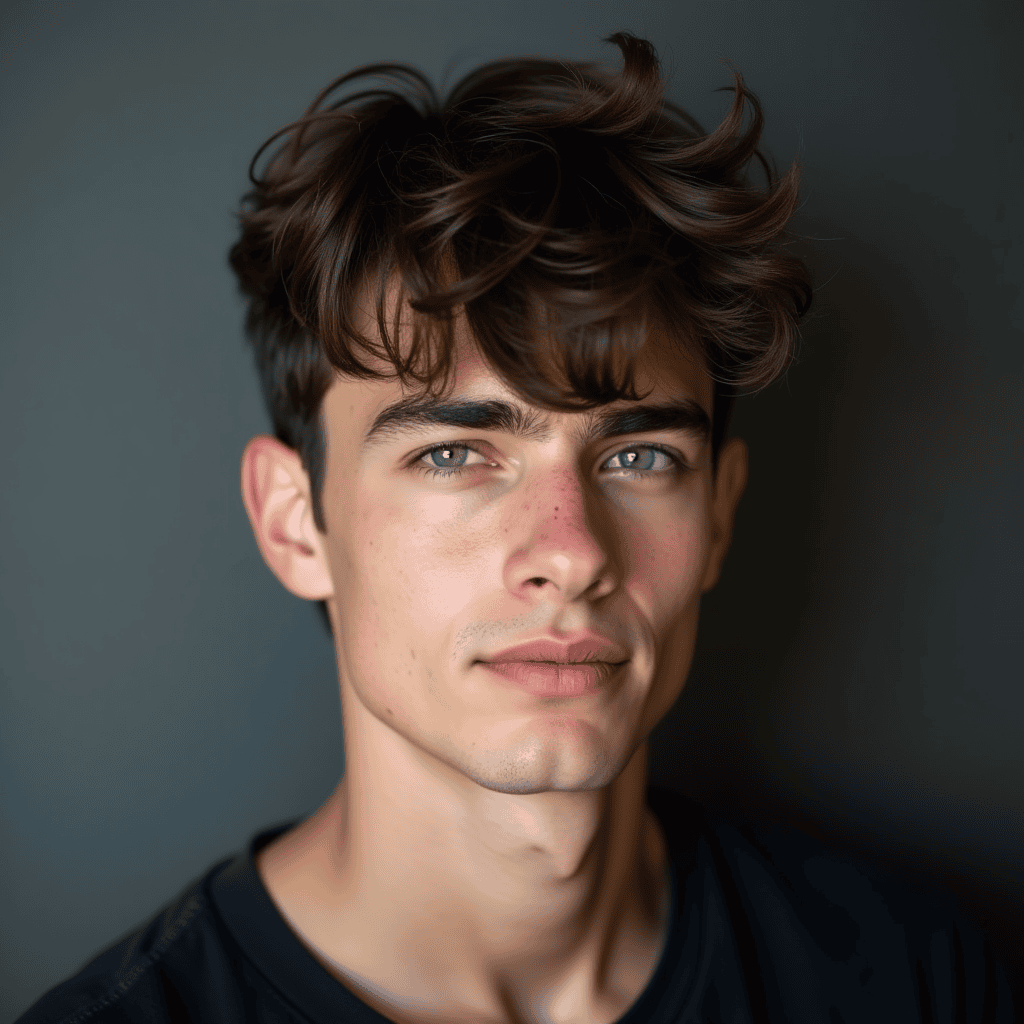
19. Wavy Spiky Top
A wavy spiky top lets natural bends create the separation instead of trying to straighten the hair first. Each section rises from the root and then curves slightly before ending in a loose point, giving the top more depth than rigid straight spikes. The sides can stay short and tidy, but they do not need an extreme fade. The wave itself supplies enough visual interest.
Men with loose waves often find this easier than forcing their hair into a sleek quiff. Ask your barber, “Keep enough length for my wave to show, remove bulk without thinning the ends too much, and shape the top so I can lift it into loose spikes.” Scrunching product into nearly dry hair usually preserves the bend. Brushing repeatedly after styling tends to destroy the definition and leave the hair fluffy.
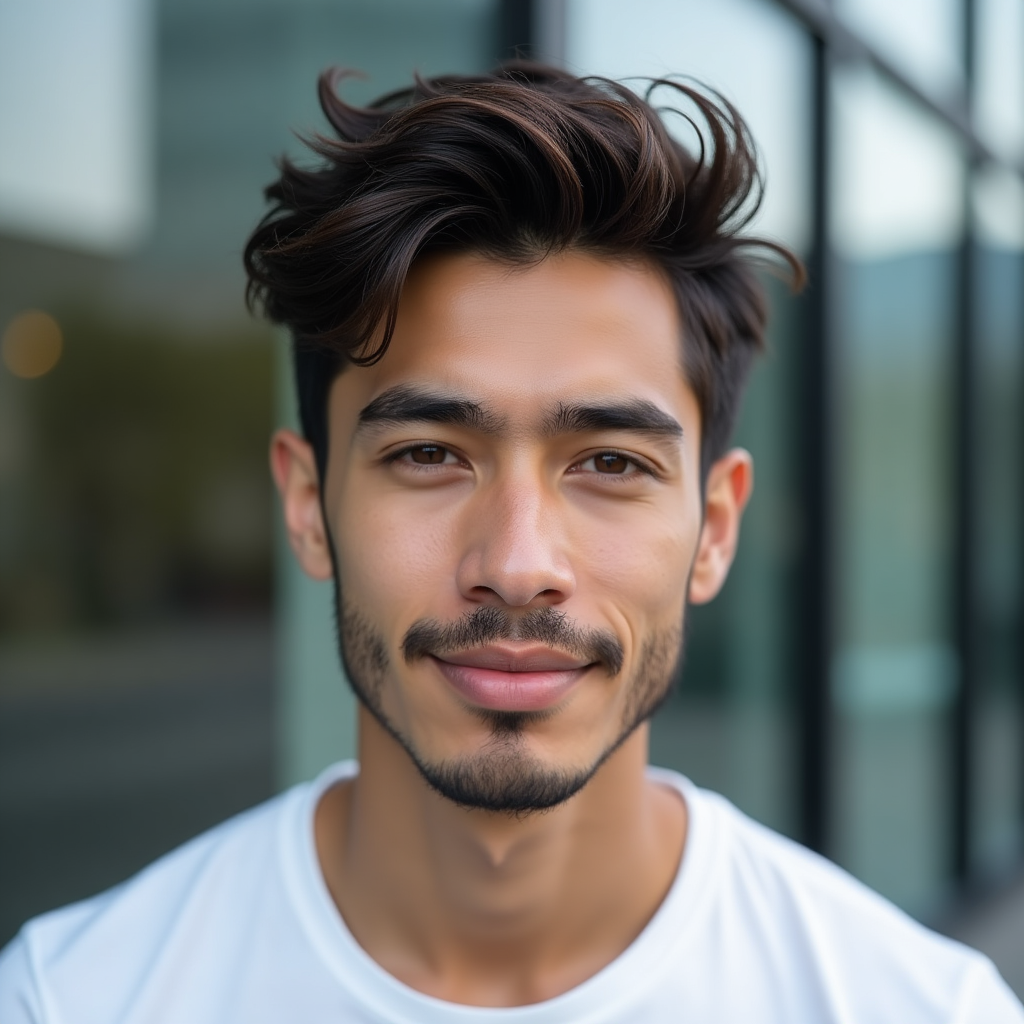
20. Curly Spiky Texture
Curly spiky texture is less about forming pointed strands and more about directing groups of curls upward into a broken silhouette. The curls cluster into narrow peaks, especially around the front and upper sides, while their natural bends keep the ends soft. Shorter sides stop the overall shape from becoming too round. The finished top should still read as curls first, spikes second.
This is a better route for curly-haired men than trying to straighten every section before styling. Tell your barber, “Keep enough curl length on top to form small upward clusters, and take weight out around the sides without thinning the curls into frizz.” Finger styling works better than a fine comb. The drawback is day-to-day variation because curl pattern, moisture, and humidity can change how high each section sits.

21. Piecey Wet-Look Spikes
Piecey wet-look spikes trade the usual dry matte finish for controlled shine. The hair separates into wider sections that rise slightly and then lean back or sideways, giving the impression of damp texture without looking soaked. Keeping the spikes wider is important because thin glossy points can quickly resemble an older gel-heavy style. Short, clean sides make the shine feel intentional.
This works best for evening styling, fashion-forward outfits, and occasions where a sleeker finish makes sense. Ask your barber, “Leave enough layered length on top for wider separated pieces, and keep the perimeter clean so I can style it with shine.” Use a small amount of glossy product rather than saturating the hair. Fine hair can become transparent-looking when wet products clump the strands together, so this finish is easier on medium or thick density.
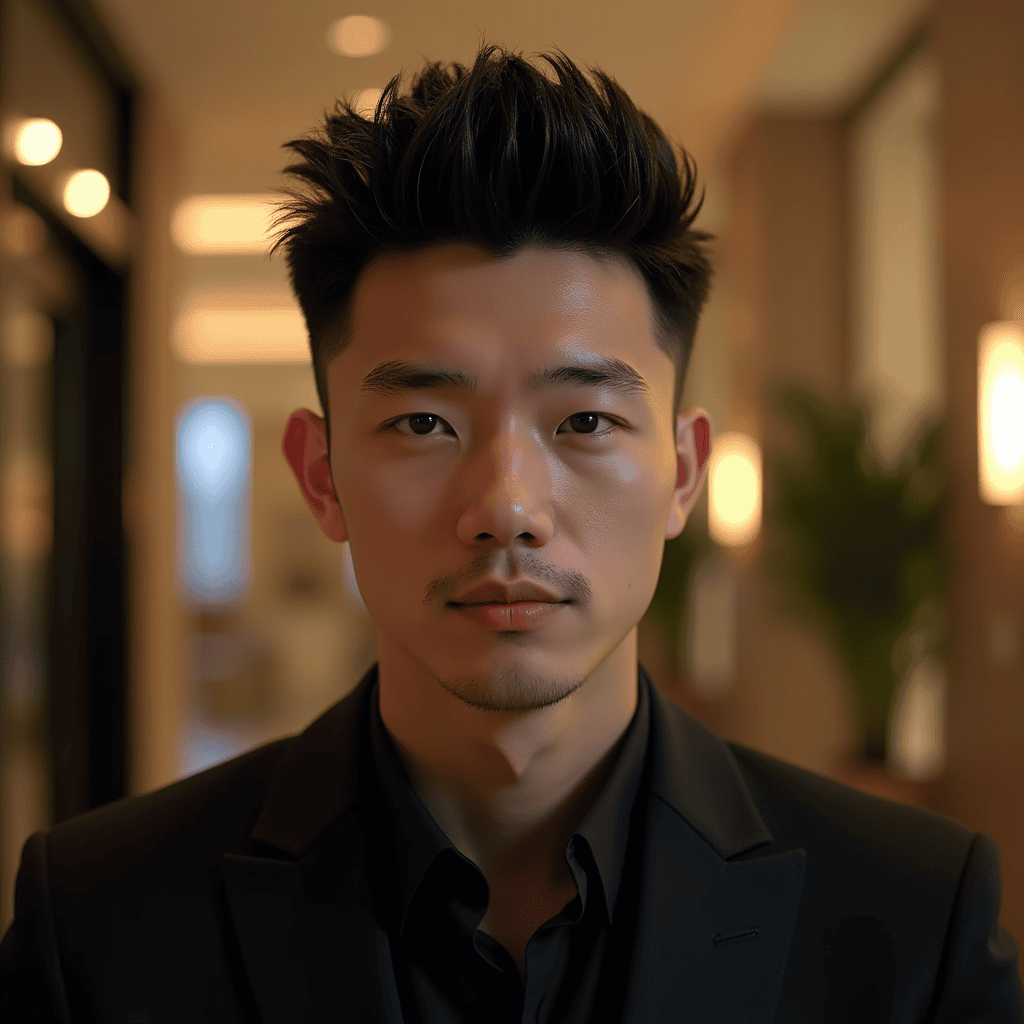
Bold Spiky Hairstyle Ideas With Stronger Contrast
These final looks rely on contrast, extra length, directional styling, or color to make the spikes the first thing people notice. They are not automatically harder to wear, but they leave less room for a lazy haircut or rushed styling.
22. Disconnected Spiky Undercut
The disconnected spiky undercut creates a sharp break between a longer top and dramatically shorter sides. There is little or no gradual blending at the upper edge, so the top seems to sit independently above the undercut. Spikes can stand straight, lean forward, or break diagonally, but the separation line should remain visible. Longer front pieces make the contrast even stronger.
Men with thick straight hair usually have the easiest time controlling this shape. Tell your barber, “Keep a clear disconnect between the short sides and longer textured top, with enough top length for chunky spikes.” The cut gives you plenty of styling freedom, but the visible shelf can look awkward when you decide to grow it out. It is also less forgiving if you prefer switching regularly to conservative combed styles.
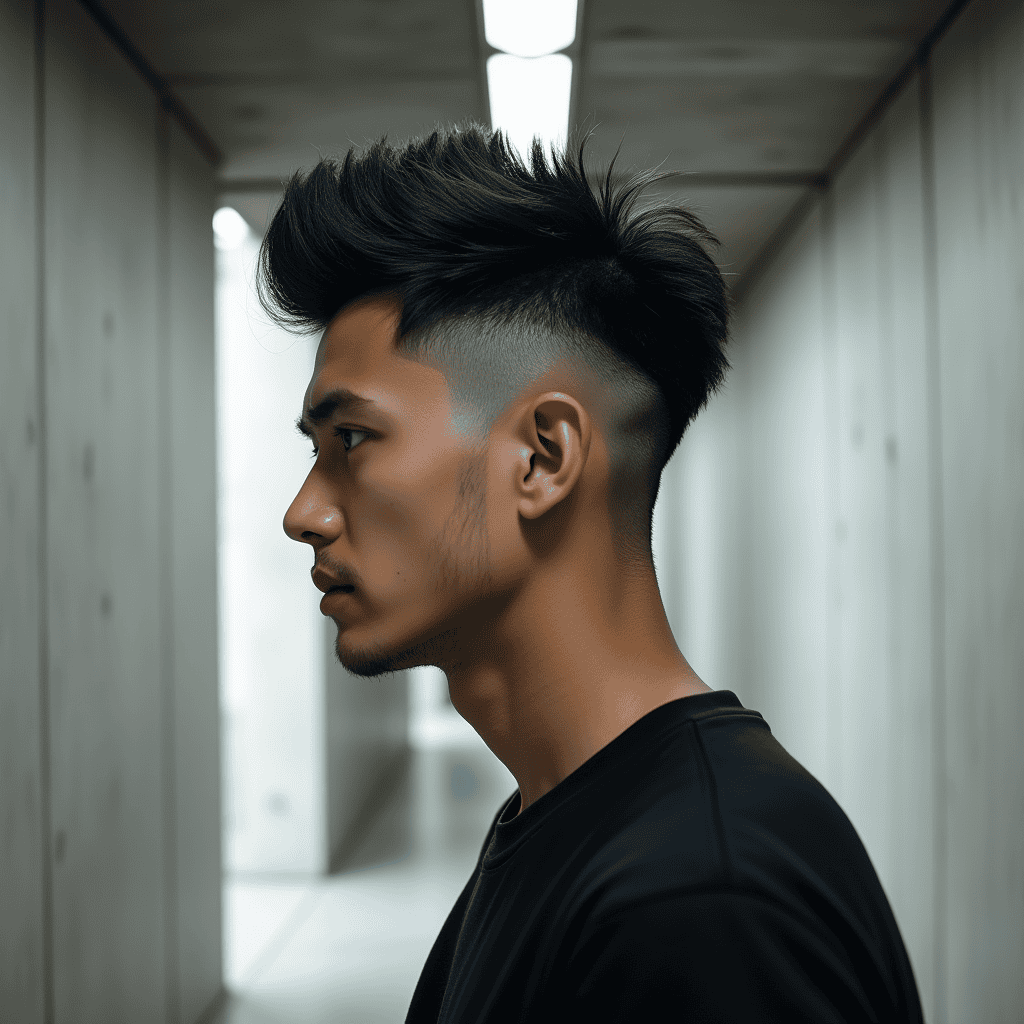
23. Long Spiky Top With Short Sides
A long spiky top stretches the concept beyond small points and turns the hair into larger sculpted sections. Four or more inches on top allow spikes to bend, overlap, and lean in different directions while the sides remain compact. The tallest sections usually sit through the front-middle area rather than directly at the hairline. That placement makes the volume look more balanced from the side.
This is among the higher-maintenance spiky hairstyle ideas because length adds both styling options and weight. Ask your barber, “Keep four to five inches through the top, add enough internal texture to keep it movable, and leave the sides short for contrast.” A blow-dryer is almost mandatory if you want reliable height. Men with very fine hair may struggle because long sections can separate too much and expose the scalp between spikes.
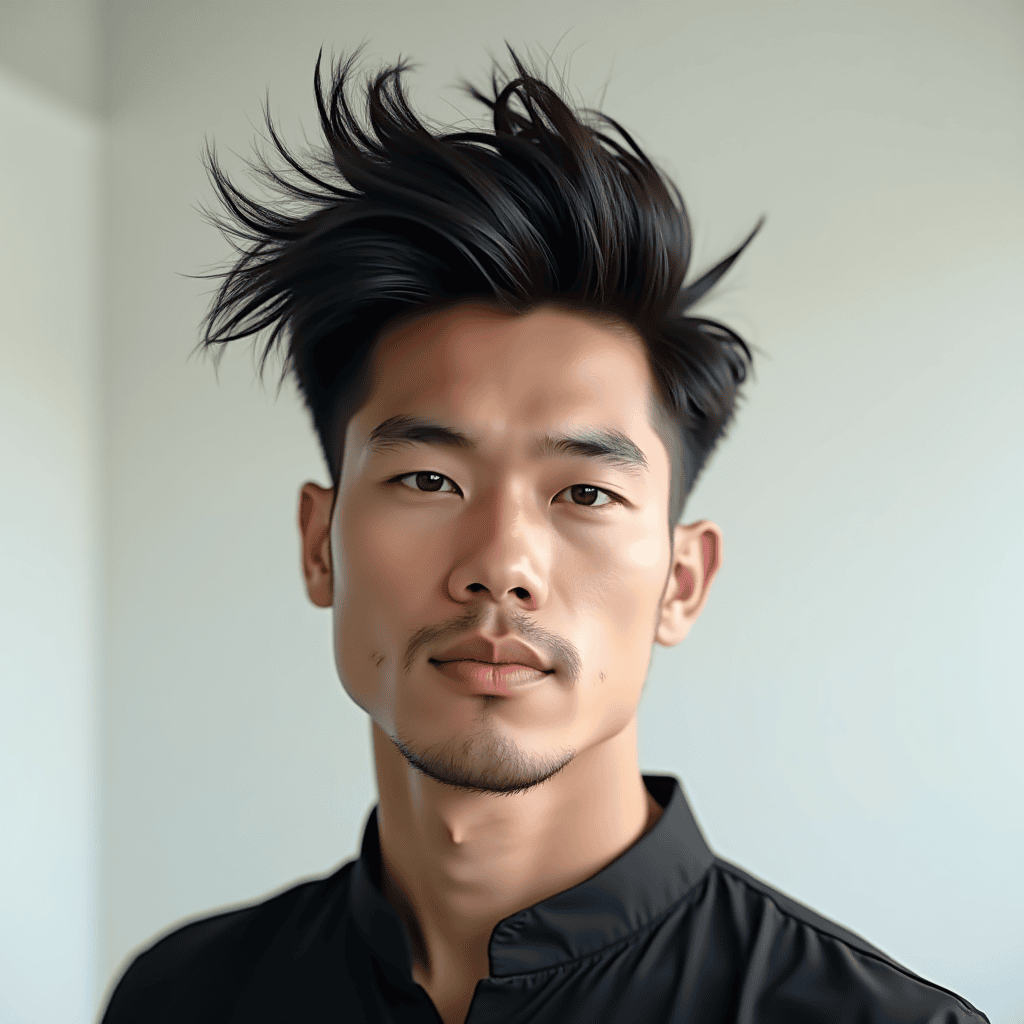
24. Side-Swept Spiky Style
Side-swept spikes move diagonally instead of vertically, creating a softer and more wearable shape. The front rises first, then angles across the forehead while smaller sections behind it follow the same direction. A few pieces can break away from the sweep so the top still reads as textured rather than combed flat. The opposite side should stay tighter to strengthen the directional effect.
This works well on medium-length straight or wavy hair and can help soften a broad forehead without completely covering it. Ask your barber, “Leave enough length through the front to sweep it diagonally, but add choppy texture so the ends can separate into spikes.” Medium hold usually does the job. A strong cowlick pushing the opposite way can turn styling into a daily argument, so follow your natural growth direction where possible.

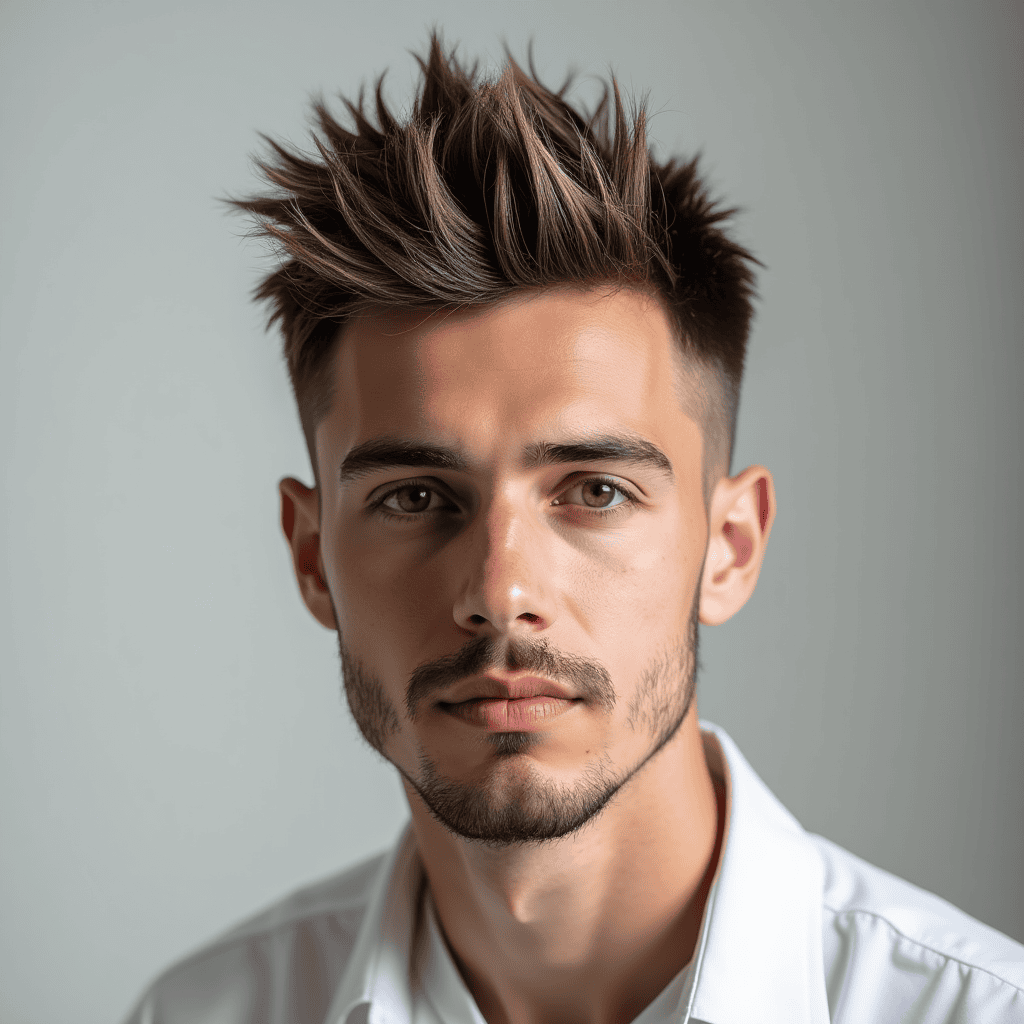
25. Light-Tipped Textured Spikes
Light-tipped textured spikes make the shape more visible by creating tonal contrast at the ends. The haircut itself can remain fairly simple: short sides, two to three inches on top, and irregular points moving mostly upward. Lighter tips catch the eye at each break in the texture, making even modest height appear more defined. Keeping some natural root color prevents the top from reading as one flat block.
This is a bold finish for someone already comfortable maintaining both a cut and color. Ask your barber or stylist, “Keep the top textured into irregular spikes and place lighter color mainly through the ends so the movement stays visible.” Color maintenance adds another appointment cycle, and lightened hair can behave differently during styling, so professional advice on processing and care matters. If you want the lowest possible upkeep, stay with your natural shade.
How to Choose the Right Spiky Hairstyle Ideas
Start with hair behavior rather than a reference photo. Straight, dense hair can hold smaller defined points, while wavy hair usually looks better when the spikes are broader and slightly irregular. Curly hair should keep enough length for the curl pattern to remain visible instead of being forced into stiff individual strands.
Then look at height. A long or narrow face generally needs less vertical lift, so short spikes, side-swept texture, or a fuller taper can create better balance. A rounder face can often take more height through the center because that extra vertical line changes the overall proportion.
Your tolerance for maintenance matters as much as face shape. Short crops and crew cuts can often be styled with fingers in a couple of minutes. Spiky quiffs, long tops, and faux hawks depend more heavily on blow-drying, sectioning, and a fresh enough haircut to keep the structure working.
Bring two or three reference images to the appointment, ideally showing the front and side of a similar cut. Then describe what you actually like about them. “I want the height in front but not the skin fade” tells a barber far more than handing over one photo and asking for exactly that haircut.
Product choice should follow the finish. Matte clay or paste suits dry, separated texture, while wax gives pieces a bit more flexibility. Shinier products make sense for wet-look spikes, but they should be used sparingly because clumping can make fine hair appear thinner.
Where Spiky Hairstyles Go Wrong
The most common mistake is mistaking stiffness for hold. If every spike is frozen into exactly the same shape, the hairstyle loses depth and starts looking like product is doing all the work. Good modern spikes still have tiny differences in angle, thickness, and movement.
The second problem happens during the haircut. Over-thinning the top may seem like an easy way to remove bulk, but it can leave the ends too weak to form substantial sections. I would rather keep enough weight in the right places and create texture deliberately than shred the entire top with thinning shears.
Using more product rarely rescues poor preparation. Hair that has been pressed flat under a hat or left dripping wet will fight vertical styling no matter how much paste you add. Drying the roots in the direction you want usually creates more usable lift than adding another layer of hold.
And not everyone needs a fade. A high skin fade can make spikes look sharper, but it also commits you to a stronger contrast and a shorter maintenance cycle. A taper or scissor-cut side often gives the same textured top a calmer shape that works with more clothing, workplaces, and occasions.
Frequently Asked Questions About Spiky Hairstyle Ideas
What spiky hairstyle works best for thick hair?
Thick hair works especially well with textured crops, mid fades, faux hawks, and medium-length spiky quiffs because there is enough density to build visible sections. The key is controlled weight removal. Ask the barber for internal texture rather than excessive thinning at the ends, which can weaken the spikes.
Can thin hair pull off spiky hairstyles?
Yes, but shorter and looser spikes usually work better than tall separated points. Keeping the top around one to two inches can reduce the weight pulling the hair downward. Blow-drying from the roots and using a lightweight matte product also helps create texture without making fine strands clump together.
Which face shapes suit spiky hairstyle ideas best?
Most face shapes can wear spikes if the height and width are adjusted. Round faces often benefit from moderate height through the center, while long faces usually look more balanced with shorter spikes or diagonal movement. Square and oval faces have the most flexibility because they can carry both compact and taller shapes.
How long should my hair be for spikes?
Short spikes can work with roughly an inch of top length, while textured crops often need closer to two inches. Quiffs, faux hawks, and larger sculpted spikes normally need three inches or more. The longer the hair becomes, the more important blow-drying and internal texture are for maintaining height.
What should I ask my barber for if I want spiky hair?
Describe the length, side treatment, direction, and finish rather than saying only “make it spiky.” A useful request might be, “Keep two to three inches on top, add choppy texture, taper the sides, and leave enough front length to spike upward.” Reference photos can make those preferences even clearer.
Is gel or wax better for spiky hair?
It depends on the finish. Gel usually creates stronger stiffness and more shine, while wax tends to give flexible separation and easier restyling. For modern textured spikes, matte paste or clay is often easier to control. If you want a deliberate wet-look finish, a shinier styling product makes more sense.
How do I make spikes stay up all day?
Start by drying the hair in the same direction you want the finished spikes to move. Work a small amount of product from the roots toward the ends, then shape individual sections with your fingers. Adding product gradually works better than coating the entire top heavily at the beginning.
How do I get spiky hair without making it crunchy?
Use less product and choose a flexible or matte formula rather than a hard-setting gel. Warm it thoroughly between your palms before applying it, then concentrate most of the product near the roots and middle lengths. The ends only need enough residue to separate them into visible pieces.
Can wavy or curly hair be styled into spikes?
Yes, but the best result usually works with the natural bend instead of fighting it. Wavy hair can form loose pointed sections, while curls can be grouped into upward clusters. Keeping the finish flexible preserves the natural texture and avoids turning the hairstyle into stiff, stretched-out strands.
How often should a spiky haircut be trimmed?
Short faded versions usually show growth sooner than longer tapered cuts, so appointment timing depends on how sharp you want the outline to remain. If the spikes stop separating cleanly or the sides begin changing the intended silhouette, that is usually a better signal for a trim than following a rigid schedule.
Can spiky hairstyles look professional?
They can when the height, texture, and side contrast stay controlled. Short spikes, Ivy League variations, tapered spiky tops, and side-swept texture can sit comfortably with business-casual clothing. Extremely tall points, sharp skin fades, or heavily glossy styling naturally make a stronger statement and may suit some workplaces better than others.
How can I make spiky hair look modern instead of dated?
Keep the spikes irregular, textured, and slightly imperfect rather than forming identical narrow points across the entire head. Matte finishes and natural movement also help. Modern spiky hairstyle ideas usually rely on a strong haircut underneath, which means the hair can still look decent even when it is not fully styled.
Your Next Move
Choose the version that matches how your hair already wants to move, then adjust the height and sides around it. A strong spiky cut should reduce the amount of fighting you do with your hair every morning, not create another complicated routine. Save the front and side view of your favorite option, and at your next appointment ask your barber how closely your natural texture can reproduce that specific shape.
Best Men’s Hairstyle Reports
Explore sharp barber cuts, textured styles, fringe looks and relaxed men’s hairstyles for modern grooming inspiration.