

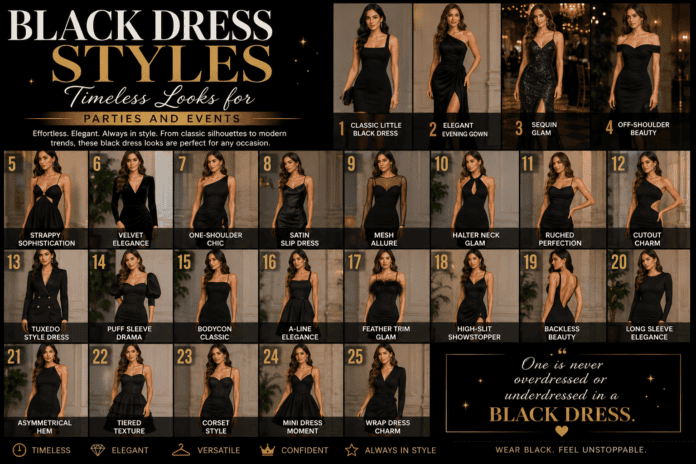
A black dress earns its place in a wardrobe because it can change character without requiring a completely different outfit. The same dark palette can look relaxed at a birthday dinner, polished at a cocktail reception, or formal enough for an evening event simply through changes in silhouette, fabric, footwear, and accessories.
The strongest black dress styles are not defined by color alone. A satin slip dress behaves differently from a structured sheath, and a long-sleeved mini creates a different proportion from a sweeping maxi. Neckline, hem length, drape, tailoring, and even the surface of the fabric determine where a dress feels appropriate.
That flexibility also means a black dress does not need heavy styling to make an impression. Often, the cleaner the base, the easier it is to adapt for different occasions without looking as though the same outfit has been repeated.
What Makes a Black Dress Feel Right for an Event?
Black is visually consistent, but dresses in the same color can carry dramatically different levels of formality. Fabric and construction usually make the biggest difference.
Matte jersey, ribbed knit, and cotton blends tend to read casually, particularly when paired with simple seams and relaxed silhouettes. Crepe, velvet, lace, chiffon, satin, and structured woven fabrics generally feel dressier because their texture, drape, or finish gives the garment more visual presence.
Hemline matters too, although length alone does not determine formality. A sharply tailored knee-length sheath may look more polished than a loose ankle-length jersey dress. Likewise, a satin midi can work beautifully for an evening party even though it stops well above the floor.
The useful question is not simply, “Is the dress long enough?” Look at the whole composition: cut, material, neckline, fit, shoes, jewelry, and venue.
Black Dress Styles That Work Especially Well for Parties
Party dressing usually leaves more room for personality than ceremonies or formal functions. This is where interesting proportions, shine, asymmetric details, and playful accessories become easier to wear.
The Satin Slip Dress
A slip dress gets much of its character from drape. Bias-cut versions follow the body’s lines without requiring heavy seams or rigid shaping, producing a fluid silhouette that suits dinners, cocktail parties, date nights, and evening celebrations.
Black satin is particularly effective after dark because light moves across the surface rather than disappearing into a flat block of color. That subtle sheen gives a simple dress depth.
For a restrained look, pair a midi slip with delicate earrings and narrow-strap heels. A leather jacket and ankle boots pull the same dress toward a less formal setting. In cooler weather, a slim knit underneath can work for casual events, although layering changes the dress from eveningwear into something more relaxed.
Fit deserves attention. Satin highlights pulling and tension quickly, especially around the hips and bust. A little ease usually produces a better drape than sizing the dress as closely as possible.
The Long-Sleeved Mini Dress
A short hem paired with covered arms creates an appealing proportion for parties where a sleeveless mini might feel too exposed. Long sleeves add visual weight above the waist and can make a short dress feel more balanced.
The cut can move in several directions. A fitted mini feels sharper and more nightlife-oriented. An A-line version offers more movement through the hips. Slightly puffed or gathered sleeves bring more volume to the upper half of the outfit.
Footwear determines much of the final mood. Pointed pumps lengthen the silhouette, knee-high boots create a stronger fashion statement, and sleek flats make the look easier for events that involve several hours of standing.
Because the hem is already a focal point, the neckline does not have to compete for attention. A boat neck, high round neck, or modest square neckline often gives the outfit cleaner proportions.
The One-Shoulder Dress
Asymmetry makes a black dress interesting without relying on prints or intense embellishment. A one-shoulder neckline creates a diagonal line across the upper body, immediately drawing attention toward the collarbone and shoulders.
This shape works particularly well for cocktail parties and evening receptions. It also reduces the need for a necklace. Earrings, a cuff bracelet, or a compact clutch are usually enough.
Bra compatibility is worth considering before buying one. Some one-shoulder designs contain internal support, while others require a strapless or convertible bra. A dress that looks excellent while standing in a fitting room may become frustrating if the neckline needs constant adjustment during an event.
The Wrap Dress
Wrap silhouettes are less rigid than many traditional cocktail dresses. The diagonal neckline and adjustable waist create shape without requiring a highly structured bodice.
A true wrap dress offers some flexibility in fit, while faux-wrap versions keep the overlapping appearance but are sewn into a fixed position. The second option may stay more secure during movement, particularly if the neckline of a genuine wrap style tends to shift.
For daytime parties, a knee-length or midi version in crepe works well with pumps or dressy flats. After dark, a longer hem, deeper neckline, or richer fabric can push the same basic construction toward a more formal mood.
Timeless Black Dress Styles for Formal Events
Formal dressing rewards restraint. Dramatic details can work, but the dress usually looks more refined when one feature carries the visual weight instead of several competing for attention.
The Column or Sheath Dress
A column dress creates a long, relatively straight line from shoulder to hem. A sheath is typically more shaped around the torso and may finish around the knee or below it. Both rely on controlled tailoring rather than exaggerated volume.
These silhouettes work especially well for business dinners, gallery events, receptions, and occasions where polished dressing is expected without the theatricality of a ball gown.
Construction makes an enormous difference. Seams that follow the body cleanly, enough ease to sit comfortably, and fabric with sufficient weight prevent the dress from appearing flimsy. Crepe is common for this reason: it can hold a clean line while retaining movement.
Accessories can stay architectural. A structured clutch, pointed shoe, metal cuff, or sculptural earring complements the precision of the dress better than layers of decorative pieces.
The Black Midi Dress
A midi hem occupies useful territory between cocktail and full-length formal dressing. Depending on the cut, it can move comfortably between weddings, dinners, holiday events, theater nights, work functions, and anniversary celebrations.
The exact stopping point matters. A hem ending near the narrowest part of the lower leg often creates a cleaner visual line than one cutting across the widest point of the calf.
Volume changes the effect. A fitted midi reads sleek and modern. A pleated or A-line skirt introduces movement and can feel more celebratory. A full skirt with a defined waist recalls classic occasion dressing without requiring a literal vintage look.
For events that involve stairs, dancing, or walking between venues, a midi can also be more practical than a floor-length gown.
The Floor-Length Black Gown
A long black gown remains one of the clearest options for black-tie and highly formal occasions. The challenge is avoiding a dress that feels heavy or visually flat.
Movement solves much of that problem. Draped skirts, side pleats, controlled slits, bias cuts, chiffon overlays, or subtle trains interrupt the large expanse of dark fabric.
Neckline becomes especially noticeable on a monochrome gown. A halter emphasizes the shoulders. A V-neck creates a long central line. An off-the-shoulder cut opens the upper body and works well with earrings. A high neckline can appear striking when the rest of the silhouette stays narrow and uncomplicated.
A floor-length hem should also be considered with the intended shoes. If the dress will be hemmed, take the actual heel height to the fitting. Several extra inches of fabric become more than a cosmetic issue once they start catching under shoes.
The Velvet Dress
Velvet changes black through texture rather than ornament. Its pile catches light differently depending on direction, giving the surface depth that ordinary matte fabric lacks.
That makes it especially convincing for autumn and winter dinners, holiday parties, formal receptions, and evening celebrations. A simple velvet dress often needs fewer accessories because the material already has a pronounced visual character.
The tradeoff is seasonal. Velvet can feel physically and visually heavy in warm weather. It also shows pressure marks and requires more careful storage than many woven fabrics. Choosing it for the right season matters more than following a generic rule that velvet always looks formal.
Necklines Can Change the Entire Character of a Black Dress
Two dresses with the same hem and fabric can feel completely different because of the neckline.
A square neck introduces visible geometry and frames the collarbone. It works particularly well with fitted bodices and A-line skirts. A V-neck elongates the center of the torso and leaves room for a pendant when the opening is not already dramatic.
Boat necks create width across the shoulders and suit simple, tailored dresses. Halter necks shift attention upward and are particularly effective when the shoulders are meant to become the focal point. Strapless dresses expose more of the upper body, which makes fit and internal structure especially important.
High necklines can be surprisingly effective for evening events. On a sleeveless dress, a high neck creates contrast between covered and exposed areas without requiring embellishment. With long sleeves and a long hem, however, the same neckline can produce a much heavier composition. Fabric, fit, and the amount of skin visible elsewhere determine whether that coverage looks intentional or overwhelming.
How to Style One Black Dress for Different Occasions
The practical advantage of a good black dress is not that it matches everything. It is that neutral color lets proportion, texture, and accessories do more of the work.
For a Cocktail Party
Start with a midi slip, fitted sheath, wrap dress, or one-shoulder style. Add a small evening bag and a shoe with a defined shape, such as a pointed pump or slim sandal.
Metallic jewelry introduces contrast without changing the dress itself. Silver creates a cooler effect; gold brings warmth. Pearls soften the outfit and can push a simple neckline in a more classic direction.
One strong accessory is often enough. Large earrings plus a statement necklace plus an embellished bag can make the styling feel crowded, especially when the dress already has an unusual neckline.
For a Birthday or Dinner Party
The dress code is often looser, so contrast becomes useful. A satin dress with a cropped leather jacket feels less formal than the same dress with a tailored coat.
A short black dress can be grounded with boots. A knit midi works with pointed flats for a quieter dinner outfit. A structured mini can take colored heels or a brighter clutch if the occasion invites more playfulness.
The venue should influence the decision. A rooftop dinner in warm weather calls for different fabric and footwear than a winter restaurant celebration where guests may spend part of the evening walking outdoors.
For a Formal Reception
Reduce the number of competing elements. A long gown or refined midi combined with polished footwear, one defined piece of jewelry, and a structured evening bag usually carries enough visual information.
Outerwear matters more than people expect. An athletic puffer thrown over a formal gown may be practical, but it changes the first impression of the outfit. A long wool coat, tailored wrap, cape, or clean evening coat maintains the formality when weather allows.
For a Work-Related Event
A sheath, modest wrap dress, tailored midi, or restrained A-line silhouette usually offers more flexibility than a bodycon mini or heavily cut-out style.
A blazer can add structure, but the proportions need to work together. A jacket ending at the widest part of a full skirt may make the outfit appear bulky. A shorter fitted jacket or a longer, clean-lined blazer often creates a clearer silhouette.
Keep footwear realistic if the event includes networking or prolonged standing. The most sophisticated shoe loses its appeal quickly when discomfort changes the way you stand and walk.
Fabric Often Matters More Than Decoration
Black can hide some construction details from a distance, which makes fabric quality particularly noticeable up close.
Crepe produces a controlled matte surface and works well for tailored silhouettes. Satin adds reflected light and movement. Chiffon gives softness and can create volume without the visual density of heavier material. Lace introduces pattern through negative space and texture. Jersey follows the body more readily and usually feels less formal unless the cut and weight are particularly refined.
Dense synthetic satin may trap more heat than lighter constructions, a relevant concern at summer events. Thin jersey can reveal underwear lines and may lose its shape across the seat or knees. Very lightweight fabric can also become unexpectedly sheer under strong event lighting.
Lining helps many occasion dresses hang more smoothly and can reduce transparency. It also adds warmth. That tradeoff matters during outdoor summer celebrations.
Try to judge a dress under more than one kind of light when possible. Black that appears solid in a dim fitting room may reveal texture, transparency, lint, or uneven dye under daylight or flash photography.
Fit Details That Separate Polished From Uncomfortable
A good event dress has to work after the first photograph.
Sit down in it. Raise your arms. Walk quickly. Try a staircase if one is available. These basic movements expose problems that standing still in front of a mirror will not.
A fitted skirt may ride upward after several steps. A wrap neckline can loosen while sitting. Strapless bodices may slip if the internal structure is insufficient. Deep armholes can reveal more of a bra than expected. A floor-length hem may catch beneath a heel.
Tailoring can solve some of these problems. Adjusting straps, shortening a hem, taking in a waist, or correcting excess fabric around the back can make a moderately priced dress look substantially cleaner on the body.
Sizing up and tailoring selected areas can sometimes produce a better result than forcing a smaller size to fit everywhere. The number printed on the label is far less important than whether the garment hangs correctly.
Making Black Feel Less Predictable
A black dress does not have to depend on dramatic color to avoid looking repetitive. Texture is one of the easiest ways to create variation.
Combine a matte dress with patent shoes. Put a soft velvet dress beside polished metal jewelry. Pair satin with a suede clutch. Mix an opaque dress with sheer tights when the season suits them.
Proportion creates another layer. A slim dress with an oversized coat feels different from the same dress under a cropped jacket. A voluminous skirt works with a cleaner upper half. Dramatic sleeves usually need less activity elsewhere.
Color can still be introduced deliberately. Burgundy shoes, emerald earrings, cobalt accessories, cream outerwear, or a red lip can all change the impression without turning the outfit into a collection of unrelated accents.
The goal is not to make black disappear. It is to give the eye something else to notice.
Choosing Black Dress Styles You Will Actually Rewear
The most useful event dress is rarely the one with the most distinctive decoration. A highly recognizable cut-out arrangement, oversized bow, or dense embellishment may be memorable once but harder to restyle.
Look instead for a silhouette that fits the kinds of occasions you attend. Someone who goes to restaurant dinners and cocktail events may get more wear from a refined midi than a floor-length gown. A person with frequent formal invitations may find the opposite.
Consider what already exists in the wardrobe as well. A dress that requires new shapewear, a special bra, unfamiliar heel height, and a new coat is less versatile than its neutral color suggests.
Good black dress styles leave room for the wearer to alter the mood. Clean construction, an appropriate fabric, and a flattering proportion create the foundation; jewelry, shoes, outerwear, hair, and makeup can handle the variation.
A timeless black dress is not timeless because fashion never changes. It lasts because its basic lines are strong enough to survive those changes while still adapting to the occasion in front of you.