

Charlie Sheen has never dressed like a conventional fashion ambassador. His strongest clothing identity came from repetition: relaxed shirts, open collars, dark denim, leather, sunglasses, and an attitude that made casual pieces feel tied to a specific Hollywood character. That image reached its widest audience through Two and a Half Men, where Charlie Harper’s retro bowling shirts became so recognizable that the garment still carries a “Charlie Sheen” association in resale listings and men’s style discussions. Vogue later cited the character while tracing the bowling shirt’s return to designer runways and street style.
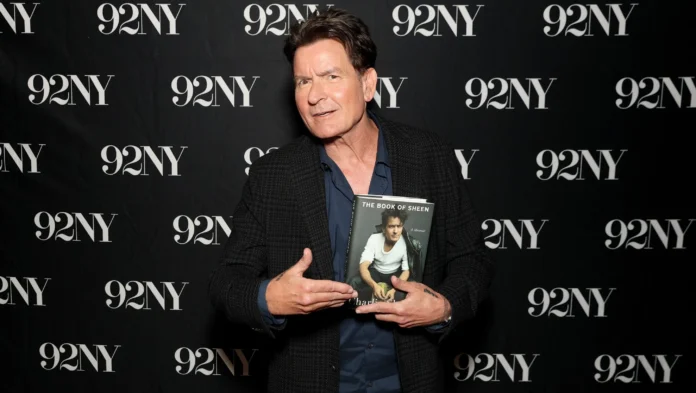
That does not mean Sheen built a documented career through luxury fashion campaigns or major designer capsule collections. The more accurate reading is that his screen wardrobe, public persona, and statement shirts helped keep a certain form of laid-back, slightly rebellious menswear in popular memory. His recent public image is calmer: a checked blazer, white open-neck shirt, dark jeans, and clean sneakers at the 2025 premiere of the Netflix documentary aka Charlie Sheen. The outfit showed an older actor refining familiar casual codes rather than replacing them.
This profile examines that fashion influence alongside his background, family, career, wealth, homes, grooming, and fitness. The focus remains on what can be confirmed, what is only reported, and what readers can learn from a style built more on character and consistency than formal fashion status.
Biography, Age & Background
Sheen’s biography matters to his style because his public identity was formed inside Hollywood rather than added after fame arrived. He grew up around actors, sets, cameras, and the contrast between private family life and public performance. That setting helped him develop a natural ease in front of the lens, but it also created a persona that often blurred with his roles. Understanding his birth name, family roots, childhood interests, and entry into acting makes his later wardrobe choices easier to read: direct, unfussy, masculine, and closely tied to the characters audiences already knew.
Carlos Estévez, the Sheen Name and a Hollywood Family Line
Charlie Sheen was born Carlos Irwin Estévez on September 3, 1965, in New York City. He is 60 years old as of July 2026. His father, actor Martin Sheen, was born Ramón Estévez, while his mother, Janet Templeton Sheen, worked as an actor and producer. Charlie was the third of four children, with older brothers Emilio and Ramon and a younger sister, Renée. All four siblings have worked in entertainment.
The professional surname “Sheen” connected him to his father’s established public name, but it also separated his screen identity from the Estévez surname kept by Emilio. That choice became part of Charlie’s branding long before actors were expected to manage personal brands online. “Charlie Sheen” sounds clipped and memorable, which suited the direct energy of his early film roles.
His family background also explains why he often appears comfortable in classic Hollywood clothing without dressing like a fashion devotee. Suits, leather jackets, military pieces, baseball uniforms, and casual resort shirts entered his image through work. His style grew from costume, character, and family proximity to the film business rather than runway culture.
Malibu Childhood, Baseball and Homemade Movies
Although born in New York, Sheen grew up largely in Southern California after his family moved west. Netflix’s material for aka Charlie Sheen describes a Malibu childhood filled with home movies and an imaginative circle of friends. He made amateur films with people who would also enter entertainment, including Sean Penn and Rob Lowe, while his brother Emilio was already a close creative influence.
Baseball was the other major thread. Sheen played pitcher and shortstop at Santa Monica High School and was regarded as a serious school-level player. Later reporting around his memoir says poor grades cost him a possible college route, while a 2025 Los Angeles Times story noted that he had fallen short of graduation before receiving his diploma years later.
That athletic background left a clear mark on his image. Baseball caps, team jackets, relaxed short-sleeve shirts, and clothes that allow movement have always looked more natural on him than rigid formalwear. Even his best tailoring tends to work when the collar is open and the effect remains easy rather than ceremonial.
The Roles That Turned a Young Actor Into a Public Persona
Sheen’s credited film rise began in the 1980s, with Red Dawn followed by a concentrated run that included Ferris Bueller’s Day Off, Platoon, Wall Street, Eight Men Out, Young Guns, and Major League. The Hollywood Walk of Fame profile highlights the contrast between his dramatic roles and later comedies, while his 1994 star confirmed that he had already built a major screen career before television made him a weekly household presence.
Those roles supplied several distinct style templates. Platoon placed him in military fatigues. Wall Street put him in 1980s corporate tailoring. Young Guns added Western layers, while Major League tied his image to baseball, sleeveless training gear, and the wild closer persona of Ricky Vaughn. Few actors of his generation moved through that many recognizable forms of masculine costume in such a short period.
The result was a public image that could shift from clean-cut to unruly without losing coherence. Sheen’s later casual clothing worked because audiences already associated him with men who resisted polish. His wardrobe did not need to announce rebellion; his screen history supplied it.
Height, Weight & Body Measurements
Physical proportions influence how clothes fall, but celebrity measurements are often repeated without solid sourcing. Sheen’s height is widely listed in entertainment databases at around 5 feet 10 inches, or roughly 178 centimeters, yet no current official profile supplies a verified measurement. A reliable present-day weight, chest size, waist size, shoe size, and other body figures are not publicly confirmed. The useful fashion question is therefore not a set of numbers. It is how his medium frame, relatively balanced proportions, and changing build have affected his clothing across several decades.
What His Reported Height Means for Jacket and Shirt Fit
At a commonly reported height of about 5 feet 10 inches, Sheen sits near the range where standard ready-to-wear proportions can work without major changes. The figure should still be treated as an entertainment listing rather than a personally verified measurement. Public photographs show a frame that reads as medium rather than especially tall or compact.
That helps explain why short jackets and untucked shirts have often suited him. A hip-length leather jacket keeps the leg line visible, while a camp-collar shirt ending near the upper hip avoids swallowing the body. Long, oversized tops would reduce definition and make the torso appear heavier. His familiar bowling-shirt shape works because it is boxy but not excessively long.
For men with similar proportions, the main lesson is restraint. A relaxed shirt can have room through the chest, but the shoulder seam should still sit close to the natural shoulder. A blazer should cover the seat without dropping far below it. Sheen’s strongest recent outfit followed this logic: a structured checked jacket over a clean white shirt, balanced by dark jeans.
Why Current Weight and Body Measurements Should Not Be Guessed
Sheen’s weight has changed across his career, as happens with age, work demands, and lifestyle. No reliable current source confirms a precise number, and many celebrity measurement pages recycle unsourced estimates. Presenting one as fact would create a false sense of accuracy. The same applies to chest, waist, biceps, and shoe size.
Visual evidence offers a safer description. In 1980s films he had a lean, athletic build that matched military, baseball, and action roles. During the height of Two and a Half Men, his shape was softer but still suited straight-cut trousers, untucked shirts, and open-neck layers. At the 2025 documentary premiere, he appeared trim in a fitted blazer and dark jeans, though a photograph cannot establish weight.
For style readers, fit matters more than the scale. Clothing should follow the present body rather than an old size label. Sheen’s recent tailoring looked effective because the jacket sat cleanly at the shoulders and the jeans created a straight vertical line. That is a more useful observation than an unsupported measurement.
How a Medium Frame Supports His Relaxed Menswear Formula
Sheen’s body proportions have generally allowed him to move between casual and formal clothing without extreme adjustment. His shoulders are broad enough to support a blazer, leather jacket, or bowling shirt, while his frame does not require heavy padding. This is one reason soft tailoring tends to look better on him than stiff, sharply built suits.
The camp-collar shirt is especially compatible with a medium frame. Its open neckline widens the upper chest, while the straight hem and short sleeve create a horizontal, relaxed shape. On Sheen, that effect supported the careless charm of Charlie Harper. On another wearer, the same shirt can look costume-like if it is too shiny, too long, or covered in loud embroidery.
A practical version keeps one statement at a time. Choose a shirt with a restrained two-tone panel, subtle embroidery, or a muted print. Pair it with straight dark jeans or flat-front trousers and simple shoes. Sheen’s proportions show why the formula works, but the larger lesson is balance: volume above, clean lines below, and no extra layer competing for attention.
Wife, Girlfriend & Family
Sheen’s family life has been widely covered, often through the most difficult chapters. A respectful profile needs to separate confirmed marriages and children from rumor, then keep private relationships out of fashion analysis. His public family history includes three marriages, five children, famous parents, and siblings with their own film careers. As of July 2026, reliable public reporting does not identify a current wife or publicly confirmed partner. Recent coverage has focused more on co-parenting, his children, sobriety, and reflection than on a new romance.
Three Marriages and His Current Public Relationship Status
Sheen was married to model Donna Peele, then actor Denise Richards, and later actor and real estate investor Brooke Mueller. His marriage to Richards produced two daughters, while his marriage to Mueller produced twin sons. The Associated Press review of his 2025 memoir identifies all three marriages and places them within his larger account of fame, addiction, and recovery.
He is not currently married. No strong, recent source reviewed for this profile confirms a present girlfriend or long-term partner. That gap should not be filled with old dating stories or unnamed-source claims. Celebrity search pages often keep “wife” and “girlfriend” keywords active even when a person is single, which can make outdated relationships appear current.
His recent public appearances have instead stressed reconciliation and family support. Denise Richards attended the 2025 premiere of aka Charlie Sheen, where the former couple posed together for their first joint red-carpet appearance in roughly two decades. The moment was significant because it presented maturity and shared history, not a romantic reunion.
Five Children and the Shift Toward Being Present
Sheen has five children: Cassandra Estevez, Sami Sheen, Lola Sheen, and twins Bob and Max Sheen. People’s updated family coverage identifies all five and reports on the different stages of their lives, from his adult eldest daughter to his teenage sons.
His daughters Sami and Lola are from his marriage to Denise Richards. Bob and Max are from his marriage to Brooke Mueller. Cassandra, his eldest, was born when Sheen was young, and he has since become a grandfather. In interviews around his memoir and documentary, he framed fatherhood as central to the change that led him toward sobriety in 2017. People reported that he wanted to become dependable enough to meet his children’s needs.
The family story remains complicated, and public comments show that some relationships have gone through strained periods. It is better to acknowledge that than present a polished family narrative. From a lifestyle perspective, the larger change is visible: recent coverage describes a quieter routine organized around family, accountability, and a slower public pace.
The Estévez-Sheen Family’s Influence on Career and Identity
Martin and Janet Sheen raised four children who entered entertainment in different ways. Emilio Estevez kept the family surname, while Charlie adopted the professional name associated with their father. Ramon and Renée also worked as actors and producers. People’s 2025 family profiles describe a close artistic household whose members often traveled together around Martin’s projects.
That family structure gave Sheen access to film culture early, but it also placed him beside a respected father and an ambitious older brother. His public identity developed through both inheritance and separation. He used the Sheen name, then built a sharper, more comic, more rebellious screen persona than Martin’s.
Style played a small but visible role in that distinction. Martin Sheen is often associated with traditional tailoring and statesmanlike television roles. Charlie became linked to leather, baseball clothing, military costume, open collars, sunglasses, and resort shirts. The contrast did not require a planned strategy. It emerged from casting, personality, and the different kinds of masculinity each actor represented on screen.
Career, Income & Net Worth
Sheen’s career combines prestige films, broad comedy, record-setting television pay, public collapse, and a recent period of reassessment. That arc affects every discussion of income and net worth. His peak earnings were documented at an extraordinary level, but current wealth figures remain private and online estimates vary. The sound approach is to identify confirmed projects, reported salary ranges, property transactions, tax and support obligations reported by established outlets, and newer income sources such as his 2025 memoir and documentary participation without claiming access to his personal accounts.
From Platoon and Wall Street to Major League Comedy
The core of Sheen’s film reputation was built between the mid-1980s and early 1990s. Platoon placed him at the center of Oliver Stone’s Vietnam drama, while Wall Street cast him as Bud Fox opposite Michael Douglas and Martin Sheen. He followed with Eight Men Out, Young Guns, Major League, Navy SEALs, The Rookie, and the Hot Shots! films. The Hollywood Walk of Fame and Golden Globes profiles reflect the unusual range between war drama, financial drama, action, sports, and parody.
The career shift toward comedy proved commercially important. Sheen’s deadpan delivery worked because he could play absurd material without looking eager for approval. That quality later became central to his television success. It also influenced his style: he could wear an exaggerated bowling shirt or robe and make it feel like part of the character rather than a gag placed on top of him.
His 1994 Hollywood Walk of Fame star arrived before Spin City and Two and a Half Men. That timing matters. Television did not create his celebrity; it expanded and reshaped a film career that was already established.
The Television Peak, Awards and Record-Level Pay
Sheen won a Golden Globe in 2002 for Spin City and later received two more Golden Globe nominations for Two and a Half Men. The Television Academy lists four consecutive Emmy nominations from 2006 through 2009 for his performance as Charlie Harper.
His salary became part of television history. People reported a base figure of about $1.25 million per episode near his peak, with additional syndication participation. Other industry reports placed the total value higher, sometimes around $1.8 million or more per episode when backend and related compensation were counted. The difference between figures is a reminder that “salary” can mean base pay alone or a larger package.
That income came from a rare alignment: a hit network sitcom, a character built around his established persona, and an actor whose presence was seen as difficult to replace. It also created a distorted public image of endless money. High gross earnings do not equal permanent wealth after taxes, representatives, property costs, divorces, support payments, legal expenses, and periods of reduced work.
Net Worth Estimates, Financial Setbacks and the Reset Era
Sheen’s exact net worth is not public. Recent media estimates have placed it far below the fortune often associated with his television peak, with one widely repeated figure around $3 million. That number comes from third-party estimation rather than audited records and should not be treated as confirmed. People’s 2025 financial profile stressed that his present wealth is unknown while documenting past salary, tax issues, support obligations, and possible syndication income.
His income sources have included film and television pay, residuals, syndication participation, live appearances, endorsements, and later projects such as Anger Management. In 2025, he added a memoir, The Book of Sheen, and the two-part Netflix documentary aka Charlie Sheen. The documentary presented his career as a rise, fall, and recovery story rather than a standard comeback campaign.
The strongest financial conclusion is modest: he once earned at the top of television, then faced large personal and financial costs. Any current net worth claim remains an estimate. His recent work may produce new income, but no reliable public accounting confirms the size of that recovery.
House, Cars & Luxury Lifestyle
Sheen’s past lifestyle was linked to large Los Angeles homes, expensive entertainment, and the excess surrounding his peak fame. Recent reporting paints a different picture. Property records and major real estate coverage offer solid evidence about homes he bought and sold, while claims about private car collections, watches, jets, and current luxury purchases are often recycled without documentation. The useful distinction is between a proven property history and a mythology of celebrity consumption. His public reset also suggests that visible restraint now matters more to his image than accumulation.
The Mulholland Estates Homes and a Changing Property Portfolio
Sheen owned multiple homes in Mulholland Estates, a gated Los Angeles community associated with celebrity real estate. The best-documented property was a Mediterranean-style residence of roughly 9,000 square feet that he bought in 2006 and sold in 2020 for $6.6 million after first seeking close to $10 million. The Los Angeles Times reported features including stone fireplaces, beamed ceilings, a game room, and formal dining space.
Architectural Digest described the same property as a seven-bedroom home with a theater, office, terraces, gazebo, and two pools, including one used for resistance swimming. That account gives a clearer view of his taste than generic “mansion” language: Mediterranean structure, entertainment rooms, large gathering spaces, and a private resort feel.
He also owned and sold other properties in the same enclave. The pattern shows how closely his peak lifestyle was tied to a specific form of Los Angeles success: privacy, gates, space, pools, and rooms designed for entertainment. It also shows that luxury property can become a financial burden when circumstances change.
A Quieter Present Without a Confirmed Current Home Profile
Reports after the 2020 sale placed Sheen in a lower-key Malibu rental, but there is no recent, authoritative public tour or property record that confirms his present residence in 2026. It would be inappropriate to guess where he lives now or provide location details beyond broad areas already reported by established outlets.
His 2025 interviews described a slower life centered on sobriety, family, exercise, and reflection. That is a major change from the public image attached to his former house. The shift is less about whether the current home is expensive and more about how the space is used. A quieter routine has become part of his lifestyle story.
From a design viewpoint, his earlier homes favored scale and entertainment. His current public clothing suggests a parallel move toward editing: fewer loud elements, less visual noise, and a stronger preference for dark basics. Lifestyle and wardrobe often move together in later career phases. Sheen’s reset appears to favor control over spectacle, even though detailed private information remains unavailable.
Cars, Watches and Luxury Claims That Lack Strong Proof
Numerous websites list luxury cars supposedly owned by Sheen, but many fail to provide dates, registration evidence, direct interviews, or clear photographs connecting him to long-term ownership. A celebrity being seen near a vehicle does not establish that it belongs to him. No strong recent source confirms a current collection, and the same caution applies to watches and private aircraft.
There are older stories about high spending during his most chaotic years, yet those reports describe a period rather than a stable collection. The responsible conclusion is that he had the earning power and lifestyle associated with luxury consumption, while the exact inventory of cars, watches, or travel assets is not reliably public.
For readers, this section offers a useful style lesson. A public image does not need a garage list to feel expensive. Sheen’s strongest lifestyle signals came from location, attitude, and recognizable clothing: a Malibu setting, sunglasses, a soft shirt, clean denim, and confidence. Those visual codes created more cultural impact than any unverified vehicle claim.
Celebrity Fashion & Personal Style
Fashion is where Sheen’s influence becomes most specific. He is not known as a runway regular, luxury-house ambassador, or collector who publicly explains designers. His impact came through character dressing and repeatable clothing codes. The signature pieces are familiar: camp-collar and bowling shirts, leather jackets, straight jeans, relaxed trousers, sunglasses, sneakers, and open-neck tailoring. Some of those choices belonged to costume departments, especially on Two and a Half Men, yet his own persona made them believable. The border between Charlie Sheen and Charlie Harper became the engine of the look.
How Charlie Harper’s Bowling Shirts Entered Streetwear Memory
The short-sleeve bowling shirt became the clearest fashion object linked to Sheen. On Two and a Half Men, Charlie Harper wore relaxed, retro-inspired shirts with contrast panels, embroidery, tonal blocking, and open collars. The shape communicated comfort, money, leisure, and a refusal to dress for an office. It also fit the Malibu setting and the character’s permanent off-duty mood.
Vogue later used Charlie Harper as a cultural reference when discussing the bowling shirt’s return in fashion, alongside runway examples from Valentino and Gucci. That does not mean Sheen caused the designer revival, but it shows how firmly the character had become associated with the garment.
The influence works at the level of recognition. Online sellers still describe retro camp shirts as “Charlie Sheen style,” often citing labels such as Nat Nast or Da Vinci. Resale language is not proof that every shirt appeared on the show, so buyers should treat exact-screen claims carefully. The safer takeaway is the silhouette: open collar, short sleeve, straight hem, moderate drape, and one graphic feature. That formula remains easy to adapt for modern streetwear.
From 1980s Leather to a More Controlled Red-Carpet Uniform
Young Sheen’s clothing often matched the masculine film language of the period. Denim, leather, military jackets, baseball gear, narrow ties, and clean corporate suits all appeared through his roles. Off-screen photographs from the era also show a preference for dark jackets, simple shirts, and hair with height. His image was sharper than the resort-shirt identity that later dominated public memory.
By the 2000s, the open-neck casual formula had taken over. He rarely needed elaborate styling because the character association was already strong. That can become limiting, but it also creates consistency. A person who owns one shape convincingly often looks more memorable than someone who follows every trend.
At the 2025 premiere of aka Charlie Sheen, he wore a dark checked blazer, white shirt, dark jeans, and sneakers. The shirt was open at the neck, preserving his familiar ease, while the jacket added structure. It was an effective late-career uniform: recognizable without looking stuck in a sitcom costume.
Designer Collaborations, Statement Pieces and What Is Actually Verified
No reliable official source reviewed for this profile documents a major Charlie Sheen collaboration with a luxury designer, streetwear label, or fashion house. He has not built the kind of public fashion partnership associated with actors who front campaigns or release capsule collections. Describing his career as collaboration-heavy would overstate the record.
His more meaningful fashion partnership was indirect: actor, character, costume design, and audience response. The statement pieces were the shirts themselves, along with leather jackets, sunglasses, baseball clothing, and occasional sharp suits. The 2025 checked blazer also worked as a statement because it marked a change in tone without erasing his identity.
Men can borrow the method without copying the costume. Start with one expressive shirt, then keep the jeans, belt, and shoes plain. For formal-casual events, use a textured blazer with a white open-collar shirt and dark denim. Avoid stacking a bold shirt, loud jewelry, distressed jeans, and statement sneakers together. Sheen’s best outfits depend on one focal point and an otherwise relaxed frame.
Hair, Beard & Grooming Style
Sheen’s grooming has shifted with age but stayed readable. His best-known look combines dark hair brushed back from the forehead, a clean-shaven face or light stubble, strong brows, and minimal visible grooming ornament. In recent appearances, the hair is shorter and carries more natural gray, which suits the calmer wardrobe. There is little reliable public information about his skincare, fragrance, barber, or daily product choices. The useful analysis must therefore come from visible changes rather than invented routines or brand claims.
The Brushed-Back Haircut That Framed His Screen Image
During his early career, Sheen often wore thick dark hair with volume through the front and sides. The cut suited the strong visual language of 1980s film: controlled enough for Wall Street, rough enough for action roles, and easy to disturb for military or sports scenes. It also lengthened the face by lifting the hair away from the forehead.
In later television years, the style became shorter and more consistent, often combed back with a natural side direction. That stability helped Charlie Harper look affluent but low-effort. A heavily sculpted haircut would have conflicted with the character’s casual clothes.
Recent premiere photographs show a shorter, neater version with visible gray and less volume. The change reads as age-appropriate rather than defensive. For men recreating it, the cut needs moderate length on top, cleaner sides, and a soft finish. A light cream or low-shine paste would produce the appearance, though no reliable source confirms what Sheen uses. The aim is movement, not a hard shell.
Clean Shaving, Light Stubble and an Open Facial Expression
Sheen has spent much of his public career clean-shaven. At times he has worn light stubble, but a full beard has never become central to his image. The clean face keeps attention on his brows, eyes, and expressive mouth, which matters for an actor known for quick comic reactions and sardonic delivery.
This grooming choice also supports his shirts. An open camp collar and a clean-shaven face create a lighter, resort-like effect. A dense beard would add visual weight near the collar and could make embroidered or high-contrast shirts look busier. At the 2025 premiere, the restrained grooming balanced the checked jacket and open white shirt.
Men with a similar rectangular or slightly long face can use short stubble to add texture without hiding the jaw. Keep the neckline tidy and avoid allowing the mustache area to become heavier than the cheeks. Sheen’s example shows that grooming can support personality through consistency. It does not need an elaborate beard shape or a named product line.
Tattoos, Skincare and the Limits of Public Grooming Information
Sheen has visible tattoos, and they have appeared in photographs and on-screen work, but there is no need to inventory or interpret them as a hidden style system. Tattoos form part of his rebellious image, yet they are usually covered by shirts and jackets in formal settings. That makes them personal details rather than the main focus of his public clothing.
Reliable sources do not confirm a skincare routine, preferred fragrance, barber, hair product, or cosmetic treatment. Claims that name specific products without an interview or verified campaign should be treated as guesswork. His current appearance can be explained through basic visible choices: shorter hair, controlled facial hair, clean clothing lines, and a less theatrical public presentation.
The practical lesson is simple. Grooming should match the wardrobe’s level of effort. A statement bowling shirt works best with clean hair and a quiet face. A checked blazer and white shirt can take slightly more polish, but still benefit from natural texture. Sheen’s recent grooming succeeds because it looks maintained without turning grooming itself into the story.
Fitness, Diet & Body Transformation
Sheen’s fitness history includes real athletic ability, demanding film preparation, long periods of personal instability, and a recent return to a steadier routine. Public information supports his baseball background and the physical strain surrounding roles such as Platoon and Major League. Recent interviews also mention exercise as part of a quieter life after sobriety. What is not public is an exact weekly program, calorie target, supplement list, or current meal plan. Any responsible account should avoid filling those gaps with a celebrity workout template.
Baseball Skills Gave Him More Than a Screen Athlete’s Look
Sheen was not introduced to baseball only for Major League. He played seriously in school as a pitcher and shortstop, and the sport remained part of his identity. Reporting around his memoir says his grades affected a possible college path, while his baseball ability later helped him appear convincing as Ricky Vaughn and in Eight Men Out.
That background shaped movement as much as physique. Throwing mechanics, balance, shoulder rotation, and the relaxed posture of a ballplayer are hard to imitate through gym work alone. On screen, Sheen looked comfortable in uniforms because the body language was familiar.
For everyday fitness, the lesson is not to copy a pitcher’s program. It is to include skill and coordination alongside strength work. Recreational throwing, mobility drills, light sprinting, and lower-body balance can make training feel less mechanical. Men returning to exercise should scale intensity to age and condition, and seek professional guidance when needed. Sheen’s sports history explains his athletic screen presence; it does not provide a current prescription.
Role Preparation From Platoon’s Hardship to Major League Conditioning
The cast of Platoon underwent demanding military-style preparation designed to create fatigue and group realism. Accounts describe controlled food and sleep, field exercises, and prolonged discomfort. Such preparation was part of a film production and should not be treated as a safe general fitness model.
Major League drew on a different form of readiness. Sheen’s baseball experience allowed him to perform pitching movements with credibility, while the Ricky Vaughn role required a lean, explosive appearance. The contrast between the two films shows how screen transformations can come from task-specific practice rather than bodybuilding alone.
That point remains useful. Train for what the body needs to do. A man seeking better posture and daily energy may benefit more from walking, mobility, basic strength, and consistent sleep than from an actor’s extreme role preparation. Sheen’s film history contains impressive physical work, but the production conditions were temporary and controlled. The sustainable part was the earlier sports foundation.
Sobriety, Exercise and the Absence of a Verified Diet Plan
Sheen has said that he became sober in December 2017 after recognizing that his substance use kept him from being dependable for his children. Around the 2025 memoir and documentary, People described his life as quieter and more focused on family, fitness, and healing.
No reliable source provides a current workout split or detailed diet. There is no confirmed meal plan, calorie count, supplement stack, or named trainer that should be presented as fact. His appearance at 60 suggests that routine and restraint have become more important, but visual impressions cannot prove a method.
The sensible takeaway is consistency. Regular walking, two or three weekly strength sessions, mobility work, adequate protein, vegetables, water, and stable sleep support many men better than a dramatic transformation plan. Those are general habits, not claims about Sheen’s private routine. His public reset shows the value of structure, yet the details belong to him unless he chooses to share them.
Conclusion
Charlie Sheen’s fashion influence is easiest to understand when it is separated from the usual celebrity-designer model. He did not need repeated luxury campaigns to make a garment recognizable. The bowling shirt became attached to his image through character, repetition, and the cultural reach of Two and a Half Men. Earlier films added leather, military clothing, baseball uniforms, Western layers, and corporate suits, creating a wardrobe history that covers several forms of American masculinity.
His current style is more edited. The checked blazer, white open-neck shirt, dark jeans, and sneakers worn at the 2025 documentary premiere kept the casual confidence while removing the excess. That is a useful direction for men who want to age without abandoning personality. Keep the familiar code, improve the fit, and reduce the number of competing statements.
Claims about designer collaborations should remain measured. No major verified fashion-house partnership defines his record. His strongest collaboration was between performance and costume, with the audience completing the process by turning screen clothes into lasting reference points.
The practical lesson is not to buy a costume copy. Find one shape that feels natural, repeat it, and refine it as your life changes. Sheen’s best style moments show that personal identity often comes from consistency before it comes from labels.
Frequently Asked Questions
How old is Charlie Sheen in 2026?
Charlie Sheen is 60 years old as of July 2026. He was born Carlos Irwin Estévez on September 3, 1965, in New York City. He will turn 61 on September 3, 2026. His public career began during childhood and expanded into major film roles during the 1980s.
How tall is Charlie Sheen?
Entertainment listings commonly place him at about 5 feet 10 inches, or roughly 178 centimeters. No current official profile appears to verify that measurement directly, so it is best treated as a widely reported figure rather than a confirmed medical or athletic measurement.
Is Charlie Sheen married or dating anyone?
He is not currently married. His former wives are Donna Peele, Denise Richards, and Brooke Mueller. As of July 2026, reliable recent reporting does not identify a publicly confirmed girlfriend or long-term partner, so older relationship claims should not be presented as current.
How many children does Charlie Sheen have?
He has five children: Cassandra Estevez, Sami Sheen, Lola Sheen, and twin sons Bob and Max Sheen. His children come from his relationship with Paula Profit and his marriages to Denise Richards and Brooke Mueller. He has also spoken publicly about becoming more dependable as a father.
What is Charlie Sheen’s net worth?
His exact net worth is private. Some recent media estimates place it near $3 million, but that figure is not based on public audited accounts. Established coverage confirms that he earned exceptionally high television salaries and later faced major taxes, support costs, and financial setbacks.
What happened to Charlie Sheen’s Beverly Hills house?
He sold his long-time Mulholland Estates home in 2020 for $6.6 million after initially listing it for much more. The roughly 9,000-square-foot Mediterranean-style property included entertainment rooms, terraces, and two pools. His present residence is not reliably confirmed in current public reporting.
What clothing style is Charlie Sheen best known for?
He is most closely associated with retro bowling shirts, camp collars, straight jeans, leather jackets, sunglasses, and relaxed open-neck tailoring. Much of that identity came through Charlie Harper on Two and a Half Men, whose shirts became a lasting menswear reference.
Did Charlie Sheen have a designer fashion collaboration?
No major verified collaboration with a luxury designer or streetwear label appears in reliable public sources reviewed for this profile. His stronger fashion influence came through costume, character, and repeated statement pieces, especially the bowling shirts linked to Two and a Half Men.
Celebrity Wardrobes and Timeless Menswear
Explore luxury streetwear, designer tailoring, signature jackets, refined accessories and memorable outfits from distinguished actors.