

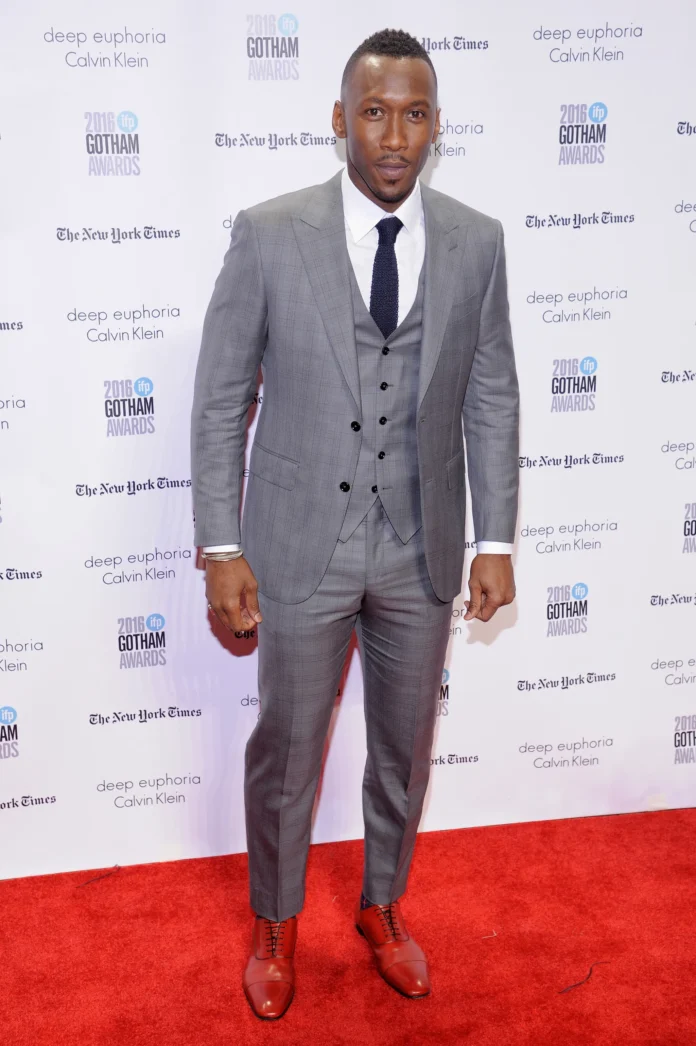
Mahershala Ali has built a style identity that feels refined without becoming stiff. His strongest outfits combine precise tailoring, rich texture, thoughtful accessories, and the calm presence of a man who does not need loud clothing to attract attention. Whether he is wearing an ivory tuxedo, a velvet evening jacket, a knitted cap, or a dark topcoat, his clothes tend to support his personality rather than overpower it.
The two-time Academy Award winner is known first for performances in Moonlight, Green Book, House of Cards, True Detective, and other major productions. His appeal extends well beyond acting, however. Former college basketball experience gives him an athletic frame, his music background adds cultural depth, and his long collaboration with skilled fashion professionals has made him one of Hollywood’s most dependable menswear figures. His best outfits offer practical ideas about proportion, color, layering, and personal accessories.
What makes Mahershala Ali’s fashion influence useful is restraint. He may wear designer tailoring, but the lesson is rarely about buying the same label. The better takeaway is learning how one memorable detail—a stand collar, textured jacket, tonal color palette, clean beard, or distinctive hat—can give familiar clothing a personal point of view.
Biography, Age & Background
Ali’s public identity draws from several different worlds: Oakland culture, organized sports, theater training, hip-hop, faith, film, and family life. These influences explain why his presence can feel both disciplined and artistic. Understanding his background also clarifies his fashion choices. He dresses like someone comfortable moving between formal institutions and creative spaces, often keeping the basic structure classic while allowing one element to feel personal.
From Oakland and Hayward to an International Acting Career
Mahershala Ali was born Mahershalalhashbaz Gilmore on February 16, 1974, in Oakland, California, and grew up in nearby Hayward. As of July 2026, he is 52 years old. His unusually long birth name comes from a biblical reference, although he later adopted Mahershala Ali as his professional name. He is American and has spoken publicly about the lasting influence of the Bay Area on his identity.
His Northern California upbringing matters because it gives his public image a different character from the standard Hollywood presentation. There is polish, but there is also an understated West Coast ease. That contrast appears in outfits that combine formal coats with knitted hats, dress trousers with open collars, or sharply made jackets with relaxed footwear.
Ali also converted to Islam as a young adult and became part of the Ahmadiyya Muslim community. His faith is not a fashion device, yet it helps explain the measured, purposeful quality of his public presence. He rarely appears dressed carelessly, even when the outfit itself is casual.
How Basketball Led Him Toward Theater
Before acting became his profession, Ali attended Saint Mary’s College of California on a basketball scholarship. College records list him as a guard, and he played under the name Hershal Gilmore. He graduated in 1996 with a degree in mass communication after spending four seasons within a Division I program.
Basketball gave him more than athletic experience. Years of structured practices, competition, travel, and team expectations likely helped form the controlled physical presence visible in his acting and red-carpet appearances. He stands upright without looking posed, and tailored jackets sit well across his shoulders because he understands how to carry his body.
His direction changed after he became involved in acting at college. He later worked with the California Shakespeare Theater and studied acting at New York University’s Tisch School of the Arts, earning a graduate degree. The shift was not an instant celebrity story. It was a gradual move from one demanding discipline into another.
The Rap Career That Added Another Layer to His Image
Long before many viewers knew him as an Oscar-winning actor, Ali recorded hip-hop under the name Prince Ali. He released Corner Ensemble in 2006 and Curb Side Service in 2007, working within the Bay Area’s independent rap culture before placing his main attention on acting.
That music background helps explain the accessories that separate his outfits from ordinary formalwear. Beanies, chains, tinted glasses, collarless shirts, and unconventional hats do not feel like pieces added by a marketing team. They connect naturally with an identity shaped by hip-hop, performance, and visual storytelling.
The influence is controlled rather than obvious. He does not dress like he is recreating a rapper’s stage wardrobe. Instead, he brings small elements of music culture into adult tailoring. A pendant under a structured coat or a fitted knit cap beside a luxury jacket can make an outfit feel lived-in. For everyday men, this offers a sound approach: keep the main clothing mature, then preserve one detail that reflects your own background.
Height, Weight & Body Measurements
Public interest in Ali’s height and build often comes from the way he wears suits. His long frame, narrow waist, broad shoulders, and upright stance give tailors enough space to create clean lines. Exact celebrity measurements should still be treated carefully. Sports records and entertainment profiles do not always agree, while weight can change between projects and is rarely confirmed through a reliable first-hand source.
Why Public Height Listings Do Not Match
Ali is often described as standing around 6 feet 2 inches, or approximately 188 centimeters. His college basketball records create some uncertainty, however. Sports Reference lists him at 6 feet 3 inches, while an NCAA feature described him as a 6-foot-4 guard during his Saint Mary’s years. Entertainment databases often use the shorter 6-foot-2 figure.
The difference may come from shoes, athletic roster practices, old measurements, or simple copying between databases. No recent official measurement from Ali settles the question. It is more responsible to say that he is a tall man, likely within the 6-foot-2 to 6-foot-4 range, rather than insisting on one exact number.
For fashion analysis, a one-inch difference changes little. His height allows longer jackets, wide lapels, topcoats, high-buttoning double-breasted shapes, and large accessories to look balanced. A shorter man can still borrow those ideas, but jacket length, lapel width, and hat size may need to be reduced.
A Lean Athletic Frame Built for Tailoring
Ali’s body shape retains signs of his basketball background. He has long limbs, defined shoulders, and a lean torso rather than a heavy bodybuilding frame. This creates a useful foundation for both slim tailoring and more experimental silhouettes. Jackets can follow his shape closely without looking tight, while relaxed trousers do not make his proportions appear overwhelmed.
One reason his suits look elegant is that the waist suppression is usually controlled. The jackets define his torso without pulling around the fastening point. Sleeve length is also handled carefully, often leaving a narrow section of shirt cuff visible. These details keep taller men from looking as though they borrowed an oversized suit.
His build also suits monochrome dressing. When a coat, shirt, and trousers sit within the same color family, the uninterrupted vertical line makes him appear even taller. Men with similar proportions can use tonal outfits, but they should add texture so the result does not look flat. Wool, velvet, silk, suede, and knitwear can create separation without introducing several competing colors.
Weight, Shoe Size and Other Unconfirmed Figures
No dependable public source confirms Ali’s current weight, chest size, waist measurement, or shoe size. Online celebrity databases often publish exact numbers without identifying where they came from. Those figures should not be treated as verified body measurements.
His weight has probably varied across more than two decades of screen work, as it does for most performers. Still, there is no sound basis for attaching an exact number to a specific period unless he or a production professional confirms it. Visual estimates are especially unreliable because camera lenses, costume structure, lighting, and posture change how a body appears.
The useful information lies in proportion rather than numbers. Ali usually wears trousers with a clean line, jackets with enough room across the upper back, and collars that sit closely around the neck. Men seeking a similar effect should focus on shoulder fit, trouser break, sleeve position, and jacket balance. A well-altered affordable suit will often look better than an expensive suit selected from an unreliable celebrity measurement chart.
Wife, Girlfriend & Family
Ali keeps his family life more private than his career, but he has spoken warmly about marriage and fatherhood. His family story is relevant to his public image because it shows consistency rather than celebrity drama. There are no reliable reports of a current girlfriend or separate romantic relationship. Public sources continue to identify artist Amatus Sami-Karim as his wife and the mother of his daughter.
A Creative Partnership With Amatus Sami-Karim
Ali met Amatus Sami-Karim while they were studying at NYU’s Tisch School of the Arts. Karim has worked across acting, music, sound, composition, and filmmaking. Their relationship developed over many years before they married in 2013, giving the partnership a foundation that existed before Ali’s largest awards and most visible film roles.
Their shared creative background offers useful context for Ali’s interest in clothing, interiors, music, and visual presentation. He is not the only artist in the household. In an Architectural Digest interview, he described their home as a combination of both personalities, with an eccentric decorating approach that worked because the rooms reflected their joint taste.
Karim has accompanied him to major events, including the Academy Awards, yet neither partner appears to treat their marriage as a constant publicity campaign. That discretion supports Ali’s wider image: visible when the work calls for visibility, private when public attention adds no real value.
Fatherhood Without Turning His Daughter Into Public Content
The couple welcomed their daughter, Bari Najma Ali, in February 2017, only days before Ali won his first Academy Award for Moonlight. More recent public comments show that she remains an important part of how he evaluates work and time. In 2025, he discussed the experience of watching her respond to Jurassic World Rebirth, one of the first feature-length films in which she had watched her father from beginning to end.
Ali mentions fatherhood when it connects naturally with an interview or project, but he does not make his daughter a regular part of his public brand. That boundary matters. It allows audiences to understand that family influences his choices without inviting unnecessary attention into a child’s life.
His approach also affects his lifestyle image. Success is not presented only through houses, awards, or designer clothing. Time, presence, and selective project choices carry weight. That may be less visible than a luxury purchase, but it says more about how he defines an adult life.
Parents, Faith and the Contrasts That Shaped Him
Ali was raised mainly by his mother, Willicia Goines, an ordained Baptist minister. His father, Phillip Gilmore, pursued dance and performed on Broadway. Ali has described growing up with these different influences: a deeply religious home on one side and a father connected to professional performance on the other.
Those contrasts appear throughout his career. He can project discipline and spiritual seriousness while remaining closely connected to theater, music, clothing, and visual culture. His decision to convert to Islam was personal, but it also became part of how he understood identity and difference in public life.
His family background is more helpful than unsupported claims about distant relatives or private relationships. It explains why his manner can feel grounded even during highly photographed events. The clothing may be luxurious, but his presentation rarely suggests that luxury is the whole point. Character comes first, followed by craft and then appearance.
Career, Income & Net Worth
Ali’s career did not begin with instant film stardom. He spent years building experience through television, theater, supporting film roles, and music before Moonlight changed his level of recognition. That slow development is important when considering his earnings and public influence. His career value comes not only from two Oscar wins but from the credibility created by a long record of selective, carefully observed performances.
The Television Years That Built His Screen Authority
Early appearances in programs such as Crossing Jordan, Threat Matrix, and The 4400 gave Ali steady screen experience. He later reached a broader audience as political strategist Remy Danton in House of Cards. Roles in The Hunger Games films, Treme, and The Curious Case of Benjamin Button helped him move between television and cinema without becoming fixed in one character type.
The choice to leave a successful television position and pursue wider work proved important. Ali took on characters with sharper moral tension, including Cottonmouth in Luke Cage and Juan in Moonlight. His calm delivery and physical control made both men memorable, even though their motives and emotional worlds were far apart.
This patient career path also shaped his style reputation. By the time major awards ceremonies arrived, he did not look like a newcomer borrowing a temporary image. His clothes became an extension of maturity already visible in his work.
Two Academy Awards and a Wider Range of Work
Ali won the Academy Award for Best Supporting Actor for Moonlight at the 2017 ceremony. Two years later, he won the same category for playing pianist Don Shirley in Green Book. The Academy’s official records confirm both victories, placing him among a small group of performers with multiple acting Oscars.
His range extends beyond those awards. He led the third season of True Detective, played a dual role in Swan Song, voiced Aaron Davis in the animated Spider-Verse films, appeared in Leave the World Behind, and later joined the Jurassic World franchise. He has also worked as a producer, giving him a degree of creative involvement beyond acting alone.
Awards increased his negotiating power, but their larger effect was access. He could pursue lead roles, production responsibilities, prestige television, studio entertainment, and voice work. That variety makes his income less dependent on one franchise or character.
What Can Honestly Be Said About Mahershala Ali’s Net Worth
No audited public document confirms Ali’s net worth. Celebrity finance websites frequently publish estimates, often without disclosing contracts, taxes, management fees, property debt, production investments, or private business arrangements. Repeating one of those numbers as fact would create more certainty than the available evidence supports.
His established income sources are easier to identify. They include acting fees, producer compensation, residuals, voice performances, earlier music work, fashion campaigns, and possible property appreciation. His two Academy Awards and continued work in major productions suggest substantial career earnings, but career revenue is not the same as personal net worth.
The responsible answer is that Ali is a successful, highly compensated actor whose exact wealth remains private. Readers should treat any specific online total as an estimate rather than an official financial statement. This is a useful rule for most celebrity wealth figures: the more exact the number appears, the more closely the sourcing should be examined.
House, Cars & Luxury Lifestyle
Ali’s public lifestyle feels design-minded rather than display-driven. Available reporting centers more on architecture, music, clothing, and family space than on giant car fleets or constant luxury purchases. That does not mean he avoids expensive objects. It means the objects connected to his image usually have a clear visual or personal purpose.
The Character-Filled Venice Craftsman Home
In a 2016 interview, Ali described living with his wife in a Craftsman home in Venice, California. He estimated that the house dated from around 1912 and said it felt spacious after their experience of living in New York. The decor combined both partners’ tastes and included distinctive pieces such as an Ethiopian rug and a concrete dining table.
That interior description matches his clothing style. Both rely on a strong base with unexpected details. A traditional Craftsman structure can support unusual furniture in the same way a classic suit can support a knitted cap, tinted glasses, or a collarless shirt.
The interview is historical rather than proof of where he lives today. Celebrity property arrangements can change, and older profiles should not be presented as current residential records. Still, the comments reveal a lasting design preference: warmth, character, cultural references, and rooms that feel used rather than staged.
The Reported Oakland Bungalow Purchase
Architectural Digest reported in 2021 that Ali purchased a secluded Oakland bungalow for approximately $1.175 million. The property was described as a 1963 home with four bedrooms, three bathrooms, wood siding, generous decks, interior paneling, and a setting surrounded by greenery. The lower level reportedly included a separate living area and kitchen.
The location carries emotional logic. Oakland is his birthplace, and the wider Bay Area shaped his childhood, college years, basketball experience, music interests, and early theater development. A property there connects luxury with personal history rather than choosing a location only because it signals status.
Public reporting does not establish how he currently uses the house or whether ownership has changed. Those details should remain private unless he chooses to discuss them. From a design angle, however, the wooded mid-century character fits his preference for texture, warmth, and spaces with an existing personality.
Cars, Watches and the Difference Between Use and Ownership
No reliable source documents a large Mahershala Ali car collection. Photographs from premieres, studio transportation, advertising events, or film sets do not prove personal ownership. Claims linking him to long lists of luxury vehicles should therefore be treated cautiously.
A confirmed public accessory is easier to discuss. GQ identified a Montblanc Star Legacy Automatic Date on Ali’s wrist at the 2020 Screen Actors Guild Awards. The watch suited his style because it was elegant and readable without becoming the loudest part of his outfit.
That balance is central to his luxury image. A good watch, tailored coat, textured jacket, or carefully chosen pair of glasses appears to complete the clothing rather than announce its price. For readers, the lesson is useful: one well-proportioned accessory can add more authority than several recognizable logos. Luxury works best on Ali when it is noticed second.
Celebrity Fashion & Personal Style
Fashion is where Ali’s wider influences become most visible. His tailoring can reference jazz-era eveningwear, European luxury, hip-hop accessories, and modern relaxed suiting within a single appearance. He does not chase novelty at every event. Instead, he repeats a dependable method: clean fit, deep color, tactile fabric, and one detail that changes the mood.
How Van Van Alonso Helped Shape His Red-Carpet Evolution
Stylist Van Van Alonso began working with Ali around the release of Moonlight in 2016. Early in their partnership, major fashion access was not guaranteed because he had not yet become a household name. Zegna emerged as an important collaborator, providing custom fabrics and silhouettes for appearances during his first major awards season.
The relationship shows why celebrity style improves when it develops over time. Alonso did not place Ali in a random series of designer suits. She built a visual language around his existing strengths: height, posture, confidence, interest in texture, and comfort with accessories. As his profile grew, the clothes became more individual without losing their connection to classic menswear.
Men can apply the same method without hiring a stylist. Identify the jacket shape that fits best, choose a controlled color range, and repeat a few personal details. Consistency creates identity. Constantly changing between unrelated trends usually creates a wardrobe full of clothes but no recognizable style.
The White Tuxedo and the Hat That Changed Oscar Menswear
At the 2017 Screen Actors Guild Awards, Ali wore an all-white Ermenegildo Zegna Couture tuxedo with a black bow tie, pocket square, and black loafers without socks. The contrast was sharp and memorable, while the shawl collar and monochrome body preserved the clean line of traditional eveningwear.
His 2019 Academy Awards outfit pushed the idea further. The Zegna look included a patterned dinner jacket, matching vest, stand-collar shirt, custom Cutler and Gross glasses, and a structured Gigi Burris hat. The hat was selected late in the process and gave the formal outfit a personal finish that standard black tie could not provide.
These looks worked because the unusual details were supported by exact tailoring. Remove the strong shoulders, controlled jacket length, and clean trouser line, and the accessories could have appeared theatrical. This is the order readers should follow: correct the fit first, then introduce personality.
Tailored Jackets, Tonal Color and Relaxed Eveningwear
Ali’s wardrobe is not limited to standard tuxedos. At the premiere of True Detective season three, he wore a black silk Dzojchen suit with a chevron overlay, matching shirt, robe-style belt, and square-toed Chelsea boots. The outfit softened the usual structure of evening tailoring without losing polish.
Color is another strength. He has appeared in burgundy, forest green, deep teal, white, and other rich shades that photograph well while remaining easier to wear than neon tones. A bottle-green velvet jacket paired with dark separates showed how texture and color can replace a tie as the main point of interest.
His casual outfits follow the same logic. GQ highlighted combinations of patterned shirts, comfortable trousers, two-tone loafers, dark topcoats, beanies, and tonal outerwear. The pieces are approachable even when the labels are expensive. A man can recreate the formula with a clean wool coat, dark printed shirt, straight trousers, simple loafers, and one hat that suits his face.
Hair, Beard & Grooming Style
Ali’s grooming is closely tied to his clothing because both rely on clean lines. A closely shaved head, controlled facial hair, defined glasses, and healthy-looking skin create a stable frame around outfits that may change in color or texture. He does not depend on complicated haircuts. The consistency of his grooming allows stronger jackets and accessories to appear intentional.
Why a Shaved Head Strengthens His Tailoring
Ali has worn his hair cropped extremely close or fully shaved through much of his most visible career period. The style draws attention upward toward his eyes, cheekbones, glasses, and facial hair. It also creates a clean transition between his head and the tall collars, structured shoulders, and hats that appear in his wardrobe.
A shaved head works especially well with formal clothing because it reduces visual clutter. Wide lapels, a bow tie, textured velvet, and a statement hat already provide several points of interest. A complex haircut could compete with them.
Men considering a similar look should pay attention to head shape, scalp care, and shaving frequency. The aim is not to copy Ali’s appearance exactly. A close buzz cut may offer a softer alternative for someone who does not want a fully shaved finish. Clean edges around the ears and neckline matter more than forcing the shortest possible length.
Facial Hair That Adds Shape Without Looking Heavy
His most familiar facial-hair style combines a trimmed mustache with a short goatee or closely controlled beard around the chin and jaw. The shape brings definition to the lower face while leaving enough skin visible to maintain a clean, formal appearance.
Length control is the main reason it works. The facial hair is rarely allowed to become wide or bulky, which could make stand collars and high-buttoning jackets feel crowded. Instead, it follows the face and complements his lean features. The contrast between a shaved head and neat beard also gives his appearance a stable signature.
For a similar result, men should choose one clear perimeter and maintain it. Uneven cheek growth, an untidy neckline, or a mustache falling over the lip can weaken an otherwise well-made outfit. Regular trimming is more important than owning several grooming products. No reliable public source confirms the exact trimmer, beard oil, or barbering products Ali uses.
Glasses, Hats and Skin as Part of the Complete Look
Ali often treats eyewear as a genuine style element. Clear frames, lightly tinted lenses, and aviator-inspired shapes have appeared with suits, coats, and casual clothing. At the 2019 Oscars, custom Cutler and Gross glasses helped connect his stand-collar shirt and structured hat.
Beanies are another recurring signature. He wears them with topcoats, trousers, boots, and smart shirts rather than limiting them to sportswear. The effect works because the knit cap usually fits close to the head and shares a color relationship with the outfit. Oversized, slouchy versions would create a different mood.
His skin generally appears even and well cared for during public events, but there is no dependable evidence confirming a personal skincare routine, dermatologist, fragrance, or product list. Readers should avoid celebrity-product claims unless they come from a direct interview or campaign. Good sleep, sun protection, gentle cleansing, and professional advice offer a safer foundation than copying an unverified online routine.
Fitness, Diet & Body Transformation
Ali’s physical presence comes from an athletic history rather than a widely publicized celebrity workout brand. He has not built his image around daily gym videos, supplement endorsements, or precise meal plans. That relative privacy makes it important to separate what is known—college basketball, sustained physical control, role preparation—from routines invented by fitness websites.
The Lasting Physical Foundation of Division I Basketball
Ali played 96 college basketball games for Saint Mary’s, according to Sports Reference. Competing at that level requires repeated conditioning, footwork, coordination, recovery, and an ability to perform within a team system. Those years likely gave him physical habits that remained useful after his playing career ended.
The influence is visible in movement. He stands with balance, walks comfortably in long coats, and handles fitted formalwear without appearing restricted. Basketball also develops spatial awareness, which may help an actor understand where his body sits within a camera frame.
That background should not be turned into a claim that he still follows a college-athlete schedule. No reliable source confirms that. The practical lesson is broader: skills built through years of sport can support posture and coordination long after competitive play ends, provided a person stays active and adjusts training to age, work, and recovery needs.
Preparing for Roles Without Selling a Fake Workout Plan
Ali’s projects have asked for different types of physical presentation. True Detective followed one character across several ages, while Swan Song required him to portray closely connected versions of the same man. Action-oriented films place different demands on movement and endurance than intimate dramas.
Public reporting has discussed his commitment to character preparation, but no reliable source provides a complete week-by-week training plan, verified lifting numbers, calorie target, or supplement list. Claims that promise his “exact” workout should be viewed with suspicion unless they come from Ali or an identified trainer.
Actors also prepare through movement coaching, stunt rehearsals, costume fittings, sleep management, and repeated scene work. Fitness is only one part of the process. For most men, a balanced program of strength training, moderate cardio, mobility, and recreational sport offers more value than copying a rumored film routine designed for a temporary production schedule.
What Is Known About His Diet and Long-Term Consistency
No dependable public interview confirms Ali’s current daily diet. There is no verified meal schedule, calorie total, fasting system, supplement stack, or fixed list of foods that should be presented as his routine. His Muslim faith may shape certain food choices, but it would be inappropriate to assume private dietary habits beyond what he has stated publicly.
His lean appearance across many years suggests consistency, though appearance alone cannot reveal the method behind it. Genetics, tailoring, work demands, sleep, training history, and camera presentation all affect how a body looks. A suit can also make a person appear leaner through shoulder structure, higher trouser rise, tonal color, and correct jacket length.
The sensible inspiration is not an imaginary Mahershala Ali diet. It is the combination of long-term activity, controlled presentation, and clothing suited to his natural proportions. Sustainable habits tend to produce a more convincing result than a short plan built around a celebrity deadline.
Conclusion
Mahershala Ali’s public style works because it connects several parts of his identity instead of separating them. The athlete’s posture supports the tailoring. The actor’s understanding of character makes unusual details feel deliberate. His hip-hop background gives hats, chains, and tinted glasses cultural grounding, while his mature color choices keep those elements from turning into costume.
The most recognizable looks are not memorable because they contain the highest number of luxury items. They are memorable because the hierarchy is clear. A white tuxedo is anchored by black accessories. A patterned dinner jacket is organized around a controlled silhouette. A beanie feels right beside a wool topcoat because the rest of the outfit is calm.
That is the most practical lesson in Mahershala Ali’s modern fashion influence. Personal style does not require rejecting classic menswear. It requires understanding the classics well enough to change one part without damaging the whole. Start with fit, choose colors that support one another, and allow one accessory or texture to reveal something about your own history.
His clothing is polished, but it never feels disconnected from the man wearing it. That connection is the difference between being dressed and having style.
Frequently Asked Questions
How old is Mahershala Ali?
He was born on February 16, 1974, making him 52 years old as of July 2026. He was born in Oakland, California, and raised largely in Hayward before attending Saint Mary’s College of California and later studying acting at NYU.
How tall is Mahershala Ali?
Public listings conflict. Entertainment profiles commonly place him around 6 feet 2 inches, while college basketball sources list him between 6 feet 3 inches and 6 feet 4 inches. No recent official measurement resolves the difference, so a range is more reliable than one exact figure.
Who is Mahershala Ali’s wife?
He is married to artist, composer, actor, and filmmaker Amatus Sami-Karim. They met while studying at NYU’s Tisch School of the Arts and married in 2013 after knowing each other for many years. Public sources continue to identify them as a married couple.
Does Mahershala Ali have children?
He and Amatus Sami-Karim have one publicly known child, a daughter named Bari Najma Ali. She was born in February 2017, shortly before he received his first Academy Award for Moonlight. He generally keeps her life outside constant media attention.
What is Mahershala Ali’s net worth?
No official or audited figure is publicly available. Various celebrity finance sites publish estimates, but these numbers do not disclose his contracts, taxes, property debt, production investments, or management expenses. It is safer to describe him as a successful, highly paid actor rather than present an unsupported total.
Where does Mahershala Ali live?
Older reporting connected him to a Craftsman home in Venice, California, while Architectural Digest reported a 2021 bungalow purchase in Oakland. Property ownership and living arrangements may have changed since those reports, and no private address should be shared.
What defines Mahershala Ali’s fashion style?
His style combines precise tailoring, rich colors, textured fabrics, and personal accessories. White tuxedos, velvet jackets, tonal coats, knitted hats, stand-collar shirts, loafers, and distinctive glasses recur across his public appearances. The overall effect is formal but never anonymous.
What haircut and beard style does Mahershala Ali wear?
He is best known for a shaved or extremely close-cropped hairstyle paired with a trimmed mustache, goatee, or short beard. The clean head shape and controlled facial hair complement strong collars, glasses, hats, and structured jackets without making his appearance feel crowded.
Celebrity Style Reports
Luxury looks, signature tailoring and timeless menswear inspiration.