
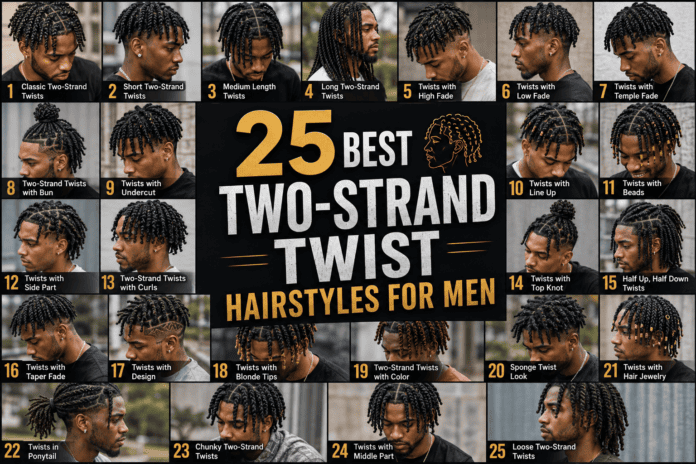
For most men, the best starting points among Two-Strand Twist Hairstyles are Classic Medium Twists, Taper-Fade Twists, Chunky Rope Twists, and Shoulder-Length Twists. Classic medium twists are easy to live with, a taper cleans the edges without changing the texture, chunky twists add visual weight, and longer twists create stronger movement.
This guide takes a barbering and men’s-grooming approach, with attention to section size, parting, tension, taper work, and realistic upkeep. The choices favor looks that can be described clearly at an appointment instead of styles that only work for a single photo.
The 25 options were organized from familiar, lower-commitment shapes toward longer, sharper, and more experimental finishes. Two-Strand Twist Hairstyles can change dramatically through part size, root direction, overall length, and the way the sides are cut, so those details matter more than copying a twist pattern without considering your own hair.
Here are quick reference points for some of the most useful Two-Strand Twist Hairstyles before getting into the full list.
| Style | Best Suited To | Visual Effect | Upkeep |
|---|---|---|---|
| Classic Medium Twists | Most medium-length textured hair | Balanced and natural | Moderate |
| Short Twists | Shorter growing-out hair | Compact and clean | Moderate |
| Small Defined Twists | Dense hair with enough length | Detailed and controlled | Higher |
| Chunky Rope Twists | Thick, full hair | Heavy texture | Moderate |
| Center-Part Twists | Medium or longer hair | Symmetrical framing | Moderate |
| Low-Taper Twists | Men wanting clean edges | Natural top, sharper outline | Moderate |
| Mid-Fade Twists | Stronger side contrast | Modern and structured | Higher |
| High-Top Twists | Dense hair with vertical volume | Taller silhouette | Moderate |
| Shoulder-Length Twists | Longer hair | Movement and presence | Moderate |
| Twist Man Bun | Long twists | Pulled-back and practical | Moderate |
Classic Two-Strand Twist Hairstyles That Are Easy to Wear
The easiest Two-Strand Twist Hairstyles don’t depend on extreme fades, accessories, or complicated part patterns. They work because the proportions are balanced, making them useful for men trying twists for the first time or anyone who wants a style that still feels natural after the first week.
1. Classic Medium Two-Strand Twists
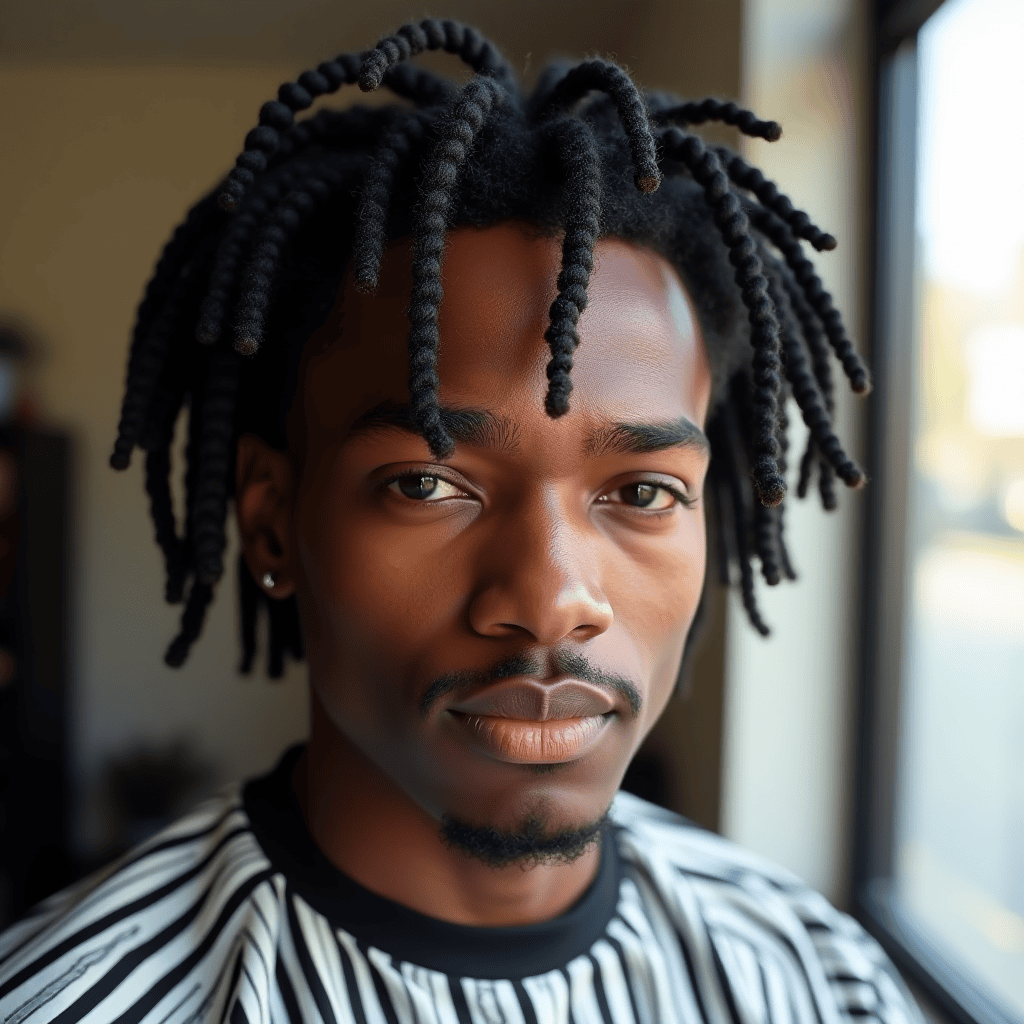
Classic medium twists give the style enough length to show their rope-like shape without letting the hair dominate the face. The sections are usually medium in size, with each twist dropping naturally from the scalp instead of being pushed into one rigid direction. Among Two-Strand Twist Hairstyles, this is the baseline look because you can clearly see the texture, separation, and natural movement without extra design work.
This suits men with enough length for each section to hold a defined twist and works especially well when you want an everyday style rather than a dramatic cut. Ask your barber or stylist, “Give me medium-size two-strand twists with clean parts, but don’t make the roots too tight.” Maintenance is mostly about protecting the twists while sleeping and keeping unnecessary handling down. The drawback is that medium sections can start looking fuzzy sooner than tiny, tightly controlled sections.
2. Short Two-Strand Twists
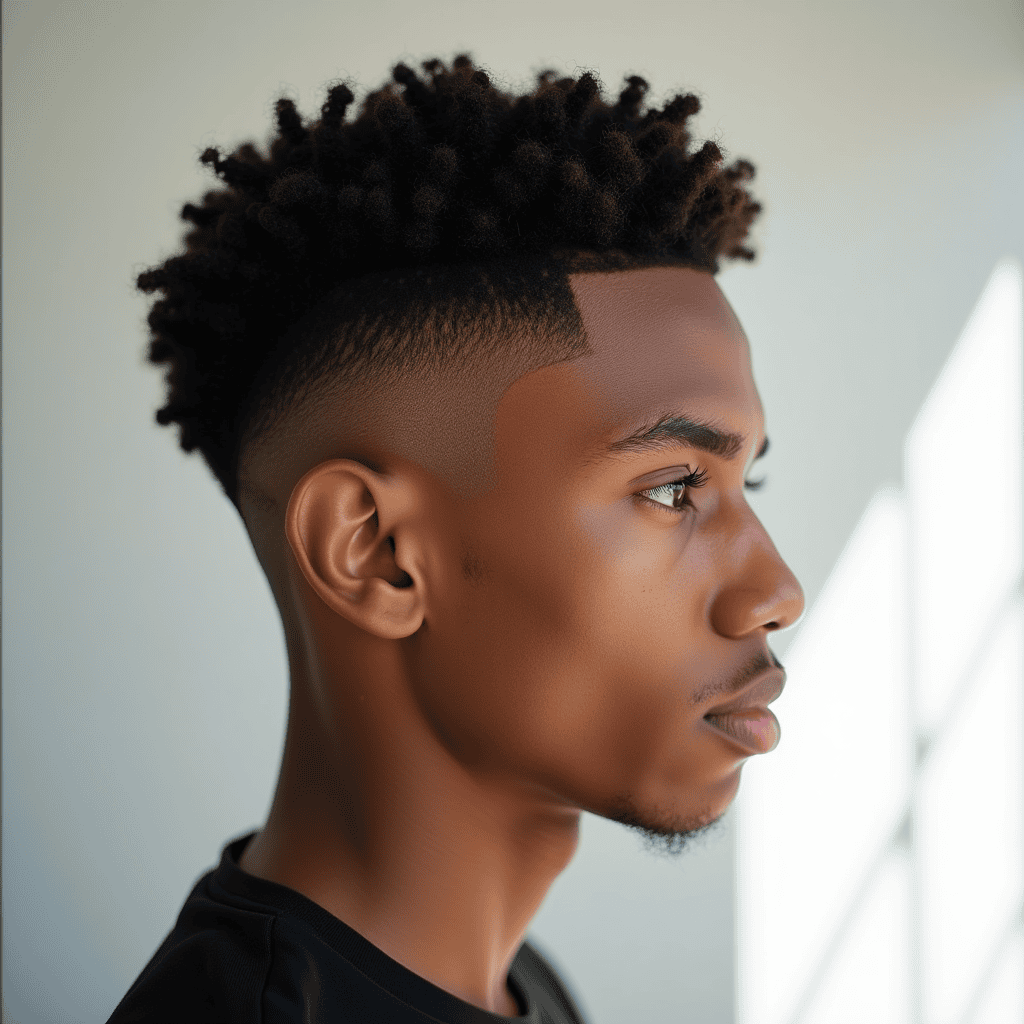
Short twists sit close to the head and create texture without much swing or hang. Each section forms a compact spiral that lifts slightly from the scalp, giving shorter hair a deliberately styled finish rather than the unfinished look that sometimes comes with growing hair out. The silhouette stays tight, especially around the forehead and crown.
This is a useful choice for men whose hair isn’t long enough for shoulder movement but has enough length to separate and twist securely. Tell the stylist, “Keep the twists short and even, with medium-small parts and a natural finish at the roots.” Short twists can be easier to sleep on than longer ones, though the smaller working length may encourage faster unraveling at the ends. Men wanting a loose, hanging style should grow more length first.
3. Small Defined Two-Strand Twists
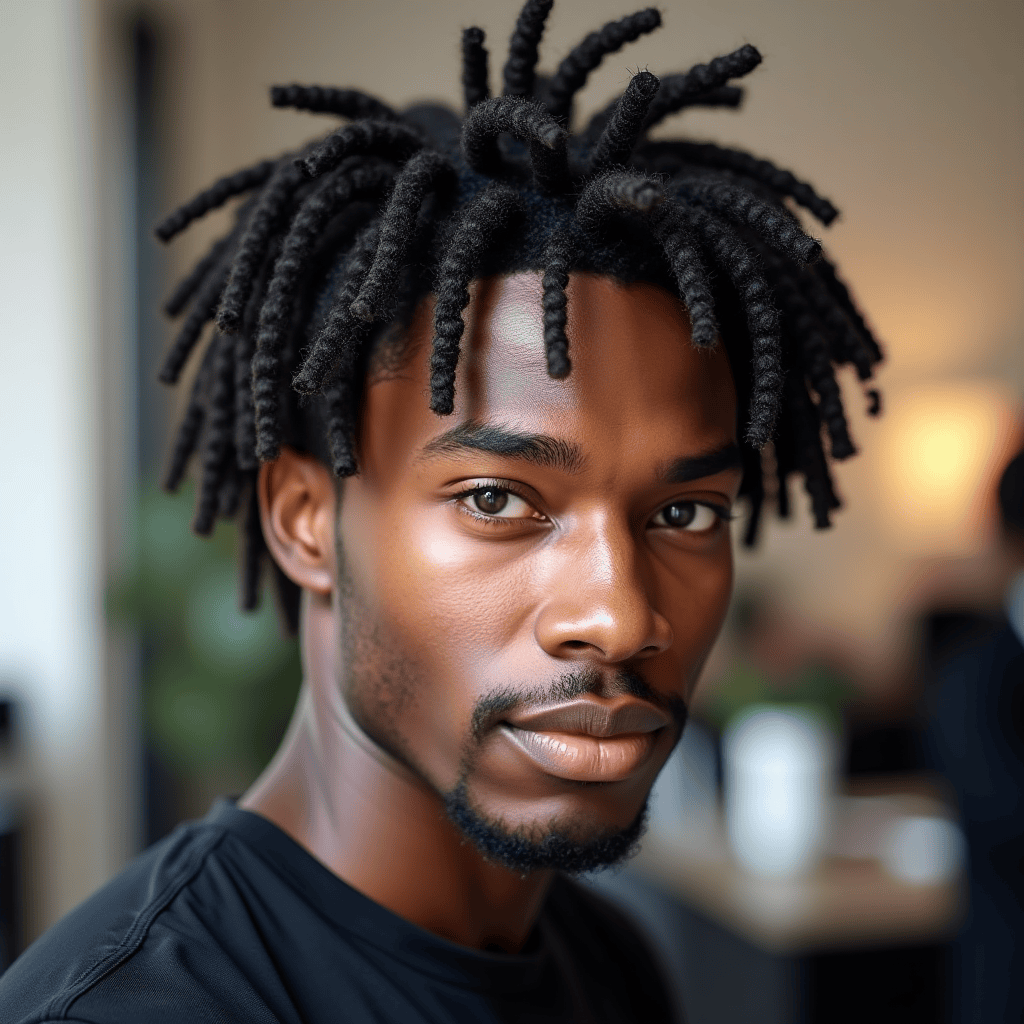
Small defined twists create a finer pattern across the entire head, with dozens of narrow ropes giving the hair more visible detail. They tend to fall closer together than chunky sections, so the finished shape looks fuller even though each individual twist is slim. This version of Two-Strand Twist Hairstyles works especially well when you like precise separation and a more intricate finish.
Dense hair usually handles the look best because there is enough coverage to prevent the smaller sections from appearing sparse. Ask for, “Small two-strand twists with consistent parts and enough tension to define them without pulling at the scalp.” The smaller sections take more time to install and usually demand more patience when they’re removed. If you hate long appointments, medium twists make more sense.
4. Chunky Rope Twists
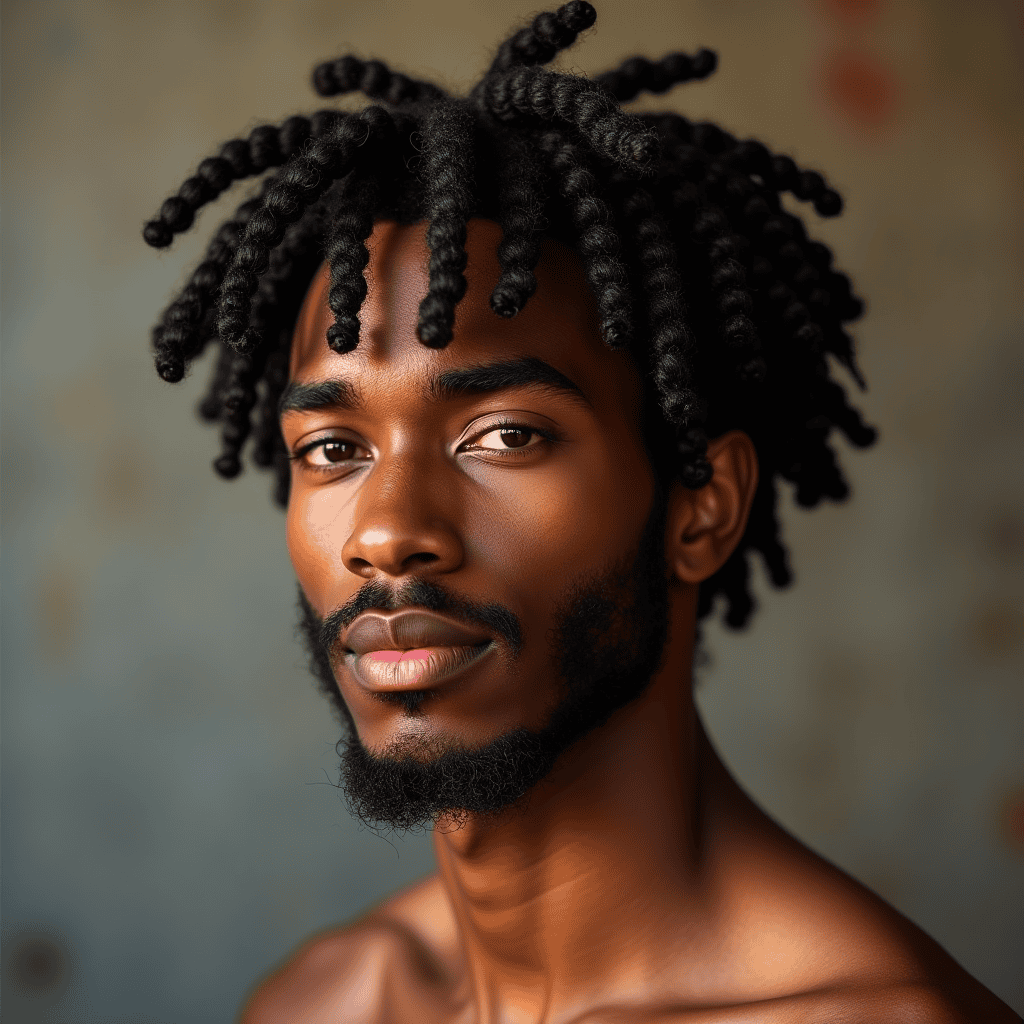
Chunky rope twists use larger sections, giving every twist a thicker diameter and a stronger sculptural shape. The ropes look substantial from the roots through the ends, with fewer visible part lines and more emphasis on the volume of the hair itself. They can make a full head of textured hair look bold without relying on a complicated haircut.
Men with thick hair are usually the natural fit because large sections need enough density to keep the twists looking full. Ask your stylist, “Make the sections chunky and keep the twists thick from root to tip without pulling them flat.” They are quicker to identify and separate than tiny twists, but larger sections can loosen faster and may not hold as much crisp definition. Fine-density hair may look too exposed between parts.
5. Center-Part Two-Strand Twists
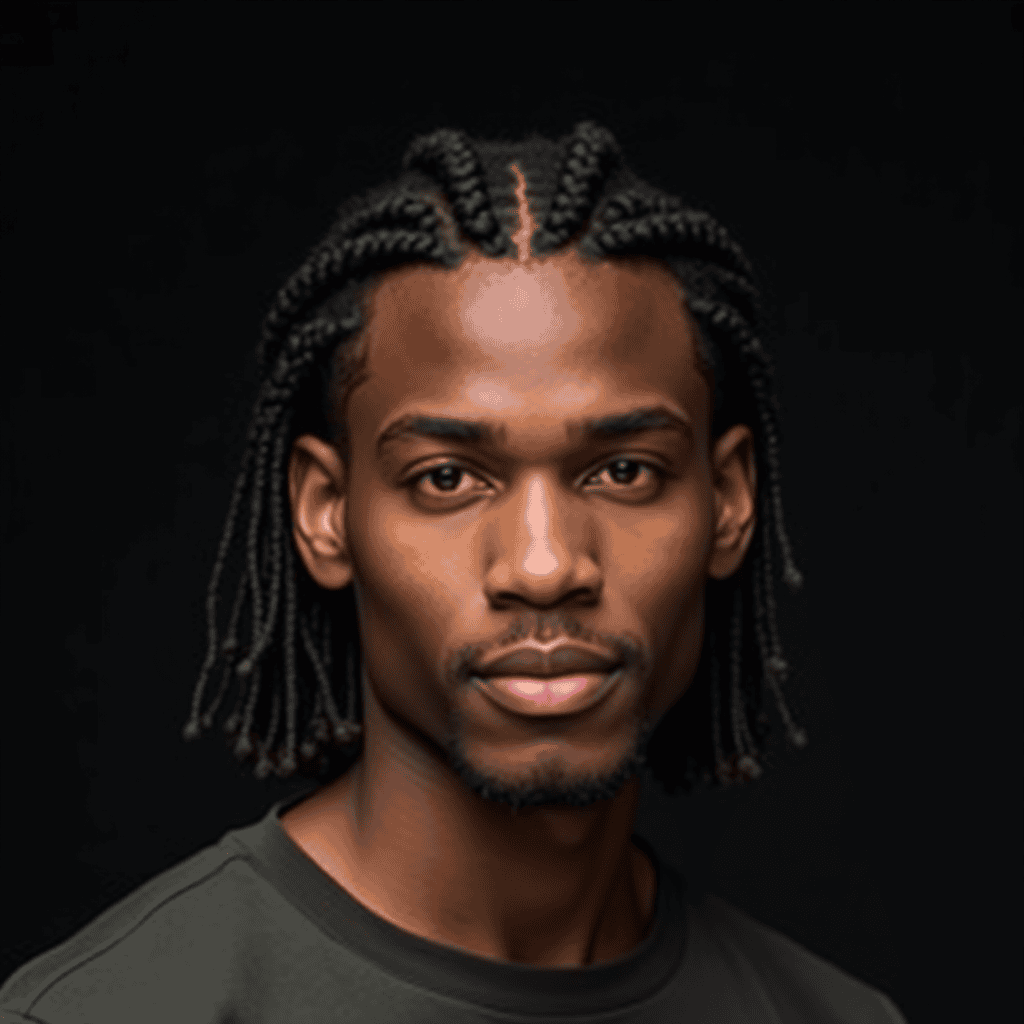
Center-part twists build the whole style around a clean line running from the front hairline toward the crown. Twists fall to both sides of that line, creating deliberate symmetry and framing the forehead and temples in a controlled way. Two-Strand Twist Hairstyles with a center part can make medium and longer hair feel more organized without adding a fade.
The shape tends to work best when your twists have enough length to fall away from the central part instead of standing straight up. Tell your stylist, “I want a clear center part with the twists divided evenly on both sides, but keep the rest of the sections natural.” The center line needs reasonably neat maintenance to preserve the effect. If your natural growth pattern strongly pushes hair to one side, a side part may sit better.
6. Side-Part Two-Strand Twists
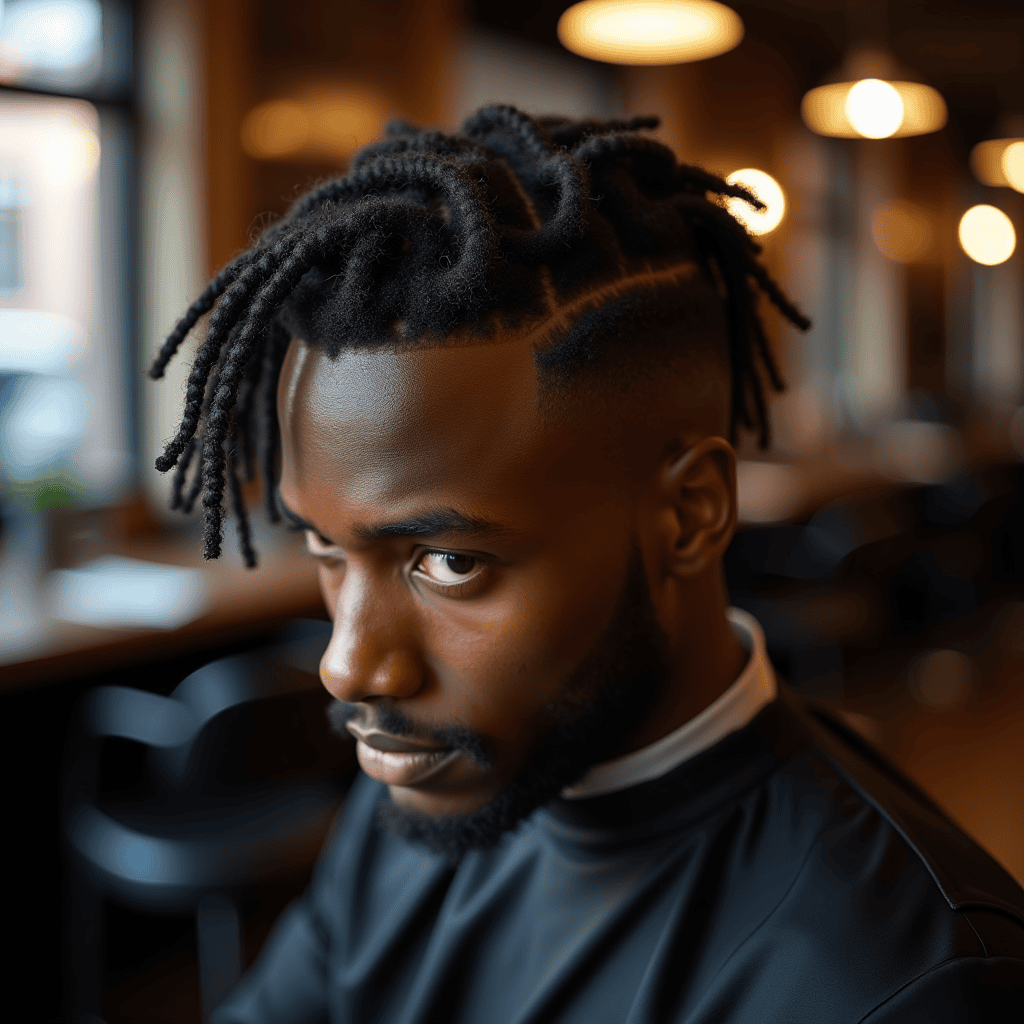
A side part shifts the visual weight of the twists instead of splitting the hairstyle evenly. More twists fall across one side while the opposite side opens up slightly around the temple, producing a relaxed asymmetry that works particularly well once the hair has enough length to move. The result feels less formal than a strict center part.
This is worth trying if your natural growth direction already favors one side or if you like styles that don’t look perfectly mirrored. Ask for, “A natural side part with most of the twists falling this way, and keep the part defined without making it too wide.” You’ll occasionally need to guide the twists back into their intended direction after sleeping. Very short hair may not fall enough for the side sweep to show clearly.
7. Loose-Root Two-Strand Twists
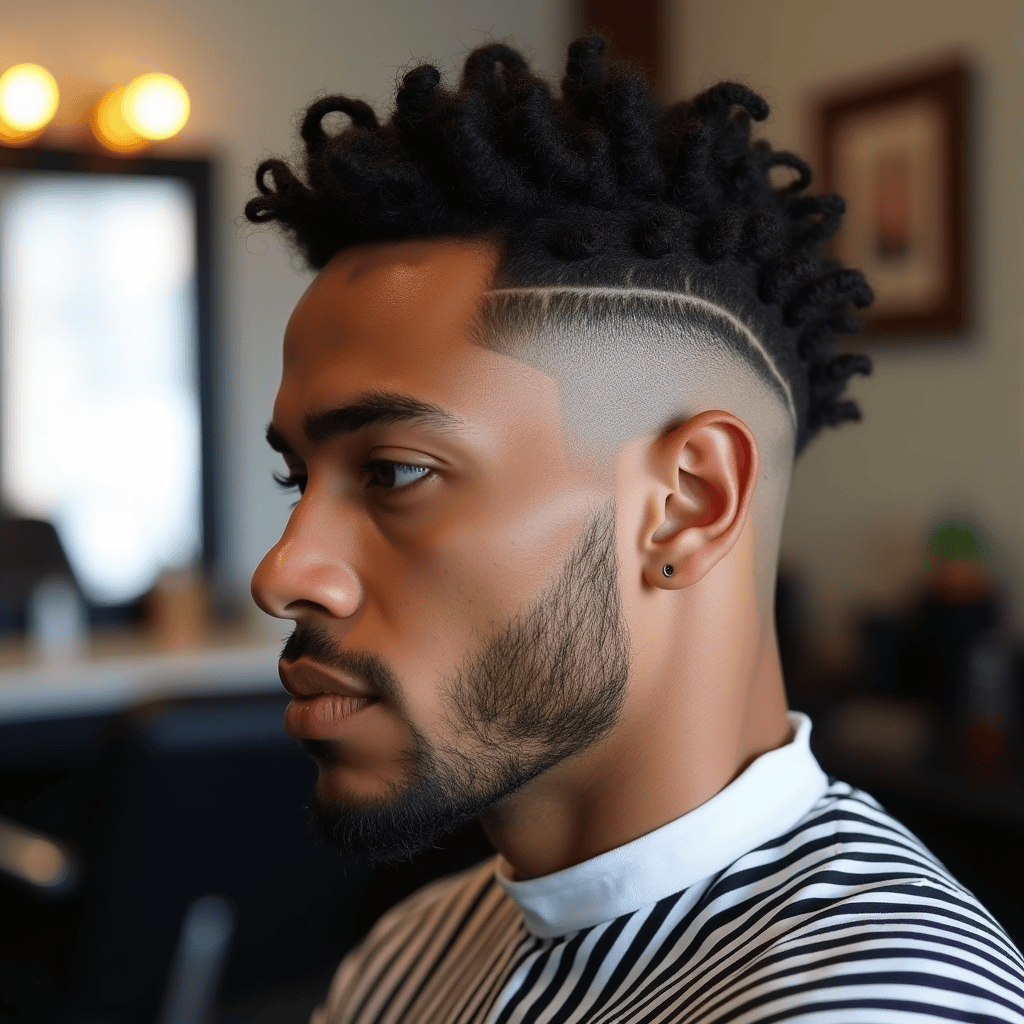
Loose-root twists deliberately avoid the pulled-down appearance of tightly anchored sections. The hair has a small amount of softness and lift where each twist begins, while the lengths remain clearly wrapped into paired strands. In Two-Strand Twist Hairstyles, that tiny change at the root can make the entire finish feel more relaxed and less freshly installed.
Men who prioritize comfort or prefer an undone texture often appreciate this version. Tell the stylist, “Keep the root comfortable and slightly loose, then give me good definition through the length.” The tradeoff is obvious: looser roots tend to fuzz and shift sooner, so don’t choose this if you want every part line looking fresh for as long as possible. It works best when a little natural imperfection is part of the plan.
Tapered and Structured Two-Strand Twist Hairstyles
Changing the sides can make Two-Strand Twist Hairstyles look completely different without changing the twist technique itself. A taper preserves more natural hair around the head, while stronger fades remove greater visual weight and make the twisted section appear taller or more concentrated.
8. Low-Taper Two-Strand Twists
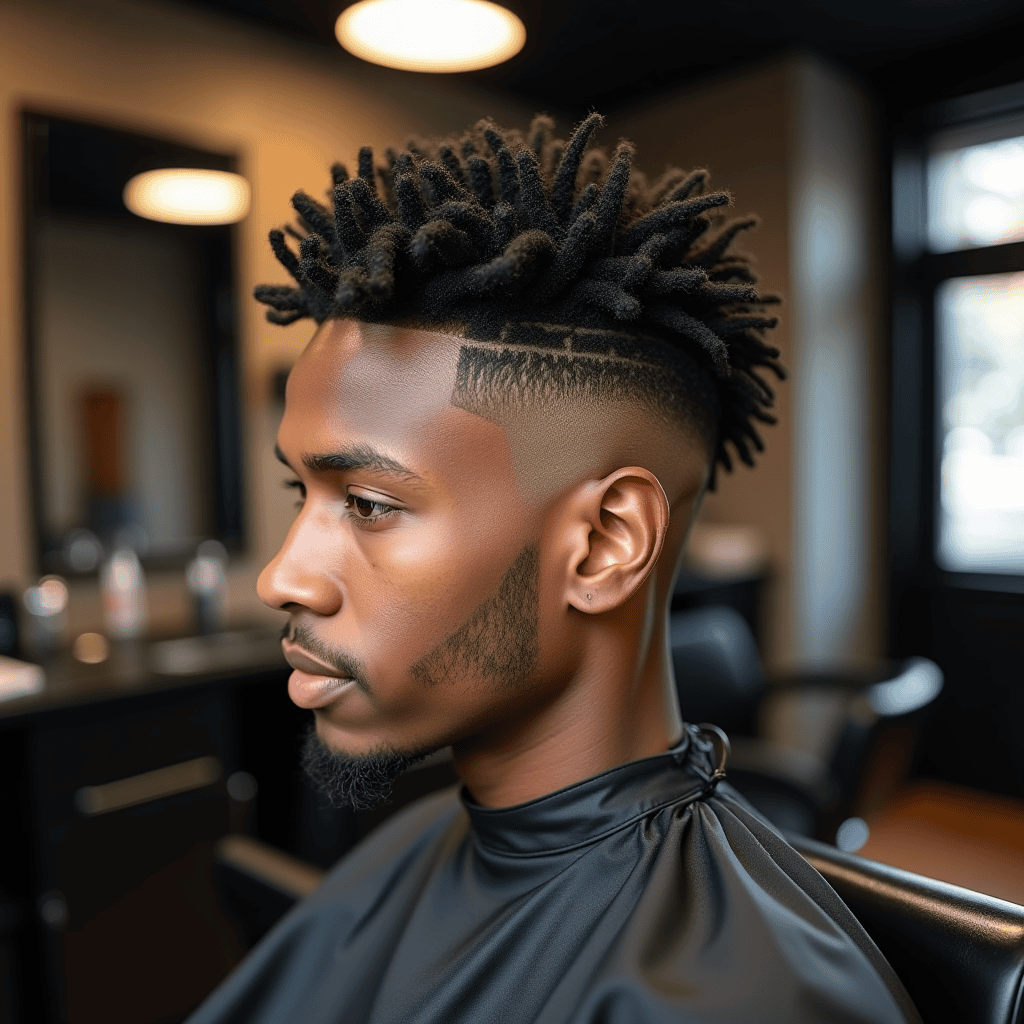
Low-taper twists preserve most of the hair while cleaning the lowest points around the sideburns and neckline. The reduction stays subtle, so the eye still reads a full textured hairstyle rather than a fade with twists sitting on top. It is one of the easiest ways to sharpen the outline without making the haircut the main event.
This suits men who want some barbershop structure while keeping the sides relatively full. Ask for, “Two-strand twists on top with a low taper only around the sideburns and neckline.” You’ll need edge and taper maintenance more often than the twists themselves if you want the haircut to stay crisp. Anyone trying to grow every part of the hair evenly should skip the taper and keep a natural perimeter.
9. Mid-Fade Two-Strand Twists
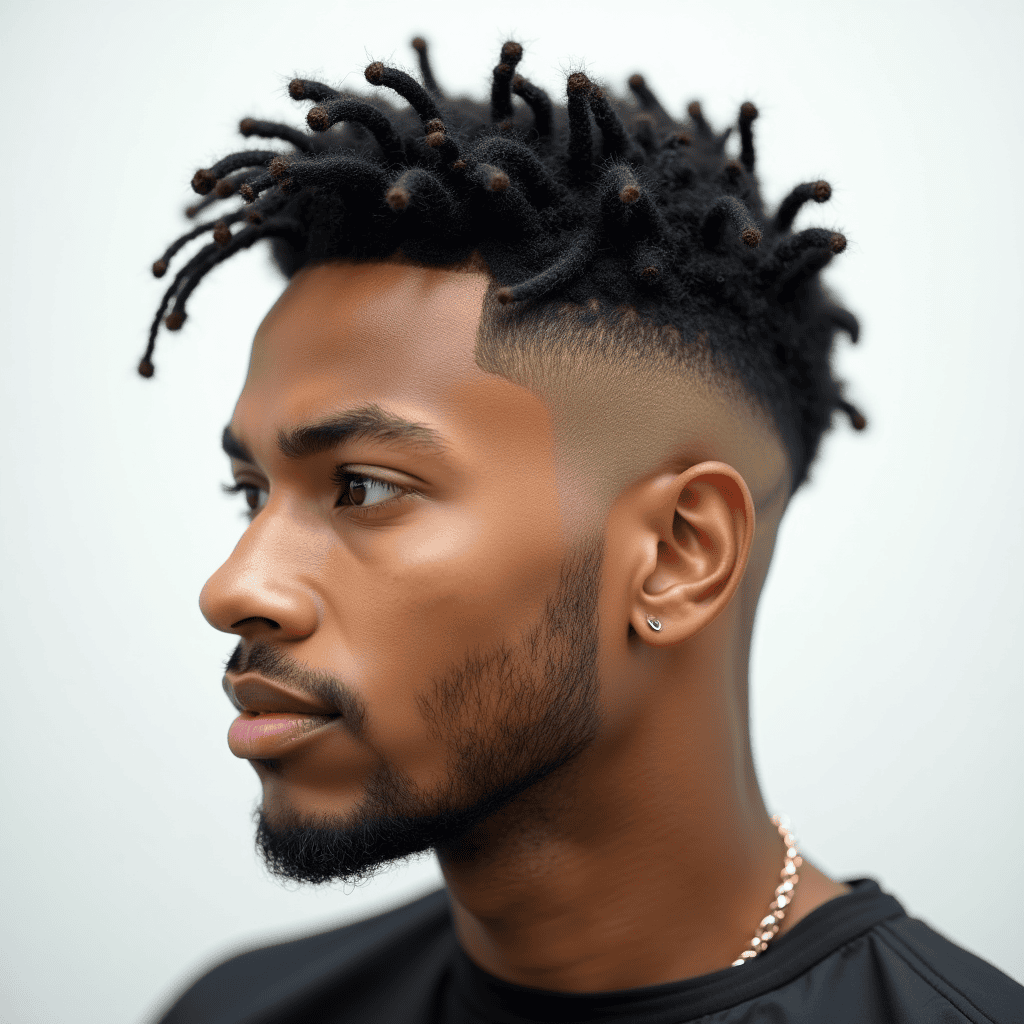
A mid fade removes more side weight and places the transition roughly through the middle portion of the sides. Above that clean gradient, the twists appear denser and more pronounced because there is less surrounding hair competing with them. Two-Strand Twist Hairstyles paired with a mid fade have a noticeably sharper, more modern silhouette than full-sided versions.
This combination works for men who like contrast and don’t mind regular barber appointments. Say, “Keep the twists full through the top and give me a mid fade that blends into them without taking the fade too high.” The fade will lose its crispness well before the twists necessarily need to be redone. If you prefer stretching appointments for longer, a taper requires less visual maintenance.
10. Temple-Taper Two-Strand Twists
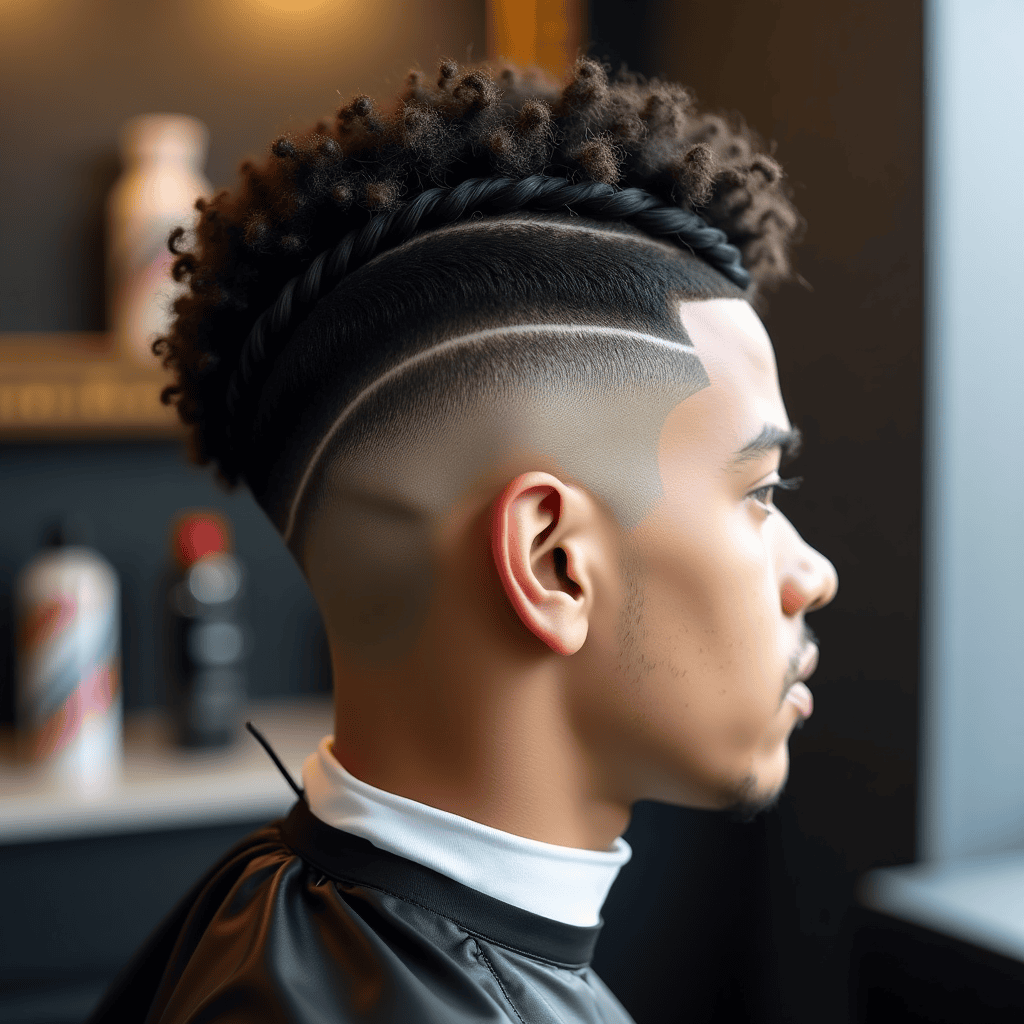
Temple-taper twists focus the cleanup in a small area instead of changing the entire side profile. The section immediately around each temple is shortened and blended, while the hair above the ears and farther back can remain much fuller. That narrow contrast makes the front outline look cleaner without sacrificing much density.
Men who want a restrained haircut change should consider it before jumping into a full fade. Ask the barber, “Give me a clean temple taper with the rest of the sides left full under the twists.” The taper still needs touchups if you care about sharp edges, yet grow-out tends to feel less dramatic than a mid or high fade. It won’t satisfy someone looking for major skin-to-hair contrast.
11. Drop-Fade Two-Strand Twists
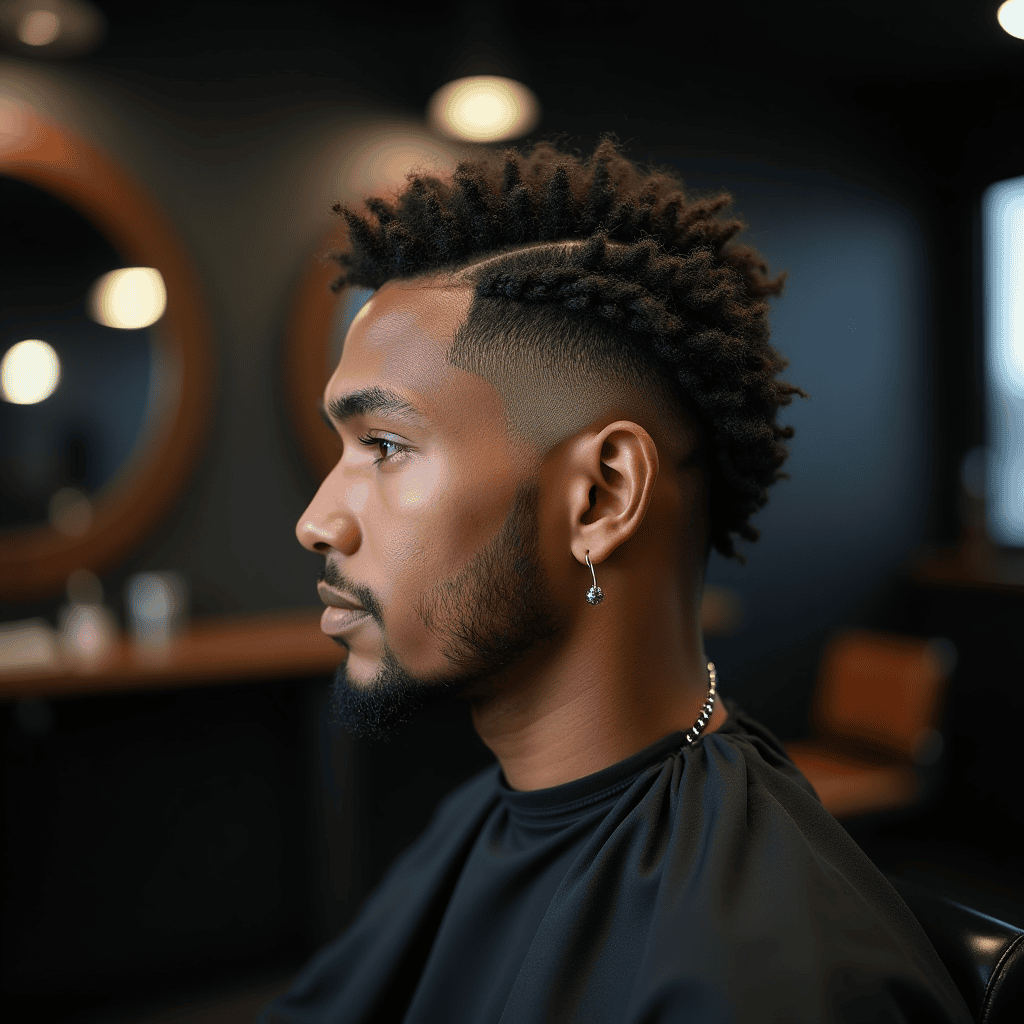
The drop fade bends lower behind the ear instead of traveling around the head in a straight horizontal line. That curved shape leaves a little more visual depth toward the back while still creating clear separation beneath the twists. It adds movement to the haircut even before the hair itself starts moving.
This works best for men who want their Two-Strand Twist Hairstyles to have a noticeable haircut design without moving into shaved patterns or hard lines. Tell the barber, “I want a drop fade that follows the head shape behind the ear, with the twists kept full above it.” The curved fade needs a capable blend to look intentional. Grow-out also shows quickly, so expect barber maintenance if that outline matters to you.
12. Burst-Fade Twist Style
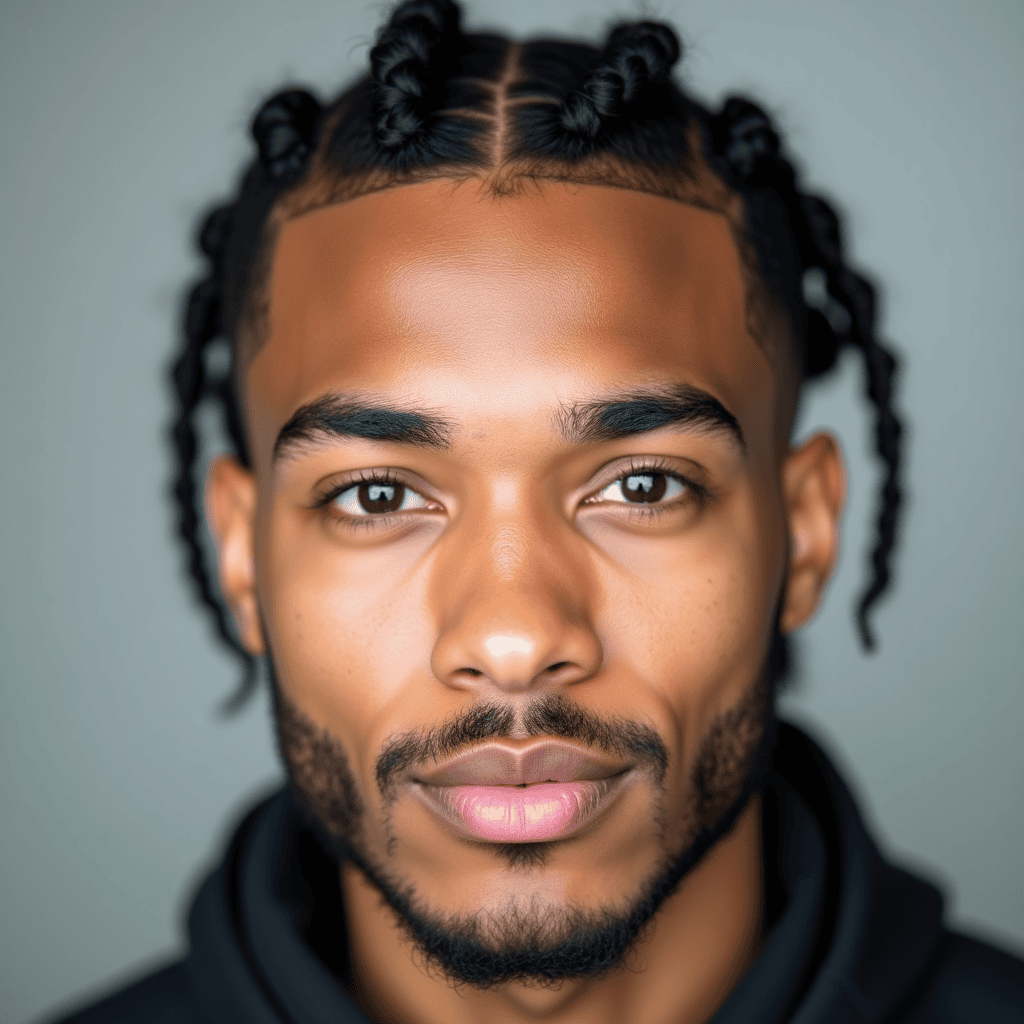
A burst fade circles tightly around the ear while leaving more hair toward the back of the head. With twists above, the curved removal creates a stronger side shape and can push the silhouette toward a modern mohawk influence without requiring a fully narrow strip of hair. The contrast is bolder than a temple taper.
This style suits men comfortable with a more obvious haircut underneath their twists. Ask for, “A burst fade around the ear, but leave enough length through the back so the twists don’t turn into a full mohawk.” The drawback is maintenance because the circular fade loses definition as the sides grow. Conservative workplaces may also make the subtler low taper a more comfortable choice.
13. Twisted Top With a Clean Lineup
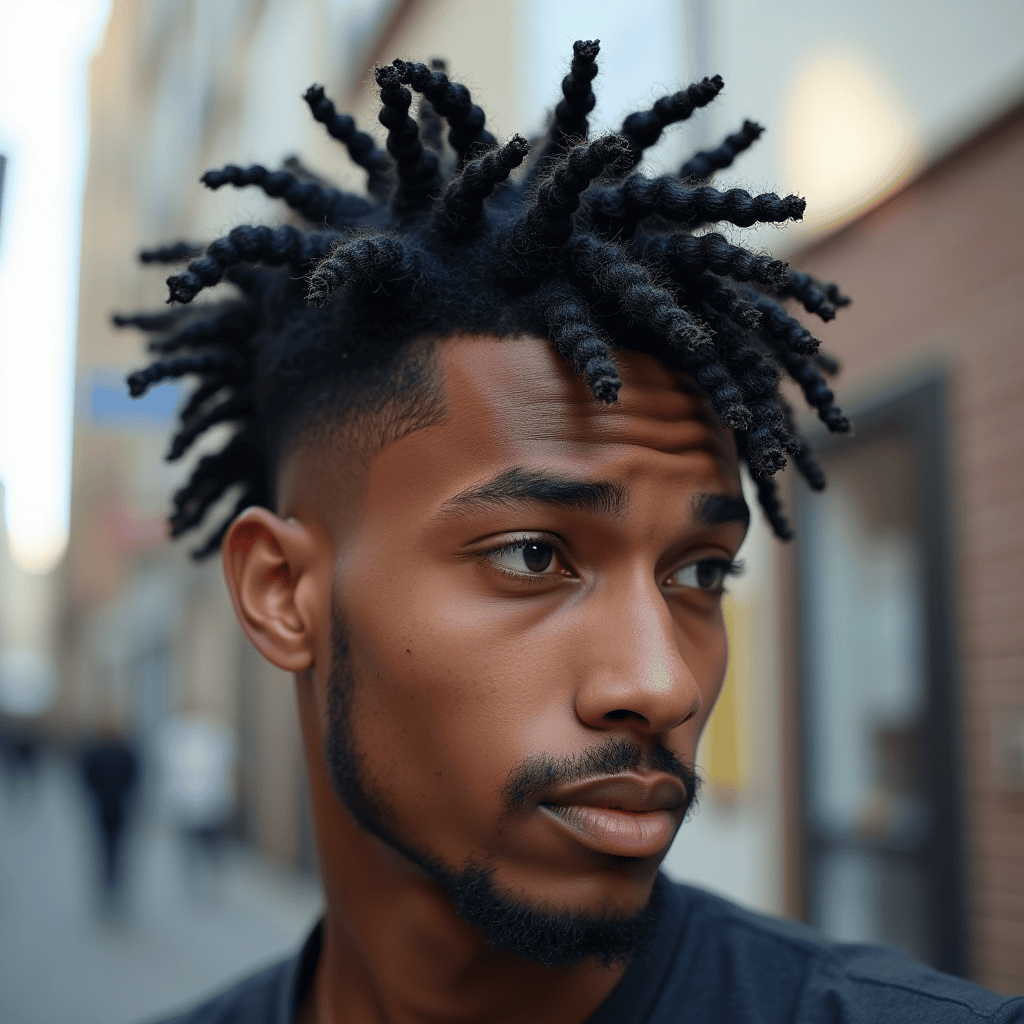
A clean lineup gives the front edge a sharper geometric frame while the twists above stay textured and irregular. That contrast between a controlled hairline and moving twisted strands makes the hairstyle feel more polished from the front. Among Two-Strand Twist Hairstyles, it is one of the simplest ways to add precision without cutting much length.
It works well for men who like a neat front profile and already wear their hairline shaped. Tell your barber, “Keep the two-strand twists natural behind the hairline and give me a clean lineup without pushing it back.” That last part matters because an overly aggressive edge can change the natural outline. Men who prefer an untouched hairline can simply keep the perimeter soft.
14. High-Top Two-Strand Twists
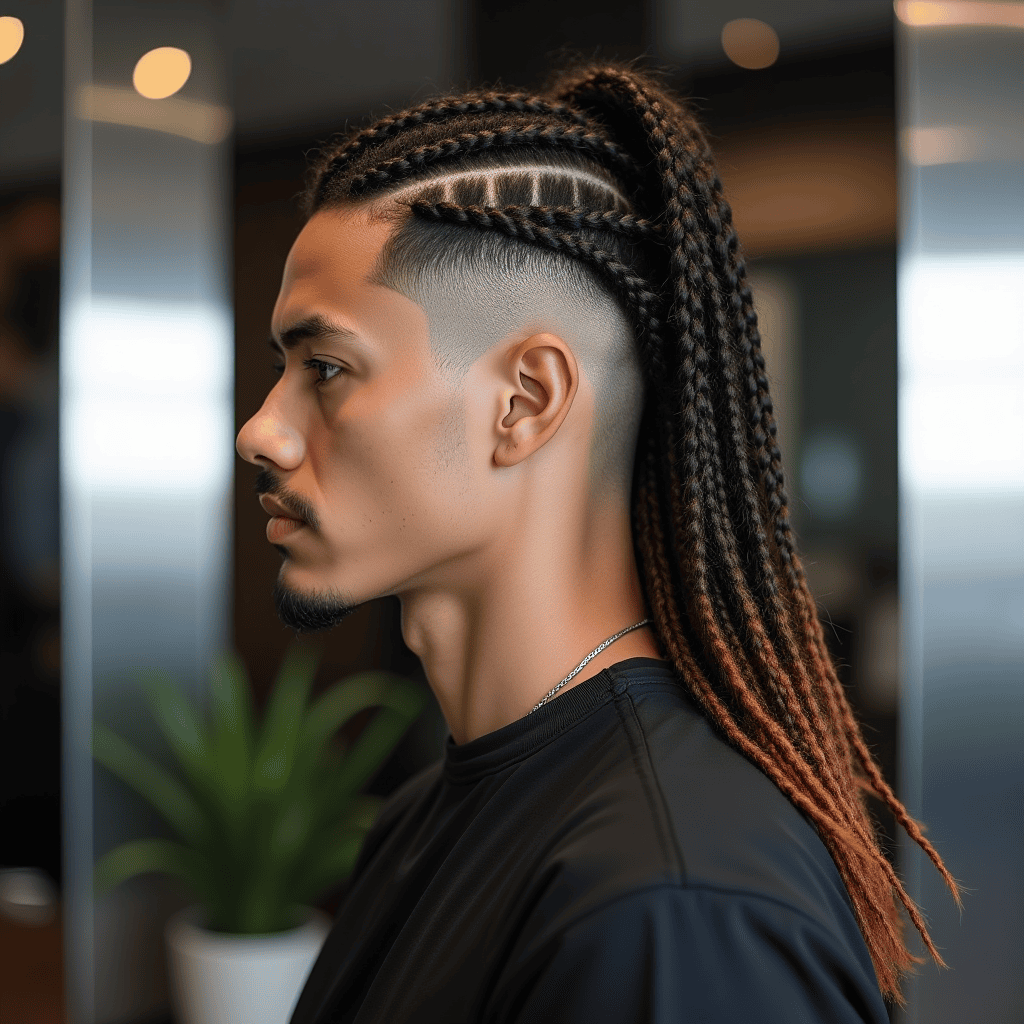
High-top twists keep the strongest volume through the upper part of the head while the sides remain noticeably shorter. The twists stand and fall from an elevated base, creating more vertical height than a conventional full-head installation. The overall outline is angular, especially when the top has dense hair and the sides are kept restrained.
This is strongest on men whose hair naturally carries volume and who want height to become part of the design. Ask for, “Keep enough length and density up top for full twists, with the sides shorter so the shape stays tall.” The profile needs periodic reshaping because uneven growth can blur the high-top outline. Anyone who dislikes height around the crown should choose flatter medium twists instead.
Longer Two-Strand Twist Hairstyles With More Movement
Once twists reach the ears, jaw, or shoulders, gravity becomes part of the design. Longer Two-Strand Twist Hairstyles swing, separate, tuck behind the ears, and can be tied back, giving you styling options that shorter versions simply don’t have.
15. Undercut Two-Strand Twists
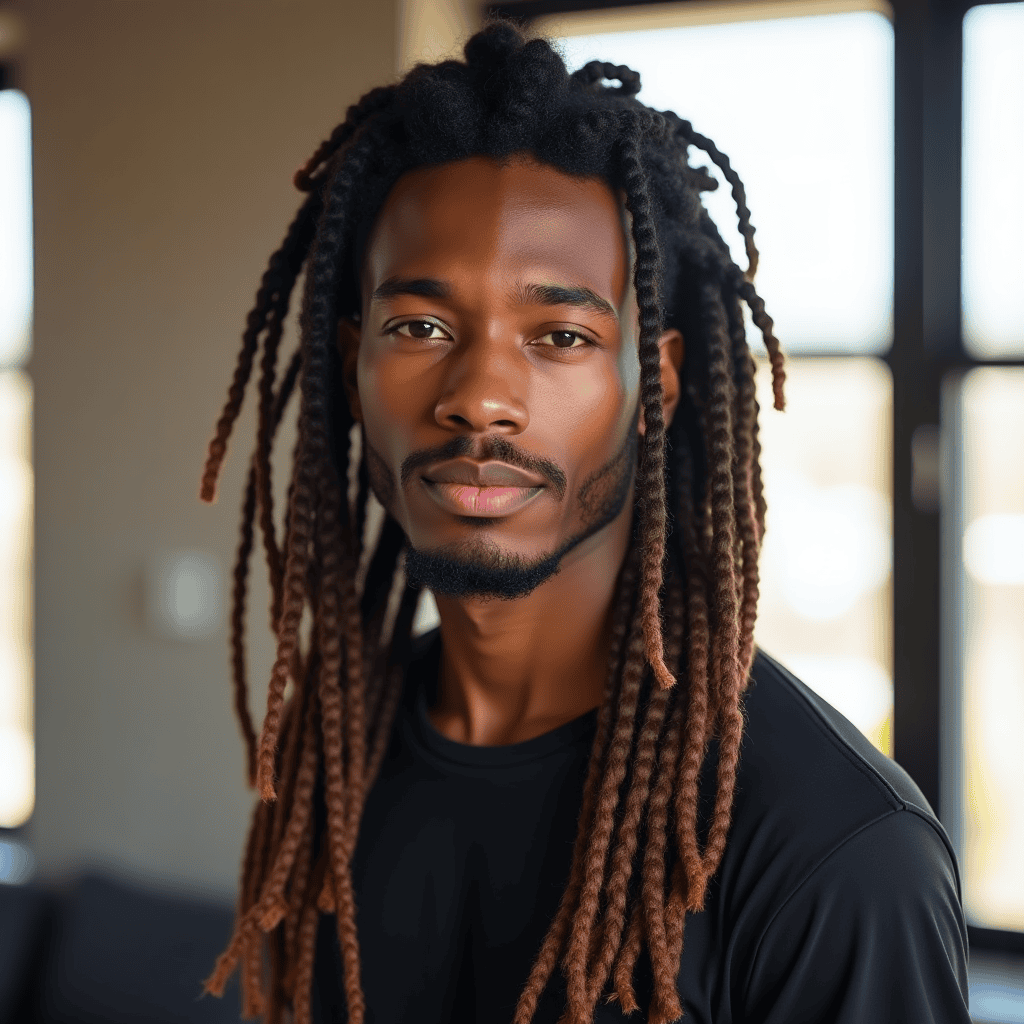
An undercut creates a hard change in length between the twisted top and the shorter sides rather than blending the two gradually. The twists form a concentrated upper section that can fall over the boundary or be pulled back to reveal it. The line between textures is part of the look, not something the barber tries to hide.
Men who enjoy stronger haircut geometry may prefer this over a blended fade. Ask for, “Keep my twists long on top with an undercut underneath, and don’t blend away the separation.” The obvious drawback is commitment: growing an undercut back into one even length takes time and passes through awkward stages. Don’t choose it if your real goal is eventually having long twists everywhere.
16. Shoulder-Length Two-Strand Twists
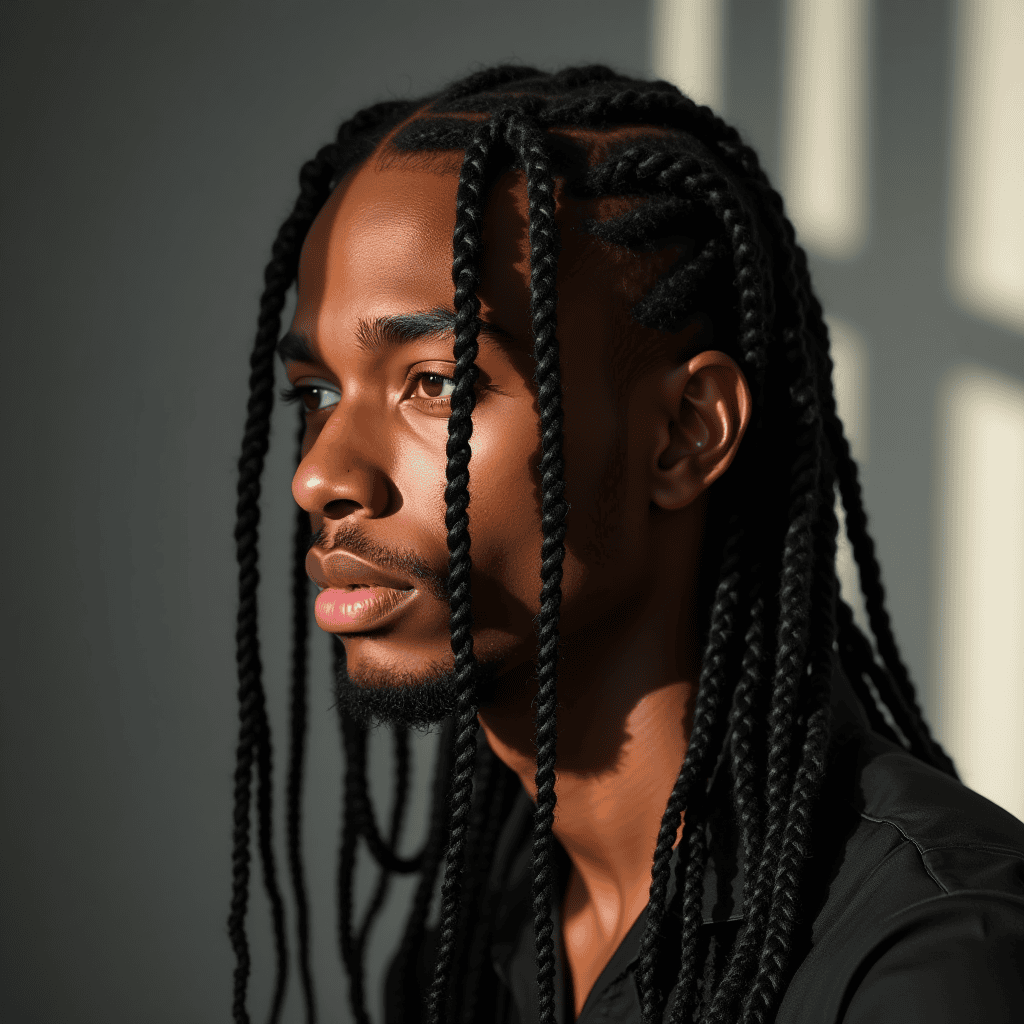
Shoulder-length twists have enough weight to hang clearly downward, framing the cheeks, jaw, and neck rather than lifting around the crown. Individual ropes can swing independently and settle over the shoulders, making the style look substantially different in motion than it does from a still front view. This is one of the most expressive long Two-Strand Twist Hairstyles without needing extra design elements.
Men with established length and enough density for full coverage are the obvious candidates. Tell your stylist, “Keep my finished twists around shoulder length with medium sections so they still move individually.” Longer twists need more care during sleep and can take longer to install or remove. If you dislike hair touching your neck or face throughout the day, stop closer to jaw length.
17. Layered Long Two-Strand Twists
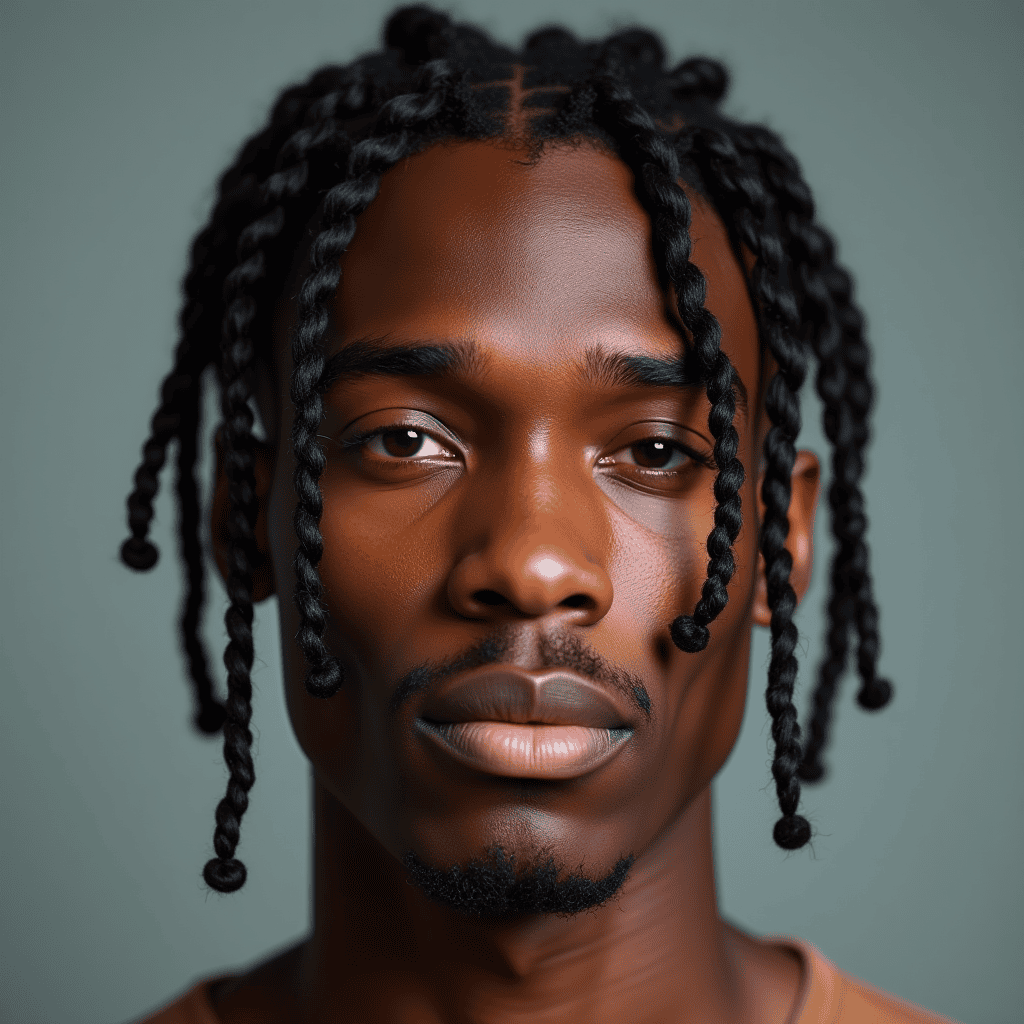
Layered long twists avoid a single blunt line at the bottom by allowing different lengths to finish around the face, jaw, neck, and shoulders. Shorter front sections create framing while longer twists hold the overall length through the back. The staggered ends give the hairstyle more shape when it is worn loose.
This approach can help long, dense hair avoid looking like one heavy curtain. Ask the stylist, “Keep the twists long, but shape them in soft layers so the front finishes shorter than the back.” Any cutting should respect how much the hair changes when twisted versus loose, so communication matters. Men who want every twist ending at an identical level should stick with a more uniform length.
18. Jaw-Length Two-Strand Twists

Jaw-length twists land around the lower cheek and jawline, giving the hair enough drop to frame the face while stopping before the shoulders. The shape has more movement than short or medium twists but remains compact compared with full long hair. Two-Strand Twist Hairstyles at this length can also be tucked back more easily when you want the face fully open.
This length is worth considering if you’re growing your hair but aren’t sure you want the maintenance of shoulder-length twists. Ask for, “Medium-size twists that finish around my jaw, with the front shaped to frame the face.” Exact finished length depends on shrinkage and how tightly the strands are wrapped. If your hair pulls up dramatically when twisted, discuss the expected final position before any trimming.
19. Half-Up Two-Strand Twists
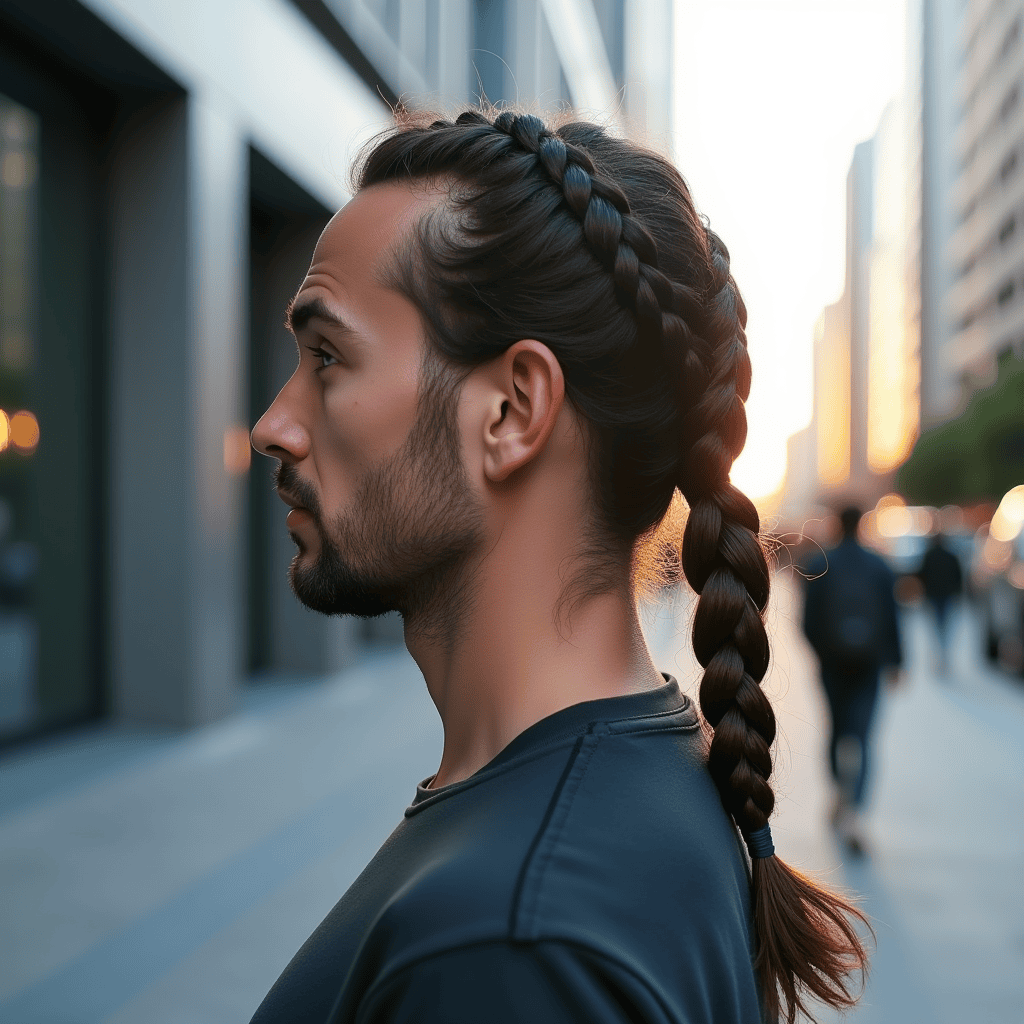
A half-up style pulls the upper portion of the twists away from the face while leaving the lower sections hanging freely. The tied section creates a small lifted shape around the crown, while the remaining twists preserve length and movement around the sides and back. It is practical without hiding the texture that makes the hairstyle interesting.
Men with medium-long or longer twists can use this as a second look without changing the underlying installation. Tell your stylist, “I want twists long enough that the top half can tie back comfortably while the lower half still hangs.” Avoid forcing short front sections into a tight tie because that creates unnecessary tension. The biggest drawback is simply length: shorter twists won’t stay gathered reliably.
20. Two-Strand Twist Ponytail
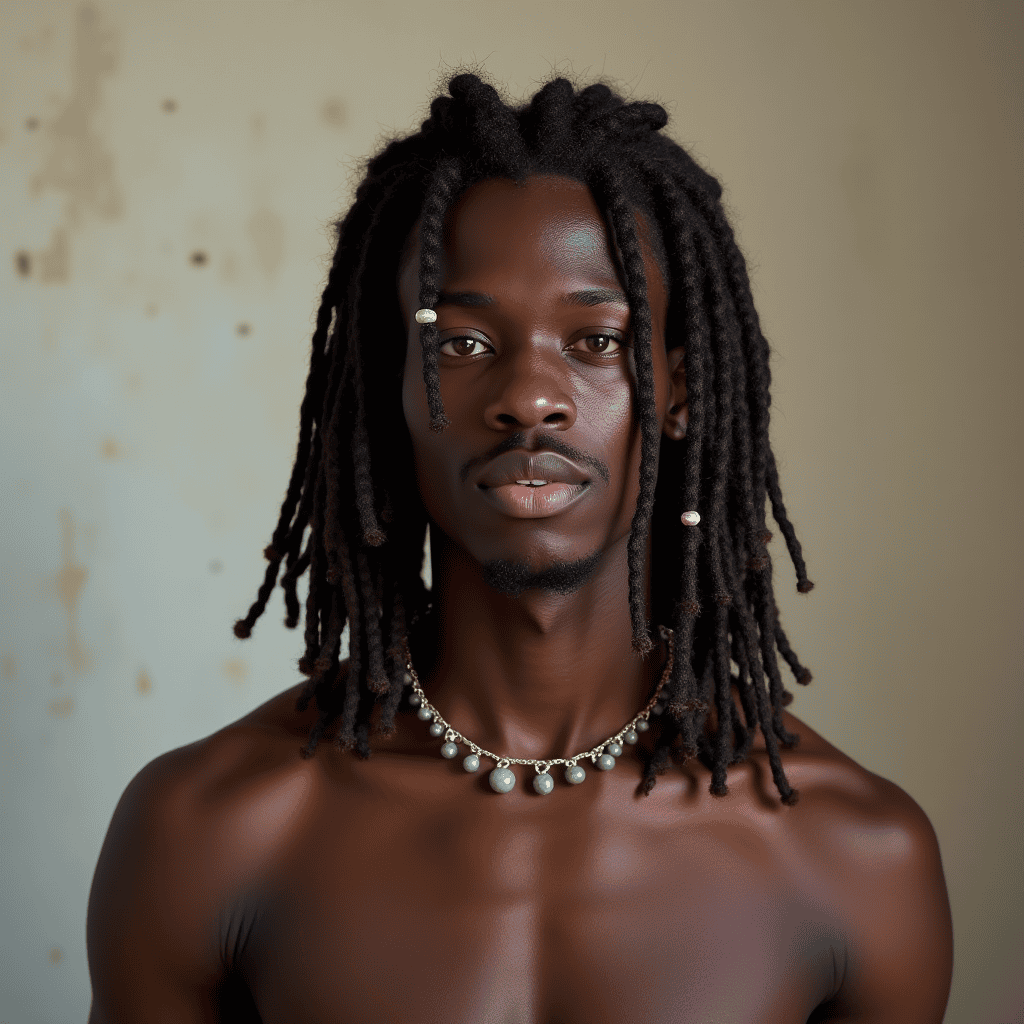
A twist ponytail gathers longer ropes behind the head, clearing the forehead, cheeks, and neck while keeping the individual twist pattern visible through the tied length. The front becomes cleaner and more restrained, while the back gains a compact bundle with loose ends. It’s one of the most practical ways to control long Two-Strand Twist Hairstyles during work or warmer weather.
You need enough length for the twists to reach the tie without pulling hard at the temples. Ask for, “Long two-strand twists that can gather into a low ponytail without forcing the shorter sections.” The ponytail should feel secure rather than tight. Men with newly installed twists may prefer wearing them loose until the root tension has relaxed.
Bold and Creative Two-Strand Twist Hairstyles
The final group pushes beyond simple length and part size. These Two-Strand Twist Hairstyles depend on stronger silhouettes, decorative parting, accessories, or the ability to restyle a longer set of twists, so they usually suit someone who already knows how they like their textured hair to behave.
21. Beaded Accent Two-Strand Twists
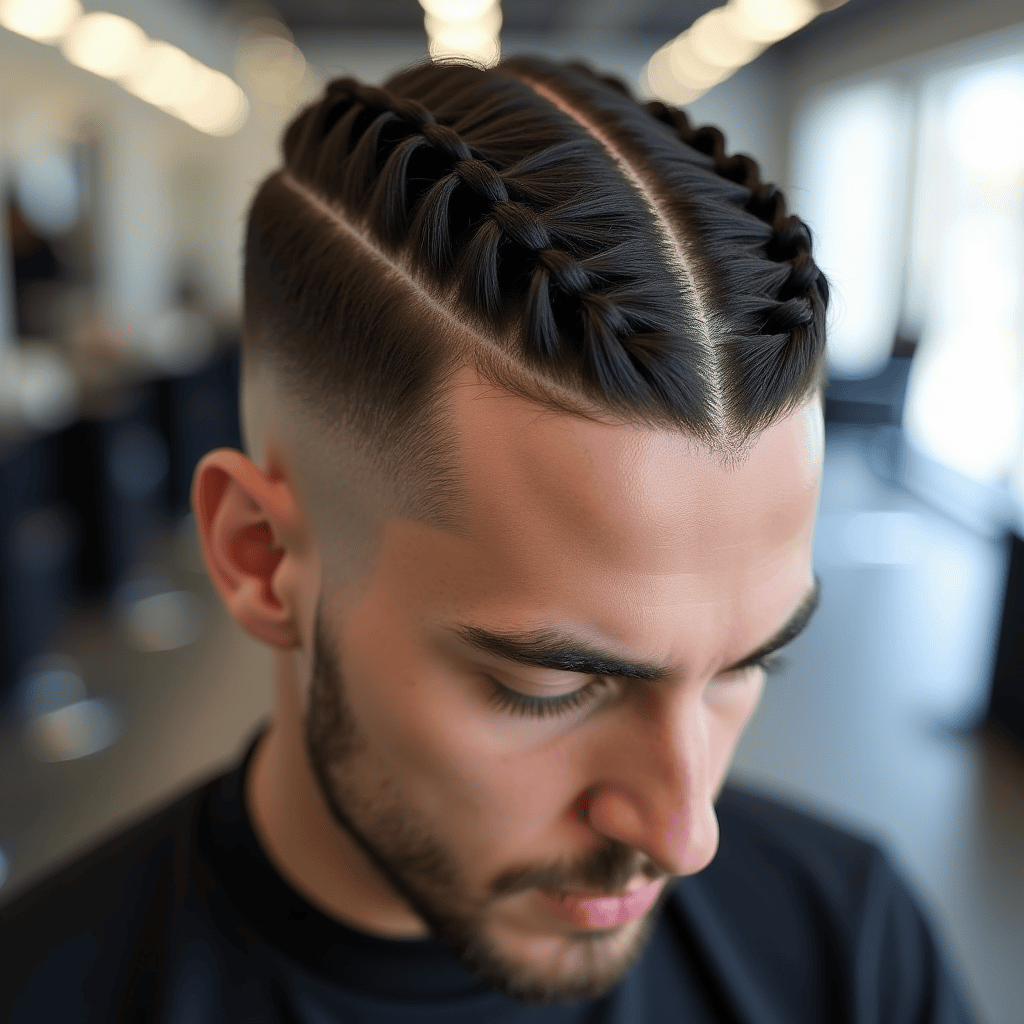
Beaded accent twists keep most of the hairstyle simple and use a few selected ends for small decorative details. The strongest version doesn’t cover every twist; a limited number of beads create focal points that move naturally when the hair moves. Keeping the rest of the ropes plain prevents the accessories from overwhelming the texture.
This works best on medium or long twists with enough length for the decorated ends to hang comfortably. Ask for, “Medium two-strand twists with only a few beaded accents near the front and sides.” Make sure the accessories aren’t heavy enough to pull constantly on individual sections. If you want a style that disappears into conservative settings, leave the beads removable rather than building the whole look around them.
22. Curved-Part Two-Strand Twists
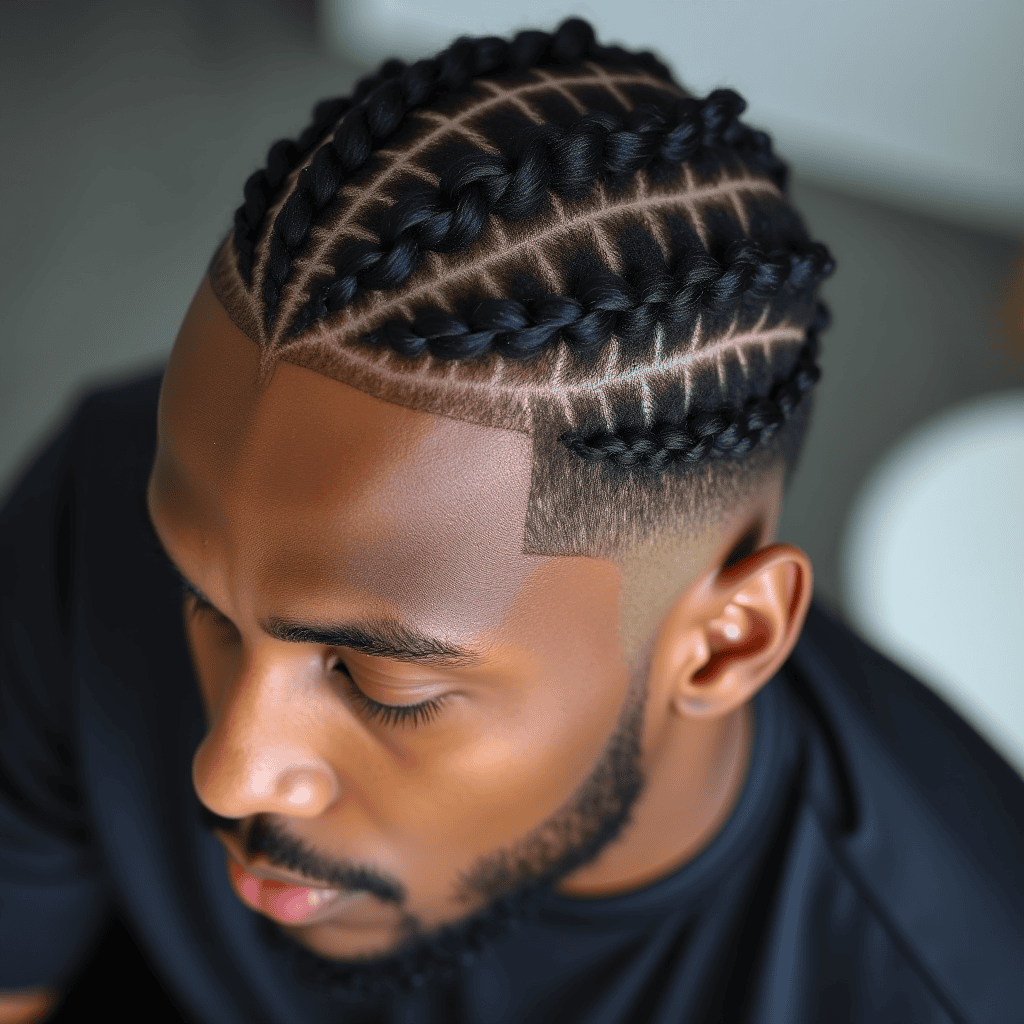
Curved-part twists replace the usual square or rectangular scalp grid with sweeping section lines. The twists themselves remain conventional ropes, but the exposed parting bends across the scalp and becomes visible whenever the hair separates. The style is most impressive from upper and side angles where the pattern can actually be seen.
Men who enjoy detailed parting but don’t want shaved designs can get that visual interest entirely through sectioning. Tell the stylist, “Use curved parts that flow across the head, but keep the twists themselves medium size and consistent.” Installation requires more precision, and the pattern becomes less obvious as roots grow out. If you rarely expose your part lines, simple sections may be a better use of appointment time.
23. Diamond-Part Two-Strand Twists
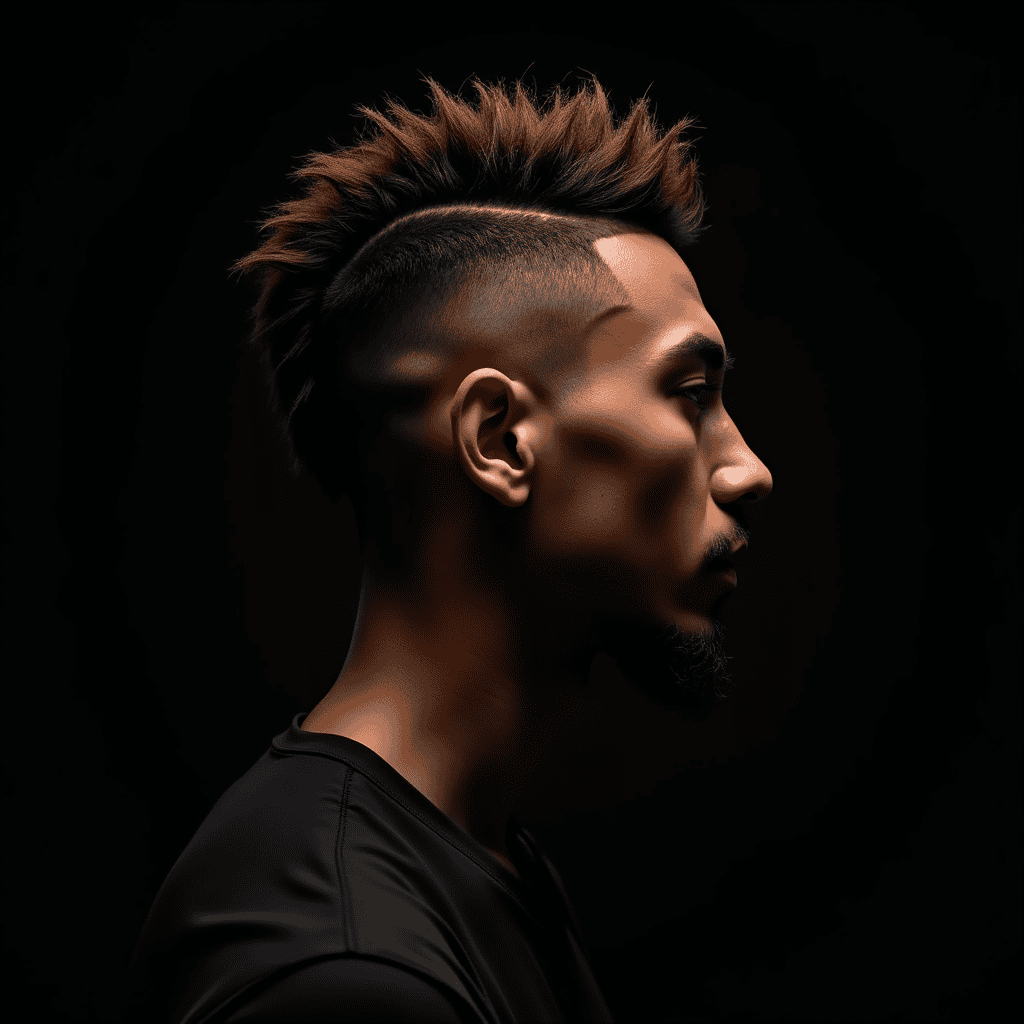
Diamond parts turn the spaces between the twists into a repeated geometric pattern. Seen from above, the scalp forms pointed sections instead of conventional squares, while each twist rises from the center of its own shape. Two-Strand Twist Hairstyles with diamond parting look especially precise immediately after installation.
This detail works best when your hair density gives enough coverage to make the geometry look intentional rather than overly exposed. Ask for, “Medium twists with clean diamond parts that stay consistent across the crown.” The pattern takes more setup and loses some of its definition as new growth appears. If your priority is quick installation, standard square sections are easier.
24. Two-Strand Twist Mohawk
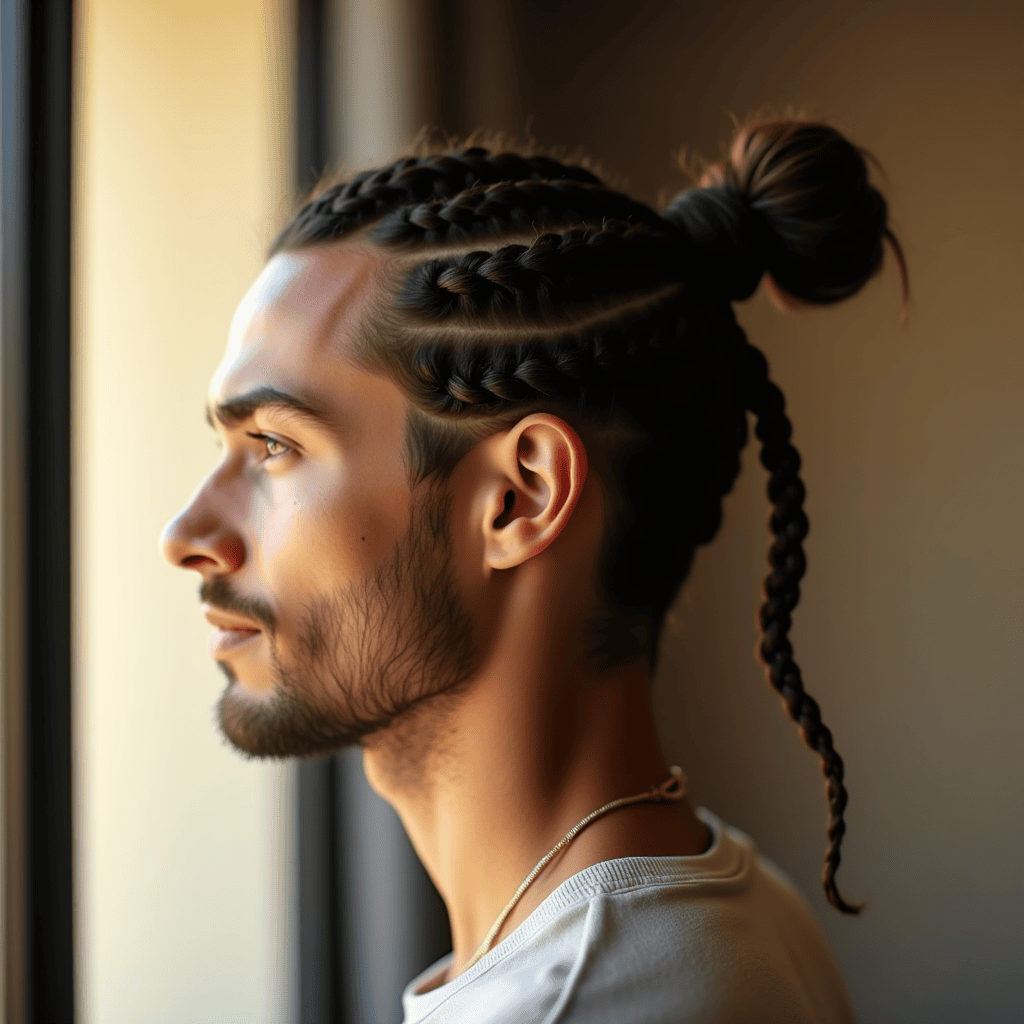
A twist mohawk concentrates length and volume through a strip running from the front toward the back while the sides are cut substantially shorter. The central twists create height and texture instead of the stiff shape associated with a traditional mohawk. From the side, the hairstyle has a strong ridge; from the front, the textured top remains the focus.
Men who already enjoy dramatic fades or directional cuts are the best match. Ask your barber, “Keep the two-strand twists through the center from front to back and take the sides short enough to create a clear mohawk shape.” The commitment is higher because returning to even full-head length requires growing out the sides. It’s not the look to choose if you change hairstyles every few weeks.
25. Two-Strand Twist Man Bun
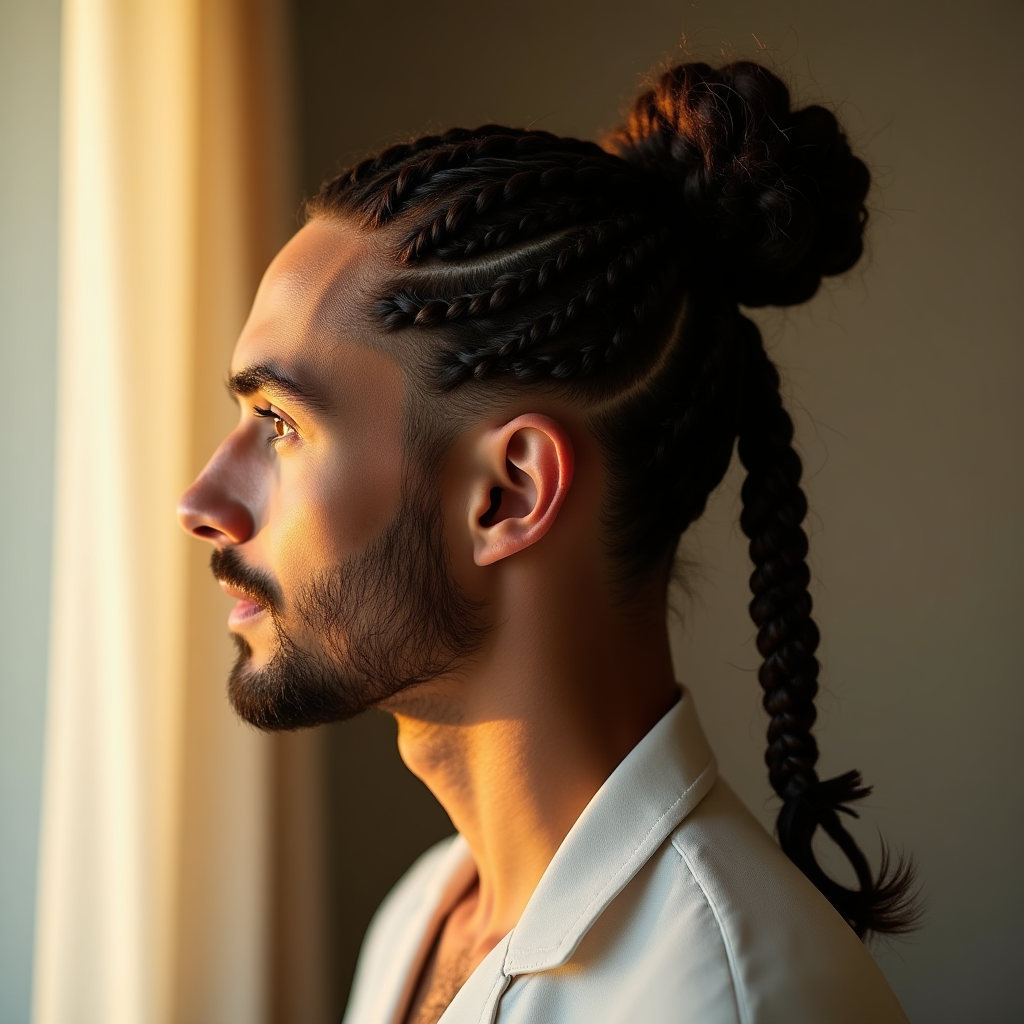
A twist man bun gathers long Two-Strand Twist Hairstyles into a rounded knot at the back or upper rear of the head. The ropes remain visible as they feed into the bun, giving the tied shape far more texture than a bun made from loose hair. A few shorter twists can remain out near the temples if you prefer a less controlled finish.
This only works comfortably once the twists have enough length to reach the gathering point without being stretched. Ask for, “Long twists that can tie into a relaxed man bun, and leave any shorter front pieces out instead of pulling them tight.” Repeatedly wearing the same tight placement can put unnecessary stress on the roots, so vary the position and tension. If your twists barely reach, stick with a low ponytail until more length comes in.
How to Choose the Right Two-Strand Twist Hairstyles
Start with length because it controls nearly everything else. Short and classic medium Two-Strand Twist Hairstyles are easier choices when you’re new to the look, while jaw-length and shoulder-length versions give you more movement and the ability to tie sections back. Don’t ask a stylist to force a long-hanging reference onto hair that currently sits much shorter after twisting.
Next, decide how much scalp and parting you actually want visible. Small twists and geometric parts show more sectioning, while chunky twists visually cover more of the scalp. Curved and diamond parts make sense when you enjoy that detail enough to maintain it; otherwise, clean conventional sections keep attention on the hair itself.
Then choose the haircut underneath. A natural full-head shape gives you the easiest path if you plan to keep growing your hair. A low or temple taper adds cleanup without removing much length. Mid fades, burst fades, undercuts, and mohawk shapes create more contrast, but they also commit you to maintaining or eventually growing out shorter areas.
Bring two or three reference photos to the appointment, preferably showing both the front and side. Instead of saying only that you want Two-Strand Twist Hairstyles, describe the decisions that matter: “medium-size sections, center part, comfortable roots, twists around jaw length, and a low taper at the temples.” Those instructions give the stylist something practical to work with.
Texture and density should influence the final choice too. Thick hair can carry chunky twists and high-volume silhouettes easily, while smaller sections may help create detail across dense hair. If your hair is less dense, asking for extremely tiny sections can expose more scalp than you expected. A stylist looking at your hair in person can adjust the section size before the full installation begins.
Where Two-Strand Twist Hairstyles Can Fall Short
Two-Strand Twist Hairstyles aren’t automatically low-maintenance because they look organized after the appointment. Part lines soften, roots expand, short pieces work loose, and sleeping friction can make the surface fuzzier. The more your chosen style depends on geometric sections or a crisp fade, the faster those small changes become visible.
Tightness is another place where appearance can get too much priority. A twist doesn’t need to feel painfully anchored to look defined. If you like a cleaner root, ask for controlled sectioning rather than unnecessary pulling, and speak up during the appointment if the tension feels uncomfortable.
Fades also change the maintenance equation. The twists may still look good while the haircut underneath has already grown beyond the sharp shape you wanted. Men who don’t enjoy frequent barber visits are often happier with full sides, a natural perimeter, or a small temple taper.
And sometimes the simplest version wins. Diamond parts, beads, complicated fades, and dramatic updos can look excellent in photos, but classic medium twists often make more sense for ordinary weeks because they don’t depend on every extra detail staying perfect.
Frequently Asked Questions
The most useful questions about Two-Strand Twist Hairstyles usually fall into three areas: choosing the right size, keeping the style presentable, and deciding how much length or haircut contrast you want.
What hair length works best for two-strand twist hairstyles for men?
You need enough hair for two separated strands to wrap around each other and hold. Shorter hair can produce compact twists, while medium and long hair gives the ropes more drop and movement. Because textured hair can shrink noticeably, judge usable length by how the hair behaves when stretched and twisted, not by appearance alone.
Are small or chunky two-strand twists better?
Neither size wins for everyone. Smaller twists create more detail and more visible sectioning, while chunky twists produce heavier ropes with stronger visual weight. Dense hair can support either approach. If appointment time and easy removal matter, medium or chunky sections are often less demanding than a head full of tiny twists.
Which Two-Strand Twist Hairstyles are easiest for beginners?
Classic medium twists, short twists, loose-root twists, and low-taper twists are sensible starting points. They show the texture clearly without depending on advanced part patterns or dramatic cutting. Starting simple also helps you learn how your own hair holds twists before committing to an undercut, mohawk, or highly detailed section design.
Do two-strand twists look good with a fade?
Yes, especially when you want strong contrast between textured hair and cleaner sides. A low taper is subtle, while mid, drop, and burst fades make the haircut much more visible. Remember that the fade usually needs refreshing sooner than the twists, so the sharper the contrast, the more barber upkeep becomes part of the style.
How do you keep two-strand twists looking neat at night?
Reduce friction and unnecessary movement while you sleep. Keeping the twists contained and using a smooth hair covering or smooth sleep surface can help preserve their shape. Don’t pull long twists into an excessively tight nighttime style; the goal is to keep them controlled without creating extra tension at the roots.
Can Two-Strand Twist Hairstyles work without a taper or fade?
Yes. Full-head twists with a natural hairline and natural sides are among the most versatile versions. Keeping everything at a similar growing length also makes sense if your long-term goal is longer hair. A fade is a design choice, not a requirement for making two-strand twists look finished.
How long should two-strand twists be for a ponytail?
They need enough length to reach the gathering point comfortably without forcing shorter sections backward. For many men, a low ponytail becomes practical before a high one because the hair travels a shorter distance. If the front twists feel stretched when tied, wear them loose until additional length makes the style comfortable.
What should I ask a barber for with two-strand twists?
Be specific about section size, part direction, root tension, finished length, and what you want done around the sides. For example: “I want medium two-strand twists with clean square parts, comfortable roots, and a low taper only at the temples and neckline.” A reference photo helps clarify the intended proportions.
Are Two-Strand Twist Hairstyles suitable for longer hair?
Long hair gives this style some of its best options. Shoulder-length twists can be worn loose, half up, in a ponytail, or gathered into a bun. Longer ropes also show more swing and separation. The tradeoff is increased handling during washing, sleeping, installation, and removal compared with a shorter set.
What’s the difference between a taper and a fade with two-strand twists?
A taper usually shortens a smaller area around places such as the temples, sideburns, or neckline while preserving more hair elsewhere. A fade removes more side length through a broader gradient. With twists, that means a taper keeps the overall hairstyle fuller while a fade creates stronger contrast below the textured top.
Do geometric parts make Two-Strand Twist Hairstyles harder to maintain?
They can. Diamond and curved parts are most visible while the roots are fresh and the section lines remain clear. As new growth develops, those patterns naturally lose some sharpness. If you choose geometric sections mainly for their scalp design, expect the visual effect to change sooner than the twists themselves need replacing.
Which two-strand twist style works best for a professional look?
Classic medium twists, center-part twists, short twists, and low-taper twists are restrained options because their shapes stay balanced and predictable. A clean overall finish usually matters more than choosing one specific variation. If your workplace has grooming rules, check those requirements before adding strong fades, beads, or highly dramatic silhouettes.
Can I switch between wearing twists loose and tying them back?
Longer twists are flexible enough for both. You can wear them loose one day, pull the upper portion into a half-up style, or gather sufficient length into a low ponytail or bun. Keep tied styles comfortable rather than aggressively tight, especially when the twists are newly installed and the roots still feel firm.
How do I choose between center-part and side-part Two-Strand Twist Hairstyles?
Choose based on how you want the hair to frame your face and how it naturally wants to fall. A center part creates balanced symmetry, while a side part shifts more weight toward one side and looks less formal. Medium or longer twists show the difference more clearly because they have enough length to hang directionally.
Are chunky two-strand twists easier to maintain than small twists?
They can be simpler to install, separate, and remove because there are fewer individual sections. However, larger twists may loosen or lose crisp definition sooner depending on your texture and how they’re handled. Small twists involve more individual sections, so the maintenance tradeoff is detail versus the time spent managing them.
The smartest appointment starts with decisions about section size, finished length, and how much hair you actually want removed from the sides. Two-Strand Twist Hairstyles become much easier to choose once those three variables are settled. Bring reference photos that show the shape rather than only the model’s face. At the booking call, ask for a consultation on your preferred twist size, comfortable root tension, finished length, and side treatment before the installation begins.
Best Men’s Hairstyle Reports
Discover bold cuts, long hairstyles, braided looks and modern men’s grooming inspiration.