

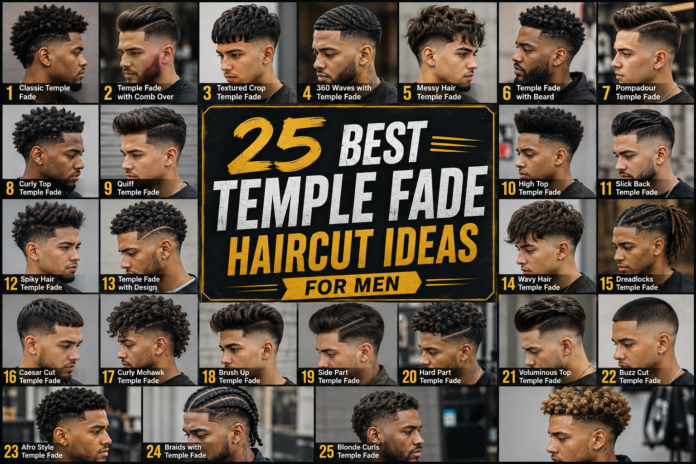
The strongest temple fade haircut ideas balance a clean fade around the temples with enough shape on top to make the cut feel intentional. A classic temple fade with textured curls is the safest all-rounder, the temple fade with a short crop is easiest to maintain, while the burst-inspired temple fade and longer curly version make stronger statements.
This guide approaches the cut from a practical barbering perspective, focusing on shape, blending, texture, and how each variation actually looks from different angles. The goal is simple: help you walk into the shop knowing what details to ask for instead of relying on one reference photo.
Here are quick picks from the temple fade haircut ideas below if you already know roughly what type of finish you want.
| Style | Best For | Top Length | Fade Character |
|---|---|---|---|
| Classic Temple Fade | Most men | Short to medium | Clean and balanced |
| Temple Fade With Curls | Curly hair | Medium | Soft contrast |
| Temple Fade With Waves | Defined wave patterns | Short | Precise edges |
| Temple Fade With Textured Crop | Easy upkeep | Short | Sharp and modern |
| Temple Fade With Afro | Coily hair | Medium | Natural volume |
| Temple Fade With Quiff | Polished styling | Medium | Controlled contrast |
| Temple Fade With Buzz Cut | Minimal maintenance | Very short | Crisp and simple |
| Temple Fade With Twists | Textured styles | Medium | Detailed and youthful |
| Temple Fade With Pompadour | High-volume styling | Medium to long | Dramatic |
| Temple Fade With Slick Back | Formal looks | Medium | Refined |
Classic Temple Fade Haircut Ideas
The most wearable temple fade haircut ideas keep the fade concentrated around the front corners instead of carrying a dramatic skin fade around the whole head. These versions work especially well if you want cleaner edges while keeping most of your natural shape intact.
1. Classic Temple Fade
A classic temple fade removes bulk directly around the temples and blends that short section smoothly into slightly longer hair above the ears. The top stays neat without needing exaggerated height, while the neckline can remain softly tapered for balance. From the front, the haircut creates cleaner corners without making the sides look aggressively shaved. It is understated, which is exactly why it works so often.
This version suits straight, wavy, curly, and lightly coiled hair, especially when you want something appropriate for both casual and professional settings. Ask your barber, “Keep the temple fade tight but low, blend it into the sides, and leave the rest of the haircut natural.” Expect the temple area to lose its sharpness before the top needs another full cut. Skip it only if you want a fade that is obvious from across the room.

2. Low Temple Fade
A low temple fade keeps the shortest part tucked close to the corners of the hairline, creating one of the least aggressive variations of the cut. Most of the side remains comparatively full, so the fade reads more like careful cleanup than a dramatic transition. The shape works especially well when the hair on top already has texture or movement. Seen from the side, the fade occupies only a small, precise section.
This is one of the safest temple fade haircut ideas for men trying a fade for the first time or working in environments where an extreme cut would feel out of place. Tell your barber, “Keep the temple fade low and compact, and don’t take the short section too far behind the ear.” Upkeep is manageable because slight regrowth does not destroy the overall haircut immediately. Men wanting a bold skin-fade effect may find it too subtle.
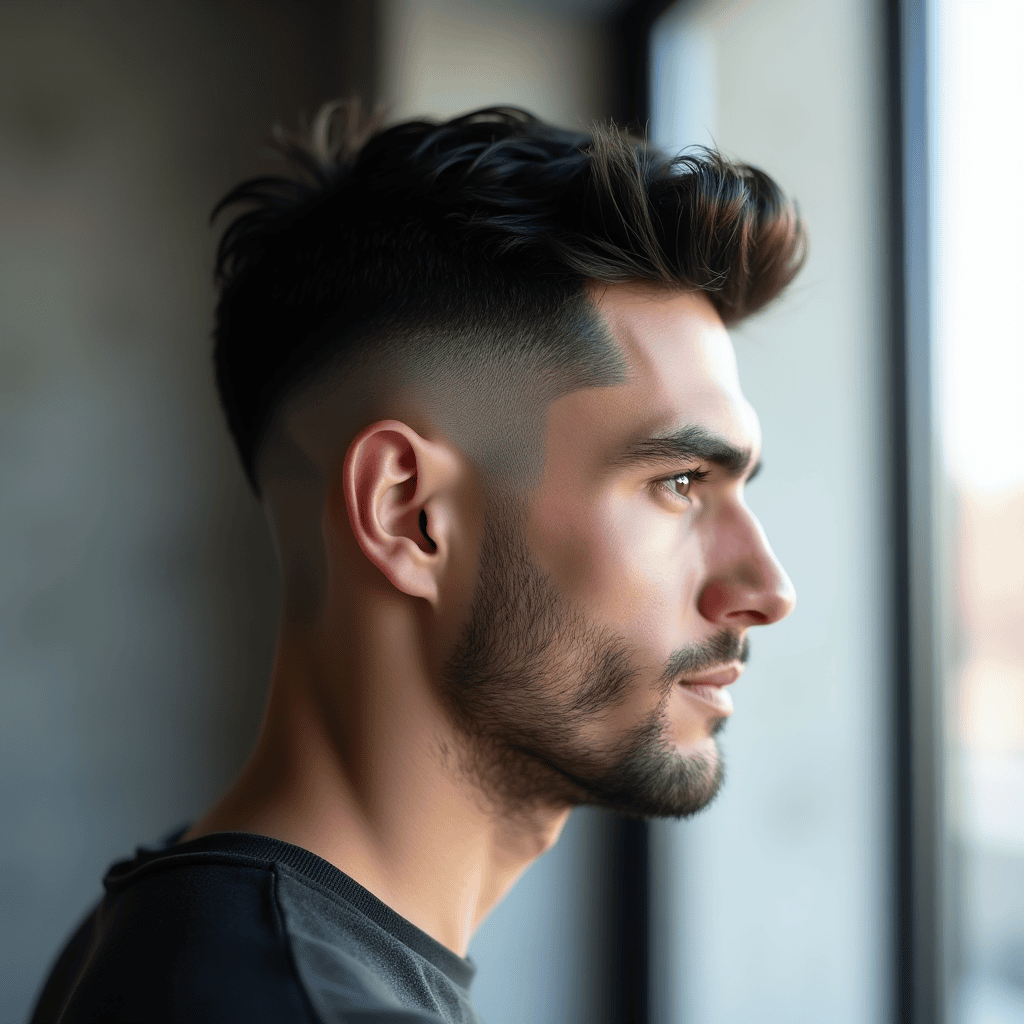
3. Temple Fade With Short Natural Texture
Short natural texture gives a temple fade more character without turning the haircut into a high-maintenance style. The top is left slightly uneven and tactile, with individual strands or small bends visible instead of being flattened into one solid shape. Around the temples, the fade removes weight and creates a clean frame. The contrast is noticeable but still relaxed.
Men with dense straight hair, loose waves, or natural texture that refuses to sit perfectly flat usually wear this variation well. Ask for “a short textured top with the temple area faded cleanly, but keep enough weight through the sides so it doesn’t look disconnected.” A small amount of styling product can separate the texture, though it does not need a heavily sculpted finish. The drawback is that very fine hair may show less texture than the reference look.

4. Temple Fade With Side Part
The side part adds a controlled line to a temple fade without requiring the severe contrast of an undercut. Hair on top is long enough to sweep diagonally from a natural or lightly defined part, while the temple area stays clipped down and blended. That combination creates width through the upper head and neatness at the front corners. The silhouette looks structured from both the front and profile.
This variation works well for straight and wavy hair that can hold directional styling. Ask your barber, “Leave enough length for a natural side part and taper the temples cleanly without fading the whole side too high.” It needs more morning styling than a crop or buzz cut, especially if your hair tends to fall forward. Avoid cutting an unnaturally hard part unless you genuinely like that graphic look.

Short Temple Fade Haircut Ideas
Shorter temple fade haircut ideas put more attention on line quality because there is less length available to distract from the blend. They are practical choices for men who want quick styling, although very short hair also makes uneven fading easier to notice.
5. Temple Fade With Buzz Cut
Pairing a buzz cut with a temple fade creates a compact haircut where almost every detail comes from the outline rather than styling. The top remains uniformly short while the temple corners drop into a noticeably tighter fade. Because there is little length variation elsewhere, the fade becomes a small but deliberate accent. A carefully finished front hairline gives the style most of its definition.
Men who dislike spending time styling their hair are the obvious fit. Tell your barber, “Keep the buzz consistent on top, add a tight temple fade, and don’t carry the fade too high around the sides.” Maintenance is simple at home, but the crisp temple transition grows out quickly enough that frequent barber visits may be tempting. Men with scalp irregularities they prefer to conceal may feel more comfortable with additional length.

6. Temple Fade With Crew Cut
The crew cut adds just enough length through the front to separate it visually from a buzz cut. Hair gradually becomes shorter toward the crown while the temples are faded more tightly, creating a compact athletic shape. The slightly raised front gives the haircut direction without needing a dramatic quiff. Everything stays controlled and close to the head.
This is one of the easiest temple fade haircut ideas to recommend to men who want a neat haircut that can move between work, travel, and everyday wear. Ask for “a traditional short crew cut with a clean temple fade and natural blending through the sides.” Styling can be as basic as pushing the front into place after drying. The only catch is that fast-growing hair can blur the carefully graduated silhouette sooner than expected.
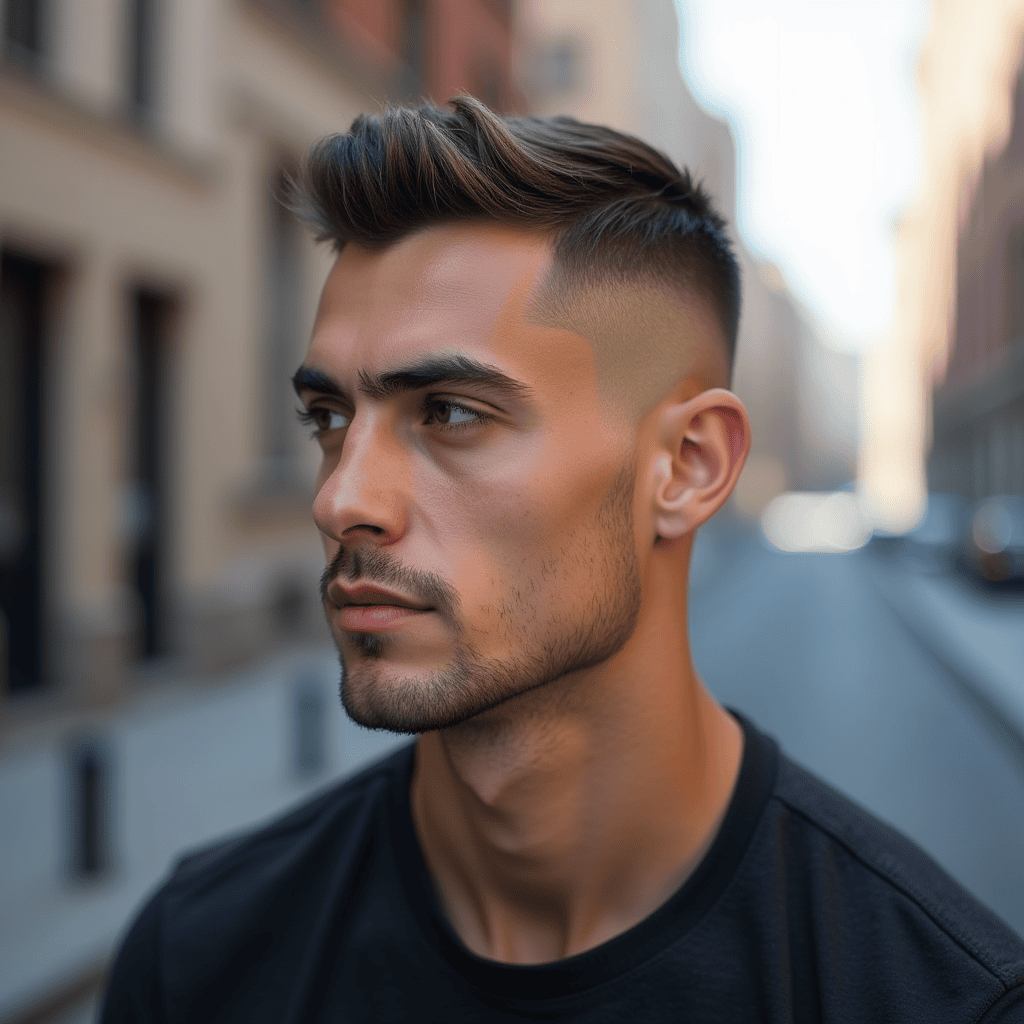
7. Temple Fade With French Crop
A French crop keeps the top short and forward, ending in a compact fringe across the forehead while the temple fade removes weight from the corners. The strong horizontal direction of the fringe contrasts with the vertical fade beside it. Texture across the crown stops the cut from looking blocky. From the front, it feels deliberate without requiring much height.
This version is particularly useful for men who prefer forward styling or do not want to expose the entire forehead. Ask your barber, “Give me a short textured crop with a natural fringe and fade only around the temples.” A matte product can add separation if your hair falls flat. The fringe needs occasional reshaping, though, because once it becomes too long the haircut loses the compact geometry that makes it work.

8. Temple Fade With Caesar Cut
A Caesar cut keeps the top consistently short and pushes the hair forward into a small, straight fringe. Adding a temple fade reduces heaviness around the front sides, so the cut feels cleaner than a traditional uniform Caesar. The top still forms one controlled shape, but the corners look sharper and more open. It is a simple haircut with surprisingly strong geometry.
Men with straight or slightly wavy hair usually get the clearest version of this shape. Tell your barber, “Keep a short Caesar-style top and fringe, then taper the temples tightly without removing too much weight behind them.” The hairstyle needs little more than light product or finger styling. If your hair has a strong cowlick at the front, forcing it into the Caesar direction can become annoying.

9. Temple Fade With Textured Crop
A textured crop builds more separation on top than a traditional French crop, with small irregular sections creating depth from front to crown. The temple fade tightens both corners and lets the choppy upper texture become the visual focus. A slightly broken fringe keeps the finish modern rather than perfectly squared. The result is compact but not flat.
Thick straight hair and loose waves handle this version particularly well because they naturally create visible texture. Ask for “a short choppy crop, broken texture through the top, and a low temple fade with the sides kept blended.” You will usually need a matte styling product if you want individual pieces to stay defined. Men with extremely fine hair should keep the texture restrained because aggressive thinning can make density look weaker.

Temple Fade Haircut Ideas for Curly and Coily Hair
Curly and coily hair gives temple fade haircut ideas more contrast because the compact fade sits directly beside visible volume and texture. The strongest versions respect the natural pattern instead of thinning or flattening it merely to make the fade appear more dramatic.
10. Temple Fade With Defined Curls
Defined curls create a rounded, textured top while the temple fade cleans the perimeter without disturbing most of the curl pattern. The curls can remain moderately short or build more volume through the front, depending on density. Around the temples, the transition should look smooth rather than carved away. This produces a clear contrast between soft texture and precise barbering.
Men with naturally curly hair who want definition without a full high fade should consider this variation. Tell your barber, “Keep my curls full on top, clean up the temple area with a tight fade, and don’t push the fade too far back.” Curl definition requires some moisture and shaping between cuts. One drawback is that an overly aggressive temple fade can make the top look wider than intended.
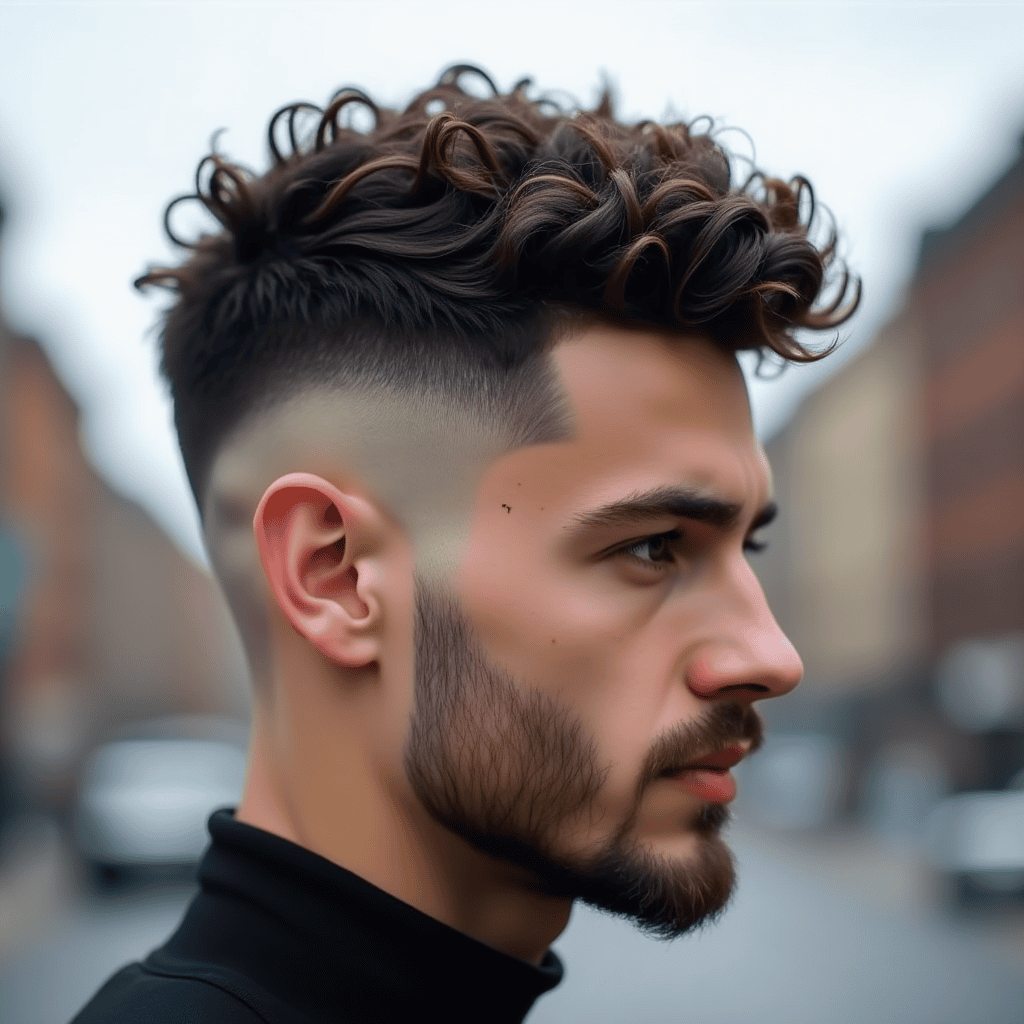
11. Temple Fade With Afro
A compact Afro paired with a temple fade keeps natural volume through the upper head while removing bulk where the hairline turns toward the ears. The fade should feel integrated into the silhouette instead of creating an abrupt gap. A rounded upper shape makes the clean corners look even sharper by comparison. From the side, the temple area becomes a small pocket of precision beneath the fuller texture.
Among temple fade haircut ideas for coily hair, this is one of the most adaptable because the Afro can be kept conservative or allowed to grow taller. Ask for “a shaped Afro with the natural volume preserved and a clean temple fade that stays around the front corners.” Regular shaping keeps the outline intentional. If you want a completely untouched natural perimeter, the fade may remove more structure than you prefer.
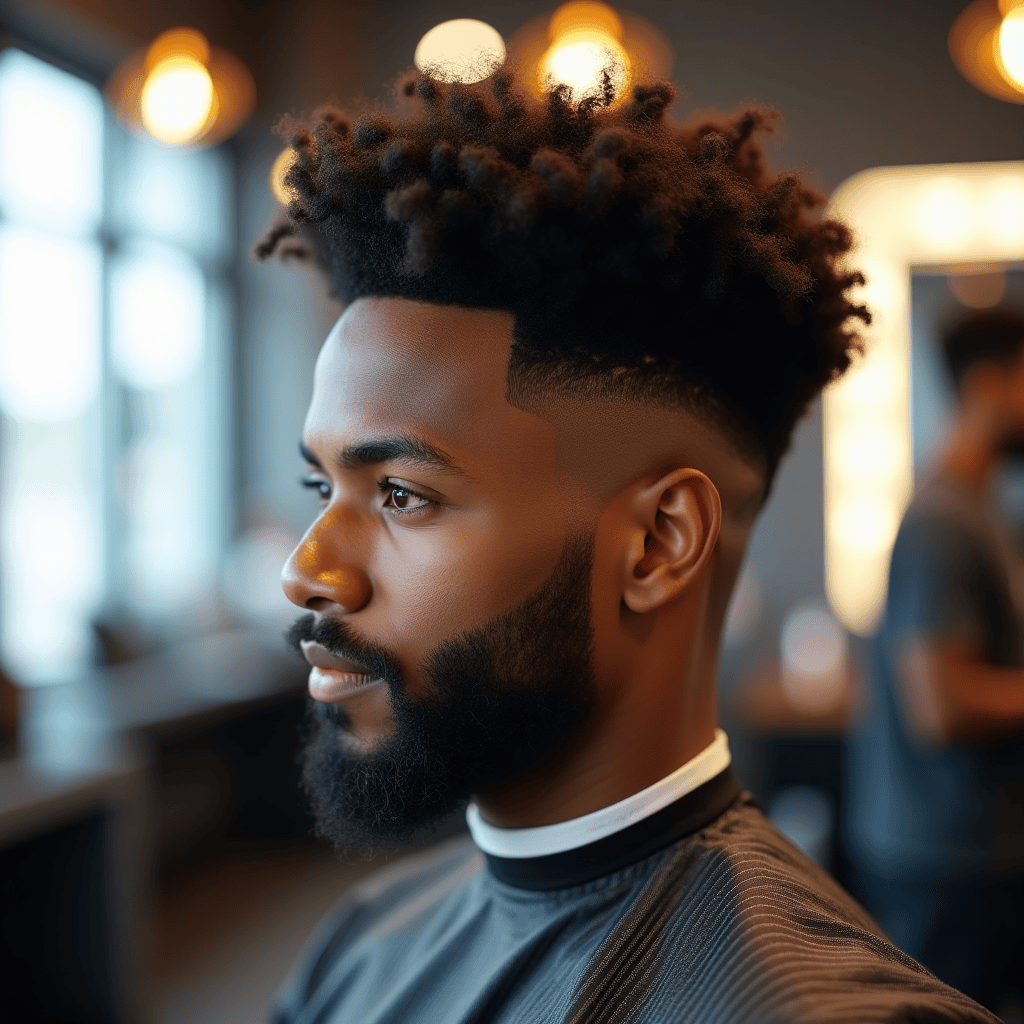
12. Temple Fade With Sponge Twists
Sponge twists give the top a field of small, separated coils while the temple fade provides a much cleaner perimeter. The top has visible movement and an intentionally irregular texture rather than one solid rounded mass. Short sides allow the twists to occupy most of the visual space. Around the temples, the faded section acts almost like a frame for the texture above.
This style suits tightly coiled hair with enough length to form visible twists. Tell your barber, “Leave enough hair on top for sponge twists, shape the silhouette, and fade the temples clean without taking the sides too high.” The twist pattern needs refreshing as the hair gets flattened or stretched. Men who prefer a low-effort wash-and-go texture may find the repeated twist definition unnecessary.
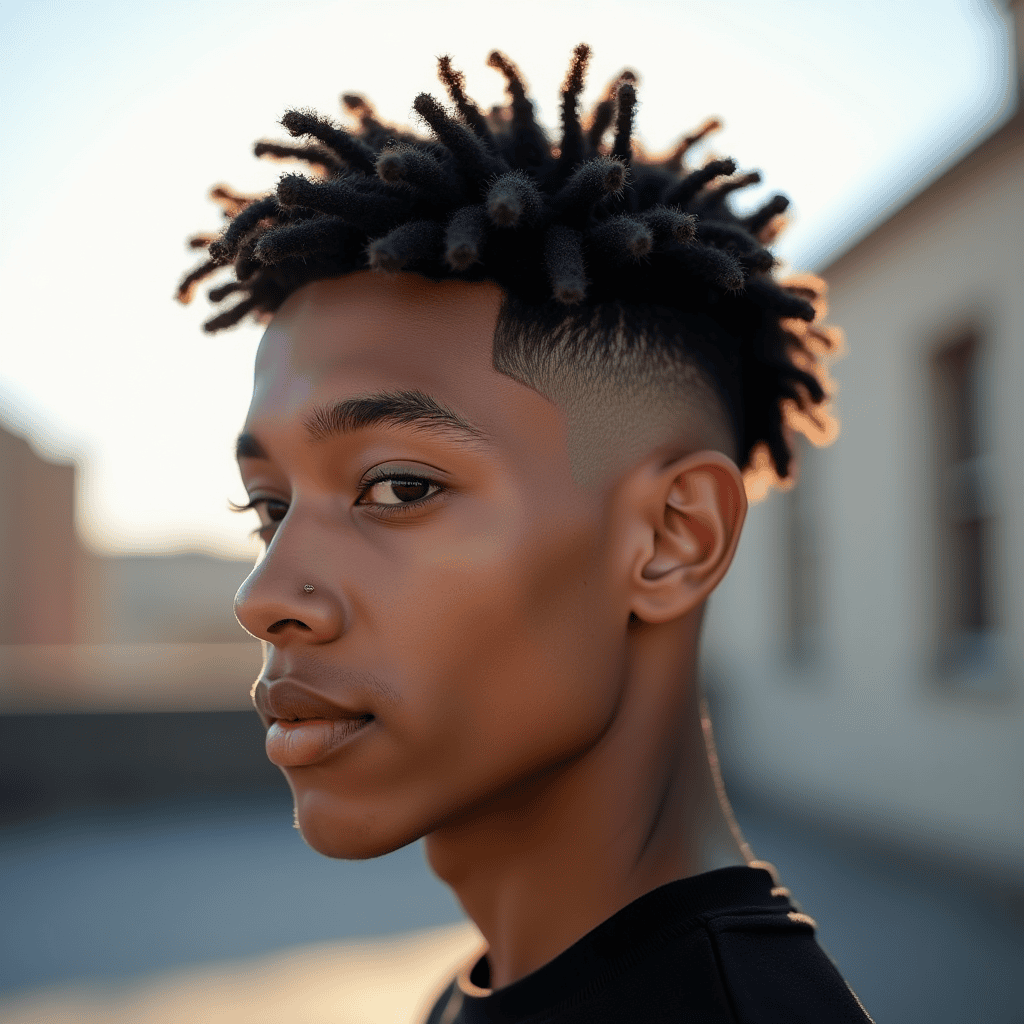
13. Temple Fade With Two-Strand Twists
Two-strand twists bring more length and separation than sponge twists, allowing individual sections to fall, stand, or angle naturally across the top. A compact temple fade prevents that additional texture from making the haircut feel heavy around the face. Keeping the back and sides fuller can make the fade look intentional rather than disconnected. The contrast becomes strongest around the front corners.
Men with enough coily or tightly curled length to form durable twists get the best result. Ask your barber, “Keep my twists intact on top and taper the temples closely, but leave enough weight through the sides to connect everything.” The twists require their own maintenance beyond the haircut. If you frequently change between loose hair and twists, discuss the underlying shape before taking the temple area extremely short.

14. Temple Fade With Short Coils
Short coils create dense visual texture without the height of a longer Afro. The temple fade opens the corners of the haircut while the top remains close enough to the head to preserve a streamlined silhouette. A natural edge rather than an excessively dark painted-looking lineup keeps the finish believable. The cut looks especially good when the coils remain visibly individual.
This is a practical option for men who like textured hair but do not want long styling sessions. Ask your barber, “Keep the coils short and even, fade the temples tightly, and leave the overall shape compact.” Refreshing the coils takes some effort, but the haircut itself remains easy to manage. Cutting the top too short can remove the texture that separates this style from a standard close crop.

15. Temple Fade With High Curly Top
A high curly top places noticeably more volume above the forehead and crown while the temple fade keeps the lower corners narrow. The sides retain enough length to connect with the top, avoiding the hollow look that can happen when too much hair is removed. Curl height gives the haircut a vertical silhouette. The temple fade makes that height appear even stronger without requiring a full high fade.
This is one of the bolder temple fade haircut ideas and suits men comfortable maintaining visible volume. Tell your barber, “Keep the curls tall through the top, shape the sides so they support the height, and concentrate the fade around the temples.” Longer curls need more daily attention than short coils. If your hair collapses easily under humidity or headwear, the silhouette will change throughout the day.
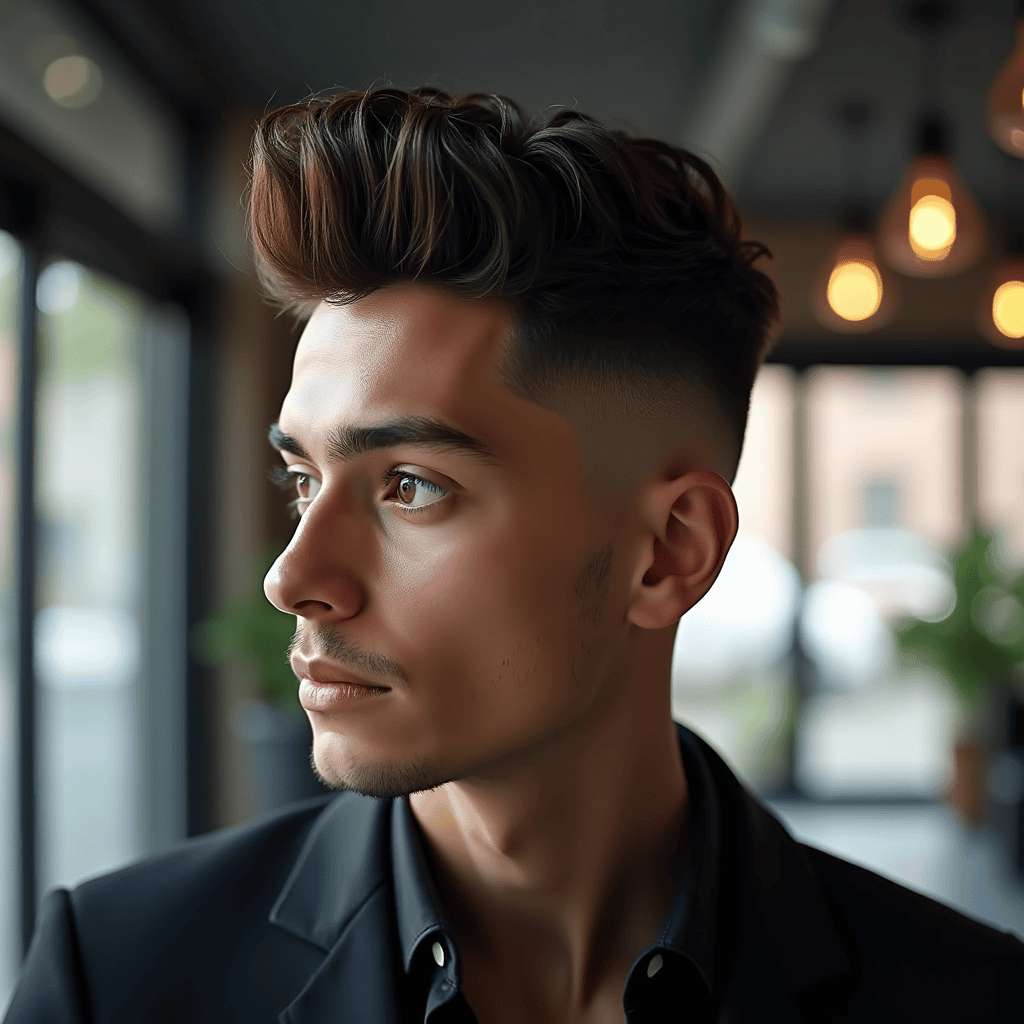
Temple Fade Haircut Ideas With Waves and Movement
Texture does not need to mean dramatic volume. These temple fade haircut ideas use waves, flowing direction, and controlled movement to make the top interesting while keeping the front sides clean.
16. Temple Fade With 360 Waves
A temple fade can sharpen 360 waves without cutting deeply into the wave pattern. The hair remains short enough for the ripples to sit close to the scalp, while the temple corners transition to an even tighter length. A smooth outline helps the wave pattern look more deliberate. The key is restraint: the fade should complement the waves rather than interrupt their direction.
Men already committed to developing and maintaining a wave pattern will get more from this haircut than someone expecting the barber to create the texture instantly. Ask for “a tight temple taper that preserves my wave pattern and doesn’t climb into the sides.” Consistent brushing and hair care matter more here than elaborate styling products. An inexperienced cut that pushes the fade too far can break the visual flow near the front.
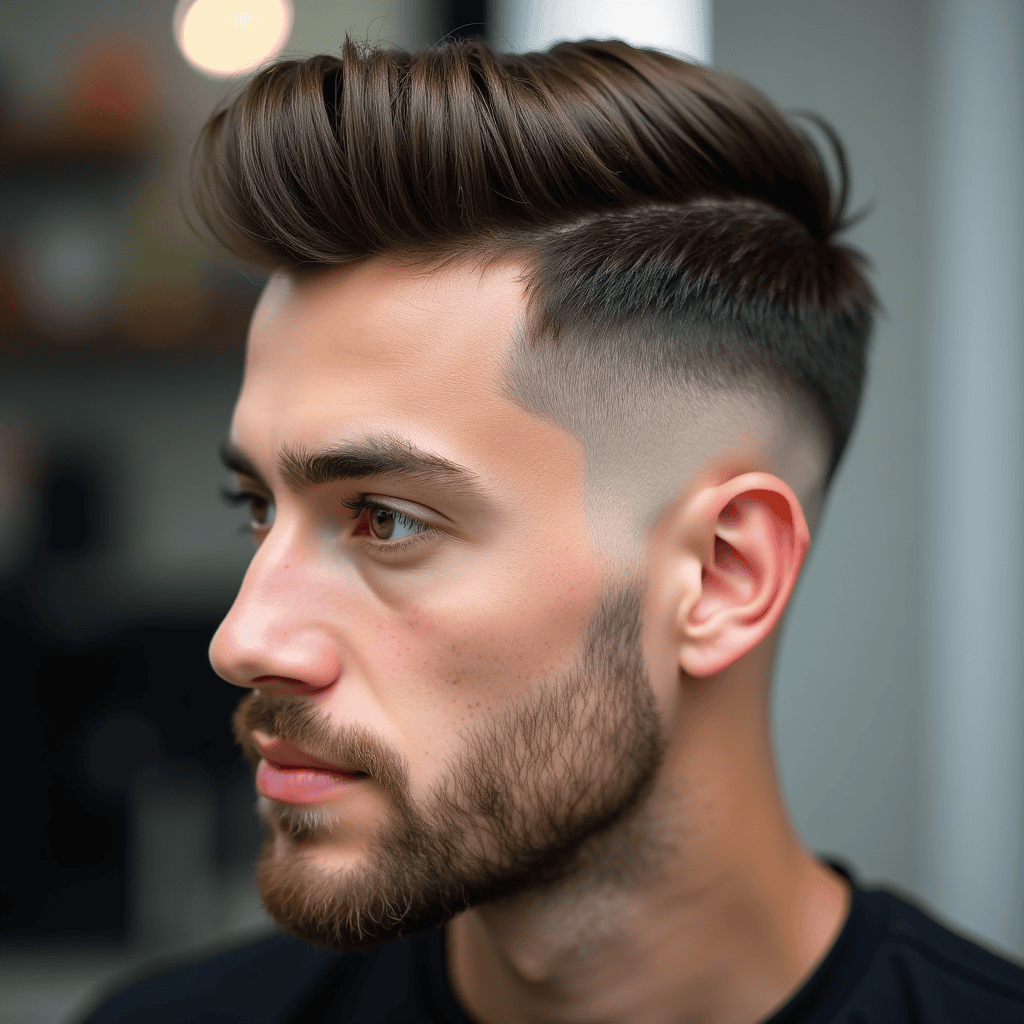
17. Temple Fade With Wavy Fringe
A wavy fringe lets the front fall naturally toward the forehead while a temple fade cleans away heaviness beside it. The top is left longer than a crop, making individual bends and waves visible instead of chopping them into short texture. The faded temples create negative space at both sides of the fringe. That contrast gives the front more prominence without requiring extra height.
Men with naturally loose waves can wear this style with minimal manipulation. Tell your barber, “Leave enough length for my waves to fall forward, keep the fringe soft, and taper the temples tightly.” It works best when the front is allowed to move rather than being glued into one position. The downside is obvious on windy or humid days: a longer fringe rarely stays exactly where you placed it.
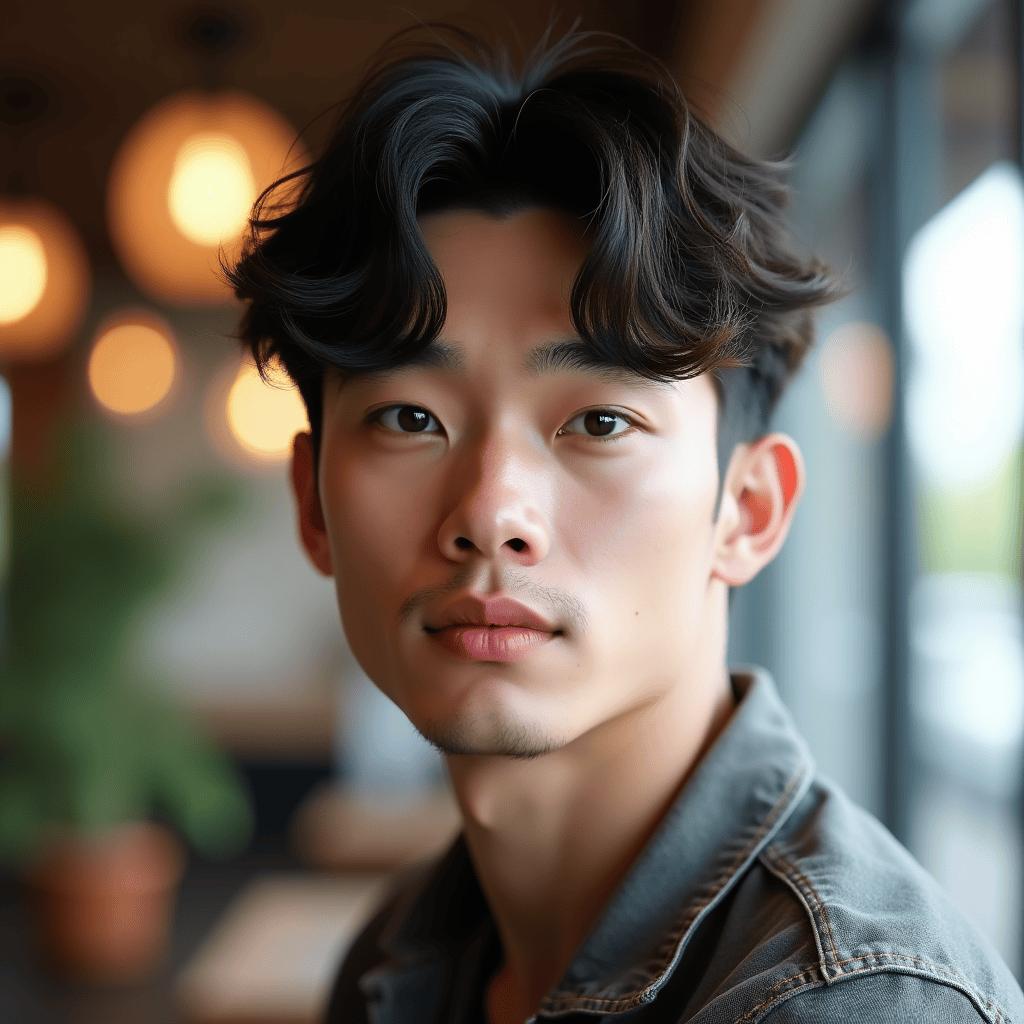
18. Temple Fade With Short Quiff
A short quiff lifts the front upward and slightly backward while keeping the crown and sides comparatively controlled. The temple fade removes bulk at the front corners, which makes the small amount of height look more defined. Unlike a large pompadour, the quiff does not require a dramatic sweep. From the side, you see a gentle rise instead of a towering front.
This is one of the better temple fade haircut ideas for straight or wavy hair that gains volume easily. Ask for “a short textured quiff with enough length to lift the front and a clean temple fade that stays low.” A light styling product and quick blow-dry usually make the shape easier to control. If your hair grows directly forward and resists lift, expect more work every morning.
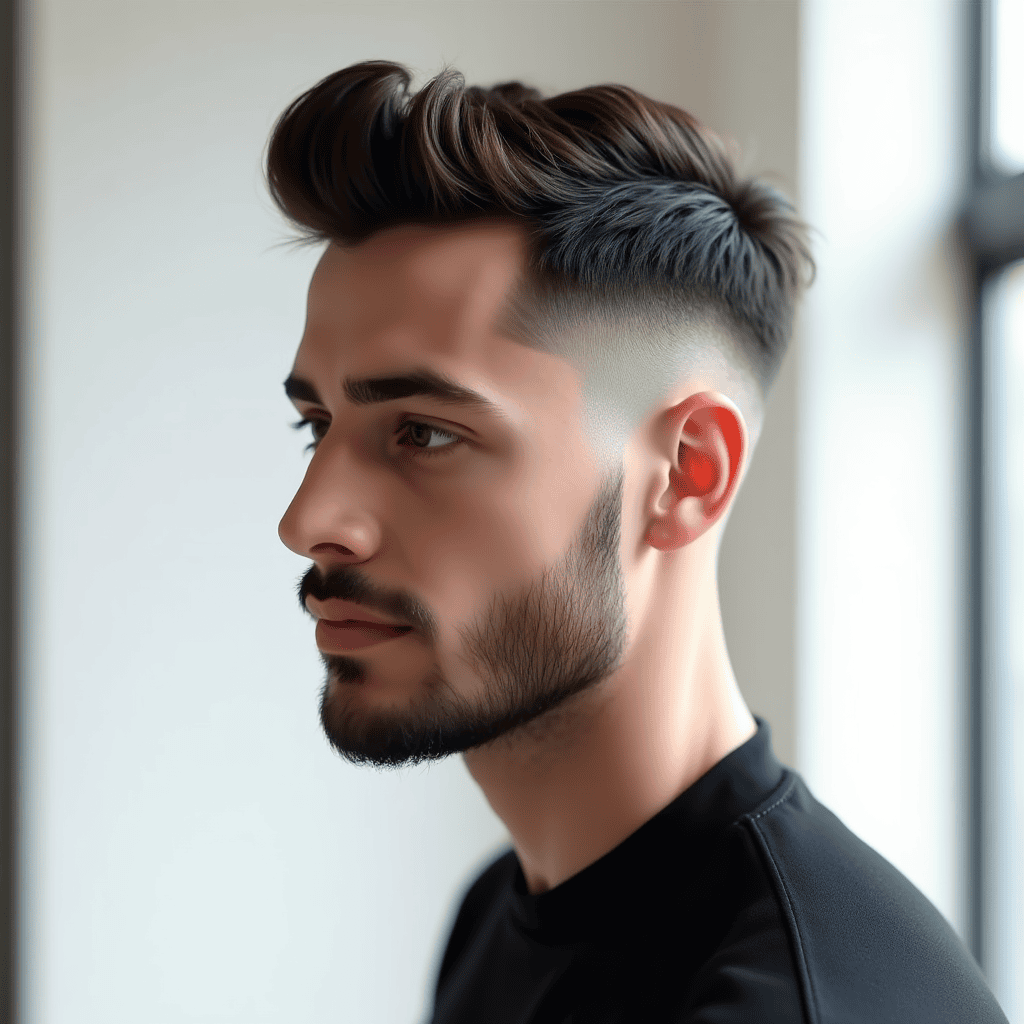
19. Temple Fade With Brushed-Back Waves
Brushed-back waves combine moderate length with a relaxed rearward flow instead of a stiff slicked finish. The wave pattern stays visible from front to crown, while the temple fade prevents the sides of the hairstyle from expanding outward. A little volume above the forehead keeps the haircut from collapsing flat. It reads polished without looking overly formal.
Men with medium-density wavy hair tend to get the easiest version of this style. Ask your barber, “Keep enough length to brush everything back, preserve the natural waves, and taper the temples without thinning out the top.” The style needs enough hold to stop hair falling forward but should still move. Very thick hair may require additional internal weight removal to avoid becoming bulky.

Bold and Longer Temple Fade Haircut Ideas
Longer tops increase contrast, making these temple fade haircut ideas more noticeable from across a room. They offer more styling options but also expose poor proportions quickly, so the fade and upper shape need to work together rather than competing.
20. Temple Fade With Pompadour
A temple fade with a pompadour combines a high, swept-back front with tight detailing at the corners. Hair builds upward before flowing toward the crown, producing a curved silhouette that is far larger than the faded area underneath. The sides should retain some structure so the top does not look pasted onto an unrelated haircut. From profile view, the front volume becomes the defining feature.
This variation favors straight or wavy hair with enough density to support the height. Tell your barber, “Leave the front long enough for a pompadour, keep weight through the upper sides, and add a tight temple fade rather than a full high fade.” Blow-drying and styling product become part of the routine. Men looking for a five-minute haircut should choose something shorter.
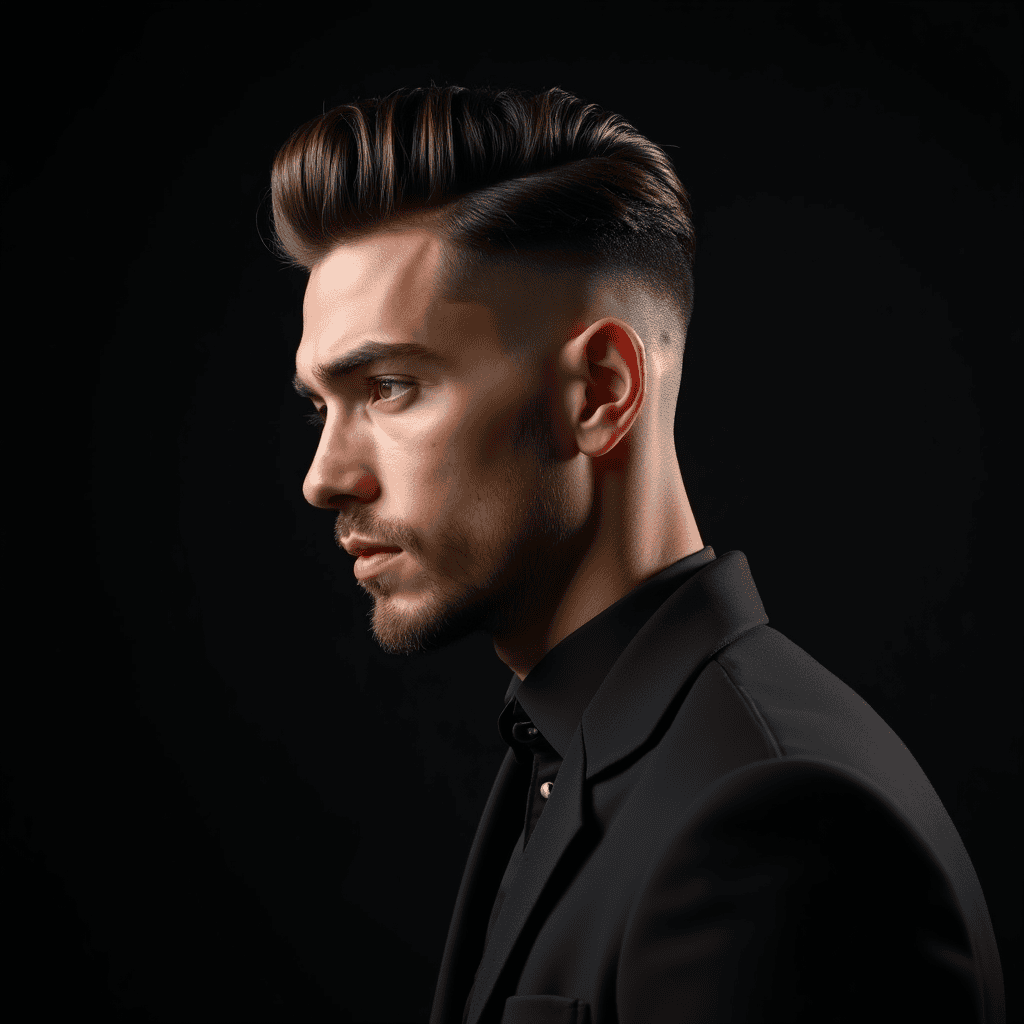
21. Temple Fade With Slick Back
A slick back keeps medium-length hair directed away from the forehead while the temple fade prevents the front sides from becoming bulky. The finish can be glossy or natural, but the overall direction should remain clean and backward. Unlike an undercut, the sides stay connected to the longer top. That connection makes the haircut feel more balanced and less severe.
Men wanting polished temple fade haircut ideas for dinners, offices, weddings, or formal wardrobes can get plenty of mileage from this version. Ask your barber, “Leave the top long enough to comb straight back, keep the sides connected, and fade only the temple area closely.” Styling is simple once the cut is right, though longer hair may separate during the day. Skip heavy product if you dislike a rigid or wet-looking finish.

22. Temple Fade With Modern Mullet
A modern mullet paired with a temple fade keeps length toward the back while sharpening the front sides. The top can be textured and moderately short, gradually feeding into visible length around the nape. Fading only the temples leaves enough side structure to connect the front with the longer rear section. The haircut looks directional and unconventional without needing shaved sides.
Men comfortable wearing a style that attracts attention are the obvious audience. Tell your barber, “Keep texture and length through the back, leave the side connection intact, and use a tight temple fade around the front corners.” The shape requires deliberate maintenance because uncontrolled rear growth can turn the cut from intentional to simply overgrown. Conservative workplaces may also make this a less practical choice.
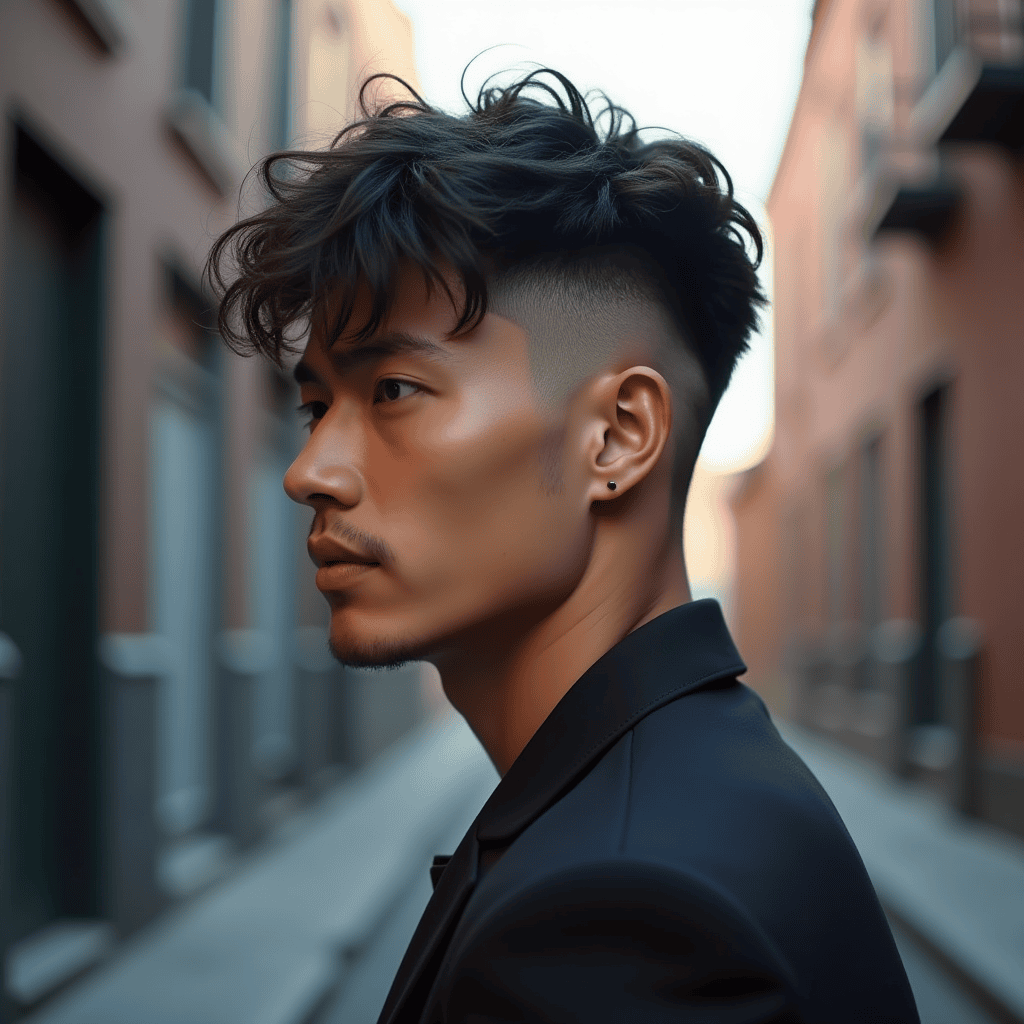
23. Temple Fade With Faux Hawk
A faux hawk concentrates height and texture through the center of the head while allowing the sides to remain connected instead of being shaved into a true mohawk. The temple fade adds tightness near the face, making the central ridge appear stronger. Texture can be messy rather than perfectly spiked. Viewed from above, the width gradually narrows toward the crown.
This style suits men who want a more noticeable cut without committing to fully exposed sides. Ask for “a textured faux hawk with length through the center and a temple fade that stays connected to the sides.” Styling takes more effort whenever you want the central shape to stand clearly. If you rarely use product or blow-dry your hair, the haircut may settle into an ordinary textured top.
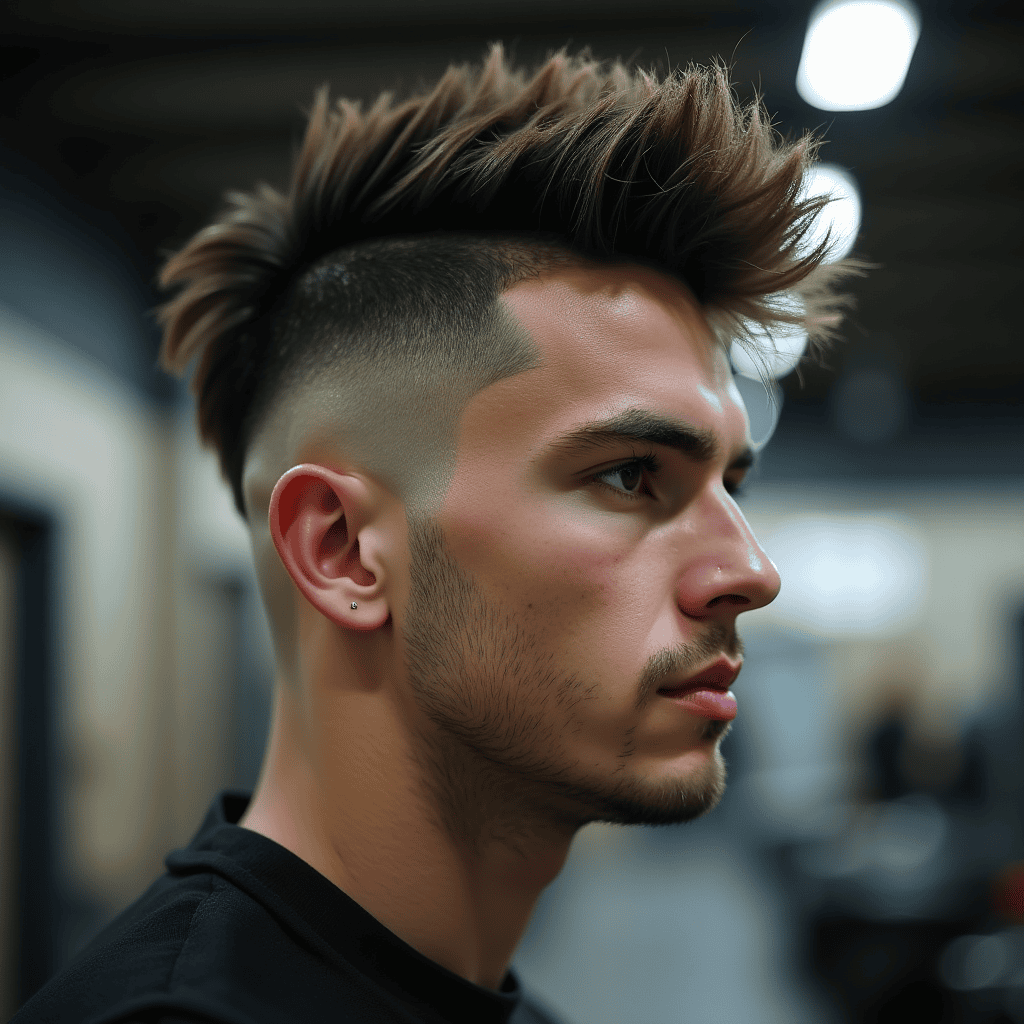
24. Temple Fade With Curly Mohawk Shape
This version creates a mohawk-inspired silhouette using natural curls rather than a sharply shaved strip. Curl volume is concentrated through the center and back, while the temple area is faded tight enough to open the face. Some side texture remains, keeping the haircut softer than a traditional mohawk. From the front, the height and narrow central shape create immediate impact.
Men with springy curls who enjoy stronger temple fade haircut ideas can make this variation feel expressive without losing natural texture. Ask your barber, “Shape the curls into a mohawk-inspired profile, keep the center full, and fade the temples while leaving some connection through the sides.” Expect more shaping work as the curls grow. If you prefer symmetrical, conservative silhouettes, this one will feel unnecessarily loud.
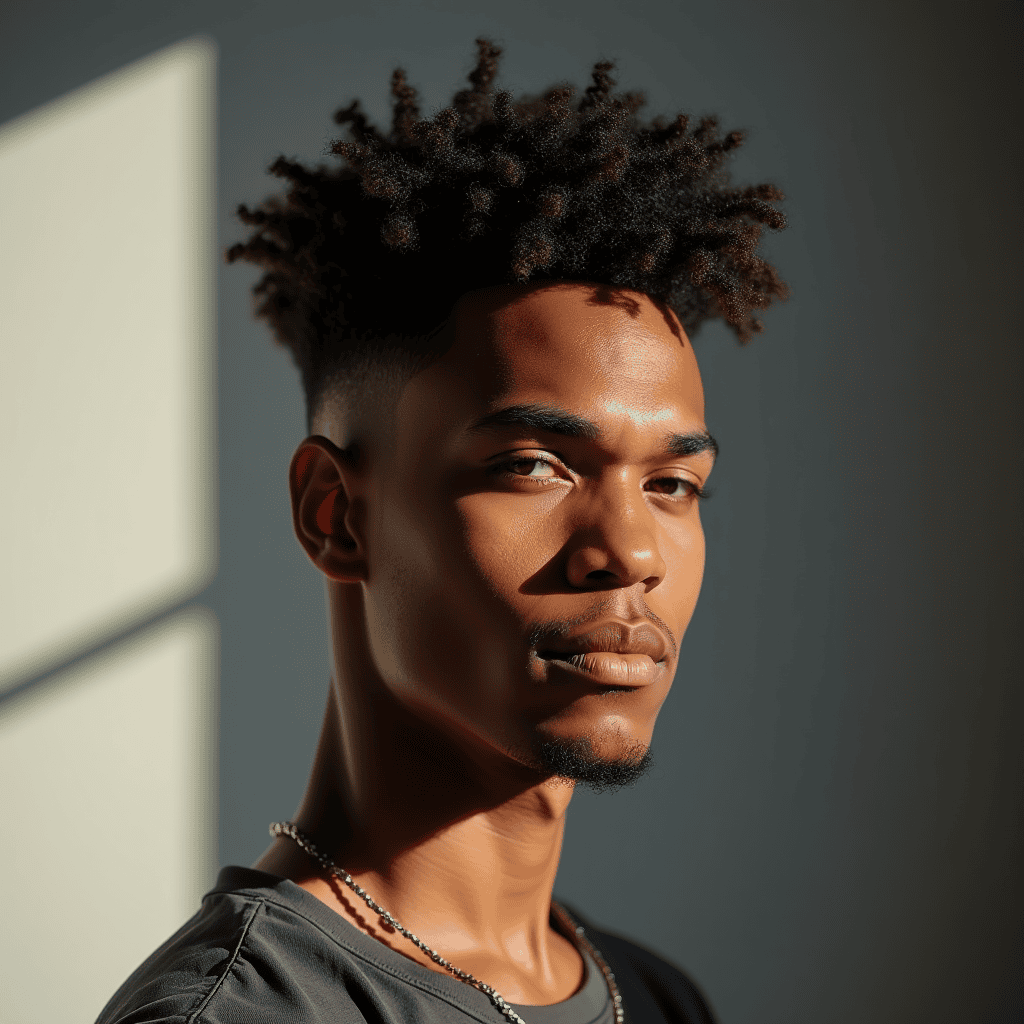
25. Temple Fade With Long Textured Top
A long textured top creates the biggest styling range in this list because the hair can fall forward, sweep sideways, lift upward, or push back depending on the day. The temples remain clipped tightly while the upper sides retain enough weight to support the longer hair. Broken layers stop the top from becoming one heavy block. The contrast is obvious without relying on a full skin fade.
Choose this version if you enjoy changing your hairstyle and are willing to manage extra length. Ask your barber, “Keep several inches on top with movable texture, maintain some connection at the upper sides, and clean the temples with a tight fade.” Styling time is higher, and the top may need separate trims between major shape changes. For men who never style their hair, the added length can become more burden than benefit.

How to Choose the Right Temple Fade
Choosing between these temple fade haircut ideas starts with deciding how much contrast you actually want. A low or classic temple fade leaves most of the side intact, while styles with larger curls, pompadours, faux hawks, or longer textured tops make the faded corners appear much more dramatic.
Hair texture should guide the top. Straight hair handles crops, side parts, quiffs, and slick backs predictably. Wavy hair benefits from keeping enough length to show movement. Curly and coily hair usually looks better when the fade supports the natural texture rather than removing so much side weight that the top becomes visually disconnected.
Bring two or three reference photos to the appointment rather than one. Show the barber a front view you like, a profile showing the temple height, and an example of your preferred top length. Then say clearly whether you want the temple fade kept low, taken to skin, or left slightly darker.
Face shape matters less than people sometimes assume. Proportion is more useful. If your hairstyle already has considerable height, leaving some side fullness can prevent the head from looking excessively long. If the top sits wide and heavy, cleaner temples can narrow the visual frame.
Where Temple Fades Can Go Wrong
A temple fade is a small area of the haircut, which means tiny proportion mistakes can have an outsized effect. Taking the fade too high can turn what should have been a temple taper into something closer to a broader side fade, removing the subtle contrast that defines the style.
Pushing the hairline backward is another problem. A clean outline should work with the natural front edge rather than chasing an artificially perfect geometric shape. Ask for a natural-looking lineup if you do not want the front corners cut farther back every visit.
The temple fade haircut ideas with long tops also need enough connection between the upper hair and the fade. When that connection disappears, the top can look detached. Some men like that deliberately disconnected finish, but it should be a choice rather than an accidental result.
And remember the maintenance cycle. Temple fades grow out in a highly visible location. If you dislike visiting a barber frequently, choosing a slightly darker taper instead of taking the temples completely down to skin usually makes regrowth less noticeable.
Frequently Asked Questions
What is a temple fade haircut?
A temple fade is a haircut where the hair becomes progressively shorter around the temples, usually without carrying the same dramatic fade around the entire side of the head. It can be combined with crops, curls, waves, longer styles, buzz cuts, and many other top shapes.
Is a temple fade the same as a taper fade?
They overlap, but the terms are not always used identically by every barber. A temple fade focuses specifically on the temple area, while a taper often cleans both the temples and neckline. Showing a reference image is safer than relying on terminology alone.
What are the easiest temple fade haircut ideas to maintain?
A buzz cut, crew cut, short natural texture, Caesar cut, and compact crop usually require the least daily styling. The temple area itself still grows out, so keeping the fade sharp may require barber visits before the upper haircut feels particularly long.
How often should a temple fade be touched up?
There is no fixed schedule because hair growth, fade length, and personal preference differ. A skin-close fade shows regrowth sooner than a darker taper. If you prefer consistently crisp corners, you will probably want touch-ups more frequently than someone comfortable with a softer grown-in finish.
Does a temple fade work with curly hair?
Yes. Curly hair can pair particularly well with a temple fade because the tight corner transition contrasts with natural volume above it. The barber should preserve enough weight around the upper sides so the curls remain connected to the rest of the haircut.
Can you get a temple fade with an Afro?
A temple fade works well with both compact and moderately larger Afro shapes. It removes bulk around the front corners while allowing the natural coily volume to remain visible. How high the fade travels should depend on the shape you want rather than a fixed template.
Are temple fade haircut ideas suitable for straight hair?
Straight hair works with many temple fade variations, including side parts, textured crops, quiffs, crew cuts, slick backs, and pompadours. Because straight hair often shows cutting lines clearly, a smooth transition around the temple becomes particularly important.
Should a temple fade go down to skin?
It can, but it does not have to. Taking the shortest section to skin creates stronger contrast and a sharper fresh-cut appearance. Leaving a little darkness produces a softer transition that generally looks less obvious as it grows out.
What should I tell my barber when asking for a temple fade?
Explain the top length first, then specify that you want the fading concentrated around the temples. Tell the barber whether you want the shortest section down to skin or left darker, how high it should rise, and whether you want the neckline tapered as well.
Can a temple fade work with long hair on top?
Yes. Long hair can make the fade more noticeable because there is greater contrast between the top and temple area. Maintaining some weight through the upper sides usually keeps the haircut connected and prevents the longer section from appearing isolated.
Which temple fade haircut ideas are best for professional settings?
Classic temple fades, low temple fades, crew cuts, short textured tops, side parts, and restrained slick backs are easy to keep polished. The overall top shape usually affects formality more than the temple fade itself, so keep the styling controlled if you need a conservative finish.
Does a temple fade work with waves?
A temple fade can frame wave patterns cleanly as long as the barber does not cut so deeply into the sides that the pattern is interrupted. For 360 waves, maintaining directional continuity around the head is more important than making the fade excessively dramatic.
Can I combine a temple fade with twists?
Yes. Sponge twists and two-strand twists both work with a temple fade. The tighter temple area can make the texture above look more defined, but preserving enough side weight is important if you want the twists to remain visually connected to the overall haircut.
Is a temple fade good for growing hair longer?
It can be useful because you can clean up the temples while keeping much of the top and sides growing. However, repeatedly taking the faded section extremely high can make it harder to build uniform side length later, so explain your longer-term goal to your barber.
Which temple fade should I choose first?
For a first attempt, start with a low or classic temple fade and keep your familiar hairstyle on top. That lets you see how the cleaner corners change your overall look without committing to a dramatic reduction in side length. Once you know how much contrast you like, you can go shorter or bolder.
A good temple fade should make the rest of the haircut look more intentional without demanding attention for its own sake. Among all these temple fade haircut ideas, the smartest starting point is usually the version closest to the hairstyle you already know how to wear. Keep your normal top, change the temple detailing, and judge the proportion after it grows for a week or two. For your next appointment, save one front-view reference and one side-view reference, then ask your barber to match the temple height before discussing anything else.
Best Men’s Hairstyle Reports
Explore disconnected cuts, barber techniques, modern fades and textured twist hairstyle ideas for men.