
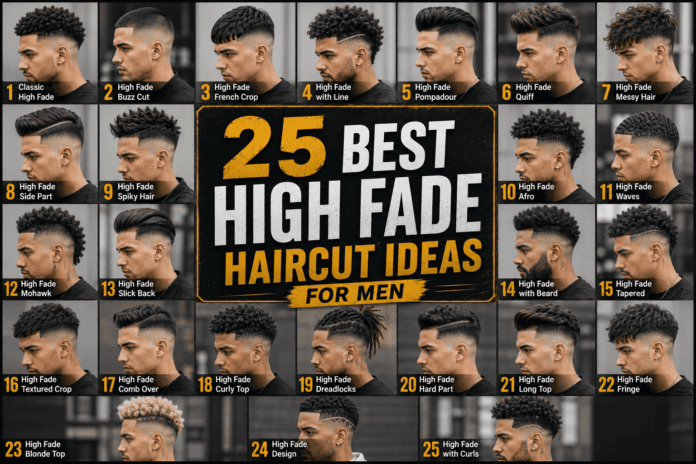
The strongest High Fade Haircut Ideas range from the clean Classic High Fade and easy Crew Cut Fade to the Textured Crop and fuller Curly High Fade. Those four cover most men because they work across different hair textures, styling habits, and levels of maintenance without making the cut feel overly complicated.
A barber looks at a high fade differently from someone scrolling through finished haircut photos: the transition point, weight line, head shape, and amount of usable hair on top matter more than the trend name. After years around clipper work and men’s grooming, I’ve also learned that the sharpest-looking fade isn’t automatically the best one to live with between appointments.
This list moves from simple, forgiving cuts toward styles that need more length, texture, or commitment. Each choice considers how the fade connects to the top, what to request in the chair, and what usually becomes annoying once the haircut starts growing out.
High Fade Haircut Ideas work best when the top style matches your natural texture rather than fighting it.
| Quick Pick | Best For | Top Length | Upkeep |
|---|---|---|---|
| Classic High Fade | Most face shapes | 1–2 inches | Moderate |
| Crew Cut High Fade | Easy everyday grooming | 1–1.5 inches | Low |
| Buzz Cut High Fade | Minimal styling | Very short | Low |
| Textured Crop High Fade | Thick or straight hair | 1.5–2.5 inches | Moderate |
| Curly High Fade | Natural curls | 2–4 inches | Moderate |
| High Fade Quiff | Added height | 3–5 inches | Higher |
| High Fade Pompadour | Statement volume | 4–6 inches | Higher |
| Afro High Fade | Coily hair | 2–5 inches | Moderate |
| Waves with High Fade | Short textured hair | Short | Moderate |
| Faux Hawk High Fade | Bold styling | 2–4 inches | Higher |
Classic High Fade Haircut Ideas That Stay Easy to Wear
The safest place to start is with shapes barbers have been cutting for years. These High Fade Haircut Ideas keep the sides tight while leaving enough structure on top to flatter the head rather than turning the haircut into a strip of hair floating above bare sides.
1. Classic High Fade with Short Top
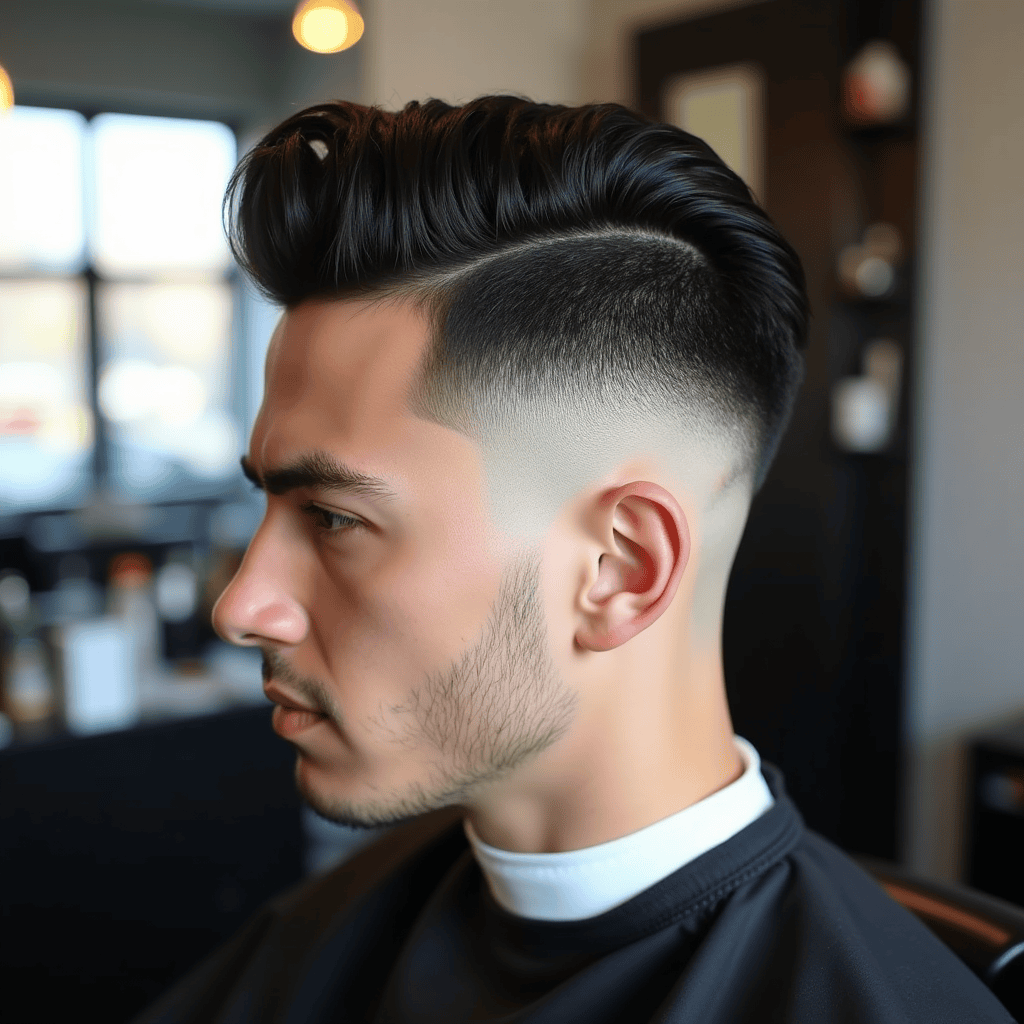
A classic high fade starts well above the temples and moves quickly from very short sides into a compact top. Keeping roughly one to two inches above the ridge gives the haircut enough weight to look intentional while the exposed sides make the outline appear sharper. The top can sit naturally forward or slightly upward instead of being forced into a dramatic shape. It’s one of those cuts that looks finished even without much product.
Ask your barber, “Give me a clean high fade with a short natural top and don’t take the blend too high into the crown.” Men with straight, wavy, or lightly curly hair usually get the easiest result, particularly when the hair is dense enough to keep some shape above the fade. Plan on tidying the sides every few weeks if you want that fresh contrast. The drawback is simple: once the faded area grows, the haircut loses its crispness sooner than a lower fade would.
2. High Fade Crew Cut
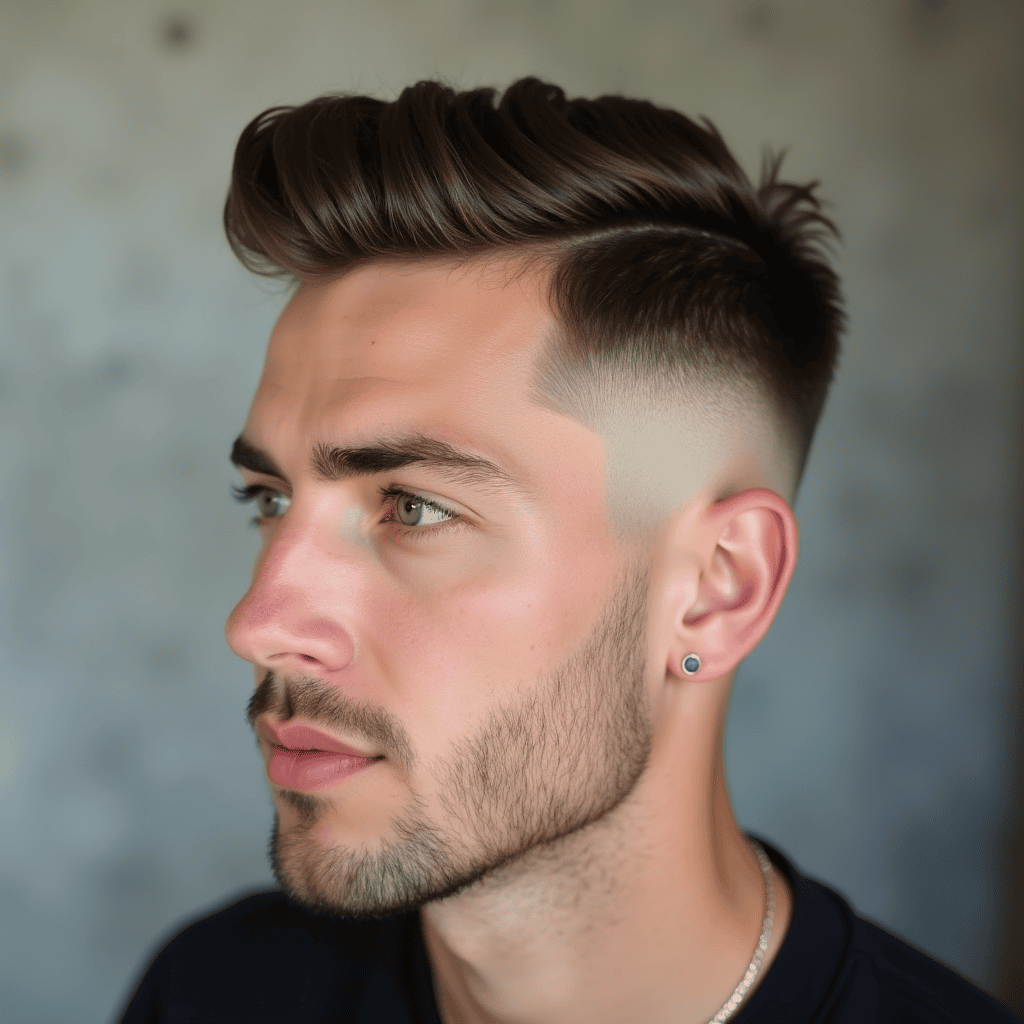
The crew cut gives a high fade more structure without adding much daily work. Hair stays longest near the front and gradually shortens toward the crown, creating a slight forward slope instead of one uniform block. Against closely faded sides, that small length difference makes the top look cleaner and a little fuller. I like this shape on men who want a traditional haircut without the flat appearance of an all-over clipper cut.
Tell the barber, “Keep a little length through the front for a crew cut and blend it into a high fade without leaving a heavy ledge.” Oval, square, and rounder faces can all wear it, though men with a long narrow face may prefer less height through the front. Styling can be as little as a fingertip of matte product worked through dry hair. The weak point is the front: cut it too short and the whole style starts reading like a basic buzz cut.
3. High Fade Buzz Cut

Among the easiest High Fade Haircut Ideas, the faded buzz cut gets most of its character from contrast rather than styling. The top stays clipped short and even while the sides disappear rapidly above the temple area. That difference prevents an otherwise simple buzz from looking like one uniform length all over the head. A clean front hairline can make the geometry stronger, but it doesn’t need to look unnaturally sharp.
Ask for “an even short buzz on top with a high fade that blends cleanly around the temples and back.” It works especially well for men who dislike products, blow-dryers, and morning styling, although scalp visibility increases as the top gets shorter. Home upkeep looks easier than it is because maintaining a smooth fade takes more clipper control than trimming one length. The main drawback is exposure: bumps, uneven growth patterns, and changes in head shape become harder to disguise.
4. High Fade Ivy League

An Ivy League keeps the discipline of a crew cut but leaves enough length near the front to sweep slightly to one side. Pairing that shape with a high fade removes bulk around the ears and pushes more visual attention toward the neatly controlled top. The finished silhouette is polished without looking stiff. It can move from an office shirt to a weekend T-shirt without needing a different styling routine.
The useful barber request is, “Leave the front long enough for a soft side sweep, taper the top shorter toward the crown, and use a high fade on the sides.” Straight and gently wavy hair behaves especially well because the front can follow its natural direction. Use a light cream or matte paste if it needs control rather than a shiny heavy pomade. Its drawback is that a stubborn front cowlick can fight the side-swept shape every morning.
5. High Fade Side Part
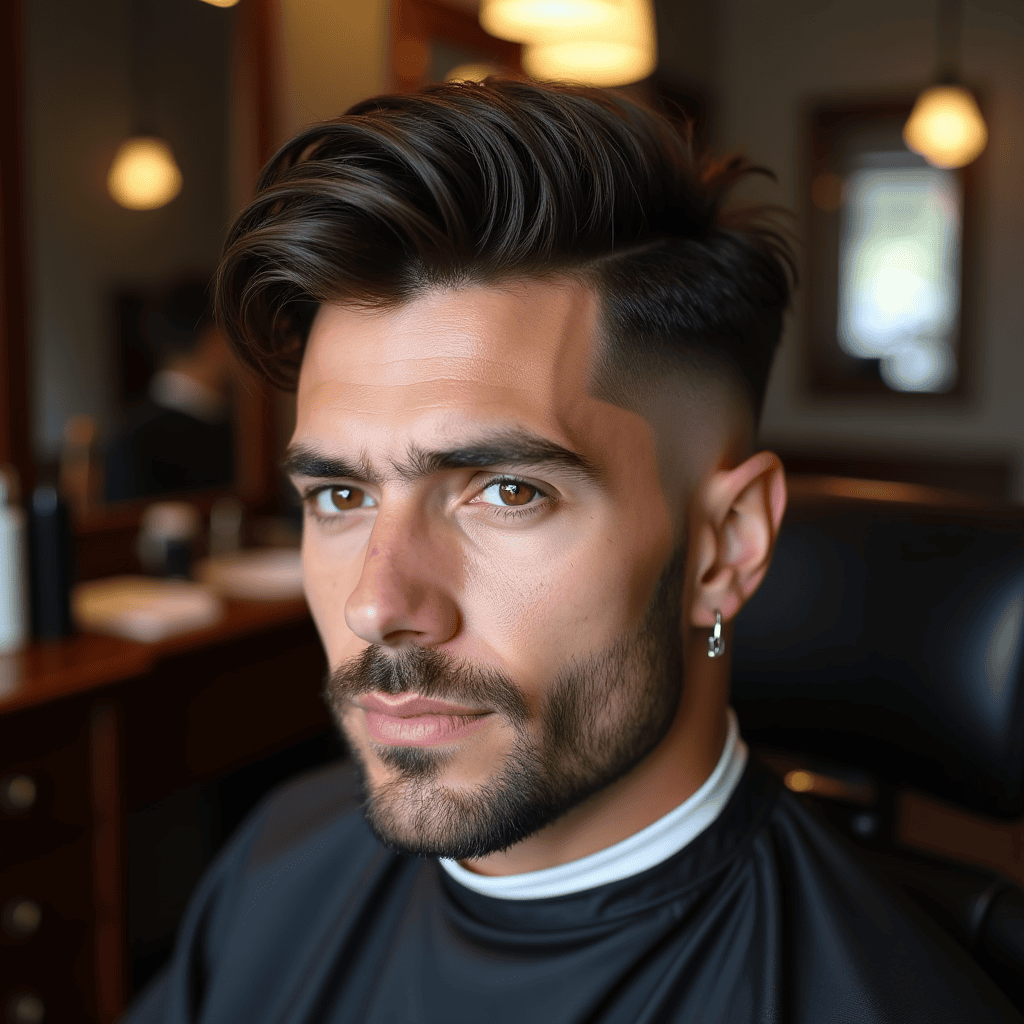
A defined side part gives the high fade a more deliberate upper shape. One side of the top is directed across the head while the part establishes a clean visual boundary, and the high fade strips away the bulk below it. The strongest versions keep some softness through the top instead of shellacking every strand into place. That small amount of movement keeps the haircut from feeling dated.
Say, “Give me a high fade with enough length to follow my natural side part, and keep the top controlled but not flat.” Medium to thick straight hair usually cooperates best, although loose waves can add good texture if the part isn’t cut too severely. Expect a little comb work in the morning and regular trimming around the sides. The problem comes when the part is forced into a spot your hair doesn’t naturally want to follow; then styling becomes a daily argument.
Textured High Fade Haircut Ideas for a More Relaxed Finish
Texture changes the personality of a high fade faster than almost anything else. Instead of relying on perfect comb lines, these cuts use separation, curls, fringe, or uneven movement through the top so the tightly faded sides feel intentional without making the whole haircut look overly formal.
6. Textured Crop with High Fade
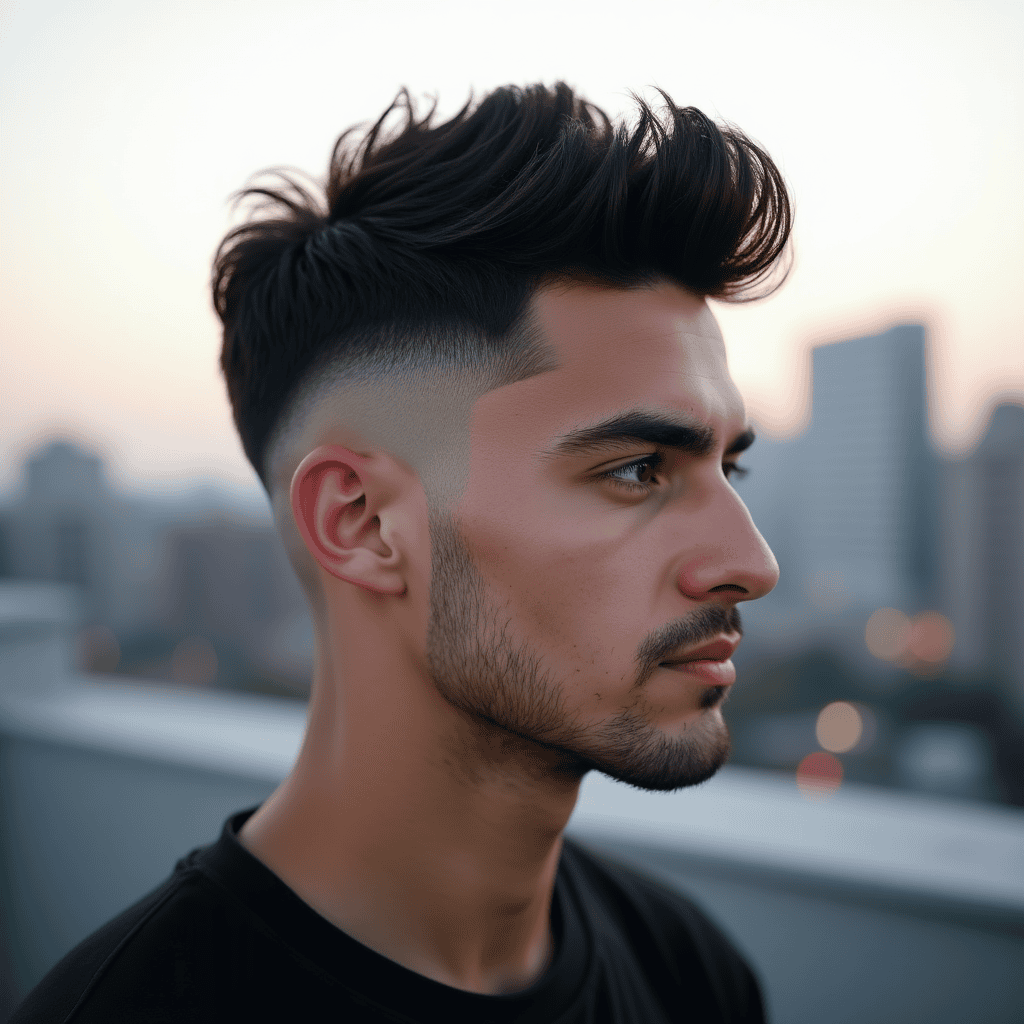
A textured crop places short broken movement across the top and usually pushes some of that texture toward the forehead. The high fade removes the side weight that can make a crop look round, leaving a tighter silhouette through the temples. Small differences in strand length matter here because they create shadow and separation under normal light. A slightly imperfect top often looks better than one cut into identical spikes.
Ask your barber, “Keep the top choppy and textured with a soft forward direction, then take the sides into a high fade.” Thick straight hair is ideal, while fine hair needs careful texturizing so it isn’t thinned into transparency. Work matte clay or texture paste through nearly dry hair using your fingertips rather than a comb. The drawback is over-thinning; once too much density is removed, no styling product can convincingly put it back.
7. French Crop High Fade
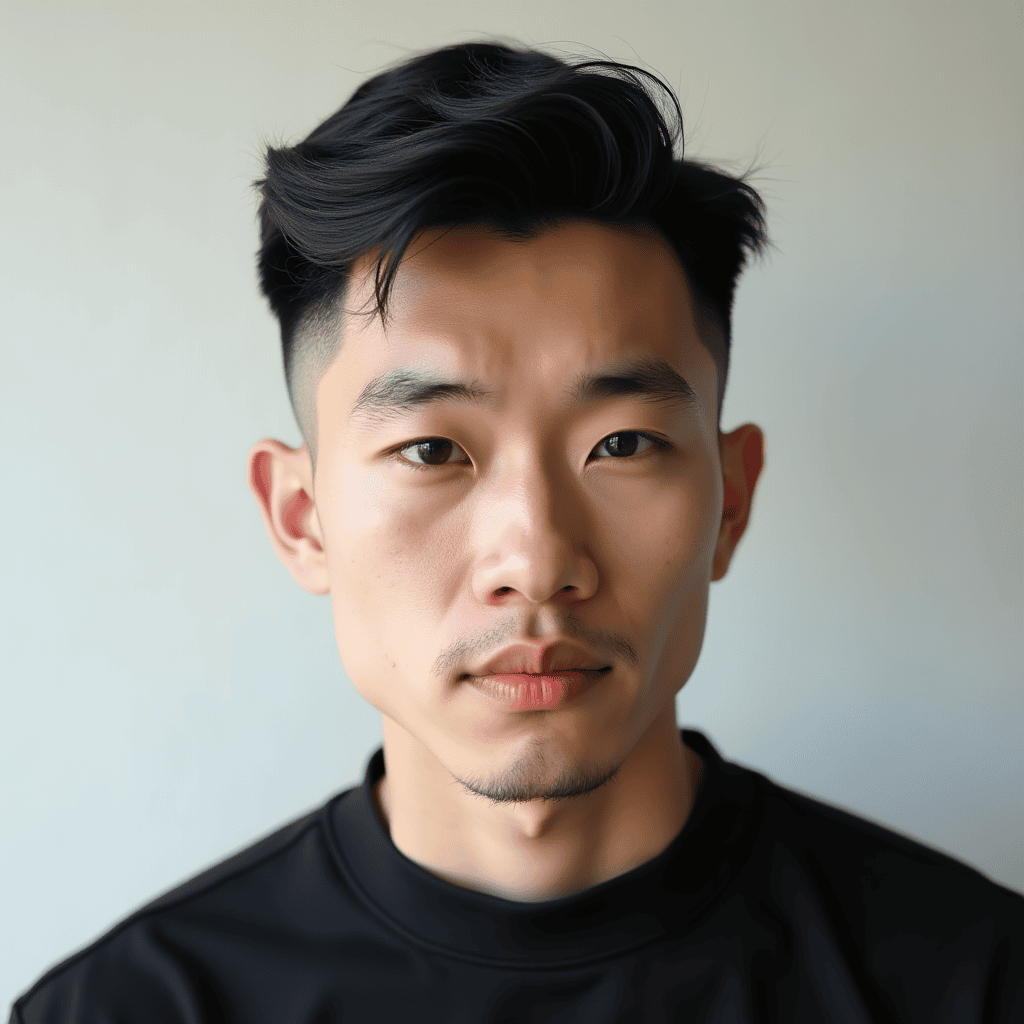
The French crop is one of the High Fade Haircut Ideas I return to when someone wants a defined front without needing to style upward. Hair runs forward across the top into a compact fringe, while the fade begins high enough to expose the temple area. The fringe can be blunt, softened, or slightly broken depending on hair density. That horizontal front edge helps anchor the haircut visually.
Tell your barber, “Keep a short forward crop with a controlled fringe and blend the sides into a high fade without making the top too thin.” It suits straight and mildly wavy textures, especially if recession at the corners makes pushed-back styles less appealing. A little matte paste keeps strands separated without making the fringe shiny. The catch is forehead coverage: men who dislike hair sitting forward may get tired of this shape quickly.
8. Spiky High Fade

Modern spikes should look separated rather than frozen. With this cut, the high fade creates an almost bare foundation around the sides while roughly two to three inches on top are pushed into loose upward pieces. The strongest result mixes a few different directions rather than pointing every strand straight toward the ceiling. That controlled disorder gives the style more depth from the front and side.
Ask for “a high fade with enough textured length on top for loose spikes, keeping the ends broken instead of blunt.” Thick straight hair makes the shape easiest to hold, but slight waves can make it less rigid and more natural. Use a dry matte product and pinch small sections instead of coating the whole top heavily. Skip it if you hate restyling after wearing a cap because the top rarely springs back perfectly on its own.
9. Messy Fringe High Fade
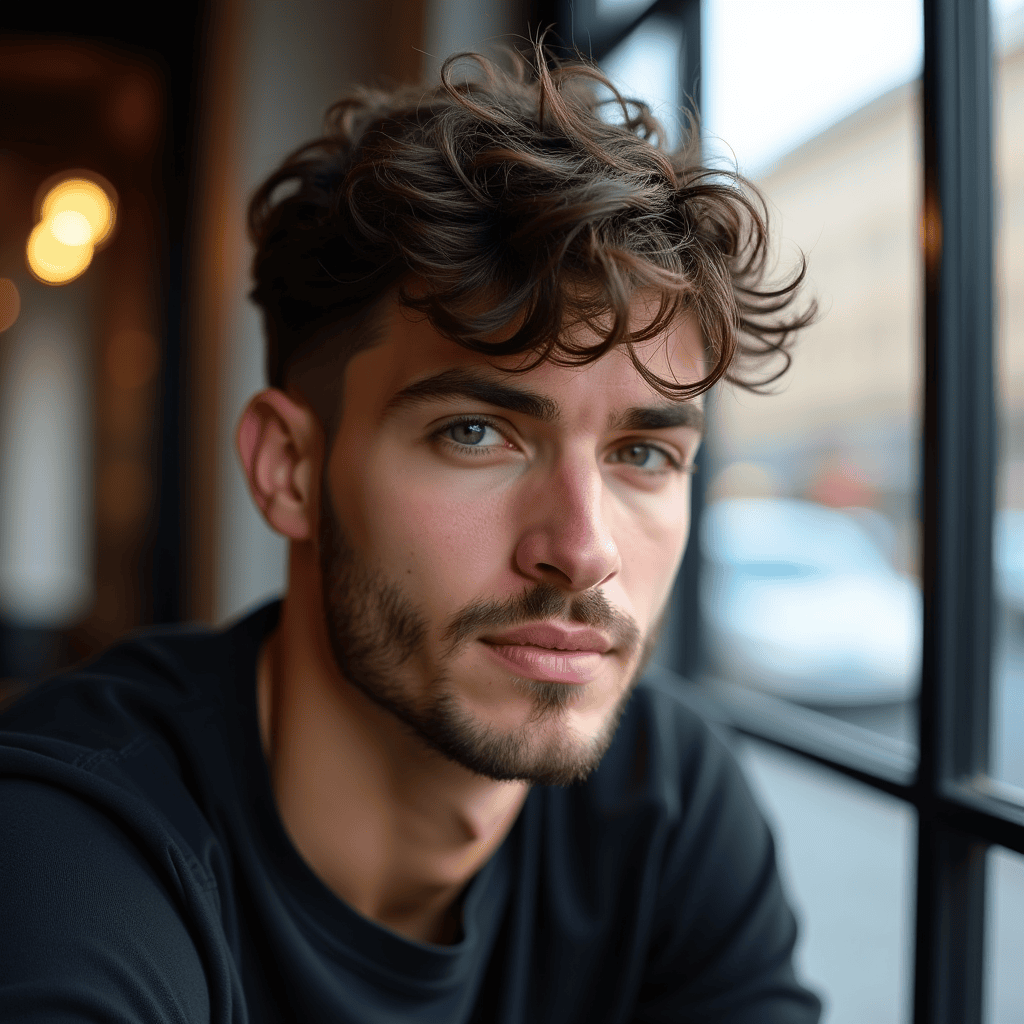
A messy fringe keeps the front longer and lets it drop in uneven pieces toward the forehead while the sides stay aggressively clean. The contrast makes the top feel fuller because nearly all visible movement sits above a narrow faded base. Rather than a straight fringe line, the front breaks into sections of different lengths. It photographs well because the silhouette changes slightly every time the hair moves.
The barber request I use is, “Leave enough length in front for a loose broken fringe, texture the top without hollowing it out, and take the sides high and tight.” Wavy hair has a natural advantage here, although straight hair can get movement with point cutting and styling. Sea-salt spray or light matte cream usually beats stiff wax. The downside is obvious on hot days: longer fringe sitting against the forehead can become annoying fast.
10. Curly Top High Fade
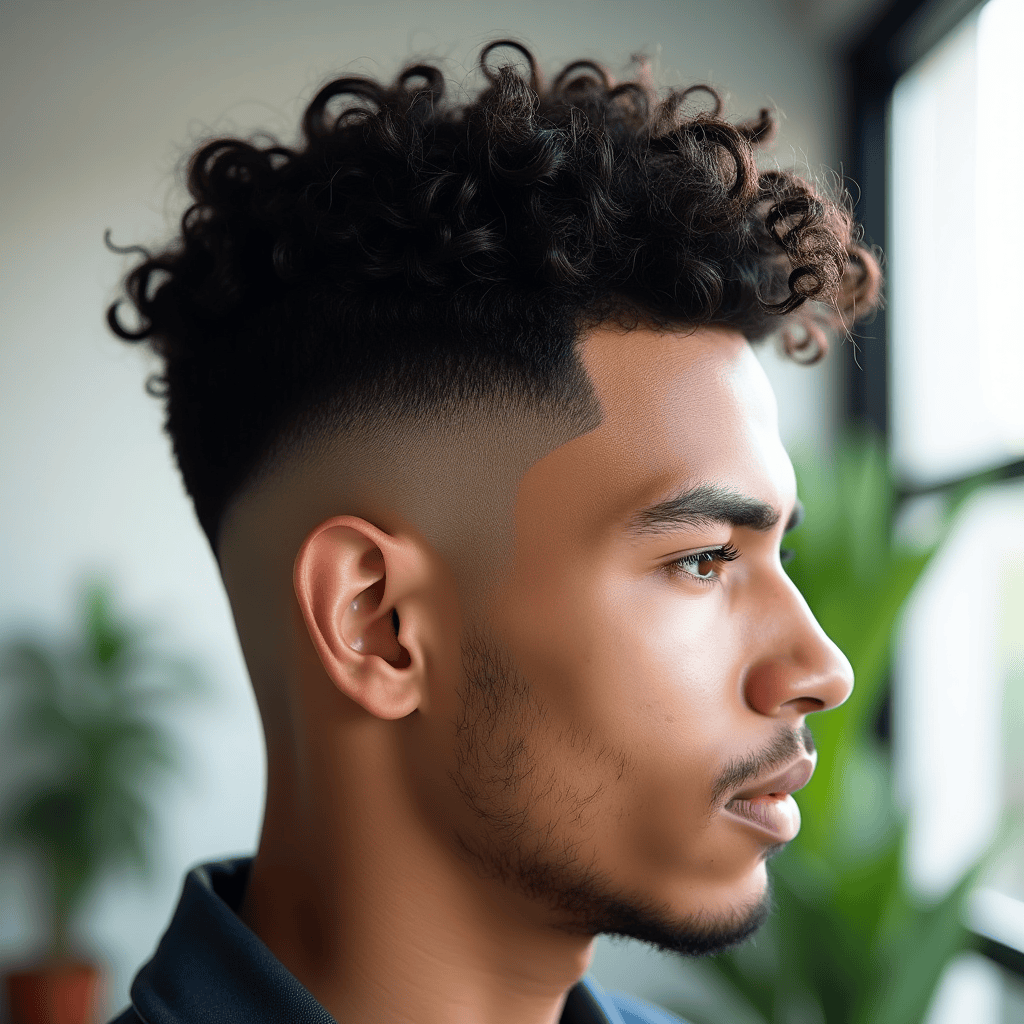
A curly high fade keeps natural bend and volume concentrated above the temple line while cleaning away the wider shape around the sides. Depending on curl pattern, the top might form loose loops, compact springs, or a dense rounded texture. Leaving the curls long enough to group naturally gives the haircut more character than clipping them down into one fuzzy surface. The fade creates the frame; the curl pattern does the interesting work.
Ask, “Keep my natural curl pattern visible on top, preserve enough length for curl definition, and blend the sides into a high fade.” Men with naturally curly hair should discuss shrinkage before the first section is cut because wet or stretched length can be misleading. A curl cream can help with definition, but heavy product usually defeats the airy shape. The tradeoff is that curls don’t always sit the same way twice, so perfectionists may find the daily variation frustrating.
High Fade Haircut Ideas with More Height and Length
Extra length gives a fade drama, but it also exposes weak styling habits. These High Fade Haircut Ideas work best when the top has enough density to hold shape and the person wearing it doesn’t mind spending a few extra minutes directing the hair after a shower.
11. High Fade Quiff
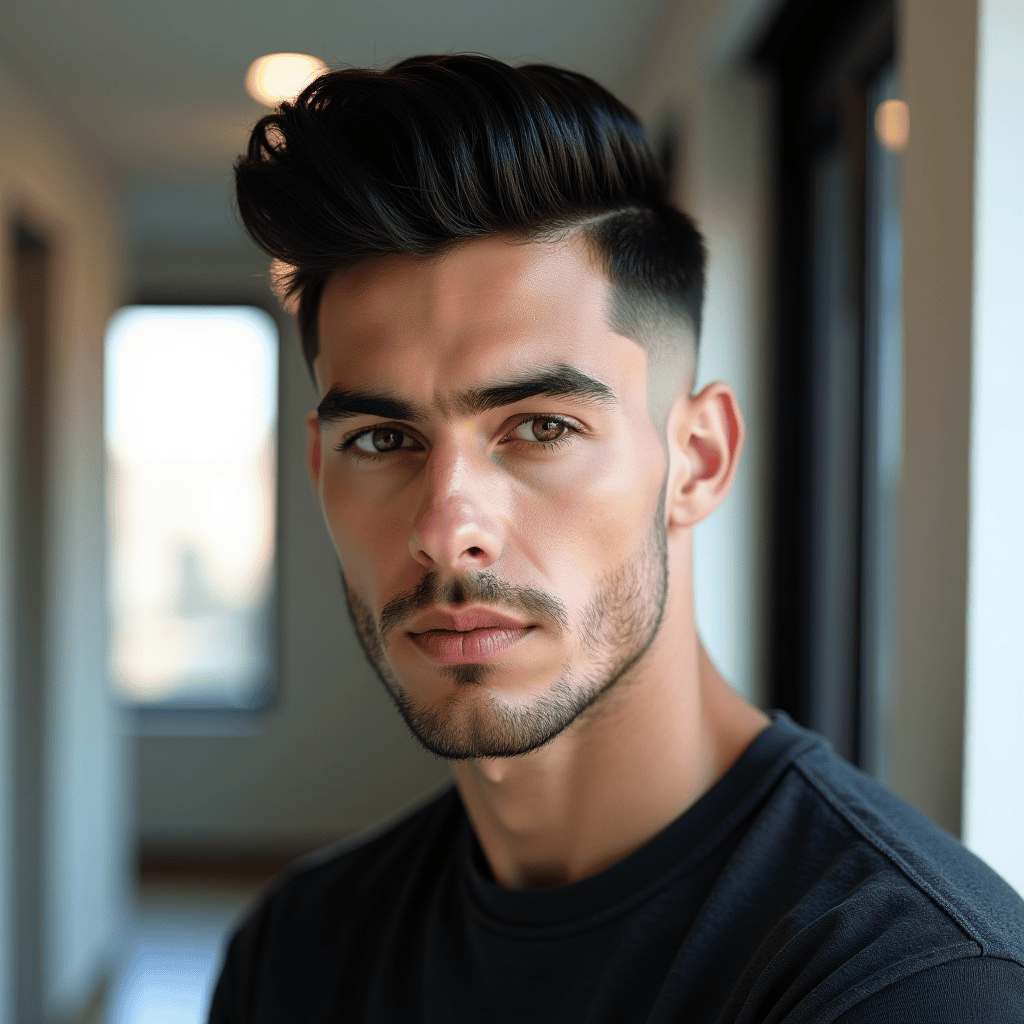
The quiff lifts the front upward and slightly backward while allowing the middle and crown to settle lower. Against a high fade, that rising front becomes the clear focal point because there is almost no competing volume at the temples. Three to five inches usually gives enough room for visible lift without turning the top into a towering shape. The front should bend rather than stand like a wall.
Say, “Leave enough length through the front for a soft quiff, keep some support behind it, and fade the sides high without cutting into the top corners.” Medium to thick straight or wavy hair responds best to blow-drying with the fingers or a vented brush. A small amount of matte paste can lock the shape after drying. The drawback is time: skip the blow-dryer and the quiff can collapse into an ordinary longer top.
12. High Fade Pompadour
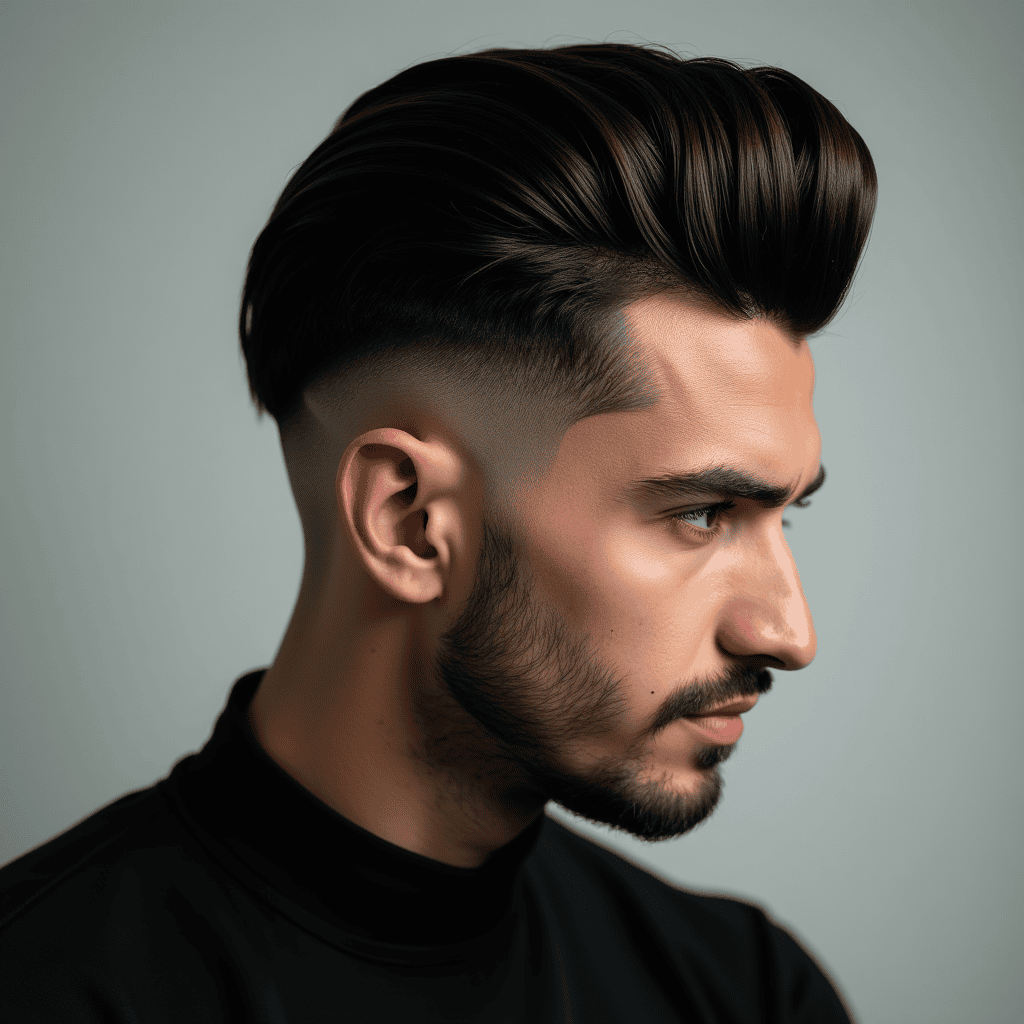
The pompadour pushes more length backward than a quiff and carries visible height beyond the front section. A high fade sharpens that sweeping upper mass by stripping the sides down close, giving the hairstyle a strong side-profile silhouette. The best versions still show some strand movement rather than one glossy solid shell. From the front, the top should feel broad enough to balance the exposed sides.
Ask your barber, “Keep four to six inches through the front and upper top for a pompadour, build enough internal support to push it back, then use a high fade underneath.” Thick hair makes life easier because it can hold volume without excessive product. Expect a blow-dryer, brush, and some trial and error after every wash. The weak point is commitment: a pompadour that isn’t styled often looks like a lot of uncontrolled length sitting on top of a very short haircut.
13. Slick Back with High Fade
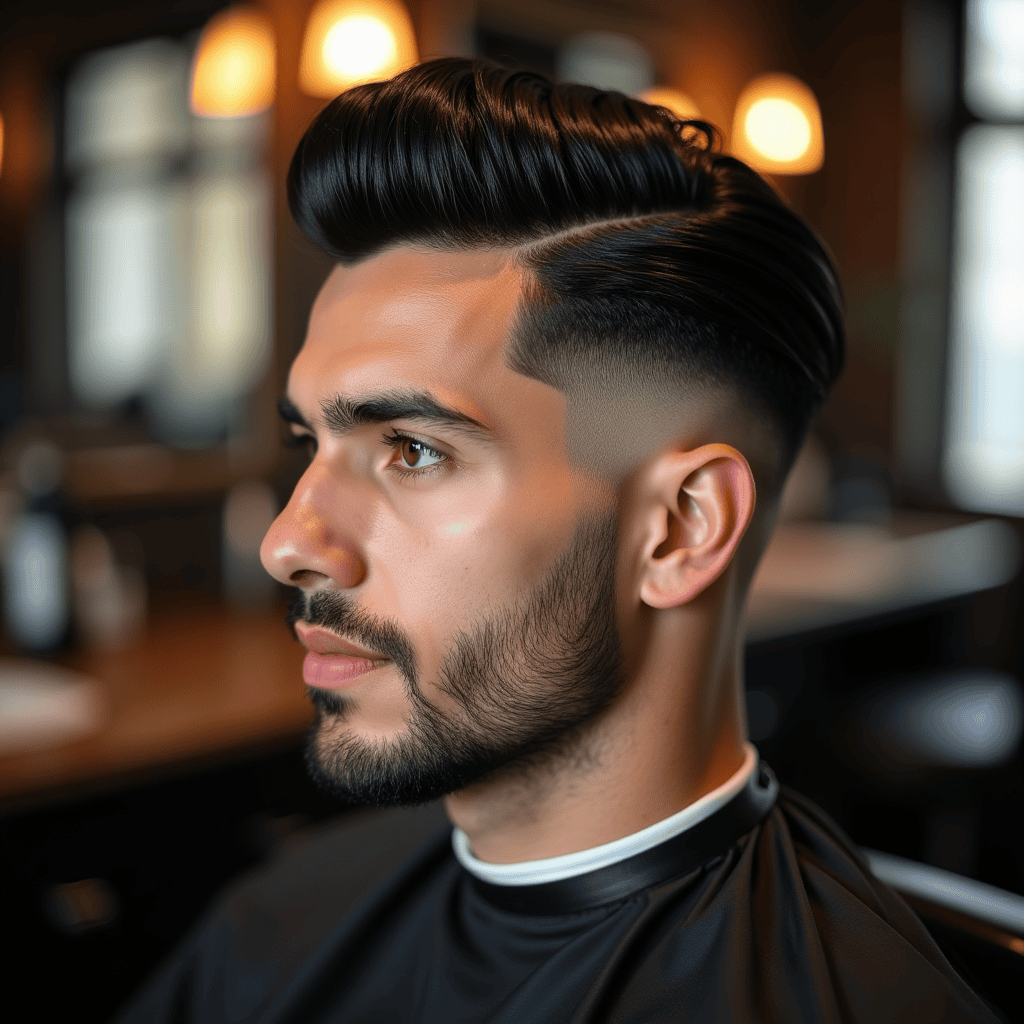
A slicked-back top paired with a high fade creates one of the cleanest long-to-short contrasts in men’s hair. The top is directed away from the forehead in broad lines while the sides vanish quickly underneath it. Keeping a little natural separation between strands prevents the finish from resembling a rigid helmet. From the side, the hair should follow the curve of the head instead of shooting backward horizontally.
Tell the barber, “Keep enough top length to comb fully back, remove excess bulk so it lays cleanly, and give me a high fade underneath without disconnecting it too harshly.” Straight and wavy textures work well, especially when the natural growth direction already moves backward. A cream or medium-hold pomade gives more forgiving control than a heavy wet gel. The drawback appears as soon as wind or sweat breaks the surface because displaced longer strands are much more visible than they are on a short crop.
14. High Fade Comb Over

A comb over doesn’t need to look old-fashioned. In a modern version, the top carries moderate volume to one side while the high fade keeps the lower half of the head stripped clean. The separation is softer than a hard side part, and the strands are allowed to overlap rather than sitting in perfect parallel lines. That looser finish is what keeps it current.
Ask for “a high fade with three or four inches on top, enough texture for movement, and a natural side direction rather than a rigid part.” This works on many straight and wavy hair types, and it can visually redistribute volume when one side naturally sits heavier than the other. Blow-drying across the head usually gives the best foundation. The catch is thinning density at the top: aggressive side-to-side coverage can make sparse areas more obvious instead of less.
15. Brushed-Back High Fade
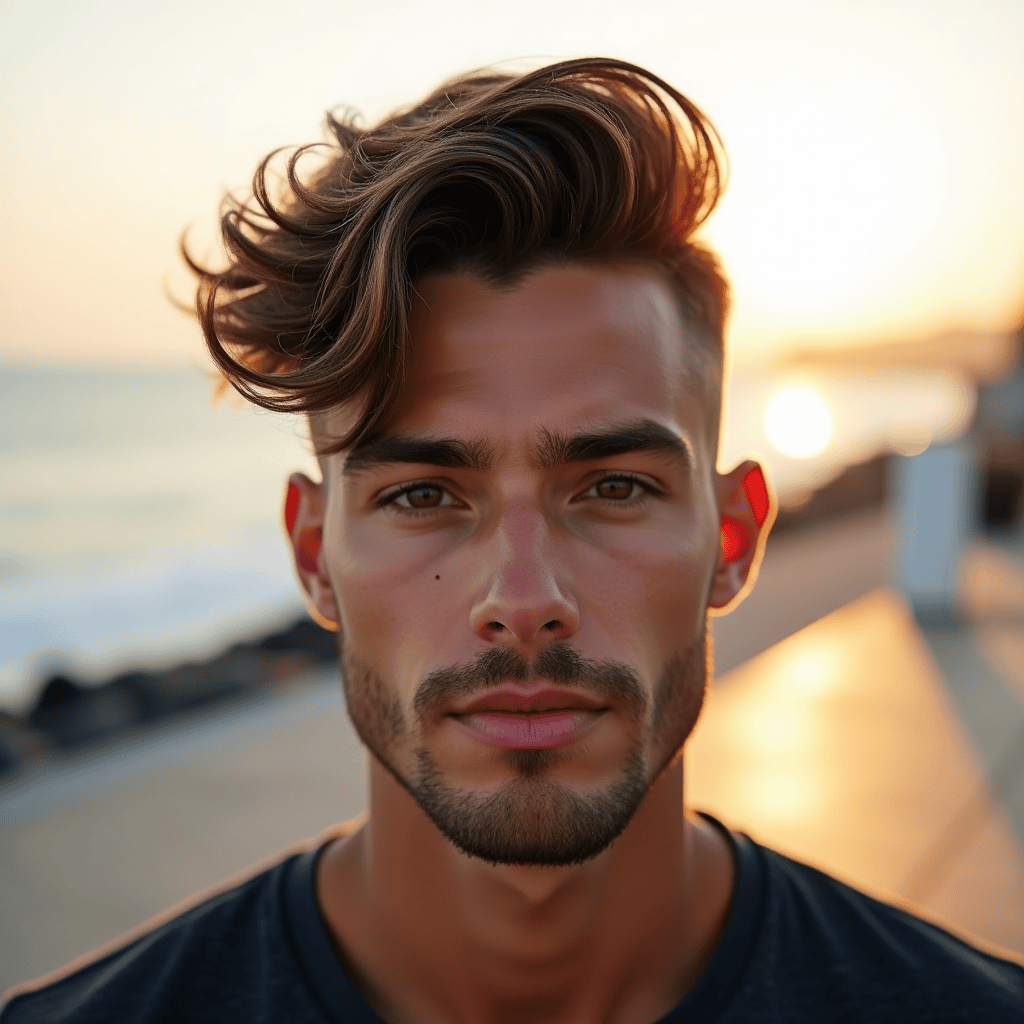
The brushed-back style sits between a quiff and a slick back. Hair moves away from the forehead, but the top stays airy and textured instead of being pressed flat against the scalp. A high fade makes that looseness look more deliberate because the sides provide such a clean boundary. It is one of the better High Fade Haircut Ideas for men who want length without a formal finish.
The phrase to use in the chair is, “Keep the top long enough to brush back with natural volume, take out only the weight that’s stopping movement, and fade the sides high.” Wavy hair is particularly good here because its bends create separation with almost no effort. A pre-styler and quick blow-dry usually do more than piling on extra wax. Its drawback is humidity, which can send the airy surface in directions you didn’t plan.
High Fade Haircut Ideas for Curls, Coils, Waves, and Twists
Texture shouldn’t be treated like an afterthought to the fade. On coily, curly, or trained short hair, the top often has enough structure to become the strongest feature of the cut, while the high fade controls width and gives that texture a clean border.
16. Afro High Fade
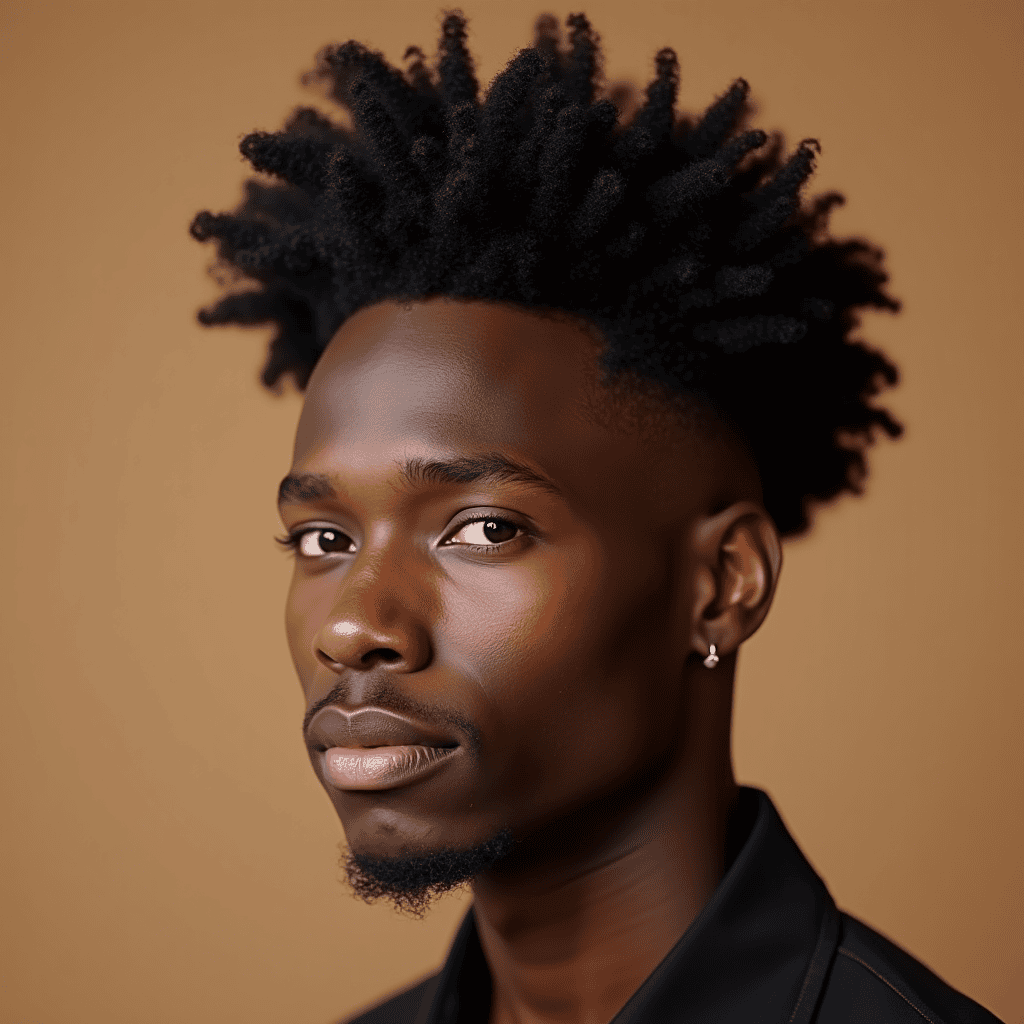
An Afro high fade keeps dense coily volume through the upper head while narrowing the silhouette aggressively around the temples and sides. The top can stay softly rounded rather than carved into a rigid geometric block, which lets the natural texture remain visible. From the front, the fade makes the upper shape appear taller even when only moderate length is retained. The contrast is strongest around the temple line.
Ask for “a high fade that keeps the upper Afro full and balanced, with the sides reduced cleanly without taking too much width from the top.” Coily hair with good density gives the barber plenty to shape, but the final outline should follow the actual growth pattern rather than chasing perfect symmetry. Gentle picking and moisture-focused grooming usually maintain the form. The drawback is shape drift: as the sides grow, the silhouette broadens and loses that tight high-fade outline.
17. Sponge Twists with High Fade
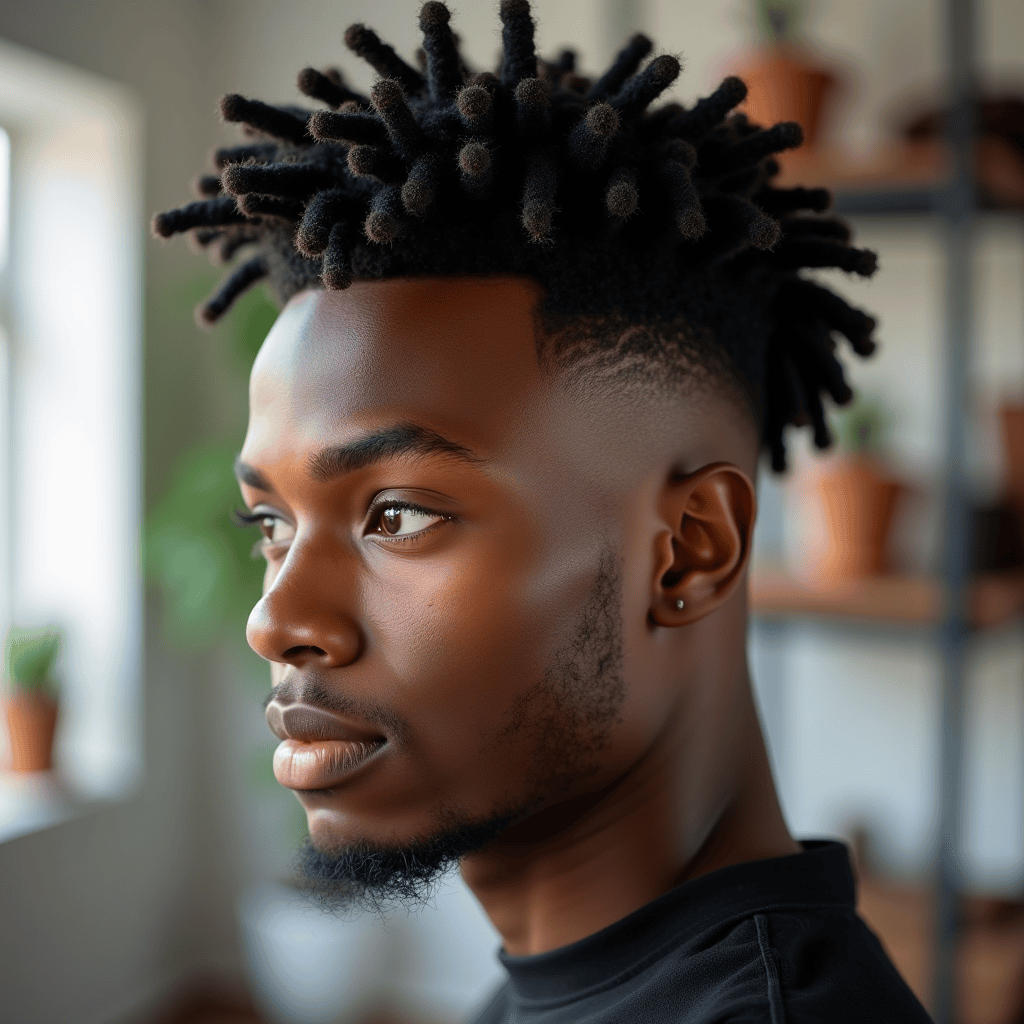
Sponge twists create small separated coils across the top, giving the high fade a textured surface that reads clearly even at a distance. Keeping the twists slightly irregular makes them look natural rather than arranged into identical rows. The faded sides remove visual noise and make each cluster on top more obvious. It is a compact style, but there is still plenty happening in the texture.
Tell your barber, “Keep enough top length for defined sponge twists, clean up the shape without flattening the coils, and use a high fade around the sides.” Coily hair is the natural match, and the top needs enough length for the sponge to create visible grouping. Maintenance involves refreshing the twists gently rather than rubbing harder every day. The drawback is overworking them; too much manipulation can leave the top looking fuzzy instead of clearly separated.
18. Two-Strand Twists with High Fade

Two-strand twists give the top more length and visible pattern than sponge twists while the high fade keeps the haircut controlled around the perimeter. The twists can hang slightly forward, stand with some lift, or move loosely depending on length. Leaving enough room at the base prevents the upper section from feeling cramped against the faded area. The result has movement without the width of a full, unfaded twist style.
Ask for “a high fade around the sides while keeping my two-strand twists full through the top and leaving a clean transition at the base.” This is better for hair with enough length to twist comfortably; rushing the style on hair that’s too short often produces weak, uneven sections. Twists need their own care routine between barber visits, so this isn’t a zero-maintenance haircut. The limitation is commitment to the top length, especially if you frequently switch back to short loose styles.
19. Waves with High Fade
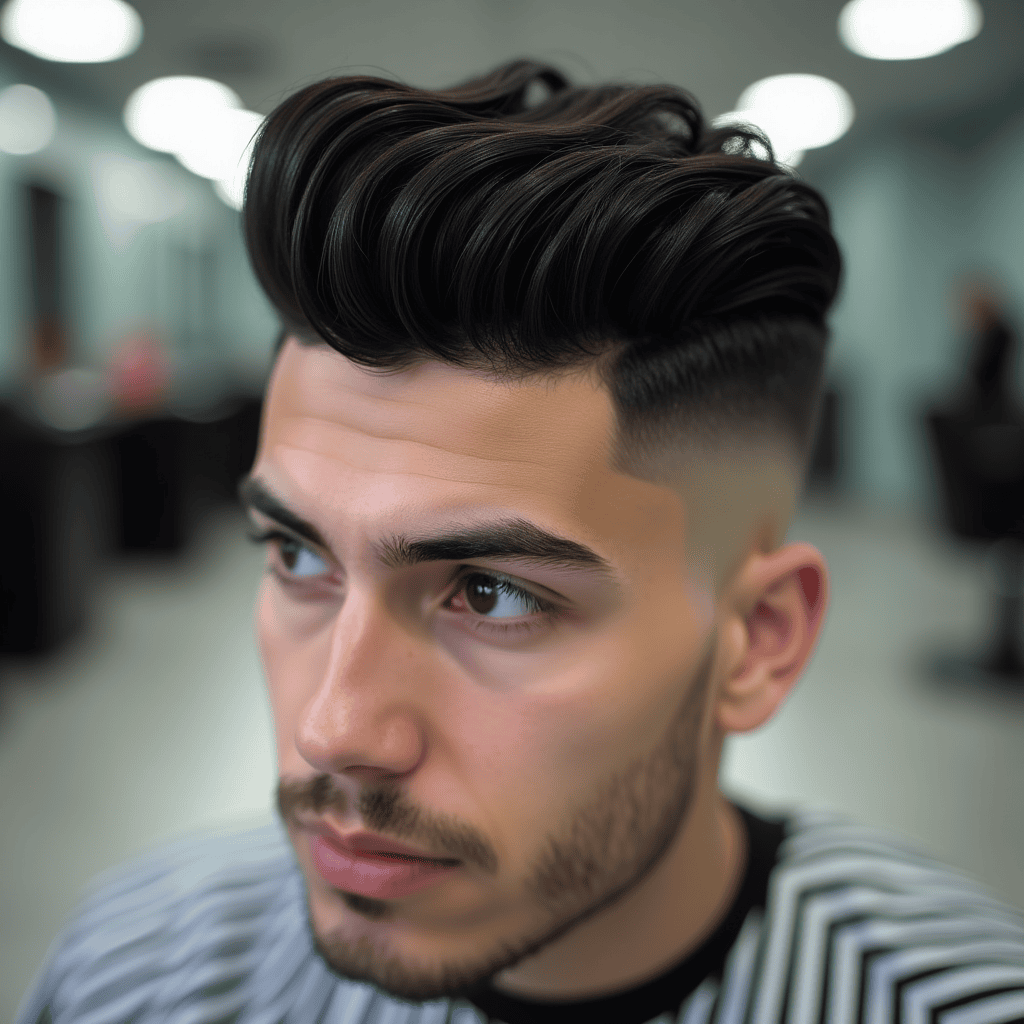
Waves create a low-profile pattern that pairs naturally with a high fade because the texture stays close to the scalp while still catching light in curved lines. The upper section remains dark and dense enough for the wave pattern to read, while the temple and side areas fade quickly toward skin or near-skin length. From above, the pattern becomes the detail. From the side, the fade controls the shape.
Say, “Keep enough length through the top for my wave pattern, don’t cut against it too aggressively, and blend the sides into a high fade.” The style depends on consistent brushing and hair that responds well to wave training, so the haircut itself is only one part of the finished result. A careless top cut can interrupt weeks of pattern work. The drawback is upkeep: men wanting to ignore their hair between cuts won’t get the same defined wave effect.
20. Braided Top with High Fade

A braided top concentrates pattern and length through the center and upper head while the high fade removes loose side volume. The braids might run backward in clean sections or follow simple curved directions, but the overall layout should work with the head rather than becoming overly busy. Exposed faded sides create a strong border around the braided area. This is one of the more structured High Fade Haircut Ideas because both the braiding and clipper work need to meet neatly.
Ask the barber and braider to preserve “a clean high fade boundary with enough top area and length for simple defined braids.” The exact braid layout depends heavily on density, length, and how the sections sit, so bringing a reference photo is useful here. Upkeep is split between maintaining the faded perimeter and protecting the braided top. The drawback is coordination: freshening the sides carelessly can eat into the braid section and gradually make the usable top narrower.
Bold High Fade Haircut Ideas with Stronger Contrast
Once the basic shape works for you, a high fade can support much sharper styling. These cuts use harder transitions, dramatic top shapes, beard connections, or clipped details. They photograph well, but several demand more frequent barber visits because their strongest features disappear as soon as the edges soften.
21. Faux Hawk High Fade
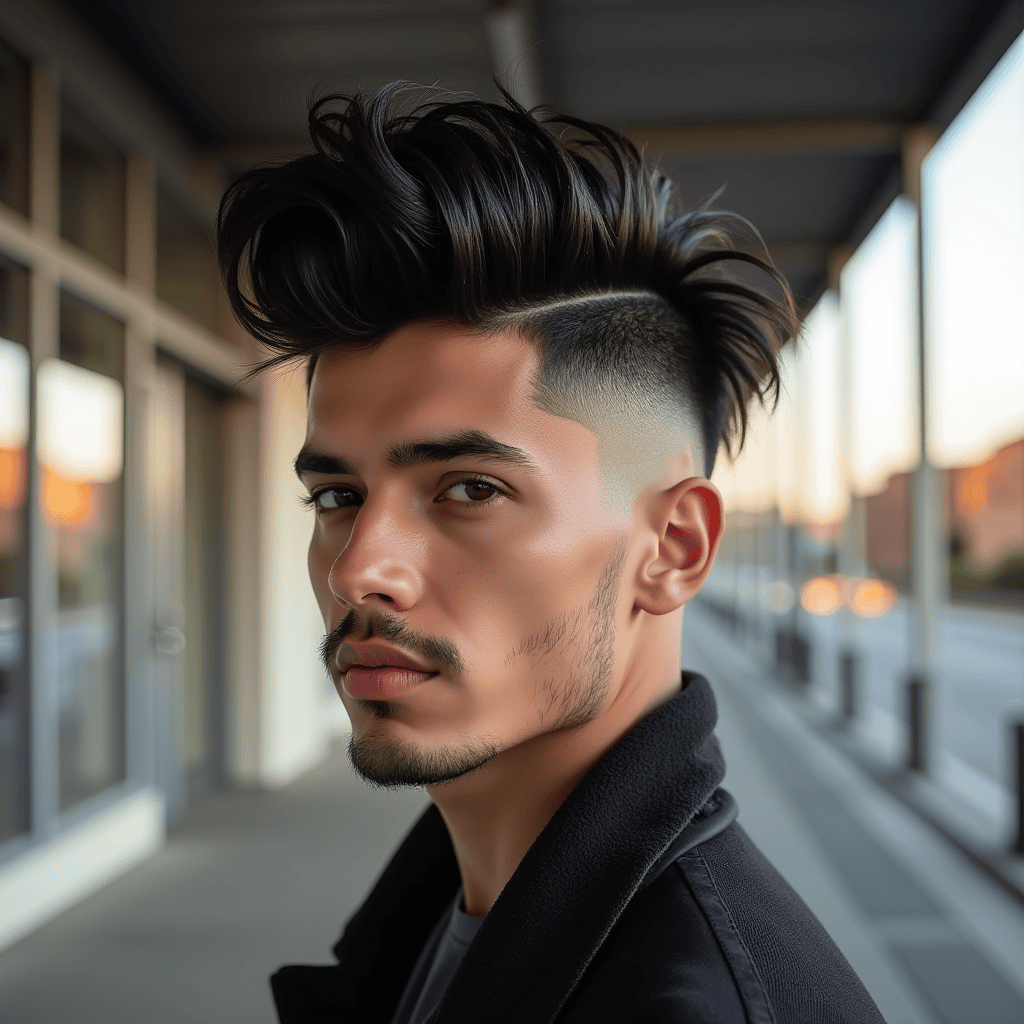
A faux hawk pulls the top toward the center without shaving the sides into a true mohawk strip. The high fade does most of the narrowing, while two to four inches through the top are styled upward and slightly inward. Keeping the back connected makes the shape easier to wear than a full mohawk. From the front, the top should look pointed enough to register without becoming costume-like.
Ask for “a high fade with a textured top that can push inward into a loose faux hawk, but keep enough width so I can also wear it normally.” Thick straight, wavy, and some curly textures can all work if the top has enough grip. Matte paste is usually better than high-shine gel for keeping it relaxed. The downside is versatility only works one way: you can flatten a faux hawk, but a top cut too short for the shape can’t be styled back into one.
22. High Skin Fade with Hard Part

This version pushes contrast harder by combining a high skin fade with a visibly defined part above it. The lower sides fade down extremely close while the hard part creates a narrow separation between the longer upper section and the controlled side direction. It has a crisp, architectural look when freshly cut. There isn’t much softness anywhere, which is exactly why some men like it.
Tell your barber, “Give me a high skin fade with a clean hard part that follows my natural direction rather than forcing it too far up.” Straight, dense hair tends to support the upper shape best, and the part should be placed carefully because shaving it wider doesn’t make it better. The style needs frequent cleanup to keep its strongest lines visible. The drawback is grow-out: a hard part becomes noticeably fuzzy and uneven faster than a natural part does.
23. High Drop Fade with Textured Top
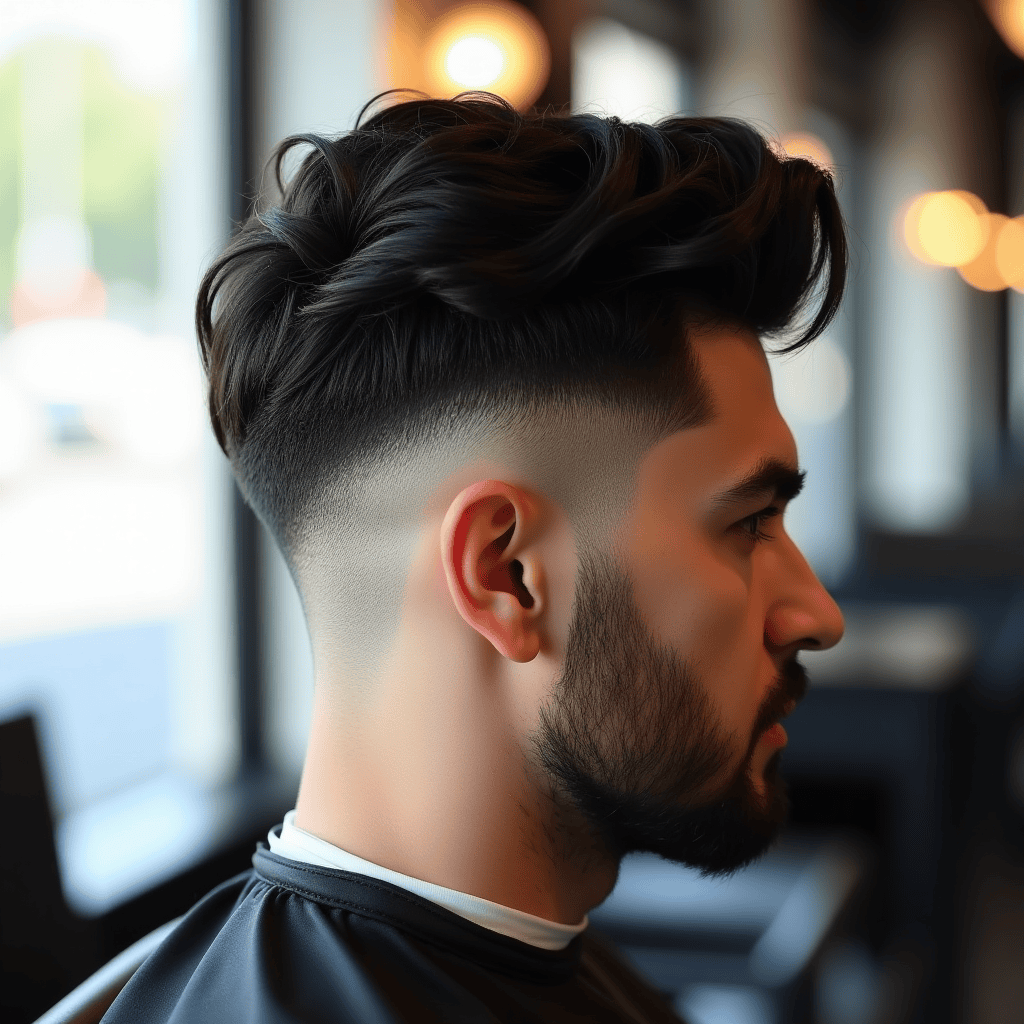
A high drop fade starts high around the temples but curves downward as it moves behind the ear, following more of the natural head shape than a straight horizontal fade. With textured length above it, that lowered back section prevents the rear profile from looking overly exposed. The curve is easiest to appreciate from a three-quarter or rear angle. It adds detail without requiring extra styling on top.
Ask for “a high fade at the temples that drops slightly behind the ears, with a textured top and enough weight left around the back of the crown.” Men whose head shape feels too exposed with a straight high fade may prefer this contour. The top can be styled forward, loose, or slightly upward depending on texture. The risk is terminology: different barbers interpret “high drop” differently, so a reference photo communicates the curve better than the name alone.
24. High Fade with Beard Blend
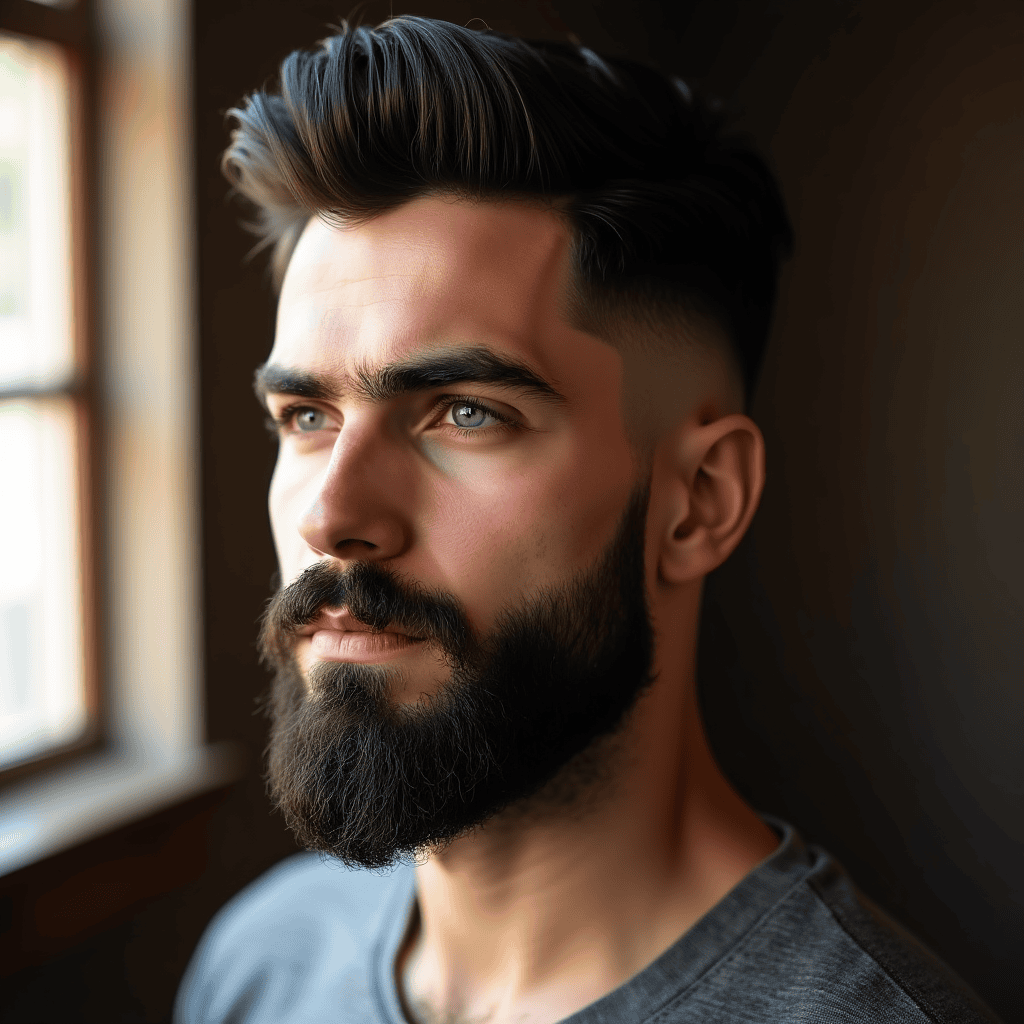
Connecting a high fade into facial hair requires more than making both areas short. The sideburn zone becomes a controlled transition where the nearly bare fade gradually gains density before meeting the beard. Keeping the beard fuller through the jaw creates a strong vertical contrast from temple to chin. Done well, the haircut and beard read as one shape rather than two separate grooming decisions.
Ask for “a high fade with the sideburn faded naturally into my beard, keeping the jaw area fuller and the transition gradual.” This works best when facial hair has enough density to show a real change in length; patchier growth often benefits from a softer connection instead. Maintaining the blend may require small touch-ups before the next full haircut. The drawback is consistency: if you trim your beard much shorter at home, the careful barber transition disappears immediately.
25. High Fade with Subtle Shaved Detail
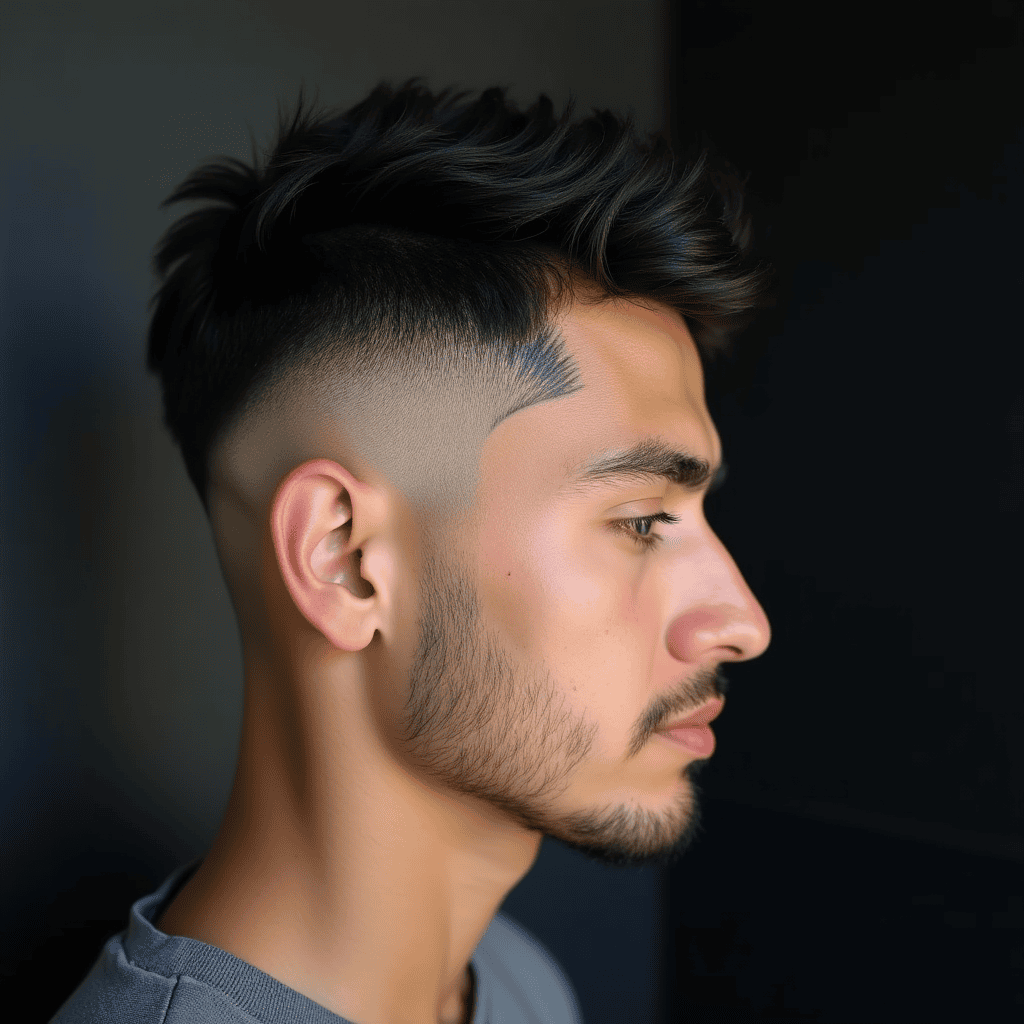
A small shaved detail can make a high fade more individual without turning the haircut into an elaborate design. One narrow line near the upper faded section follows the head’s contour and stays separate from the natural hairline. Because the surrounding fade is already clean, the detail doesn’t need to be large to register. Restraint matters here; one well-positioned mark usually has more impact than several competing lines.
Tell your barber, “Add one subtle shaved line that follows the fade and can grow out cleanly without cutting into the top.” This is best for someone comfortable with a clearly styled haircut and willing to let the detail disappear naturally before changing it. The line itself needs little styling, but its visual sharpness doesn’t last long. That’s the downside: as stubble returns, the design moves from crisp to vague much faster than the rest of the haircut.
How to Choose the Right High Fade
Start with the amount of contrast you actually enjoy seeing on your own head. A true high fade exposes much more of the temple and side area than a mid or low fade, so men who prefer a softer outline should show their barber where they want the transition to begin rather than relying on the haircut name alone.
Hair texture should decide the top before trend photos do. Straight dense hair can support crops, quiffs, side parts, and pompadours easily, while wavy hair often looks better with a brushed-back top or relaxed fringe. Curls, coils, twists, braids, and waves deserve enough length to keep their natural pattern visible instead of being cut down simply to match someone else’s reference.
Face shape changes the balance as well. A high fade removes width from the sides, which can make a rounder face appear more defined, but adding excessive height to an already long face may exaggerate its length. If that happens, keep the top lower and wider rather than pushing everything vertically.
Bring two photos to the appointment: one showing the top you want and another clearly showing the fade from the side. Then point to the actual height where you want the shortest section to begin. “High fade” is useful barber shorthand, but an inch of difference can completely change how the finished haircut frames your head.
For a wedding, interview, photo shoot, or important event, avoid experimenting with a dramatically higher fade the morning of the occasion. A familiar cut a few days beforehand gives the edges time to settle while still looking clean, and it lets you see how the haircut works with your suit, collar, glasses, or usual accessories.
Where High Fades Fall Short
The biggest weakness of a high fade is grow-out. Because the haircut depends on a strong difference between the short sides and longer top, even a little side growth reduces its impact. A man who gets a haircut every six or eight weeks may find that a lower or softer taper stays visually balanced for longer.
High fades can also expose more head shape than expected. Flat areas, pronounced contours, scars, or growth patterns that were hidden by side length become easier to see once the clippers move high above the temples. None of that makes the haircut wrong, but it is worth knowing before asking the barber to remove most of the side weight.
The style gets oversold as universally flattering. It isn’t. A good barber may recommend starting slightly lower, keeping more temple weight, or choosing a high taper instead if a full high fade makes the top look disconnected. That quieter adjustment can give you most of the clean effect without committing to such an exposed silhouette.
Frequently Asked Questions
The practical questions around High Fade Haircut Ideas usually come down to placement, upkeep, hair type, and what to say in the barber chair. Start with those basics before worrying about which variation is trending.
What is a high fade haircut?
A high fade is a haircut where the sides begin transitioning to much shorter hair relatively high on the head, usually around or above the temple area. The top remains longer, creating stronger contrast than a low fade or many mid fades. The exact starting point should still be adjusted to the person’s head shape.
How is a high fade different from a mid fade?
A high fade removes side length earlier, exposing more of the temples and upper sides. A mid fade begins its transition lower and usually leaves more weight around the head. That small placement difference changes the entire silhouette, so men wanting a less dramatic grow-out often find a mid fade easier.
Which High Fade Haircut Ideas are easiest to maintain?
A crew cut, buzz cut, or short classic high fade usually requires the least daily styling because the top doesn’t need much shaping. The barber maintenance is different: the sides still lose their crisp contrast as they grow. Easy morning styling does not necessarily mean fewer haircut appointments.
How often should I get a high fade cleaned up?
Men who like a consistently sharp fade often return to the barber every few weeks, although timing depends on hair growth, how close the sides were cut, and how much softness you tolerate. If you don’t mind a more natural grow-out, you can stretch the interval longer without the haircut becoming unwearable.
Does a high fade work with curly hair?
Yes. Curly hair can look particularly strong with a high fade because removing side bulk puts more attention on the natural curl pattern above. The barber should account for shrinkage before deciding top length. Keeping enough hair for curls to form properly usually gives a better result than cutting the upper section overly short.
Can men with thin hair wear a high fade?
They can, but the top should be planned carefully. Strongly exposing the sides can make limited density above more noticeable if the upper hair is styled too high or separated too aggressively. Short crops and controlled crew cuts are often more forgiving than long comb overs that try to conceal sparse areas.
Is a high skin fade the same as a regular high fade?
Not necessarily. “High” describes where the fading transition begins, while “skin fade” describes how short the lowest section becomes. A high fade can finish at a slightly longer clipper length, while a high skin fade takes the lowest area down extremely close before blending upward.
Which face shape works best with High Fade Haircut Ideas?
There is no single required face shape. High fades often work well when removing side width improves the overall balance, but the top shape matters just as much. Rounder faces may benefit from moderate height, while longer faces often look better when the top stays flatter and avoids excessive vertical volume.
Can I combine a high fade with a beard?
Yes. A barber can gradually transition the faded sideburn area into the beard so the haircut and facial hair connect cleanly. The effect is strongest when beard density allows several visible length changes. Bring a beard reference as well as a haircut photo if the connection is important to you.
What should I tell my barber when asking for a high fade?
Show where you want the fade to start, explain how short you want the lowest section, and describe what should happen on top. A useful request might be, “Start the fade above my temples, keep some weight near the crown, and leave enough top length to style naturally.” A photo removes even more guesswork.
Will a high fade work for an office or formal setting?
It can. A crew cut, Ivy League, side part, or brushed-back high fade can look clean with business clothing when the top is controlled and the edges are tidy. For a formal event, get a familiar version several days beforehand rather than testing an unusually aggressive fade immediately before the occasion.
Which High Fade Haircut Ideas are best for thick hair?
Textured crops, quiffs, pompadours, brushed-back styles, and fuller curly tops all benefit from natural density. Thick hair gives the barber enough material to create shape while the high fade removes unwanted side bulk. The key is controlling weight rather than thinning the top so heavily that it loses structure.
Can I style a high fade without hair products?
Short versions often need little or no product. Buzz cuts and simple crew cuts can usually be left alone after drying. Longer High Fade Haircut Ideas such as quiffs, pompadours, slick backs, and textured fringes tend to look more intentional with some styling assistance, particularly when natural growth direction fights the desired shape.
Is a high fade good for summer?
The closely clipped sides can feel lighter in warm weather and reduce bulky hair around the ears and temples. That doesn’t automatically make every high-fade variation low maintenance, though. Long quiffs, curls, twists, or pompadours still need their normal top-hair routine regardless of how short the sides are.
Should I choose a high fade or high taper?
Choose a high fade when you want obvious contrast and much shorter side coverage. A high taper keeps more hair through most of the sides and concentrates the shortest work closer to the edges. Men unsure about exposing the full temple area often find the taper a safer first experiment.
A good high fade starts with placement, not the trend name. Choose the top shape your hair already wants to make, then decide how much side exposure suits your face, routine, and haircut schedule. When booking, ask for a consultation before the clippers start and say, “Show me where you’d begin this high fade on my head shape before you take the sides down.”
Best Men’s Hairstyle Reports
Explore disconnected cuts, barber techniques, modern fades and textured twist hairstyle ideas for men.