
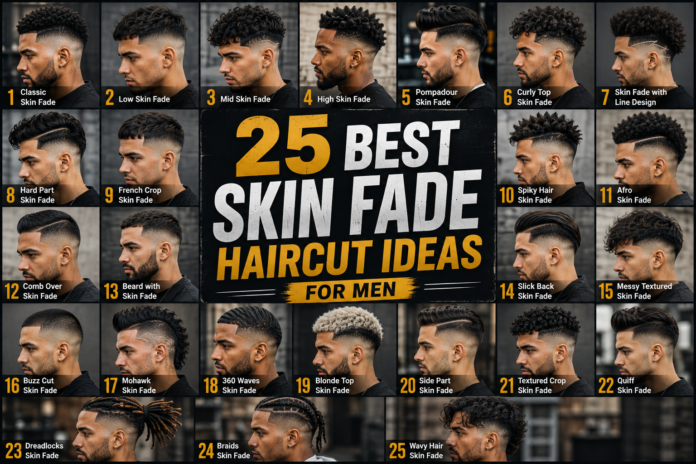
The strongest skin fade haircut ideas balance a clean shaved transition with enough shape on top to make the cut feel intentional. A classic low skin fade, textured crop, skin fade pompadour, and curly top fade are especially dependable because each gives the barber a clear silhouette to build around while leaving room for personal style.
This guide approaches each cut through practical barbering principles: fade height, weight placement, texture, head shape, and how the haircut changes as it grows. The goal is to show what each version actually looks like and what you need to say in the chair to get close to the result you have in mind.
Here is a quick comparison of ten skin fade haircut ideas worth considering first.
| Style | Fade Position | Top Length | Best For | Upkeep |
|---|---|---|---|---|
| Low Skin Fade | Low around ears and neckline | 1–3 inches | First-time fade clients | Moderate |
| Mid Skin Fade | Around temple level | 1–4 inches | Balanced everyday cuts | Moderate |
| High Skin Fade | High above temples | 1–3 inches | Strong contrast | High |
| Textured Crop Skin Fade | Low to mid | 1–2 inches | Thick or straight hair | Easy |
| Curly Top Skin Fade | Low to mid | 2–4 inches | Natural curls | Moderate |
| Buzz Cut Skin Fade | Mid to high | Very short | Minimal styling | High |
| Pompadour Skin Fade | Low to mid | 3–5 inches | Structured styling | High |
| Side-Part Skin Fade | Low | 2–4 inches | Smart, polished looks | Moderate |
| Slick-Back Skin Fade | Mid | 3–5 inches | Straight or wavy hair | High |
| Faux Hawk Skin Fade | Mid to high | 2–4 inches | Bolder styling | Moderate |
Classic Skin Fade Haircut Ideas That Stay Sharp
Classic versions work because the fade supports the haircut instead of becoming the entire haircut. These are good starting points if you want the clean finish of exposed skin around the edges without choosing an exaggerated shape on top.
1. Classic Low Skin Fade
A classic low skin fade keeps the shortest section close to the sideburns, ears, and lower neckline, then builds smoothly into darker hair above. From the front, most of the natural side profile remains intact while the lower edge looks exceptionally clean. The top can stay around two inches with a soft, natural direction rather than a heavily sculpted finish. That restrained transition makes this one of the easiest skin fade haircut ideas to wear in professional and casual settings.
It works particularly well on oval, square, and slightly longer faces because the low transition doesn’t remove too much visual width from the head. Ask your barber, “Keep the skin fade low around the ears and neckline, blend it softly into the sides, and leave enough weight above the temple.” Plan on cleaning up the fade every two to three weeks if you want the exposed-skin section to remain obvious. The drawback is simple: once the bottom starts growing back, the crisp low line loses its impact faster than a traditional taper.
2. Balanced Mid Skin Fade
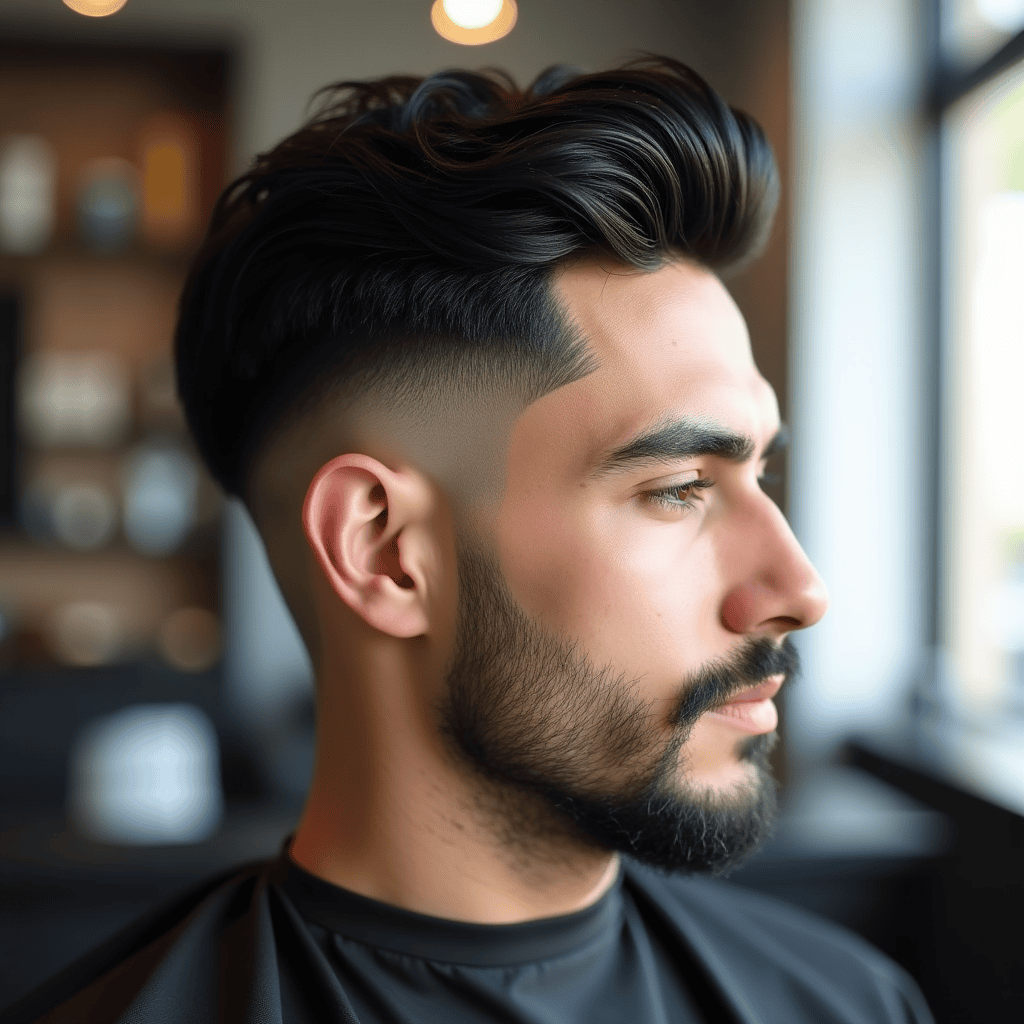
The mid skin fade starts higher than a conservative low fade but stops short of creating the severe contrast of a high fade. Its lightest area usually sits around the middle of the sides before graduating into enough darker hair to preserve the shape of the head. A short, slightly textured top gives the overall cut an athletic, tidy finish. Viewed from the side, the fade line appears balanced rather than bottom-heavy or aggressively high.
This version suits men who like short hair but aren’t sure how dramatically they want the sides exposed. Tell your barber, “Start the skin section around the middle of the sides, keep the blend even front to back, and don’t push the fade too high at the temples.” Thick, medium, and straight hair make the top especially easy to control. The main drawback is that a poorly placed mid fade can make the head look rounder, so the barber needs to read your bone structure before setting the first guideline.
3. High Skin Fade With Short Top
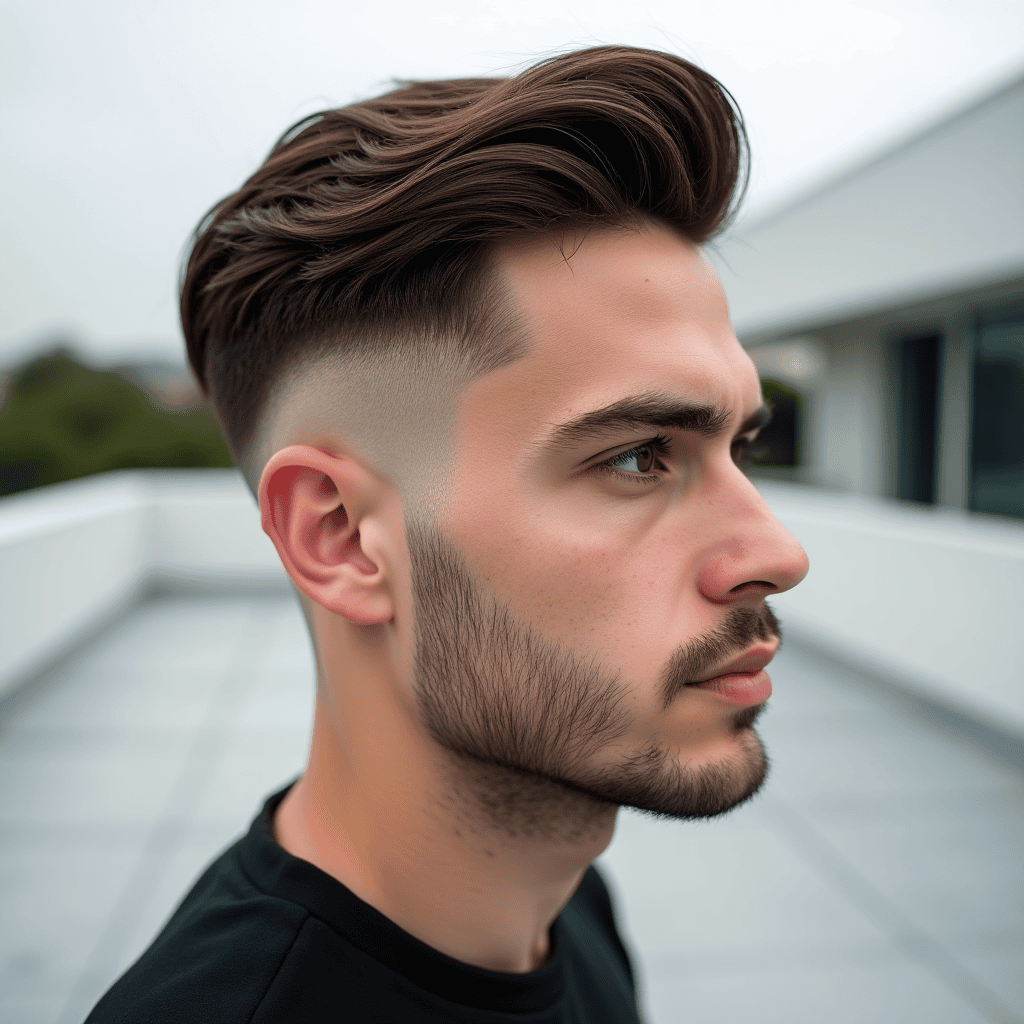
A high skin fade strips the sides down aggressively and begins the transition close to the upper temples, leaving a strong block of hair on top. Keeping that top short prevents the contrast from turning into an oversized disconnected shape. The result looks tight, angular, and deliberately sharp, especially from the front where the darker top sits clearly above the pale sides. It is one of the skin fade haircut ideas that puts the barber’s blending work on full display.
Square and oval faces usually carry the height well, while very long faces may look even longer if the top is styled upward. Ask for, “A high skin fade with a tight blend, but leave the top short and natural instead of building extra height.” The exposed sides make this cut practical in warm weather and easy to wash. Its weakness is maintenance: even several days of growth can soften the contrast, so men who hate frequent barber visits should choose a lower fade.
4. Skin Fade With Classic Crew Cut
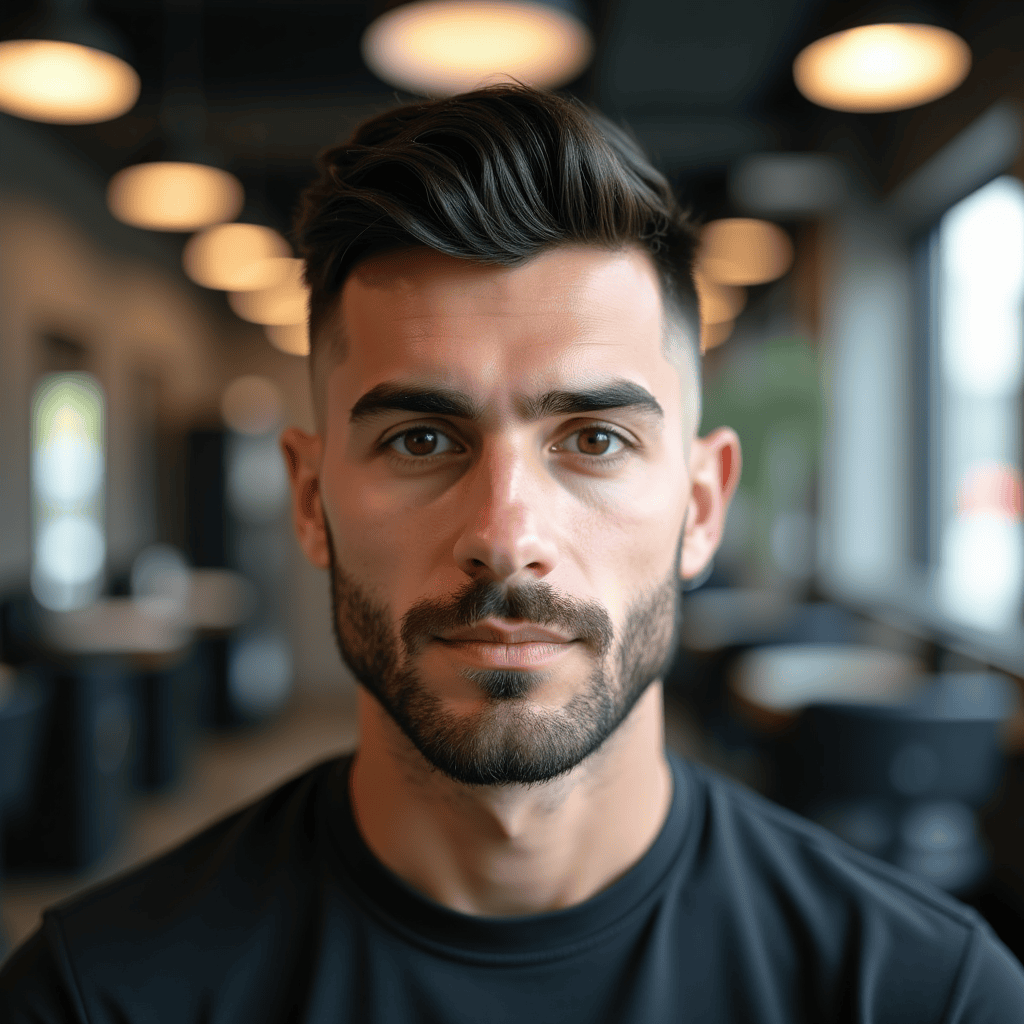
The crew cut gives a skin fade structure without requiring much daily styling. Hair stays slightly longer at the front and gradually shortens toward the crown while the sides drop all the way to skin. That subtle top graduation matters because it keeps the haircut from reading like a basic buzz cut. From the side, the silhouette stays compact and masculine with a small amount of lift near the forehead.
Men with straight, dense hair usually get the cleanest version, although coarse or slightly wavy hair can create more texture. Ask your barber, “Give me a traditional crew-cut shape on top with a clean skin fade, and keep a little extra length through the front.” A small amount of matte styling paste can control the front when needed, but many men can leave it almost untouched. The tradeoff is that stubborn growth patterns near the crown can become visible when the top is cut this short.
5. Side-Part Skin Fade
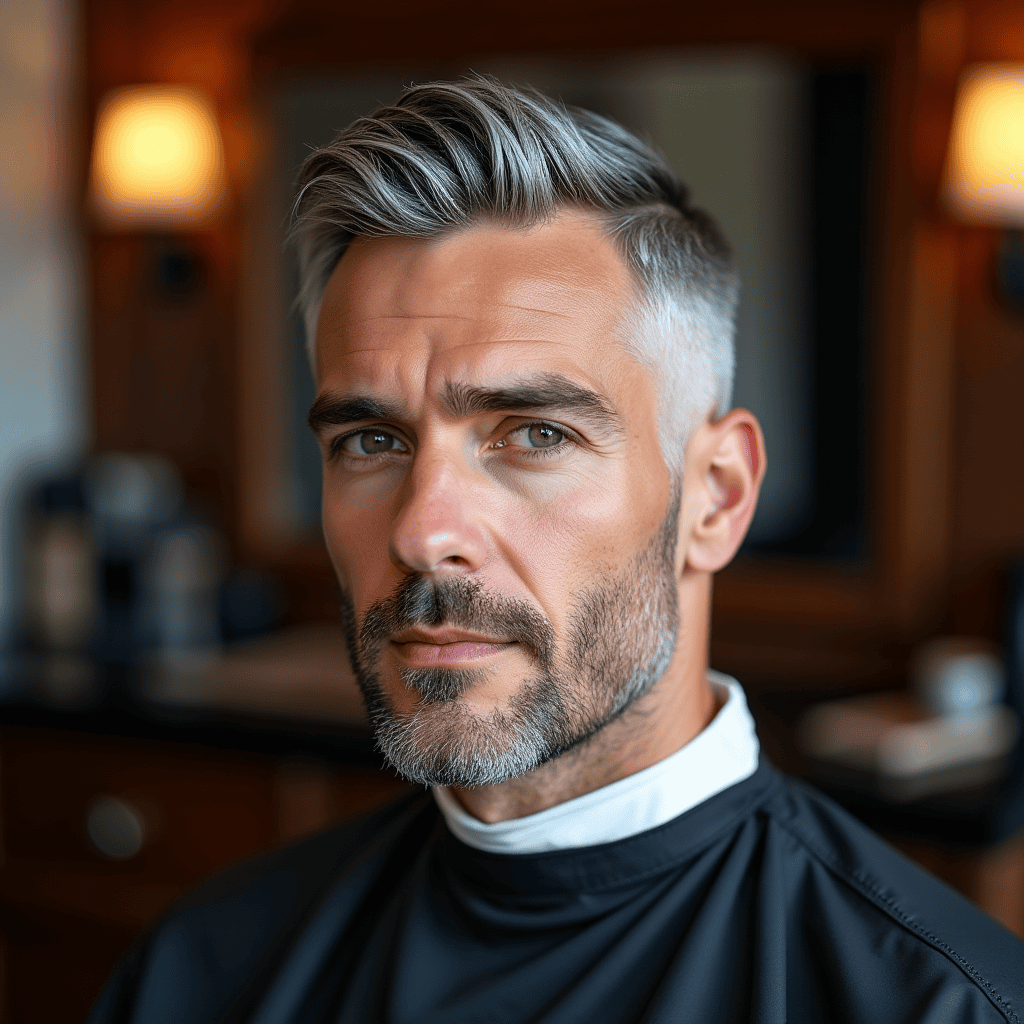
A side part adds order to the dramatic cleanliness of a skin fade. The top stays longer, usually enough to sweep neatly across the head, while a natural or lightly defined part guides the shape. Keeping some darkness near the upper sides prevents the part from looking completely detached from the fade. This version has more of a tailored, dressed-up finish than most short skin fade haircut ideas.
It works best when your hair naturally accepts a side direction rather than springing straight forward. Tell your barber, “Keep enough length to part the top cleanly, use a low-to-mid skin fade, and don’t carve the part too wide.” A blow-dryer and light pomade or cream usually make morning styling faster. The drawback is that a razor-hard part can look severe as it grows out, so a natural part is often easier to live with between appointments.

Short and Textured Skin Fade Haircut Ideas
Texture breaks up the precision of a skin fade and keeps short styles from looking too rigid. These cuts are especially useful if you prefer fast styling because movement on top can look better slightly imperfect than perfectly combed.
6. Textured Crop Skin Fade
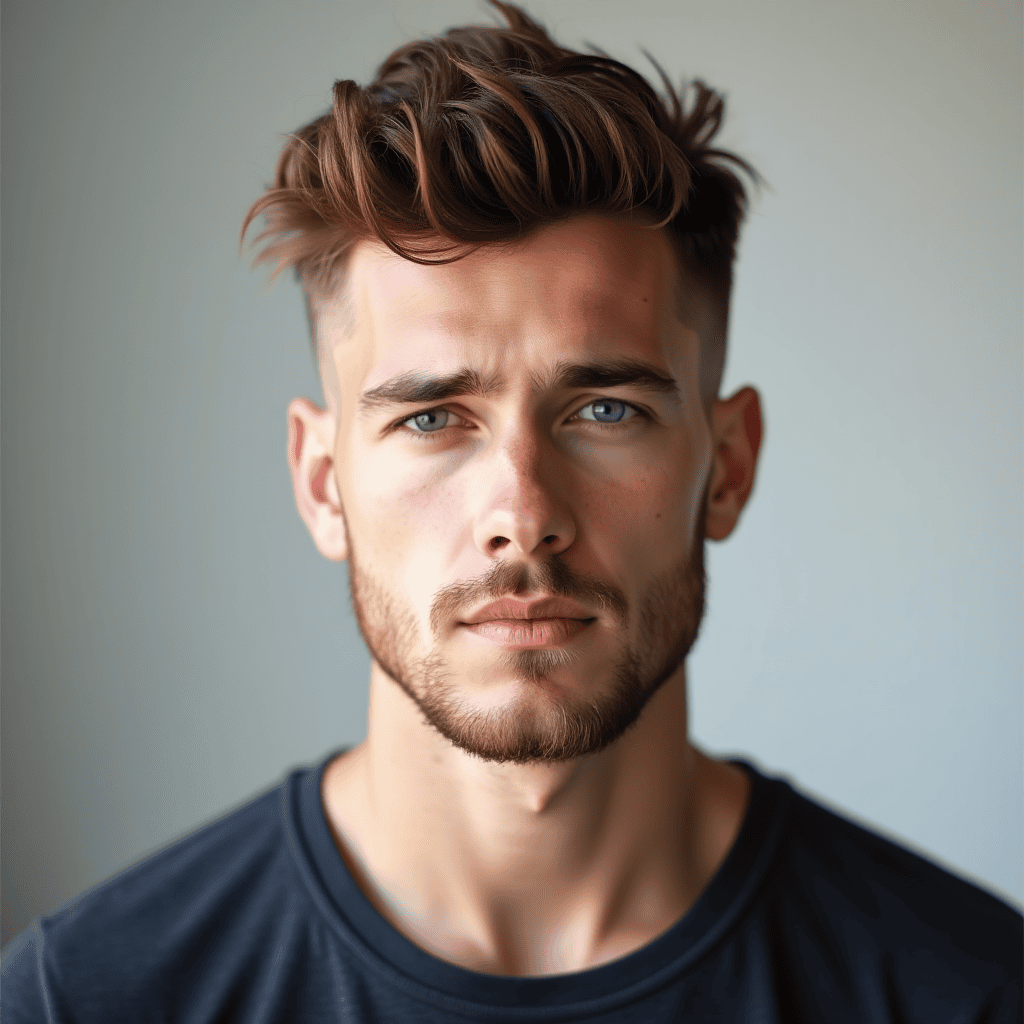
The textured crop combines a compact top with separated, irregular pieces that sit forward rather than standing tall. The fringe usually remains short and soft while the sides fade down to bare skin, producing a strong difference between texture and precision. Cutting the top with point-cut or texturizing techniques keeps the surface from becoming a solid helmet of hair. It photographs especially well because the texture catches light while the fade stays visually clean.
Straight to slightly wavy hair with medium or high density usually responds best. Ask your barber, “Keep the crop short and broken up on top, bring the fringe slightly forward, and blend it into a low or mid skin fade.” Styling takes little more than a pea-sized amount of matte clay worked through dry hair. One drawback is that overly thinning fine hair can make the scalp show through, so texture needs to be created carefully when density is limited.
7. French Crop With Skin Fade
A French crop keeps more intention at the fringe, with the front forming a compact horizontal shape instead of the scattered edge of a looser textured crop. The crown and top remain short enough to push forward while the skin fade removes visual bulk from the sides. A slightly broken fringe keeps the line modern without making it look ruler-straight. From the front, the haircut can visually shorten a longer forehead because the hair sits downward rather than lifting away from it.
This cut is useful for straight, coarse, or moderately wavy hair that naturally wants to fall forward. Tell your barber, “Give me a short French crop with a lightly textured fringe and a skin fade that doesn’t climb too high.” You can style it with matte paste using your fingers instead of a comb. The limitation is that men with powerful cowlicks at the hairline may fight the fringe every morning, so natural growth direction matters more here than trend appeal.
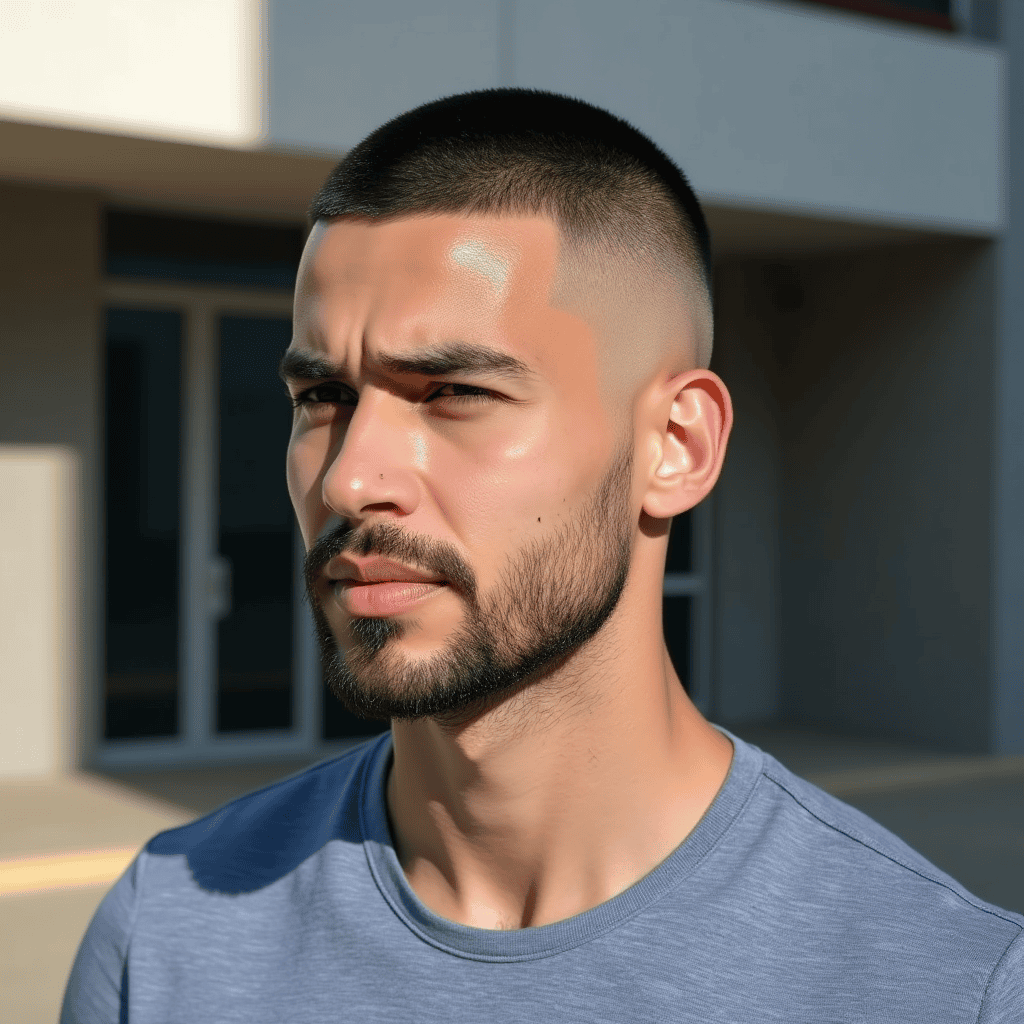
8. Buzz Cut With Skin Fade
A buzz cut and skin fade creates shape using almost nothing but length changes. The top remains uniformly short while the sides move from visible stubble into completely shaved skin around the lowest section. A skilled barber will still account for head shape instead of simply running one guard across the top. The difference between a forgettable buzz and a sharp one often comes down to where the fade begins and how carefully the temple area is finished.
This is a strong option for men who don’t want to style their hair in the morning. Ask for, “A short buzz on top with a clean mid skin fade, keeping the transition smooth and the front line natural.” Because the hair is so short, scalp shape, scars, cowlicks, and density become easier to see than they would under a longer style. The upkeep is also deceptively demanding because a buzz-and-skin-fade combination looks less precise as soon as the sides begin filling in.
9. Caesar Cut Skin Fade
The Caesar cut keeps the top short and directs it uniformly toward the forehead, ending in a restrained fringe. Compared with a French crop, the surface tends to be more controlled and the top more consistent in length. Pairing it with a skin fade sharpens the sides while preserving that familiar forward shape. The finished cut has a compact Roman-inspired silhouette without needing dramatic volume or styling.
Men with straight or mildly wavy hair can usually control this shape with minimal effort. Ask your barber, “Keep the top short and brushed forward in a Caesar shape, leave a subtle fringe, and use a low skin fade around the sides.” A light styling cream can keep flyaways down without making the top shiny. The weakness is that an extremely blunt fringe can exaggerate a broad forehead, so the front edge often looks better slightly softened.
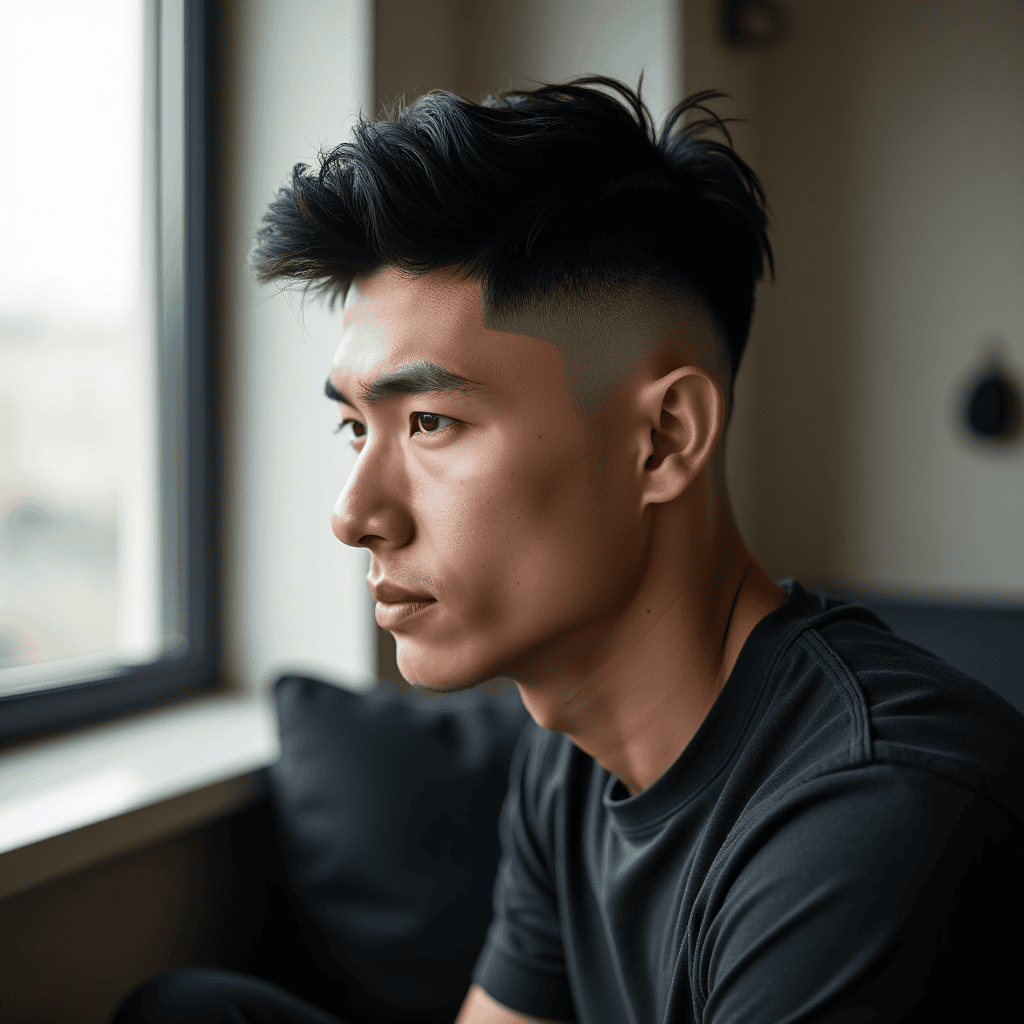
10. Spiky Texture With Skin Fade
Short spikes add upward movement without requiring the exaggerated height associated with older gel-heavy styles. The best version keeps the pieces separated, irregular, and slightly directional rather than standing every strand straight up. A skin fade underneath makes the textured top look more prominent while keeping the outline narrow. The contrast is strongest from a three-quarter angle where the individual points and clean side gradient appear together.
Medium-thick straight hair tends to hold the texture most easily. Tell your barber, “Leave enough length on top for short broken spikes, keep the texture uneven, and give me a mid skin fade without taking the corners too high.” Dry matte paste works better than wet-look gel when you want modern separation. The drawback is that fine, soft hair may collapse during the day unless it has enough natural body or gets help from a light pre-styling product.
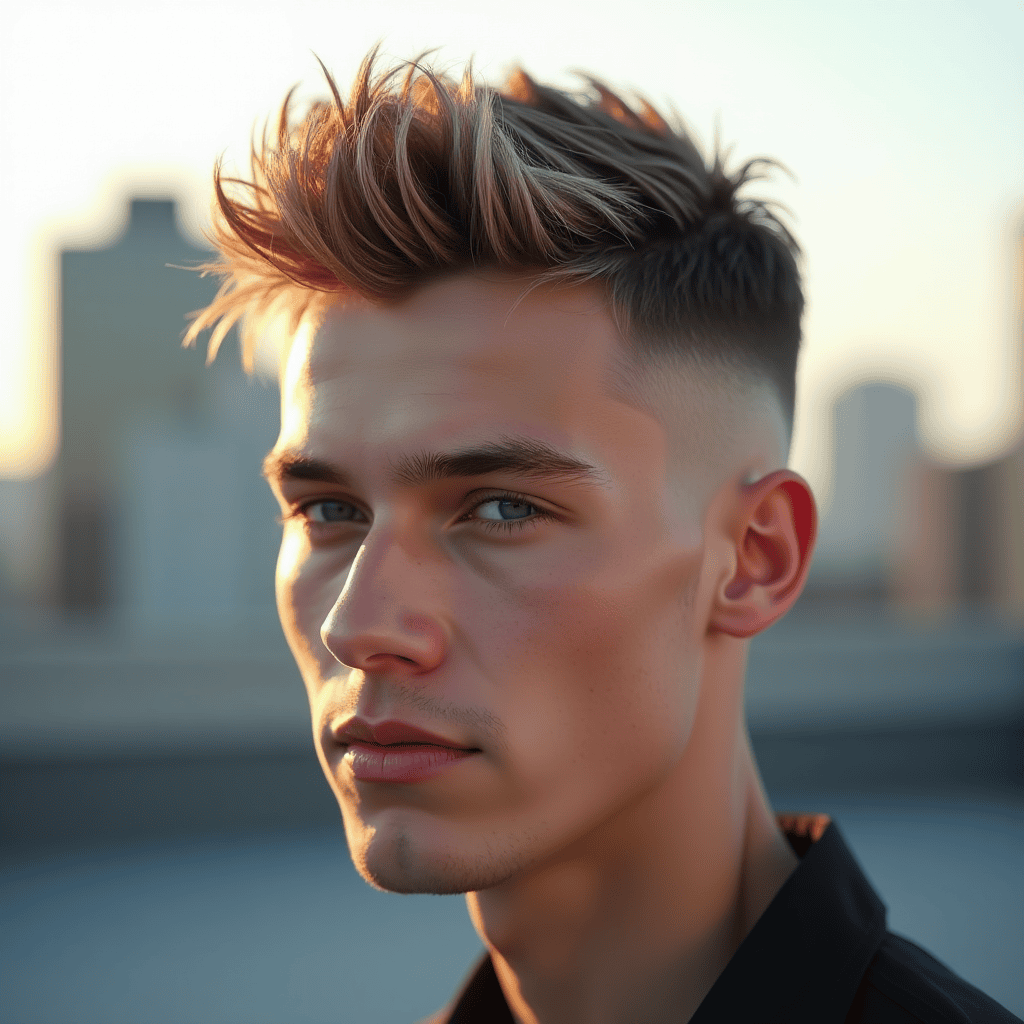
Skin Fade Haircut Ideas With More Length on Top
Leaving extra length above the fade changes the entire personality of the haircut. These styles need more drying, direction, and product control, but they also allow you to reshape the top for work, weekends, or more formal occasions.
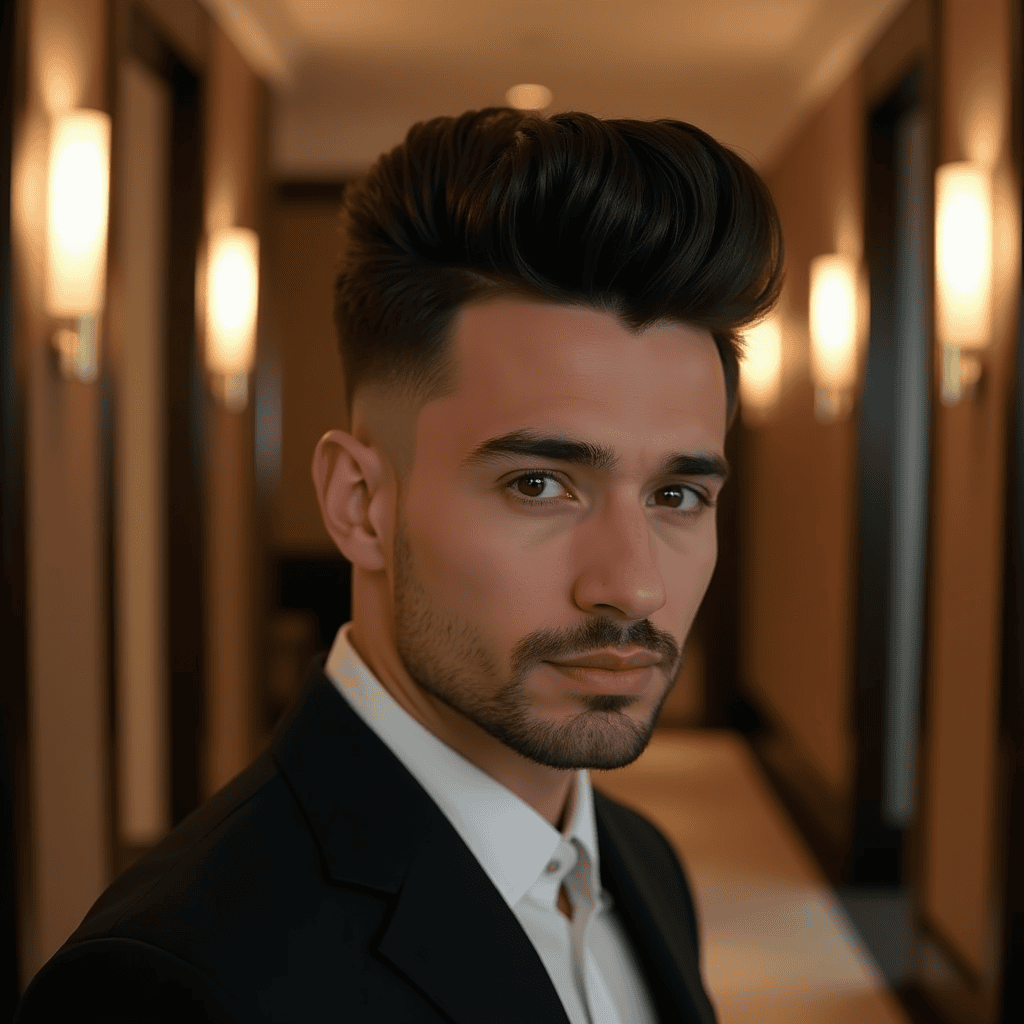
11. Skin Fade Pompadour
A skin fade pompadour builds height above the forehead while directing the top backward into a rounded, controlled shape. The fade strips away side bulk, which makes the pompadour look even taller without requiring extreme length. Good versions retain enough weight around the upper sides to connect the top instead of producing an accidental mushroom effect. The front should have movement and curve rather than becoming a stiff wall.
Thick straight or wavy hair is easiest to lift and hold in this shape. Ask your barber, “Leave enough length through the front to build a pompadour, keep some weight at the upper sides, and fade the lower section down to skin.” Blow-drying backward with a vent brush does most of the structural work before product is added. The downside is time: this is one of the skin fade haircut ideas that can look dramatically different when you skip the dryer.
12. Slick-Back Skin Fade
The slick-back skin fade keeps substantial length from the hairline through the crown and directs all of it backward. Unlike a pompadour, the front does not need to rise dramatically before moving back, so the silhouette can stay flatter and sleeker. The bare sides create a clear separation that highlights the flow of the top. Depending on the styling product, it can look either soft and touchable or glossy and sharply controlled.
Straight and loose wavy hair generally cooperate best, particularly when the top has enough length to sit behind the highest point of the head. Tell the barber, “Leave the top long enough to sweep fully back, keep the upper connection clean, and use a mid skin fade through the sides.” Use a blow-dryer first if your hair naturally falls forward. The drawback appears on strong, dense hair: if the top is too short, it can spring upward instead of laying back.
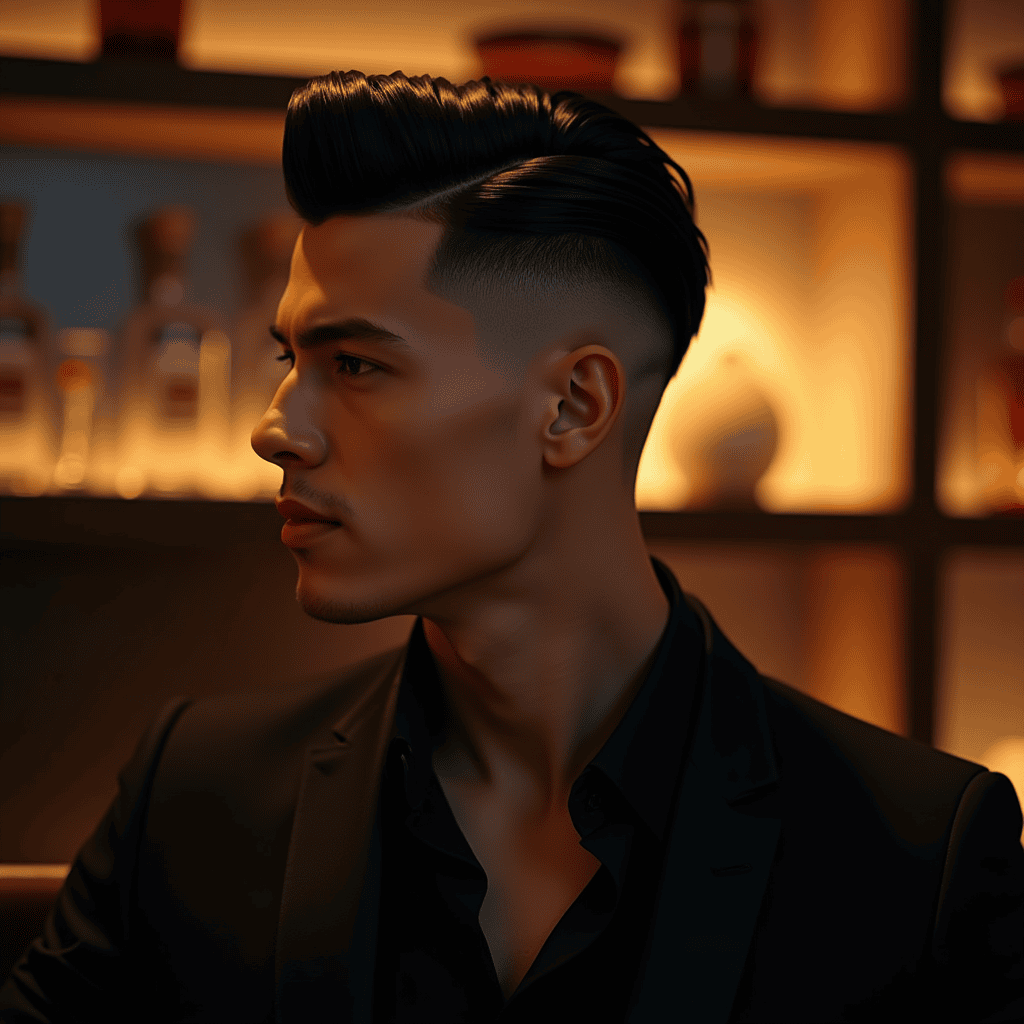
13. Quiff With Skin Fade
A quiff concentrates its lift at the front but keeps the rest of the top looser and less sculpted than a pompadour. The front rises before drifting backward or slightly to one side, while the crown can remain more relaxed. A skin fade creates a narrow base beneath that volume, making the upper shape look energetic without adding bulk around the temples. The best versions have a little imperfection so the haircut doesn’t appear frozen in place.
Oval, square, and rounder faces often suit a quiff because controlled vertical lift can alter the perceived proportions of the face. Ask for, “Keep three to four inches at the front for a loose quiff, texture the top so it moves, and give me a low-to-mid skin fade.” Styling usually needs a dryer plus a light matte product. Its drawback is weather resistance; humidity or wind can flatten an airy quiff faster than a shorter crop.

14. Comb-Over Skin Fade
The modern comb-over relies less on a rigid comb line and more on directing longer hair diagonally across the top. The skin fade removes heaviness below the parting area, creating a clear, tidy outline. Keeping a little texture through the top stops the style from becoming overly formal. From the front, the diagonal movement can create subtle width while still looking controlled.
This option works well for straight and gently wavy hair that is long enough to hold a directional sweep. Tell your barber, “Leave the top long enough to sweep diagonally across, keep the part natural, and blend the sides into a low skin fade.” A light cream or low-shine pomade makes the direction easier to maintain without creating a lacquered surface. The potential problem is over-combing: forcing every strand into perfect parallel lines can make the style look dated.
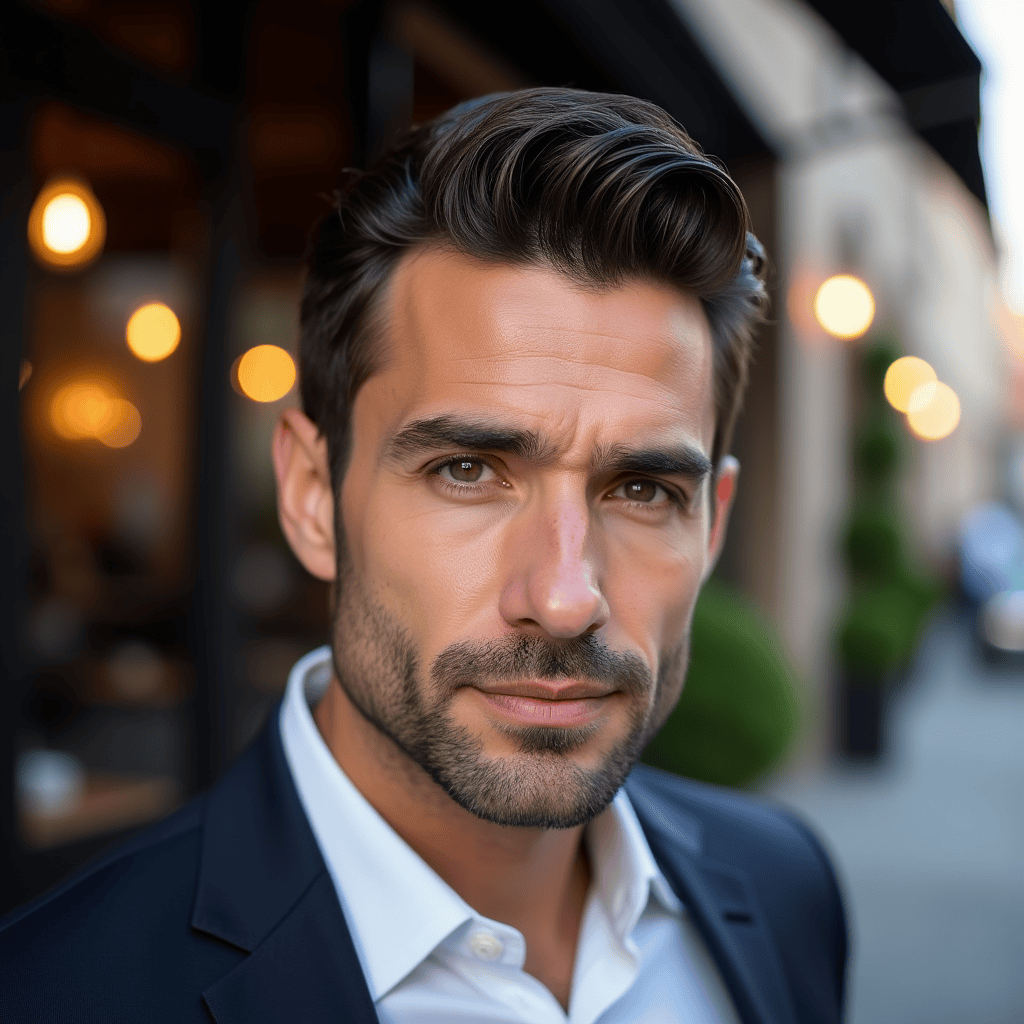
15. Brush-Up Skin Fade
The brush-up pushes the front and middle section upward rather than directing everything backward into a single flow. Texture remains visible across the surface, giving the top a more casual shape than a formal quiff. With the sides faded to skin, the upward motion becomes the visual focus immediately. The finished silhouette works especially well when the top is kept tall enough to notice but short enough to stay controlled.
Men with thick straight hair can usually create the shape quickly with heat and a matte product. Ask your barber, “Leave enough length to brush the top upward, add texture so it separates, and keep the skin fade around mid height.” Blow-dry from the roots while lifting with your fingers instead of flattening the hair with a comb. The drawback is that very coarse hair can become boxy if the barber leaves too much weight at the corners.
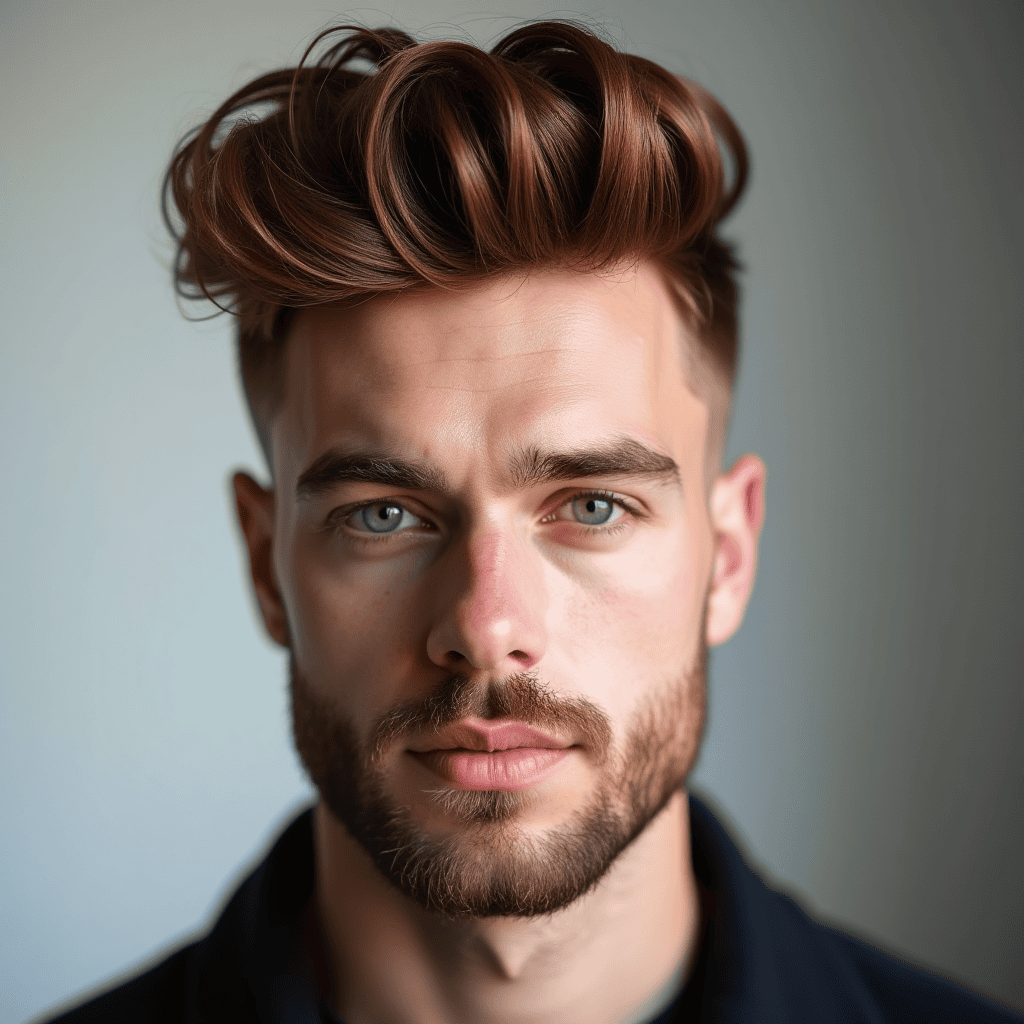
Curly and Wavy Skin Fade Haircut Ideas
Natural movement makes a skin fade feel less severe because curls and waves soften the shape above the shaved sides. The key is preserving enough length for the texture to form properly instead of cutting the top so short that its pattern disappears.
16. Curly Top Skin Fade
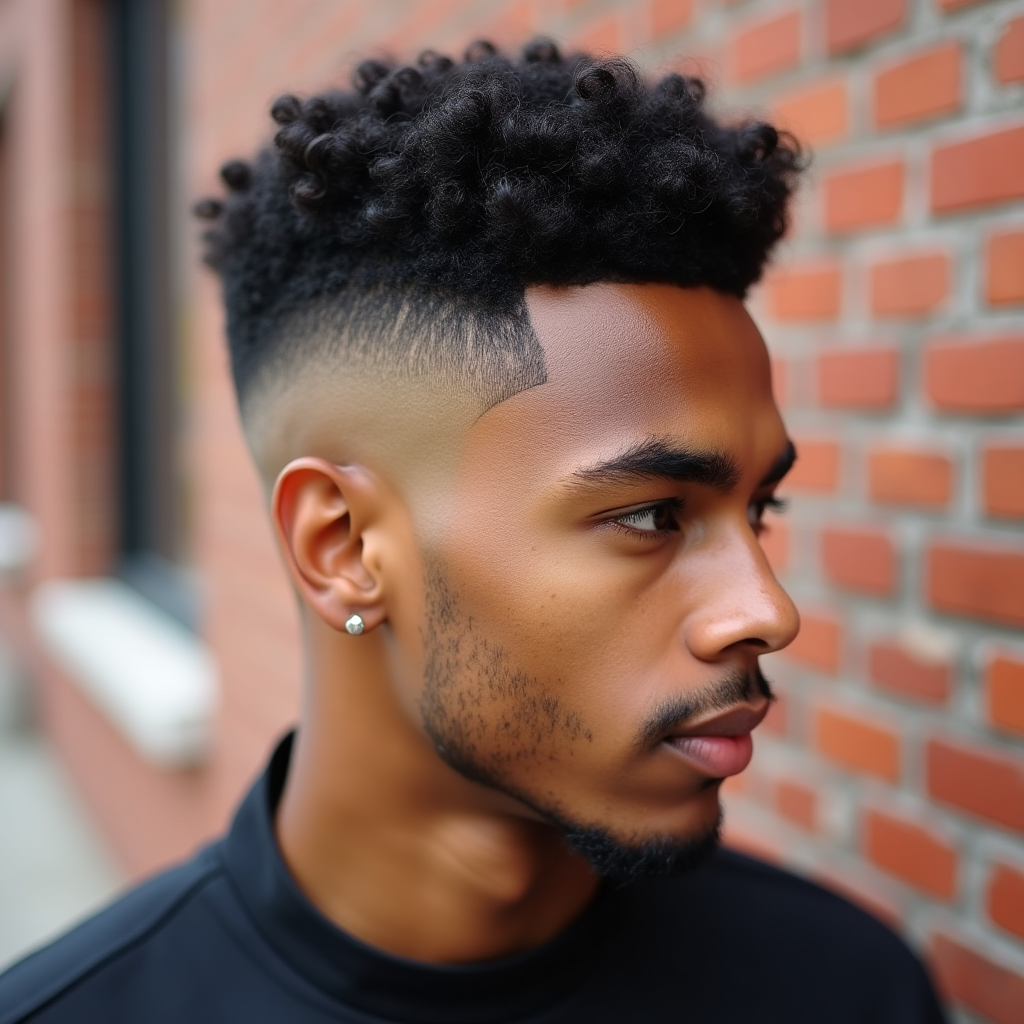
A curly top skin fade leaves the natural curl pattern visible above closely shaved sides. The top can stay rounded or slightly irregular depending on how tightly the curls group together. Maintaining a small amount of darker weight just above the fade helps prevent the top from looking pasted onto the head. This is one of the most effective skin fade haircut ideas for showing curl definition without carrying bulk around the ears.
Men with naturally curly hair should focus more on preserving curl shape than copying a fixed top length from a photograph. Ask your barber, “Keep enough length on top for my curls to form naturally, clean the sides into a low skin fade, and don’t thin the curls too aggressively.” Styling can be as simple as curl cream worked through damp hair and allowed to settle. The drawback is shrinkage, which can make the finished dry length noticeably shorter than it appeared during the cut.
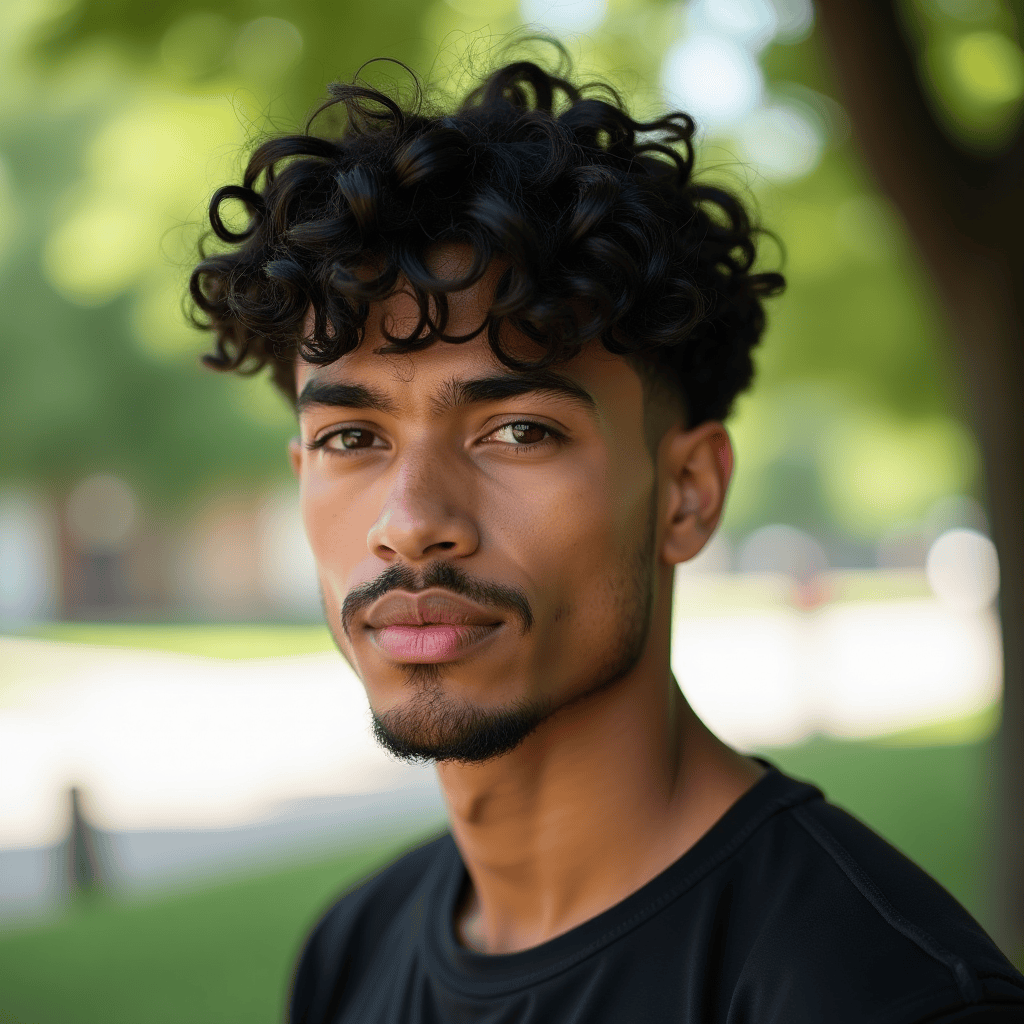
17. Wavy Fringe Skin Fade
A wavy fringe lets the natural bend of the hair fall toward the forehead while the sides stay exceptionally clean. The front can sit slightly uneven, creating a casual shape that feels softer than a straight crop. Keeping the crown shorter prevents the entire top from becoming bulky as the fringe grows. The shaved sides sharpen the outline without removing the relaxed movement above.
This style works best if your waves naturally travel forward or diagonally rather than insisting on moving backward. Tell your barber, “Leave the front long enough for my wave to fall naturally, reduce weight through the crown, and finish the sides with a low skin fade.” A light curl or texture cream is usually enough to stop the fringe from becoming fluffy. The drawback is forehead contact, particularly in hot weather when a longer fringe can feel heavier than it looks.
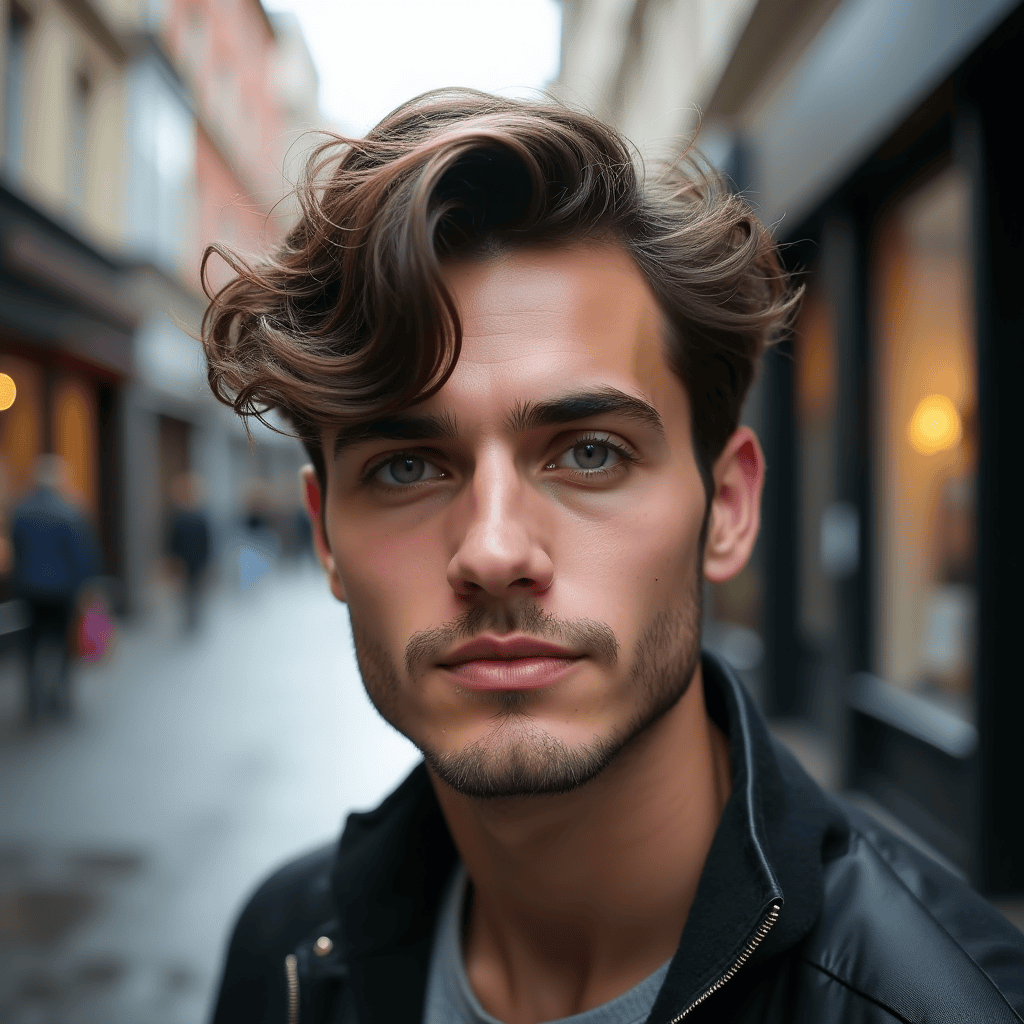
18. Short Afro Skin Fade
A short Afro above a skin fade creates a rounded textured top with a sharply cleaned perimeter. The transition should preserve the natural density and pattern of the hair instead of hollowing out the sides too high. A well-shaped top follows the head while leaving enough length for visible coils. From every angle, the contrast between the soft texture and precise fade gives the haircut its strength.
This approach suits tightly coiled hair and can be adapted to a flatter or rounder top depending on personal preference. Ask for, “Keep a short natural Afro shape on top, don’t take too much weight from the upper sides, and blend the lower section into a skin fade.” Regular moisture and gentle handling help maintain the appearance of the coils between cuts. The drawback is that pushing the fade too high can make the top appear disproportionately narrow.
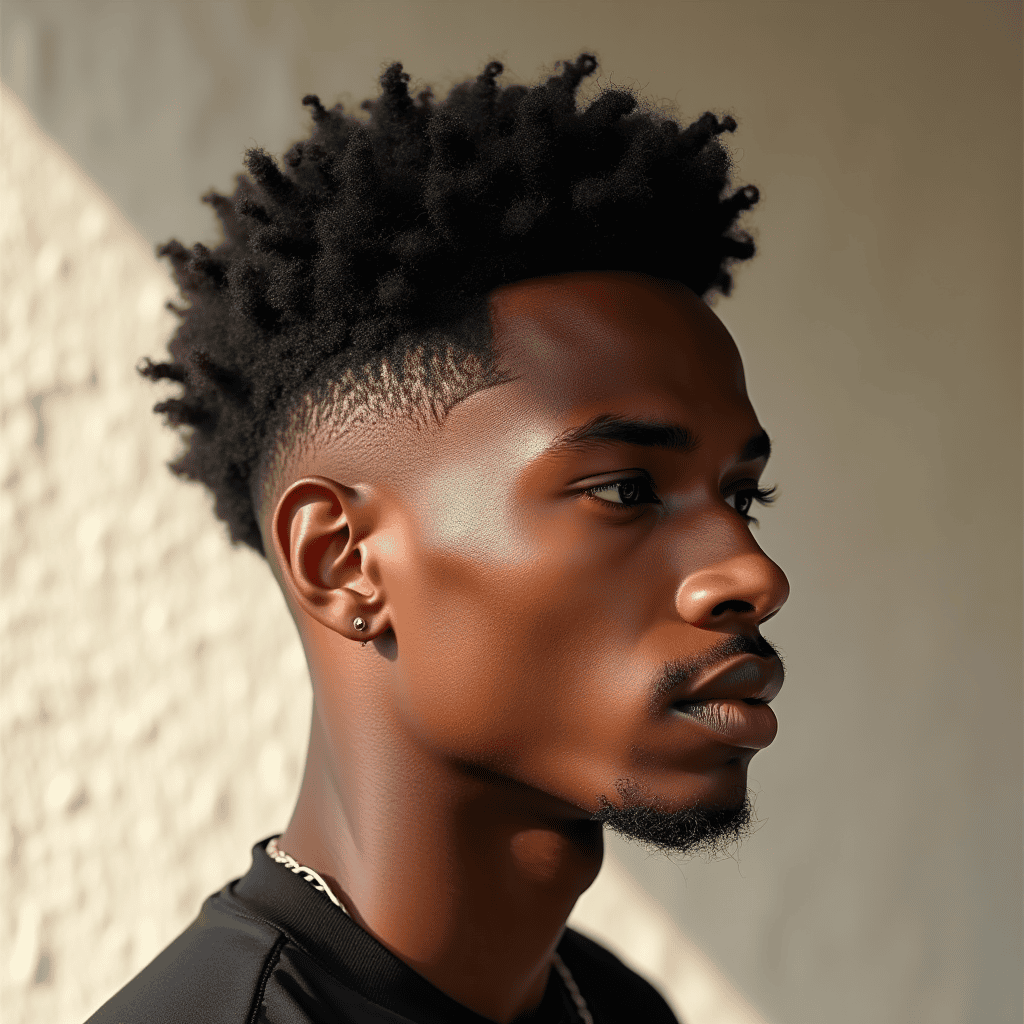
19. Curly Mohawk Skin Fade
The curly mohawk skin fade keeps a defined strip of textured hair through the center while reducing the sides dramatically. It doesn’t need to become a narrow punk-style ridge; a wider band often looks more wearable and allows the natural curls to form fully. The fade can arc around the temples and drop toward the back, emphasizing the center shape. From behind, the continuation of texture through the crown is what separates it from an ordinary curly top.
This cut works for men who want visible personality rather than a conservative office fade. Tell your barber, “Keep a wider curly strip through the center, fade the sides down to skin, and let the shape continue through the back instead of cutting it off at the crown.” Curl definition matters, so avoid requesting an unnecessarily short center section. Its drawback is commitment: once the side shape is cut aggressively, changing back to an even full style requires a noticeable grow-out period.
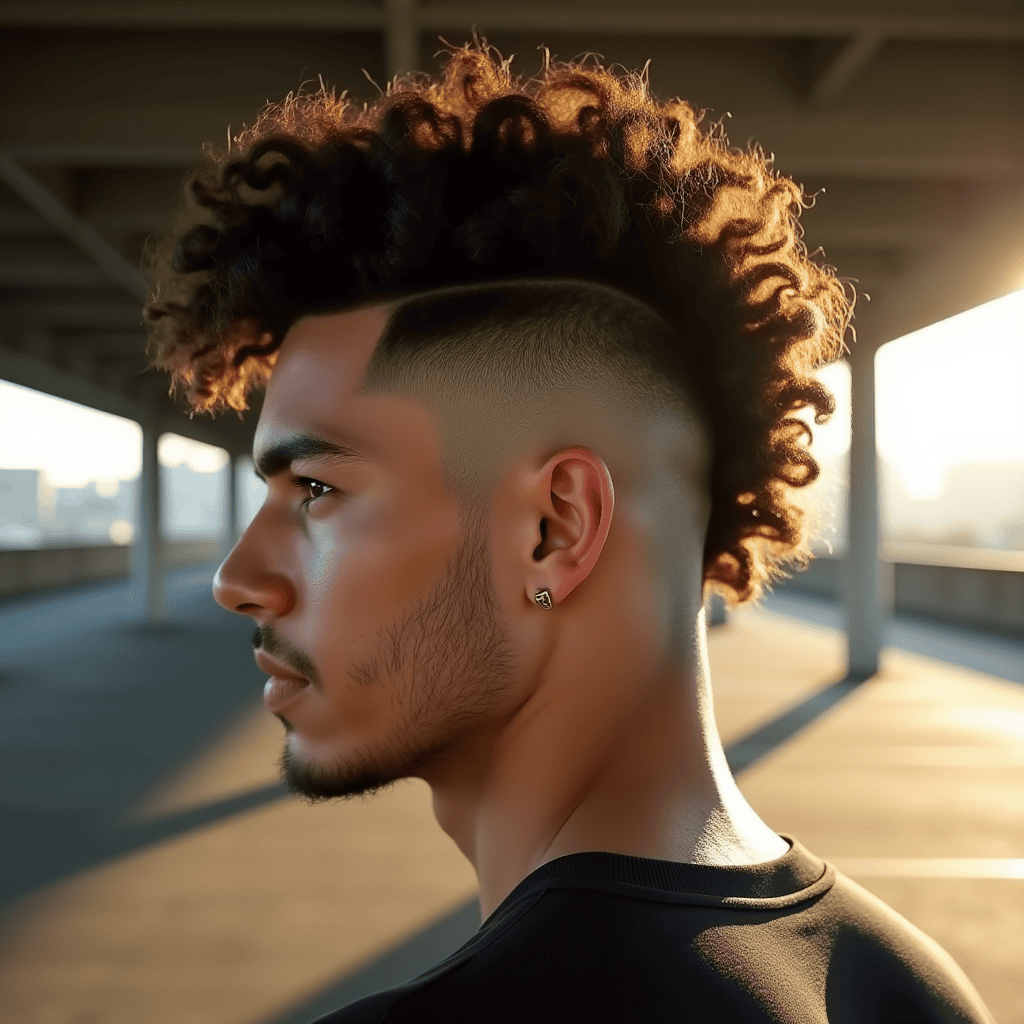
20. Wavy Slick-Back Skin Fade
A wavy slick-back keeps the movement that straight slicked styles often remove. Instead of forcing the hair perfectly flat, the top is encouraged backward while natural bends remain visible across the surface. Skin-faded sides create enough precision to balance that looser texture. The result feels polished from a distance but more relaxed when viewed closely.
Medium-length wavy hair is ideal because it has enough weight to move backward while retaining visible shape. Ask your barber, “Leave my waves long enough to brush back naturally, keep texture through the top, and use a mid skin fade without disconnecting it too harshly.” A flexible cream or light pomade generally works better than stiff gel. The drawback is unpredictability: waves may settle differently each day, so this style suits someone comfortable with small variations.

Bolder Skin Fade Haircut Ideas
These styles make the contrast itself part of the design. They work best when you actually want attention on the haircut rather than simply wanting shorter sides, and most require more deliberate maintenance than the classic choices above.
21. Faux Hawk Skin Fade
A faux hawk narrows the visual weight toward the center without shaving the sides into a traditional mohawk. The top rises most strongly from the front through the middle while the outer sections angle subtly inward. A mid-to-high skin fade reinforces that center line and makes the style appear sharper from the front. Textured rather than rigid shaping keeps it wearable outside nightlife or fashion-focused settings.
Thick straight or slightly wavy hair usually holds the center shape best. Ask for, “Keep enough length through the middle for a textured faux hawk, taper the top slightly toward the center, and use a mid-to-high skin fade on the sides.” Finger styling with matte paste gives the surface movement without forming one solid spike. The drawback is that overdoing the center ridge can make the cut feel costume-like, so restraint matters.
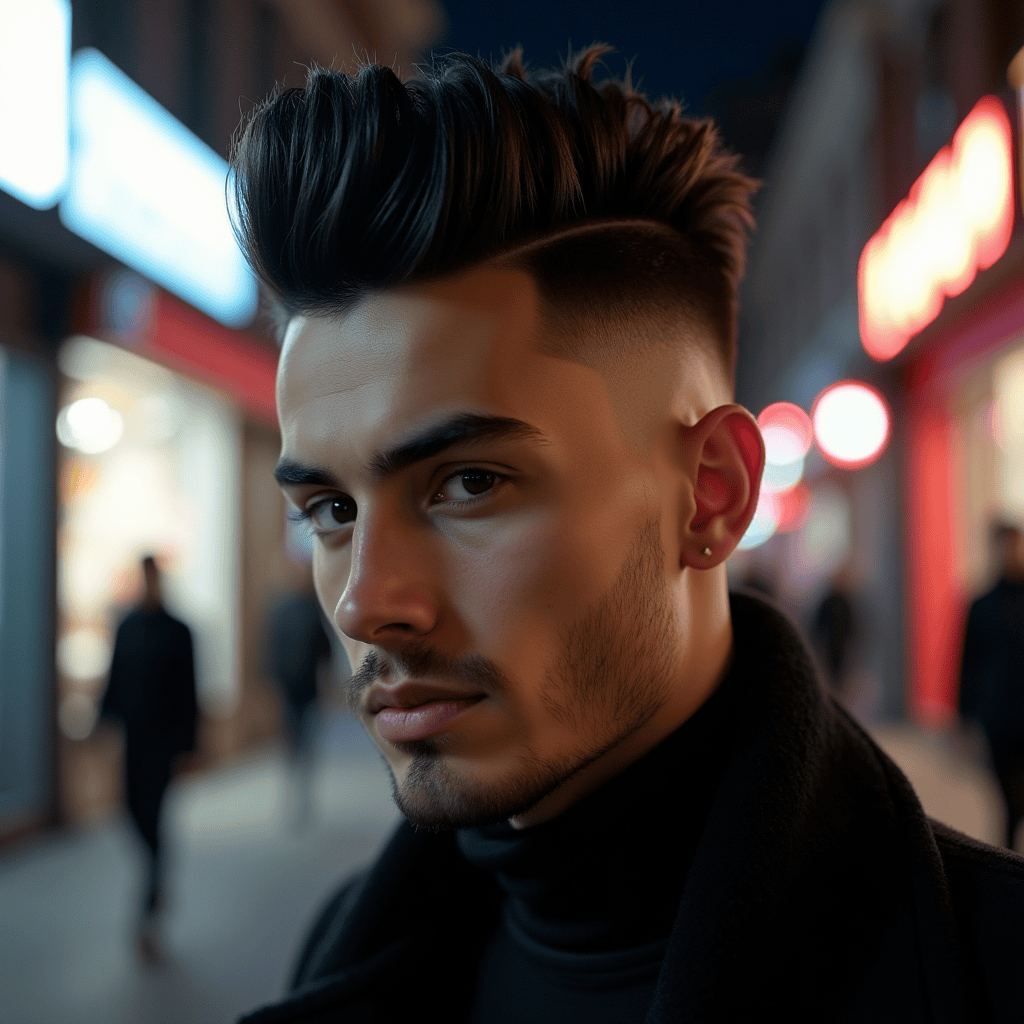
22. Hard-Part Skin Fade
A hard part uses a narrow shaved line to separate the longer top from the shorter side, making an already precise skin fade look even more graphic. The top is usually combed away from the line so the separation remains visible. Keeping the shaved part thin is important; a wide channel quickly dominates the entire haircut. From above, the clean geometry creates a structured, almost architectural shape.
Men with dense straight hair tend to get the clearest contrast because the part sits against a solid field of hair. Tell your barber, “Give me a thin hard part along my natural parting, keep it narrow, and blend the sides down to a low skin fade.” The line will need to be recut as it grows because even slight regrowth makes it fuzzy. That’s also the main drawback: unlike a natural part, you can’t simply stop maintaining it without going through a visible grow-out stage.
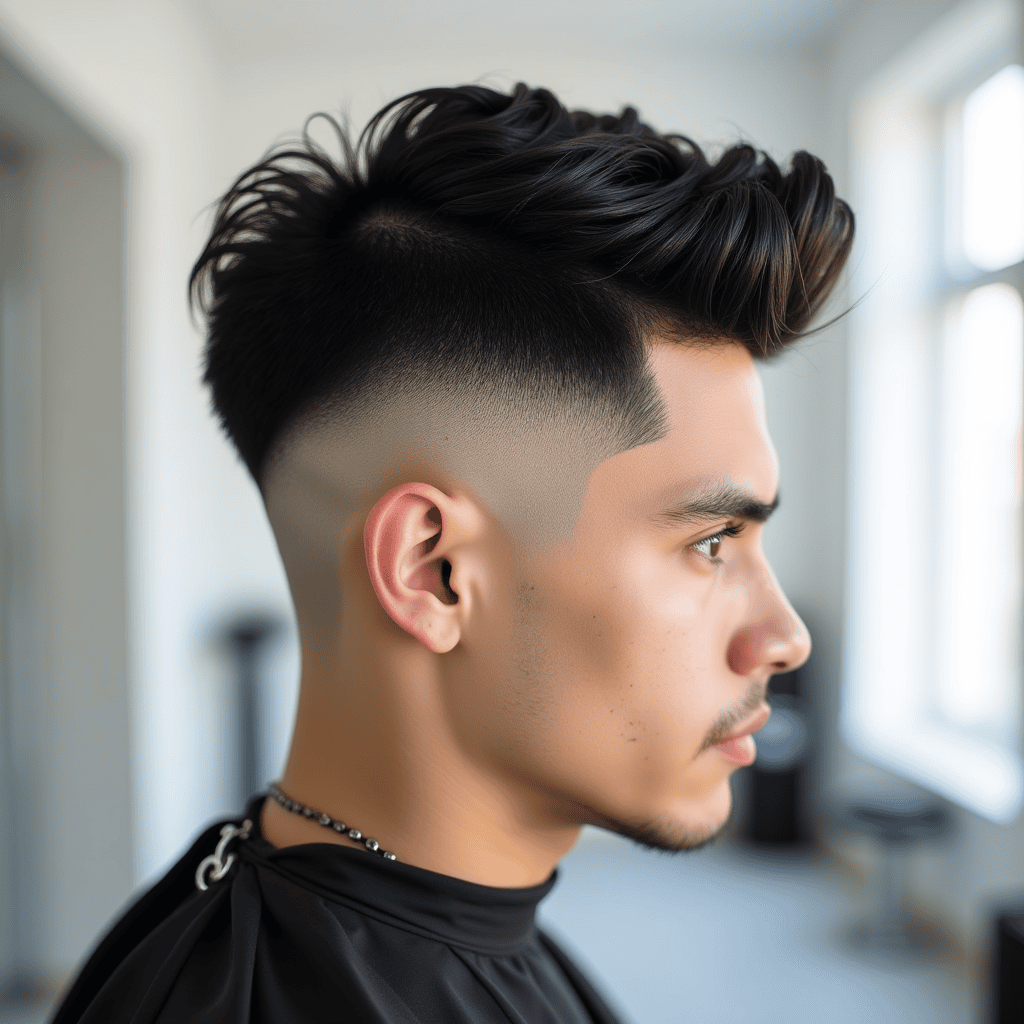
23. Disconnected Undercut Skin Fade
A disconnected undercut keeps the top significantly longer while removing almost all gradual connection between it and the faded sides. The longer section can sweep backward, sideways, or hang with loose texture, while the skin fade underneath creates a stark boundary. This makes the haircut visually heavier on top than a conventional blended fade. From the side, the separation should look deliberate rather than like an unfinished transition.
Straight and wavy hair with enough density generally carries the longer section most convincingly. Ask your barber, “Keep the top clearly disconnected and long, don’t blend away too much of that weight line, and skin-fade the sides underneath.” You gain multiple styling options from the longer top, but every version will show the contrast. The drawback is grow-out: the disconnected ridge can become awkward if you later decide you want a fully blended haircut.
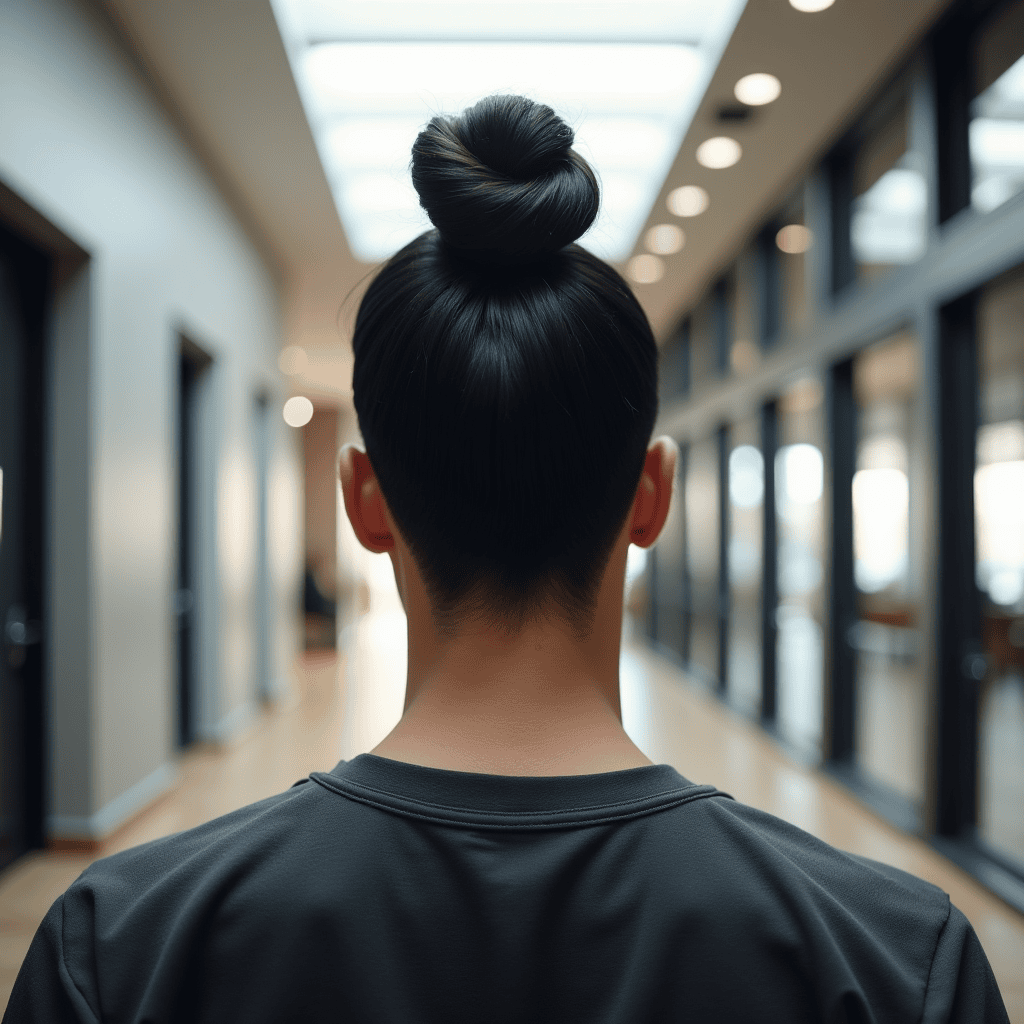
24. Skin Fade With Short Man Bun
A short man bun paired with a skin fade keeps enough length on top to gather toward the crown while removing the sides and lower back. When the tied section is compact, the style looks cleaner than an oversized loose bun. The strongest versions preserve a clear top panel rather than pulling scattered side hairs into the tie. Viewed from behind, the shape of the fade needs to follow the head evenly beneath the gathered hair.
This style is for men already carrying enough top length to tie securely without excessive tension. Tell your barber, “Keep the entire top long enough to tie back, clean up the boundary evenly, and skin-fade the sides and lower back without taking into the top section.” The practical benefit is getting longer hair away from the face while keeping the perimeter short. The downside is the grow-in stage; if you’re starting from a conventional short cut, reaching tieable length takes patience.
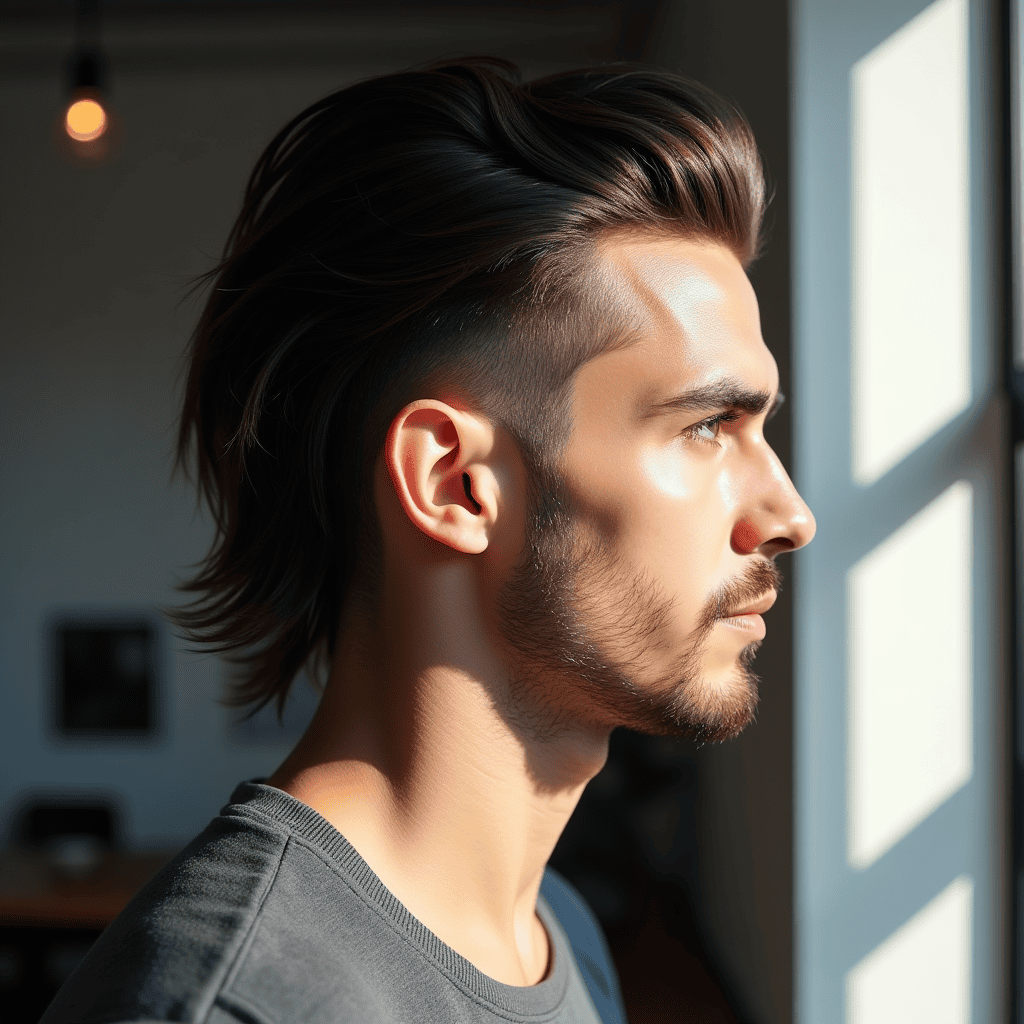
25. Skin Fade With Messy Long Top
A messy long top gives the precise skin fade an intentionally less controlled partner. Several inches of hair remain above the fade and fall in irregular sections rather than following a fixed part, quiff, or slick-back direction. The contrast works because the sides are disciplined while the top looks almost accidental. Good cutting still matters underneath the mess; the layers must distribute weight so the shape doesn’t collapse into one heavy mass.
Thick straight, wavy, or loose curly hair can all work if the top has enough natural movement. Ask your barber, “Keep the top long and loose with enough layers for movement, don’t make it too neat, and use a low skin fade to keep the sides clean.” A small amount of texture cream can define pieces while leaving them flexible. The drawback is that “messy” isn’t the same as maintenance-free, and an overgrown top with no internal shape can quickly look bulky instead of relaxed.

How to Choose the Right Skin Fade
Fade height changes your appearance more than many men expect. A low skin fade leaves more darkness through the temples and upper sides, making it the safest entry point if you’re moving from a conventional short-back-and-sides cut. A high fade exposes substantially more scalp and puts far greater emphasis on whatever shape you create on top.
Hair texture should guide the top rather than fight it. Straight hair works naturally with crops, side parts, pompadours, and slick-backs, while curls and waves usually look better when enough length remains for their pattern to form. If your hair has strong cowlicks, bring a reference photo but ask the barber whether the exact direction in the photo is realistic for your growth pattern.
Face shape is useful, though it shouldn’t become a rigid rulebook. Extra height through a quiff or brush-up can lengthen the appearance of a rounder face, while flatter forward styles can keep an already long face from looking more vertical. The fade height also affects perceived width, which is why copying another man’s haircut guard-for-guard rarely guarantees the same result.
Bring two or three photos to the appointment, ideally showing the haircut from more than one angle. Instead of saying only “skin fade,” explain where you want the transition to start, how much darkness you want left around the upper sides, and what you intend to do with the top. A useful request might be, “I want skin at the bottom, but keep enough weight around the temple so the top doesn’t look disconnected.”
The first appointment is also a good time to avoid chasing microscopic perfection. Let the barber adapt the fade to your head shape, growth patterns, scars, density, and hairline rather than reproducing a photograph mechanically. Those small adjustments often determine whether a skin fade looks natural on you or merely technically accurate.
Where Skin Fade Haircuts Can Go Wrong
The biggest weakness of a skin fade is how quickly its defining feature disappears. Hair that has been shaved extremely close begins showing again almost immediately, so a cut that looks ultra-crisp on appointment day becomes softer as the week progresses. If you prefer visiting a barber every four to six weeks, a regular taper or longer fade may age more gracefully.
Taking the fade too high is another common problem. Once the barber removes the darker area around the temples, it cannot be put back until it grows. That can make a long top appear disconnected, exaggerate head shape, or leave curls sitting in a narrow strip that feels smaller than expected.
Hard lines also create trouble when they replace blending rather than complement it. A hard part, extremely sharp lineup, or exaggerated temple corner can look impressive immediately after the cut but more obvious during grow-out. Men who want a forgiving haircut should usually keep permanent-looking design details to a minimum.
And skin fades aren’t automatically flattering because they’re clean. Some men look better with a softer shadow around the sides because that extra density balances the top, beard, or face shape. I go back and forth on high skin fades for exactly this reason: the technical precision can be excellent while the overall proportions would have looked better with another half inch of visual weight.
Frequently Asked Questions
Skin fade haircut ideas raise the same practical questions again and again: how short the sides really are, how often the cut needs maintenance, which top styles work, and whether the look fits different hair textures. These answers cover the decisions worth making before you sit in the barber’s chair.
What is a skin fade haircut?
A skin fade gradually reduces the hair on the sides and back until the shortest area reaches bare or nearly bare skin. The barber then blends that section into progressively longer hair above it. The fade can begin low, around the middle of the sides, or high near the temples.
What is the difference between a skin fade and a regular fade?
A regular fade can finish with short clipper-cut hair still visible at the bottom. A skin fade goes shorter, exposing the skin at its lowest point before transitioning upward. That extra contrast makes a skin fade look sharper immediately after the appointment, but it also makes fresh growth easier to notice.
How often should I get a skin fade touched up?
Many men who want the fade looking consistently crisp return around every two to three weeks. Some stretch appointments longer if they don’t mind seeing more shadow develop around the sides. High and very tight skin fades usually show growth more obviously than lower, softer versions.
Which skin fade haircut ideas are easiest to maintain?
A crew cut, textured crop, Caesar cut, or short curly top generally requires less styling than a pompadour, long slick-back, or quiff. The sides still need barber maintenance, though. A simple top reduces morning work, but it doesn’t slow down how quickly the shaved section grows.
Is a low or high skin fade better for a first fade?
A low skin fade is usually the less dramatic starting point because it preserves more dark hair around the upper sides. You still get the clean exposed finish near the ears and neckline without dramatically changing the entire silhouette. A high fade is better when strong contrast is specifically what you want.
Can curly hair work with a skin fade?
Yes. Curls can create an effective contrast against cleanly faded sides as long as enough length remains on top for the curl pattern to form. Ask the barber to respect shrinkage and avoid removing unnecessary weight from the upper sides. Curly tops, short Afros, and wider curly mohawks can all work.
Does a skin fade suit straight hair?
Straight hair works with a broad range of skin fade haircut ideas because it can be cropped, lifted, parted, brushed back, or worn forward. The more important question is hair density and growth direction. Fine straight hair may need softer texturizing than dense hair to avoid exposing too much scalp.
Can I combine a skin fade with longer hair?
Yes. Pompadours, slick-backs, quiffs, disconnected tops, and even tied styles can sit above a skin fade. The key decision is whether you want the long section blended gradually into the sides or deliberately disconnected. That choice changes both the silhouette and how comfortable the haircut is to grow out.
What should I tell my barber when asking for a skin fade?
Specify the fade height instead of asking only for “a skin fade.” Explain whether you want it low, mid, or high, how much weight you want above the temple, and how the top should be shaped. Bringing clear front, side, and rear reference photos makes the conversation much easier.
What face shape looks best with a skin fade?
There isn’t one required face shape because the top and fade height can be adjusted together. Rounder faces may benefit from some height above the forehead, while longer faces often work better with flatter tops. A good barber can also preserve or remove side weight to alter the apparent proportions.
Does a skin fade make thinning hair look better?
Sometimes, but it depends on where the thinning occurs and how much contrast the haircut creates. Shorter sides can make a compact top appear more intentional, while excessive texturizing may expose areas with lower density. Ask the barber to work with the visible density rather than copying an aggressively textured reference cut.
What products work best with a skin fade?
The fade itself needs no styling product, so choose products according to the top. Matte clay or paste works well for crops and textured looks, cream suits waves and relaxed longer styles, and pomade can help with slick-backs or side parts. Start with a small amount so the hair remains movable.
Can I get a skin fade without a sharp lineup?
Yes, and a natural hairline often grows out more quietly. Tell your barber you want the fade clean but prefer the front edge to follow your natural hairline rather than being pushed backward or carved into exaggerated corners. The result can still look precise without relying on a highly geometric outline.
Which skin fade haircut ideas look professional?
A low skin fade with a side part, crew cut, short textured top, restrained quiff, or controlled comb-over can all work in conventional professional settings. Keeping the fade lower and avoiding exaggerated designs generally produces the most understated result. Your workplace dress expectations should still guide how bold you go.
How do I know if a high skin fade will suit me?
Look at how much width you currently have through the upper sides of your haircut. A high skin fade removes much of that visual weight, which makes the top appear more dominant and exposes more of the head shape. If you’re unsure, start with a mid fade before committing higher.
Is a skin fade difficult to grow out?
The first few weeks are simple because the shaved section gradually turns into a short shadow. The awkward stage can arrive later if the top is strongly disconnected or the fade was taken extremely high. Keeping the next haircut slightly longer through the sides can help rebuild a more connected shape.
Can I wear a skin fade with a beard?
Yes. The transition around the sideburn can either blend gradually into the beard or create a cleaner break between the haircut and facial hair. Tell the barber which finish you prefer before the fade begins. A balanced transition usually looks more deliberate than treating the haircut and beard as unrelated shapes.
The most useful next step isn’t choosing the most dramatic photo you can find. Pick two skin fade haircut ideas from this list that suit your natural texture and normal styling routine, save reference views from several angles, and tell your barber exactly where you want the fade to begin.
Best Men’s Hairstyle Reports
Explore disconnected cuts, barber techniques, modern fades and textured twist hairstyle ideas for men.