
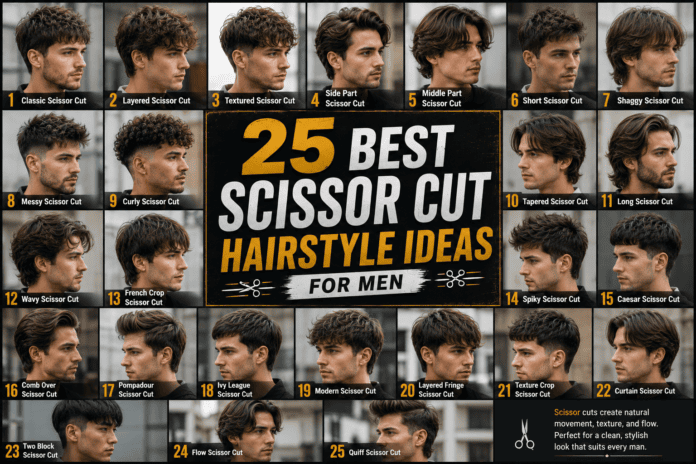
A classic scissor taper, textured crop, layered curtains, and soft side part are four of the strongest scissor cut hairstyle ideas for men because they keep movement in the hair instead of forcing every strand into a rigid shape. The catch is simple: scissor work usually needs a barber who understands weight, graduation, texture, and how hair behaves after it dries.
I’ve spent more than a decade around men’s cuts, watching the difference between hair that looks good only in the chair and hair that still works three weeks later. Scissors give a barber more control over shape and movement, but they also expose weak technique faster than a short clipper cut does.
For this list, I focused on cuts that make genuine use of scissor work rather than styles where scissors only tidy the top after a fade. The strongest options balance shape, everyday styling, grow-out, and the way different hair textures naturally fall.
| Quick Pick | Best For | Main Character | Upkeep |
|---|---|---|---|
| Classic Scissor Taper | Most men | Clean, natural outline | Low to medium |
| Soft Side Part | Straight or wavy hair | Controlled, polished finish | Medium |
| Ivy League Scissor Cut | Short-hair fans | Neat with soft edges | Low |
| Textured Scissor Crop | Thick hair | Broken, touchable texture | Low |
| Messy Scissor Quiff | Medium-density hair | Height without stiffness | Medium |
| Layered Curtains | Medium hair | Face-framing movement | Medium |
| Bro Flow | Wavy medium hair | Relaxed backward flow | Low |
| Wavy Scissor Shag | Natural waves | Loose layered texture | Medium |
| Curly Rounded Layers | Curly hair | Balanced curl shape | Medium |
| Scissor Pompadour | Thick hair | High-volume statement | High |
Classic Scissor Cut Hairstyle Ideas With Clean Shape
The easiest place to understand good scissor work is in classic cuts. These styles rely on graduation, controlled weight, and a natural perimeter rather than skin-tight sides. They also tend to grow out better because the transition between lengths is softer from the beginning.
1. Classic Scissor Taper
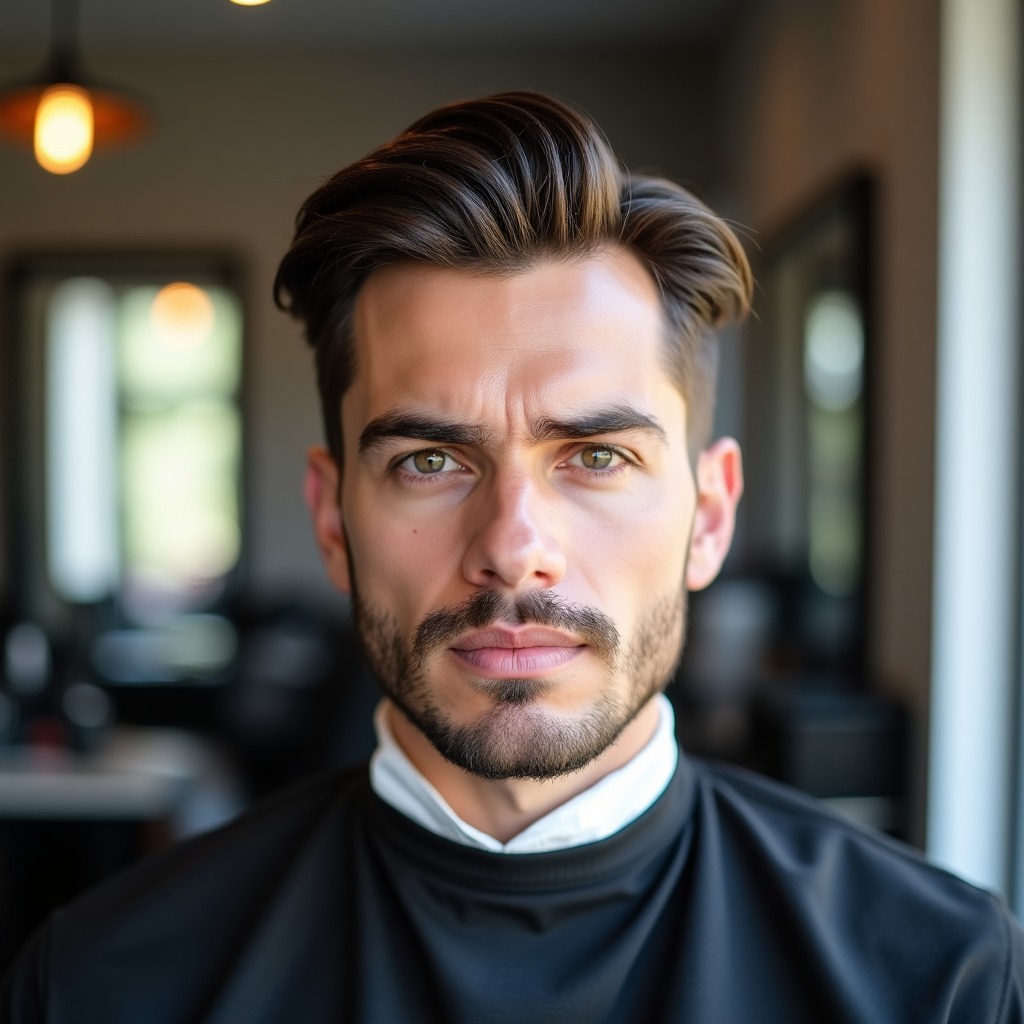
A classic scissor taper keeps the sides neat without exposing the scalp, which gives the entire haircut a softer and more expensive-looking finish. The hair gradually shortens toward the ears and neckline while the top keeps enough length to comb, sweep, or wear naturally. Instead of a hard fade line, the profile shows a smooth change in weight. From the front, the cut looks tidy without appearing overly barbered.
This is one of the safest scissor cut hairstyles for straight, wavy, or moderately thick hair and works especially well on oval, square, and longer face shapes. Ask your barber, “Keep the taper completely soft with scissors and scissor-over-comb, with enough length on top to move naturally.” A tidy-up every four to six weeks usually keeps the outline under control. Skip it if you want exposed skin or the sharp contrast of a high fade.
2. Soft Side Part Scissor Cut
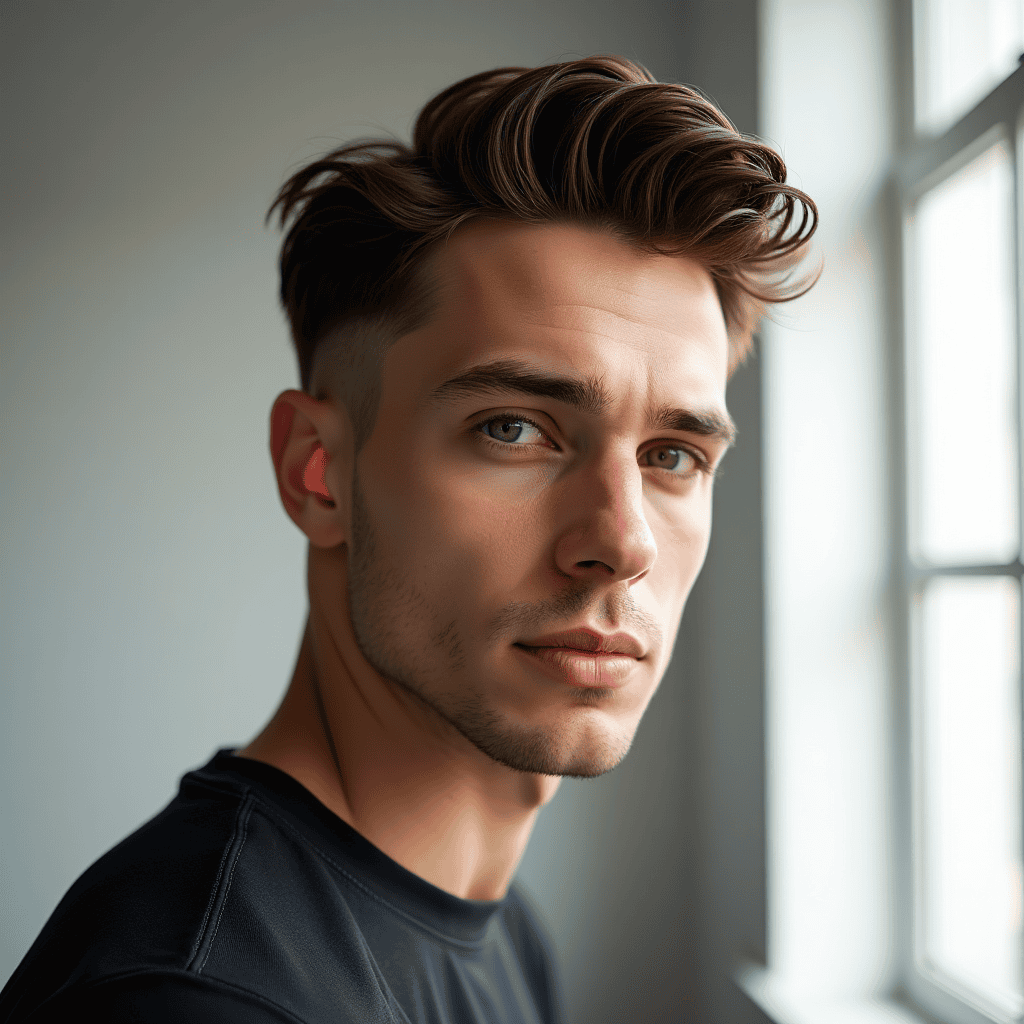
The soft side part keeps the familiar business-ready shape but removes the hard, carved-in feeling that can make a traditional side part look dated. The top sits longer near the part and gradually blends into full, controlled sides. A little texture through the front prevents the hair from forming one solid block. The finished outline looks groomed while still moving when you run your hand through it.
Men with straight or lightly wavy hair usually get the easiest result, especially when the hair naturally falls to one side. Tell your barber, “Build me a natural side part with scissors, leave movement through the top, and don’t cut a hard part into it.” Expect to spend a few minutes directing the hair after washing, usually with a light cream or low-shine styling product. The drawback is that stubborn cowlicks can fight the part unless the length is adjusted around them.
3. Ivy League Scissor Cut
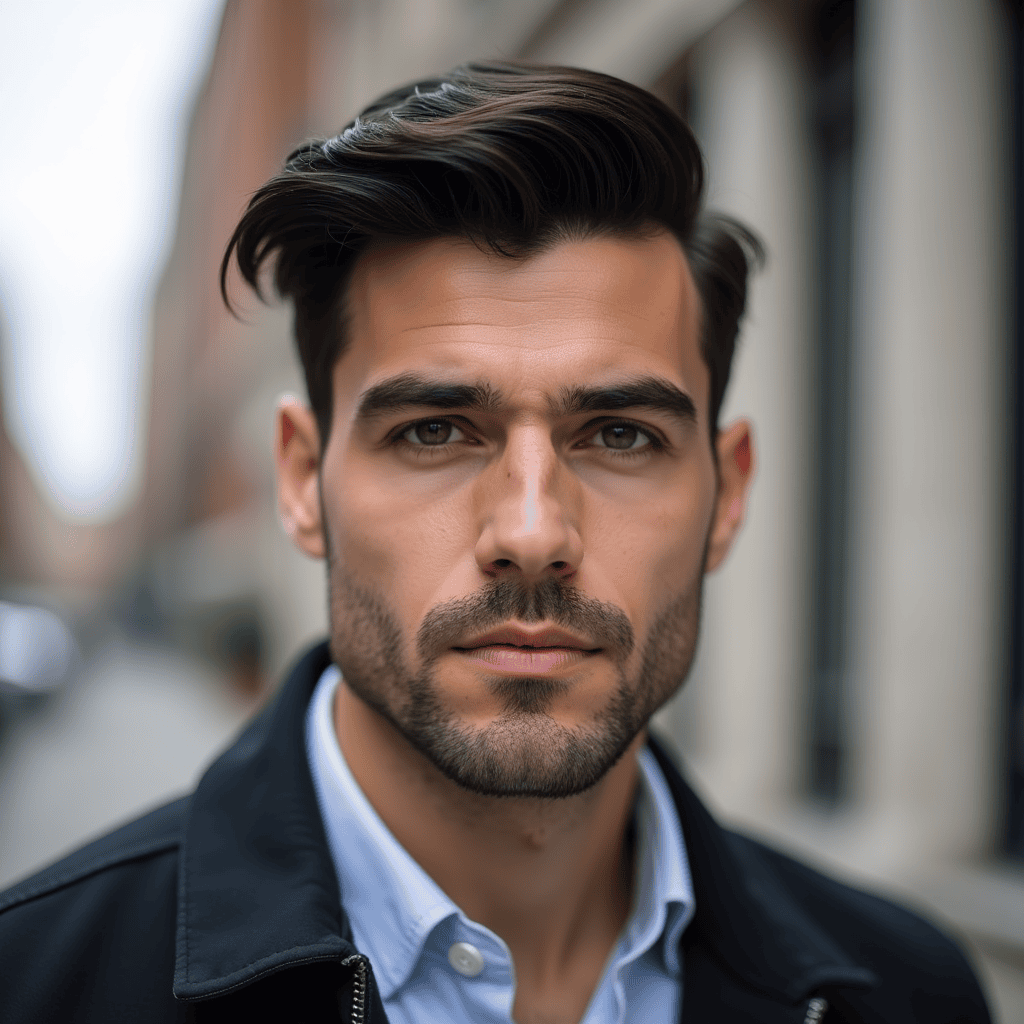
An Ivy League cut done mainly with scissors looks less severe than the clipper-heavy version most men know. The crown stays short and controlled while the front carries enough length to lift slightly or move into a small side sweep. The sides follow the head closely but still show hair texture rather than bare scalp. That extra softness makes the haircut sit comfortably with tailoring, workwear, or casual clothes.
It suits men who want short hair without committing to a fade and is especially forgiving on straight or slightly wavy textures. Ask for, “A short Ivy League shape with scissors through the top and scissor-over-comb on the sides, leaving the front long enough for a small sweep.” Most mornings require little more than damp fingers and a small amount of matte product. Very tight curls usually need a different version because this particular silhouette depends on visible directional movement.
4. Gentleman Brush Back
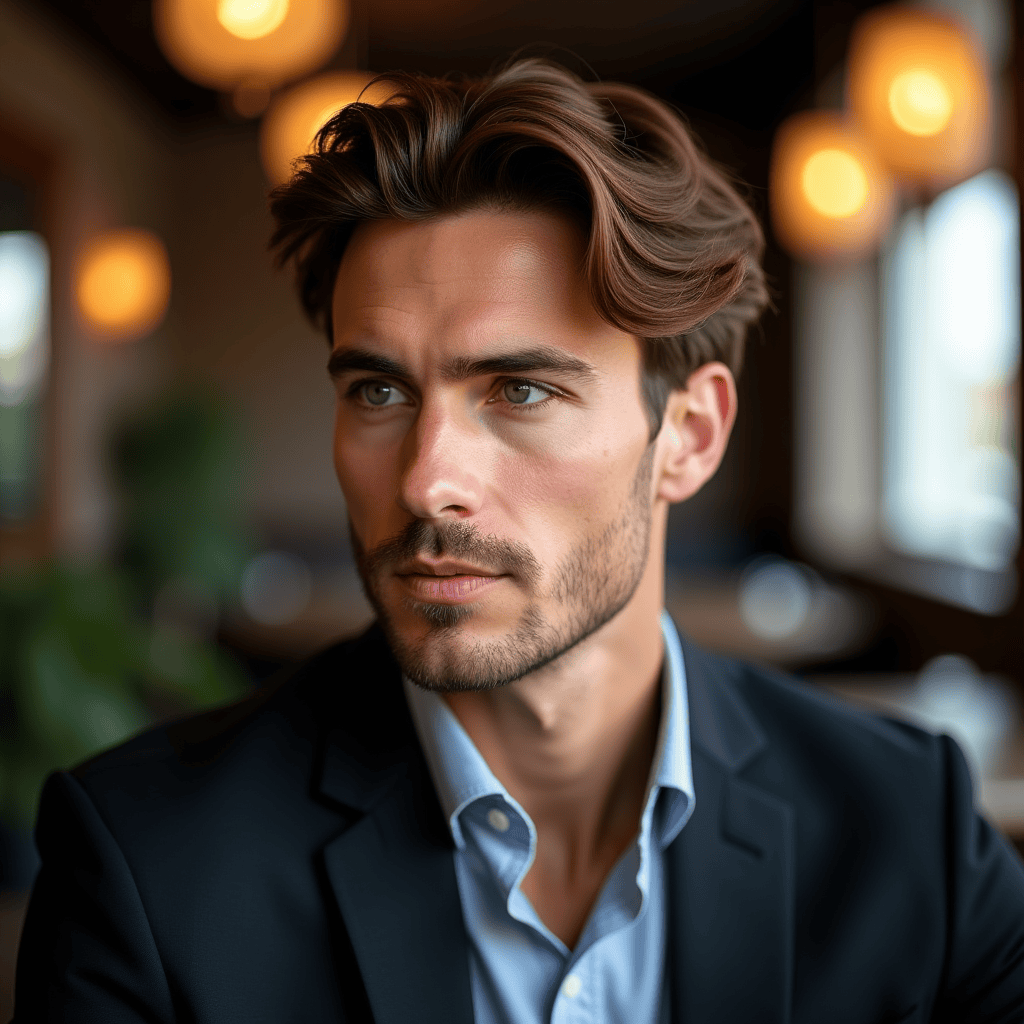
The gentleman brush back uses enough length to create backward movement without turning into a slicked-back helmet. The front is usually the longest point, with the crown shortened slightly so the hair follows the head instead of ballooning behind it. Full scissor-cut sides connect naturally into the top. A few loose strands around the hairline keep the finished style relaxed.
Medium to thick hair gives this cut the body it needs, while wavy hair can make it look even better with less styling. Tell the barber, “Keep the front long enough to brush back, reduce weight through the crown, and leave the sides soft rather than faded.” You’ll need some blow-drying if your hair naturally falls forward. Men with fine, flat hair may find the backward direction exposes more scalp than they want.
5. Short Scissor Crop
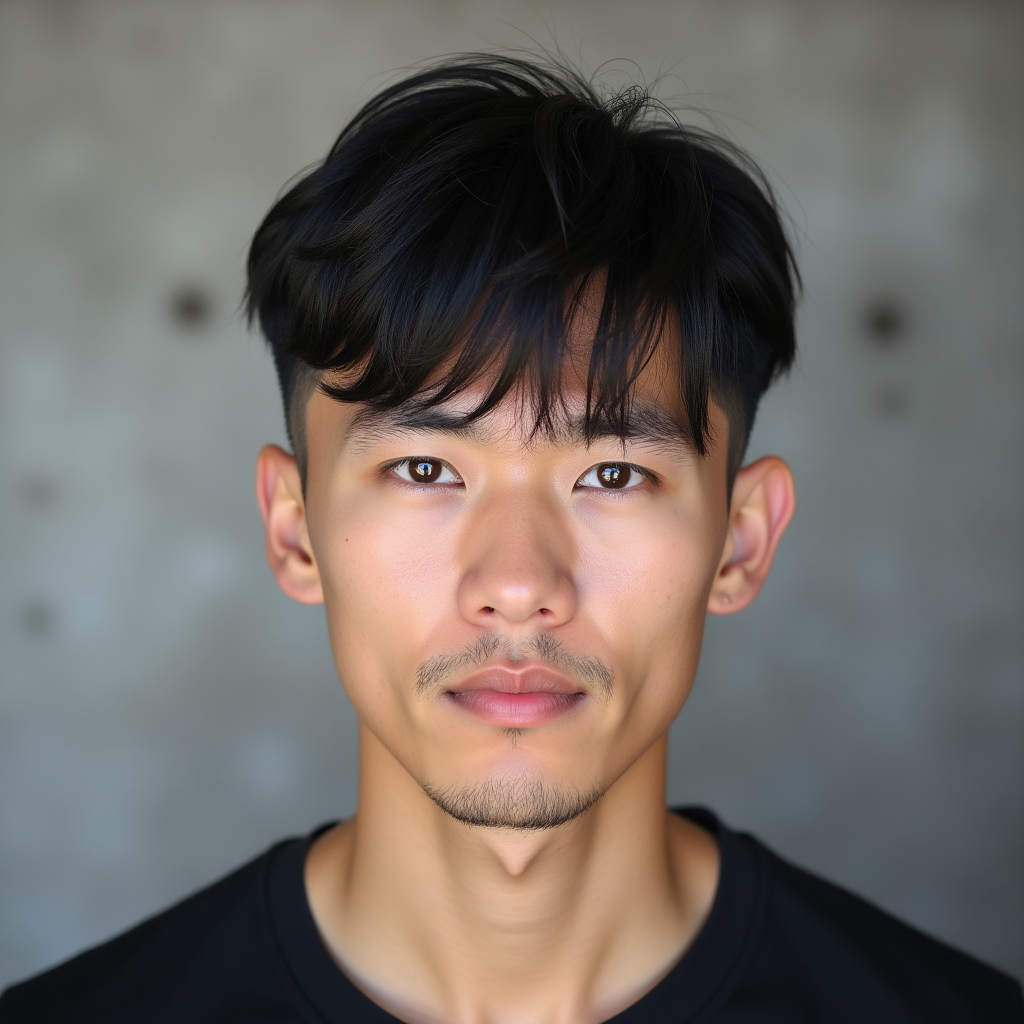
A short scissor crop keeps the convenience of short hair while leaving more texture than a machine-cut top. The fringe sits short and irregular rather than forming a ruler-straight edge, and the crown carries tiny changes in length that stop it from looking flat. The sides remain close but visibly soft. It is subtle work, which is exactly why a good version looks effortless.
This is one of the more practical scissor cut hairstyle ideas for men who dislike daily styling or want their hair to look decent after air-drying. Ask your barber, “Cut a short crop completely textured with scissors, keep the fringe broken, and make the sides close without fading them to skin.” It generally behaves well between appointments. The tradeoff is that men chasing dramatic height or sweeping movement will find the top too short.
Textured Scissor Cut Hairstyles for Short Hair
Short hair gets much more interesting when scissors create separation instead of simply reducing length. These cuts work through point cutting, slicing, internal weight removal, and deliberate unevenness. The goal isn’t to make the hair look messy for the sake of it; it is to stop a short shape from sitting like a solid cap.
6. Textured Scissor Crop
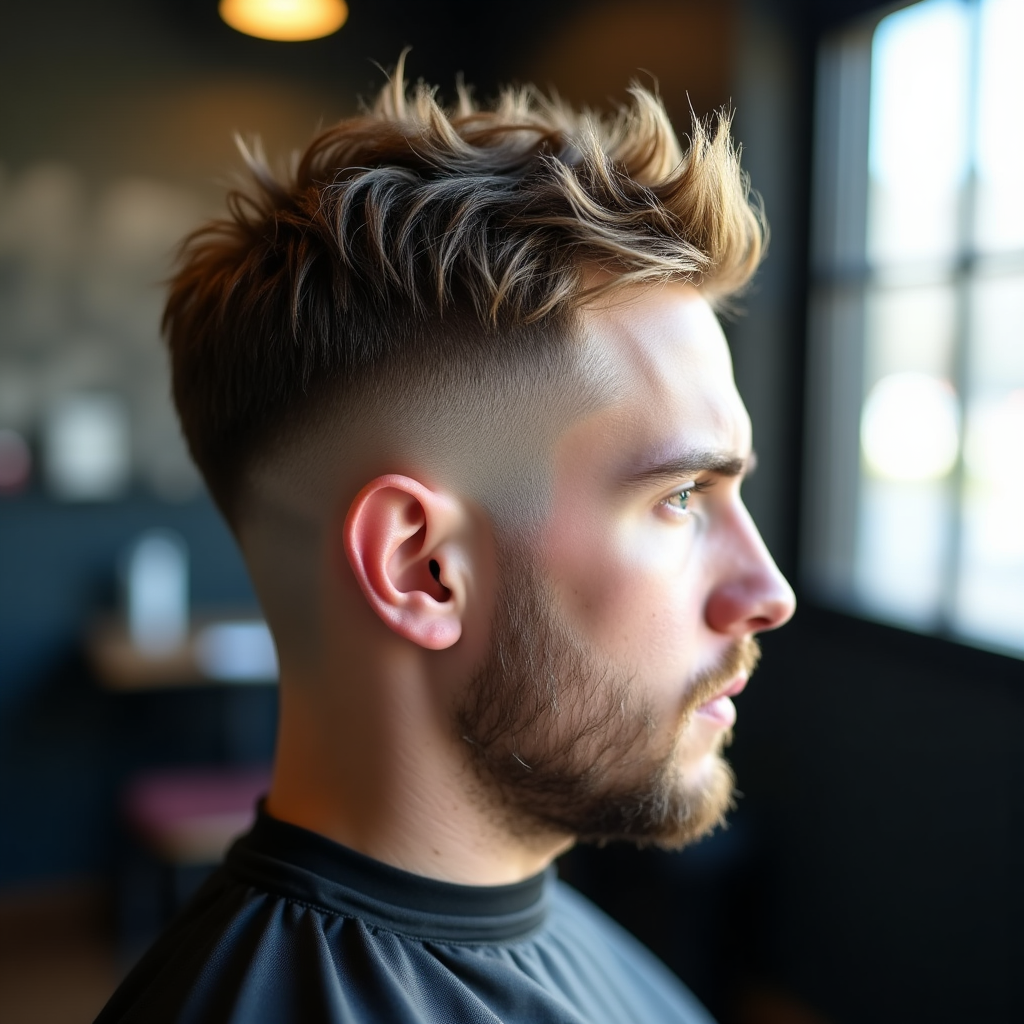
A textured scissor crop has a rougher surface than the classic short crop, with small pieces breaking in different directions across the top. The fringe usually falls forward in irregular sections rather than lining up evenly. Weight is removed inside the haircut so thick hair collapses into texture instead of standing like a brush. Soft sides stop the style from becoming top-heavy.
Thick straight and slightly wavy hair respond especially well because there is enough density to carve into. Tell your barber, “Keep the crop short but point-cut plenty of texture through the top, break up the fringe, and take bulk from inside rather than thinning the ends to nothing.” A matte paste can exaggerate separation, though the cut should still work without product. Over-thinning is the danger; once too much weight disappears, the top can look wispy.
7. Soft French Crop

The soft French crop keeps the forward direction of the familiar style but avoids the severe blunt fringe and extreme fade often paired with it. The front falls toward the forehead in lightly broken sections, while the top gradually gains a little length toward the crown. Scissor-cut sides retain enough density to frame the head. It feels more wearable than the sharper social-media version.
Straight hair and gentle waves usually sit into this shape with little argument, and it can help disguise a hairline that you prefer not to expose fully. Ask for, “A soft French crop with a natural broken fringe, scissors all through the top, and no aggressive fade on the sides.” Most men can air-dry it and push the front into place. Heavy curls may bunch forward rather than producing the controlled fringe this version needs.
8. Choppy Scissor Fringe

A choppy fringe makes the front of a short haircut the main event without needing dramatic overall length. Individual sections land at slightly different points across the forehead, giving the hairline movement and a deliberately imperfect edge. The crown stays more controlled so the front does not compete with excessive volume. Side weight can be left fairly natural for a modern, youthful outline.
It works well on straight or softly wavy hair with enough density to show separate pieces. Ask your stylist, “Keep a choppy fringe with visibly different lengths through the front, but leave enough weight so it doesn’t turn stringy.” Styling takes little effort beyond directing the fringe while damp and separating a few pieces once dry. The obvious drawback is forehead contact, which some men find annoying in hot weather.
9. Messy Scissor Quiff
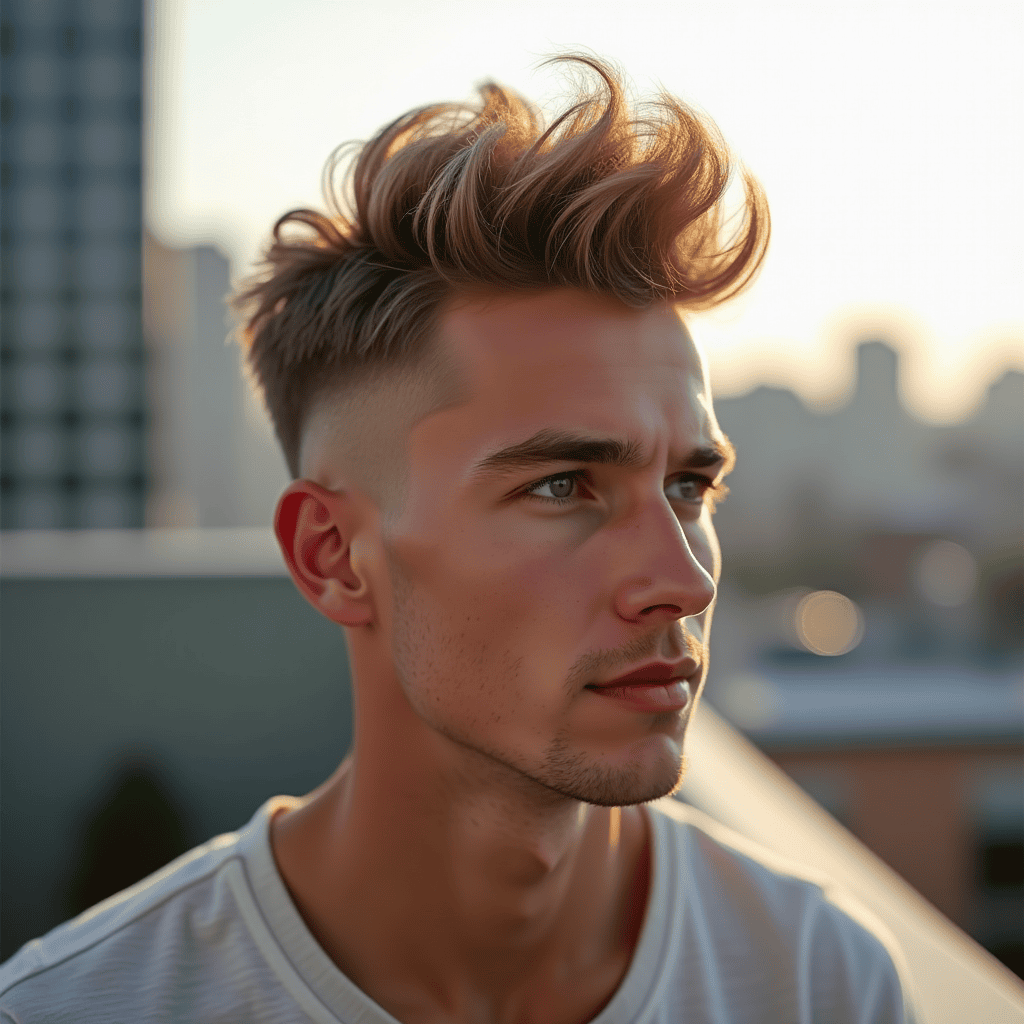
The messy scissor quiff carries height in the front but keeps the surface intentionally loose. Longer strands rise and curve backward while shorter internal pieces stop the shape from becoming one smooth wave. The crown settles gradually into the head, and the sides stay controlled without being shaved down. From different angles, the cut should show air and separation rather than one solid wall of hair.
Medium-density straight or wavy hair usually gives the easiest balance of height and control. Tell your barber, “Leave enough front length for a loose quiff, point-cut the top for separation, and keep the sides soft with scissors.” A blow-dryer helps, but you do not need to sculpt every strand into position. Men who hate using any styling product may find the front drops forward halfway through the day.
10. Scissor Caesar
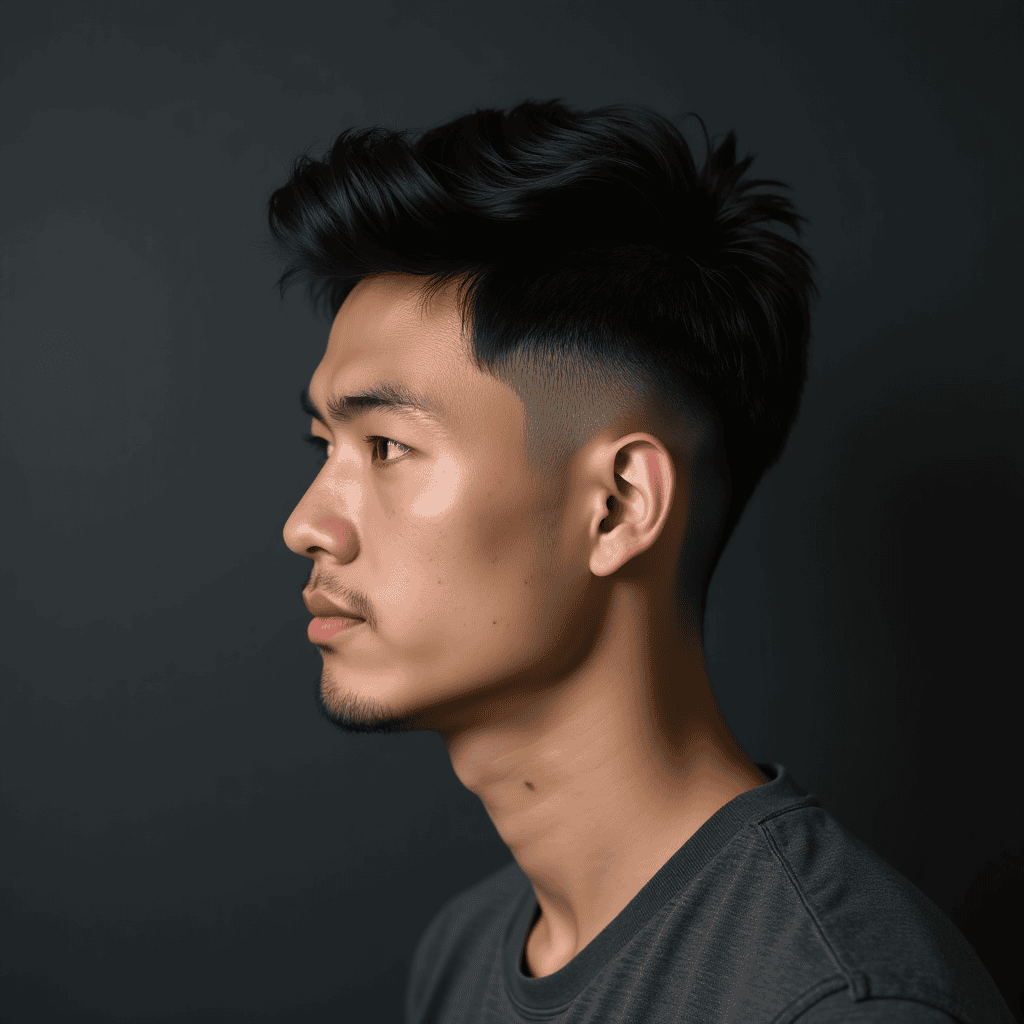
A scissor Caesar keeps the short forward profile of the original but gives the surface more life through tiny changes in length. The fringe sits horizontally without becoming a hard geometric shelf, and the top stays compact from front to crown. Scissor-over-comb work around the sides keeps the outline close while preserving a little softness. The result looks controlled from almost every angle.
Men with straight, dense hair often find this one especially easy, and the short forward direction can work well when you prefer some forehead coverage. Ask for, “A Caesar shape cut with scissors, short through the top, lightly broken at the fringe, with no skin fade.” Maintenance is simple, though the front needs regular trimming to keep its proportions. If your hair naturally shoots upward at the hairline, forcing it forward can become a daily fight.
Medium-Length Scissor Cut Hairstyle Ideas With Movement
Medium hair is where scissors earn their keep. A barber can shift weight, create layers, control where the hair bends, and leave enough length for natural movement. These scissor cut hairstyle ideas are less about sharp outlines and more about making the hair fall correctly around the face.
11. Layered Curtains
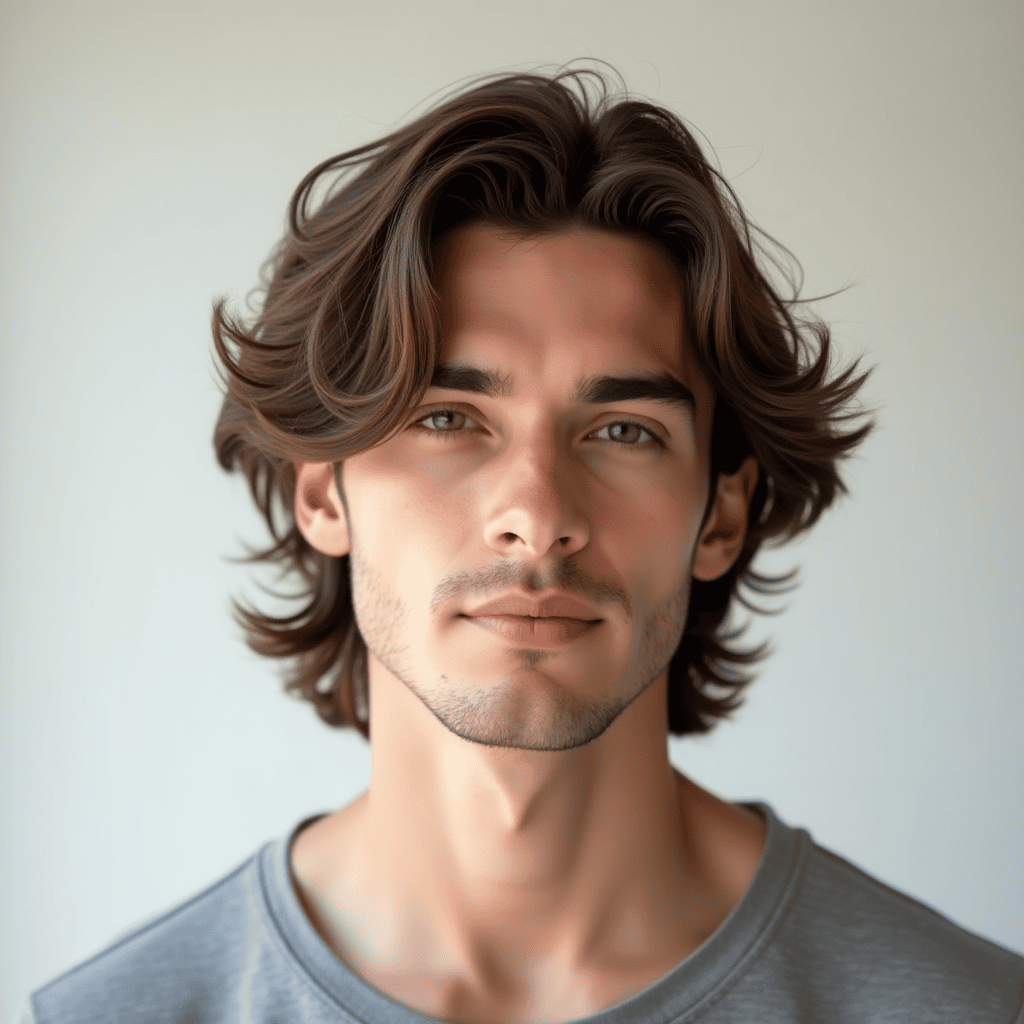
Layered curtains split naturally near the center or slightly off-center, then sweep outward around the forehead and cheekbones. Shorter face-framing pieces connect gradually into longer sections toward the sides and back. The crown carries enough layering to move without becoming fluffy. From the side, the haircut should look fluid rather than like a long top sitting on short sides.
Straight, wavy, and moderately thick hair can all work, though a little natural bend makes styling much easier. Ask your barber, “Give me layered curtains with face-framing pieces, keep the sides connected, and take enough weight from the crown for the hair to open naturally.” Expect to direct the front while drying, especially after washing. A strong cowlick at the hairline can push the split off-center, which is often better accepted than fought.
12. Side-Swept Medium Scissor Cut

This cut carries most of its visible movement diagonally across the head. The front and top stay long enough to sweep to one side, while internal layers stop the heavier section from collapsing into a flat sheet. The opposite side sits closer to the head without needing a disconnected undercut. A soft perimeter around the ears keeps the shape balanced.
It flatters straight or wavy hair and works particularly well for men who naturally have an off-center growth pattern. Tell your stylist, “Keep medium length on top and through the sides, build in long layers, and make the front fall naturally to my stronger side.” Styling can be as simple as drying in the direction you want. Very fine hair may separate too easily and expose the scalp where the sweep begins.
13. Bro Flow

Bro flow works when the hair has enough length to bend backward around the temples instead of sticking straight out. The front rises naturally before traveling away from the face, while the sides sweep behind the ears or sit loosely beside them. Layers are long and restrained because excessive chopping destroys the flowing line. The back should feel connected rather than developing a shelf at the crown.
Medium to thick wavy hair is the easiest canvas for this style, though straight hair can get there with some blow-drying. Ask for, “Keep my overall length, shape the flow away from the face, clean the ends, and use long layers rather than short texture.” The grow-out is forgiving, which is part of the appeal. The awkward stage arrives before the ears can tuck the sides back, so patience matters.
14. Medium Slick Back
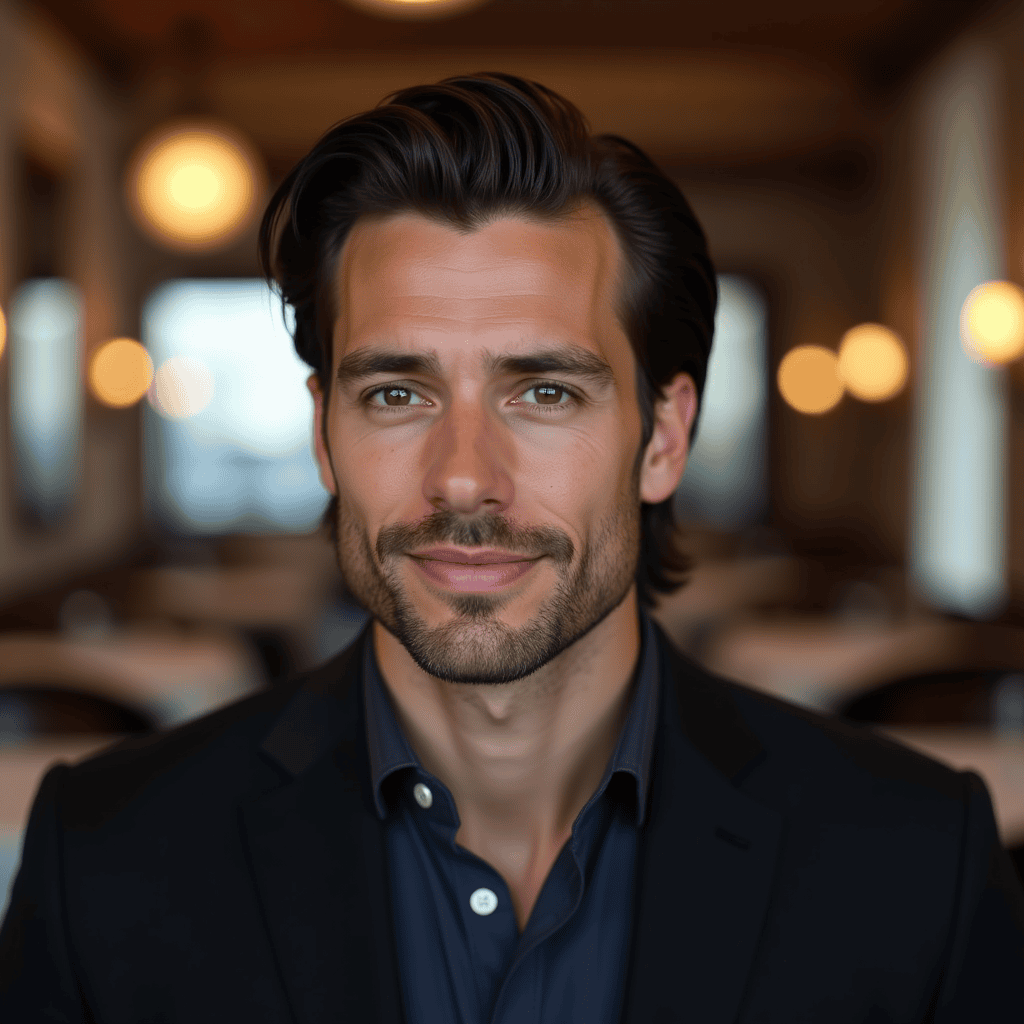
A medium slick back starts with a disciplined haircut rather than a heavy layer of product. The front retains enough length to travel backward smoothly, but the crown is subtly shortened so the silhouette follows the skull. Side sections stay long enough to comb behind the ears or blend backward into the shape. Used with less product, the same cut can become a loose brush back.
Straight and wavy hair with medium or high density usually hold the direction best. Tell the barber, “Keep a medium slick-back length, graduate the crown slightly, connect the sides, and don’t thin the ends so much that they separate.” You’ll probably need a dryer and a comb if you want the polished version. Men with strong forward growth may find the style keeps trying to return to its natural direction.
15. Wavy Scissor Shag
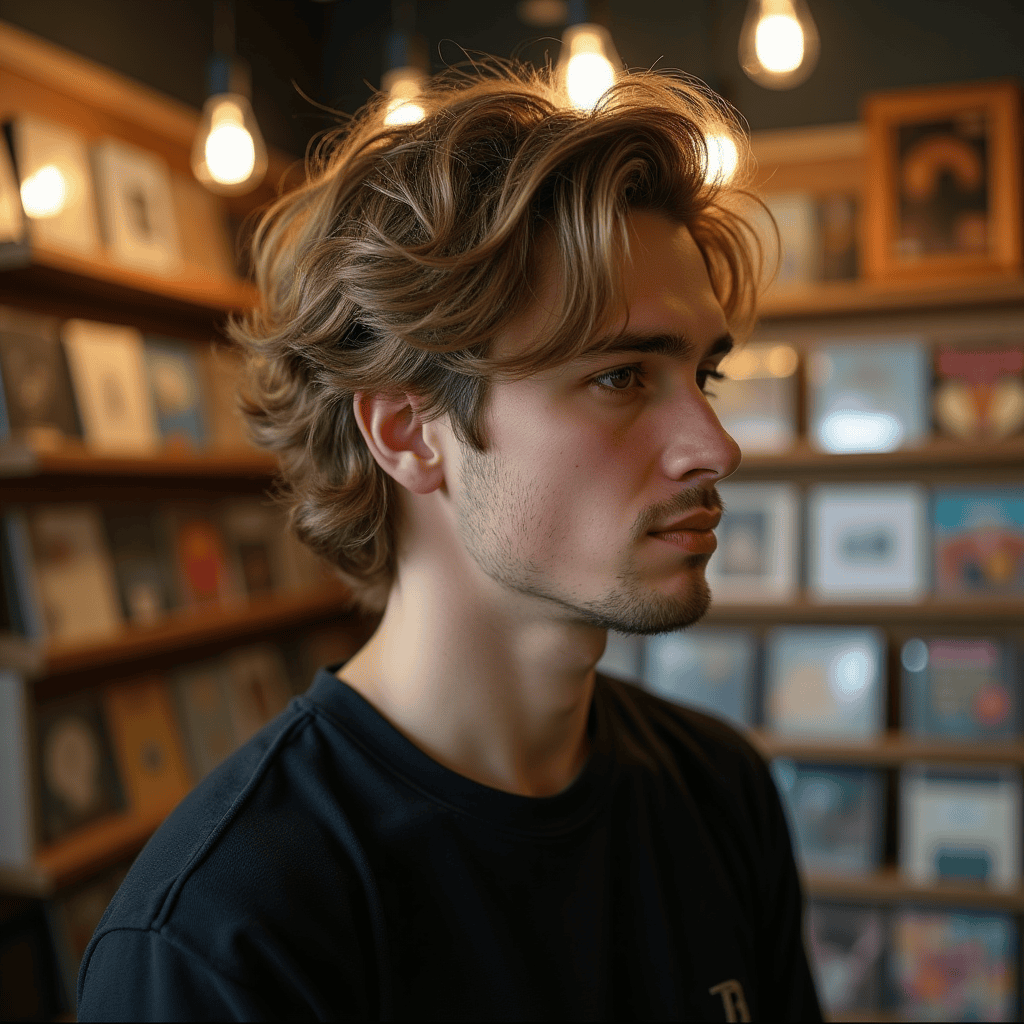
A wavy scissor shag lets layers become obvious instead of hiding them inside a tidy outline. Shorter pieces around the crown create lift, while progressively longer sections fall around the temples, ears, and nape. The perimeter looks soft and slightly irregular. Natural waves then pull those layers in different directions, creating movement that changes from day to day.
Men with medium to thick wavy hair get the most from this scissor cut hairstyle because the texture prevents the layers from hanging flat. Ask your stylist, “Give me a medium shag with visible crown layers, softer length around the ears, and keep the perimeter loose rather than blunt.” It needs less precision styling than its shape suggests. The downside is volume: extremely thick hair can widen at the sides unless internal weight is carefully controlled.
Longer and More Relaxed Scissor Cut Hairstyles
Once hair reaches the ears and beyond, clipper work matters far less than balance. These longer scissor cut hairstyles depend on where weight is left, where layers begin, and whether the perimeter feels intentional. Small changes can decide whether long hair flows or simply hangs.
16. Modern Mop Top
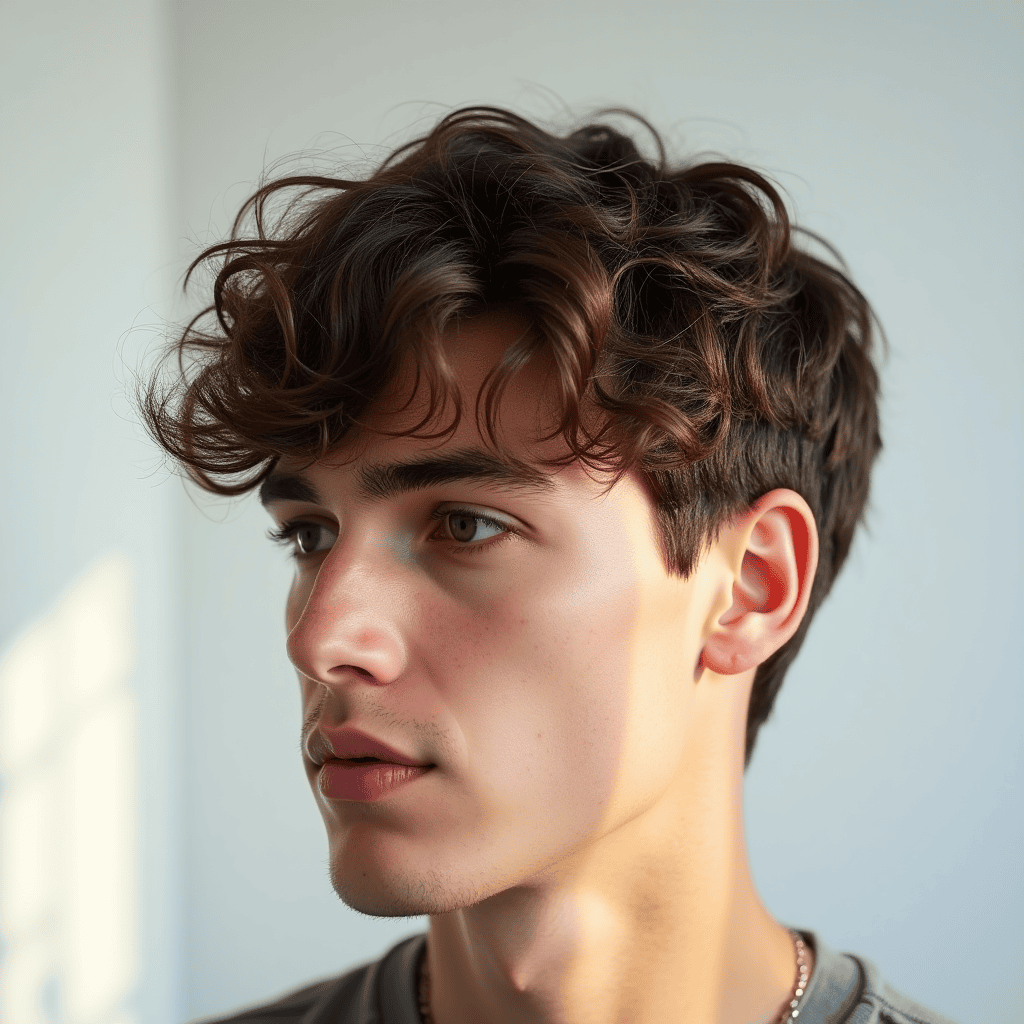
The modern mop top carries visible fullness around the forehead and sides but uses layering to avoid the heavy mushroom outline associated with older versions. The fringe breaks loosely over the brow, while the side sections bend around the ears instead of forming a rigid horizontal line. Crown layers add just enough lift to stop the top from collapsing. The back stays connected and soft.
Straight or wavy hair with medium density works best, especially when you want noticeable length without pushing into true long-hair territory. Ask for, “A modern mop shape with a loose fringe, connected ear-length sides, and soft layers so it moves instead of sitting round.” Styling is minimal if the cut follows your natural fall. Men with extremely thick, straight hair need careful weight removal or the silhouette can become too wide.
17. Surfer Flow

Surfer flow looks best when it feels shaped but not freshly sculpted. The front and temple sections sweep away from the face in broad bends, while longer layers through the back keep the haircut from becoming triangular. Ends stay slightly irregular rather than blunt. The movement should look believable even before any styling product touches it.
Naturally wavy hair almost does the work by itself, though straight hair can develop the shape once it reaches enough length. Tell your barber, “Keep the flow long around the ears and back, add long layers for movement, and shape the front so it can push away from my face.” Salt sprays can make it rougher, but they are optional. Fine hair may appear thinner at the ends if too many layers are cut into it.
18. Curly Rounded Layers
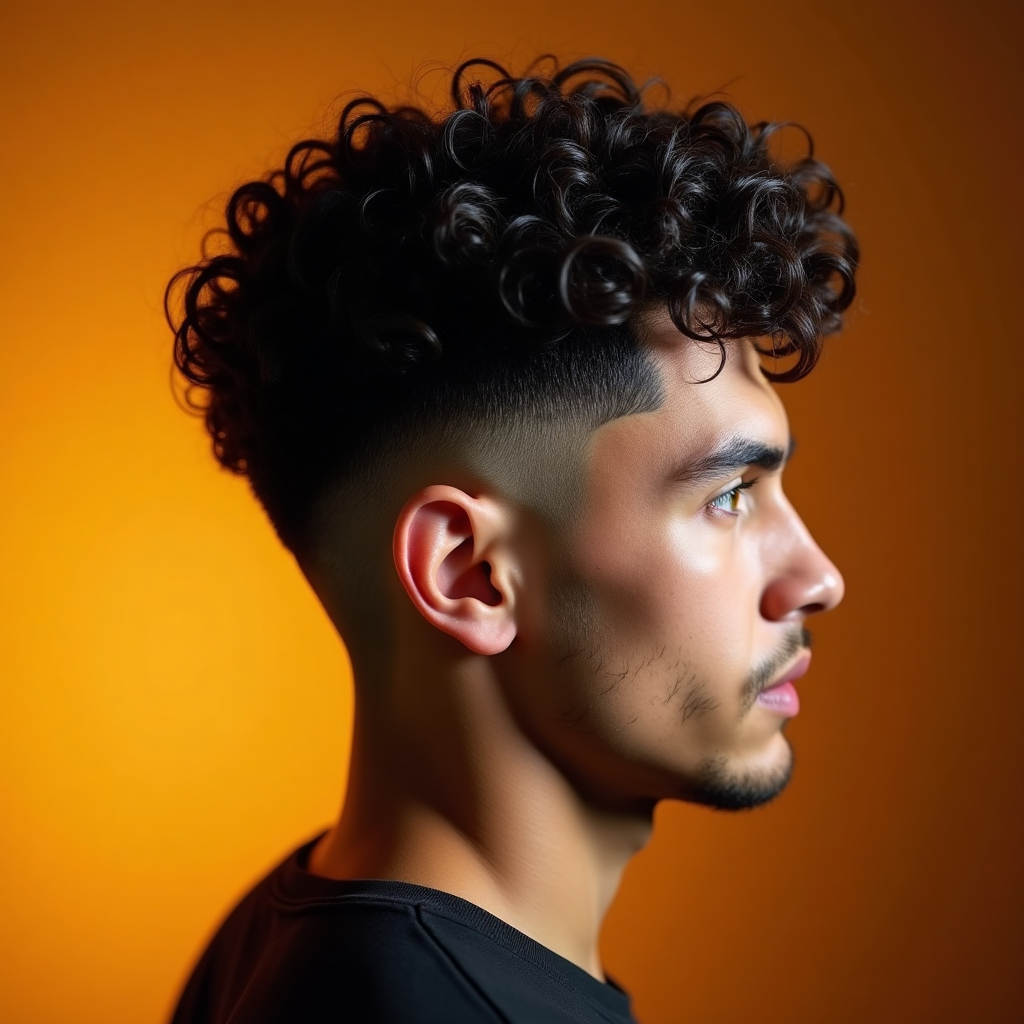
Curly rounded layers follow the natural expansion of curls while controlling where the widest point sits. The top keeps enough length for curl formation, with graduated layers shaping the sides into a balanced curve rather than a box. Individual curls remain visible around the perimeter instead of being cut into a hard outline. The silhouette looks full but considered.
Men with medium or tight curls need a barber who can judge shrinkage rather than relying only on wet length. Ask for, “Keep a rounded scissor shape, preserve my curl groups, and layer enough to control the sides without making the crown too short.” Curl cream or leave-in conditioner can help definition, but the haircut should carry the basic shape. Cutting the crown too aggressively creates unwanted height as the curls spring upward.
19. Long Layered Scissor Cut
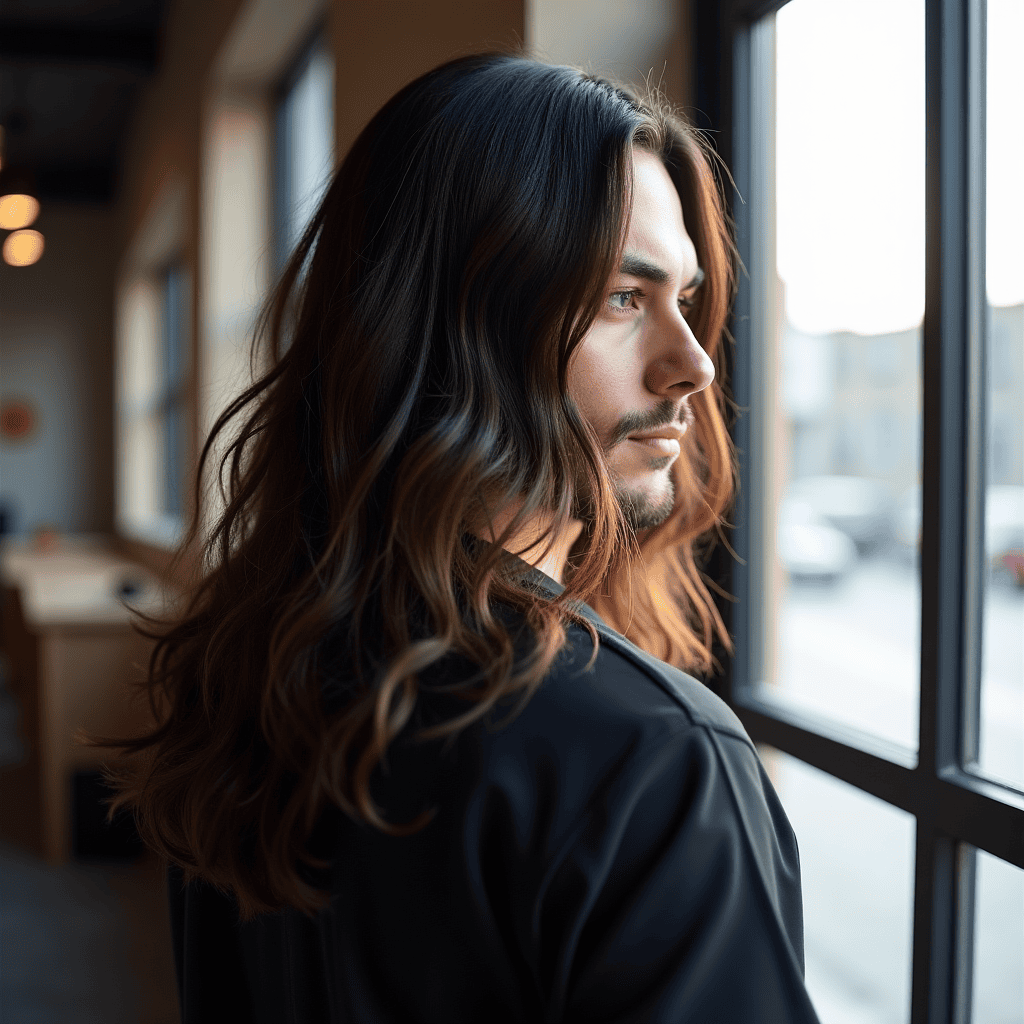
A long layered scissor cut keeps the overall length but prevents the bottom half from turning into one heavy curtain. Long sections begin around the cheekbones or jaw and continue downward with only gradual changes between them. The perimeter still feels substantial because the ends are not shredded away. Movement becomes most visible when the hair turns, bends, or sits behind the shoulders.
This works on straight, wavy, and loosely curly hair, particularly when density is medium to high. Ask your stylist, “Keep my overall length, add long connected layers starting around the face, and leave plenty of weight through the ends.” The cut can go longer between appointments than short styles. Its main drawback is drying time, especially if the hair is thick enough to hold water deep through the lower sections.
20. Soft Scissor Wolf Cut
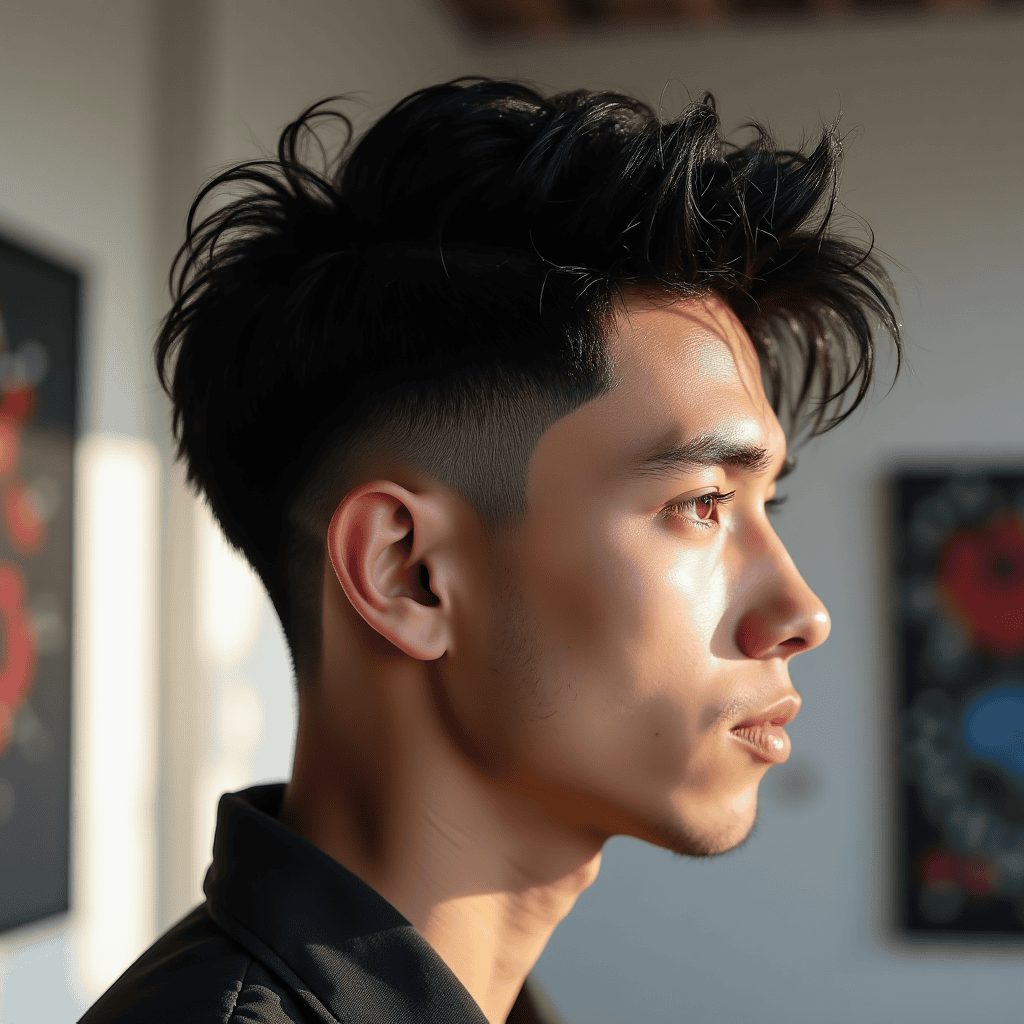
A soft wolf cut creates visible contrast between shorter upper layers and longer sections around the nape without pushing the difference into costume territory. The crown carries lift, the sides sit broken around the ears, and the back extends beyond them with a loose tapering outline. Unlike a full shag, the top can feel slightly more compact. It is deliberately imperfect from every angle.
Wavy or lightly curly hair gives the shape natural separation, though thick straight hair can work when enough internal weight is removed. Tell your barber, “Give me a softened wolf cut with shorter crown layers, longer length through the back, and no harsh disconnection.” It looks best when you accept some unpredictability in how the pieces fall. Anyone needing conservative office hair should think carefully before committing to the stronger nape length.
Scissor Cut Hairstyle Ideas for Specific Hair Types and Bolder Shapes
The final group is less about a single fashionable silhouette and more about using scissors to solve a particular hair problem or create stronger character. Fine hair needs preserved density. Thick hair often needs weight controlled internally. Coils need shape built around shrinkage, while bolder cuts depend on deliberate imbalance rather than careless unevenness.
21. Fine-Hair Graduated Scissor Cut

A graduated scissor cut for fine hair keeps the perimeter stronger while building only a small amount of lift through the top. The sides sit close through controlled graduation rather than aggressive thinning. The front can remain slightly longer so it sweeps, lifts, or separates without requiring much product. Ends stay reasonably blunt because fine hair usually needs the visual density.
Men with straight or gently wavy fine hair benefit most from this approach. Ask your barber, “Keep the perimeter strong, use light graduation for shape, and don’t over-texturize my fine hair.” A light styling cream or volumizing product is usually enough if you want more movement. Heavy thinning shears can make the haircut look transparent, so I would avoid anyone who reaches for them too quickly.
22. Thick-Hair Debulked Layers
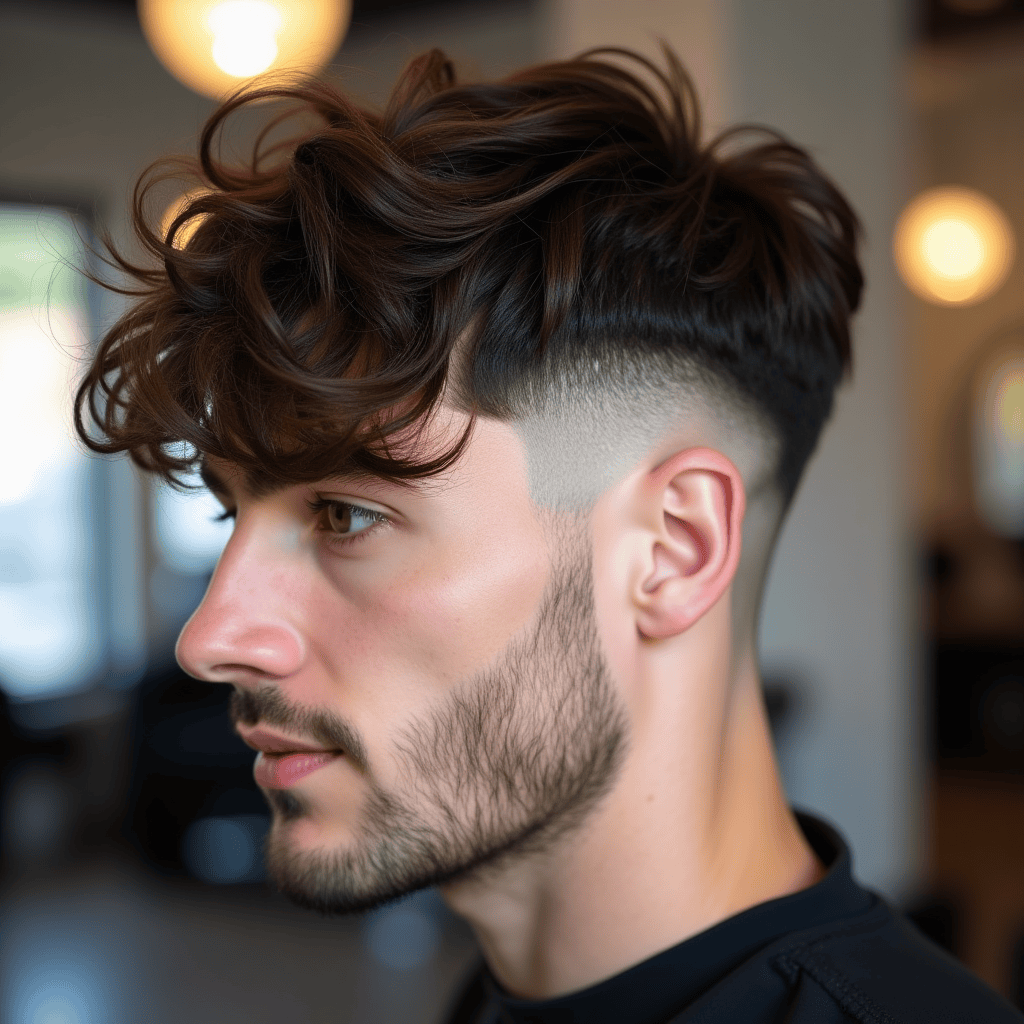
This cut keeps thick hair looking full while taking pressure out of the places where it normally balloons. The visible outer length remains fairly substantial, but internal sections are selectively shortened or sliced so the hair can collapse closer to the head. The crown is shaped carefully because removing too much there creates unwanted lift. From the outside, the haircut should look simpler than the work hiding underneath.
Dense straight or wavy hair is the obvious match, especially if your complaint is “my hair gets huge before it gets long.” Tell the barber, “Keep the outside looking full, remove weight internally through the sides and back, and don’t hollow out the ends.” Grow-out can be comfortable when the internal work is balanced. Overdoing the debulking causes short pieces to push longer hair outward, creating the exact bulk you were trying to remove.
23. Coily Rounded Scissor Shape
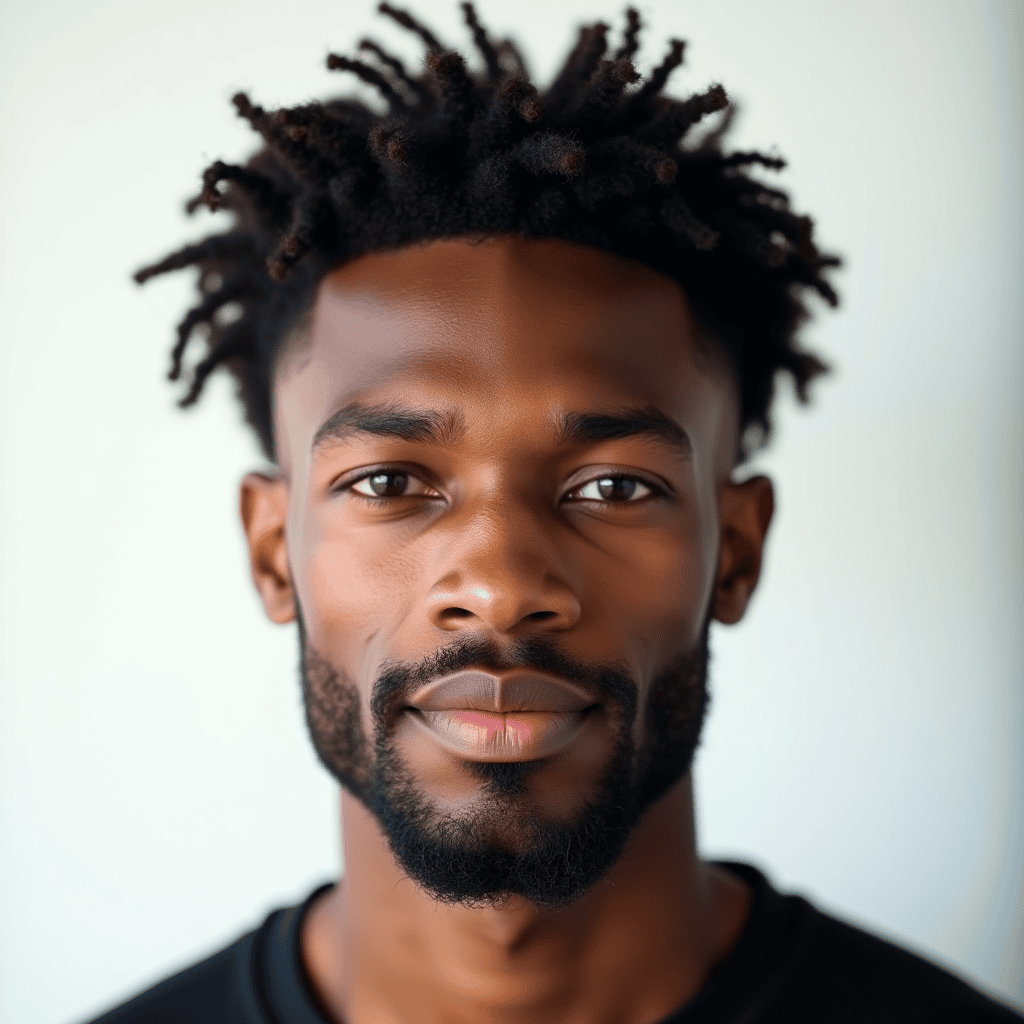
A coily scissor shape treats the haircut as a three-dimensional silhouette rather than chasing identical strand lengths. The top, sides, and back are shaped according to how tightly each area contracts, creating a balanced rounded form. The perimeter stays natural and textured. Good scissor work preserves visible coil character while removing areas that make one side appear heavier than the other.
Men with tightly coiled hair who prefer fullness over a close fade can get a strong result from this approach. Ask for, “Shape my coils with scissors into a balanced rounded silhouette, keep natural texture at the perimeter, and account for shrinkage before taking more length.” Regular hydration and gentle handling matter more than complicated daily styling. The challenge is finding someone comfortable cutting coils in their natural state rather than stretching them into a misleading length.
24. Asymmetrical Scissor Fringe
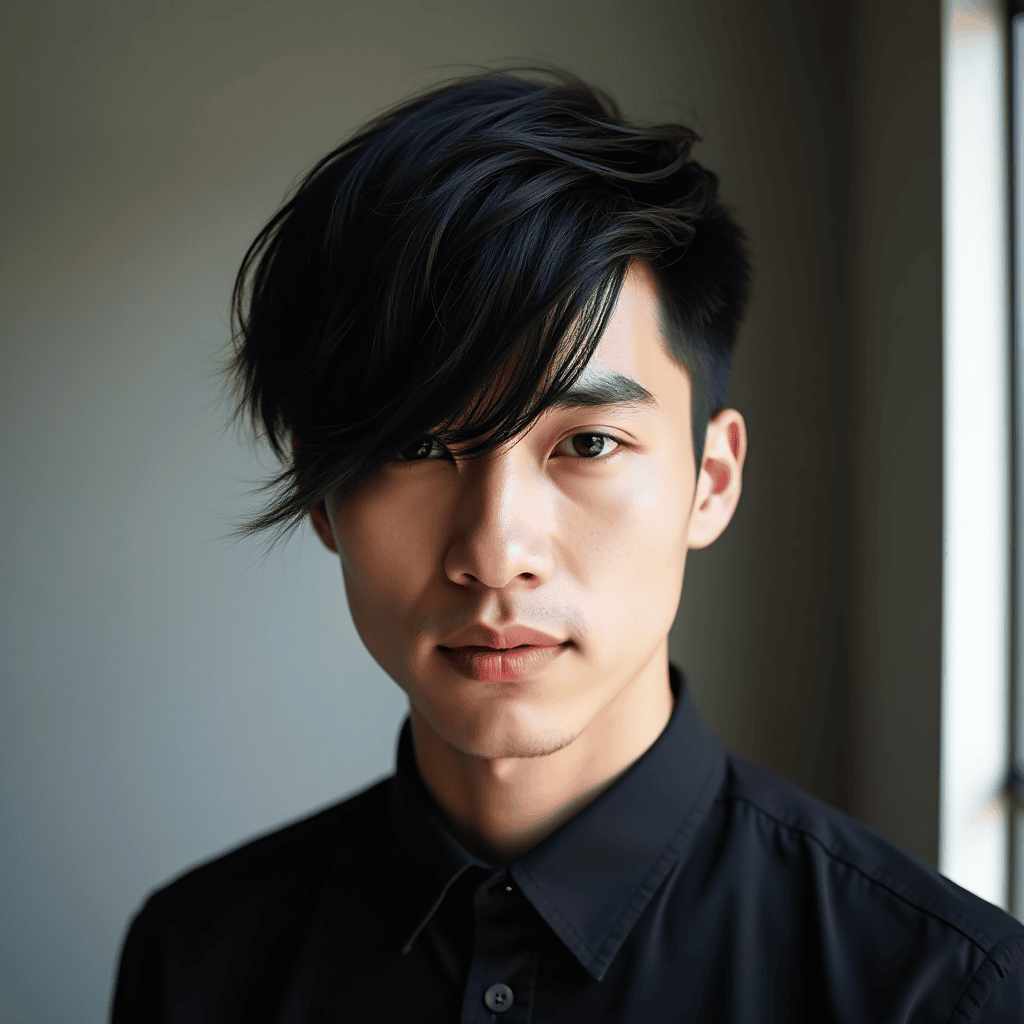
An asymmetrical fringe deliberately carries more length toward one side of the forehead, creating a diagonal line rather than a centered or balanced front. The shorter side connects into controlled temple length while the longer side falls across or beside the brow. Texture through the ends prevents the diagonal from looking too graphic. The rest of the cut stays simpler so the fringe owns the attention.
Straight and softly wavy hair show the uneven front most clearly, and the style works best for someone comfortable wearing a noticeably designed haircut. Tell your stylist, “Cut an asymmetrical fringe that travels longer to one side, keep the ends textured, and leave the rest of the shape restrained.” The front needs intentional placement after washing. If you constantly push hair away from your face, the longer side will probably irritate you within a week.
25. Scissor Pompadour
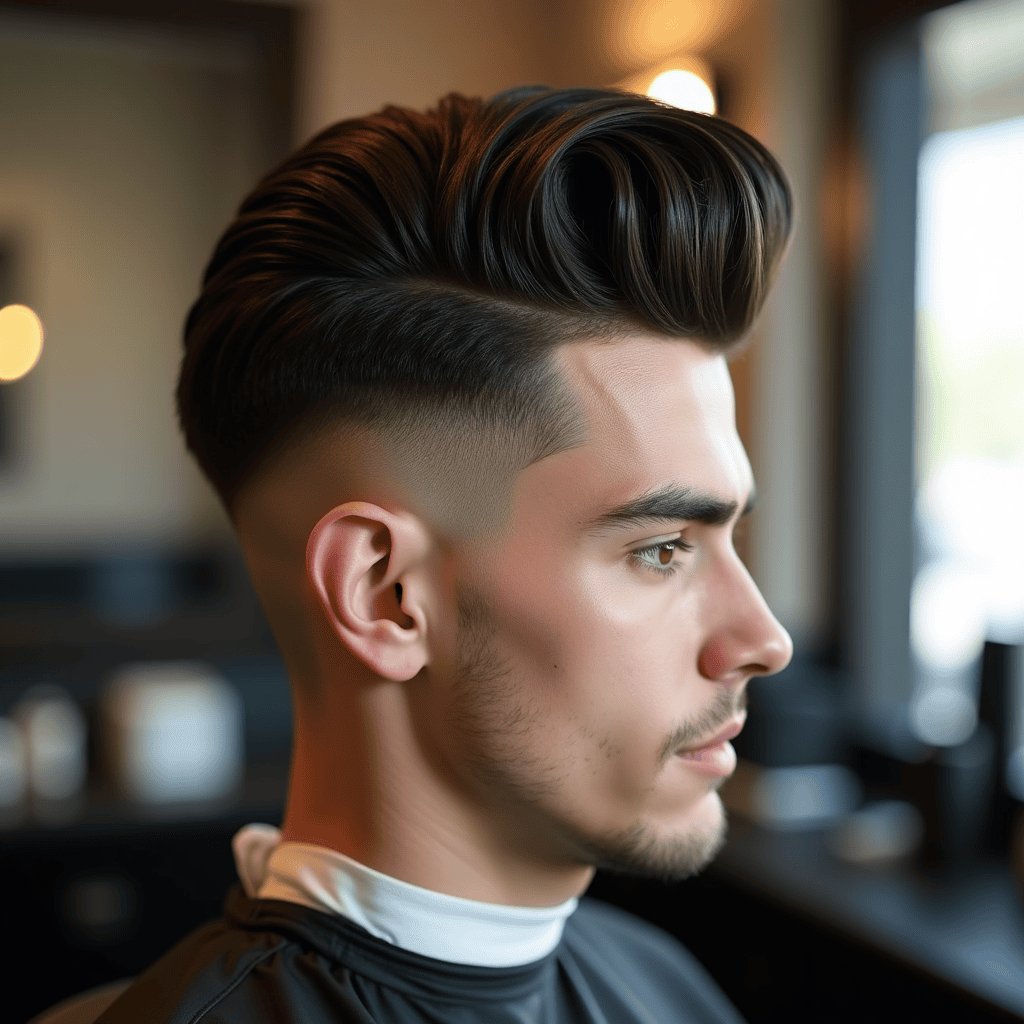
A scissor pompadour uses length and graduation to build height without relying on shaved sides for contrast. The front rises highest, then rolls gradually backward as the crown settles closer to the head. Full sides are shaped inward with scissor-over-comb so they support the top instead of competing with it. The finished profile has presence, but individual strands should still move.
Thick straight or wavy hair gives the strongest foundation for this advanced scissor cut hairstyle. Ask your barber, “Leave enough front length for a pompadour, graduate the top back toward the crown, and shape the sides entirely soft so there’s no hard fade contrast.” Expect real styling time with a dryer and brush if you want height that lasts. Men who prefer wash-and-go hair should choose one of the shorter textured cuts instead.
How to Choose the Right Scissor Cut Hairstyle
Start with how your hair behaves before thinking about the photo you want to copy. Straight hair shows cutting lines clearly, so graduated shapes, side parts, crops, and controlled fringes work well. Wavy hair gives movement to curtains, bro flow, shags, and longer layered scissor cut hairstyles. Curly and coily hair need shape planned around shrinkage rather than copied from a straight-hair reference.
Density matters almost as much as texture. Fine hair usually looks better when the barber preserves weight and avoids excessive thinning. Thick hair often needs internal weight removed so the haircut can sit closer to the head. If your hair becomes bulky around the temples, show the barber exactly where that happens rather than asking for generic “thinning.”
Face shape can guide the proportions, but I wouldn’t treat it as a rigid rule. Longer faces usually need less vertical height, while rounder faces can often handle some lift through the front. A strong jaw can carry fuller sides beautifully. What matters more is whether the haircut works with your hairline, growth patterns, glasses, facial hair, and the amount of styling you’re prepared to do.
Bring two or three reference photos to the appointment: one showing the front, one showing the side, and ideally one with hair texture close to yours. Then explain what you dislike about your current cut. “The sides stick out after two weeks” tells a barber far more than “make it modern.”
Where Scissor Cut Hairstyles Can Fall Short
Scissors aren’t automatically better than clippers. They create softness, movement, and controlled graduation, but they are the wrong tool if your goal is a skin fade, razor-sharp temple work, or a neckline taken down almost to nothing. A mixed technique often makes more sense than forcing the entire haircut to fit one tool.
The other problem is inconsistency between barbers. A strong scissor cut depends on understanding elevation, over-direction, weight lines, shrinkage, and the way the hair will sit once you style it yourself. Poor scissor work can leave steps, bulky corners, thin patches, or short internal pieces that start sticking out two weeks later.
And longer scissor cut hairstyle ideas can be less forgiving of your own routine. Some look outstanding after a controlled blow-dry but average after sleeping on wet hair. Be clear about how much effort you actually want to make before your barber chooses the final length and layering pattern.
Frequently Asked Questions
Are scissor cut hairstyles better than clipper cuts for men?
Neither technique wins for every haircut. Scissors are better when you want softness, natural graduation, visible texture, or medium-to-long movement. Clippers make more sense for extremely short sides, fades, and tight uniform lengths. Many good men’s haircuts combine both tools rather than treating the choice as either-or.
What is a full scissor cut for men?
A full scissor cut means the barber creates most or all of the haircut with scissors, often using scissor-over-comb for shorter areas. The result usually keeps more softness around the sides and perimeter than a clipper-heavy haircut and allows finer control over layers, weight, and movement.
Which scissor cut hairstyle ideas work best for thick hair?
Textured crops, debulked medium layers, shags, brush backs, and scissor pompadours can all work well on thick hair. The main issue is weight management. Ask the barber to remove bulk strategically inside the haircut rather than aggressively thinning every end, which can create frizz and awkward short pieces.
Can men with fine hair get a scissor cut?
Yes. Fine hair can respond well to scissor cutting because a barber can preserve weight exactly where it is needed. Graduated cuts, soft side parts, short crops, and restrained Ivy League shapes are good starting points. Excessive point cutting or thinning should usually be avoided when density is already limited.
How long should hair be for a scissor cut?
There is no single minimum because scissors can shape both short and long hair. Even a short cut can be completed with scissor-over-comb. Scissor work becomes especially useful once the top and sides are long enough for layering, directional movement, or controlled weight to matter.
How often should a men’s scissor cut be trimmed?
Short scissor cut hairstyles commonly look their neatest with appointments roughly every four to six weeks, while medium and longer layered styles can often stretch further. Growth speed and shape matter more than a fixed calendar. Book when the haircut stops falling correctly rather than when one exact number of days passes.
Do scissor cuts grow out better than fades?
They often grow out more softly because there is less dramatic contrast between extremely short and longer sections. That does not mean every scissor cut has perfect grow-out. Poor graduation or badly placed internal layers can become awkward too, so the barber’s technique still matters more than the tool alone.
What should I tell my barber if I want scissors instead of clippers?
Be specific about the result rather than simply banning a tool. Say that you want fuller, softer sides with natural graduation and no exposed skin. If you like scissor-over-comb, mention it. Then show a reference photo so the barber understands the length and silhouette you expect.
Can curly hair be cut completely with scissors?
Yes, and many curly shapes benefit from careful scissor work because individual areas can be adjusted around curl pattern and shrinkage. The barber needs to understand how much each section contracts when dry. Taking equal wet lengths everywhere can produce an uneven-looking shape once the curls spring back.
Which scissor cut is easiest to maintain?
A classic scissor taper, short textured crop, Ivy League cut, or soft French crop usually requires less daily effort than longer flowing styles. The best low-maintenance option is the one that follows your natural growth direction. Fighting cowlicks or forcing hair backward always adds work, regardless of length.
Are scissor cut hairstyle ideas suitable for professional workplaces?
Many are. A soft side part, classic taper, Ivy League, brush back, and controlled medium slick back can all look polished without relying on a tight fade. Longer shags, wolf cuts, or asymmetrical fringes make a stronger statement, so workplace culture and your usual clothing are worth considering.
How do I find a barber who is good with scissor cuts?
Look through their portfolio for medium-length hair, layered cuts, natural tapers, curls, and longer men’s styles rather than judging only by fades. During the consultation, ask how they plan to manage weight and growth patterns. A barber who can explain the shape before cutting usually gives you more useful information than one promising a generic “clean-up.”
A good scissor haircut should make your natural hair easier to work with, not force it into a shape it keeps trying to escape. The strongest scissor cut hairstyle ideas start with texture, density, growth direction, and the amount of maintenance you can live with. Pick two reference photos from this list that match your own hair closely. At your next appointment, ask the barber how they would adapt that shape to your natural growth before the first section is cut.
Best Men’s Hairstyle Reports
Explore disconnected cuts, barber techniques, modern fades and textured twist hairstyle ideas for men.