
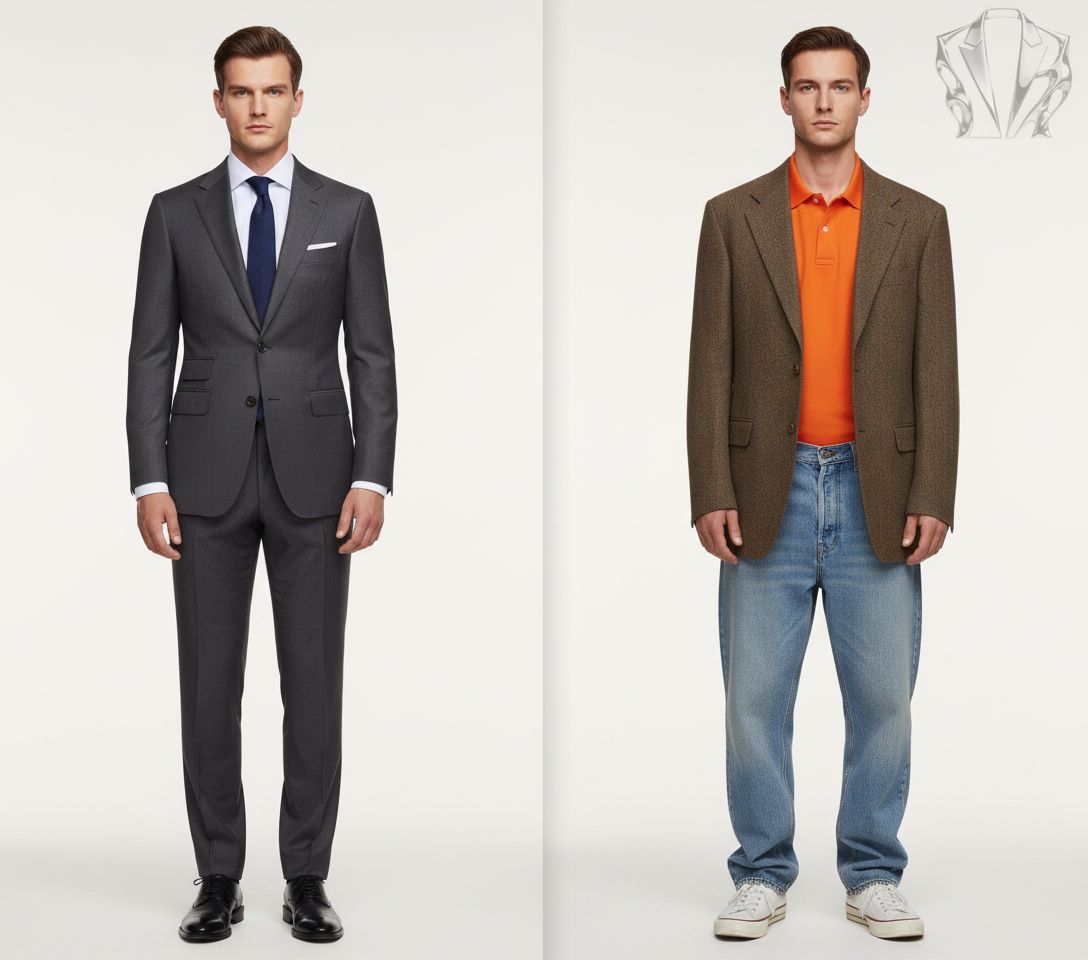
The most costly men’s fashion mistakes are buying the wrong size, chasing loud trends, ignoring alterations, wearing poor-quality shoes, and building a wardrobe without a clear plan. Start with fit, fabric, proportion, and versatility. A modest wardrobe that works together will always look sharper than an expensive collection bought without thought.
I’ve spent more than a decade reviewing menswear, styling different body types, and watching clients waste money on pieces they rarely wore. I’ve also returned enough stiff jackets, awkward trousers, and uncomfortable shoes to know which mistakes become expensive fastest.
The table below highlights the men’s fashion mistakes that usually cause the most wasted spending.
| Mistake | Why It Costs You | Better Decision |
|---|---|---|
| Buying the wrong size | Clothes remain uncomfortable or unworn | Judge fit, not the label |
| Skipping alterations | Good garments still look sloppy | Budget for basic tailoring |
| Chasing short trends | Pieces date quickly | Use trends as small accents |
| Buying cheap shoes repeatedly | Frequent replacement raises the real cost | Buy fewer, repairable pairs |
| Ignoring proportions | Outfits look unbalanced | Match clothing lines to your frame |
| Shopping without a plan | You collect disconnected items | Build around repeatable outfits |
| Choosing logos over quality | Branding disguises weak construction | Inspect fabric and finishing |
| Saving clothes for occasions | Expensive items deliver little value | Buy for your actual routine |
| Neglecting garment care | Clothing fades, shrinks, or loses shape | Follow care instructions |
| Copying another man’s style | Purchases feel unnatural | Adapt inspiration to your lifestyle |
Men’s Fashion Mistakes That Destroy a Good Fit
Fit problems are often blamed on body shape, but the real issue is usually poor buying judgment. The following costly men’s fashion mistakes can make decent clothing appear cheap before anyone notices the label or fabric.
1. Buying the Size You Want Instead of the Size That Fits
One of the most common men’s fashion mistakes begins inside the fitting room. A man chooses the size he believes he should wear, even when the garment pulls across his chest, collapses at the shoulders, or squeezes his waist.
Ignore the number on the tag. Sizing shifts between brands, product lines, and even different fabrics from the same company. A medium Oxford shirt might fit perfectly while a medium knitted polo clings in all the wrong places.
Look at the pressure points instead. Shirt buttons shouldn’t strain. Trouser pockets shouldn’t flare open. A jacket’s shoulder seam should finish near the natural edge of your shoulder, not hang halfway down your arm.
Buying clothes slightly too small as motivation to lose weight rarely works either. You’ve paid for an outfit that can’t serve you now and may never fit as expected. The drawback of sizing up is that some areas may become loose, but those areas are often easier to alter than fabric that’s already under tension.
2. Refusing to Pay for Simple Alterations
Costly men’s fashion mistakes don’t always happen in the store. Sometimes the mistake is taking a nearly perfect garment home and refusing to spend a little more to finish the fit.
Ready-to-wear clothing is produced for standardized measurements. Your body isn’t standardized. One shoulder may sit lower, your thighs may need more room, or your arms may be shorter than the brand’s pattern assumes.
Basic work such as trouser hemming, sleeve shortening, or waist adjustment can change the entire impression of an outfit. A trouser break, meaning the fold where your hem meets the shoe, is a small detail with a large visual effect. Too much fabric makes the trousers puddle. Too little can look accidental.
The honest drawback is that not every garment deserves alteration. Major shoulder reconstruction, extensive jacket shortening, or complicated leather changes may cost more than the item is worth. Before buying, ask whether the problem is minor and adjustable or built into the garment’s fundamental shape.
Costly Men’s Fashion Mistakes Caused by Trend Shopping
Trends can freshen a wardrobe, but they can also turn shopping into an expensive cycle. These men’s fashion mistakes happen when short-term excitement replaces honest thinking about lifestyle, repeat wear, and personal comfort.
3. Building Entire Outfits Around a Passing Trend
A trend should enter your wardrobe as a guest, not take control of the house. Yet men frequently replace their trousers, jackets, shoes, and accessories at once because a new silhouette dominates social media.
I’ve watched slim wardrobes disappear for oversized streetwear, only for the same buyers to feel uncomfortable once exaggerated cuts stopped looking fresh. The problem wasn’t the wider fit. It was buying several extreme versions before learning whether that shape worked for their frame and daily routine.
Test trends through one lower-risk piece. Try a relaxed trouser with your existing knitwear. Wear a textured overshirt before buying a full workwear-inspired wardrobe. Small trials reveal whether the trend feels natural after the novelty fades.
The drawback is that caution can make your wardrobe feel too conservative. You don’t need to avoid experimentation. You need to separate playful spending from foundational spending. Trend pieces can be fun, but they shouldn’t consume the budget meant for dependable jackets, trousers, shirts, and shoes.
4. Paying Extra Because a Logo Is Visible
Among the most costly men’s fashion mistakes is confusing brand recognition with construction quality. A prominent logo can raise the price without improving the fabric, stitching, comfort, or expected lifespan.
Turn the garment inside out. Check whether seams look clean, buttons feel secure, patterns align where panels meet, and the fabric recovers after gentle stretching. On knitwear, look for loose loops and thin areas. On jackets, examine how the lapel sits rather than focusing on the badge.
There’s nothing wrong with buying a designer piece because you appreciate its design language or cultural value. The mistake is assuming the name automatically makes every item superior. Fashion houses produce standout garments, average basics, and occasional disappointments like everyone else.
The honest catch is that quality can’t always be judged in seconds. Some lightweight fabrics are intentionally delicate, and some rough-looking materials soften beautifully with wear. Still, a recognizable label shouldn’t stop you from asking the same questions you’d ask of an unknown brand.
Men’s Fashion Mistakes That Ruin Outfit Proportions
An outfit can contain individually attractive pieces and still look wrong as a whole. Proportion connects garment length, trouser width, footwear weight, and the visual balance of your body.
5. Wearing Every Garment Too Long
Men’s fashion mistakes involving length are easy to miss because oversized garments can initially feel comfortable. But extra length often makes the wearer look shorter, especially when a shirt covers most of the seat or a jacket extends well beyond its intended line.
Casual shirts worn untucked usually look cleaner when they finish around the middle of the trouser fly rather than near the thighs. Jacket length depends on the style, but traditional tailoring generally aims to cover the seat without swallowing the legs.
Sleeves matter too. A coat sleeve that hides your hands looks borrowed. A shirt cuff that bunches under a jacket creates bulk around the wrist. These details affect the entire silhouette, even when the fabric and color are excellent.
The drawback of shortening clothing is permanence. Cut too much and the original balance may be impossible to restore. Pin or fold the garment first, then inspect it from the front, side, and back. Movement matters as much as a still mirror pose.
6. Pairing Heavy Shoes With Narrow Trousers
Costly men’s fashion mistakes often begin at the ankle. Chunky boots, broad sneakers, or thick-soled loafers can overwhelm sharply tapered trousers, making the feet appear detached from the rest of the outfit.
Think of the trouser opening and shoe as related shapes. A substantial shoe usually works better with a straight, relaxed, or moderately tapered leg. A slim trouser tends to sit more naturally above a cleaner shoe with less visual weight.
This doesn’t mean every chunky shoe requires wide trousers. Height, hem length, and color can change the balance. Dark boots under dark trousers create a continuous line, while bright oversized sneakers beneath cropped black pants demand attention.
The downside of strict proportion rules is that they can remove personality. Some intentional contrast looks excellent. The difference is control. If your shoes dominate the outfit, make sure that dominance feels deliberate rather than caused by trousers bought during a different fashion phase.
Costly Men’s Fashion Mistakes Hidden in Wardrobe Planning
Bad outfits aren’t always created while dressing. Many start months earlier, when disconnected purchases fill the wardrobe without forming useful combinations.
7. Buying Individual Pieces Without Imagining Three Outfits
One of the most expensive men’s fashion mistakes is buying a garment because it looks impressive alone. The jacket appears striking under store lighting, but at home you realize it works with none of your trousers, shirts, or shoes.
Before paying, build three realistic outfits in your head. Not fantasy outfits involving pieces you may purchase later. Use clothing you already own. A versatile overshirt might work with jeans, chinos, and pleated trousers. A heavily patterned blazer may only work with one specific combination.
Photographing your regular wardrobe can help during shopping. It sounds excessive until it prevents another purchase that requires two more purchases to become wearable.
The drawback is that versatility can become boring when treated as the only measure of value. A memorable statement coat doesn’t need to match everything. But it should still have a defined role. Know where you’ll wear it, what supports it, and whether that occasion appears often enough to justify the cost.
8. Shopping for an Imaginary Lifestyle
Some costly men’s fashion mistakes look sophisticated on the hanger. The buyer chooses formal coats, delicate knitwear, or multiple suits because they represent the life he wants rather than the week he actually lives.
Your calendar should influence your wardrobe. A man working remotely doesn’t need ten business shirts before he owns comfortable trousers, polished casual shoes, and presentable layers for calls or meetings. Someone attending one wedding each year probably needs one adaptable suit, not several fashionable variations.
This is where cost per wear becomes useful. It’s the purchase price divided by how often you wear the item. A moderately expensive jacket worn twice a week may offer better value than a discounted blazer used once.
The limitation is that wardrobes should also make room for ambition and change. A new role or social routine may require different clothes. Buy for evidence, though. One upcoming event supports one planned outfit. It doesn’t justify constructing an entire identity overnight.
Men’s Fashion Mistakes That Increase Long-Term Ownership Costs
Purchase price is only the beginning. Shoes, tailoring, cleaning, storage, and replacement all affect what clothing truly costs over time.
9. Treating Shoes as Disposable
Poor footwear creates one of the clearest long-term men’s fashion mistakes. A cheap pair that cracks, loses structure, or becomes uncomfortable within months may cost more over several years than one dependable pair maintained properly.
Look beyond the upper material. Examine how the sole is attached, whether the heel feels stable, and whether the shoe bends near the ball of the foot rather than folding through the middle. For leather shoes, shoe trees can help absorb moisture and slow deep creasing. Rotating pairs also gives each one time to dry.
Repairable construction can add value, but don’t assume every expensive shoe can be resoled easily. Ask the brand or a local cobbler what can realistically be replaced.
The drawback is that higher-priced footwear still needs breaking in and may not suit your foot shape. Never buy painful shoes based on promises that they’ll eventually become comfortable. Mild stiffness can improve. Persistent pressure, numbness, or heel movement usually signals the wrong last, which is the mold used to shape the shoe.
10. Ignoring Care Instructions Until Damage Appears
Avoid these costly men’s fashion mistakes by treating garment care as part of the purchase. Wool shrinks, knitwear stretches, printed fabrics fade, and structured jackets lose shape when they’re cleaned or stored carelessly.
Read the label before buying, not after the first stain. Dry-clean-only trousers may be inconvenient if you need them several times each week. A pale suede jacket may look excellent but demand more attention than your climate and commute allow.
Overwashing causes problems too. Denim, knitwear, and outerwear don’t always need cleaning after every wear. Air them, brush them, spot-clean when appropriate, and follow the manufacturer’s guidance. Fold heavy sweaters rather than hanging them, since hangers can pull the shoulders out of shape.
The downside is that care routines take time and may require extra products or professional cleaning. That hidden workload should affect your decision. If you know you won’t maintain a delicate garment, choose a more forgiving fabric before damage turns a stylish purchase into an expensive regret.
How to Avoid Men’s Fashion Mistakes Before Buying
A disciplined buying process catches most costly men’s fashion mistakes before your card leaves your wallet. Begin by identifying a genuine wardrobe gap. Then check fit, existing outfit combinations, care requirements, expected wearing frequency, and alteration needs.
Try the garment while moving. Sit down in the trousers. Raise your arms in the jacket. Walk on a hard surface in the shoes. Dressing-room stillness hides problems that become obvious during a normal day.
Use a waiting period for expensive purchases. Leave the store, review what you own, and return only when the piece still makes sense without the pressure of scarcity. Sales assistants may say an item is nearly gone, but urgency isn’t a reason to ignore poor fit.
Set separate budgets for basics and experiments. Most money should support reliable clothing you can repeat. A smaller amount can fund unusual colors, seasonal trends, or statement designs. This approach keeps fashion enjoyable without letting every new idea rebuild your wardrobe.
Fashion Advice That’s Often Overhyped
Some popular rules cause their own men’s fashion mistakes because they’re repeated without context. “Buy once, cry once” sounds smart, but a high price doesn’t guarantee durability or usefulness. Expensive cashmere can pill. Premium sneakers can be difficult to clean. Designer jackets can still fit badly.
The capsule wardrobe is overhyped when it becomes a rigid uniform. Owning fewer clothes can reduce waste, but forcing every man into neutral shirts, navy trousers, and white sneakers removes lifestyle, climate, and personality from the decision.
Timeless style is another slippery promise. Lapel widths, trouser rises, shoe shapes, and preferred fits continue to shift. Some garments age more slowly than others, yet nothing exists outside its cultural moment.
And not everyone needs tailoring. Alterations help when the basic shape is right. They can’t rescue a jacket with incompatible shoulders or trousers cut entirely wrong for your body. Skip garments that need reconstruction, no matter how impressive the discount appears.
Frequently Asked Questions
What are the most common men’s fashion mistakes?
The most common men’s fashion mistakes include wearing the wrong size, skipping alterations, combining mismatched proportions, buying trend pieces without a plan, neglecting shoes, and ignoring garment care. Fit usually has the greatest immediate impact because even expensive clothing looks weak when it pulls, droops, or bunches.
How can men avoid wasting money on clothes?
Create a list of genuine wardrobe gaps and require each purchase to work with at least three pieces you already own. Check the care label, alteration cost, and likely wearing frequency. Avoid buying solely because an item is discounted. A low price still wastes money when the garment remains unused.
Is buying oversized clothing a fashion mistake?
Oversized clothing isn’t automatically a mistake. It works when the shoulder line, garment length, and surrounding pieces create an intentional silhouette. Problems begin when every item is simply too large. Controlled volume looks designed. Uncontrolled excess fabric tends to hide shape and make the outfit appear borrowed.
Which men’s fashion mistakes make you look shorter?
Long untucked shirts, excessive trouser stacking, low-rise pants, strong color breaks, and bulky shoes beneath narrow trousers can visually shorten the body. You don’t need to dress entirely in one color, but cleaner vertical lines and properly adjusted lengths usually create a more balanced impression.
Should every man get his clothes tailored?
Not every garment needs tailoring. T-shirts, relaxed knitwear, and casual outerwear may already fit as intended. Tailoring becomes useful for trousers, shirts, suits, and jackets with minor length or width problems. Avoid buying pieces that require major shoulder, collar, or structural reconstruction.
How many outfits should a new purchase work with?
A practical everyday purchase should usually support at least three outfits using clothes you already own. Statement pieces can follow a different standard, but they still need a clear purpose. The goal isn’t making every garment neutral. It’s preventing one purchase from demanding an entire supporting wardrobe.
Are expensive clothes always better quality?
No. Price can reflect branding, design, limited production, retail location, or marketing rather than stronger construction. Inspect fabric, seams, buttons, lining, comfort, and care requirements. Premium clothing can be worth buying, but the label should never replace a proper assessment of fit and finish.
How often should men replace their wardrobe?
There’s no fixed replacement schedule. Replace items when they no longer fit, can’t be repaired, or fail to support your present lifestyle. Review the wardrobe seasonally, remove damaged pieces, and note genuine gaps. Gradual replacement produces better decisions than rebuilding everything during one shopping trip.
Avoid these costly men’s fashion mistakes by slowing down before each purchase and judging the full ownership cost, not the excitement of the first wear. Your wardrobe doesn’t need more random options; it needs better connections between the pieces you already trust. Before buying anything new, create three complete outfits with it using clothes you currently own.
Essential Style Reports
Sharp fashion guides, wardrobe rules and accessory advice.