
The strongest modern German haircut ideas include the textured crop with a low fade, the precise side-part taper, the loose curtain cut, and the controlled modern mullet. Each combines clean structure with natural movement, but the right choice depends on your hair density, face shape, workplace, and willingness to style it each morning.
I have spent more than a decade studying, wearing, and refining European-inspired men’s cuts with barbers who care about shape more than hype. The best results usually come from choosing a haircut that works with your growth pattern instead of forcing your hair into a photograph.
These selections were judged by silhouette, texture, maintenance, grow-out quality, and how clearly the cut can be explained in a barber’s chair.
| Quick Pick | Haircut | Best For | Maintenance |
|---|---|---|---|
| Best overall | Textured crop with low fade | Most face shapes | Moderate |
| Best professional cut | Precise side-part taper | Offices and formal wear | Moderate |
| Best low-maintenance cut | Soft crew cut | Straight or slightly wavy hair | Low |
| Best for thick hair | Layered brush-back | Dense medium-length hair | Moderate |
| Best for fine hair | Short forward crop | Creating visual fullness | Low |
| Best for curls | Curly taper with natural top | Loose to tight curls | Moderate |
| Best medium style | Loose curtain cut | Oval and angular faces | Moderate |
| Best bold choice | Controlled modern mullet | Confident personal style | High |
| Best summer cut | High-and-tight crop | Hot weather and active routines | Low |
| Best mature style | Scissor-cut executive taper | Refined, understated grooming | Moderate |
Short Modern German Haircut Ideas
Short cuts sit at the cleanest end of German-inspired men’s grooming. The strongest versions avoid harsh, empty fades and keep enough weight through the top and temples to make the haircut look deliberate as it grows.
1. Textured Crop With a Low Fade

This textured crop is one of the most adaptable modern German haircut ideas because it balances a compact outline with visible movement. The top stays around two to three inches, cut into uneven sections that lean forward without forming a heavy fringe. A low fade begins close to the ears and blends into fuller temples, while the neckline remains neat and understated. The contrast looks sharp without making the sides appear disconnected.
It works especially well on straight, thick, or slightly wavy hair and can soften a long forehead without shortening the entire face. Tell your barber, “Keep choppy texture on top, leave a broken fringe, and use a low fade that stays dark near the temples.” A small amount of matte clay is usually enough for styling. Skip it when strong crown growth constantly pushes the top backward, because daily control may become annoying.
2. Soft Crew Cut With Tapered Sides
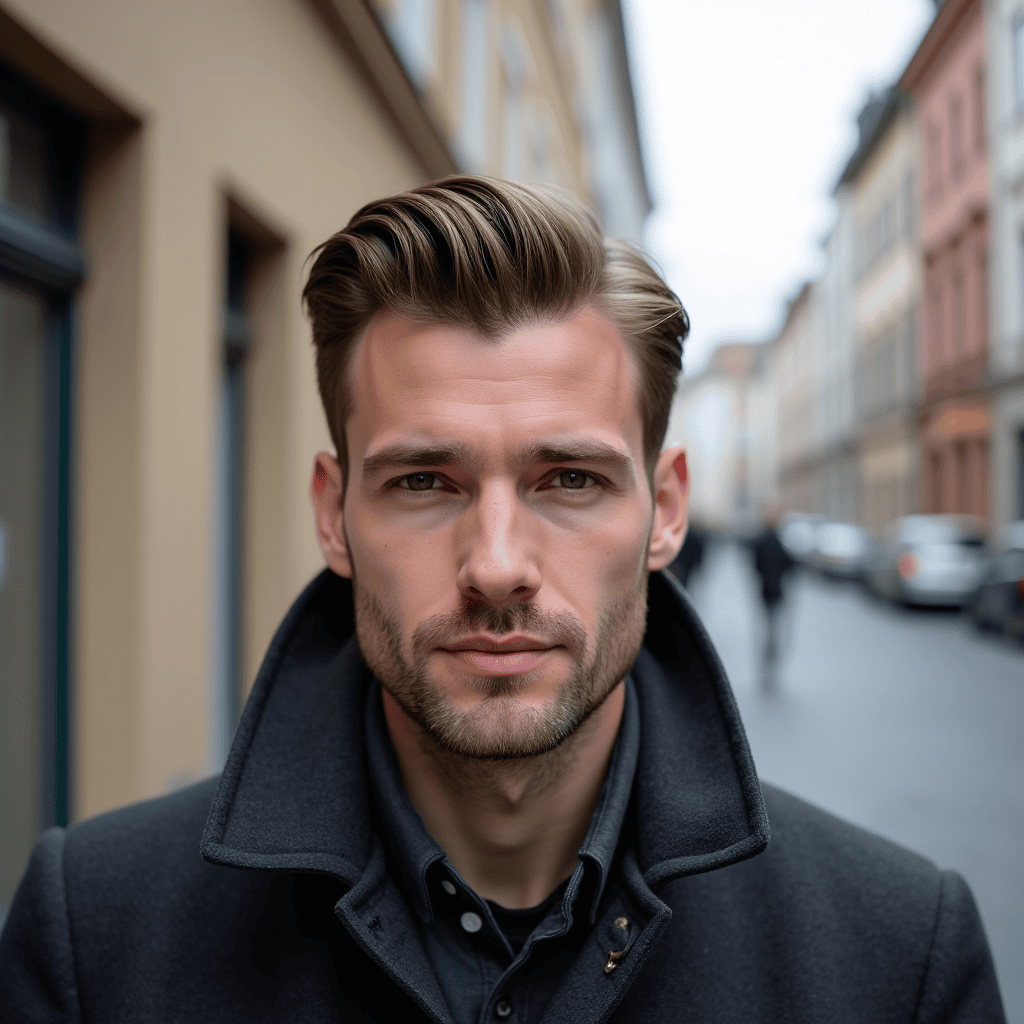
The soft crew cut keeps the familiar short silhouette but removes the severe military edge. Hair at the front is left slightly longer and gradually shortens toward the crown, creating a subtle lift rather than a flat brush-like surface. The sides are tapered with scissors and clippers instead of being stripped down to skin. That retained shadow gives the haircut a calmer, more wearable finish.
This cut suits men with straight or mildly wavy hair who need something tidy for work, travel, or an active schedule. Ask for “a crew cut with a soft front, natural tapering at the sides, and no exposed skin above the ears.” It can be dried into place with your hands and a light cream. The drawback is limited flexibility, since there is not enough length to switch between forward, parted, and swept-back styling.
3. Short Forward Crop for Fine Hair

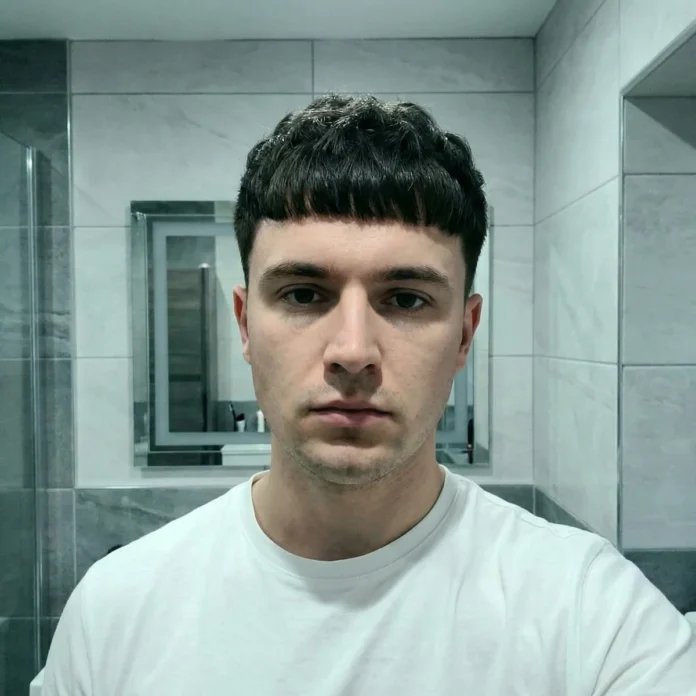
A short forward crop creates the impression of density by directing every section toward the forehead. The top is kept close enough that fine strands do not separate into obvious gaps, while shallow point-cutting prevents the surface from looking blunt. The fringe sits just above the hairline in irregular pieces. The sides remain short but not pale, preserving enough color to support the top visually.
Among modern German haircut ideas, this is one of the safer options for men whose hair collapses under heavy pomades. Ask your barber, “Keep the top short and forward, add only light texture, and leave the fade dark rather than taking it to skin.” Blow-dry on low heat, then use a pea-sized amount of dry paste. It is less successful on coarse curls, which may rise away from the intended compact outline.
4. High-and-Tight Crop With a Blended Crown

The high-and-tight crop uses short sides and a disciplined top, but a blended crown keeps it from appearing abruptly clipped. The fade rises above the temples while the top retains about an inch of length with a dry, grainy texture. Instead of ending in a sharp ridge, the upper sides merge gradually into the crown. The finished shape feels athletic, narrow, and controlled.
This is a useful summer haircut for men with dense hair, strong jawlines, and little interest in daily styling. Request “a high fade with one inch of textured length on top and a fully blended crown without a hard shelf.” Most mornings require nothing more than rubbing a matte paste through dry hair. The cut exposes the head shape, so flat areas, scars, or prominent bumps will be more noticeable.
5. Compact Caesar With a Natural Edge
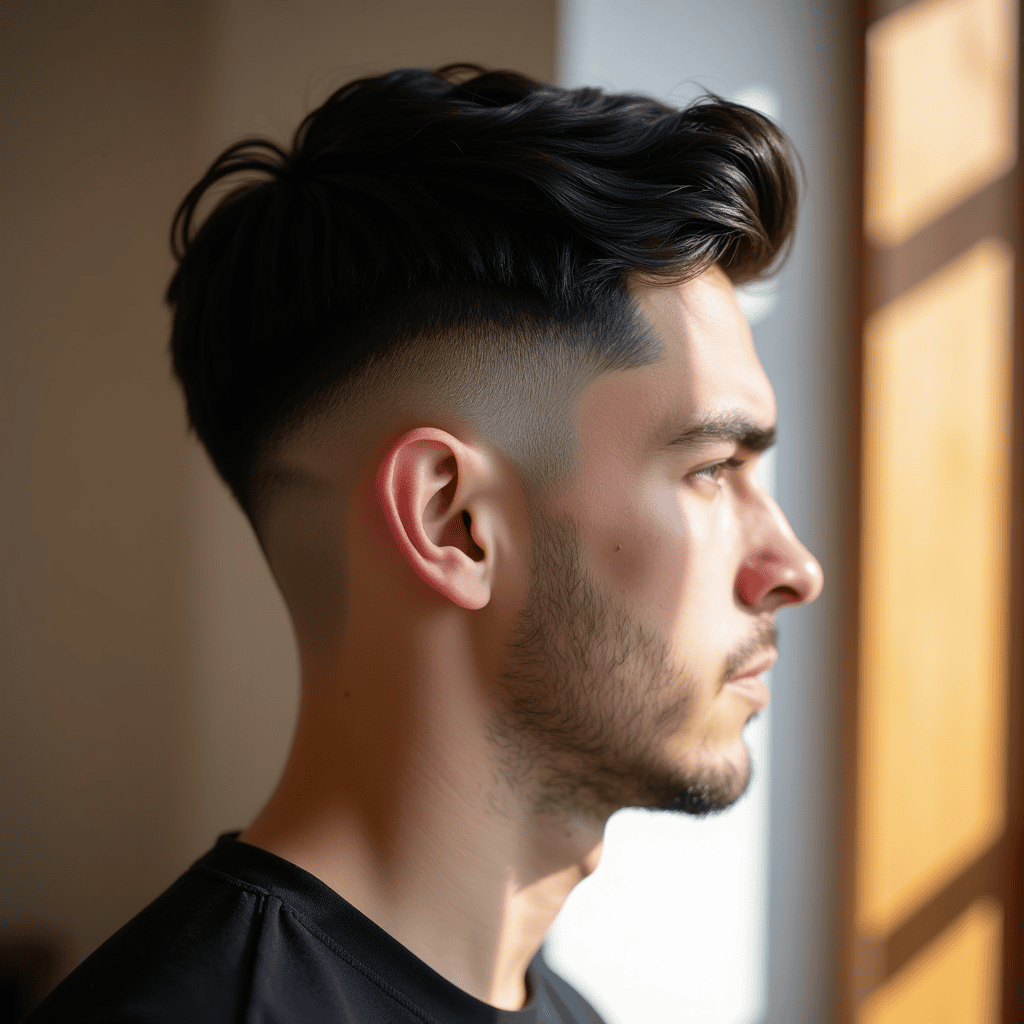
The compact Caesar brings the fringe straight across the forehead but keeps the edge broken rather than ruler-sharp. The top follows a uniform forward direction, with slightly more length over the crown to prevent the head from looking too round. The sides are clipped close and joined through a low taper. Its strongest feature is the uninterrupted shape from the crown to the fringe.
This cut flatters straight, dense hair and can balance a high forehead or an elongated face. Say, “I want a short Caesar with a natural broken fringe, low tapering, and no hard line-up across the front.” It usually needs only light cream or dry powder to reduce separation. Men with strong cowlicks at the hairline should be cautious, because the fringe may split or lift unevenly after washing.
Professional German Haircut Ideas
Professional cuts do not need to look stiff. These modern German haircut ideas use clean outlines, controlled volume, and enough softness to remain believable outside a boardroom or formal event.
6. Precise Side-Part Taper

The precise side-part taper creates a defined direction without carving a hard line into the scalp. The top measures roughly three inches at the front and gradually loses length toward the crown. One side is combed across with restrained volume, while the lower sides taper neatly around the ears. The part is visible because of the styling pattern, not because it has been shaved in.
This is a dependable choice for oval, square, and gently rounded faces, especially when tailoring and office clothing are part of the weekly routine. Ask for “a classic side part with scissor-cut weight on top, a natural parting, and a low traditional taper.” A water-based cream gives enough control without a glassy finish. The haircut can look old-fashioned when the part is too severe or the top is pressed flat.
7. Scissor-Cut Executive Taper
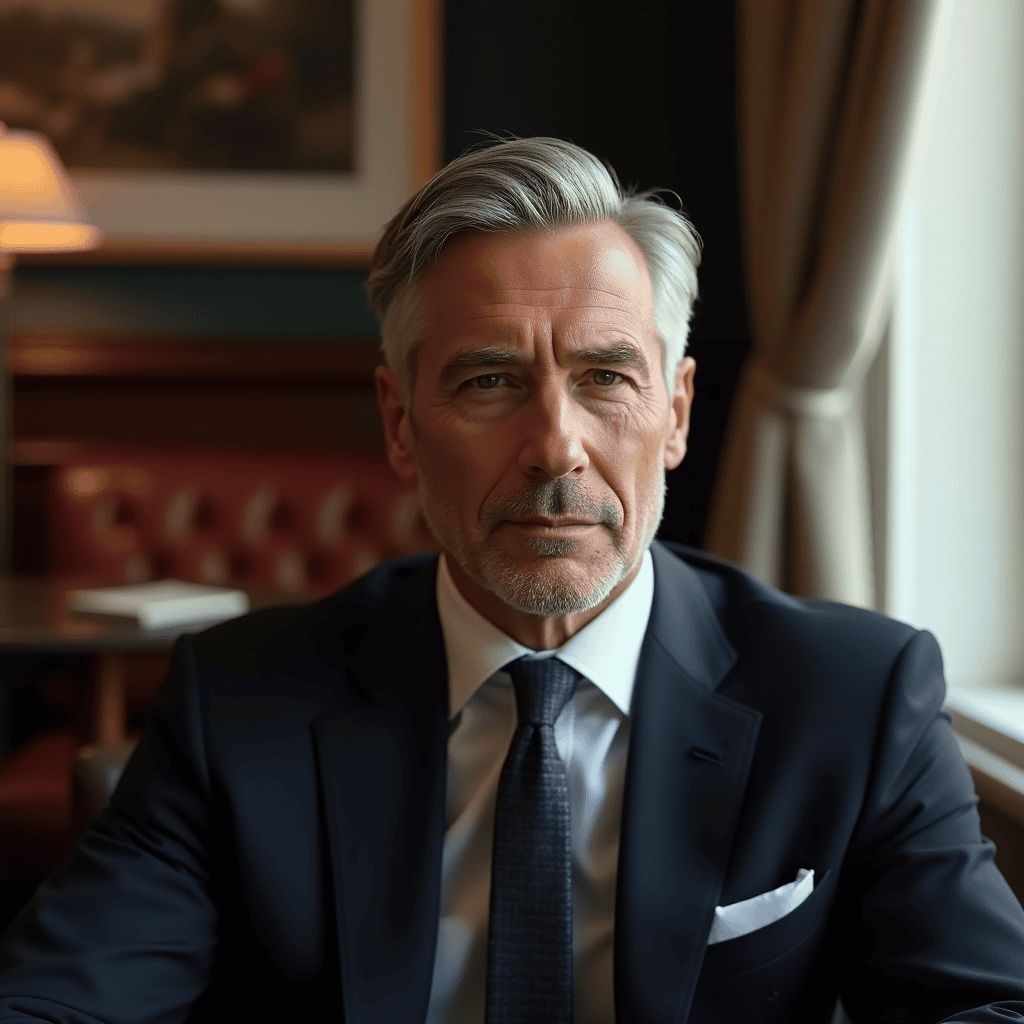
The executive taper is built almost entirely with scissors, leaving a fuller and more natural outline than a clipper fade. The front is long enough to sweep diagonally backward, while the temples stay compact and connected to the top. The neckline is tapered closely but retains a soft finish. From the side, the silhouette follows the head rather than forming an exaggerated block of volume.
These modern German haircut ideas work best when understatement matters more than dramatic contrast. Tell your barber, “Use scissors through the top and upper sides, keep the temples controlled, and taper only the edges and neckline.” It suits straight, wavy, silver, and salt-and-pepper hair particularly well. The trade-off is that it loses its tidy outline sooner than a short fade and often benefits from a trim every four to six weeks.
8. Low Taper With a Brushed-Up Front

This haircut keeps the side profile compact while concentrating height at the front hairline. The first two inches are brushed upward and slightly backward, then the volume settles gradually toward the crown. A low taper cleans the sideburns and nape without removing the darker weight above them. The result feels current but still disciplined enough for formal clothing.
It suits men with medium-density straight or wavy hair and can visually lengthen a rounder face. Request “a low taper with enough front length to brush up, but keep the crown short enough that it does not puff.” Blow-dry the fringe with a vent brush, then finish with a light matte product. The front can collapse in damp weather, so men who dislike using a dryer may prefer a shorter crop.
9. Neat Ivy League With Natural Texture

The Ivy League sits between a crew cut and a short side part. Its top is long enough to move diagonally across the forehead, yet short enough to stay controlled without heavy styling. The sides taper gradually from the temple down, leaving no sudden jump in length. Light point-cutting gives the surface a relaxed texture that stops the cut from feeling overly polished.
This style fits men who move between meetings, casual dinners, and weekends without wanting to restyle completely. Ask for “an Ivy League with a soft side direction, natural texture on top, and a conservative taper that keeps some fullness.” Use your fingers and a small amount of pliable paste rather than a comb. Its main limitation is that the top can lose direction on stubbornly straight hair unless it is blow-dried.
10. Clean Comb-Back With Shadowed Sides
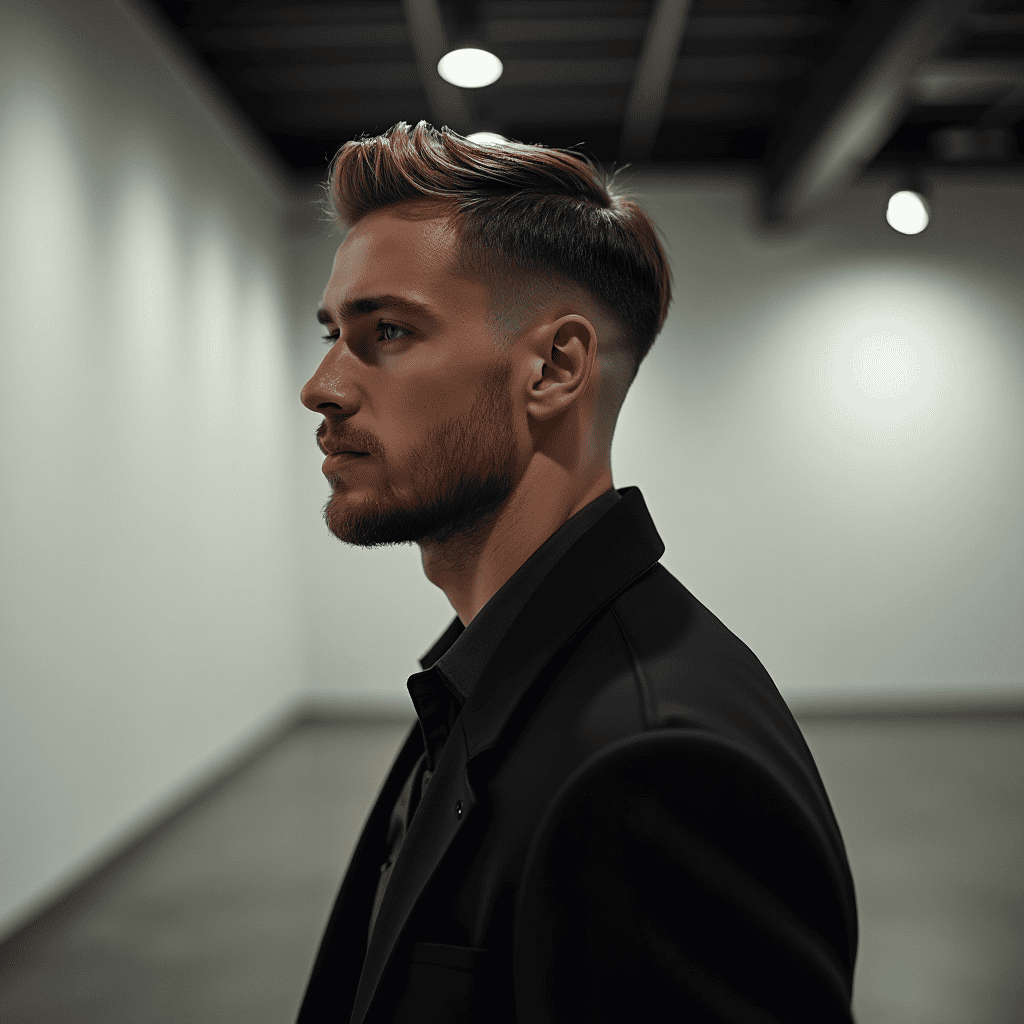
The clean comb-back directs the entire top away from the forehead without building the tall, glossy shape of a pompadour. The front stays around three to four inches, while internal layers remove weight and help the hair lie closer to the head. The sides are shortened but retain a visible shadow. A low neckline taper finishes the shape without creating a bare strip around the scalp.
This is one of the more refined modern German haircut ideas for men with thick, straight hair and a predictable growth pattern. Tell your barber, “Keep a low-profile comb-back, remove bulk inside the top, and leave dark shadow through the sides.” A light grooming cream works better than wet-look gel. Skip it when the hairline is heavily uneven, because pulling everything backward makes the front edge more exposed.
Medium-Length Modern German Haircut Ideas
Medium hair gives the barber more room to shape movement, frame the face, and work with natural bends. It also demands better communication, because “leave it longer” is not enough direction for a balanced cut.
11. Loose Curtain Cut

The loose curtain cut separates near the center and falls in relaxed sections beside the forehead. The front reaches around the eyebrows or cheekbones, while longer internal layers help it sweep outward instead of hanging like a solid sheet. The sides cover part of the upper ear, and the back follows the head with a softly tapered edge. Movement matters more than perfect symmetry.
It works well on straight or wavy hair and tends to flatter oval, heart-shaped, and angular faces. Ask for “a medium curtain cut with cheekbone-length front pieces, invisible layers, and enough weight to tuck behind the ears.” Styling requires a dryer, fingers, and perhaps a light cream. Fine hair may separate too widely at the part, exposing more scalp than expected.
12. Layered Brush-Back

The layered brush-back keeps medium length across the whole top and pushes it away from the face with loose separation. Shorter internal sections prevent dense hair from falling as one heavy mass, while the outer layer retains enough length to sweep behind the ears. The neckline stays natural and slightly longer than a standard taper. Its shape is broad, flowing, and masculine without becoming theatrical.
Among modern German haircut ideas for thick hair, this is one I go back and forth on because the finished result can look excellent but requires thoughtful weight removal. Ask for “a layered brush-back with movement, reduced bulk through the interior, and a natural neckline.” Dry it backward using your hands and medium airflow. Men with very fine hair may find the silhouette thin or stringy once the layers are added.
13. Side-Swept Medium Taper

This style carries most of its length diagonally across the forehead and toward one temple. The front is kept long, the crown remains moderate, and the upper sides are scissor-cut closely enough to avoid mushrooming. Only the lower edges are tapered. From the front, the haircut creates an asymmetric line that adds interest without looking intentionally messy.
It suits medium to thick straight hair and can soften broad foreheads or strong facial angles. Tell the barber, “Leave enough front length for a loose side sweep, debulk above the temples, and taper only the sideburns and neck.” Use a blow dryer to establish direction before adding flexible paste. The longer front can fall into the eyes during exercise or windy commutes, which is the honest nuisance.
14. Relaxed Bro Flow With Tapered Edges

The relaxed bro flow follows the hair’s natural backward bend while maintaining a clean perimeter. The front and crown remain long enough to move behind the ears, but the sideburns and neckline are narrowed with a subtle taper. Layers are kept broad so the hair bends in sections rather than becoming feathered. It has an easy, grown-out character with intentional edges.
This is one of the better modern German haircut ideas for men who want medium length without looking as though they stopped visiting the barber. Ask for “a natural bro flow with long layers, ear-tucking length, and a small taper only around the sideburns and neck.” Wavy hair usually settles into the shape with minimal product. Very straight, heavy hair may fall flat against the sides and create a helmet-like outline.
15. Modern Mod Cut With Soft Fringe

The modern mod cut forms a rounded medium-length outline with a soft fringe and connected sides. Unlike the blunt versions associated with earlier decades, this one uses internal texture to break up the surface and expose small sections of forehead. The sides curve around the ears instead of being clipped away. The back is shortened enough to avoid turning into a bob.
It suits straight or lightly wavy hair and looks strongest on narrow, oval, and diamond-shaped faces. Ask for “a modern mod shape with a broken eyebrow-length fringe, textured layers, and clean weight around the ears.” A lightweight cream keeps the ends separated. The cut can overwhelm small facial features when the fringe is left too dense, so the front must be adjusted carefully.
Textured and Curly German Haircut Ideas
Texture should be shaped rather than flattened. The modern German haircut ideas in this group preserve curls and waves while controlling width, weight, and the areas where hair commonly expands.
16. Curly Taper With a Natural Top

The curly taper leaves the top full enough for individual curls to form while narrowing the sideburns and neckline. The upper sides stay connected, so the haircut avoids the detached cap effect that often appears with aggressive fades. Curls at the front sit loosely over the hairline, and the crown is shaped to follow its natural direction. The silhouette is rounded but not wide.
This cut suits loose waves through tighter curl patterns, provided the barber works with dry shrinkage in mind. Say, “Keep my natural curl shape on top, reduce width above the ears, and use a low taper without disconnecting the sides.” Apply curl cream to damp hair and let it settle with minimal touching. The outline can expand quickly in humidity, so occasional reshaping is still necessary.
17. Wavy Crop With Temple Fade

The wavy crop keeps visible bends across the top while cleaning only the temple and sideburn area. Length increases slightly toward the front, allowing the waves to form overlapping ridges rather than standing upright. The area above the ears stays darker and fuller than a conventional fade. This creates a compact shape that still shows the hair’s natural character.
It is a strong option for men whose hair is too wavy for a flat crop but too short for curtains. Ask for “a two-inch wavy crop, soft forward direction, and a temple fade that does not climb into the upper sides.” Scrunch in a small amount of cream and allow the hair to air-dry. Uneven wave patterns can make one side look fuller, and over-cutting that side usually makes the imbalance worse.
18. Short Curls With a Drop Fade
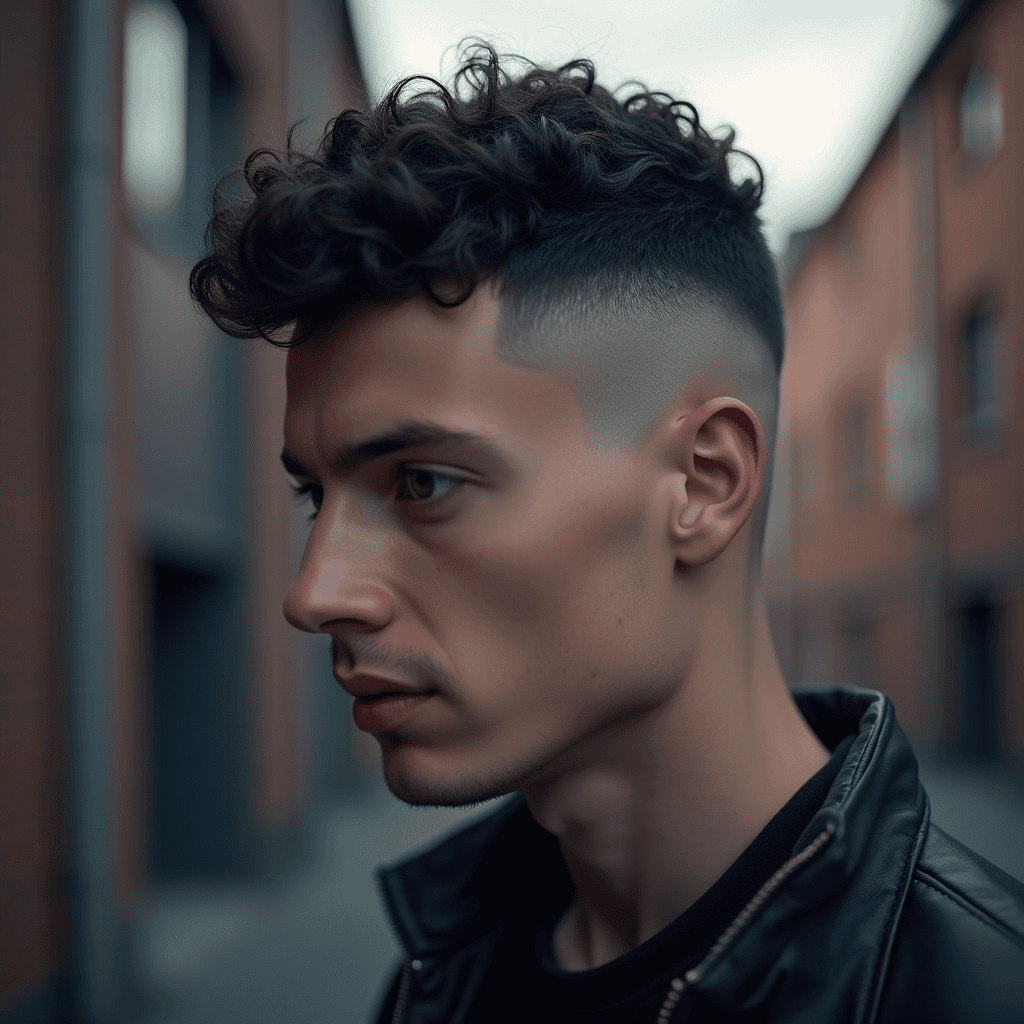
Short curls with a drop fade create a curved transition that lowers behind the ears and follows the shape of the skull. The top remains around one and a half to two inches, enough for compact curl definition without excessive height. The fade is cleaner near the temples but descends toward the back. This curved line makes the rear profile appear more balanced than a straight high fade.
These modern German haircut ideas suit men who want curl texture with a sharper barbered outline. Tell your barber, “Keep short defined curls on top and use a low drop fade that follows behind the ear.” Curl sponge work should be gentle; aggressive twisting can create an artificial surface. The drawback is frequent maintenance, because the fade’s curved shape becomes less visible after a few weeks.
19. Messy Quiff With Broken Texture

The messy quiff lifts the front without joining it into one smooth wave. Different sections rise at slightly different angles, creating broken texture and a loose, wind-shaped appearance. The top gradually shortens toward the crown, while the sides remain tapered and connected. The front profile has height, but the surface stays dry and separated.
It works on straight, wavy, and medium-thick hair, especially for men who want movement without growing a full medium-length style. Ask for “a textured quiff with uneven front sections, no hard disconnect, and a low-to-mid taper.” Blow-dry the front in changing directions, then pinch small pieces with matte clay. Fine hair can lose the shape by midday if too much product is applied.
20. Tousled Fringe With Scissor-Tapered Sides

The tousled fringe falls forward in uneven waves, with some pieces touching the eyebrows and others lifting away from the forehead. The top is layered from front to crown so it can shift naturally instead of sitting in a fixed pattern. Scissor-tapered sides maintain softness around the temples. The neckline is clean but deliberately avoids a stark skin finish.
This haircut suits men with natural wave, medium density, and a preference for relaxed clothing and informal styling. Request “a layered tousled fringe with varied lengths at the front and scissor-tapered sides that stay connected.” Use salt spray sparingly, then shape the hair while drying. It can feel distracting for men who dislike hair touching their forehead, particularly during warm weather.
Bold Modern German Haircut Ideas
Bolder cuts depend on proportion more than shock value. The aim is to create a clear silhouette that still looks intentional from the front, side, and back rather than relying on one dramatic feature.
21. Controlled Modern Mullet
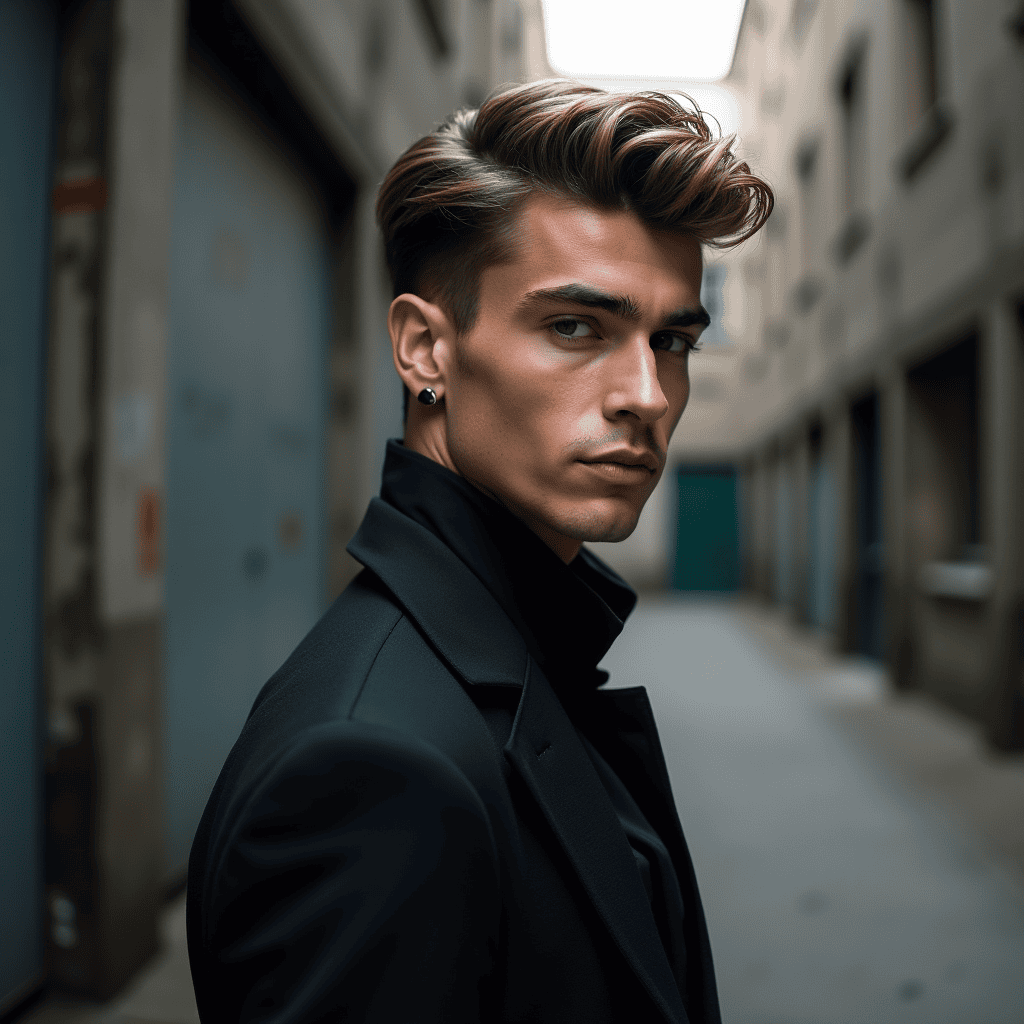
The controlled modern mullet keeps the temples and areas around the ears compact while allowing length to build gradually behind the crown. The top carries broken texture and a loose forward-to-upward direction. At the back, the hair reaches the upper neck without forming a thin tail. The transitions remain blended, making the silhouette wearable rather than costume-like.
This is among the most expressive modern German haircut ideas and suits wavy or straight hair with medium density. Ask for “a soft modern mullet with tight temples, textured top, and a fuller blended back that stops at the upper neck.” Expect regular shaping around the ears even while the back grows. Men in conservative workplaces may find the rear length draws more attention than they want.
22. Disconnected Undercut With a Matte Sweep
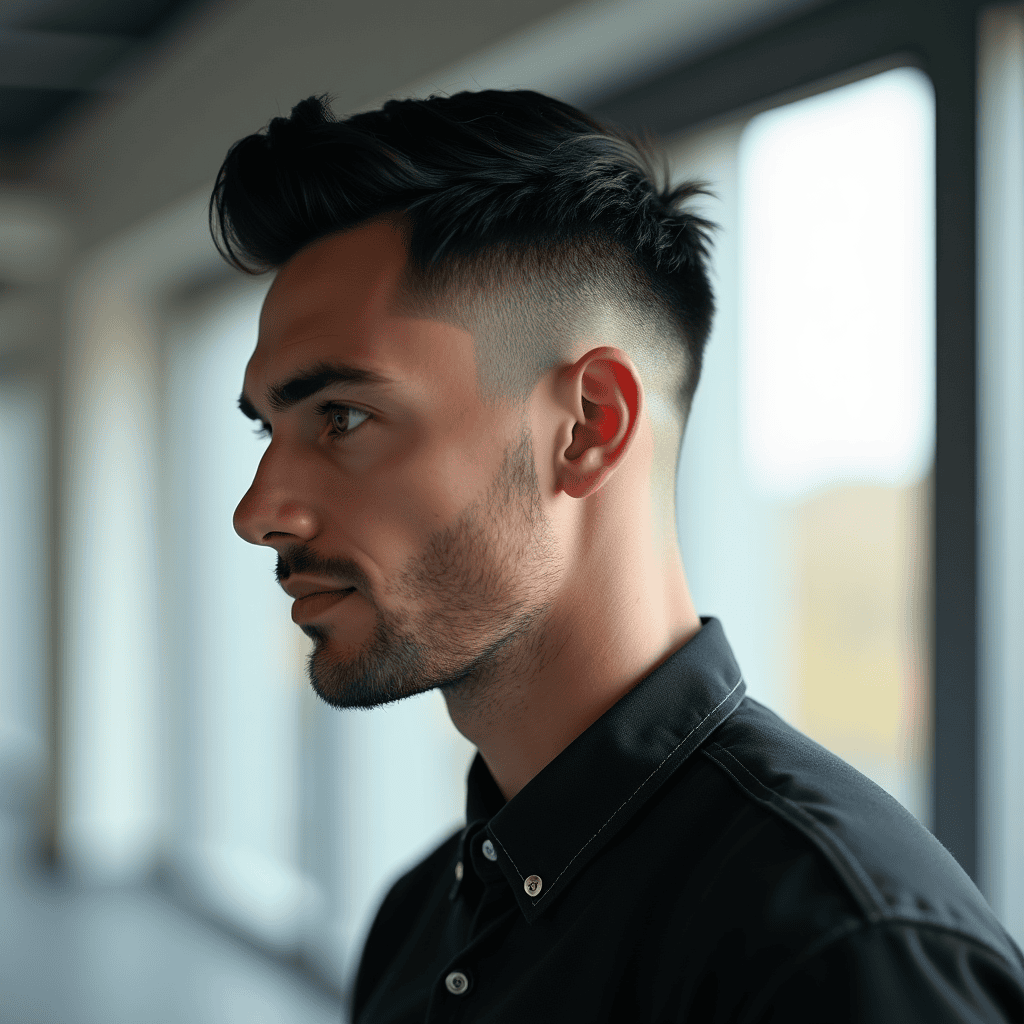
The disconnected undercut places long top hair directly over short sides without a gradual blend. The top sweeps backward and slightly to one side, revealing a strong line above the temples. A matte finish keeps the longer section textured rather than slick. The back remains short enough to prevent the top from folding into a heavy curtain.
It suits dense, straight hair and men who want a clear, architectural silhouette. Tell your barber, “Keep four to five inches on top, disconnect it above the temples, and clip the sides short without taking them completely bald.” Drying and product are non-negotiable if the sweep is meant to hold. The grow-out stage is awkward, since the disconnected line becomes harder to hide as the sides expand.
23. Sharp French Crop With a High Fade

This French crop uses a short blunt-leaning fringe, heavily textured top, and high fade that removes most of the side weight. The fringe is not perfectly straight; tiny irregular sections stop it from resembling a drawn line. The top sits forward and slightly upward near the crown. From the side, the contrast between dark texture and pale fade is immediate.
It works best on thick, straight hair and strong facial structures that can carry a severe outline. Ask for “a short textured French crop, slightly broken fringe, and a high fade blended tightly into the top.” Maintenance is simple at home but demanding at the barbershop, since the fade loses impact quickly. Anyone wanting soft grow-out should choose a low taper instead.
24. Long Top With Shaved Temple Panels

This style retains a layered medium-length top while clipping narrow panels around the temples and above the ears. The longer hair can fall across the panels, tuck behind the ears, or be pushed back to reveal the contrast. The back remains connected and moderately long. Its impact changes depending on how the top is positioned, which gives the cut more range than a full undercut.
These modern German haircut ideas suit creative professionals, musicians, and men comfortable with visible contrast. Ask for “a layered long top with narrow clipped temple panels, but keep the back connected and natural.” The shaved areas need frequent cleanup, while the top requires conditioning and patient drying. Cutting the panels too high removes flexibility and can make the head look unusually narrow.
25. Angular Faux Hawk With a Taper Fade

The angular faux hawk forms a narrow ridge from the front hairline toward the crown without shaving the sides into a traditional mohawk. Texture is directed inward and upward, with the highest point placed near the front third of the head. A taper fade reduces the lower sides while preserving enough upper weight to connect with the ridge. The front edge remains natural rather than boxed.
This is the boldest of these modern German haircut ideas, and it works best on thick straight or wavy hair that can hold directional texture. Tell your barber, “Create a narrow textured faux hawk, keep the ridge irregular, and blend it into a taper fade without stripping the upper sides.” Styling takes a dryer and firm matte paste. Men with long faces should limit the height or choose a wider, flatter quiff.
How to Choose the Right One
Start with your natural hair pattern. Straight hair handles precise crops, side parts, and disconnected shapes well, while waves and curls usually look better when their movement is preserved through layered tops and connected sides. A photograph can guide the silhouette, but it cannot change the direction in which your hair grows.
Face shape matters less than proportion. Rounder faces often benefit from controlled height or narrower sides, while longer faces usually look more balanced with a fringe, curtains, or modest top volume. Men with strong jawlines can carry sharper fades, although a softer taper may feel more natural with business clothing.
Bring two or three photographs showing the front, side, and back of the same haircut. Tell the barber what you dislike as clearly as what you want: exposed scalp, hair touching the forehead, a difficult crown, or frequent appointments. The phrase “make it modern” is too vague to guide length, blending, texture, or maintenance.
Book enough time before an important event to live with the haircut first. A familiar taper can be refreshed a few days before a wedding or interview, while a mullet, curtain cut, or strong undercut is better tested several weeks earlier. That buffer gives you time to adjust the styling or soften anything that feels too aggressive.
Where German-Inspired Haircuts Go Wrong
The biggest mistake is treating “German haircut” as one fixed technical style. There is no single official cut attached to the term; the useful reference is a broader preference for controlled silhouettes, practical texture, precise edges, and shapes that work with modern European clothing.
Skin fades are also overused. Removing every trace of weight from the sides can make fine hair appear thinner, exaggerate a long head shape, and produce a harsh line during grow-out. A low taper or dark fade often delivers most of the cleanliness with less maintenance.
Another problem is copying a photograph without matching the hair type. A loose curtain cut depends on movement, a brush-back needs enough density, and a short textured crop behaves differently on straight hair than it does on tight curls. A good barber should adapt the proportions instead of reproducing every visible detail.
Product can ruin a strong cut as quickly as poor barbering. Heavy wax flattens fine hair, wet gel hardens natural texture, and too much salt spray leaves longer hair dry and difficult to control. Begin with less than you think you need, then add only where the shape loses support.
Frequently Asked Questions About Choosing a German Haircut
Selecting a haircut becomes easier once you separate the visual idea from the practical commitment. These questions cover suitability, barber communication, face shape, and the cultural label commonly attached to the style.
What is considered a modern German haircut for men?
The phrase usually describes clean, structured European-inspired barbering rather than one official haircut. Modern German haircut ideas often combine controlled tapers, textured tops, natural partings, practical medium-length layers, or sharper experimental shapes. The defining quality is thoughtful proportion, not a specific fringe, fade, or length.
Which German haircut works for most face shapes?
A textured crop with a low fade is one of the safest options because the fringe, top height, and side weight can all be adjusted. Round faces can use slightly more lift, while longer faces can keep the fringe lower. The low fade also avoids the severity of a high skin fade.
What should I tell my barber?
Describe length, direction, blending, and maintenance separately. For example: “Keep two inches of textured length on top, direct it forward, leave the temples dark, and use a low taper around the ears.” Bring front, side, and back photographs so the barber can see the complete silhouette.
Are modern German haircut ideas suitable for professional offices?
Several options work well in formal environments, including the side-part taper, executive scissor cut, Ivy League, soft crew cut, and low taper with a brushed-up front. Keep the finish matte or lightly controlled. Extreme temple panels, high contrasts, and longer mullets may attract more attention in conservative workplaces.
Which German haircut is best for a round face?
A brushed-up taper, textured quiff, or narrow faux hawk can add vertical structure and reduce visual width. Keep the sides controlled without cutting them excessively high. Heavy straight fringes may shorten the face further, although a broken crop can still work when the fringe is kept light.
Which style works best for a long face?
Curtain cuts, Caesar crops, modern mod shapes, and tousled fringes can reduce the appearance of facial length by placing visual weight near the forehead and temples. Avoid excessive quiff height or extremely tight sides. A softer, wider outline generally creates better balance.
Frequently Asked Questions About Hair Type and Styling
Hair density and natural movement decide how closely the finished result can resemble a reference photograph. Styling should support that pattern rather than fight it every morning.
What are the best modern German haircut ideas for thick hair?
Thick hair responds well to textured crops, layered brush-backs, comb-backs, disconnected undercuts, and controlled mullets. The barber should remove internal weight without thinning every section equally. Excessive thinning can create short hairs that stand up, especially around the crown and upper sides.
Which German-inspired cut is best for fine hair?
A short forward crop, soft crew cut, or neat Ivy League can make fine hair appear fuller by keeping the strands close together. Avoid deep texture, heavy oils, and long separated layers. Darker tapered sides are often more flattering than a pale skin fade that exposes additional scalp.
Can curly hair work with these haircut ideas?
Curly hair works particularly well with a connected taper, low drop fade, short curl crop, or medium layered shape. Ask the barber to account for shrinkage and preserve enough length for curls to form. Cutting curls too short while wet can leave the finished shape far tighter than expected.
How do I style a textured German crop?
Dry the hair forward while lifting small sections with your fingers. Rub a small amount of matte paste between your palms, then work it through from the back toward the fringe. Pinch only a few sections for definition. Coating every strand usually makes the crop look greasy and flat.
Do curtain haircuts require daily styling?
Most curtain cuts need at least brief drying to establish the part and move the front pieces away from the eyes. Wavy hair may settle naturally with light cream, while straight hair often needs a dryer and curved brush. The process becomes faster once the hair is trained into its regular direction.
Which product gives the most natural finish?
Light matte paste works for short texture, pliable cream suits medium layers, and curl cream helps waves and curls retain shape. Use less than a fingertip-sized amount at first. Product choice matters, but drying direction usually has a greater effect on the final silhouette than adding extra hold.
Frequently Asked Questions About Maintenance
The ideal schedule depends on how much contrast the haircut contains. Clean fades demand more frequent attention, while layered and scissor-cut shapes can often grow longer without looking unfinished.
How often should a German haircut be trimmed?
High fades and sharply tapered crops may need attention every two to three weeks to retain their original contrast. Low tapers and professional cuts often remain presentable for three to five weeks. Medium layered styles may stretch longer, although the fringe and areas around the ears can need earlier cleanup.
Which haircut requires the least maintenance?
A soft crew cut or short forward crop requires the least daily work. Both can settle with finger styling and a small amount of matte product. Choose a natural taper rather than a skin fade when you also want fewer barber visits, since the grow-out appears softer.
How far before an important event should I get my haircut?
Refresh a familiar short haircut three to seven days before the event so the edges remain clean without looking freshly exposed. Test a new medium or bold style three to six weeks earlier. That gives you time to learn the styling routine or request a small adjustment.
Can I grow out a fade into a medium German hairstyle?
Yes, although the upper sides need time to catch up with the top. Ask the barber to stop raising the fade and begin using a low taper around only the sideburns and neckline. Small shaping appointments can control bulk while preserving the length needed for curtains, flow, or a brush-back.
Are high fades harder to maintain than low tapers?
High fades show regrowth sooner because the contrast between exposed scalp and longer hair is stronger. Low tapers affect smaller areas around the ears and neckline, so the overall shape stays balanced longer. A low taper is usually the better choice for anyone who dislikes visiting the barber frequently.
How can I make the haircut grow out cleanly?
Keep the neckline, sideburns, and hair around the ears tidy while allowing the top and upper sides to gain length. Avoid repeatedly cutting the same short fade into place when your goal is a medium style. Tell the barber what you are growing toward so each trim supports the next stage.
Choose the Cut Before the Chair
A strong haircut should fit your hair pattern, clothing, schedule, and patience rather than borrowing its value from a trend label. Use these modern German haircut ideas to identify the shape you like, then narrow the choice by maintenance and natural texture. Save photographs showing the cut from three angles and take them to a barber who can explain how the proportions should change for your hair.
International Haircut Reports
Global haircut trends, modern barber styles and fresh grooming inspiration.