
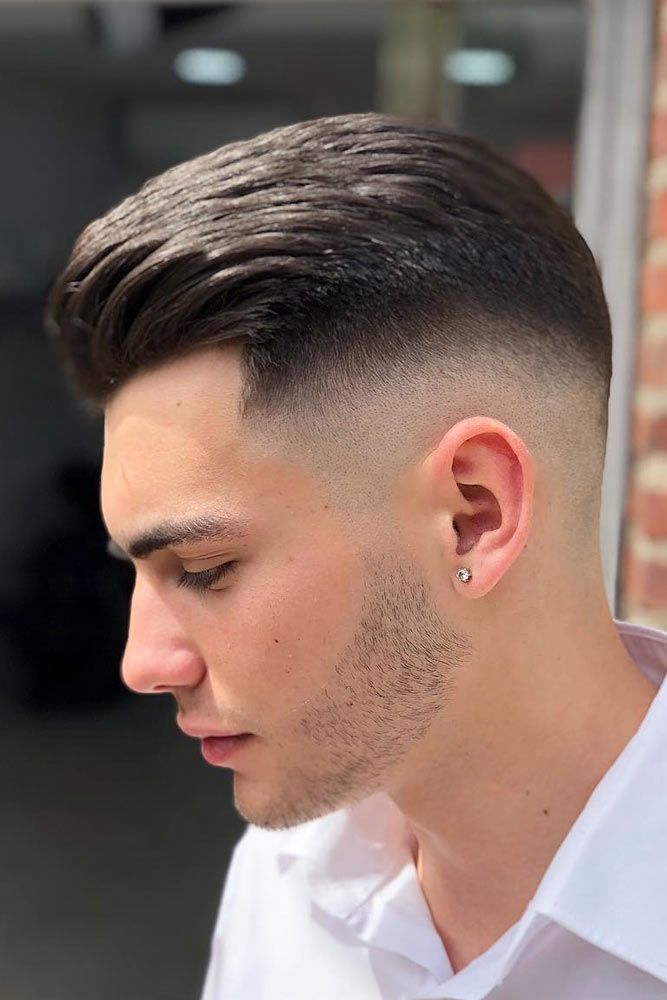

The strongest Spanish haircut ideas blend sharp barbering with relaxed Mediterranean texture. Start with the clean low fade crop for daily ease, the classic taper and side part for work, the curly top with skin fade for contrast, or wavy curtains when you want more movement and length.
I’ve spent more than a decade studying men’s cuts, working with barbers, and seeing how styles change once real hair texture and daily routines enter the picture. The best cut is rarely the most complicated one; it’s the shape that still looks intentional two weeks later.
This list focuses on adaptable cuts seen across modern Spanish and European barbering rather than claiming every style originated in Spain. Each option is judged by silhouette, texture, maintenance, face balance, and how clearly you can explain it from the barber’s chair.
| Quick Pick | Best For | Maintenance | What to Request |
|---|---|---|---|
| Clean low fade crop | Straight or slightly wavy hair | Low | Short textured top with a low fade |
| Classic taper and side part | Work and formal settings | Medium | Scissor-cut top with softly tapered sides |
| Textured French crop | Thick hair and strong hairlines | Low | Choppy top with a short broken fringe |
| Curly top with skin fade | Dense curls | Medium | Natural curls above a clean skin fade |
| Wavy curtains | Medium-length wavy hair | Medium | Layered center part with controlled weight |
| Messy quiff with mid fade | Added height and structure | Medium | Textured quiff with a blended mid fade |
| Slicked-back taper | Formal styling | Medium | Longer top with a natural neckline taper |
| Curly mullet fade | Bold personal style | High | Short sides, curl length through the back |
| Brushed-back flow | Thick medium-length hair | Medium | Layered flow with scissor-shaped sides |
| Buzz cut with temple fade | Minimal daily styling | Low | Even buzz with clean temple detailing |
Short Spanish Haircut Ideas With Clean Structure
Short Spanish haircut ideas tend to work because the outlines stay precise while the top avoids looking stiff. These cuts suit warm weather, active routines, and men who prefer five-minute styling without giving up shape.
1. Clean Low Fade With a Short Textured Crop
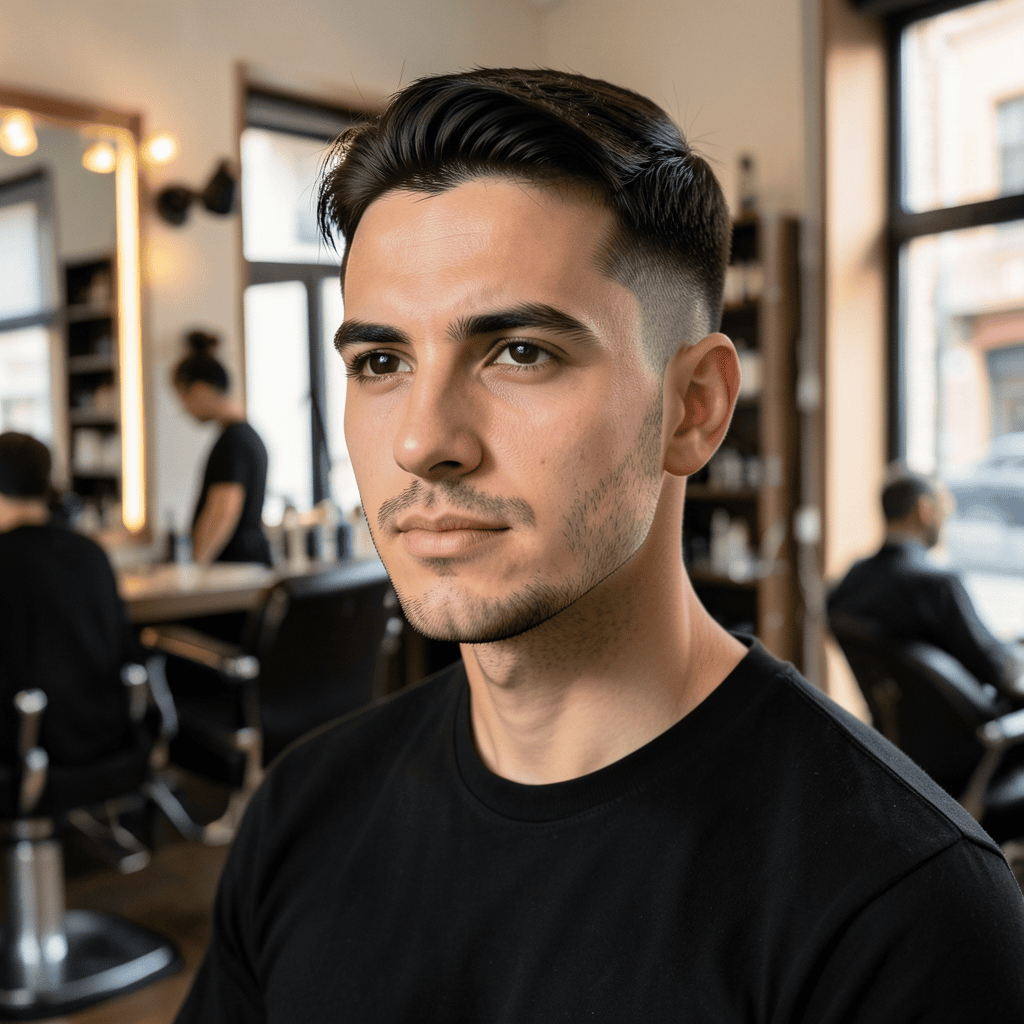
The clean low fade crop carries one of the most useful balances in modern Spanish barbering. The fade begins close to the ear and climbs gradually, leaving enough darkness around the temples to frame the face. Above it, the top stays short, broken, and slightly forward rather than combed into a perfect block.
This cut suits straight, dense, or mildly wavy hair and works well on oval, square, and longer faces. Tell your barber, “Keep the fade low and soft, then leave short separated texture across the top.” A matte paste can define the surface, though most mornings need little more than finger styling. The drawback is that the faded area loses its crispness within two or three weeks.
2. Classic Taper With a Defined Side Part
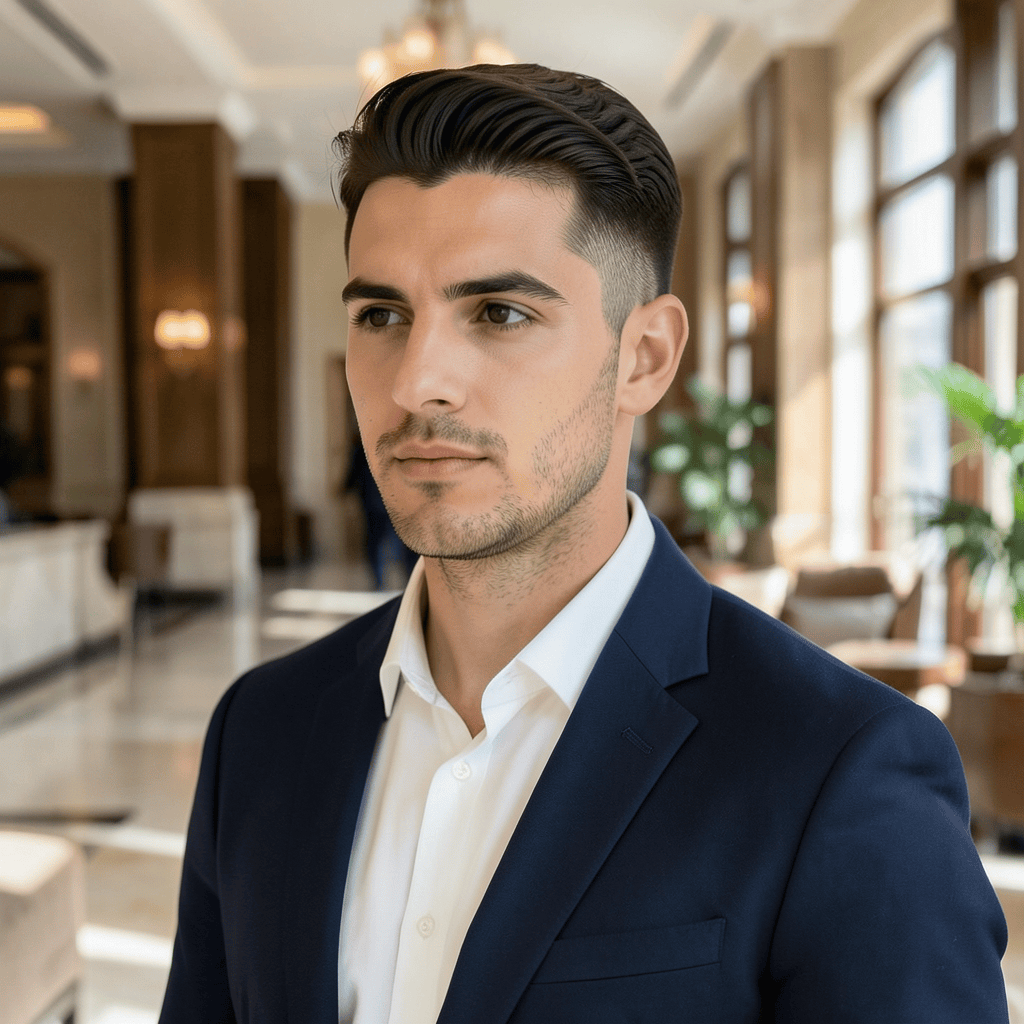
A classic taper and side part gives Spanish haircut ideas a quieter, more polished direction. The sides shorten gradually with scissors and clippers but never disappear into bare skin. A defined part divides the longer top, which follows the head naturally instead of rising into an oversized wave.
It flatters most face shapes and is especially useful for professional settings, weddings, and formal dinners. Ask for, “A traditional taper with a natural side part and enough top length to comb without heavy volume.” Styling takes a light cream or low-shine pomade and a few minutes with a comb. Men with stubborn cowlicks may find the clean part difficult to hold all day.
3. High Fade With a Rough Textured Top
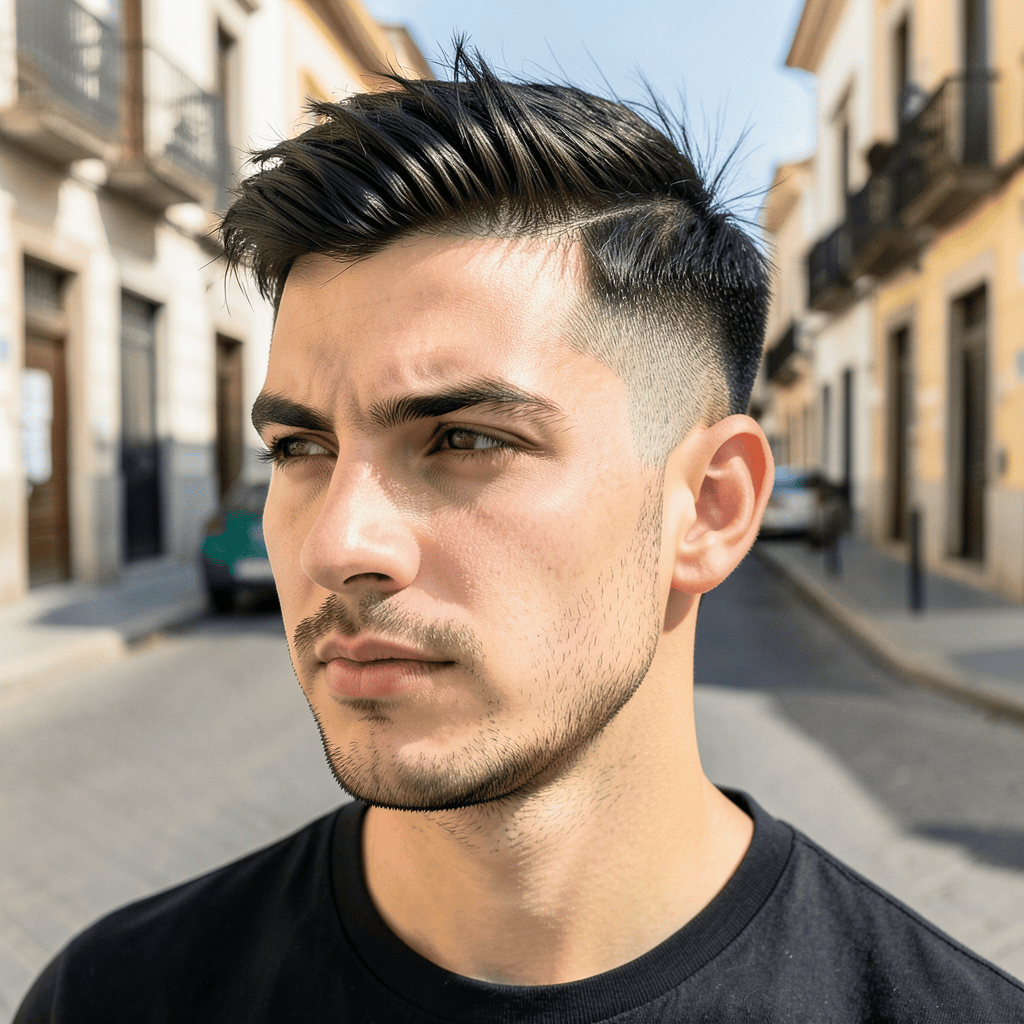
The high fade with a rough top creates stronger contrast than a low or mid fade. Hair drops quickly from textured length into closely clipped sides, making the upper shape appear thicker. The surface should look separated and imperfect, with small pieces moving in different directions.
It suits thick straight hair and men who want their haircut to make a clear statement without keeping much length. Say, “Take the fade high but blend the crown carefully, then point-cut the top for dry texture.” You will need a matte clay to stop the top collapsing flat. The exposed sides can make narrow or long faces appear even slimmer.
4. Buzz Cut With a Sharp Temple Fade
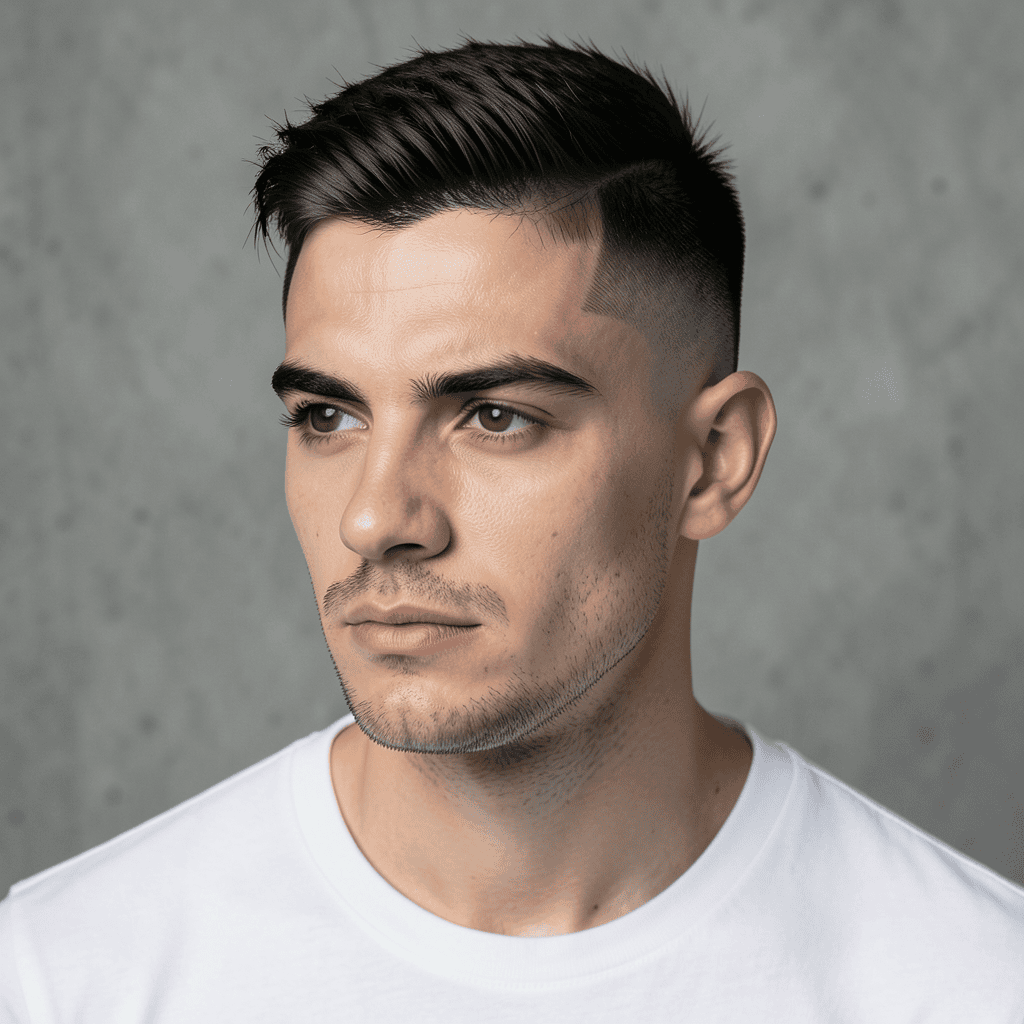
A buzz cut gains far more character when the temples and sideburns receive a controlled fade. The main length remains even and close across the head, while the edges transition into the skin around the front corners. That small amount of detailing prevents the cut from looking like a rushed home clipper job.
This is a strong choice for men with even head shapes, active schedules, or hair that refuses to sit neatly. Ask your barber, “Keep the buzz uniform, fade only the temples and sideburns, and leave the hairline natural.” Daily styling disappears, but regular barber visits still matter if you want sharp edges. Scalp marks and uneven growth remain more visible at this length.
5. Crew Cut With a Soft Natural Line-Up
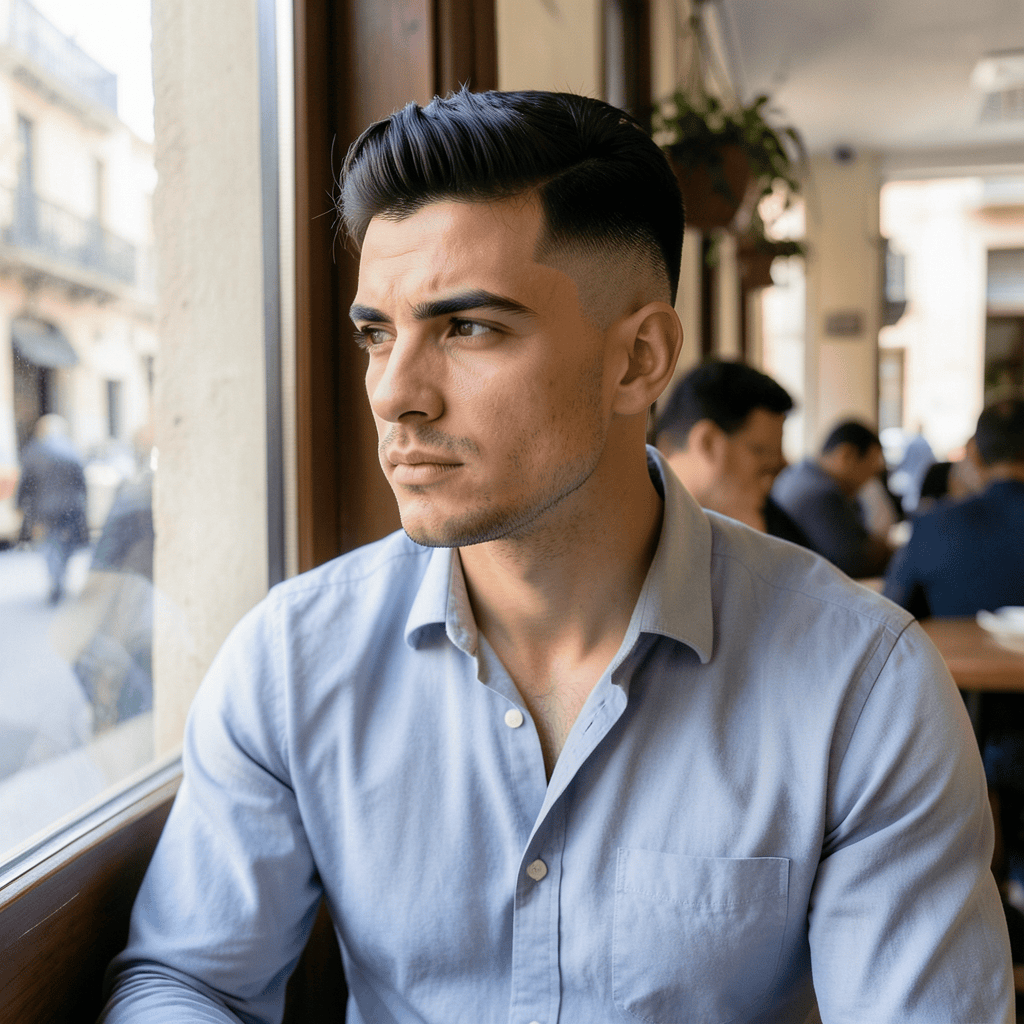
The crew cut keeps the front slightly longer than the crown, creating a compact slope instead of one flat length. A soft line-up cleans the corners while preserving the natural position of the hairline. The sides can be tapered or faded, though a mid-to-low transition usually looks less severe.
It works for straight and wavy hair, particularly on round faces that benefit from modest height at the front. Tell the barber, “Give me a short crew cut with a little lift in front and don’t push the hairline back.” Styling needs a pea-sized amount of paste at most. The shape can look plain if the top is cut too evenly or the fade is taken too high.
6. Short Caesar With a Broken Fringe
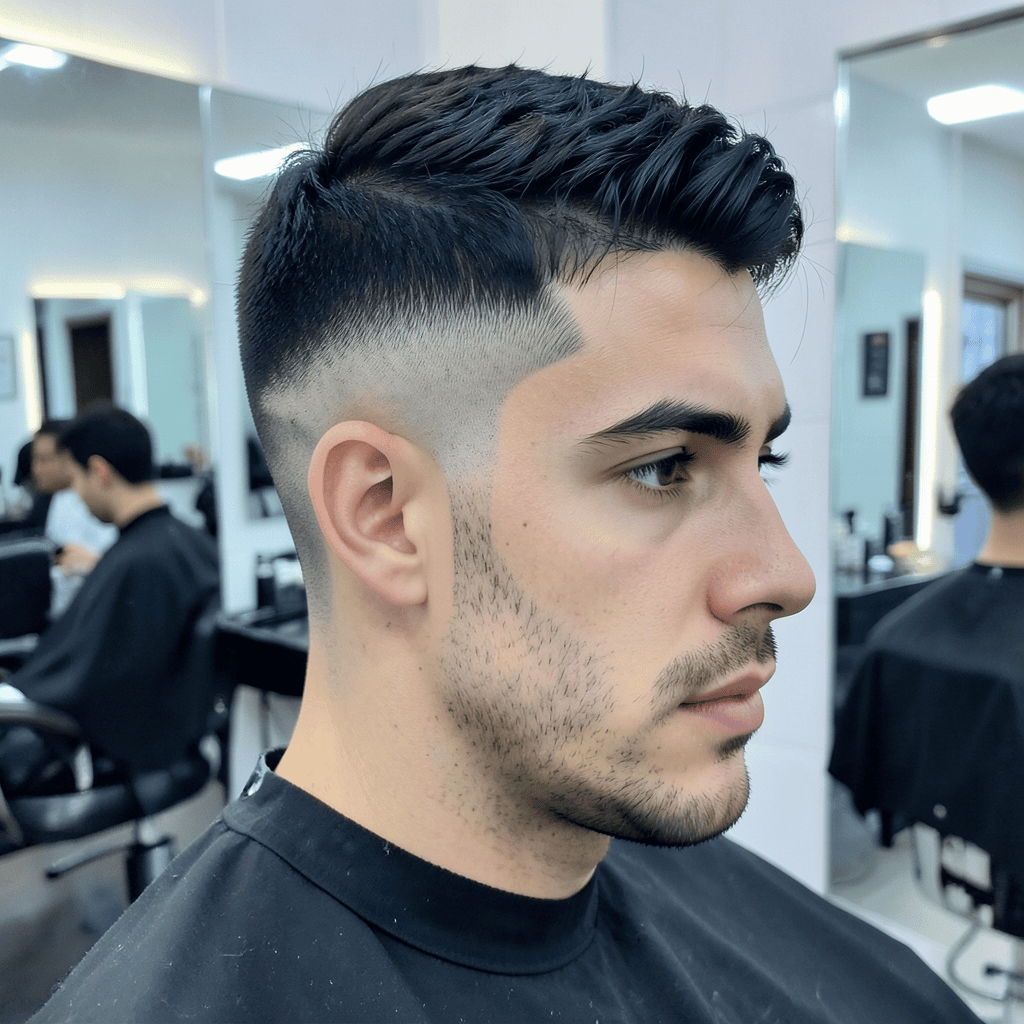
A short Caesar places the top forward into a compact fringe, but the modern version avoids one heavy horizontal line. The fringe is cut into uneven points, allowing small gaps to show along the forehead. Tapered sides keep the look neat without making the top feel disconnected.
Men with straight or slightly wavy hair can use this cut to control forward growth and reduce time spent fighting cowlicks. Ask for, “A short Caesar with a broken fringe, visible texture, and a low taper rather than a hard skin fade.” The fringe needs trimming before it reaches the eyebrows. A badly cut Caesar can look too blunt, so the point-cutting matters.
Medium Spanish Haircut Ideas With Texture and Movement
Medium-length Spanish haircut ideas give the barber more room to shape volume, separation, and direction. They take longer to style than short crops, but they also offer better control over face proportions and can shift easily between casual and formal settings.
7. Mid Fade With a Loose Messy Quiff
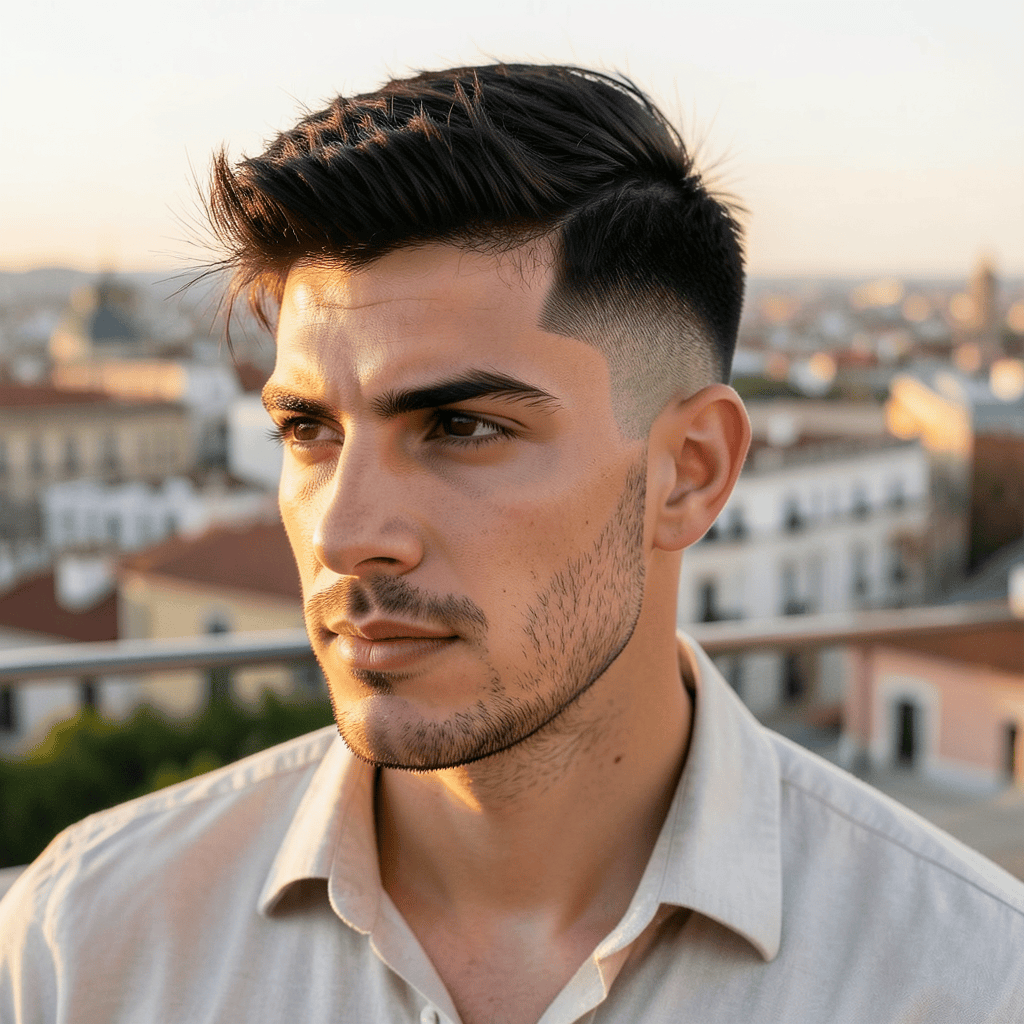
The messy quiff pushes the front upward and slightly back while keeping the surface loose. A mid fade clears weight from the sides without exposing as much scalp as a high fade. The best version has visible separation through the front and a gradual reduction in height toward the crown.
This cut suits dense straight or wavy hair and helps add structure to rounder faces. Tell your barber, “Leave enough length for a loose quiff, remove bulk through the middle, and blend it into a mid fade.” Blow-drying makes a major difference, followed by a small amount of matte paste. Thin hair can separate too much under bright light.
8. Slicked-Back Top With a Natural Taper
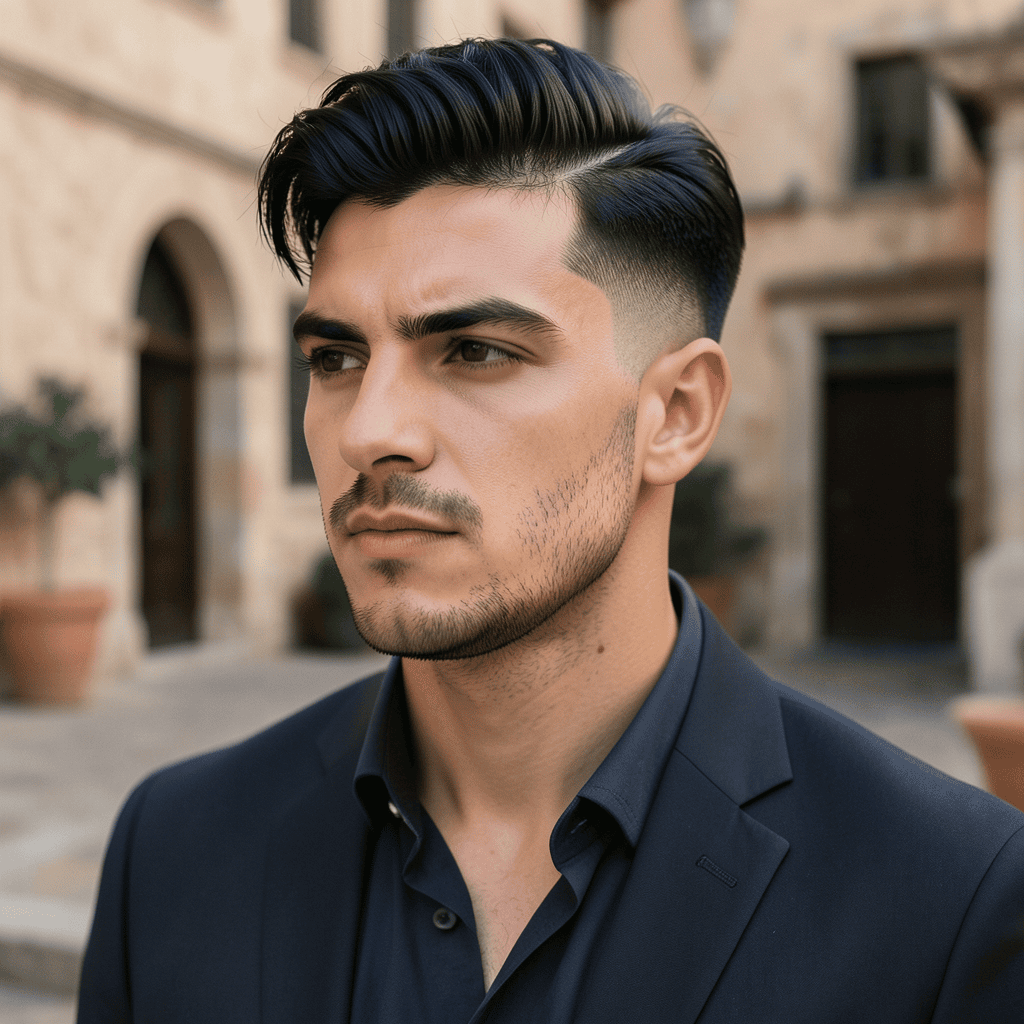
The slicked-back taper keeps the sides refined while allowing the top to flow backward in one controlled shape. Unlike a severe undercut, the upper length connects smoothly into the sides and crown. The finish can appear glossy for formal wear or softly textured for daytime.
It works best on medium-to-thick straight or wavy hair with enough length to stay behind the forehead. Ask for, “A connected slick-back with scissor-cut sides and a clean natural taper at the neck.” A grooming cream gives flexible hold, while pomade creates a sharper evening finish. Fine hair may fall apart or expose too much scalp when combed directly back.
9. Modern Pompadour With a Low Fade
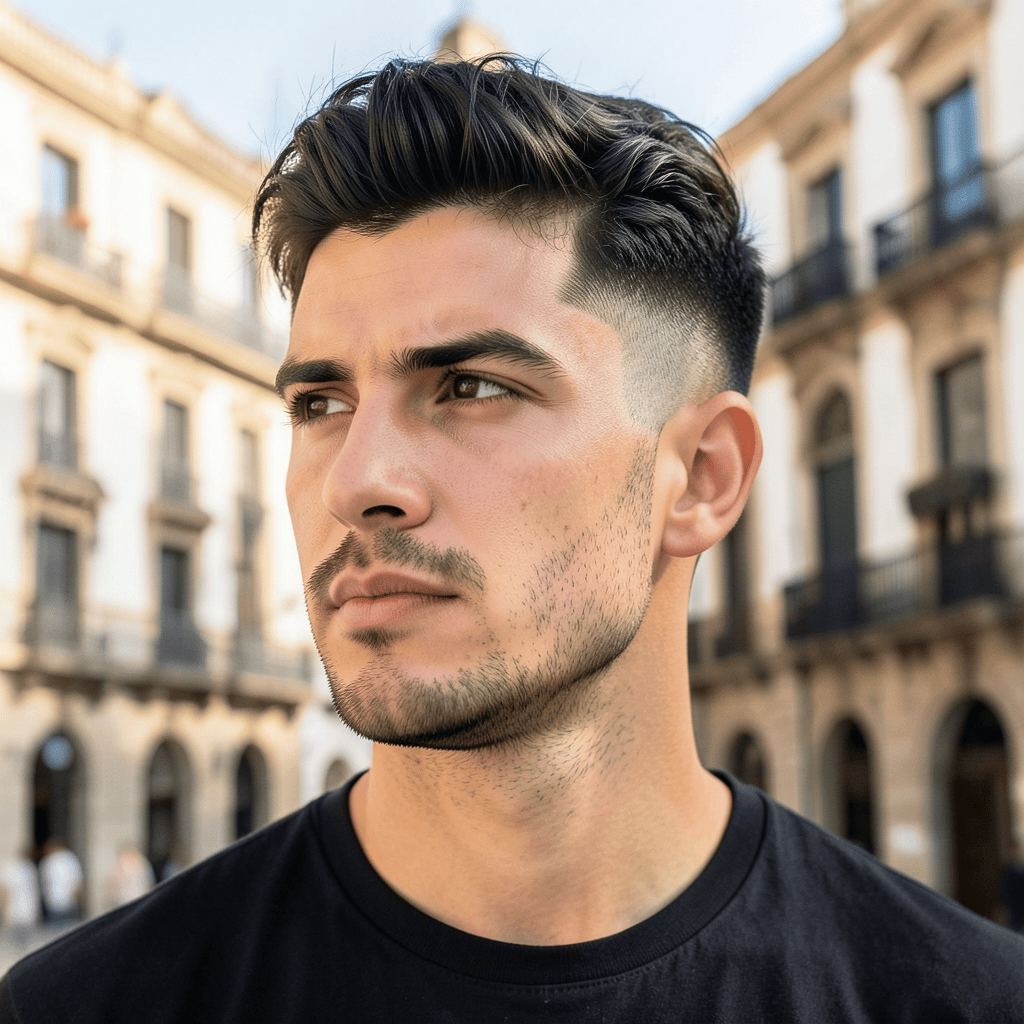
The modern pompadour creates height above the forehead without building the exaggerated rounded wall associated with older versions. Its front rises, bends backward, and settles into a flatter crown. A low fade keeps the lower outline clean while leaving enough side weight to support the shape.
This is one of the stronger Spanish haircut ideas for men with thick hair and square or oval faces. Say, “Build a controlled pompadour with a low fade, but keep the front soft rather than sculpted.” You will need a dryer, brush, and medium-hold product most days. Humidity and helmets can flatten the height quickly.
10. Textured French Crop With a Jagged Fringe
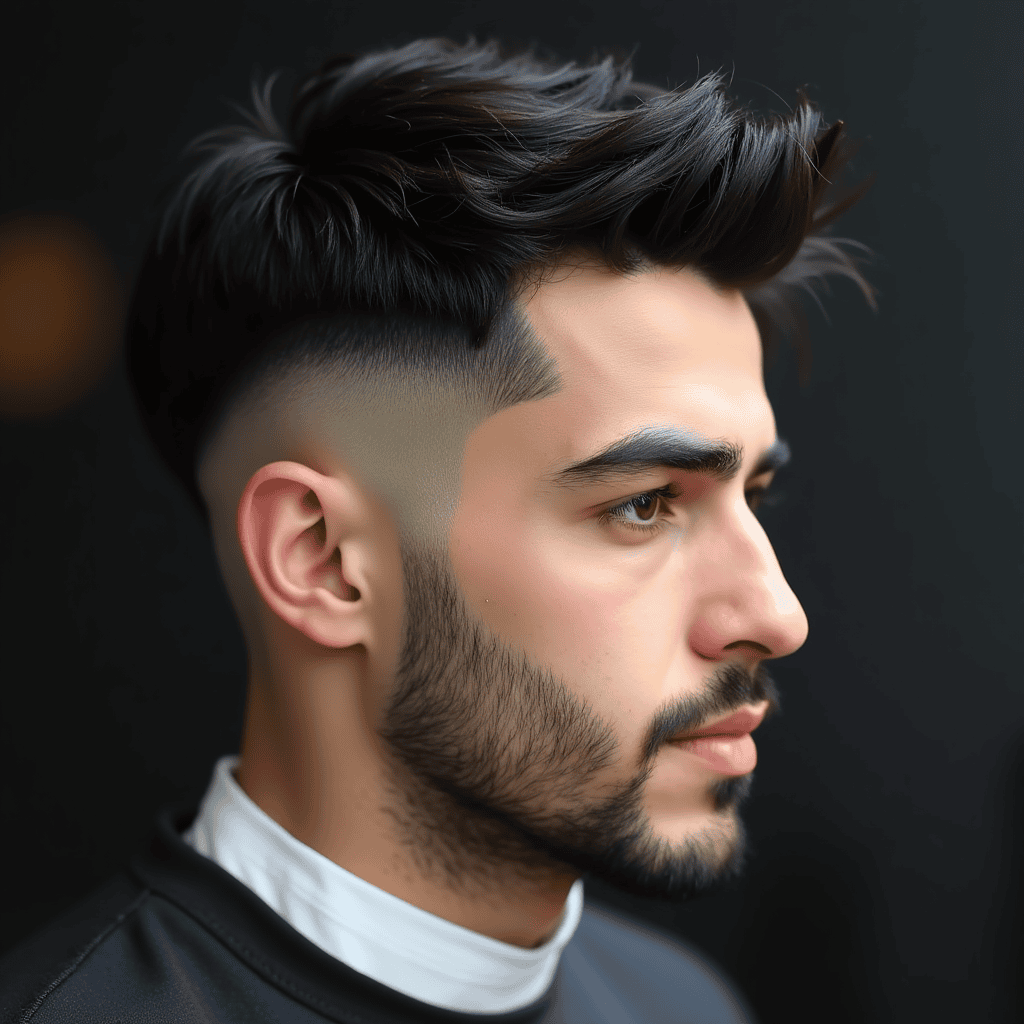
The textured French crop carries more upper length than a Caesar and usually shows stronger separation. Its fringe sits forward in irregular sections, while the crown remains short enough to avoid puffing up. The sides may use a low or mid fade depending on how much contrast you want.
It handles thick, coarse, or stubborn straight hair well and can soften a high forehead without covering it completely. Ask for, “A textured French crop with a jagged fringe and weight removed through the top.” Use dry clay and pinch individual sections forward. The fringe can become bulky if your barber leaves too much density behind the front edge.
11. Brushed-Up Ivy League Cut

The brushed-up Ivy League keeps enough length on top to part, sweep, or lift while maintaining a short, tidy outline. The front stands slightly higher, then angles back into a compact crown. Scissor-blended sides preserve a mature finish that feels less aggressive than a skin fade.
It fits office environments, university settings, and men who need one haircut to cover weekday and weekend plans. Tell the barber, “Keep an Ivy League shape, leave the front long enough to brush up, and taper the sides softly.” A light paste and quick blow-dry are usually enough. Thick hair may require internal thinning to prevent the top becoming round.
12. Side-Swept Scissor Cut With Full Sides
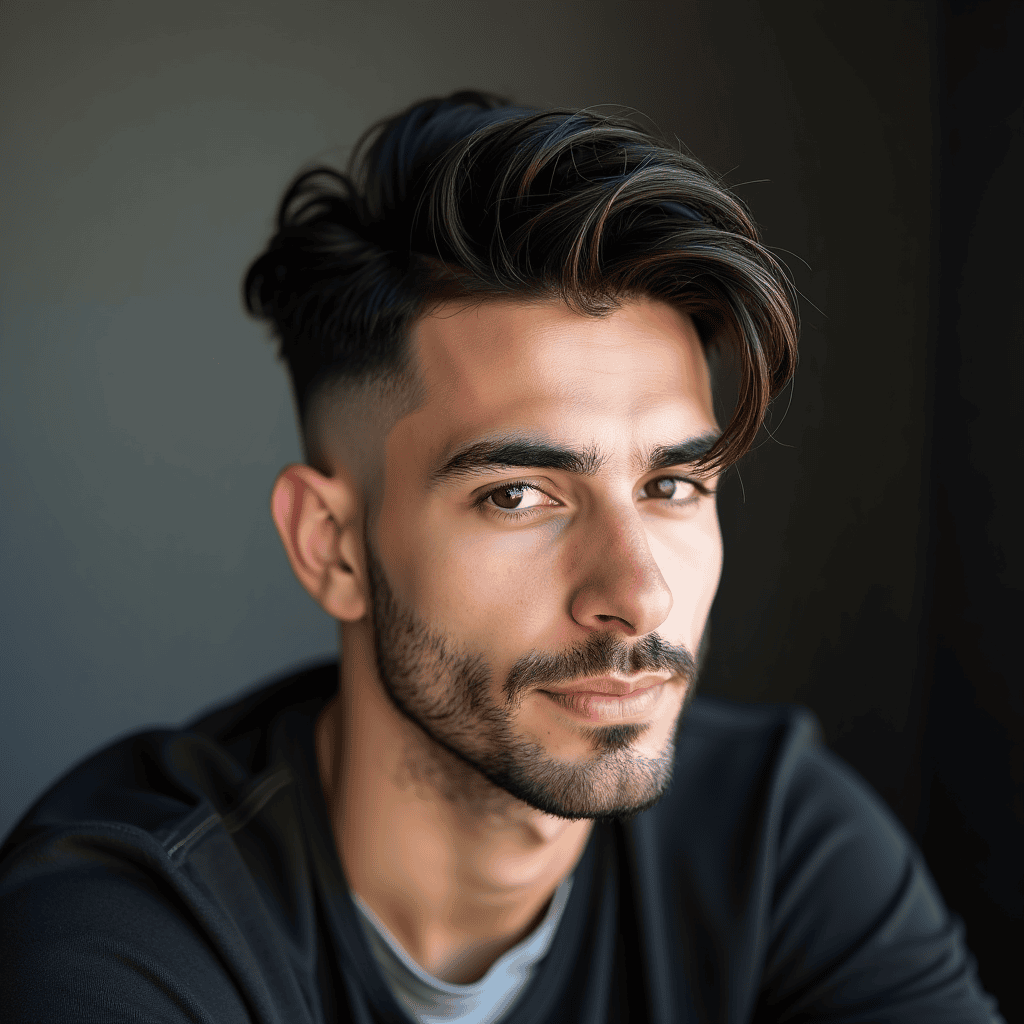
A side-swept scissor cut avoids clipper-short sides and keeps a continuous flow around the head. The top moves diagonally across the forehead, with subtle layers stopping it from forming one heavy sheet. Around the ears, the hair remains neat but visibly fuller than a taper fade.
This style suits men with fine-to-medium hair who want movement without exposing the scalp. Ask for, “A fully scissor-cut shape with a soft side sweep, light layering, and natural fullness above the ears.” It needs occasional blow-drying but can be restyled with your hands during the day. Heavy or tightly curled hair may expand too widely at the sides.
Spanish Haircut Ideas for Curly and Wavy Hair
Curly and wavy textures are central to many popular Spanish haircut ideas because they already carry movement. The barber’s real task is controlling width, preserving curl groups, and choosing a fade or taper that does not remove the support those curls need.
13. Curly Top With a Clean Skin Fade
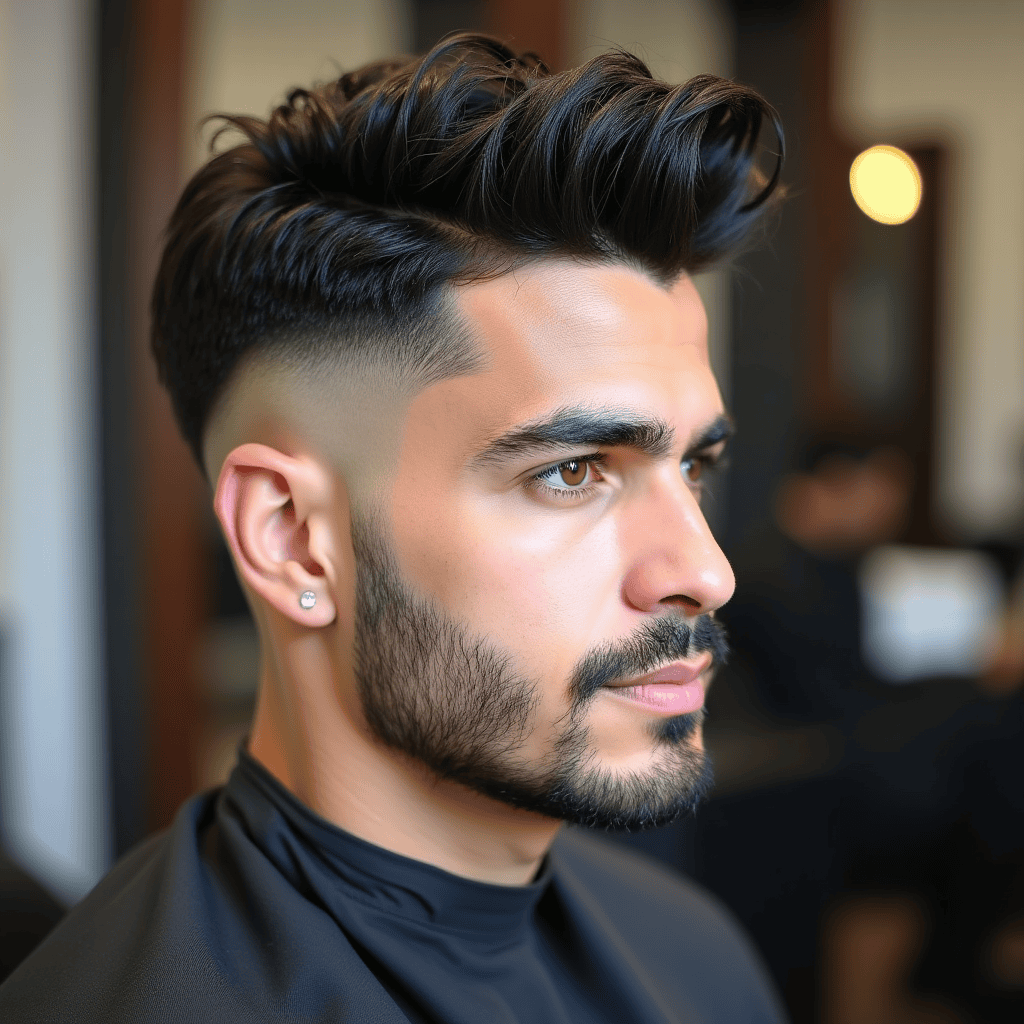
This cut leaves dense curl definition across the top while taking the lower sides down to bare skin. The strongest contrast appears around the temples, where the curl mass seems to float above the fade. A careful blend near the parietal ridge prevents the shape from looking like two separate haircuts.
It suits compact curls and men comfortable with frequent barber visits. Ask for, “Keep my natural curl pattern on top, remove bulk at the corners, and blend it into a clean skin fade.” Curl cream can control dryness without freezing the texture. The sharp contrast fades quickly, and exposed scalp may feel severe on men who prefer softer outlines.
14. Wavy Crop With a Broken Forward Fringe
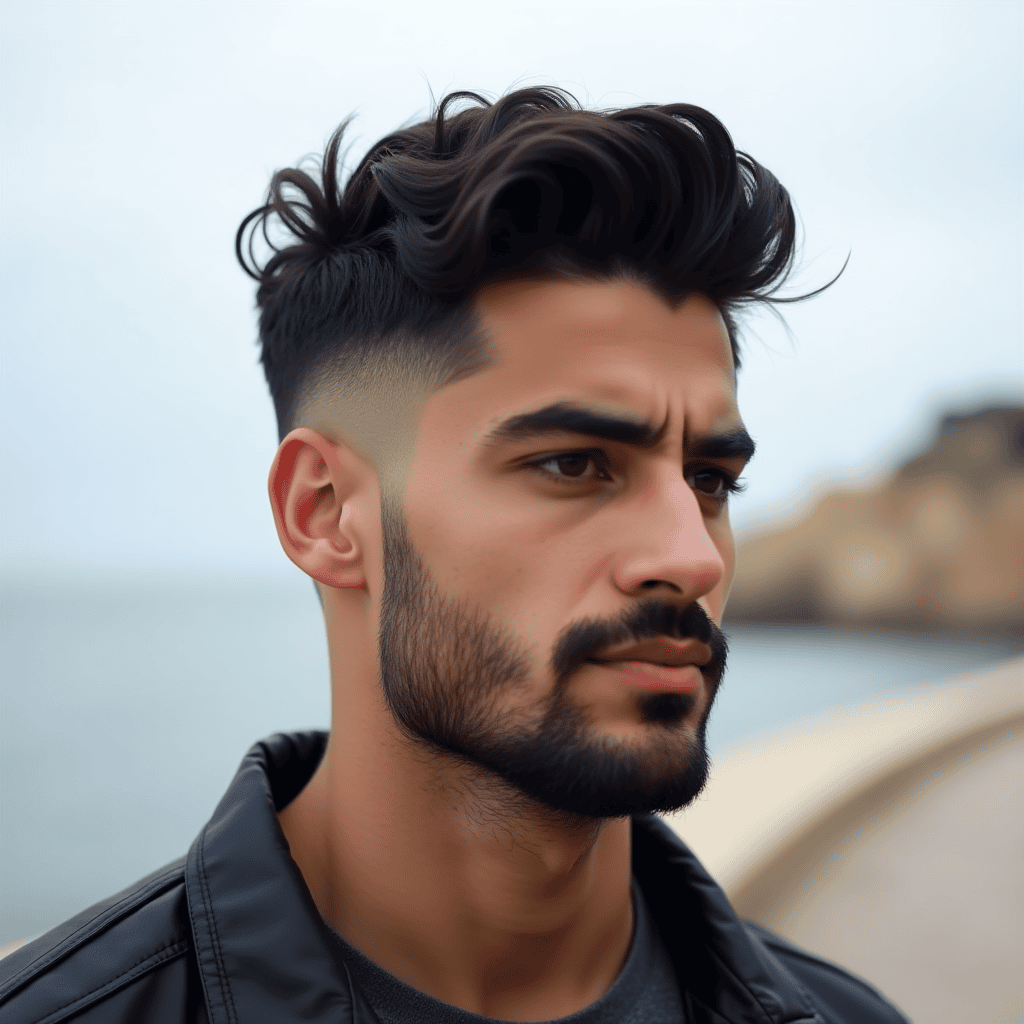
A wavy crop uses natural bends to build a layered surface across the top. The fringe falls forward in loose sections rather than forming a straight edge, and the crown stays softly tousled. A low taper around the ears gives enough control without flattening the waves above it.
This is a practical choice for men whose hair curls in some areas but stays straighter in others. Tell your barber, “Follow my wave pattern, keep the fringe broken, and use a low taper without cutting into the upper texture.” Sea-salt spray can encourage movement, though overuse makes the hair feel dry. The fringe may become unpredictable during damp weather.
15. Medium Curls With a Low Temple Taper
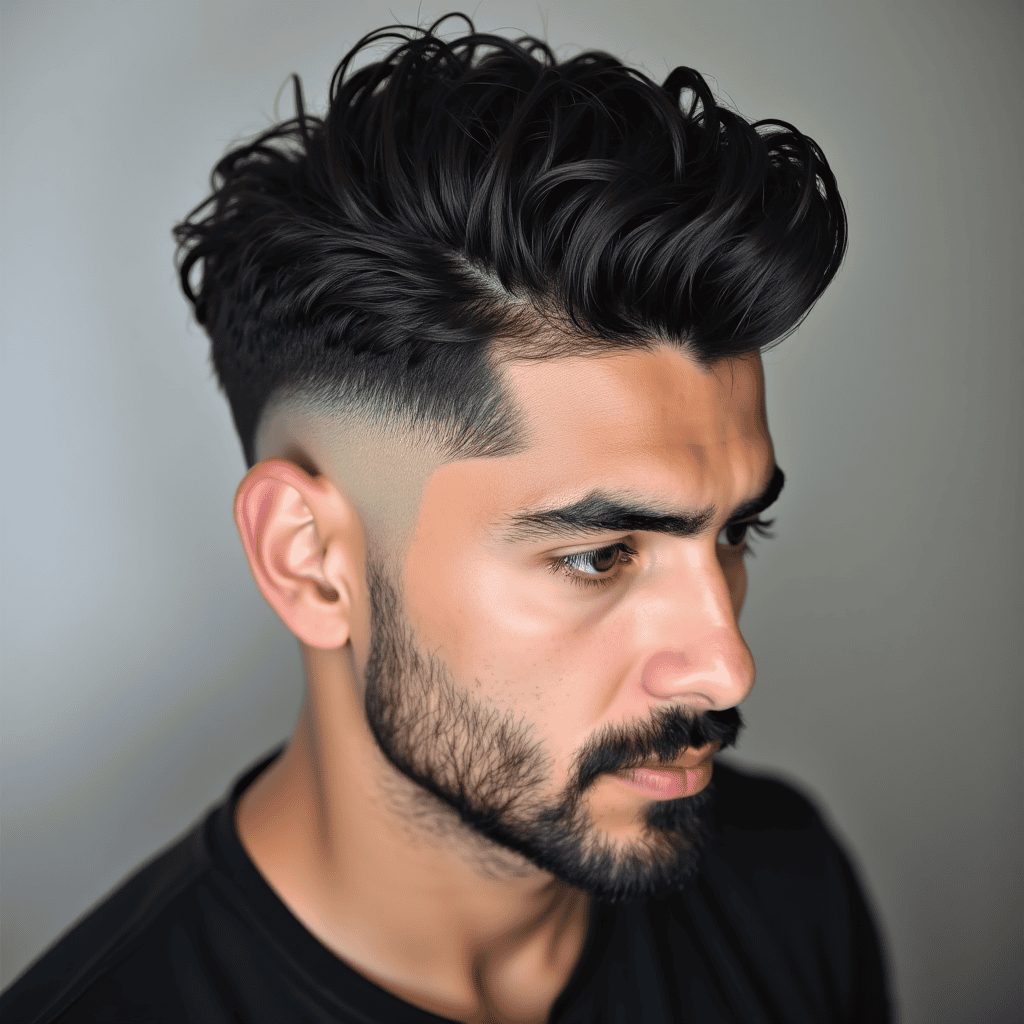
Medium curls with a temple taper preserve fullness while cleaning the areas that tend to look untidy first. The curl shape remains rounded through the top and back, while only the temples, sideburns, and neckline become shorter. This creates polish without sacrificing the natural silhouette.
It works for loose ringlets and springy medium curls, especially on men who dislike dramatic fades. Ask for, “Keep the curl length and round shape, then taper only the temples, sideburns, and neckline.” You will need moisture-focused styling and gentle drying to maintain definition. The cut can widen around the ears if the internal weight is not managed carefully.
16. Curly Mullet With Faded Sides
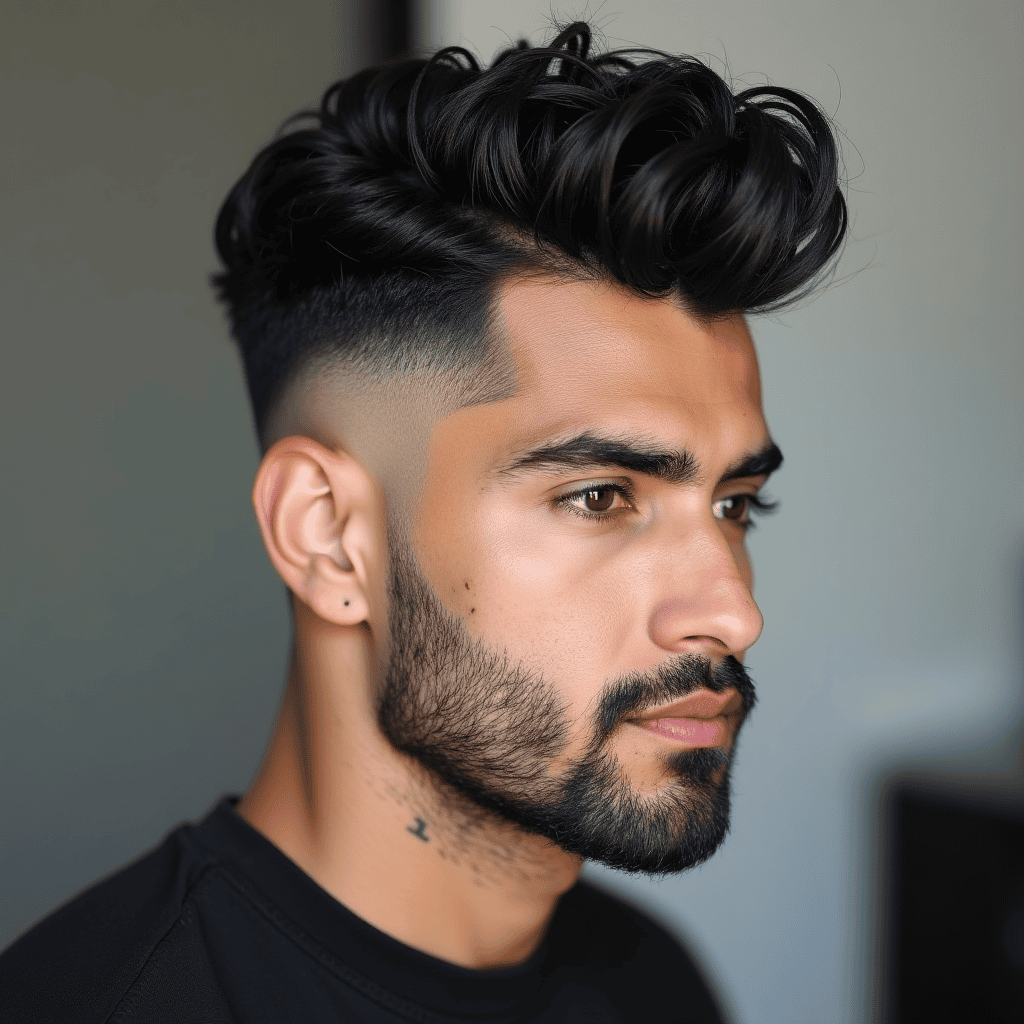
The curly mullet keeps the front controlled, opens the sides with a fade, and allows visible curl length behind the ears and through the nape. Its best form has a gradual connection from crown to back rather than one thin tail. The curls make the longer rear section feel softer and less costume-like.
This bold Spanish haircut idea suits confident men with defined curls and a relaxed dress code. Tell the barber, “Fade the sides, keep curl volume through the crown, and build length gradually into the back.” Curl cream and diffuser drying help maintain the intended outline. The growing-out phase can look uneven, especially once the side fade becomes heavy.
17. Wavy Curtains With a Center Part
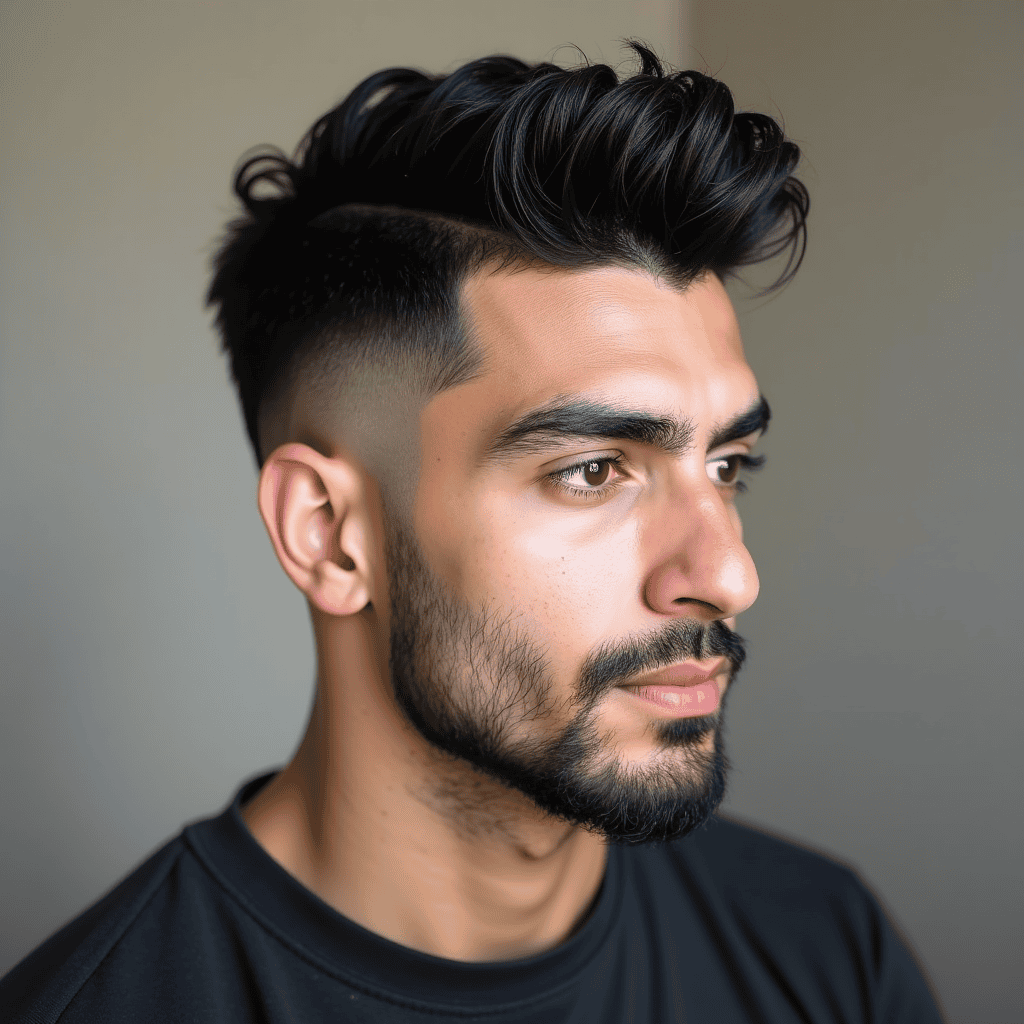
Wavy curtains split near the middle and fall toward the cheekbones in soft sections. The front remains longer, while hidden layers remove heaviness around the crown and sides. Instead of a sharp undercut, the back and temples connect smoothly into the overall flow.
It suits oval, heart-shaped, and longer faces, particularly when the hair forms natural S-shaped waves. Ask for, “Long curtain pieces in front, soft internal layers, and enough connection around the sides to tuck behind my ears.” Styling takes a dryer or air-drying cream, depending on your texture. A flat center part can make fine hair look thinner at the roots.
18. Rounded Coils With a Subtle Taper
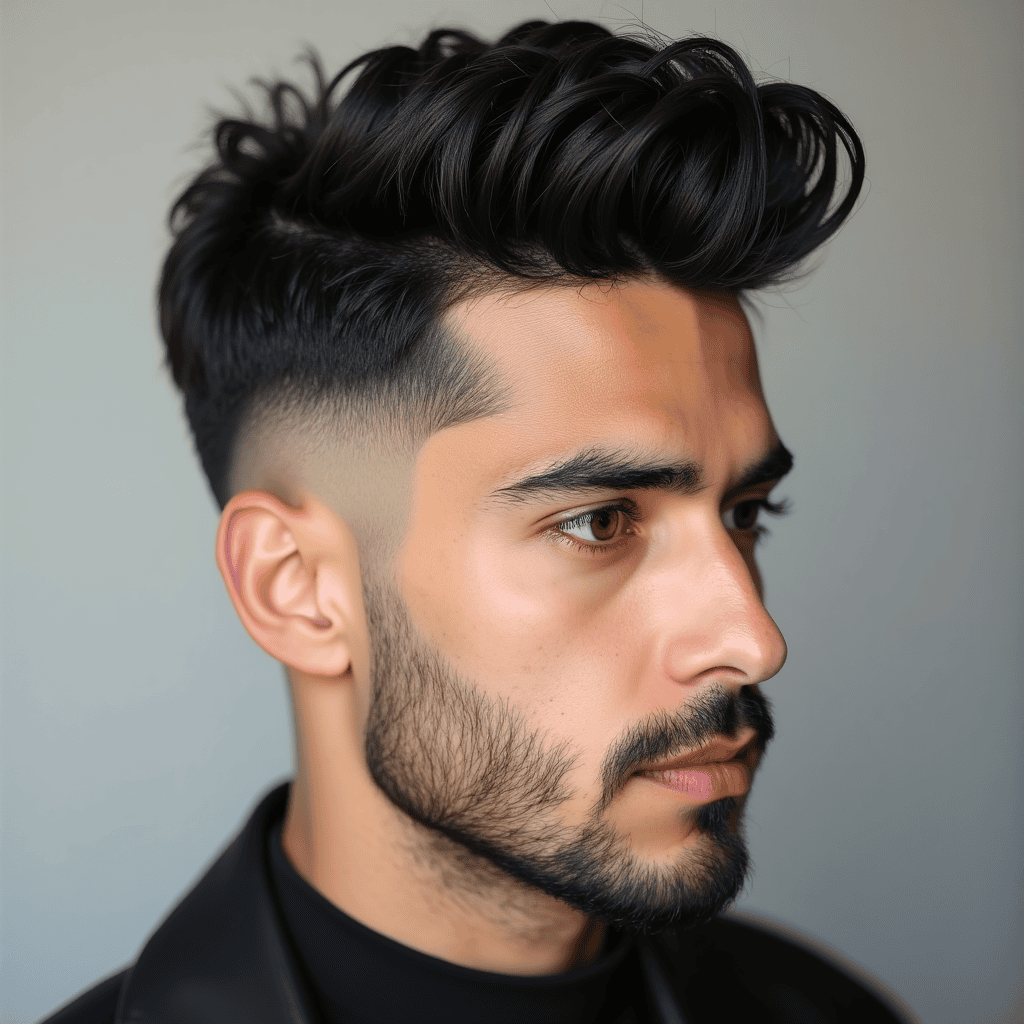
Rounded coils create an even, sculpted silhouette that follows the natural density of tightly curled hair. The sides stay full enough to support the shape, while a subtle taper cleans the temples and neckline. The finish should look balanced from every angle rather than pressed into a square outline.
This option works well for Spanish men with Afro-textured hair who want definition without removing most of their volume. Tell your barber, “Keep a rounded coil shape, balance the sides, and taper only the temples and neck.” Regular conditioning and careful detangling matter more than heavy styling. Uneven shrinkage can distort the outline between appointments.
Bold Spanish Haircut Ideas With Strong Contrast
Some Spanish haircut ideas work best when the contrast is obvious. These cuts use disconnected lengths, sharp bursts of fading, or deliberate rear volume, so they demand clearer barber communication and more confidence during the growing-out stage.
19. Burst Fade With a Textured Faux Hawk
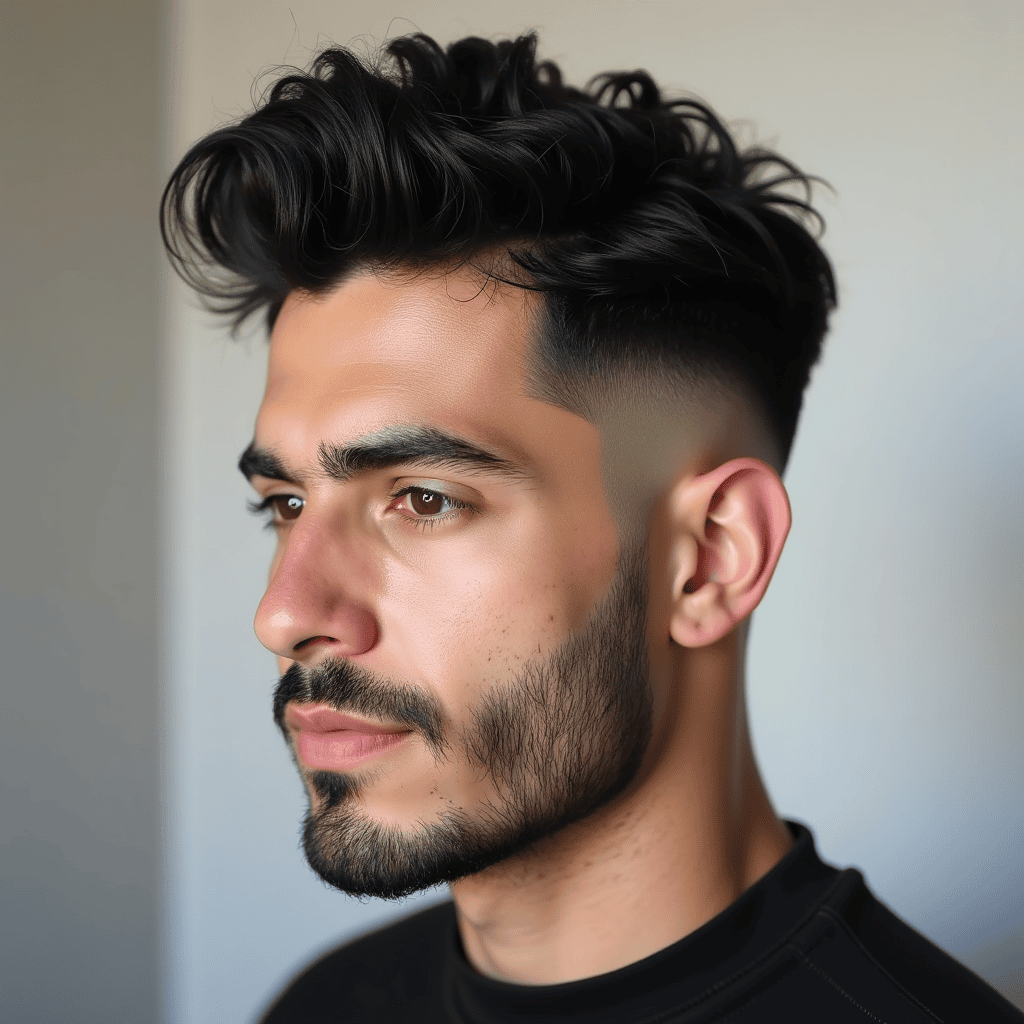
A burst fade curves around the ear and leaves more length through the center of the head. The textured faux hawk rises subtly from the forehead toward the crown without forming a stiff point. From the side, the fade creates a rounded burst that follows the ear’s shape.
It suits thick straight, wavy, or loose curly hair and can add height to wider faces. Ask for, “A burst fade around the ears with textured length through the middle, but keep the faux hawk loose.” Matte clay or curl cream will depend on your texture. The curved fade needs an experienced hand, or the shape can become patchy.
20. Short Mohawk Fade With Razor Detailing
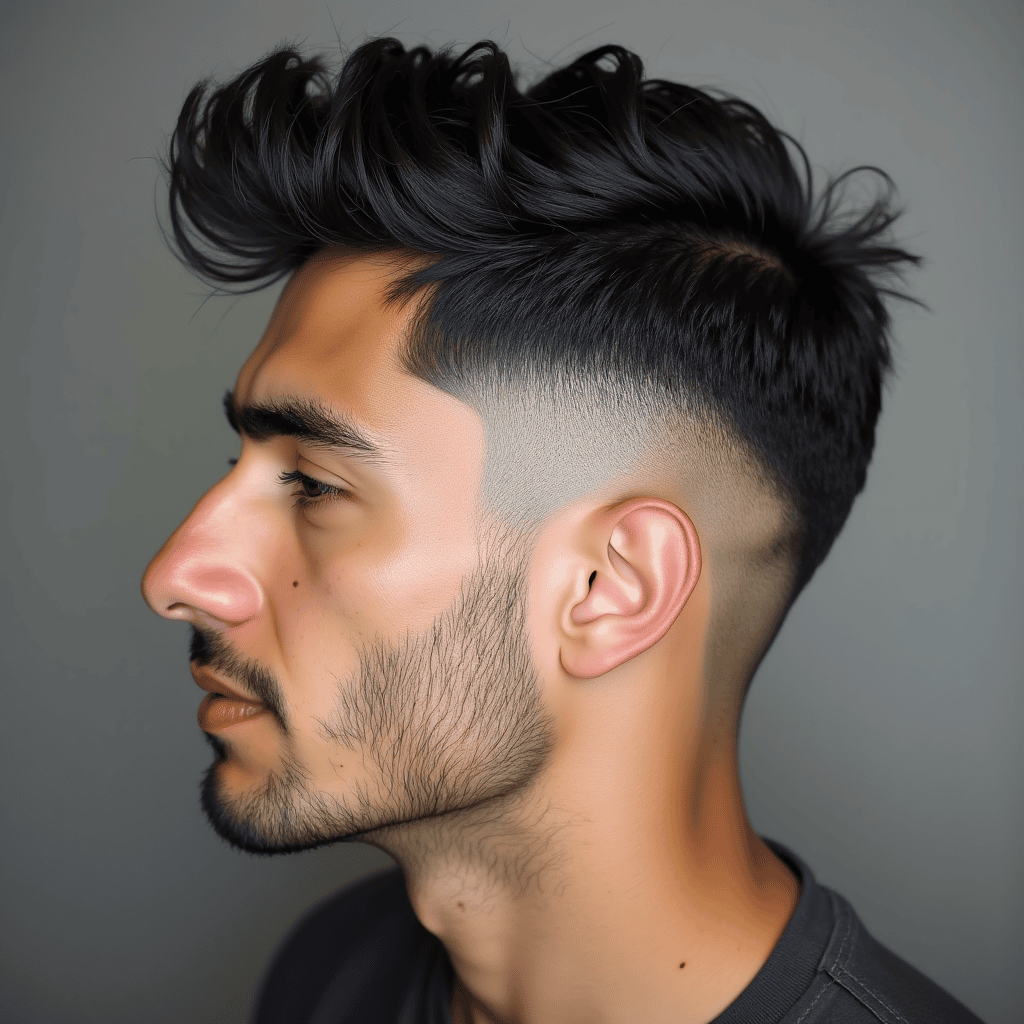
The short mohawk fade keeps a narrow line of textured length through the center while clipping the sides close. One restrained razor detail can follow the fade near the temple or behind the ear. The central hair should remain broad enough to look wearable when it is not styled upright.
This cut is better for creative workplaces, nightlife, or men who already enjoy frequent barber appointments. Say, “Keep the mohawk short and textured, fade the sides cleanly, and add one simple razor line.” Daily styling is manageable, but the design begins growing out within days. Multiple lines can make the result look crowded, so restraint matters.
21. Disconnected Undercut With Loose Volume
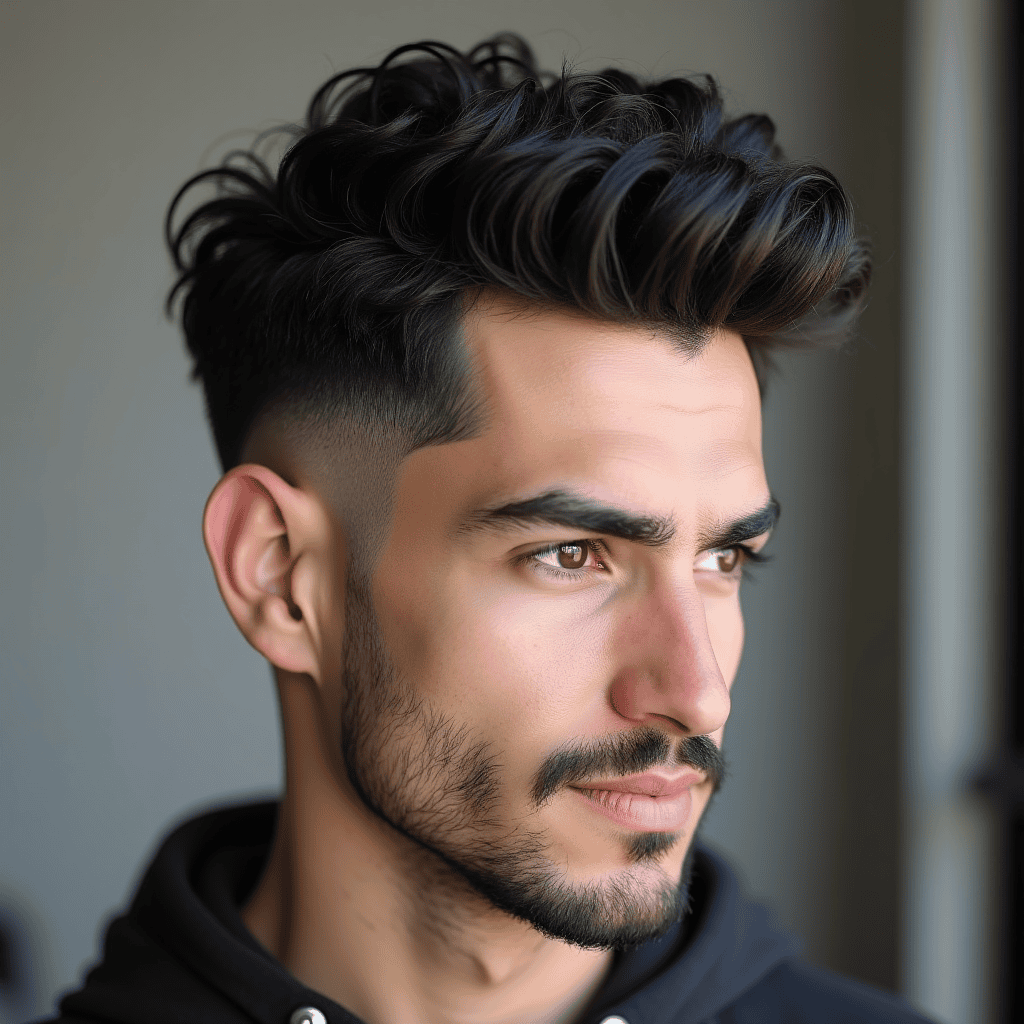
A disconnected undercut removes the gradual blend between long top hair and short sides. The upper section hangs or sweeps across the clipped area, creating a clear shelf of contrast. Loose texture prevents the top from resembling one solid helmet of hair.
It works for thick straight or wavy hair and men who enjoy changing between side-swept, pushed-back, and messy styling. Ask for, “A clear disconnected undercut with enough top length for loose movement, but remove internal weight.” You will need regular styling and close attention during the grow-out. The disconnected line can become bulky once the sides gain length.
22. Textured Mullet With Tapered Temples
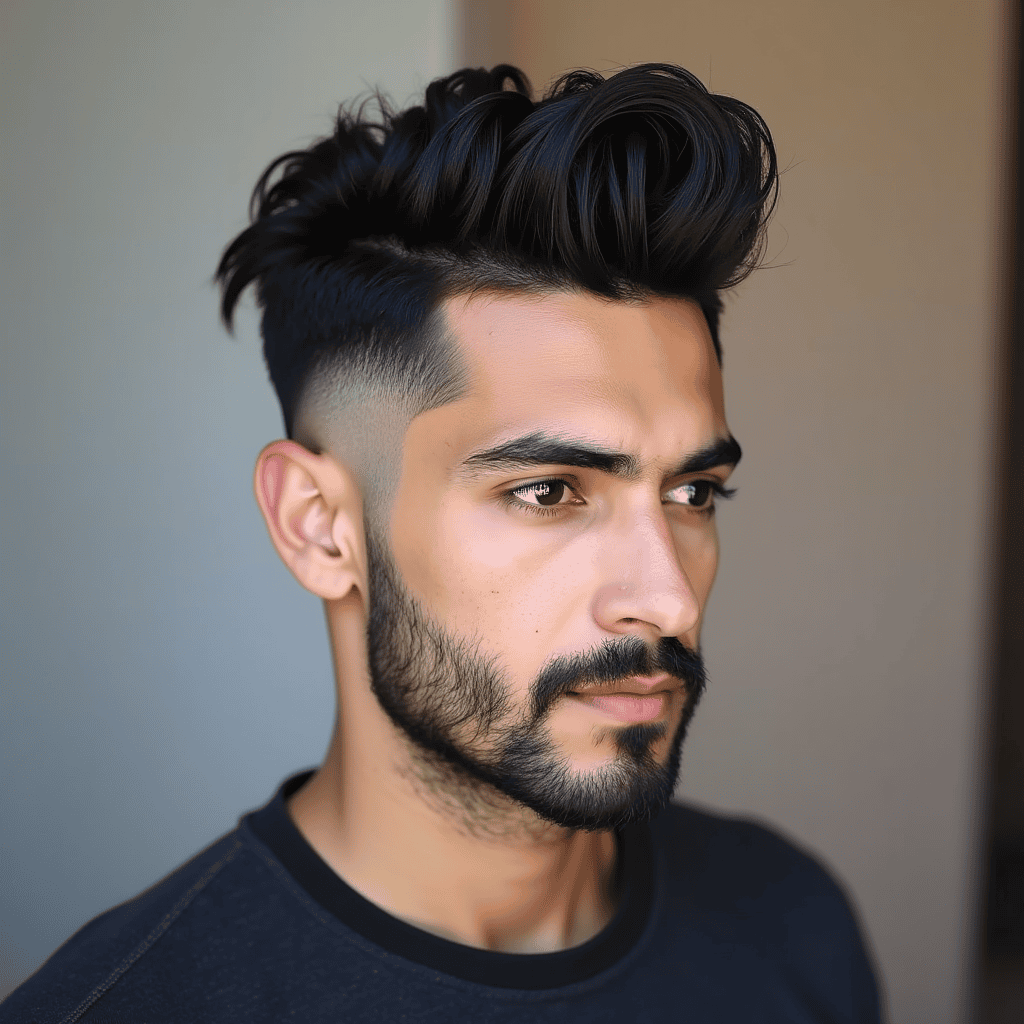
The textured mullet keeps shorter, broken pieces around the forehead and temples while building length through the crown and nape. A small taper at the front corners keeps the haircut intentional without erasing the side texture. The back should fall in layered sections rather than one flat curtain.
It suits straight, wavy, and loosely curled hair, especially when the natural texture already bends around the neck. Tell the barber, “Keep the front choppy, taper the temples, and layer the back so it moves instead of hanging flat.” Styling can remain rough and finger-shaped. The cut needs patience because trimming the back too often destroys its progression.
Longer Spanish Haircut Ideas for Relaxed and Formal Styling
Longer Spanish haircut ideas rely less on exposed fades and more on layering, weight control, and natural movement. They can look relaxed beside the coast, polished with tailoring, or deliberately artistic, but they need healthier ends and more disciplined home care.
23. Shoulder-Length Waves With a Middle Part
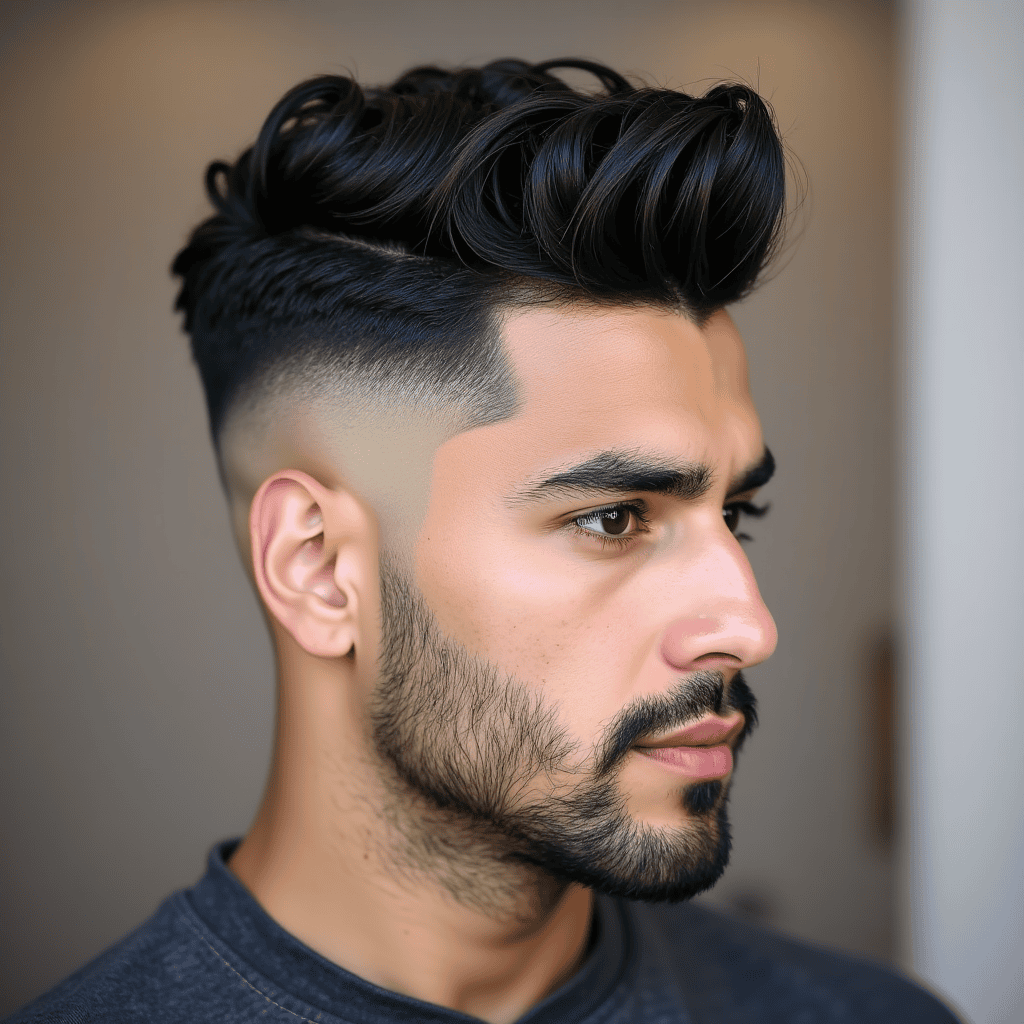
Shoulder-length waves create a broad frame around the face, with the middle part allowing both sides to fall evenly. Long layers release movement through the lower half and stop the ends forming a heavy triangle. The perimeter can remain blunt enough to look thick while still moving naturally.
This style suits medium-to-thick wavy hair and men willing to condition, detangle, and trim damaged ends. Ask for, “Shoulder-length hair with long internal layers, a natural middle part, and enough weight left at the perimeter.” Air-drying cream keeps the finish relaxed. Fine hair may appear stringy once it reaches the shoulders.
24. Brushed-Back Medium Flow
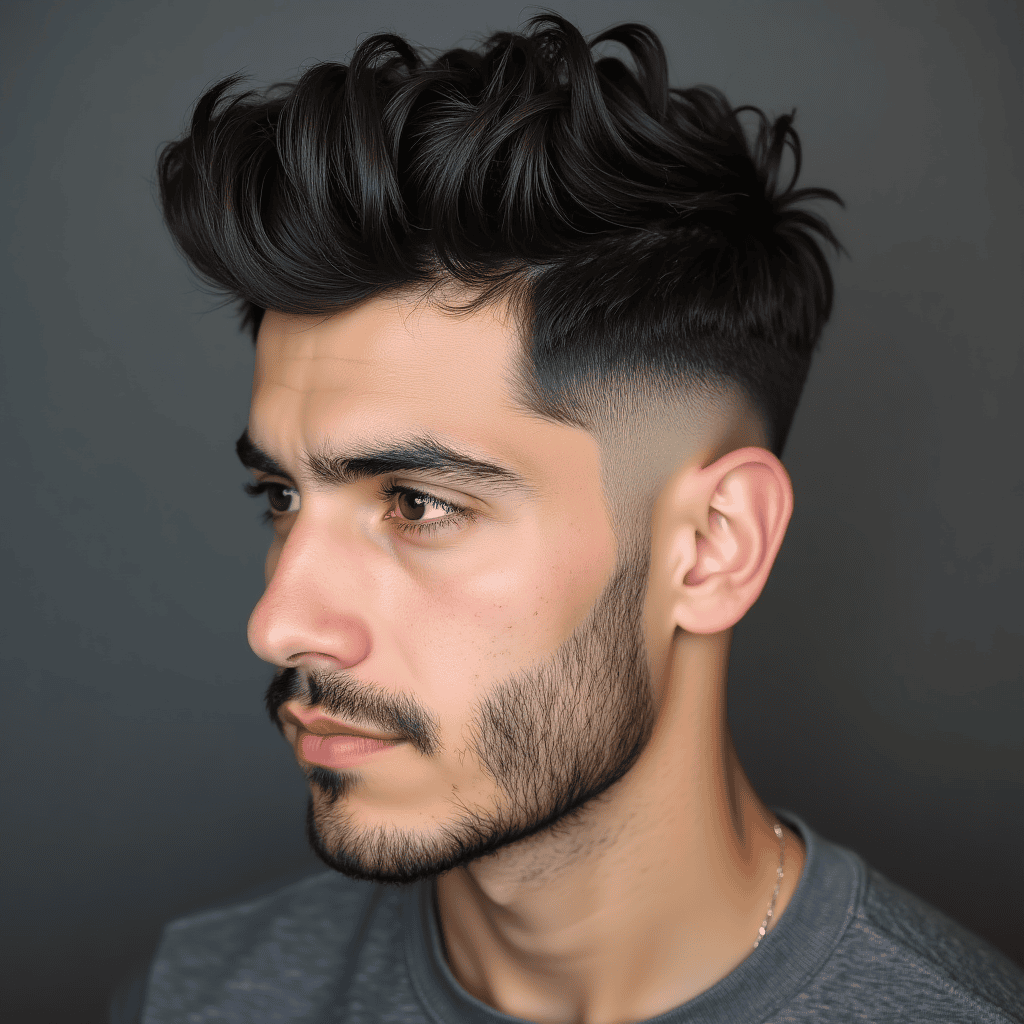
The brushed-back flow sits between a grown-out scissor cut and shorter long hair. Front sections travel backward from the forehead, while the sides bend behind the ears and the back reaches the collar. Controlled layers create movement without removing the solid shape needed for a masculine outline.
It works for thick straight or wavy hair and pairs well with smart-casual clothing, relaxed tailoring, and formal evening wear. Tell your stylist, “Keep a medium flow, layer it for backward movement, and leave enough side length to tuck behind my ears.” Grooming cream and light blow-drying help direct the front. Hair that grows forward may require more heat and product than expected.
25. Formal Comb-Back With a Scissor Taper
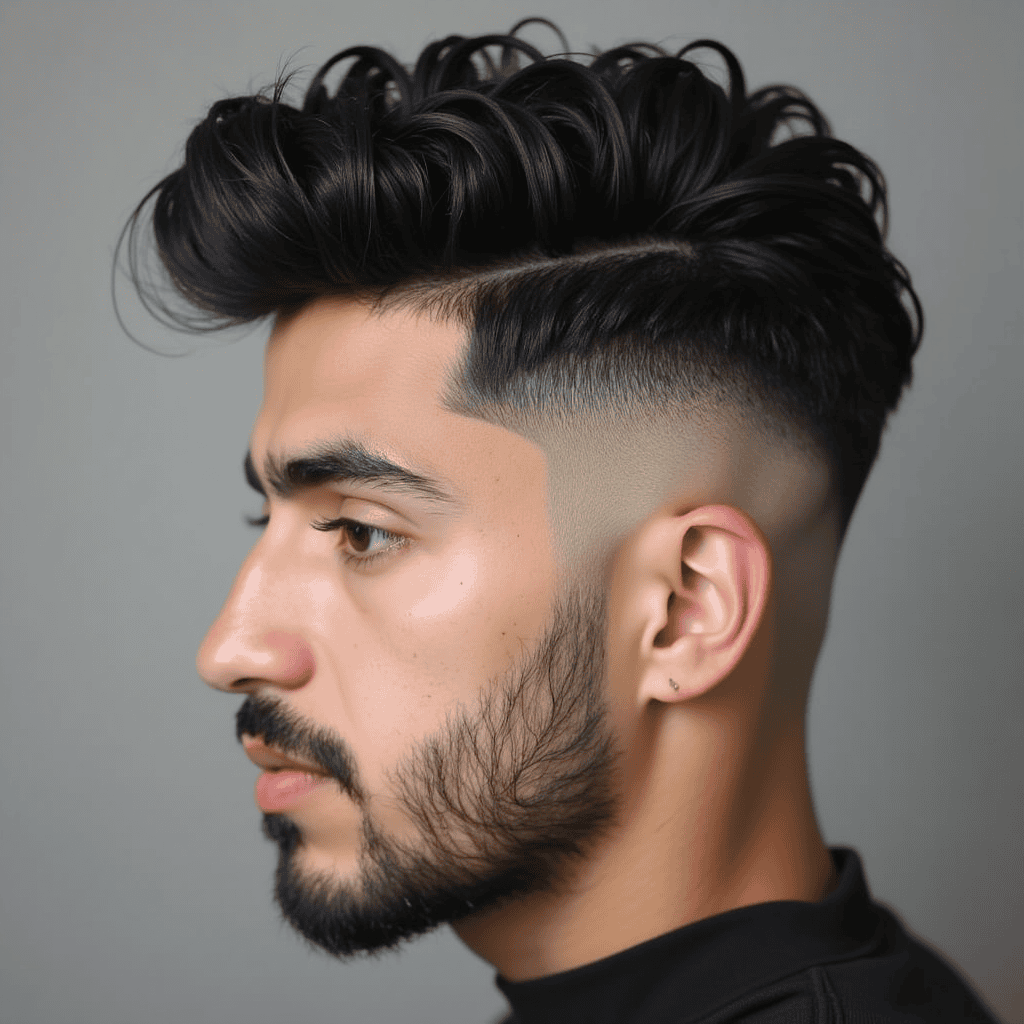
The formal comb-back keeps medium length through the top but controls it more closely than a loose slick-back. Hair moves backward with a subtle side direction, while scissor-tapered sides preserve softness around the ears. The neckline remains natural and tidy rather than clipped into an aggressive fade.
This final option suits weddings, interviews, business events, and men who want polish without exposing the scalp. Ask for, “A connected comb-back with medium top length, scissor-tapered sides, and a clean natural neckline.” A light pomade supplies control and a modest sheen. It can appear flat if the barber removes too much top length or the product is applied to wet hair.
How to Choose the Right Spanish Haircut
Choosing among these Spanish haircut ideas starts with texture, not the photograph you like most. A good barber can adapt a shape, but no cutting technique will make straight fine hair behave exactly like dense curls or force forward-growing hair into effortless backward flow.
Match the Cut to Your Natural Texture
Straight hair shows every cutting line, which makes crops, side parts, and controlled quiffs strong options. Wavy hair benefits from layered curtains, flowing scissor cuts, and broken fringes. Curly and coiled textures need enough retained length to form complete curl groups rather than fuzzy half-curls.
Bring one reference showing the overall shape and another showing a person with hair similar to yours. Tell the barber which detail matters most, whether that is the low fade, fringe length, side fullness, or curl shape. A single photo rarely explains every angle.
Consider Your Real Maintenance Schedule
Skin fades, razor details, and precise line-ups may need attention every two or three weeks. Soft tapers and scissor cuts grow out with fewer harsh transitions, so they can often stretch longer between appointments. Longer hair reduces clipper visits but adds washing, conditioning, drying, and detangling.
I go back and forth on dramatic fades because they photograph well yet demand more upkeep than many men expect. Choose the version you can maintain on an ordinary Tuesday morning, not the version that only works after twenty minutes with a dryer.
Explain the Shape in Plain Language
Avoid sitting down and saying only, “Make it Spanish.” That description means different things to different barbers and may encourage guesswork. Describe the fade height, top length, fringe direction, neckline, texture, and how much scalp you are comfortable showing.
Useful wording sounds like this: “Keep the fade low, leave weight at the temples, and give me broken texture on top.” Ask the barber to repeat the plan before cutting. That thirty-second conversation prevents most disappointing results.
Where Spanish Haircut Ideas Get Misunderstood
The label can be useful for finding inspiration, but it can also blur the difference between a regional trend and a haircut technique. Many styles worn in Spain are shared across European, Latin American, North African, and global barbershop culture.
A Nationality Is Not a Cutting Technique
There is no single Spanish head shape, texture, or haircut. Spain includes men with straight, wavy, curly, and tightly coiled hair, along with different style preferences across cities, age groups, and professions. Calling every low fade a uniquely Spanish cut oversimplifies what is happening in real barbershops.
Use the label to communicate a mood: sharp sides, natural dark texture, clean outlines, or relaxed Mediterranean movement. Then translate that mood into technical instructions your barber can follow.
The Sharpest Version Is Not Always the Best Version
Online photos often push skin fades, wet shine, dark enhancement, and perfectly arranged texture because those details stand out on a screen. In daily life, a softer taper may suit your face better and grow out with less frustration. The photograph is a starting point, not a contract.
Be cautious with pushed-back hairlines, overly dark edge work, or fades placed higher than your head shape can support. Once too much hair has been removed, the barber cannot replace the lost weight that day.
Frequently Asked Questions
What is the most popular Spanish haircut for men?
The low fade with a textured crop is one of the safest popular options because it works with many face shapes and requires limited styling. Men who prefer a polished finish may choose a classic taper and side part, while curly hair often looks strongest with a low taper or controlled fade.
Are Spanish haircut ideas suitable for straight hair?
Many Spanish haircut ideas work well with straight hair, including textured crops, Ivy League cuts, side parts, pompadours, and disconnected undercuts. Straight hair reveals cutting lines clearly, so the blend and top texture must be handled carefully. Matte products can stop the finished cut appearing stiff or overly shiny.
Which Spanish haircut works best for curly hair?
A curly top with a low or skin fade creates strong contrast, while a temple taper preserves more natural volume. Men who prefer longer shapes can choose medium rounded curls or a curly mullet. The right option depends on curl density, shrinkage, face shape, and willingness to maintain the faded areas.
Can I get a Spanish haircut without a skin fade?
A skin fade is not required. Classic tapers, full scissor cuts, layered curtains, brushed-back flow, and shoulder-length waves all fit the broader Spanish and Mediterranean style direction. Softer sides often grow out better and may suit professional settings or men who dislike seeing exposed scalp.
What should I tell my barber when asking for a Spanish haircut?
Describe the haircut’s technical parts rather than relying on the national label. Explain your preferred fade or taper height, top length, fringe direction, texture, side fullness, and neckline. Bring clear front and side photographs, ideally showing someone with hair density and texture similar to your own.
How often should a Spanish fade haircut be trimmed?
A sharp skin fade usually needs refreshing every two to three weeks if you want the transition to remain clean. Low fades and soft tapers can often grow longer without looking untidy. Growth speed, neckline shape, sideburn density, and personal tolerance for visible regrowth all affect the schedule.
Which Spanish haircut makes a round face look longer?
A messy quiff, brushed-up Ivy League, controlled pompadour, or textured faux hawk can add vertical height. Keep the sides relatively close without building excessive width above the ears. Avoid extremely flat fringes or rounded side volume if your goal is to create a longer visual proportion.
What Spanish haircut suits a long face?
Long faces usually benefit from moderate side fullness and limited height on top. A side-swept scissor cut, wavy crop, classic taper, or curtain style can create better balance. Avoid extremely high fades combined with tall quiffs because that pairing may make the face appear narrower and longer.
Do Spanish haircuts require styling products?
Short crops and buzz cuts may need little or no product. Quiffs, pompadours, comb-backs, and textured medium cuts usually benefit from paste, clay, cream, or light pomade. Choose the finish according to the style: matte for dry separation, cream for movement, and controlled shine for formal combed looks.
Can thin hair work with Spanish haircut ideas?
Thin hair can suit a short textured crop, soft Ivy League, side-swept scissor cut, or compact crew cut. Keeping some weight through the sides often creates a fuller impression than a high skin fade. Heavy wet products should be avoided because they separate strands and reveal more scalp.
Are longer Spanish hairstyles professional enough for work?
Medium flow, brushed-back hair, curtains, and shoulder-length waves can look professional when the ends are healthy and the outline is controlled. For formal settings, keep hair away from the eyes and use a light grooming cream. Workplace expectations still vary, so consider your industry and dress standards.
How do I choose between a taper and a fade?
Choose a taper when you want a softer transition, more side fullness, and easier growing out. Pick a fade when you want sharper contrast and a cleaner scalp-exposing finish. A low fade sits between the two approaches and is often the easiest starting point for men trying modern Spanish haircut ideas.
Book your appointment with two clear reference photos and one sentence describing the feature you care about most. Ask the barber how that shape will behave with your natural growth pattern before the clippers start. A cut built around your own hair will always outlast one copied without adjustment. Start by requesting the shape, not the nationality.
International Haircut Reports
Global haircut trends, modern barber styles and fresh grooming inspiration.