
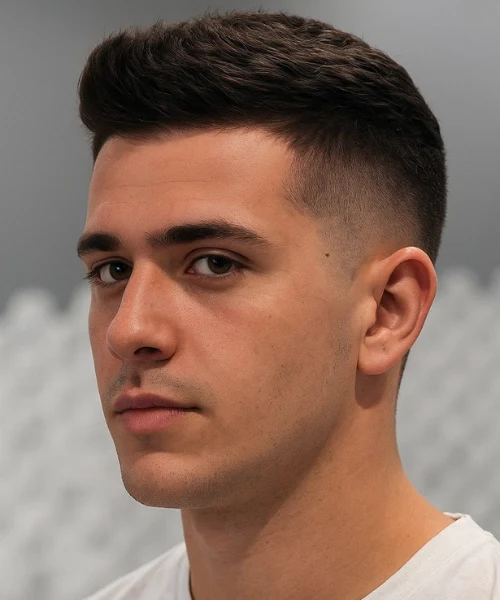
The strongest trendy Turkish haircut ideas for men include the textured crop fade, slicked-back taper, curly fringe fade, and shoulder-length flow. Each combines clean barbering with controlled texture, creating a sharp outline without making the hair look stiff. The right choice depends on your density, natural movement, face shape, and willingness to style it each morning.
I’ve cut these shapes on straight, wavy, coarse, and tightly curled hair, including clients who wanted a modern Istanbul-inspired finish without copying a single trend. The most successful versions always respect the client’s natural growth pattern before chasing the photograph.
This collection was built around wearable proportions, clear barber instructions, realistic maintenance, and enough visual variety to suit conservative offices, weddings, nightlife, and everyday grooming.
These quick picks show how the most versatile Turkish haircut ideas differ before you choose a full style.
| Haircut | Best For | Top Length | Side Finish | Upkeep |
|---|---|---|---|---|
| Textured Crop Fade | Thick straight hair | 1.5–3 inches | Mid fade | Moderate |
| Short Caesar Taper | Receding hairlines | 1–2 inches | Low taper | Easy |
| Side-Parted Ivy Cut | Offices and formal events | 2–3 inches | Scissor taper | Moderate |
| Brushed-Up Quiff | Round or oval faces | 3–4 inches | Low fade | High |
| Slicked-Back Taper | Dense straight hair | 3–5 inches | Tapered | Moderate |
| Tousled Curtain Cut | Wavy medium hair | 4–6 inches | Natural taper | Moderate |
| Curly Fringe Fade | Defined curls | 2–4 inches | Drop fade | Moderate |
| Burst Fade Mohawk | Bold personal style | 3–5 inches | Burst fade | High |
| Wavy Bro Flow | Medium-density waves | 5–8 inches | Scissor cut | Moderate |
| Shoulder-Length Layers | Thick long hair | 9–14 inches | Natural | Moderate |
Short Turkish Haircut Ideas with Clean Structure
Short Turkish haircut ideas work because they keep the outline disciplined while leaving enough movement on top to avoid a military finish. These first five options are easy to adapt for school, office work, formal events, and men who prefer quick morning routines.
1. Textured Crop with a Mid Fade
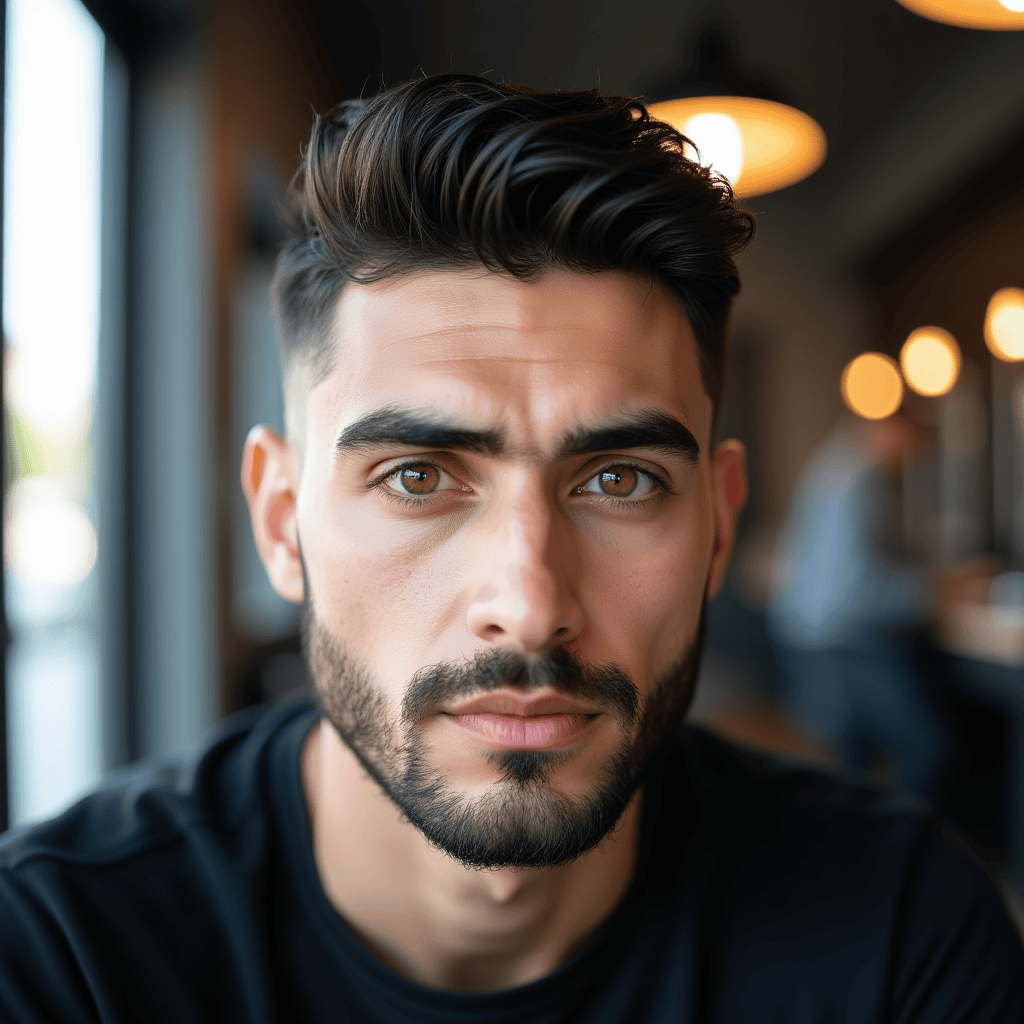
The textured crop fade has a compact top, broken fringe, and a firm transition above the temples. Hair sits forward with irregular separation rather than forming a straight, heavy shelf. A mid fade exposes the sides while leaving enough darkness near the ridge to frame the head. The contrast looks especially strong on dark, dense hair.
This cut suits oval, square, and slightly longer faces, along with straight or softly wavy textures. Tell your barber, “Keep two inches on top, point-cut the fringe, and blend a mid fade without taking the corners too high.” Expect a cleanup every three to four weeks. Men with strong crown growth may find the front easy but the back stubborn.
2. Short Caesar with a Low Taper
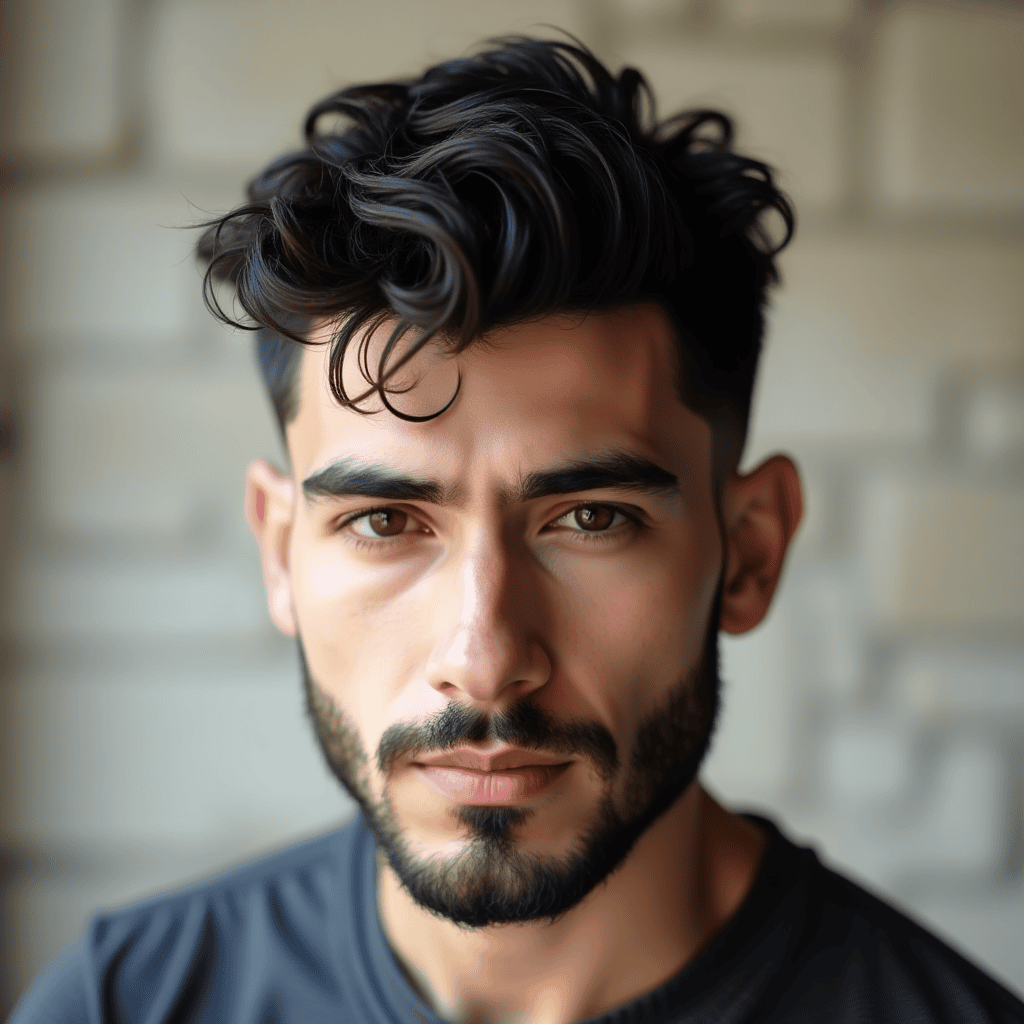
This short Caesar keeps the top close and pushes the fringe gently forward in a narrow horizontal line. The temples and neckline are tapered rather than faded to bare skin, giving the haircut a softer and more mature outline. Fine point cutting prevents the fringe from looking blunt. It is one of the most practical trendy Turkish haircut ideas for men who dislike visible scalp.
It works well for straight hair, early recession, and faces that benefit from a shorter forehead area. Ask for, “A short Caesar with a textured half-inch fringe, natural weight at the sides, and a low taper around the ears.” Styling takes little more than matte paste rubbed through dry hair. The drawback is that an overgrown fringe can quickly look uneven.
3. Side-Parted Ivy Cut

The side-parted Ivy cut blends a tidy crown with enough length in front to create a controlled sweep. The part remains soft and finger-made instead of being shaved into the scalp. Scissor-cut sides follow the head closely, while the front corner lifts slightly away from the forehead. The result looks polished without appearing frozen.
Men with straight or slightly wavy hair can wear this Turkish haircut to work, a wedding, or a formal dinner. Say, “Leave about two and a half inches in front, taper the sides with scissors, and keep the part natural.” A light cream gives it flexible control. Very coarse hair may require blow-drying to stop the part from springing back.
4. Brushed-Up Mini Quiff
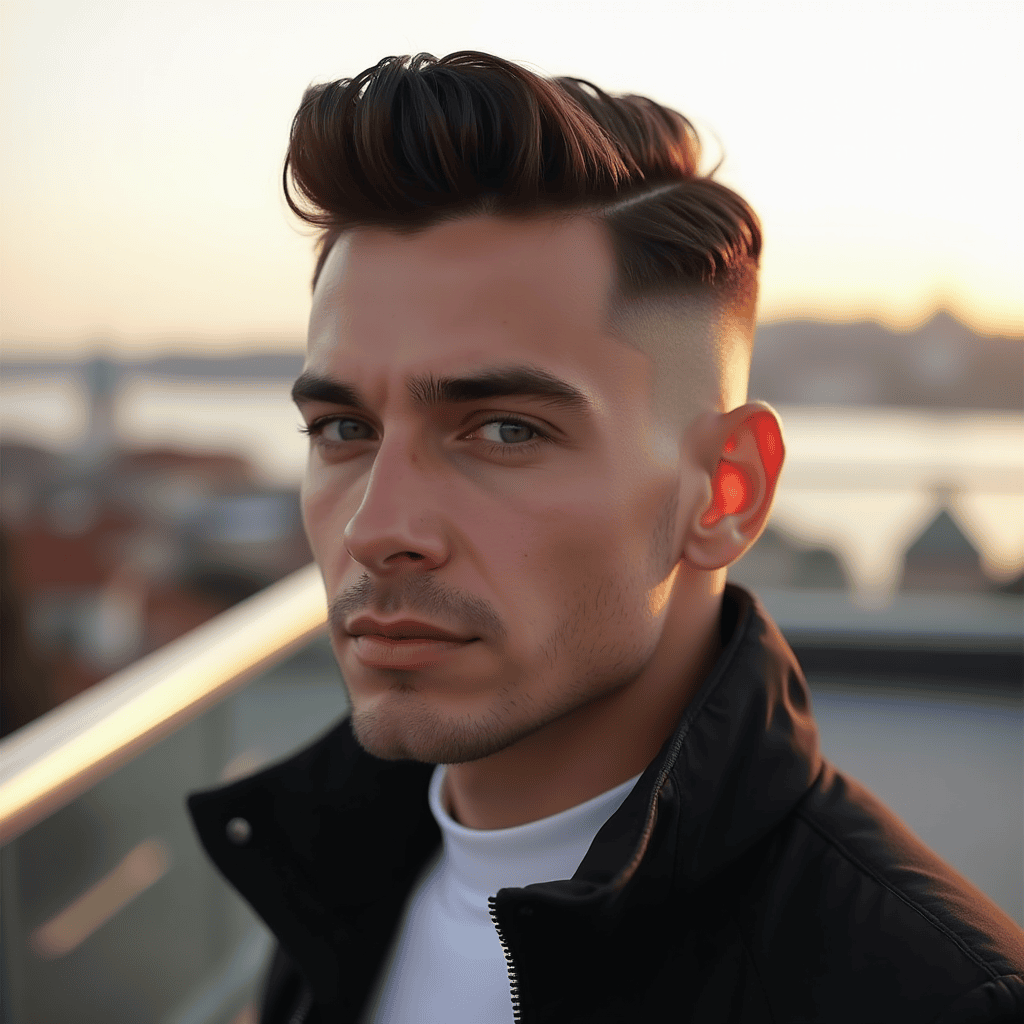
The mini quiff lifts the front without building the oversized height seen in classic rockabilly cuts. The top travels backward in loose, visible sections, while the sides stay compact through a low fade. A slightly squared front adds strength to the profile. From the side, the silhouette rises smoothly rather than forming a sharp wall.
This option suits round, oval, and shorter faces because the controlled height creates length. Ask your barber, “Keep three inches at the front, reduce the crown gradually, and give me a low fade with a dark blend.” Blow-dry upward with a vent brush and finish with clay. Fine hair can collapse by midday unless a light pre-styler is used.
5. Buzz Cut with a Sharp Temple Taper
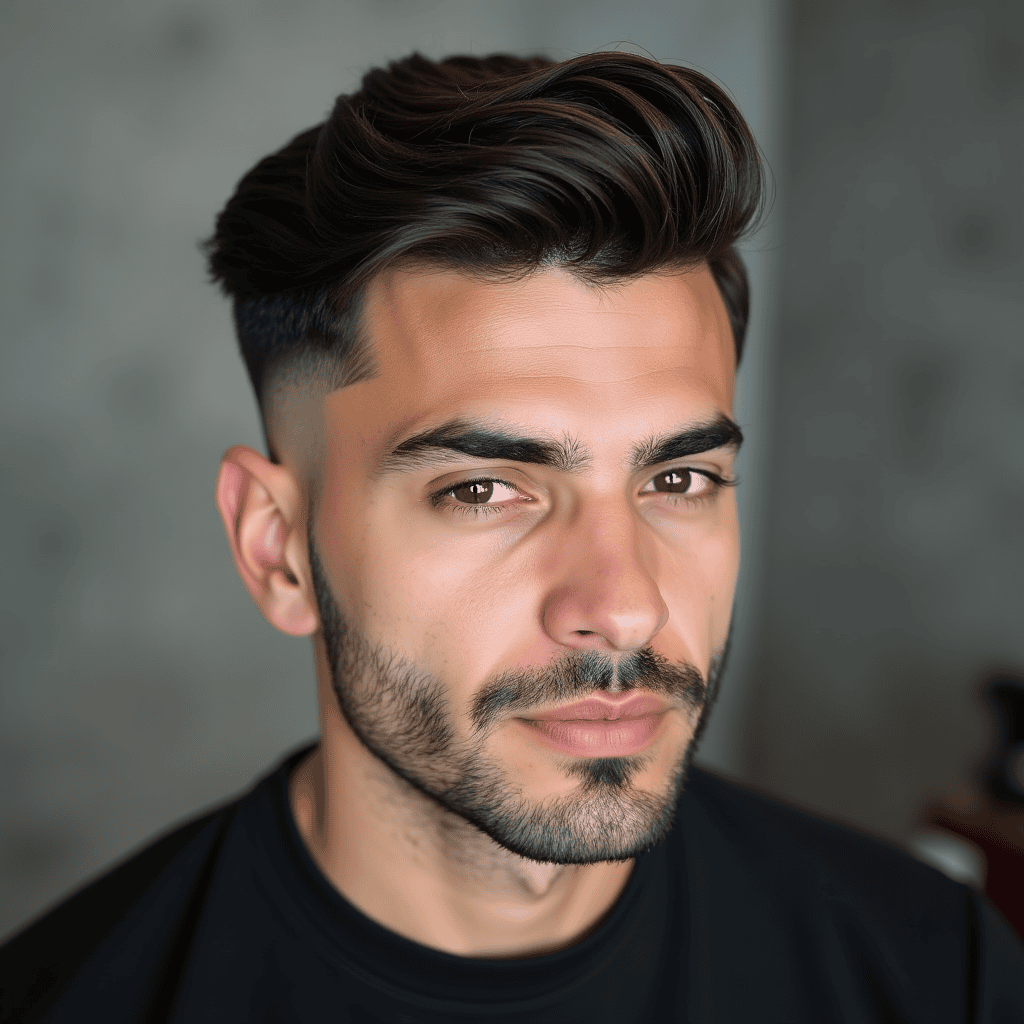
A buzz cut becomes more deliberate when the top retains a little texture and the edges are carefully shaped. The temple taper drops quickly into the sideburns, while the neckline remains clean but not unnaturally squared. A soft natural hairline usually ages better than a heavily pushed-back lineup. This Turkish haircut idea is simple, but every millimeter matters.
It suits men with even density, strong facial features, or a routine that leaves no time for styling. Request, “Use a number two on top, keep the hairline natural, and taper only the temples and neckline.” Maintenance is almost product-free, though the fade needs refreshing every two or three weeks. Irregular density becomes more visible at this length.
Medium-Length Turkish Haircut Ideas with Movement
Medium trendy Turkish haircut ideas create more personality through flow, separation, and controlled volume. They need stronger styling habits than short crops, but they also give the barber more room to balance a long face, soften a square jaw, or display natural waves.
6. Slicked-Back Taper
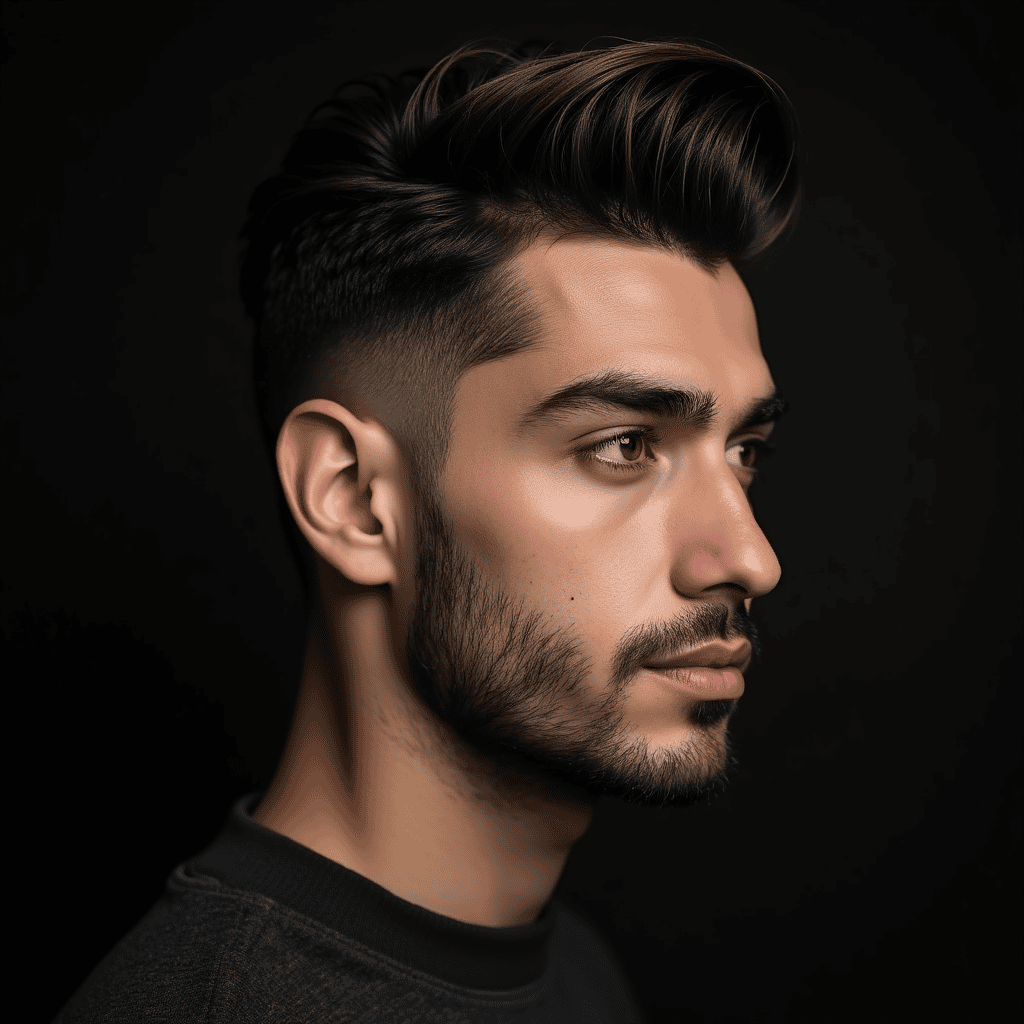
The slicked-back taper carries four or five inches of length from the forehead toward the crown. The finish follows the head rather than puffing upward, and a few separated strands keep the surface from looking lacquered. Sides narrow gradually around the ears, preserving density above the temples. It feels classic, but the loose finish keeps it current.
Dense straight or wavy hair responds best to this shape. Tell the barber, “Keep the top long enough to push behind my fingers, remove bulk underneath, and taper the sides without skin exposure.” Apply cream to damp hair and direct it backward with a dryer. Men with fine hair may find the style too flat once product is added.
7. Tousled Curtain Cut
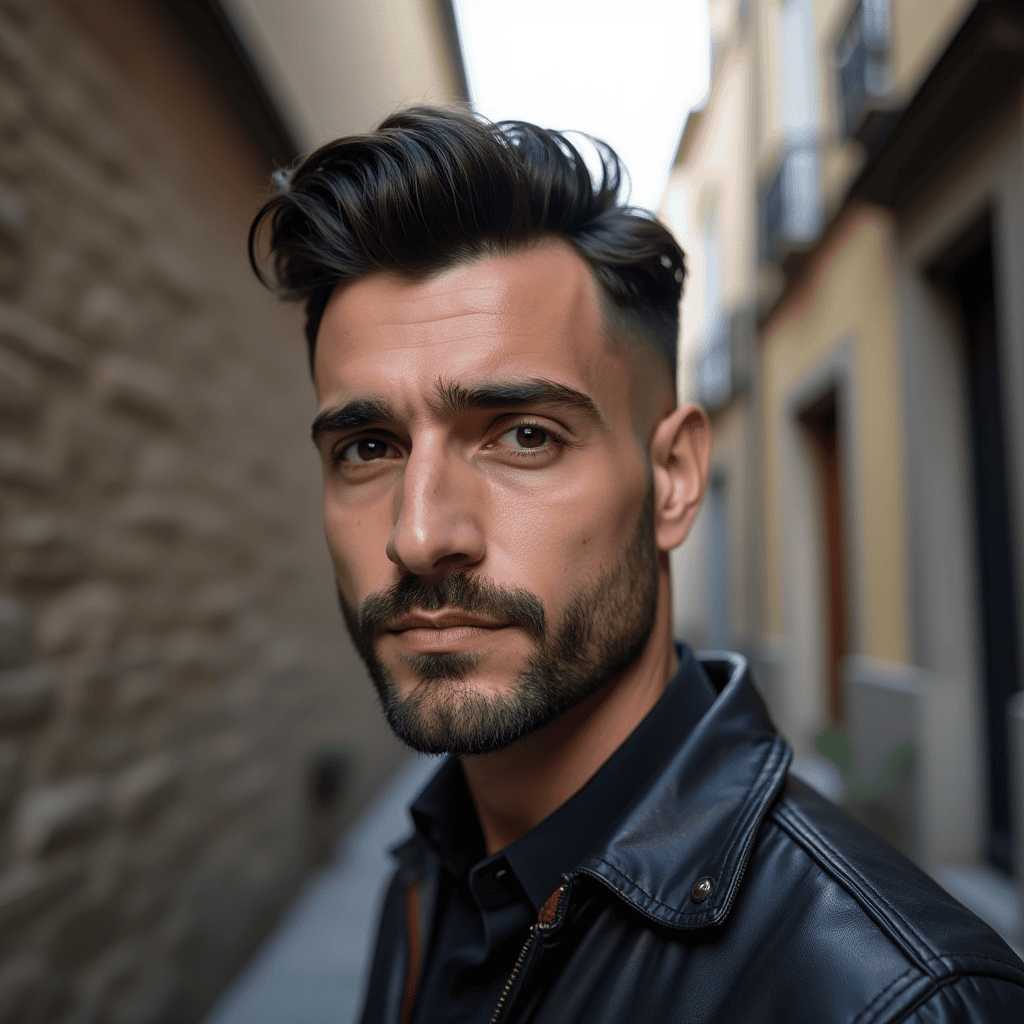
The tousled curtain cut opens through the center and drops in curved sections beside the forehead. Layers around the cheekbones prevent the front from hanging like two solid panels. The crown stays light and airy, while the sides tuck naturally behind the ears. Among Turkish haircut ideas, this one captures relaxed youthfulness without losing a shaped outline.
It flatters oval, diamond, and heart-shaped faces, especially when the hair has a slight wave. Ask for, “A center-parted curtain cut with cheekbone-length front pieces, soft internal layers, and no disconnected undercut.” Styling requires a dryer, fingers, and a small amount of cream. Strong cowlicks can force the part off-center, which is not always a bad thing.
8. Side-Swept Layered Top
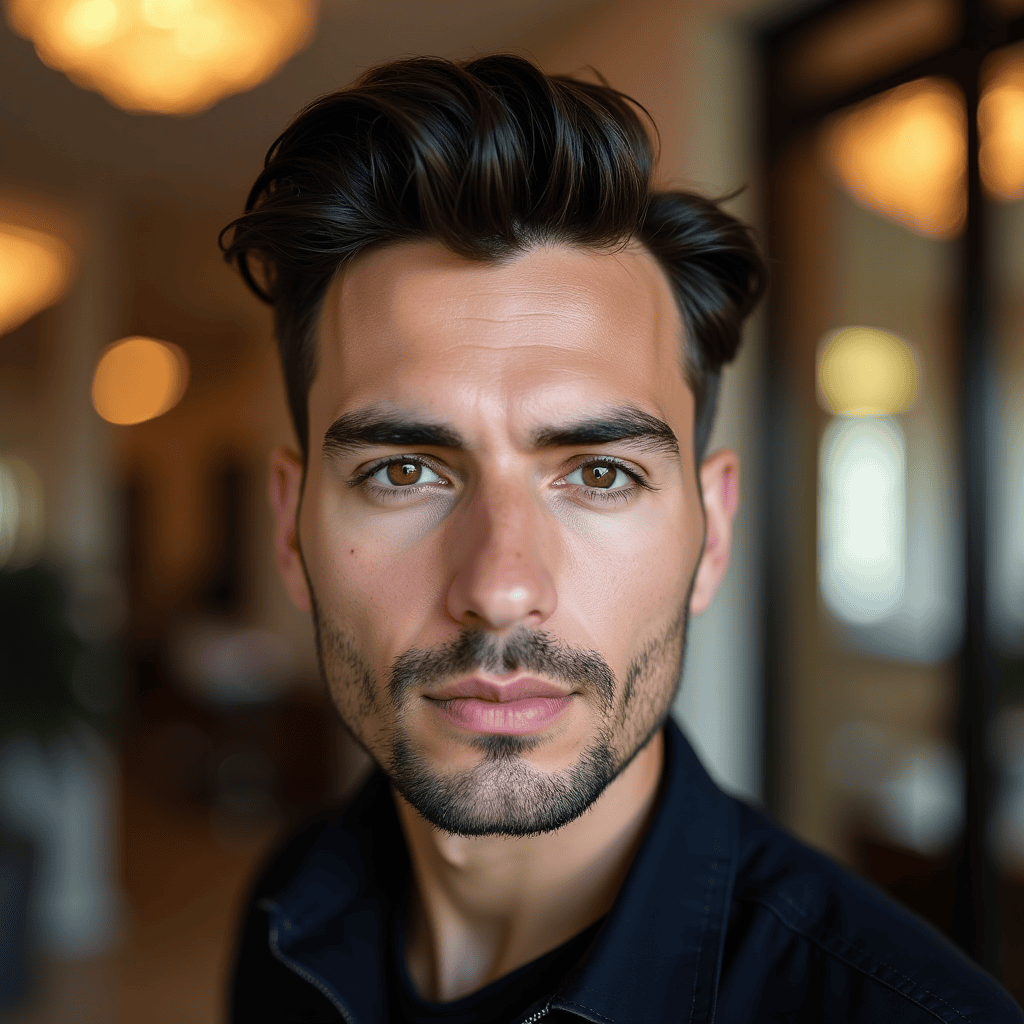
This layered top moves diagonally from a low side part toward the opposite temple. The longest section rests above the eyebrow, while shorter layers stop the hair from collapsing into one heavy sheet. Sides are cut with scissors and blended close without exposing the scalp. The shape looks especially refined when the ends retain a slight bend.
Straight, thick, or loose wavy hair can carry the weight of this Turkish haircut. Tell your stylist, “Leave four inches through the front, layer it for a side sweep, and keep the sides soft enough to tuck.” A round brush creates the cleanest direction. Heavy humidity can pull the fringe downward, so the cut may need a lighter interior.
9. Modern Pompadour with Tapered Sides
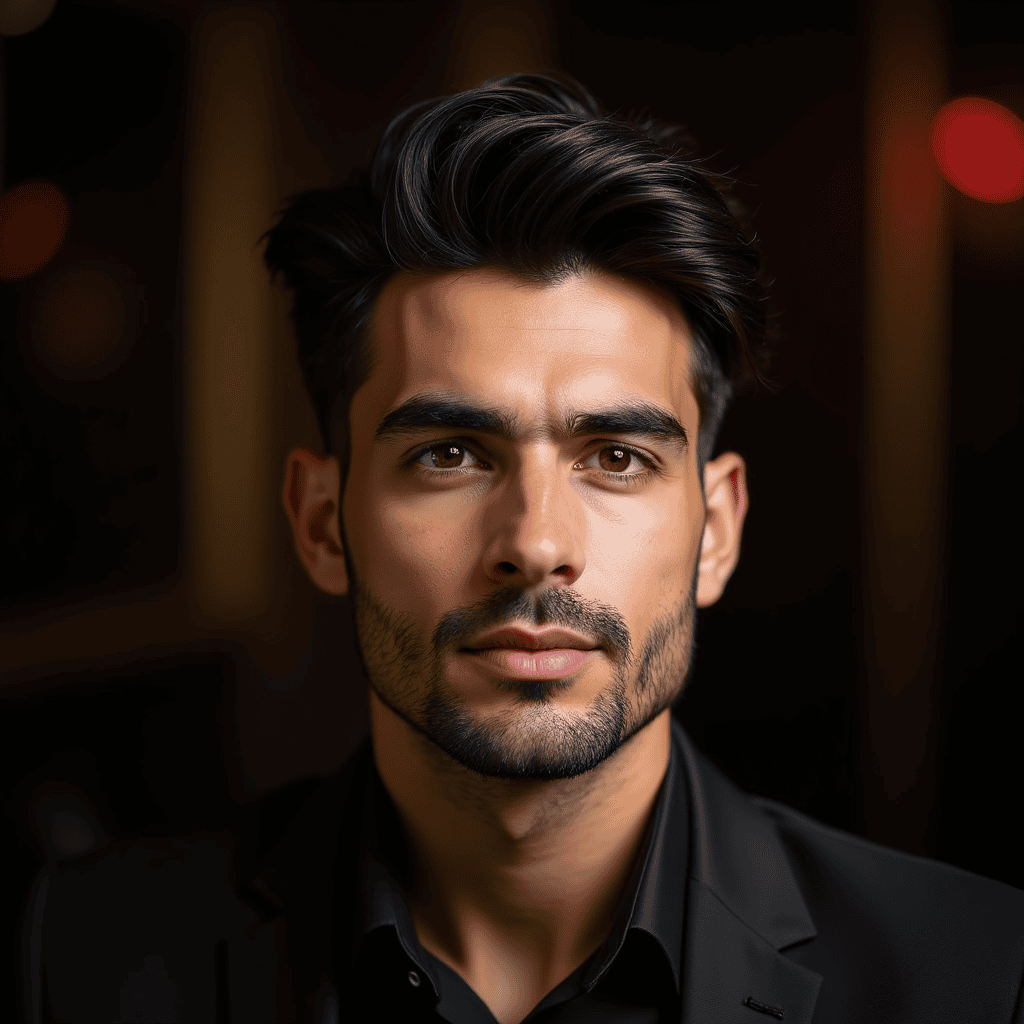
The modern pompadour rises from the forehead and rolls backward in a broad curve. Unlike an old-school version, it carries visible texture and moderate height rather than a perfectly smooth shell. The sides are tapered close but remain connected to the top. A shorter crown prevents the back from forming an awkward bump.
It works for thick straight hair and faces that can support added height. Ask for, “Four inches at the front, a shorter crown, textured ends, and tapered sides with no hard disconnect.” You will need a blow-dryer, a brush, and medium-hold product. This is not the best choice for rushed mornings or hair that refuses to hold volume.
10. Loose Comb-Back with Natural Sides
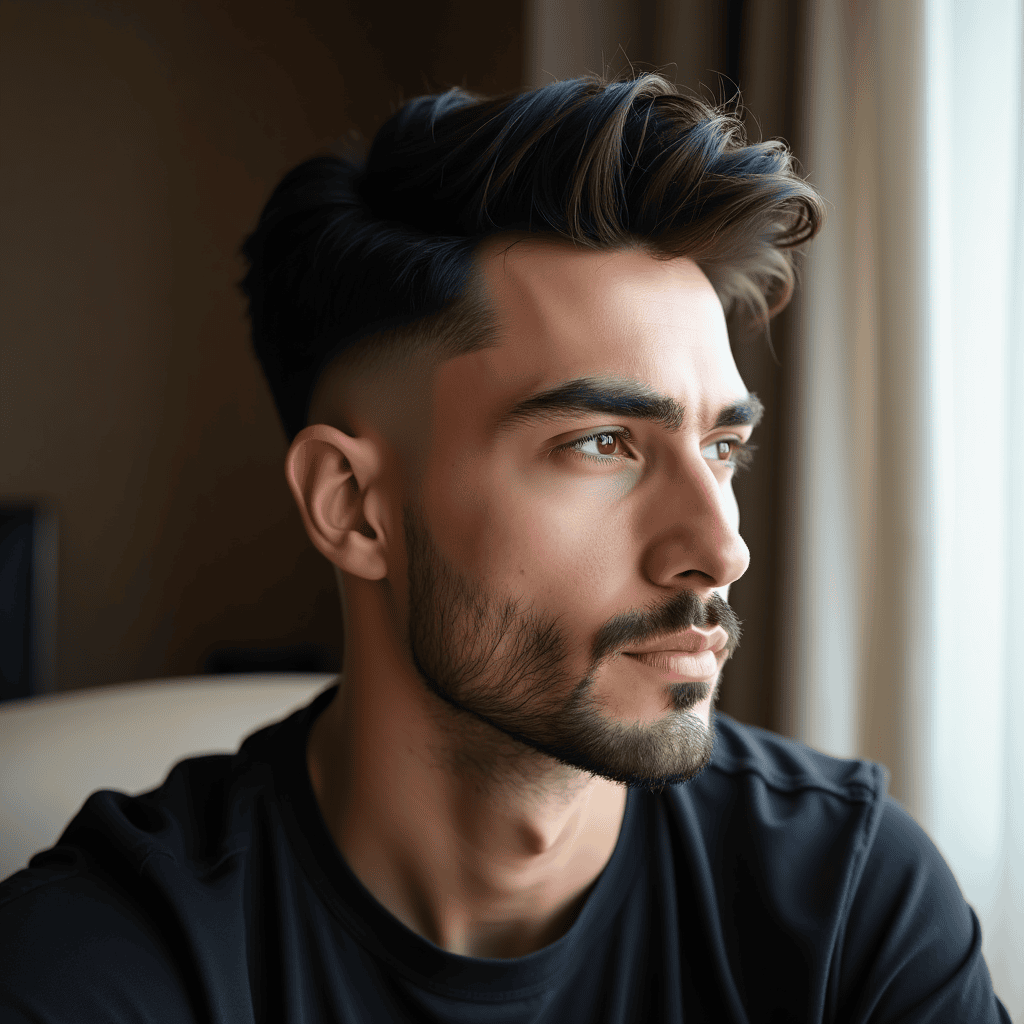
The loose comb-back moves away from the face without forming a visible part or glossy slicked surface. Medium layers overlap through the top, and the sides retain enough length to follow the fingers backward. Small flyaways are part of the look. The overall effect is confident, relaxed, and less barbered than a fade-heavy cut.
This is one of the better trendy Turkish haircut ideas for men who move between casual clothing and tailored outfits. Request, “Keep five inches on top, blend it into medium scissor-cut sides, and remove weight without thinning the ends.” Styling cream and a wide-tooth comb are enough. Fine hair may separate too much and expose the scalp.
Turkish Fade Haircuts with Strong Contrast
Fade-based Turkish haircut ideas place most of the visual energy around the temples, side profile, and neckline. The barber must choose the fade height according to the head shape rather than copying a fixed template, because a blend that climbs too high can narrow the top and exaggerate the crown.
11. High Fade with a Textured Brush-Up
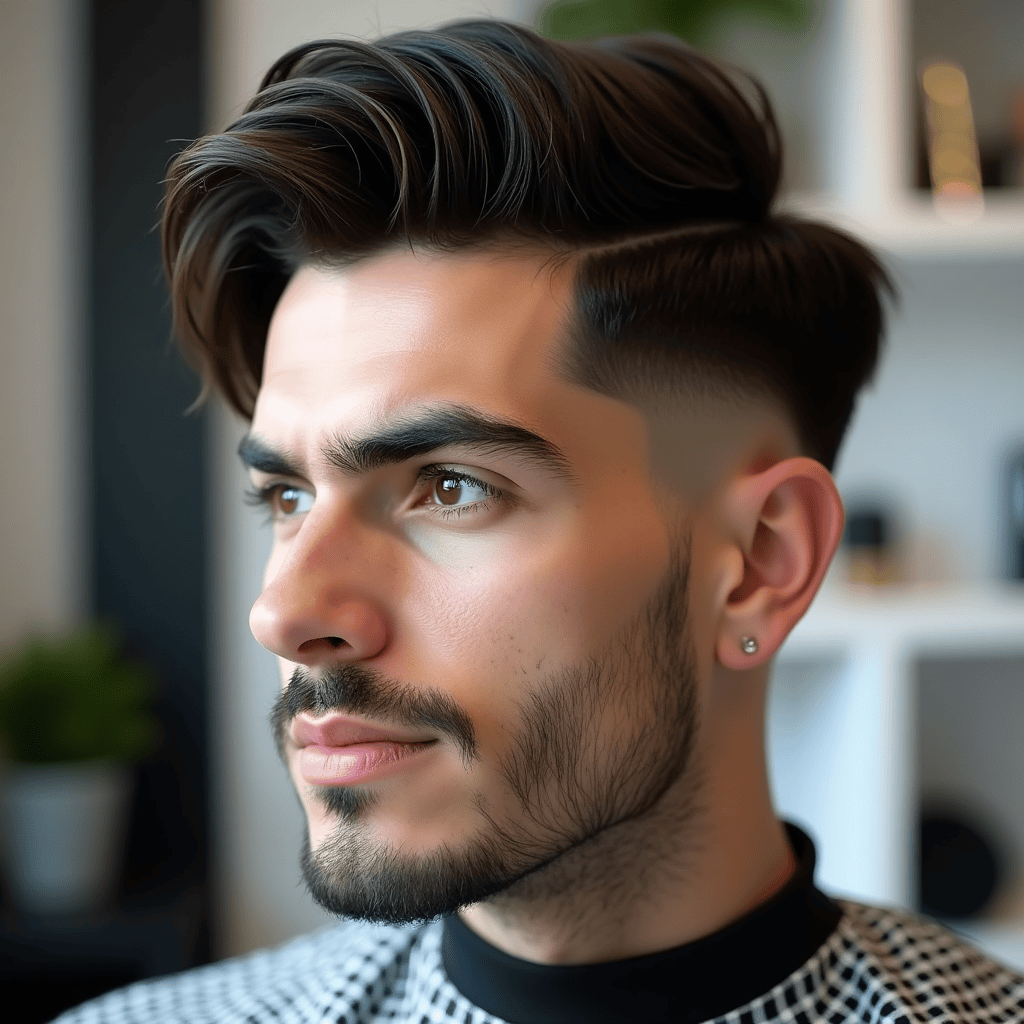
This cut combines a high fade with a short top pushed upward and slightly forward. Texture is cut into the ends so the hair forms rough peaks rather than one smooth crest. The fade reaches the upper temple, producing a bold separation between the top and sides. It looks sharpest immediately after a fresh cleanup.
Men with dense straight hair and balanced head shapes carry this Turkish haircut well. Ask for, “A high fade that stays below the ridge, two and a half inches on top, and choppy texture for a finger-styled brush-up.” Matte clay gives grip without shine. The drawback is rapid grow-out, as the contrast softens within two weeks.
12. Low Drop Fade with a Curved Fringe
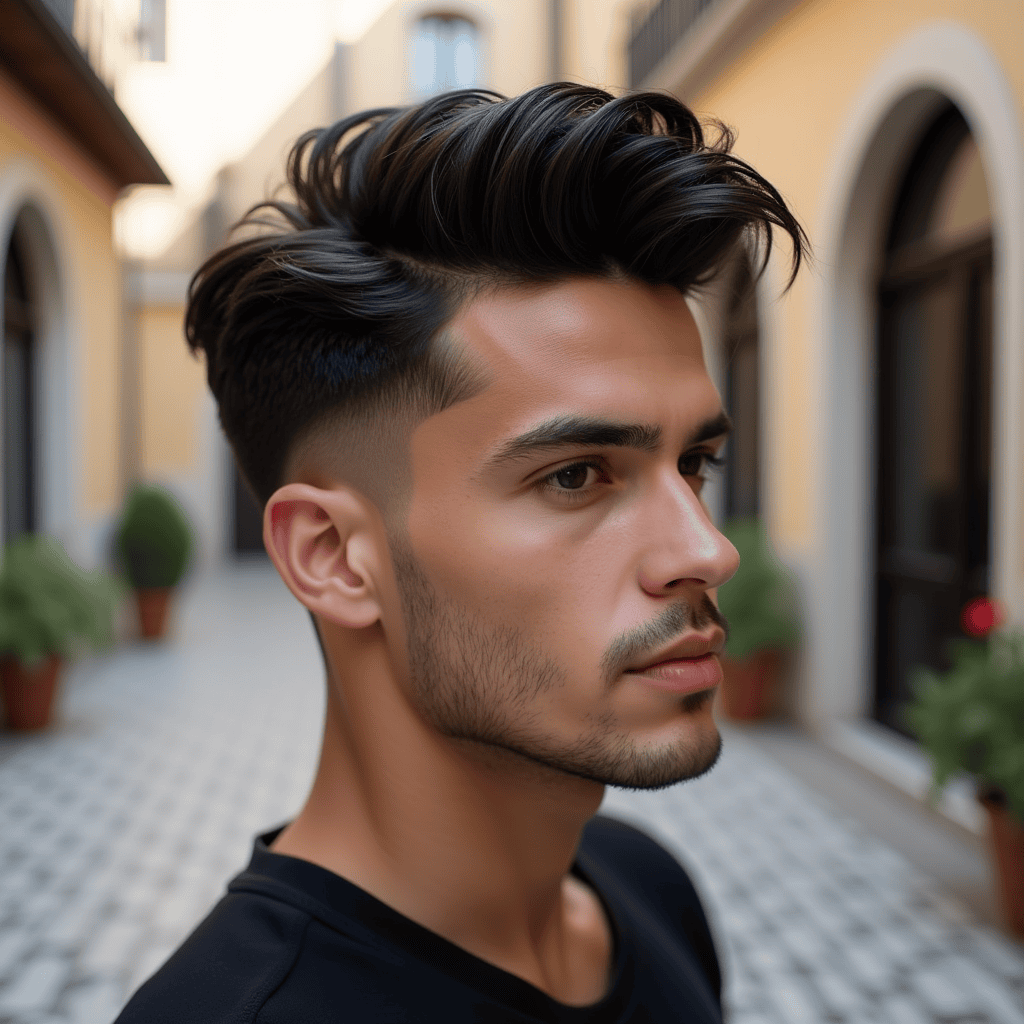
The low drop fade follows a curved line behind the ear and sinks toward the neckline. Above it, a short fringe bends gently across the forehead rather than lying straight. The rounded transition mirrors the natural skull shape, creating a smooth side profile. Dark weight remains around the upper sides, which gives the cut a fuller appearance.
It suits men with thick straight or wavy hair who want a fade without exposing half the head. Say, “Give me a low drop fade, leave the upper sides dark, and cut a soft curved fringe with broken ends.” Daily styling is quick with paste. A poorly placed drop can look heavy behind the ears, so choose an experienced fade barber.
13. Skin Fade with a Short Side Part
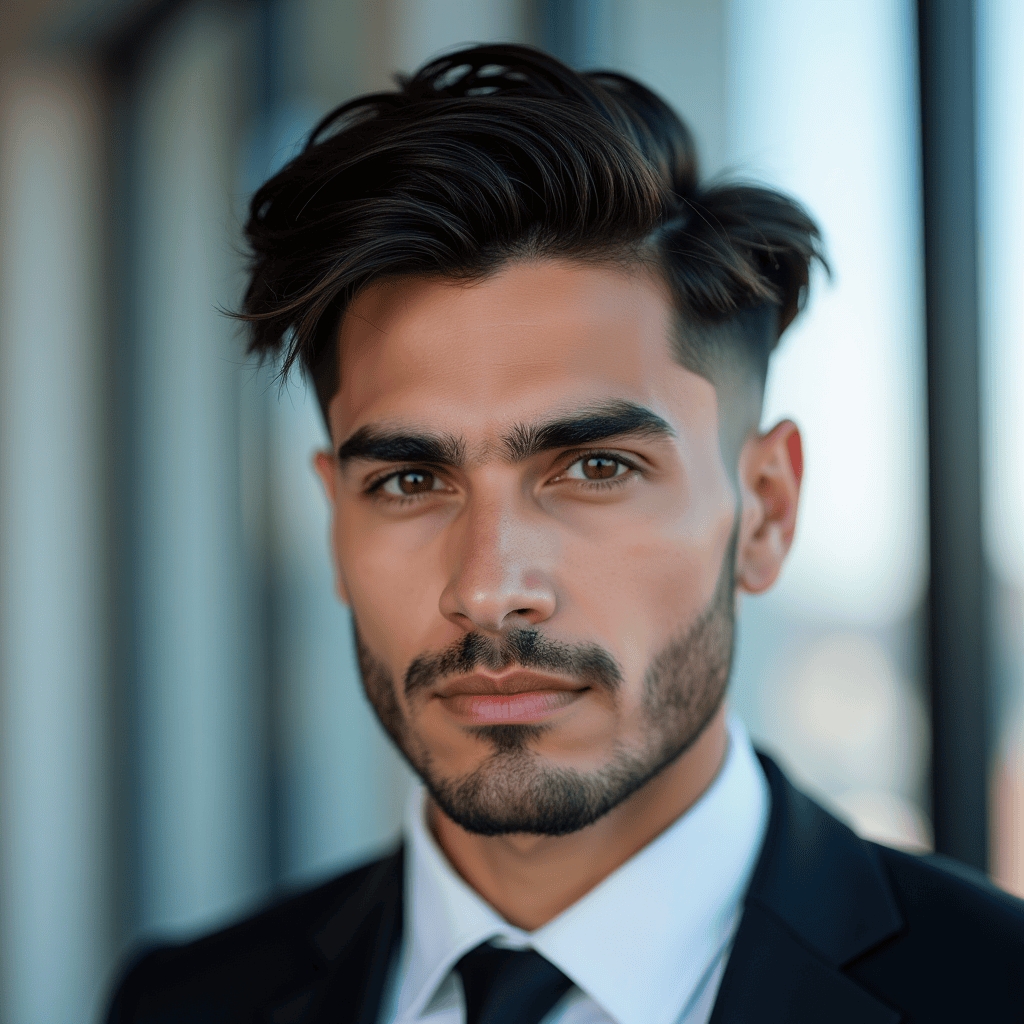
A compact side part brings order to the top while a skin fade strips the sides down to a clean base. The part is combed rather than razor-carved, and the top stays short enough to hold its shape through a workday. A narrow transition at the temple gives the haircut a crisp, tailored appearance.
This option works for straight hair, formal wardrobes, and men who enjoy frequent barber visits. Ask for, “A short side part with two inches on top, a skin fade kept low to mid, and no shaved parting line.” Use a small amount of low-shine pomade. Sensitive scalps or men who dislike visible skin should choose a shadow fade instead.
14. Burst Fade with a Short Mohawk
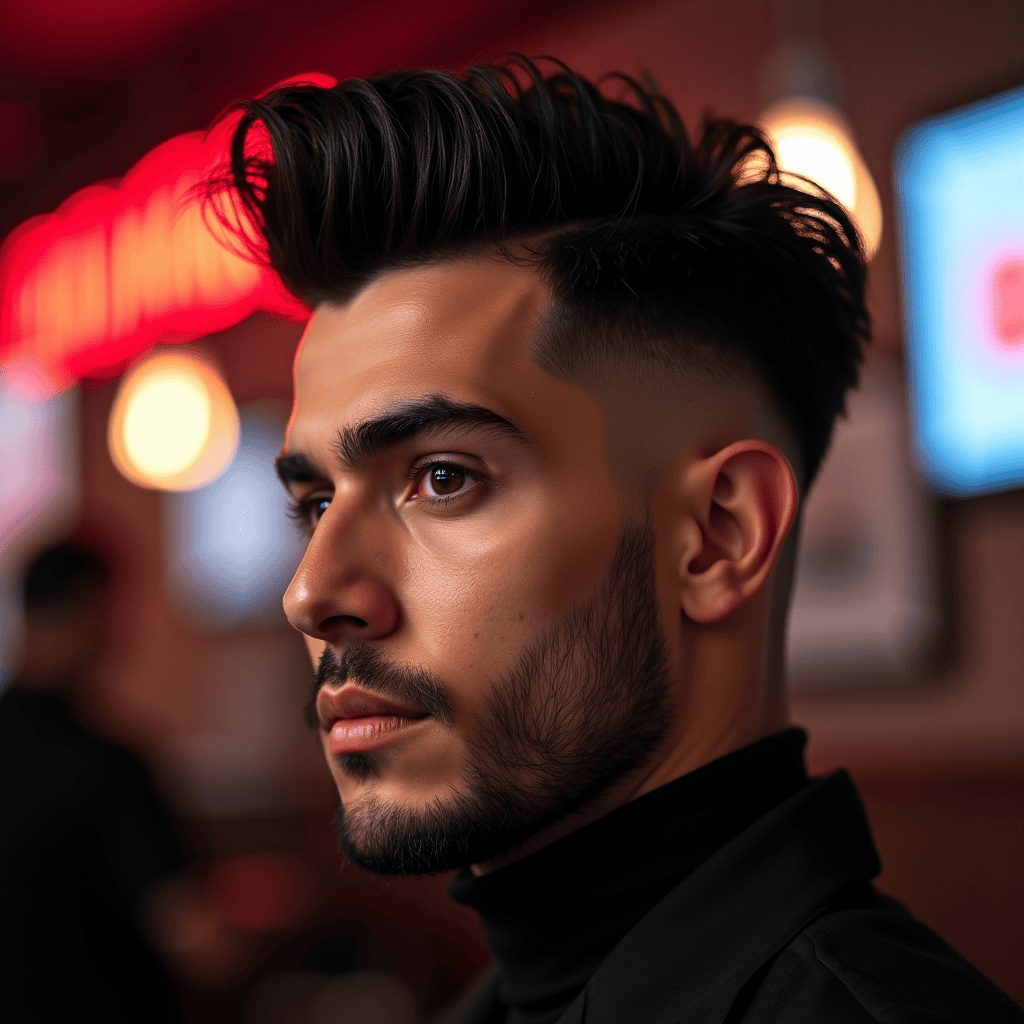
The burst fade circles the ear and leaves a dark strip running from the forehead to the nape. The top is broad enough to avoid a narrow punk spike, with texture directed upward through the center. At the back, the shape tapers into a short point. It is one of the bolder Turkish haircut ideas without requiring long hair.
Oval, round, and broad faces can suit this cut when the central strip is proportioned correctly. Tell the barber, “Keep the mohawk wide, use a burst fade around the ears, and leave the back controlled rather than extending into a mullet.” Styling takes firm clay. The unusual outline attracts attention and may feel too aggressive in conservative offices.
15. Shadow Fade with a Forward Sweep
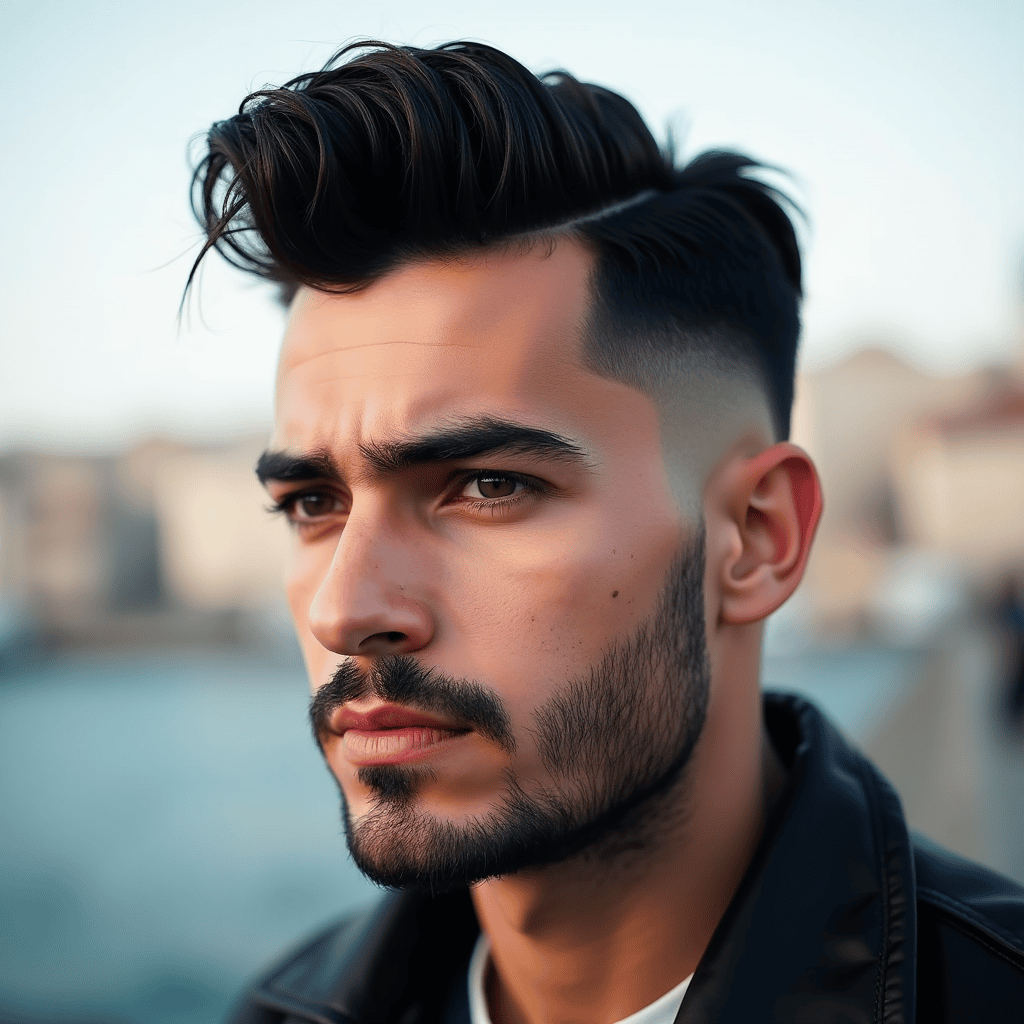
The shadow fade keeps a faint layer of hair at its shortest point, creating a smoky transition instead of bare skin. On top, three inches of hair sweep forward and slightly sideways, ending in a loose fringe near one eyebrow. The blend feels less severe than a skin fade, making the style easier to wear as it grows.
Men with dark hair, sensitive skin, or a preference for subtle contrast should consider this Turkish haircut. Ask for, “A shadow fade with no bare patches, three inches on top, and a soft forward sweep that sits above the eyebrow.” A light styling powder adds lift. The fringe needs regular trimming or it will begin falling into the eyes.
Curly and Wavy Turkish Haircut Ideas
Curly and wavy trendy Turkish haircut ideas should preserve pattern rather than flattening it into a generic barber shape. The key is removing bulk from chosen areas while leaving enough length for each bend or curl to reform after washing.
16. Curly Fringe with a Drop Fade
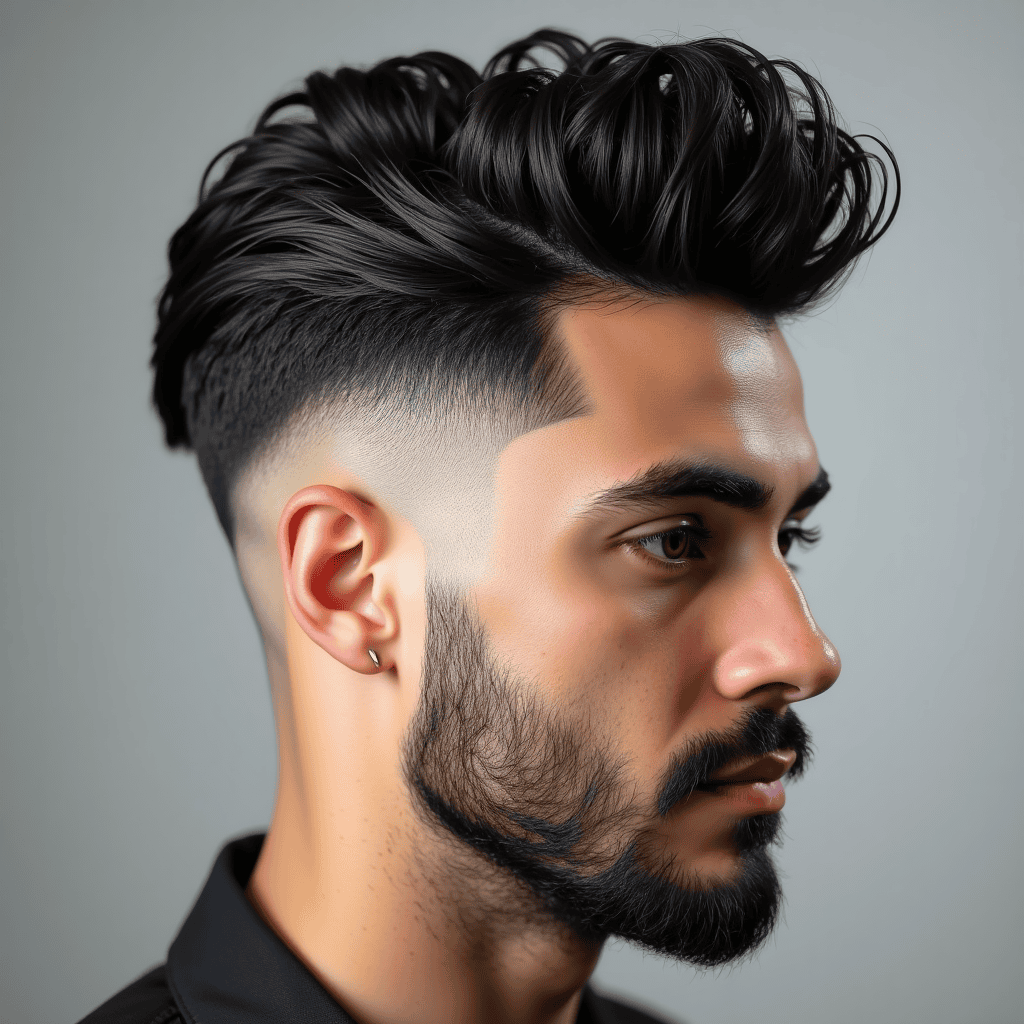
This style leaves defined curls hanging over the front while the drop fade curves behind the ears. The top remains rounded, with shorter curls near the crown and longer pieces above the eyebrows. The sides transition cleanly without cutting into the curl area. From the front, the fringe appears full but not helmet-like.
It suits type 2C to type 3B curls and men with longer or oval faces. Ask for, “Keep the curls long enough to coil at the front, shape the top round, and add a low drop fade without thinning the curl ends.” Apply curl cream to wet hair. The fringe can shrink dramatically, so it should never be measured only while stretched.
17. Wavy French Crop
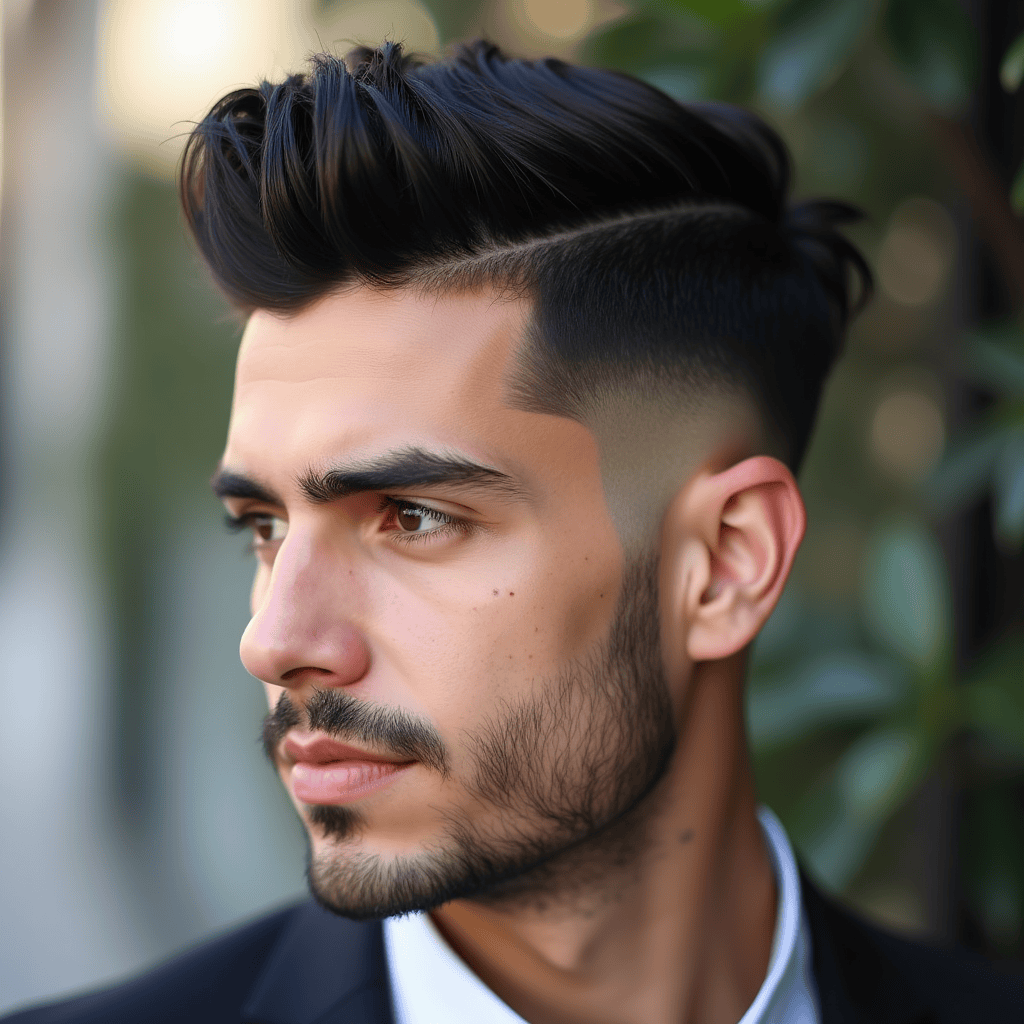
The wavy French crop pushes natural bends toward the forehead and trims them into a loose, irregular fringe. The top stays compact while retaining enough length for S-shaped movement. Sides are tapered low, creating structure without competing with the texture. The cut looks casual from a distance and carefully controlled up close.
This Turkish haircut idea works for thick waves and men who want to avoid blow-drying. Say, “Leave enough length for my wave to form, break up the fringe, and taper the sides low without flattening the top.” Scrunch a small amount of cream into damp hair. Heavy thinning shears can create frizz, so ask for restrained bulk removal.
18. Curly High Top with Temple Fade
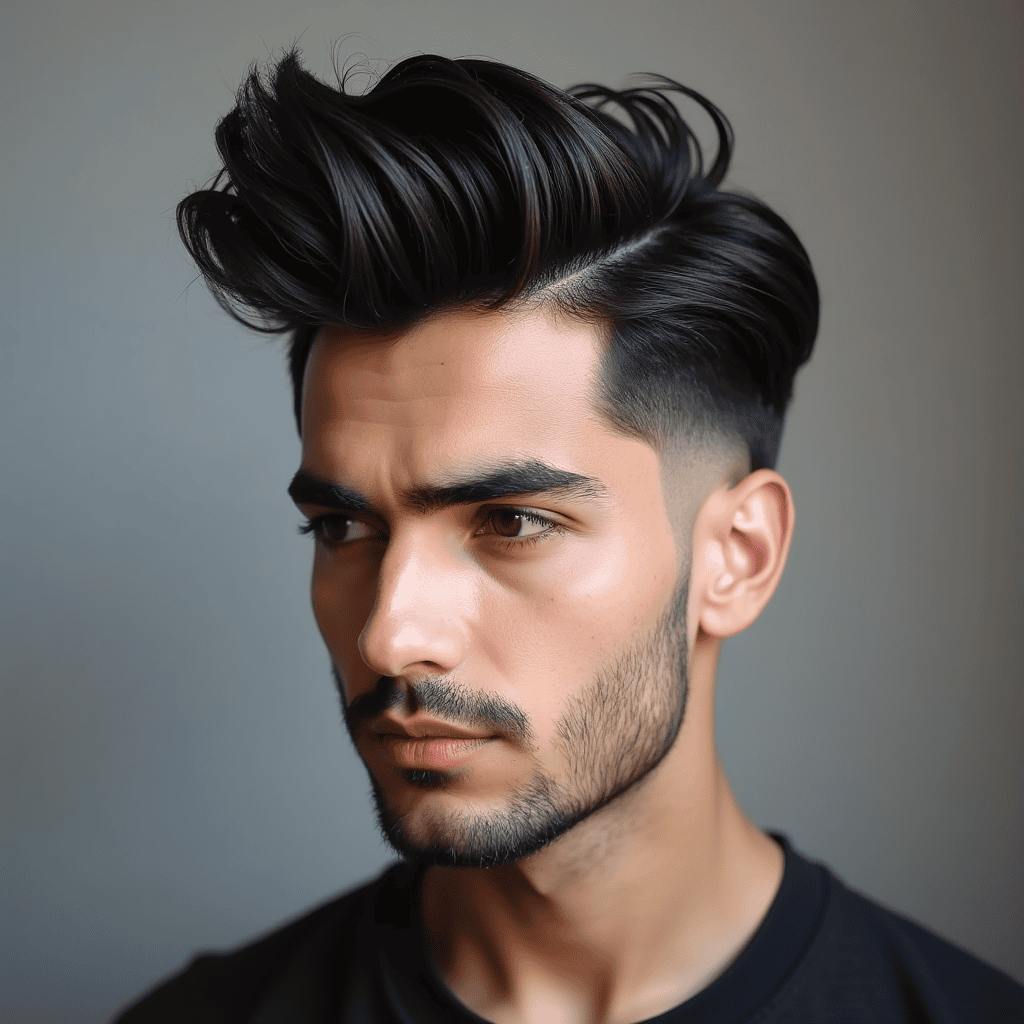
The curly high top builds controlled height above the forehead and crown while the temple fade cleans only the corners. The sides keep visible curl and gradually shorten toward the ears. This creates a tall but connected silhouette, unlike a fully disconnected high-top fade. Individual curls should remain separated and springy.
It flatters round and square faces, especially on dense coiled hair. Request, “Shape the top with even height, preserve curl definition through the sides, and taper only the temples and neck.” A leave-in styling cream helps the pattern settle. Uneven shrinkage can distort the outline, so dry shaping matters before the appointment ends.
19. Wavy Side Part with Scissor Taper
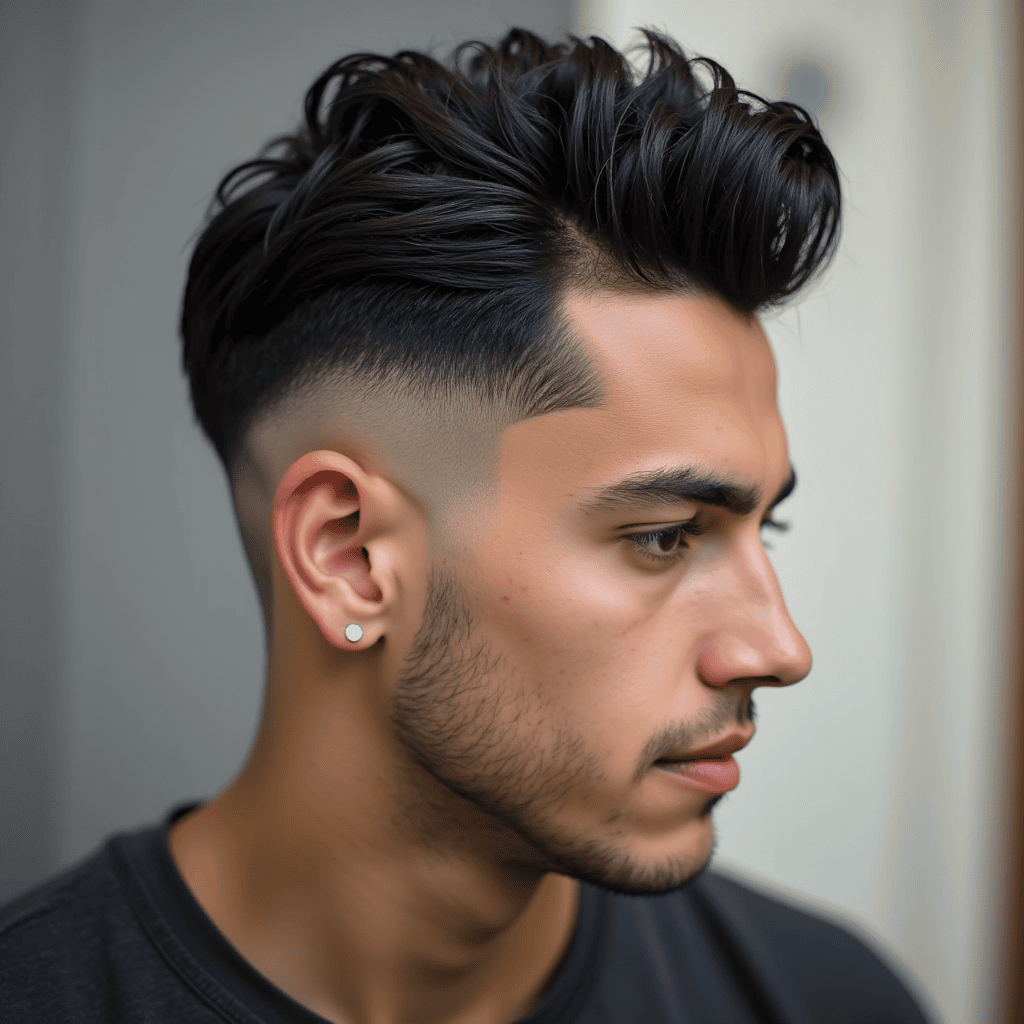
This cut uses a loose side part to guide waves backward while keeping their natural ridges visible. The front rises slightly and falls toward the side, creating a soft diagonal line. Scissor-tapered sides maintain fullness near the temples and become shorter around the ears. It feels refined without suppressing the hair’s movement.
Men with medium-density waves and professional dress codes can wear this Turkish haircut easily. Tell your stylist, “Follow my natural side part, keep the wave pattern visible, and taper the sides with scissors instead of clippers.” Use cream on damp hair and air-dry or diffuse. Excess pomade can collapse the waves and leave the surface greasy.
20. Short Curly Mullet Fade
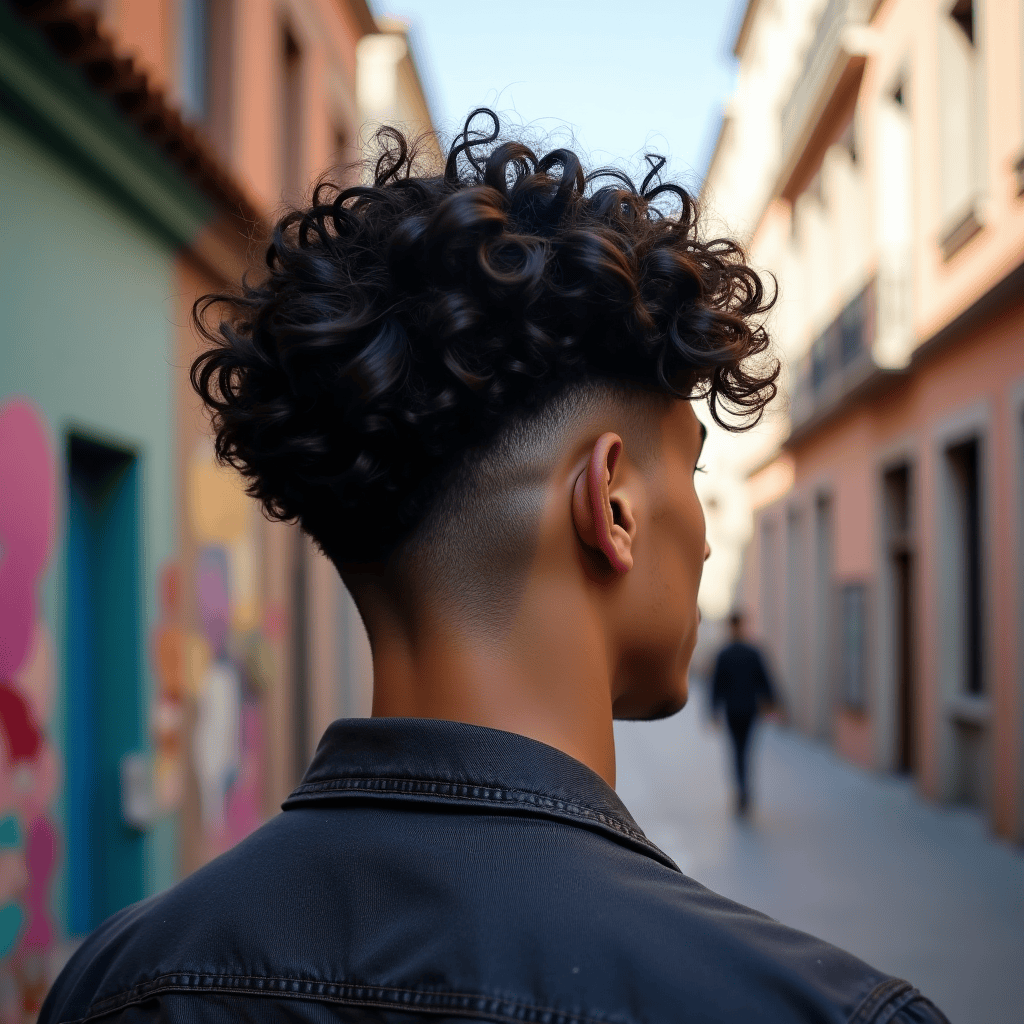
The short curly mullet fade keeps compact curls at the front, slightly more length through the crown, and a controlled extension at the nape. A taper or low fade around the ears creates the separation that makes the back length intentional. The silhouette remains neat enough to avoid the exaggerated tail of a retro mullet.
This suits confident men with defined curls and a relaxed workplace or creative wardrobe. Ask for, “A short curly mullet with a low fade at the ears, a rounded top, and only a modest extension at the nape.” Curl cream and occasional diffusing maintain the shape. The neckline can look untidy quickly if the back is not trimmed regularly.
Longer Turkish Haircut Ideas with a Bolder Profile
Longer Turkish haircut ideas rely on proportion, layering, and healthy-looking movement rather than tight clipper work. These styles give thick and wavy hair room to form a distinctive outline, but they demand more attention during washing, drying, and seasonal humidity.
21. Wavy Bro Flow

The wavy bro flow moves backward from the forehead and bends outward near the ears. Front layers reach the cheekbones, while the crown stays light enough to avoid a flat center. The ends turn naturally around the collar, creating an easy, swept shape. No hard part or fade interrupts the movement.
It suits oval, square, and heart-shaped faces with medium to thick waves. Tell your stylist, “Keep enough length to sweep behind my ears, add long layers for movement, and avoid thinning the perimeter.” A cream or light mousse controls frizz. The awkward stage arrives when the front is too long to stay forward but too short to tuck.
22. Shoulder-Length Layered Cut
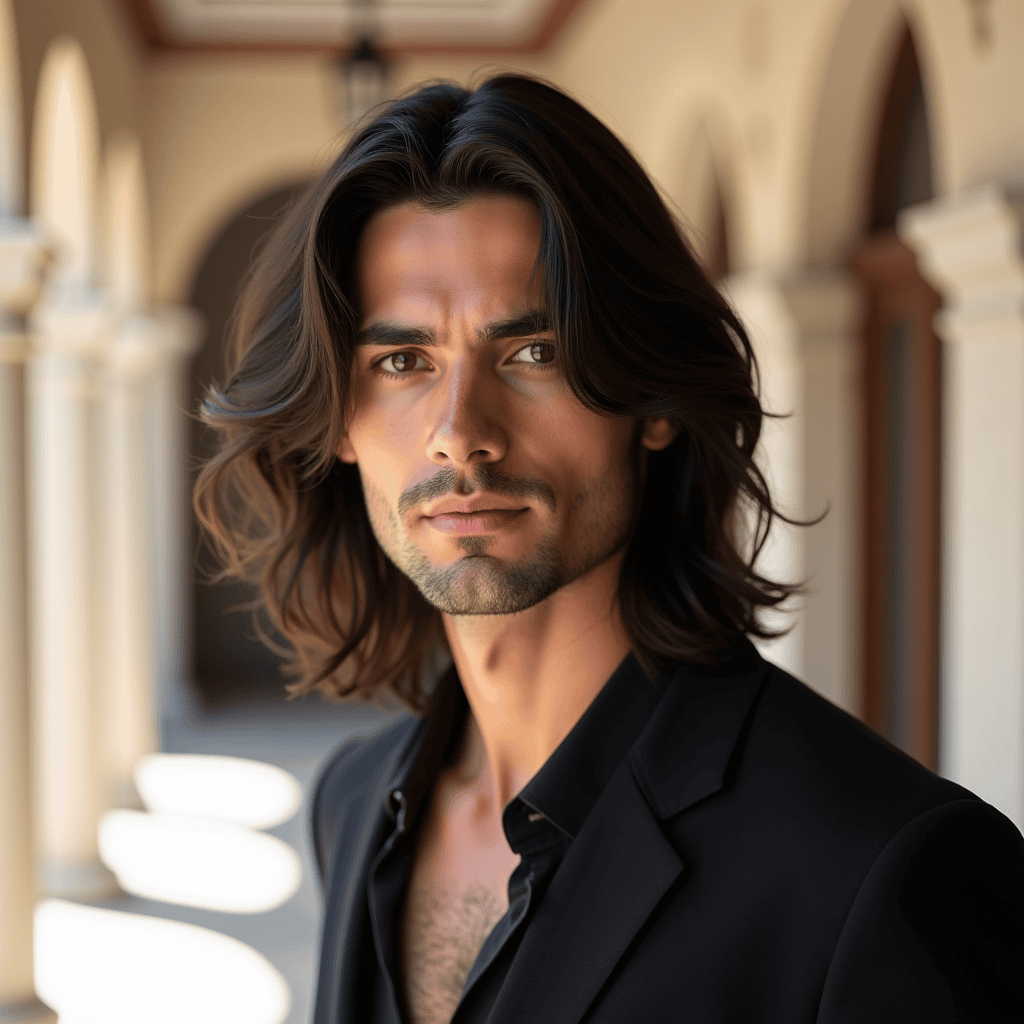
This shoulder-length cut carries long layers through the front and lighter shaping around the crown. The perimeter lands around the collarbone, while shorter pieces frame the jaw without creating a dramatic shag. Natural bends remain visible from roots to ends. The cut looks strongest when the density is distributed rather than thinned aggressively.
Thick straight or wavy hair supports this Turkish haircut best. Ask for, “A collarbone-length perimeter, long face-framing layers, and gentle weight removal through the interior.” Regular conditioning and careful detangling become part of the routine. Fine hair may look sparse at the ends, while very dense hair can feel hot and heavy in summer.
23. Modern Shag with Tapered Sideburns

The modern shag builds choppy layers around the crown, temples, and ears while retaining length at the back. A broken fringe falls toward the eyebrows, and tapered sideburns keep the facial outline clean. The texture appears irregular from every angle, giving the haircut movement even when the hair is not deliberately styled.
It works for straight, wavy, or loosely curly hair and men who prefer a creative appearance. Request, “A medium shag with a broken fringe, short crown layers, longer back pieces, and tapered sideburns.” Salt spray can sharpen the separation. The drawback is inconsistency during grow-out, as short crown layers can stick up before settling.
24. Long Slick-Back with an Undercut
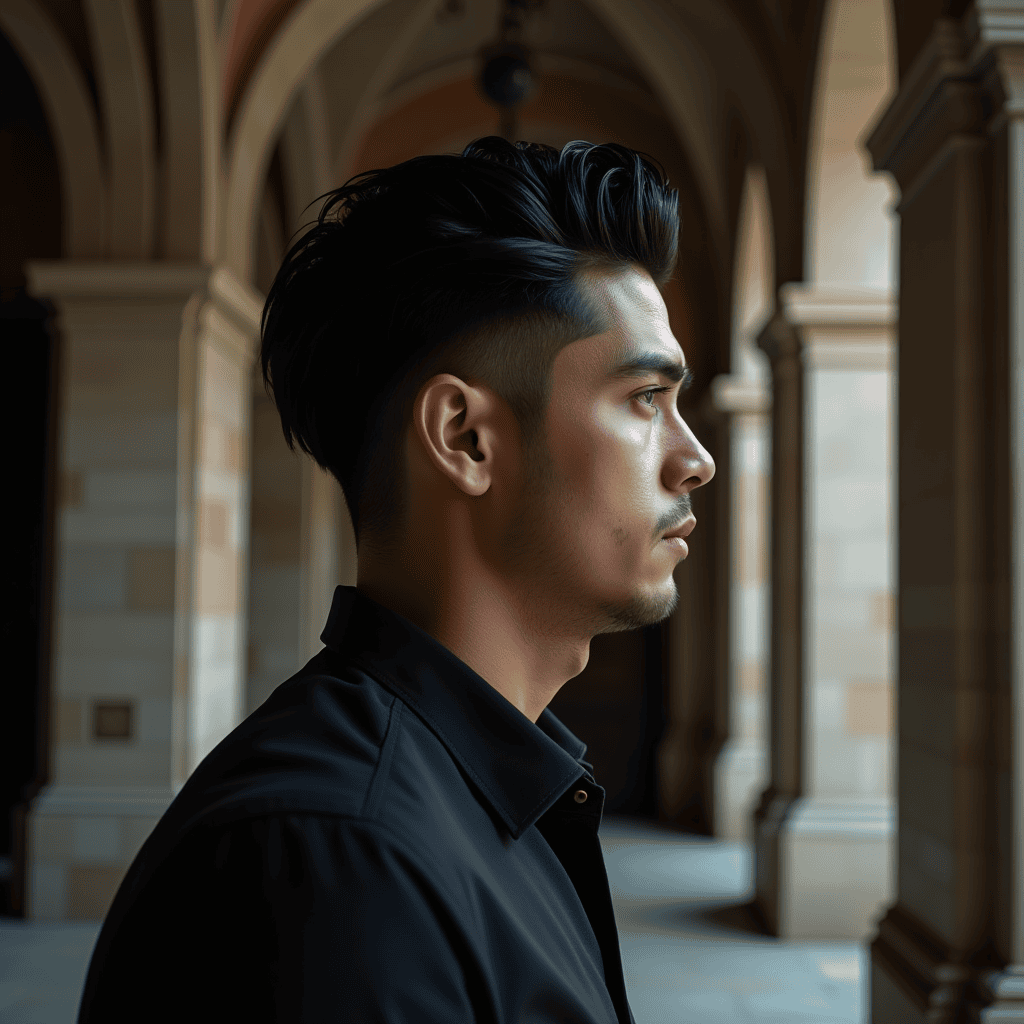
This long slick-back pairs a six- to eight-inch top with clipped sides that stop abruptly beneath the upper ridge. The top travels backward in a broad sheet but retains separated strands for a softer finish. The undercut removes bulk around the ears and exposes the full length difference. From the side, the contrast is unmistakable.
Men with thick straight hair and a strong preference for high-contrast Turkish haircut ideas will get the most from it. Ask for, “A connected-looking long slick-back on top with a low undercut, but leave enough edge weight to avoid a mushroom shape.” Drying takes time. Once released from a tie or pushed forward, the disconnected sides can be difficult to disguise.
25. Long Curly Layers with a Center Part

Long curly layers open through the center and fall around the temples, cheeks, and shoulders in graduated coils. Shorter face-framing curls keep the front from appearing bottom-heavy, while longer pieces preserve fullness through the lower half. The shape should expand slightly outward rather than hanging in a narrow column.
This final Turkish haircut idea suits men with established curl length and enough density to support layered shaping. Tell your stylist, “Keep the overall length, add curl-by-curl face framing, and remove weight without thinning the ends.” Detangle only with adequate slip and style while wet. Short layers can shrink above the intended position, so cautious cutting is essential.
How to Choose the Right Turkish Haircut
Start with your natural texture. Straight hair supports sharp crops, side parts, pompadours, and slicked finishes, while waves respond better to curtains, layered sweeps, bro flows, and loose comb-backs. Curls need enough untouched length to reform after washing, so avoid choosing a photograph where the pattern is looser than your own.
Next, consider facial proportion. Added height can lengthen a round face, but it may overextend a narrow one. A fringe reduces visible forehead space, while swept-back styles expose it fully. Fuller sides can balance a long face; high fades often make it appear narrower.
Bring two or three reference photographs taken from different angles. Tell the barber which details matter most, such as the fringe length, fade height, neckline, or amount of exposed scalp. A single front-facing photograph does not show how the crown, ears, and back were handled.
Describe your normal routine honestly. A haircut that requires a round brush, pre-styler, dryer, and finishing clay will not turn into a wash-and-go style because the barber demonstrates it once. Ask how the cut looks without product before agreeing to a demanding finish.
Book the first appointment when you have enough time for a full consultation. Turkish haircut ideas often depend on clean graduation and thoughtful weight removal, which are harder to correct after an overly high fade or heavily thinned top.
Where Turkish Haircuts Can Go Wrong
The biggest mistake is chasing contrast without considering head shape. A skin fade placed too high can make the crown look narrow, expose uneven density, and leave no room for a softer adjustment. Starting lower gives the barber more control and gives you an easier grow-out.
Over-thinning causes another common problem. Dark, thick hair may look bulky in the chair, but removing too much internal weight can create frizz, weak ends, or transparent patches under bright light. Point cutting and selective bulk removal usually produce a more controlled result than repeated passes with thinning shears.
Heavy product can also distort the haircut. Glossy pomade may flatten a textured crop, while dry clay can make long curls appear dusty. The finish should support the shape rather than becoming the first thing people notice.
A copied hairline is the final trap. Sharply squared corners look impressive on fresh barber photographs, yet pushing the line backward can make the cut appear unnatural as soon as stubble grows. A clean version of your existing hairline usually lasts better.
Frequently Asked Questions
What is the most popular Turkish haircut for men?
The textured crop with a low or mid fade remains one of the most wearable options because it suits dense straight hair, needs limited styling, and can be adjusted for different face shapes. Slicked-back tapers and curly fringe fades are also common choices for men who want more movement.
Which Turkish haircut ideas suit thick hair?
Thick hair works well with textured crops, modern pompadours, slicked-back tapers, curtain cuts, and layered flows. The barber should remove weight from specific interior areas without thinning every section. Keeping controlled density near the perimeter prevents the haircut from looking wispy or expanding unpredictably.
Can men with thin hair wear a Turkish haircut?
Men with thinner hair can choose a short Caesar, Ivy cut, mini quiff, or lightly textured crop. Lower contrast at the sides often creates a fuller impression than a high skin fade. Avoid heavy wet-look products because they separate fine strands and reveal more scalp.
What should I tell my barber for a Turkish fade haircut?
State the fade height, the shortest guard or desired skin exposure, the top length, and how you normally style your hair. Show photographs from the front, side, and back. Saying only “Turkish fade” leaves too much open to interpretation because the label covers several different shapes.
How often should a Turkish fade be maintained?
A skin or high fade usually looks sharpest when refreshed every two to three weeks. Low tapers and shadow fades can often grow for three to five weeks before losing their structure. Top-length trims may be needed less frequently when the haircut is designed for gradual growth.
Are trendy Turkish haircut ideas suitable for formal workplaces?
Side-parted Ivy cuts, short Caesars, shadow fades, scissor tapers, and loose comb-backs usually fit formal settings well. Keep the neckline clean and avoid extreme disconnection. Bolder options such as burst fades, short mullets, or wide mohawks depend more heavily on the workplace dress culture.
Which Turkish haircut works best for curly hair?
A curly fringe with a low drop fade is one of the safest choices because it preserves visible curl while controlling the sides. Curly high tops and short curly mullets offer stronger silhouettes. The barber should assess the hair dry because shrinkage can alter the final length significantly.
Do Turkish haircuts require styling products?
Short crops may need only a small amount of matte paste or styling powder. Quiffs, pompadours, and slicked-back cuts generally need a dryer and stronger hold. Wavy and curly options respond better to lightweight creams, mousses, or curl products that control frizz without hardening the pattern.
Can a Turkish haircut hide a receding hairline?
A short Caesar, textured forward crop, or soft curved fringe can reduce the contrast around a receding hairline. The barber should avoid creating an unnaturally straight front edge or taking the temple fade too high. Swept-back styles expose the hairline and may make recession more noticeable.
What face shape suits a Turkish haircut?
There is no single face shape required. Round faces often benefit from height, square faces suit textured tops and softened sides, and longer faces usually look better with fringes or moderate volume. Fade height, top direction, and side fullness should be adjusted to create balance.
Should I choose a skin fade or shadow fade?
Choose a skin fade when you want maximum contrast and do not mind frequent maintenance or visible scalp. A shadow fade leaves a faint layer at its shortest point, grows out more softly, and often suits professional settings better. It is also less severe on narrow head shapes.
How do I prepare for a Turkish haircut appointment?
Arrive with clean, dry hair and avoid applying heavy wax or oil beforehand. Save several photographs showing the desired shape from different angles. Know how much daily styling you will realistically do, then ask the barber to explain the fade height, top length, and grow-out plan before cutting.
The best result will come from adapting these trendy Turkish haircut ideas to your own density and growth pattern rather than copying every detail from one photograph. Choose a style that still looks acceptable on an ordinary morning, not only after professional blow-drying. Save front, side, and back references for your preferred option. At the booking call, ask for a consultation before the first clipper pass.
International Haircut Reports
Global haircut trends, modern barber styles and fresh grooming inspiration.