
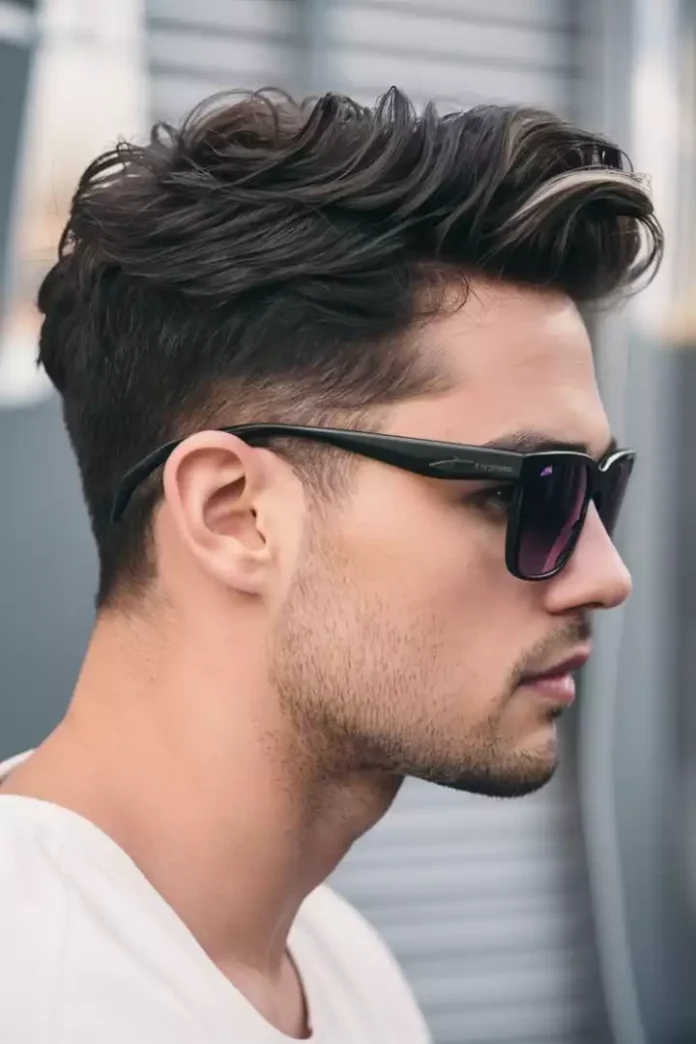
The strongest Italian haircut ideas include the Roman textured crop, Milanese slick back, Sicilian wavy taper, and Florence side-part fade. Each balances clean structure with natural movement. The catch is simple: these cuts look effortless only when the barber leaves enough length for the hair to behave naturally.
I’ve spent more than a decade studying, wearing, and discussing men’s cuts with barbers who care about silhouette rather than clipper speed. Italian styling works best when the shape feels controlled without appearing stiff or overly polished.
The table below compares ten Italian haircut ideas for men who want a fast starting point before choosing from the complete list.
| Quick Pick | Best For | Typical Upkeep | Main Consideration |
|---|---|---|---|
| Roman Textured Crop | Thick straight hair | Every 3–4 weeks | Heavy texture can widen round faces |
| Milanese Slick Back | Formal wardrobes | Every 4–5 weeks | Needs enough top length |
| Sicilian Wavy Taper | Natural waves | Every 5–6 weeks | Humidity changes the finish |
| Florence Side Part | Office and events | Every 4 weeks | A severe part can look dated |
| Italian Caesar Fade | Receding hairlines | Every 3 weeks | Fringe must stay soft |
| Neapolitan Curly Crop | Dense curls | Every 4–6 weeks | Poor thinning creates frizz |
| Tuscan Scissor Cut | Fine or medium hair | Every 6 weeks | Requires careful blow-drying |
| Venetian Pompadour | High-volume styling | Every 3–4 weeks | Daily styling takes time |
| Modena Buzz Taper | Low-maintenance routines | Every 2–3 weeks | Head shape becomes visible |
| Lake Como Flow | Medium-to-long hair | Every 8–10 weeks | Awkward growth stages happen |
Short Italian Haircut Ideas for Men
Short Italian haircut ideas rely on compact outlines, tidy edges, and texture that stays visible without becoming spiky. These options suit men who want a sharp shape that works with tailoring, polos, workwear, and relaxed weekend clothes.
1. Roman Textured Crop
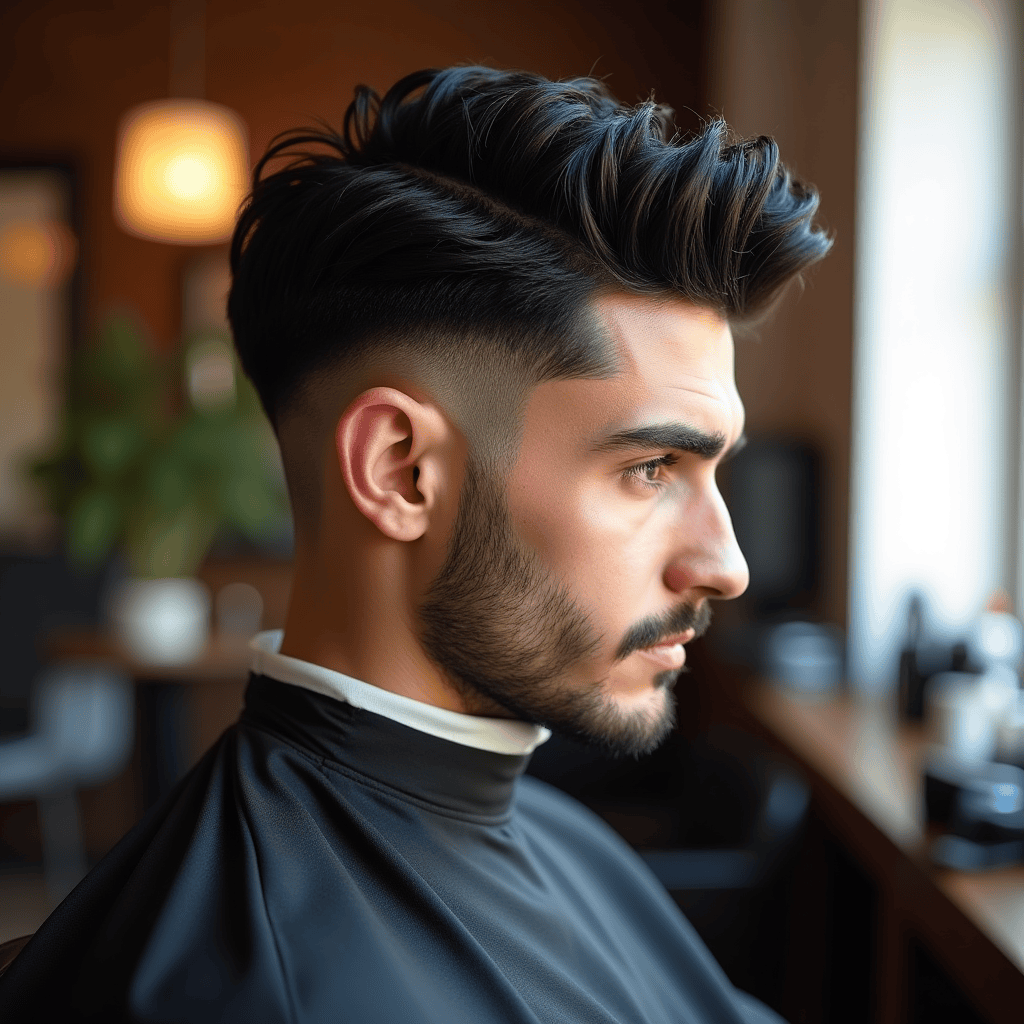
The Roman textured crop keeps the sides neat while leaving a dense, broken surface across the top. The fringe sits slightly forward rather than forming a perfectly straight line, and small pieces separate near the temples. Among short Italian haircut ideas, this one feels masculine and polished without looking overly styled.
It suits thick straight or slightly wavy hair, particularly on oval, oblong, and square faces. Tell your barber, “Keep two to three inches on top, add point-cut texture, and taper the sides without exposing too much scalp.” It needs light matte paste and a trim every three or four weeks, though men with strong cowlicks may struggle to keep the fringe controlled.
2. Italian Caesar Fade
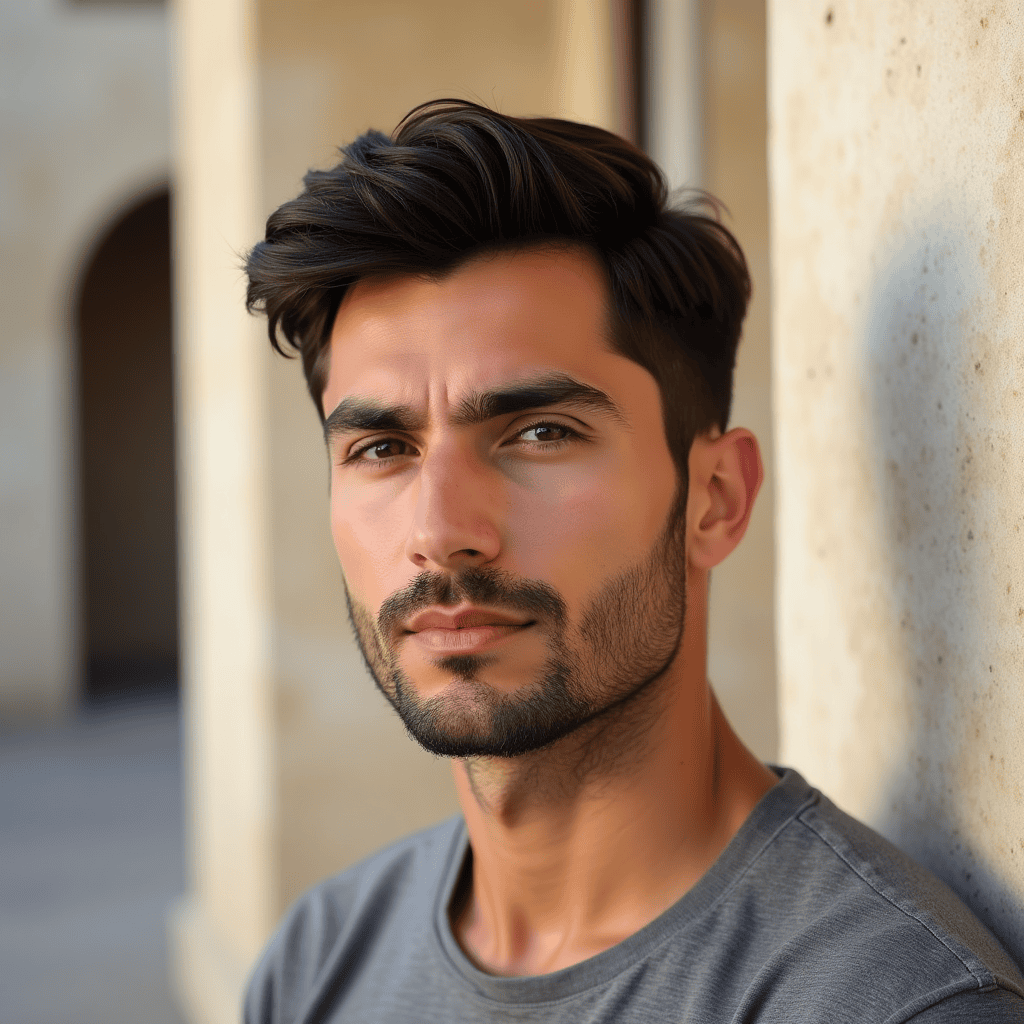
The Italian Caesar fade combines a short horizontal fringe with softly blended sides and a compact crown. Unlike a severe military Caesar, the top carries irregular texture, allowing the hairline to look natural. It is one of the most practical Italian haircut ideas for creating definition around the forehead.
This cut works well for straight or coarse hair and can make a slightly receding hairline less obvious without attempting to hide it completely. Ask for “a short textured Caesar with a low fade and no hard fringe line.” Styling takes under a minute with dry clay, but the fade loses its crispness quickly and may need attention every two or three weeks.
3. Modena Buzz Taper

The Modena buzz taper keeps the top uniformly short while using subtle graduation around the neckline and sideburns. The outline is clean, but the transition avoids the dramatic skin exposure of a high fade. These restrained Italian haircut ideas often look better with a tailored jacket than aggressively disconnected clipper cuts.
It flatters men with balanced head shapes, strong brows, and dense growth across the crown. Ask your barber for “a number three or four on top with a natural low taper, squared sideburns, and a soft neckline.” Upkeep is simple, although the cut exposes uneven growth, scars, flat spots, and recession more clearly than longer styles.
4. Turin Crew Cut

The Turin crew cut leaves the front slightly longer than the crown, creating a gentle upward slope rather than a flat clipped surface. The sides remain short and closely fitted to the head, while the front can be brushed back or pushed diagonally. It brings athletic energy to Italian haircut ideas without sacrificing refinement.
This shape suits square, oval, and round faces, especially when the front is left high enough to add visual length. Request “a graduated crew cut with a low taper and enough front length to style with fingers.” It works with cream or matte paste, but very fine hair can collapse and make the transition from front to crown appear uneven.
5. Capri French Crop

The Capri French crop has a short, airy fringe and a lightly layered top that appears sun-softened rather than heavily carved. The sides follow the head with a clean scissor-over-comb blend, avoiding a stark fade. Short Italian haircut ideas like this pair naturally with linen shirts, knit polos, and easy summer tailoring.
It is best for fine-to-medium hair that needs the appearance of density near the front. Tell the barber, “Keep the crop soft, leave movement through the fringe, and blend the sides with scissors instead of taking them too short.” Salt spray adds separation, although an overly heavy product can turn the delicate fringe into obvious clumps.
Classic Italian Haircut Ideas with Clean Structure
Classic Italian haircut ideas use side parts, brushed-back fronts, and carefully controlled outlines. The best versions avoid helmet-like shine. They look deliberate from across the room while retaining enough softness to move naturally when the wearer walks.
6. Florence Side-Part Taper
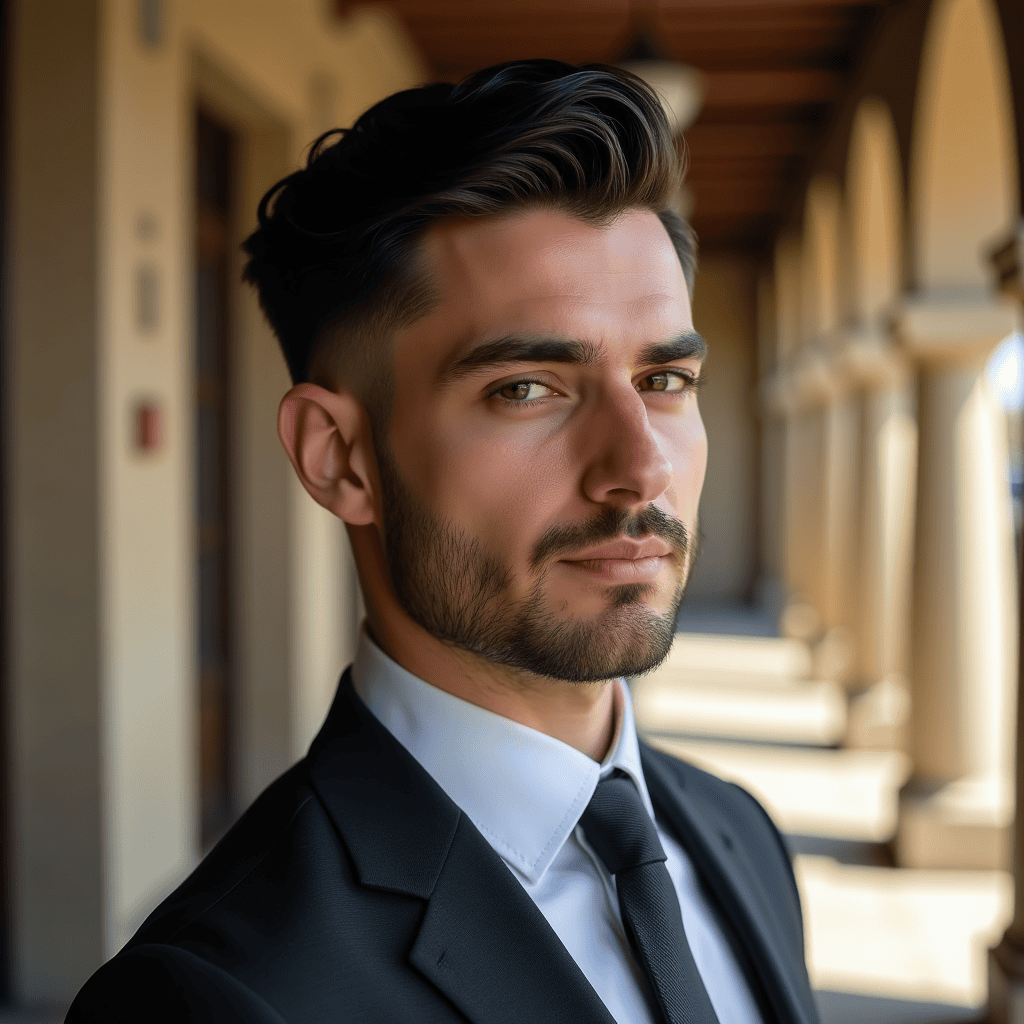
The Florence side-part taper places a defined but narrow part above one temple, with the front rising gently before sweeping across. The sides are tapered close without being shaved, and the crown follows the head instead of puffing upward. This is among the safest Italian haircut ideas for offices, weddings, and formal dinners.
It suits straight, wavy, or moderately fine hair and works especially well on round and oval faces. Ask for “a classic side part with a low taper, three inches at the front, and a soft connection through the ridge.” Use a small amount of grooming cream, though a hard razor part should be avoided unless you want a sharper, less flexible finish.
7. Milanese Slick Back
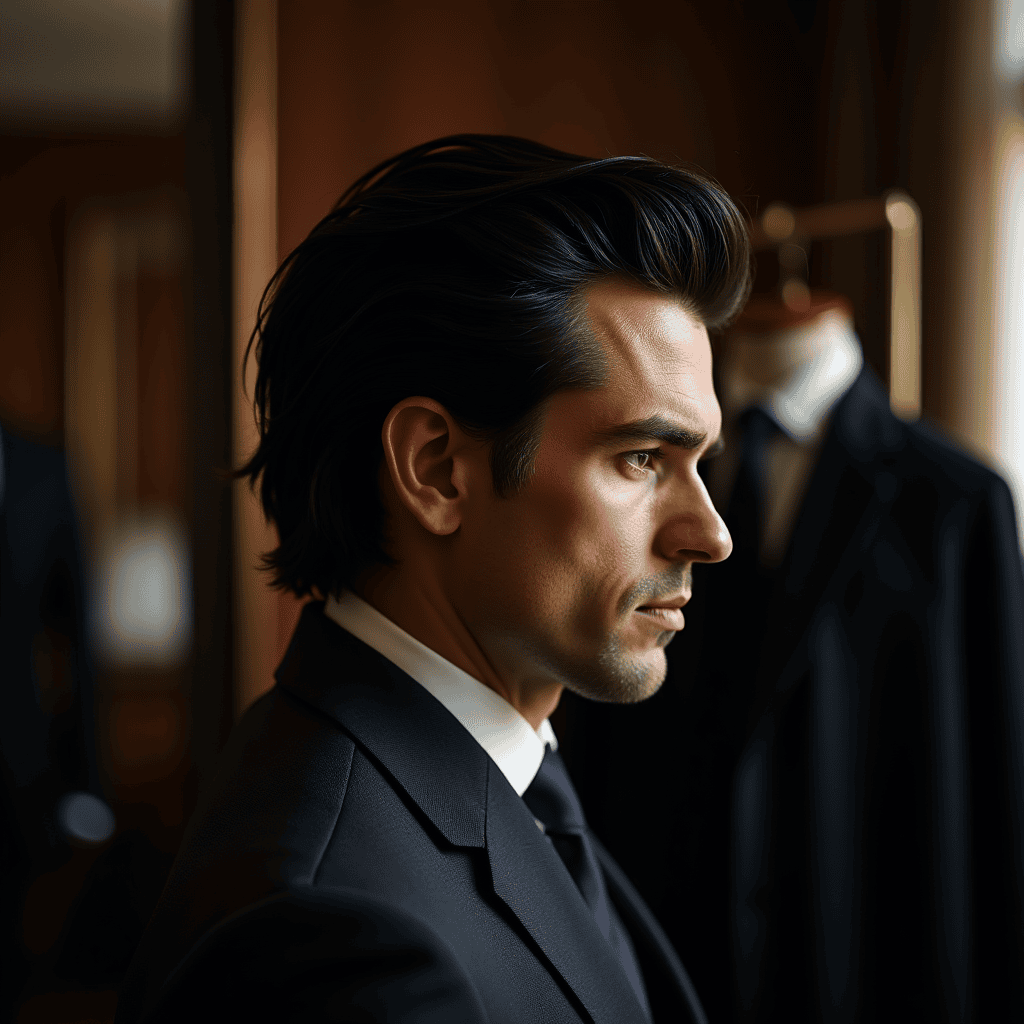
The Milanese slick back carries medium length from the hairline through the crown, creating a smooth rearward flow with no obvious part. The sides remain long enough to comb rather than standing separately from the top. Few Italian haircut ideas complement a sharp double-breasted suit as naturally as this one.
It works on medium-to-thick straight hair and loose waves, provided the hairline can support the exposed forehead. Tell your barber, “Leave four inches through the front, keep weight at the sides, and taper only the lowest edges.” A pliable pomade gives control, but men with fine hair or a prominent crown may find the style separates as the day progresses.
8. Venetian Pompadour
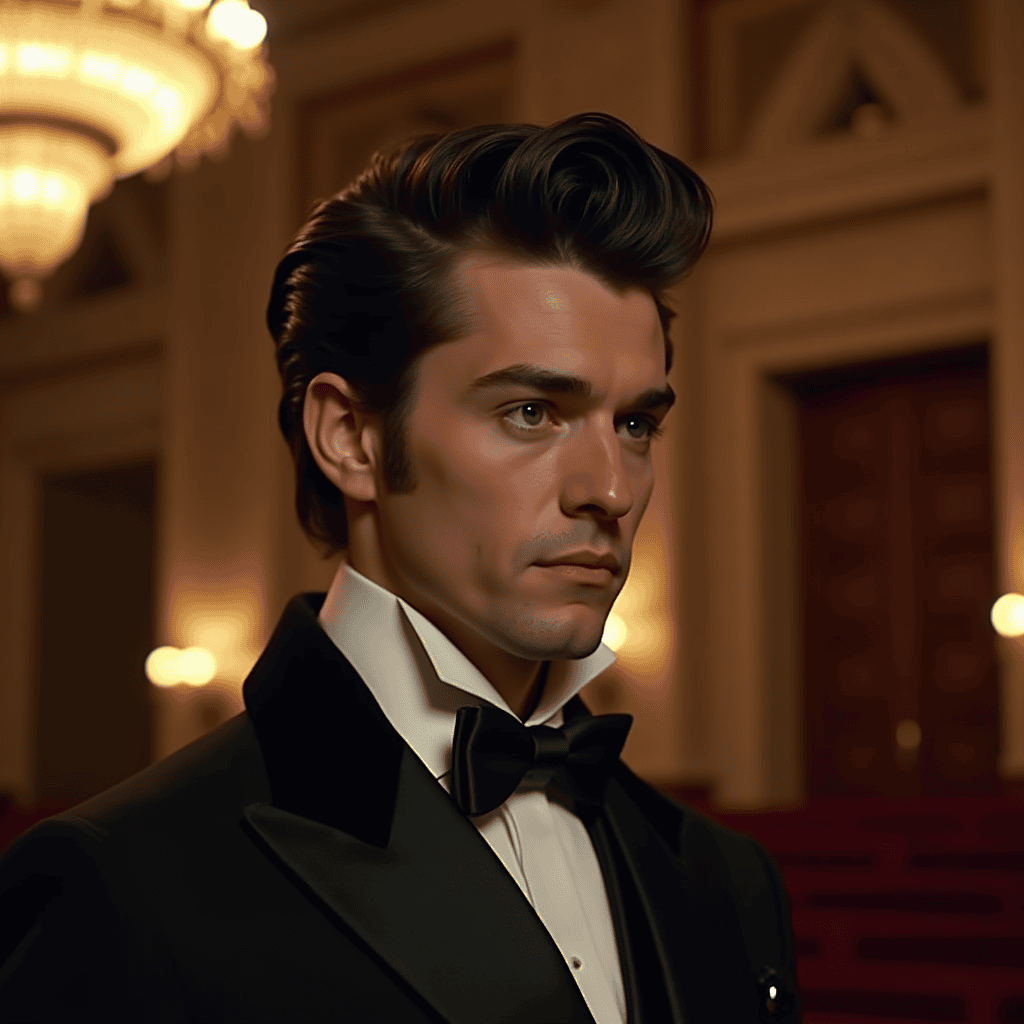
The Venetian pompadour raises the front into a broad, rounded wave before gradually lowering toward the crown. Its sides are neat but not stripped down, maintaining enough visual weight to balance the height above. This interpretation turns traditional Italian haircut ideas into something confident and theatrical.
The cut is strongest on thick straight or wavy hair and can visually lengthen round or square faces. Ask for “four to five inches at the front, gradual layering toward the crown, and classic tapered sides.” A blow-dryer and vent brush are non-negotiable, and the main drawback is the ten minutes of styling required to stop the front from leaning sideways.
9. Bologna Executive Brush Back

The Bologna executive brush back sits between a side part and a full slick back. The front moves rearward at a slight angle, while the sides lie close and the part remains implied rather than drawn. It is one of those Italian haircut ideas that looks polished during a meeting without feeling frozen after work.
This style favours medium-density straight hair and controlled waves, especially on oval and heart-shaped faces. Request “a softly directed brush back with three-and-a-half inches in front and scissor-tapered sides.” Work cream through damp hair before blow-drying, but avoid it when your hair grows strongly forward because the roots will fight the direction all day.
10. Palermo Gentleman’s Contour

The Palermo gentleman’s contour follows the natural curve of the head, with the front swept back and slightly sideways from a discreet part. The top stays close rather than high, while the temples and neckline are carefully cleaned. Among traditional Italian haircut ideas, this one has the quietest and most mature appearance.
It is a sensible choice for fine hair, silver hair, or men who dislike obvious styling volume. Tell the barber, “Keep a classic contour with natural density, a soft side direction, and no skin fade.” Light cream prevents flyaways, although the flatter silhouette can make a broad face appear wider if the sides are allowed to become bulky.
Textured and Wavy Italian Haircut Ideas
Texture gives Italian haircut ideas their relaxed character. Rather than pressing every strand into place, these cuts use waves, curls, and natural bends as part of the silhouette. The barber’s job is to remove bulk without destroying the pattern that makes the style interesting.
11. Sicilian Wavy Taper
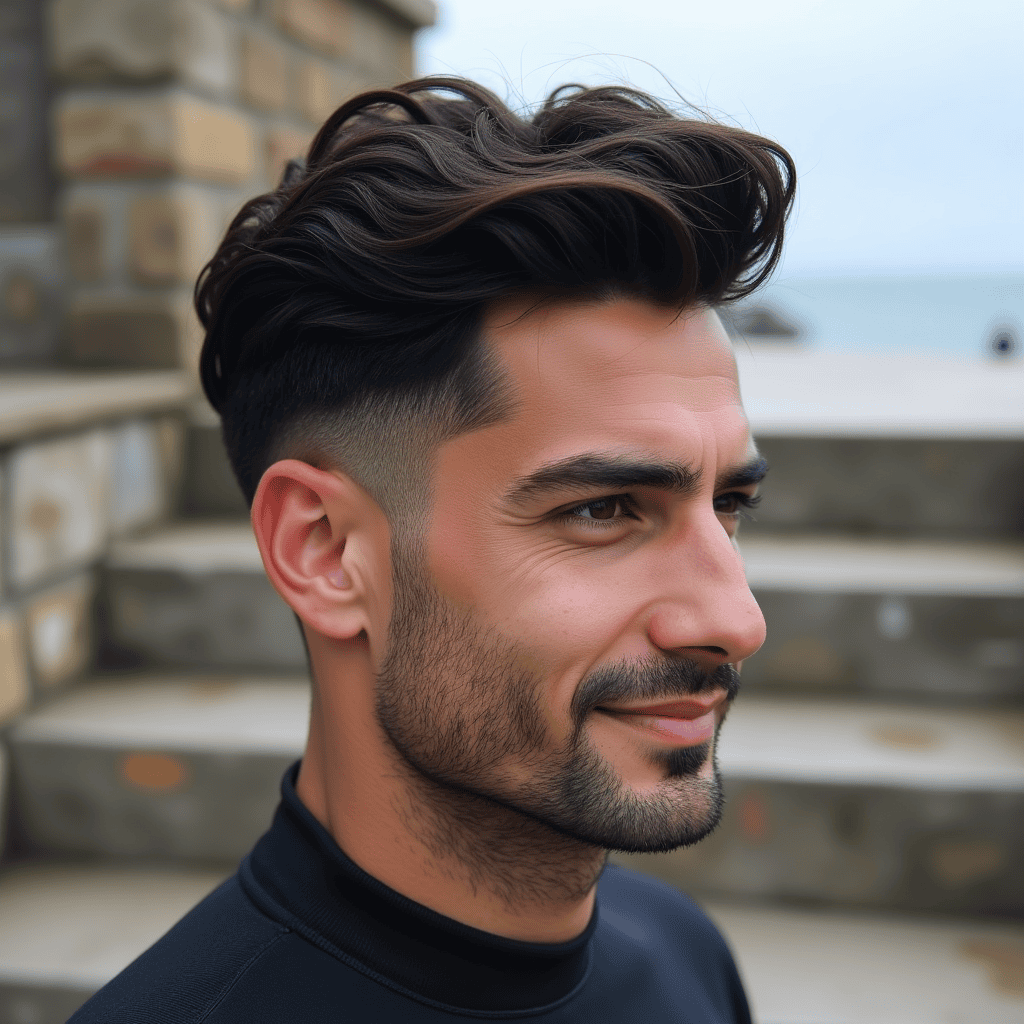
The Sicilian wavy taper preserves visible S-shaped movement across the top while keeping the ears and neckline clean. The front can fall loosely or lift away from the forehead, and the sides retain enough length to show texture. It is one of the most adaptable Italian haircut ideas for naturally wavy hair.
This style suits medium-to-thick waves and long, oval, or angular faces. Ask for “three to four inches on top, curl-preserving layers, and a low taper that leaves fullness above the ears.” Use curl cream on damp hair and let it settle naturally, though humid conditions can increase volume and soften the intended outline.
12. Neapolitan Curly Crop

The Neapolitan curly crop forms a compact halo of short curls with a slightly longer front and controlled sides. Individual curls remain visible rather than being brushed into fluff, while the perimeter stays rounded and clean. These Italian haircut ideas bring definition to dense curls without forcing them into an unnatural shape.
It works best for tight waves through medium curls and can soften square or strongly angular faces. Tell the barber, “Cut the curls dry or near-dry, maintain individual curl groups, and taper only the lower sides.” Upkeep is manageable with leave-in cream, but aggressive thinning shears can create frizz and weak, uneven curl ends.
13. Amalfi Tousled Quiff

The Amalfi tousled quiff lifts the front loosely, allowing strands to bend, separate, and fall at different heights. The crown remains natural, and the sides are tapered without creating a sharp disconnect. Among casual Italian haircut ideas, this one captures the windswept finish people often try too hard to manufacture.
It suits medium-density hair with a natural bend and helps add height to round or shorter face shapes. Ask for “a loose layered quiff, three to four inches at the front, and soft sides that can be pushed back.” Sea-salt spray and fingers are usually enough, though very coarse hair may expand outward instead of forming light movement.
14. Sardinian Curly Fringe
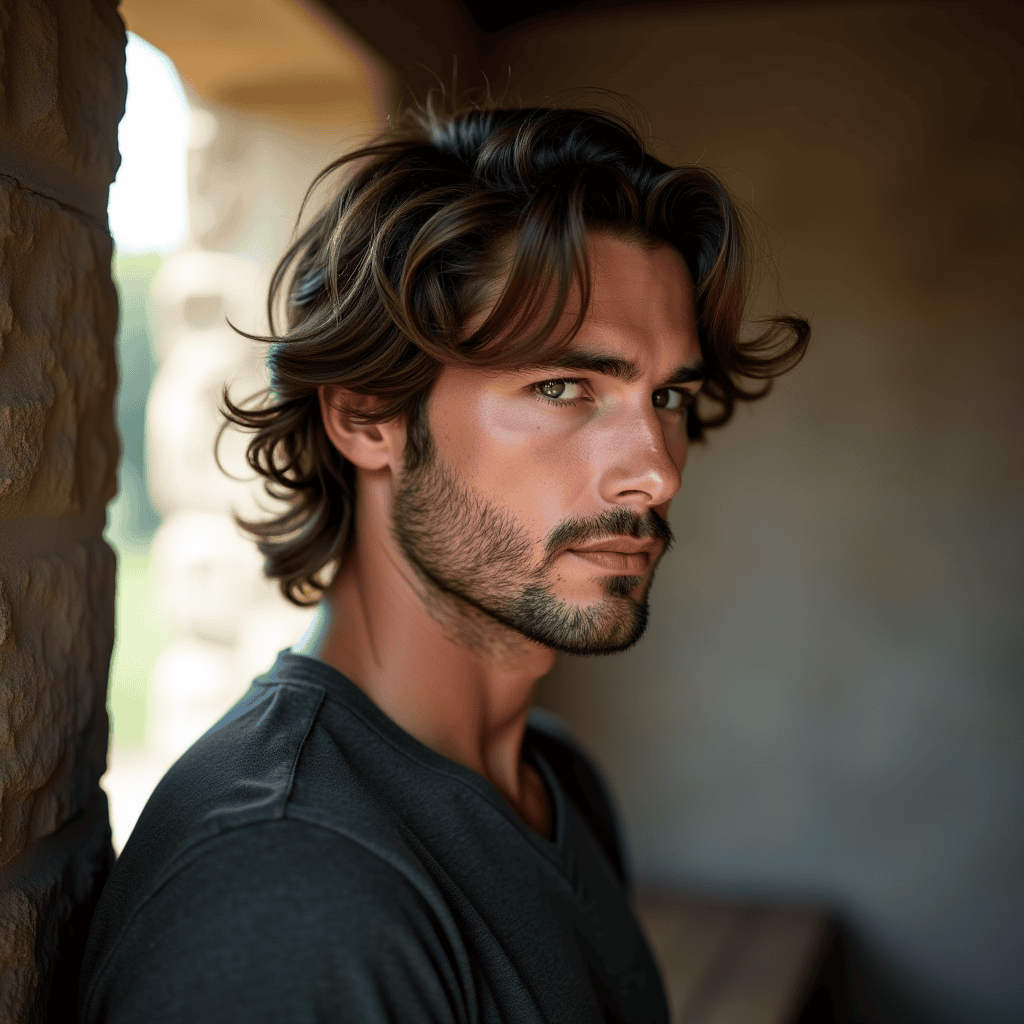
The Sardinian curly fringe places defined curls across the upper forehead while keeping the crown and sides gradually shorter. The fringe is irregular, with some curls sitting higher and others dropping closer to the brows. This variation adds youthful movement to Italian haircut ideas without relying on an extreme fade.
It works for loose-to-medium curls, particularly on oblong, diamond, and rectangular faces that benefit from forehead coverage. Tell your barber, “Keep a broken curly fringe, reduce bulk through the crown, and use a low scissor taper.” The fringe needs reshaping after sleep, and men who dislike hair touching the forehead should choose a lifted style instead.
15. Tuscan Scissor Texture

The Tuscan scissor texture uses long point-cut layers across the top and sides, creating a lived-in finish with no obvious clipper transition. The hair can be pushed back, parted, or allowed to fall forward depending on the day. These understated Italian haircut ideas reward movement rather than strict placement.
It suits fine-to-medium hair with slight waves and men who prefer a softer outline around the temples. Ask for “a fully scissor-cut shape with airy internal texture, three inches on top, and natural sideburns.” The cut grows out gracefully, but a careless stylist can remove too much internal weight and leave the ends looking thin.
Medium-Length Italian Haircut Ideas
Medium Italian haircut ideas create room for movement around the ears, forehead, and collar. They need more patience than cropped styles, but the extra length provides multiple finishes. The same cut can appear formal when brushed back and relaxed when allowed to separate naturally.
16. Lake Como Flow

The Lake Como flow sweeps backward from the forehead before curving around the ears and settling near the upper collar. The shape stays light through the ends, preventing the sides from becoming triangular. Few medium Italian haircut ideas look as natural with open-collar shirts and relaxed tailoring.
This cut works for medium-to-thick straight or wavy hair and suits oval, square, and heart-shaped faces. Ask for “a layered flow with cheekbone-length sides, a longer front, and soft weight removal near the back.” It needs regular conditioning and occasional blow-drying, while the growth phase around the ears can feel awkward.
17. Verona Swept Curtains
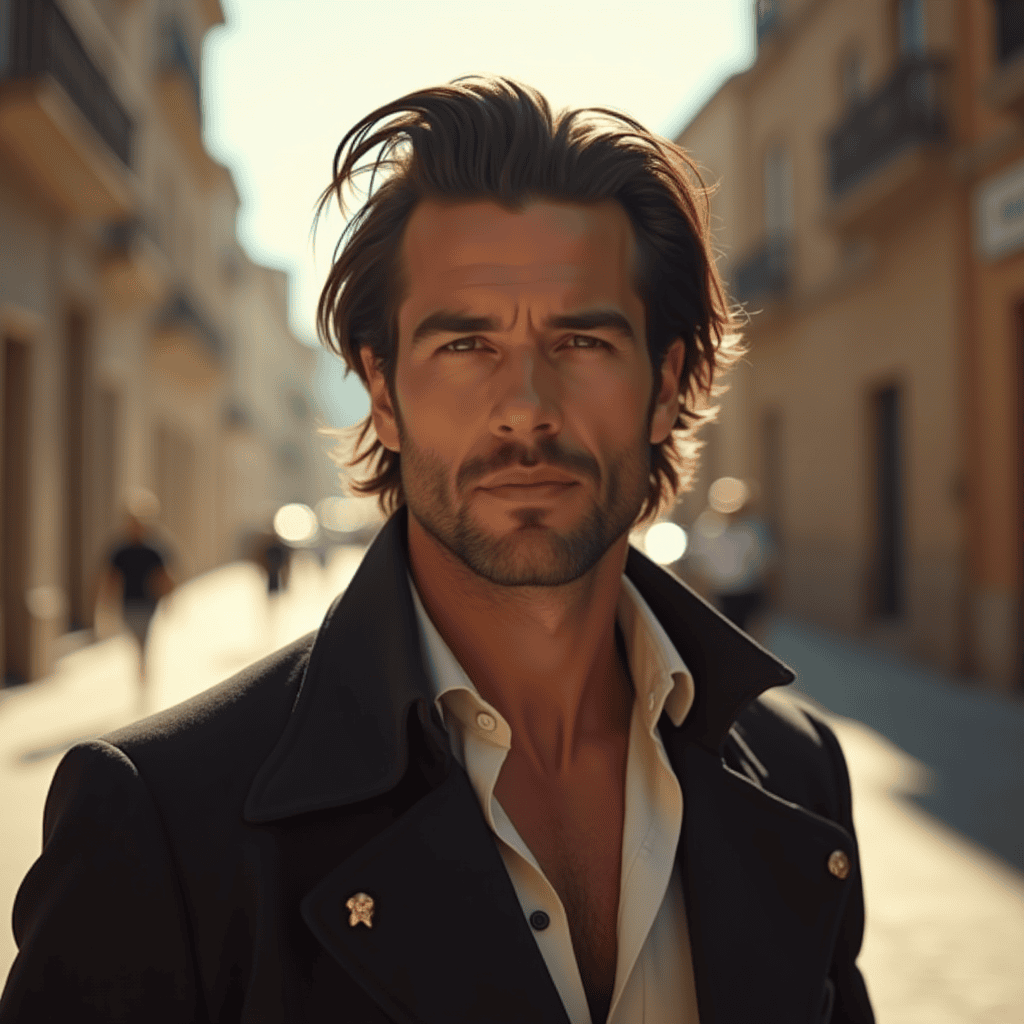
The Verona swept curtains divide near the centre before moving backward and outward, exposing part of the forehead while framing the temples. The layers remain long enough to tuck behind the ears, and the finish has a controlled softness. These Italian haircut ideas feel more grown-up than the flat curtains associated with teenage styling.
It suits straight or loose wavy hair, especially on oval, diamond, and longer faces. Tell the stylist, “Create cheekbone-length curtains with a soft centre opening and enough layering to sweep back.” Styling requires a round brush or directional blow-dry, and strong cowlicks can make one curtain sit higher than the other.
18. Roman Holiday Side Sweep

The Roman Holiday side sweep carries a long front section diagonally across the head while the opposite temple remains more exposed. The sides are scissor-cut and lightly tucked back, creating movement without the formality of a fixed part. It is one of the more cinematic Italian haircut ideas without becoming costume-like.
This shape suits medium hair with a slight bend and can soften prominent foreheads or angular features. Ask for “a long side-swept front, connected layers, and enough length around the ears to tuck back.” A lightweight cream controls the direction, although the front may fall into the eyes during windy weather or physical activity.
19. Puglia Brushed Waves
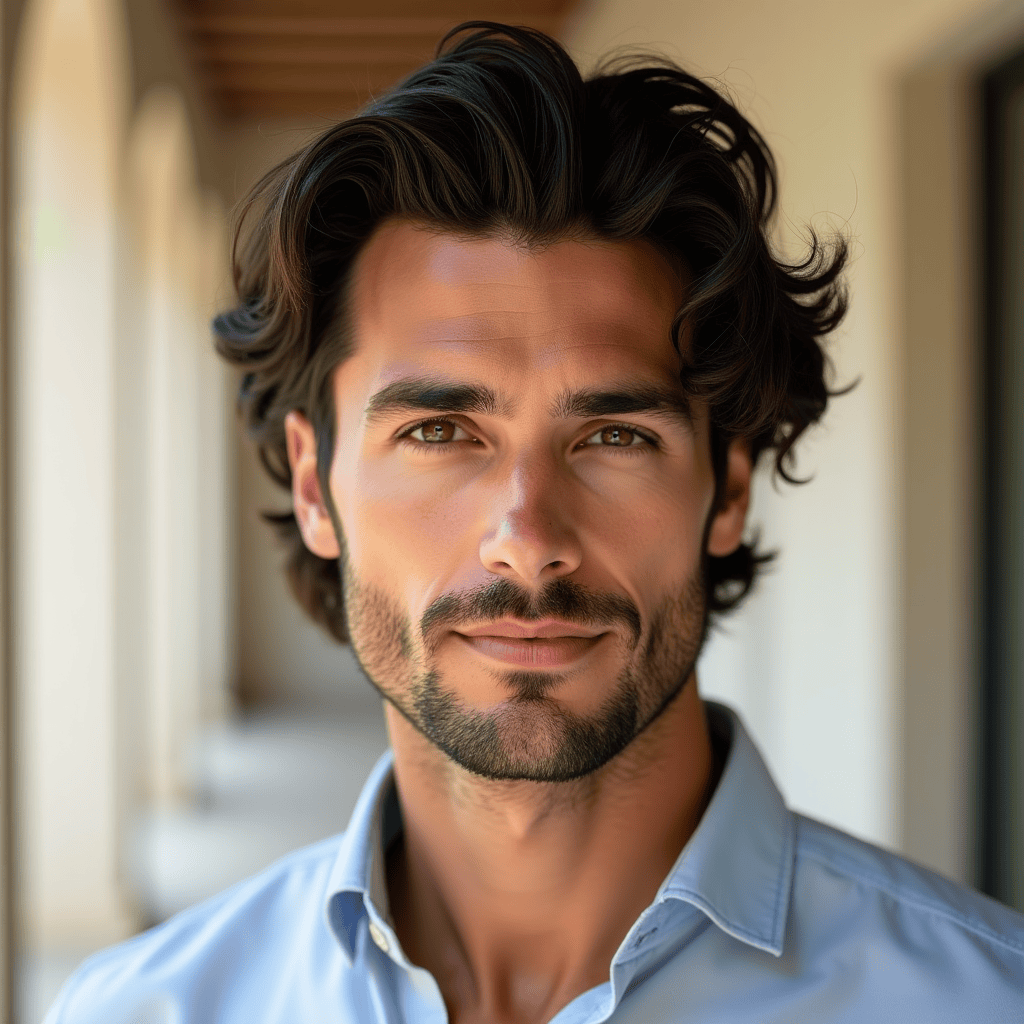
The Puglia brushed waves move backward in broad sections, preserving the bends in the hair rather than stretching them flat. The front has moderate lift, while the sides curve smoothly behind the ears. These Italian haircut ideas create controlled volume that looks better after an hour than it does immediately after styling.
It is suited to thick wavy hair that tends to become wide when cut too short. Tell your barber, “Leave enough length for the waves to group, remove bulk underneath, and keep the perimeter soft.” Apply cream to damp hair and brush it back once, but repeated brushing can break the wave groups and produce unwanted fuzz.
20. Genoa Layered Bro Flow
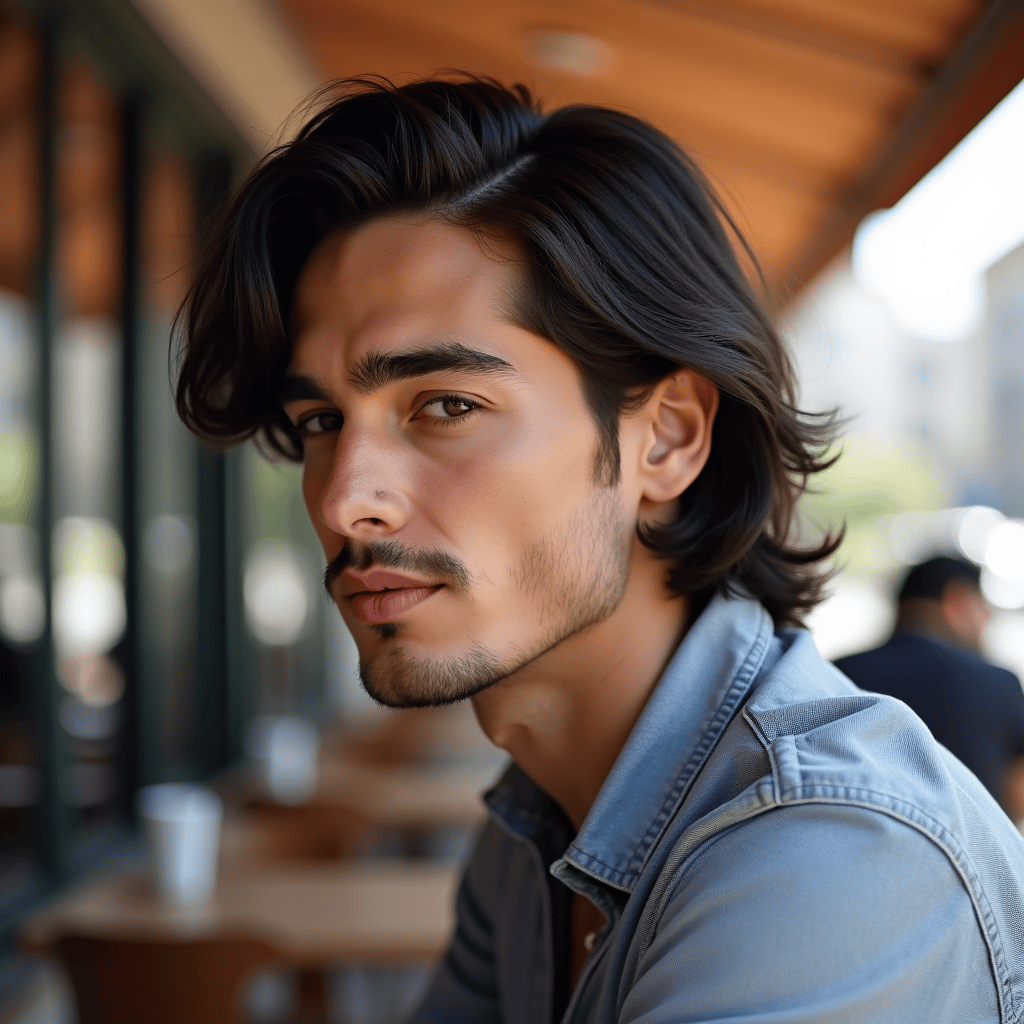
The Genoa layered bro flow uses graduated lengths from the brow area toward the neck, giving the hair a loose rearward direction. The ends flick slightly around the ears and collar, while the crown stays controlled. Longer Italian haircut ideas like this feel relaxed, but the silhouette still needs deliberate layering.
It works for thick straight hair, loose waves, and men willing to pass through several growth stages. Ask for “a layered medium flow with the front around eyebrow length, reduced crown bulk, and feathered collar ends.” It offers flexible styling, though fine hair may appear stringy once the ends reach the neck.
Bold and Modern Italian Haircut Ideas
Bold Italian haircut ideas exaggerate one feature while keeping the overall outline wearable. The contrast may come from height, a disconnected side, a sharp fringe, or a stronger finish. These cuts demand accurate consultation because small proportion mistakes become obvious.
21. Milan Runway Undercut
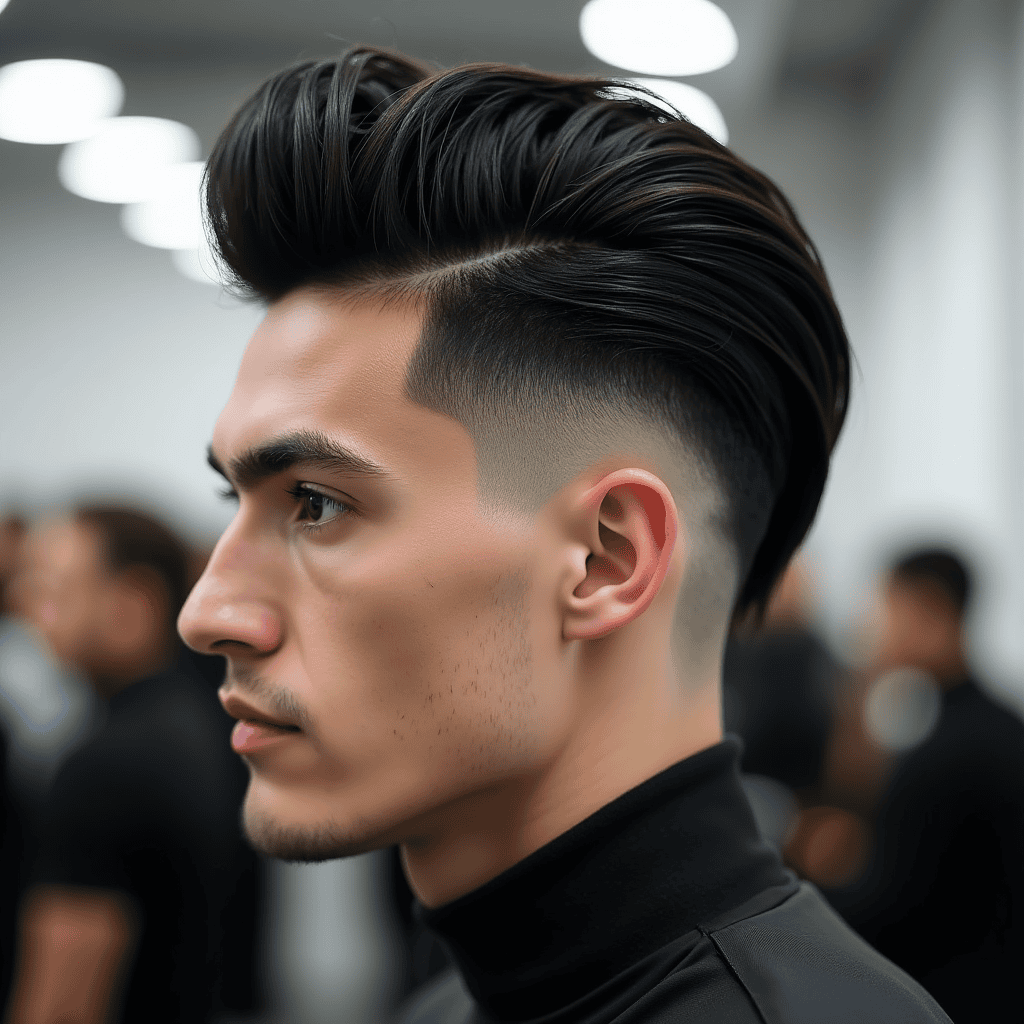
The Milan runway undercut places a long, smooth top above noticeably shorter sides, creating a clean shelf of contrast near the upper temples. The top can move backward or fall to one side, depending on styling. It pushes Italian haircut ideas toward fashion-editorial territory while retaining a controlled silhouette.
It works for dense straight hair and men with the confidence to wear visible disconnection. Tell the barber, “Keep four to five inches on top, disconnect it from short sides, and leave the fade low rather than climbing upward.” The cut grows out awkwardly at the ridge, and fine hair may not carry enough weight to make the contrast intentional.
22. Naples High-Texture Quiff
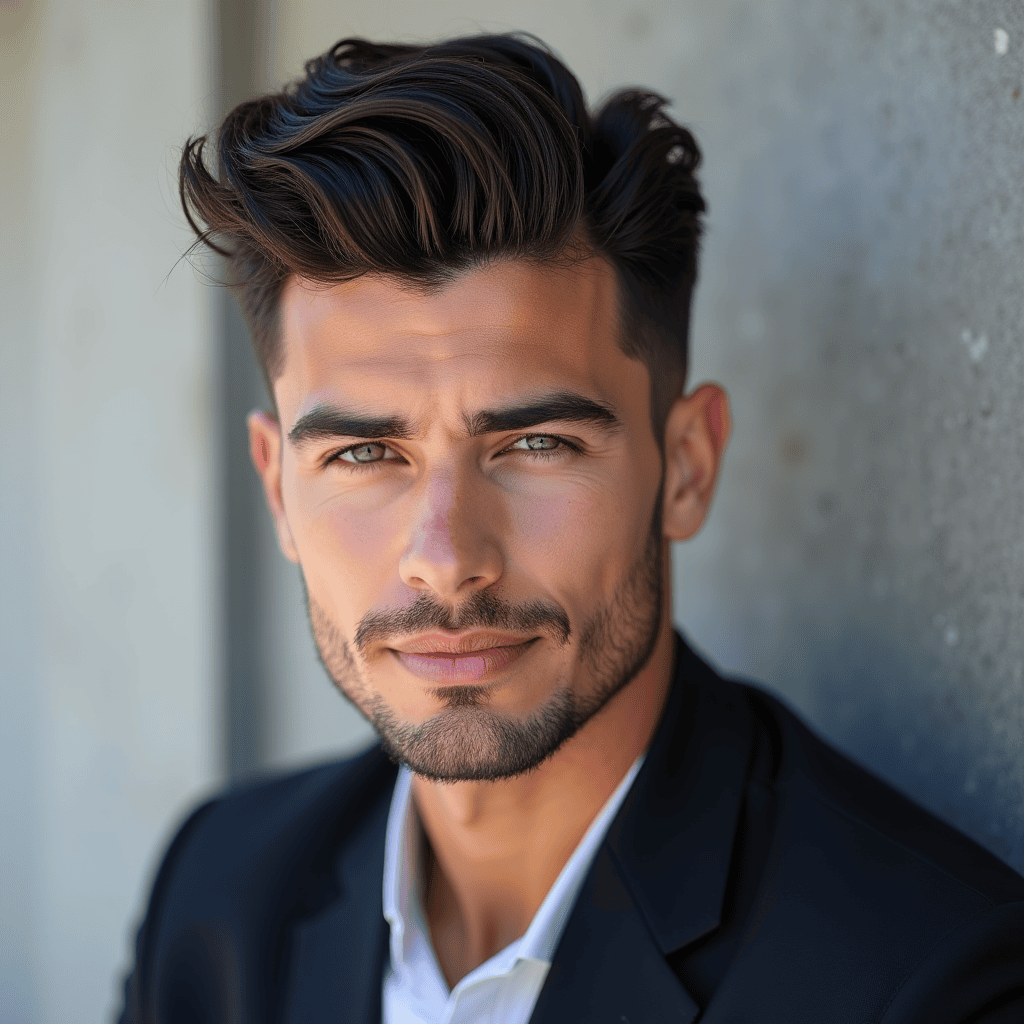
The Naples high-texture quiff rises strongly at the front but breaks into irregular pieces rather than forming one smooth roll. The sides stay compact, and the crown carries enough texture to connect with the height. Modern Italian haircut ideas often fail when they become too polished; this one depends on controlled roughness.
It suits thick hair and round, square, or shorter face shapes that benefit from vertical lift. Ask for “a tall broken quiff, heavy point cutting through the front, and a mid-to-low taper.” Blow-dry upward before applying dry clay, but men with long narrow faces should avoid excessive height because it exaggerates facial length.
23. Rome Sharp Fringe Fade
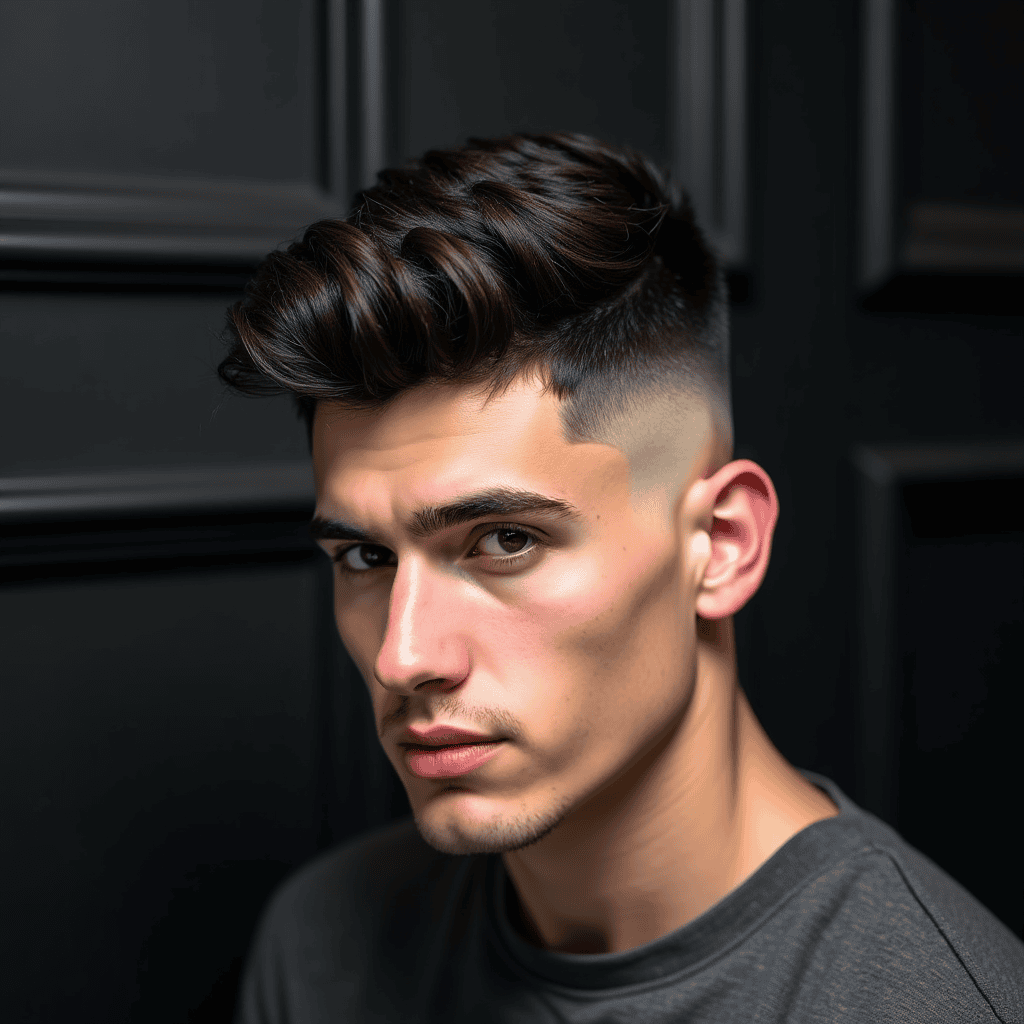
The Rome sharp fringe fade uses a forward-directed top ending in an angled fringe rather than a perfectly level line. The sides fade closely near the ears, making the dark top appear stronger and more graphic. These Italian haircut ideas suit men who want a modern outline that still contains visible texture.
It is most effective on straight, dense hair and can add structure to soft or oval faces. Tell your barber, “Create a textured forward crop with a slightly diagonal fringe and a low skin fade.” The edge needs frequent trimming, and anyone prone to forehead irritation may prefer a softer fringe with less product near the skin.
24. Ferrari-Inspired Swept Quiff
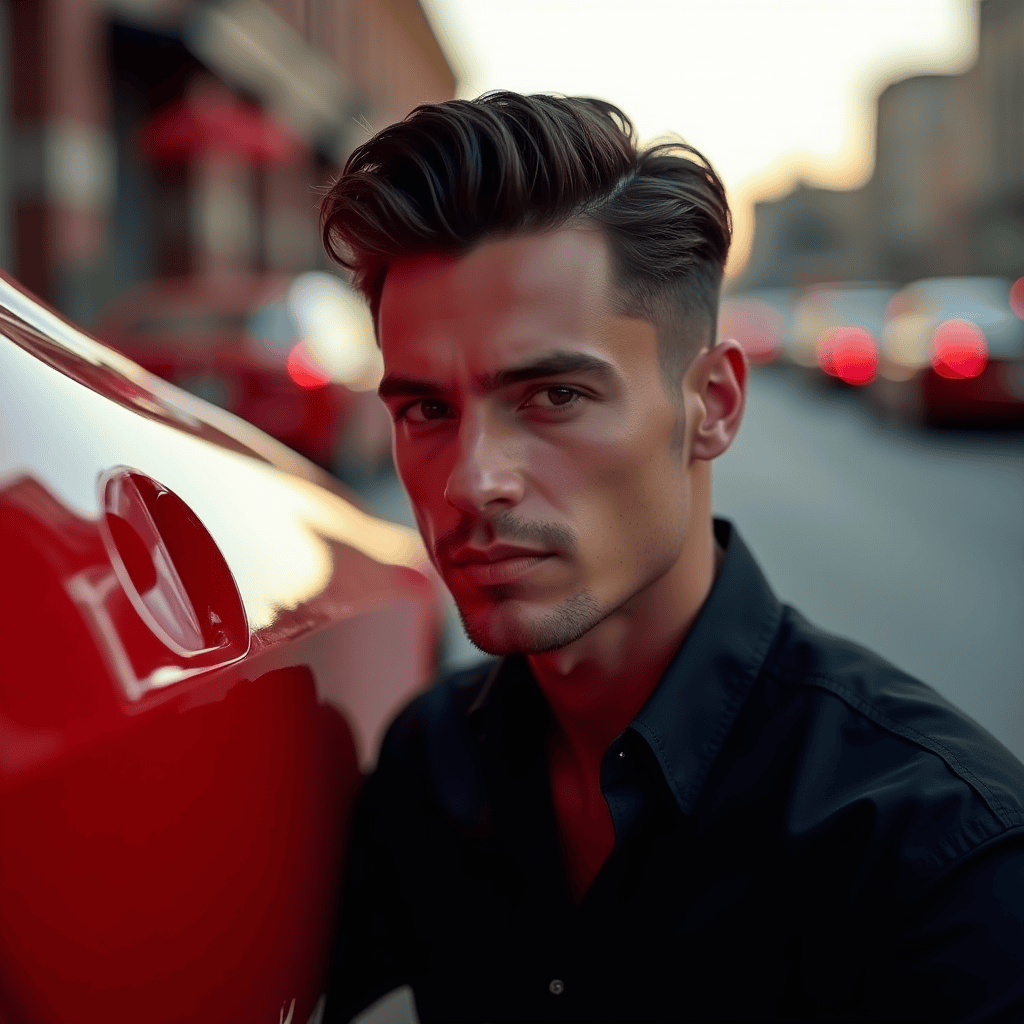
The Ferrari-inspired swept quiff moves upward and diagonally from one temple, producing a fast, aerodynamic shape rather than a centred wave. The opposite side lies close, while the top narrows as it reaches the crown. Among statement Italian haircut ideas, this cut looks energetic without depending on extreme colour or shaved patterns.
It suits medium-to-thick straight hair and helps create angles on rounder faces. Ask for “a directional quiff swept up and across, with tight sides and a connected crown.” Strong hold is needed near the roots, and the asymmetric finish can look accidental when the front loses height during a long day.
25. Italian Modern Mullet Taper
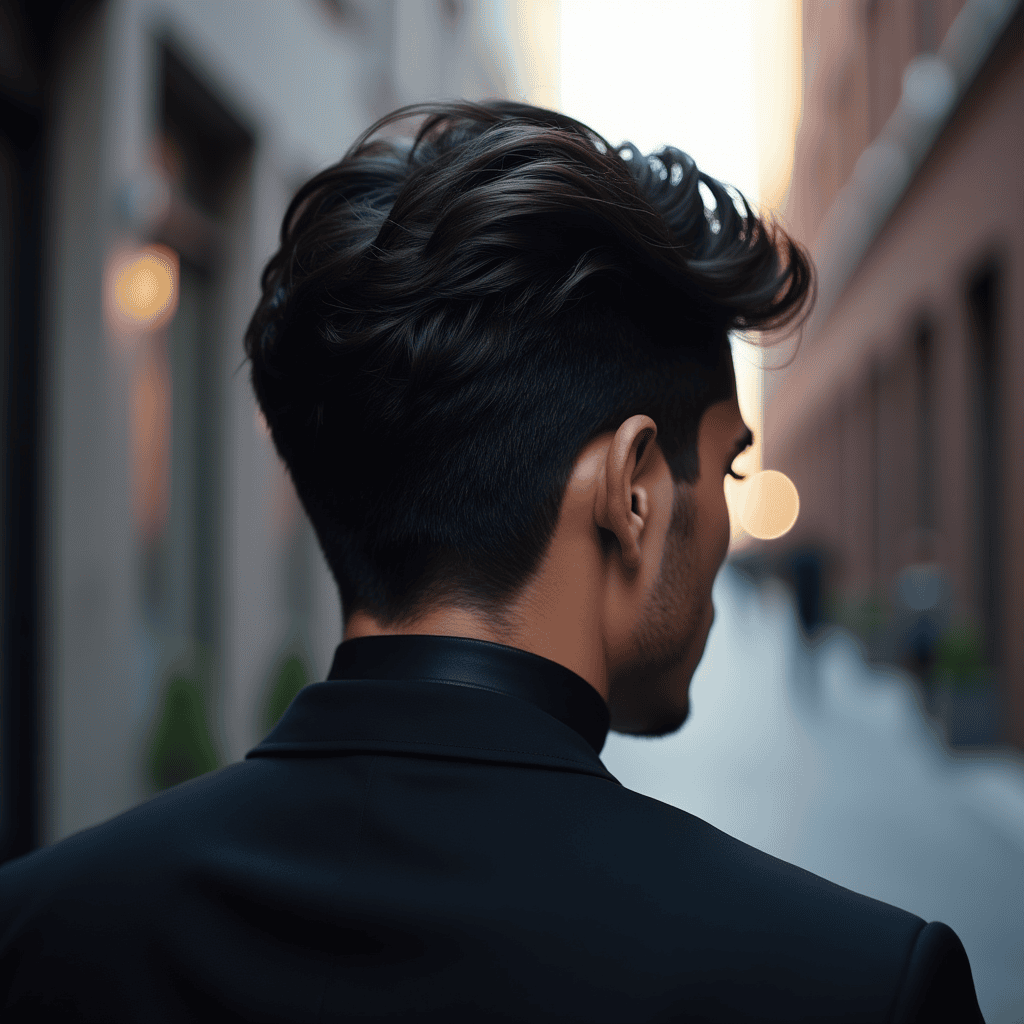
The Italian modern mullet taper keeps the temples and area around the ears clean while allowing controlled length to remain at the crown and upper neck. The back is layered and narrow rather than wide or shaggy. It closes the list of Italian haircut ideas with a bold shape that still works alongside contemporary streetwear.
It is best for thick straight hair, waves, or loose curls and suits men who accept a noticeable rear profile. Tell the barber, “Keep a soft modern mullet, taper the temples, preserve crown texture, and make the back narrow rather than bulky.” The style needs regular reshaping, and conservative workplaces may still read the longer back as too casual.
How to Choose the Right One
Choosing between Italian haircut ideas starts with the way your hair behaves before any product touches it. Texture, growth direction, density, and the amount of time you will spend styling matter more than the photograph saved on your phone.
Match the Cut to Your Hair and Face
Straight, dense hair handles sharp crops, pompadours, slick backs, and structured quiffs well. Wavy hair generally looks better in a Sicilian taper, Puglia brush back, or Lake Como flow because those shapes preserve movement. Curly hair needs curl-by-curl weight control, making the Neapolitan crop and Sardinian fringe safer starting points.
Face shape should adjust proportions rather than dictate a rigid rule. Round faces often benefit from height and tighter sides, while long faces usually look more balanced with a fringe or moderate top volume. Men with broad jawlines can wear compact cuts, but leaving a touch of width near the temples often prevents the head from appearing too narrow.
Bring Useful References to the Appointment
Bring one photograph showing the front and another showing the side or back. A single front-facing image rarely explains how long the crown is, where the taper begins, or whether the top is connected. Choose a reference with hair texture close to your own rather than selecting it solely because the model looks good.
Describe what you dislike as clearly as what you want. Say whether you hate exposed scalp, hair falling into your eyes, visible product, frequent trims, or morning blow-drying. A barber can adapt Italian haircut ideas to your routine only when the consultation includes the parts you are unwilling to maintain.
Where Italian-Inspired Haircuts Go Wrong
The most common mistake is taking the sides too short. Many Italian-inspired haircuts depend on controlled fullness near the temples and above the ears. Turning every reference into a high skin fade removes that balance and can make the top appear disconnected, narrow, or unnecessarily severe.
Product misuse causes the next problem. Heavy wet pomade can flatten a textured crop, while dry clay can make a classic slick back look dusty and stiff. Match the finish to the haircut: cream for flow, paste for loose control, clay for dry separation, and pomade for smoother formal shapes.
The final issue is copying a photograph without accounting for density. A man with fine hair may not produce a broad Venetian pompadour, while someone with dense curls will not achieve a flat Milanese slick back without substantial heat and tension. A skilled barber should preserve the feeling of the reference rather than pretending every strand can behave the same way.
Frequently Asked Questions
Italian haircut ideas range from compact crops to collar-length flow cuts, so the right answer depends on hair texture, upkeep, workplace expectations, and the amount of styling a man is prepared to do.
Choosing an Italian Haircut
The following questions cover suitability, facial proportions, texture, and the consultation details that influence the finished result.
What is the most popular Italian haircut for men?
The textured crop is one of the most widely wearable Italian haircut ideas because it suits thick straight hair, loose waves, and several face shapes. It needs less styling than a pompadour or slick back while still maintaining a clean, intentional outline around the temples and neckline.
Which Italian haircut suits a round face?
A textured quiff, graduated crew cut, or directional swept quiff can add height while keeping the sides controlled. Avoid excessive width above the ears. The barber should preserve some structure at the temples, however, because an extremely high fade can make the top look narrow and disconnected.
Can men with thin hair wear Italian hairstyles?
Fine hair can work well with a Capri crop, gentleman’s contour, or short side-part taper. These cuts create shape without demanding heavy volume. Avoid excessive thinning, long stringy ends, and greasy pomades, since each can expose the scalp and make limited density appear more obvious.
Are Italian haircut ideas suitable for curly hair?
Several Italian haircut ideas work naturally with curls, including the Neapolitan curly crop, Sardinian fringe, and modern mullet taper. The barber should preserve curl groups and remove bulk selectively. Routine razor cutting or aggressive thinning shears may disturb the pattern and create frizz.
Styling and Maintenance
These answers focus on appointment timing, home styling, products, and how frequently the shape normally needs professional attention.
How often should an Italian haircut be trimmed?
Short fades and sharp crops usually need reshaping every two to four weeks. Scissor tapers often remain balanced for four to six weeks, while medium flows may last eight weeks or longer. The right schedule depends on how quickly the neckline, temples, and area above the ears lose definition.
What products work best for Italian hairstyles?
Use matte paste or clay for crops and broken quiffs, grooming cream for waves and medium flow, and pliable pomade for slick backs or formal side parts. Start with a small amount. Product should support the shape without making individual strands appear coated, heavy, or permanently fixed.
Do Italian haircuts require daily blow-drying?
Short crops and buzz tapers can usually air-dry, but pompadours, swept curtains, slick backs, and medium flow cuts respond better to directional heat. Blow-drying controls the roots, which determines where the hair sits. Use moderate heat and stop once the shape is nearly dry.
What should I tell my barber for an Italian haircut?
Name the desired length, where you want the taper to begin, how much scalp you are comfortable showing, and whether the top should be connected to the sides. Show front and side references. Also explain how many minutes you realistically spend styling before work.
Lifestyle and Wardrobe
Italian haircut ideas often work best when the finish matches the wearer’s routine, clothing, work setting, and upcoming occasions.
Which Italian haircut works best for professional men?
The Florence side-part taper, Bologna brush back, and Palermo gentleman’s contour pair well with professional clothing. They keep the forehead open, maintain tidy edges, and avoid dramatic disconnection. Use a natural or low-shine finish so the hair appears controlled rather than heavily lacquered.
What Italian haircut is easiest to maintain?
The Modena buzz taper requires the least daily styling, though it needs frequent trims to stay crisp. A Roman textured crop offers a useful compromise. It takes little product, can be arranged with fingers, and remains polished enough for both casual and professional settings.
Which Italian haircut should I get before a wedding?
Book a familiar taper, side part, brush back, or textured crop about five to seven days before the event. That gives clipper lines time to soften while keeping the outline fresh. Avoid testing a dramatic new undercut, fringe, or long style immediately before important photographs.
Can Italian haircut ideas work with casual clothes?
Italian haircut ideas are not limited to suits or formal wardrobes. Wavy tapers, tousled quiffs, curly crops, curtains, and medium flows pair naturally with denim, knitwear, leather jackets, polos, and relaxed shirts. The key is choosing a finish that feels touchable instead of overly glossy.
Choose two reference photographs that match your natural texture before booking the appointment. Ask the barber which details can be copied honestly and which should be adapted to your density, growth pattern, and routine. That conversation matters more than memorising a haircut name. Book the cut only after agreeing on the top length, taper height, and daily styling commitment.
International Haircut Reports
Global haircut trends, modern barber styles and fresh grooming inspiration.