
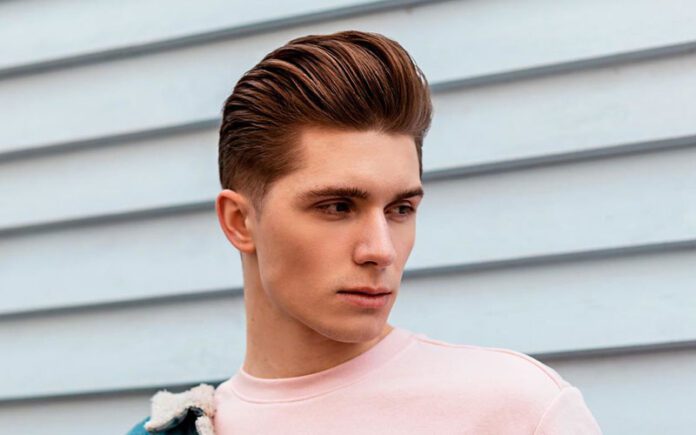
The strongest cool American haircut ideas include the Ivy League taper, textured crop fade, classic pompadour, and modern mullet. These cuts cover clean professional styling, relaxed everyday texture, vintage character, and bolder personal expression. The right choice depends less on trends and more on your hair density, face shape, morning routine, and willingness to book regular trims.
I’ve spent more than a decade studying, wearing, and refining men’s cuts with barbers who understand how shape changes from the chair to real life. This guide presents 25 distinct, barber-ready looks with practical descriptions and visual prompts for each style.
The table below highlights ten cool American haircut ideas for men who want a fast starting point before exploring the full list.
| Quick Pick | Best For | What to Ask For | Upkeep |
|---|---|---|---|
| Ivy League Taper | Work and formal settings | Scissor-cut top with a low tapered neckline | Every 3–4 weeks |
| Textured Crop Fade | Thick or straight hair | Choppy top with a low-to-mid fade | Every 2–3 weeks |
| Classic Pompadour | Dense hair with volume | Longer swept-back front and tapered sides | Daily styling |
| Buzz Cut Fade | Simple maintenance | Uniform short top with faded sides | Every 2 weeks |
| Side-Part Taper | Traditional wardrobes | Defined part with softly tapered sides | Every 3–4 weeks |
| Modern Mullet | Creative personal style | Shorter sides with controlled rear length | Every 4–6 weeks |
| Bro Flow | Medium wavy hair | Layered movement brushed away from the face | Every 6–8 weeks |
| High-and-Tight | Athletic routines | Very short sides with a compact top | Every 2–3 weeks |
| Slick-Back Undercut | Strong facial structure | Disconnected sides and a long brushed-back top | Every 3–4 weeks |
| Curly Taper Fade | Natural curls | Preserved curl length with clean temple tapering | Every 3–4 weeks |
Classic Cool American Haircut Ideas
These cuts grew from barbershop traditions, military grooming, college style, and mid-century tailoring. They still work because the shapes are clear, adaptable, and easy to understand. A good barber can soften or sharpen each one without losing its identity.
1. Ivy League Taper

The Ivy League taper keeps enough length on top to form a short side part while maintaining a neat, close outline around the ears and neckline. The front usually measures between one and two inches, with the crown gradually shortened so it settles without sticking up. A low taper replaces the harsher contrast of a skin fade, giving the haircut a polished shape that works with a suit, polo, or plain white T-shirt.
This is one of the most dependable cool American haircut ideas for oval, square, and softly rounded faces. Ask your barber for “a scissor-cut Ivy League with a low taper and enough front length to part naturally.” Fine hair benefits from a matte paste, while dense hair may need a small amount of cream to control the side. Its drawback is subtlety: men wanting a dramatic transformation may find it too restrained.
2. Traditional Side-Part Taper

The traditional side-part taper creates a clean line from the forehead toward the crown, with the top combed smoothly to one side. Unlike a hard part, the separation is formed by the hair’s natural direction rather than a shaved line. The sides remain short but not exposed, and the neckline narrows gradually for a shape that looks controlled from every angle.
Men with straight or lightly wavy hair get the easiest result, especially when the strands have enough density to hold a part. Tell the barber, “Keep three inches on top, follow my natural part, and give me a soft taper instead of a skin fade.” A water-based pomade adds the classic finish, though a styling cream looks less formal. The main limitation is that cowlicks near the front can fight the direction of the part.
3. Crew Cut with Soft Taper
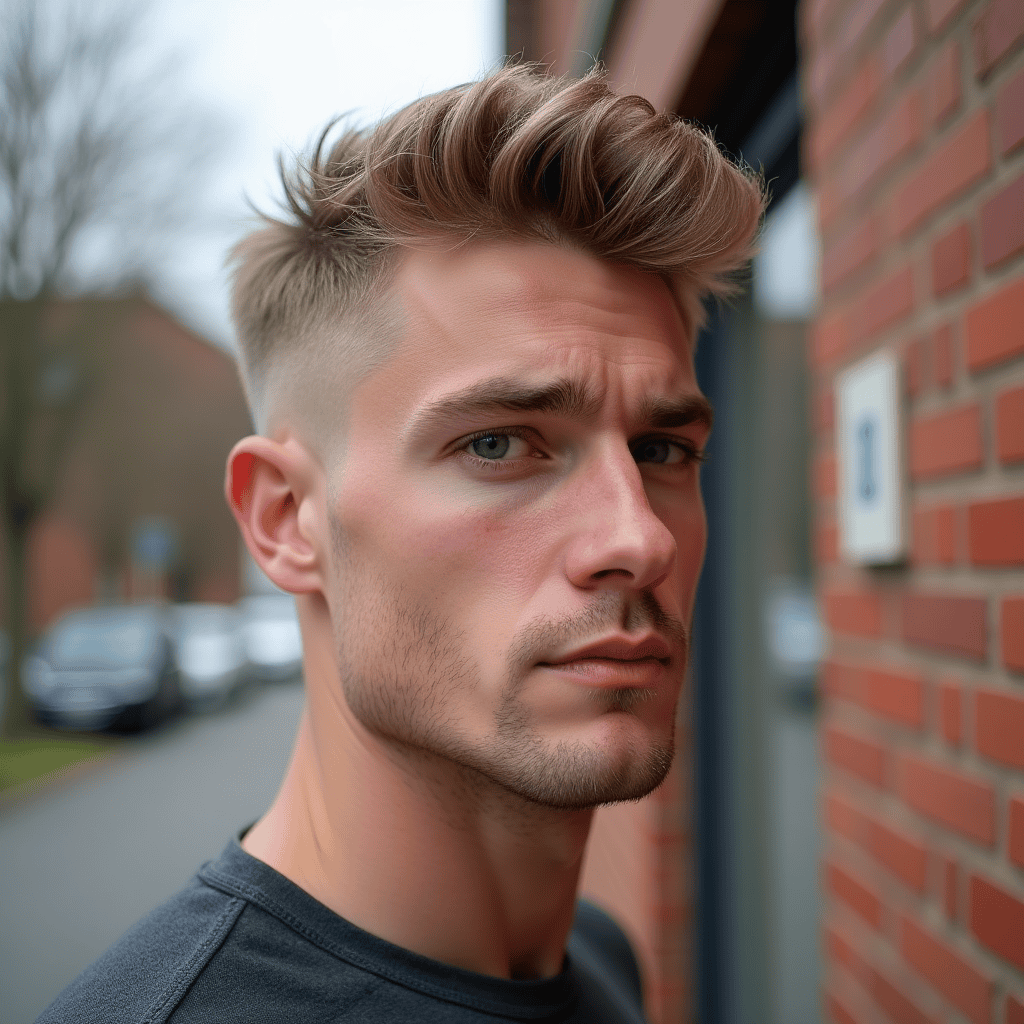
The crew cut leaves the front slightly longer than the crown, producing a subtle slope rather than a completely uniform surface. The sides are tapered close, but the transition stays soft enough to avoid the severe look of a high skin fade. Viewed from the side, the silhouette appears level and compact, with no heavy ridge around the upper temples.
This cut suits active men, conservative workplaces, and anyone who prefers finger styling over combing. Ask for “a classic crew cut with a short graduated top, low taper, and no exposed skin above the temples.” Coarse hair may stand naturally, while softer hair can be directed with a pea-sized amount of matte clay. It needs frequent reshaping because the clean proportions become less obvious once the sides grow out.
4. Executive Contour

The executive contour combines a structured side part with fuller sides and a controlled sweep across the top. The hair sits close to the head rather than rising into a pompadour, and the temples remain dense enough to create a strong, mature outline. A carefully blended crown keeps the rear from collapsing or forming an awkward shelf.
Among cool American haircut ideas, this one works especially well for men who wear tailoring or business-casual clothing throughout the week. Ask the barber for “an executive contour with scissor-cut sides, a natural part, and a clean taper at the edges.” It suits straight, dense hair and can flatter longer faces because it avoids excessive height. The drawback is styling time; an uneven blow-dry can make one side appear heavier.
5. High-and-Tight
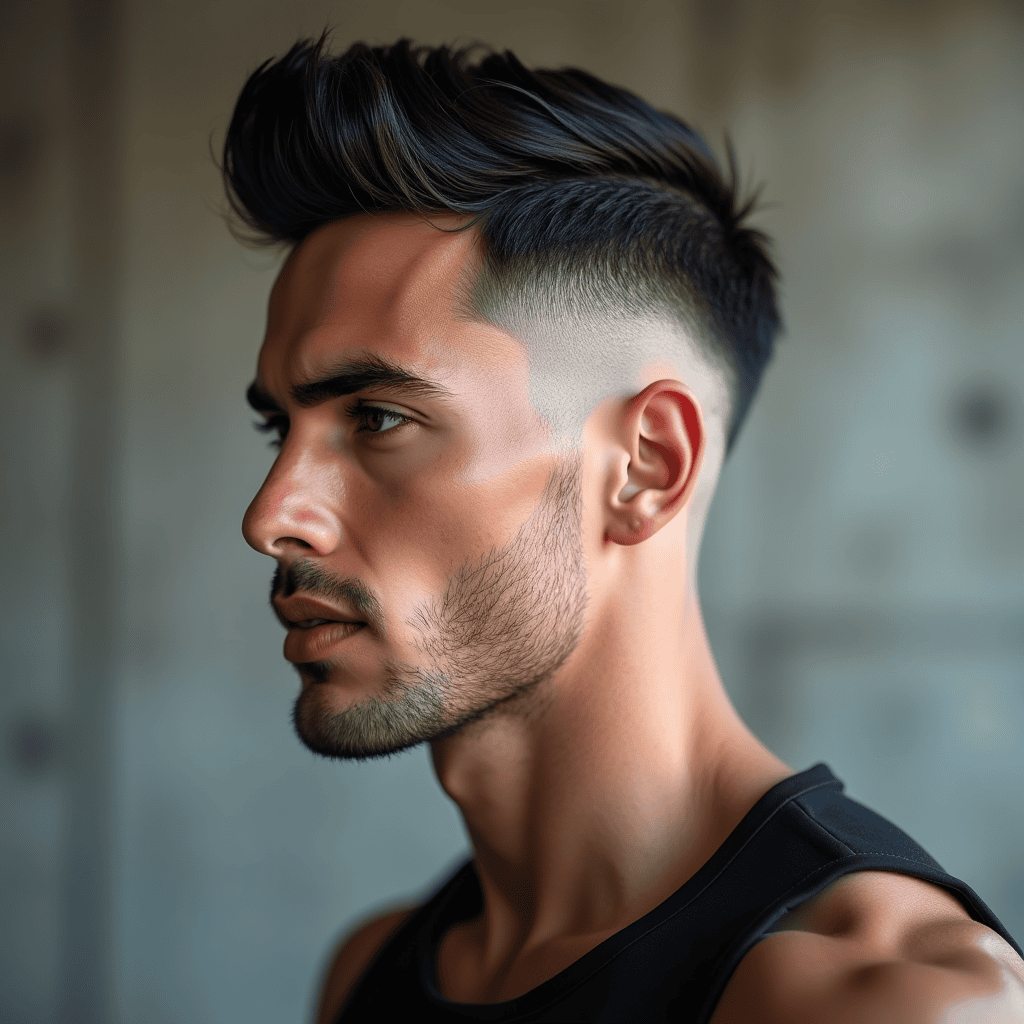
The high-and-tight places most of the visual weight on a compact strip of hair across the top. The sides and back are clipped extremely close, with the transition positioned high above the temples. Keeping a little texture on top prevents the cut from looking flat and gives the head a firmer, more deliberate outline.
This American barbershop standard suits square and oval faces, athletic routines, and men who dislike products. Say, “Give me a high-and-tight with a short textured top and a clean blend rather than a sudden shelf.” It can make thinning around the sides less noticeable, but it may exaggerate a narrow or elongated head shape. The exposed scalp also means the finish loses crispness quickly as new growth appears.
Short Modern American Haircuts
Short modern cuts rely on texture, contrast, and deliberate fading. They photograph well and stay comfortable in hot weather, but many need more barber visits than their simple appearance suggests. The difference between sharp and overworked often comes down to how naturally the fade follows the head.
6. Textured Crop with Low Fade

The textured crop uses short, broken layers across the top and a lightly irregular fringe along the forehead. A low fade begins near the sideburns and curves behind the ears, preserving some darkness around the upper sides. The contrast looks modern without splitting the haircut into two disconnected blocks.
This is one of the easiest cool American haircut ideas for thick, straight, or slightly wavy hair. Ask for “a choppy crop with point-cut texture, a natural fringe, and a low fade that stays dark near the temples.” Matte clay helps separate the surface without creating shine. Men with strong forward-growing cowlicks should keep the fringe slightly longer, while men with thin front density may find the broken edge exposes more scalp than expected.
7. Buzz Cut with Mid Fade
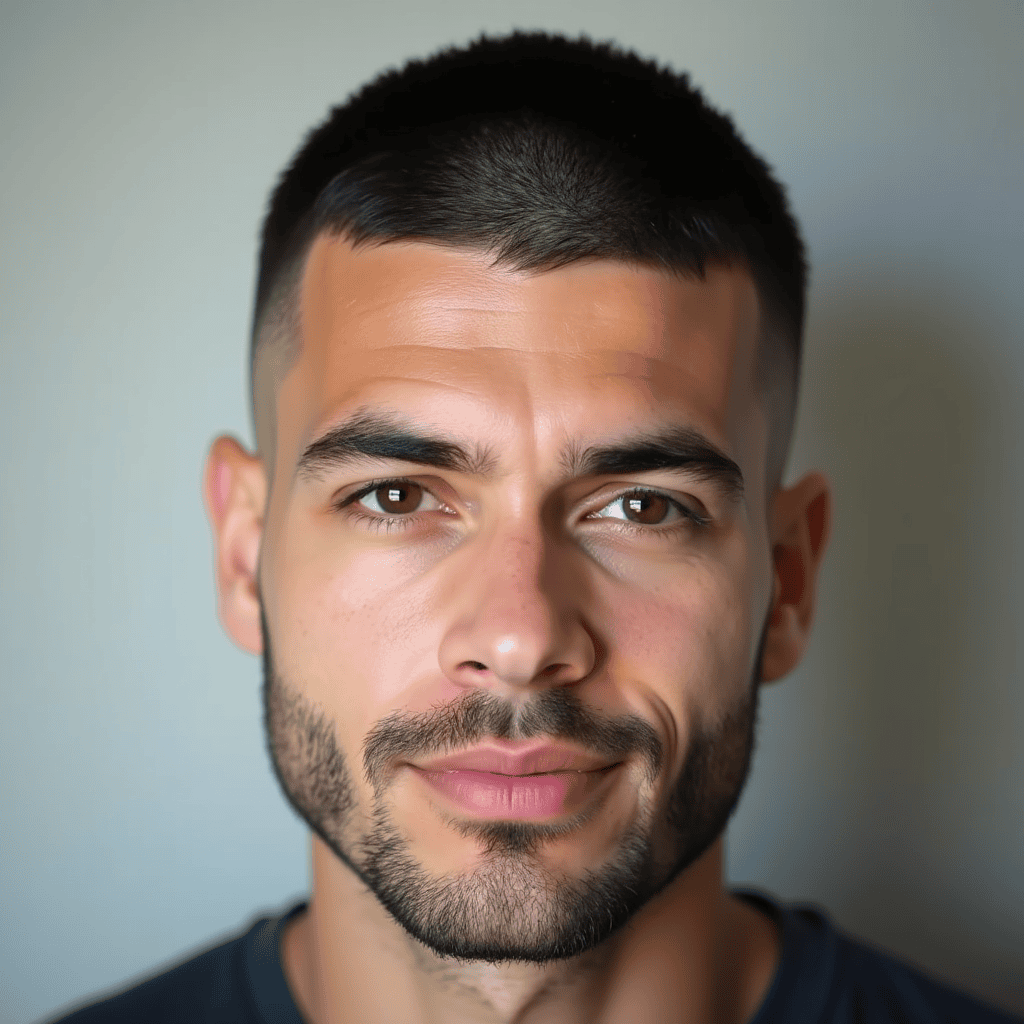
The buzz cut with a mid fade keeps the top short and even while gradually exposing more skin through the middle of the sides. Leaving the top one or two clipper guards longer than the faded area gives the haircut enough shape to look intentional. A squared or naturally rounded hairline can be chosen according to the wearer’s growth pattern.
This cut fits men who want little daily work but still enjoy a sharp barbershop finish. Ask for “a number two or three on top with a mid fade and a natural-looking front line.” It works well on dense hair and strong head shapes, though scars, uneven growth, and scalp contrast become more visible. There is no styling to hide a rough grow-out, so regular cleanups matter more than many first-time wearers expect.
8. Short Quiff Fade
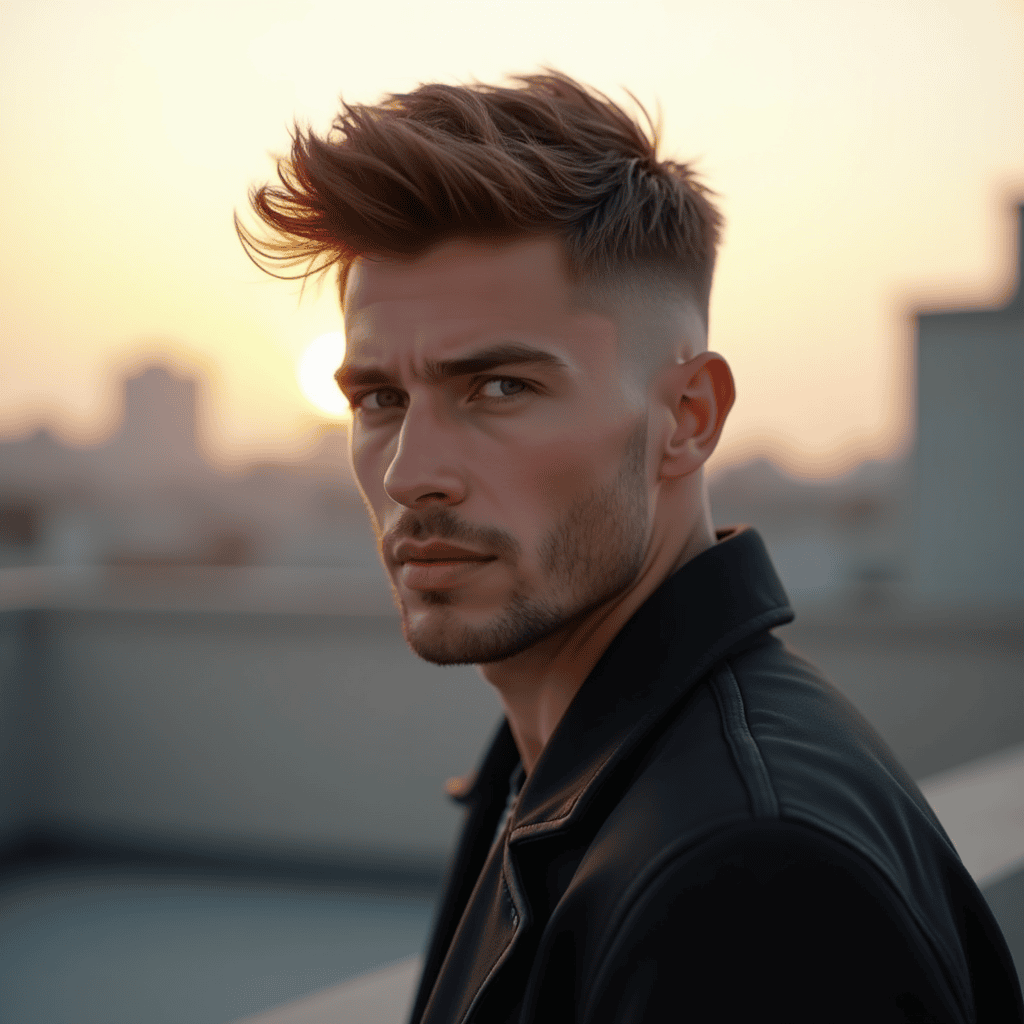
The short quiff lifts the front upward and slightly backward while keeping the crown compact. The fade removes bulk from the sides, helping the raised front appear stronger without needing several inches of hair. Texture through the top prevents the quiff from becoming a stiff wall.
Men with medium-to-thick hair and round or square faces can use this shape to create extra height. Ask the barber for “a two-inch textured top, short lifted quiff, and low or mid fade with no hard part.” Blow-dry the front using your fingers before working in a dry paste. The haircut becomes frustrating on hair that falls heavily forward, and the quiff can collapse in humid weather unless it is properly dried first.
9. Caesar Fade
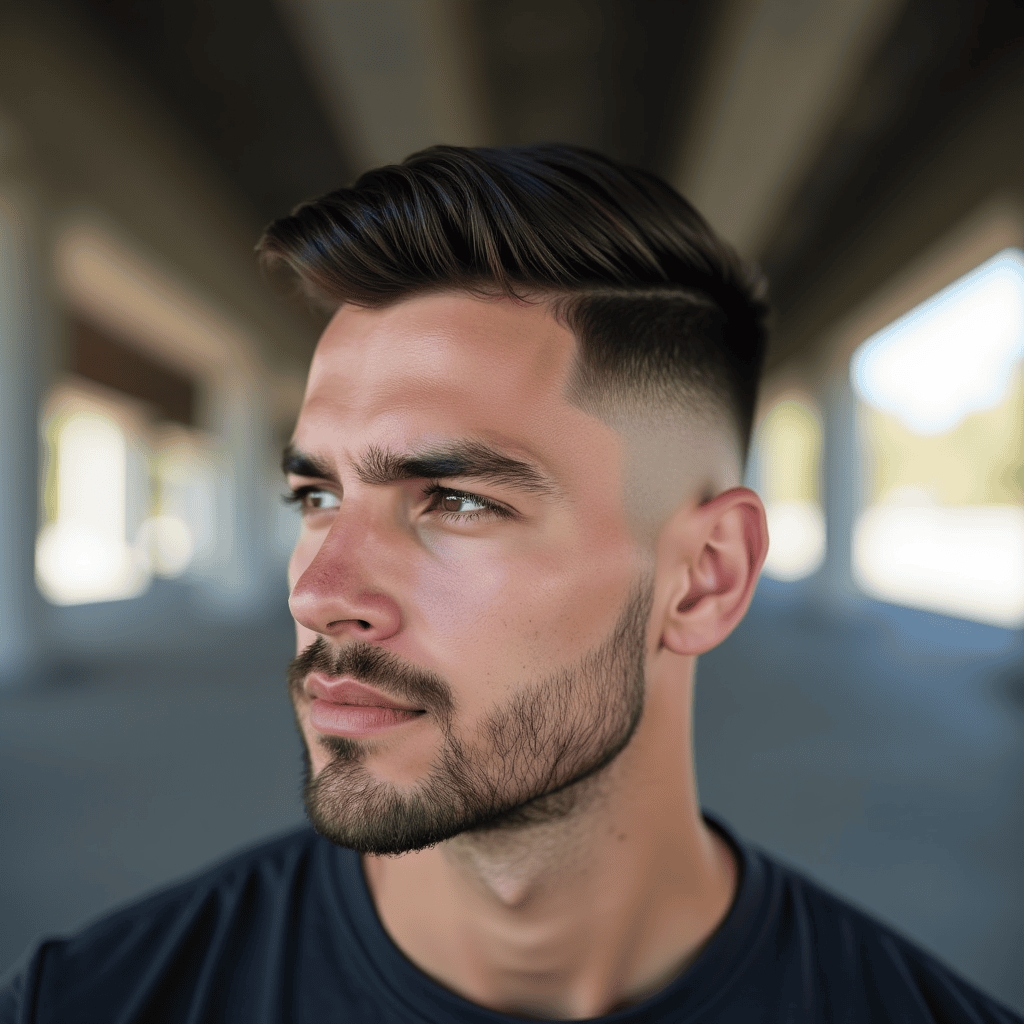
The Caesar fade brings the top forward into a short, horizontal fringe while tapering the sides tightly. Fine texturing across the surface stops the haircut from looking like a solid cap. The fringe can remain blunt for a stronger graphic effect or be lightly chipped for a softer finish.
This version belongs among cool American haircut ideas because it translates an old shape into a practical modern cut. Tell the barber, “Keep the top short and forward, texture the fringe, and blend it into a low fade.” It works for straight and lightly curly hair, especially when the front hairline needs a compact frame. Skip an extremely blunt fringe if you have a short forehead, since it can compress the face.
10. Spiky Brush-Up

The spiky brush-up uses short graduated layers that rise from the forehead and lean back toward the crown. The tips remain separated rather than arranged into stiff, identical points. Short faded or tapered sides keep the shape clean, while a slightly rough surface gives it the casual energy associated with early American skate and pop-punk style.
It suits straight, dense hair that responds well to heat and dry products. Ask for “two to three inches on top with point-cut layers, a brushed-up front, and short tapered sides.” Rub matte paste fully between your palms before pushing the hair upward with loose fingers. The style can quickly look dated if it becomes glossy or overly symmetrical, and fine hair may struggle to keep the raised shape through a full day.
Medium-Length Cool American Haircut Ideas
Medium hair gives a barber more room to build movement, weight, and personality. These cuts usually grow out better than tight fades, although they demand smarter washing and more careful drying. They are strongest when the natural texture is guided rather than flattened.
11. Classic Pompadour Taper

The classic pompadour carries its greatest height at the front before flowing backward into a controlled crown. The sides are tapered and combed close, not shaved away, which preserves the rounded silhouette associated with 1950s American grooming. The front should curve rather than stand vertically, with a smooth transition through the top.
This is one of the most recognizable cool American haircut ideas for men with dense, straight, or wavy hair. Ask for “four inches at the front, gradually shorter toward the crown, and scissor-cut sides with a clean taper.” A blow-dryer and round brush create the foundation before pomade or cream is added. Fine hair can achieve a lighter version, but anyone unwilling to style each morning should choose a shorter quiff instead.
12. Loose Side-Swept Undercut

The loose side-swept undercut leaves several inches on top and removes most of the weight from the sides. Instead of slicking the hair tightly backward, the top falls diagonally across the head with visible movement and separated strands. The connection can be softly blended near the crown or left lightly disconnected for stronger contrast.
Men with thick straight or wavy hair get the most natural sweep. Tell the barber, “Leave enough length to push across one side, undercut the lower sections, and keep the top loose rather than polished.” A lightweight cream gives control without freezing the strands. This shape becomes top-heavy during grow-out, and men with fine hair may see too much scalp where the long section separates from the short side.
13. Bro Flow

The bro flow sits around ear length and moves naturally away from the forehead. Soft layers remove heaviness without creating a shaggy outline, while the side sections tuck loosely behind the ears. The rear reaches the collar or stops slightly above it, giving the cut enough movement to work with jackets, knitwear, or relaxed summer shirts.
Among American haircut ideas, this is a strong choice for men who want longer hair without a heavily styled finish. Ask for “medium layers that follow my natural wave, with weight removed around the ears and no short fade.” It works best on medium-to-thick hair with some bend. Straight, fine hair may fall flat against the head, and the in-between growth stage can feel untidy before the sides become long enough to sweep back.
14. Surfer Curtains

Surfer curtains divide loosely near the center and fall outward toward the cheekbones. The front pieces remain longer than the temple area, while internal layers stop the sides from becoming triangular. A salt-textured finish creates bends and irregular separation rather than smooth, perfectly matched halves.
This cut suits oval, heart-shaped, and longer faces, particularly when the hair already carries a wave. Ask your stylist for “center-parted curtains with cheekbone-length front pieces, soft internal layers, and a natural beach texture.” Let the hair air-dry partway before shaping it with your hands. Thick hair can become bulky around the ears, while short foreheads may feel crowded if the curtains fall too heavily across the face.
15. Medium Slick Back

The medium slick back directs the entire top away from the forehead without forcing it completely flat. The side sections are long enough to comb behind the ears or blend into a tapered lower edge. A little natural lift at the front keeps the style from resembling a tight helmet.
This is one of the more adaptable cool American haircut ideas because it can look formal with pomade or relaxed with styling cream. Ask for “four to five inches on top, enough side length to brush backward, and a soft taper around the edges.” It suits straight and wavy hair with medium density. Heavy oil-based products can make thin hair look sparse, while strong cowlicks may cause one side to split away from the intended direction.
Curly and Textured American Haircut Ideas
Natural curl patterns need shape without unnecessary removal. The best cuts preserve the visible bend, coil, or wave while clearing weight from places that cause puffiness. Bring reference images featuring your own texture range, not straight-haired versions of the same silhouette.
16. Curly Taper Fade
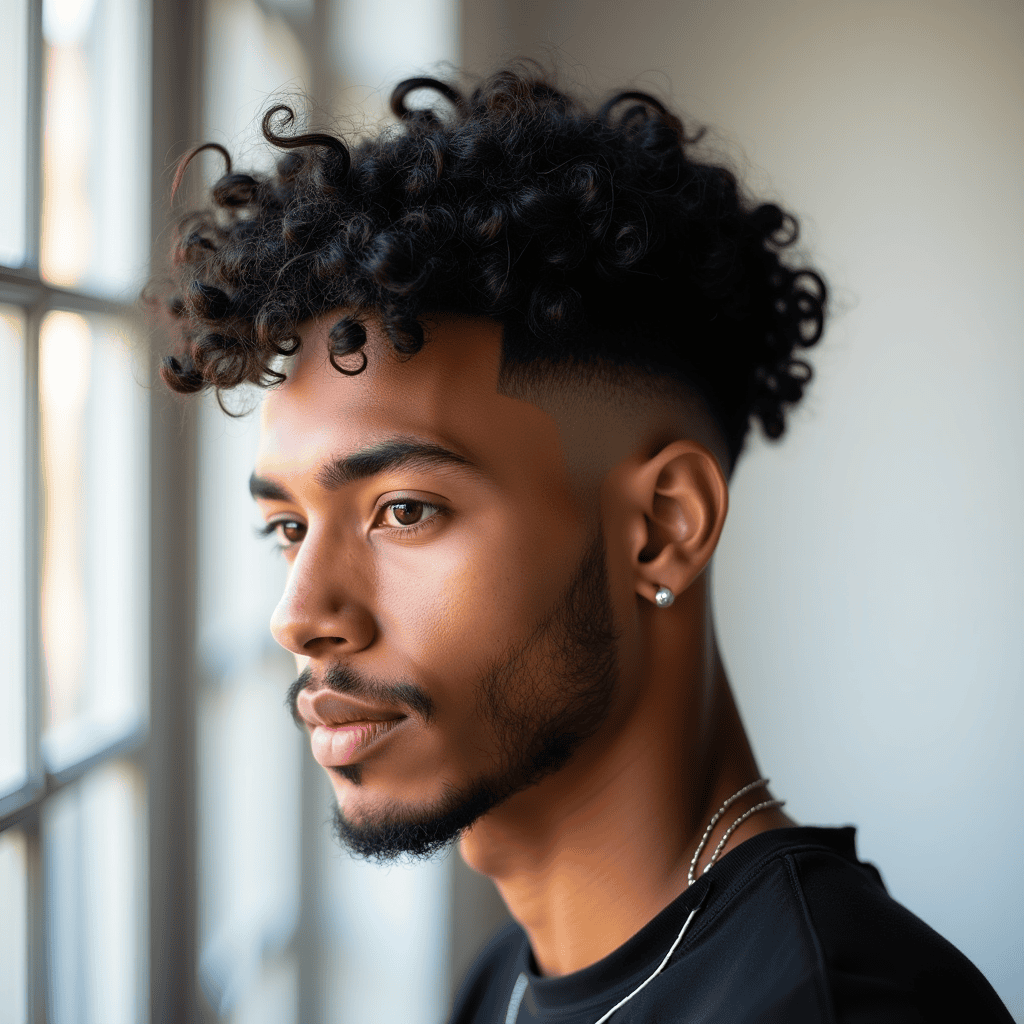
The curly taper fade keeps the coils full across the top while cleaning only the temples, sideburns, and neckline. The fade stays low, leaving enough density above the ears to connect naturally with the crown. Individual curls should remain visible instead of being brushed into a uniform sponge-like surface.
This is one of the most wearable cool American haircut ideas for naturally curly hair. Tell the barber, “Preserve my curl length on top, shape the outline, and taper only the temples and neckline.” It flatters oval, round, and square faces because the barber can adjust height and side volume. The main risk is over-thinning; aggressive texturizing can disturb the curl pattern and produce frizz between appointments.
17. Curly High Top
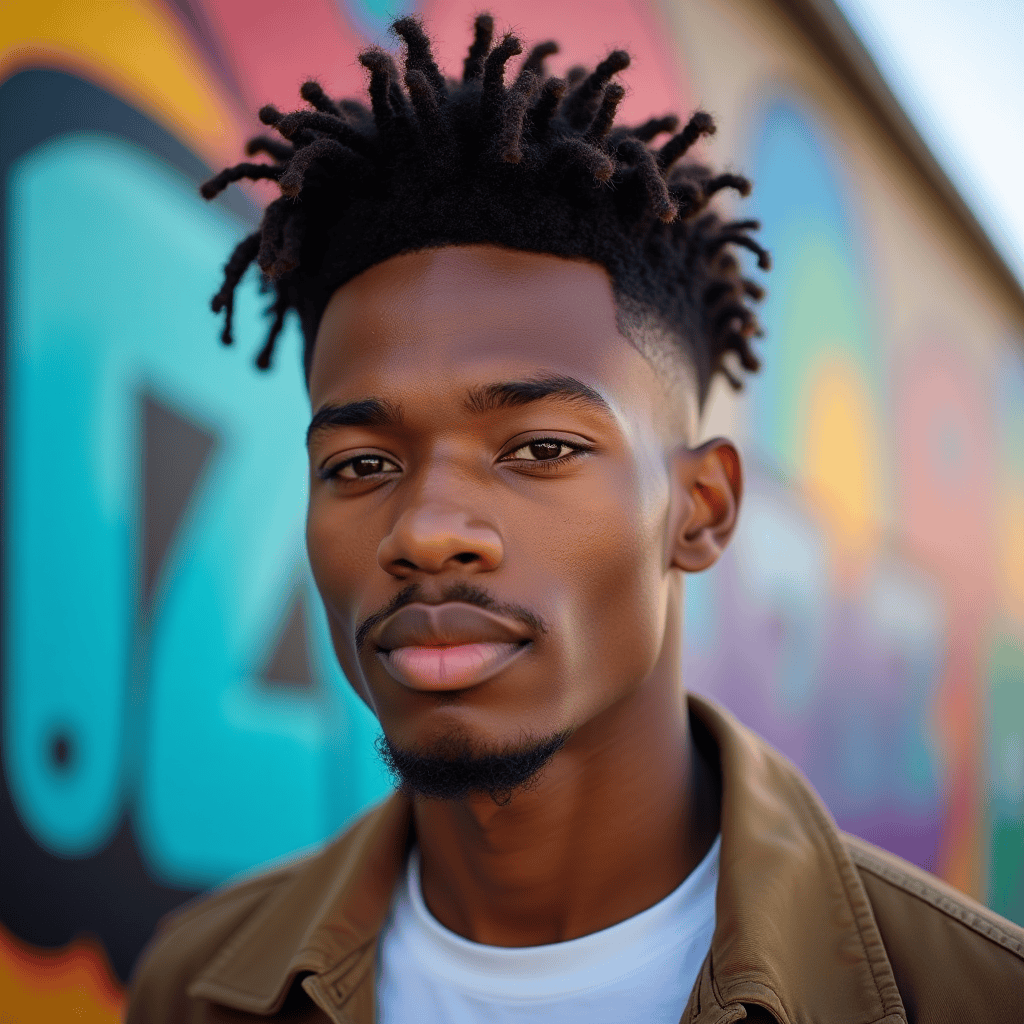
The curly high top builds height through the center while keeping the outer shape controlled and upright. The sides are faded closely, creating a clear vertical contrast between the compact base and the textured upper section. Unlike a flat top, the surface remains irregular so the natural curls provide movement.
Men with tight curls and strong density can use this style to lengthen rounder facial proportions. Ask for “a shaped curly high top with balanced height, a clean mid fade, and no aggressive thinning through the top.” Curl cream or a light sponge technique can define the surface after washing. It demands consistent shaping, and excessive height may feel out of proportion on men with narrow, elongated faces.
18. Short Afro with Temple Taper

The short Afro forms a rounded, balanced silhouette around the head while keeping the temples and neckline sharply controlled. The top and sides retain enough length for visible texture, but the outer edge is trimmed so the shape does not expand unevenly. A natural front hairline often looks softer than an aggressively squared lineup.
This American haircut works for men who want fullness without maintaining a taller Afro. Ask the barber to “shape a short rounded Afro, preserve even density, and add a subtle temple and neck taper.” Regular moisturizing and gentle detangling help the surface stay defined. The drawback is that uneven shrinkage can change the outline after washing, so the barber needs to cut with the natural curl behavior in mind.
19. Wavy Shag

The wavy shag uses layered lengths through the crown, temples, and rear to create a loose, lived-in outline. Shorter pieces lift near the top while longer strands curve over the ears and toward the collar. The perimeter should look broken and soft, not chopped into a heavy straight line.
This is one of the more relaxed cool American haircut ideas for men with medium or thick waves. Ask for “a layered shag with movement around the crown, longer pieces at the ears, and a soft collar-length back.” It suits creative wardrobes and casual workplaces, especially when air-dried with a light curl cream. The cut can look shapeless on very fine hair, and poorly placed layers may cause the sides to flare outward.
20. Coiled Burst Fade

The coiled burst fade keeps substantial curl volume through the center and rear while carving a curved fade around each ear. The faded section expands outward like a semicircle, then blends into the longer back. This creates a compact mohawk influence without requiring the top to be sculpted into a narrow strip.
Men with coils, dense curls, and a taste for stronger outlines can carry this shape well. Tell the barber, “Keep the coils full through the top and back, then give me a rounded burst fade around the ears.” The style needs careful symmetry because even a small difference between the curves becomes noticeable. It also grows out less quietly than a standard taper, so the ear area may need cleaning before the top requires cutting.
Bold and Retro Cool American Haircuts
The final group pulls from rockabilly grooming, skate culture, rural workwear, punk scenes, and recent barbershop experimentation. These looks carry more identity, so they work best when the haircut matches the wearer’s actual clothing and routine. Commitment matters more than novelty.
21. Modern Mullet

The modern mullet keeps the front and sides controlled while allowing the rear to extend toward the collar. Texture through the crown creates movement, and a taper or burst fade removes heaviness around the ears. The strongest versions maintain a visible connection between the top and back rather than attaching a thin tail to a short haircut.
This has become one of the boldest cool American haircut ideas for men who wear casual, Western, skate-inspired, or creative clothing. Ask for “a textured modern mullet with short tapered sides, a connected crown, and a soft collar-length back.” Wavy and curly hair produce natural movement with less styling. Straight hair may need more layering, and the rear can look accidental during grow-out if it is not reshaped regularly.
22. Rockabilly Pompadour

The rockabilly pompadour pushes the front high and backward into a broad, sculpted wave. The sides are slicked close or tapered tightly, while the crown follows the front without collapsing into a flat rear section. A smooth outer shell hides the internal volume created by careful blow-drying and comb tension.
This dramatic American haircut suits dense straight hair and men comfortable with a visible grooming routine. Ask for “a high rockabilly pomp with four to five inches in front, controlled sides, and enough crown length to carry the shape backward.” Strong pomade provides shine and hold. The cut takes time, dislikes humidity, and can feel costume-like if the clothing and facial hair do not support its vintage character.
23. Faux Hawk Fade
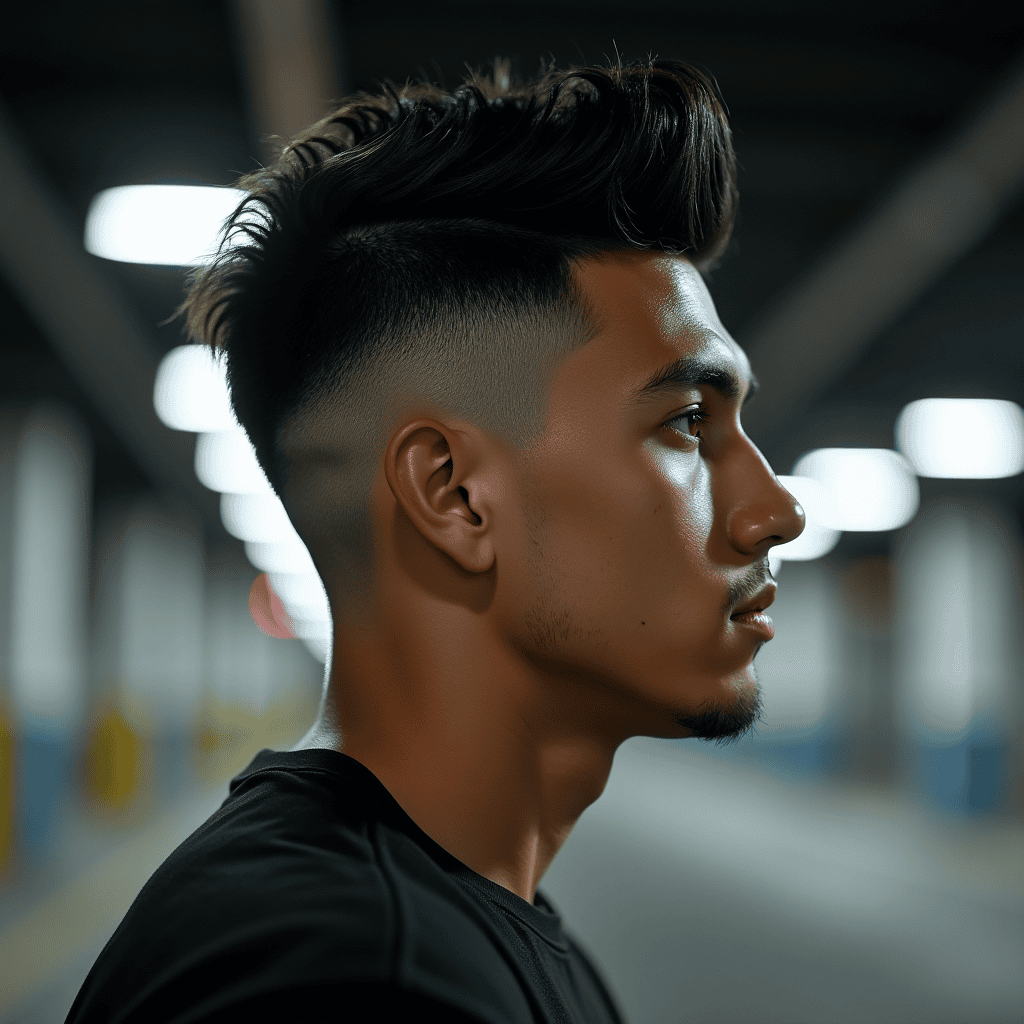
The faux hawk fade concentrates length along the middle of the head without shaving the sides into a separate strip. The top narrows gradually toward the crown, and the front can be pushed upward or slightly forward. A mid or burst fade reinforces the central shape while preserving enough blend for everyday wear.
Among cool American haircut ideas, this one offers attitude without the full commitment of a traditional mohawk. Ask for “a textured faux hawk with a longer center, gradually shorter crown, and a blended fade that follows the shape.” Thick straight or wavy hair holds the ridge most easily. The cut can look awkward when flattened, so men who refuse daily styling should keep the center shorter and less dramatic.
24. Disconnected Slick-Back Undercut
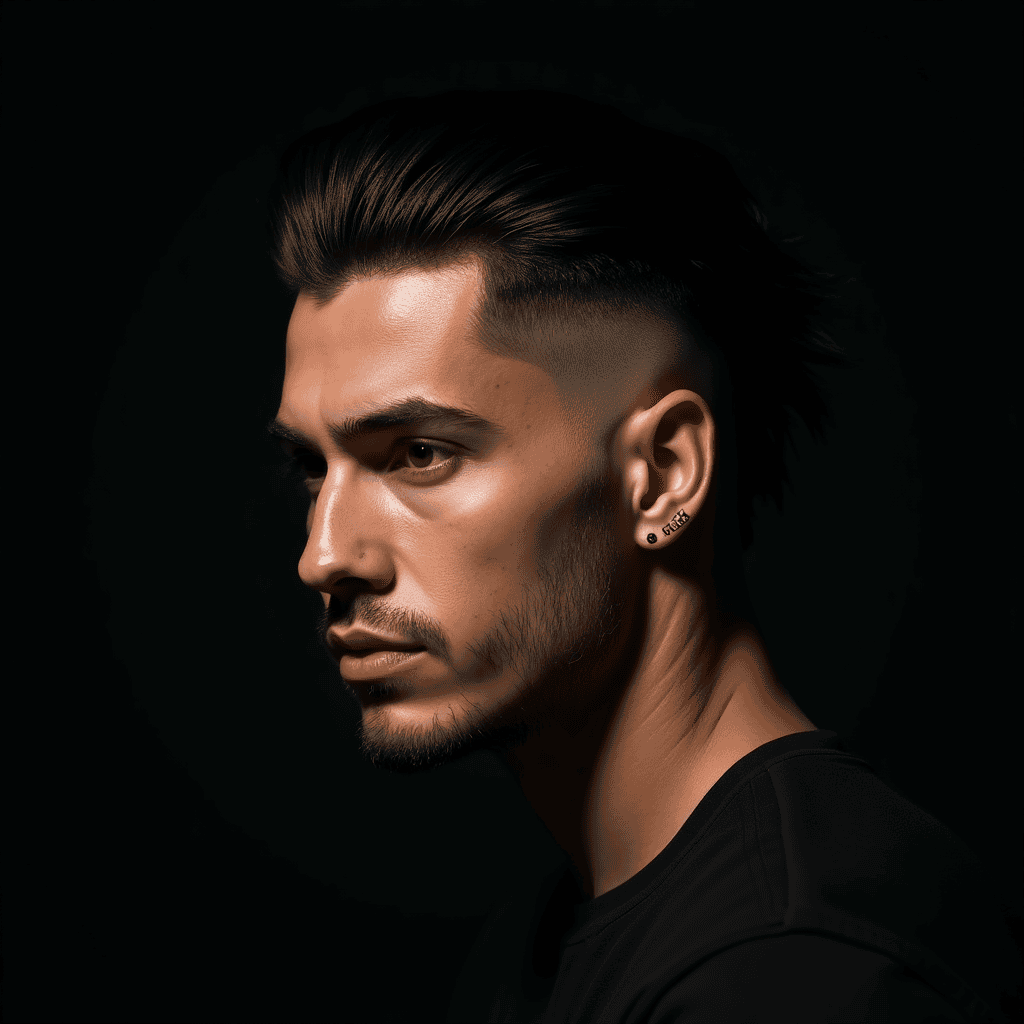
The disconnected slick-back undercut leaves the top long while clipping the sides to a clearly separate length. There is little or no gradual blend at the upper temples, producing a strong ledge beneath the brushed-back section. The top should reach far enough backward to cover the transition rather than stopping halfway across the crown.
This haircut suits men with thick, straight hair and pronounced cheekbones or jawlines. Tell the barber, “Leave five or six inches on top, disconnect it from the short sides, and keep enough rear length for a complete slick back.” Cream gives a looser finish, while pomade creates a sharper surface. Fine hair may separate and reveal the disconnect, and the long top can become difficult to control during windy or humid days.
25. Flat Top Fade
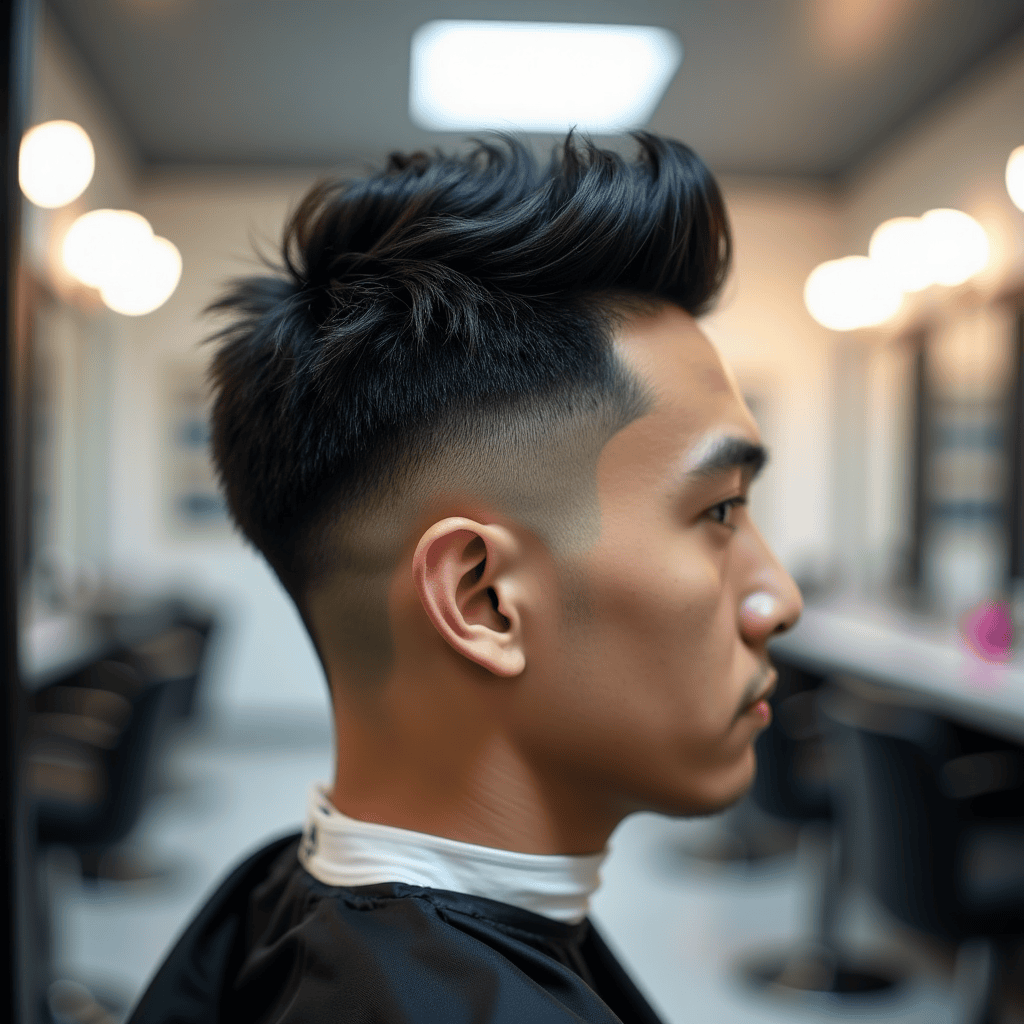
The flat top creates a level horizontal surface across upright hair, with the front often standing slightly taller to balance the profile. The sides rise nearly vertical before fading into the lower head, producing a clean geometric silhouette. Every corner matters, especially where the top plane meets the side walls.
This is the most technical of these cool American haircut ideas and should be handled by a barber comfortable cutting freehand against a comb. Ask for “a balanced flat top with a crisp level surface, upright sides, and a smooth fade below the corners.” Coarse, dense hair provides the strongest structure. The cut exposes uneven growth quickly and needs frequent reshaping, making it a poor choice for men who stretch appointments beyond four weeks.
How to Choose the Right American Haircut
Start with your natural hair behavior, not the image you like most. Straight dense hair supports pompadours, quiffs, and flat tops, while waves and curls often look stronger in bro flows, shags, tapers, and modern mullets. Fine hair usually benefits from shorter texture and softer contrast because extreme disconnection can reveal the scalp.
Face shape matters, but it should guide proportions rather than dictate one permitted cut. Round faces often benefit from height and shorter sides. Long faces usually look more balanced with moderate top volume and some fullness near the temples. Square faces can carry compact military cuts, while softer tapers can reduce an overly severe result.
Think honestly about upkeep. Skin fades, lineups, flat tops, and high-and-tights may need attention every two or three weeks. Scissor-cut tapers, shags, bro flows, and medium slick backs usually tolerate longer gaps, though the daily washing and drying routine becomes more important.
Bring two or three reference images showing the front, side, and rear. Choose examples with hair density and texture close to your own. Then tell the barber which details matter most: the front length, fade height, amount of scalp exposure, neckline shape, and how the haircut should look without product.
Where Cool American Haircut Ideas Go Wrong
The most common mistake is copying a haircut’s label without discussing its proportions. Two men can request a textured crop and leave with completely different fringe lengths, fade heights, and crown shapes. Describe the visible result instead of trusting the name alone.
Another problem is choosing a cut that exists only after twenty minutes of blow-drying. A pompadour shown under studio lighting may collapse when worn through a humid commute. A slick back can separate after removing a hat. Ask the barber to show how the cut settles with little or no product before leaving the chair.
Over-fading causes trouble too. Removing every trace of darkness from the sides can make the top look detached, exaggerate a narrow head, or expose growth patterns that were better left covered. A low taper often provides enough cleanliness without turning the haircut into a high-contrast statement.
The honest answer is that some cool American haircut ideas photograph better than they live. I go back and forth on sharp skin fades for that reason. They look excellent for several days, but many men would be happier with a softer taper that still looks intentional after three weeks.
Frequently Asked Questions About American Haircuts
The first questions cover choosing a cut and communicating with a barber. The later questions focus on maintenance, styling, and adapting the looks to different hair types.
What is the most popular American haircut for men?
The taper fade remains one of the broadest American haircut families because it can support crops, curls, quiffs, side parts, and longer textured tops. The best version depends on how high the taper begins and how much natural density remains around the temples.
Which cool American haircut ideas are easiest to maintain?
Buzz cuts, short crew cuts, Caesar fades, and lightly textured crops need little daily styling. They still require regular barber visits if you want crisp edges. A soft crew cut is often the most practical balance because it grows out more evenly than a skin fade.
What haircut should I ask for at an American barbershop?
Name the general cut, then describe the important details. State how much length you want on top, whether the sides should be tapered or faded, how much scalp may show, and whether you prefer a natural or sharply lined hairline.
What American haircut works best for thick hair?
Thick hair supports pompadours, quiffs, crops, slick backs, shags, and modern mullets. Ask the barber to remove internal bulk without aggressively thinning the ends. Poor thinning can create short flyaways that expand instead of making the haircut easier to control.
Which American haircuts suit thin or fine hair?
Crew cuts, Ivy League tapers, short crops, and subtle side parts usually suit fine hair. Moderate length creates coverage, while matte products provide texture without making strands clump together. Avoid extreme undercuts if the long top separates and reveals too much scalp.
Are fades still fashionable for men?
Fades remain common because they can be adjusted to nearly any top style. The cleaner choice is not always the highest or shortest fade. Low fades and temple tapers often age better between appointments and preserve more natural balance around the head.
How often should men get a fade haircut?
A sharp skin or high fade usually looks freshest with visits every two to three weeks. Low fades can often stretch slightly longer. Men who dislike frequent appointments should request a taper or leave more darkness through the sides so new growth appears less obvious.
What is the difference between a taper and a fade?
A taper shortens hair gradually around limited areas, usually the temples, sideburns, and neckline. A fade removes length across a larger part of the sides and may expose skin. Tapers look softer during growth, while fades create stronger immediate contrast.
Which cool American haircut ideas suit curly hair?
Curly taper fades, short Afros, curly high tops, burst fades, shags, and modern mullets all preserve visible texture. The barber should shape curls in their natural state and avoid excessive thinning. Reference photos should show a curl pattern similar to yours.
Can a round-faced man wear a buzz cut?
Yes, although the chosen length and fade placement matter. Keeping a little extra height on top can make the face appear longer. An extremely high fade with a flat, very short top may emphasize width rather than creating the intended balance.
What haircut makes a man look more professional?
The Ivy League taper, executive contour, traditional side part, and short crew cut all read as professional because their outlines stay controlled. A haircut appears more polished when the neckline is clean, the top follows a clear direction, and styling product is used lightly.
How do I choose between a low fade and a high fade?
Choose a low fade when you want softer contrast, longer grow-out, or more width near the temples. Choose a high fade when you want a sharper outline and stronger separation from the top. Men with narrow faces often benefit from keeping the fade lower.
What should I bring to a barber appointment?
Bring clear front, side, and back images of the haircut. Wear your hair without a hat so the barber can see its natural direction. Mention previous problems such as a crown that sticks up, a fringe that separates, or sides that become bulky after two weeks.
Can I get a stylish haircut without using products?
A buzz cut, short crew cut, Caesar cut, short Afro, or naturally shaped curly taper can work with little product. The barber must build the shape around your natural growth. Longer quiffs, pompadours, slick backs, and faux hawks usually need at least light styling support.
How can I make a haircut grow out better?
Avoid taking every area extremely short. A soft taper, connected crown, and natural neckline create a smoother transition as the hair grows. Ask the barber to leave enough weight near cowlicks and avoid unnecessary hard parts that become awkward before the next appointment.
Choose the Cut Before You Reach the Chair
Save one front view and one side view of the haircut that best matches your natural texture. Decide how much daily styling and barber maintenance you will honestly accept. Then call the shop and ask for a barber experienced with that specific length, texture, and fade style.
International Haircut Reports
Global haircut trends, modern barber styles and fresh grooming inspiration.