
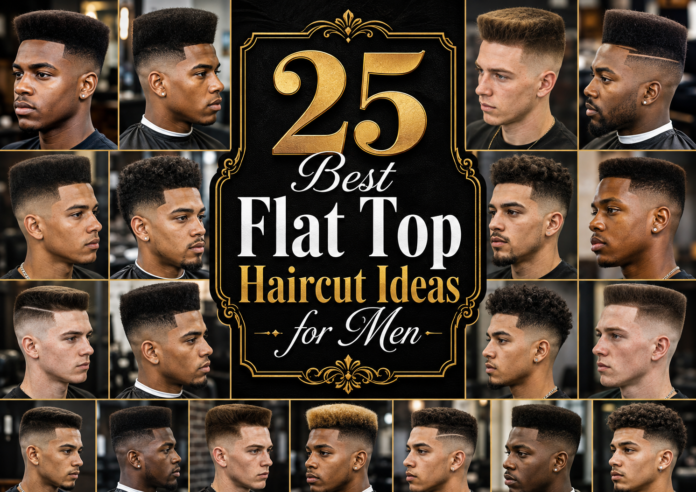
The strongest flat top haircut ideas balance a level top with clean sides instead of turning the whole cut into a rigid box. My safest picks are the Classic Military Flat Top, Low Fade Flat Top, Textured Flat Top, and Curly Flat Top. Each gives you the signature shape without demanding the same hair type or maintenance routine.
I’ve cut and reshaped flat tops for more than a decade, and the difference between sharp and awkward usually comes down to proportion. A good barber watches the head shape, growth pattern, crown, and front hairline before deciding how high that horizontal plane should sit.
| Quick Pick | Best For | Overall Look | Upkeep |
|---|---|---|---|
| Classic Military Flat Top | Straight, dense hair | Crisp and traditional | High |
| Low Fade Flat Top | First-time flat-top wearers | Clean but understated | Medium |
| High Fade Flat Top | Stronger contrast | Sharp and modern | High |
| Textured Flat Top | Slightly imperfect growth | Relaxed and wearable | Medium |
| Curly Flat Top | Natural curls | Structured volume | Medium |
| Short Flat Top | Easy daily styling | Compact and practical | Medium |
| Rounded Flat Top | Softer facial features | Less severe | Medium |
| Skin Fade Flat Top | Maximum definition | Bold and graphic | High |
| Long Flat Top | Thick, manageable hair | Dramatic height | High |
| Salt-and-Pepper Flat Top | Mature hair | Clean and intentional | Medium |
Classic Flat Top Haircut Ideas That Never Look Out of Place
The original flat top works because the geometry is simple: controlled vertical sides, a visibly level upper surface, and enough graduation around the corners to fit the head. These flat top haircut ideas stay closest to traditional barbering, making them good starting points if you want definition without experimenting too far.
1. Classic Military Flat Top
The classic military flat top keeps the top short, upright, and almost ruler-level from the front toward the crown. The sides are clipped close without disappearing completely, while the upper corners remain firm enough to create that unmistakable squared silhouette. From the front, the cut looks disciplined and symmetrical; from the side, you can clearly see the horizontal plane.
It suits men with dense, fairly straight hair that naturally stands when cut short. Ask your barber, “Keep a traditional flat plane on top, tight sides, and square corners without taking the fade to skin.” You’ll usually need a small amount of firm product and frequent barber visits to keep the line crisp. Fine hair that collapses easily can make this version frustrating.
2. Short Traditional Flat Top
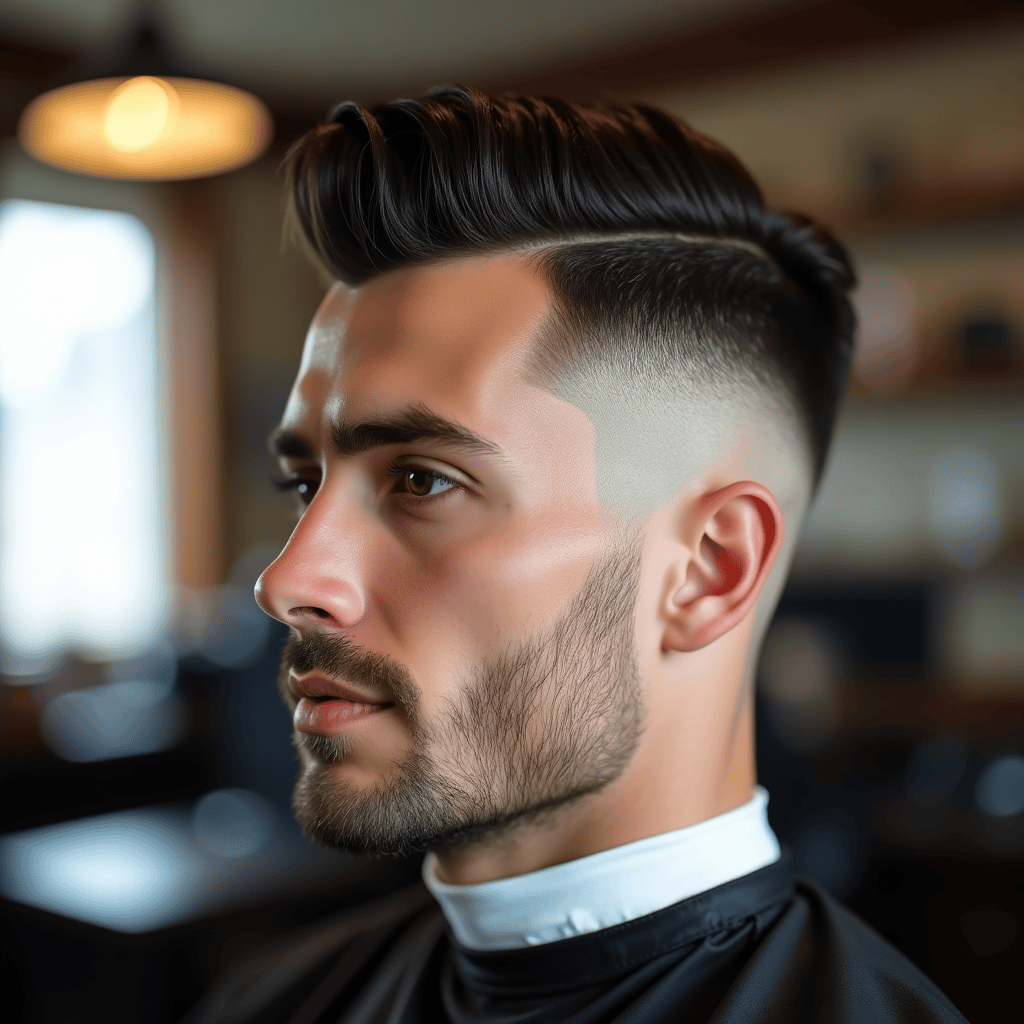
A short traditional version brings the top closer to the scalp while preserving enough vertical length to read as a flat top rather than a crew cut. The front sits only slightly higher than the crown, and the corners are clean without being exaggerated. It looks especially sharp from a three-quarter angle, where the controlled rise into the top becomes obvious.
This is one of the easier flat top haircut ideas for men who like the shape but don’t want a tall, attention-grabbing cut. Tell the barber, “Keep the top low and level, with just enough corner to show the flat-top shape.” Styling can take less than a minute once the hair is trained. The tradeoff is that it grows out of its precise silhouette quickly.

3. Flat Top With Natural Tapered Sides
This cut keeps the recognizable level top while allowing more hair around the temples and lower sides than a modern fade would. The taper gradually tightens around the ears and neckline, so there’s less exposed scalp and a softer transition into the flat upper section. It feels more traditional and less graphic than many newer flat top haircut ideas.
Men with conservative workplaces or a preference for classic barbering often wear this version well. Ask for “a flat top with a natural taper, not a skin fade, and keep enough weight through the sides.” It behaves better between appointments because the sides don’t reveal regrowth as dramatically. If you want extreme contrast, though, this one may feel too restrained.

4. Rounded-Corner Flat Top
A rounded-corner flat top softens the hard upper edges while still keeping the center of the top visibly flat. Instead of building two severe ninety-degree corners above the temples, the barber blends those edges slightly inward. The result keeps the identity of the cut but removes some of the boxiness that can overwhelm narrower or longer faces.
This is one of my preferred flat top haircut ideas when a client likes the concept more than the extreme geometry. Tell your barber, “Keep the center flat but soften the upper corners so they follow my head shape.” It’s forgiving as it grows and usually needs less obsessive edge maintenance. Go too round, though, and it can drift into ordinary crew-cut territory.

5. Salt-and-Pepper Flat Top
Gray and silver strands can make the surface of a flat top look more dimensional because the short upright hairs catch light individually. Keeping the top controlled rather than excessively tall creates a strong silhouette without making mature hair look overworked. Slightly softer sides also help the cut feel intentional instead of aggressively military.
Men with coarse gray hair often have an advantage because that texture can stand naturally with limited product. Ask for “a short, balanced flat top that works with the natural gray pattern and doesn’t hollow out the sides.” A matte paste usually looks better than glossy gel here. Sparse areas become easier to notice under harsh light, so extreme height isn’t always your friend.

Fade-Based Flat Top Haircut Ideas for Cleaner Contrast
A fade changes the whole attitude of the cut. Removing more weight from the sides makes the top look taller even when its actual length stays modest, which is why these flat top haircut ideas can feel more contemporary than traditional tapered versions.
6. Low Fade Flat Top
The low fade flat top keeps most of the side structure intact before tightening close to the skin around the ears and neckline. Above that low fade, the hair builds gradually into firm upper corners and a level surface. From straight ahead, the contrast is noticeable without making the head look divided into two separate blocks.
It’s a good first move for someone shifting from a regular short back and sides into flat top haircut ideas. Tell your barber, “Start the fade low, keep weight above the temples, and make the top flat without pushing the corners too wide.” The grow-out is gentler than a high skin fade. The downside is that the silhouette looks less dramatic in photos.
7. Mid Fade Flat Top
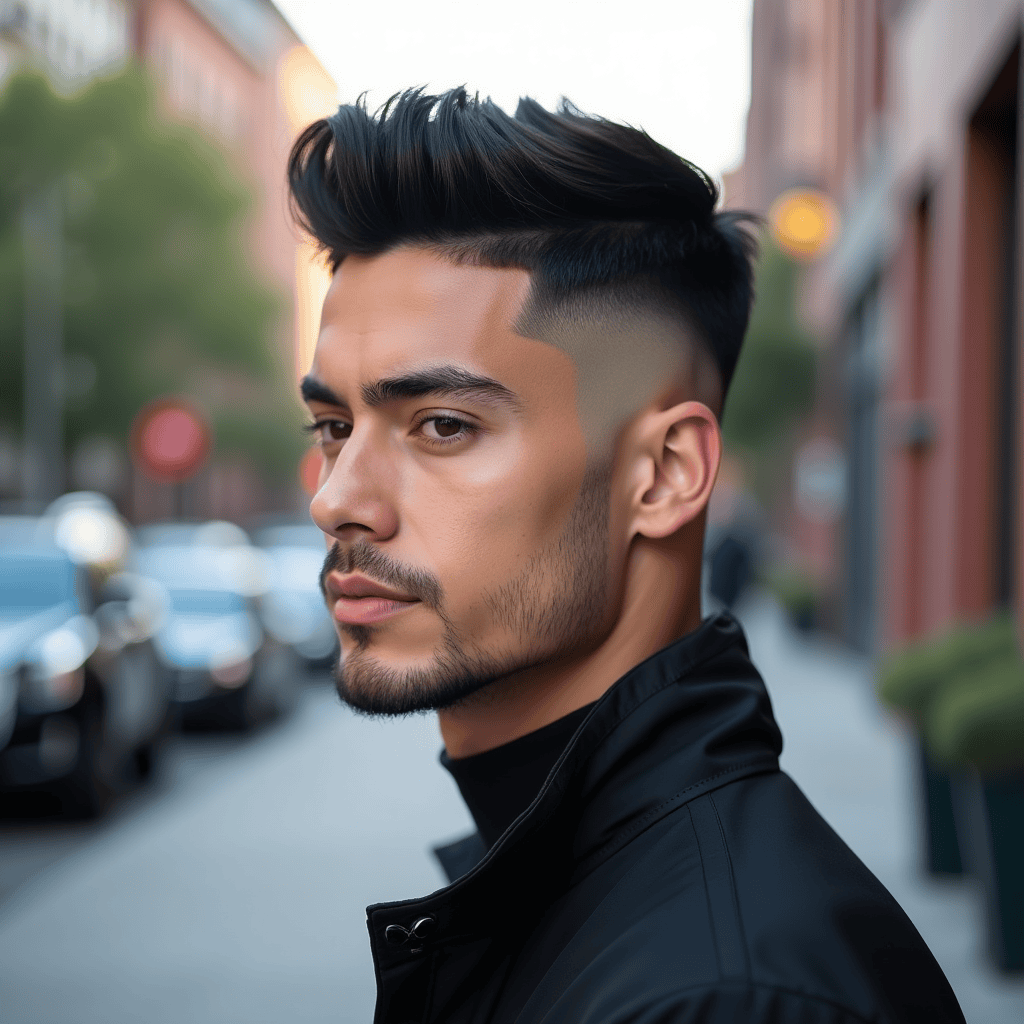
A mid fade begins tightening around the middle of the sides, removing enough bulk to make the upper shape look cleaner and more prominent. The flat surface remains compact, while the upper sidewalls provide a brief transition before disappearing into the fade. This creates a balanced look that reads modern without going to the most extreme setting.
Most men with medium-to-thick hair can make this proportion work if the crown cooperates. Ask for “a mid fade that leaves enough weight to build square corners into the flat top.” Expect to refresh the sides fairly often because the mid fade loses definition before the top completely loses its shape. If your scalp contrasts strongly with your hair, regrowth will show fast.

8. High Fade Flat Top
The high fade strips most of the visible weight from the sides and begins the close transition near the upper temples. That leaves the flat top sitting prominently above a much tighter base, almost like the entire hairstyle has been lifted upward. The silhouette is sharp, deliberate, and noticeably more aggressive than a low fade.
Among modern flat top haircut ideas, this suits men who want the top to be the obvious focal point. Tell your barber, “Take the fade high but leave enough at the ridge to build a clean flat corner.” You’ll need frequent cleanup because even a little growth weakens the contrast. Men with bumps or uneven growth along the sides may prefer a lower fade.
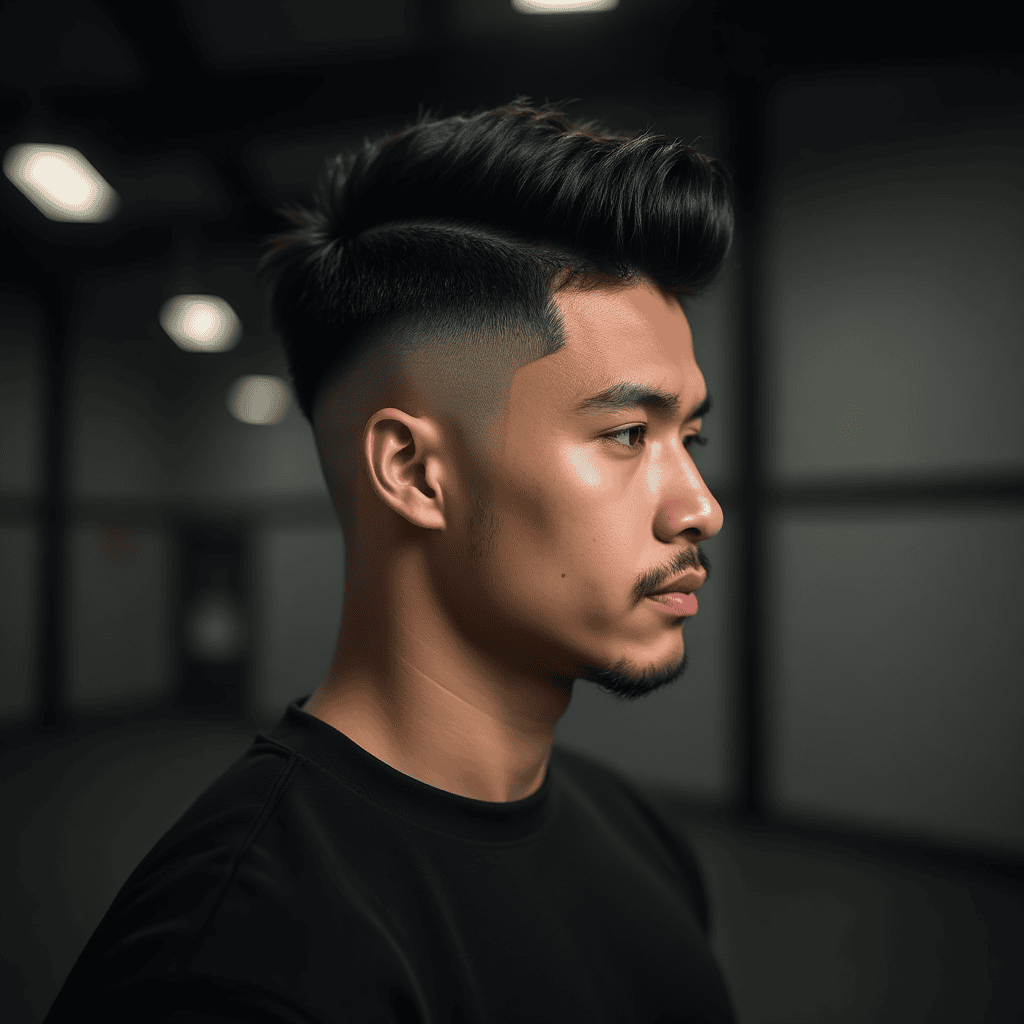
9. Skin Fade Flat Top
A skin fade flat top takes the lower sides all the way down to bare-looking skin before blending upward into the darker hair near the ridge. Against that clean base, the top appears exceptionally dense and architectural. The contrast is strongest around the temple, where the fade disappears before the vertical wall of the flat top begins.
This version works best if you’re comfortable making your haircut look intentional from across the room. Ask for “a skin fade with a clean transition into a compact flat top, keeping the ridge controlled instead of mushrooming outward.” It demands the most frequent barber maintenance in this group. If weekly-looking precision isn’t your thing, choose a low or mid fade.
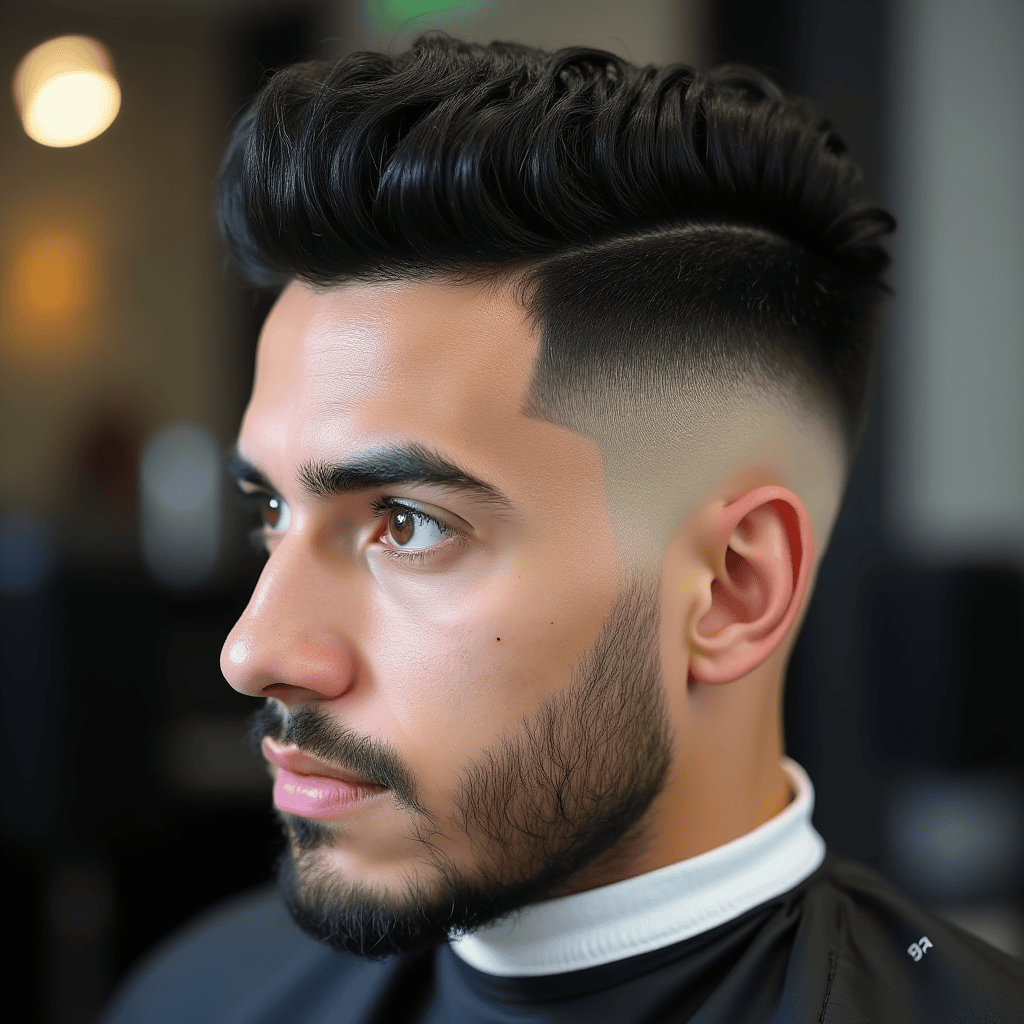
10. Drop Fade Flat Top
A drop fade curves downward behind the ear rather than staying level around the entire head. Paired with a flat top, that curved fade line creates an interesting contrast against the rigid geometry above it. The back retains a little more visual length, helping the head look less abruptly chopped off from the side.
I like this among flat top haircut ideas for men whose head shape benefits from extra structure toward the rear. Ask for “a drop fade that follows behind the ear while the top stays flat and square.” A skilled blend matters because a badly placed drop can make the rear look heavy. It’s also harder to clean up accurately at home.
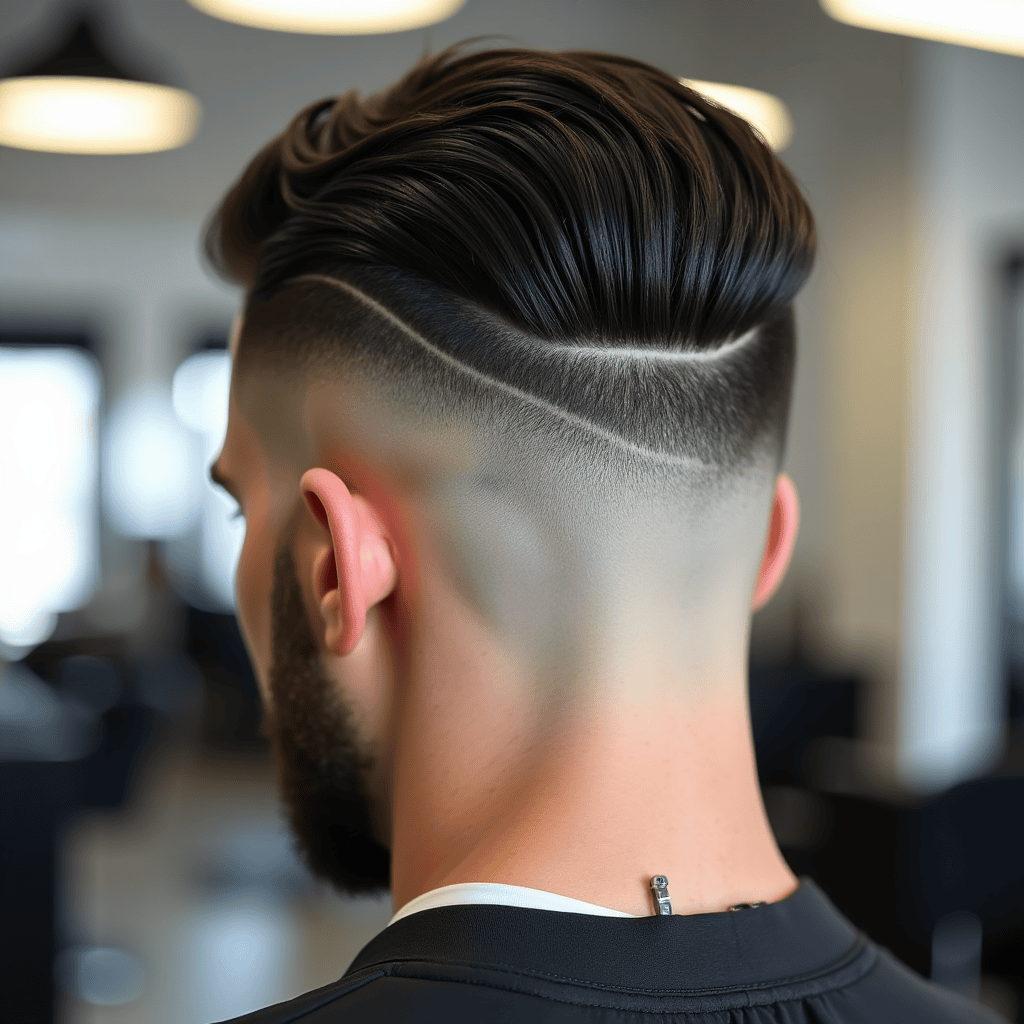
11. Temple Fade Flat Top
Here the fading is concentrated mostly around the temples and sideburn areas rather than running tightly around the entire side of the head. The rest of the sides keep more weight, so the flat top still feels full and traditionally structured. A clean temple transition adds polish without sacrificing the dense sidewalls that define older-school versions.
This is a useful compromise if full fades feel too exposed. Ask your barber, “Keep the sides solid but clean out the temples with a short fade and preserve the squared top.” Maintenance is easier because only a small zone needs to stay extra tight. The effect can look subtle on light hair where the contrast around the temples is limited.
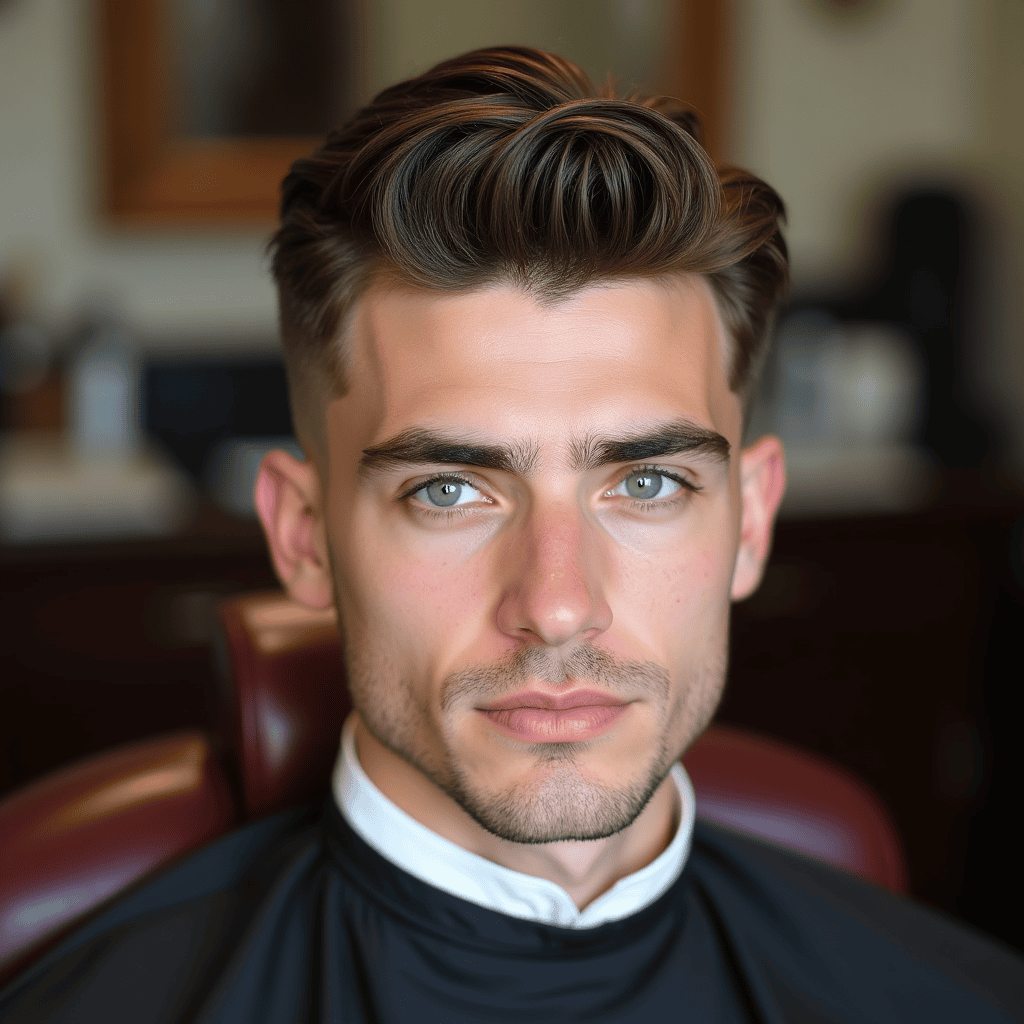
Textured Flat Top Haircut Ideas for Different Hair Patterns
A flat top doesn’t require every strand to behave like stiff straight bristles. Texture can actually give the style more personality, provided the barber controls the outer silhouette. These flat top haircut ideas work with curls, waves, coarser density, and deliberately imperfect surfaces rather than fighting them.
12. Textured Flat Top
The textured flat top keeps the outer shape disciplined while allowing the top surface to look slightly separated and irregular. Instead of pressing every strand into a glass-flat plane, small pieces lean in different directions while still finishing at roughly the same height. The result looks less helmet-like and more natural in everyday light.
This suits thick hair with enough stiffness to hold elevation but too much movement for a perfectly polished finish. Ask for “a flat overall shape, but leave natural separation on top instead of making it stiff.” A matte clay works better than wet-looking gel. The drawback is that too much texturizing can weaken the horizontal line and turn it into a messy crop.

13. Curly Flat Top
The curly flat top lets natural curl formation create the surface texture while the barber builds a squared outline around it. The curls sit highest through the center and front but are trimmed into a visibly controlled upper plane. Tight sides frame the volume, making the curl pattern look deliberate rather than simply grown upward.
Among flat top haircut ideas, this is especially strong on naturally dense curls that hold shape without heavy product. Tell your barber, “Keep my curl visible but sculpt the outside into a flat-top silhouette with clean vertical sides.” Picking and light moisturizing usually matter more than forcing everything straight. Shrinkage can change the apparent height, so cutting it too short while stretched is risky.

14. Coarse-Hair Flat Top
Coarse hair can produce one of the strongest flat-top structures because individual strands often have enough body to remain upright at short lengths. This version uses that strength rather than over-thinning it, leaving a dense rectangular top above neatly controlled sides. The surface may show slight natural variation, which keeps it from looking overly manufactured.
Ask your barber, “Work with the density, keep the top firm, and don’t thin the corners so much that they collapse.” Men with coarse hair usually spend less time building height but may need extra attention around stubborn growth directions. This is one of those flat top haircut ideas where removing too much bulk can backfire. Shape first, thinning second.

15. Wavy Flat Top
A wavy flat top leaves enough length for a mild bend to remain visible across the upper surface. The barber controls the perimeter tightly while allowing subtle wave movement inside that boundary, so the style looks structured from a distance and softer up close. Keeping the front slightly firmer prevents the waves from collapsing over the forehead.
This version works when your hair is too wavy for a perfectly rigid top but still stands with light product. Ask for “a squared flat-top outline while leaving enough length for my natural wave to show.” Blow-drying upward can improve the structure. Humidity is the honest problem; on damp days, the horizontal surface can lose its clean definition faster than straight hair would.

16. Afro Flat Top
The afro flat top uses tightly coiled density to create a tall, broad upper shape with a clearly defined horizontal finish. The sides rise almost vertically before meeting the top, making the hairstyle read as a strong geometric form from every angle. Depending on the length, the surface can look compact and controlled or more expansive and dramatic.
For naturally coiled hair, this remains one of the most recognizable flat top haircut ideas. Ask your barber, “Build a level top with balanced height, clean the sidewalls, and keep the corners even from the front.” Regular picking keeps the shape open between cuts. Uneven shrinkage and crown growth can distort the plane, so freehand clipper or shear control matters.

17. Soft Natural Flat Top
A soft natural flat top keeps the overall top line controlled but avoids hard corners, ultra-tight fading, and visible product stiffness. The sides retain a touch of fullness, and the hair on top sits upright with small variations that make it look touchable. It’s more relaxed than the traditional military cut while still unmistakably belonging to the same family.
This is one of the flat top haircut ideas I suggest when someone wants shape without looking freshly clipped every morning. Tell the barber, “Give me the flat-top outline but soften the edges and keep the finish natural.” It can survive an extra week of growth better than a skin-faded version. The tradeoff is less visual drama, especially from a distance.

Bold Flat Top Haircut Ideas With More Height and Shape
Once the top gets taller or the corners become more pronounced, barbering accuracy matters much more. These flat top haircut ideas make a statement, but they also expose every uneven section, so they’re best for men who don’t mind regular shaping and a few minutes of styling.
18. Tall Flat Top
A tall flat top creates a noticeably deeper wall of hair between the faded or tapered sides and the horizontal upper surface. The front stands high without leaning backward, while the crown is carefully controlled so the plane doesn’t rise or sink. From the side, the silhouette almost resembles a clean rectangular block sitting above the head.
This works best on thick hair with enough strength to stay vertical. Ask for “more height on top, but keep the plane balanced from the front through the crown and don’t overflare the corners.” Strong blow-drying and firm matte product may become part of your morning. Fine, soft hair tends to collapse before lunchtime, making this one of the less forgiving flat top haircut ideas.
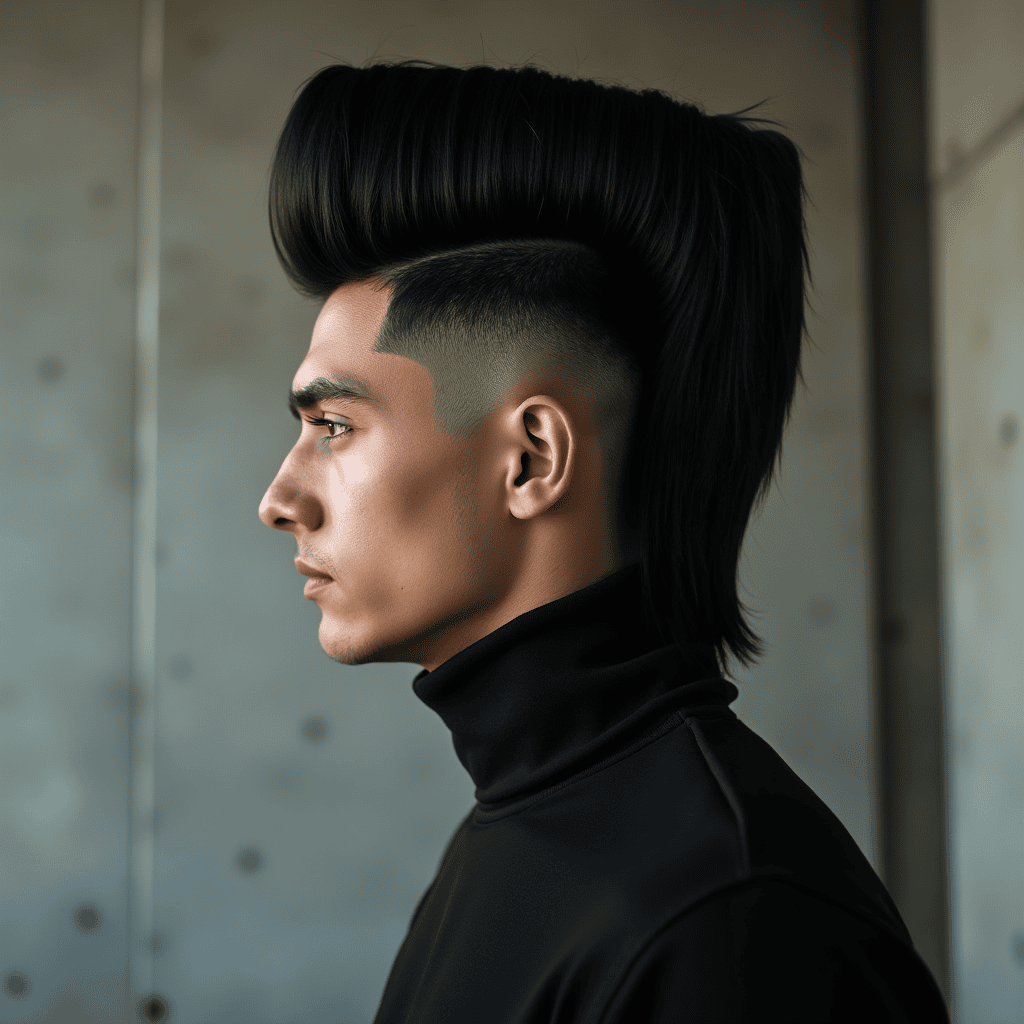
19. Extra-Square Flat Top
The extra-square version pushes the upper corners outward instead of rounding them to follow the skull. That makes the hairstyle wider near the top and creates a more exaggerated geometric silhouette. The surface remains short enough to stay controlled, but the corners do most of the visual work, especially when viewed straight on.
Men with narrower faces can sometimes carry this shape better than those with already broad features. Ask your barber, “Keep the corners strong and square instead of rounding them in, but don’t let them flare unevenly.” You’ll need precise touch-ups because one softened corner becomes obvious. It also looks less natural as it grows, so this isn’t a relaxed-maintenance option.
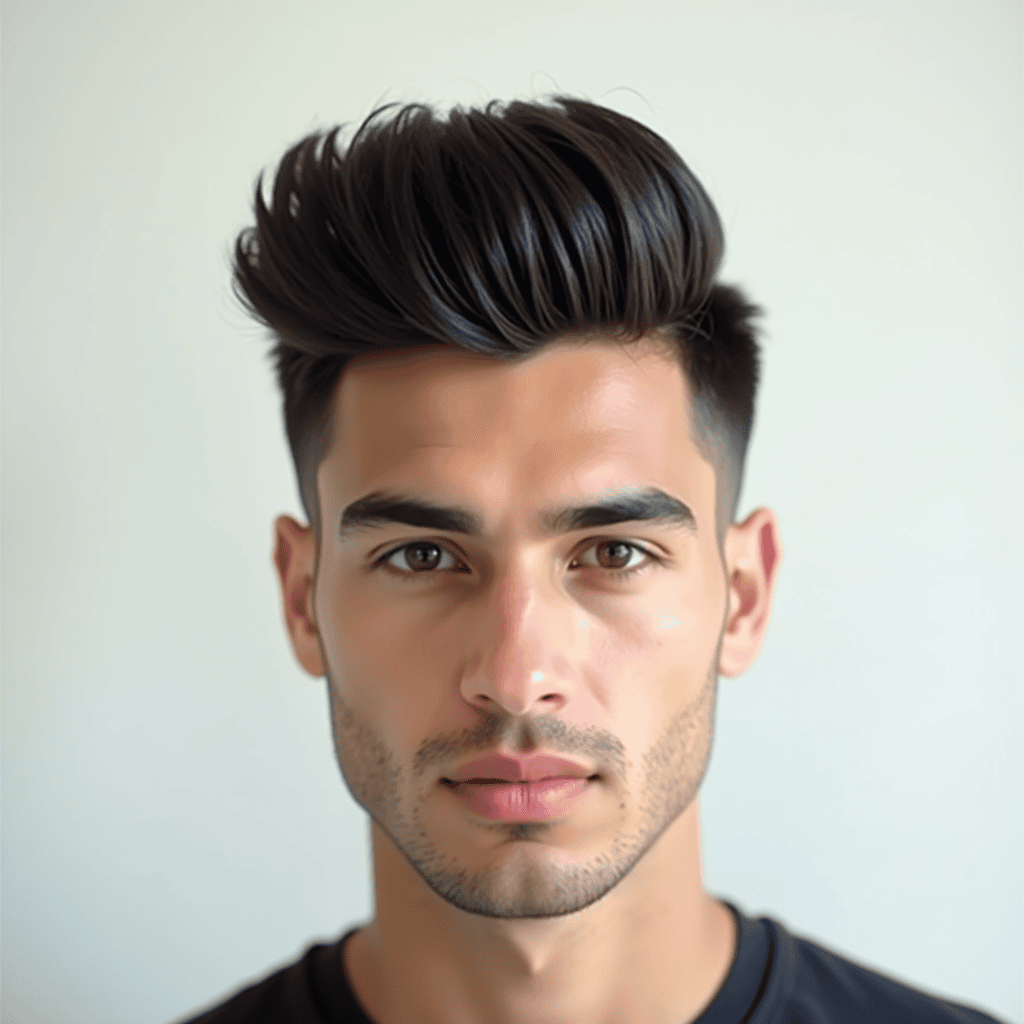
20. Flat Top With Shaved Side Part
A narrow shaved part adds a graphic line beneath the flat upper shape, usually running from the front temple toward the side. The line works best when the surrounding haircut stays simple, giving the eye one deliberate detail instead of several competing ones. Paired with a mid or high fade, it creates a crisp modern finish.
If you like sharper flat top haircut ideas, ask for “a clean flat top with one narrow shaved part on the natural parting side.” Keep the line slim; a thick carved channel can dominate the whole haircut once it begins growing back. The drawback is short-lived precision. Within days, the part starts softening and usually needs professional retracing.
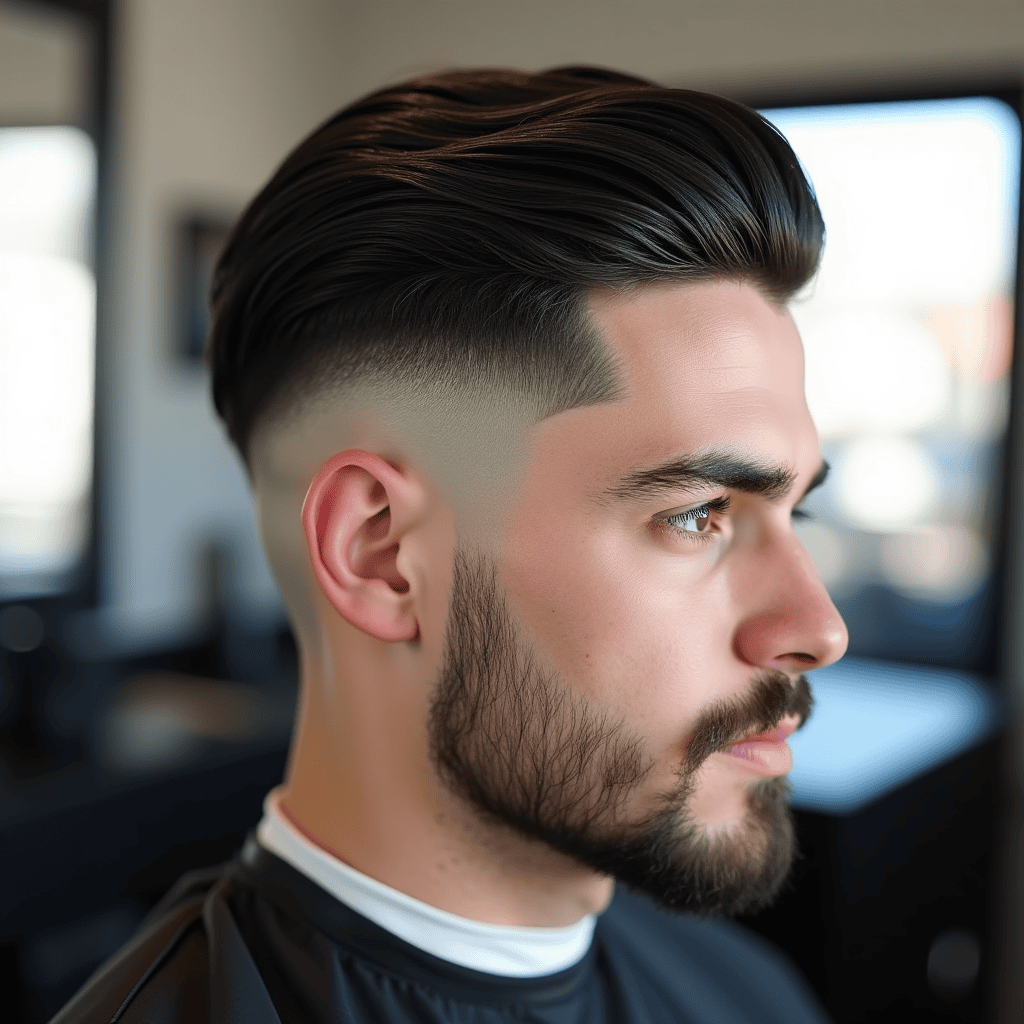
21. Flat Top With Beard Fade
This version connects the haircut to facial hair by tapering the sideburn area gradually into a short or medium beard. Up top, the hair stays squared and horizontal; below, the fade narrows through the temple before increasing again into the beard. That hourglass-like transition gives the head and face a more unified shape.
Tell the barber, “Blend the temple fade into my beard while keeping the flat top completely separate and structured.” It suits men who already maintain facial hair and want the two areas to look intentionally connected. Among flat top haircut ideas, this one creates extra maintenance because both the head and beard transitions need attention. Skip it if you prefer letting your beard grow freely.

Modern Flat Top Haircut Ideas With Easier Everyday Styling
Not every flat top has to look competition-sharp. Shorter proportions and deliberately relaxed finishes make the shape easier to live with between barber visits. These final flat top haircut ideas keep enough geometry to look intentional while reducing the amount of daily correction.
22. Low-Profile Flat Top
The low-profile flat top keeps the upper surface only modestly higher than a regular crew cut, but the barber still establishes a visible horizontal line. The corners are present rather than extreme, and the side taper stays clean enough to distinguish the cut from a standard short style. It’s subtle from the front and more obvious from the side.
This is often the easiest entry point for men worried that a flat top will feel too bold. Ask for “a low flat top with a clear plane, short corners, and a clean taper that doesn’t expose too much scalp.” Styling takes little more than brushing or pushing the hair upward. The compromise is that some people may read it as a structured crew cut instead.

23. Slightly Messy Flat Top
This cut establishes the proper flat-top perimeter first, then allows small pieces on the surface to lean or separate. The front may show a few visible strands instead of a perfectly compressed edge, while the sides remain tidy enough to anchor the look. It feels intentionally imperfect rather than neglected because the outer silhouette still does its job.
For men who dislike stiff styling, this is one of the more forgiving flat top haircut ideas. Ask your barber, “Keep the shape flat and clean around the edges, but leave the top textured enough that I can wear it loose.” Use minimal matte product, worked from the roots rather than coated over the surface. Let it get too long and the controlled mess becomes ordinary bedhead.

24. Flat Top Crew Cut Hybrid
The hybrid sits directly between a flat top and a crew cut. The front and middle remain upright and level enough to create structure, but the crown begins following the natural curve of the head sooner than it would in a strict flat top. The corners are lightly squared, keeping the result compact and easy to wear.
Tell your barber, “Give me a crew-cut length but build a flatter top through the front and center instead of rounding everything.” It works well for men whose crown refuses to cooperate with a fully horizontal plane. Maintenance is simpler because small growth changes don’t ruin the shape immediately. Flat-top purists may find it too soft, which is exactly why many everyday clients prefer it.

25. Clean Everyday Flat Top
The everyday flat top strips away the extremes: moderate height, moderate taper, controlled corners, and a naturally matte finish. From the front it looks neat and masculine without making the haircut the first thing everyone notices. From the side, the flat upper line still gives it enough structure to separate it from other short men’s cuts.
If you want flat top haircut ideas that work Monday through Sunday without constant fussing, this is where I’d finish the search. Ask for “a medium-short flat top that grows out cleanly, with natural corners and no ultra-tight fade.” Plan on reshaping it before the upper line completely disappears. Its only real drawback is obvious: restraint means it won’t satisfy someone chasing the boldest possible version.

How to Choose the Right Flat Top Haircut
Start with your hair, not the photograph. Dense straight hair can support the sharpest corners and taller profiles, while waves and curls usually look better when the barber shapes the outer silhouette without forcing every strand into the same direction. Softer or finer hair generally benefits from shorter flat top haircut ideas because less length means less weight pulling the style downward.
Face shape matters, but head shape matters more than most haircut guides admit. A barber sees the crown, parietal ridge, flat spots, and changes in skull width that a front-facing inspiration photo hides. If the top of your head narrows quickly, forcing wide square corners can make the haircut look disconnected. A slightly rounded corner often fixes the issue.
Bring two or three photos to your appointment rather than one. Show a front view for width, a side view for height, and ideally a rear angle showing how tightly the fade or taper climbs. Then say what you dislike as clearly as what you like: “I want this height, but I don’t want the sides taken to skin” gives a barber something useful to work with.
Your maintenance tolerance should make the final decision. High fades, skin fades, shaved parts, tall tops, and exaggerated corners show growth first. Lower profiles, natural tapers, and textured surfaces survive longer without looking unfinished. If you only visit the barber every four or five weeks, choose the shape that still makes sense halfway between appointments.
Where Flat Top Haircuts Go Wrong
The most common failure is chasing a perfectly square photograph on a head that needs different proportions. A flat top is geometry, but it isn’t carpentry; the barber still has to compensate for natural asymmetry, cowlicks, crown direction, and different density from one side to the other. Cutting every section to identical measurements can actually make the finished style look less balanced.
Height causes trouble too. Men often see dramatic flat top haircut ideas online and assume more height automatically creates a stronger look. In practice, extra length demands denser hair, more product, more blow-drying, and more precise maintenance. If the strands bend halfway up, the silhouette loses its authority.
Another mistake is taking the sides tighter than the client actually wants. A skin fade looks exceptionally clean on day one, but it also changes the way the face and head proportions read. Once I know a client dislikes visible scalp, I’d rather start with a low taper and remove more later than spend the appointment explaining why we can’t put hair back.
Product can wreck the haircut as quickly as a poor cut. Heavy gel often groups short hairs into shiny spikes, destroying the flat visual surface. Start with less product than you think you need, push from the roots, and use the haircut’s structure to do most of the work.
Frequently Asked Questions About Flat Top Haircuts
Choosing between these flat top haircut ideas usually comes down to hair density, preferred fade height, styling tolerance, and how frequently you’re willing to return to the barber. The questions below cover the details men tend to ask once they move from browsing photos to actually booking the cut.
What hair type is best for a flat top haircut?
Dense hair that naturally stands upright is the easiest to sculpt into a sharp flat top, especially for taller traditional versions. Straight hair offers the cleanest plane, but coarse, curly, and tightly coiled textures can create excellent shapes too. Fine or soft hair usually works better with shorter, lower-profile versions.
Can curly hair be cut into a flat top?
Yes. Curly flat top haircut ideas focus more on the outer silhouette than making every curl perfectly level. A barber can shape the sides vertically and trim the upper curl mass into a controlled plane while preserving texture. Natural shrinkage needs to be considered before choosing the final height.
How often should I get a flat top trimmed?
A sharp flat top often starts losing its clean geometry within a few weeks because the corners soften and the upper plane becomes uneven. Skin fades show regrowth even sooner. Men who want permanent barber-fresh precision usually book more often than those wearing textured, tapered, or low-profile flat top haircut ideas.
Is a flat top difficult to style every morning?
Short flat tops can be easy if your hair naturally stands upright. Taller versions may require blow-drying, brushing upward, and a small amount of firm styling product. The barber’s cut matters more than product quantity. If the structure is right, daily styling should reinforce the shape rather than rebuild it.
What should I tell my barber when asking for a flat top?
Describe the top height, corner shape, and side treatment separately. For example, say, “I want a medium-short level top, natural square corners, and a low fade without taking the sides completely to skin.” Showing several reference angles is more useful than relying on the words “flat top” alone.
What is the difference between a flat top and a crew cut?
A crew cut generally follows more of the head’s natural curve, particularly toward the crown. A flat top is shaped to create a visibly level upper plane with more vertical structure around the sides and corners. Some modern flat top haircut ideas deliberately combine features from both cuts for easier maintenance.
Does a flat top work with a receding hairline?
It can, depending on the hairline pattern and remaining density. Because the hair is worn upward rather than combed forward, a flat top doesn’t try to disguise the front edge. A shorter, less exaggerated version usually feels more balanced than building considerable height around areas with noticeably lower density.
Can I wear a flat top without a skin fade?
Absolutely. Traditional flat tops existed with tapered or closely clipped sides long before skin fades became a common pairing. A natural taper preserves more side density and can give flat top haircut ideas a softer, more classic appearance. It also tends to make the grow-out period less visually obvious.
Which flat top is easiest to maintain?
A short, low-profile flat top with naturally tapered sides is usually the easiest. There’s less height to hold in place, the corners aren’t extremely exposed, and side regrowth blends in better. Textured versions can also be forgiving because slight irregularities across the upper surface look intentional.
Are high flat tops harder to maintain?
Yes, in most cases. Extra height makes changes in direction, density, and length easier to see. Tall flat top haircut ideas also need stronger styling support and more careful reshaping around the crown. If your hair bends easily or you dislike daily product, a shorter version makes more sense.
Should a flat top be completely level from front to back?
Visually, it should read as a controlled plane, but that doesn’t mean every hair measures exactly the same length. A skilled barber compensates for skull shape and hair growth so the finished silhouette appears balanced. Small technical adjustments are often what make the top look genuinely level.
Can a flat top look professional for work?
Yes. Low fades, natural tapers, shorter tops, and softened corners can keep the haircut clean without making it overly dramatic. For conservative workplaces, avoid carved lines or extreme height and choose flat top haircut ideas with restrained proportions. The precision itself often makes the style look particularly well groomed.
Before your next appointment, decide on three things: how high you want the top, how square you want the corners, and how much scalp you’re comfortable showing on the sides. Don’t ask the barber to copy a photograph blindly; ask how that shape needs to change for your hair and head. The most useful booking request is simple: tell them you want enough appointment time to properly shape and freehand a flat top.
Best Men’s Hairstyle Reports
Discover bold cuts, long hairstyles, braided looks and modern men’s grooming inspiration.