
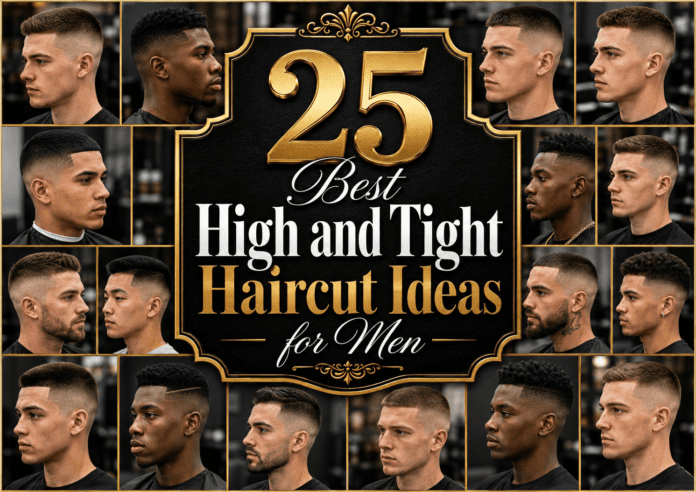
The strongest high and tight haircut ideas start with the Classic Military High and Tight, Skin Fade High and Tight, Textured Crop High and Tight, and High and Tight with Short Curls. Those four cover the range from disciplined and low-maintenance to modern, textured, and adaptable without losing the sharp sides that define the cut.
From a barbering perspective, the details that matter most are the height of the fade, the amount of length left through the top, and how naturally that top works with your hair texture. A good high and tight should look intentional from every angle, not like a generic short back and sides pushed too high.
| Quick Pick | Best For | Top Length | Side Finish |
|---|---|---|---|
| Classic Military High and Tight | Clean, disciplined style | Very short | Clippered high |
| Skin Fade High and Tight | Maximum contrast | Short | Skin fade |
| Textured Crop High and Tight | Thick straight hair | Short-medium | High fade |
| Short Curls High and Tight | Curly texture | Medium | Tapered high |
| Buzzed High and Tight | Minimal upkeep | Very short | Tight fade |
| High and Tight Quiff | More styling freedom | Medium | High fade |
| Side-Part High and Tight | Work and formal wear | Medium | Clean taper |
| Caesar High and Tight | Straight or dense hair | Short | High fade |
| Spiky High and Tight | Youthful texture | Short-medium | High fade |
| High and Tight with Beard | Strong facial framing | Short | Skin or shadow fade |
Classic High and Tight Haircut Ideas
Traditional high and tight haircut ideas keep the formula simple: close-cut sides, a compact top, and a visible difference between the two. These are the easiest versions to explain at the barber shop and the least dependent on styling products or elaborate finishing.
1. Classic Military High and Tight
The classic military high and tight is stripped down to its essential shape, with the sides clipped extremely close and the remaining hair forming a compact panel over the crown. The transition sits high around the head, leaving almost no visual weight above the ears. From the front, the top reads neat and squared rather than fluffy. It works because there is nowhere for excess bulk to hide.
This version suits men with straight, wavy, or moderately thick hair who want a cut that behaves without much styling. Tell your barber, “Keep the sides extremely tight and high, but leave a short, even panel through the top.” Maintenance is frequent because the clean contrast softens quickly as the sides grow. Skip it if you prefer a haircut that can go a month or more without looking noticeably different.
2. Buzzed High and Tight
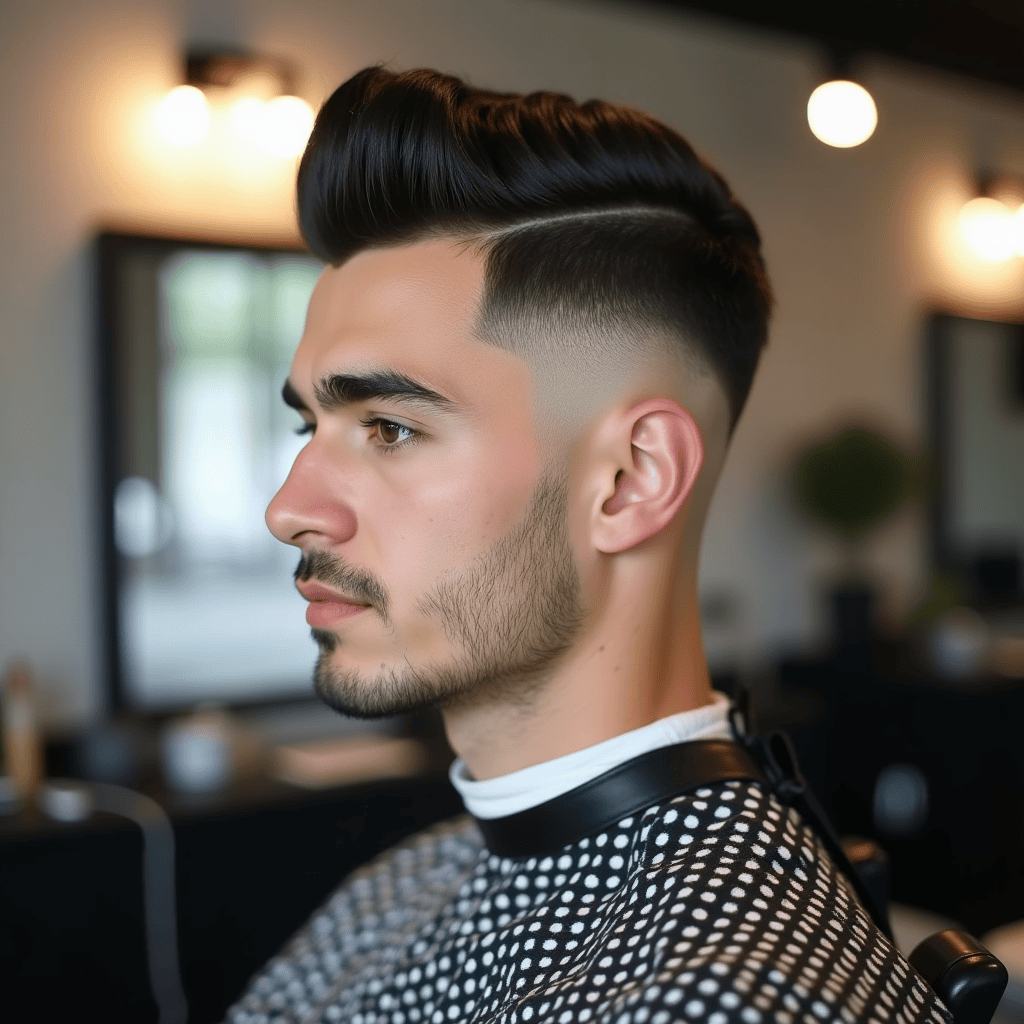
A buzzed high and tight removes almost every styling decision from the morning routine. The top is clipped short enough to show the natural direction of growth while the sides sit one or two levels closer, creating a controlled shadow around the head. There is no fringe to move, no part to set, and no exaggerated height. The appeal is the clean difference in density.
Men with dense hair and balanced head shapes tend to get the strongest result from this version because the short length reveals everything underneath. Ask for “a short buzz on top with the sides taken much tighter and blended high.” The tradeoff is exposure: cowlicks, uneven growth patterns, and scalp visibility become harder to disguise. If those bother you, leave another half-inch or so through the top.

3. High and Tight Crew Cut
This high and tight crew cut keeps the controlled sides but gives the top enough graduation to create shape. Hair is slightly longer near the front and gradually shortened toward the crown, which prevents the cut from looking flat when viewed from the side. The front can sit upright with minimal product or fall naturally. It feels familiar without becoming ordinary.
It is one of the safer high and tight haircut ideas for men moving from a conventional crew cut into something sharper. Ask your barber, “Give me a crew-cut shape on top, longer at the front, with a high tight fade around it.” You will need a little more styling than with a buzz cut, especially if the front grows forward. The main drawback is that sloppy graduation can leave the top looking blocky.
4. High and Tight Flat Top
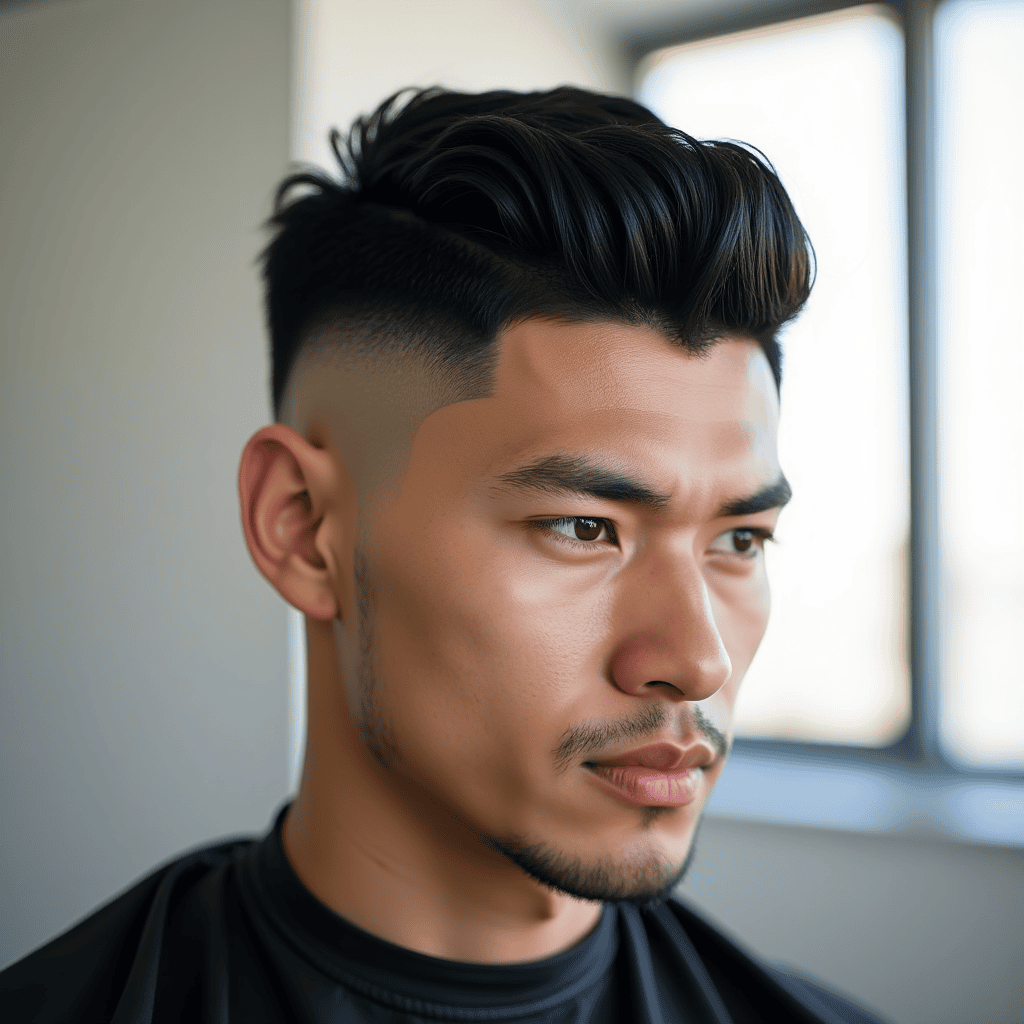
The high and tight flat top pushes the military character further by building a clearly horizontal surface through the upper hair. The center stands upright while the edges are carefully squared into the close sides, producing a strong geometric profile. Seen from the front, the silhouette looks broad and deliberate. Seen from the side, precision matters even more because a poorly balanced top is immediately obvious.
Coarse straight hair usually holds this shape better than fine or loose hair. Tell the barber, “I want a short flat top with the sides taken high and tight, and I want the top kept level rather than rounded.” It demands more frequent shaping than most short cuts because a quarter-inch of uneven growth affects the outline. Men who dislike visible barber maintenance should choose the crew-cut version instead.
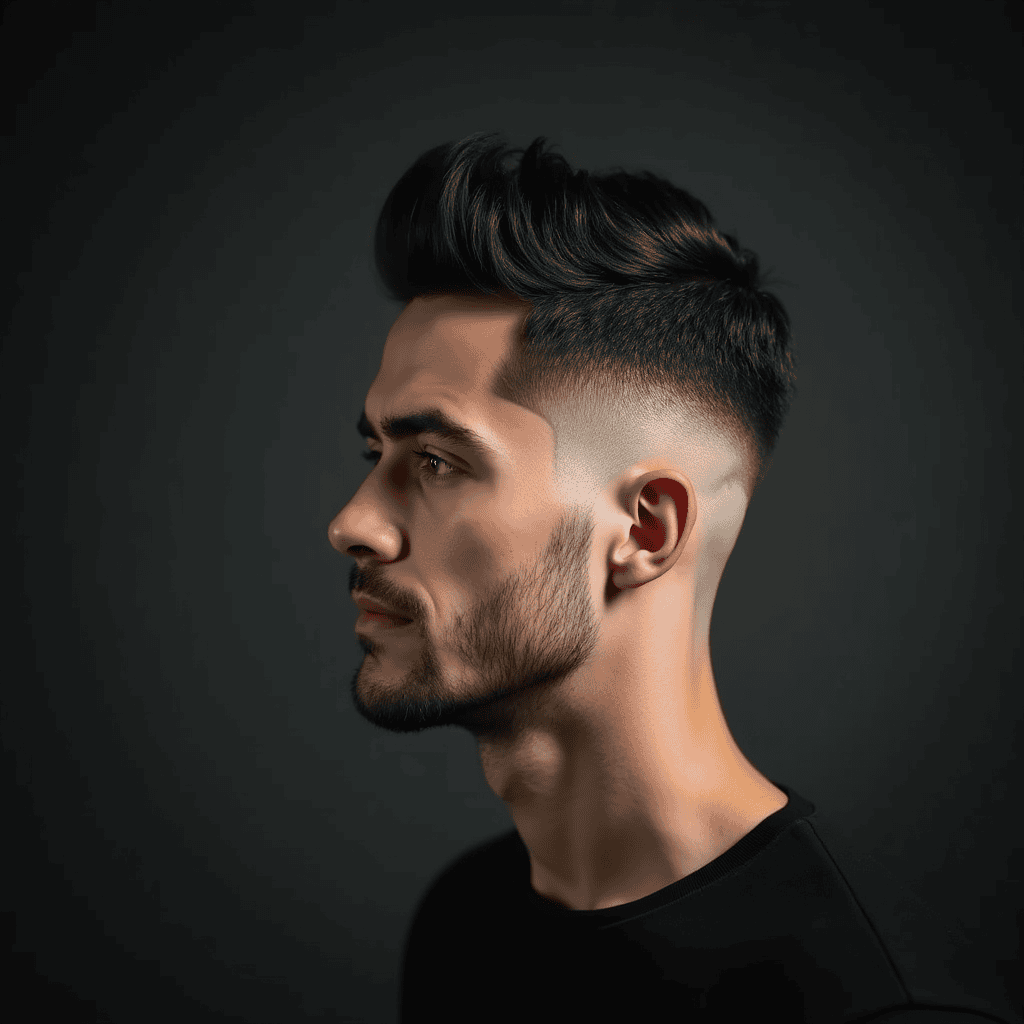
Textured High and Tight Haircut Ideas
Texture changes the personality of this haircut fast. These high and tight haircut ideas leave enough movement on top for separation, curl, or controlled messiness while keeping the sides disciplined enough to preserve the recognizable high-and-tight structure.
5. Textured Crop High and Tight
A textured crop brings broken, piecey movement to the top instead of combing every strand in one direction. The sides remain tight and high, while the upper section carries choppy cutting through the ends to make thick hair sit lighter. The fringe can be short and irregular rather than ruler-straight. That roughness is what keeps the haircut from feeling overly formal.
This is a strong choice for dense straight or slightly wavy hair. Ask for “a high fade with two or three inches of textured crop on top and a short broken fringe.” A matte paste or clay can separate the surface without making it shiny. The drawback is that fine hair may collapse instead of producing visible texture, so men with low density should keep the upper section shorter.
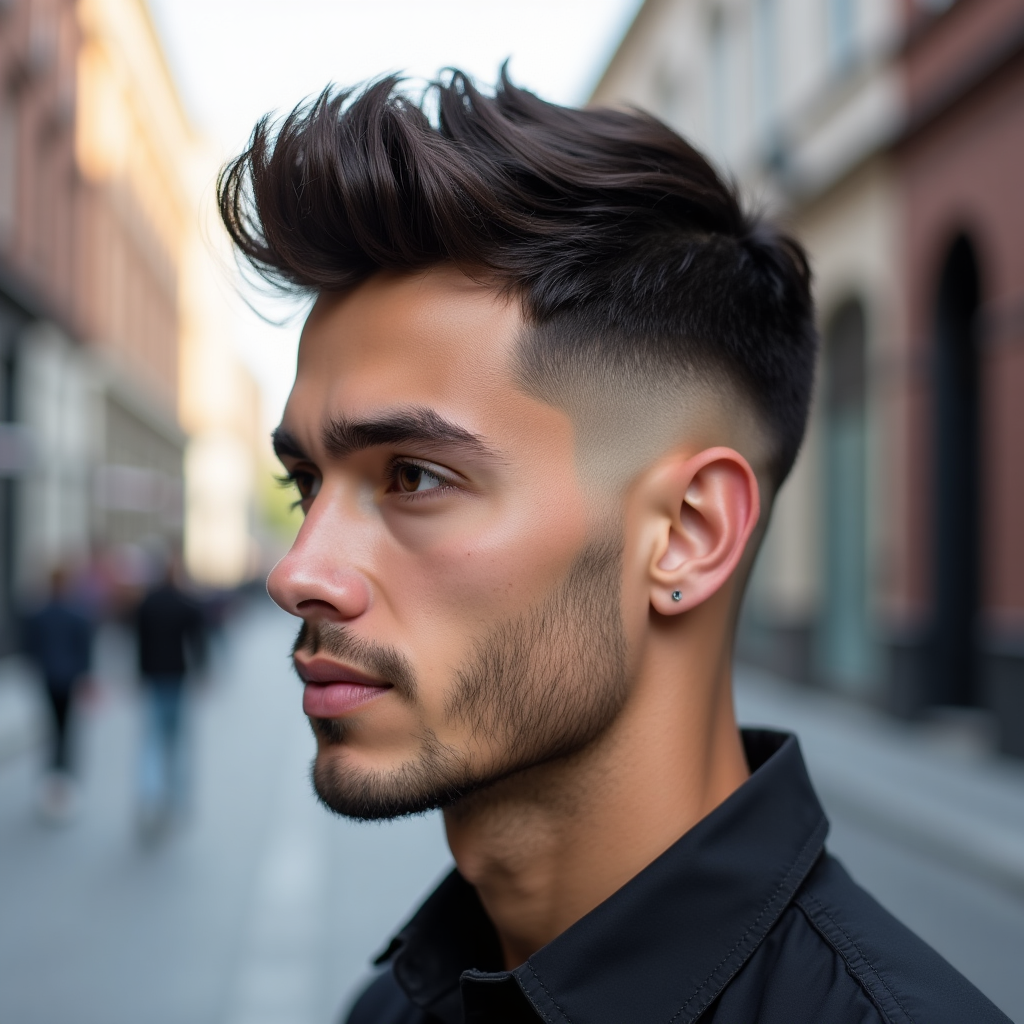
6. Messy High and Tight
The messy high and tight keeps its disorder contained above a sharply controlled perimeter. Hair on top sits in loose, irregular sections with some strands pointing forward and others lifting slightly upward, while the high fade prevents the overall haircut from looking overgrown. The contrast is the point. The top can move, but the outline stays strict.
Wavy or medium-thick hair makes this style easier because natural bends create separation without much effort. Tell the barber, “Leave enough length on top for messy texture, remove bulk with point cutting, and keep the fade high.” Styling works best when you stop before every strand has been arranged. If you constantly run your hands through your hair, however, this version can go from controlled texture to flattened chaos by midday.

7. High and Tight with Short Waves
Short waves soften the severe outline of a high and tight while keeping the head shape clean. The upper hair is left long enough for shallow bends to appear across the surface, particularly near the front and crown. Tight sides create a darker-to-lighter contrast that makes the wave pattern easier to see. Nothing needs to be exaggerated for the texture to carry the look.
Men whose hair naturally forms loose waves should avoid having the top thinned too aggressively. Ask your barber to “keep my natural wave pattern on top, clean up the weight, and fade the sides high without cutting into the curls.” A lightweight cream is usually enough for definition. The weak point is humidity or heavy product, either of which can change the intended soft movement into puffiness or separation that feels greasy.
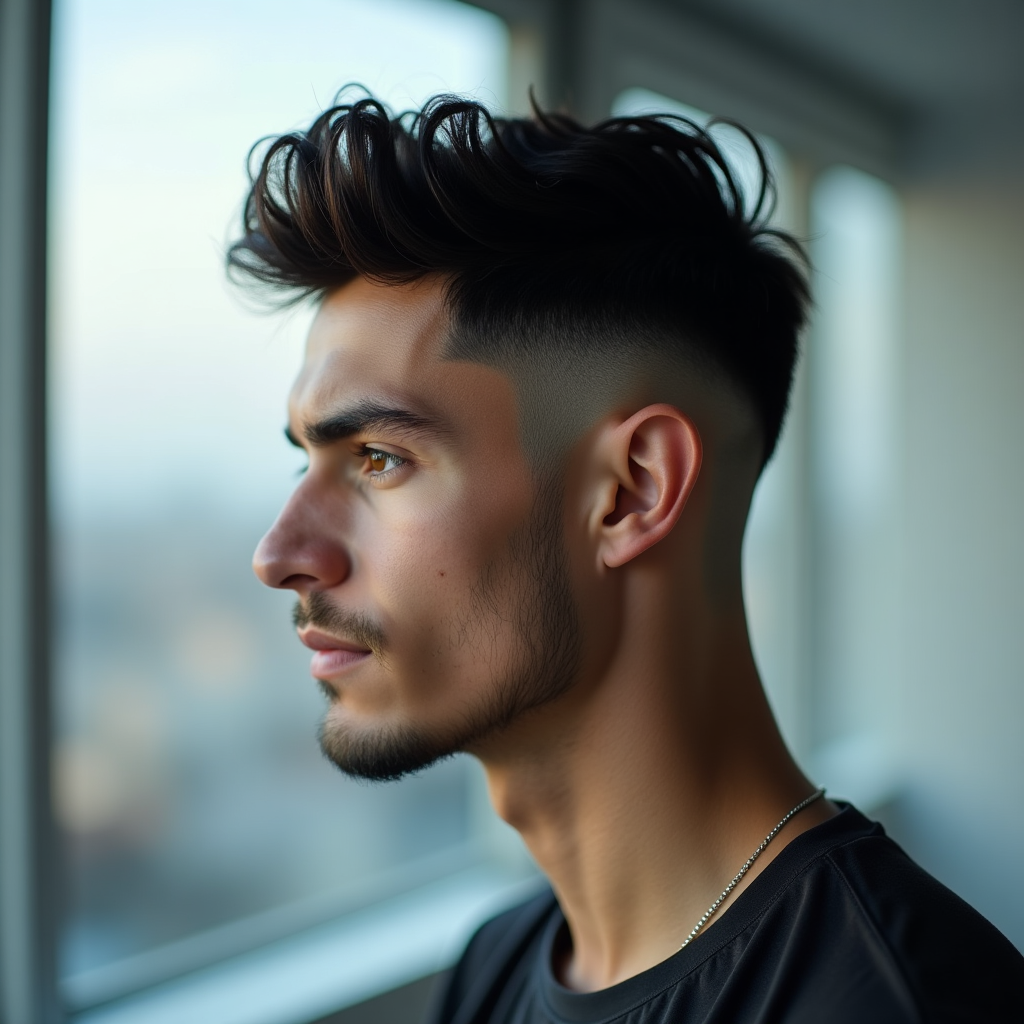
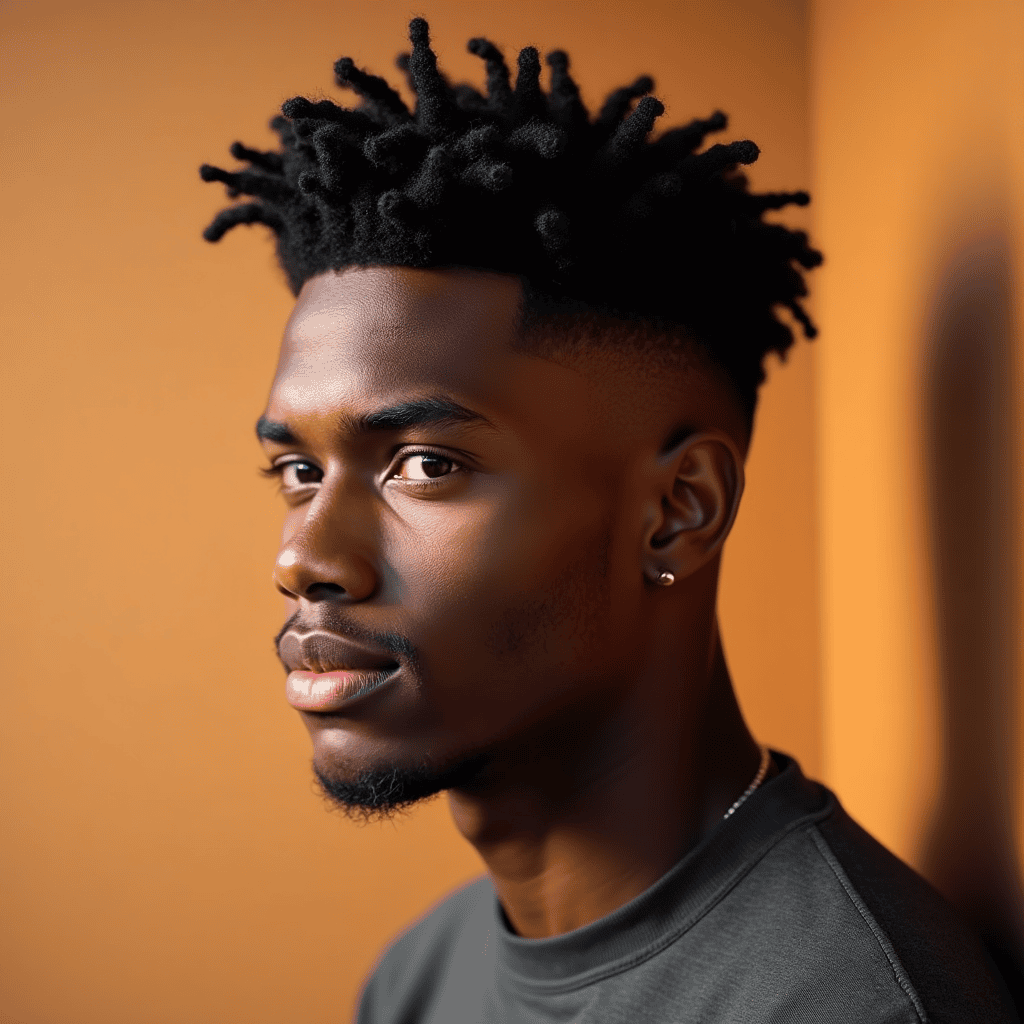
8. High and Tight with Short Curls
Short curls make one of the most visually distinct versions because the sides can sit almost flat against the scalp while the crown holds rounded, springy texture. The top should keep enough length for individual curls to form instead of becoming a fuzzy short layer. A clean high transition makes those curls appear denser. The silhouette remains narrow rather than expanding around the temples.
This version works best when the barber respects the curl pattern instead of treating the top like straight hair. Say, “Keep enough length for my curls to form and take the sides high and tight without cutting into the top corners too much.” Curl cream can control dryness and separation. The drawback is shrinkage: cutting the top while stretched or wet can leave it noticeably shorter once the curls settle.
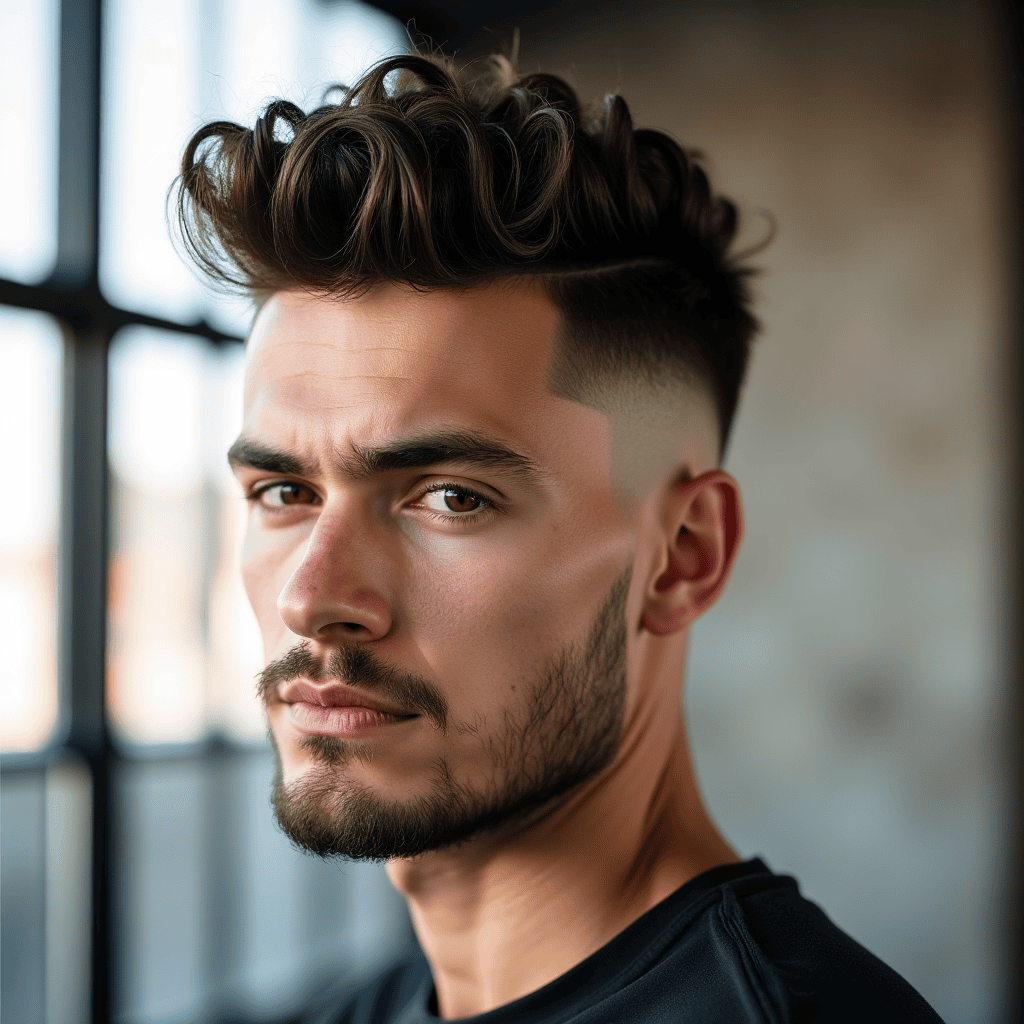
9. High and Tight with Coiled Texture
Coiled hair gives the high and tight a dense, sculpted upper surface that can appear almost architectural when the perimeter is kept sharp. The sides taper rapidly into the textured top, allowing the coils to create height without spreading outward. A defined front line can add structure, though it does not need to look excessively etched. The best version keeps visible texture rather than compressing everything into one uniform mass.
Ask for “a high taper or fade with the coils left natural and compact on top, keeping the shape balanced from the front and side.” This suits men who want clear definition while preserving natural texture. Moisture and gentle handling matter more than aggressive styling. The main limitation is that an overly high fade can remove too much of the transition area and make the top look disconnected.
Fade-Driven High and Tight Haircut Ideas
A fade controls how aggressive the contrast feels. For these high and tight haircut ideas, the upper length can stay simple because the gradient around the sides does most of the visual work.
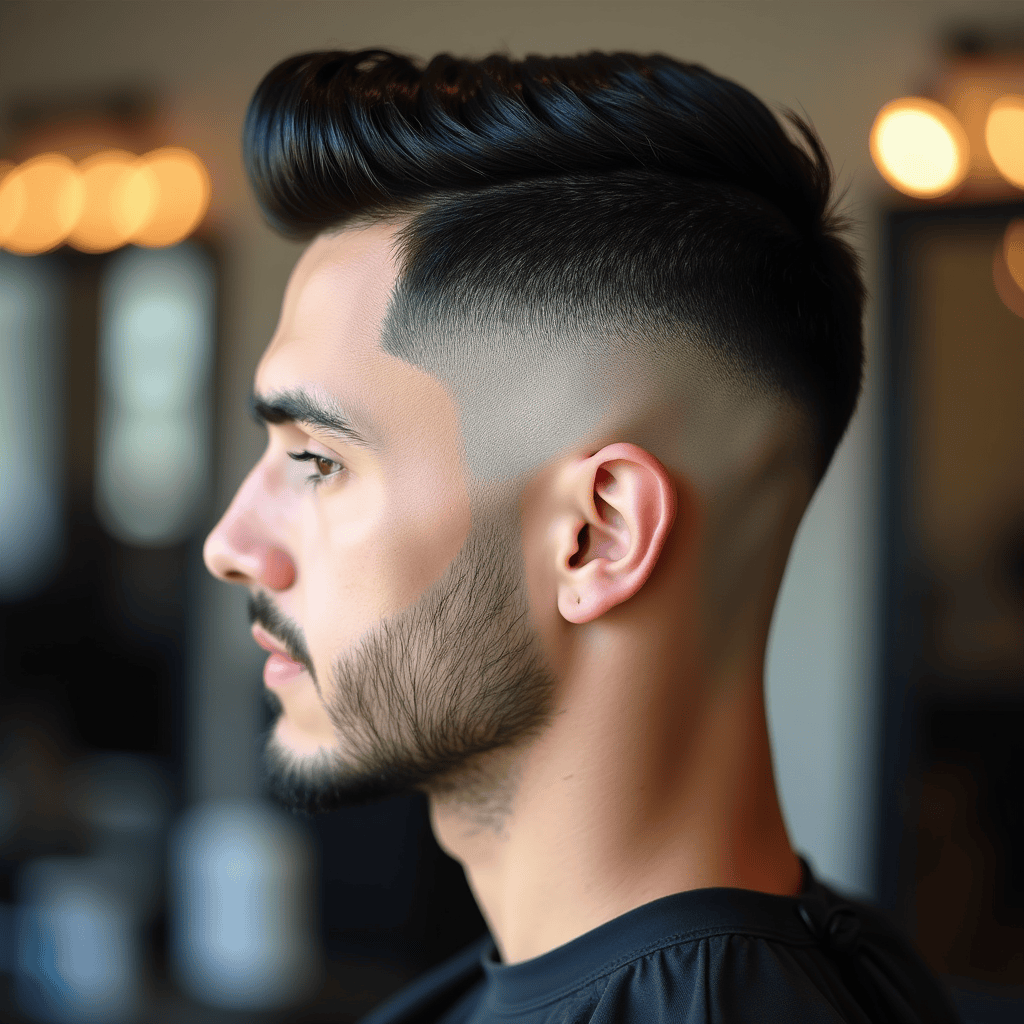
10. Skin Fade High and Tight
The skin fade high and tight takes the sides all the way down before blending rapidly into the hair above. That exposed lower section creates the cleanest contrast in the entire category. From the temple backward, the graduation should remain smooth rather than showing visible bands. The top can stay short because the fade already delivers the drama.
Ask for “a high skin fade with a short clean top, keeping the blend smooth and the transition tight.” This suits men who like their haircut to look freshly barbered and who do not mind returning regularly. The drawback is exactly that freshness: a skin fade changes noticeably within days as dark stubble returns. If weekly-looking sharpness becomes a chore, leave a little shadow at the bottom.
11. Zero Fade High and Tight
A zero fade offers nearly the same crisp impression as a skin fade but keeps a faint layer of hair at the lowest point. That small change creates a softer shadow around the scalp and removes some of the starkness. The blend still starts high, so the haircut looks disciplined from the front. It is subtle only when compared with bare skin.
Men who like high and tight haircut ideas but dislike a fully shaved finish often land here. Tell your barber, “Start the high fade at zero rather than taking it completely to skin.” The regrowth is slightly less obvious, making the cut easier to live with between appointments. You give up some maximum contrast, though, especially if your hair is light or your scalp and hair color are close.
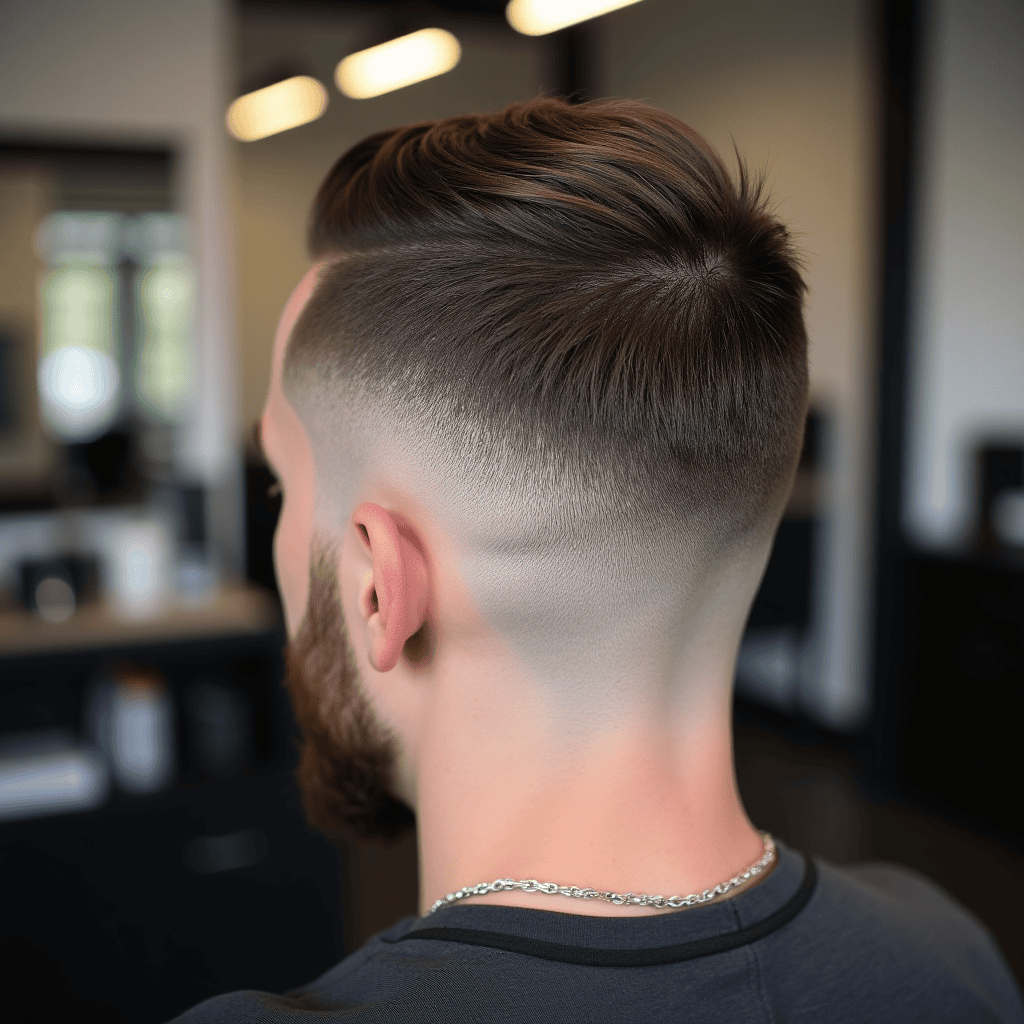
12. Drop Fade High and Tight
A drop fade changes the usual horizontal feel by dipping lower behind the ear before rising again toward the back. The top remains concentrated and compact, but the curved fade line follows the skull more naturally. That small shift gives the haircut more shape from the side and rear. It is especially noticeable when the upper hair has enough darkness to contrast with the fade.
Ask for “a high and tight with the fade dropping naturally behind the ear rather than running straight around.” This can flatter men who want a strong fade without visually flattening the back of the head. The barber needs good control over the curve, so reference photos help. Go too dramatic with the drop and the haircut starts reading more like a standalone fade style than a true high and tight.
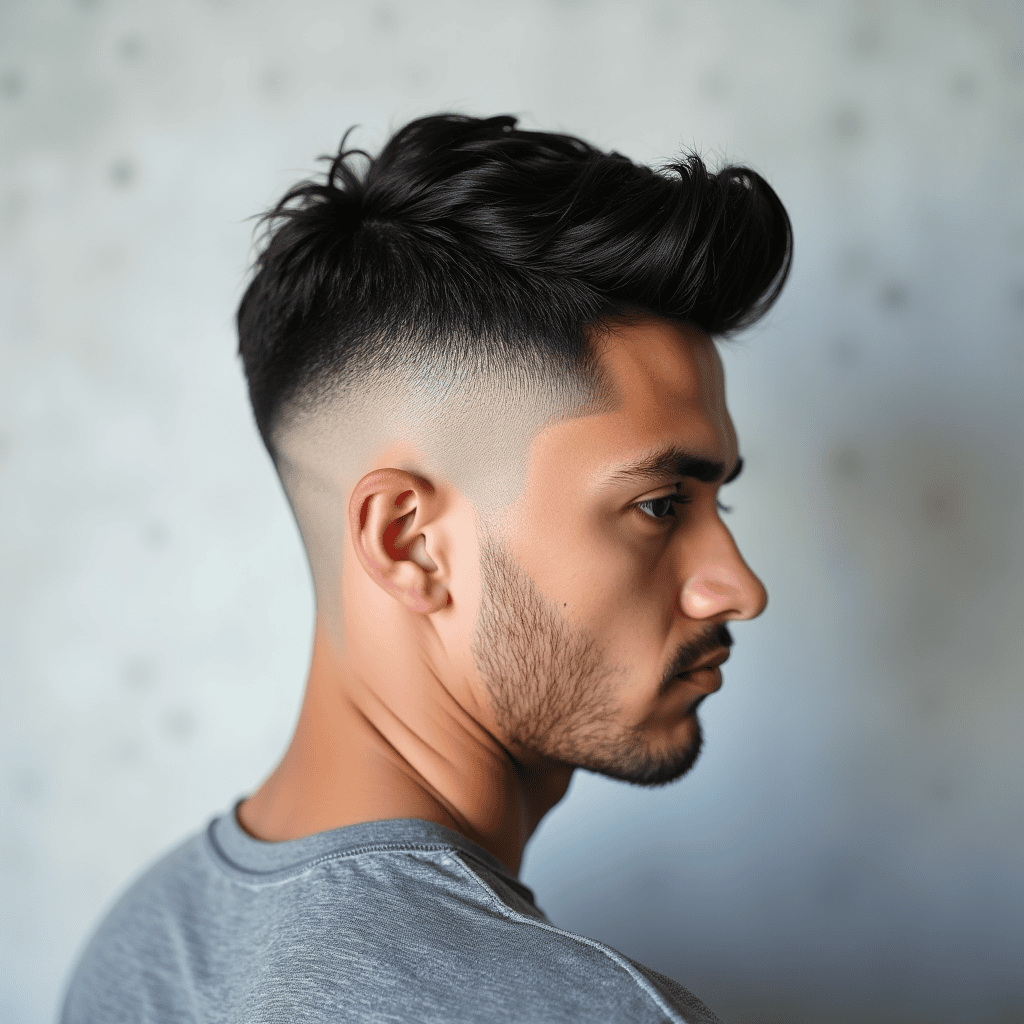
13. Shadow Fade High and Tight
A shadow fade leaves a fine haze of hair around the sides rather than exposing skin or creating an extreme jump in tone. The graduation is still high, but the finish feels smoother and slightly more conservative. The upper section can remain close without the whole cut looking severe. This is often the easiest high and tight to wear in settings where a skin fade feels too aggressive.
Tell the barber, “Keep the sides high and tight but leave a soft shadow rather than fading to bare skin.” It works across a wide range of hair colors because the remaining density keeps the transition visible. Upkeep is more forgiving than a skin fade. The compromise is that men chasing the sharpest possible outline may find it a little too restrained.

Modern High and Tight Haircut Ideas
Modern high and tight haircut ideas use more length, directional styling, or stronger front detail. The sides still carry the haircut’s identity, but the top starts behaving more like a separate styling zone.
14. High and Tight Quiff
A high and tight quiff puts its length almost entirely at the front. The sides sit close and high while the fringe rises and bends slightly backward, creating a controlled lift without turning into a full pompadour. The crown stays shorter so the shape does not become top-heavy. From the front, the hairstyle reads taller and more deliberate than a classic crew cut.
Men with straight or wavy hair and enough density at the hairline get the cleanest result. Ask for “a high tight fade with extra length through the front so I can build a short quiff.” A blow-dryer and light matte product make the styling easier. The drawback is morning effort; if you refuse to use heat or product, that front section may fall forward and lose the entire point.
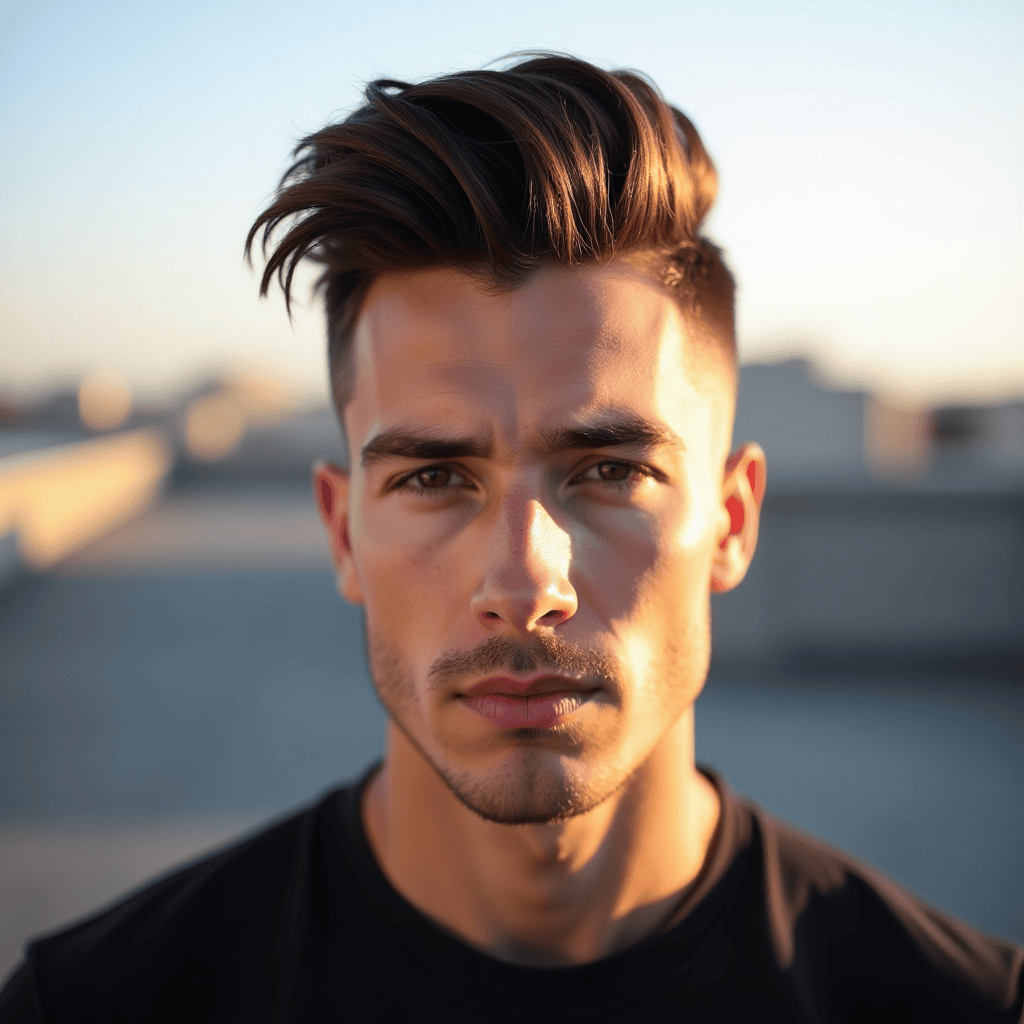
15. Side-Part High and Tight
The side-part high and tight combines a strict perimeter with a more traditional upper shape. The top is long enough to move cleanly from one side to the other, while the fade removes weight around the temples. A natural part line usually looks better than a heavily carved one. The result can move from office clothing to evening wear without feeling out of place.
Ask your barber for “enough top length to make a clean side part, with the sides faded high and tight but not disconnected.” Fine-to-medium hair often responds well because the part creates controlled direction. A small amount of cream or pomade is enough. The weak point is growth around the part: once the upper hair becomes too long, it can collapse over the short sides and make the proportions look uneven.

16. Brushed-Up High and Tight
A brushed-up high and tight spreads height across the whole front half instead of concentrating it into one quiff. Individual strands lift upward with a loose, airy texture, while the sides remain compressed. The effect is taller without needing a slick surface or obvious comb lines. It works best when the top retains visible separation.
Tell the barber, “Leave the top long enough to brush upward with texture, but keep the sides high and close.” Thick straight hair usually makes styling easiest, though loose waves can add character. Blow-dry upward from the roots and finish lightly rather than coating the hair. The downside is that very dense hair may need internal weight removed or the style can stand too stiffly and look helmet-like.
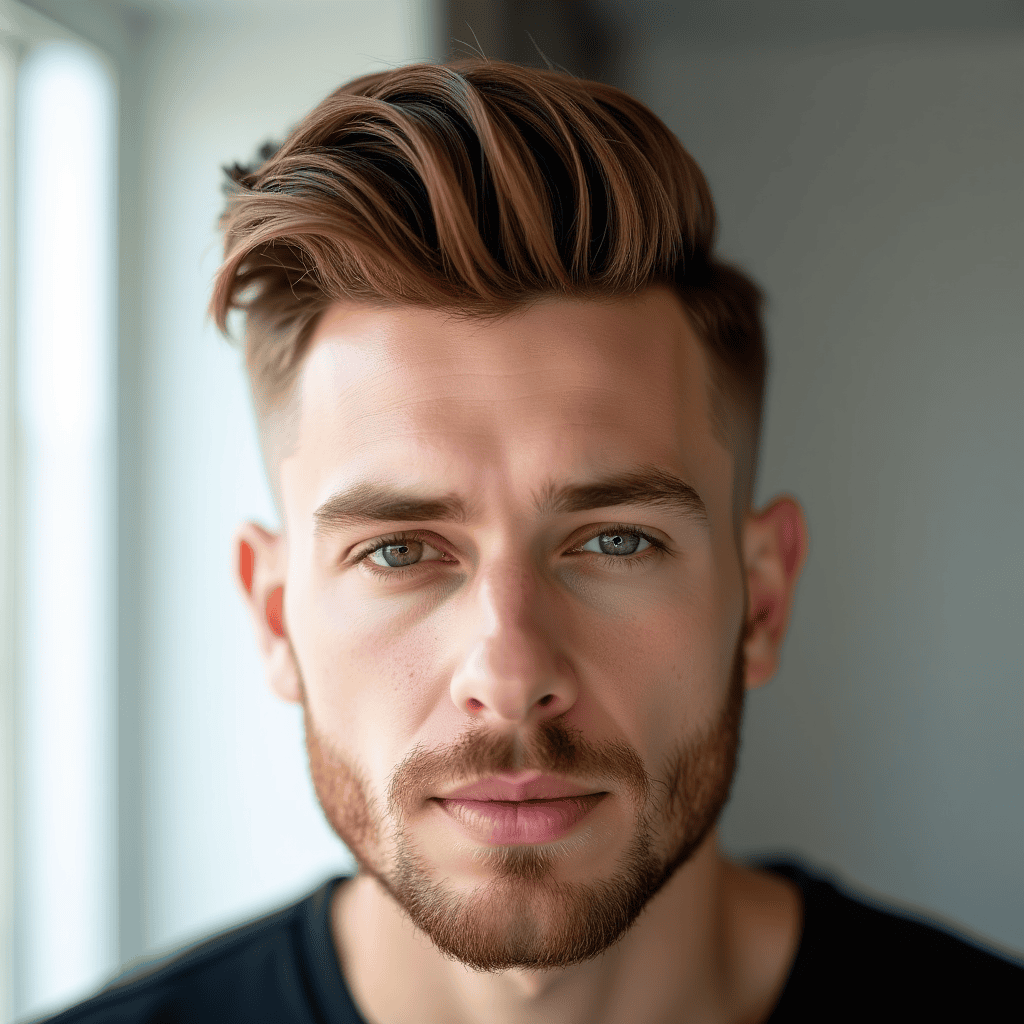
17. Slicked-Back High and Tight
The slicked-back version creates a strong directional contrast: everything above moves backward while everything around it stays tight to the scalp. The top should be long enough to lie back without standing upright, but not so long that it hangs over the faded area. A light sheen emphasizes the combed structure. The profile looks cleaner when the crown follows the same backward direction.
This suits men who want high and tight haircut ideas that can work with sharper tailoring or formal events. Ask for “a high tight fade with enough top length to slick straight back without an undercut-style overhang.” Product choice determines whether it looks controlled or greasy. The obvious drawback is that the style depends on product, and touching it throughout the day can break the surface apart.
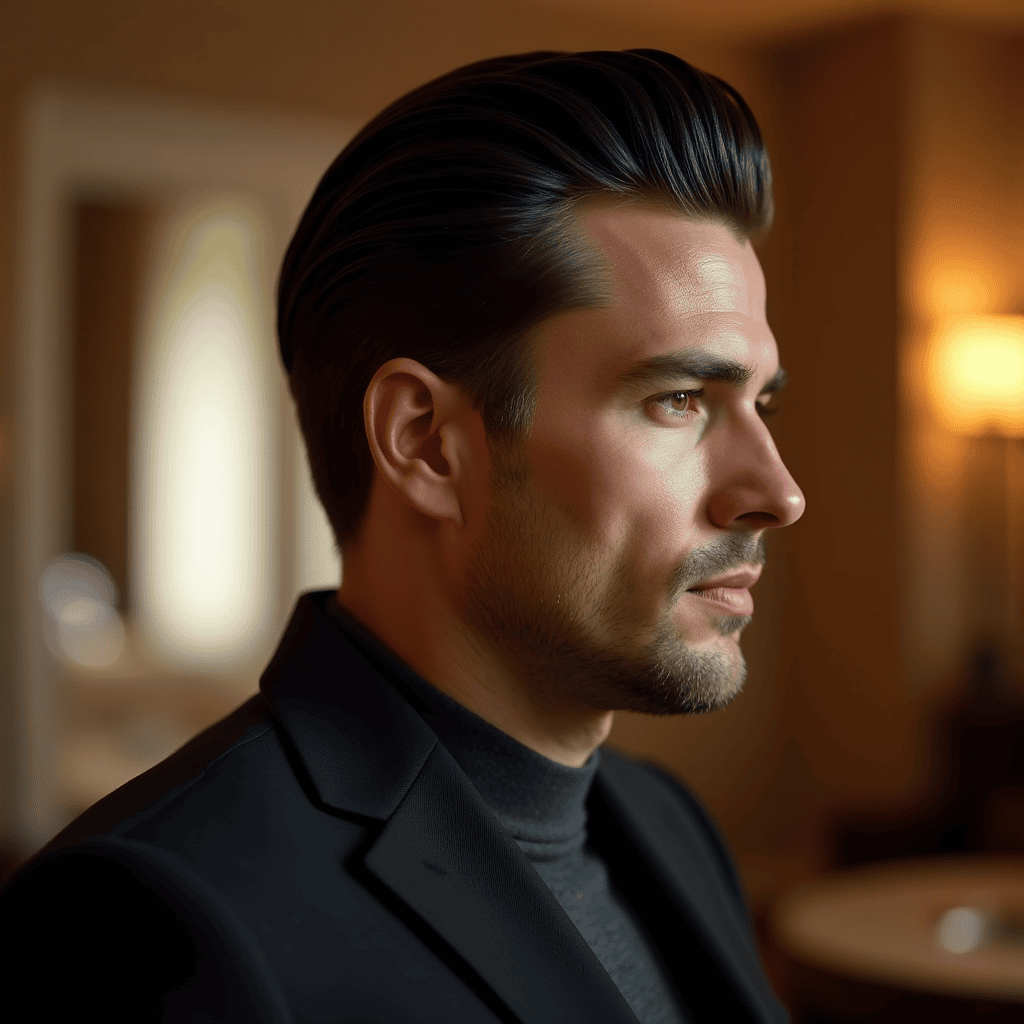
18. High and Tight Caesar
The Caesar version keeps a short, blunt fringe moving forward across the forehead while the sides rise into a high fade. The top remains fairly uniform in length, creating a dense surface rather than a graduated crew-cut shape. That forward direction gives the haircut a distinct front edge. Texture through the ends prevents the fringe from looking pasted down.
Ask for “a short Caesar top with the fringe pushed forward and the sides taken into a high tight fade.” Straight, thick hair tends to cooperate best, particularly when it naturally grows toward the forehead. Styling is minimal. The catch is that a very short horizontal fringe can emphasize the forehead line, so men unsure about that effect should keep the edge softer and slightly irregular.
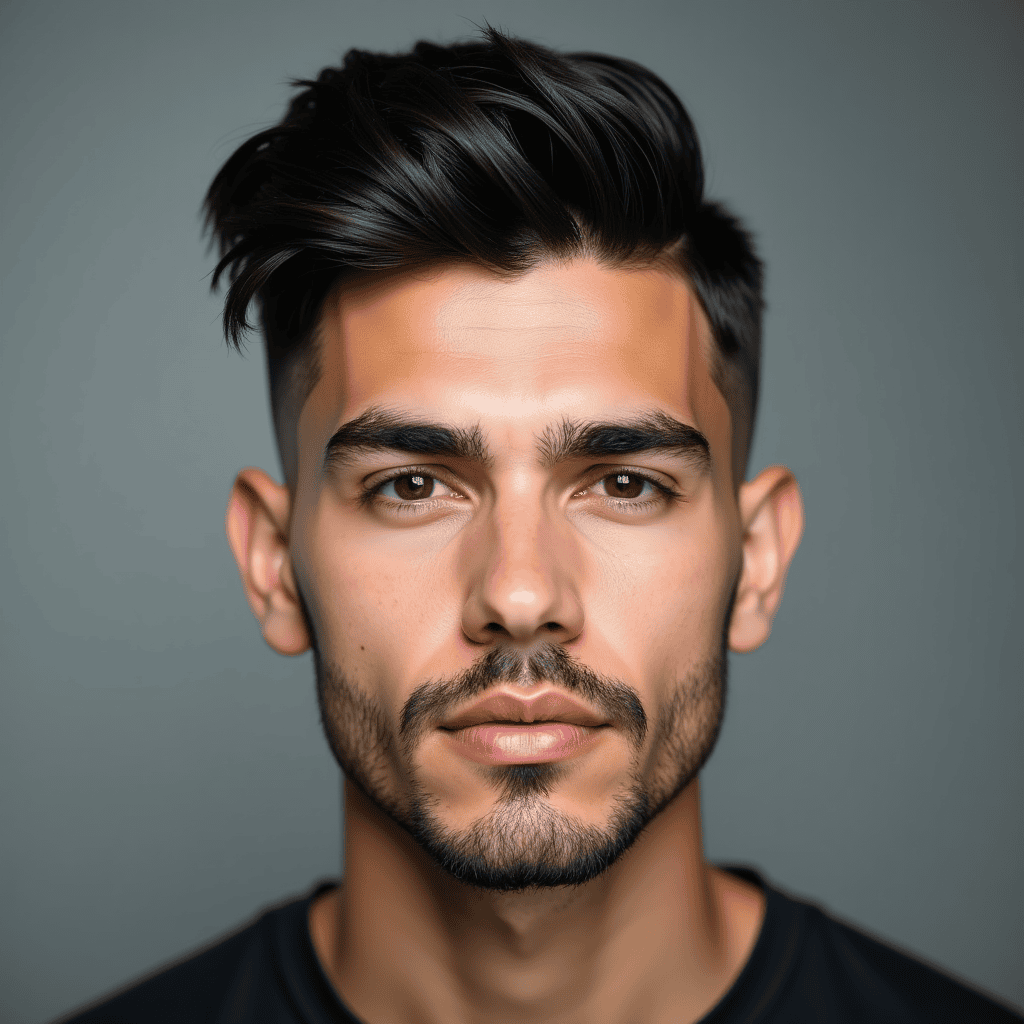
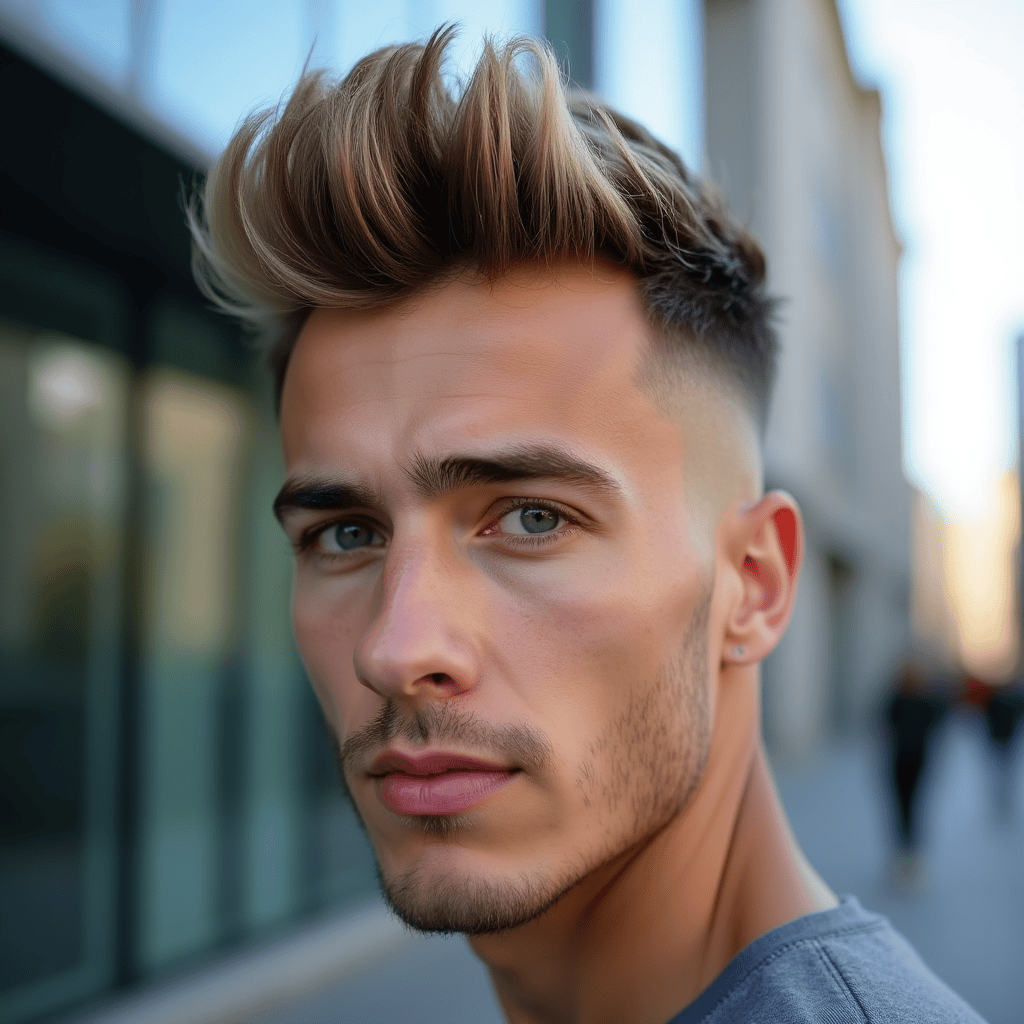
19. Spiky High and Tight
Short controlled spikes add an energetic surface to an otherwise disciplined haircut. The top is cut into enough irregularity that small sections can be pinched upward instead of forming one stiff row. Tight high sides make that texture look cleaner rather than chaotic. The best result uses matte separation and keeps the spikes low enough to move.
Men with coarse straight hair usually get the easiest hold. Tell the barber, “Give the top short point-cut texture that I can spike loosely, with a high fade around the sides.” Work a small amount of product through dry hair rather than sculpting every piece. Too much gel is the failure point here; shiny, rigid spikes can turn a modern short haircut into a throwback almost immediately.
Bold High and Tight Haircut Ideas
The bolder end of high and tight haircut ideas comes from stronger disconnection, exaggerated top shape, facial-hair contrast, or a deliberately unusual finish. These versions need more confidence because the haircut becomes a visible part of the outfit rather than a neutral grooming choice.
20. Disconnected High and Tight
The disconnected high and tight removes most of the gradual blend between the top and sides. The upper section appears almost placed on top of the close fade, with a clear step in length at the ridge. That harder boundary makes even a modest amount of top length look dramatic. The silhouette works best when the line remains intentional and consistent from temple to back.
Ask for “a high and tight with a clear disconnection instead of a soft blend, but keep the top compact.” Thick hair usually carries the upper shape better because the edge needs enough density to stay visible. Styling can be simple. The downside is regrowth: as the side hair expands, the sharp distinction becomes fuzzy and can look accidental sooner than a blended version would.
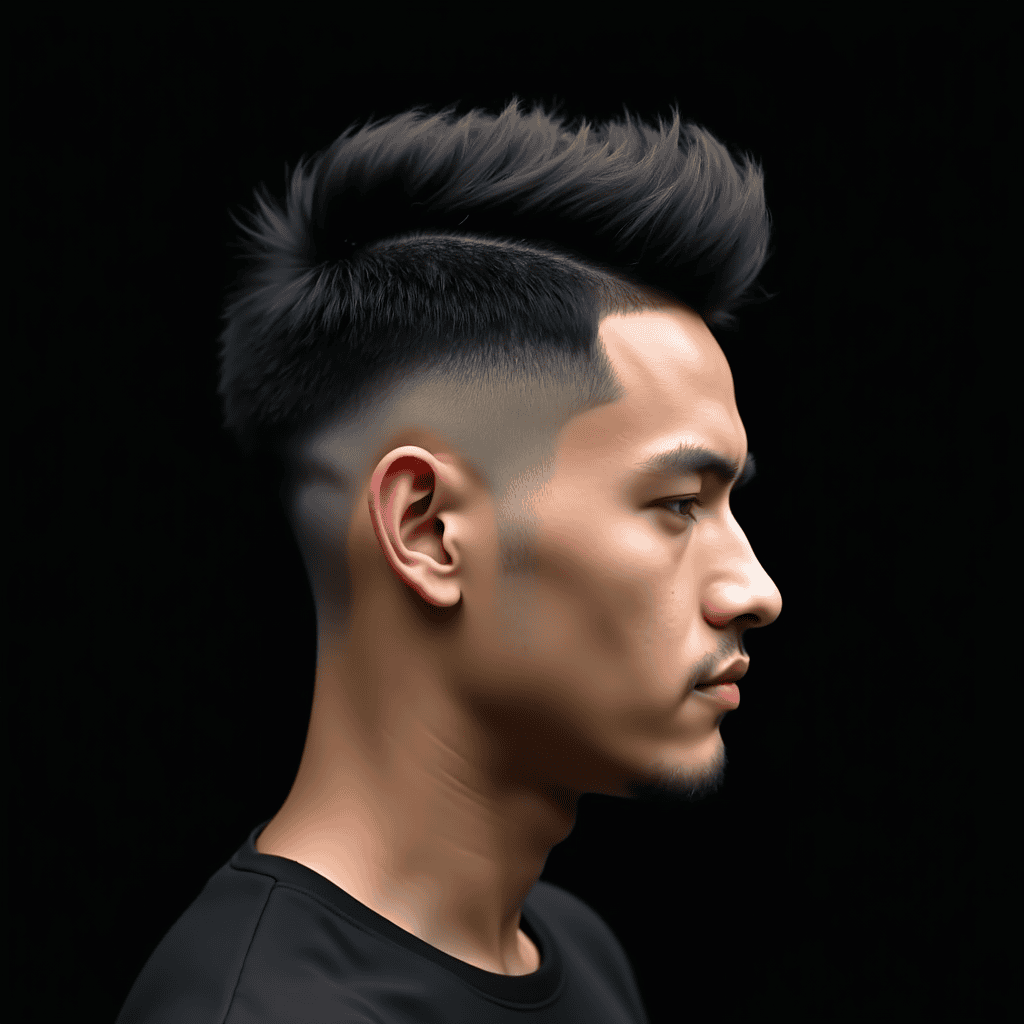
21. High and Tight Faux Hawk
The faux-hawk version concentrates length through the center line while the sides fade aggressively upward. Hair at the front and crown is pushed slightly inward and upward rather than spiked into one hard ridge. The shape should narrow subtly as it reaches the back. From the front, it looks energetic; from the side, the top should still feel compact enough to belong to the high-and-tight family.
Ask your barber for “a short textured faux hawk through the middle with the sides faded high and tight, without leaving a long tail at the back.” Wavy or thick straight hair helps create natural movement. The style needs some product and finger shaping. The drawback is versatility: once the central strip is cut distinctly, wearing the hair completely flat can expose the uneven upper lengths.

22. High and Tight Pompadour
A compact pompadour creates the biggest front silhouette on this list. The fringe rises before sweeping backward into a shorter crown, while the sides stay close enough to make the height look even more pronounced. The upper surface should follow one smooth direction rather than breaking into messy texture. This is a high and tight that clearly expects to be styled.
Men with dense straight or slightly wavy hair have the easiest foundation for it. Say, “Keep the sides high and tight, leave enough length at the front for a short pompadour, and graduate it shorter toward the crown.” A blow-dryer is almost mandatory. The obvious drawback is commitment: without styling, the long front can fall forward and look disconnected from the severe sides.
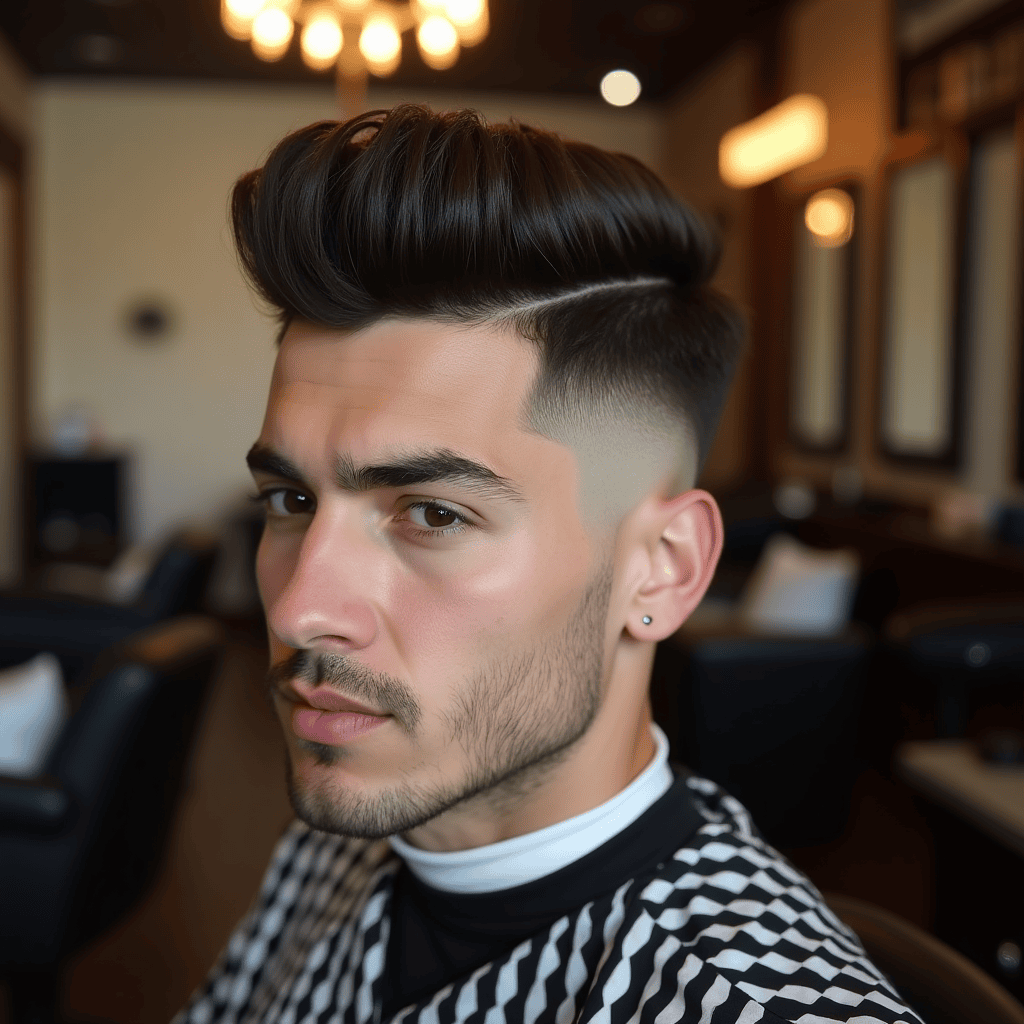
23. High and Tight with Hard Part
A hard part adds a shaved line where a natural side part would normally sit. Against a high and tight fade, that line becomes a small but unmistakable graphic detail separating the combed upper section from the side. Keeping it narrow matters. Once the line becomes too wide, it stops reading as a part and starts dominating the haircut.
Ask for “a thin hard part following my natural part, with a high tight fade and a short combable top.” Straight hair that naturally moves sideways makes the finish easiest to maintain. The line will need refreshing as it grows, and that is the main drawback. If you already dislike frequent edge-ups, a natural part gives most of the same structure with far less maintenance.
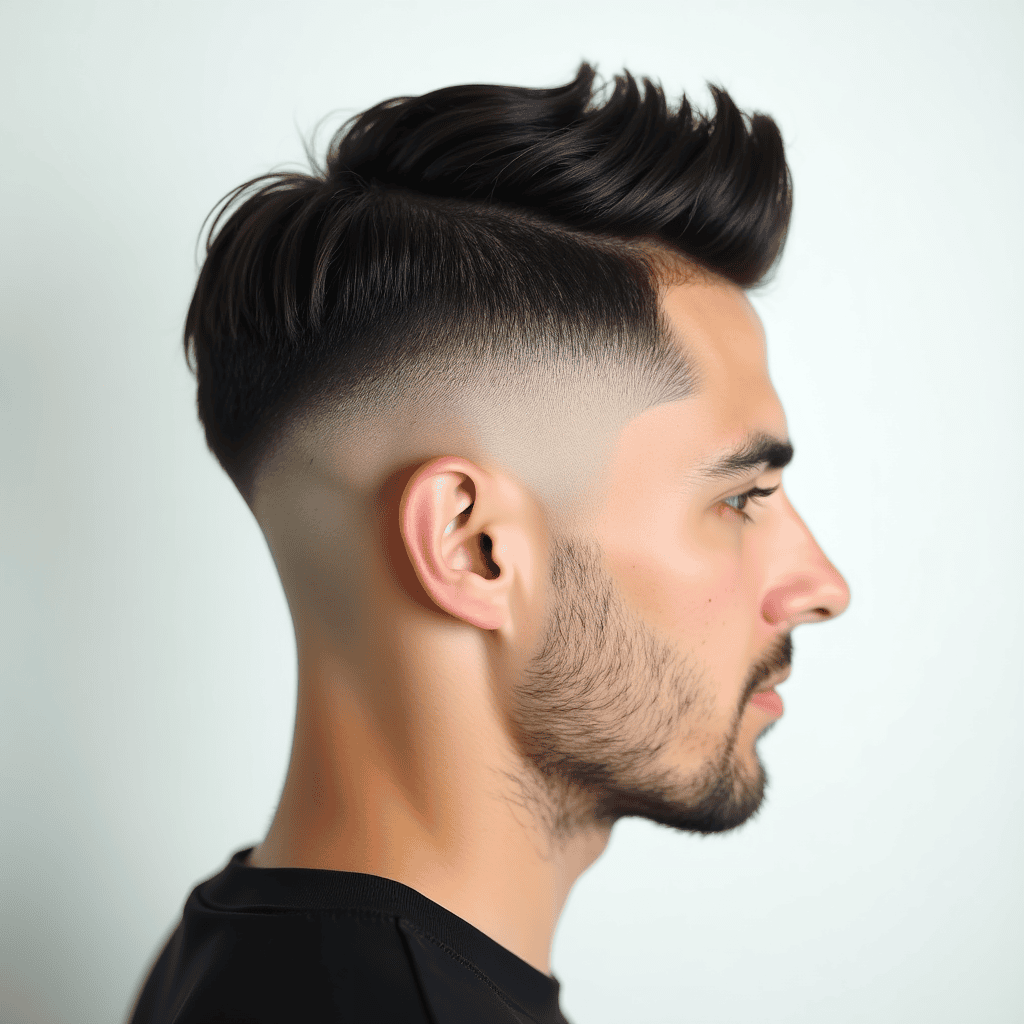
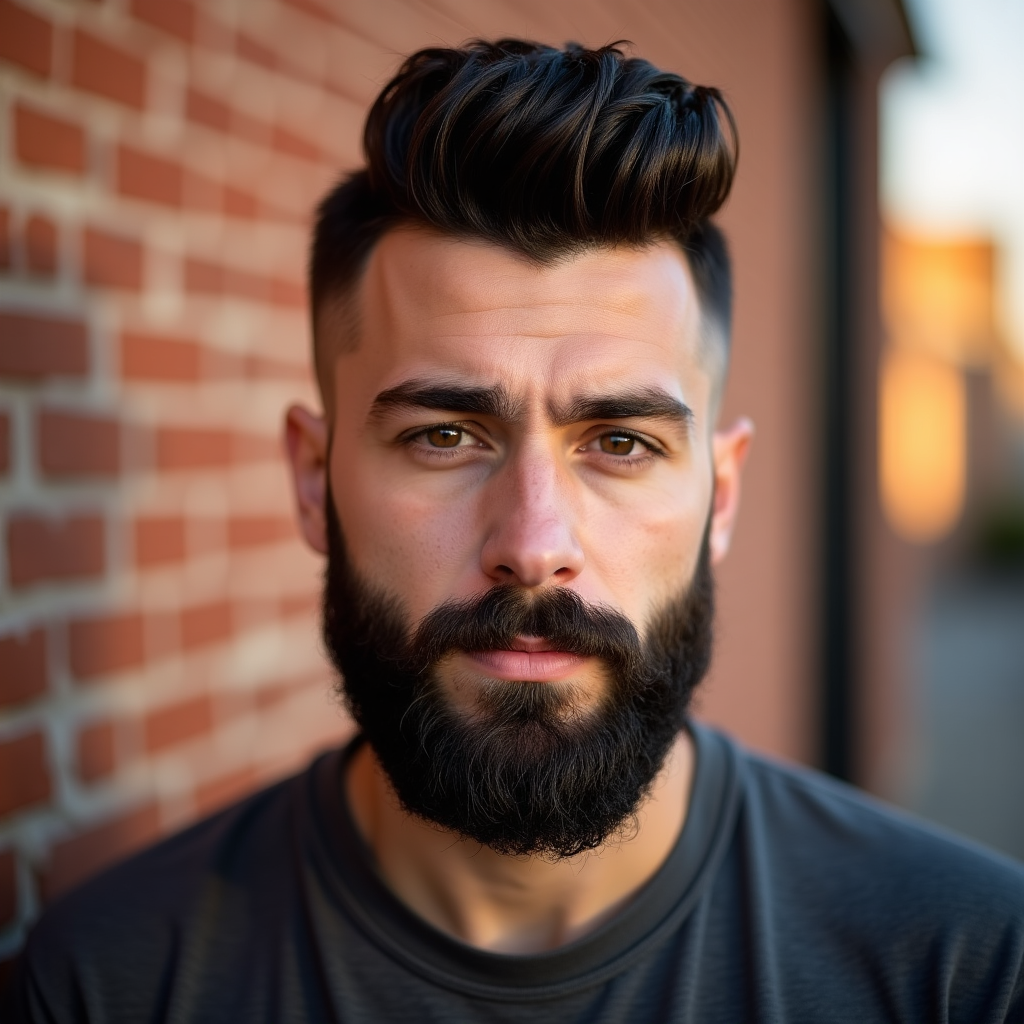
24. High and Tight with Full Beard
A full beard gives the high and tight more visual weight below the face, balancing the exposed sides above. The haircut stays compact and disciplined while the beard adds density through the jaw and chin. A clean transition at the sideburns prevents the two elements from looking accidentally disconnected. From the front, the combination creates a strong vertical frame.
Tell the barber you want “the high fade blended deliberately into the beard at the sideburn, not left as two separate blocks.” Men with established beard growth can use the contrast to make a simple short top feel more intentional. The drawback is grooming workload. A sharp haircut combined with an unshaped beard can feel mismatched, so both areas need maintenance rather than only the scalp.
25. High and Tight with Natural Gray Hair
Natural gray hair changes the contrast of a high and tight because silver strands catch light differently across the short top and faded sides. Leaving a little texture through the crown prevents the color from becoming visually flat. The fade can remain high without needing to reach skin. The result feels sharp but less severe than the same haircut on uniformly dark hair.
Men with gray, silver, or salt-and-pepper hair can ask for “a textured short top that keeps the natural color visible, with a clean high fade that leaves a little shadow.” Avoid overloading the top with shiny product because it can obscure the natural variation. The only real limitation is that extremely pale hair may make the fade appear softer, so the shape needs to be strong enough to carry the contrast.

How to Choose the Right High and Tight Haircut
The best high and tight haircut ideas are chosen by starting with your natural hair rather than with the most dramatic reference photo. Straight dense hair can support flat tops, quiffs, spikes, and hard parts. Wavy hair usually benefits from leaving enough length to reveal movement, while curls and coils need enough upper length to form properly before the sides are tightened.
Face shape matters mostly through proportion. A tall quiff or pompadour adds vertical height, which can exaggerate an already long face. A flatter crew cut, Caesar, or textured crop keeps the profile more compact. Men with broader faces may like the visual lift created by a brushed-up top and tight temple area.
Bring two or three reference images to the appointment, ideally showing the front, side, and back rather than three versions of the same angle. Haircut terminology varies between barbers, so a photo often communicates more accurately than saying “high fade” and assuming both of you picture the same height.
Be specific when you sit down. Instead of asking for a generic high and tight, say something like, “I want the fade high above the temple, but leave enough length on top for a textured crop and keep the front soft.” Mention whether you want skin showing, a zero at the bottom, or a darker shadow.
Also think about the clothes and situations surrounding the haircut. A classic crew cut, side-part version, or shadow fade moves easily between workwear, a suit, and casual weekends. A disconnected top, faux hawk, or hard part is more visually assertive and can become part of the overall look rather than quietly supporting it.
Where High and Tight Haircuts Go Wrong
The most common mistake is taking the fade higher simply because the haircut has “high” in the name. If the barber removes too much of the upper corners, the remaining top can become a narrow island of hair that looks disconnected even when disconnection was never the goal.
Another problem is choosing top length without considering texture. Fine hair left too long can fall flat over tight sides. Thick coarse hair cut too bluntly can rise into a heavy block. Curly hair taken too short may lose the curl pattern that made the reference style attractive in the first place.
Over-sharpening can also work against the haircut. A skin fade, carved hard part, heavily squared hairline, and sculpted top all competing at once can make a short cut feel busier than intended. Often one sharp element is enough.
And there is the maintenance question. Many high and tight haircut ideas look strongest during the first couple of weeks because the sides create such a large part of the design. If you prefer stretching appointments much longer, choose a shadow fade or slightly softer taper so the regrowth looks less abrupt.
Frequently Asked Questions
What is a high and tight haircut?
A high and tight is a short men’s haircut with closely clipped or faded sides that rise high around the head and a noticeably longer section left on top. The top can range from a short military panel to textured curls, a crew cut, or a compact quiff.
What should I tell my barber for a high and tight?
Explain both the side length and the top shape. For example, ask for a high zero fade with about an inch left on top, or request a high shadow fade with enough upper length for texture. Showing a reference photo reduces confusion about how high you want the transition.
How short are the sides on a high and tight haircut?
They can range from bare skin to a short clipper length. Skin and zero fades create the strongest contrast, while a shadow fade leaves more darkness around the head. The defining detail is usually the high placement of the transition rather than one mandatory clipper setting.
Is a high and tight the same as a crew cut?
No. A crew cut mainly describes the graduated shape of the hair on top, while a high and tight describes the strong contrast between very short high sides and the upper section. The two can be combined, which is why the high and tight crew cut is so common.
Which high and tight haircut ideas work with curly hair?
Short curls and compact coils work particularly well when enough length remains on top for the natural pattern to form. The fade should remove bulk around the sides without cutting too deeply into the upper corners. A reference image showing a similar curl type is especially useful.
Can men with thin hair wear a high and tight?
Yes, but shorter versions generally behave better. A crew cut, buzzed top, short Caesar, or lightly textured crop can reduce the contrast between denser and thinner areas. Leaving a long quiff over extremely tight sides may make low density through the top more noticeable.
How often does a high and tight need to be cut?
That depends on how sharp you want the fade to remain. Skin and zero fades show regrowth quickly, so men chasing a constantly fresh finish tend to visit more often. Shadow fades and slightly softer high tapers usually age more gradually between appointments.
Does a high and tight work with a beard?
Yes. A beard can balance the visual lightness created by tightly faded sides. Ask the barber to consider the sideburn transition so the haircut and beard look intentionally connected. A gradual fade into the beard usually appears cleaner than an unexplained gap between the two.
What face shape works best with a high and tight?
There is no single required face shape because the top can be adjusted. Longer faces often suit flatter crew cuts or textured crops, while rounder faces may benefit from modest height through a quiff or brushed-up top. The shape of the top matters as much as the fade.
Is a skin fade necessary for a high and tight?
No. A high and tight can finish at skin, zero, or a short shadow length. Leaving some hair at the bottom often makes the cut easier to maintain and slightly softer in appearance while preserving the high transition that gives the style its identity.
Can a high and tight look professional?
A crew cut, side-part version, shadow fade, or short textured top can fit easily into conservative work settings. Keeping the fade clean without extreme disconnection usually makes the style more understated. For formal events, the upper hair can also be brushed neatly or directed into a controlled side part.
Which high and tight haircut is easiest to maintain?
A short buzzed high and tight requires almost no daily styling, while a classic military version is similarly simple. The tradeoff is barber maintenance because short faded sides reveal regrowth quickly. If appointment frequency matters more than morning styling, choose a softer shadow fade rather than exposed skin.
Can I style a high and tight without hair product?
Short versions usually need nothing beyond normal drying and brushing. Longer high and tight haircut ideas such as quiffs, pompadours, spikes, and slicked-back tops depend more heavily on styling. Wavy and curly versions may also benefit from a light product that keeps texture defined without making it rigid.
Should the top of a high and tight be blended into the sides?
Usually, but not always. Traditional versions use a short, controlled transition, while a disconnected high and tight deliberately leaves a sharper step between the lengths. If you are unsure, ask for a blended transition first because it tends to grow out more naturally.
What is the safest high and tight to try first?
A high and tight crew cut with a shadow or zero fade is an easy starting point. It keeps enough top length to feel familiar while introducing the higher, cleaner sides gradually. At the booking call, ask whether the barber can keep a crew-cut shape on top while taking the side blend high without removing the upper corners.
Best Men’s Hairstyle Reports
Discover bold cuts, long hairstyles, braided looks and modern men’s grooming inspiration.