
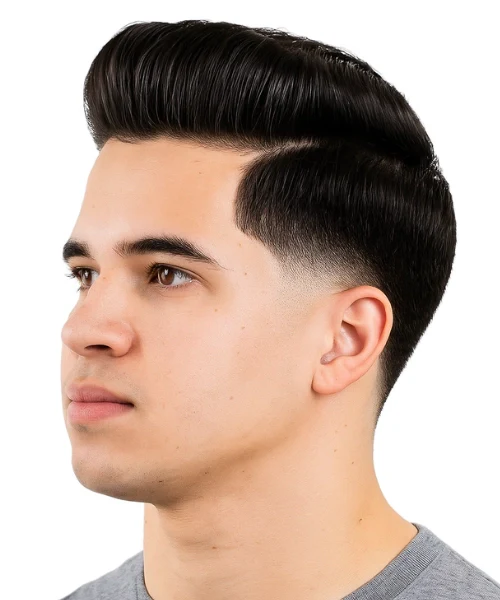
The strongest comb over hairstyle ideas for men include the classic side-part comb over, low-fade comb over, textured comb over, and longer swept version. Those four cover most hair types without making the style feel stiff or dated. The catch is simple: the cleaner the part and fade, the more often the haircut needs attention.
I’ve cut and restyled versions of this shape for years, from conservative office cuts to loose, modern finishes that barely resemble the old-school comb over. The biggest lesson is that direction matters more than product; get the cut wrong and no amount of pomade will rescue it.
| Quick Pick | Best For | Length on Top | Sides | Finish |
|---|---|---|---|---|
| Classic Side-Part Comb Over | Work and formal wear | 2–3 inches | Scissor tapered | Neat |
| Low-Fade Comb Over | First-time fade wearers | 2–3 inches | Low fade | Clean |
| Textured Comb Over | Thick or slightly wavy hair | 2–4 inches | Tapered | Matte |
| Skin-Fade Comb Over | Sharp modern contrast | 2–3 inches | Skin fade | Defined |
| Long Swept Comb Over | Medium-length hair | 4–6 inches | Longer sides | Relaxed |
| Wavy Comb Over | Natural movement | 3–4 inches | Low taper | Soft |
| Short Comb Over | Easy mornings | 1–2 inches | Taper or fade | Controlled |
| Pompadour Comb Over | Extra height | 3–5 inches | Tapered | Polished |
| Drop-Fade Comb Over | Strong head shape | 2–4 inches | Drop fade | Sculpted |
| Beard-and-Comb-Over Blend | Balanced facial hair | 2–4 inches | Faded | Masculine |
Classic Comb Over Hairstyle Ideas That Rarely Look Wrong
The safest comb over hairstyle ideas start with traditional proportions: enough length to move across the head, a readable side direction, and sides that don’t overpower the top. These are the cuts I reach for when someone wants to look sharper without appearing as though he spent forty minutes styling his hair.
1. Classic Side-Part Comb Over
The classic side-part comb over works because the silhouette is disciplined without becoming severe. The top sits around two to three inches, with the hair traveling diagonally from the part rather than being dragged straight sideways. The front gets a slight lift, while the crown lies flatter so the shape doesn’t balloon. Scissor-tapered sides keep the whole thing softer than a modern fade.
Ask your barber, “Keep two to three inches on top, follow my natural part, and taper the sides without taking them down to skin.” It suits straight or slightly wavy hair and tends to sit comfortably on oval, square, and longer faces. A light cream or low-shine pomade is usually enough; heavy wax can turn the surface into a helmet. The drawback is that cowlicks near the part can make the direction fight back.
2. Short Taper Comb Over
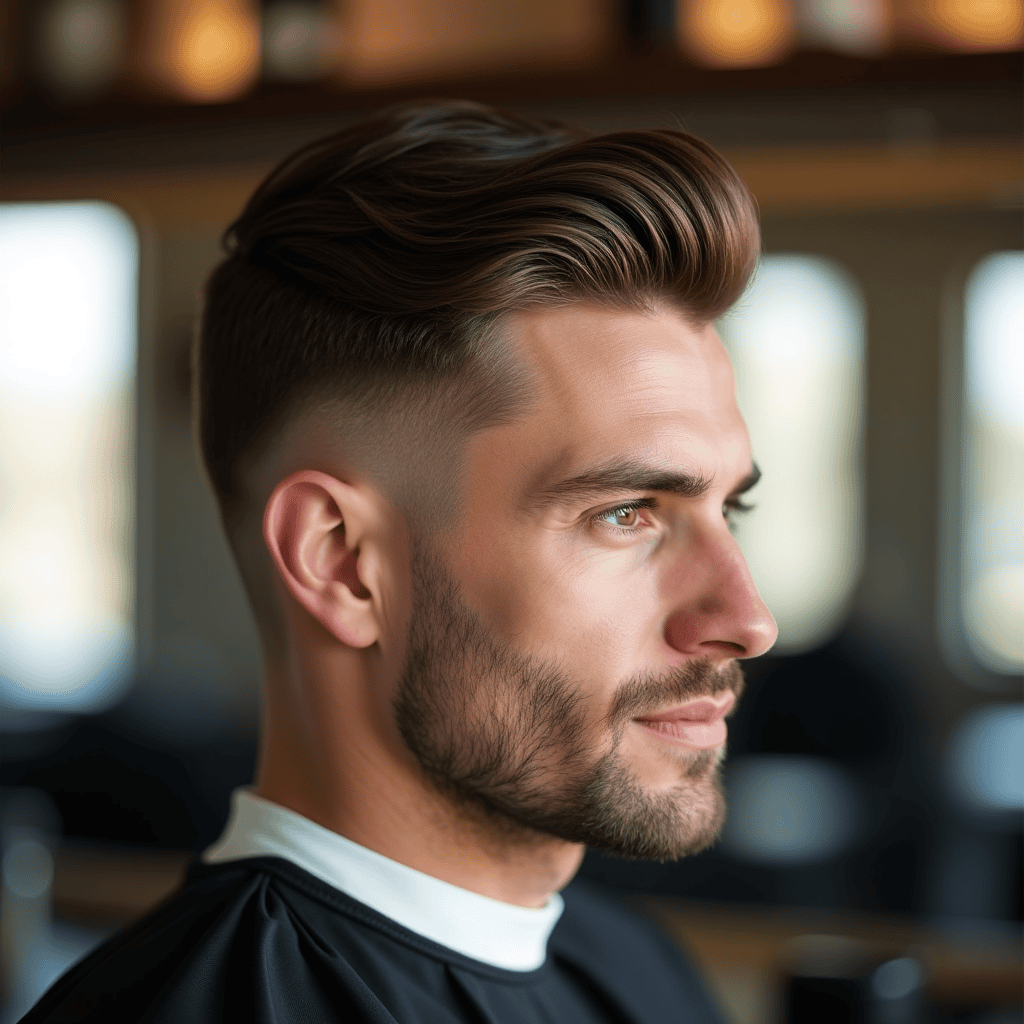
Among shorter comb over hairstyle ideas, this one is hard to beat for uncomplicated mornings. The top stays around one and a half to two inches, just long enough to establish direction without creating a tall ridge. The taper tightens gradually above the ears and neckline rather than exposing scalp. Visually, it reads clean and intentional even when the styling isn’t perfect.
Tell the barber, “Keep the top short enough to finger-comb, leave enough length for a side sweep, and give me a natural taper around the ears and neck.” Men with straight, coarse, or slightly thinning hair often handle this shape well because it doesn’t depend on volume. You’ll usually get away with a pea-sized amount of matte paste and thirty seconds of styling. Skip it if you want dramatic height because the length simply isn’t there.
3. Gentleman’s Scissor-Cut Comb Over
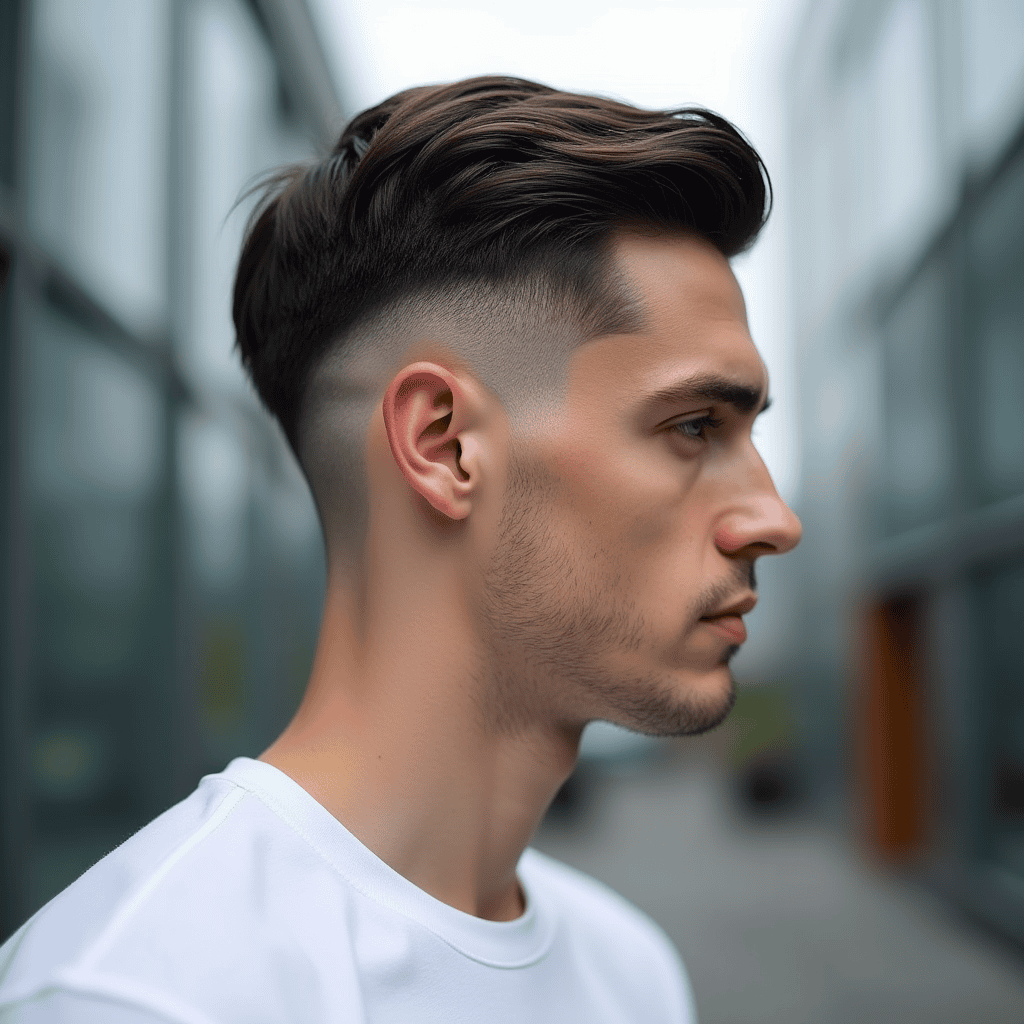
This version avoids clippers almost entirely, and you can see the difference from across the room. The sides retain enough length to lie naturally against the head, while the top is shaped with internal layers so it moves instead of sitting like one solid sheet. There is a part, but it doesn’t look carved into the scalp. The overall shape feels more like tailored grooming than a fade haircut.
Ask for “a fully scissor-cut comb over with natural edges, some weight through the sides, and enough layering on top that it doesn’t fall as one block.” It works especially well with medium-density straight or wavy hair and pairs naturally with suits, knit polos, and smarter casual clothing. The tradeoff is control; longer sides can puff above the ears in humid weather. If your hair grows outward aggressively, a tighter taper may behave better.

4. Ivy League Comb Over
The Ivy League version sits somewhere between a crew cut and a traditional side sweep. Hair at the front is left noticeably longer than the crown, giving you enough material to send it across and slightly upward. The sides stay tidy and compact, but the transition is restrained rather than ultra-faded. It has that collegiate neatness without demanding a razor-straight part.
Ask your barber, “Cut it like a longer Ivy League, leave extra length at the front so I can comb it sideways, and keep the taper clean but not bald.” This is one of the better comb over hairstyle ideas for men who wear glasses or dress conservatively for work because the proportions stay controlled around the temples. Matte clay works if the hair needs grip. The limitation is thick, stubborn curls; they may refuse the smooth directional shape unless more length is left.

5. Soft Natural-Part Comb Over
A soft natural-part comb over is what I recommend when someone likes the side-swept shape but hates visible barber lines. The hair separates where it naturally wants to, then falls loosely across the top with only modest elevation at the front. The sides remain tapered but not aggressively disconnected. You get a grooming direction rather than a rigid hairstyle.
Say, “Find my natural part instead of cutting one in, keep the top loose enough to move, and taper the sides without making them look faded.” Fine to medium hair works particularly well because the softness stops the scalp from being emphasized by hard separation. Use a light styling cream and your fingers rather than a fine-tooth comb. The downside is that it won’t stay geometrically perfect through a long day, which is also the reason it looks relaxed.

Fade Comb Over Hairstyle Ideas With Sharper Contrast
Fade-based comb over hairstyle ideas put much more emphasis on shape. Once the sides get shorter, every detail on top becomes easier to see, including messy product application and awkward part placement. That sharper contrast looks excellent when the cut follows the head rather than forcing the same fade height on everyone.
6. Low-Fade Comb Over
The low-fade comb over keeps most of the visual weight around the temples, which is why it still feels wearable in conservative settings. The fade begins close to the ear and neckline while the upper sides retain enough darkness to connect naturally with the top. Two to three inches above gives the hair room to sweep cleanly across. The result is tidy, but not aggressively barbered.
Ask for “a low fade that stays low around the ears, with two to three inches on top and a natural side direction.” It suits men testing a fade for the first time and works particularly well when you need a haircut that can move from an office to a wedding without changing character. Expect the lowest part of the fade to lose its crispness before the top needs cutting. That’s the annoying bit: the haircut often looks grown out from the sides first.
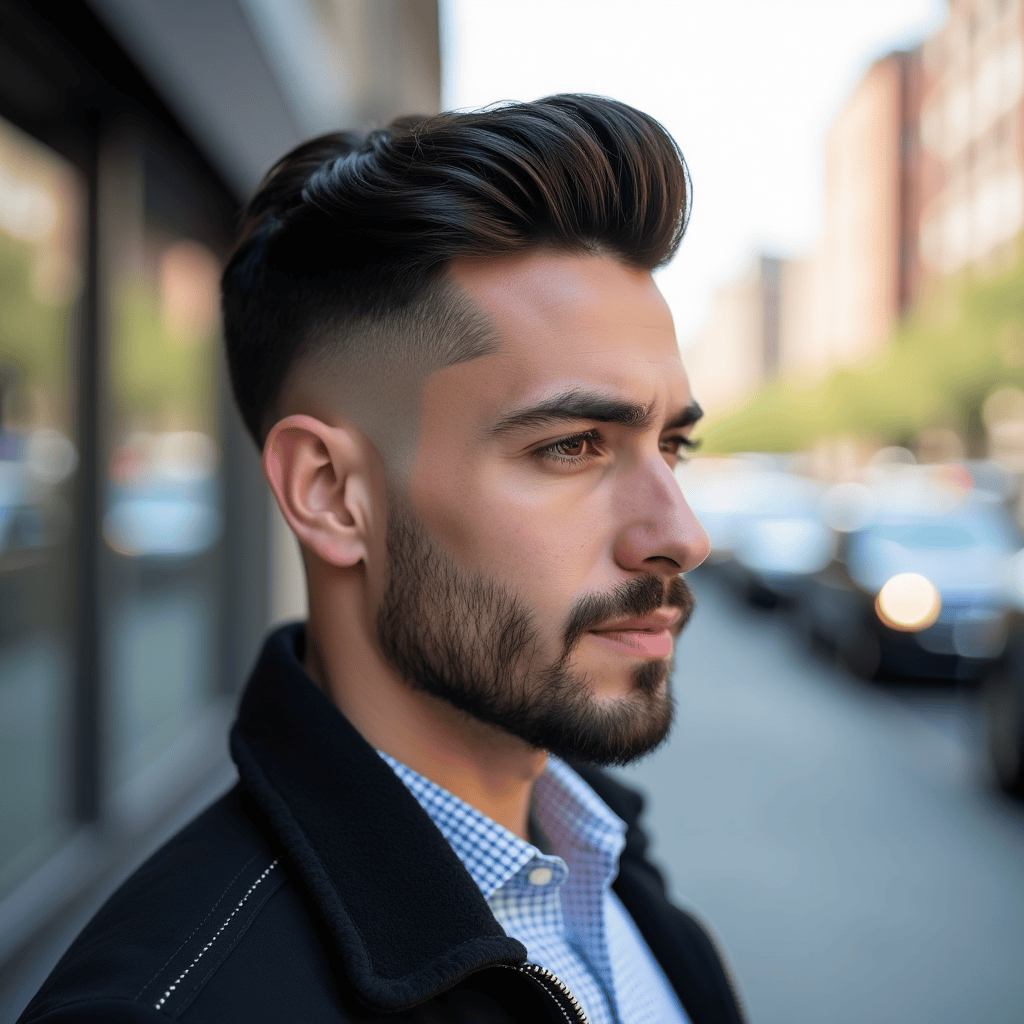
7. Mid-Fade Comb Over
The mid-fade version creates a stronger break between top and sides without pushing all the way into skin-fade territory. The fade rises around the middle of the temple, then blends into enough top length to form a defined sweep. From the front, the haircut looks broader and more structured than a low fade. Side-on, the transition becomes the main feature.
Tell your barber, “Give me a mid fade around the temple and leave enough length on top for a clean side sweep with some height in front.” Men with dense straight or moderately wavy hair tend to get the clearest result because the top retains visible structure. A matte paste or medium-hold pomade keeps the shape from collapsing. On narrow or long faces, too much height can exaggerate length, so keep the front more horizontal.
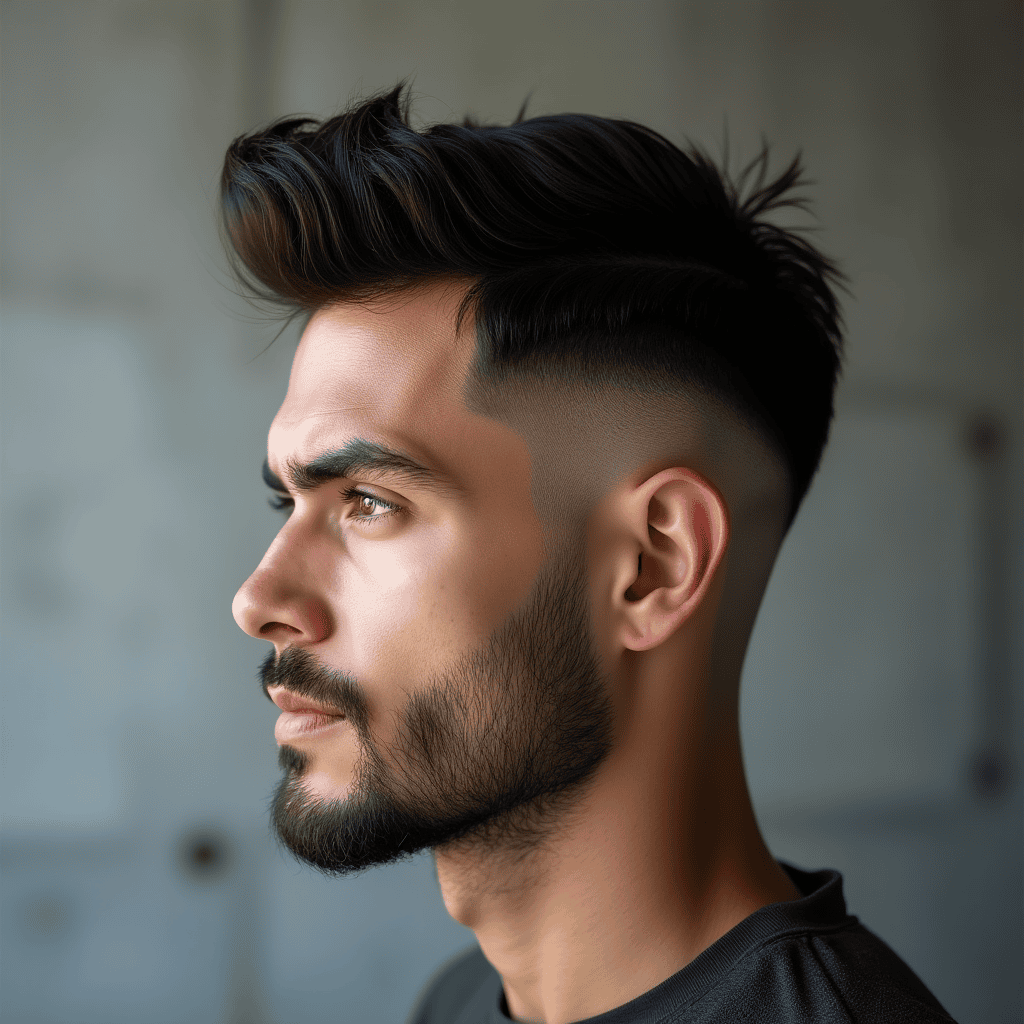
8. High-Fade Comb Over
This is one of the boldest conventional comb over hairstyle ideas because the sides disappear quickly and leave the top visually isolated. The fade climbs high around the temples, while the upper section holds enough length to sweep across in one clear direction. Contrast becomes the whole point. Done well, the top looks graphic and deliberate rather than stranded.
Ask for “a high fade with a clean blend into the top, but don’t take weight out of the comb-over section.” Coarse, dense hair gives this cut the strongest outline, especially on rounder or squarer faces where the added vertical structure can sharpen the overall profile. You’ll notice regrowth fast because there isn’t much middle ground between fresh fade and visible stubble. If you dislike frequent barber visits, I’d pick the mid fade instead.
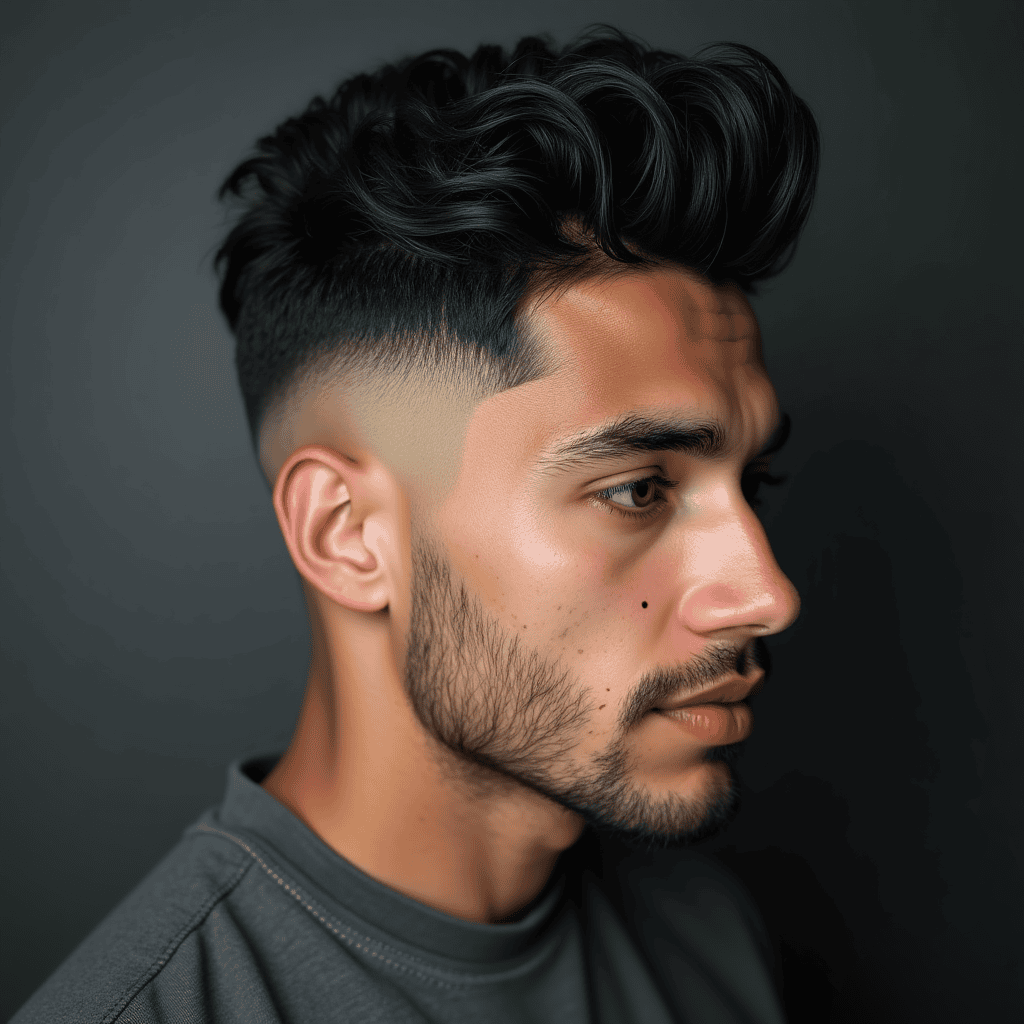
9. Skin-Fade Comb Over
The skin-fade comb over takes contrast another step by bringing the lower sides down to bare skin before blending upward. The top can stay relatively traditional, which creates an interesting clash between classic styling and a modern fade. A clean sweep over the crown makes the pale-to-dark transition look even stronger. From the back, the fade should curve naturally rather than forming a hard horizontal shelf.
Tell the barber, “Take the lower fade to skin, blend it gradually through the temple, and keep a classic comb-over shape on top.” This works best if you’re comfortable with a haircut that looks freshly barbered rather than subtle. It can also make scalp contrast more noticeable on very dark hair, so that’s worth knowing before committing. Maintenance is the drawback I hear most often; a skin fade can feel noticeably softer after only a short period of growth.
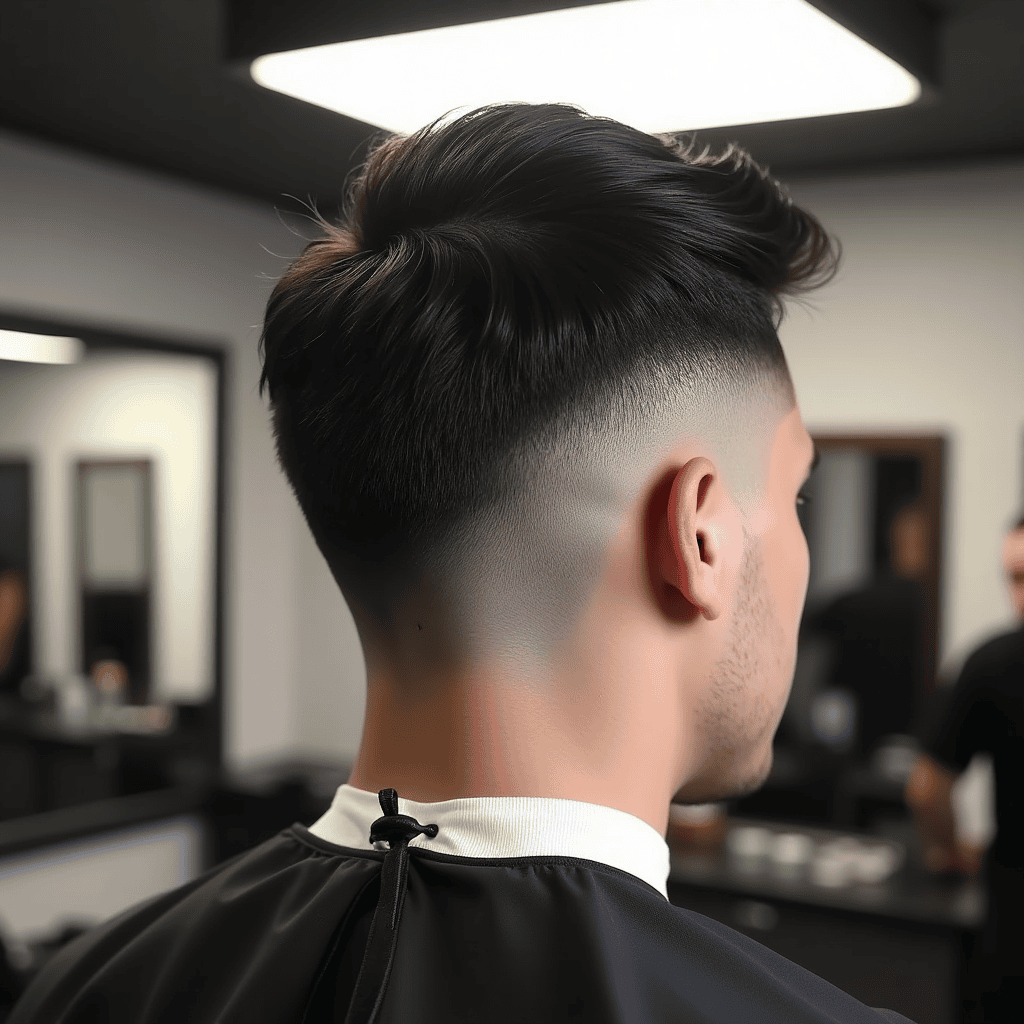
10. Drop-Fade Comb Over
A drop fade bends downward behind the ear instead of following one level line around the head. Paired with a comb over, that curve gives the back of the haircut more shape while keeping the temple area sharp. The top still sweeps sideways, but the silhouette feels less boxy from profile view. This is a small technical difference that makes a surprising visual impact.
Ask for “a drop fade that follows the shape behind my ear, with enough weight above it to connect into a textured comb over.” I like it on men whose head shape benefits from extra depth toward the crown rather than a high straight fade. Styling doesn’t need to be complicated; a blow-dryer and small amount of clay usually give enough control. The risk is asking an inexperienced barber for too much drop and ending up with an exaggerated curve at the back.
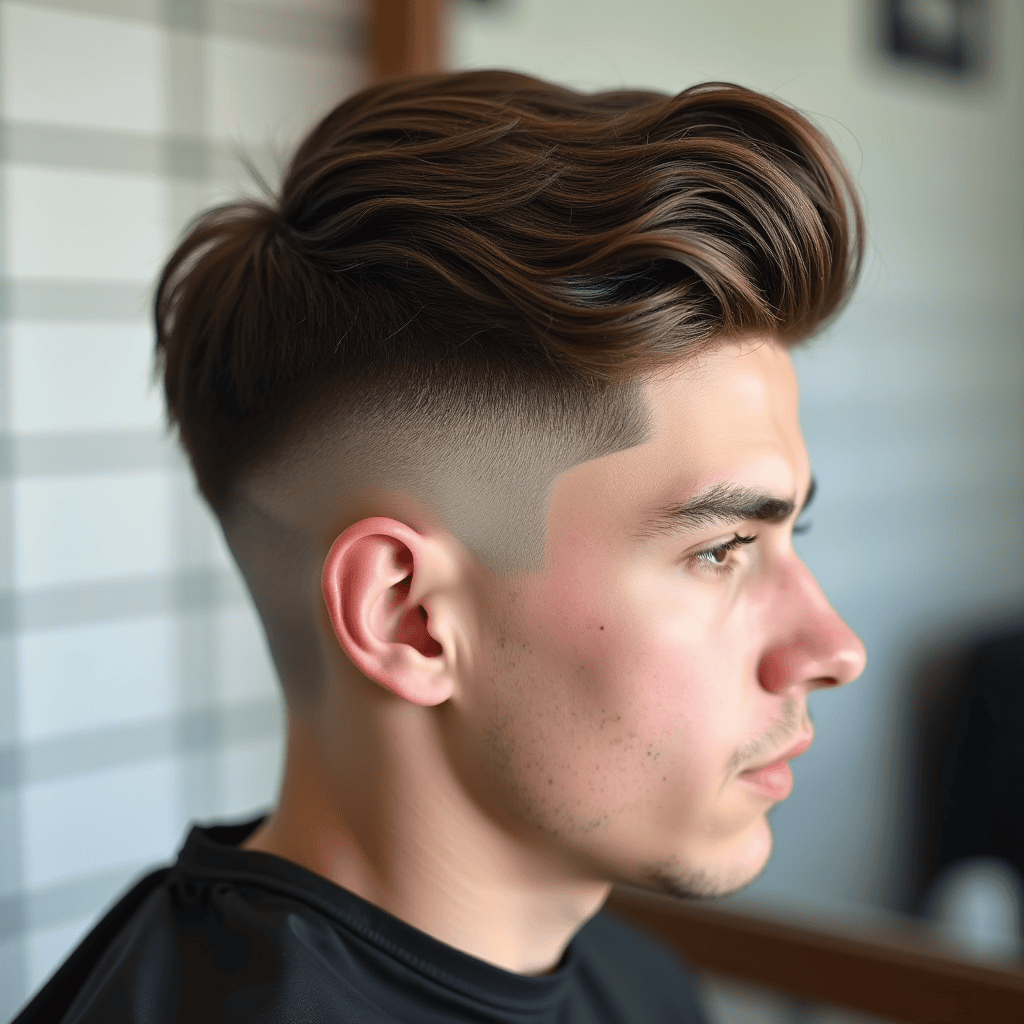
Textured Comb Over Hairstyle Ideas With More Movement
Not every side sweep needs a glassy finish. Textured comb over hairstyle ideas work better for men who want separation, movement, and a little imperfection. I go back and forth on this category because deliberately messy texture looks effortless only when the underlying haircut is technically clean.
11. Matte Textured Comb Over
The matte textured comb over breaks the top into visible sections rather than forming one polished surface. Hair moves sideways, but individual pieces point at slightly different angles so light catches the cut unevenly. A subtle taper or low fade keeps the focus upstairs. The front should look lifted by the roots rather than bent into a shiny wave.
Ask your barber, “Keep enough length for a side sweep, point-cut the top for separation, and don’t make the finish too neat.” Thick straight hair responds especially well, while soft waves can make it look even more natural. Blow-dry roughly into position and finish with matte clay worked through the fingertips. Too much clay is the common mistake; once the strands clump heavily, the texture disappears.
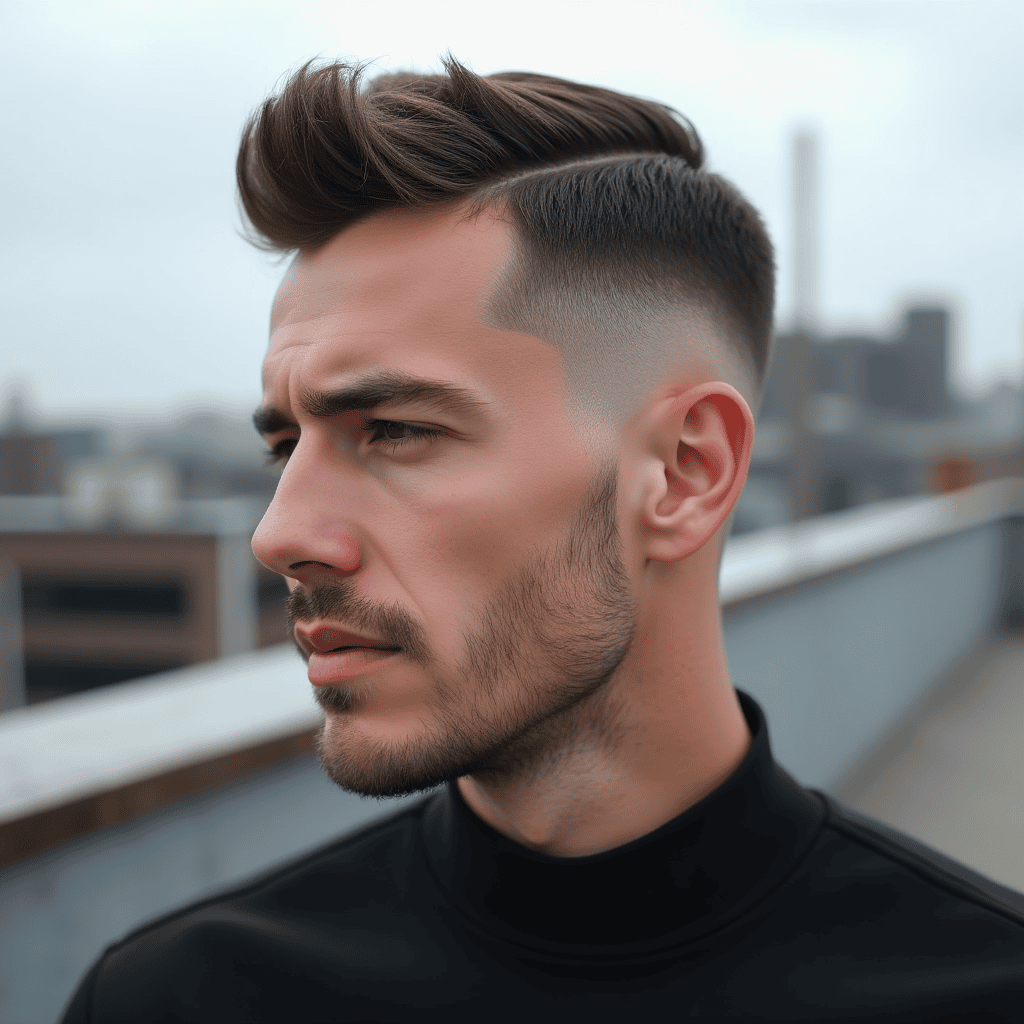
12. Messy Comb Over With Low Taper
This version loosens nearly every rule of the traditional comb over. The top still has a dominant sideways direction, but strands fall forward, outward, and slightly backward around that basic path. The low taper keeps the ears and neckline fresh without turning the sides into the feature. It looks best when the front is imperfect rather than arranged into a single ridge.
Tell the barber, “Give me a loose side-swept top with plenty of movement and a low taper, but don’t cut a hard part.” Wavy and medium-density hair make this easy because natural bends create texture without much effort. It works well with denim, casual tailoring, and off-duty clothes where a glossy finish would look overdressed. Men who need every strand locked down by breakfast probably won’t enjoy how this style shifts during the day.

13. Wavy Comb Over
Natural waves turn the familiar side sweep into something much softer. Instead of trying to flatten every bend, the hair travels across the top in curved sections, producing volume around the front and controlled irregularity toward the crown. The sides can be tapered short enough to stop them puffing. The finished line should look flowing, not combed flat.
Ask for “three to four inches on top so my wave stays visible, with the sides tapered enough to control width and no hard part.” This is one of the most forgiving comb over hairstyle ideas for medium waves because second-day hair often looks better than freshly washed hair. Use a light cream or sea-salt-style texture product, then stop touching it. A dense wave pattern may swell in humidity, so don’t cut the sides too full if that already bothers you.
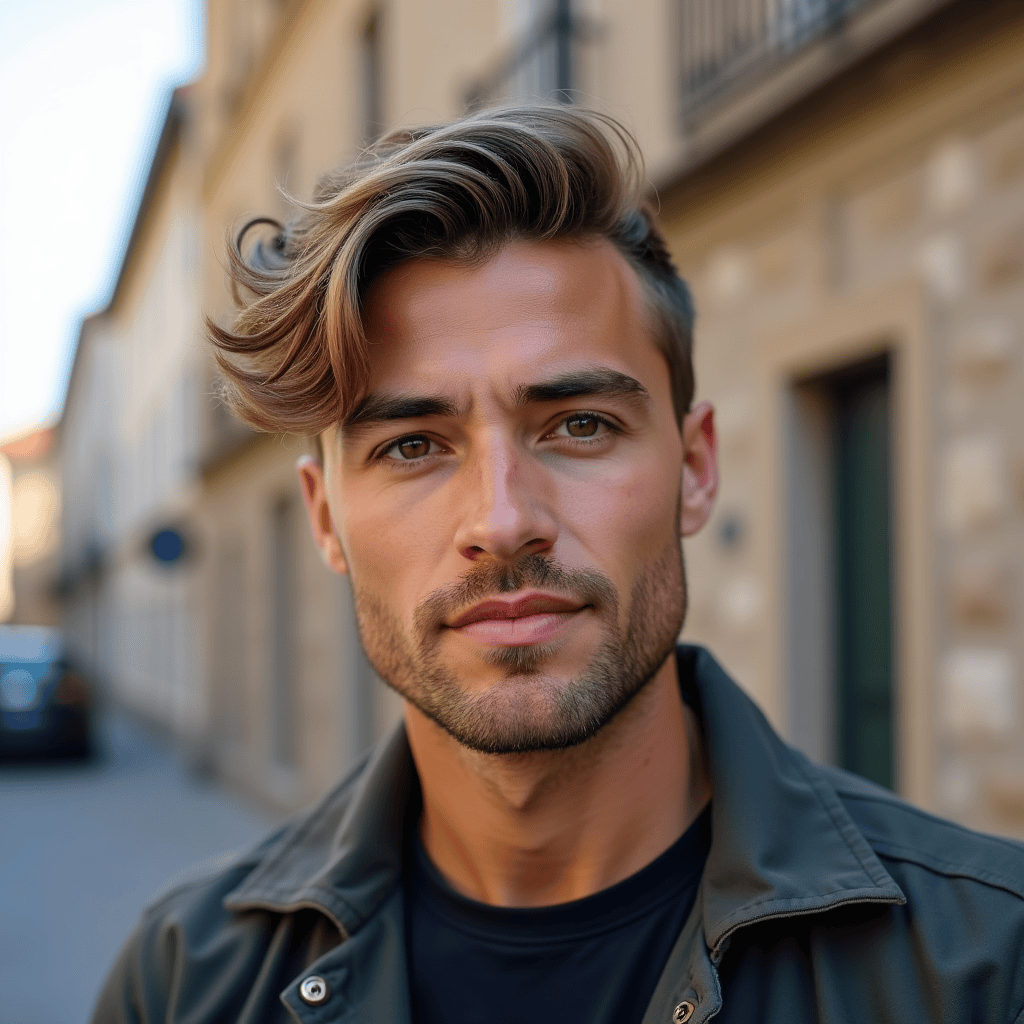
14. Curly Comb Over
A curly comb over doesn’t mean forcing curls into straight lines. The shape comes from directing the mass sideways while leaving each curl free to keep its spring. The front can sit higher and fuller, while the crown is shaped to avoid an abrupt mound. Shorter faded or tapered sides stop the haircut from becoming round all over.
Tell your barber, “Keep my curl pattern intact, leave enough length on top to direct it to one side, and taper the sides without cutting into the curls above the temple.” Loose to medium curls are easiest, especially when you want definition without slick styling. Apply curl cream while damp and guide the hair with your fingers instead of a tight comb. The main drawback is shrinkage; cutting the top based on wet length alone can leave it much shorter once dry.

15. Choppy Comb Over With Fringe
This is where the comb over starts edging toward a modern crop. The top is cut into choppy pieces, but instead of pushing everything forward, most of the hair tracks diagonally across the head. A few shorter sections break into the forehead to form an irregular fringe. The sides sit tighter, creating contrast without requiring a severe skin fade.
Ask for “a choppy side-swept top with some fringe left loose at the front, plus tapered or faded sides.” It suits men who like comb over hairstyle ideas but don’t want their hairline displayed as clearly as a classic side part would. Matte paste gives the fringe enough separation without gluing it into points. The shape can look scruffy instead of intentional once the top becomes too long, so this one benefits from regular reshaping.
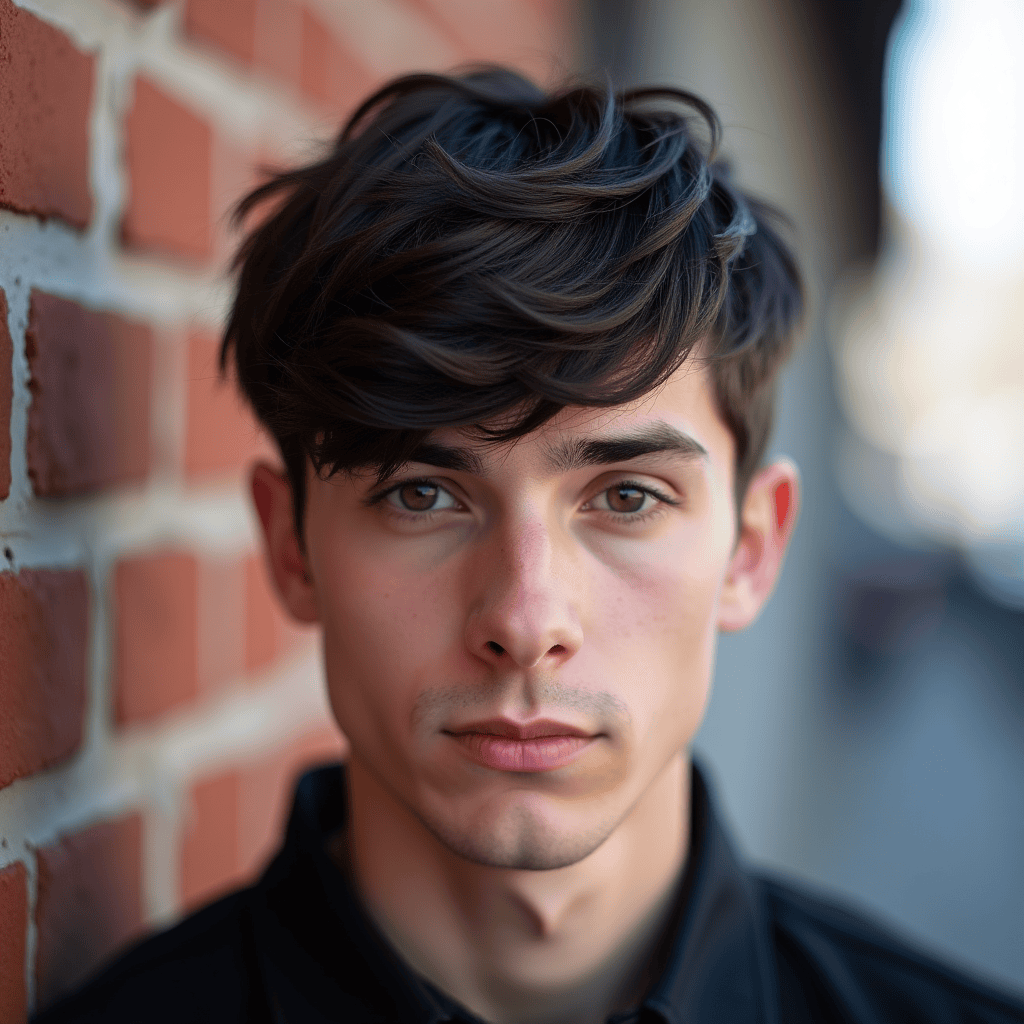
Longer Comb Over Hairstyle Ideas With Height and Flow
Once the top reaches four inches or more, a comb over stops behaving like a short barber cut and starts acting like styled medium-length hair. Longer comb over hairstyle ideas give you more drama, but they also demand blow-drying and better control of the crown. The payoff is movement that shorter fades can’t imitate.
16. Long Swept Comb Over
The long swept comb over carries four to six inches across the top, creating a broad wave rather than a narrow side part. Hair begins with lift near the forehead, then travels backward and sideways as it crosses the head. The sides stay longer too, usually scissor-cut or gently tapered. That extra weight keeps the look connected instead of top-heavy.
Ask your barber, “Leave four to six inches through the top, keep the front long, and blend the sides with scissors so I can sweep everything back and across.” Medium to thick hair gives you enough density to make the sweep look deliberate. You’ll need a blow-dryer and some kind of pliable cream or paste, especially after washing. Fine hair can attempt it, but too much length may collapse under its own weight.

17. Comb Over Pompadour
The comb over pompadour puts height first and side direction second. Hair at the front rises dramatically away from the forehead, then arcs sideways as it travels toward the back. The crown gets enough volume to support the transition rather than dropping suddenly. Shorter tapered sides make the lifted top look even taller.
Tell the barber, “Leave enough length in front for pompadour height, blend it shorter toward the crown, and keep the sweep moving slightly to one side.” Thick straight or wavy hair usually handles this best because the style needs structural support. Blow-drying is non-negotiable if you want proper lift, and a medium-hold product finishes the shape. It’s a poor choice for anyone who wants to shower, towel-dry, and leave the house.
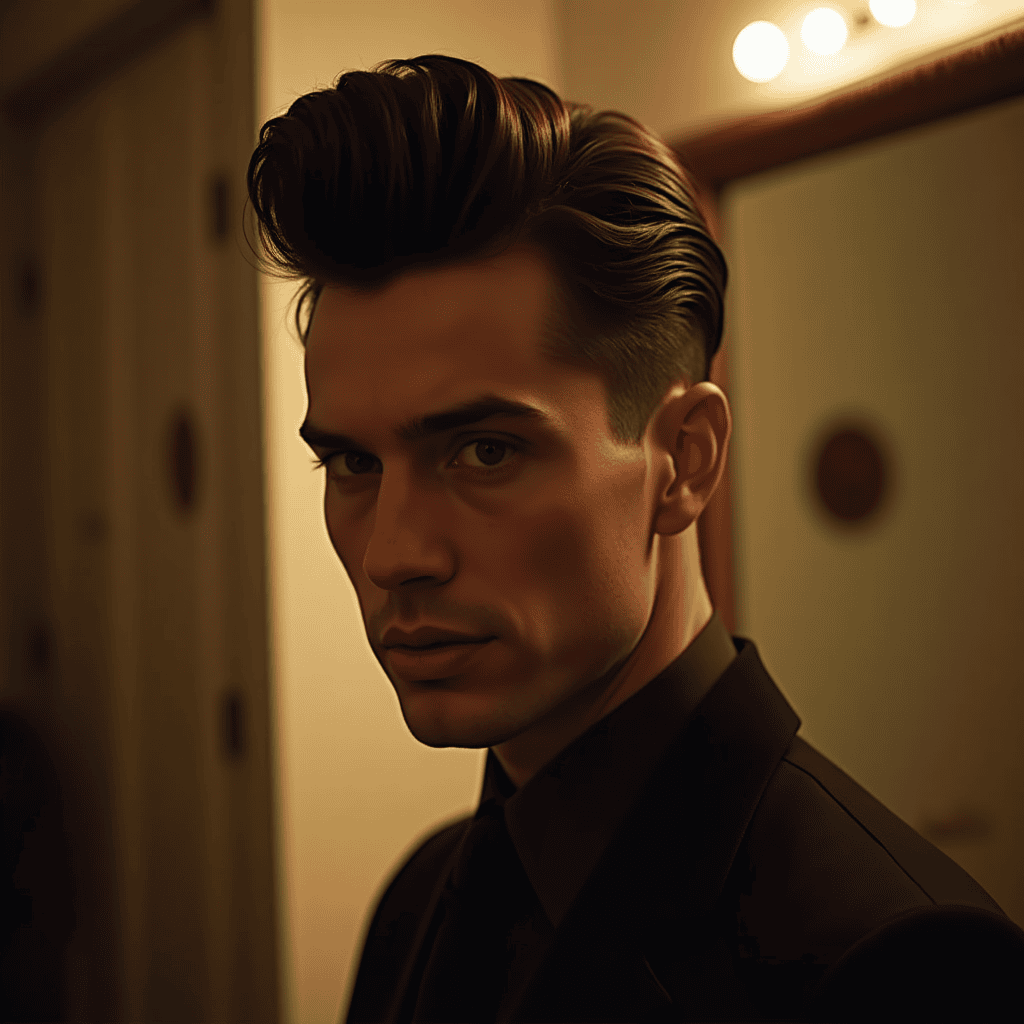
18. Brushed-Back Comb Over
This style shifts the usual direction farther toward the back. Instead of sending the top mostly across, the hair moves backward first and only then angles toward one side. That creates a longer, more streamlined silhouette with less obvious parting. The temples remain controlled so the front doesn’t flare outward.
Ask for “medium length on top that I can brush back and slightly to the side, with the temples kept tight and no hard part.” It’s useful if you like comb over hairstyle ideas but don’t want the recognisable straight-across sweep. Medium-density hair with some natural body is ideal. Heavy gel can make this look like a slick back, so stick with a pliable product unless that’s the finish you’re chasing.

19. Flowing Side-Swept Comb Over
The flowing version is deliberately less contained. Longer layers around the front and upper sides drift across and backward with enough length to move when you turn your head. There’s no carved line and barely any visible fade. The silhouette feels airy around the top while remaining narrower near the ears.
Tell your barber, “Keep it long and layered enough to sweep naturally to one side, leave movement through the front, and remove bulk around the ears without fading it tight.” Slightly wavy hair does most of the work here, especially at four inches and beyond. A small amount of grooming cream helps without freezing the flow. The tradeoff is obvious on windy days; this haircut moves because it’s designed to move.

20. Comb Over With Voluminous Quiff
A quiff-comb-over hybrid concentrates lift in the first third of the haircut. The fringe rises up and slightly back, then turns sideways as it joins the flatter section toward the crown. That creates a distinct peak without the continuous height of a pompadour. A taper fade below keeps the silhouette from spreading sideways.
Ask for “a longer front for a quiff, enough top length to sweep sideways, and a taper fade that doesn’t climb too high.” Square and round faces often wear the shape well because the vertical lift introduces stronger angles. A round brush and blow-dryer make styling much easier, followed by matte paste for hold. The weak point is wind or moisture; once the quiff falls, the entire haircut looks flatter than intended.
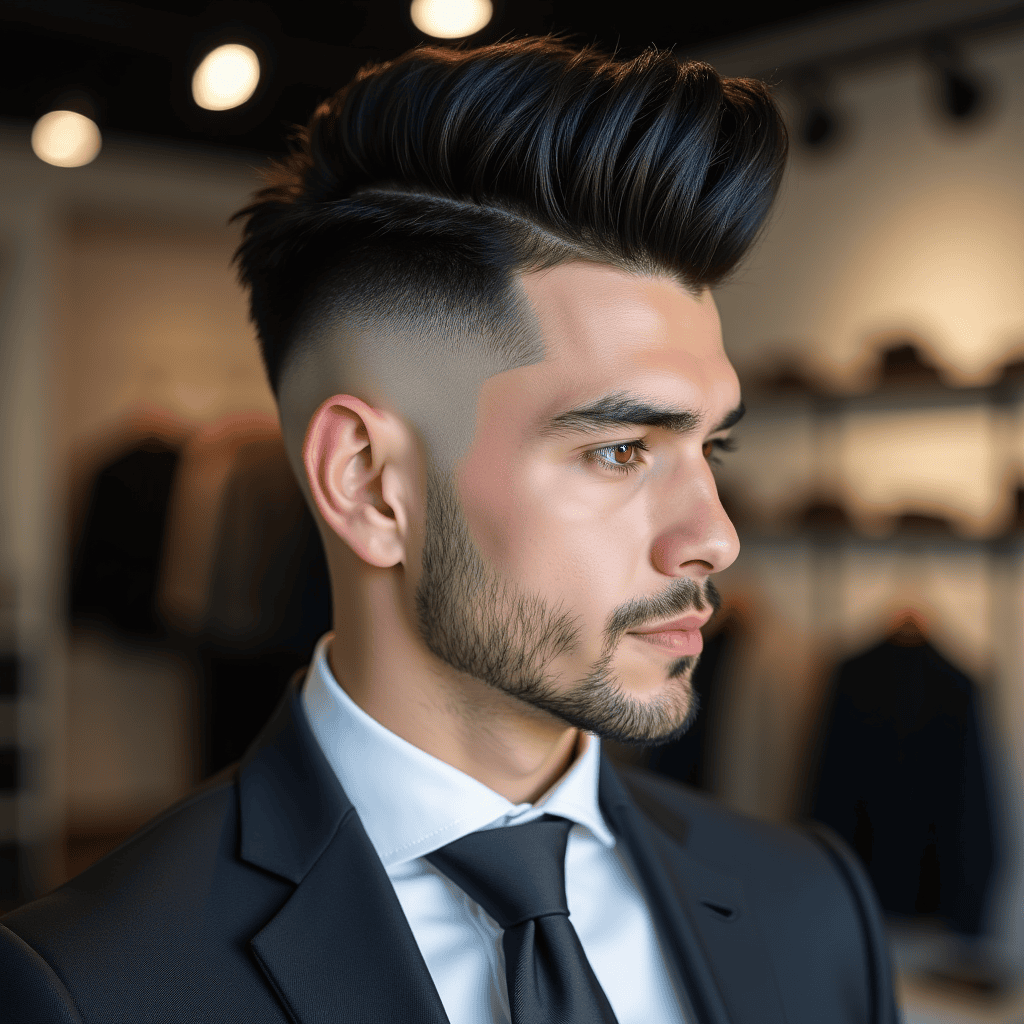
Distinctive Comb Over Hairstyle Ideas for a Stronger Personal Look
Some comb over hairstyle ideas make sense precisely because they bend the familiar outline. Hard parts, beard blends, salt-and-pepper texture, disconnected sides, and retro finishing can all push the cut in different directions. The trick is choosing one strong detail rather than piling several competing ideas onto the same head.
21. Hard-Part Comb Over
A hard-part comb over replaces the natural separation with a narrow clipper or razor-defined line. That line creates an immediate visual border between the longer top and shorter side. The sweep above should stay clean because stray hair crossing the part defeats the whole graphic effect. A fade below often makes the line look even sharper.
Ask your barber, “Cut a narrow hard part along my natural separation and keep the comb over clean above it, with a fade that doesn’t swallow the line.” Straight, dense hair gives the strongest contrast and is easier to control across the top. Expect maintenance; once the line grows in, it can look fuzzy surprisingly quickly. I usually warn first-timers that a hard part is a commitment, not a detail you forget for six weeks.
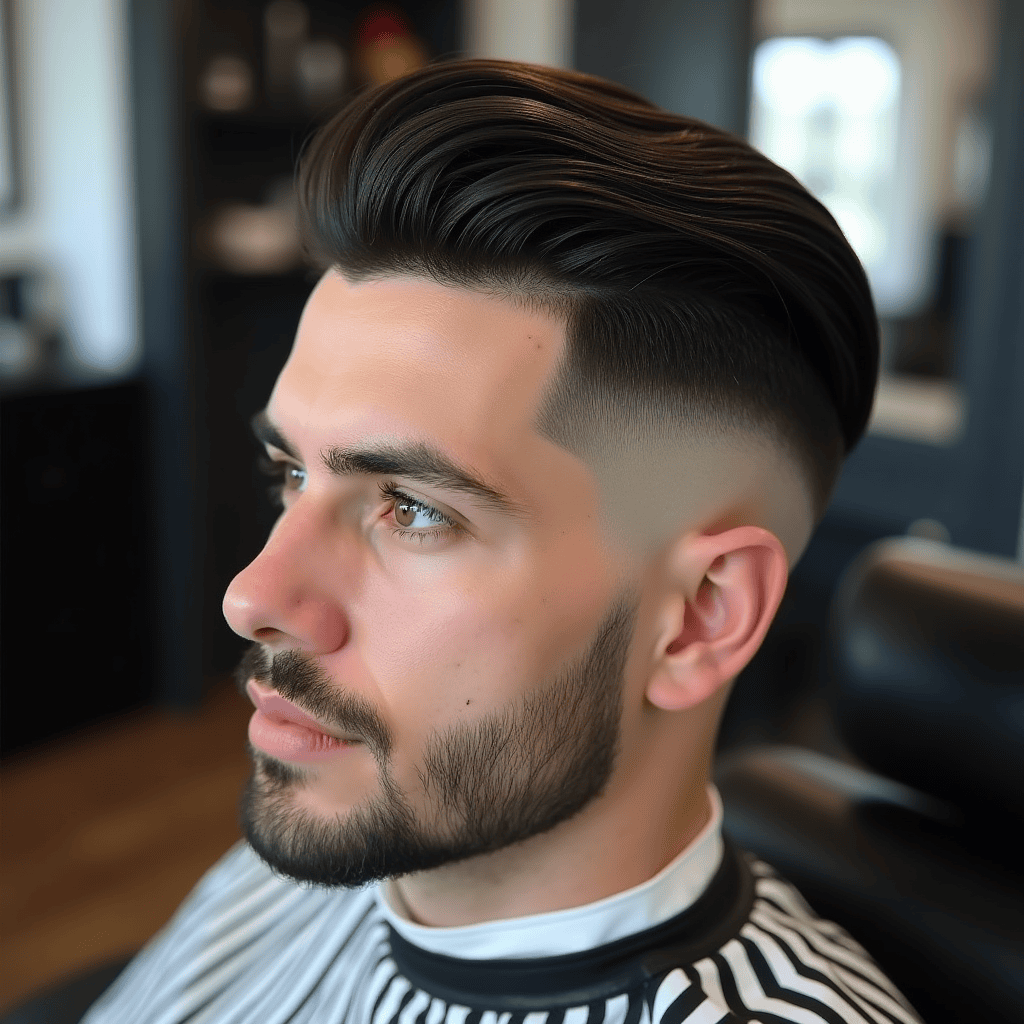
22. Disconnected Comb Over
The disconnected comb over removes much of the gradual transition between the long top and short sides. Hair above hangs or sweeps over an obviously tighter section below, creating a stronger shelf-like contrast. Keeping the top textured stops the shape from looking too rigid. Viewed from the front, you see height and movement; from the side, you see the disconnect.
Tell the barber, “Keep clear length on top and disconnect it from the short sides instead of blending everything gradually.” This is better for someone who wants modern comb over hairstyle ideas with obvious haircut architecture rather than a conservative office shape. Thick hair helps because the long top needs enough density to hold its own against the short sides. Grow-out can get awkward around the connection point, so expect to reshape it rather than simply letting it drift longer.
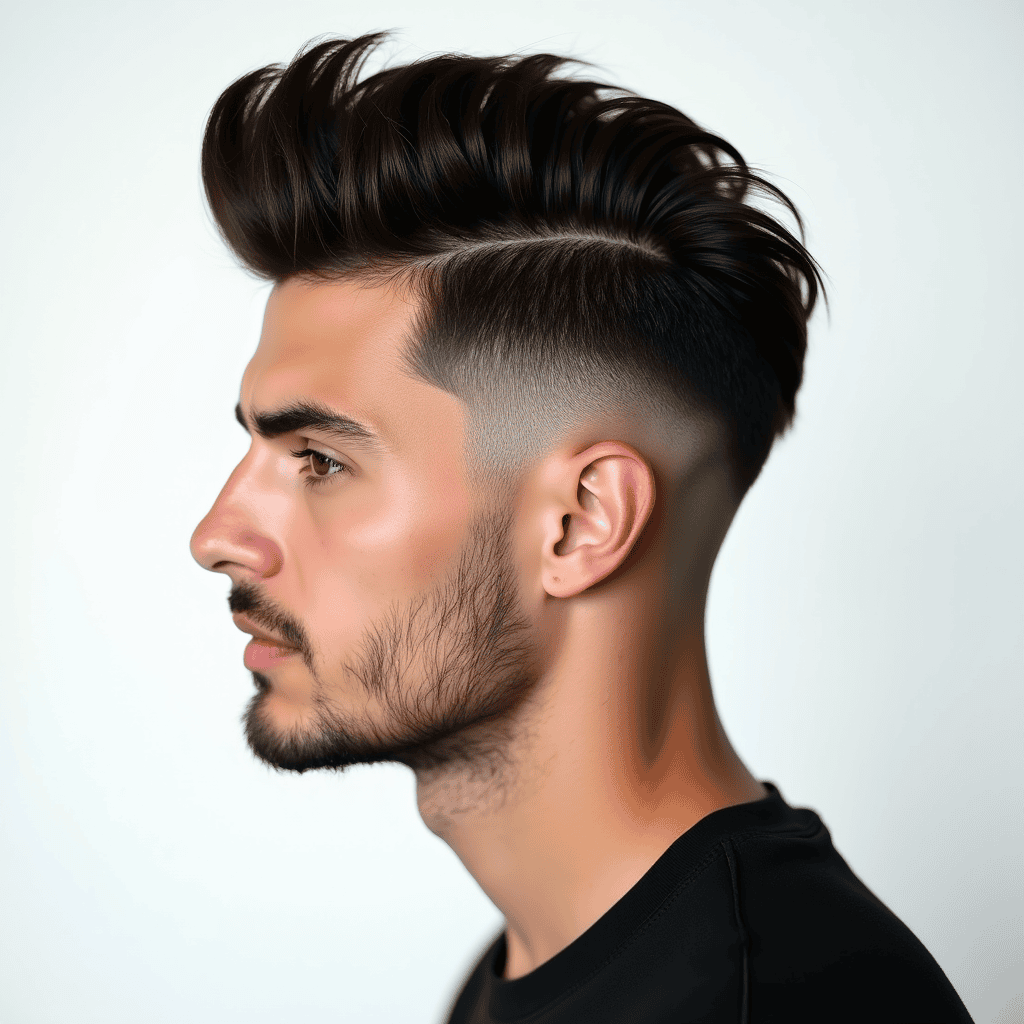
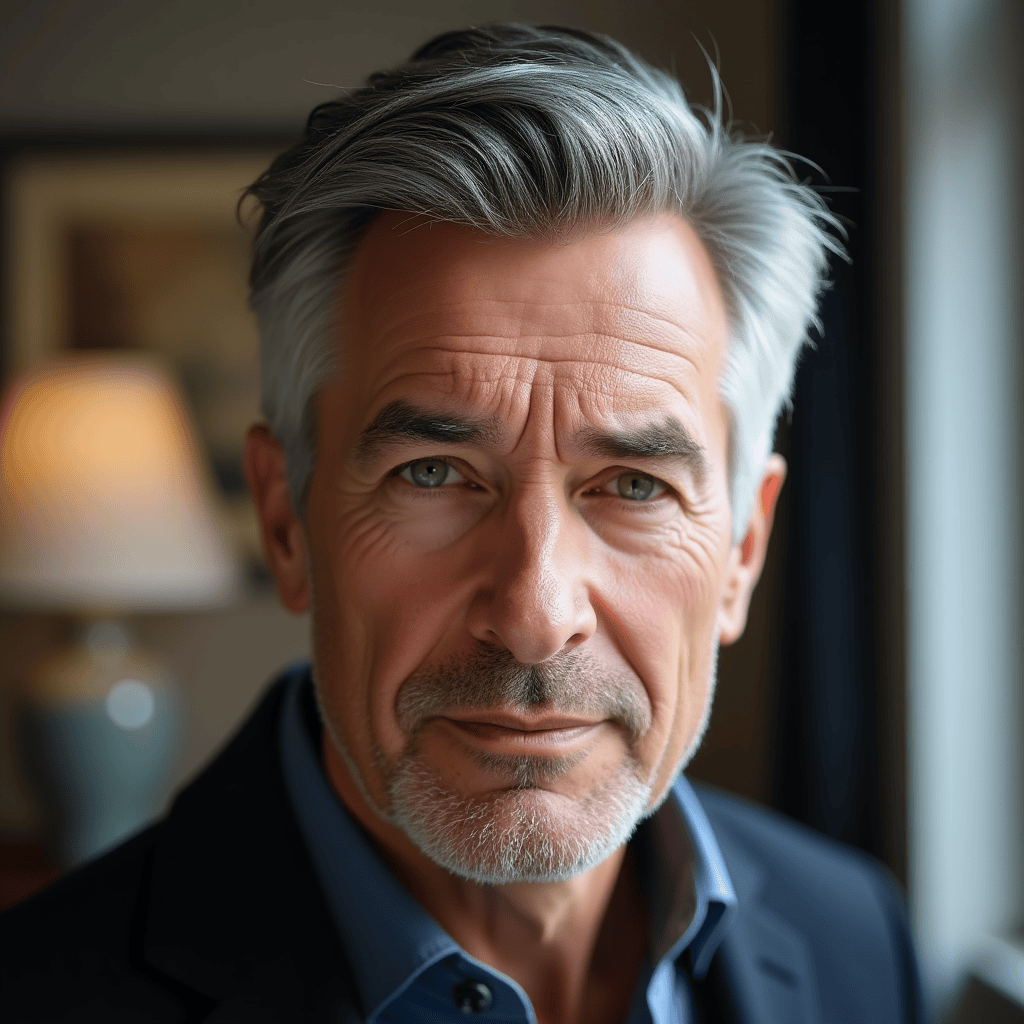
23. Salt-and-Pepper Comb Over
Grey variation actually helps a comb over because it reveals texture that solid dark hair can sometimes hide. Silver strands catch the light across the sweep, while darker sections create natural shadow and depth. A soft part keeps the color pattern from looking overly segmented. Tapered sides preserve enough grey to connect the top to the beard or temples.
Ask for “a clean side sweep that keeps my natural grey visible, with soft texture on top and a taper instead of a harsh skin fade.” This style suits medium to thick straight or wavy hair and looks particularly good when you avoid high-shine products that flatten the color variation. A matte cream or paste lets silver strands remain visible. The only real mistake is trying to make every hair behave identically; a little movement makes the color look richer.
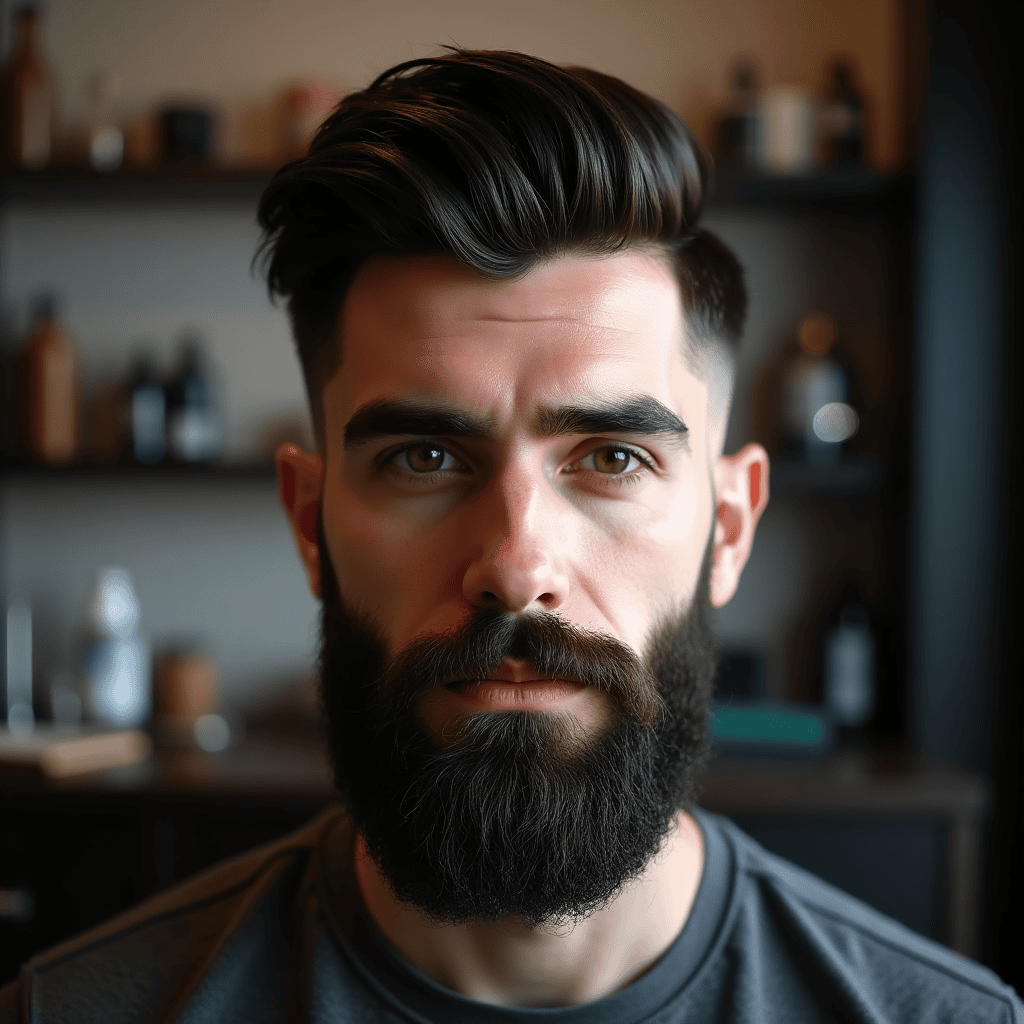
24. Comb Over Fade With Full Beard
This combination works when the fade acts as the bridge between the hair and beard instead of treating them as two separate blocks. The top sweeps cleanly to one side, while the temple fades down through the sideburn before density builds again into the beard. That gradient keeps the face from looking overloaded. A fuller beard can then carry more weight without competing with bulky hair at the sides.
Ask your barber, “Give me a side-swept comb over, fade the temple into my beard, and keep the transition gradual rather than cutting the sideburn out completely.” Men with dense facial hair get the clearest result, especially if they already maintain a defined beard outline. You are effectively maintaining two grooming areas, though, so this isn’t a lazy option. When either the fade or beard line grows unevenly, the connection stops looking intentional.
25. Retro High-Shine Comb Over
The retro version brings back the polished finish that many modern cuts deliberately avoid. The top is combed into a precise side sweep with visible comb lines and a controlled front ridge, while the sides remain neatly tapered rather than faded to nothing. Shine exaggerates every curve in the hairstyle. It reads more dressed-up than casual from the first glance.
Tell your barber, “Keep a traditional side-part shape with enough length for visible comb lines, taper the sides neatly, and leave the front long enough for a controlled ridge.” This is one of those comb over hairstyle ideas that makes more sense with tailoring, evening clothes, or a deliberately vintage outfit than with gym wear. Water-based pomade can create the finish without making the hair permanently stiff. The drawback is exposure: shine makes thinning areas, uneven combing, and product overload easier to see.

How to Choose the Right Comb Over Hairstyle Ideas
Start with hair behavior rather than a reference photo. Straight, dense hair can support precise hard parts, clean fades, and high-shine finishes, while waves usually look better when you allow texture to remain visible. Fine hair benefits from softer separation because a sharp exposed part can make scalp contrast more obvious.
Then look at how much styling you will actually do. Short comb over hairstyle ideas such as the Ivy League, low-fade version, or short taper can often be managed with fingers and a small amount of product. Longer sweeps, quiff hybrids, and pompadour versions usually need blow-drying to establish the shape before product goes in.
Face proportions matter, but they aren’t a rigid rule. If your face already looks long, don’t automatically add another two inches of vertical lift at the front. Broader faces can often carry more height, while narrow faces may look better with a flatter diagonal sweep and a little more fullness left at the sides.
Bring two or three reference photos to the appointment, ideally including a side view. Then say what you like about each picture instead of asking the barber to copy a stranger’s head exactly. A useful request sounds like, “I want this amount of top length, this lower fade, and a softer part than this photo.”
For a wedding, interview, formal dinner, or professional shoot, get the first version of a new cut several days before the event rather than experimenting the same morning. That gives you time to learn the direction and figure out how much product your hair actually needs. A conservative side-part comb over also pairs easily with tailoring because it keeps the hair silhouette controlled around a jacket collar and shirt line.
Where Comb Over Hairstyles Can Go Wrong
The biggest failure isn’t that the comb over looks old-fashioned. It’s trying to force hair across an area where there isn’t enough density to support the sweep. A good barber can use direction and texture intelligently, but dragging long strands across a large exposed area usually draws more attention to what you’re trying to hide.
Product causes the next problem. A thumbnail-sized scoop of heavy pomade on fine hair can separate strands into shiny groups and expose more scalp than dry hair would. Start with less than you think you need, especially around the part, and add more only if the style won’t stay put.
Fade height matters too. High fades look dramatic in photographs, yet they can make the top seem narrower and the face appear longer. If you’re unsure, a low taper or low fade gives your barber more room to adjust during later appointments.
And don’t let the part dictate everything. I’ve moved plenty of parts slightly because the natural growth pattern made the requested line fight the crown. Good comb over hairstyle ideas cooperate with the way hair grows; they don’t spend every morning arguing with it.
Frequently Asked Questions
The practical questions around comb over hairstyle ideas usually come down to hair length, thinning, fade choice, styling products, face shape, and maintenance. Those decisions matter more than copying the exact haircut worn in a reference picture.
Choosing the Style
What is the best comb over hairstyle for men?
A classic comb over with a low taper is the safest starting point for most men because it keeps enough side weight to look natural while giving the top a clear direction. From there, you can shorten the fade, add texture, or grow the top once you know how your hair behaves.
Which comb over hairstyle ideas suit thick hair?
Textured comb overs, pompadour hybrids, mid fades, disconnected cuts, and longer swept styles all work well with thick hair. Density gives the top enough structure to hold separation and height. Ask the barber to remove internal bulk carefully rather than simply cutting the entire top shorter.
Can men with wavy hair wear a comb over?
Yes. Waves can make a comb over look more relaxed because they introduce natural texture across the sweep. Leave roughly three to four inches on top if you want the wave pattern to remain visible, and avoid heavy products that flatten the bends into a stiff surface.
Is a comb over good for a round face?
It can be. A little height at the front and tighter sides can create more vertical structure around a round face. Avoid making the top extremely wide and flat. A low or mid fade paired with moderate front lift is often easier to balance than a heavily slicked horizontal sweep.
Hair Length and Barber Requests
How long should hair be for a comb over?
Around two to four inches on top covers most comb over hairstyle ideas. Shorter versions can work around one and a half inches, while flowing or pompadour styles may need four to six inches. The required length also depends on whether your hair is straight, wavy, curly, fine, or dense.
What should I tell my barber if I want a comb over?
Describe three things: the amount of length you want left on top, where you want the side part or sweep to sit, and how short the sides should become. Showing a front and side reference photo is often more useful than relying on the phrase “comb over” alone.
Should a comb over have a hard part?
No. A hard part is an optional design detail, not a requirement. Natural parts look softer and grow out more gracefully, while shaved part lines create stronger contrast and need more frequent maintenance. If you’re uncertain, start natural because a hard part can’t be put back once it is cut.
What fade works best with a comb over?
A low fade is the most adaptable because it keeps weight around the upper sides and doesn’t overpower the top. Mid fades look sharper, while high and skin fades create stronger contrast. Choose based on how bold you want the haircut to appear and how often you’ll maintain it.
Styling and Maintenance
What product is best for comb over hairstyle ideas?
Matte paste or clay works well for textured styles, while grooming cream suits looser sweeps and wavy hair. Pomade makes sense for classic or high-shine finishes. Start with a small amount, distribute it through your hands, then apply from the back forward before shaping the visible front.
How do you make a comb over look natural?
Follow the hair’s natural growth direction, keep the part soft, and avoid coating every strand in product. Blow-dry the top roughly toward the desired side, then use your fingers to finish instead of repeatedly dragging a fine comb through it. Slight irregularity often makes the style more convincing.
How often should a comb over haircut be trimmed?
Short fades may begin losing their crisp appearance within a few weeks, while scissor-tapered versions generally grow out more softly. Your ideal schedule depends on how sharp you want the sides to remain. The top often needs reshaping less frequently than a skin or high fade.
Can you style a comb over without a blow-dryer?
Shorter comb over hairstyle ideas often work without one, especially if the hair naturally grows in the desired direction. Longer sweeps, quiffs, and pompadour versions are easier with heat because blow-drying creates lift and direction before product is applied. Without it, those styles tend to sit flatter.
Thinning Hair and Hairlines
Is a comb over suitable for thinning hair?
A soft, textured side sweep can work with mild thinning when the haircut avoids dramatic separation. The goal should be balanced direction rather than pulling long strands tightly across exposed scalp. Matte products usually photograph more naturally than high-shine finishes, which can increase visible contrast between hair and scalp.
Can a comb over work with a receding hairline?
It can if the front remains relatively natural and isn’t stretched tightly across the forehead. A textured diagonal sweep or short Ivy League version often works better than a polished style with a deep exposed part. Your barber can adjust the front length around your actual growth pattern.
Does a hard part make thinning hair look worse?
Sometimes. A shaved line deliberately exposes scalp, so it can increase contrast around an already sparse area. If density near the part is limited, a softer natural separation usually gives you more flexibility. Ask the barber to check the part placement with your hair dry before committing to a defined line.
Events and Everyday Wear
Which comb over is best for a wedding or formal event?
A classic side-part comb over, gentleman’s scissor cut, or softly polished low-fade version works easily with formal clothing. Book the haircut several days before the event if you’re changing the shape significantly, then practice the styling once so you’re not experimenting while getting dressed.
Can a comb over look casual instead of formal?
Yes. Choose texture instead of shine, leave the part natural, and let a few strands move rather than locking the top into one solid surface. Wavy, messy, and low-taper versions work especially well with casual wardrobes because they retain the basic side direction without the polished finish.
How do I choose between all these comb over hairstyle ideas?
Pick the version that matches your actual routine before considering the boldest photo. Decide whether you’ll blow-dry, how frequently you’ll visit the barber, and how much natural texture you want visible. Then ask for that combination of top length, side treatment, and part definition at your next appointment.
Best Men’s Hairstyle Reports
Discover modern men’s haircut ideas, classic barber styles and fresh hairstyle inspiration for every look.