
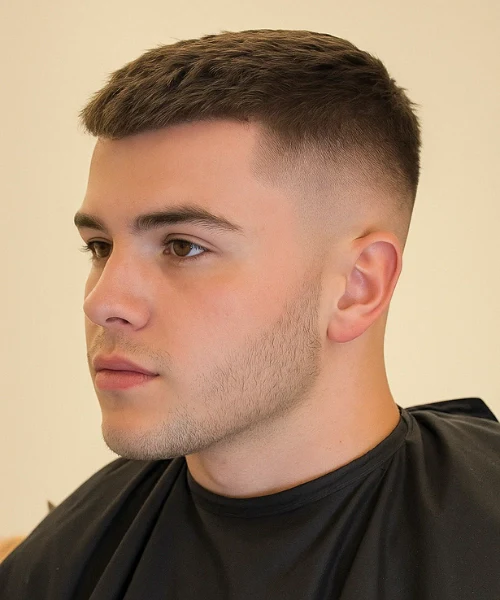
The strongest crew cut haircut ideas balance a short, controlled top with clean sides that suit the wearer’s hair rather than fighting it. The Classic Crew Cut is the safest starting point, the Low Fade Crew Cut looks sharper without feeling extreme, the Textured Crew Cut handles natural movement well, and the Ivy League Crew works when you want more styling room.
This guide approaches the cut through practical barbering principles: proportion, head shape, graduation, texture, and realistic maintenance. The goal is less about chasing one fashionable finish and more about choosing a crew cut that will still look intentional two or three weeks after the appointment.
| Crew Cut Style | Best For | Top Length | Side Finish | Upkeep |
|---|---|---|---|---|
| Classic Crew Cut | Most men | Short with slight front length | Tapered | Low |
| Low Fade Crew Cut | Clean everyday styling | Short | Low fade | Medium |
| Textured Crew Cut | Thick or wavy hair | Short to medium | Taper or fade | Medium |
| Ivy League Crew | Office and smart-casual wear | Longer front | Scissor/taper | Medium |
| High Fade Crew | Strong contrast | Short | High fade | High |
| Skin Fade Crew | Crisp modern finish | Short | Skin fade | High |
| Curly Crew Cut | Natural curls | Medium-short | Tapered | Medium |
| Messy Crew Cut | Relaxed texture | Medium-short | Soft taper | Medium |
| Long Crew Cut | Styling flexibility | Medium | Scissor/taper | Medium |
| Military Crew Cut | Minimal daily styling | Very short | Tight taper | Low |
Classic Crew Cut Haircut Ideas That Rarely Look Out of Place
Classic crew cut haircut ideas work because they respect the shape that made the cut useful in the first place: shorter sides, controlled length through the crown, and enough extra hair toward the front to keep the head from looking uniformly clipped. Start here if you want something that survives workdays, weekends, weddings, and the occasional morning when styling gets skipped entirely.
1. Classic Crew Cut
The classic crew cut keeps the crown compact while allowing the top to gain a little length as it approaches the forehead. From the side, the silhouette rises subtly toward the front rather than forming a flat shelf. The sides blend neatly into the top without the hard contrast of a modern skin fade.
It suits straight, slightly wavy, medium, and dense hair particularly well, though a barber can adapt the balance for most textures. Ask for “a traditional crew cut with tapered sides and a little extra length through the front.” Upkeep is easy, but letting the sides grow too long can make the shape look round before the top actually needs cutting.
2. Short Crew Cut
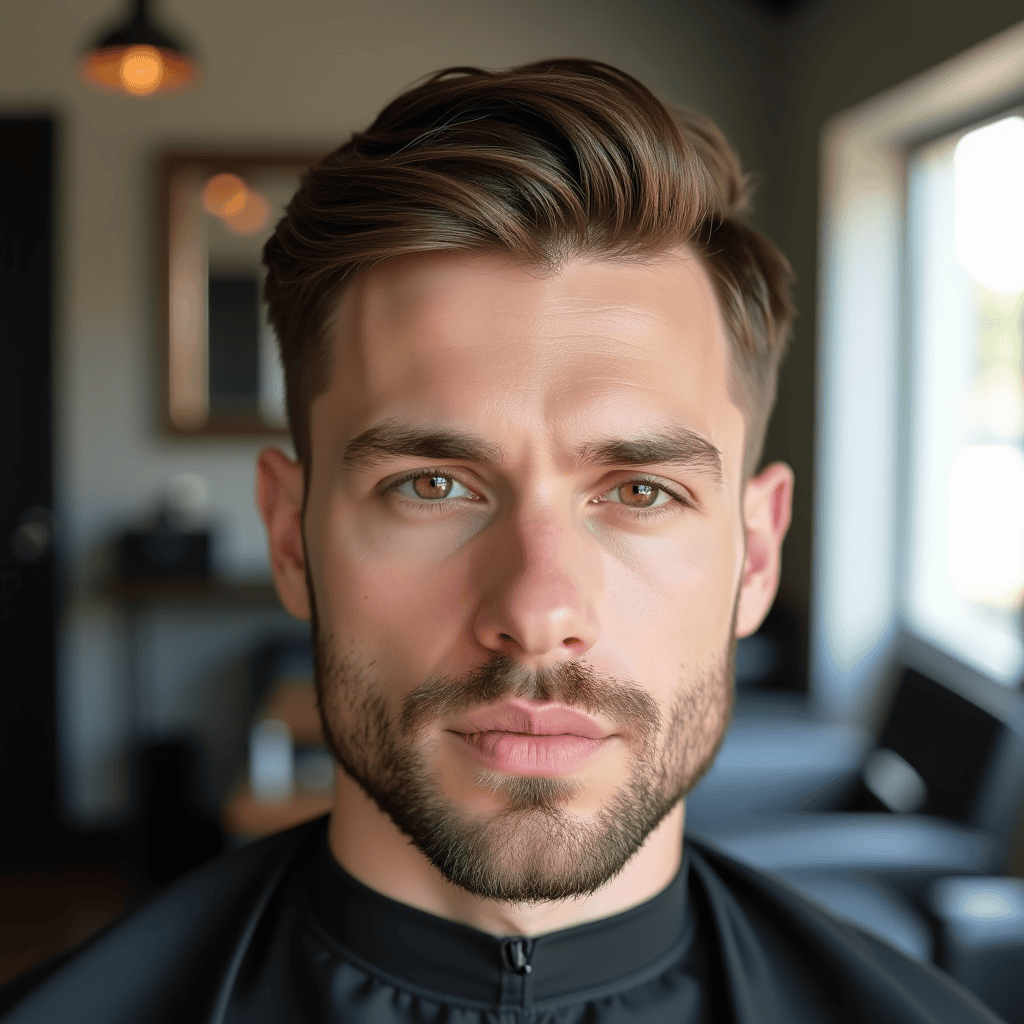
A short crew cut strips the shape back until only a narrow difference remains between the top and sides. The front still carries enough length to show that this is a crew rather than a uniform buzz cut, but the overall profile stays tight to the scalp. It looks especially clean when the barber keeps the graduation smooth around the temples.
Men with dense, straight hair usually get the clearest shape, although coarse hair can work beautifully when controlled closely. Ask for “a short crew cut, tight through the crown with only a little lift at the front.” There is almost no morning styling, but the short proportions expose uneven growth patterns and head shape more than longer versions do.

3. Long Crew Cut
The long crew cut preserves the familiar tapered outline but leaves enough hair through the top to show separation, direction, and soft movement. The front can sit slightly upright or sweep a fraction to one side, while the crown remains controlled. From above, the cut looks structured rather than cropped.
This is one of the better crew cut haircut ideas for men who like short hair but do not want to surrender styling options. Ask for “a longer crew cut with scissor texture on top and a natural taper around the sides.” It takes more product and drying than the classic version, and fine hair can collapse if the barber leaves excessive weight near the front.

4. Ivy League Crew Cut
The Ivy League crew pushes the front noticeably longer while keeping the back and crown disciplined. That extra length allows a shallow side part or a loose brushed-over finish without turning the cut into a full side-part hairstyle. The transition from top to sides should look polished rather than aggressively faded.
It fits office wardrobes, tailoring, smart knitwear, and formal events because the hair can be directed instead of simply standing upright. Ask for “an Ivy League crew with enough length at the front to comb slightly to the side and a classic taper.” The tradeoff is styling: skip the comb and product for several days and the longer front can lose the crisp shape that makes this version work.

5. Military-Inspired Crew Cut
The military-inspired crew cut keeps everything disciplined without reducing the entire head to one clipper length. The sides sit extremely close, the crown remains short, and the front retains a small ridge of additional length. The contrast is controlled and functional rather than decorative.
This works well for men who prioritize minimal styling and do not mind frequent clipper work. Tell your barber, “keep the crew shape but take the sides tight and leave only enough length at the front to show the graduation.” It is unforgiving if you prefer softness around the temples, and the tight finish tends to lose its freshly cut character faster than a relaxed taper.

Crew Cut Ideas With Fades and Sharper Side Work
Changing the sides can alter a crew cut more dramatically than adding another half inch on top. Fade-based crew cut haircut ideas create clearer separation around the temples and ears, so they tend to read newer and more deliberate. The downside is simple: the cleaner the fade, the sooner visible regrowth starts softening it.
6. Low Fade Crew Cut
A low fade crew cut keeps the shortest section close to the ears and neckline before building weight relatively early. That leaves more darkness around the upper sides, which stops the haircut from appearing too narrow. The top can remain traditionally short with a modest rise through the front.
Round, oval, and longer faces can all work with this cut because the low placement avoids exaggerating vertical height. Ask for “a crew cut with a low fade that stays below the temple and keeps some weight through the upper sides.” Expect more frequent cleanup than with a taper, although the grow-out tends to remain less abrupt than a high fade.
7. Mid Fade Crew Cut
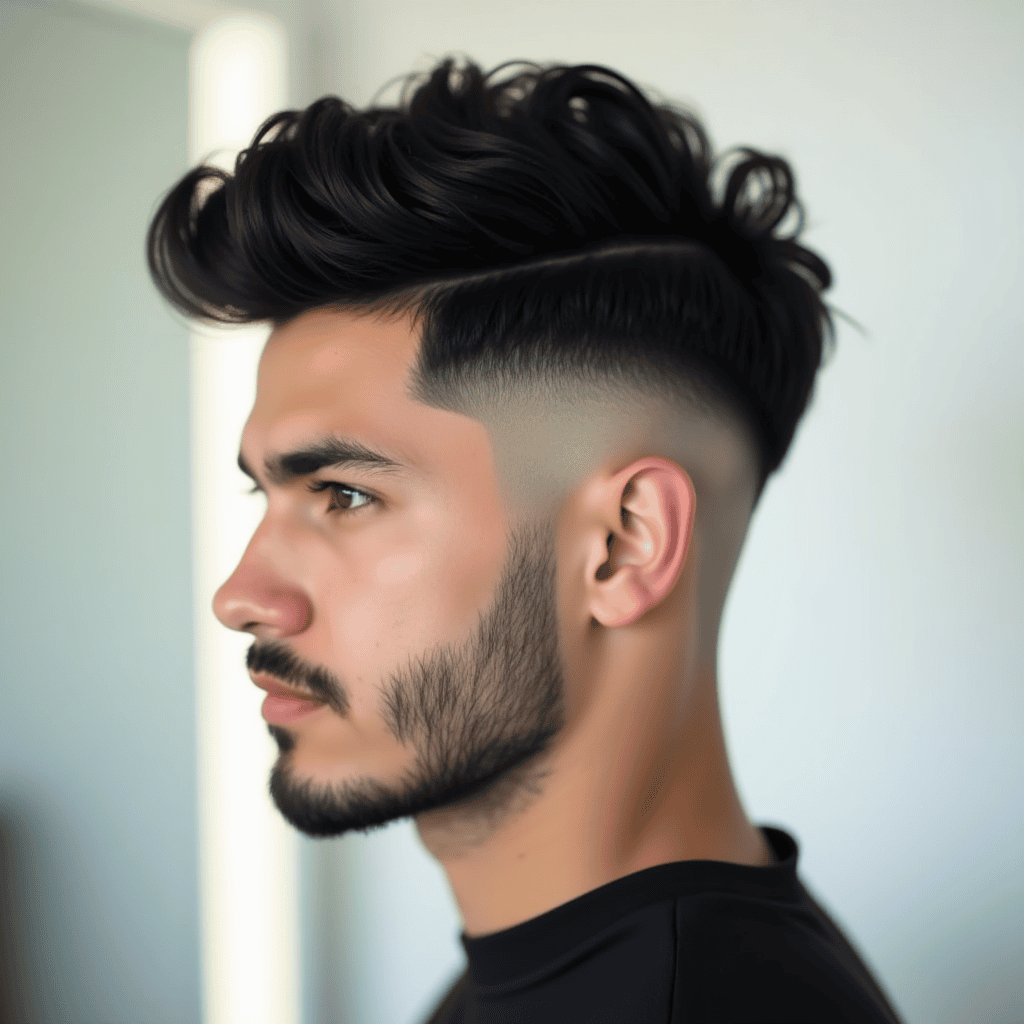
The mid fade crew cut removes more visual weight through the center of the sides, producing a clear boundary between the fuller top and the close lower section. The fade begins around the middle of the temple area and blends upward without reaching the crown. This gives the head a leaner, more angular profile.
It works best when you actively want the fade to be visible rather than merely tidy. Ask for “a mid fade crew cut with a smooth blend and a short textured top that gains length toward the front.” The main drawback is maintenance: once the middle section grows out, the haircut can lose its sharp gradient even while the top still looks fine.
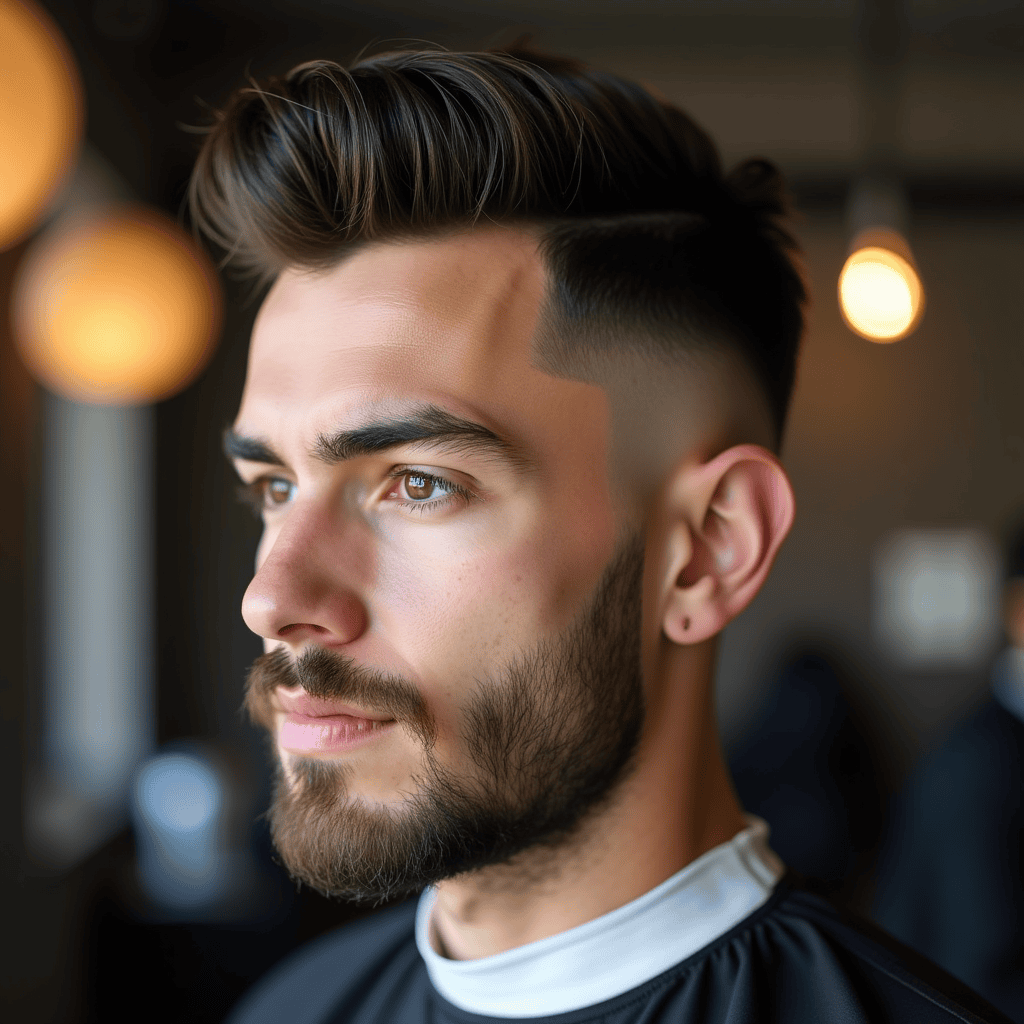
8. High Fade Crew Cut
A high fade crew cut removes most of the visual weight from the sides before the blend approaches the upper head. That creates a strong block of texture on top and a much cleaner outline around the temples. Viewed straight on, the eye goes immediately to the top rather than the overall silhouette.
Men with dense hair often get the strongest contrast, while very long or narrow faces may need a little more side weight to avoid looking stretched. Ask for “a high fade crew cut, but keep the top clearly separate and textured rather than clipping everything too close.” It grows out visibly, and this is not the version to choose if barber visits every few weeks already feel like a chore.
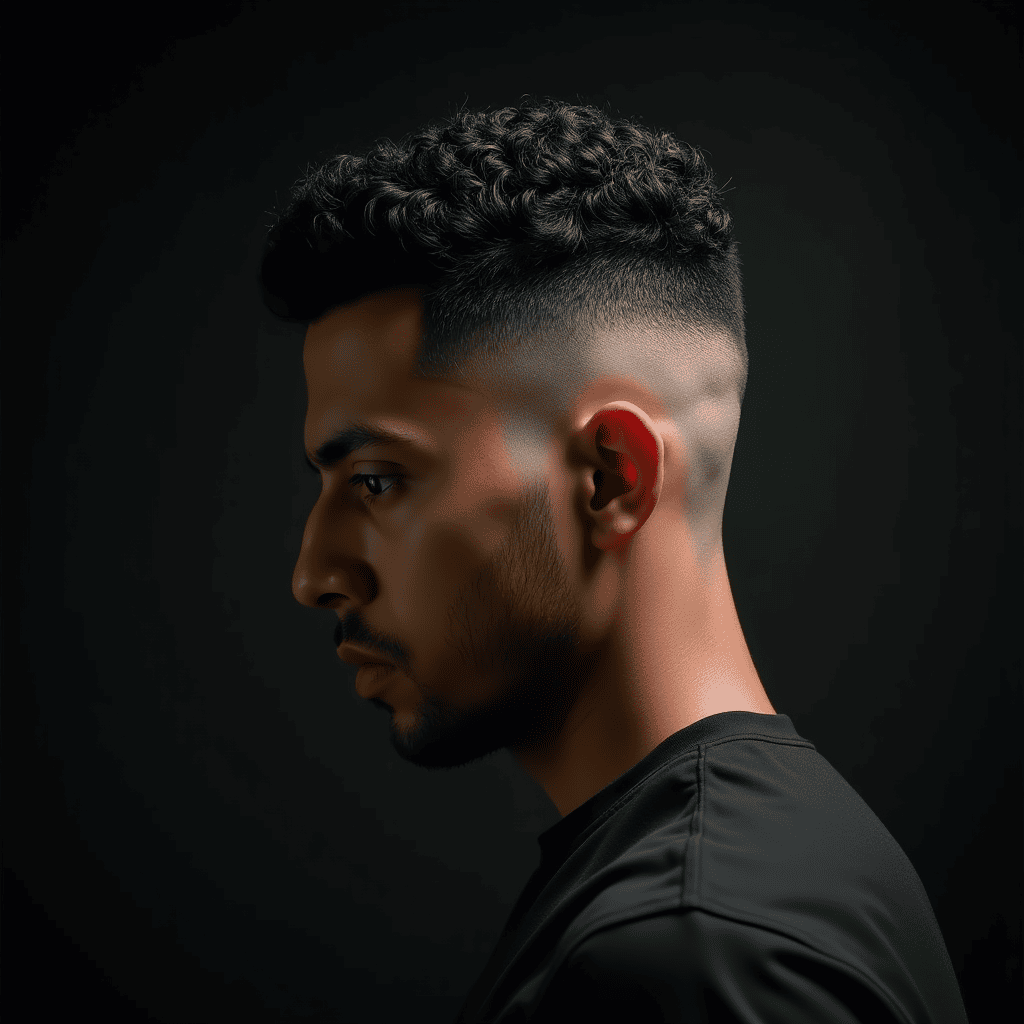
9. Skin Fade Crew Cut
The skin fade crew cut takes the lower sides down to bare skin before blending gradually into visible hair. That creates the crispest transition in this family and makes even a restrained top look much more graphic. The top usually works best when some texture is preserved so the cut does not feel overly severe.
Choose it if sharp edges and a freshly barbered appearance matter more to you than a forgiving grow-out. Ask for “a crew cut with a skin fade blended cleanly into the sides and enough texture left through the top.” The obvious weakness is longevity: the skin section begins changing almost immediately as stubble returns, so keeping the exact look requires regular appointments.
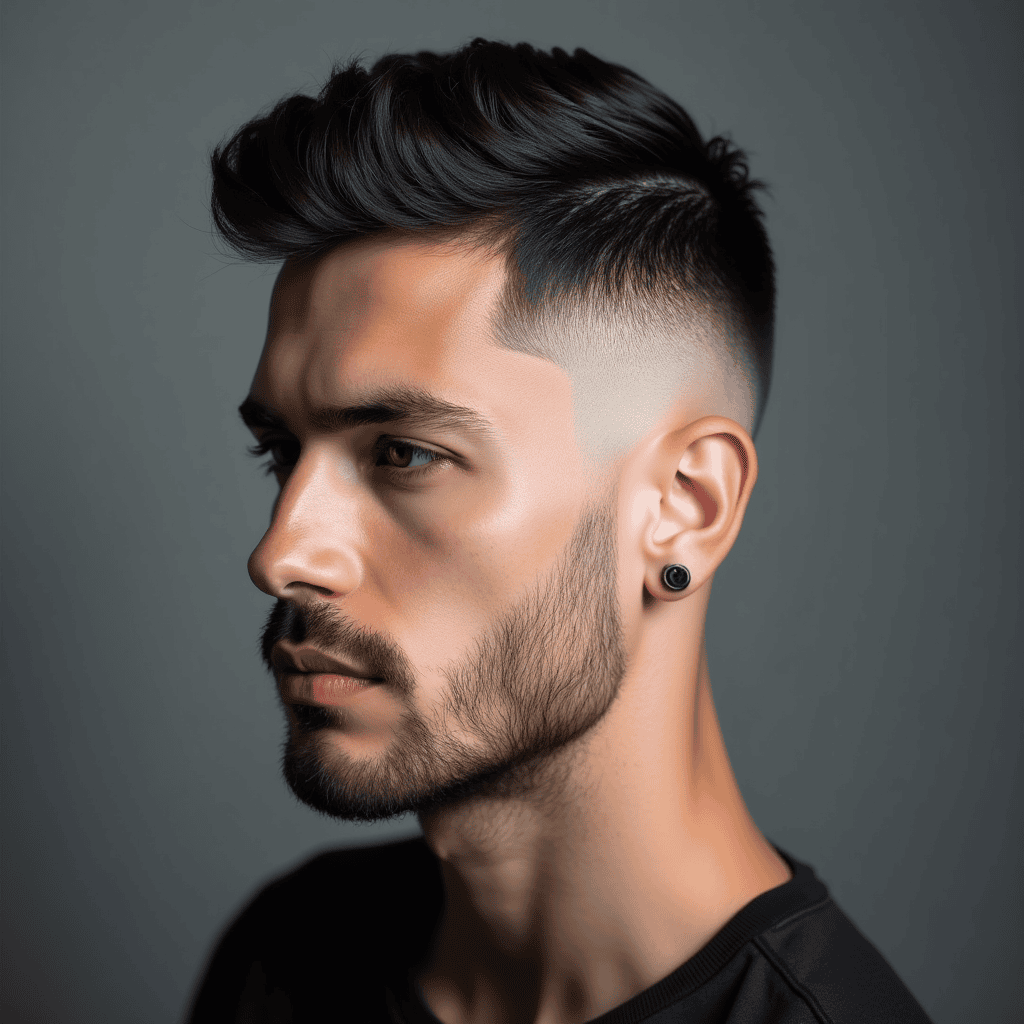
10. Drop Fade Crew Cut
A drop fade crew cut curves downward behind the ear instead of following one horizontal fading line around the head. The shape mirrors the skull more closely, leaving a little additional depth toward the back while cleaning the temple area aggressively. From the side, that curved fade gives the haircut more movement.
It works particularly well when a standard straight fade makes the back of the head look too flat. Ask for “a crew cut with a drop fade that follows the head behind the ear and keeps the crown connected.” The shape depends heavily on accurate blending, and a poorly placed drop can make the back look disconnected rather than intentionally sculpted.
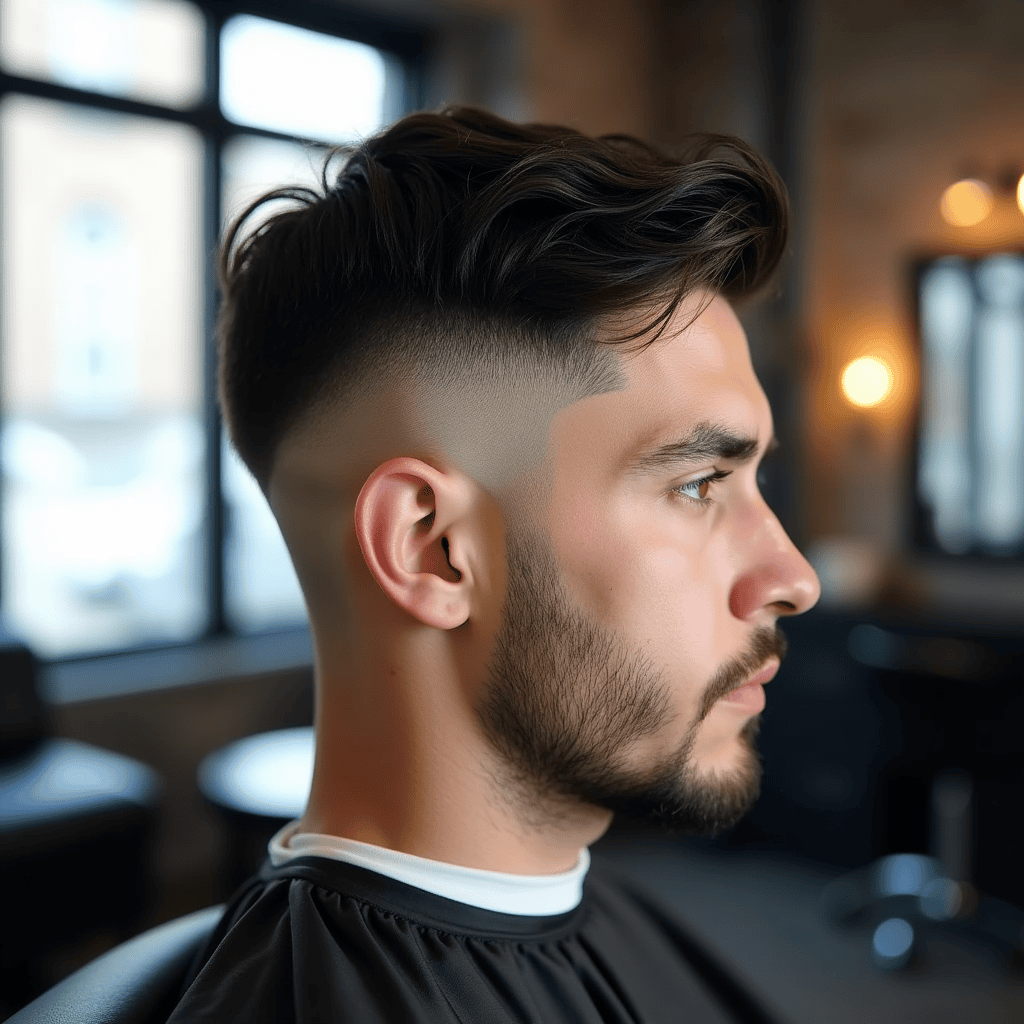
Textured Crew Cut Haircut Ideas for More Movement
Texture changes the crew cut from something merely short into something visibly styled. These crew cut haircut ideas use separation, waves, curls, or deliberately irregular direction to prevent the top from looking like one solid block. They are particularly useful when natural hair already wants to bend rather than stand in one obedient line.
11. Textured Crew Cut
The textured crew cut keeps the traditional graduation but breaks the top into small, visible sections instead of brushing it into one smooth surface. The front may rise unevenly, while the crown carries shorter, piece-like texture. A matte finish usually shows the shape more clearly than wet shine.
This cut favors thick or medium-density hair that can support separation without exposing too much scalp. Ask your barber for “a crew cut with point-cut texture through the top and a natural, broken-up finish at the front.” It needs a small amount of product to look intentional, and overusing wax can collapse the separation into heavy clumps.

12. Messy Crew Cut
A messy crew cut loosens the disciplined surface without abandoning the short framework underneath. The top points in slightly different directions, the fringe sits imperfectly, and the sides stay neat enough to keep the disorder intentional. Think controlled bedhead rather than hair that simply has not been combed.
It works best on straight-to-wavy hair with enough density to create overlapping pieces. Tell the barber, “keep the crew cut shape but leave enough irregular texture on top that I can push it around with my fingers.” It is less convincing on very fine hair because aggressive texturizing may make the scalp more visible, especially under bright overhead light.

13. Wavy Crew Cut
The wavy crew cut keeps enough top length for a natural bend to appear instead of clipping every wave out of existence. The crown stays controlled, while the front and upper surface show subtle S-shaped movement. Shorter sides give those waves definition by contrast.
Men with naturally loose waves should consider this before asking a barber to flatten their texture into a conventional straight crew. Ask for “a crew shape that leaves enough top length for my natural wave to show, with weight removed rather than cut uniformly short.” Humidity can change the finish from day to day, so anyone demanding identical styling every morning may prefer a tighter version.

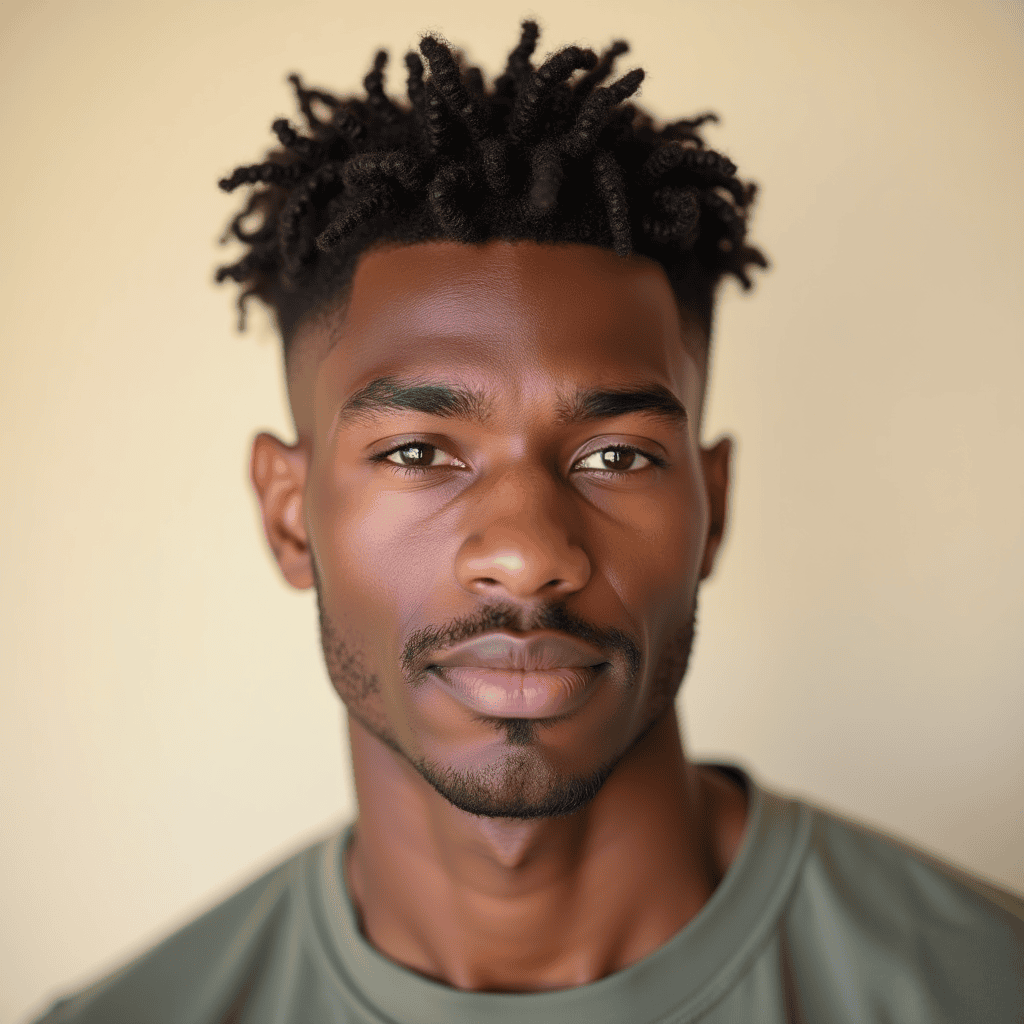
14. Curly Crew Cut
A curly crew cut compresses the silhouette while preserving visible coils across the top. The sides can taper closely, but the top should retain enough length for individual curls to form instead of turning into fuzzy unfinished growth. A slightly taller front gives the shape direction without requiring the curls to lie flat.
This version is built for naturally curly hair and works best when the barber cuts with the curl pattern rather than treating it like straight hair. Ask for “a short crew shape that keeps defined curls on top and gradually tightens toward the sides.” Shrinkage makes length harder to judge when wet, so removing too much during the appointment can leave the finished cut shorter than expected.
15. Spiky Crew Cut
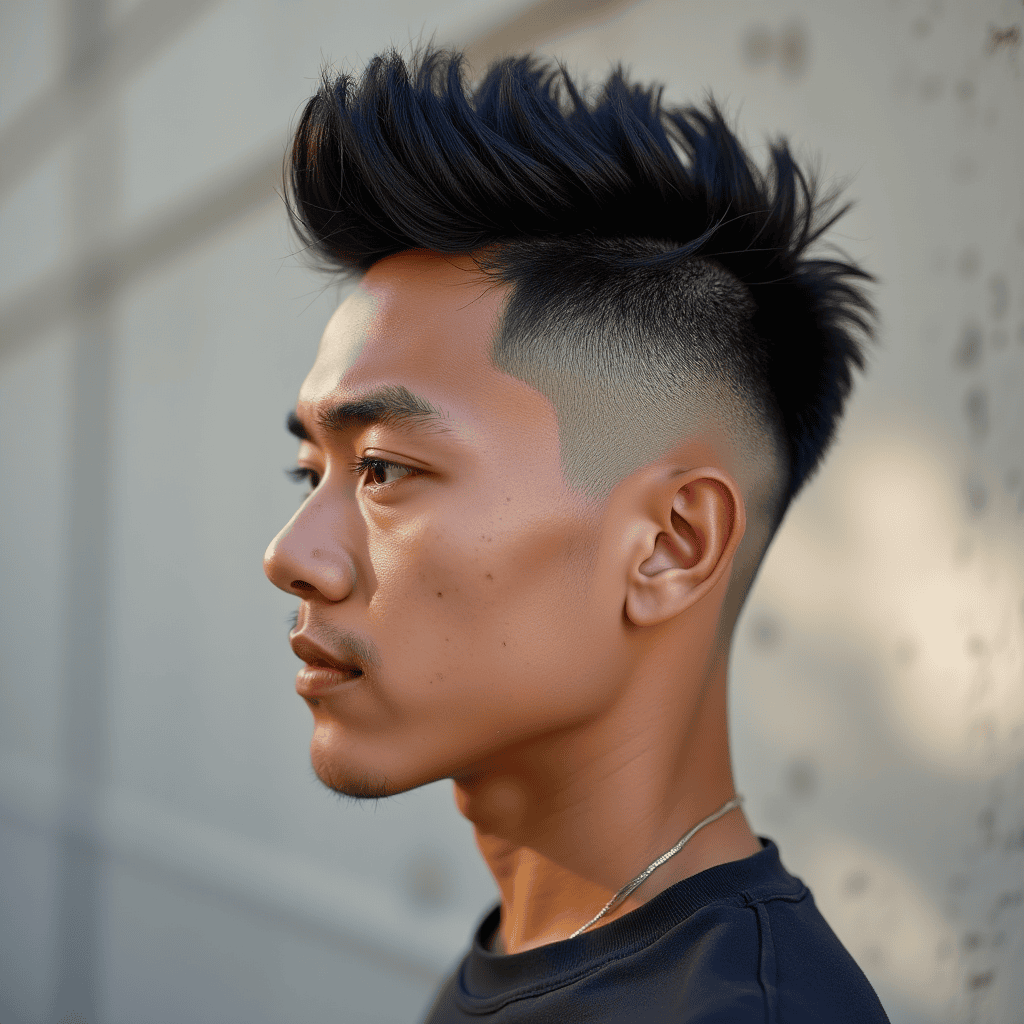
A spiky crew cut concentrates its texture upward, with short separated points running from the crown toward the front. The spikes should remain compact rather than tall, which preserves the crew cut proportions. Keeping the sides simple prevents the haircut from drifting into an overly stylized early-2000s shape.
Straight, coarse hair usually holds this direction with the least effort. Ask for “a short crew with choppy texture that can be pushed upward, especially through the front, but keep the spikes tight and modern.” Product choice matters here; anything too glossy or stiff can turn light texture into rigid spikes that look dated quickly.
Crew Cuts Shaped Around Different Hair and Face Characteristics
The most useful crew cut haircut ideas are not always the most dramatic ones. Small changes in side weight, front height, and top length can help a barber work with dense hair, thinning areas, or facial proportions instead of copying one reference photo without adjustment. This is where a consultation matters more than the haircut’s label.
16. Crew Cut for Thick Hair
A crew cut for thick hair removes bulk strategically rather than attacking every area with a shorter guard. The top stays dense enough to look full, while internal texture prevents it from becoming a heavy cap. The sides taper closer to the head so the volume remains concentrated where it is useful.
Men whose hair tends to balloon outward after two weeks should ask for “a crew cut that removes weight through the top and upper sides without making the front thin.” Thick hair makes this style easy to support, but it can also create a bulky ridge where the sides meet the top if the graduation is not blended carefully.
17. Crew Cut for Fine Hair
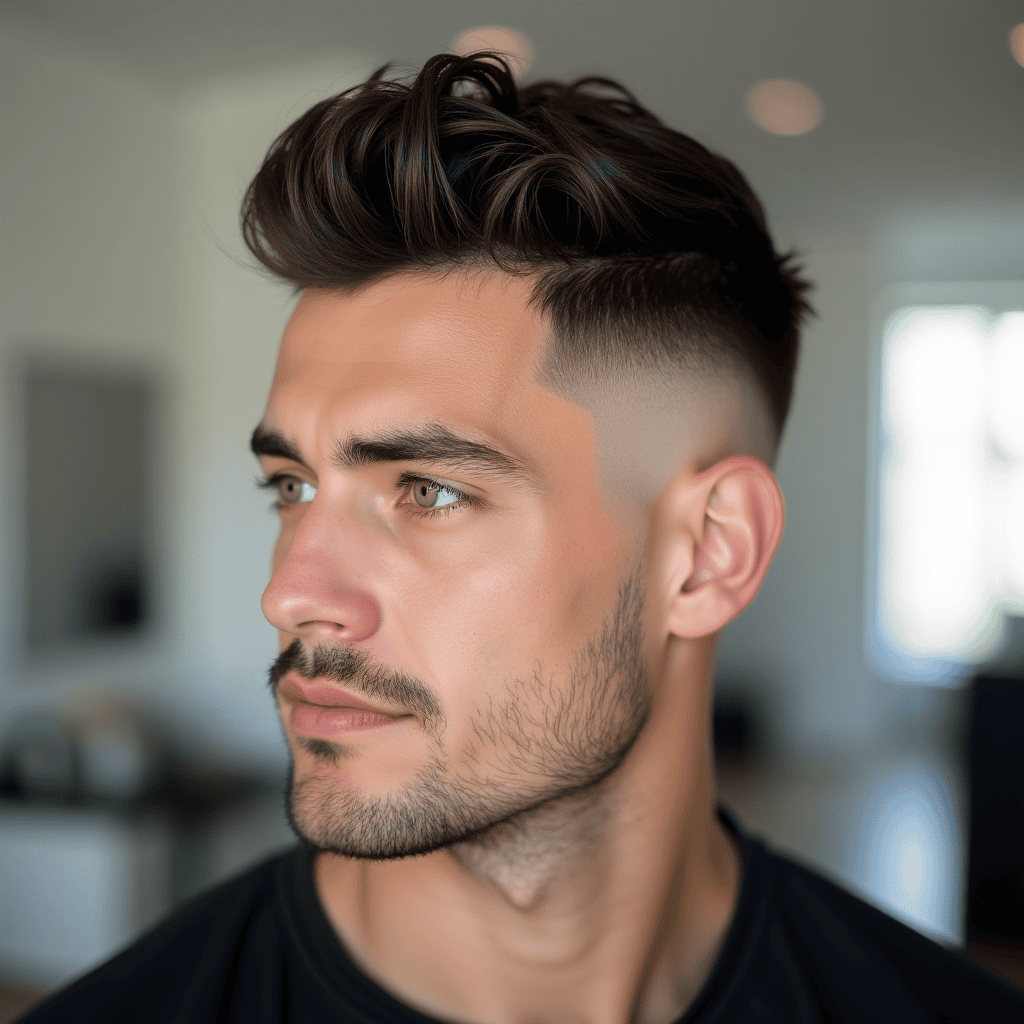
A crew cut for fine hair relies on restraint because too much thinning can make sparse areas more obvious. The top stays relatively uniform in density, with the front only slightly longer and the sides kept close enough to create contrast. A dry finish prevents individual strands from sticking together and exposing more scalp.
Ask for “a short crew cut with minimal thinning, a little height at the front, and tidy sides that make the top look denser.” This can give fine hair a firmer outline, but no haircut creates density that is not there. Leaving the top too long often has the opposite effect because it separates and collapses more easily.

18. Crew Cut With Receding Temples
A crew cut can work around receding temples by avoiding a heavy front section that creates obvious contrast between dense and lighter areas. The top remains short, while the front edge is kept textured and somewhat irregular rather than forced into a hard straight line. Tighter sides help the overall shape look deliberate.
Ask for “a short textured crew that works with my natural temple shape rather than carving a new squared hairline.” This approach can reduce visual emphasis on the recession, but trying to push a long dense fringe forward usually makes the contrast more noticeable. A barber should preserve the natural line instead of promising that the cut will somehow change it.

19. Crew Cut for a Round Face
A crew cut for a round face usually benefits from a touch more height through the front and less visual width around the sides. The crown stays compact, while the front rises enough to draw the eye upward. A mid or low fade can narrow the side profile without making the haircut excessively severe.
Ask for “a crew cut with controlled height at the front and the sides kept lean, but not completely stripped out.” The adjustment is subtle; stacking too much height on top can look forced and stop reading like a crew cut. This is also where a high fade can be overkill if your head shape already appears narrow above the temples.

20. Crew Cut for a Long Face
For a longer face, the crew cut usually looks more balanced when the front stays modest and the sides retain some visible weight. A classic taper often works better than an aggressive high fade because it avoids adding unnecessary vertical emphasis. The overall silhouette remains horizontal and controlled.
Tell your barber, “keep the crew fairly flat through the top, avoid too much front height, and leave some fullness through the upper sides.” This is one of those situations where chasing the sharpest possible fade can work against the wearer’s proportions. The quieter cut may look less dramatic in the barber’s chair but more balanced in everyday photos.

Bolder Crew Cut Haircut Ideas for a More Defined Finish
Once the foundation fits, crew cut haircut ideas can take on stronger details without losing the basic silhouette. Harder edges, disconnected fades, directional fronts, and deliberately rough texture all increase visual impact. These versions are less forgiving, though, and most need a barber who understands how much contrast your hair can support.
21. Crew Cut With Line-Up
A crew cut with a line-up sharpens the forehead and temple area into a cleaner geometric outline. The top remains short and gradually graded, while the hairline receives a more deliberate edge. That small change makes the entire haircut look tighter, particularly from the front.
It works best when your natural hairline provides enough density for the barber to create definition without pushing the edge backward. Ask for “a crew cut with a clean line-up that follows my natural hairline rather than taking it too high.” The drawback is regrowth: a sharply edged front can begin looking less precise sooner than the rest of the cut.

22. Crew Cut With Hard Part Detail
This version adds a narrow shaved part near one side of the upper head while keeping the rest of the crew cut short. The detail creates a directional boundary that can make a slightly longer front look more structured. It works best when the line stays small enough to support the haircut rather than becoming the entire haircut.
Ask for “a short crew cut with a subtle hard-part line placed where my natural direction already separates.” Men with irregular growth around that area should be cautious because the line can fight the natural pattern. It also requires commitment during grow-out; once you stop refreshing it, the short regrowth may look awkward until the surrounding hair catches up.
23. Forward-Brushed Crew Cut
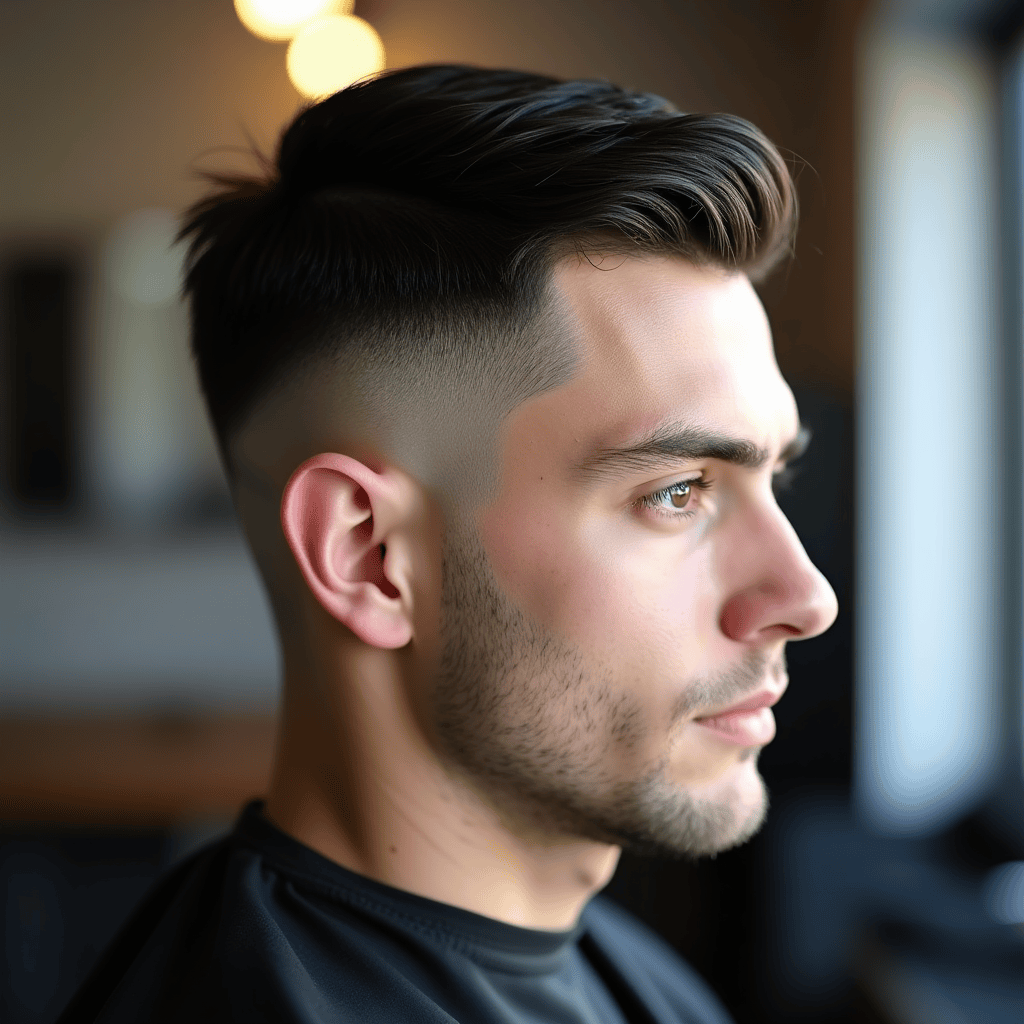
The forward-brushed crew cut directs most of the top toward the forehead rather than upward or backward. The fringe remains short and broken, creating a compact horizontal shape with visible texture at the front edge. The sides stay tight enough to prevent the forward direction from making the whole haircut appear heavy.
This works nicely for straight or slightly wavy hair that naturally falls forward. Ask for “a crew cut with the top left long enough to brush forward into a short textured fringe.” It can help tame stubborn growth patterns, but men whose hair naturally shoots backward may spend more time forcing the direction than the low-maintenance cut deserves.
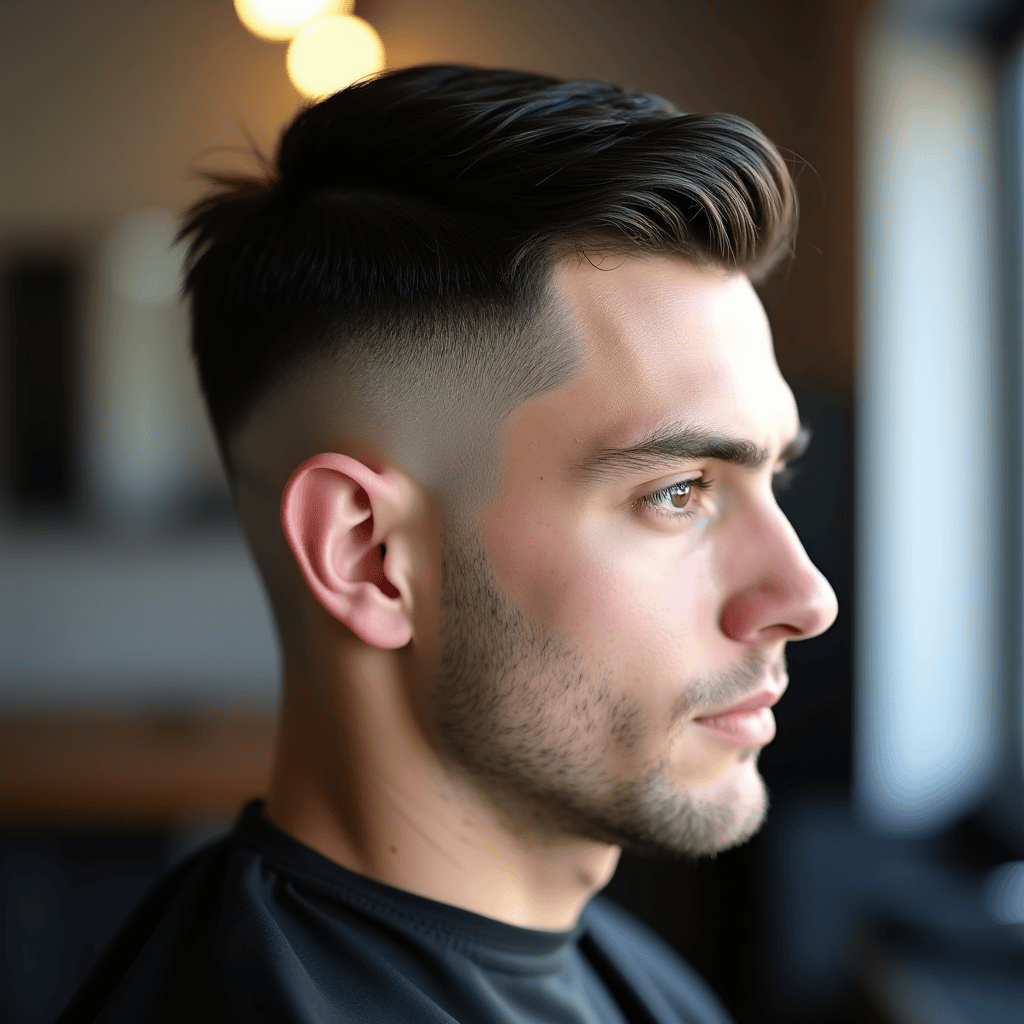
24. Disconnected Crew Cut Fade
A disconnected crew cut fade creates a stronger visual jump between the textured top and the closely faded sides. Instead of melting every section together gently, the barber preserves a firmer ridge of weight near the upper perimeter. The result looks more graphic and deliberately contemporary.
Ask for “a crew cut with a strong fade and a little disconnection left between the top and sides, but keep the top short.” Thick hair handles the contrast more naturally because there is enough density to form that upper shape. On fine hair, the disconnected edge can look accidental, and the transition becomes especially obvious as the sides grow back.
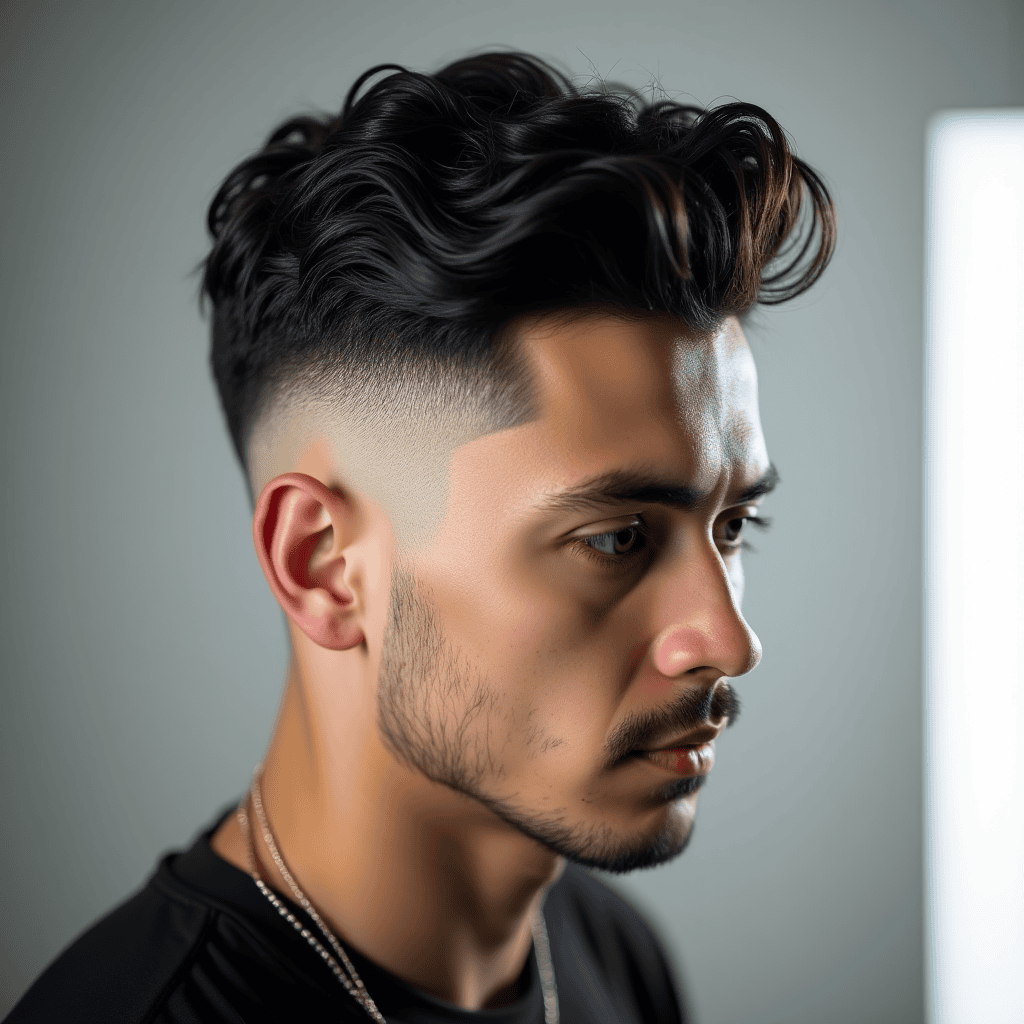
25. Rugged Natural Crew Cut
The rugged natural crew cut keeps the overall proportions clean while refusing to polish every strand into place. The top shows uneven finger-styled movement, the front has loose height, and the sides taper naturally rather than disappearing into skin. It looks like a good haircut after a normal day instead of five minutes after leaving the chair.
Ask for “a crew cut with scissor texture, a natural taper, and enough length on top to wear it loose without looking overstyled.” Thick, wavy, and slightly coarse hair carries the finish especially well. The weakness is definition: if your hair is extremely straight or soft, the relaxed surface may look unfinished unless you add texture with a matte styling product.

How to Choose the Right Crew Cut Haircut
Start with your natural hair instead of the reference photo. Dense straight hair can support short graphic shapes and aggressive fades, while waves and curls usually look better when the barber leaves enough top length for the texture to form. Fine hair often benefits from fewer thinning techniques and less exaggerated separation.
Face proportions come next. If your face already looks long, resist adding a tall front and stripping the sides to skin. If it looks broad, modest height and slightly leaner sides can shift the proportions without turning the haircut into a vertical quiff.
Bring two or three photos to the appointment, ideally showing the haircut from the front and side. Tell the barber what you like about each image rather than requesting the name alone: “I want this amount of front length, this low fade placement, and this softer upper blend” is far more useful than saying “give me a modern crew.”
Think about clothing and events as well. A classic taper, Ivy League crew, or low fade can move easily between a suit, office clothes, denim, and weekend basics. If you have a wedding, formal event, important interview, or photo session coming up, consider getting the main cut several days beforehand rather than gambling on a completely new variation the morning before.
And be realistic about appointments. Skin fades and sharp line-ups demand more frequent cleanup if you care about keeping the exact finish. Traditional tapers and longer crew cuts usually grow out more quietly.
Where Crew Cuts Can Go Wrong
A crew cut becomes disappointing when every part is taken short without considering proportion. If the top, crown, and sides all sit at nearly the same length, the haircut may lose the graduation that makes a crew cut different from a standard buzz cut.
Over-fading is another common issue. A high skin fade can look excellent on the right head and hair density, but it should not be treated as the automatic upgrade to every short haircut. Sometimes retaining upper-side weight gives the face and skull a better frame.
Texture can also be overdone. Removing excessive bulk from fine or already sparse hair may create separation where you wanted density. Heavy thinning on curly hair can interrupt curl groups and leave the top looking fuzzy instead of controlled.
The safest approach is specific communication. Decide what matters most before the clippers start: overall length, fade height, front direction, texture, and how often you are willing to return. A crew cut is simple in outline, but good versions are rarely one-size-fits-all.
Frequently Asked Questions
What is the difference between a crew cut and a buzz cut?
A buzz cut usually keeps most of the head close to one consistent clipper length. A crew cut uses graduation, leaving the top longer than the sides and usually retaining additional length toward the front. That difference creates a more shaped silhouette and provides at least some styling flexibility.
How long should the hair be for a crew cut?
There is no single required length. Most crew cuts keep the sides relatively short while leaving enough hair on top to create visible graduation and a slightly longer front. Longer versions can support finger styling or a shallow side direction, while short versions sit much closer to the scalp.
Which crew cut haircut ideas are easiest to maintain?
The classic crew cut, short crew cut, and military-inspired crew are among the easiest choices if daily styling is your main concern. Traditional tapered sides also tend to grow out more gently than skin fades, reducing the pressure to return to the barber as soon as the lower sides show regrowth.
Is a crew cut good for thick hair?
Yes. Thick hair gives a barber plenty of material for creating the graduated top that defines the cut. The key is removing internal bulk carefully so the upper sides do not flare outward. Texture through the top can also stop dense hair from forming one solid, heavy block.
Can men with fine hair wear a crew cut?
They can, provided the barber avoids excessive thinning. Keeping the top compact and the sides shorter can create useful visual contrast. A dry, matte styling finish generally works better than heavy gels or greasy products because fine strands stay separated without clumping together and exposing additional scalp.
Which crew cut works best with curly hair?
A curly crew cut should leave enough length on top for individual curls to form while gradually tightening the sides. Taking the top too short can remove most of the visible curl pattern. Bring a reference with a texture similar to yours because curl shrinkage makes simple length measurements less useful.
What should I tell my barber when asking for a crew cut?
Describe the individual parts rather than relying only on the haircut name. Explain how much length you want at the front, whether you prefer a taper or fade, where that fade should begin, and whether the top should look smooth, textured, curly, forward-brushed, or naturally loose.
How often does a crew cut need trimming?
That depends heavily on the side finish and how precise you want the haircut to remain. Skin fades and line-ups show regrowth quickly, while classic tapers tolerate more growth. If the haircut still sits well but the edges bother you, a smaller cleanup may be enough between complete cuts.
Which crew cut haircut ideas work for professional settings?
Classic crew cuts, low fade crew cuts, longer crew cuts, and Ivy League versions are easy to pair with professional clothing because the transitions remain controlled. Extremely high fades or strongly disconnected details can look more assertive, so the better choice depends on your workplace and personal style.
Can I style a crew cut without hair product?
Shorter crew cuts often need nothing beyond towel drying and a quick pass with your fingers. Longer, textured, or wavy versions usually benefit from a small amount of lightweight styling product. Your natural growth direction matters too; working with it reduces how much product you need.
Should I choose a taper or fade with a crew cut?
Choose a taper if you prefer a softer, more traditional transition and easier grow-out. Choose a fade if you want stronger contrast around the sides and a cleaner freshly cut appearance. Low fades sit between the two extremes and are often the easiest place to start.
What is the best crew cut for a first-time short haircut?
A classic crew cut with a natural taper is the lowest-risk starting point. It removes enough length to feel genuinely short but avoids the exposed sides of a skin fade. Once you see how your hair and face respond, the next appointment can move shorter, longer, more textured, or more sharply faded.
The best crew cut haircut ideas begin with proportion rather than trend. Pick the version whose top length, side weight, and upkeep fit how your hair actually behaves, then adjust one feature at a time instead of changing everything in a single appointment. For your next cut, bring a front and side reference and tell your barber exactly where you want the fade or taper to begin.
Best Men’s Hairstyle Reports
Discover modern men’s haircut ideas, classic barber styles and fresh hairstyle inspiration for every look.