
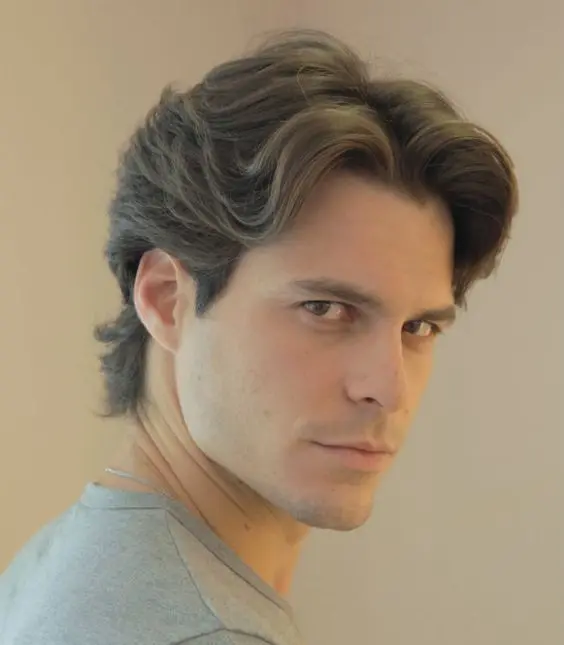
The best curtain hairstyle ideas for men range from a classic middle-part curtain and soft tapered curtains to textured waves and longer ’90s-inspired versions. For most guys, the easiest place to start is a medium-length curtain with light layering around the temples. The catch is simple: the part needs enough length and natural movement to fall instead of sticking straight out.
The selections below follow practical barbering principles such as density, growth pattern, face shape, and daily styling effort rather than trend hype. A good curtain cut should work with the hair you actually have, not demand twenty minutes of correction every morning.
| Quick Pick | Best For | Length | Styling Effort | Main Watch-Out |
|---|---|---|---|---|
| Classic Middle-Part Curtains | First-timers | Medium | Low–medium | Can fall flat |
| Short Tapered Curtains | Easy upkeep | Short–medium | Low | Needs frequent shape-ups |
| Textured Curtain Fringe | Thick hair | Medium | Medium | Easy to over-texturize |
| Wavy Curtains | Natural movement | Medium | Low | Humidity changes the shape |
| Long ’90s Curtains | Statement length | Long | Medium | Awkward grow-out stage |
| Low-Fade Curtains | Clean contrast | Medium top | Medium | Fade grows out quickly |
| Curly Curtains | Defined curls | Medium | Medium | Shrinkage affects length |
| Messy Curtains | Casual styling | Medium | Low | Can look accidental |
| Slick Curtain Part | Dressier looks | Medium | Medium | Too much product looks greasy |
| Layered Curtains | Fine-to-medium hair | Medium | Medium | Bad layering removes fullness |
For general scalp and hair-care basics alongside styling, the American Academy of Dermatology is a sensible place to check guidance before changing products or routines.
Classic and Easy Curtain Hairstyle Ideas
These curtain hairstyle ideas are the safest starting point because they rely on familiar shapes, moderate length, and relatively simple styling. They are especially useful if you like the center-part look but do not want your haircut to become the main event every morning.
1. Classic Middle-Part Curtains
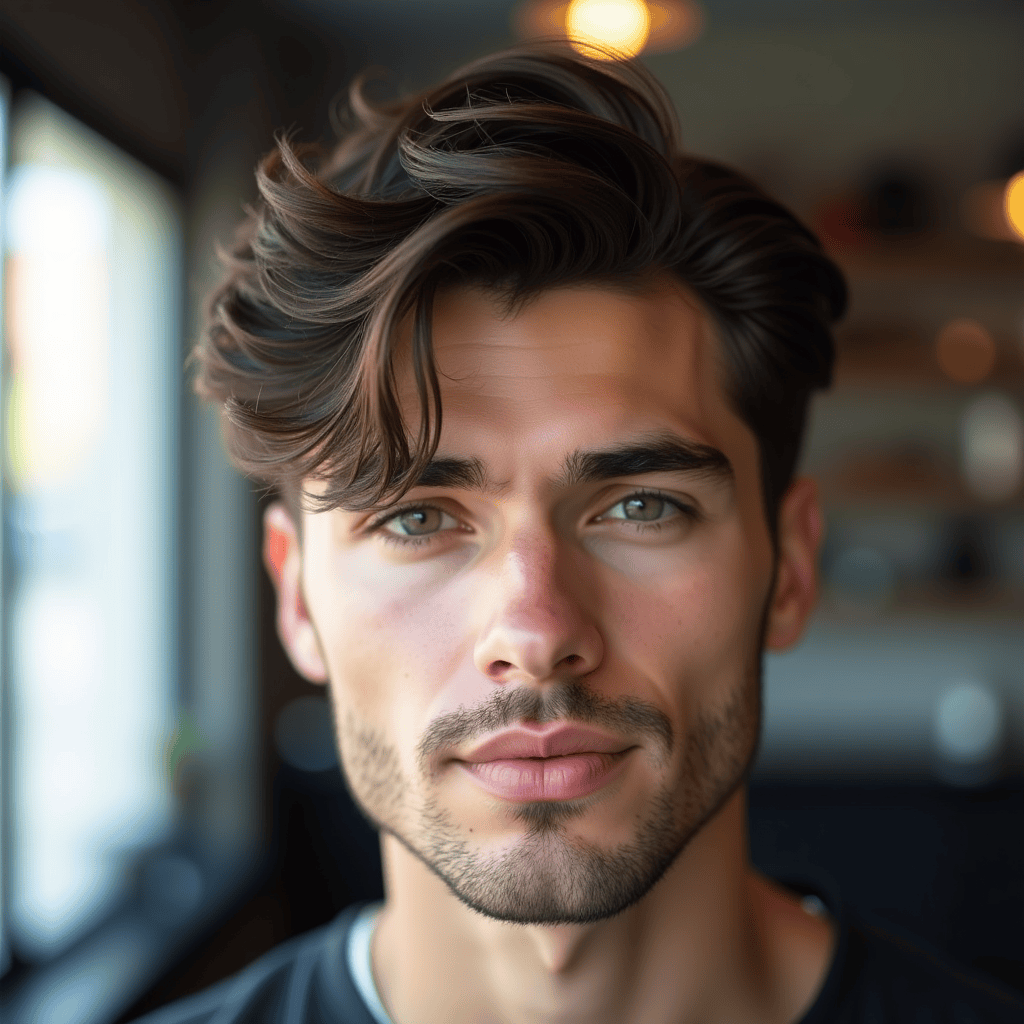
Classic middle-part curtains have enough length at the front to separate cleanly from the center and fall toward both temples. The fringe usually reaches somewhere around the brows or upper cheek area, while the sides stay long enough to blend rather than disconnect. A little graduation around the temples keeps the shape from becoming a solid block. The finished look should feel loose and balanced instead of sharply carved.
This version suits straight or lightly wavy medium-density hair and works especially well on oval, oblong, and softly square faces. Ask your barber, “Keep enough length through the front for a natural center part, soften the sides with scissors, and don’t thin the fringe too aggressively.” Most mornings need little more than a damp reset and light directional blow-drying. Skip it if your front hair grows strongly to one side and you have no patience for training the part.
2. Short Tapered Curtains
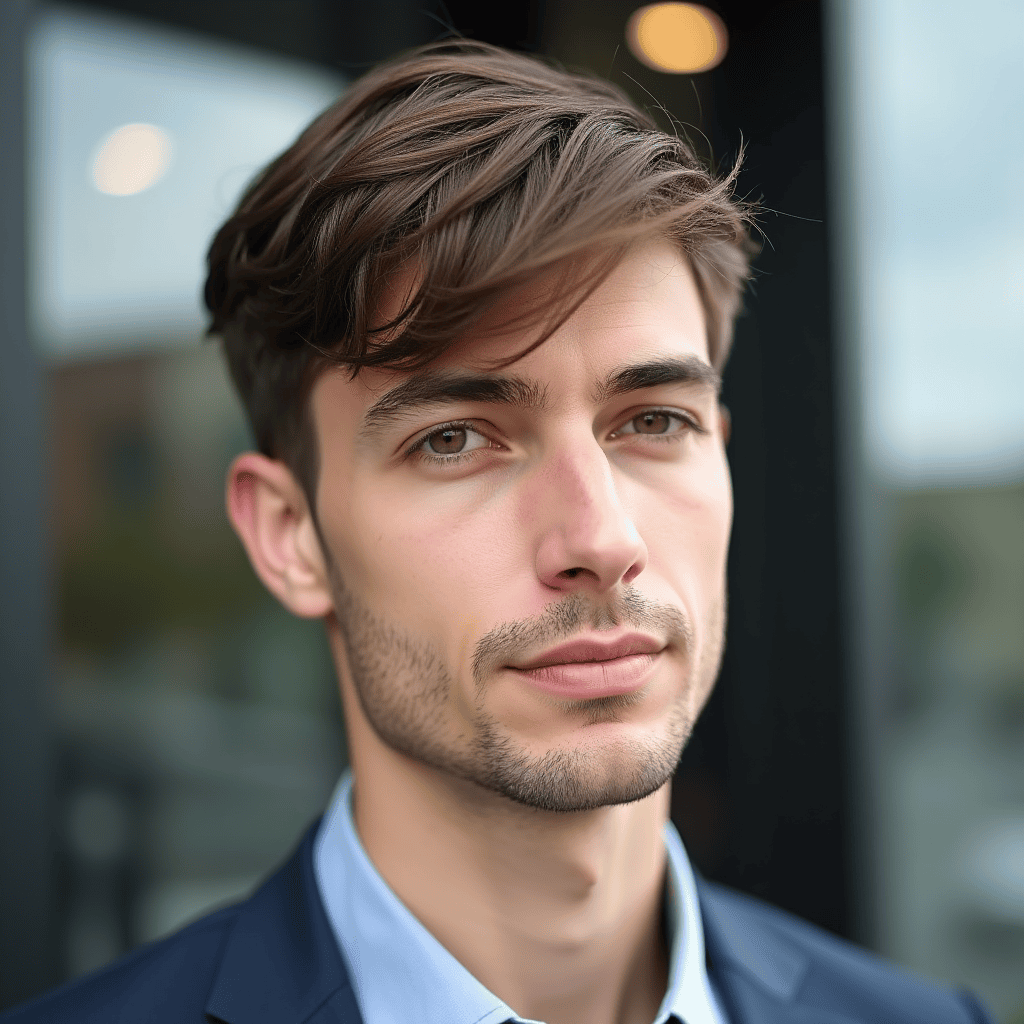
Short tapered curtains keep the recognizable split fringe while trimming away much of the bulk associated with longer curtain hairstyles. The front remains noticeably longer than the sides, but it stops closer to the brows and opens outward in a shallow arc. Around the ears and neckline, a neat taper makes the shape look deliberate. It is one of the better curtain hairstyle ideas when you want movement without looking like you are growing your hair out.
Straight and slightly wavy hair usually handles this cut best, especially on men who want something office-friendly. Tell the barber, “Leave the front long enough to split naturally, taper the sideburns and neckline, and keep the transition soft rather than faded high.” Maintenance is easy between washes, although the taper will lose its crispness sooner than the top. Men with tight curls may need more front length than this version allows.
3. Soft Scissor-Cut Curtains
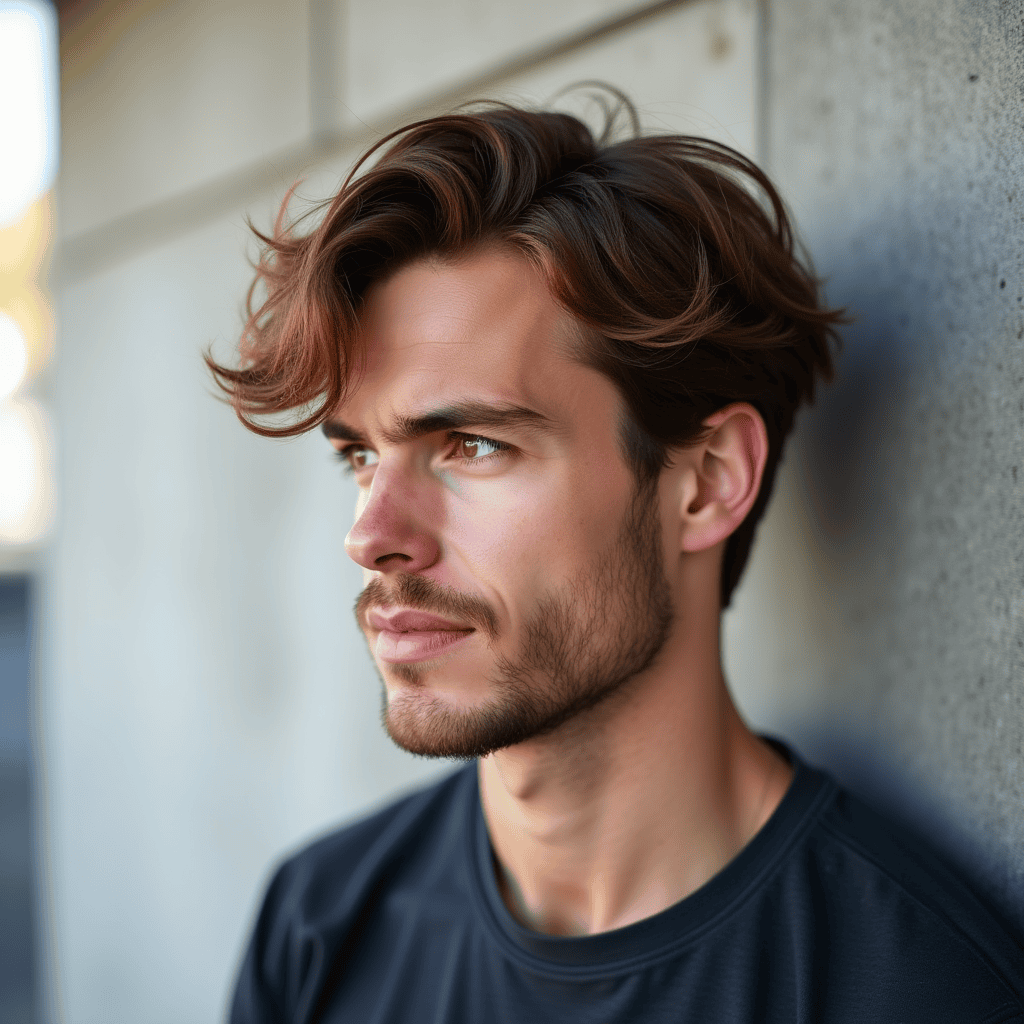
Soft scissor-cut curtains avoid hard clipper lines almost completely. The shape flows from a longer center-part fringe into fuller temples and natural sideburns, with the perimeter cleaned rather than stripped down. Because every transition stays soft, the hair moves together when you turn your head. Among classic curtain hairstyle ideas, this one feels especially relaxed and less tied to a specific trend cycle.
It favors medium or thick hair with enough density to support a fuller silhouette. Ask for, “A fully scissor-cut curtain shape with soft layers, natural sides, and no aggressive thinning around the front.” You can style it with fingers and a lightweight cream rather than forcing perfect symmetry. The drawback is that dense hair can become puffy around the ears if you stretch appointments too far apart.
4. Natural Side-Swept Curtains
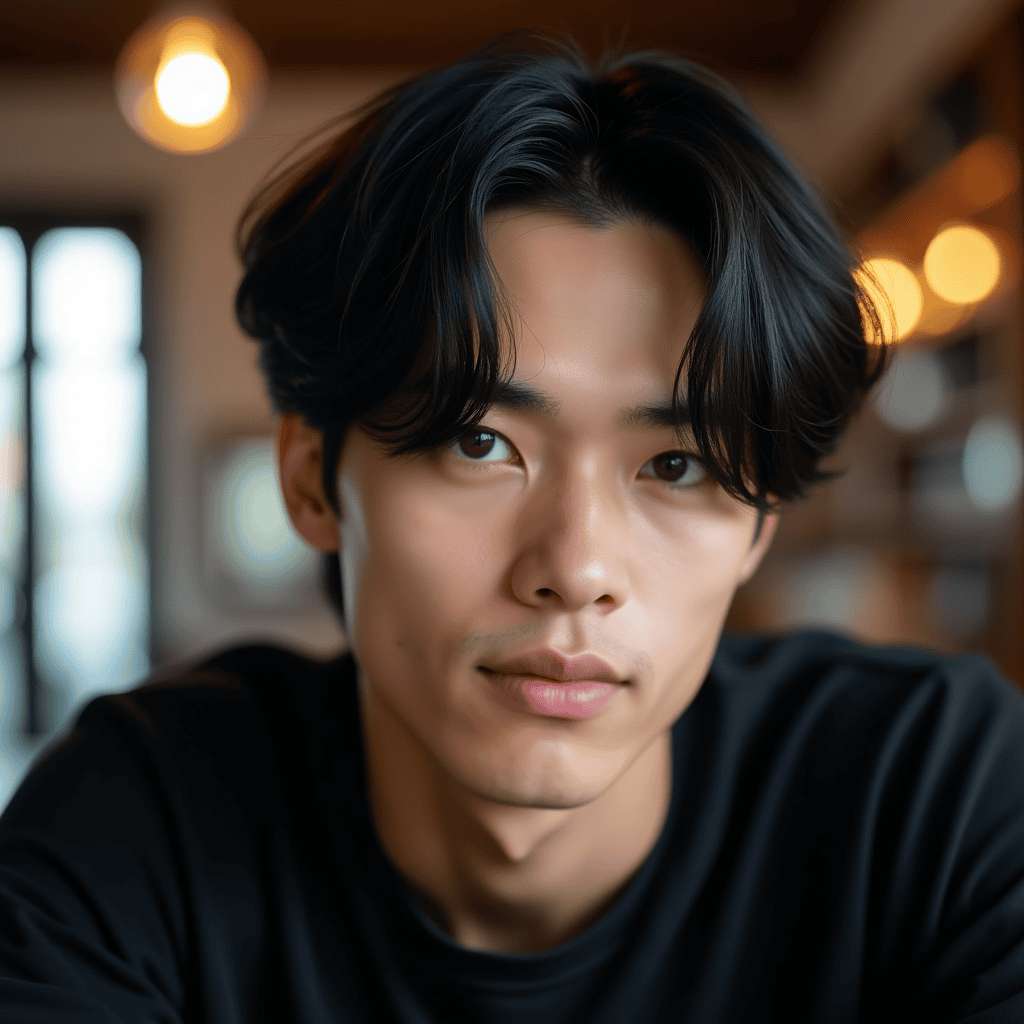
Natural side-swept curtains keep the basic divided shape but move the part a little away from dead center. One section drops slightly heavier across the forehead while the opposite side opens more clearly around the temple. That imbalance gives the haircut an easier, less staged appearance. It is a strong option for men who like curtain hairstyles but whose natural growth refuses to cooperate with a perfect middle line.
This approach works well with cowlicks and directional growth because it stops fighting what the roots naturally want to do. Tell your barber, “Build the curtain shape around my natural part, keep the longer side soft, and make both sides connect without forcing symmetry.” Styling becomes quicker because the roots already know where to fall. The only downside is that people chasing a textbook center part may feel it looks slightly uneven.
5. Brushed-Back Curtain Style

The brushed-back curtain keeps the center separation but sends the front away from the face rather than letting it hang forward. The roots lift first, then each side bends backward around the temples in a loose C-shape. It shows more forehead and creates a cleaner outline without losing the curtain identity. This version sits between a casual curtain haircut and a restrained swept-back style.
Men with medium-length straight or wavy hair get the easiest result, particularly when the strands have some natural body. Ask for, “Keep my curtain length through the front, layer it so I can brush both sides back, and avoid taking the temples too short.” A blow-dryer aimed backward does most of the work. Fine, pin-straight hair may collapse forward again unless you use a light hold product.
Textured and Wavy Curtain Hairstyles
Texture changes curtains more than almost any other variable. Waves, bends, piecey separation, and controlled messiness stop the two sides from looking like matching panels and give the haircut more personality.
6. Textured Curtain Fringe
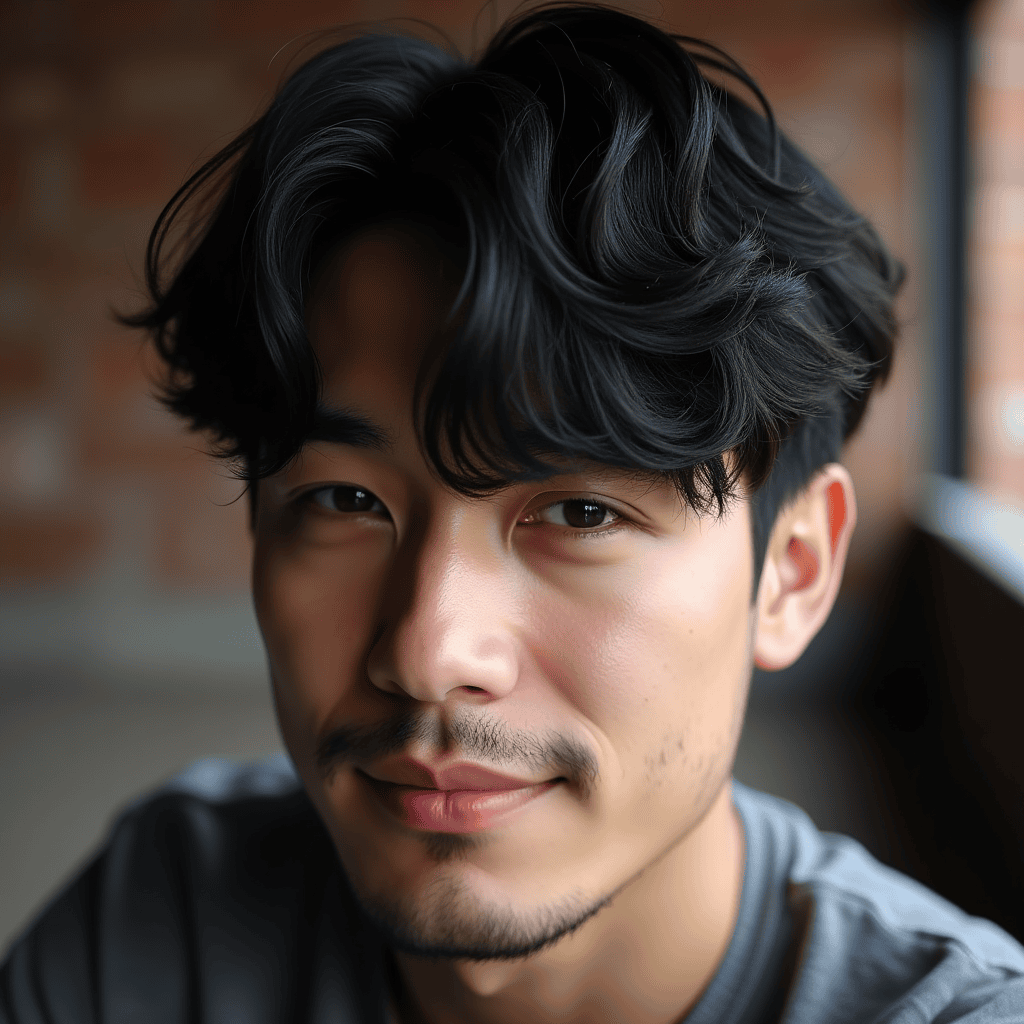
A textured curtain fringe breaks the front into smaller pieces rather than leaving two smooth sections. The center still opens visibly, but individual strands cross, separate, and sit at slightly different lengths around the brows. Point-cut ends reduce heaviness while preserving enough mass to make the fringe look full. It is one of the most adaptable curtain hairstyle ideas for thick straight hair that tends to look too solid.
Men with medium-to-thick density and straight or slightly bent hair are the natural fit. Tell the barber, “Keep a strong curtain fringe but add controlled point-cut texture so it separates without looking thin.” A matte cream or paste can define a few pieces after blow-drying. Over-texturizing is the danger because once too much weight disappears, the front can look stringy.
7. Loose Wavy Curtains
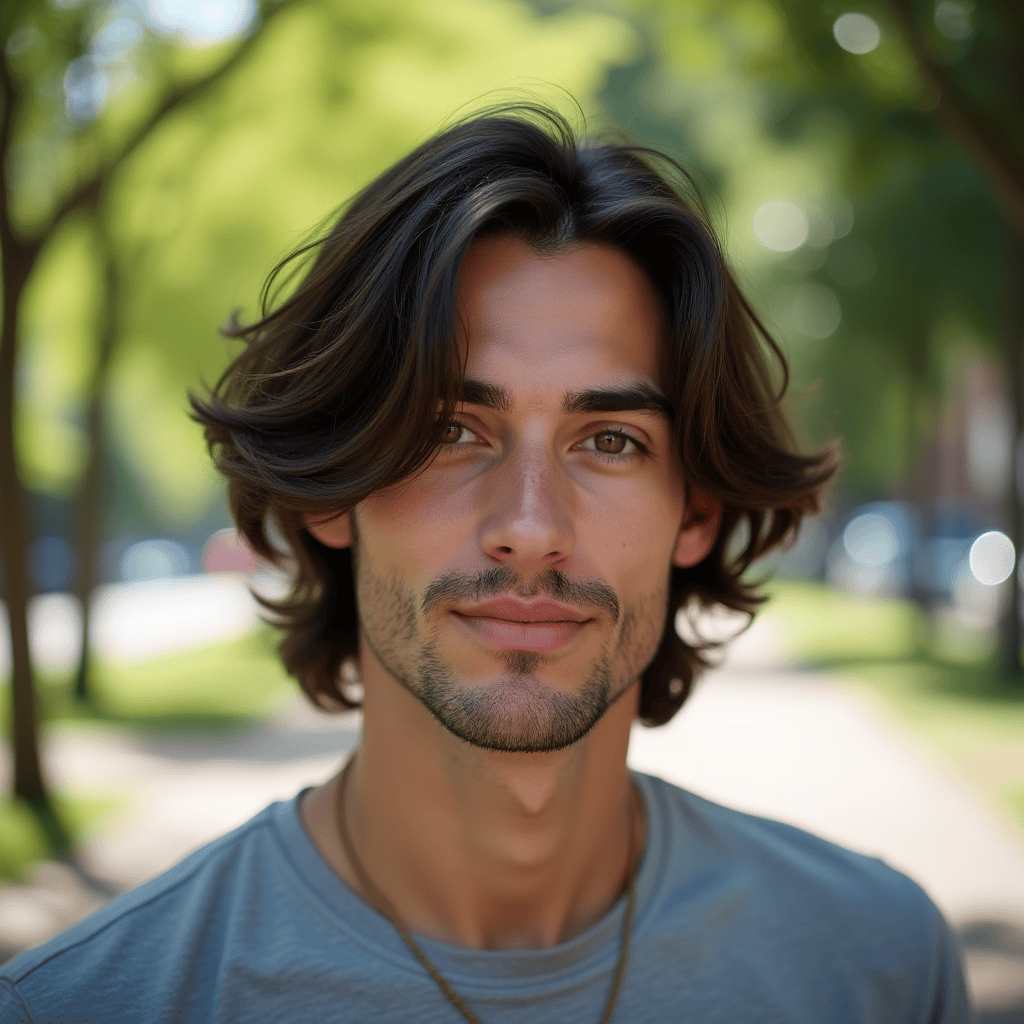
Loose wavy curtains let natural bends create most of the shape. Instead of falling straight down, each front section curves once or twice on the way toward the cheekbones, producing softer volume around the center part. Longer layers behind the fringe keep those waves from becoming triangular at the sides. The result looks especially good when the waves are allowed to sit a little differently every day.
Naturally wavy hair between medium and high density is ideal, while guys with straight hair should consider whether daily heat styling is worth it. Ask for, “Keep my natural wave pattern visible, layer around the face, and leave enough weight so the curtain pieces don’t spring too short.” Styling can be as simple as scrunching damp hair and letting it settle. Humidity is the honest drawback because the exact silhouette will change with the weather.
8. Messy Curtain Hair
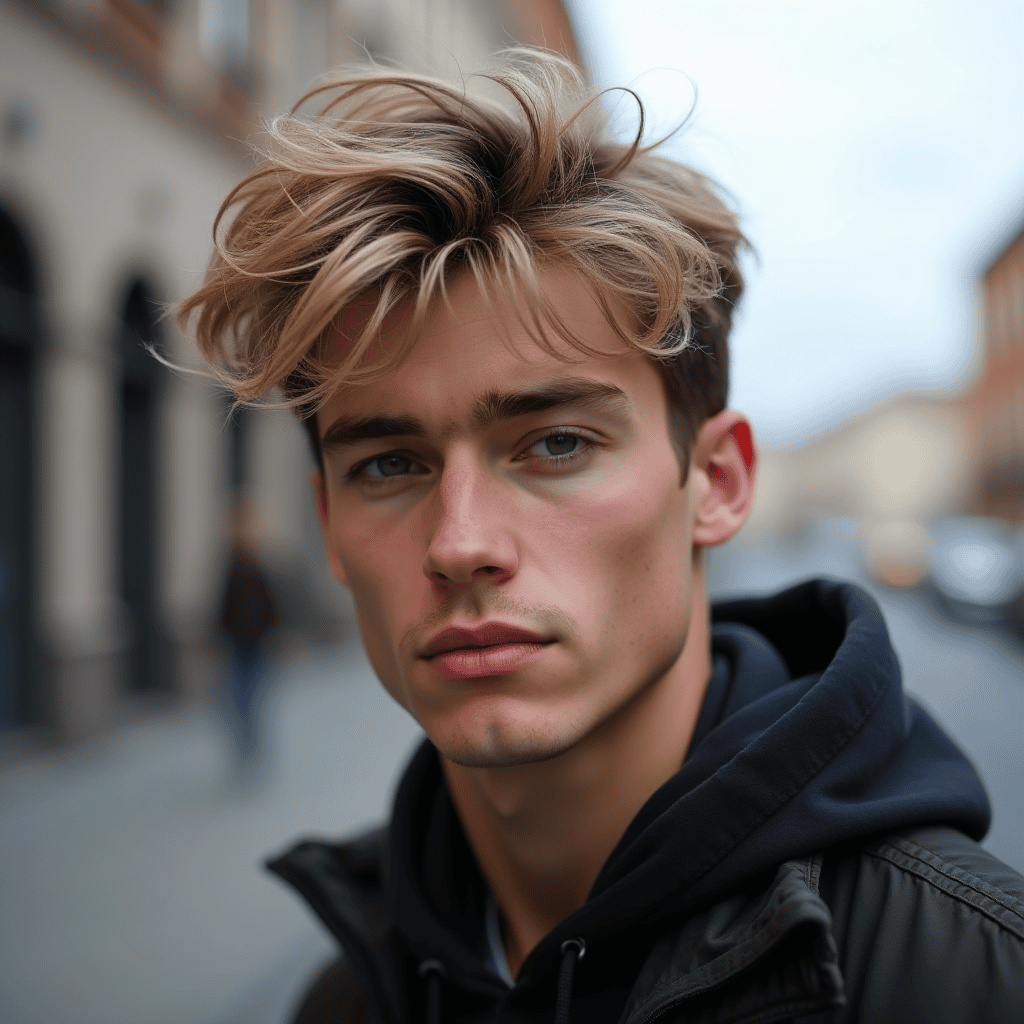
Messy curtains use irregular separation, loose root lift, and a slightly broken part to make the haircut feel casual. One side may fall closer to the eyebrow while the other opens farther from the forehead. The ends kick in different directions, but the overall shape still frames the face. Done well, it feels spontaneous rather than unfinished.
This cut suits men with naturally bendy hair who dislike perfect grooming and want curtain hairstyle ideas that survive a rushed morning. Ask your barber, “Give me a loose curtain shape with enough texture to wear messy, but keep weight through the front so it still reads as a haircut.” Finger styling is usually better than combing. The line between relaxed and unkempt is thin, especially once the sides start growing over the ears.
9. Beachy Curtain Waves
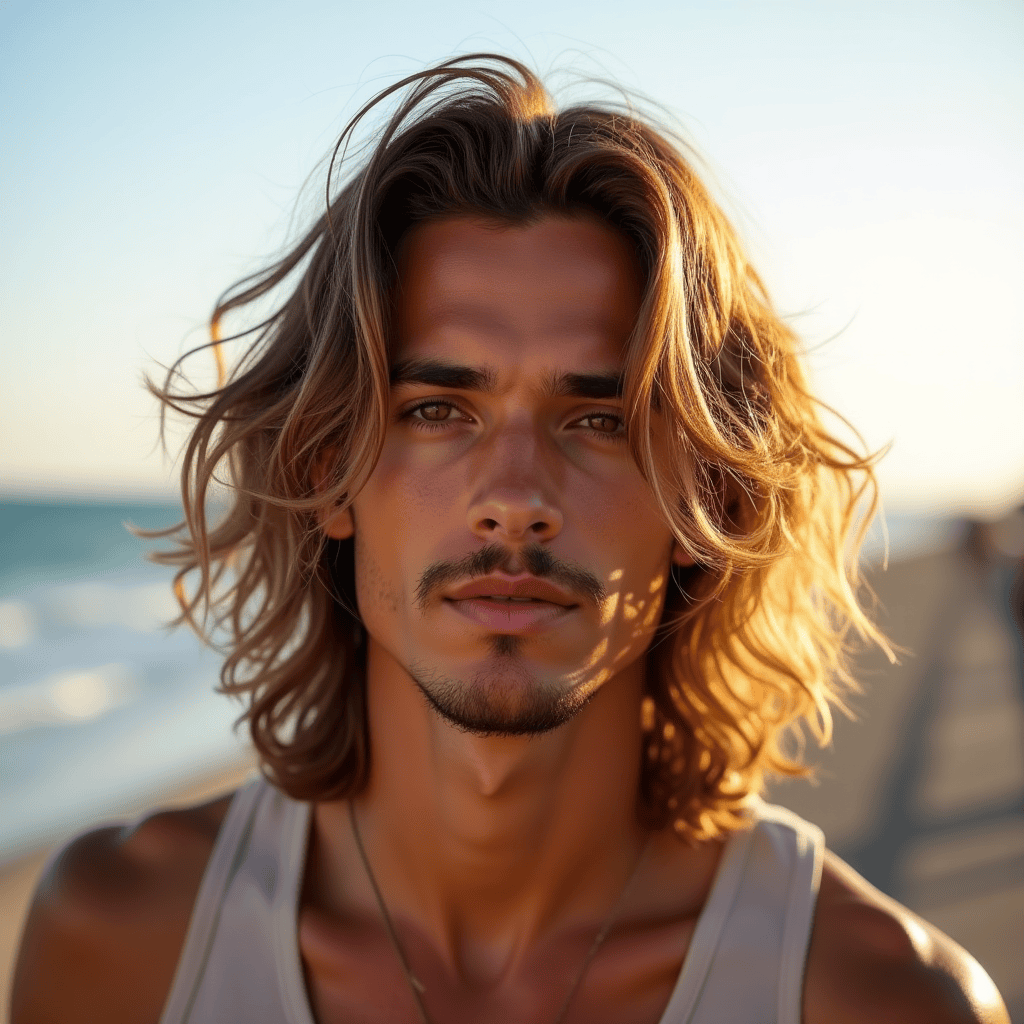
Beachy curtain waves are longer and airier than the standard wavy version. The front separates loosely while the mid-lengths develop broad bends that look slightly tousled rather than polished. Ends remain relatively soft and light so the whole hairstyle moves instead of hanging heavily. It pairs naturally with relaxed summer clothes because nothing about the shape feels rigid.
Medium-to-long wavy hair works best, especially when it already develops movement after air-drying. Tell the stylist, “Keep the curtain front long, add long layers for loose waves, and take out bulk without making the ends thin.” A light texture spray can help, but piling on salt-heavy products may leave some hair feeling rough. Very fine hair can also lose too much density if the layering is aggressive.
10. Piecey Wet-Look Curtains
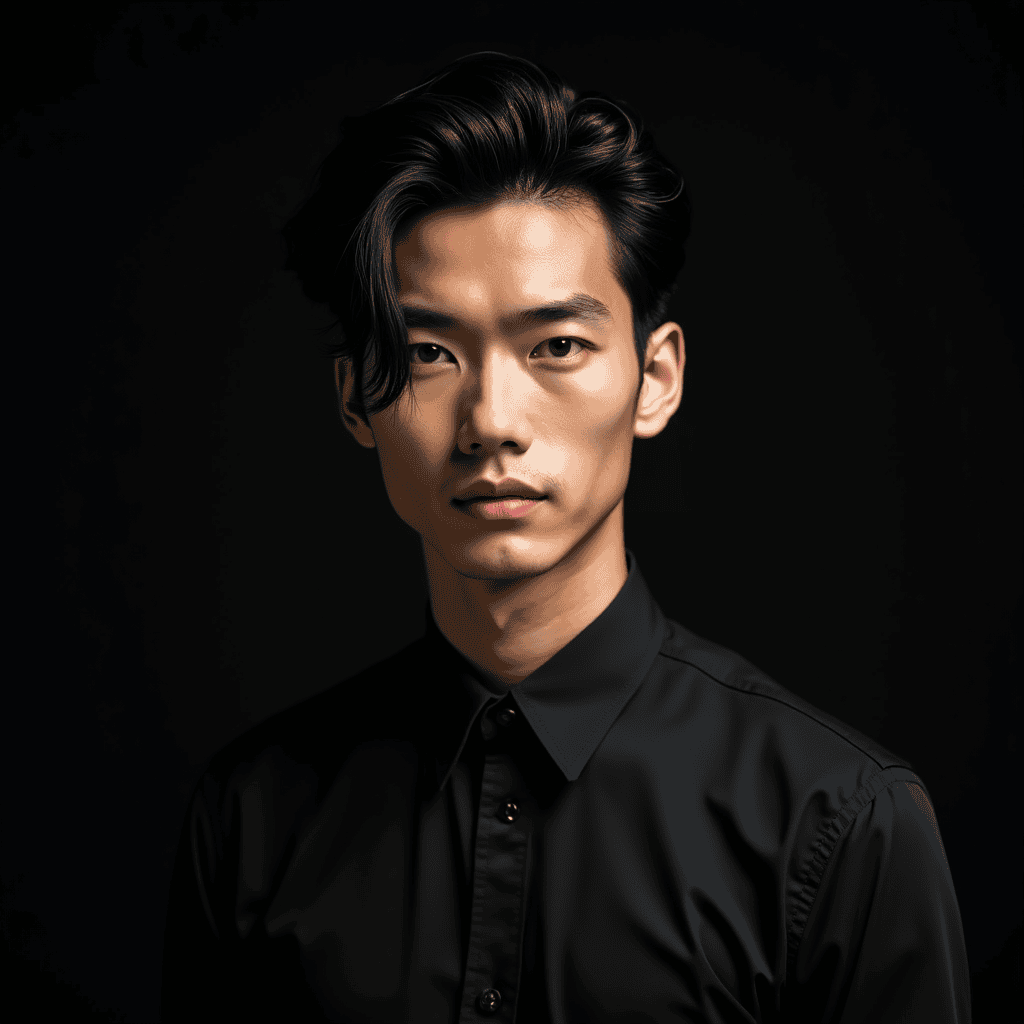
Piecey wet-look curtains create deliberate strand separation with a glossy finish. The center part stays visible, while narrow sections of hair curve down and outward across the forehead. Rather than pushing the entire top flat, the best version keeps some root lift and lets the shine concentrate through the mid-lengths and ends. That distinction keeps it editorial instead of greasy.
This style is better for evenings, fashion-forward outfits, shoots, and events than ordinary weekday wear. Ask for, “A medium curtain cut with enough layering for separated pieces, but keep the front dense enough to style glossy.” Use a small amount of wet-finish product and build slowly. The drawback is unforgiving product control; too much makes even freshly washed hair look oily.
Short and Tapered Curtain Hairstyle Ideas
Shorter curtain cuts make sense if you like the parted front but still want clean ears, a controlled neckline, and barber appointments that feel familiar. The trick is leaving enough length on top to preserve movement; cut the fringe too short and the curtain effect disappears.
11. Low-Fade Curtains
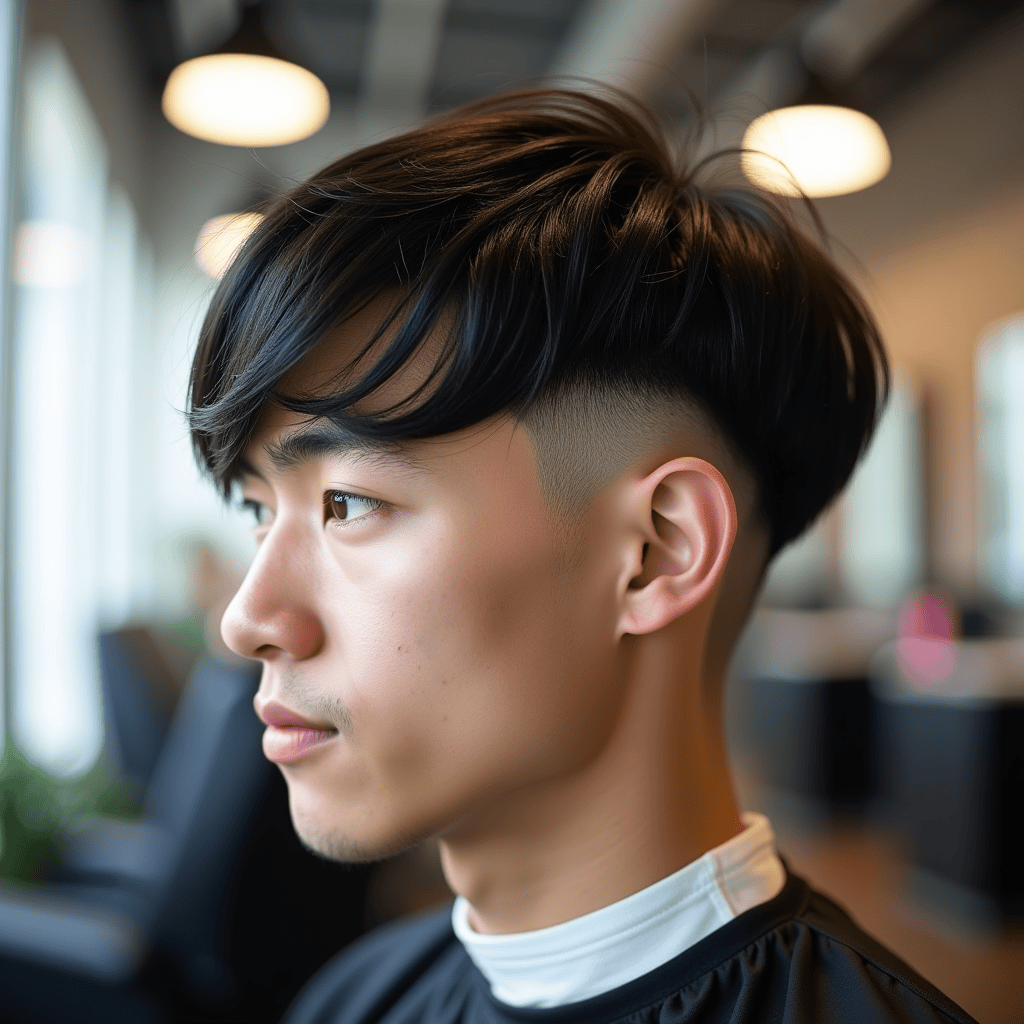
Low-fade curtains combine a flowing middle section with a fade that begins close to the sideburns and neckline. The contrast stays concentrated low on the head, so the longer top still feels connected rather than perched above bare sides. From the front, the curtain pieces frame the forehead; from the profile, the fade sharpens the outline. It is cleaner than a full scissor cut without becoming severe.
Medium-density straight or wavy hair tends to balance the contrast best. Ask for, “Keep my curtain fringe long and layered, then use a low fade around the ears with a soft transition into the top.” You will likely need to refresh the fade before the curtain length itself needs much cutting. Skip this if you dislike frequent barber visits because the crisp lower section changes quickly.
12. Mid-Taper Curtain Cut
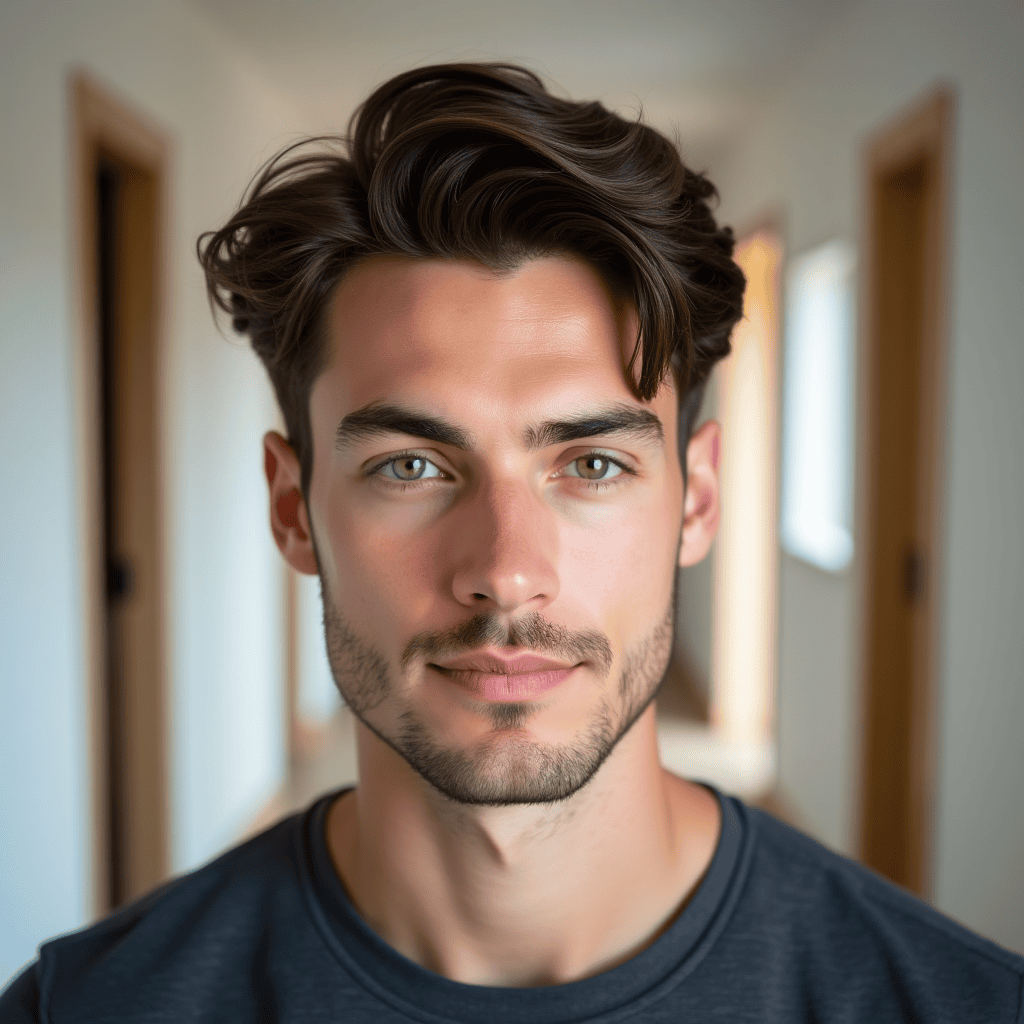
The mid-taper curtain cut removes bulk gradually around the temples and nape without fading the entire side panel. Longer hair remains above the ears, allowing the top to connect naturally into the fringe. That leaves more softness than a fade while still making the haircut look fresh around the edges. It is a useful compromise for anyone who wants curtain hairstyle ideas with a little structure.
This version handles work, college, and everyday casual wear without looking overdone. Tell your barber, “Keep the curtain top connected, taper the temples and nape at a medium height, and leave some natural weight above the ears.” Upkeep is reasonable because an overgrown taper looks softer than an overgrown skin fade. The main limitation is that very bulky hair may still expand through the side panels.
13. Short Choppy Curtains
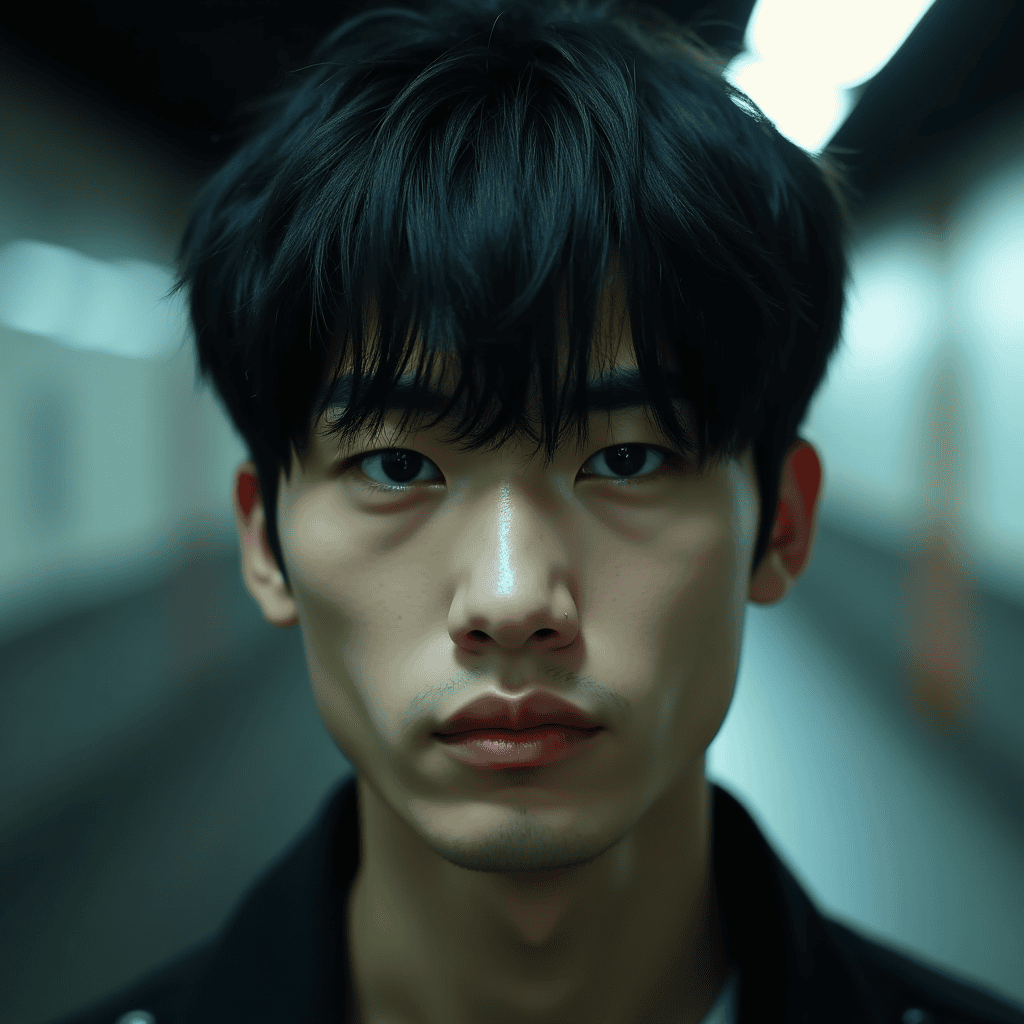
Short choppy curtains use compact layers and visibly broken ends to create separation despite having less length. The fringe sits around the upper brows, splitting into small sections rather than broad sweeping panels. Texture continues across the top so the middle part blends into the rest of the haircut instead of looking isolated. It has more edge than a standard short curtain cut.
Thick straight hair is particularly well suited because the choppy finish stops dense strands from sitting like a helmet. Ask for, “Short curtains with choppy point-cut texture through the front and top, but don’t thin the perimeter until it looks sparse.” A matte styling paste works better than a heavy pomade here. Fine hair should approach cautiously because too much internal removal can expose the scalp.
14. Curtains With Tapered Sideburns
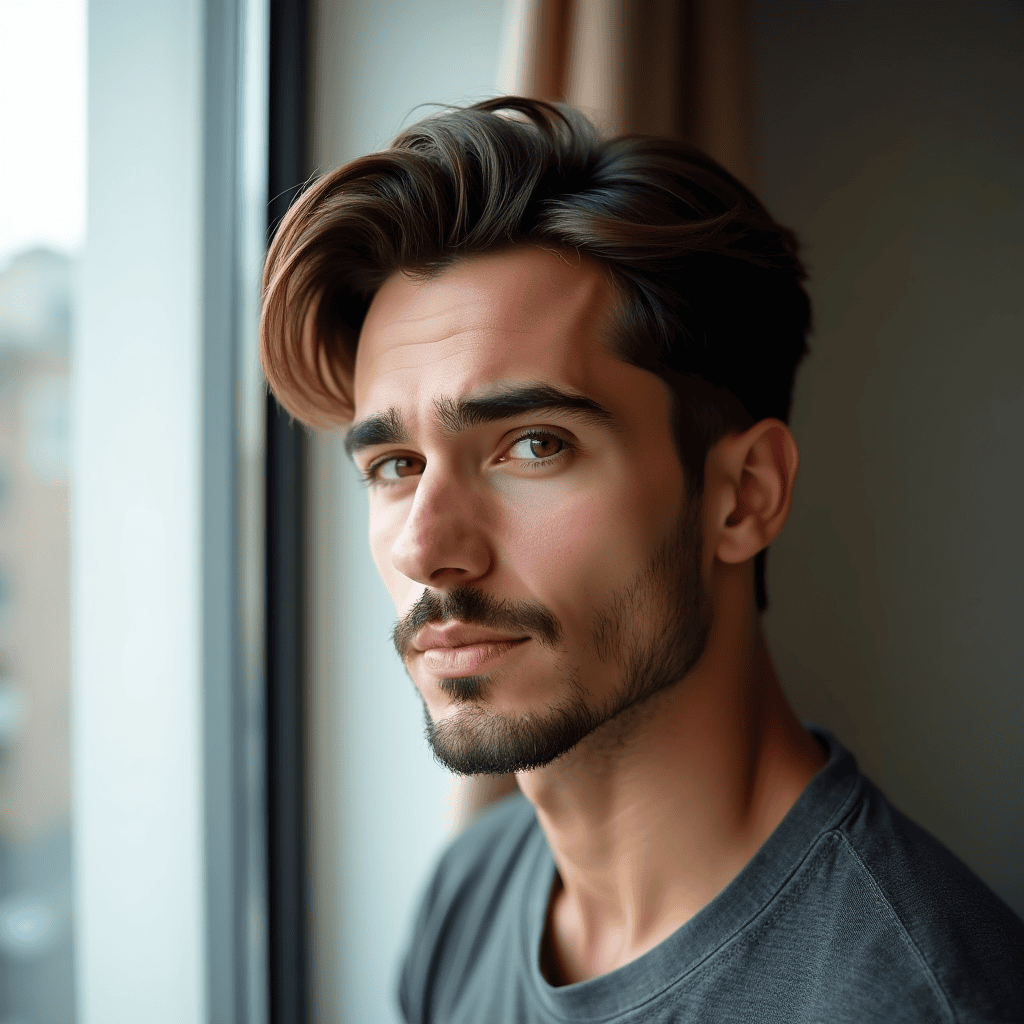
This variation leaves most of the hairstyle medium and natural while cleaning only the sideburns and lower edges. The front remains soft, with both curtain sections falling toward the outer brows and temples. Fullness above the ears keeps the classic shape intact, while the taper gives the haircut a more intentional finish. From straight on, it still reads as a traditional curtain hairstyle.
It suits men who dislike exposed fades but still want a neat outline around facial hair or glasses. Ask for, “Keep the sides full and scissor-cut, taper only the sideburns and lower neckline, and preserve the center-part fringe.” Maintenance stays forgiving because there is little contrast to grow out. Guys with exceptionally dense side hair may find the full area above the taper becomes bulky first.
15. Compact Korean-Inspired Curtains
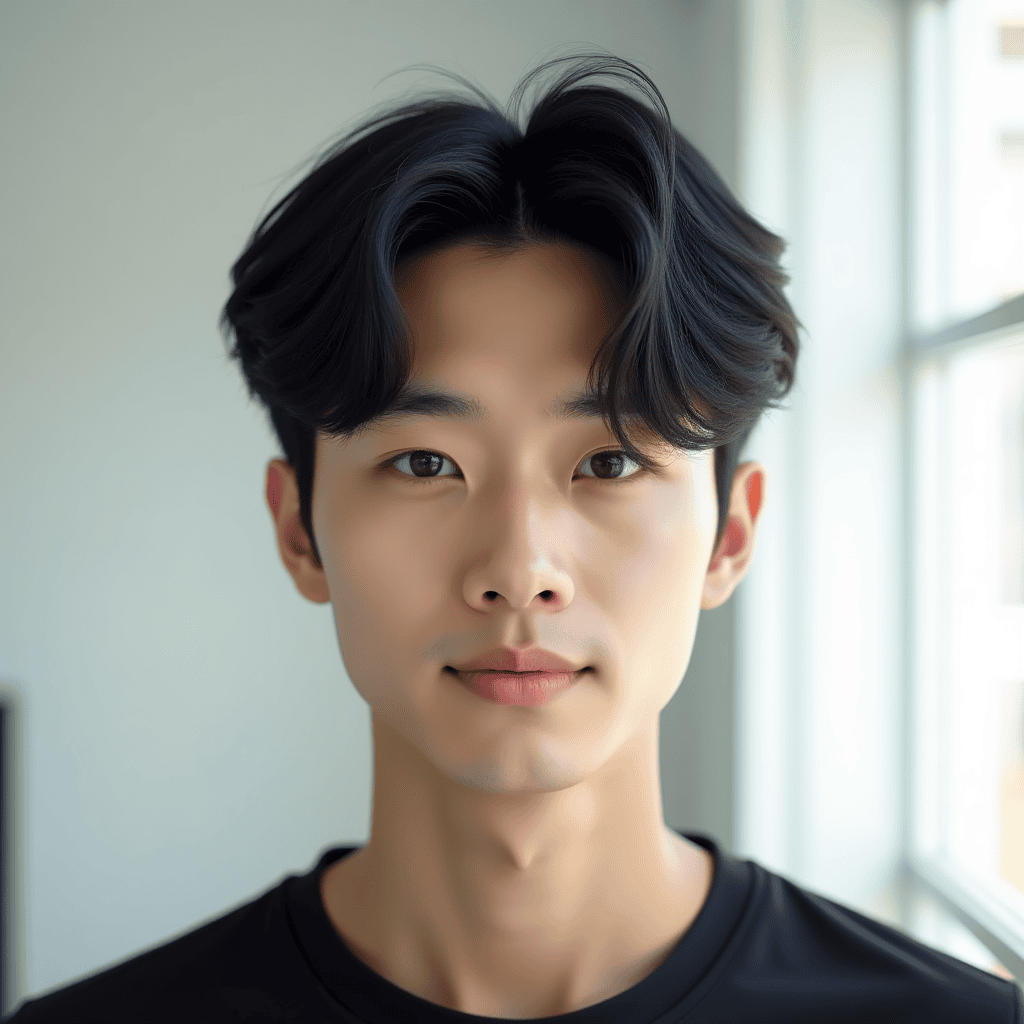
Compact Korean-inspired curtains keep the fringe smooth, rounded, and relatively controlled around the center opening. The part often appears narrow rather than sharply divided, while each front section curves inward before turning gently toward the temples. The sides stay tidy and connected, producing a polished silhouette without needing a visible fade. It is one of the cleaner curtain hairstyle ideas for men who prefer precision.
Straight, smooth hair makes this shape easiest, although a light wave can add useful volume. Tell your stylist, “Keep a narrow center opening, soft curved fringe around the brows, and clean connected sides without making the cut boxy.” A round brush or directed blow-dry helps create the inward bend. Coarse hair that naturally pushes straight out may demand more daily heat work than the look is worth.
Curly and Fuller Curtain Styles
Curly curtain hairstyles rely less on a razor-sharp part and more on how the curls separate around the forehead. These shapes need enough length to account for shrinkage and enough weight to stop the sides from expanding too far outward.
16. Curly Middle-Part Curtains
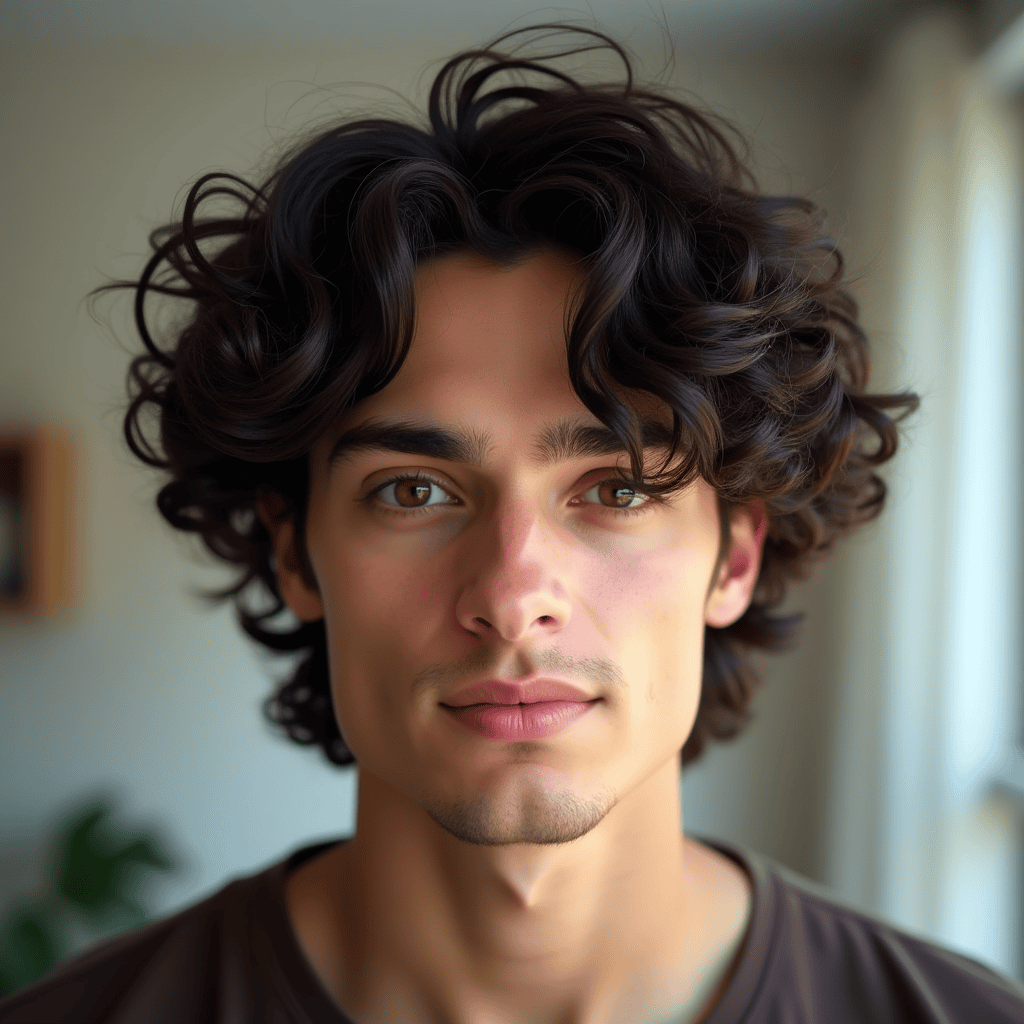
Curly middle-part curtains separate the curl mass loosely through the center and allow ringlets or coils to frame each side of the forehead. The part may not form a perfectly straight line, and that is usually a strength rather than a flaw. Layers around the temples help the curls sit vertically instead of creating a wide triangular shape. The finished outline should look controlled but still unmistakably curly.
Men with loose curls to tighter springy patterns can adapt this idea, provided the barber accounts for how much the hair rises when dry. Ask for, “Shape my curls into curtains while dry or with shrinkage in mind, keep length around the front, and layer the sides without thinning them aggressively.” Refreshing with water often does more than brushing ever will. The wrong short length can cause the entire fringe to spring above the intended position.
17. Loose Curl Curtain Fringe

A loose curl curtain fringe keeps most of the length concentrated in front while the sides sit slightly shorter and more controlled. The curls open near the center, then bounce outward around the brows and upper cheek area. Because the sides carry less volume, the fringe becomes the strongest visual feature. This gives curly hair a distinct curtain shape without demanding long hair everywhere.
It works particularly well for men whose curl pattern loosens when the hair grows past a few inches. Ask your barber, “Keep my front curls long enough to split, shorten the sides with scissors, and connect everything without cutting the curl shape blunt.” Styling should focus on definition rather than forcing the part. The fringe can drop noticeably lower when wet, so judging the length only in a damp state is risky.
18. Thick Voluminous Curtains
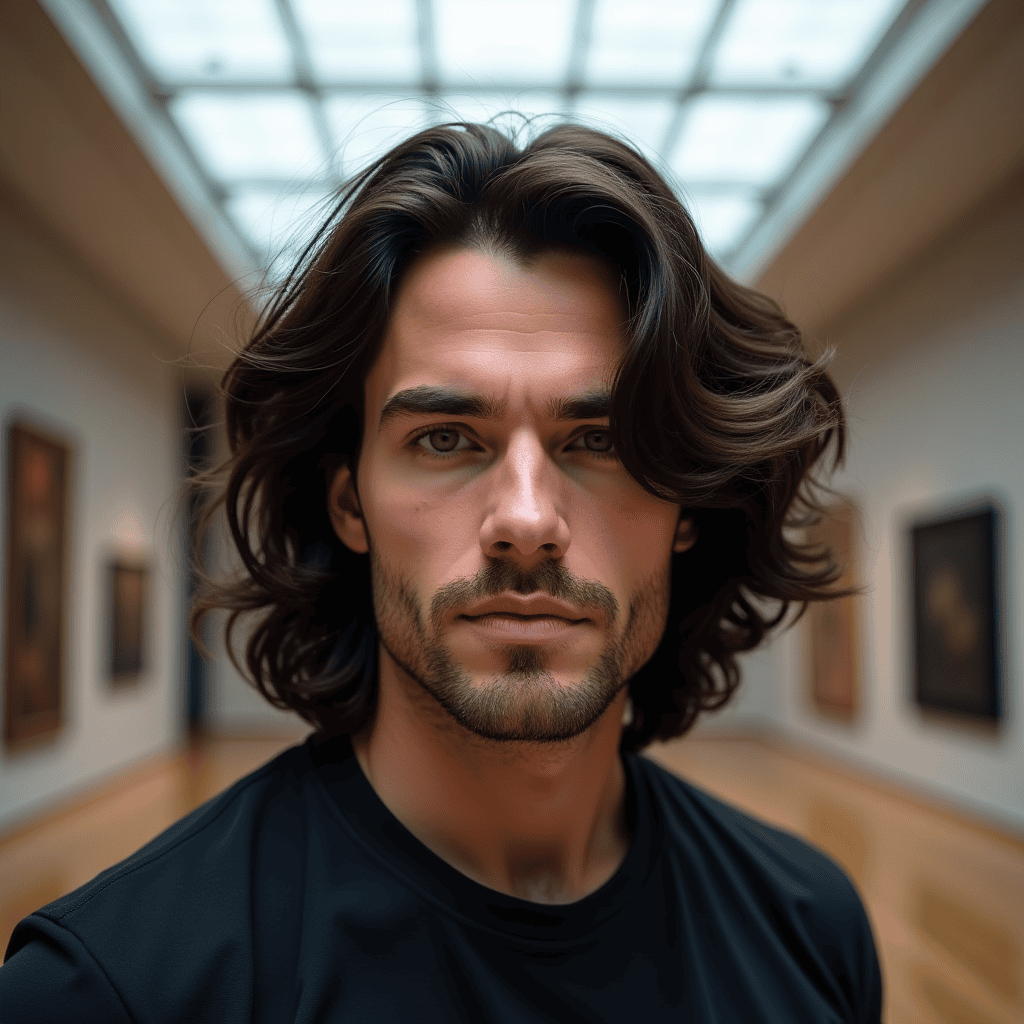
Thick voluminous curtains make density the main feature instead of trying to flatten it away. The roots lift around the center part, while broad front sections sweep outward and blend into substantial sides. Internal layering removes only enough weight to allow movement. From the front, the silhouette feels full and dramatic without needing exaggerated length.
Men with coarse or high-density hair can wear this especially well if they are comfortable with visible volume. Tell the barber, “Keep the curtain shape full, remove internal bulk selectively, and don’t thin the ends until they look wispy.” Blow-drying upward at the roots can make the shape even stronger, although many people will not need it. The drawback is obvious on hot days: dense hair around the temples can feel heavy.
19. Fluffy Curtain Hair
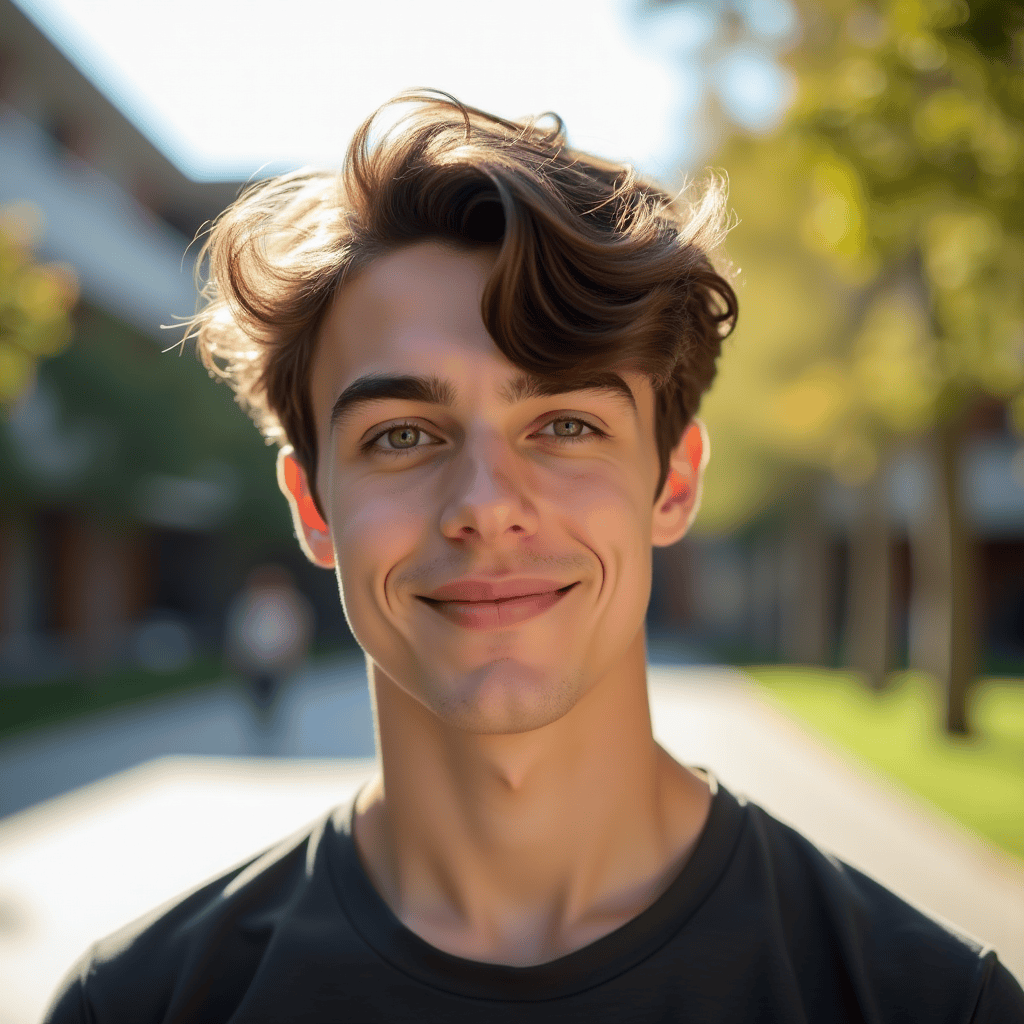
Fluffy curtains build soft, airy volume instead of sharp strand definition. The front bends away from the center with rounded lift, and the top retains enough length to look touchable rather than stiff. Ends remain feathered and light around the temples. The shape has a youthful softness that works particularly well when the haircut is not overloaded with product.
Medium-density straight or softly wavy hair gives you the easiest foundation. Ask for, “Medium curtains with soft layers and enough weight for volume, but keep the ends light around my face.” A blow-dryer and fingers can create the fluff without needing a perfect round-brush technique. Hair that becomes oily quickly may lose the airy effect by the end of the day.
20. Curly Curtains With a Low Taper
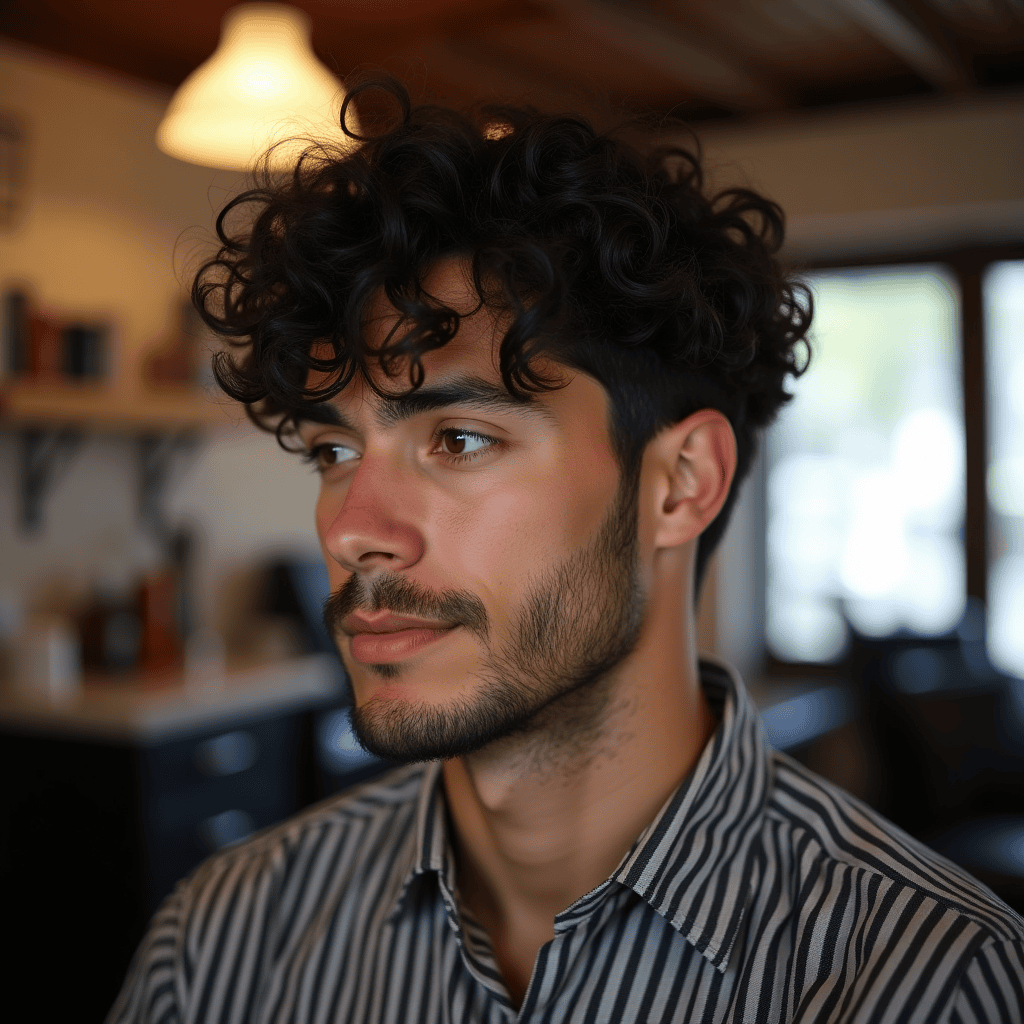
Curly curtains with a low taper put springy texture on top of a much cleaner lower outline. The center separation remains loose, with curls falling forward and outward while the temples gradually tighten toward the sideburns. The low taper removes bulk only where it tends to look untidy fastest. That preserves the character of the curls instead of turning the hairstyle into a disconnected top.
This is a useful choice for curly-haired men who want curtain hairstyle ideas that still look sharp around the edges. Ask for, “Leave enough curl length for a center split, shape the top naturally, and add a low taper only around the temples and neckline.” The curl section can go longer between major reshapes than the taper can. Frequent edge maintenance is the price of the cleaner contrast.
Longer and Bolder Curtain Hairstyle Ideas
Long curtain hairstyles create stronger movement around the cheekbones, jaw, and ears. They can look excellent, but they also expose bad layering quickly, so the cut needs more thought than simply leaving the hair untouched for six months.
21. Long ’90s Curtains

Long ’90s curtains let the front reach toward the cheekbones while the sides cover or brush the ears. The part sits confidently through the center, and the upper layers fall relatively flat before curving outward near the ends. There is enough weight for obvious movement when the head turns. This is the curtain hairstyle most closely associated with the longer shapes that made the look famous decades ago.
Straight or lightly wavy medium-density hair handles the silhouette naturally. Ask your stylist, “Keep true ’90s curtain length through the cheekbones, use long layers for movement, and don’t taper the sides too short.” You will spend less time trimming and more time managing how the hair dries. The difficult part is the grow-out period before the front becomes heavy enough to sit properly.
22. Cheekbone-Length Layered Curtains

Cheekbone-length layered curtains place the strongest line of the haircut around the middle of the face. Shorter layers near the brows blend into progressively longer pieces toward the cheeks, making the fringe feel lighter than a single heavy curtain. The sides continue that layering toward the ears. It produces more shape than a blunt long cut without turning into a shag.
This style suits medium and thick hair, especially on men who want long curtains without excessive bulk around the jaw. Tell your stylist, “Build face-framing layers from my brow area to the cheekbones, preserve the center part, and keep the lower perimeter full.” The layers need a competent cut because errors sit directly around the face. Over-layering can quickly make the front appear thin.
23. Curtain Shag
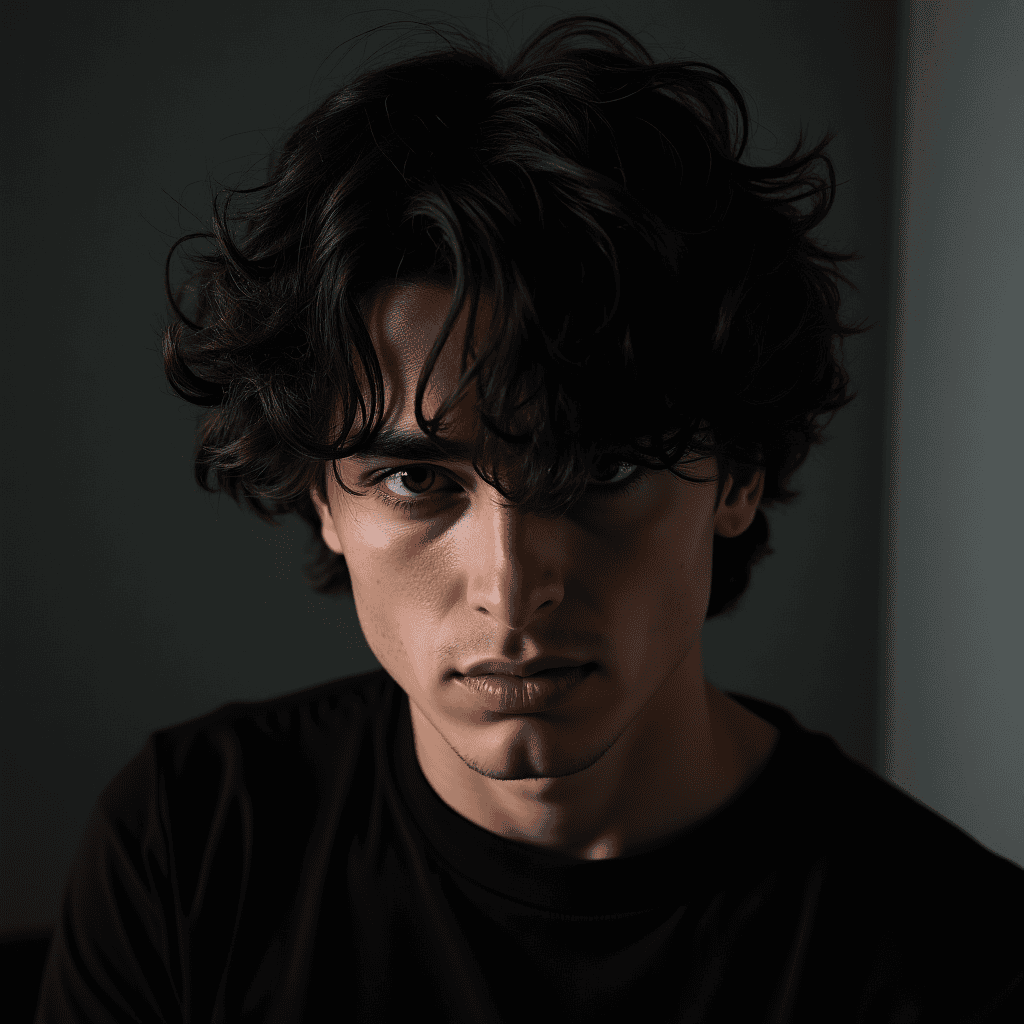
A curtain shag combines a divided front with visible layers running across the crown, sides, and back. The fringe opens at the center, but the rest of the haircut has more broken movement than standard curtains. Shorter crown layers produce lift while longer pieces around the ears and nape create a deliberately uneven perimeter. It is one of the bolder curtain hairstyle ideas because the entire haircut participates in the shape.
Wavy and thick hair usually gives this style the most natural movement, although straight hair can work with added texture. Ask for, “A curtain-front shag with layered crown volume, movement around the ears, and enough length at the back to keep the shape intentional.” It grows out with character, which is useful. The downside is that conservative workplaces or formal dress codes may make the shag feel more casual than you want.
24. Slicked Long Curtains
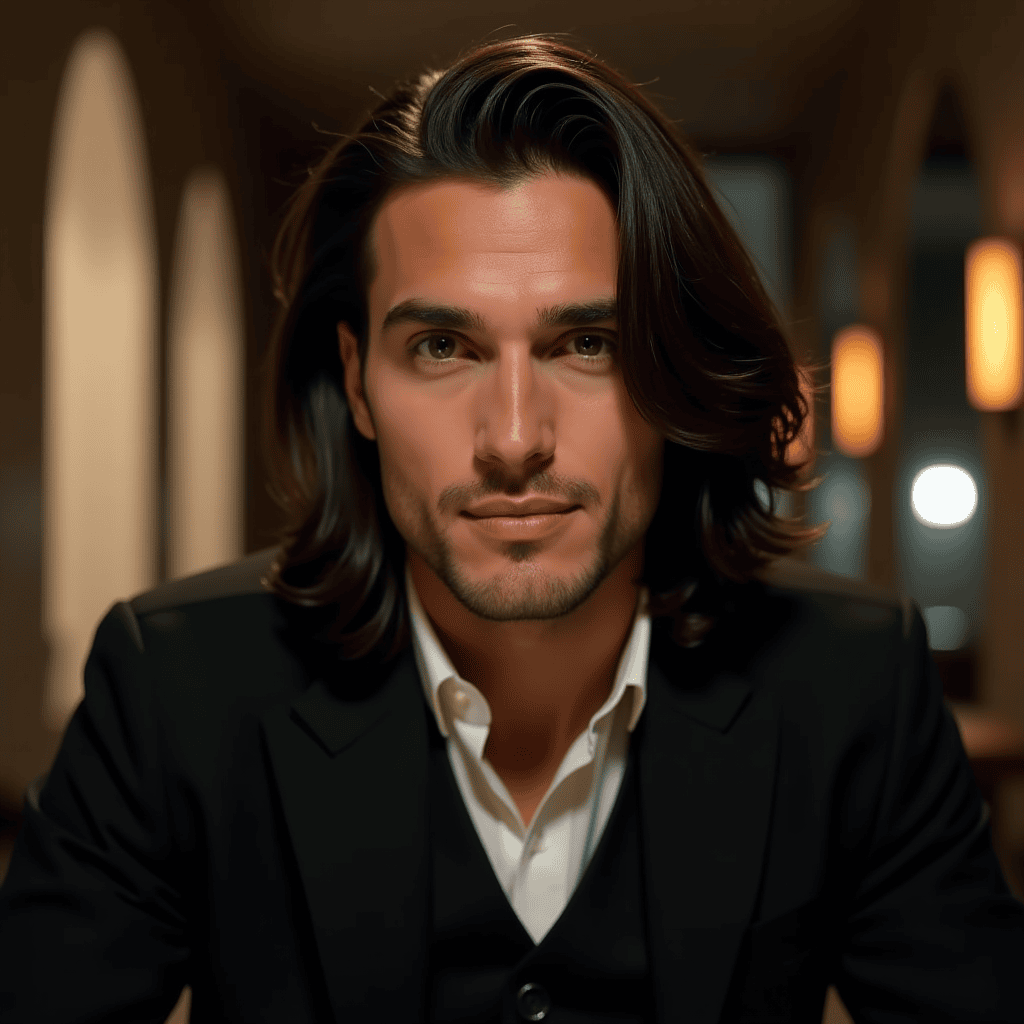
Slicked long curtains take medium-long hair and give it a controlled polished finish while preserving the central split. Each section follows the skull closely near the roots, then opens around the temples and ears. The ends remain visible rather than being pushed completely behind the head. With the right amount of shine, it can look sharp with tailoring and evening clothes.
Straight or wavy hair with decent density works best because sparse areas become easier to see when hair is compressed. Ask for, “Keep long curtain layers that can slick away from the center while still falling around the ears.” Apply product to damp hair and comb it into place before loosening the surface slightly with your fingers. Too much gel or pomade can make the style look rigid and expose every uneven section.
25. Long Wavy Curtains With Tucked Sides
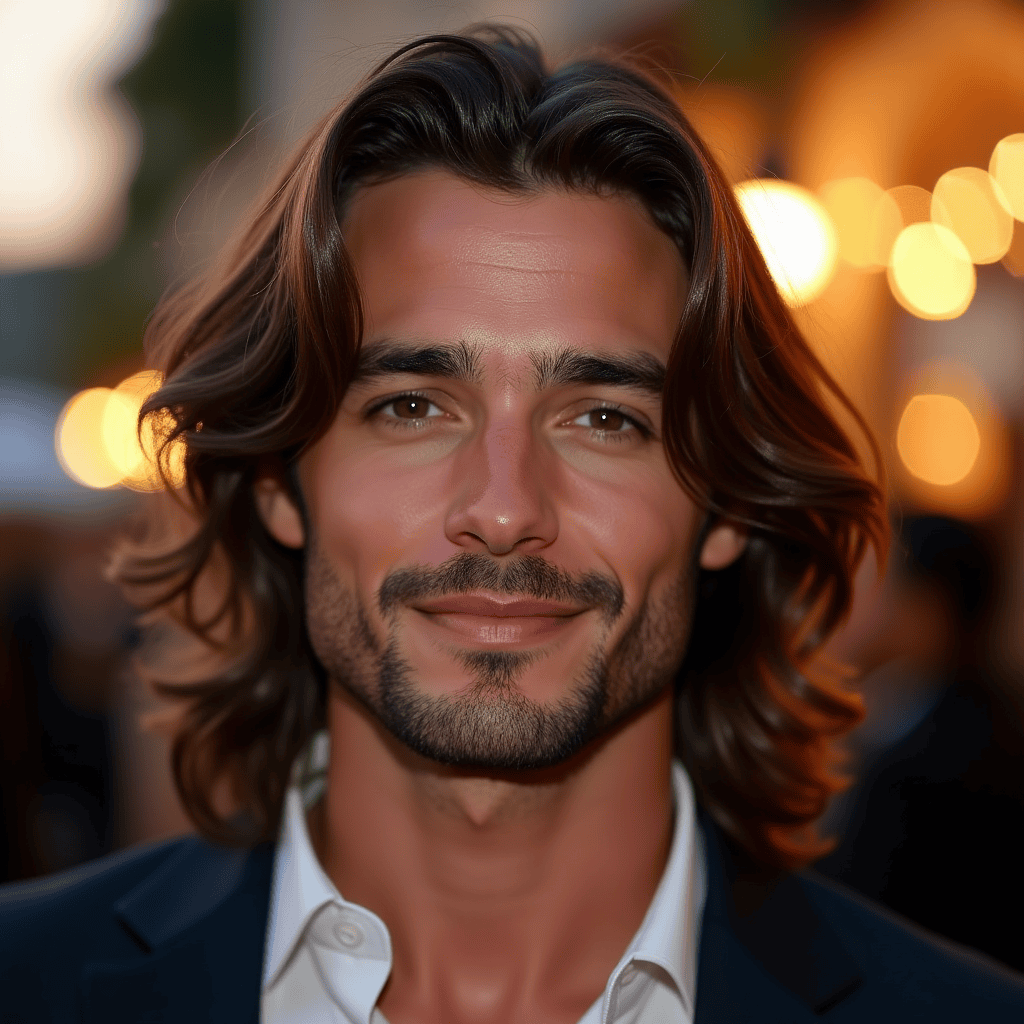
Long wavy curtains with tucked sides keep the dramatic front length while controlling everything around the ears. The center-part sections fall toward the cheekbones, then sweep backward as the hair reaches the sides. Tucking the lower sections behind the ears exposes the face and creates a cleaner outline without sacrificing the length. The combination feels relaxed from the front and surprisingly tidy from the profile.
This works best for men with medium-long waves who like length but occasionally need a more polished finish. Ask your stylist, “Keep long wavy curtains around my face, add enough layering for movement, and leave the sides long enough to tuck cleanly behind my ears.” It is particularly useful for dinners, weddings, or photos where loose long hair might otherwise dominate an outfit. The tradeoff is that shorter side layers will constantly escape the tuck.
How to Choose the Right Curtain Hairstyle
Start with your natural texture rather than the reference photo. Straight hair makes smooth classic curtains easier, waves favor layered and messier versions, while curls need enough length for shrinkage and a barber who understands how the pattern changes between wet and dry. Density matters too: thick hair often needs internal weight removed, while fine hair usually benefits from keeping more of it.
Then decide how clean you want the edges. Full scissor-cut curtain hairstyles grow out softly, tapers add moderate structure, and fades create the strongest contrast but require the quickest maintenance. If you are unsure, begin conservatively. You can always shorten the temples at the next appointment, but you cannot put bulk back after an aggressive fade.
Face shape is a useful filter rather than a strict rule. Longer curtain sections can visually lengthen the face, wide fluffy shapes can emphasize width, and brushed-back versions expose more forehead. Take two or three reference photos to the appointment, including one that shows the sides. A front-only image leaves the barber guessing about half the haircut.
Use specific language during the consultation. Instead of saying, “I want curtains,” explain where you want the fringe to land, whether your ears should remain covered, and how much time you will actually style it. If you are buying new grooming tools, established barbering brands such as Wahl can also help you understand the basic difference between clippers, trimmers, and styling tools before spending money.
For an important event, avoid making a dramatic switch the morning before. A fresh taper may look best close to the date, but a completely new long curtain shape is smarter to test earlier so you know how it behaves with your suit, glasses, facial hair, or preferred styling product.
Where Curtain Hairstyles Get Oversold
The biggest exaggeration around curtain hairstyles is the idea that every version is effortless. Some are. Others rely on a specific growth pattern, enough front length, daily blow-drying, or a hair texture that naturally bends around the face. A photograph taken five minutes after professional styling does not tell you what the cut looks like after a commute.
Another common mistake is chasing excessive texture because the reference image looks light and separated. On dense hair, controlled weight removal can be useful. On fine hair, taking too much out may leave the front transparent and difficult to arrange. Texture should create movement, not erase the haircut.
A center part is not mandatory either. If your hair naturally opens slightly to one side, forcing a mathematically perfect middle can add work without improving the result. Some of the best curtain hairstyle ideas are technically off-center because they follow the growth pattern rather than fighting it.
Finally, expensive styling products do not rescue a poor shape. If the haircut has the wrong length or badly placed layers, buying stronger wax usually makes the problem stiffer. A decent cut, water, a dryer, and one lightweight product can achieve most of what many men actually need.
Frequently Asked Questions
What length does hair need to be for curtain hairstyles?
Most curtain hairstyles need enough front length to separate and fall toward either side of the forehead. Around eyebrow length is a useful starting point for shorter versions, while cheekbone-length hair creates a more obvious long curtain. Your natural curl and shrinkage can change the required measurement considerably.
Do curtain hairstyles work with straight hair?
Yes. Straight hair is particularly well suited to classic, tapered, slick, and Korean-inspired curtain hairstyles. The main issue is whether the hair has enough root movement to stay separated. Very flat straight hair may need light blow-drying or a small amount of styling product for lasting shape.
Can men with curly hair wear curtains?
Curly hair can make excellent curtains when the cut respects the curl pattern. The center opening will usually look softer and less geometric than it does on straight hair. Leave extra length for shrinkage and avoid removing so much weight that the curls around the forehead become thin or unpredictable.
Which curtain hairstyle ideas are easiest to maintain?
Classic medium curtains, natural off-center curtains, and soft scissor-cut versions are among the easiest because their edges grow out gradually. Low fades and sharp tapers require more frequent barber visits. Longer curtain hairstyles need fewer perimeter cleanups but usually demand more washing, drying, and detangling attention.
Are curtain hairstyles good for thick hair?
Thick hair gives curtain cuts plenty of shape and presence, especially for voluminous, textured, and wavy versions. The important part is managing bulk without destroying density. Selective layering or internal weight removal usually works better than thinning every section heavily from roots to ends.
Can thin or fine hair wear a curtain haircut?
Fine hair can wear curtains, but simpler shapes usually work better than heavily textured versions. Keeping the perimeter relatively full helps preserve the appearance of density. Excessive point cutting, thinning shears, or long separated pieces can make sparse areas more obvious under bright light.
Should a curtain haircut have a middle part?
Not always. A middle part creates the classic curtain shape, but a slightly off-center split often works better with natural growth. If the roots strongly favor one direction, following that movement can produce a more stable hairstyle and shorten daily styling time without losing the curtain effect.
What should I ask my barber for when getting curtains?
Describe the finished shape rather than relying on the word “curtains” alone. Explain where you want the fringe to land, how full the sides should remain, whether you want scissors, a taper, or a fade, and how much daily styling you are prepared to do.
How do you style curtain hair in the morning?
Start with slightly damp hair and establish the part using your fingers. Direct each front section outward with a dryer while lifting slightly at the roots, then allow the ends to fall naturally. Finish with a small amount of lightweight cream, paste, or another product suited to your texture.
Are curtain hairstyles still suitable for professional settings?
They can be, especially shorter tapered curtains, brushed-back curtains, compact curtains, and neat scissor-cut versions. Keeping the neckline, sideburns, and fringe controlled matters more than whether the hair has a center part. Longer or heavily messy variations naturally read more casual.
How often should a curtain haircut be trimmed?
The ideal schedule depends on the version. Fades and tight tapers lose their crispness relatively quickly, while medium scissor-cut curtains can tolerate considerably more growth. Long curtains may need only occasional reshaping. Book based on when the silhouette stops behaving rather than following an arbitrary calendar.
What face shape looks best with curtain hairstyle ideas?
Oval faces handle nearly every curtain variation, but there is no single required face shape. Longer sections can add vertical emphasis, wider fluffy curtains add width, and brushed-back styles expose more forehead. Adjusting length and volume usually matters more than rejecting the hairstyle based on face shape alone.
Can I grow curtains from a short haircut?
Yes, although the fringe normally needs time to become long enough to separate and fall. During the grow-out, keep the sides lightly shaped while protecting length through the front and upper sides. Cutting the fringe back every time it becomes awkward only resets the process.
Do I need styling products for curtain hair?
Not necessarily. Wavy, curly, and naturally cooperative hair can sometimes settle with water and controlled drying alone. Straight or stubborn hair may benefit from a light cream, paste, or mousse. Start with less product than you think you need because heavy application can flatten the curtain movement.
Are long curtain hairstyles harder to wear with formal clothes?
They require more intentional grooming, but they can work well with formal clothing. Brushing the front back slightly, tucking the sides, or defining the center part keeps the hair from competing with a jacket collar or shirt neckline. Test the complete hairstyle and outfit before an important event.
The right curtain cut should make your natural hair easier to arrange, not give you another problem to solve every morning. Choose the version closest to your existing texture and realistic maintenance habits, then adjust the length or taper once you know how the shape behaves. For your next appointment, bring two clear reference photos and ask your barber to build the curtain shape around your natural growth pattern.
Best Men’s Hairstyle Reports
Discover modern men’s haircut ideas, classic barber styles and fresh hairstyle inspiration for every look.