
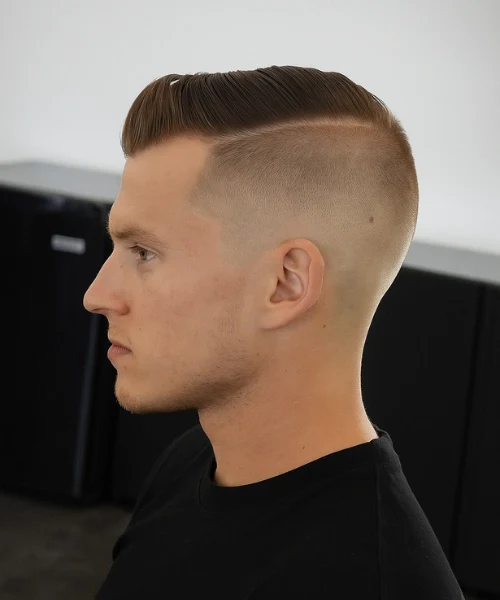
The strongest side part hairstyle ideas range from a neat Ivy League and tapered business cut to textured crops, longer swept styles, and sharp hard parts. For most men, the sweet spot is a natural part with enough length on top to move, paired with sides that suit how formal or relaxed you want the cut to feel.
I’ve spent more than a decade around barbershops and men’s styling, and side parts are one of those cuts I keep seeing survive every trend cycle. I’ve worn them short, grown them out, changed the taper, and learned that the part itself matters less than how well the surrounding shape works with your hair.
These quick picks narrow the 25 side part hairstyle ideas down by the feature that usually matters most when you’re sitting in the barber’s chair.
| Quick Pick | Best For | Defining Detail |
|---|---|---|
| Classic Tapered Side Part | Most men | Natural part with gradual sides |
| Ivy League Side Part | Office wear | Short controlled top |
| Side Part with Low Fade | Modern everyday wear | Clean fade without harsh contrast |
| Side Part with Scissor Taper | Conservative styling | Soft, natural perimeter |
| Short Textured Side Part | Thick hair | Choppy movement through the top |
| Wavy Side Part | Natural texture | Loose directional wave |
| Pompadour Side Part | Maximum volume | Lifted front with defined direction |
| Medium Swept Side Part | Longer hair | Flowing combed-over shape |
| Hard Part with Fade | Sharp definition | Clipped part line |
| Disconnected Side Part | Bold styling | Strong top-to-side contrast |
Classic Side Part Hairstyle Ideas That Rarely Look Wrong
Classic side part hairstyle ideas earn their place because they don’t demand a complete wardrobe or grooming reinvention. These first five work with business clothes, denim, wedding tailoring, and most everyday situations without announcing that your haircut entered the room before you did.
1. Classic Tapered Side Part
A classic tapered side part keeps roughly two to four inches through the top, with the hair directed cleanly away from a natural part line. The sides shorten gradually toward the ears and neckline instead of dropping suddenly into skin. There’s enough weight around the temples to keep the silhouette traditional, while the front can sit flat or carry a small amount of lift. Among side part hairstyle ideas, this is the one I’d show someone who wants to look sharper without looking noticeably trendy.
It suits straight, slightly wavy, fine, and medium-density hair especially well, and the balanced outline works across most face shapes. Tell your barber, “Keep a natural side part, leave enough length to comb across, and taper the sides without taking them too tight.” A light cream or low-shine pomade usually handles daily styling in a minute or two. The drawback is that an overgrown taper can lose its neat outline quickly, so expect regular cleanups if you wear it for work.

2. Ivy League Side Part
The Ivy League side part is shorter and more athletic, with enough length above the forehead to sweep sideways while the crown stays controlled. The sides sit close without looking shaved, and the transition is gradual enough that the cut still feels polished. I like the way the hairline remains visible rather than disappearing beneath a long comb-over. It’s tidy without being rigid.
Men with straight or slightly wavy hair get the easiest result, especially if they dislike spending time with a blow dryer before work. Ask for, “A short Ivy League with a natural side part, tapered sides, and enough length at the front to sweep over.” Finger styling with a small dab of matte paste is often enough. The limitation is obvious: if your hair is strongly curly or you want dramatic volume, this shape can feel too controlled.

3. Gentleman’s Side Part with Scissor Taper
This version leaves the clipper work behind and relies on scissors to create a softer shape around the sides and back. The top flows from the part rather than sitting in a hard shell, while the perimeter keeps enough fullness to feel traditional. Side part hairstyle ideas sometimes become too obsessed with fades; this one proves that visible density around the head can look far more expensive when it’s shaped properly.
Thick straight hair and relaxed waves respond beautifully because the barber has enough material to graduate rather than erase. Say, “Scissor cut the sides, keep natural weight around the temples, and blend a soft side part into the top.” It needs a little more comb work than a faded cut, particularly after sleeping on it. Men whose hair expands heavily at the sides may find the silhouette gets bulky between appointments.
4. Neat Side Part with Low Taper
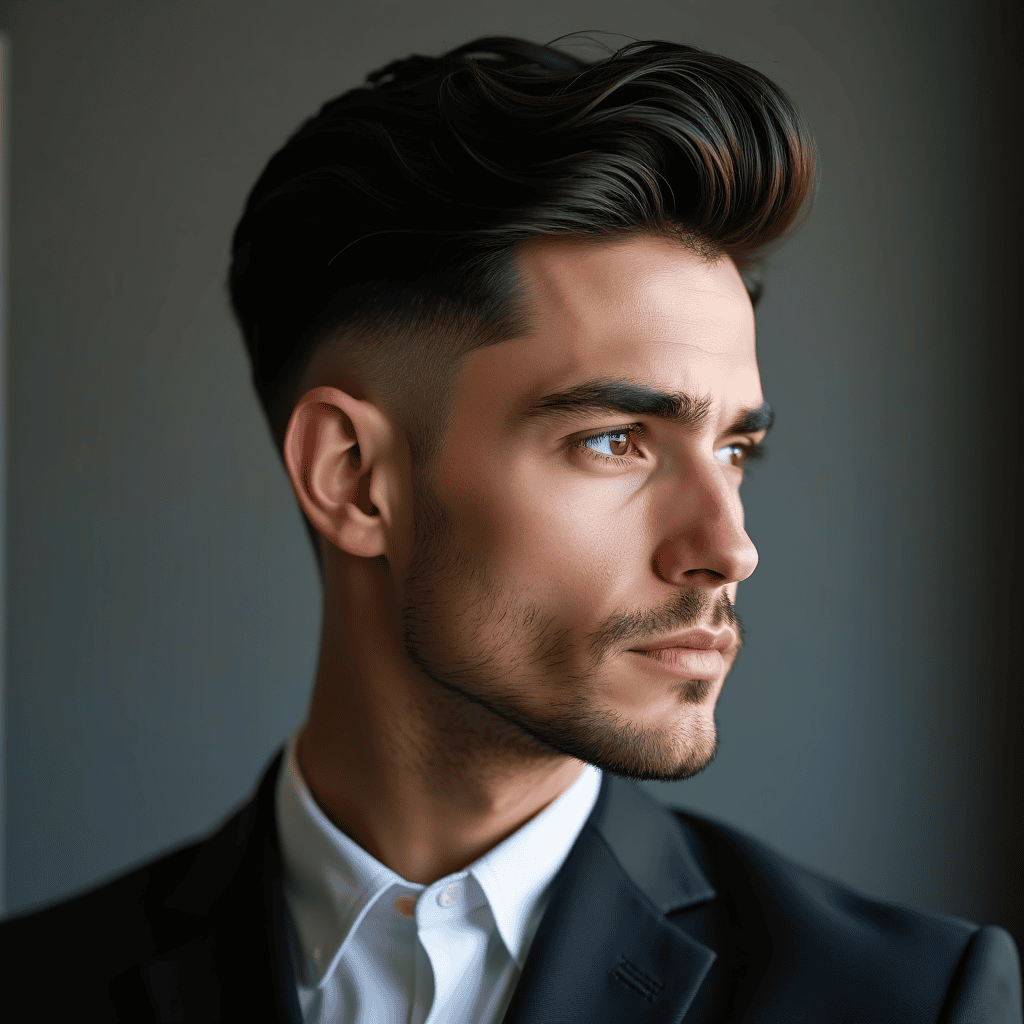
A low taper changes only the lowest edges of the haircut, keeping the bulk of the sides full while cleaning the sideburns and neckline. The top follows a crisp but natural side direction with moderate volume at the front. From across a room it reads as a traditional side part; up close, the cleaner perimeter gives away the modern barbering underneath.
This is one of the safest side part hairstyle ideas for men moving between formal workplaces and casual weekends. Ask your barber, “Keep the side part classic, preserve weight on the sides, and use a low taper only around the sideburns and neckline.” The style works with cream, paste, or a small amount of pomade depending on shine preference. Its weakness is subtlety: if you want your haircut to look dramatically different, this change may feel too quiet.

5. Slick Side Part
The slick side part takes the same classic architecture and pushes the finish smoother. Hair follows the head closely from the part, with visible comb direction and controlled shine rather than airy texture. A slightly lifted front prevents the style from looking pasted flat. Under a dinner jacket or structured suit, that deliberate finish makes sense.
Straight or manageable wavy hair is easiest because the strands need to travel in one consistent direction. Tell the barber, “Leave enough length to comb flat from the side part and keep the sides tidy without disconnecting them.” Water-based pomade makes the finish easier to reset, but touching the hair all day can break the clean lines. And if you already dislike shiny products, skip this one; forcing a slick finish with dry clay defeats the point.

Short Side Part Hairstyle Ideas for Cleaner Everyday Cuts
Short side part hairstyle ideas make sense when you want the direction and structure of the look without carrying much hair around. They also tend to survive workouts, hot weather, helmets, and rushed mornings better than longer versions.
6. Short Side Part with Low Fade
The low fade starts beneath the temple and keeps the darker weight line relatively low, so the side part still owns the haircut. Up top, one and a half to three inches is enough to create visible direction without needing a dramatic sweep. The fade removes heaviness around the ears while leaving the upper sides connected to the top.
Ask for, “A natural side part with a low fade and enough length on top to comb over without a hard line.” It suits men who want a contemporary cut but don’t want their scalp exposed halfway up the head. Styling is easy with matte paste and a comb or fingers. The catch is maintenance: once that faded edge grows for a few weeks, the haircut looks less intentional than a conventional taper.
7. Short Side Part with Mid Fade
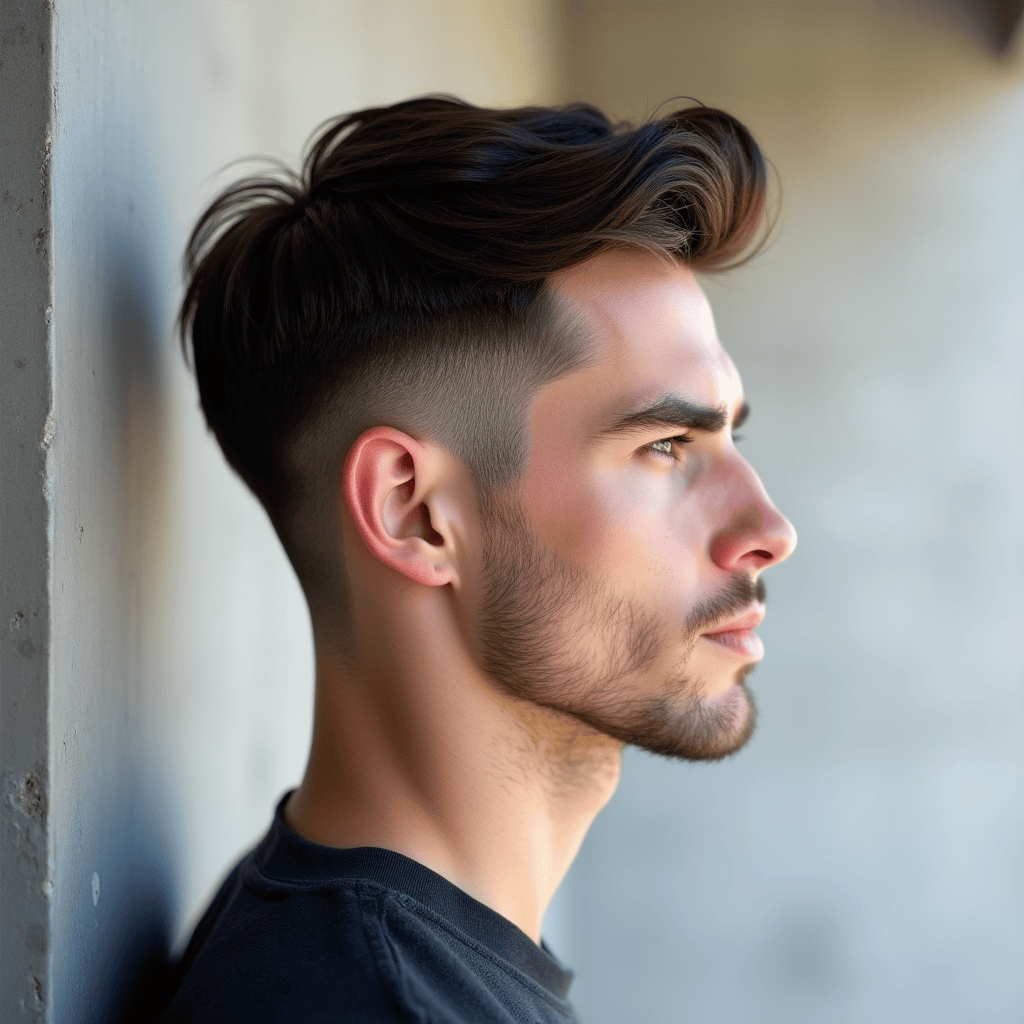
A mid fade creates stronger separation because the shortest section rises closer to the temple. The top remains compact, with the part guiding the hair diagonally rather than allowing it to stand straight upward. It’s cleaner and more graphic than the low-fade version without becoming an outright disconnected cut.
For men with dense hair, this can remove a lot of frustrating side bulk. Tell the barber, “Give me a mid fade, but keep the top connected enough for a clean side part.” Blow-drying for a minute helps the front stay where you place it. Of the shorter side part hairstyle ideas here, this one shows growth fastest around the faded zone, so it rewards frequent barber visits more than relaxed upkeep.
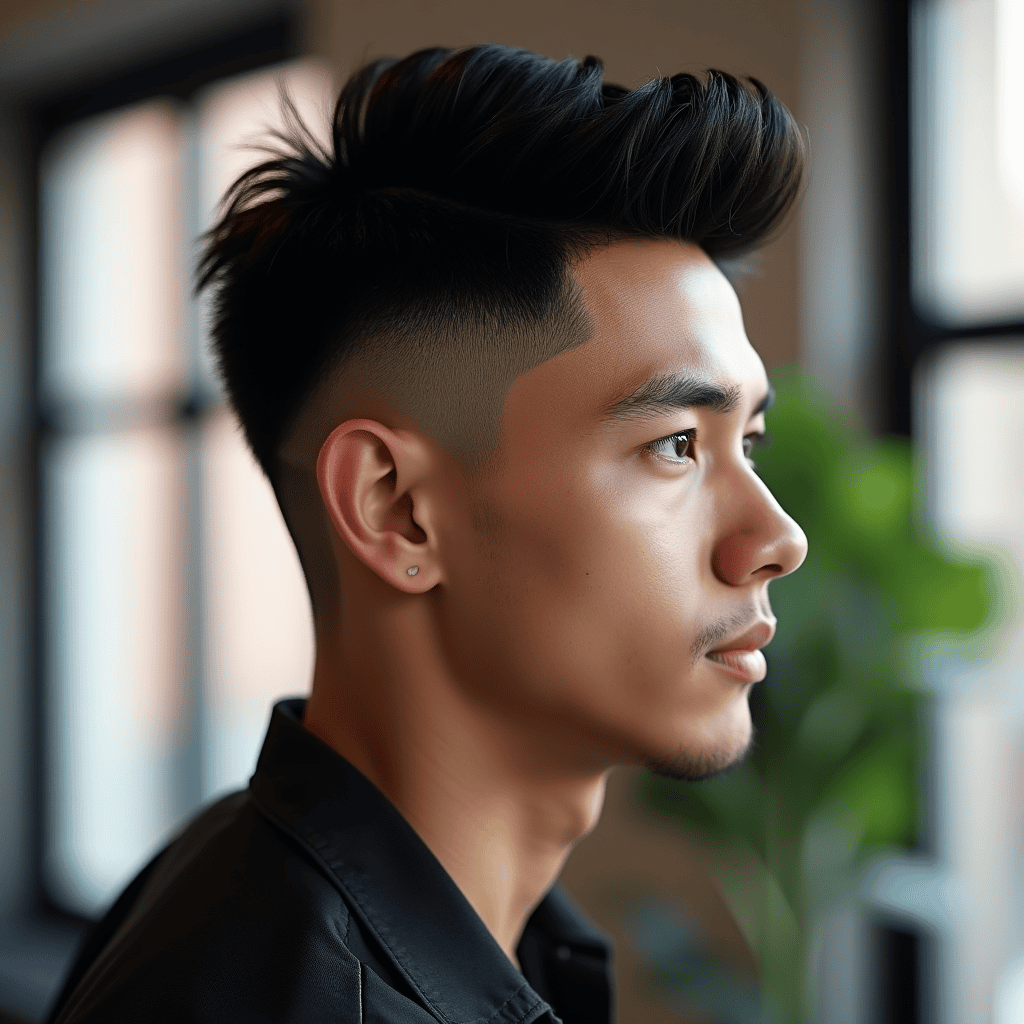
8. Short Textured Side Part
Instead of combing every strand into place, this cut uses the part only as a direction guide. The top is point-cut or otherwise texturized so small pieces separate, while the front bends loosely sideways. You can still see the basic side-part silhouette, but there’s no polished comb pattern. I go back and forth on this one because it looks excellent on the right head of hair and strangely messy when over-thinned.
Thick straight or mildly wavy hair gives the best raw material. Ask for, “A short side part with choppy texture on top, not a slick comb-over.” Work a pea-sized amount of matte clay through dry hair and separate the front with your fingers. Fine hair can wear it too, but aggressive texturizing may remove density you actually need, so tell the barber you want movement rather than thinning for its own sake.

9. Side Part Crew Cut
The side part crew cut sits close through the crown and sides but leaves the front fractionally longer, giving you enough hair to establish direction. The part is understated rather than carved in, and the short top follows the skull instead of forming a tall silhouette. Think of it as a crew cut that learned some manners.
This works especially well for straight hair and men who want side part hairstyle ideas that don’t require a shelf full of products. Say, “Keep it crew-cut short but leave the front long enough to sweep from a natural side part.” A trace of styling cream will usually control flyaways. The downside is flexibility: once the hair is this short, you can’t suddenly turn it into a pompadour or long brushed-back style for an event.

10. Side Part with Temple Fade
The temple fade removes hair tightly only around the sideburn and temple zone, leaving the rest of the side substantially fuller. That small flash of skin creates definition without allowing the fade to dominate. The top can remain short and neat, and the part stays easy to read from the front.
Men who like sharp edges but don’t want a full fade should ask for, “A natural side part with a temple taper or temple fade, keeping the back and upper sides fuller.” Curly and straight hair can both use the idea because the detail happens mostly around the perimeter. It does demand tidy edge work, though. Once the temple grows fuzzy, the contrast that makes the style interesting disappears.
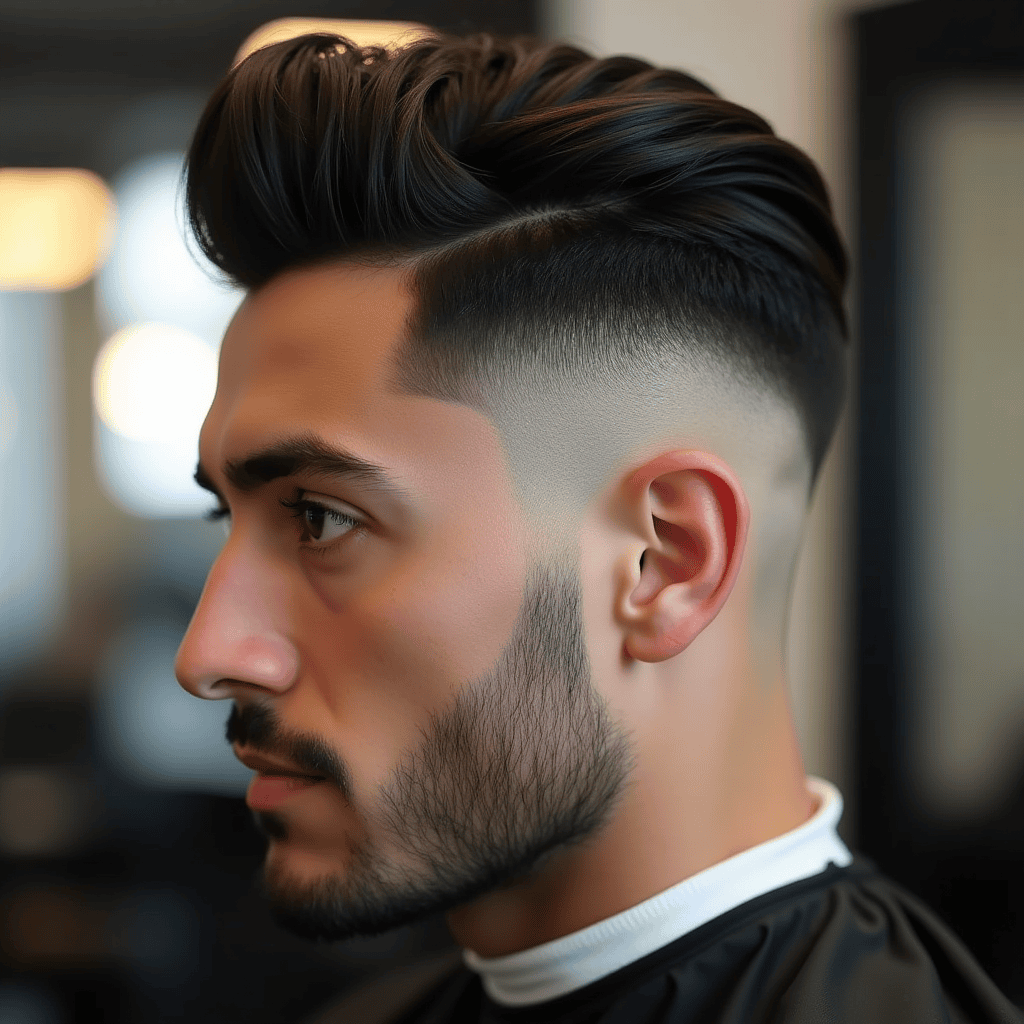
Textured Side Part Hairstyle Ideas for Movement and Volume
Texture changes the entire mood of a side part. These side part hairstyle ideas stop treating every strand as something to discipline and instead use waves, curls, lift, and separation to make the part look less formal.
11. Wavy Side Part
A wavy side part lets the hair cross the head in broad bends rather than straight comb lines. The front often lifts naturally before falling sideways, creating more height than a classic slick style without needing a pompadour. Keeping some fullness above the temple helps the waves transition naturally into the shorter sides.
Men with loose or medium waves should ask for, “Keep my natural wave visible, build the cut around a side part, and don’t thin the top until it goes fluffy.” A diffuser or gentle blow-dry can encourage direction, but many heads need only styling cream worked through damp hair. The drawback is predictability. Humidity and sleep can change the wave pattern from one morning to the next.

12. Curly Side Part
The curly side part uses a visible division in the hair without trying to force every curl into a combed-over sheet. Curls on the longer side stack and move outward while the opposite side sits tighter to the head. The contrast can give curls a cleaner overall silhouette without stripping away the texture that makes them interesting.
Ask your barber, “Keep enough curl length on top for definition, establish a natural side part, and taper the sides without cutting the curls into a flat shape.” This is one of the side part hairstyle ideas where curl-by-curl visual judgment matters more than chasing an exact top length. Styling cream or curl product goes in with your fingers, not a fine comb. The main drawback is shrinkage, so discuss the finished dry length before too much comes off.
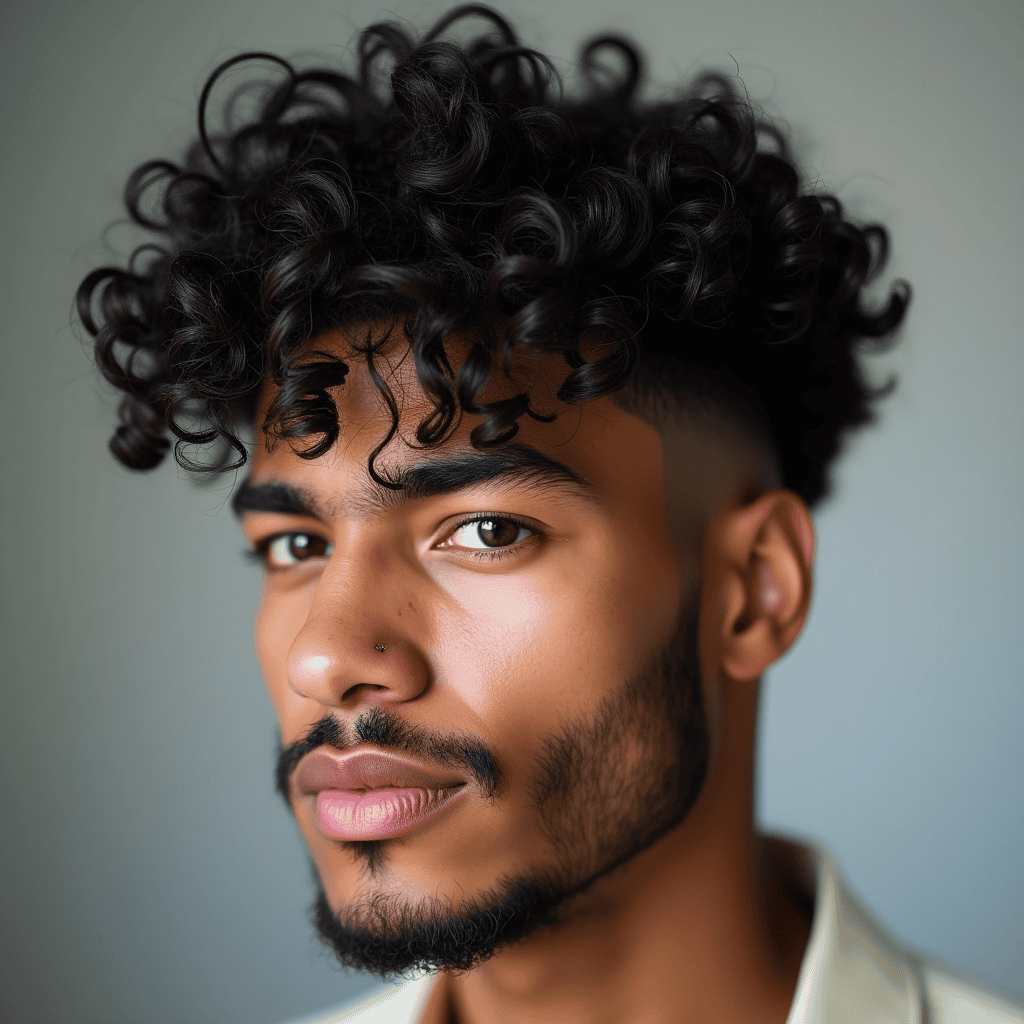
13. Messy Side Part
The messy side part looks best when the shape underneath is disciplined but the surface isn’t. A barber creates a clear direction through the top, then the finished styling breaks that direction into uneven sections rather than straight comb tracks. The front can fall slightly forward, upward, or sideways as long as the part still anchors the overall movement.
It’s a smart fit for medium to thick hair and anyone whose strands refuse to stay perfectly placed. Tell the barber, “I want a loose side part that I can style with my fingers, with texture through the top but a clean overall outline.” Use dry paste and stop touching the hair once it sits well. Too much intentional mess is the weakness here; if the neckline and side shape are also overgrown, the style stops looking deliberate.

14. Side Part Quiff
A side part quiff lifts the front first and sends it diagonally rather than straight backward. Height is concentrated above one side of the forehead, while the rest of the top gradually lowers toward the crown. The result is more sculpted than a textured side part but less rounded than a full pompadour.
Men with straight or wavy hair and decent front density have the easiest time building the shape. Ask for, “A side part with enough front length for a diagonal quiff, keeping the crown shorter so the volume sits forward.” Blow-dry the front against its natural fall before guiding it over. The honest downside is morning effort; this isn’t one of those side part hairstyle ideas that reliably falls into place after you put on a shirt.
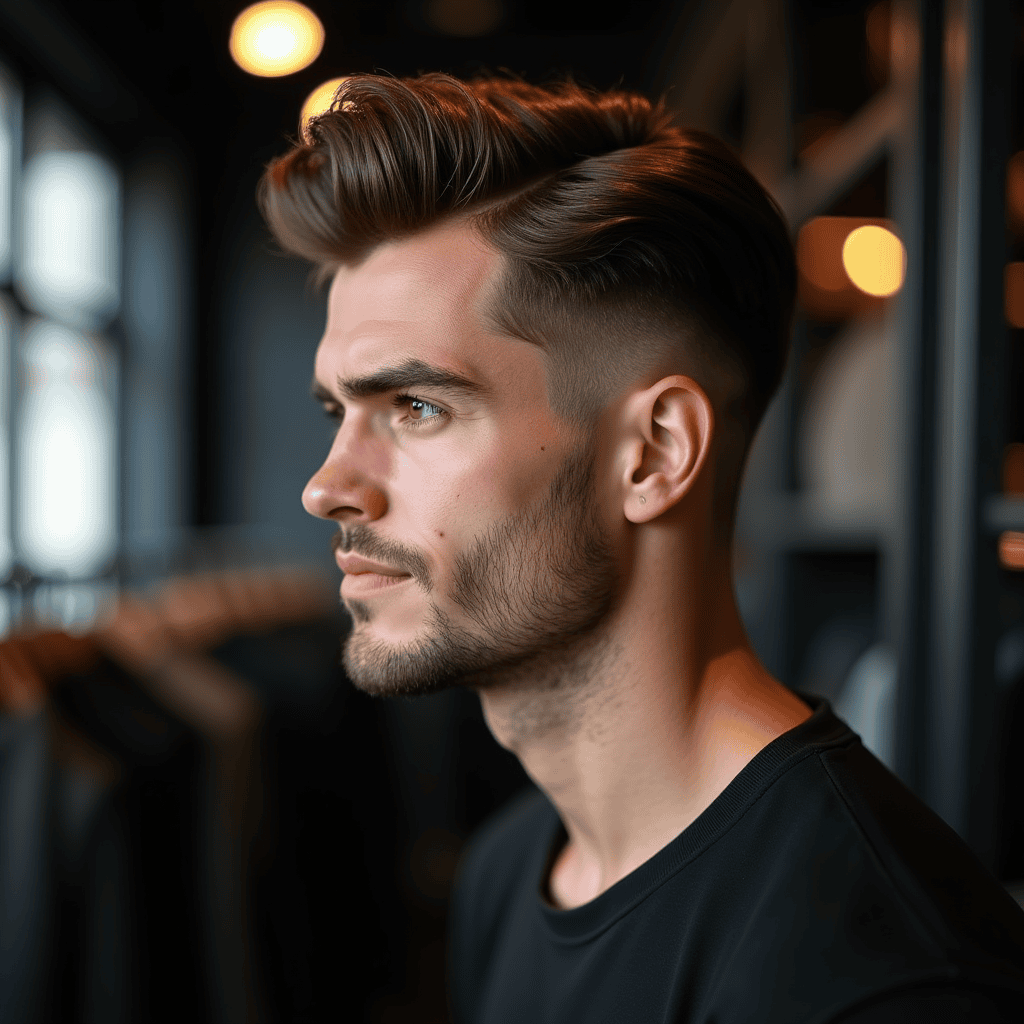
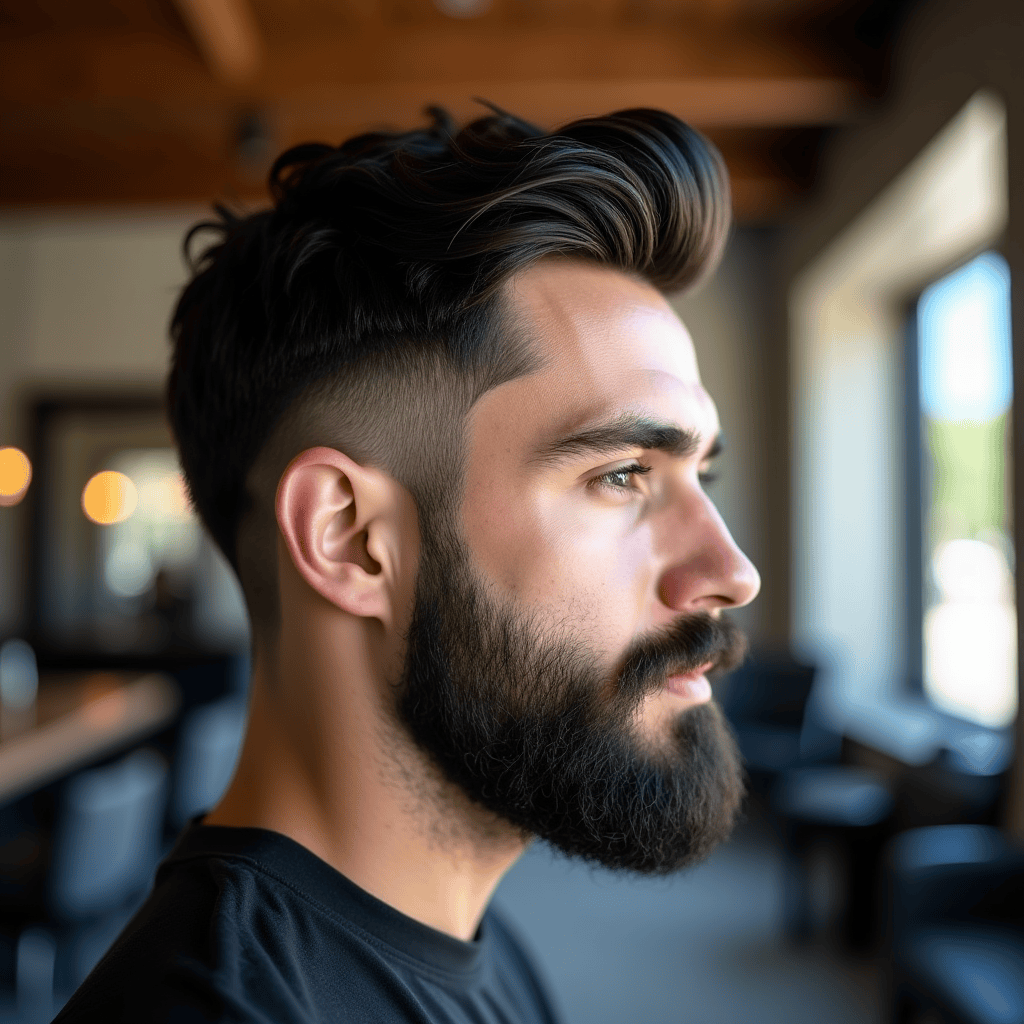
15. Textured Side Part with Beard
This pairing works by balancing detail above and below the face. The hair carries a loosely broken side part with visible texture, while the beard has enough shape at the cheek and neck lines to stop the overall look becoming fuzzy. The strongest version keeps one element slightly tighter than the other rather than building maximum volume everywhere.
It suits men who already wear facial hair and want the haircut to feel connected to it. Tell the barber, “Give me a textured natural side part and blend the sideburn transition into my beard without making both sections equally heavy.” Daily styling can stay matte and loose. The drawback is maintenance across two zones: an excellent haircut with a neglected beard—or the reverse—throws off the balance quickly.
Medium-Length Side Part Hairstyle Ideas with More Flow
Once the top grows beyond the usual barber-shop short cut, a side part starts behaving differently. These longer side part hairstyle ideas depend more on weight, blow-dry direction, and how the hair falls around the temple and ear.
16. Medium Swept Side Part
The medium swept side part leaves enough length for the hair to travel broadly across the head, usually with the front reaching several inches before styling. Instead of exposing the part sharply, the longer section can fall slightly over it and create a softer division. The sides remain shorter but shouldn’t look disconnected from all that movement above.
Straight and wavy hair both work, particularly if your hair naturally wants to move to one side. Ask for, “A medium side part with enough top length to sweep naturally, keeping the sides connected and scissor-shaped.” A blow dryer makes the direction far easier to control. The cost of that extra movement is time: medium hair rarely looks as intentional straight out of bed as a short tapered cut.

17. Side Part Bro Flow
The side part bro flow keeps hair long enough to bend around the head, sweep past the temple, and begin moving toward or behind the ears. The part is loose, and the front lifts before falling backward rather than being combed firmly sideways. This style looks better when individual strands escape the intended route.
Guys with wavy or flexible straight hair get the easiest movement. Say, “Keep the length for a bro flow, but shape it around my natural side part and remove bulk without making the ends thin.” A light cream can control frizz while leaving the finish touchable. Side part hairstyle ideas at this length demand patience through the grow-out stage, and there will be weeks when the sides feel awkward before they finally tuck properly.

18. Side Part Pompadour
The side part pompadour builds height through the front but refuses perfect symmetry. Volume rises high above the forehead, then travels backward and slightly across from the part. The sides can be tapered, faded, or scissor cut, though I prefer enough side weight to keep the top from looking like it was attached separately.
Dense straight or wavy hair handles the architecture best. Ask for, “A side-parted pompadour with maximum usable length at the front, gradually shorter toward the crown, and enough connection through the sides.” You’ll need heat, a brush, and a product with reliable hold. The drawback is commitment: if five-minute grooming is already too much, a high pompadour will annoy you long before it impresses anyone else.

19. Long Layered Side Part
Long layers allow the hair to move across the forehead and temple without collapsing into one heavy block. The part sits naturally near the highest point of one eyebrow, while graduated lengths create movement through the ends. When the cut is right, you see individual sections swing rather than one curtain of hair shifting together.
This works best on straight, wavy, or loose-curly hair with enough density to support layering. Tell your stylist, “Keep my overall length, build long layers around a natural side part, and leave weight through the ends.” Conditioner and sensible heat habits matter more at this length; the American Academy of Dermatology also provides general hair-care guidance if you’re trying to reduce unnecessary breakage. The downside is upkeep at home rather than frequent cutting: neglected longer hair makes even a strong shape look tired.

20. Side Part with Tucked-Back Sides
Here the top and sides stay long enough to move behind one or both ears, but the part keeps the front from falling randomly into the face. The heavier side sweeps outward before tucking back, while the opposite side sits flatter and cleaner. It feels relaxed but still has an obvious directional structure.
Men growing from a short cut into medium hair often find this one useful during the in-between stage. Ask for, “Keep enough side length to tuck behind the ears, clean up the perimeter, and shape the front around a natural side part.” A small amount of cream controls flyaways without freezing the shape. The irritation point is simple: if your side length is half an inch short of tucking securely, you may spend weeks repeatedly pushing it back.

Bold Side Part Hairstyle Ideas with Stronger Contrast
The next five side part hairstyle ideas make the structure more obvious. Hard lines, disconnection, high fades, and retro proportions can look excellent, but these cuts ask you to commit to the shape rather than treating the part as a quiet detail.
21. Hard Part with Fade
A hard part replaces the natural division with a narrow clipped or shaved line. That line separates the longer top from the faded side and makes the direction readable from several feet away. The strongest versions keep the part narrow; once it becomes a broad stripe, the detail can overpower the haircut.
Ask for, “A fine hard part following my natural part line with a clean fade, not an exaggerated wide line.” Straight and wavy hair can both wear it, though thicker hair creates the clearest contrast. Styling is fast because the line tells you exactly where the hair goes. The drawback is regrowth: that razor-sharp part becomes less convincing quickly and can look awkward while you’re trying to grow it back into a natural division.
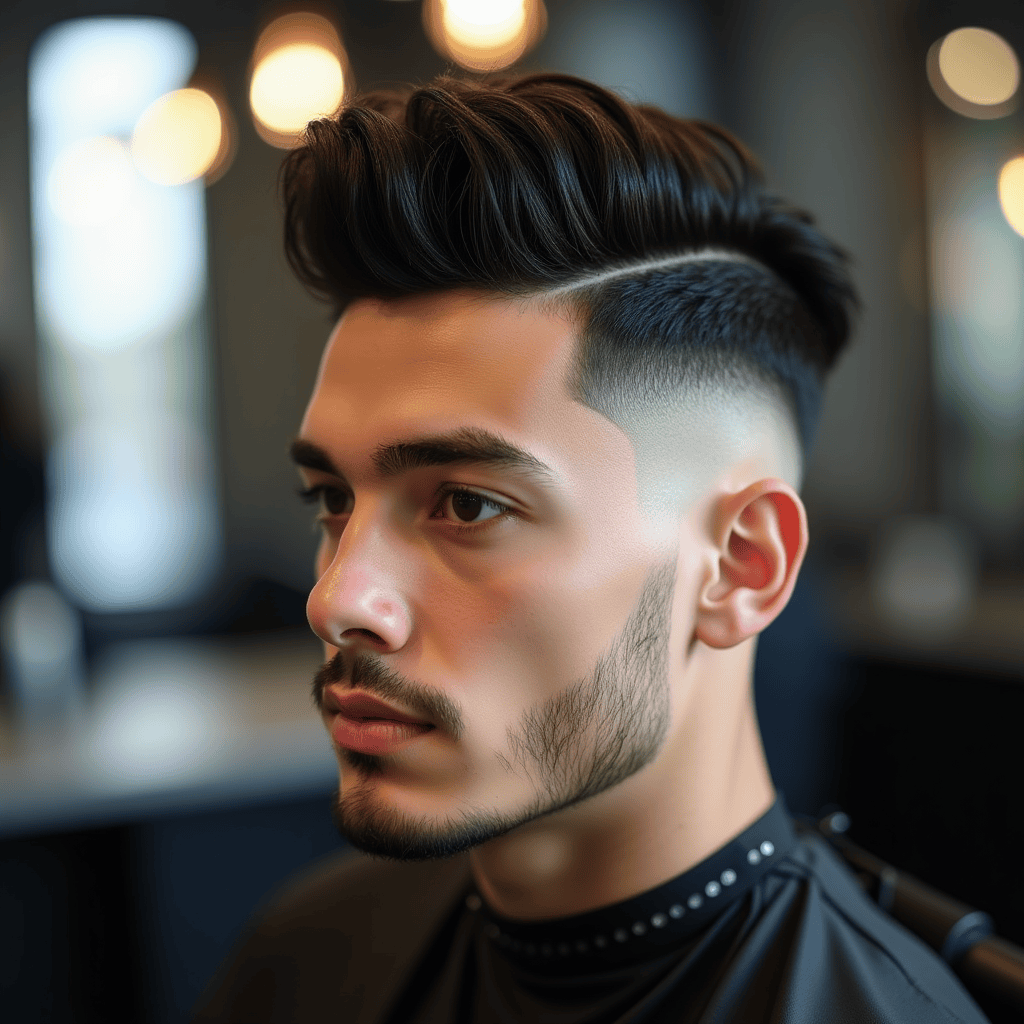
22. High Fade Side Part
The high fade removes most of the side weight and pushes the contrast close to the top section. The remaining hair sweeps decisively from the part, creating a dark cap above much lighter sides. This is far more graphic than a taper or low fade, especially when the top is kept smooth.
Men who prefer sharp modern outlines and don’t mind visible scalp around the sides usually wear it best. Tell your barber, “Take the fade high but keep enough connection around the part that the top doesn’t hang over like a shelf.” Styling the top is straightforward, yet the fade itself needs frequent attention. Of all the side part hairstyle ideas in this list, this is one of the least forgiving when you decide to postpone your next cut.

23. Disconnected Side Part
A disconnected side part keeps substantial length on top while cutting the sides much shorter without a gradual blend between them. The long section drops or sweeps over the transition, producing a distinct ledge of weight. It can look architectural and fashion-forward, especially with a slightly loose finish rather than a rigid comb-over.
Thick straight or wavy hair tends to hold the upper shape best. Ask for, “A disconnected side part with clear contrast, but keep enough texture in the top that it doesn’t sit like one solid panel.” Expect to blow-dry the upper section if you want consistent control. The weakness is the grow-out: disconnected cuts can develop a mushroom-like shelf until enough side length returns to blend properly.

24. Retro Side Part with Volume
The retro version keeps the sides fuller, lifts the front generously, and lets the top arc across rather than lying flat. There’s a hint of mid-century grooming in the silhouette without needing to recreate a period costume. A softer natural part keeps it wearable with modern clothes.
Men with strong density and a cooperative growth pattern at the front have the easiest time. Ask for, “A classic side part with fuller sides and extra front volume, shaped traditionally but not slicked flat.” Use a brush and dryer to build height before adding a modest amount of hold. The danger is going too literal; excessive shine, rigid comb marks, and huge proportions can turn retro influence into fancy-dress territory.

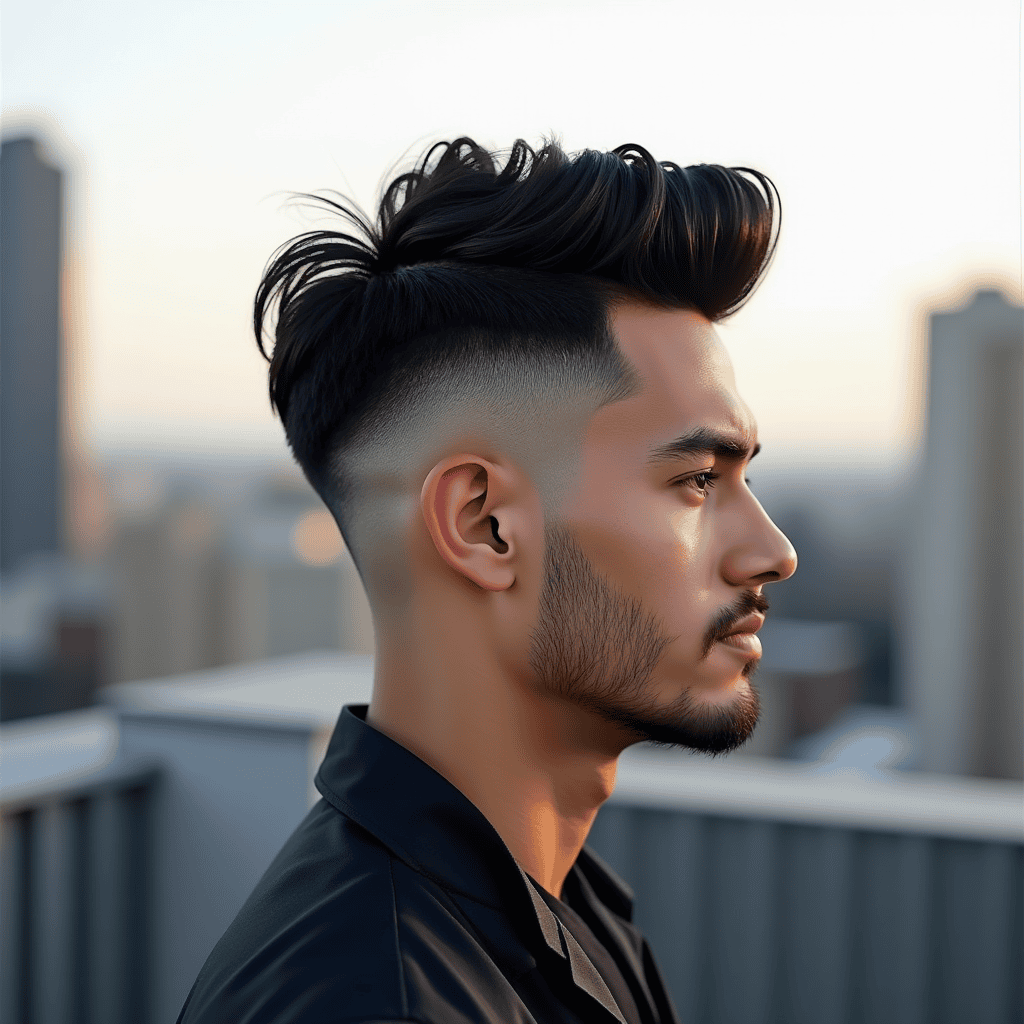
25. Modern Side Part with Undercut
The modern undercut leaves the top long and directional while taking the sides uniformly short instead of fading them gradually. The part becomes the visual border between a sweeping upper section and a compact lower section. Keeping texture through the long top stops the haircut from feeling too severe.
This is one of the bolder side part hairstyle ideas for men with straight or wavy hair who like obvious contrast. Tell the barber, “Keep enough top length to sweep from the side part and cut the sides into a clean undercut without blending away the contrast.” The top still needs regular styling even though the sides are simple. Growing it out is the real price; the short sides have to catch up before you can move comfortably into a softer connected haircut.
How to Choose the Right Side Part Hairstyle
The right side part starts with your hair’s natural behavior, not a photo you found five minutes before the appointment. Save reference images from places such as Pinterest, but look for men whose density, texture, length, and growth pattern resemble yours rather than focusing only on the finished haircut.
Start by finding your natural part. Wet your hair, brush it backward, and let it fall forward on its own; the point where it consistently separates is usually easier to work with than an arbitrary line forced onto the opposite side.
Fine hair generally benefits from lighter products, moderate top length, and some front lift. Heavy pomade can collapse it. Thick hair can carry fuller side part hairstyle ideas, but removing bulk in the wrong places may cause the top to stick out instead of settling into direction.
Face shape matters less than social media makes it sound, but proportions still help. If your face already looks long, an extremely tall quiff or pompadour can exaggerate that length. A broader face can often handle more lift through the front, while leaving a little height above the temples prevents tight sides from widening the center of the face visually.
Your routine should make the final decision. A short Ivy League or tapered side part can be combed into place quickly. A pompadour, long sweep, or bro flow usually asks for drying time and occasional restyling during the day.
Bring two or three photos to the appointment: one showing the overall shape, one showing the side treatment, and one showing the amount of top texture you like. Then say what you dislike as clearly as what you want. “I want this direction, but I don’t want skin showing high on the sides” tells a barber more than a haircut name alone.
Where Side Part Hairstyles Can Go Wrong
Side parts are dependable, but they aren’t automatically flattering. The most common problem I see is forcing a perfectly straight part against the hair’s natural growth, then compensating with too much product. The style behaves for an hour and spends the rest of the day trying to return to where it wanted to sit in the first place.
The second mistake is choosing side contrast without thinking about maintenance. A low taper grows quietly. A hard part, skin fade, or sharp undercut announces every week of regrowth. Those looks aren’t worse; they simply charge more in barber visits.
Product can ruin good side part hairstyle ideas faster than an imperfect cut. Fine hair coated in heavy pomade looks thinner, while thick dry hair overloaded with clay can become bulky and dusty. Start with less than you think you need and add more only where the hair refuses to stay.
There’s also no reason to keep a part razor-defined every day. Some of the strongest modern versions use the part as a loose directional cue and let texture soften the division. If the cut only looks good after ten minutes of combing individual strands into exact lines, I’d question whether it matches the way you actually live.
Frequently Asked Questions About Side Part Hairstyle Ideas
Hair type and face shape influence how the cut behaves, so those are the best questions to settle before discussing fades, products, or exact styling details.
Is a side part hairstyle good for thick hair?
Yes. Thick hair gives a side part enough density to create a strong sweep, quiff, pompadour, or textured top. The important part is controlling bulk around the ridge and temples. Ask your barber to shape weight rather than thinning aggressively across the entire top.
Can men with thin hair wear a side part?
They can, and a shorter side part can make styling easier by giving fine hair a clear direction. Keep the sides reasonably compact, avoid an overly long comb-over, and use lightweight matte or low-shine products. Too much wet-look product can separate the strands and make density appear lower.
Do side part hairstyle ideas work with curly hair?
Yes, provided the cut respects the curl pattern instead of trying to flatten it. A natural part can divide the curls and create shape without turning the top into a traditional comb-over. Leave enough length for curl formation and discuss dry shrinkage before the barber removes significant length.
Which side should a man part his hair on?
Start with the side your hair naturally separates toward. Hair growth patterns, cowlicks, and front direction often make one side noticeably easier. You can force the opposite part, but doing so usually demands more heat and product. Convenience is a better guide than an arbitrary right-side or left-side rule.
What side part works best for a round face?
A side part with moderate front lift and some height above the temples can create a slightly longer visual line. Avoid choosing a huge pompadour purely to “fix” face shape. The overall haircut should still suit your density, hairline, and daily styling habits.
Styling and maintenance create a different set of problems. A haircut can look perfect leaving the shop and still be the wrong choice if reproducing it every morning feels impossible.
What product should I use for a side part hairstyle?
Use the finish to guide the product. Styling cream suits softer natural looks, matte paste or clay works for broken texture, and pomade suits smoother combed styles. Start with a small quantity distributed evenly through your hands before touching the hair.
Should I style a side part on wet or dry hair?
Damp hair is easier to direct before blow-drying, especially for longer side parts, quiffs, and pompadours. Apply a suitable pre-styling product if you use one, establish the direction, then dry into shape. Add the finishing product after most of the moisture has gone.
How often should I get a side part haircut?
A classic taper can often grow out more gracefully than a sharp fade or hard part. Men who want crisp faded edges usually visit their barber more frequently, while softer scissor cuts tolerate extra growth. Judge the silhouette around your temples and ears rather than following an arbitrary calendar.
How do I keep my side part from falling flat?
Dry the hair in the opposite direction briefly before sweeping it back toward the part. That creates lift at the roots. Concentrate product near the middle and ends rather than loading the roots with something heavy, especially if your hair is fine.
Can I wear a side part without using a comb?
Yes. A comb creates cleaner lines, but fingers produce a softer, more modern texture. For messy, wavy, curly, or casual side part hairstyle ideas, finger styling often looks better because it keeps individual sections separated rather than pressing everything into parallel lines.
The final questions come down to what to request at the shop and how far you want to push the classic shape.
What should I tell my barber if I want a side part?
Describe the top length, the treatment of the sides, and the finish. A useful request might be, “Keep enough top length to sweep naturally from my existing part, taper the sides, and leave the finish textured rather than slick.” Bring photos showing similar hair if possible.
Is a hard part the same as a normal side part?
No. A natural side part follows a visible separation created by hair direction. A hard part is clipped or shaved into the haircut, creating a sharper permanent-looking line until it grows out. Hard parts are more graphic but need more frequent edge maintenance.
Can a side part be combined with a fade?
Yes. Low, mid, and high fades can all sit beneath a side-parted top. A low fade keeps the result relatively traditional, while a high fade creates stronger contrast. Decide how much scalp you want visible before asking for a fade height.
Are side part hairstyles still modern?
They can look current because the side part is a framework rather than one fixed haircut. Texture, taper height, top length, and styling finish change the result dramatically. A soft wavy side part and a sharp hard-part fade share the same directional principle but look completely different.
What is the easiest side part hairstyle to maintain?
A short classic taper or Ivy League is difficult to beat. Both keep enough top length for visible direction without demanding serious blow-drying. They also grow out more quietly than a skin fade or hard part, which makes them practical choices for men who stretch time between appointments.
A side part succeeds when the cut works with your hair before the product even touches it. The best side part hairstyle ideas can be polished, loose, traditional, or bold without losing that basic principle. Pick two reference photos that resemble your real hair, then ask your barber which version your natural part and growth pattern will support with the least daily fighting.
Best Men’s Hairstyle Reports
Discover modern men’s haircut ideas, classic barber styles and fresh hairstyle inspiration for every look.