
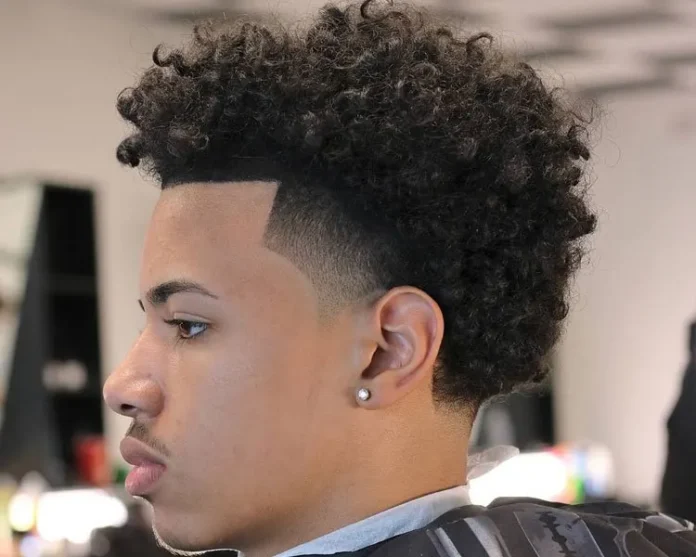
The strongest Afro hairstyle ideas for men range from a clean low-taper Afro and classic rounded shape to sponge twists and a sharper frohawk. If you want the safest starting points, try a short rounded Afro, temple-fade Afro, tapered natural Afro, or medium defined Afro. Each keeps natural texture visible without turning daily grooming into a project.
I’ve spent more than a decade working around men’s cuts, natural texture, fades, and shape-building, and Afros are among the styles where small barbering choices make the biggest visual difference. I’ve also watched plenty of good cuts go wrong because the sides were taken too high or the client asked for “shorter” without agreeing on the final silhouette first.
These quick picks show how some of the most wearable Afro hairstyle ideas differ before you get into the full list.
| Style | Best For | Overall Shape | Upkeep |
|---|---|---|---|
| Classic Rounded Afro | Traditional natural shape | Balanced and circular | Medium |
| Short Cropped Afro | Easy everyday wear | Compact and neat | Low |
| Low-Taper Afro | Clean edges without losing volume | Full top, subtle taper | Medium |
| Temple-Fade Afro | Sharper side profile | Natural top, faded temples | Medium |
| High-Top Afro | Strong vertical shape | Tall and structured | High |
| Sponge-Twist Afro | Visible texture | Defined and textured | Medium |
| Medium Natural Afro | Fuller natural volume | Soft and expansive | Medium |
| Frohawk | Bold styling | Narrower center volume | High |
| Burst-Fade Afro | Modern side detail | Rounded top, curved fade | Medium |
| Extra-Large Rounded Afro | Maximum natural presence | Wide, full silhouette | High |
Classic and Easy Afro Hairstyle Ideas
The best place to start is with Afro hairstyle ideas that work with the hair you already have rather than forcing a dramatic shape. These cuts depend on balance, clean edges, and enough length to show texture while still fitting easily into an everyday routine.
1. Classic Rounded Afro
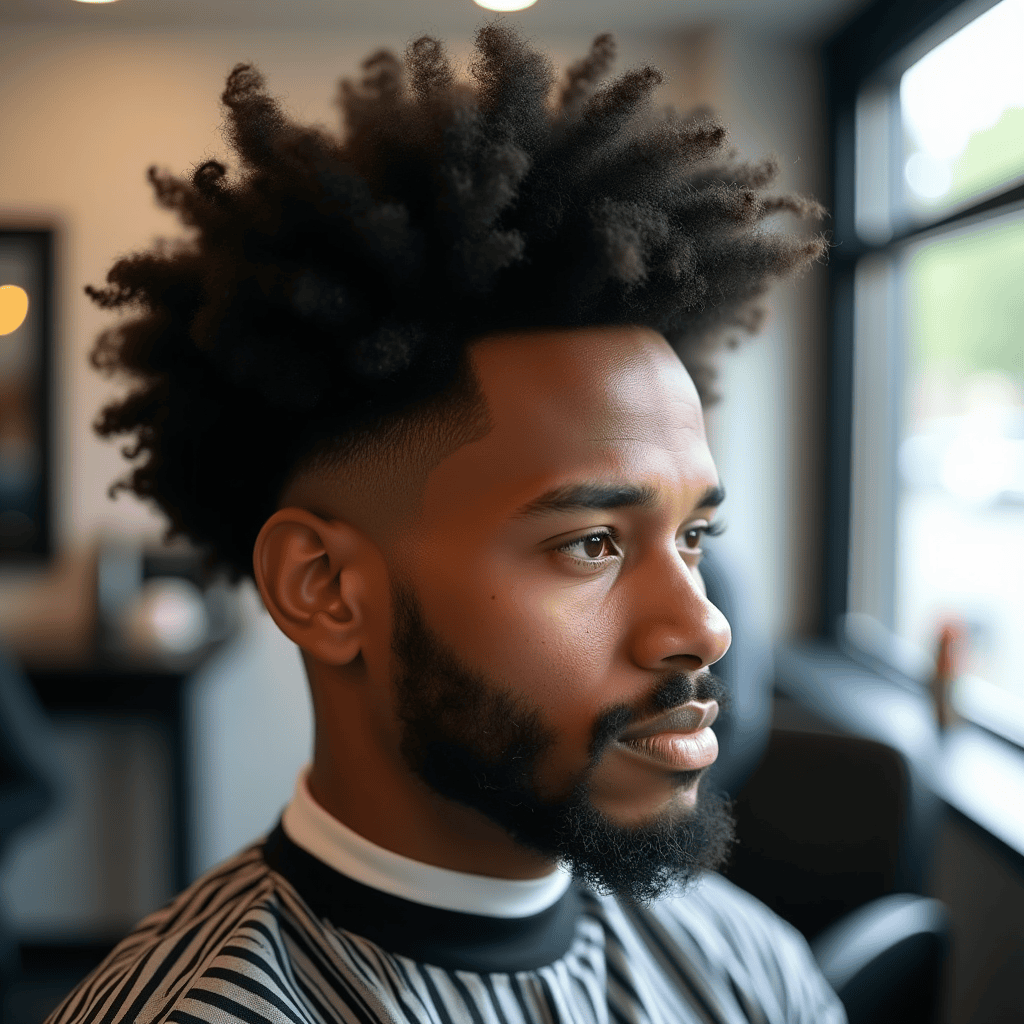
A classic rounded Afro builds a smooth, full silhouette that follows the head while extending evenly through the top, sides, and back. The outline should feel intentional rather than perfectly geometric, with enough softness at the perimeter to keep the texture natural. From the front, the width and height stay balanced. From the side, the crown flows into the back without a sudden ledge.
This works especially well for dense coily hair that can hold shape after picking. Tell your barber, “Keep the Afro full and rounded, even out the silhouette, and don’t taper the sides too aggressively.” Expect regular shaping because uneven growth becomes easier to see as the hair gets larger. Skip this version if you want a cut that can go months without attention.
2. Short Cropped Afro
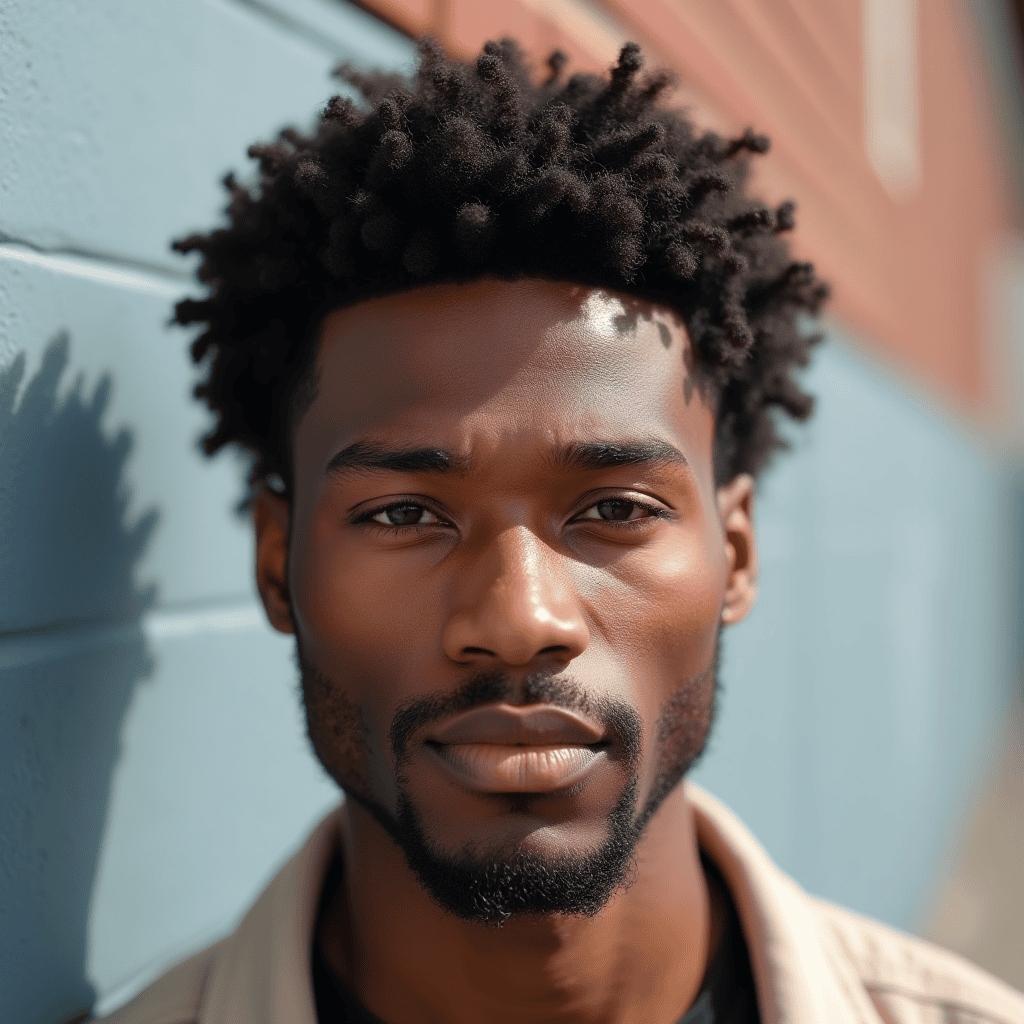
The short cropped Afro keeps the texture close enough to the scalp for easy control while leaving more character than a standard buzz cut. The top usually sits slightly fuller than the sides, though the transition can remain almost invisible. Clean edges around the forehead and temples create most of the structure. The finished shape looks compact rather than flat.
Men who want natural texture without a long morning routine tend to do well with this cut. Ask for, “A short even Afro with enough length to see the curl pattern and a clean natural lineup.” The main drawback is that the silhouette can lose its crispness quickly as the perimeter grows. It also gives you less room to experiment with twists or larger textured shapes.
3. Low-Taper Afro
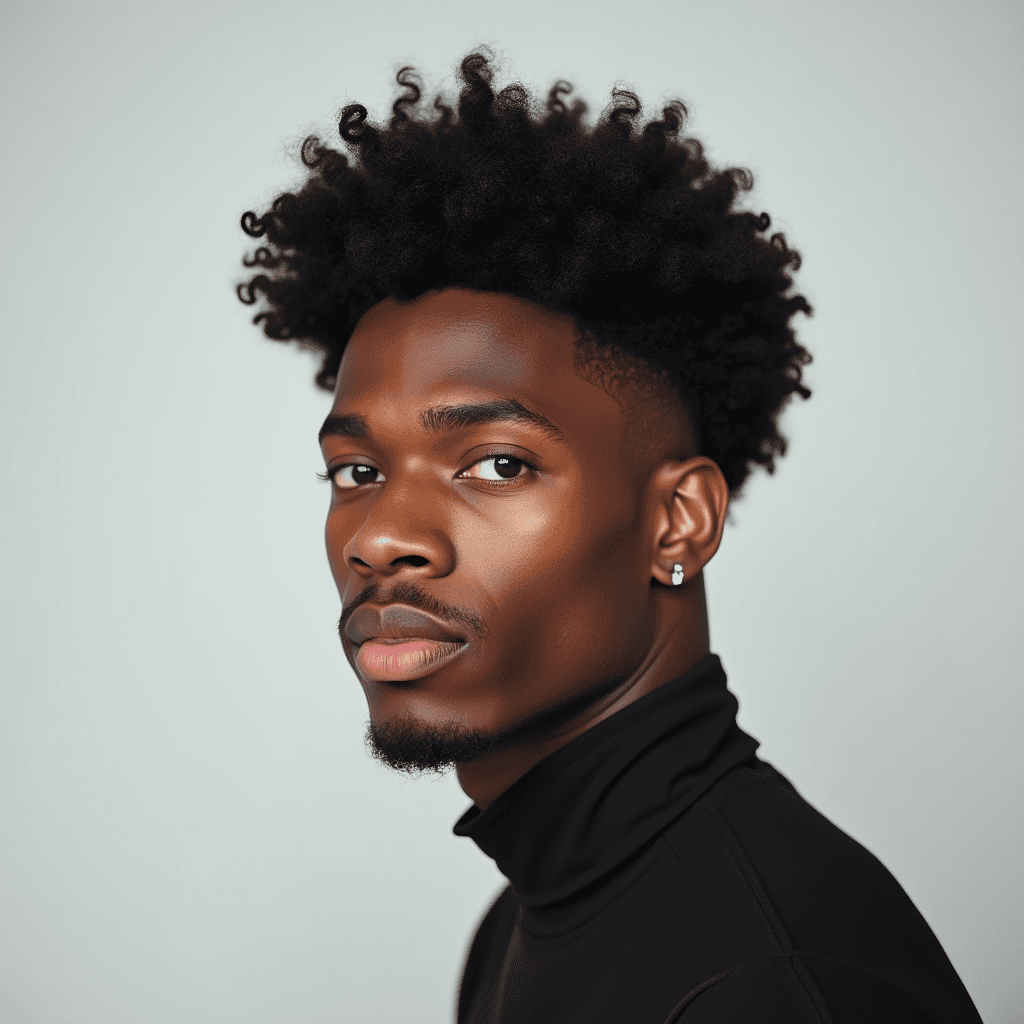
A low-taper Afro removes weight only around the lowest edges while preserving nearly all the natural fullness above. The taper sits around the sideburns and neckline rather than climbing high into the sides. That small contrast makes the Afro appear cleaner without turning it into a fade-heavy haircut. It is one of the most adaptable Afro hairstyle ideas for men who want definition without sacrificing size.
It suits men who like a natural silhouette but dislike fuzzy edges around the ears and neck. Tell the barber, “Keep the Afro full, taper only the sideburns and neckline, and leave the sides connected.” The taper itself needs refreshing sooner than the main Afro shape. If your priority is stretching barber visits as long as possible, a completely natural perimeter may age more quietly.
4. Temple-Fade Afro
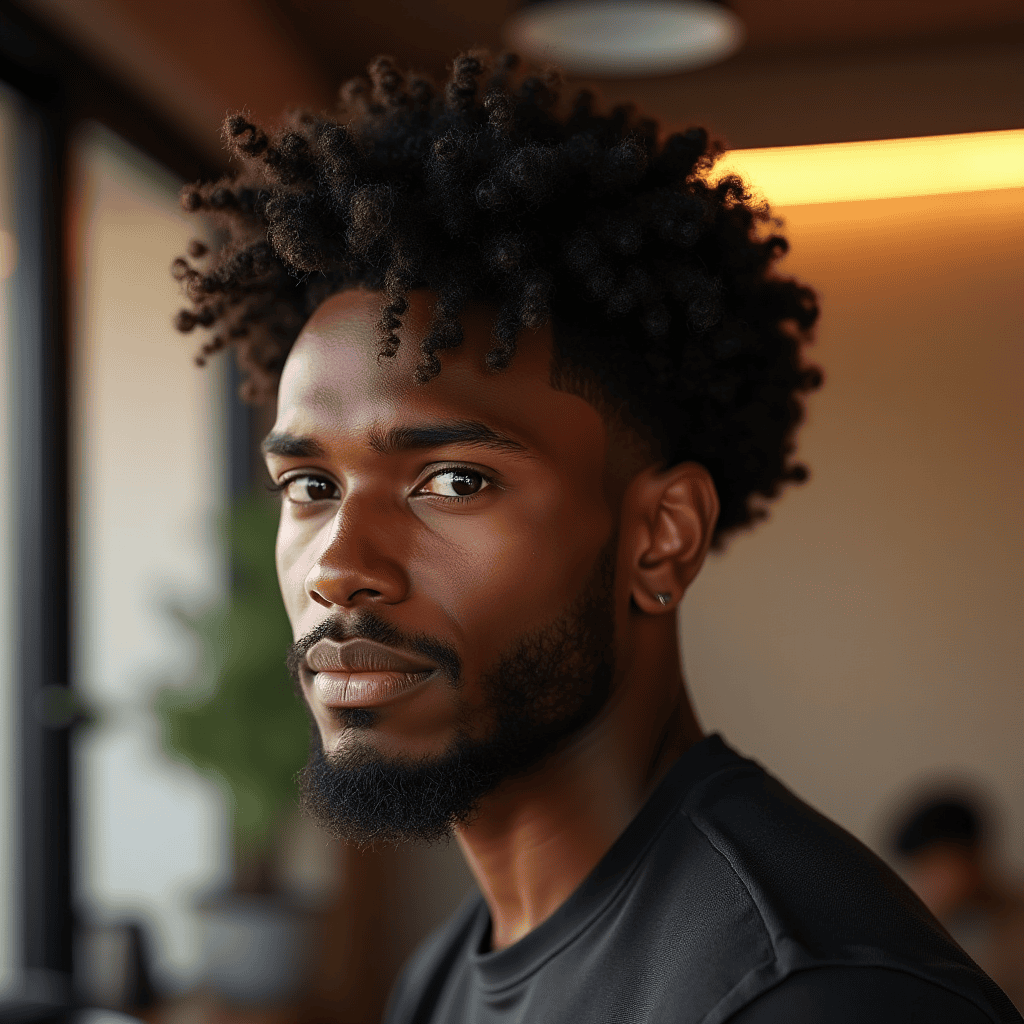
A temple-fade Afro creates a sharper interruption at the front sides while leaving the rest of the Afro visibly full. The fade concentrates around the temples and usually disappears before it reaches far behind the ear. This produces a cleaner face frame without narrowing the entire haircut. On thick hair, that tiny patch of skin-to-hair contrast can change the whole profile.
It is a strong option for square, oval, and round faces when you want the hair to keep some width. Ask for, “A temple fade only, with the Afro left full through the sides and back.” The barber needs restraint here because taking the fade too far upward turns it into a different haircut. You will also notice temple regrowth faster than growth inside the fuller sections.
5. Line-Up Afro
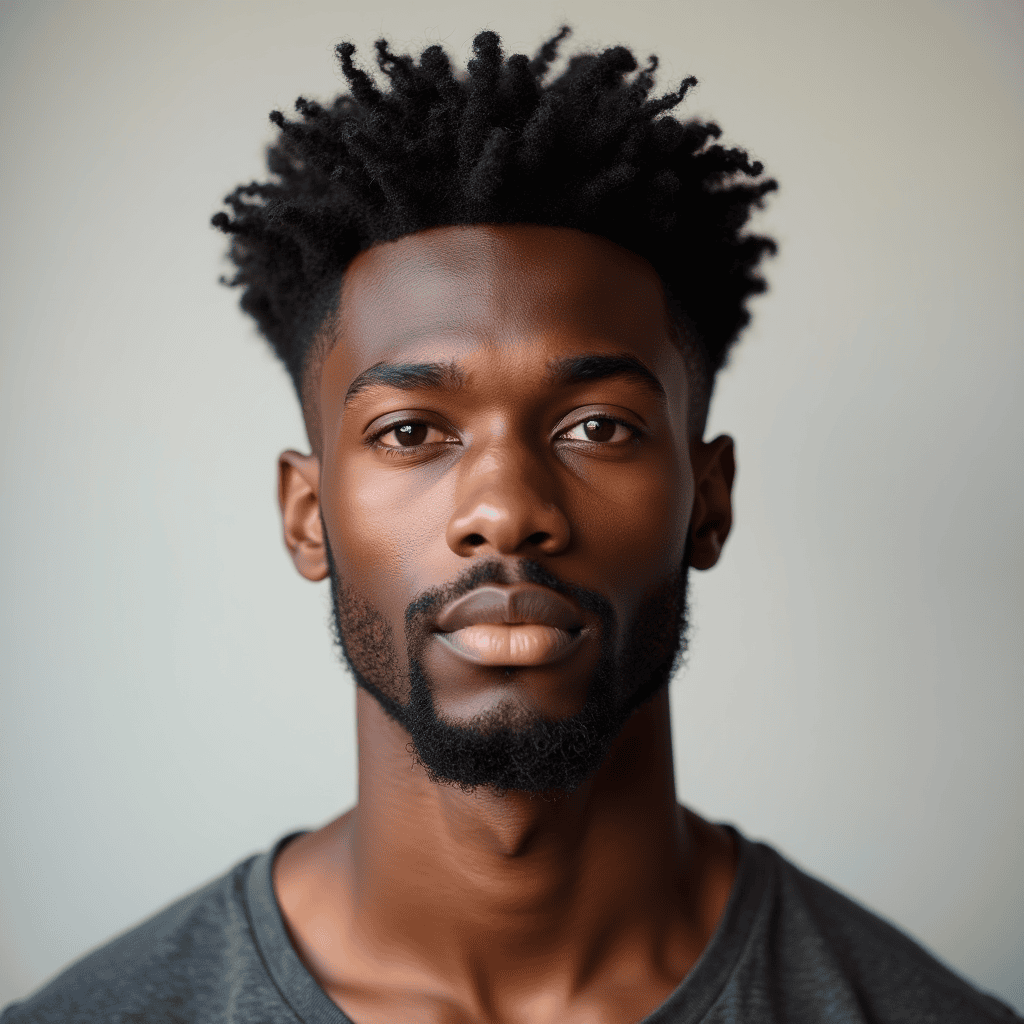
A line-up Afro keeps the body of the hairstyle natural while using a defined front edge to give it a deliberate frame. The contrast comes from the crisp forehead and temple outline sitting against textured volume behind it. A good line should follow the person’s real hairline instead of being pushed backward for artificial sharpness. That distinction matters more than people think.
This style works for short, medium, and larger Afros, which makes it one of the easiest Afro hairstyle ideas to adapt. Tell your barber, “Clean the natural hairline without pushing it back, and keep the Afro shape intact.” The obvious tradeoff is maintenance because a sharp line becomes softer as new growth appears. Anyone with a naturally irregular front hairline may prefer a gentler edge rather than chasing perfect geometry.
Shaped and Texture-Forward Afro Hairstyle Ideas
Once the basic outline is under control, texture can become the main feature. These Afro hairstyle ideas use height, curl separation, twisting, or deliberate tapering to make the hair read differently from every angle without hiding its natural character.
6. High-Top Afro
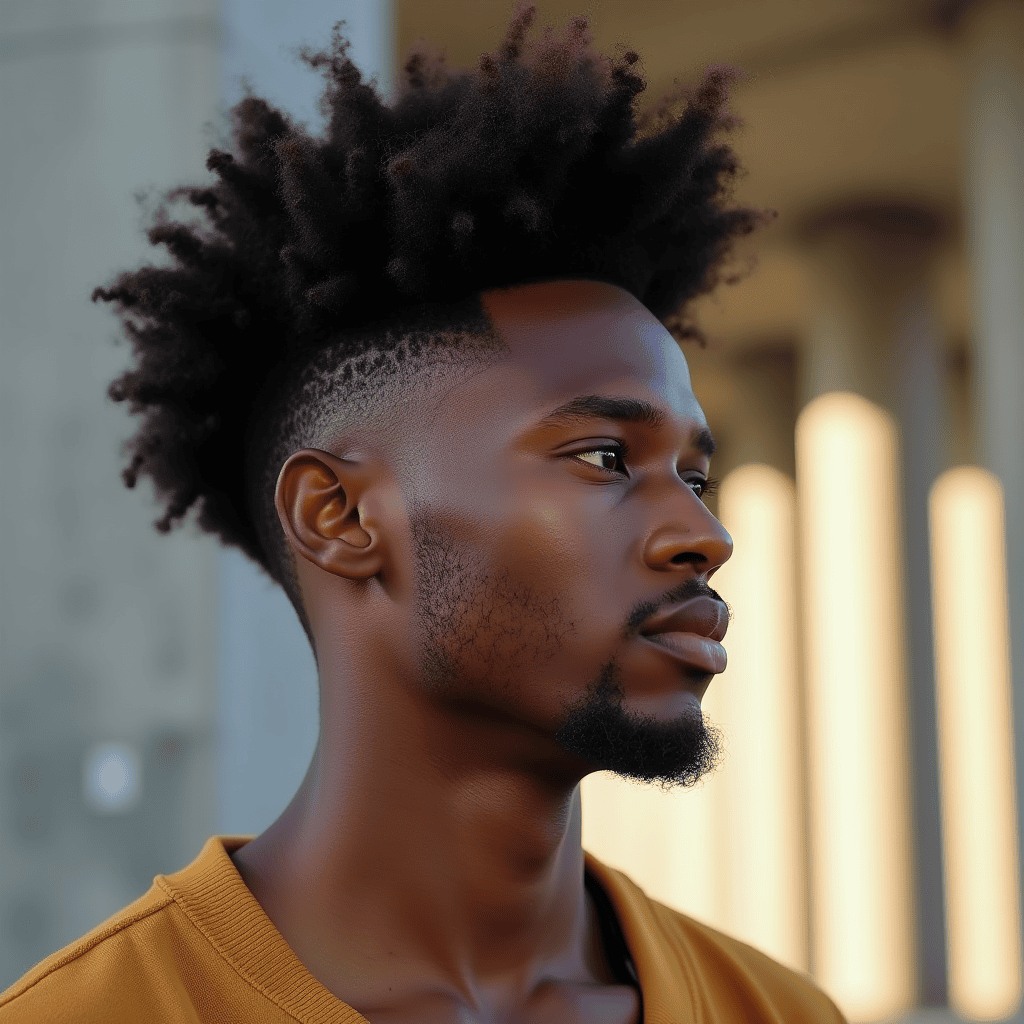
The high-top Afro pushes most of the visual weight upward, creating a taller silhouette with straighter or slightly rounded vertical sides. Compared with a traditional round Afro, the crown carries more height and the lower sides are controlled more closely. The top can remain softly textured instead of being carved into a rigid box. That keeps the look modern rather than costume-like.
It works best on dense hair that can support height without collapsing by midday. Ask for, “Keep the top tall and full, control the sides, but leave the edges of the shape slightly natural.” You will need consistent picking and reshaping to preserve the vertical form. If your hair compresses easily or you dislike manipulating it in the morning, a lower rounded shape is easier.
7. Sponge-Twist Afro
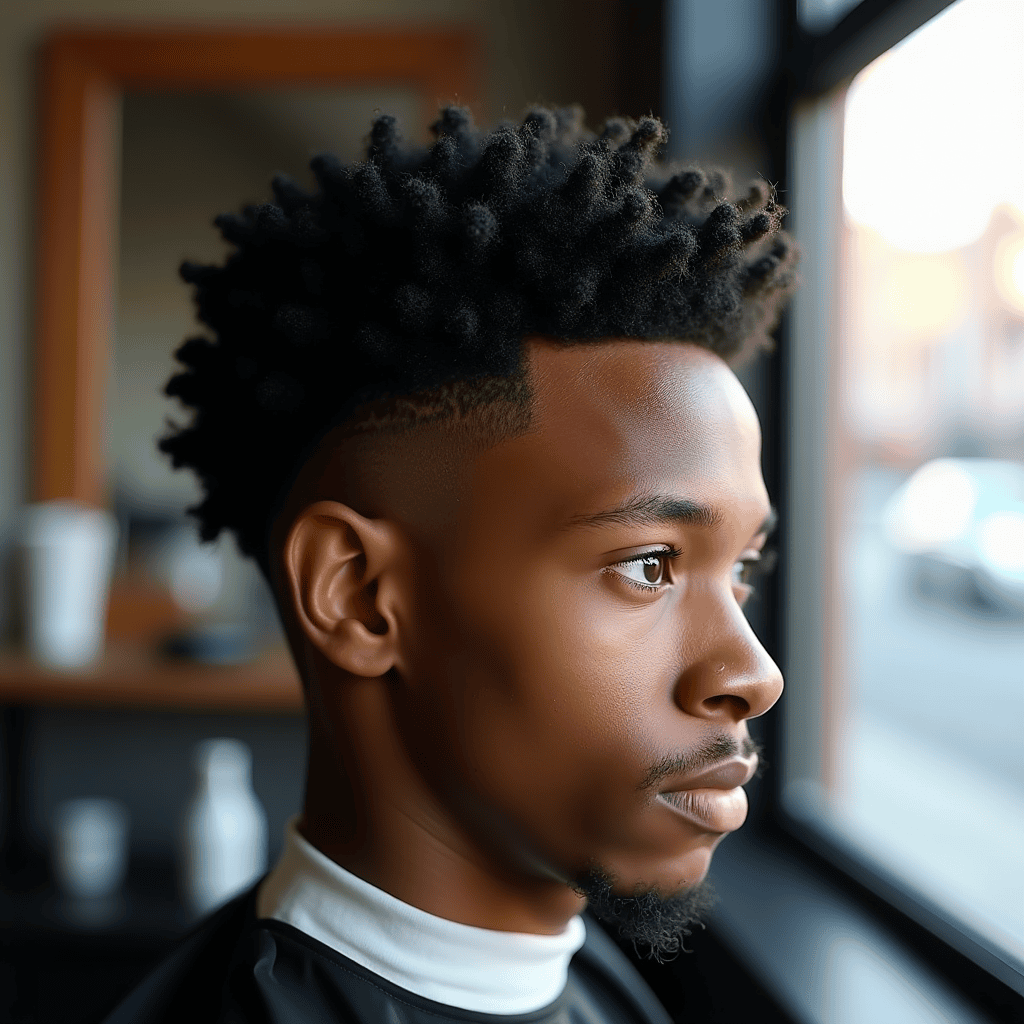
A sponge-twist Afro replaces some of the fluffy surface with small separated coils that create visible pattern across the head. The hairstyle still carries Afro volume, but the eye notices individual textured sections instead of one continuous cloud. Keeping the sides slightly shorter can make the twists on top stand out more clearly. The finish has movement without looking loose.
This works especially well on shorter tightly coiled hair that responds quickly to circular sponge movement. Tell your barber, “Leave enough length on top for sponge twists and keep the shape rounded rather than flat.” Frequent rubbing can roughen the hair if you overdo it, so light technique matters. Men who prefer a completely untouched natural texture may find the defined pattern too deliberate.
8. Coil-Defined Afro
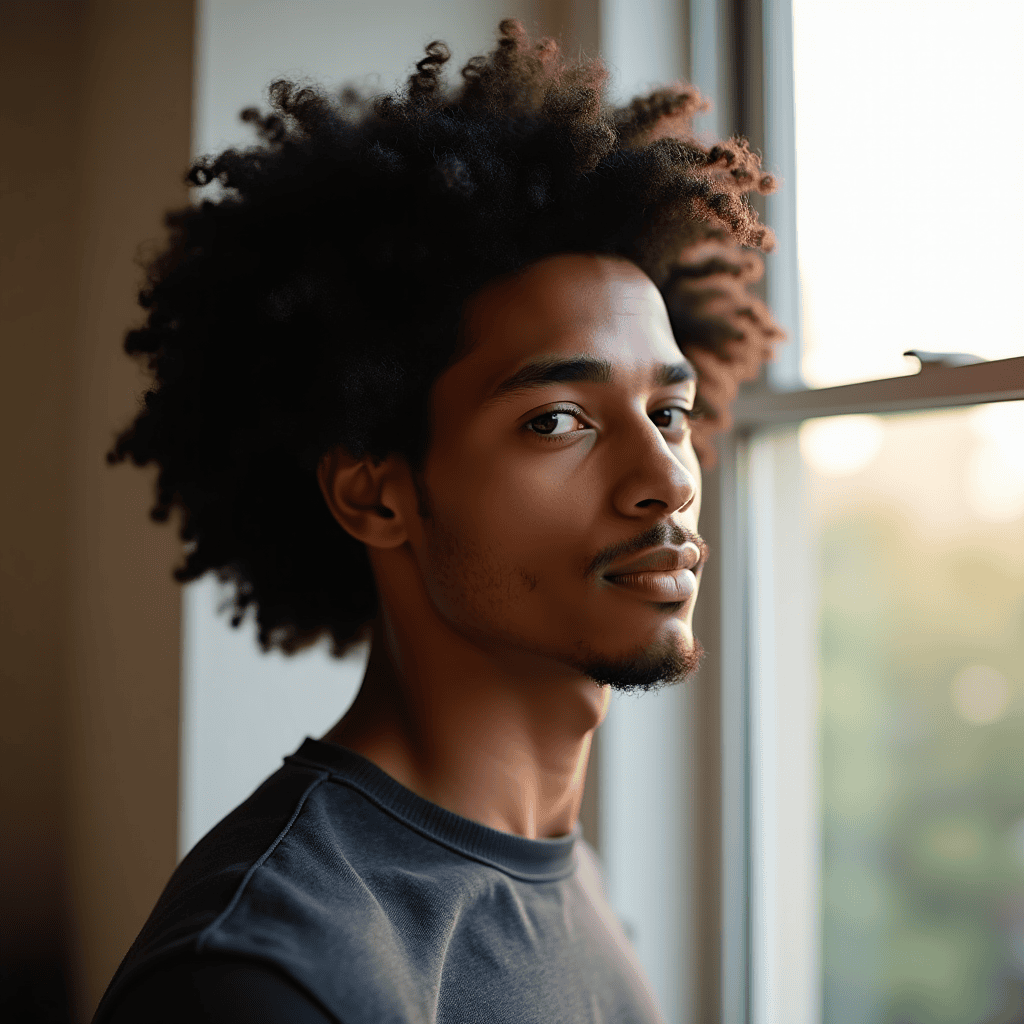
The coil-defined Afro keeps more length than a sponge style while separating the texture into larger, clearer curls. Instead of brushing everything outward into a uniform cloud, the hair forms visible coils across the crown and sides. The silhouette can still be rounded, but its surface looks more dimensional. Light separation around the ends prevents the shape from becoming too solid.
Men whose curl pattern naturally forms recognizable coils can get the strongest result with less manipulation. Ask for, “Keep my length, shape the perimeter, and leave enough weight for the coils to clump naturally.” Definition often changes between wash days, so the haircut will not look identical every morning. If consistency matters more than texture variation, a picked-out Afro is more predictable.
9. Soft Curly Afro

A soft curly Afro has less rigid geometry than the classic version and lets the outer curls fall in slightly different directions. The crown may sit a little higher while the sides relax outward naturally. Rather than creating one perfect circular edge, the stylist trims for balance and leaves movement around the surface. It photographs particularly well because the uneven curl tips catch light.
This shape suits looser coils and curls that do not naturally form a dense compact mass. Tell the stylist, “Keep the perimeter balanced, but don’t over-shape the individual curls.” Humidity can change the width and definition noticeably, which is part of the style rather than necessarily a flaw. Anyone who wants a precise barbered outline may prefer a tighter rounded Afro.
10. Full-Top Tapered Afro
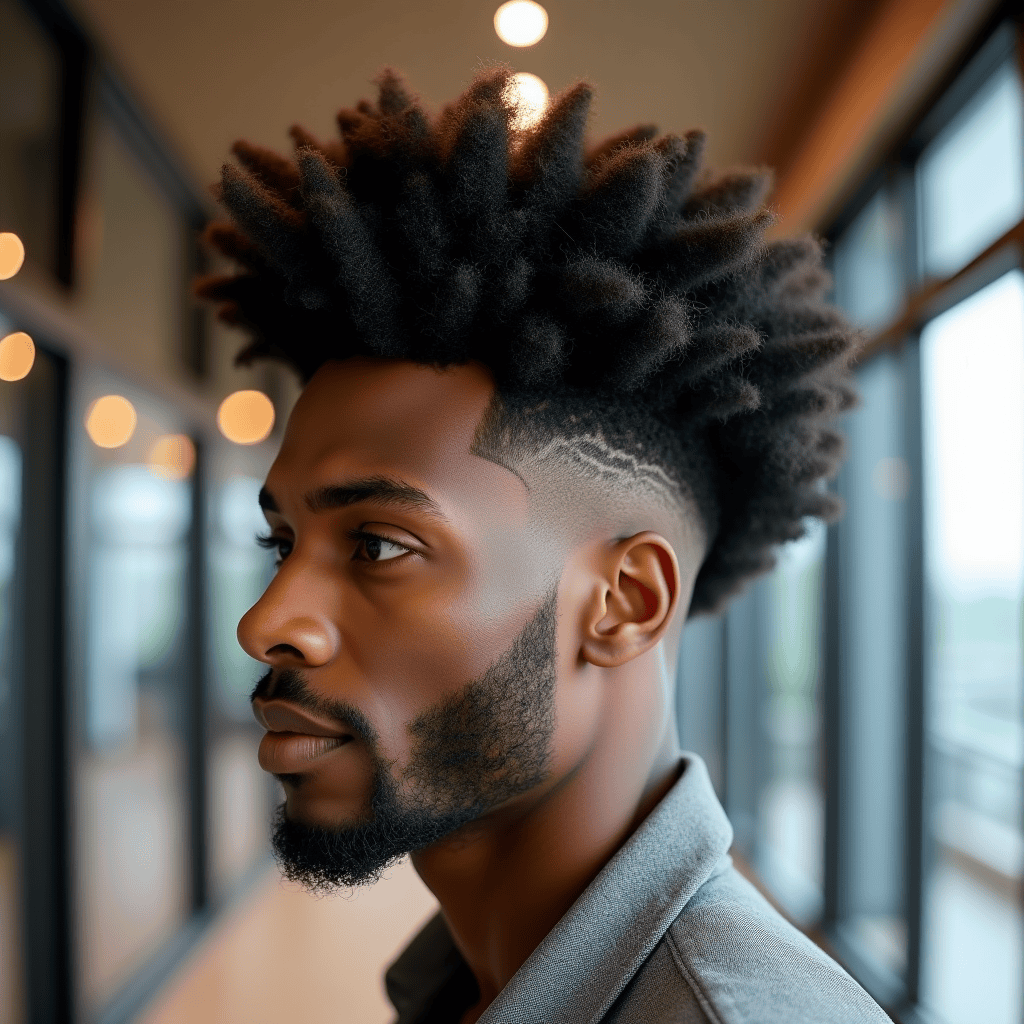
This version concentrates fullness through the upper sides and top while gradually reducing bulk as the hair approaches the ears and neckline. Unlike a high fade, the transition stays covered with hair and feels sculpted rather than shaved. The top remains wide enough to preserve a recognizable Afro silhouette. From the front, it gives the face a cleaner frame while keeping substantial texture.
It is a smart middle ground for men who like volume but find a fully grown-out side profile too wide. Ask for, “Keep the top full and gradually taper the lower sides without exposing too much scalp.” The haircut depends on the transition being blended carefully; a harsh weight line can make the top look disconnected. It also needs reshaping as the lower sides grow back.
Medium and Longer Afro Hairstyle Ideas
More length gives the hair movement, width, and styling range, but it also exposes uneven growth much faster. These Afro hairstyle ideas make that extra size intentional, whether you prefer a loose natural outline or a stronger sculpted form.
11. Medium Natural Afro
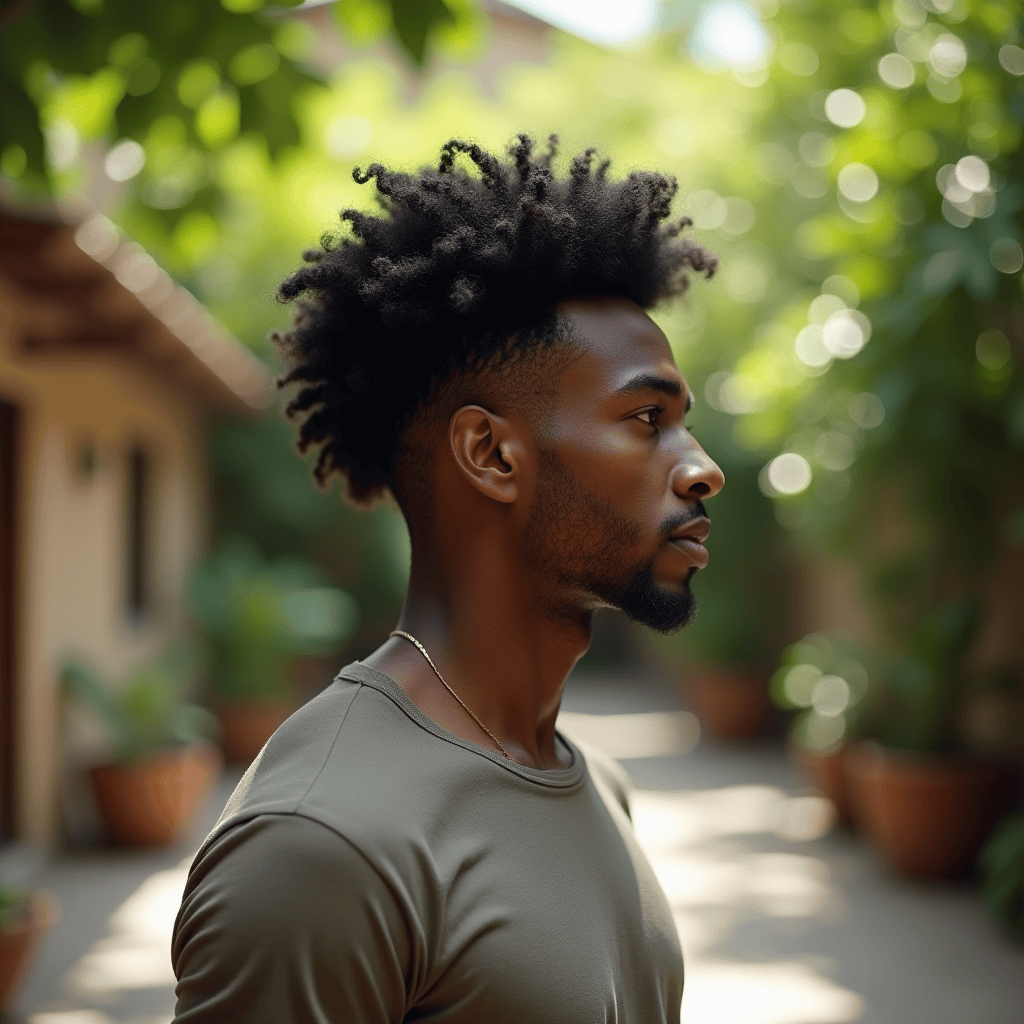
A medium natural Afro sits between a compact everyday cut and the dramatic width of a fully grown style. There is enough length for visible shrinkage, movement, and variation through the curl pattern without the silhouette dominating the face. The sides usually extend beyond the ears slightly, while the crown carries balanced height. The outline should look full rather than freshly carved.
This length works for someone who wants the feel of longer natural hair without committing to maximum volume. Ask your stylist, “Even out the shape, keep the medium length, and take off only what is needed for balance.” Detangling and moisture become more noticeable parts of the routine as the hair grows. If you wear fitted hats often, expect the shape to compress and need fluffing afterward.
12. Freeform Afro
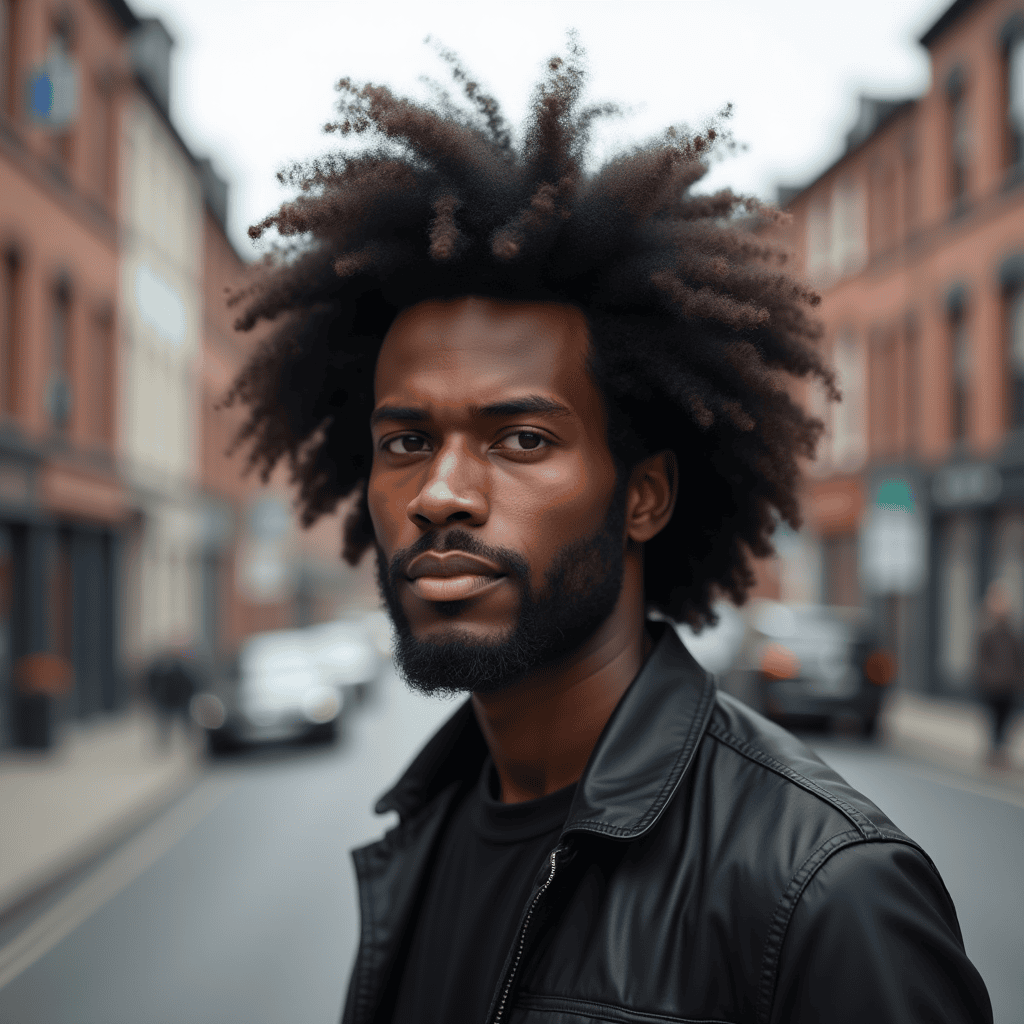
A freeform Afro lets the natural growth pattern dictate more of the silhouette, with fewer attempts to make every section match. One side may carry slightly more width, individual coils can project beyond the main outline, and the crown can rise irregularly. The result feels relaxed and lived-in rather than barber-perfect. Good freeform hair still benefits from removing damaged or excessively uneven ends.
Men who dislike frequent shape-ups often find this direction more comfortable. Tell your barber or stylist, “Keep the natural shape and length; only clean obvious unevenness without making it perfectly round.” The drawback is that freeform does not mean zero maintenance, especially once tangles develop inside dense sections. People who want every angle to look identical should choose a sculpted shape instead.
13. Layered Afro
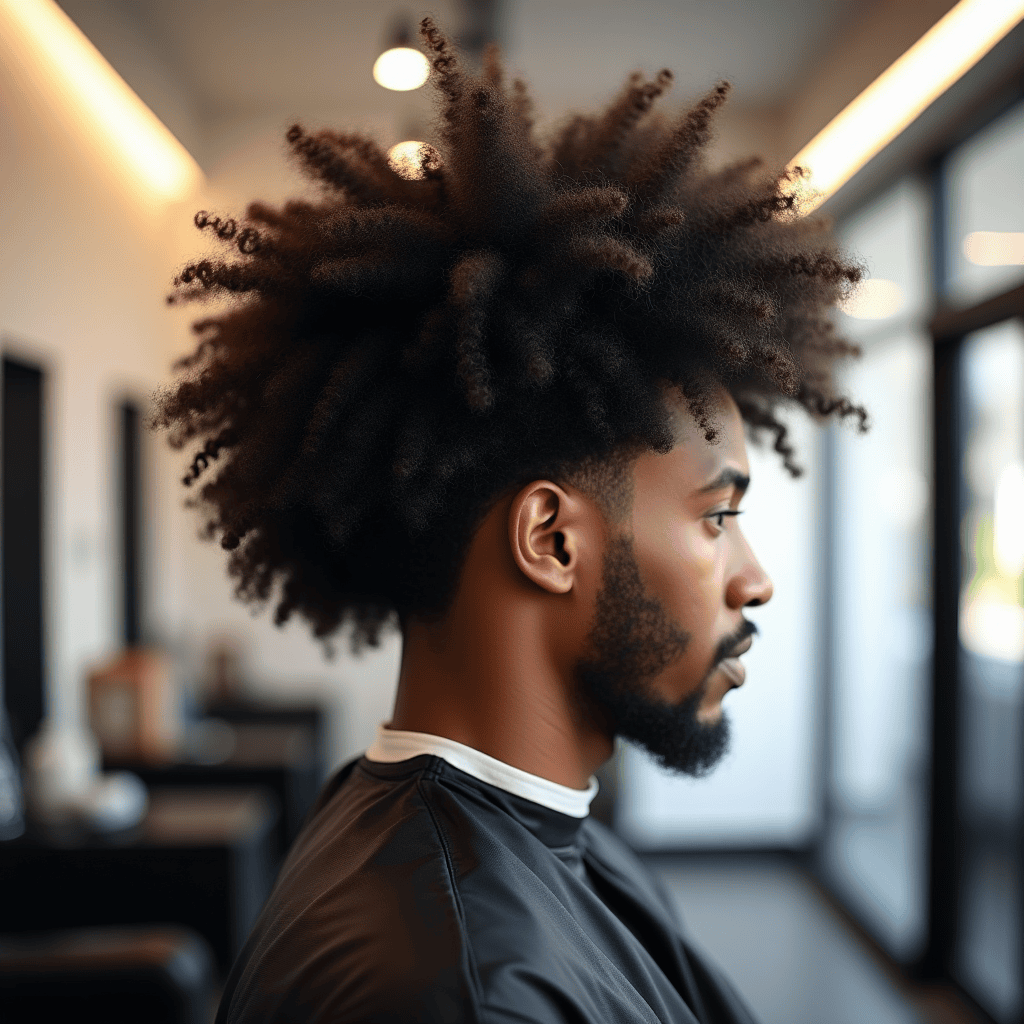
A layered Afro removes selected weight inside the shape so the hair does not sit as one heavy block. Shorter sections can support the crown while longer outer curls provide width and movement. When done carefully, the layering is almost invisible; you notice the improved balance rather than obvious tiers. This is particularly useful once an Afro reaches medium or longer length.
It suits dense hair that tends to collapse in one area or become triangular as it grows. Ask for, “Shape it in layers for balance, but keep the outside looking full and connected.” This is not the cut to hand to someone who rarely works with coily texture because excessive thinning can create gaps. The grow-out is also less forgiving if the internal lengths are taken too short.
14. Asymmetrical Afro
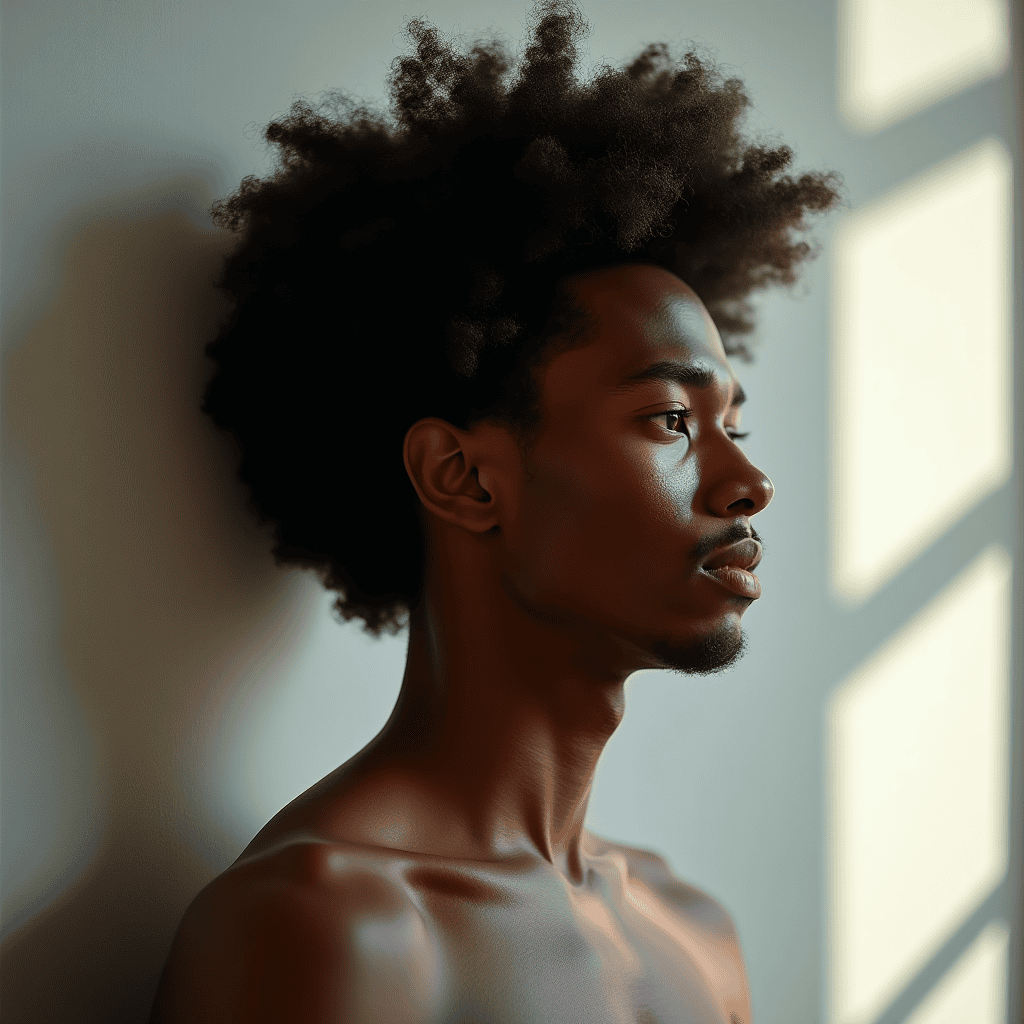
An asymmetrical Afro deliberately carries more length or width to one side, creating a silhouette that changes as the head turns. The difference can be subtle, with a slightly elevated crown and longer side, or much more graphic. Texture keeps the imbalance from looking overly precise. Done well, the haircut feels designed rather than accidentally uneven.
This is for someone comfortable wearing one of the bolder Afro hairstyle ideas instead of a universally conventional cut. Tell the stylist, “I want controlled asymmetry with one side visibly fuller, but keep the overall shape connected.” The look can drift from intentional to messy faster than a symmetrical Afro as it grows. You may need more frequent visual checks from different angles before trimming.
15. Center-Parted Afro
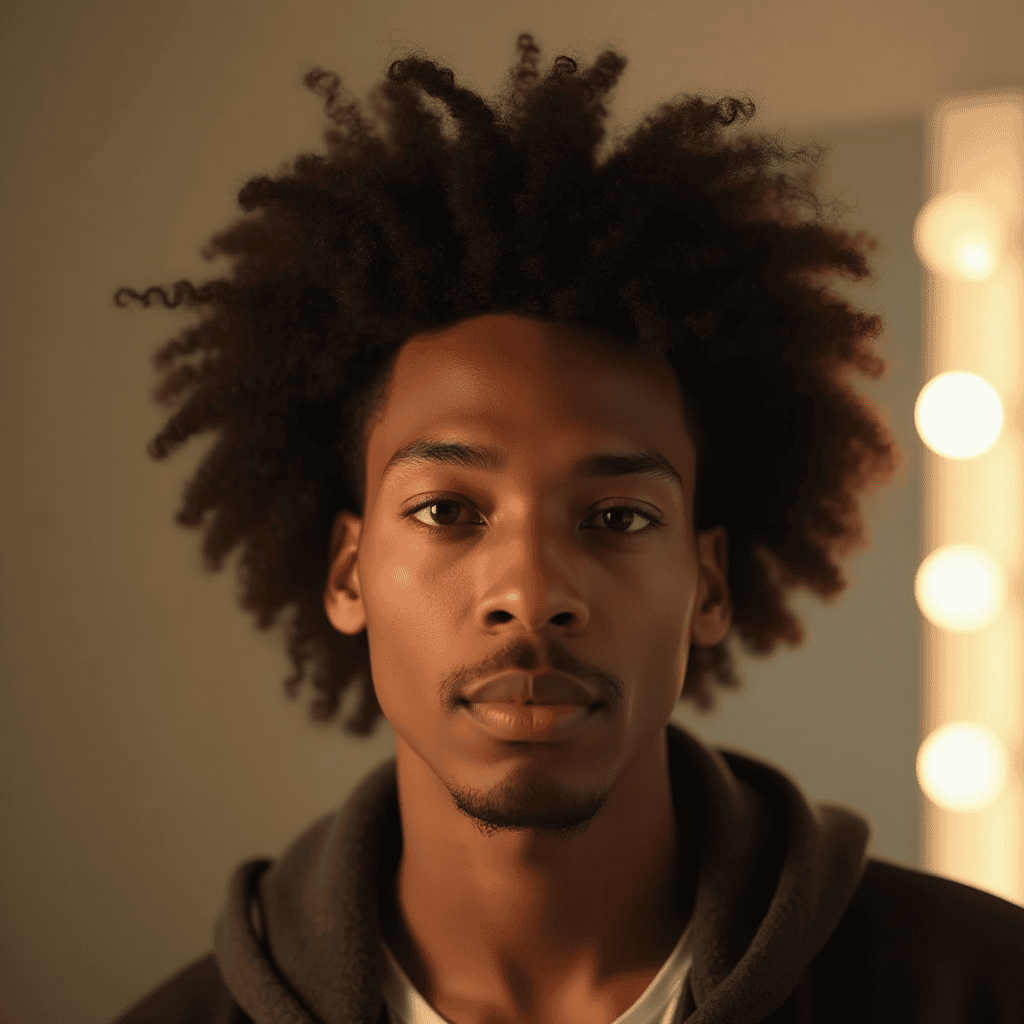
A center-parted Afro introduces a visible line through the top while letting the volume spread outward on both sides. The part does not have to be razor straight; a natural separation often looks better with dense texture. From the front, the divided crown changes the usual rounded Afro silhouette and reveals more forehead. The lengths on both sides should stay balanced enough that the part looks intentional.
It works well when the hair is long enough to separate without springing immediately back into place. Ask for, “Keep my Afro length and shape, but leave enough movement for a center part without thinning the sides.” Maintaining the part may require more manipulation than simply picking the hair outward. If your growth direction strongly resists separation, forcing it every day becomes annoying quickly.
Twist, Stretch, and Hybrid Afro Hairstyle Ideas
Changing the way the curl pattern sets can transform an Afro without removing much length. These Afro hairstyle ideas rely more heavily on preparation and styling, which gives you extra texture but also makes the finished look depend on what happened before the hair dried.
16. Twist-Out Afro
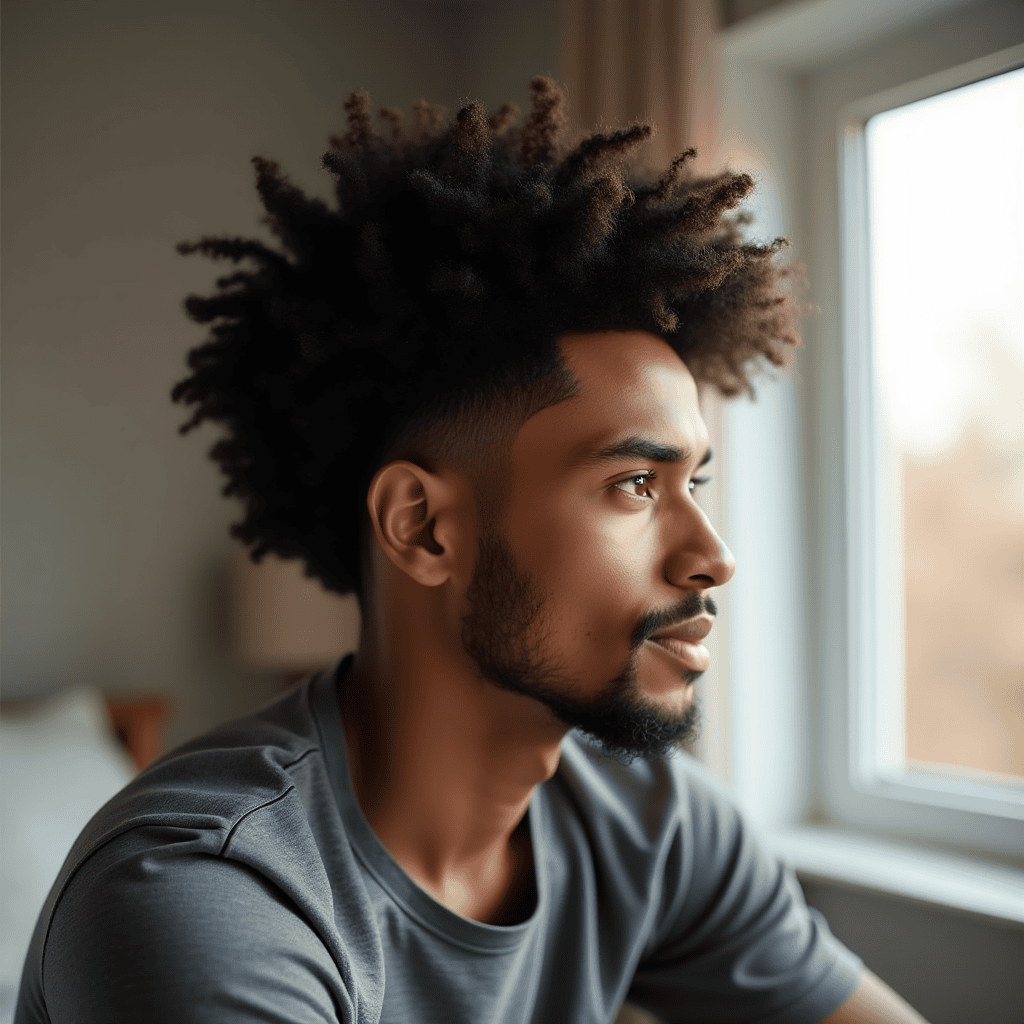
A twist-out Afro starts with hair that has been set in twists and then separated, leaving elongated curls with a more organized pattern. The silhouette is usually softer and slightly longer-looking than a freshly picked Afro because the strands are stretched. Individual sections catch light more clearly, especially around the crown. The shape can be worn rounded or left looser at the edges.
This is a good match for men who want noticeable definition without leaving permanent twists in place. Ask your stylist, “Shape the Afro for a twist-out and keep enough length so the definition stays visible after separation.” The finish is temporary and will gradually change as the hair is compressed, exposed to humidity, or washed. If you hate resetting styles, the extra preparation may not be worth it.
17. Braid-Out Afro
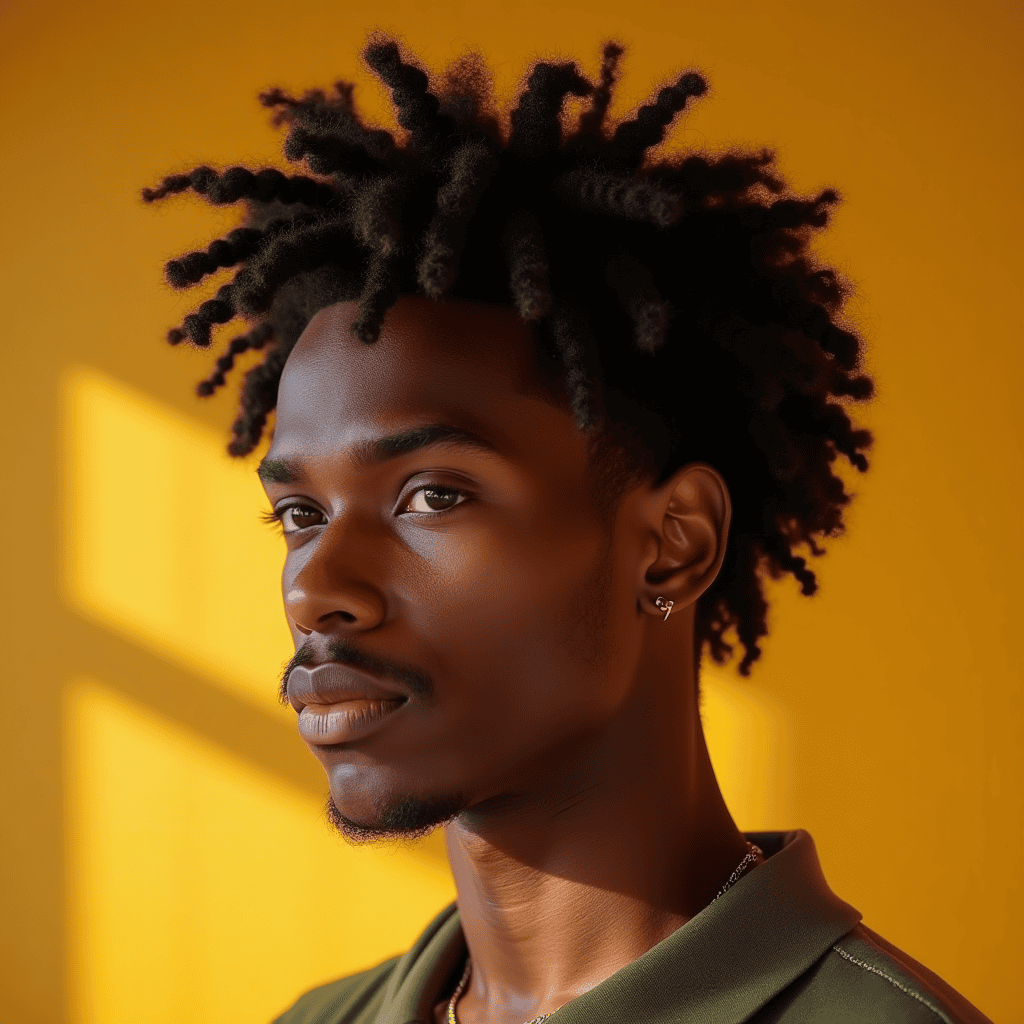
A braid-out Afro creates a wider, more rippled texture than many twist-outs because the hair dries in braided sections before being released. The resulting pattern can look stretched at the roots with tighter bends toward the ends. Volume builds quickly once the sections are separated. The outside edge remains soft because individual textured strands extend beyond the main silhouette.
Men with medium or longer natural hair can use this approach when shrinkage hides more length than they want. Tell the stylist, “Keep my overall Afro shape but leave the hair long enough to wear a defined braid-out.” Separating too aggressively can turn the texture fluffy and erase the pattern you spent time setting. It is also less practical if you need the hairstyle to look exactly the same for several consecutive days.
18. Two-Strand Twist Afro
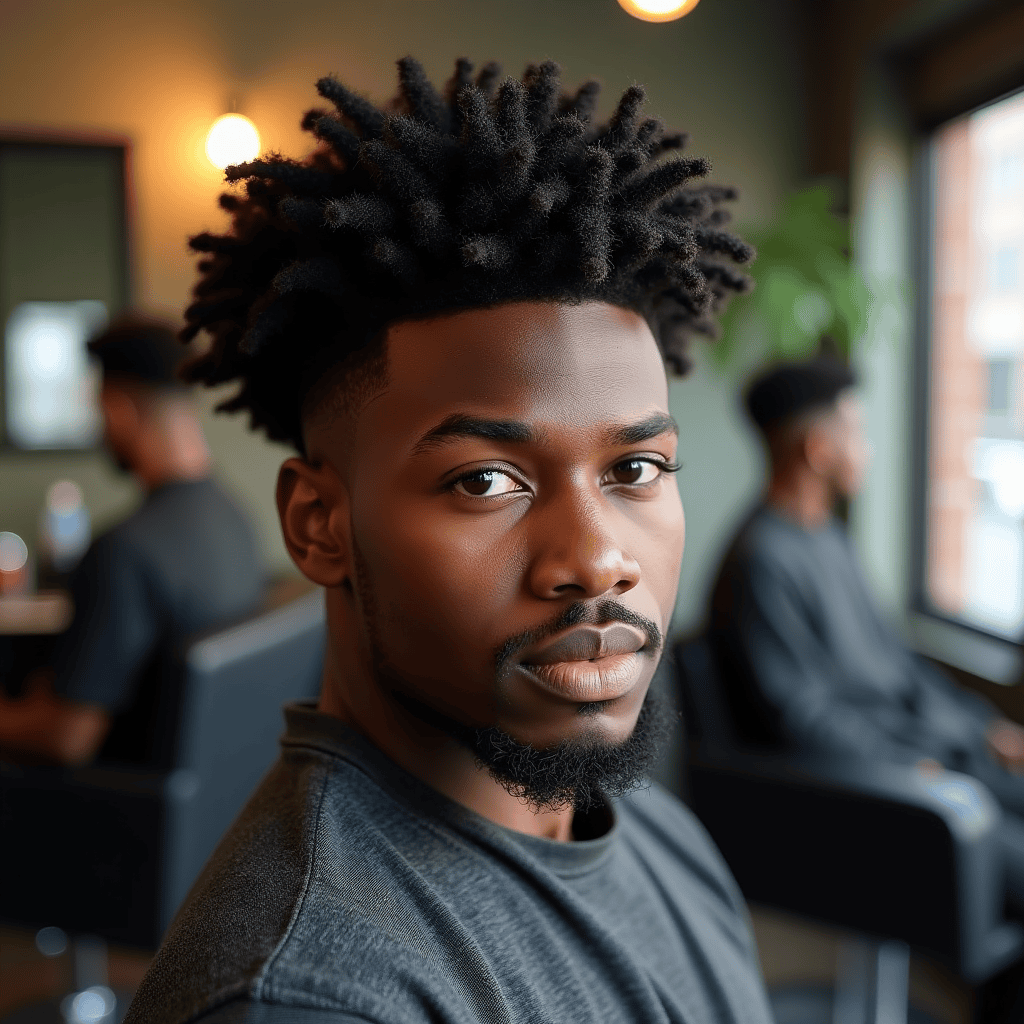
A two-strand twist Afro keeps sections of hair twisted rather than separating them completely, producing a textured shape made from dozens of visible rope-like coils. The twists can sit close together for a dense rounded outline or hang more loosely at longer lengths. Leaving the sides full preserves the Afro character. A clean perimeter keeps all that texture from looking visually crowded.
This suits someone who wants definition that stays organized longer than a picked-out style. Ask for, “Keep the Afro silhouette full, section it into medium two-strand twists, and don’t make the parts too exposed.” The installation takes longer than a basic shape-up and the twists need to be handled carefully as they age. If you prefer a fluffy, cloud-like finish, leaving the hair separated will feel more natural.
19. High Afro Puff
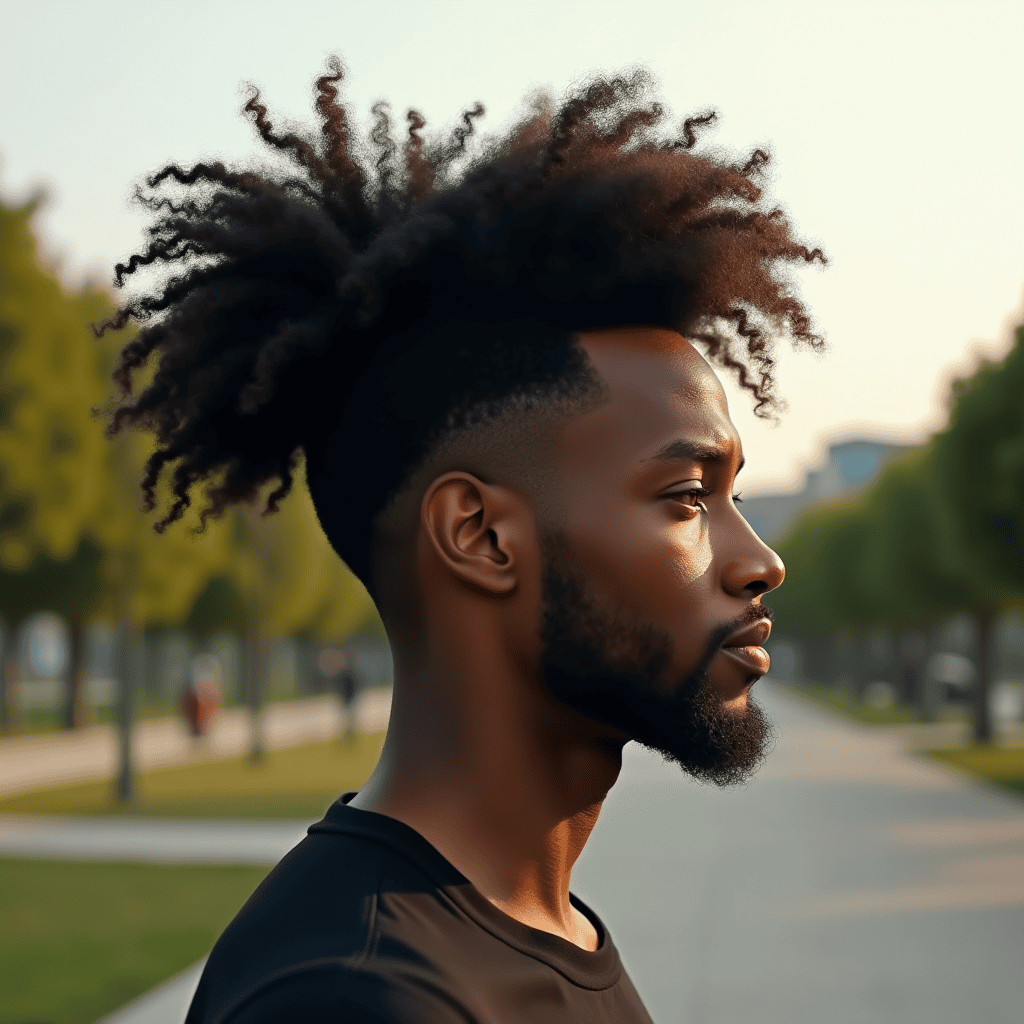
A high Afro puff gathers longer natural hair upward, concentrating textured volume above the crown while pulling the lower sections closer to the head. The puff itself should remain soft and expansive rather than compressed into a small knot. From the side, the silhouette rises quickly from the forehead toward the upper back of the head. A few natural curls around the hairline can soften the finish.
This is one of the most useful Afro hairstyle ideas for men growing longer hair who occasionally want it controlled. Ask your stylist, “Keep my length intact and show me how to gather it high without making the base too tight.” Tension is the main thing to watch, so the style should feel secure without pulling aggressively. Shorter hair may not reach the gathering point cleanly.
20. Frohawk
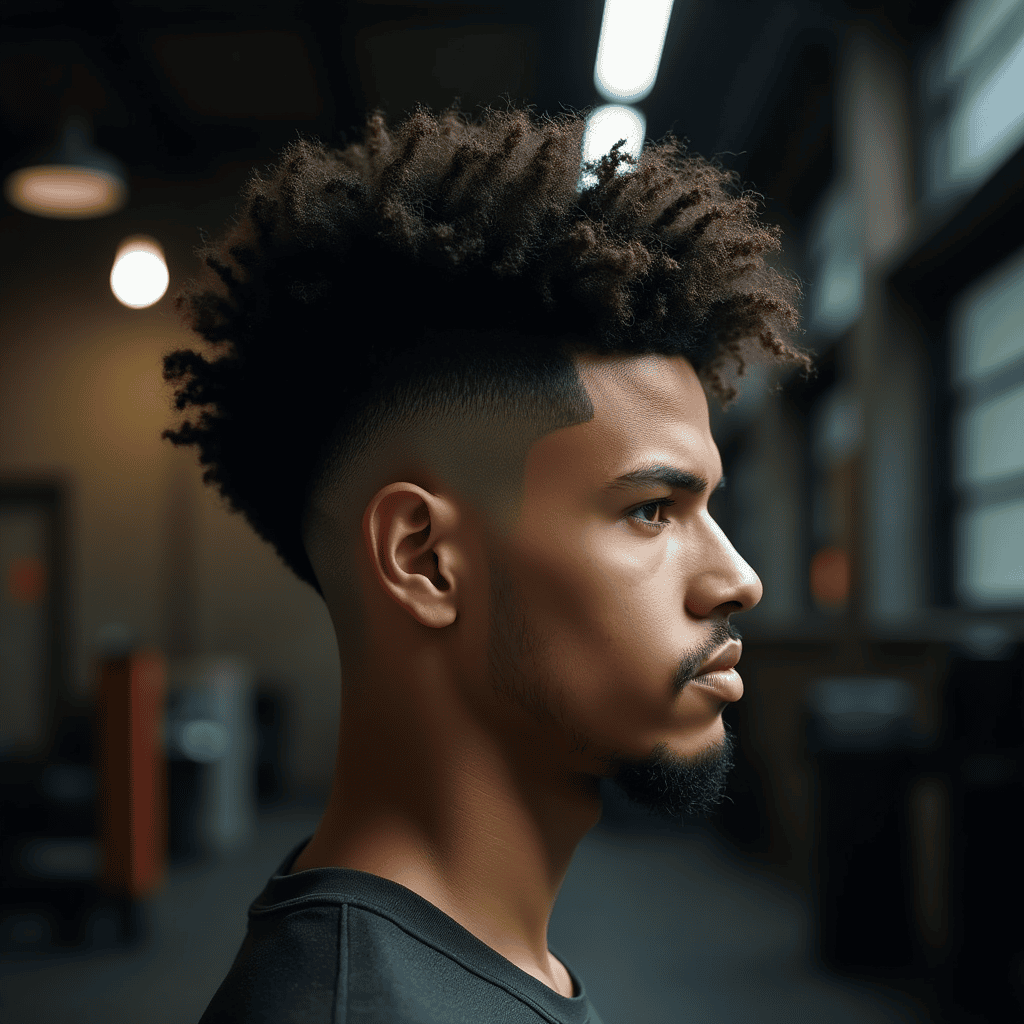
A frohawk narrows the visible volume toward the center of the head while reducing or controlling the sides. The central section can stay fluffy and natural or carry more defined coils for stronger texture. Unlike a rigid mohawk, the edges of the center do not need to form a perfect strip. The best versions preserve enough width that the hairstyle still reads as natural textured hair rather than a shaved design.
It suits men who want something more directional without giving up most of their length. Tell the barber, “Keep a full textured center from front to back and taper the sides enough to create a frohawk shape.” The drawback is commitment because taking substantial weight from the sides changes your options during the grow-out. Start conservatively if you are unsure how narrow you want the center.
Bold Fade and Statement Afro Hairstyle Ideas
Fade work changes an Afro more dramatically because it removes part of the natural silhouette rather than simply refining it. These Afro hairstyle ideas suit men who want stronger contrast and do not mind visiting the barber more often to keep that contrast obvious.
21. Burst-Fade Afro
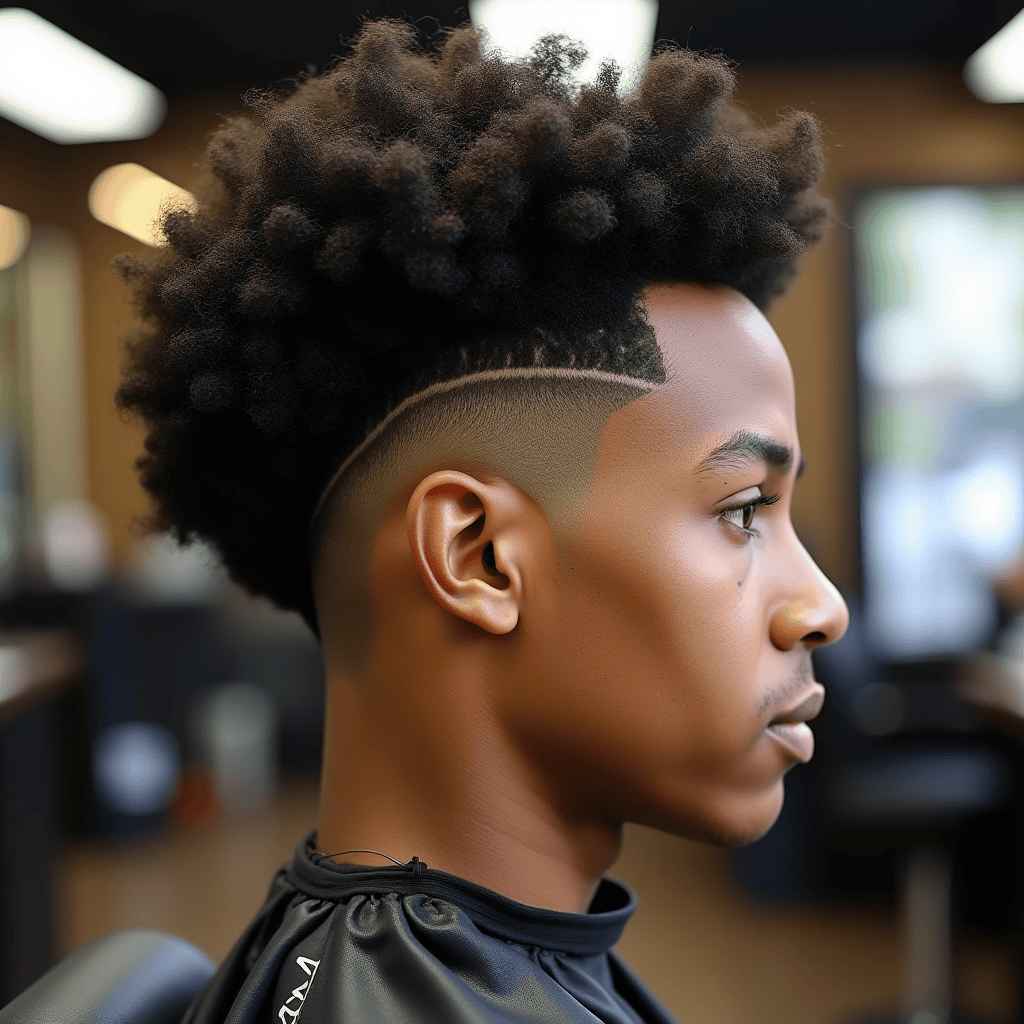
A burst-fade Afro curves the fade around the ear while preserving more hair toward the back and top. The fading creates a circular opening on each side rather than a straight horizontal band. Above it, the Afro stays rounded and textured, which makes the haircut look especially dynamic in profile. Keeping the back connected prevents it from becoming a full mohawk shape.
This works for men who like visible barbering detail without stripping away every bit of side volume. Ask for, “A low burst fade around the ears with the Afro left full on top and connected through the back.” The curve has to be maintained cleanly or it loses its graphic effect as it grows. Men seeking minimal barber visits should choose a softer taper instead.
22. Drop-Fade Afro
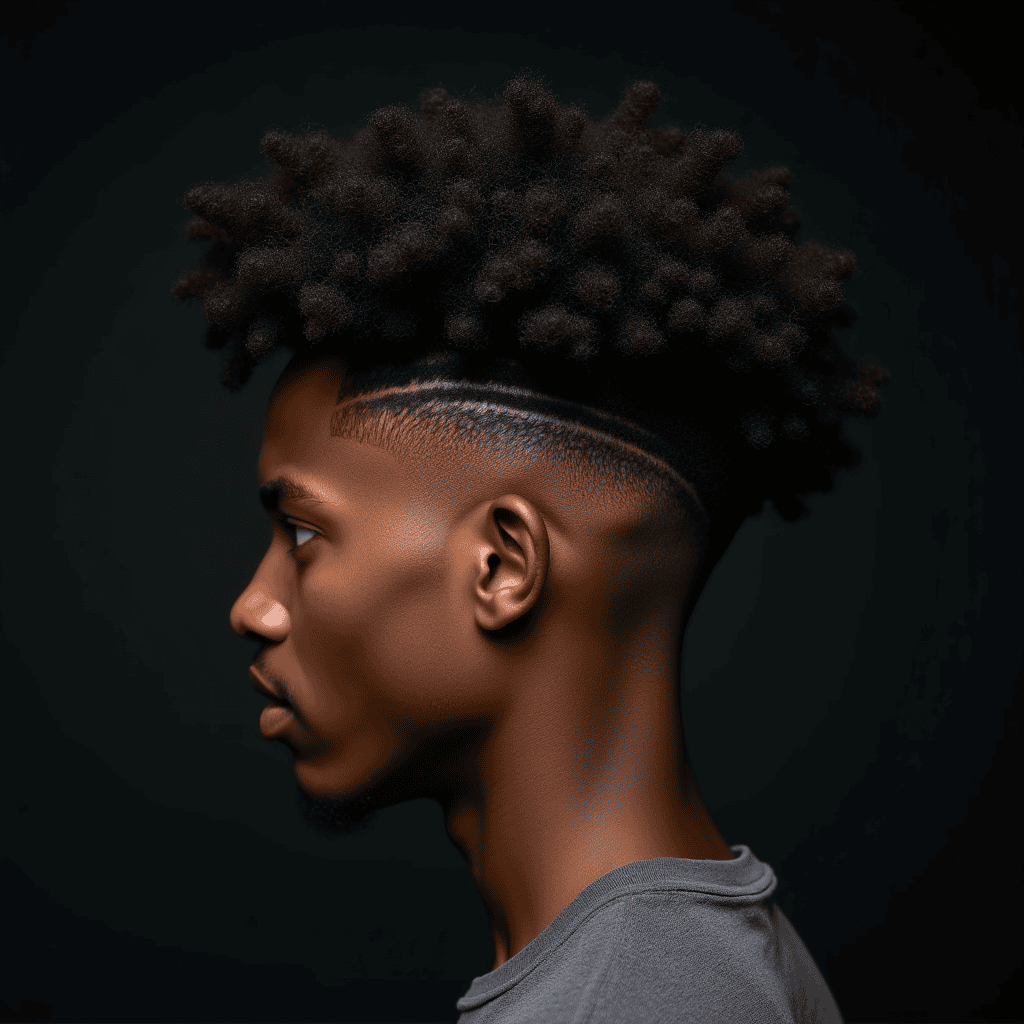
A drop-fade Afro uses a fade line that descends behind the ear rather than staying level around the head. The top remains full, while the lower sides and back create a deeper curved contrast. That descending shape gives the rear of the Afro more visual weight. From the front it can look relatively classic, while the side view shows the difference.
This is a strong choice if you care about the profile of the haircut as much as the front. Tell your barber, “Keep the Afro full and use a low drop fade that falls behind the ear instead of climbing high.” A high version can remove more side fullness than expected, so be specific about the starting point. The fade also demands regular cleanup if you want the curve to remain obvious.
23. Skin-Fade Afro
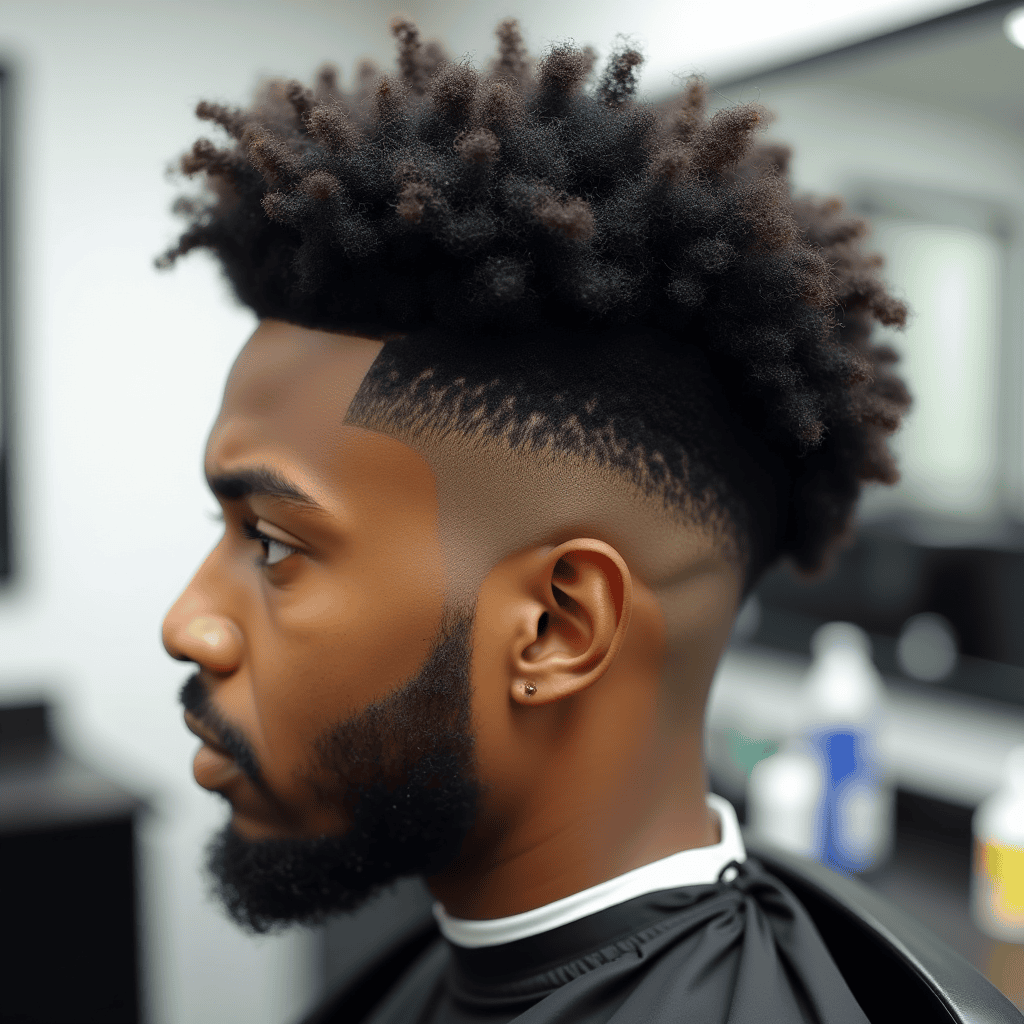
A skin-fade Afro creates the strongest possible contrast by taking the lowest sections down to bare-looking skin before blending into the textured top. The transition can be low, mid, or high, but lower placement preserves more of the classic Afro shape. A fuller crown makes the contrast even more obvious. The finish feels sharper and more barbered than almost every other option here.
It is best for someone comfortable with frequent maintenance and a clearly faded look. Ask for, “A low skin fade with the Afro kept full above it, and don’t take the fade higher than necessary.” The cleanest stage does not last long because even slight regrowth shows against the shortest area. Anyone who dislikes exposed scalp or regular appointments should stay with a taper.
24. Lightened-Tip Afro
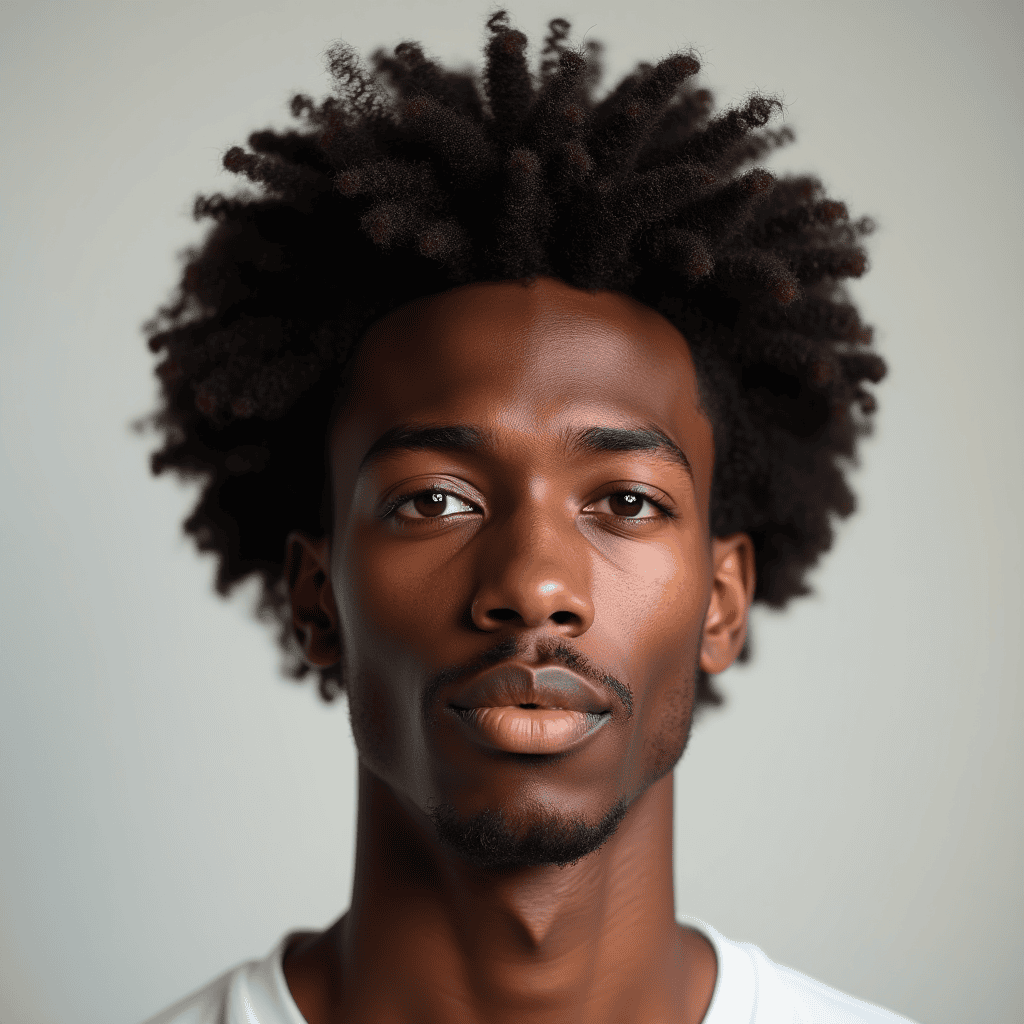
A lightened-tip Afro uses color only toward selected outer curls, letting the darker natural base remain dominant. Because the ends sit around the visible surface of the silhouette, even restrained color creates substantial contrast. The effect looks strongest on a shaped medium Afro where the lighter tips appear across the crown rather than in one solid block. Soft tonal variation usually looks more dimensional than a single flat band.
This version suits men who already like their Afro shape and want the finish to become the statement. Ask a qualified colorist for, “Subtle lightening through selected tips while keeping most of the base natural and the placement scattered.” Chemical coloring adds a separate maintenance commitment and should be handled according to the condition of your hair. If your priority is simplicity, shape alone does more than enough.
25. Extra-Large Rounded Afro
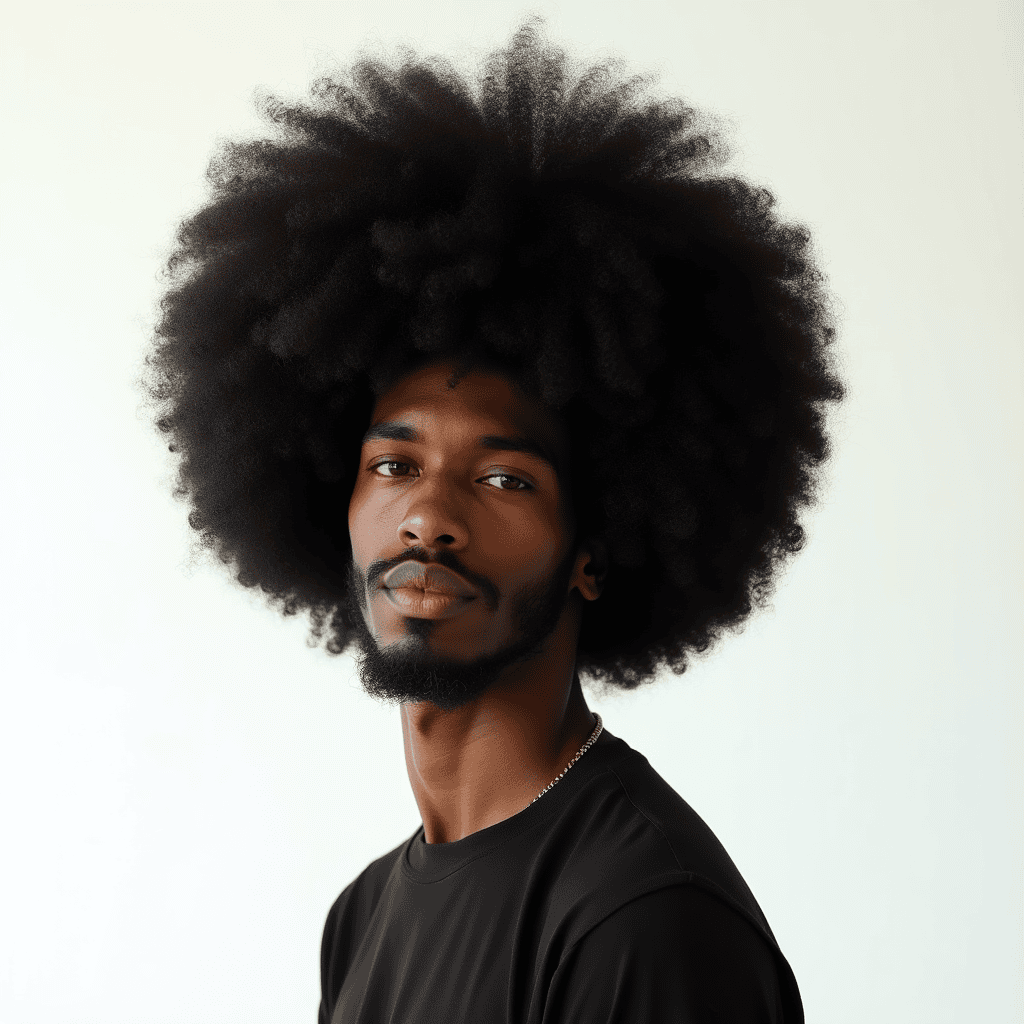
The extra-large rounded Afro takes the classic silhouette to its fullest scale, with substantial height above the crown and width extending far beyond the sides of the head. The perimeter still follows a broad circular shape, but tiny variations in curl length keep it from resembling a rigid sphere. Density becomes the main visual feature. From almost any angle, the hair defines the entire portrait.
This is for men willing to commit to length, detangling, shaping, and protecting the volume between styling sessions. Tell your stylist, “Preserve as much length as possible, even out the overall round silhouette, and remove only the ends needed for shape.” Bigger hair exposes compression, tangling, and uneven shrinkage more readily, so it is not a low-effort style. But if scale is the goal, few Afro hairstyle ideas make a stronger impression.
How to Choose the Right One
Start with length because it controls nearly every other choice. Short hair makes a cropped Afro, sponge twists, temple fade, or low taper easy to maintain, while medium hair opens the door to fuller rounded shapes and stronger curl definition. Longer hair gives you freeform shapes, twist-outs, puffs, and the extra-large Afro, but the grooming commitment rises with the size.
Then look at density and curl behavior rather than copying a photograph blindly. Dense, tightly coiled hair often supports vertical or strongly rounded shapes well, while softer or looser curls can look better when the perimeter is allowed to move. A reference photo helps, but your barber needs to interpret the picture through your actual growth pattern.
Face shape matters less than people make it sound, though proportions still count. If your face already appears long, adding extreme height may exaggerate that line, so a medium rounded Afro can create better balance. If you want to add vertical structure to a broader face, a high-top or tapered full-top shape can do it without needing an aggressive skin fade.
At the appointment, bring two or three photos that show the front, side, and approximate volume you want. The most useful instructions describe what should stay, not only what should disappear: “Keep the sides full,” “leave enough length for twists,” or “taper only around the edges” gives a barber far more information than “clean it up.”
And think about your real week. A hairstyle that looks outstanding after twenty minutes of careful shaping but annoys you every work morning is the wrong haircut. The best Afro hairstyle ideas are the ones whose maintenance level matches how much time you actually want to spend on your hair.
Where Afro Hairstyles Can Be More Work Than They Look
The biggest surprise is how much shape can change without much actual growth. Dense curls expand, shrink, flatten during sleep, and respond differently after washing, so an Afro that looked perfectly balanced on Saturday can sit differently by Tuesday. Bigger styles amplify those changes.
Fades create another commitment. A low taper can grow in quietly, but a skin fade, burst fade, or sharply lined temple area advertises new growth quickly because the contrast disappears. If you know you will not visit a barber often, leave more hair around the sides and choose a softer perimeter.
Length brings its own friction. More hair means more time separating sections, reducing tangles, drying the hair, and restoring a compressed shape. I go back and forth on huge Afros for exactly that reason: visually, they are hard to beat, but there is no pretending they demand the same routine as a two-inch crop.
The other mistake is asking for too much correction at once. A barber cannot keep maximum side volume, create a high skin fade, preserve every inch of length, and dramatically narrow the silhouette simultaneously. Decide which characteristic matters most, then let the rest of the haircut support it.
Frequently Asked Questions
What are the easiest Afro hairstyle ideas for men to maintain?
A short cropped Afro, subtle low taper, or compact rounded Afro usually requires the least complicated daily styling. There is less hair to detangle and reshape, and minor compression is easier to correct. Avoid highly sculpted fades or very large silhouettes if reducing barber and styling time is your main priority.
How do I choose an Afro style for my face shape?
Think in proportions rather than rigid face-shape rules. More height can lengthen the appearance of the head, while additional side volume creates width. Bring reference photos and ask your barber to adjust the silhouette around your natural hairline, density, head shape, and preferred amount of maintenance.
How long does hair need to be for an Afro?
There is no single required length because curl tightness and shrinkage change how much visible volume you get. Even relatively short coily hair can form a compact Afro, while larger rounded or freeform versions require substantially more growth. Judge the usable shape rather than relying only on stretched hair length.
Which Afro hairstyle ideas work best with a fade?
Temple fades, low fades, burst fades, drop fades, and low skin fades can all pair with Afro texture. The safest approach is usually starting low because it preserves more side volume. Once a fade climbs high, rebuilding a traditional full Afro silhouette requires growing those shorter sections back.
Should I get a taper or a fade with an Afro?
Choose a taper if you want cleaner edges while keeping most of your natural side volume. Choose a fade when you want the short-to-long transition to become a visible part of the haircut. If you are uncertain, start with a low taper because it leaves more options for the next appointment.
How often should an Afro be reshaped?
There is no universal schedule because growth rate, length, and preferred sharpness vary. A highly defined outline may need attention sooner, while a freeform Afro can tolerate substantial growth. Watch the silhouette from the front, sides, and back; book a reshaping once unwanted bulk starts changing the intended proportions.
Can men with looser curls wear Afro hairstyles?
Yes, although the result may look softer and less compact than an Afro formed by tightly coiled hair. Looser curls often create more visible separation around the perimeter and may fall outward instead of standing vertically. A stylist can shape that movement rather than trying to force a denser silhouette.
What should I tell my barber when asking for an Afro?
Describe the length you want to preserve, where you want volume, how much edge cleanup you prefer, and whether the sides should stay full. A useful request sounds like, “Keep my natural volume, round the shape, and taper only the sideburns and neckline.” Photos make those instructions even clearer.
Are large Afro hairstyle ideas harder to maintain?
Usually, yes. Increased length can mean more detangling, longer drying time, greater compression during sleep, and more obvious unevenness in the overall silhouette. The payoff is stronger visual presence and more styling flexibility. If you enjoy working with your hair, that trade can make sense.
How can I keep an Afro from looking flat after sleeping?
Avoid treating morning compression as a cutting problem. Gently restore the shape by working through sections rather than pulling aggressively at the entire head at once. Longer hair may need more deliberate nighttime protection, while shorter Afros usually recover their silhouette with less manipulation after waking.
Is a rounded Afro better than a tapered Afro?
Neither is automatically better. A rounded Afro emphasizes width, fullness, and a traditional natural silhouette, while a tapered version creates a cleaner lower edge and shifts attention upward. Choose the rounded version for maximum fullness and the taper when you want easier edges without committing to a dramatic fade.
What are good Afro hairstyle ideas for a first-time natural haircut?
Start with a medium rounded Afro, short crop, or low-taper Afro because each keeps enough natural texture visible while remaining easy to adjust later. Avoid removing large amounts from the sides during the first appointment. It is much easier to go shorter next time than to restore volume that was faded away.
The next haircut does not need to be the boldest one on this list to make a difference. Choose the silhouette you can realistically maintain, save two photos that show it from different angles, and tell your barber exactly where you want to keep the most volume. For your next booking, ask one concrete question: “Can you build this shape without taking the sides higher than necessary?”
Best Men’s Hairstyle Reports
Discover modern men’s haircut ideas, classic barber styles and fresh hairstyle inspiration for every look.