
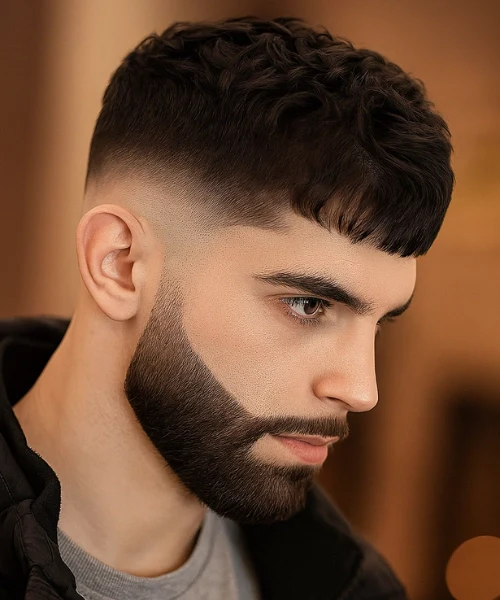
The strongest Caesar cut haircut ideas for men are the Classic Caesar, Textured Caesar, Low-Fade Caesar, and Curly Caesar. Each keeps the signature short forward fringe while changing the texture, fade height, or overall weight. The appeal is simple: controlled shape, easy styling, and enough variation to avoid looking like the same haircut on every head.
This guide approaches the Caesar cut from a barbering-focused editorial perspective, concentrating on proportion, texture, fringe placement, and how the haircut behaves as it grows. The picks were chosen to cover straight, wavy, curly, fine, and dense hair rather than forcing one version onto every man.
| Quick Pick | Best For | Fringe | Sides | Upkeep |
|---|---|---|---|---|
| Classic Caesar | First-timers | Straight, short | Evenly tapered | Low |
| Textured Caesar | Thick hair | Broken texture | Short taper | Medium |
| Low-Fade Caesar | Office-to-weekend wear | Controlled | Low fade | Medium |
| High-Fade Caesar | Sharper contrast | Compact | High fade | Higher |
| Curly Caesar | Natural curls | Soft curl pattern | Tapered | Medium |
| Wavy Caesar | Natural movement | Loose and uneven | Low taper | Low-medium |
| French Caesar | Modern styling | Longer, textured | Faded | Medium |
| Buzzed Caesar | Minimal maintenance | Very short | Closely clipped | Low |
| Long Caesar | More styling freedom | Extended | Tapered | Medium-high |
| Skin-Fade Caesar | Cleanest contrast | Short | Skin fade | High |
Classic and Low-Maintenance Caesar Cuts
These versions stay closest to the haircut’s Roman-inspired identity: short length, forward direction, and a compact fringe. They’re the easiest place to start if you want a Caesar that looks intentional without needing ten minutes of styling every morning.
1. Classic Caesar Cut
A classic Caesar keeps the top short and nearly uniform, with the hair brushed forward into a small horizontal fringe. The crown stays controlled rather than spiky, and the sides gradually shorten without creating an obvious disconnected fade. From the front, the silhouette looks neat, square, and disciplined. It is the version that makes the haircut instantly recognizable.
Men with straight or slightly wavy hair usually get the cleanest result, especially when the hair has enough density to create an even fringe. Ask your barber for “a traditional Caesar with a short forward fringe, even weight through the top, and softly tapered sides.” Maintenance is simple, although the front edge can start looking untidy once it grows past its intended line. Skip an ultra-precise version if you dislike regular fringe cleanups.
2. Short Caesar Cut
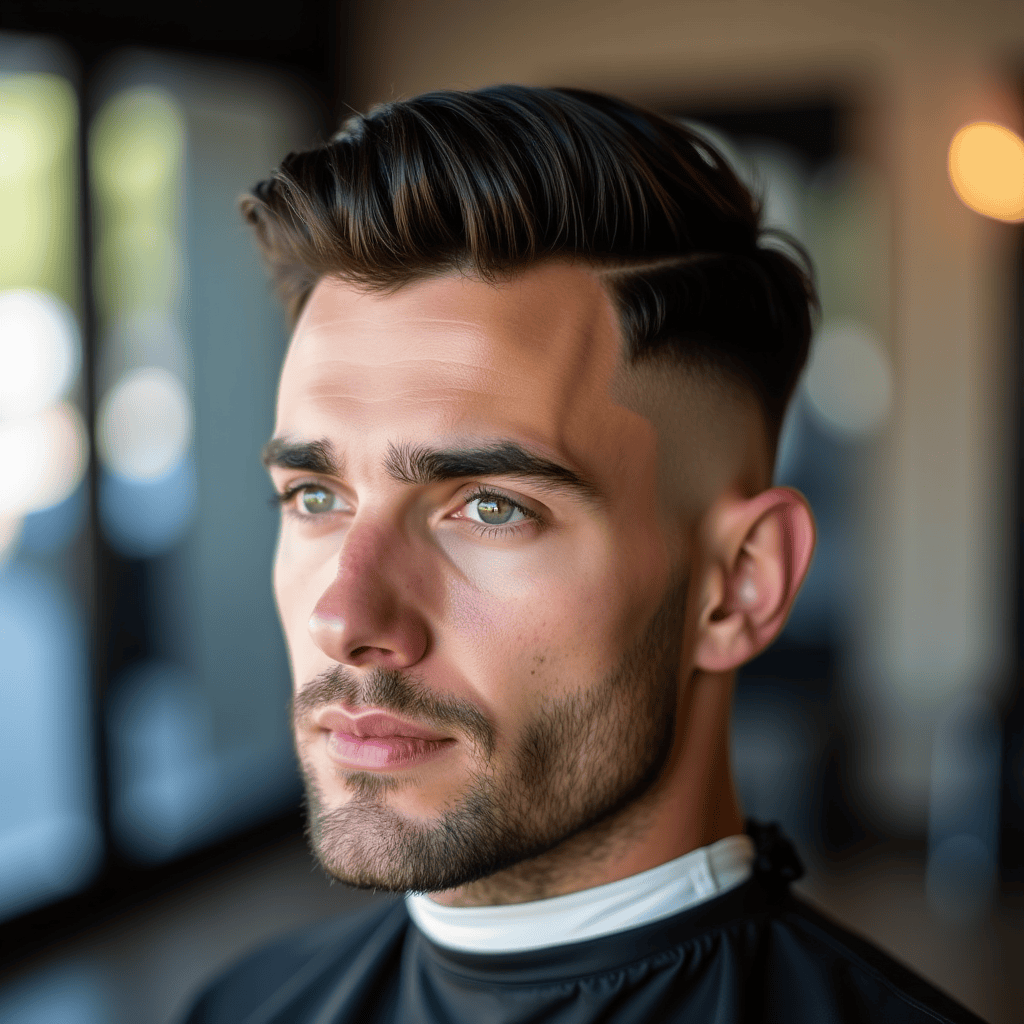
The short Caesar strips the shape down even further, keeping the top close to the scalp while preserving a visible forward fringe. Instead of strong texture, the haircut depends on consistent length and a clean perimeter. The front sits barely above the forehead, creating a tidy line without turning into a full blunt crop. It looks especially sharp from the side because there is little excess weight around the crown.
This works well for men who prefer uncomplicated grooming and don’t want hair falling out of position during the day. Ask for “a short Caesar, around clipper-to-scissor length on top, with a small natural fringe and tidy tapered sides.” A little matte paste can add control, but many men can leave it almost product-free. The tradeoff is limited styling flexibility because there simply isn’t much length to redirect.

3. Buzzed Caesar
A buzzed Caesar sits somewhere between a traditional Caesar and a uniform clipper cut. The top is cut extremely close but still carries a slight forward direction, with a deliberately defined front edge separating it from an ordinary buzz cut. The sides can stay nearly the same length or drop slightly shorter. From a distance it reads clean and minimal; up close the small fringe gives it character.
It’s a strong option for straight or coarse hair and for men who value speed over styling variety. Tell the barber, “keep the Caesar outline, but take the whole haircut very short with a compact forward front.” The shape depends heavily on precise clipper work, so it can lose definition as the hair grows. If you like changing your hairstyle from day to day, this one may feel too restrictive.

4. Caesar With Scissor-Tapered Sides
This version keeps clippers from dominating the haircut. The top moves forward in the familiar Caesar shape, while the sides are shortened gradually with scissors so the transition feels soft and traditional. There is no exposed scalp or aggressive fade line. That added side weight gives the haircut a fuller silhouette and a slightly more mature finish.
It suits men with medium-to-dense hair who prefer understated grooming over a sharply faded appearance. Ask for “a Caesar top with a short forward fringe and scissor-tapered sides rather than a skin fade.” Because the blend is softer, it grows out gracefully and can stretch the time between appointments. Men with very thick sides may need some internal weight removed or the shape can become bulky above the ears.

5. Caesar With Natural Hairline
Instead of forcing the fringe into an unnaturally sharp rectangle, this Caesar follows the way the front hair actually grows. The fringe stays short and forward but has tiny irregularities that soften the edge. The temples are cleaned without being pushed back, and the sides remain neat rather than excessively outlined. The result feels casual even though the haircut is structurally precise.
Men who dislike frequent lineups or want a haircut that ages naturally between appointments should consider it. Ask your barber for “a Caesar with a natural front edge—clean it, but don’t make the fringe ruler-straight.” Styling is easy because a small amount of matte product can reinforce the natural direction. The softer perimeter won’t satisfy someone who wants an ultra-crisp barbershop finish every week.

Textured Caesar Cut Haircut Ideas
Texture changes the Caesar more than extra length does. By breaking up the surface, a barber can make dense hair feel lighter, help fine hair appear less flat, or turn a strict horizontal fringe into something intentionally rougher.
6. Textured Caesar Cut
The textured Caesar keeps the forward foundation but breaks the top into visible pieces rather than letting it lie as one solid layer. Small separations create shadow and movement across the crown, while the fringe remains compact enough to preserve the Caesar identity. The sides are generally kept quieter so the textured top remains the focus. It looks particularly good when viewed from a slight angle.
Dense straight hair and coarse hair give the barber plenty of material to work with. Ask for “a short Caesar with point-cut texture through the top, a broken-up fringe, and no heavy bulk at the crown.” Matte clay or paste usually works better than shiny styling products here. Over-thinning is the main risk because too much texture can make the haircut look sparse instead of deliberately separated.
7. Choppy Caesar Cut
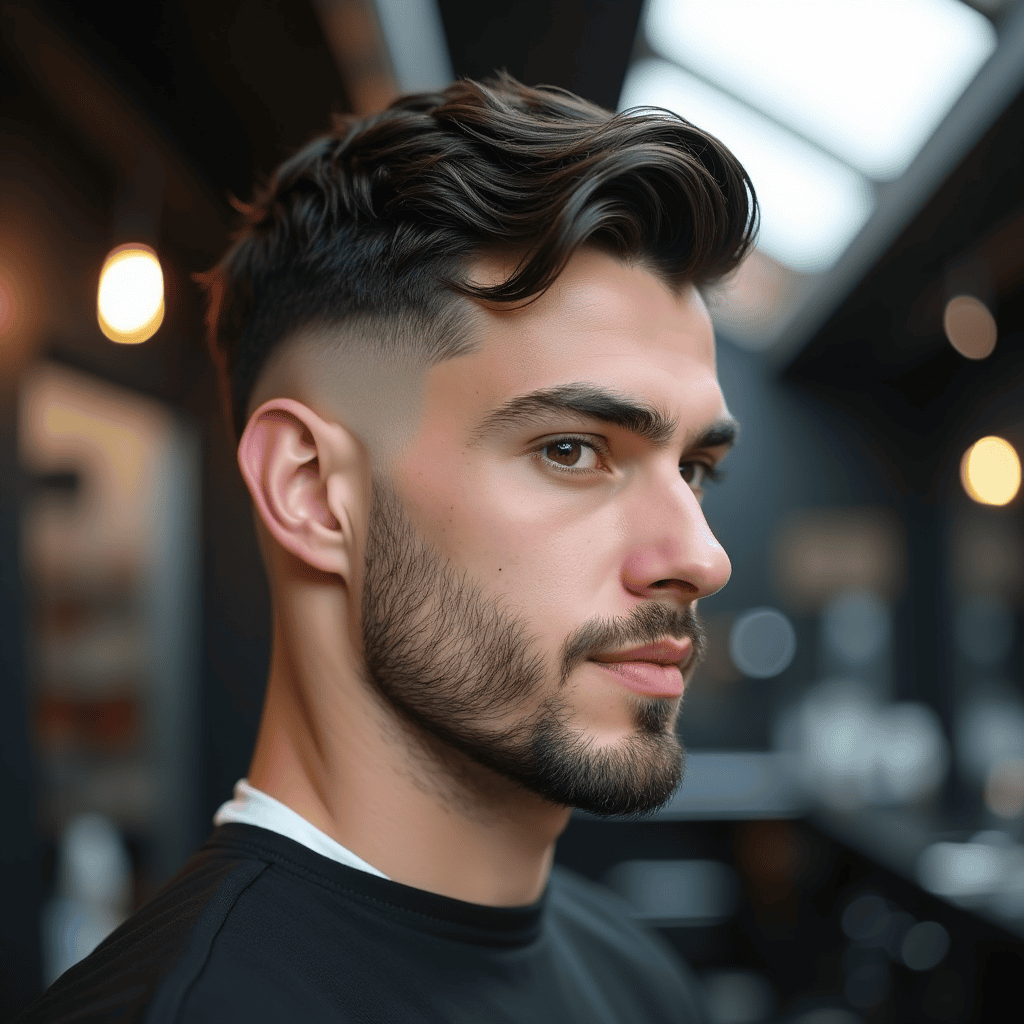
A choppy Caesar pushes the broken texture further, with short sections that vary slightly in length across the top. The fringe isn’t a perfect line; it appears piecey and deliberately interrupted. This gives the haircut a youthful, casual character while still keeping everything directed toward the forehead. The contrast is especially visible when the sides are kept smooth and short.
It works best when the hair has enough density to support visible separation without exposing too much scalp. Tell the barber, “I want a Caesar shape, but make the top choppy and the fringe uneven rather than blunt.” Finger-styling with dry paste takes less than a minute once the cut is right. The downside is that heavy gel or wet pomade can collapse all that texture into an unflattering solid block.

8. Messy Caesar Cut
The messy Caesar loosens the discipline without abandoning the basic forward direction. The hair still travels toward the forehead, but individual pieces bend slightly sideways or upward instead of forming one controlled surface. The fringe has a broken edge, and the crown carries enough movement to avoid looking flattened. Done well, it looks accidental while remaining carefully shaped underneath.
Wavy hair and medium-density straight hair are especially suited to this version. Ask for “a Caesar that can be finger-styled messy, with broken texture and a soft forward fringe.” Use a light product and stop styling before every strand looks arranged. The haircut loses its charm if you overwork it, and naturally fine hair may need more support than this loose finish provides.

9. Spiky Textured Caesar
This variation lifts selected sections of the top while keeping the overall hair direction forward. The spikes are short, irregular, and matte rather than tall or glossy, so the haircut never turns into a full spiked style. A compact fringe anchors the front while the raised texture creates more height through the center. It feels sharper and more energetic than a traditional Caesar.
Straight, stubborn hair often behaves well in this shape because natural stiffness helps hold the lifted pieces. Ask for “a short textured Caesar with subtle spikes through the top, not tall spikes, and keep the fringe forward.” A dry clay usually gives enough grip. Fine hair can look thin if the sections are separated too aggressively, so the barber should preserve density rather than carving everything apart.
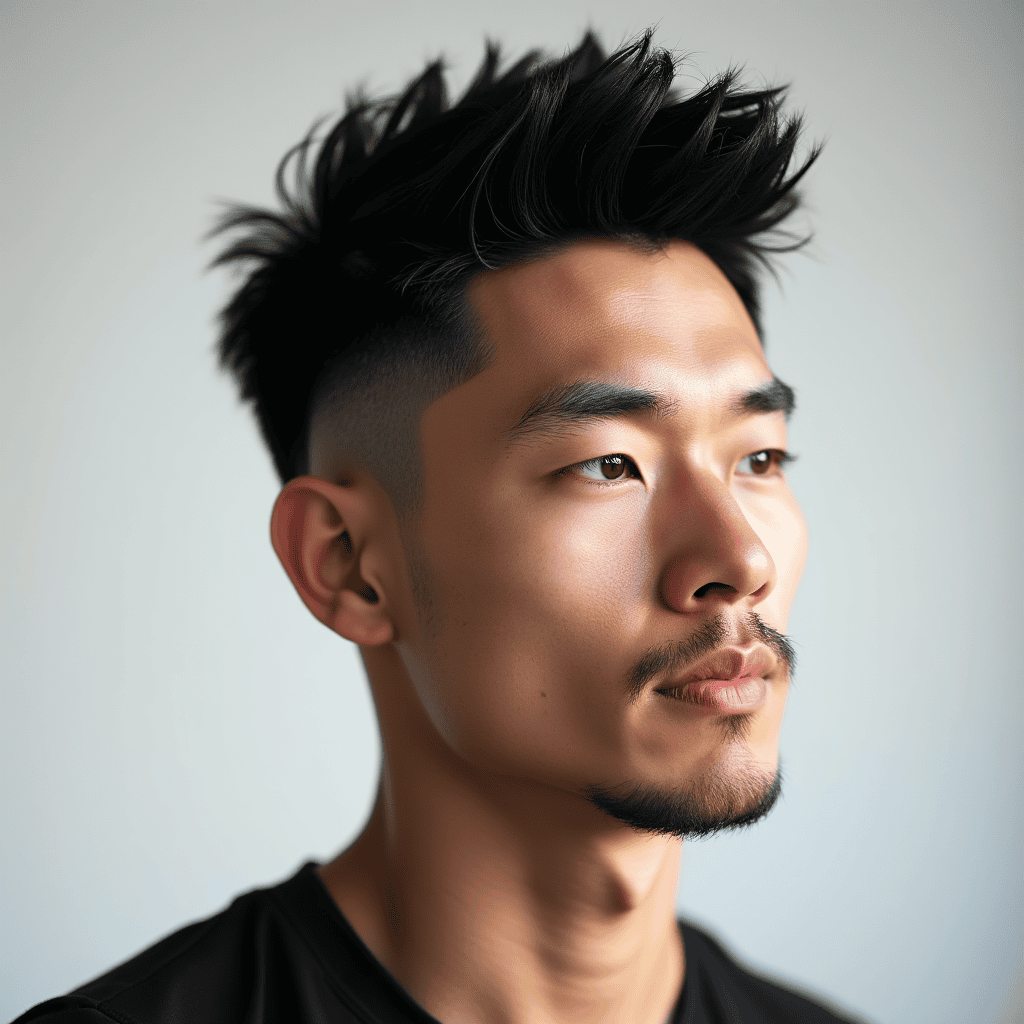
10. Razor-Textured Caesar
A razor-textured Caesar has softer, feathered ends compared with a heavily point-cut version. The top flows forward in overlapping sections, and the fringe looks thin at the very tips without appearing sparse through the base. That subtle tapering reduces the visual heaviness of dense hair. From the side, the texture tends to look more fluid than chunky.
Men with straight or gently wavy thick hair can benefit most from this softer finish. Ask your stylist for “a Caesar with feathered texture and a light fringe rather than blunt, heavy ends,” while allowing the professional to choose the safest cutting method for your hair. It needs enough density to support the softer perimeter. Overdoing the feathering can leave the front looking weak and wispy.
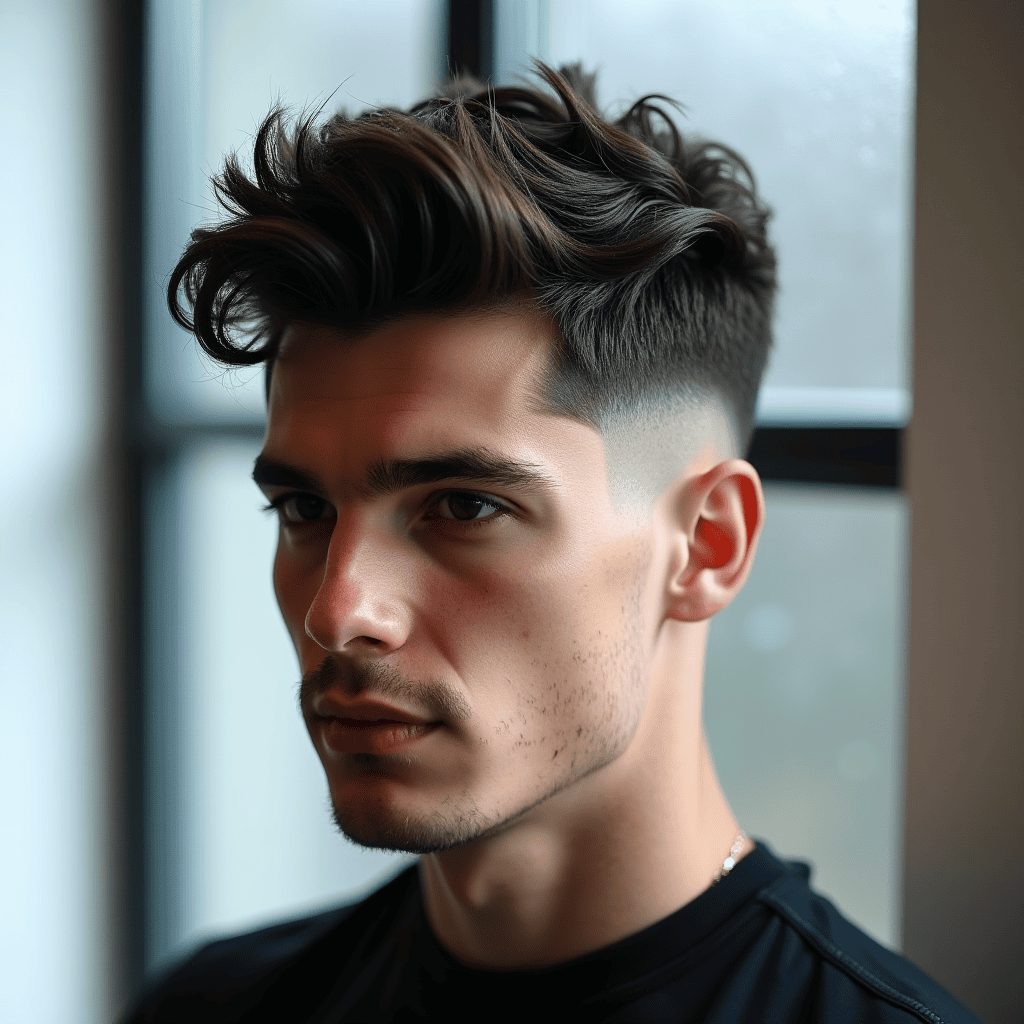
Caesar Cuts With Fades
Combining a Caesar with a fade increases contrast around the sides and makes the forward fringe appear stronger. Fade height matters: the lower the fade, the more restrained the haircut feels; the higher it climbs, the more dramatic the overall shape becomes.
11. Low-Fade Caesar
The low-fade Caesar preserves most of the side shape while cleaning the bottom edge around the ears and neckline. The fade begins low, so there is still visible weight above it connecting naturally into the short top. Up front, the fringe stays horizontal or lightly textured. It is one of the easiest faded Caesars to wear in both professional and casual settings.
It suits most hair densities and men who want a modern haircut without exposing too much scalp. Ask for “a Caesar with a low fade that stays below the temple, plus a short forward fringe.” The low transition grows out more gracefully than higher fades. Still, once the lower edge becomes fuzzy, the difference between the faded area and the heavier section above can become obvious.
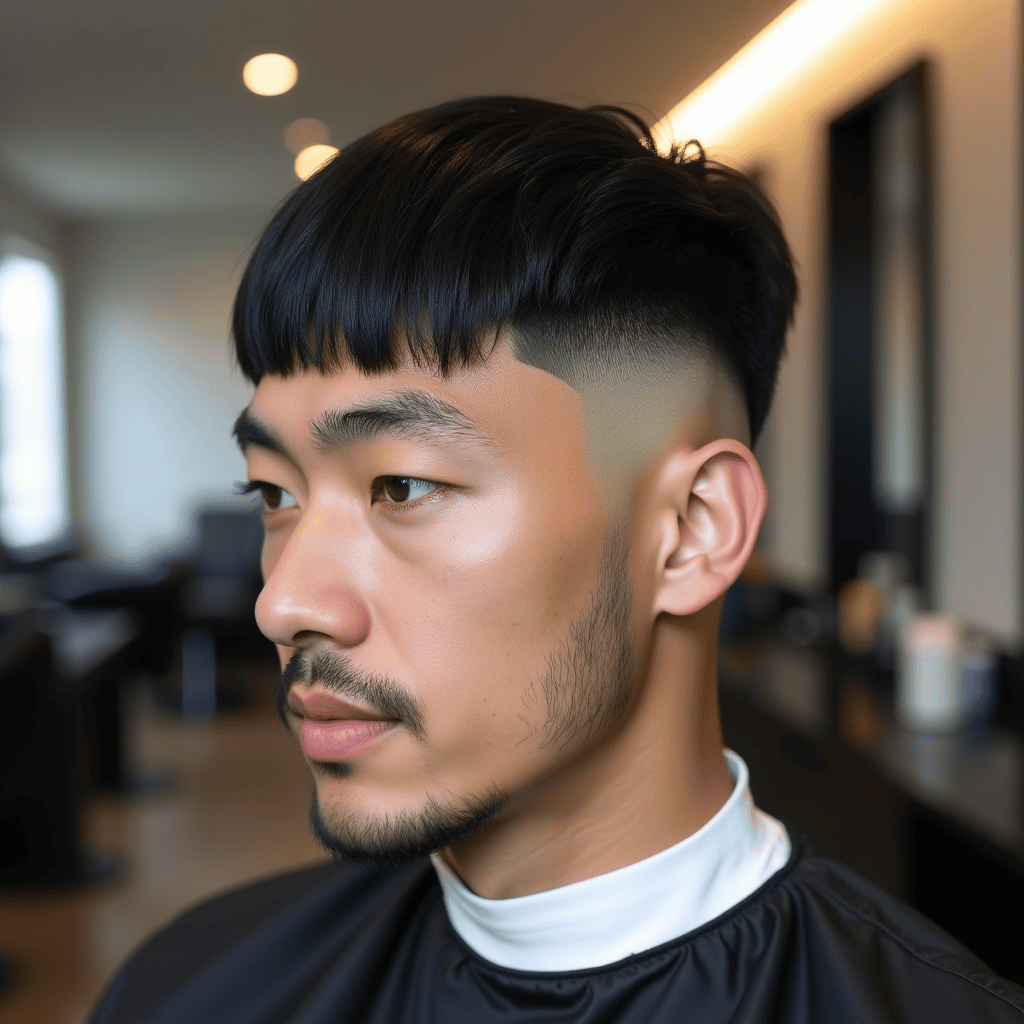
12. Mid-Fade Caesar
A mid fade removes more side weight and starts the transition around the middle of the temple area. That creates a stronger separation between the compact Caesar top and the shorter lower sides. The front fringe appears bolder because the side profile is slimmer. The final silhouette feels balanced rather than extreme.
This version works well for medium or thick hair, particularly when the sides tend to puff outward. Tell the barber, “give me a mid fade with a short Caesar top and keep enough weight at the upper sides to blend cleanly.” Expect to refresh the fade more often than a scissor taper. Men who prefer softer, longer side profiles may find the contrast too sharp.
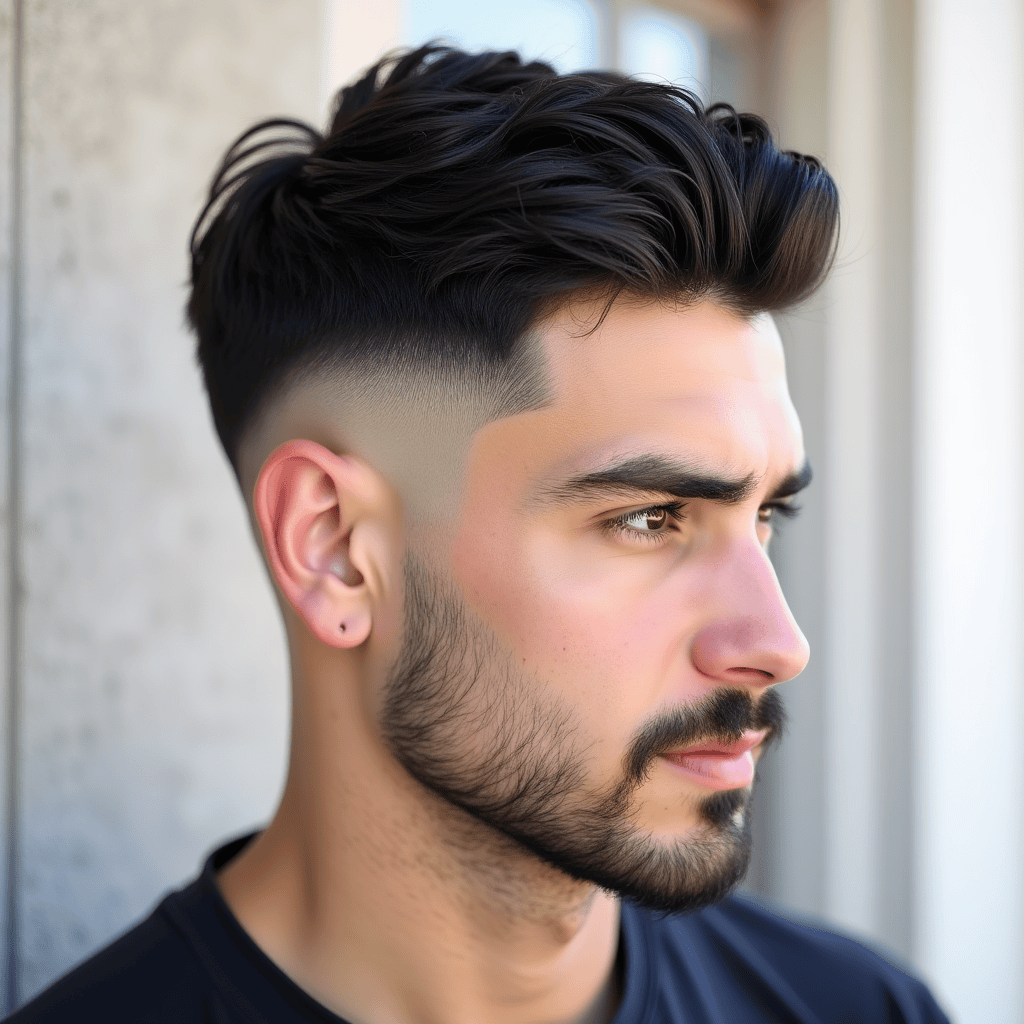
13. High-Fade Caesar
The high-fade Caesar makes contrast the defining feature. Hair becomes extremely short high on the sides, leaving the top visually detached even when the blend itself is smooth. The Caesar fringe remains short and forward, while the upper surface can be blunt or lightly textured. Seen from the front, the top looks wider and more pronounced because the sides disappear quickly.
Dense hair usually carries this shape best because the top needs enough weight to balance the aggressive fade. Ask for “a high fade with a compact Caesar top, keeping the fringe forward and not too long.” The finish is clean but demands frequent maintenance to retain that dramatic side contrast. If you dislike visible scalp or rapid grow-out, choose a lower fade instead.
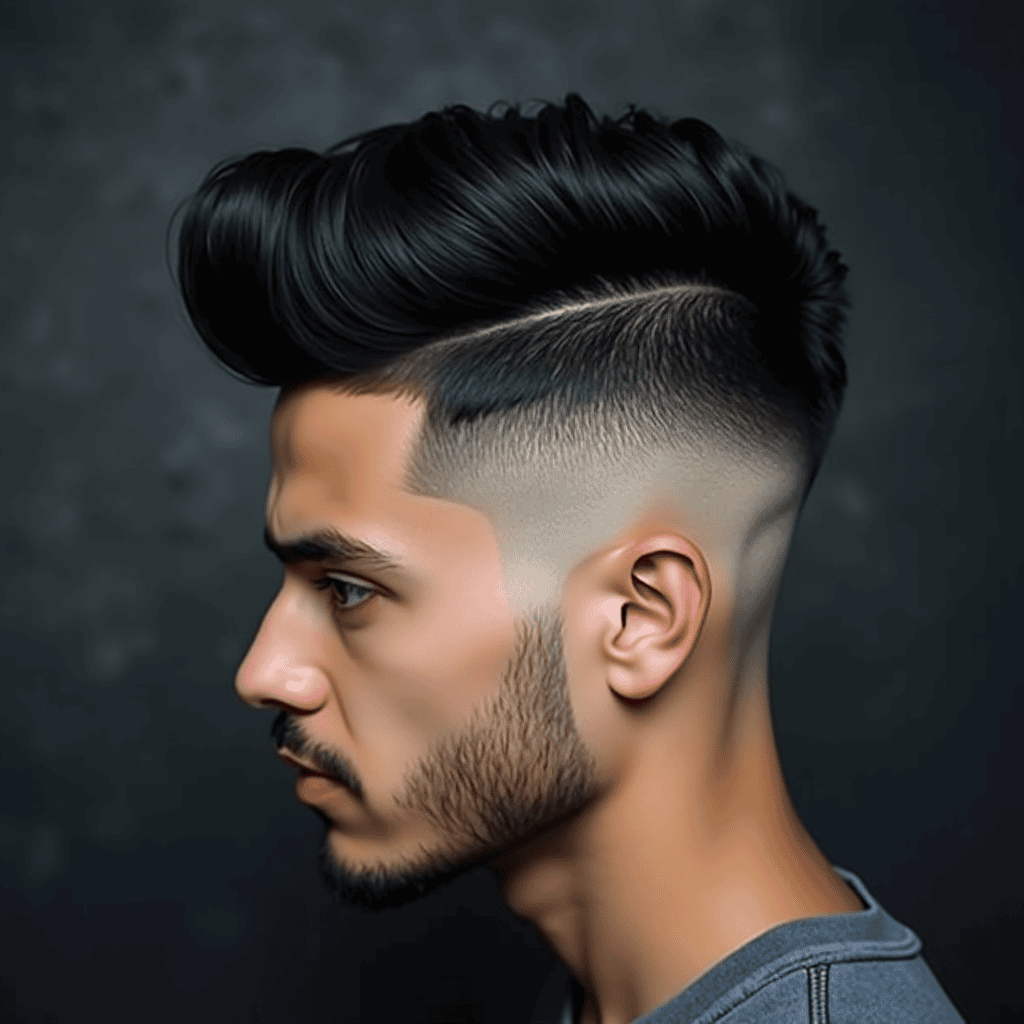
14. Skin-Fade Caesar
A skin-fade Caesar takes the shortest part of the sides down to bare or nearly bare skin before gradually building into the top. The difference between the clean sides and textured crown makes even a modest fringe appear stronger. Around the ears, the outline is exceptionally neat. The look has a polished barbershop finish rather than the softer character of a traditional Caesar.
Choose it if you like strong contrast and don’t mind frequent visits. Ask for “a skin fade kept clean around the ears with a short textured Caesar on top and a compact forward fringe.” The haircut can look exceptionally fresh immediately after a cut, but that effect fades quickly as stubble returns. Sensitive scalps or men who dislike exposed sides may prefer a number-one fade.
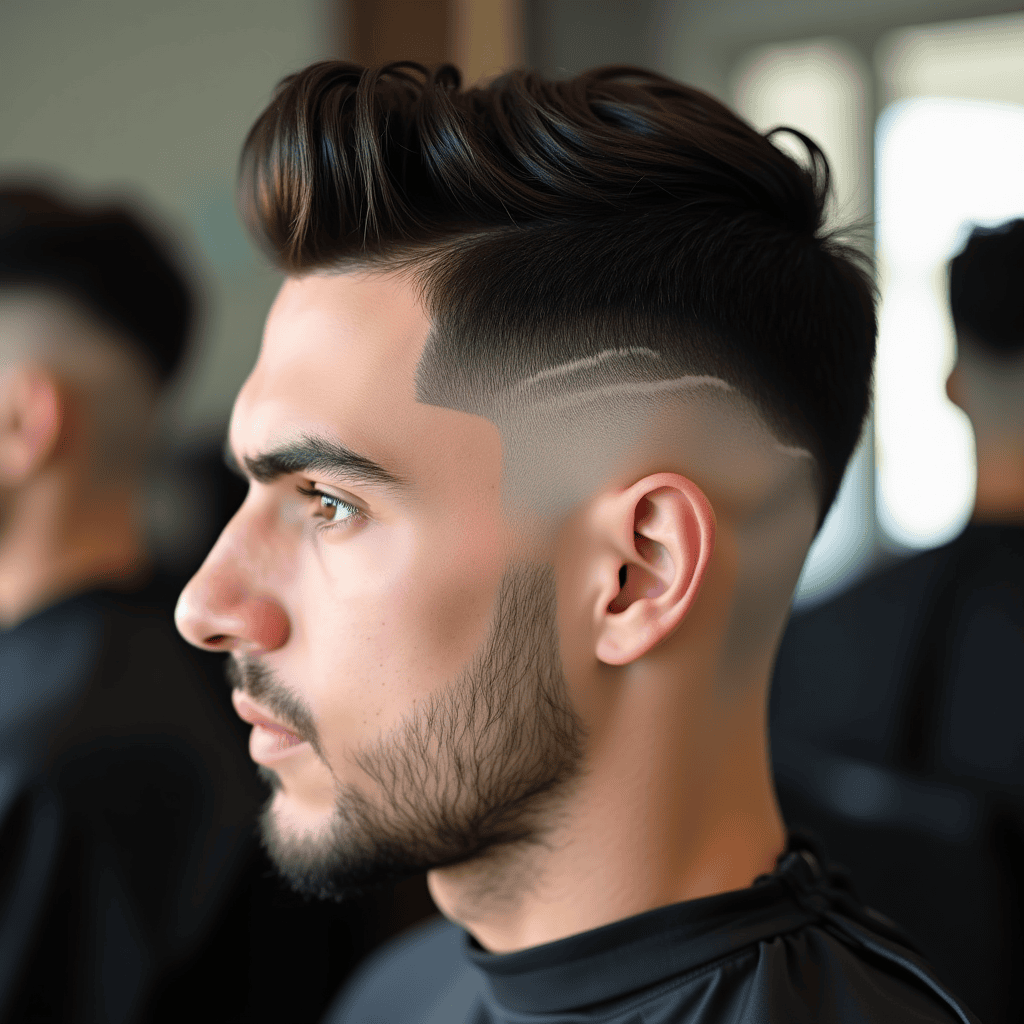
15. Drop-Fade Caesar
A drop fade curves lower behind the ear rather than following a level horizontal path around the head. Paired with a Caesar, that curve helps preserve visual weight near the back while keeping the temple area clean. The top still travels forward into a compact fringe. From the side, the haircut gains a more sculpted outline than a standard fade provides.
Men who care about the side and back profile as much as the front may appreciate this shape. Ask for “a Caesar with a drop fade that follows the head shape behind the ear, keeping the top short and forward.” The curved blend requires precision, so uneven grow-out becomes noticeable. It may be more detail than you need if you usually judge your haircut only from the front.
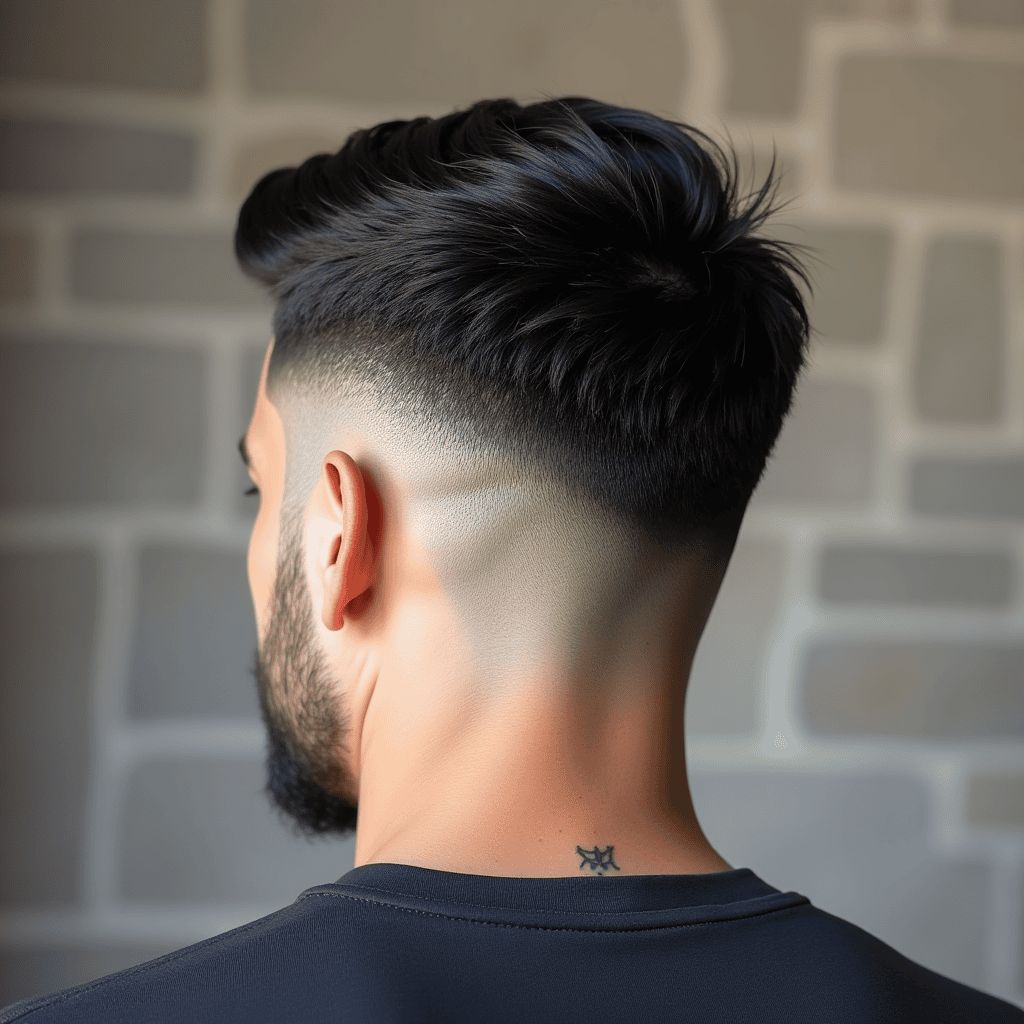
Caesar Cuts for Wavy, Curly, and Dense Hair
A Caesar does not need pin-straight hair. In fact, waves and curls can soften the rigid fringe and give the haircut more personality. The key is preserving enough natural pattern on top rather than cutting every section to the same visual length.
16. Wavy Caesar Cut
A wavy Caesar allows shallow bends to remain visible across the top while directing the overall shape toward the forehead. The fringe follows those bends instead of being pressed into a perfectly straight line. Sides stay short enough to control width, while the top carries a gentle ripple. It feels relaxed compared with a highly lined-up Caesar.
Men with natural waves should resist having the top cut too short or the pattern may disappear. Ask for “a Caesar that keeps my natural wave visible, with a soft forward fringe and tapered sides.” A light cream or matte paste can control flyaways without flattening the surface. Humidity may change the fringe from day to day, which is part of the look rather than a flaw.

17. Curly Caesar Cut
The curly Caesar keeps individual curls short enough to form a controlled cap across the head while letting the front curls create the fringe naturally. Instead of a straight horizontal edge, the forehead line becomes a row of compact curves. Short sides keep the haircut from widening. The curl pattern gives the style more depth than a flat traditional Caesar.
It works best when the barber cuts according to how the curls sit rather than forcing every strand into a rigid perimeter. Ask for “a short curly Caesar, preserving curl definition on top with the front directed naturally forward and the sides tapered.” Styling should support the existing curl rather than stretching it straight. Cutting the fringe too tightly can make it jump higher once dry.

18. Coily Caesar Cut
A coily Caesar forms a compact textured surface rather than a flat top. The hair remains short, but the natural coil pattern creates fine visual depth across the crown and front. The fringe can be softly defined or shaped into a cleaner line depending on preference. Tapered edges keep the silhouette intentional without stripping away the texture that makes the haircut distinctive.
Men with tightly coiled hair can ask for “a short Caesar shape that keeps my natural coil texture visible on top, with a controlled front and clean taper around the edges.” Moisture and gentle handling matter more than forcing the hair flat. An extremely low top can erase much of the coil pattern, so don’t go shorter than necessary if texture is the reason you’re choosing this version.
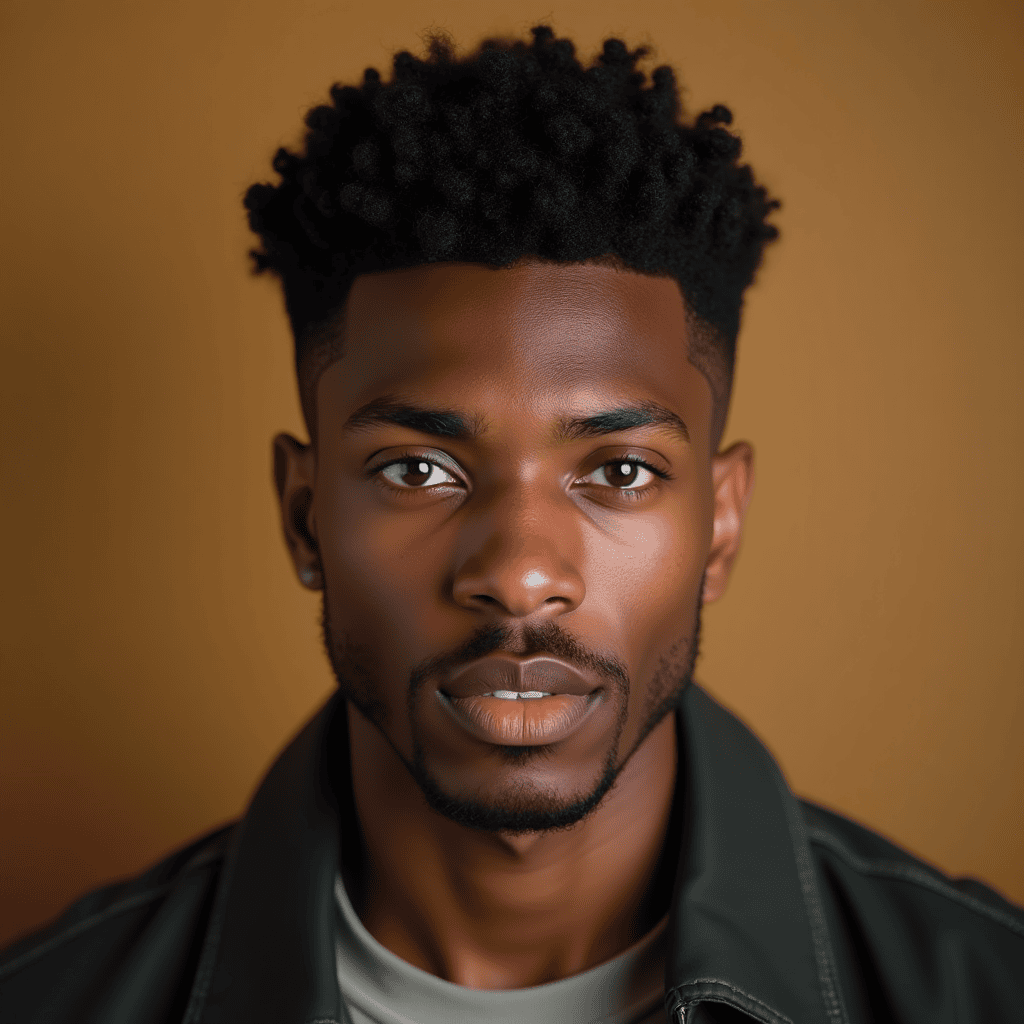
19. Thick-Hair Caesar
A Caesar on thick hair can look impressively solid, but the barber has to control internal bulk. The top stays dense enough to create a strong forward shape while carefully placed texturing prevents it from turning into a helmet. The fringe looks substantial without becoming heavy over the forehead. Shorter sides keep the overall silhouette compact.
If your hair tends to stand outward as it grows, this structure can make daily styling easier. Ask for “a Caesar that keeps my density but removes internal bulk, with a textured forward fringe and tight sides.” Avoid asking for extreme thinning because thick hair can become frizzy or uneven as short pieces push through. The drawback is that its shape may expand quickly between appointments.
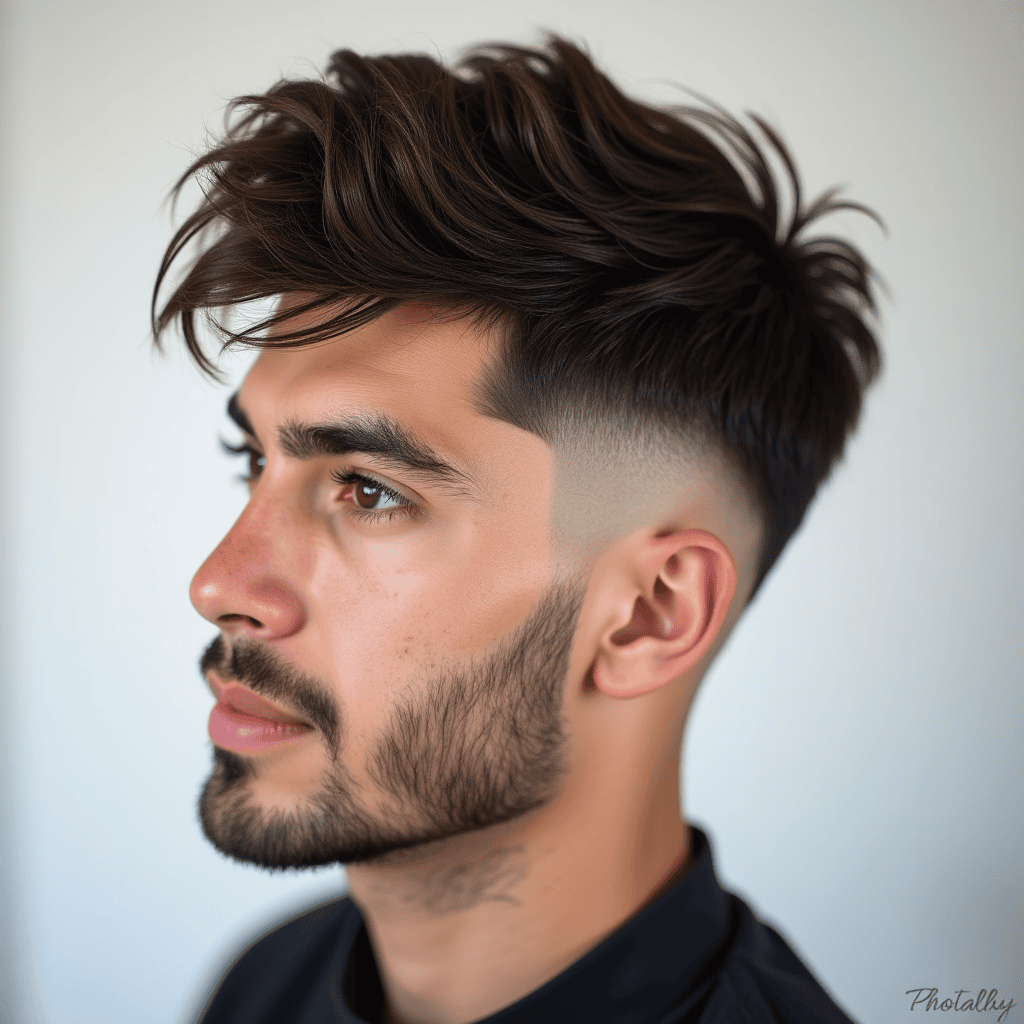
20. Fine-Hair Caesar
A fine-hair Caesar relies on preserving coverage rather than cutting in dramatic separation. The top remains short enough to avoid lying flat, but the barber leaves enough connected length for one section to support the next. A soft forward fringe creates visual structure at the front. Heavy fades are often unnecessary because keeping some side weight can make the overall haircut look more balanced.
Men with fine straight hair should ask for “a short connected Caesar with subtle texture, keeping the top dense rather than heavily thinning it.” A lightweight matte styling product can help create separation without making strands clump together. Avoid oily products and aggressive point cutting. The limitation is simple: a Caesar can organize fine hair, but it cannot create density that isn’t there.

Modern and Statement Caesar Haircuts
These options stretch the traditional shape through extra fringe, stronger contrast, or more visible styling. They still retain enough forward movement to read as Caesars, but they sit closer to contemporary crop territory.
21. Long Caesar Cut
The long Caesar leaves noticeably more hair through the top and fringe, allowing the front to sit lower on the forehead. Layers stop the extra length from collapsing into one heavy sheet. The sides are shorter but not necessarily faded to skin, keeping the proportion controlled. Movement is more obvious because the longer strands can separate and shift naturally.
It’s useful for men who like the Caesar shape but want more styling options during the week. Ask for “a longer Caesar with layered forward movement, a fringe that sits lower on the forehead, and short blended sides.” You’ll need more product and occasional blow-drying than with the classic version. The longer fringe can become annoying in hot weather or during workouts.
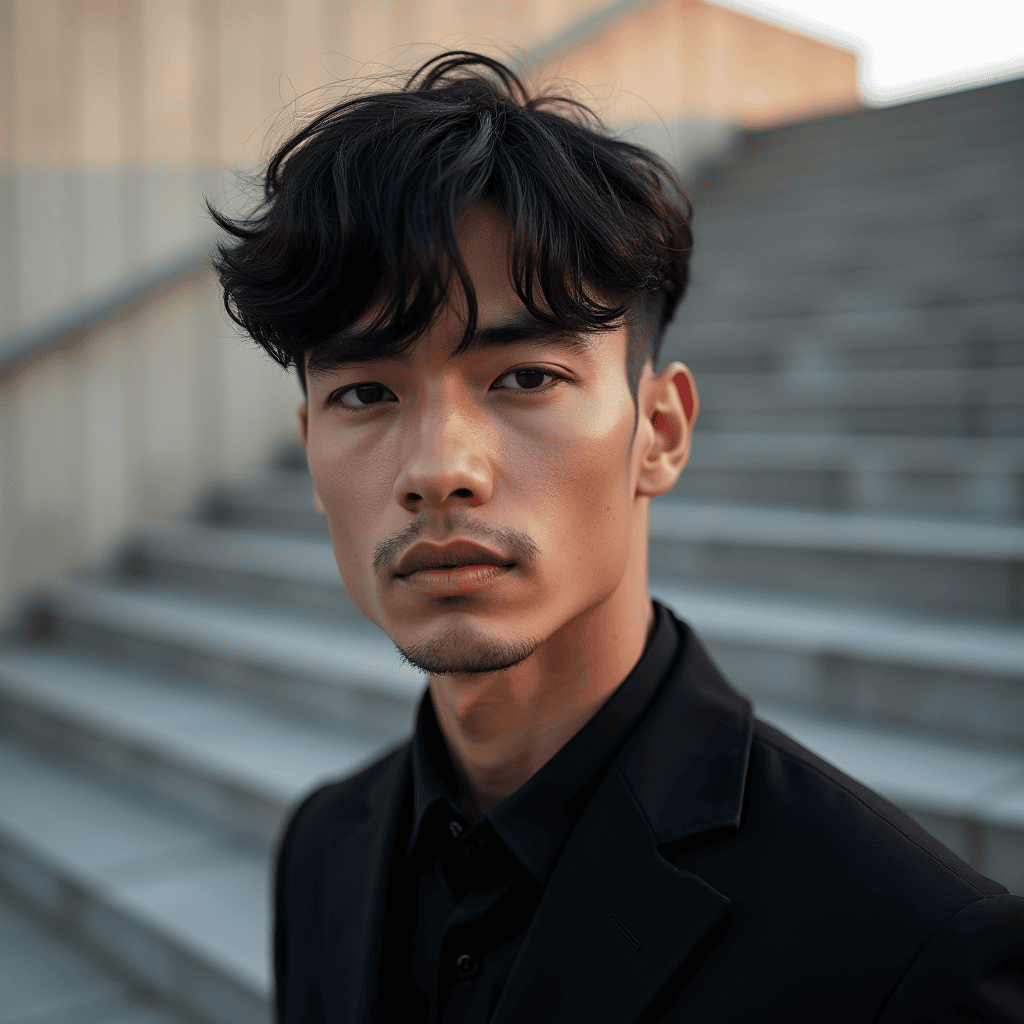
22. Caesar French Crop Hybrid
This hybrid borrows the heavier texture and stronger fringe associated with a French crop while keeping the compact, forward discipline of a Caesar. The top has more obvious separation than the classic version, and the fringe often looks slightly longer and rougher. Faded sides can push it further into contemporary territory. The finished haircut sits neatly between traditional and modern.
Men with thick or medium-density straight hair have the easiest time creating the required texture. Ask for “a Caesar-French crop hybrid with a textured forward top, slightly heavier broken fringe, and short faded sides.” A small amount of matte clay helps keep the pieces visible. If the fringe becomes too long or disconnected, the haircut stops reading as a Caesar altogether.
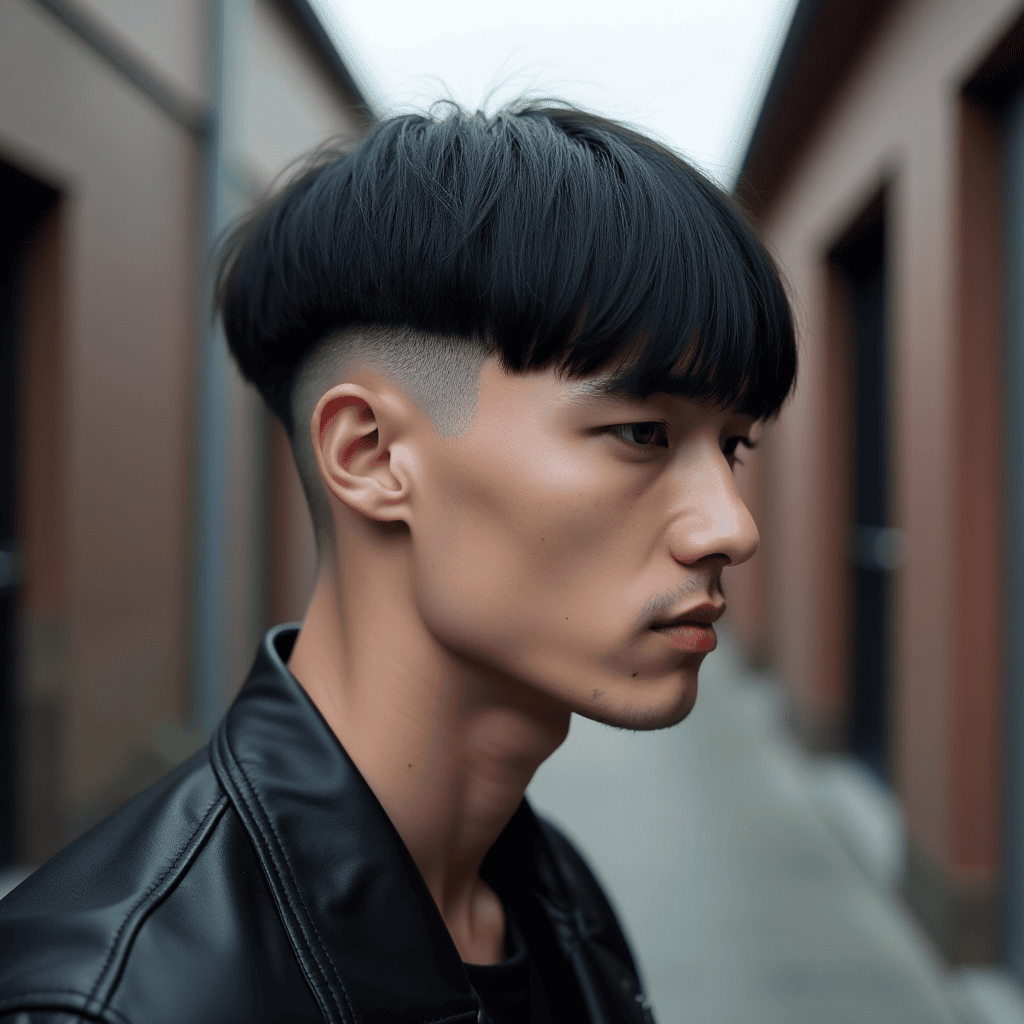
23. Caesar With Blunt Fringe
The blunt-fringe Caesar makes the front edge the star. Instead of feathering or breaking the hairline, the barber cuts a clear horizontal fringe across the forehead while keeping the rest of the top short and directed forward. The top surface can stay smooth to reinforce that graphic line. Short sides prevent the haircut from looking overly heavy.
Straight, dense hair usually produces the strongest version because it can hold a clean front edge. Ask for “a Caesar with a deliberately blunt straight fringe, compact top, and clean short sides.” Expect the fringe to need regular attention because even small amounts of growth soften its precision. Men with strong waves or unpredictable cowlicks may find the rigid line frustrating to maintain.

24. Disconnected Caesar Cut
A disconnected Caesar creates an abrupt visual difference between the longer top and much shorter sides. Unlike a gradual classic taper, the transition around the upper sides is intentionally strong. The top remains pushed forward into a recognizable fringe, keeping the haircut tied to the Caesar family. From profile view, the separation gives the crown and fringe more visual weight.
Men who enjoy statement cuts and don’t mind frequent reshaping are the best candidates. Ask for “a short disconnected Caesar with a forward textured top and a clear contrast into the sides, but keep the top compact.” The stronger the disconnect, the faster grow-out becomes noticeable. It can also overpower softer facial features if the contrast is pushed too far.
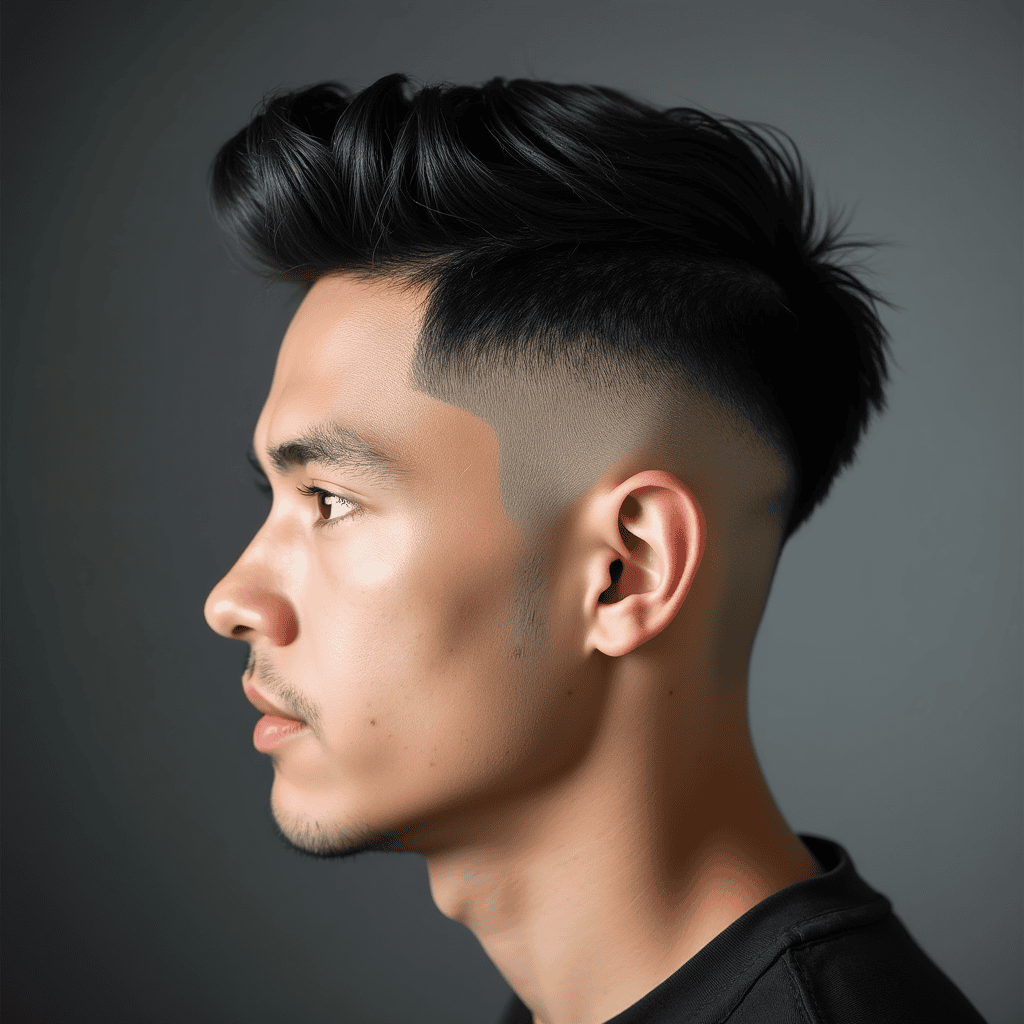
25. Caesar With Temple Fade
The temple-fade Caesar keeps most of the side hair intact while cleaning only the area around the temples and sideburns. That small fade creates a fresh outline without changing the haircut’s traditional weight through the rest of the sides. The top stays short, forward, and lightly textured. It is subtle from across the room but noticeably cleaner at conversational distance.
This is a smart compromise for men who like fades but don’t want the entire side panel taken short. Tell your barber, “keep the Caesar traditional through the top and sides, then add a small temple fade around the front edges.” Upkeep focuses mainly on those faded corners. If you want dramatic contrast from every angle, the limited faded area may feel too conservative.

How to Choose the Right Caesar Cut
Start with your natural hair movement rather than a reference photo. Straight hair can handle blunt fringes and clean geometric lines, while waves and curls usually look better when the front follows their natural pattern. Dense hair benefits from internal weight removal; fine hair usually needs more connected sections and less aggressive texturing.
Face proportion matters too. A longer fringe visually shortens more of the forehead, while a tiny Caesar fringe exposes more of it. Men who want width through the upper head should avoid taking the fade unnecessarily high. If you prefer a softer outline, keep more weight at the temples and choose a low taper instead of a skin fade.
Maintenance should influence the decision as much as appearance. A skin fade can look immaculate after a fresh appointment but loses its strongest contrast sooner than a scissor taper. If stretching haircuts longer matters to you, the Classic Caesar, Wavy Caesar, or natural-hairline version will usually age more quietly.
Bring two or three reference photos to the appointment and point to specific details rather than saying, “I want this exact haircut.” Tell the barber what you like about the fringe, top length, texture, and side treatment. Hair density and growth direction may require adjusting the reference to fit your head.
For formal occasions, interviews, weddings, or photographs, avoid experimenting the morning of the event. Getting the haircut several days beforehand gives you time to see how the fringe settles and learn how much product it needs. A cleaner Caesar also pairs easily with structured tailoring because its compact outline doesn’t compete with collars, jackets, or formal accessories.
Where Caesar Cuts Go Wrong
The biggest mistake is treating every Caesar as the same short haircut. A barber who removes too much density from fine hair can expose more scalp, while leaving too much weight in thick hair creates a stiff block. The fringe also needs to suit the growth pattern; forcing a strong cowlick into a ruler-straight line usually means fighting it every morning.
Fade height causes another common problem. High fades make the top look stronger, but they also expose more of the sides and change the balance of the head. Choosing one because it looks sharp in a photograph can backfire if you actually prefer softer haircuts in daily life.
Product choice matters as well. Heavy wet-look products can glue a textured Caesar into a single flat surface. For most modern versions, a small amount of matte paste or clay rubbed thinly between the hands gives enough separation. Start with less than you think you need.
And don’t ask for every trendy feature at once. A blunt fringe, skin fade, heavy texture, disconnection, and extra-long top can fight each other. One or two clear ideas usually make a stronger haircut than five competing details.
Frequently Asked Questions
What is a Caesar cut haircut for men?
A Caesar cut is a short men’s haircut with the top directed forward toward the forehead and finished with a compact fringe. The sides are traditionally short and blended, although modern versions may use fades, tapers, curls, or stronger texture while preserving that forward shape.
Is a Caesar cut good for straight hair?
Straight hair works especially well because it naturally supports the forward direction and can hold anything from a soft fringe to a sharp blunt line. Men with dense straight hair can also add point-cut texture to prevent the top from looking excessively solid.
Can men with curly hair get a Caesar cut?
Yes. A curly Caesar keeps the overall top short and forward while allowing natural curls to form the fringe. It usually looks better when the barber follows the curl pattern instead of trying to create a rigid horizontal front edge that fights the hair’s natural movement.
What face shape suits a Caesar haircut?
The haircut can be adjusted for several face shapes because fringe length, side weight, and fade height change its proportions. A longer fringe covers more forehead, while a shorter fringe exposes it. Keeping additional weight through the temples can also make the silhouette appear less narrow.
How often should a Caesar cut be trimmed?
A softer traditional Caesar can often grow out more gracefully than one paired with a skin or high fade. Men who want extremely crisp edges may prefer more frequent cleanups, while natural fringes and low tapers usually tolerate extra growth without looking as obviously overdue.
Is a Caesar cut easy to style every morning?
Most short versions are simple to style. Dampening the top, directing it forward, and using a small amount of matte product is often enough. Textured or longer Caesars take slightly more work because individual sections need to be separated rather than pressed flat.
What should I ask my barber for when getting a Caesar cut?
Describe the haircut in parts: preferred top length, fringe shape, amount of texture, and how short you want the sides. A useful request is, “keep the top short and directed forward with a compact Caesar fringe, then taper the sides to suit my head shape.”
What is the difference between a Caesar cut and a French crop?
The two overlap, but a Caesar generally has a more uniform, compact forward shape and traditionally shorter fringe. A French crop often carries more top texture, stronger contrast through the sides, and a heavier or more deliberately broken fringe.
Can a Caesar haircut work with a receding hairline?
A short forward style can create a more uniform visual shape around the front, but results depend heavily on individual density and growth pattern. Keeping the fringe natural rather than drawing an artificial line often produces the least forced-looking result. A barber can adapt the shape after seeing how your hair grows.
Should a Caesar cut have a fade?
It doesn’t need one. Traditional Caesars work with softly tapered or scissor-cut sides, while fades create a more modern contrast. A low fade is the safest middle ground if you want a cleaner outline without removing as much side weight as a high or skin fade.
What styling product works best for a textured Caesar?
A lightweight matte paste or clay usually suits textured versions because it separates strands without creating a shiny solid surface. Fine hair generally needs lighter application, while dense or coarse hair can tolerate slightly firmer hold. Work the product through gradually rather than loading it directly onto the fringe.
Is a Caesar cut suitable for professional settings?
Yes, particularly in its classic, low-fade, natural-hairline, or scissor-tapered forms. Keeping the fringe controlled and avoiding an extreme disconnection gives the haircut a compact shape that works easily with office clothing, interviews, and more formal menswear.
How long should the top be for a Caesar haircut?
There is no single required measurement because texture and density affect how the hair sits. Traditional versions remain short enough to travel forward without collapsing, while longer Caesars intentionally leave extra movement. The important part is preserving the forward silhouette and recognizable fringe.
Does a Caesar cut work with thick hair?
Thick hair can produce one of the strongest Caesar shapes because there is plenty of density for a solid fringe and textured top. The barber may need to remove some internal bulk, though. Over-thinning should be avoided because it can create short pieces that stick up unevenly.
How do I choose between a low fade and skin fade Caesar?
Pick a low fade if you want softer contrast, easier grow-out, and more side coverage. Choose a skin fade if you specifically want exposed sides and a sharper barbershop finish. The skin fade normally demands more maintenance because the contrast changes noticeably as short growth returns.
The most useful next step isn’t picking the boldest photograph—it is identifying the fringe, texture, and side length you could comfortably wear on an ordinary Tuesday. Choose two references from this list, save the parts you like, and ask your barber to adapt those details to your actual density and growth pattern. A Caesar works best when the structure fits the hair instead of forcing the hair to fit the picture.
Best Men’s Hairstyle Reports
Discover modern men’s haircut ideas, classic barber styles and fresh hairstyle inspiration for every look.