
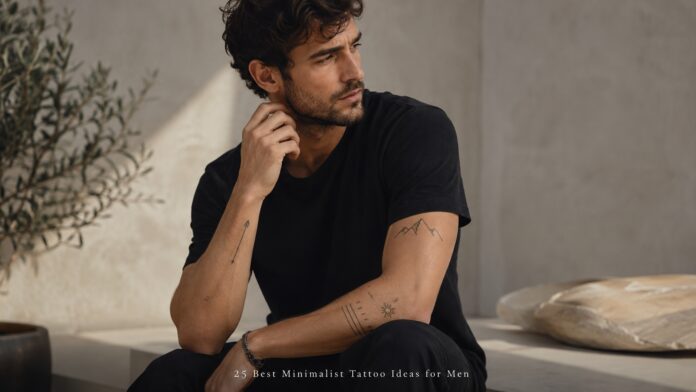
Minimalist tattoos work best when the idea is strong enough that it does not need heavy shading, oversized lettering, or complicated detail to make an impression. Among the strongest minimalist tattoo ideas for men are a fine-line mountain outline, a small compass, a single-line wave, and clean geometric bands. Each stays visually clear while giving the wearer room to make the design personal.
I’ve spent years studying tattoo composition, placement, line weight, and how seemingly simple designs sit on a moving body. The biggest lesson is easy to miss: minimal tattooing leaves nowhere for weak drawing or sloppy placement to hide.
| Quick Pick | Tattoo Idea | Best Placement | Overall Feel |
|---|---|---|---|
| Best Overall | Fine-Line Mountain | Forearm, upper arm | Clean and timeless |
| Best Small Option | Tiny Compass | Wrist, ankle | Personal and subtle |
| Best Nature Design | Single-Line Wave | Forearm, ribs | Relaxed and fluid |
| Best Geometric | Minimal Triangle | Arm, chest | Sharp and modern |
| Best Meaningful Design | Coordinates | Inner arm, chest | Private and personal |
| Best for First Tattoos | Small Arrow | Forearm, calf | Simple and readable |
| Best Wrist Design | Thin Band | Wrist | Structured and understated |
| Best Chest Design | Minimal Sun | Upper chest | Balanced and symbolic |
| Best Artistic Option | Abstract Face Line | Arm, shoulder | Contemporary |
| Best Statement Piece | Geometric Sleeve Accent | Forearm | Modern and graphic |
Classic Minimalist Tattoo Ideas That Rarely Feel Overdone
The safest minimalist tattoo ideas usually rely on shapes people already understand: arrows, mountains, waves, circles, and compact directional symbols. Familiar does not have to mean boring. Small changes in proportion, placement, negative space, and line direction can completely change how these tattoos feel.
1. Fine-Line Mountain Outline
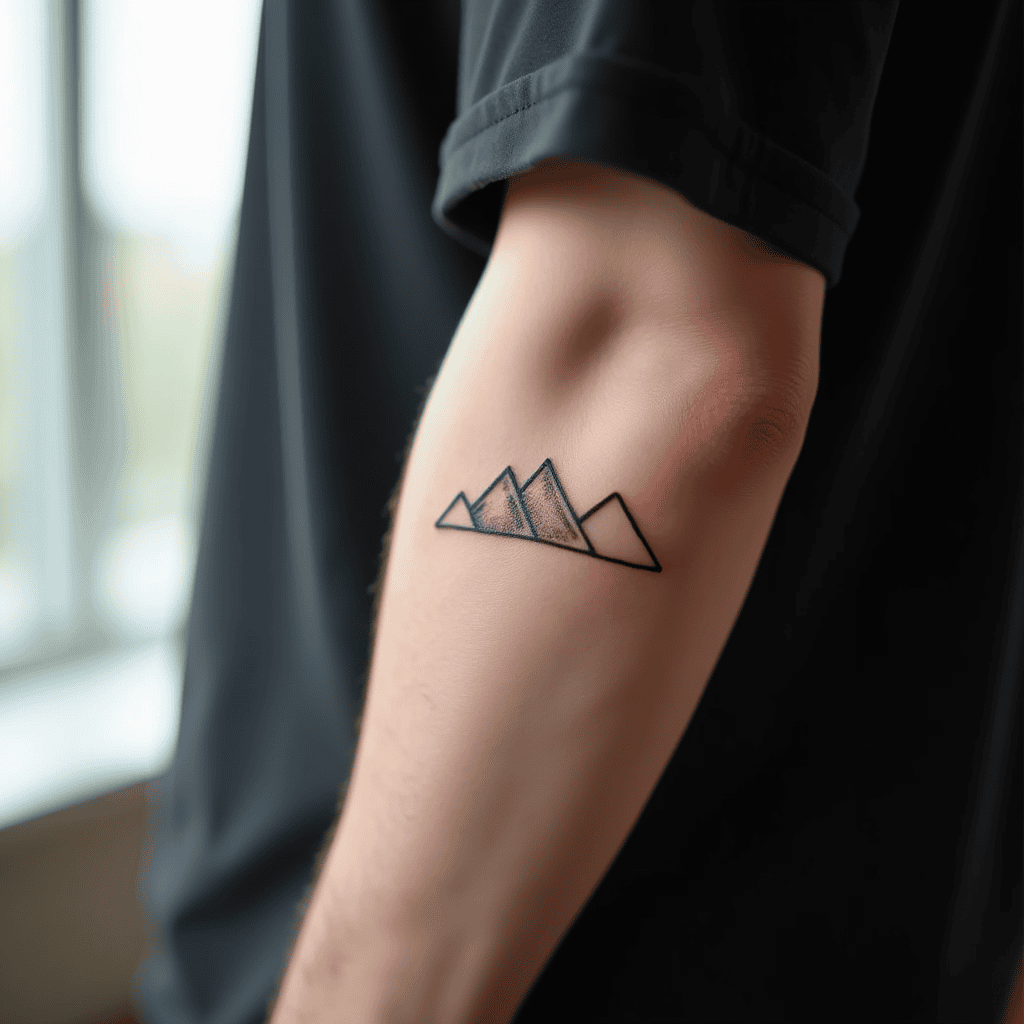
A fine-line mountain tattoo uses two or three controlled peaks with almost no internal shading. The best versions avoid perfectly even summits and instead use slightly irregular angles that make the range feel natural. A horizontal design follows the forearm especially well, while a shorter mountain silhouette can sit neatly above the ankle or near the shoulder.
This suits someone who wants a recognizable image without turning the tattoo into a landscape illustration. Ask your artist, “Keep the mountain silhouette thin and open, with no heavy shading and enough space between the peaks to stay readable.” The drawback is that excessive micro-detail can blur the simplicity, so resist squeezing trees, stars, birds, and coordinates into the same tiny piece.
2. Small Arrow Tattoo
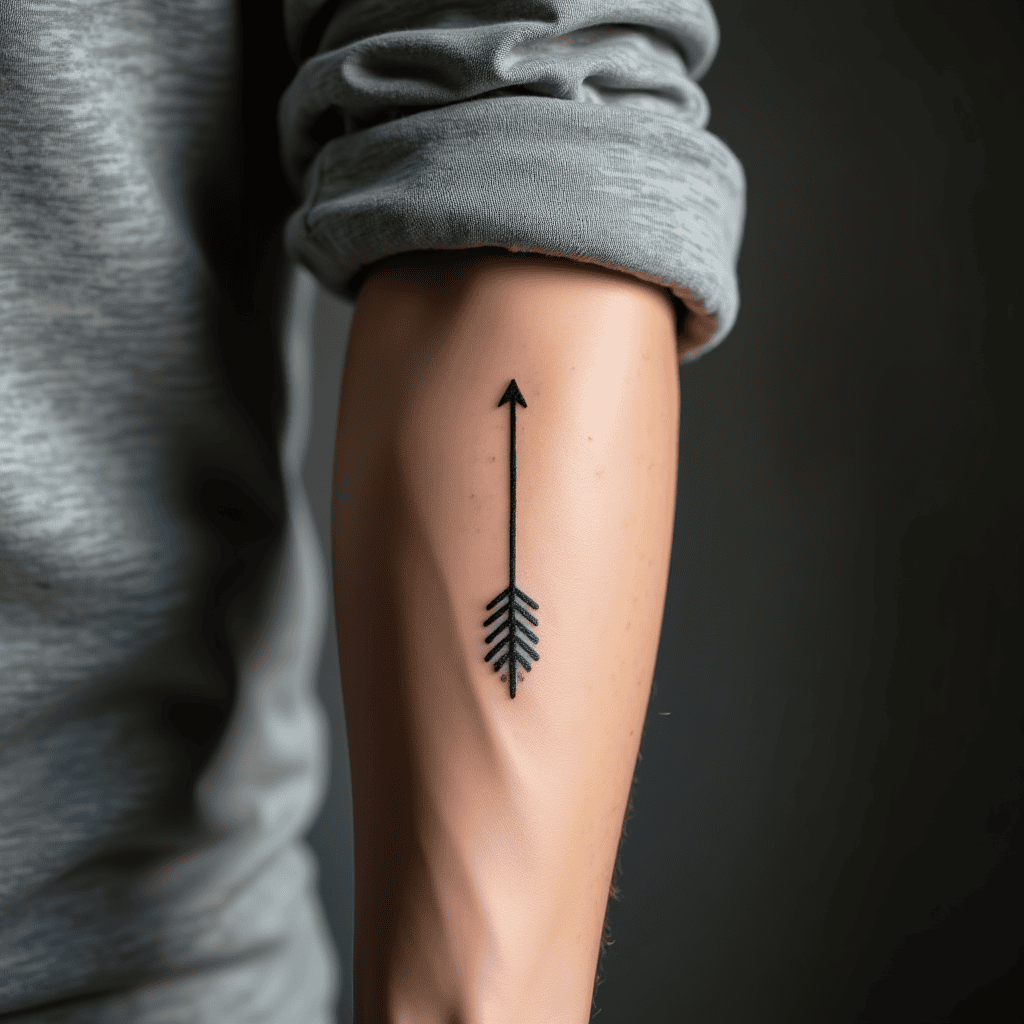
A minimalist arrow looks strongest when the shaft stays thin and the arrowhead is proportionate rather than oversized. A straight vertical arrow works beautifully along the inner forearm or back of the upper arm, while a compact horizontal version fits above the wrist. Tiny breaks in the line can add character without making the design busy.
Men with a straightforward style tend to wear this design easily because it works beside watches, bracelets, rolled sleeves, and casual clothing without competing for attention. Tell the artist, “I want one clean arrow with a narrow shaft, crisp point, and no decorative feathers.” Extremely tiny arrowheads can lose definition over time, so leave enough room for the point and tail to remain distinct.
3. Single-Line Wave
A single-line wave curves upward, folds into a small crest, and returns into a smooth horizontal stroke. It looks better when the wave has movement rather than perfect symmetry. The forearm, side of the wrist, calf, and ribs give the curved line enough space to breathe.
This is one of the easier minimalist tattoos for men who prefer nature imagery but do not want a detailed ocean scene. Ask for, “One continuous wave line with a natural crest, no blue ink, no background, and no extra splash marks.” The risk is making it too tiny; once the crest becomes cramped, the tattoo can read more like a random squiggle than a deliberate wave.
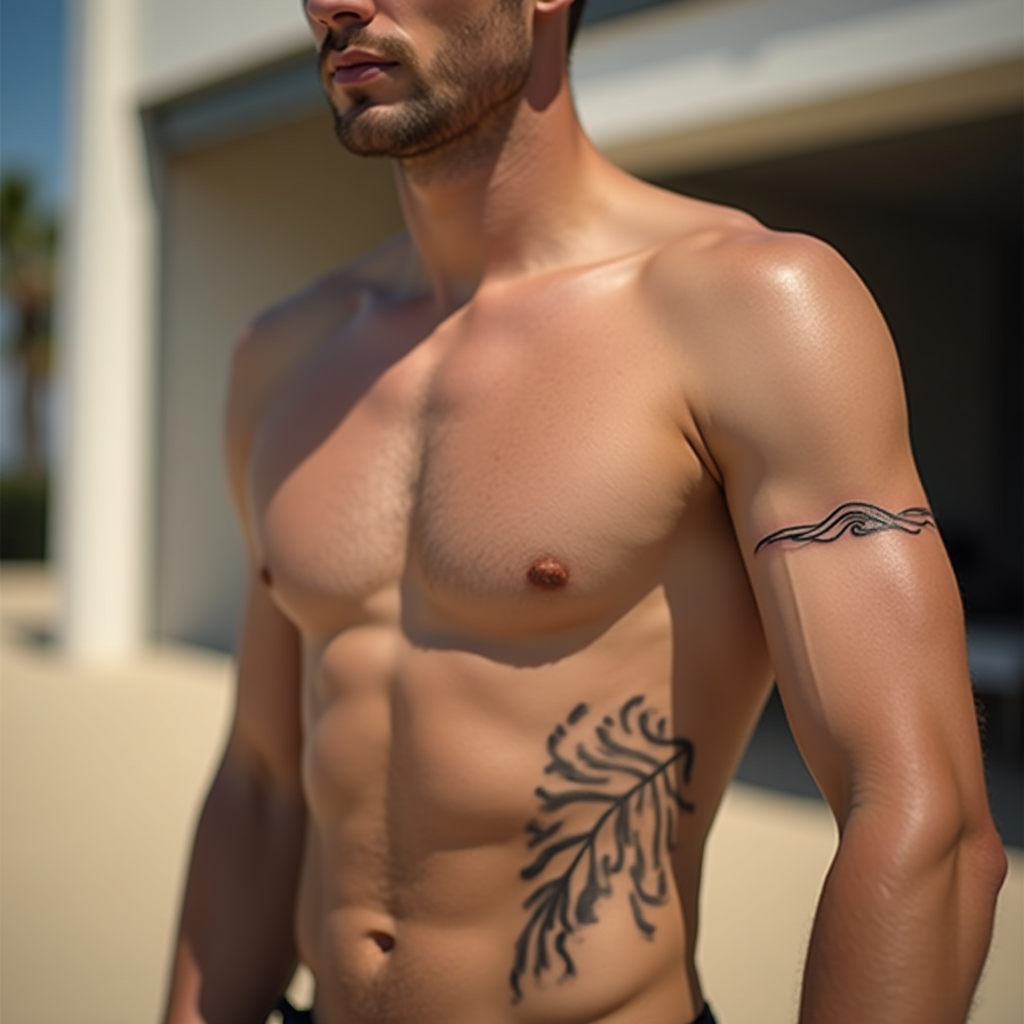
4. Minimal Triangle Tattoo
A simple triangle has a graphic quality that works especially well on the forearm, triceps, ankle, or upper chest. The lines should be straight and evenly weighted, with enough size that the corners remain sharp. Leaving one side partially open can make the shape feel lighter and less rigid.
This works well for men whose personal style already leans clean, architectural, or monochrome. Tell the artist, “Use a thin triangle with precise corners and keep the interior completely empty.” Perfect geometry exposes every inconsistency, which means artist selection matters more than people expect. A slightly crooked three-inch triangle can be more noticeable than imperfections inside a much larger illustrative tattoo.
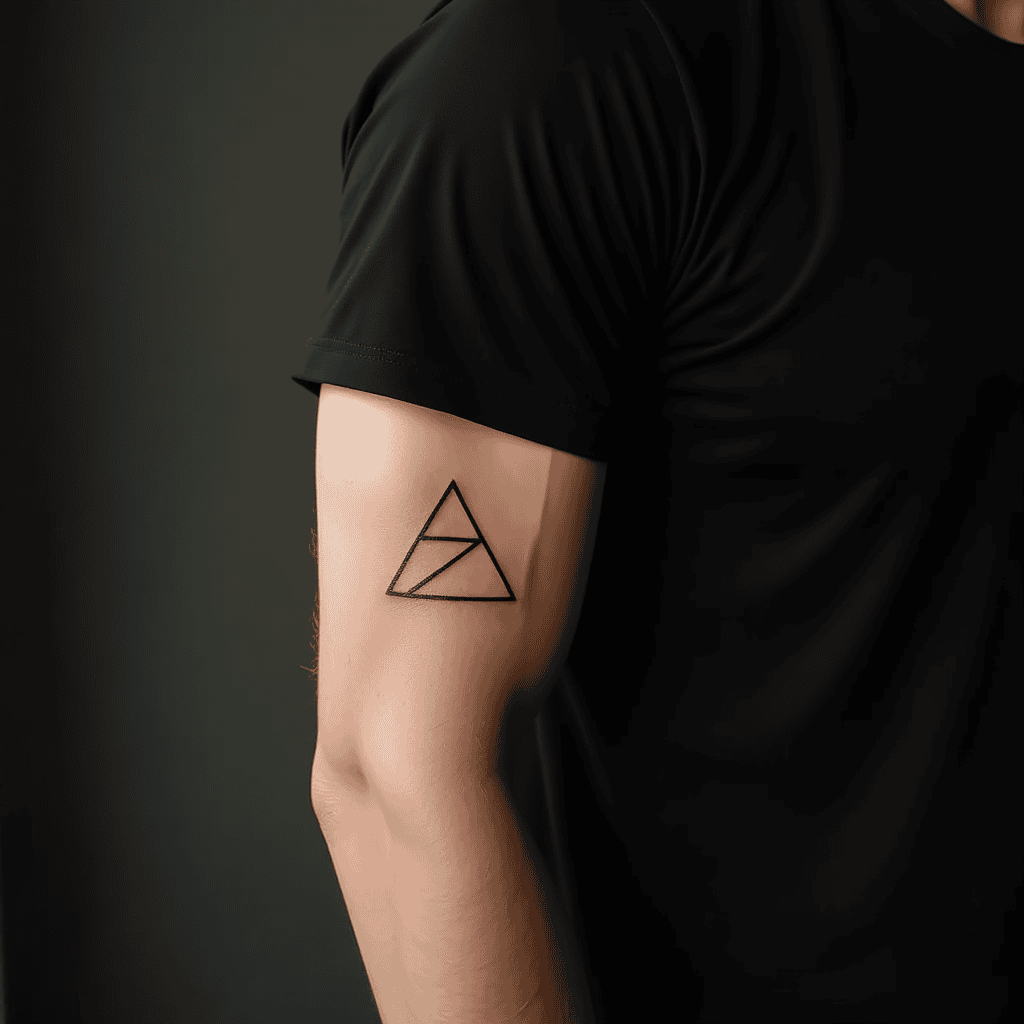
5. Tiny Compass Tattoo
A tiny compass can be stripped down to four directional points surrounding a small central circle. There is no need for decorative maps, ropes, or oversized lettering. On the wrist, ankle, upper forearm, or behind the arm, the design reads as a symbol first and a detailed illustration second.
It suits someone who wants a travel or direction theme without wearing a full nautical piece. Ask the tattoo artist, “Give me a simple four-point compass with clean spacing and only the minimum amount of detail needed to recognize it.” Trying to include tiny N, S, E, and W letters can overcrowd a small version, so either size it up or let the shape communicate the idea by itself.
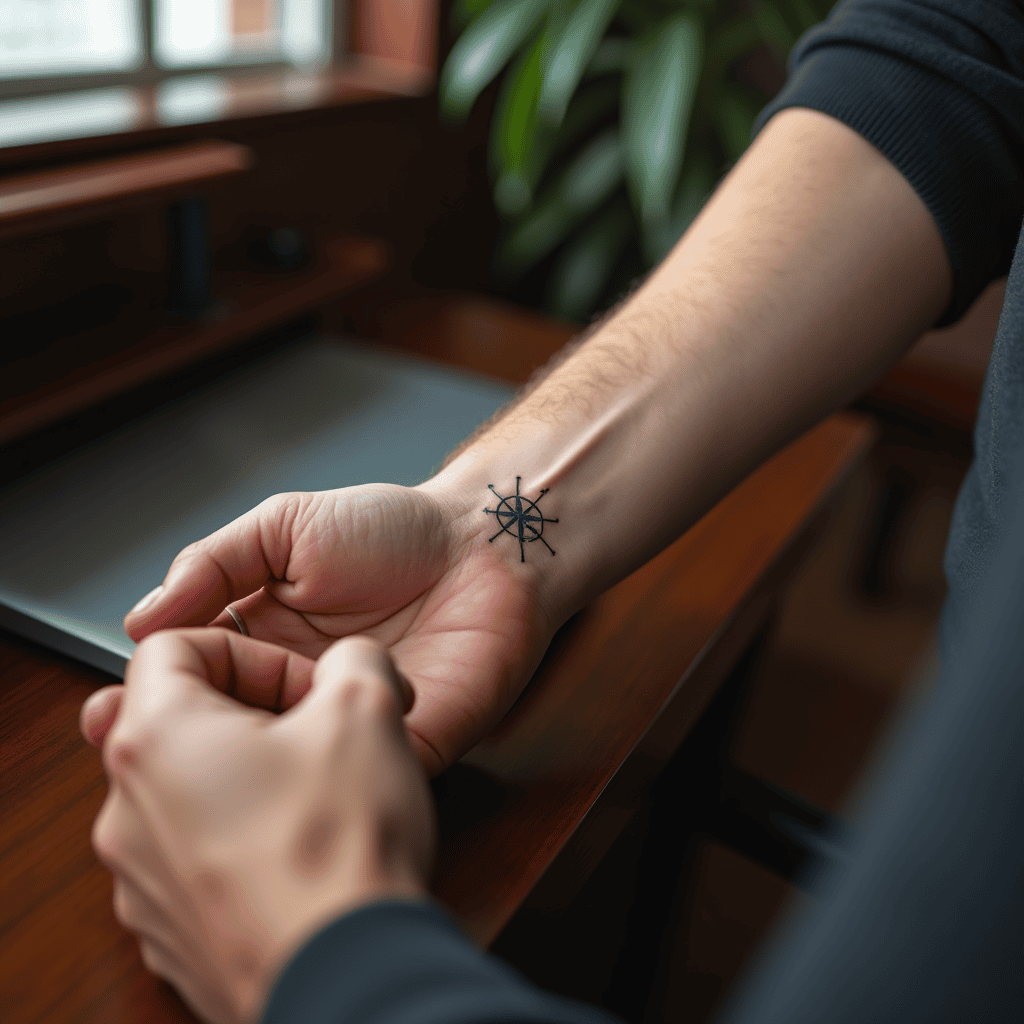
6. Minimal Circle Tattoo
A single clean circle sounds almost too simple, yet its impact depends heavily on proportion and placement. A small circle near the forearm, elbow, shoulder, or chest creates a graphic focal point without dominating the area. Some designs stay fully closed while others leave a deliberate break in the circumference.
This minimalist tattoo design suits men who like abstract symbolism more than literal images. Ask your artist, “I want one thin circle with an even line weight and a clean open gap of about this size,” while physically showing the intended break. Circles are unforgiving. If you want a mathematically neat shape, choose an artist comfortable with precise linework rather than assuming every tattooer approaches geometry the same way.
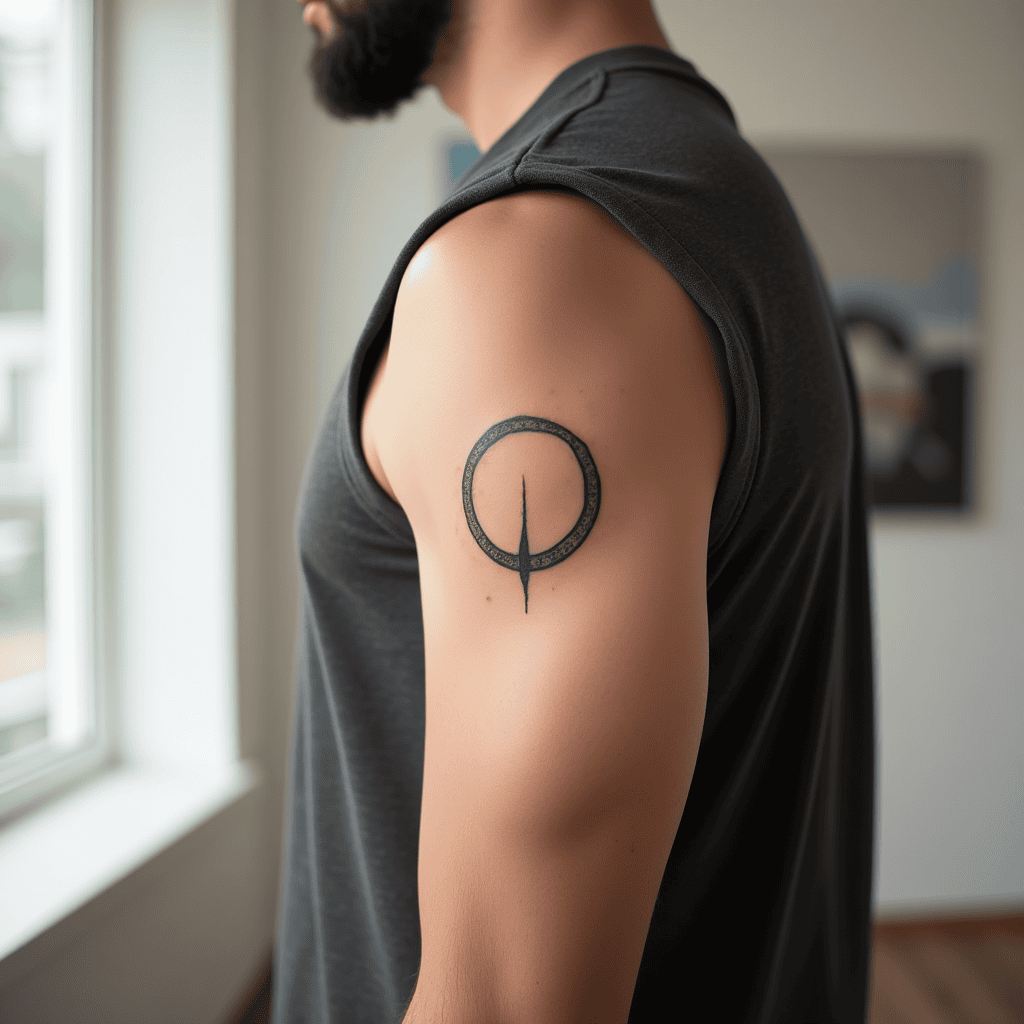
Fine-Line Tattoos With a Personal Meaning
Meaningful minimalist tattoo ideas do not need obvious symbols. Dates, coordinates, initials, and compact line drawings can carry more personal weight precisely because strangers may not immediately understand them. The key is keeping sentimental detail readable rather than reducing everything until it becomes fragile.
7. Coordinates Tattoo
Coordinates create a narrow sequence of numbers that can sit horizontally along the inner arm, ribs, collarbone, or upper chest. A restrained sans-serif style tends to look cleaner than decorative script. Good spacing matters because the punctuation and degree symbols need enough room to remain distinct.
This is suited to a meaningful location you would still care about years from now. Tell your artist, “Use clean, narrow numbers with enough spacing to keep every coordinate readable, and keep the line compact rather than stretched across the whole arm.” Check the coordinates yourself before the stencil goes on. A beautifully executed tattoo is still wrong if one digit was copied incorrectly.
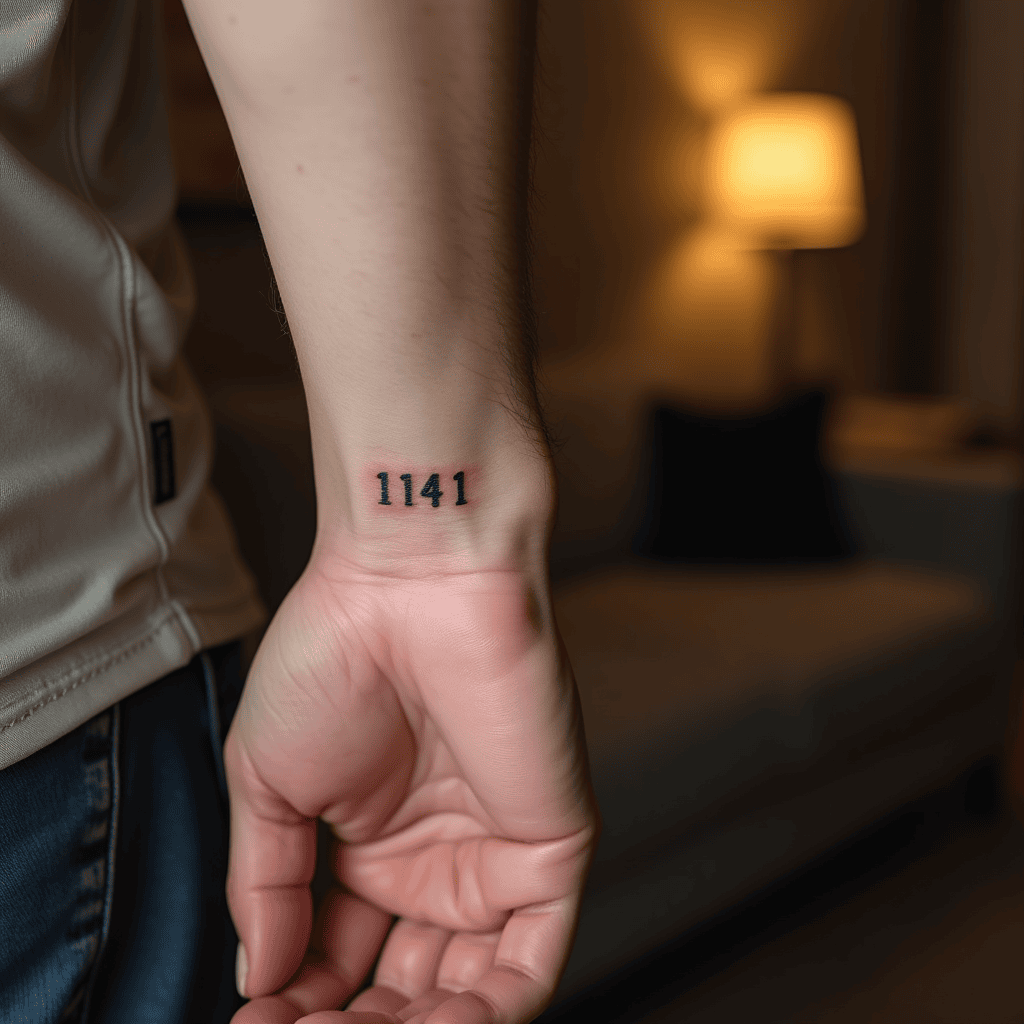
8. Roman Numeral Date
Roman numerals give a meaningful date more visual structure than ordinary numbers. They work particularly well in a narrow horizontal line on the inner forearm, collarbone, ribs, or upper arm. Keeping every character the same height creates the disciplined appearance that makes this style attractive.
For anniversaries, family dates, or personal milestones, it is understated enough to remain private unless someone asks about it. Request, “Thin Roman numerals, evenly spaced, no flourishes, and keep the whole date compact.” Double-check the conversion before tattooing. Roman numeral mistakes are surprisingly easy to overlook when a long date is being treated visually instead of read character by character.
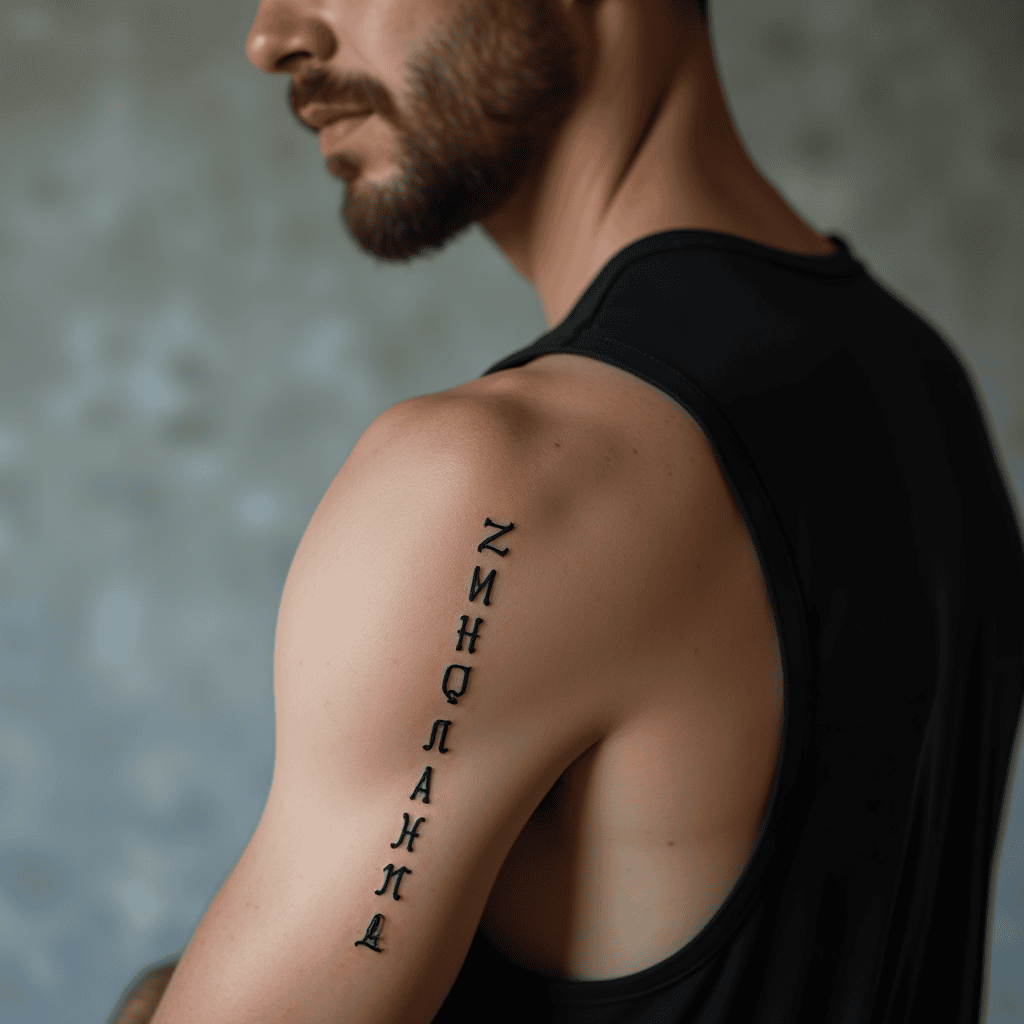
9. Tiny Initial Tattoo
A single initial can sit almost anywhere without demanding much space. The strongest version often uses a clean handwritten or simple serif character around half an inch to an inch high, depending on placement. The inside wrist, side of a finger, upper chest, and inner biceps are common places where the letter feels intentional rather than lost.
This works when the meaning matters more than the visual spectacle. Ask, “Keep the initial simple, readable, and slightly larger than micro size so the shape does not close up.” Think carefully about finger placement before committing. Small tattoos on high-friction areas can demand more maintenance, and intricate letterforms may not age as cleanly as simpler ones.
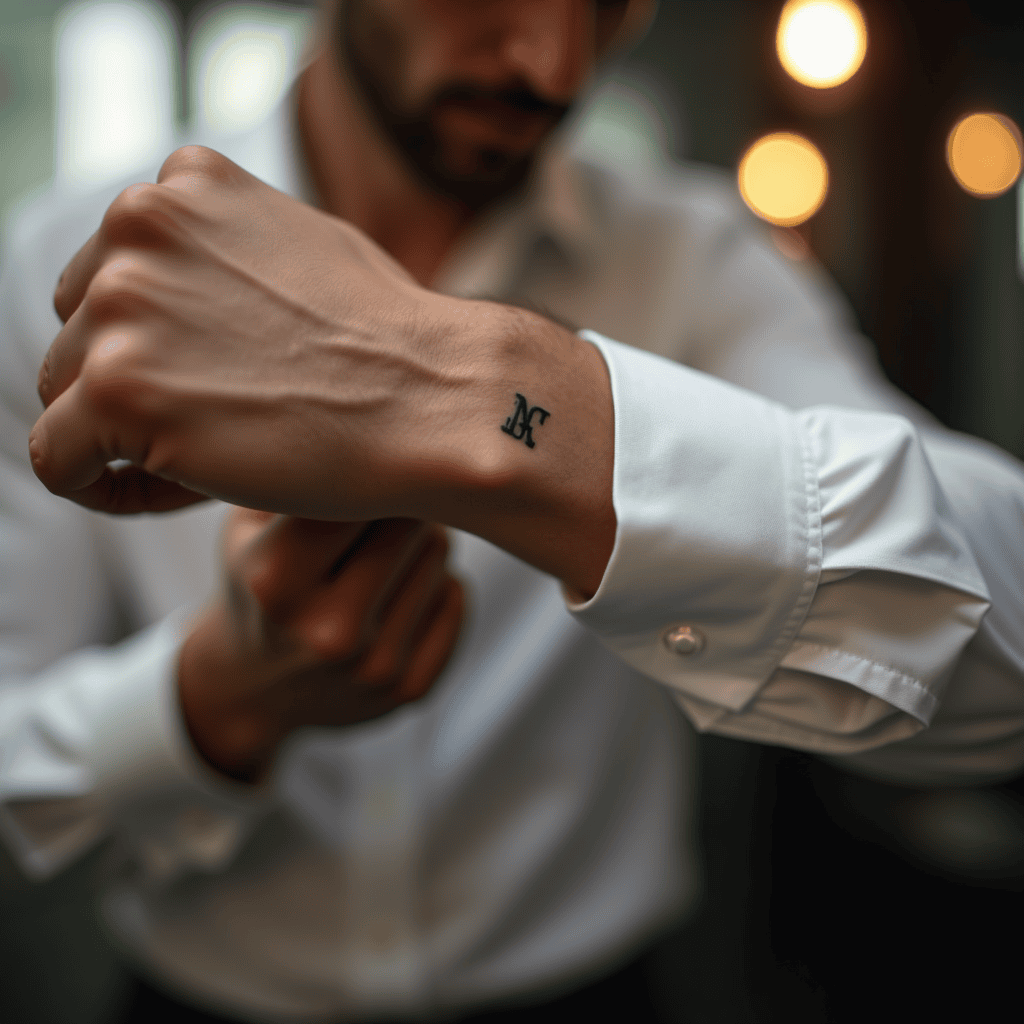
10. Minimal Heart Outline
A minimalist heart can be drawn with two smooth curves meeting at a clean lower point. A slightly imperfect hand-drawn version tends to feel more personal than a perfectly symmetrical icon. It can sit discreetly near the wrist, upper arm, chest, ribs, or ankle without looking overly decorative.
Men who want a relationship or family symbol without adding names may find this easier to live with long term. Tell the artist, “Make the heart small and clean, but not so tiny that the two upper curves merge later.” A generic heart can feel impersonal if placement is treated as an afterthought, so spend time moving the stencil until it relates naturally to the body.
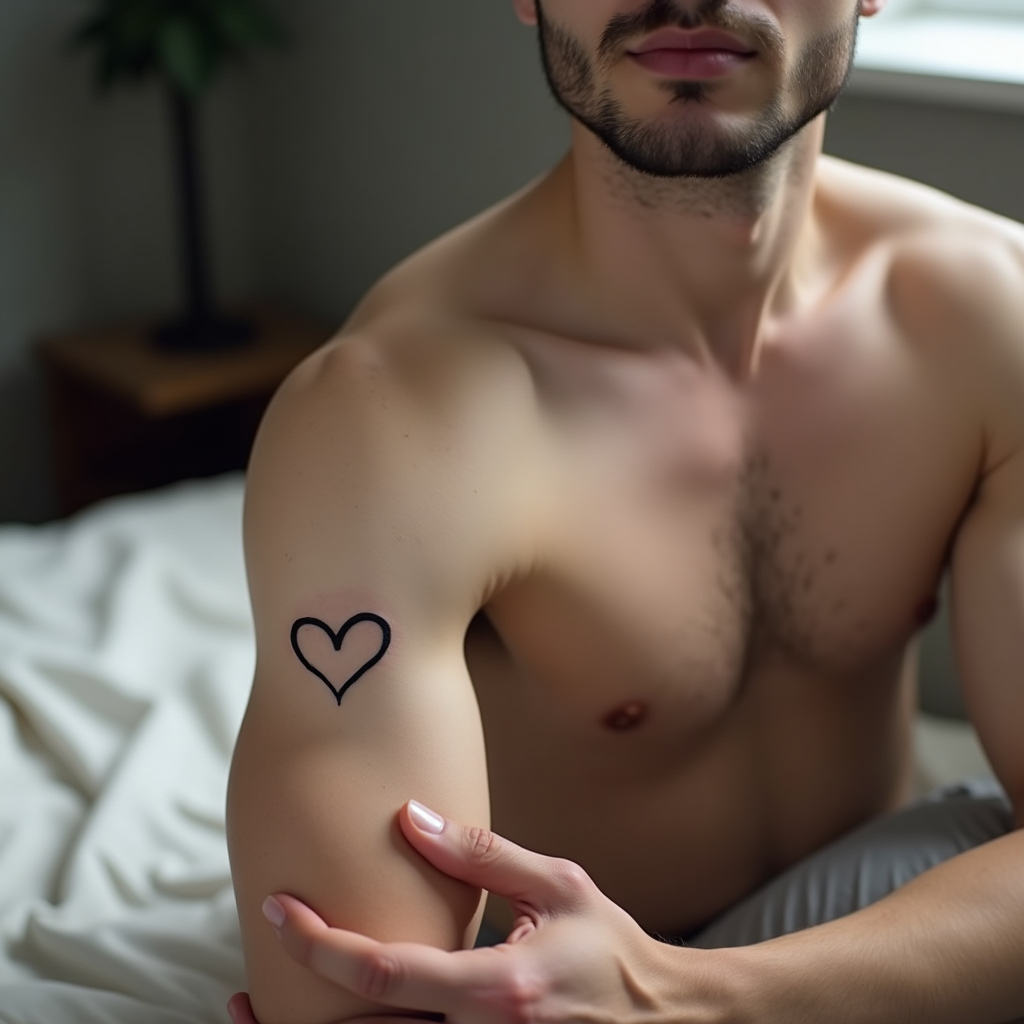
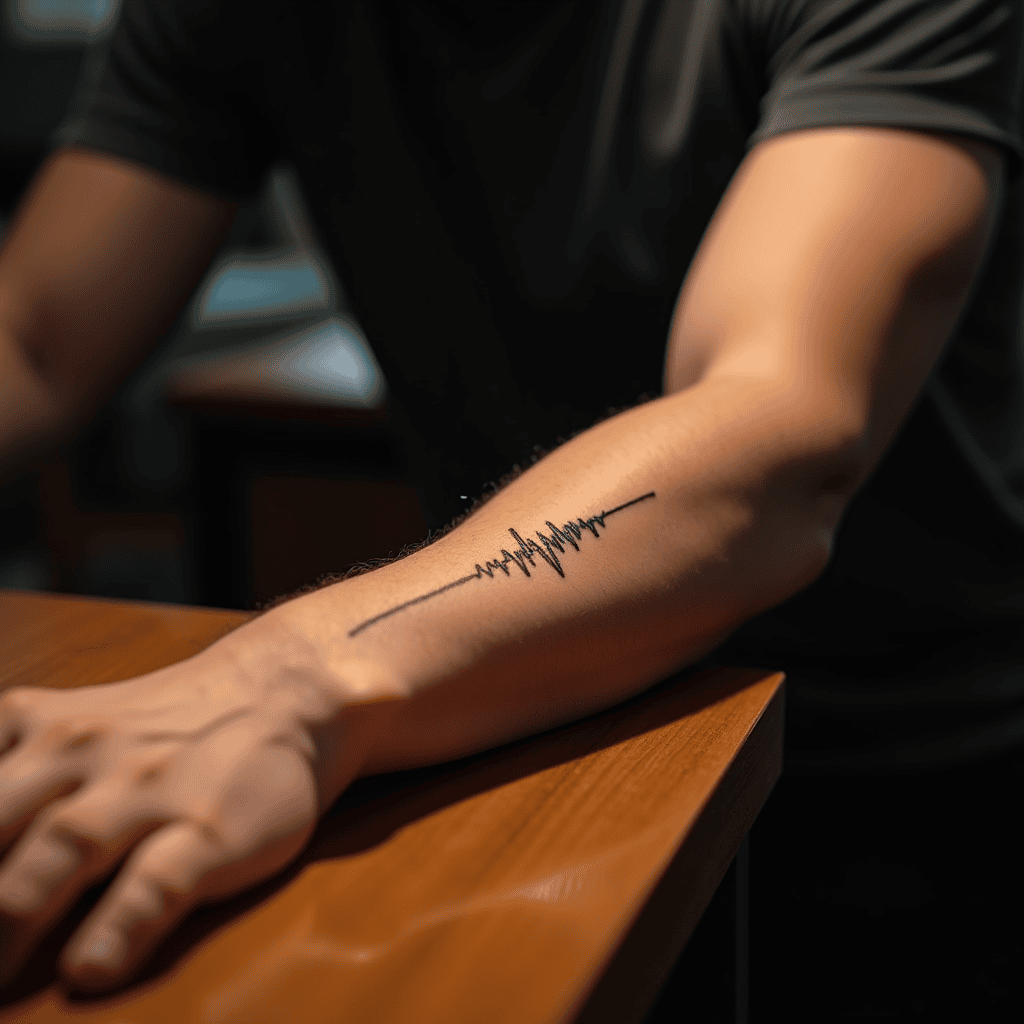
11. Small Sound Wave Tattoo
A sound wave creates a narrow sequence of vertical movements, usually based on a voice recording, song moment, or personal audio clip. Visually, it resembles an irregular black waveform running horizontally along the arm or ribs. Keeping the peaks relatively open stops the design from turning into a dense barcode.
This minimalist tattoo idea works best when you have a genuine reason for choosing the audio rather than selecting a random waveform online. Ask, “Simplify the waveform enough to tattoo clearly while keeping its recognizable rhythm.” If exact digital reproduction matters to you, discuss that before the appointment because a tattooed waveform is still a handmade interpretation on curved, living skin.
Nature-Inspired Minimalist Tattoos for Men
Nature translates well into minimal tattooing because the eye can recognize a leaf, tree, moon, bird, or sun from surprisingly little information. What matters is choosing the defining silhouette instead of trying to miniaturize a detailed landscape.
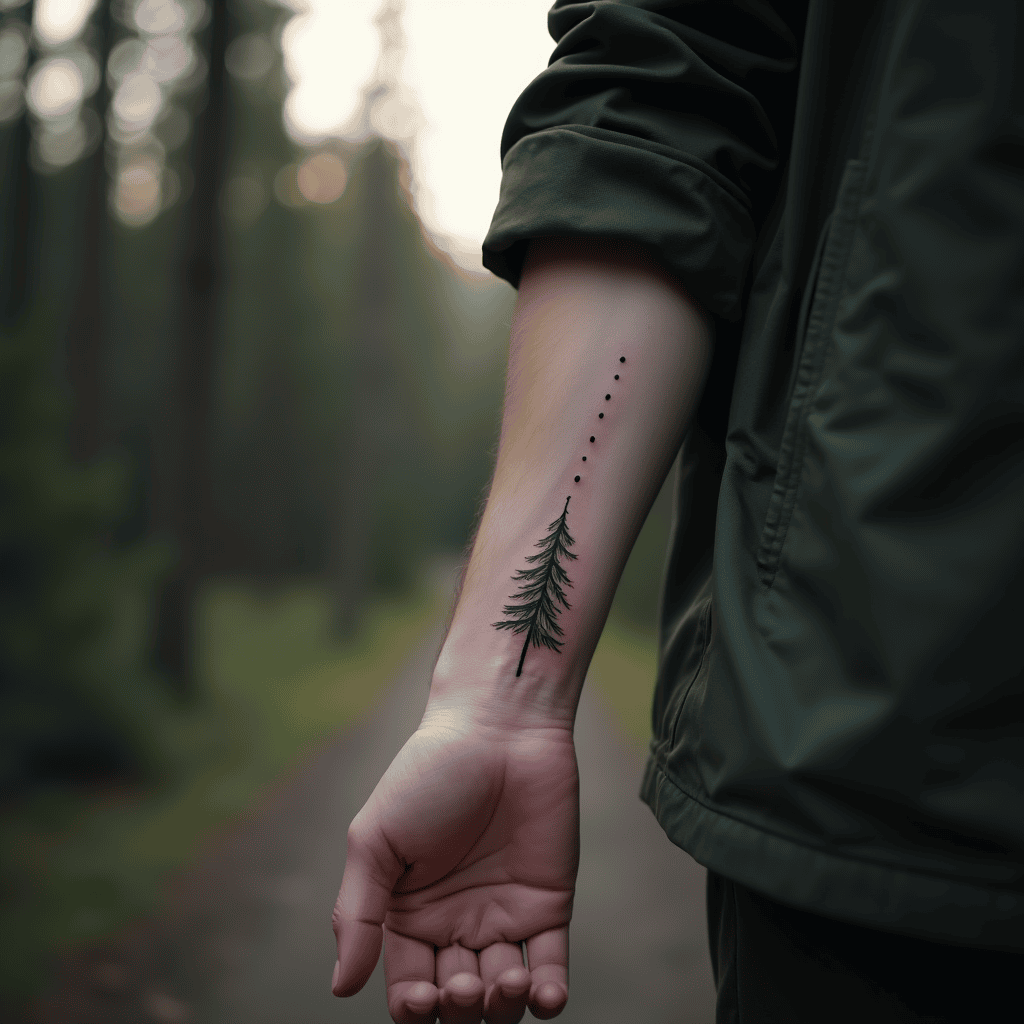
12. Single Pine Tree
A minimalist pine tree usually starts with one narrow trunk and a series of short angled branch strokes. The silhouette can be straight and graphic or slightly irregular for a more organic appearance. Vertical placements such as the inner forearm, calf, back of the arm, and ankle work naturally with the tree’s proportions.
Outdoors-oriented men often like this design because it hints at forests and travel without becoming a full scenic tattoo. Tell the artist, “Keep the pine narrow with visible gaps between the branches and no filled-in background.” If you shrink it excessively, those small branch lines can visually merge, so give the tree enough height to keep its structure open.
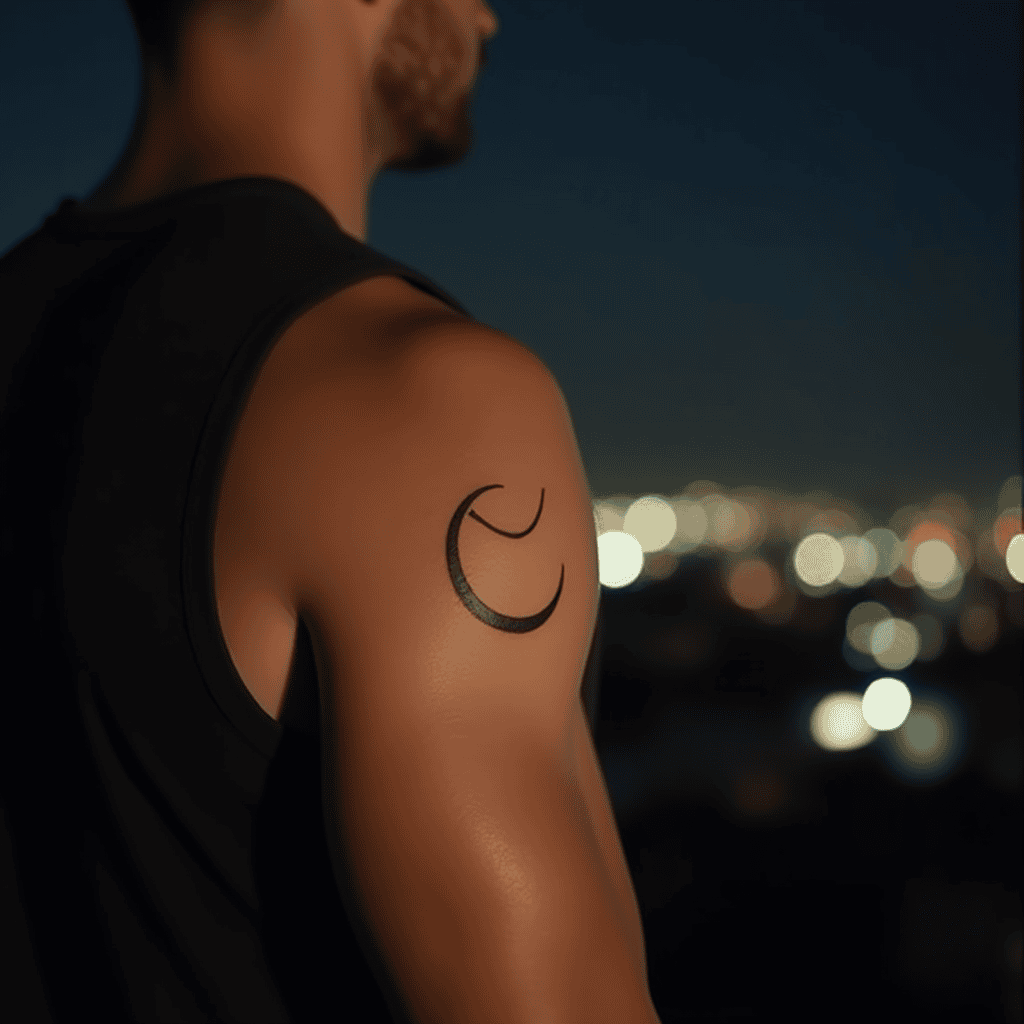
13. Crescent Moon
A crescent moon needs little more than two controlled curves, but the width of the crescent changes its entire personality. A narrow crescent feels sharp and graphic, while a fuller shape appears softer. It looks natural on the wrist, upper arm, chest, ankle, or behind the arm.
This design suits someone drawn to night imagery without wanting stars scattered around the entire area. Ask your artist, “Use a slim crescent with a clean open center and no facial details or shading.” Be careful with extremely thin pointed tips. Giving each end enough substance helps the moon remain visually clear instead of disappearing into two faint ends.
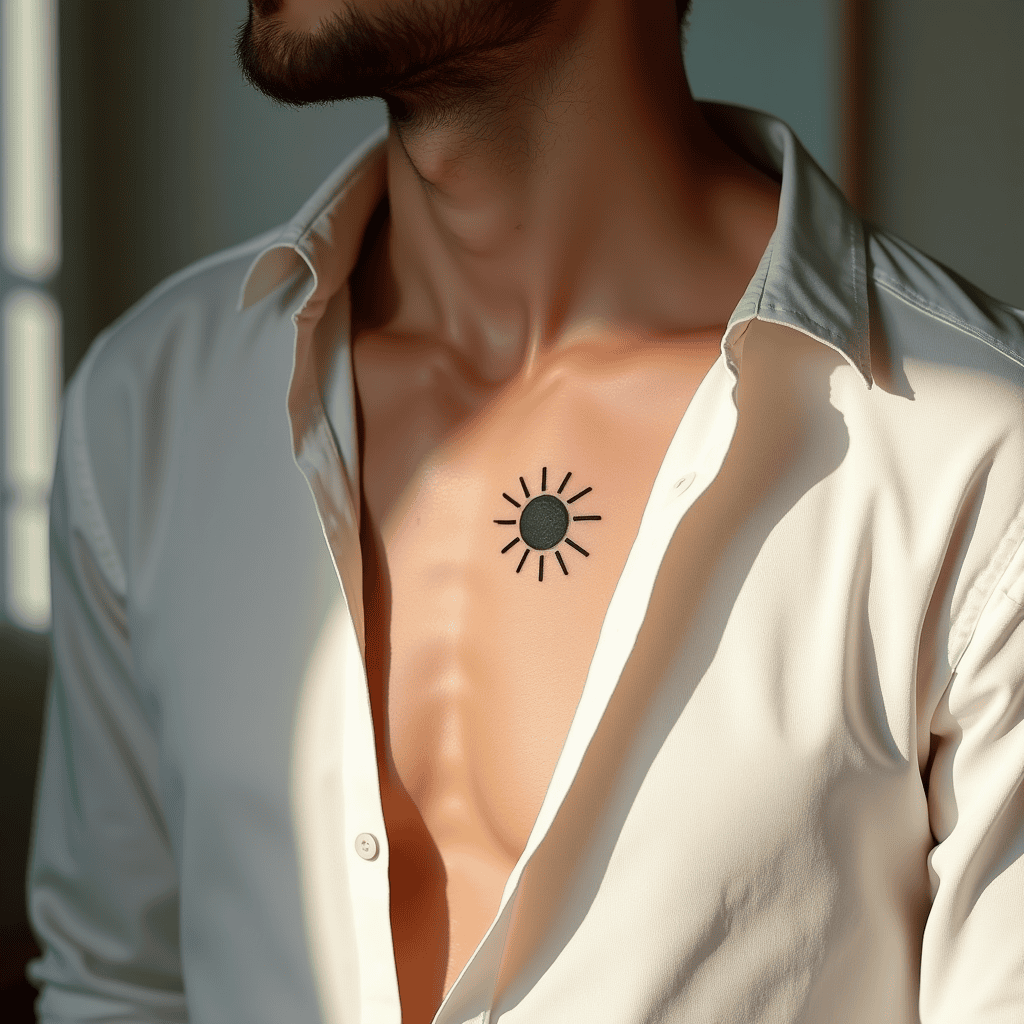
14. Minimal Sun Symbol
A small sun can be reduced to an open circle surrounded by short straight rays. Keeping the rays evenly spaced gives it a graphic look, while slight variations make the design feel hand-drawn. The upper chest, shoulder, forearm, and calf provide enough room for the rays without requiring a large tattoo.
It works well for someone who wants a positive symbol but dislikes text-based designs. Say, “Give me a small open sun with short rays, lots of breathing room, and no face or shading.” The main mistake is crowding the rays around an undersized center circle. A little extra diameter usually improves the design more than adding detail.
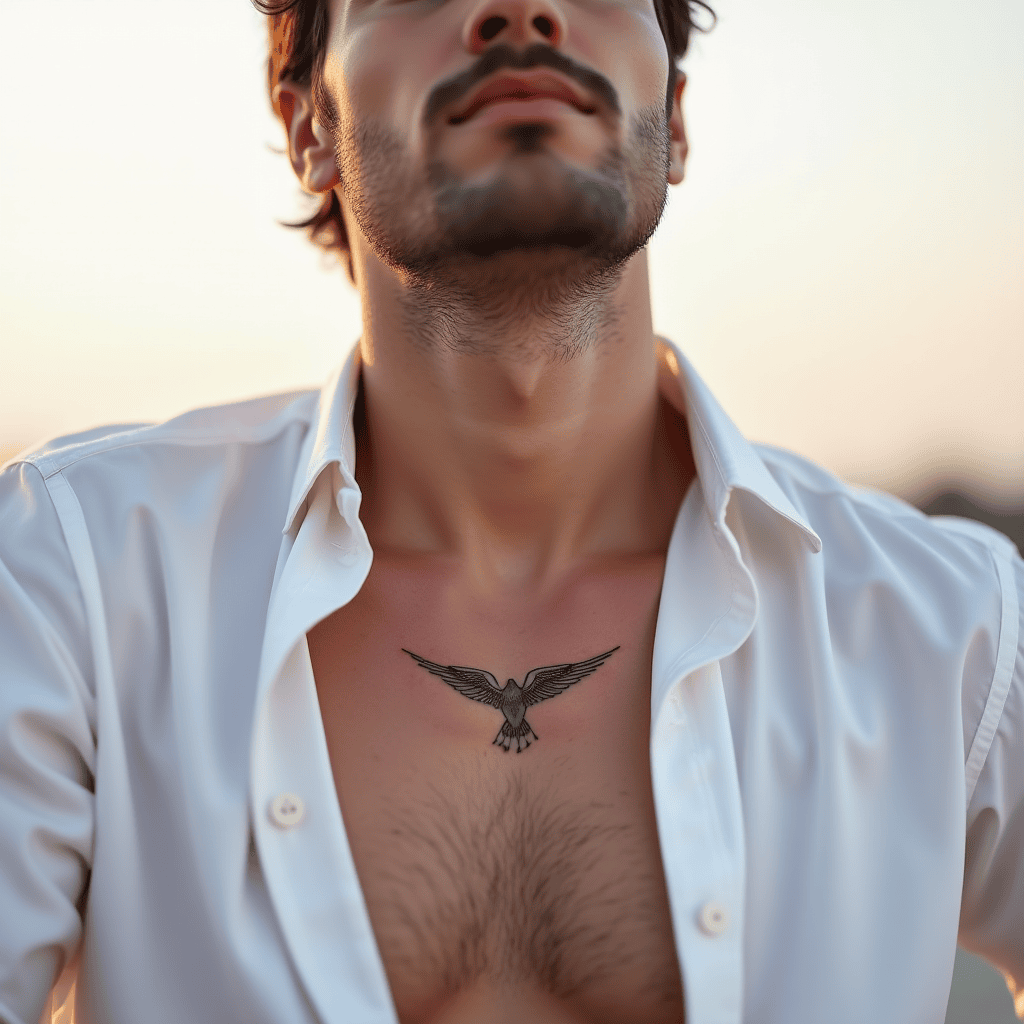
15. Tiny Bird Silhouette
Rather than drawing feathers, eyes, and wings, a minimalist bird can be represented by two upward curves forming a simple flying silhouette. One bird creates a quiet accent; two or three can create movement if they are spaced carefully. Upper chest, shoulder, ribs, and forearm placements work particularly well.
This is an easy option for men who like the idea of freedom or movement but want almost no visual clutter. Ask, “Use one small flying bird silhouette with open wings and keep the lines light rather than filling the whole shape black.” Tiny curved marks can become ambiguous when reduced too far, so make sure the stencil still reads instantly from normal viewing distance.
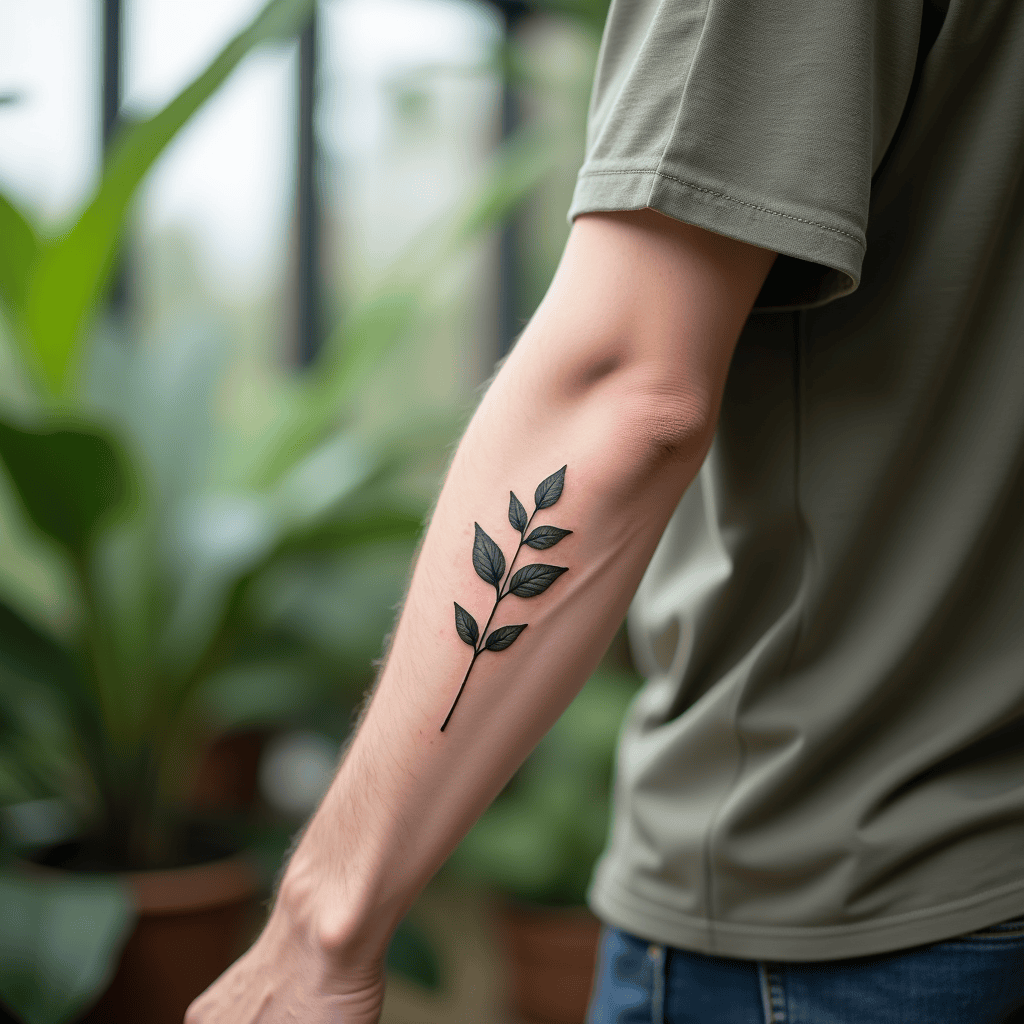
16. Fine-Line Leaf
A fine-line leaf works best with a long central stem and a handful of narrow leaves extending at alternating angles. Botanical detail should be suggested rather than packed in. The forearm, calf, ribs, and shoulder all give this elongated shape room to follow the body.
Men who want botanical imagery without floral heaviness may find this one surprisingly easy to wear. Tell the artist, “Keep the stem thin, use only a few leaves, and leave the interiors mostly open instead of filling them with veins.” A branch with twenty miniature leaves defeats the minimalist idea and creates far more tiny intersections than the design needs.
Graphic and Geometric Minimalist Tattoo Ideas
Geometric minimalist tattoo ideas feel more architectural than symbolic. Lines, bands, grids, and intersecting forms create visual interest without needing recognizable imagery. They look effortless when finished well, but precise tattooing becomes especially important because a crooked line cannot hide inside shading.
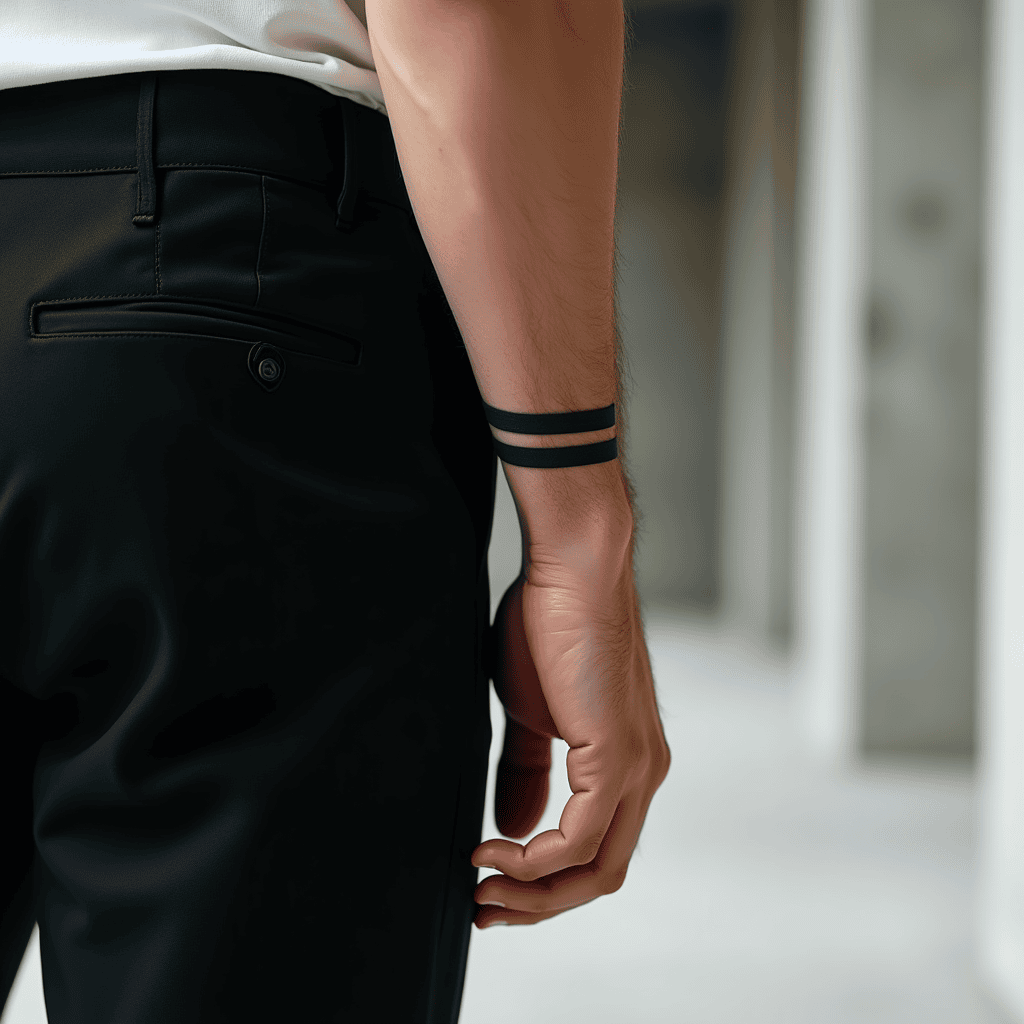
17. Two Thin Forearm Bands
Two narrow parallel bands create a controlled graphic break around the forearm. Leaving a measured gap between them gives the design more breathing room than one thick black band. The bands can fully wrap the arm or stop intentionally before meeting, depending on the composition.
This suits men who prefer abstract body art and tend to wear clean, simple clothing. Ask the artist, “I want two thin parallel bands with consistent spacing, positioned so they look straight when my arm hangs naturally.” Arms are not cylinders, so placement takes care. A band that looks perfect with the arm twisted on a stencil photo can sit differently in everyday posture.
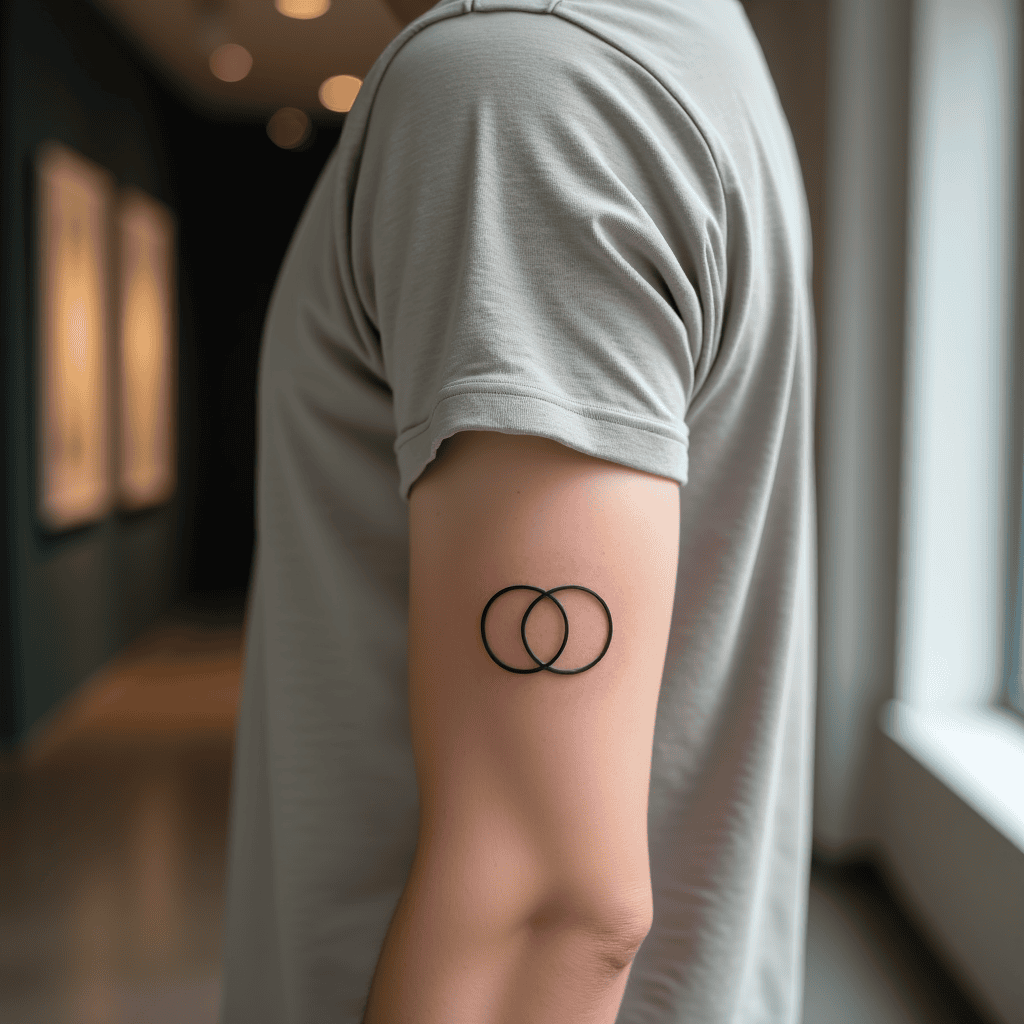
18. Interlocking Circles
Two partially overlapping circles create a compact geometric form with a strong central intersection. Thin lines keep the design airy, while the overlapping area becomes the visual focus without requiring shading. It fits comfortably on the upper arm, forearm, chest, or calf.
This is a good option if you want a design that can carry private symbolism while still looking abstract to everyone else. Request, “Two clean circles with equal line weight and a deliberate overlap, but no fill inside the intersection.” Because repeated curves expose irregularities, make sure the stencil follows a relatively stable section of the body rather than forcing perfect circles across awkward contours.
19. Broken Line Rectangle
A narrow rectangle with one or two intentional gaps feels more contemporary than a completely closed box. The shape can run vertically along the forearm or sit horizontally on the upper arm. Precise corners contrast with the missing sections, giving the tattoo a deliberate unfinished quality.
Men who like modern art or architectural graphics tend to appreciate this more than symbolic tattoo imagery. Tell your artist, “Use a thin rectangular outline with two clean breaks and keep all four corners sharp.” There is little room for improvisation once the stencil is placed, so spend extra time checking alignment with your arm relaxed instead of judging it only while holding a posed position.
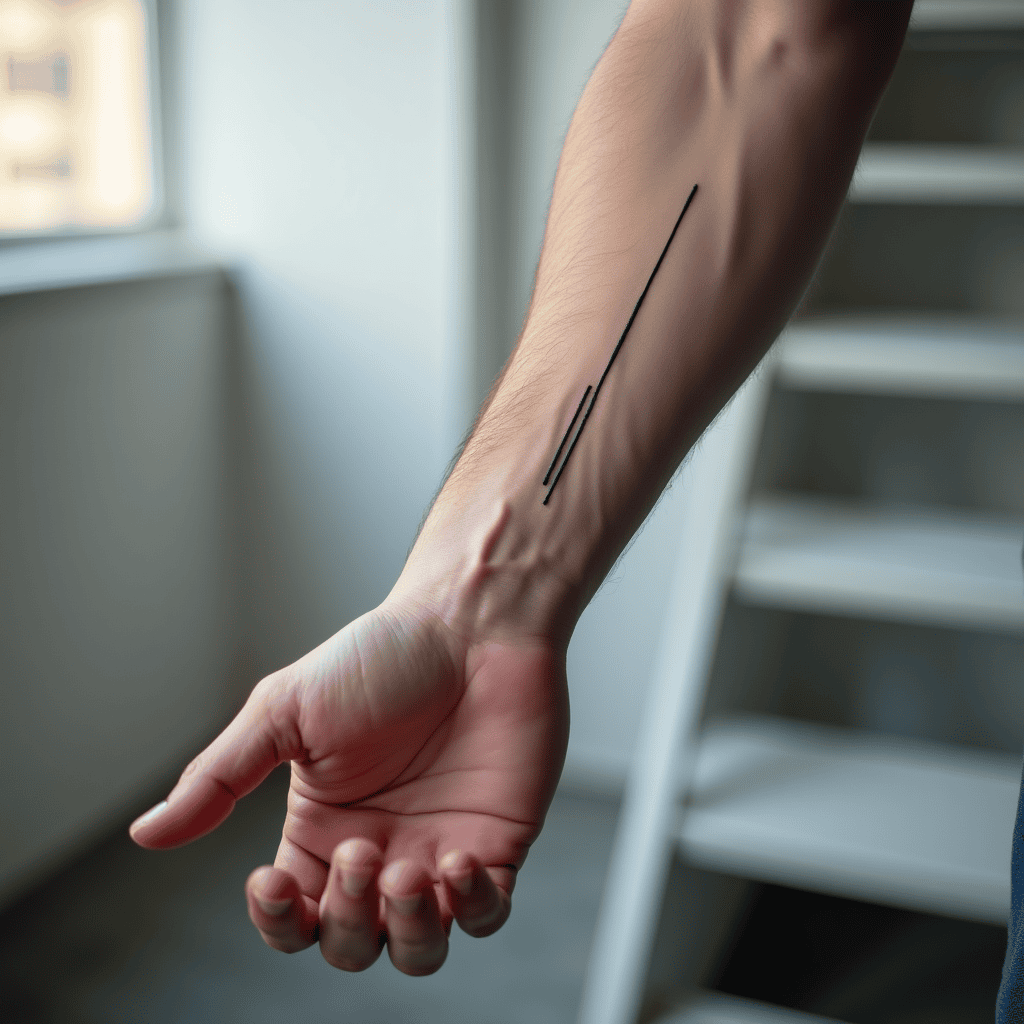
20. Minimal Crossed Lines
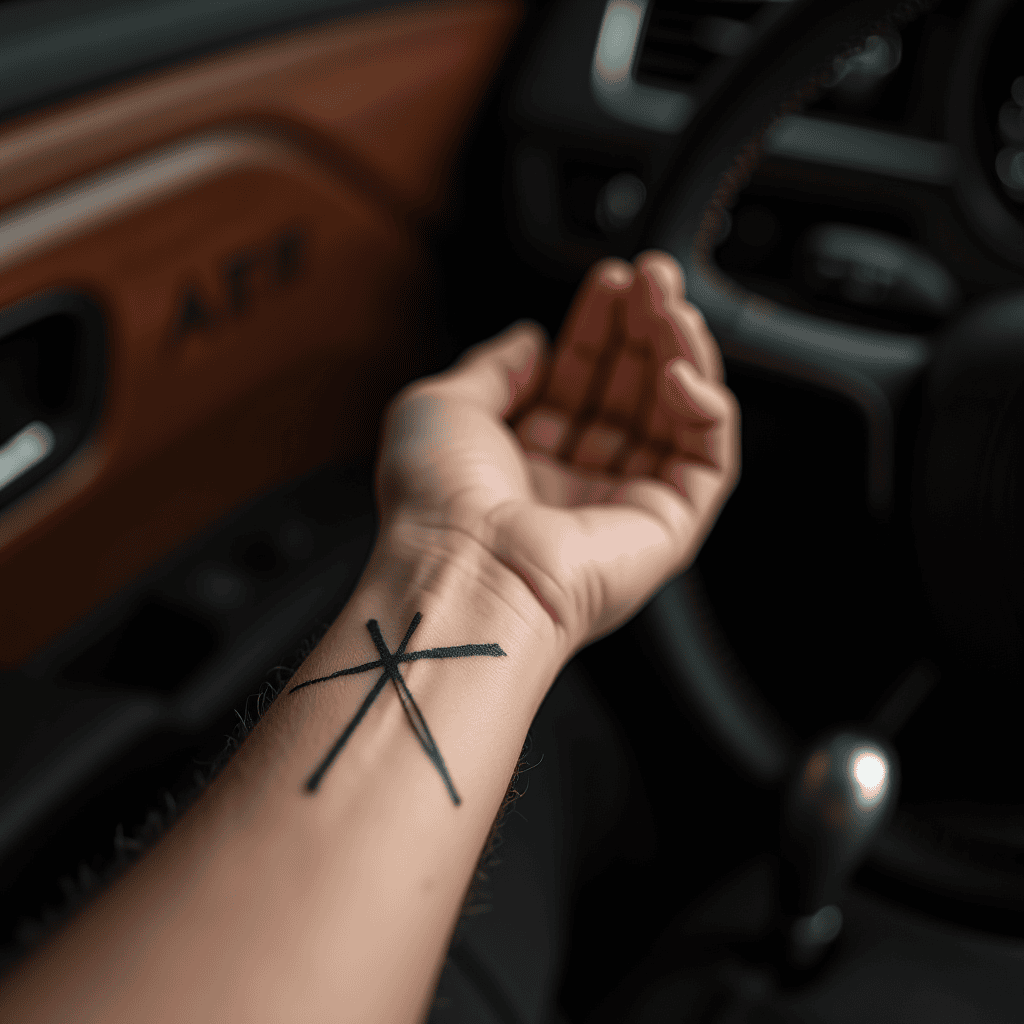
Two thin intersecting lines can form an X, offset cross, or asymmetrical geometric mark. Changing where they intersect prevents the tattoo from looking like a generic typed symbol. Slight differences in line length make the piece more visually deliberate.
This works for someone seeking almost pure abstraction. Ask the artist, “Give me two thin lines crossing off-center, with one longer than the other and absolutely no shading.” Because it is such a stripped-back design, placement does most of the work. Test several stencil positions; moving the mark half an inch can make it sit far more naturally with muscle lines and nearby joints.
More Distinctive Minimalist Tattoos
Once you move past basic symbols, minimalism becomes more interesting. These designs keep the restricted linework but use placement, abstraction, or unusual composition to create something less predictable. They demand more collaboration with the tattoo artist because copying a tiny internet reference exactly is rarely the strongest route.
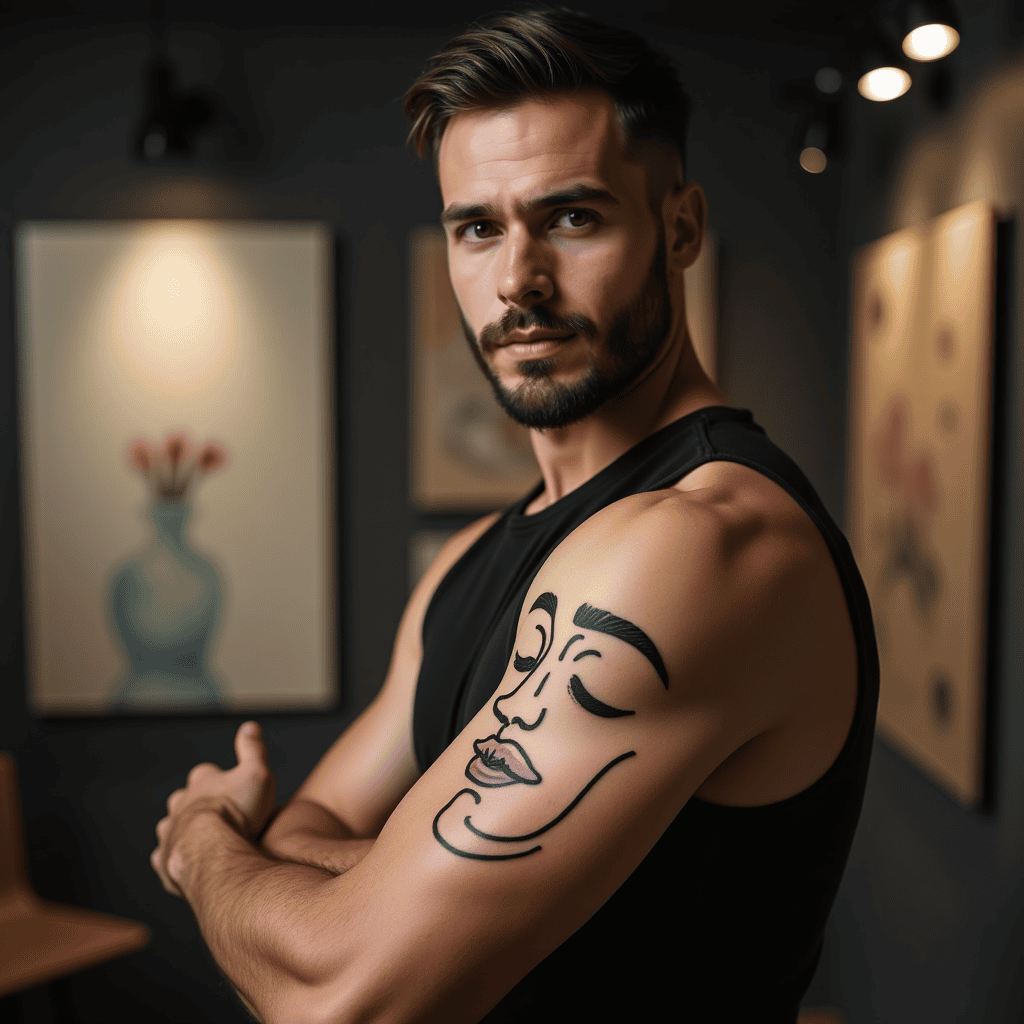
21. Single-Line Face
A single-line face uses one flowing stroke to suggest a forehead, nose, lips, chin, or profile without fully outlining every feature. The open areas are part of the design. On the upper arm or forearm, the line can flow vertically and still remain readable from several feet away.
This suits men comfortable with a more artistic tattoo rather than a literal symbol. Tell the artist, “Create a continuous profile line with a clear nose and mouth, but leave most of the face implied through negative space.” Poorly planned single-line faces can look random when one defining angle is lost, so choose an artist whose portfolio already shows confident abstract linework.
22. Minimal Skyline
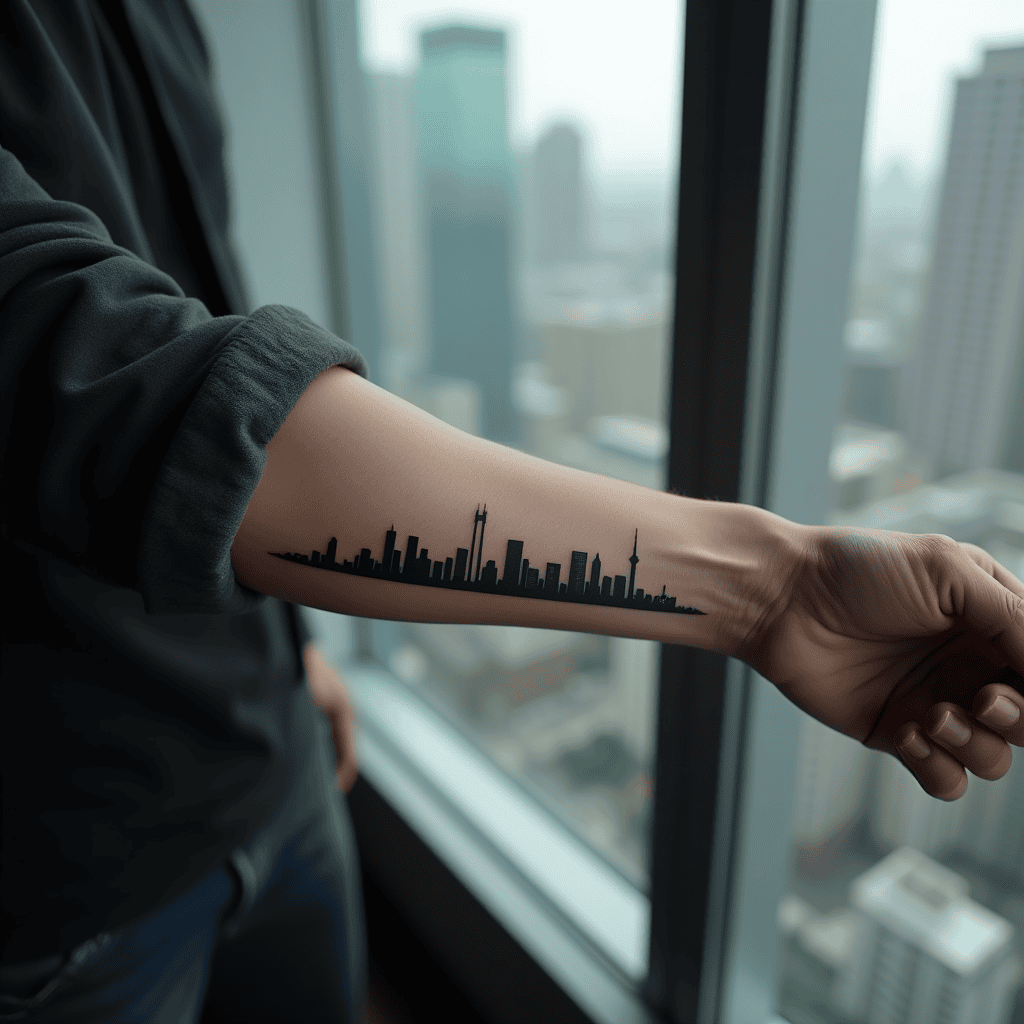
A minimalist skyline uses a handful of vertical and horizontal lines to suggest recognizable building heights without attempting architectural detail. The design works best as a low, narrow composition across the forearm, upper arm, or ribs. One distinctive silhouette can anchor the whole piece.
Choose this if a particular city matters to you but you do not want a literal postcard tattoo. Ask, “Reduce the skyline to its strongest building shapes, keep the line thin, and leave out windows and tiny architectural details.” If recognition depends on cramming fifteen landmarks into four inches, simplify again. Minimalism rewards editing.
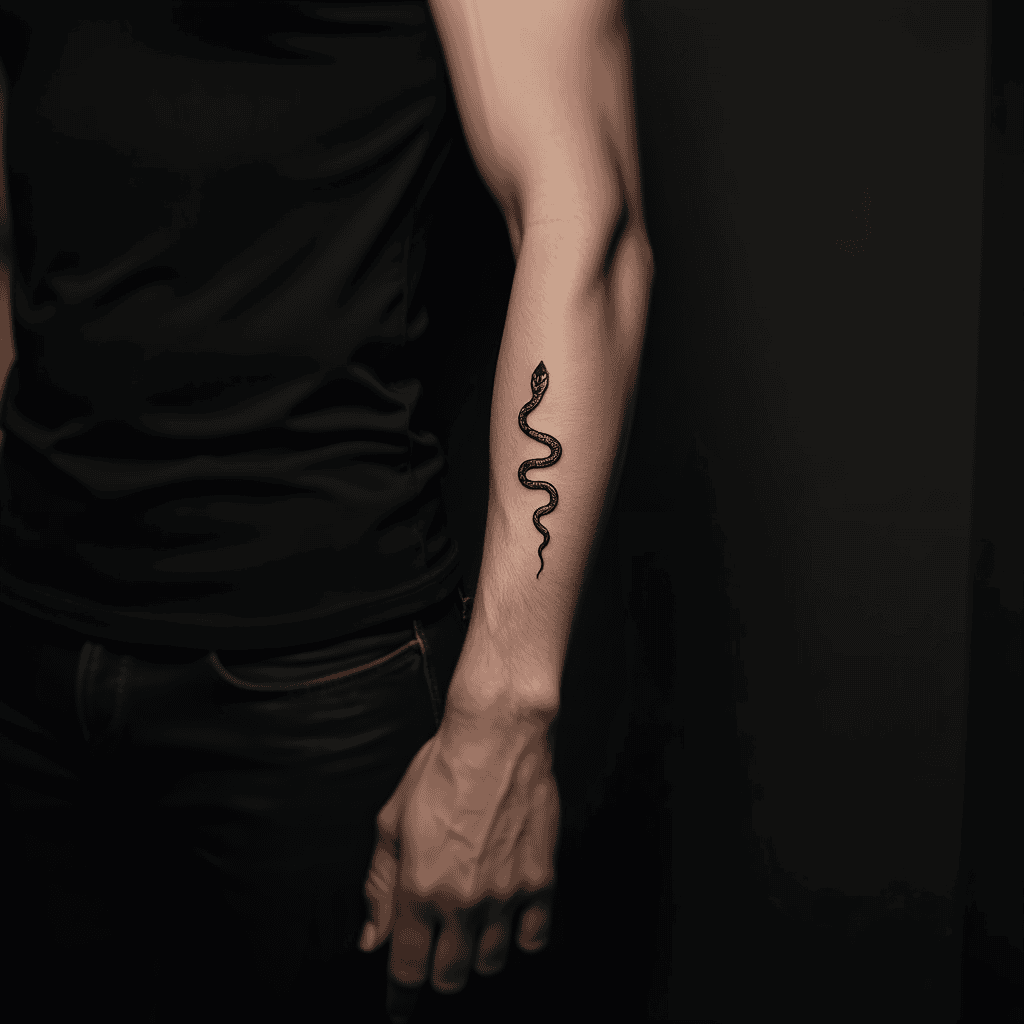
23. Minimal Snake Outline
A minimalist snake can be reduced to one long curving outer line with a small suggestion of the head. Instead of scales and dark fill, the movement of the body becomes the main feature. The forearm, calf, upper arm, and side torso give the curve enough space to develop.
This fits men who want something with more edge than a basic geometric tattoo while keeping the execution restrained. Say, “Keep the snake long and fluid with no scales, no heavy black fill, and only enough head detail to identify it.” Making it too short often turns the body into a cramped S-shape, so let the design stretch farther than a tiny symbol would.
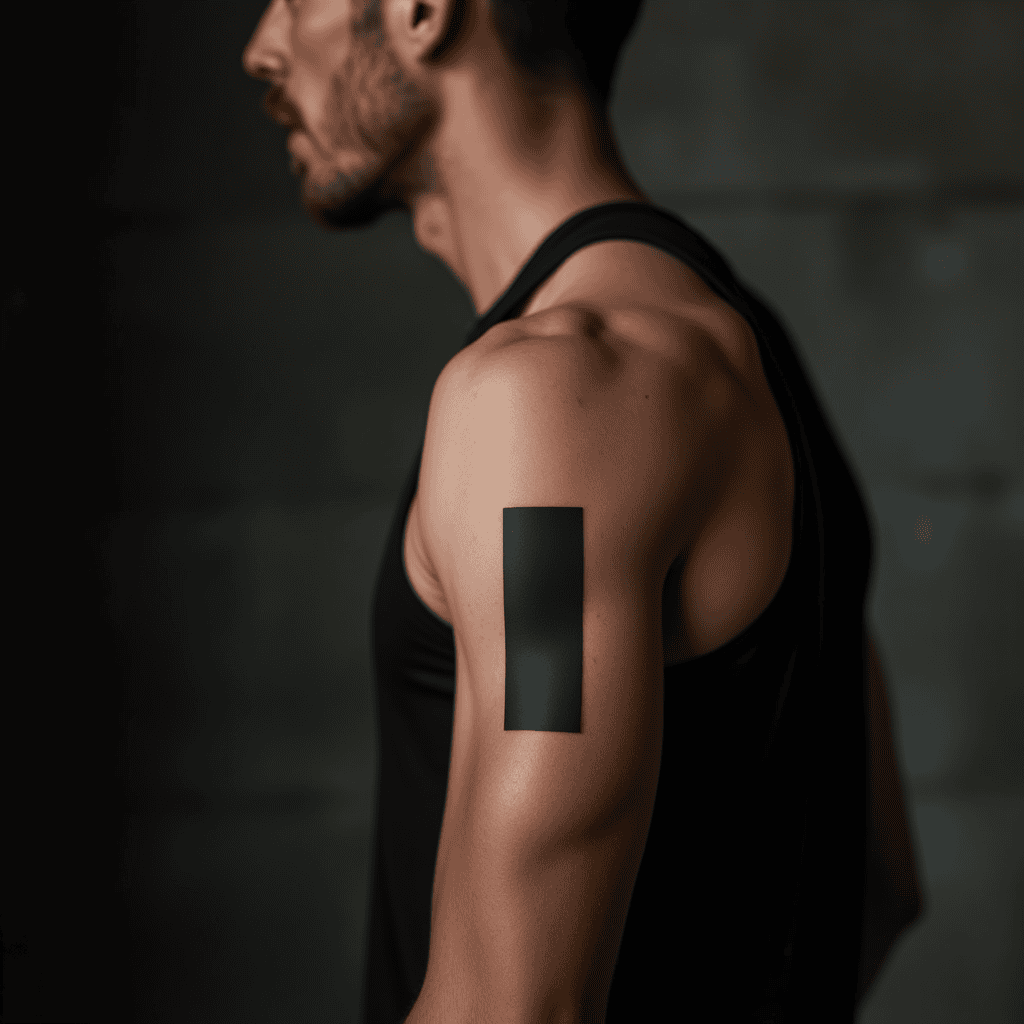
24. Negative-Space Black Bar
A short black rectangle interrupted by a narrow uninked line creates a heavier minimalist look. Unlike fine-line tattoos, the impact comes from the contrast between solid black and the untouched skin running through it. The forearm, upper arm, and calf can handle this stronger geometry.
It works for men who like minimalist design but want something visible from farther away. Ask the artist, “Use one compact black bar with a crisp negative-space break through the center, and keep the edges as clean as possible.” Solid black requires a different visual commitment than fine-line work. If you want barely noticeable body art, this is probably not your version of minimalism.
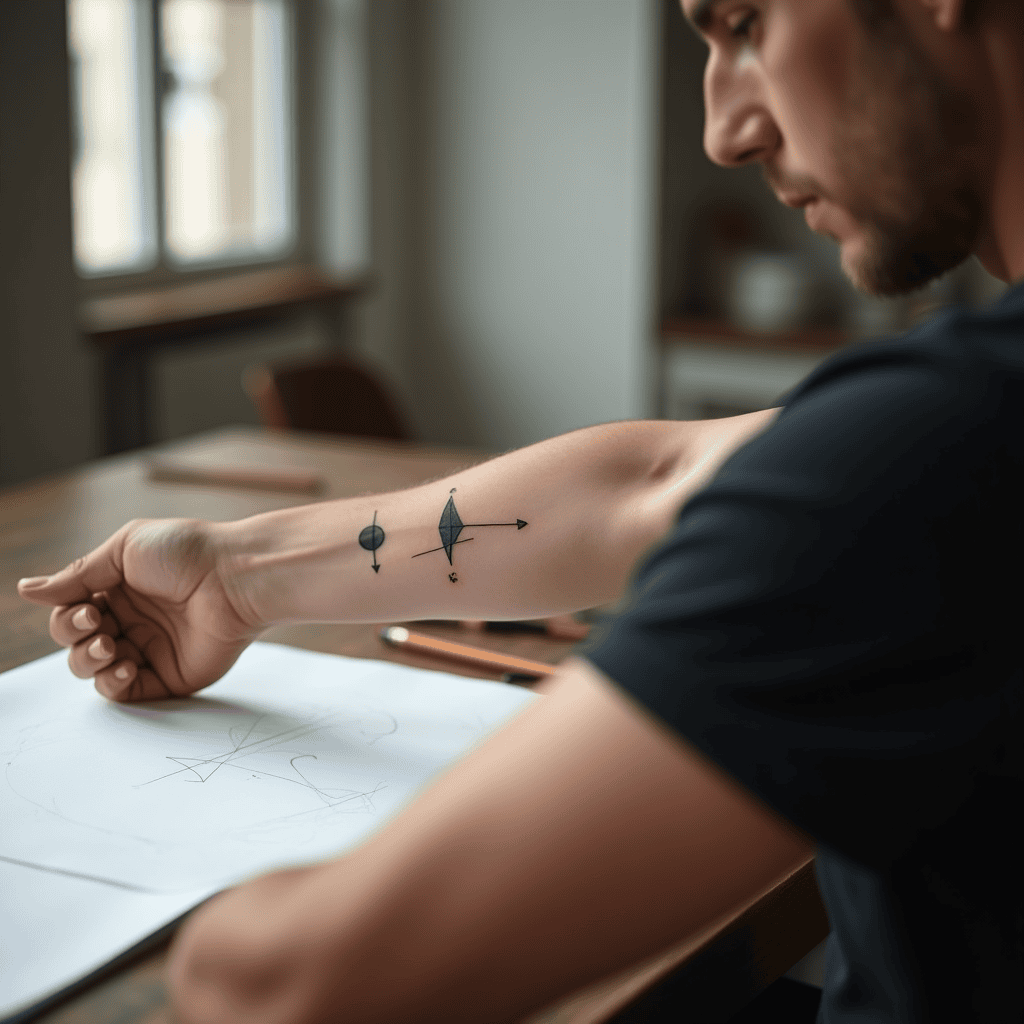
25. Geometric Forearm Composition
A geometric forearm composition combines a few carefully spaced elements such as a circle, short line, triangle, and small dot without filling the arm. Each shape should relate to the others through alignment and negative space. The result feels almost like a tiny piece of modern graphic design placed directly onto the body.
This is one of the strongest minimalist tattoo ideas for men who want something more distinctive than a single icon. Tell the artist, “Build me a small geometric composition using no more than four simple elements, with the spacing doing as much work as the shapes.” The main danger is adding one element too many. Stop while the tattoo still feels intentional and open.
How to Choose the Right Minimalist Tattoo
Start with placement before obsessing over the exact drawing. A tattoo that looks balanced on an inner forearm may feel strangely isolated on a wide shoulder, while a narrow vertical design that fits the calf beautifully can look cramped near the wrist. Ask your artist to print more than one stencil size and view each from several feet away.
Line weight deserves equal attention. “Fine line” should not automatically mean the thinnest line physically possible. Tattoos live on skin rather than paper, and a slightly more substantial line can sometimes preserve the design’s readability better than extreme micro-detail.
Bring two or three references instead of twenty screenshots. Point out what you like about each one: perhaps the openness of one design, the placement of another, and the line weight of a third. That gives the artist useful direction without asking for someone else’s tattoo to be copied.
Think about your normal clothes too. Inner-forearm minimalist tattoos can disappear beneath office sleeves but become visible when cuffs are rolled. Upper-arm designs remain easy to cover with a T-shirt, while wrist and hand placements become part of almost every outfit.
Most importantly, choose an artist based on healed work when possible. Fresh fine-line tattoos can look incredibly crisp in photographs. Seeing how an artist’s small tattoos settle over time tells you much more about whether their approach fits the design you want.
Where Minimalist Tattoos Can Go Wrong
The phrase “minimalist” sometimes gets treated as another word for easy. It is not. Fewer lines mean every line matters more. One slightly awkward corner in a tiny geometric tattoo can attract more attention than several imperfect lines hidden inside a large shaded piece.
Going too small is another common problem. A detailed mountain range, four letters, three stars, a date, and a tree may technically fit inside a tiny stencil, but that does not mean they belong there. If the concept depends on miniature detail, either enlarge it or remove elements.
Placement can also make a strong drawing look weak. Small tattoos need enough visual relationship with the body to seem deliberate. Floating a one-inch design in the center of a large flat area without considering muscle lines, joints, or future additions can make the piece feel unfinished.
And resist turning every meaningful idea into one tattoo. Minimalism improves when you edit. A clean symbol representing one memory usually looks stronger than trying to encode an entire biography into six square centimeters of skin.
Frequently Asked Questions
What are the best minimalist tattoo ideas for men getting their first tattoo?
Simple arrows, mountain outlines, small waves, geometric symbols, and uncomplicated line tattoos are good places to start because their scale and placement are easy to adjust. Pick a design you understand visually, then let the artist recommend a size that keeps the linework clear.
Where do minimalist tattoos look best on men?
The inner forearm, outer forearm, upper arm, calf, upper chest, and ankle are versatile choices. Placement should match the shape of the design. Long vertical tattoos usually suit limbs, while compact symbols can sit comfortably on the chest, wrist, shoulder, or ankle.
Are minimalist tattoos always small?
No. Minimalism describes the amount of visual information more than the physical size. A six-inch tattoo using three clean lines and plenty of negative space can still be minimalist. Larger dimensions can actually help simple designs remain clear and balanced.
Do fine-line minimalist tattoos fade faster?
How a tattoo settles depends on factors such as line weight, placement, skin, sun exposure, aftercare, and the artist’s technique. Extremely delicate details can become less distinct over time, which is one reason experienced tattoo artists may recommend making certain elements slightly larger or stronger.
What minimalist tattoo designs have meaning?
Coordinates, dates, initials, sound waves, arrows, mountains, circles, suns, moons, and simple botanical symbols can all carry personal meaning. The symbol does not need a universal definition. A design linked to your own memory or experience often feels more personal than one chosen from a symbolism chart.
Can a minimalist tattoo become part of a sleeve later?
Yes. Leaving intentional negative space around a small piece gives a future artist more options for connecting it to additional work. Mention possible sleeve plans during your first appointment so placement does not accidentally occupy an area that would be useful for a larger future composition.
What should I tell my tattoo artist when asking for minimalist linework?
Describe line weight, overall size, placement, and how much detail you want removed. A useful request might be, “I want this concept reduced to the fewest lines possible while keeping the main shape instantly readable.” References can show direction, but your artist should create an original version.
Are minimalist tattoos cheaper than larger tattoos?
Not necessarily. A smaller piece may require less tattooing time, but shops and artists can have minimum charges, and precision linework still requires skill and preparation. Ask your chosen artist for their current pricing rather than assuming a simple-looking design will automatically be inexpensive.
What size should a minimalist tattoo be?
The right size depends on how many lines, corners, letters, or enclosed spaces the design contains. A simple open circle can stay fairly small, while a skyline or botanical branch may need considerably more room. Let readability determine size rather than chasing the smallest possible tattoo.
Are hand and finger minimalist tattoos a good idea?
They can look striking, but hands and fingers experience frequent movement, washing, friction, and exposure. Discuss expected maintenance and how your chosen design tends to settle in that placement with an experienced artist before committing to ultra-fine details.
Should minimalist tattoos use black ink or color?
Black ink is the classic choice because it keeps the design graphic and restrained, but minimalism does not require black. A single controlled color can work well if the composition stays simple. Adding several colors, gradients, and decorative shading usually shifts the tattoo away from a minimalist look.
How do I make a minimalist tattoo feel original?
Start with a personal concept, then change the composition rather than decorating it. Placement, proportions, line breaks, orientation, negative space, and the relationship between two simple shapes can create originality without adding complexity. Ask the artist to design from your idea instead of reproducing another person’s finished tattoo.
The strongest minimalist tattoo usually comes from removing something rather than adding another symbol. Take the idea you like most, decide where you want to wear it, and bring it to an artist whose portfolio shows controlled, healed linework. Ask them to create two or three stencil sizes before the needle comes out, then choose the version that looks balanced on your body rather than the one that is simply smallest.
Best Tattoo Design Reports
Explore sleeve, minimalist, Japanese, blackwork and modern tattoo ideas created for men’s style inspiration.