
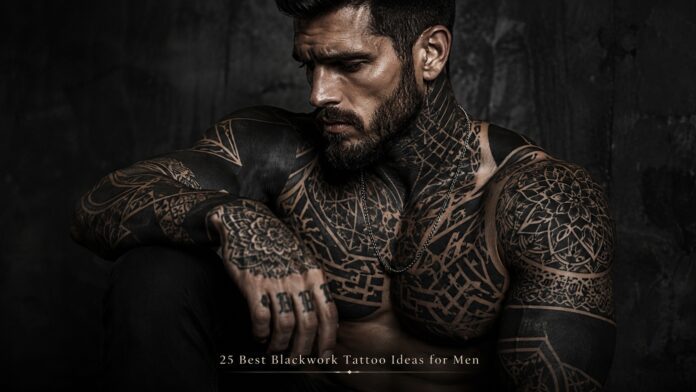
Blackwork tattoo ideas for men work best when the design has a strong silhouette, intentional negative space, and enough breathing room to age without turning into one dark mass. My strongest starting picks are a geometric forearm piece, a blackwork wolf, a botanical sleeve, and an ornamental chest design because each gives the artist room to balance solid ink with open skin.
The designs below are approached from a tattoo-design perspective rather than as interchangeable Pinterest references. Placement, line weight, negative space, body movement, and how the composition reads from several feet away matter as much as the subject itself.
| Quick Pick | Best Placement | Visual Character | Commitment Level |
|---|---|---|---|
| Geometric Forearm Blackwork | Forearm | Clean and architectural | Medium |
| Solid Black Armband | Upper arm | Minimal and graphic | Low |
| Blackwork Wolf | Upper arm or thigh | Bold and masculine | Medium |
| Botanical Blackwork Sleeve | Full arm | Detailed and organic | High |
| Ornamental Chest Piece | Chest | Symmetrical and decorative | High |
| Raven Blackwork Tattoo | Shoulder or forearm | Dark and expressive | Medium |
| Negative-Space Mandala | Shoulder or back | Precise and balanced | Medium |
| Abstract Brushwork | Arm or calf | Artistic and unconventional | Medium |
| Blackout With Negative Space | Arm or leg | Maximum contrast | High |
| Geometric Back Piece | Upper or full back | Large-scale and structured | High |
Classic Blackwork Tattoo Ideas With Strong Graphic Shapes
Classic blackwork tattoo ideas usually rely on simple silhouettes, thick outlines, repeated shapes, and large areas of saturated ink. These are often the easiest designs to recognize from a distance, which makes them especially useful for men who want a tattoo that reads clearly rather than depending on tiny details.
1. Geometric Forearm Blackwork Tattoo
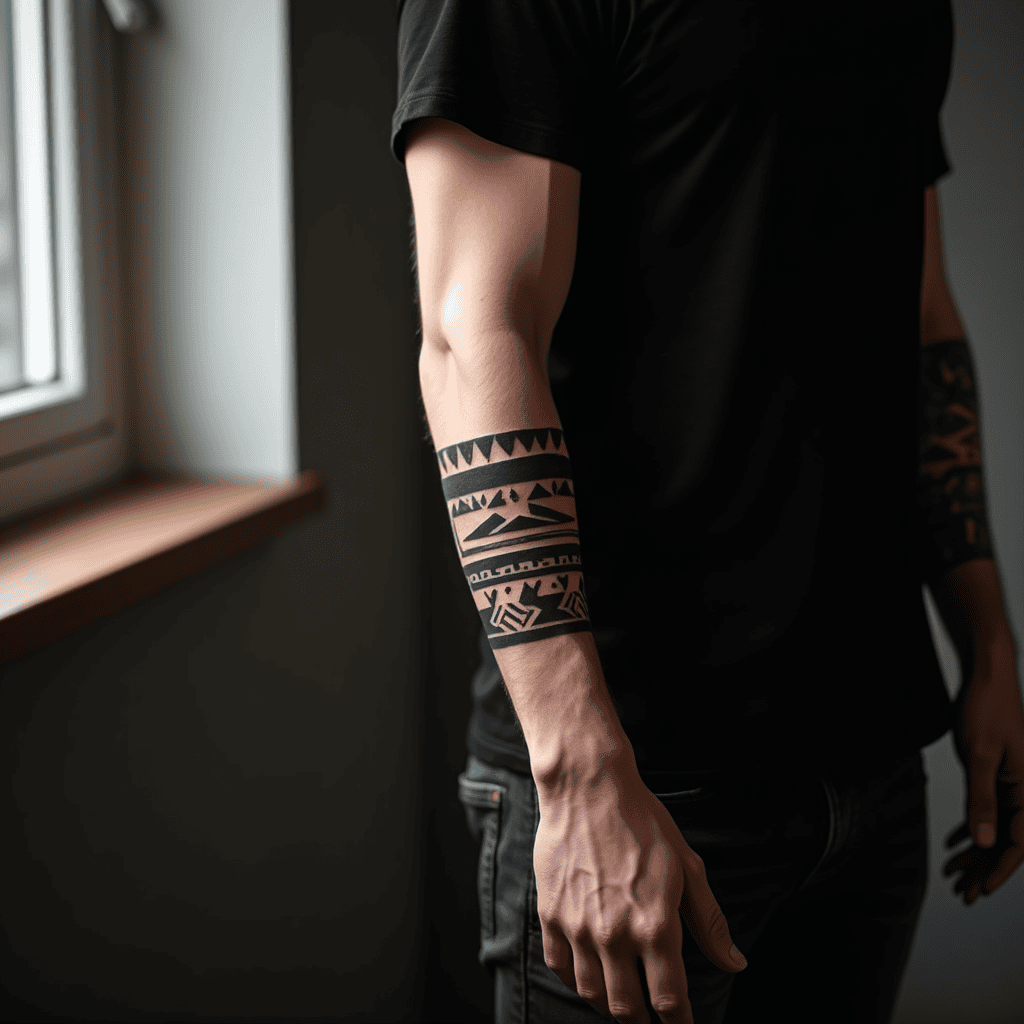
A geometric forearm design turns the length of the arm into part of the artwork. Heavy black triangles, parallel bands, diamonds, and angular blocks can run from below the elbow toward the wrist while narrow channels of untouched skin separate each section. The strongest versions follow the natural taper of the forearm instead of looking like a flat pattern pasted onto it. Viewed from the side, the shapes should still connect and feel intentional.
This style suits men who prefer controlled, modern blackwork and want something noticeable without covering the entire arm. Ask your tattoo artist, “Build the geometry around my forearm shape and keep enough negative space between the solid sections.” Straight edges and repeated spacing demand accurate stencil placement, so this isn’t where I’d chase the cheapest appointment. The drawback is that small alignment errors can be much easier to notice in geometric work than in loose organic designs.
2. Solid Black Armband Tattoo
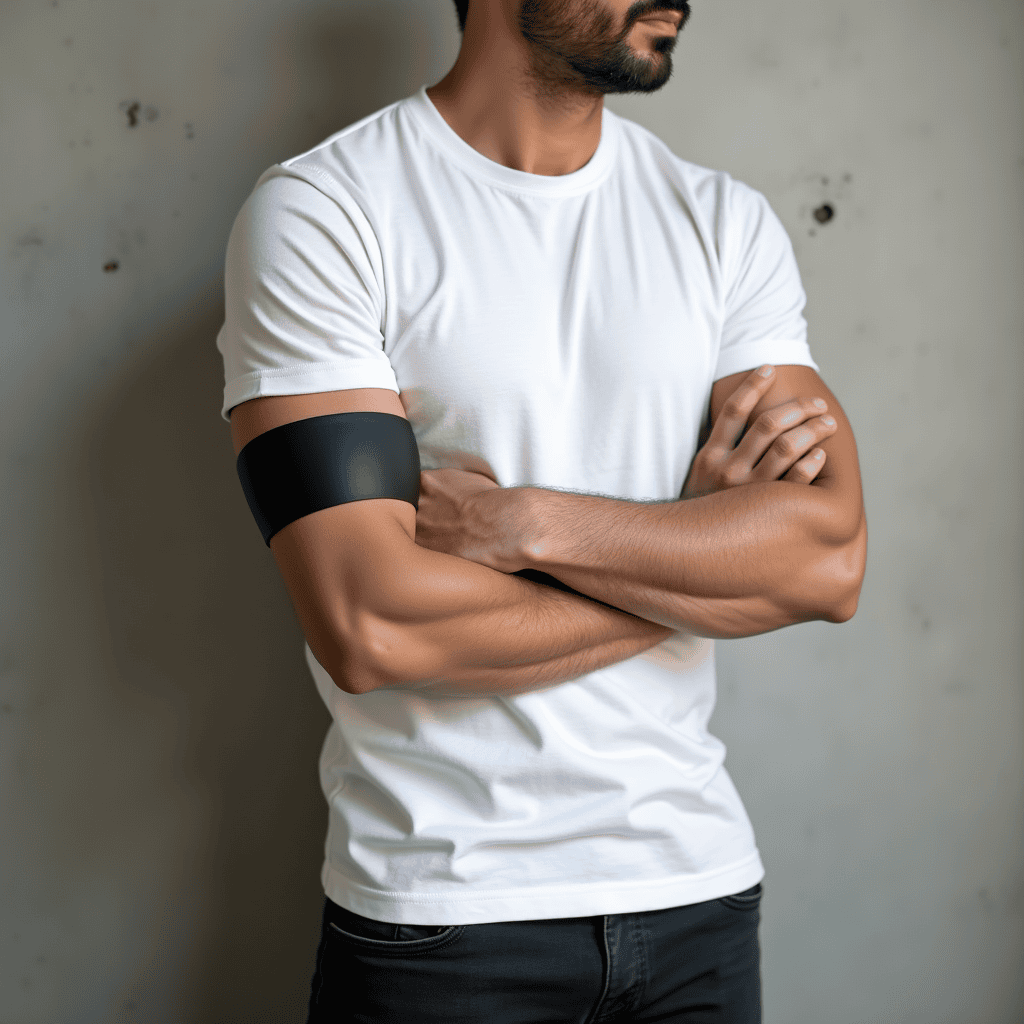
A solid black armband strips blackwork down to its simplest possible form. One thick band can circle the upper arm, or several bands of different widths can create rhythm while narrow strips of skin remain visible between them. The cleaner the edges, the stronger the effect. A properly proportioned band also needs to account for how the arm changes shape when the elbow bends or the biceps flexes.
Men who like restrained tattoos often get more mileage from this than from an overcomplicated symbol. Tell the artist, “I want a crisp black band that looks proportional from the front, side, and back of my arm.” Wider bands make a stronger statement, while narrower versions are easier to integrate into future work. Its weakness is also obvious: there isn’t much detail to distract from uneven borders or patchy saturation.
3. Tribal-Inspired Modern Blackwork
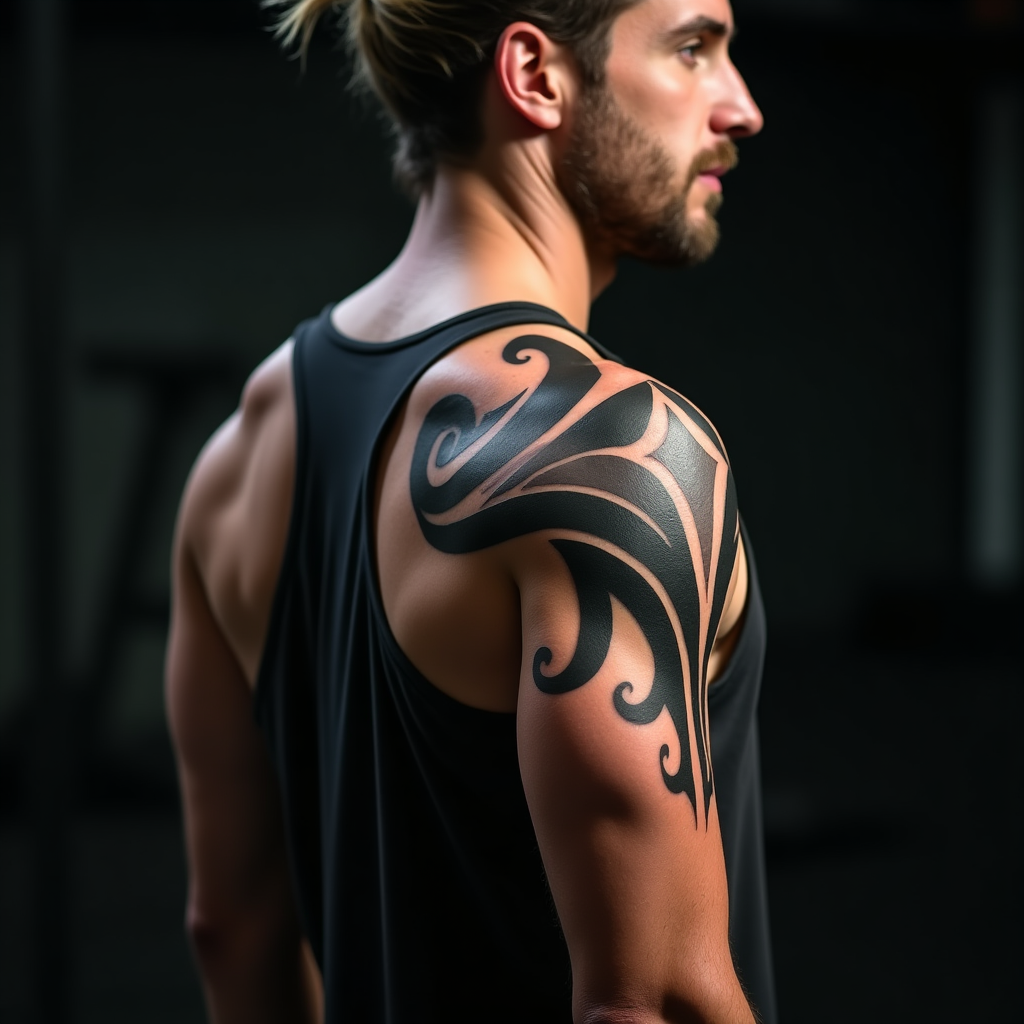
Modern tribal-inspired blackwork can feel powerful when it uses flowing shapes without directly copying culturally specific sacred patterns. Broad curved sections can sweep around the shoulder and upper arm, narrowing into sharp tapered points as they move toward the biceps. Negative space running between those shapes stops the tattoo from becoming one uninterrupted black field. The composition should feel built for the body rather than pulled from a generic flash sheet.
This option works well on athletic shoulders because curved black shapes exaggerate the roundness of the deltoid. Ask the artist, “Give me a contemporary abstract tribal feel, but create an original pattern that follows my shoulder rather than copying traditional cultural motifs.” Larger shapes are easier to read and usually look stronger than a maze of tiny hooks. The main limitation is that the style can look dated fast when too many familiar 1990s-style spikes are added.
4. Blackwork Chevron Arm Design
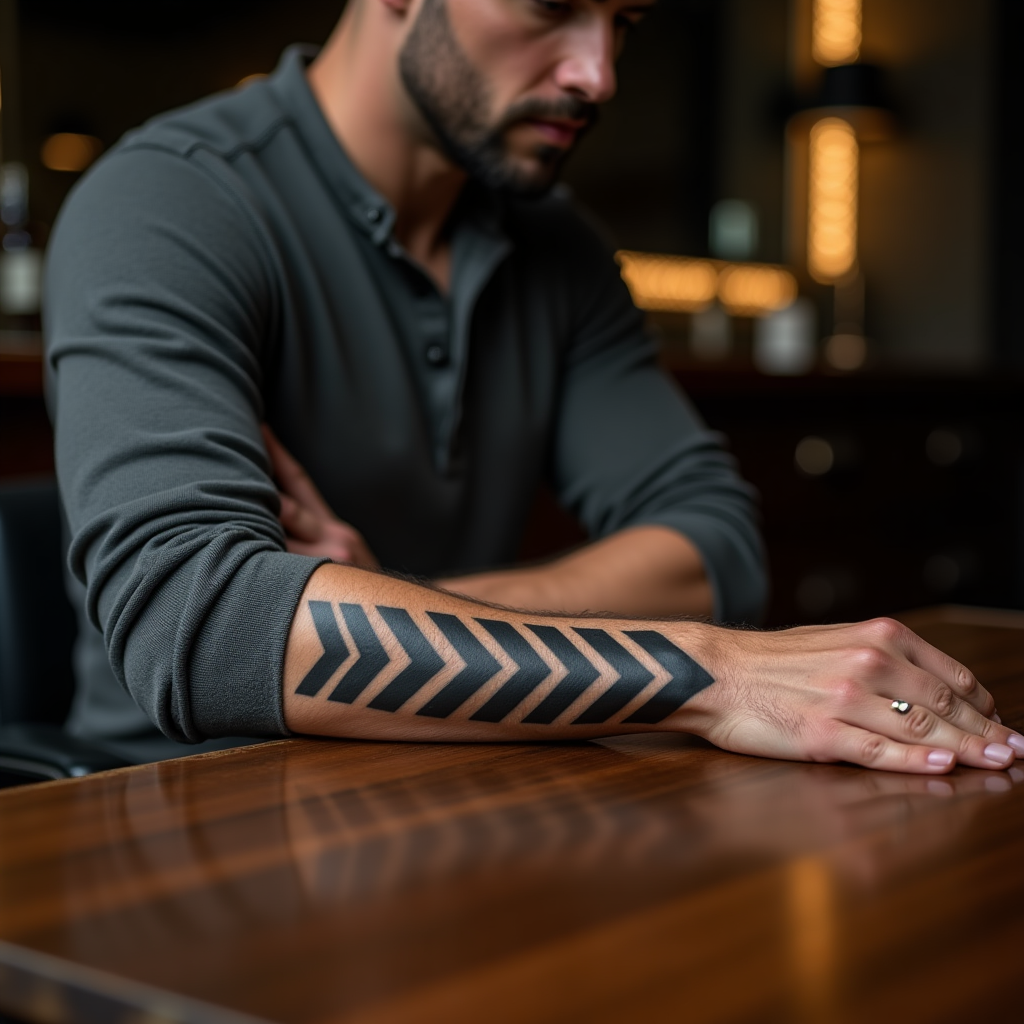
Stacked chevrons create movement without relying on illustration. Thick V-shaped bands can point down toward the elbow or up toward the shoulder, with the open skin between them creating almost as much visual impact as the ink itself. On a forearm, the pattern looks especially strong when the chevrons gradually change width as they approach the wrist. The design is simple on paper but surprisingly dependent on proportion.
I’d choose this for someone who likes geometric blackwork but finds grids and mandalas too busy. Tell your artist, “Use bold chevrons that narrow with my arm and keep the negative-space gaps consistent all the way around.” It can pair later with dots, lines, or a larger geometric sleeve without fighting them. The downside is that crooked placement becomes obvious once the arm hangs naturally, so the stencil should be checked from several angles.
5. Minimal Blackwork Symbol Cluster
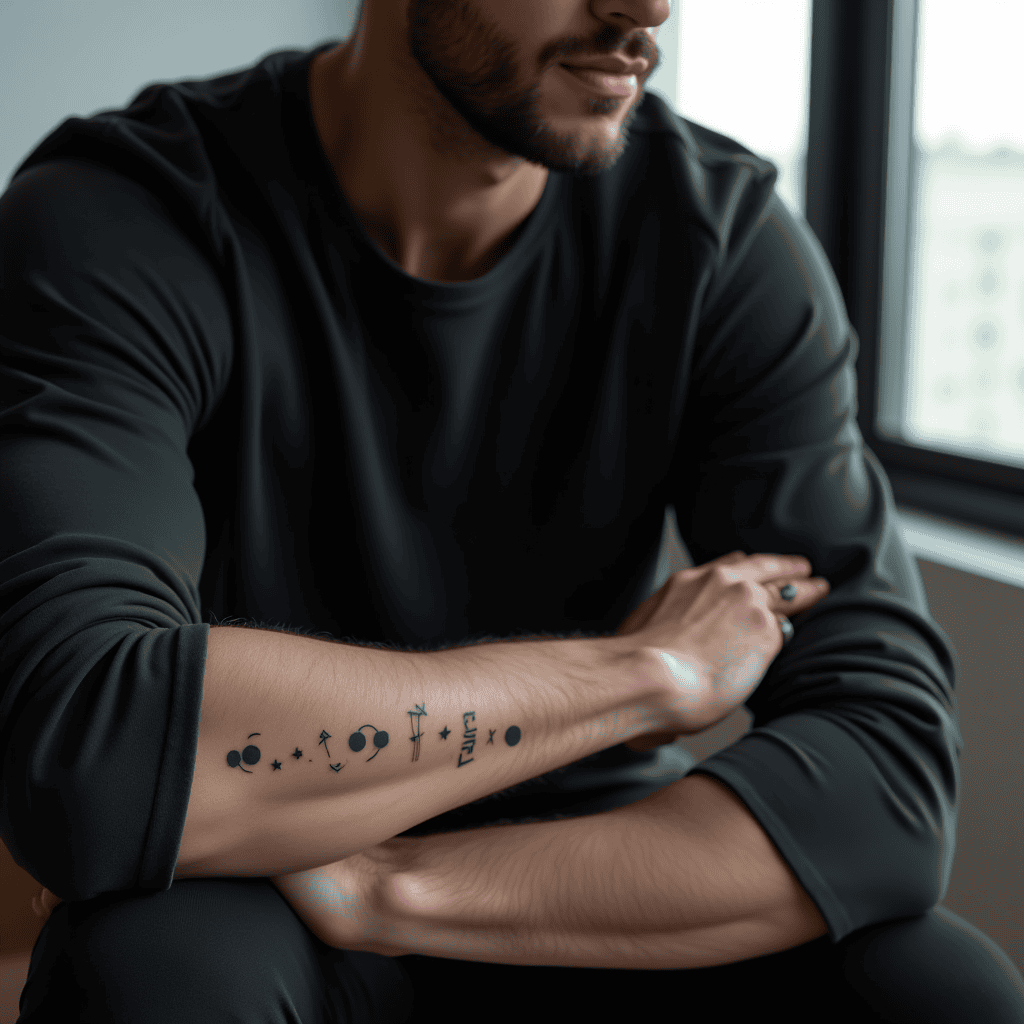
A cluster of small black symbols can create a blackwork tattoo without committing to large saturated areas. Circles, arrows, stars, abstract marks, tiny architectural shapes, and simplified natural forms can run vertically down the inner forearm with generous spacing around each element. Keeping the symbols in one visual language matters more than using many of them. Five well-related marks usually look stronger than fifteen unrelated icons.
This is a smart route for men building a tattoo collection gradually. Ask your artist, “Keep every symbol bold enough to remain readable and give each one enough space to stand independently.” The arrangement can be extended later without forcing you into a complete sleeve from day one. Its drawback is that random symbols chosen only because they look cool can leave the finished piece feeling like disconnected stickers.
Animal and Nature Blackwork Tattoo Ideas for Men
Animals and plants give blackwork artists a chance to move beyond rigid geometry. Fur, feathers, leaves, horns, branches, and scales can be translated into large black masses broken by controlled negative space. Done well, these tattoos feel organic without losing the graphic punch that defines the style.
6. Blackwork Wolf Tattoo
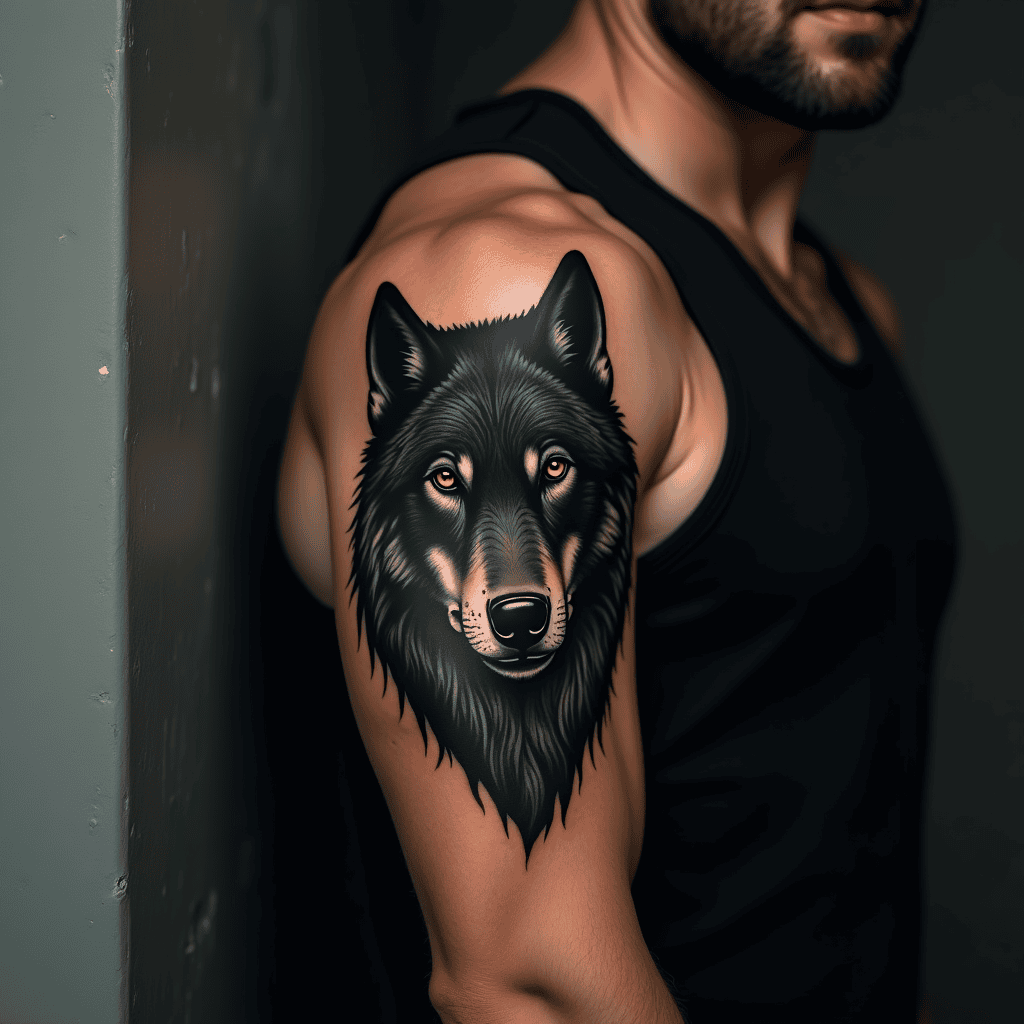
A blackwork wolf looks strongest when the artist avoids trying to render every strand of fur. A forward-facing or three-quarter wolf head can use deep black around the ears, cheeks, and neck while narrow wedges of skin form highlights through the face. Angular fur shapes around the jaw keep the silhouette rugged. On the upper arm or thigh, the design has enough room to keep the eyes, muzzle, and ears recognizable.
This works for men who want an animal tattoo with a harder, graphic finish than realism provides. Ask your artist, “Keep the wolf recognizable through big black shapes and negative space instead of filling it with tiny fur lines.” Give the head enough scale that the facial structure doesn’t get cramped. The downside is that an undersized wolf can quickly lose definition once the dark areas are packed close together.
7. Raven Blackwork Tattoo
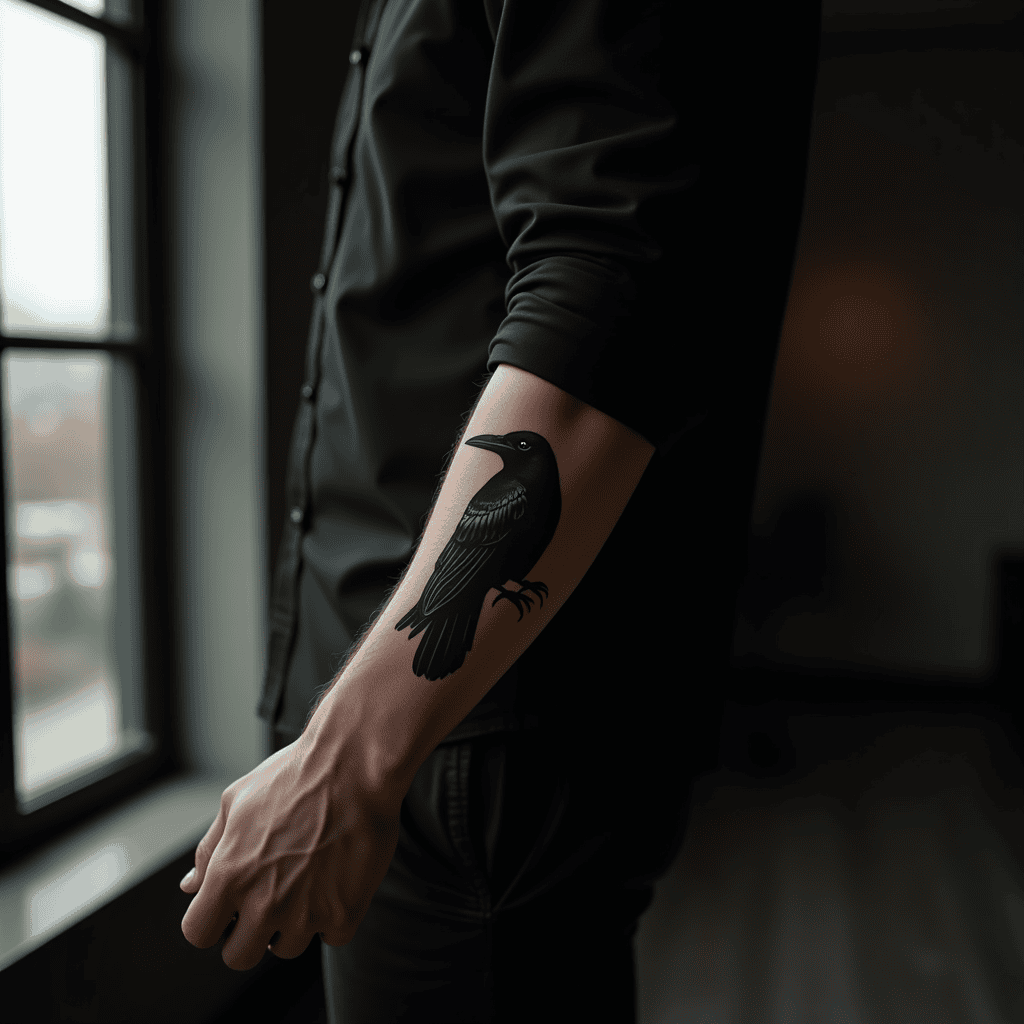
Ravens translate beautifully into blackwork because the bird already has a naturally dark silhouette. A perched raven can sit along the forearm with the beak angled toward the wrist, while layered feather sections are separated through thin untouched lines. A flying version works better across the shoulder blade where the wings have room to spread. I prefer a few large feather shapes over dozens of tiny marks.
Men drawn to darker imagery without wanting graphic horror often land here. Tell the artist, “Make the raven feel solid and dark but separate the wings and feathers with deliberate negative space.” The tattoo can stay completely focused on the bird or incorporate a branch, moon, or geometric background later. One caution: too much solid black around the wing joints can flatten the bird and erase its sense of movement.
8. Blackwork Snake Tattoo
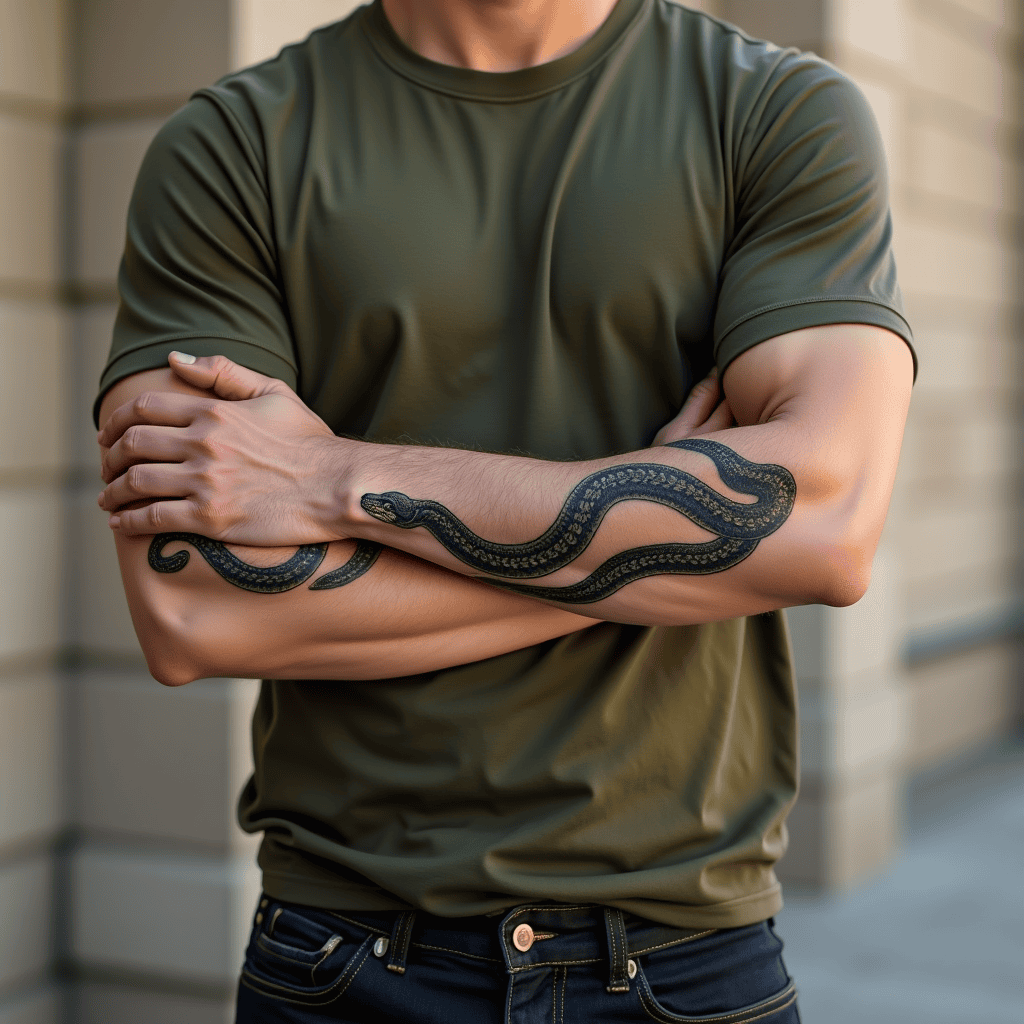
A snake gives the artist a naturally flexible shape that can wrap around the arm or travel vertically along the calf. Instead of outlining every scale, blackwork versions often use a nearly solid body with repeating skin gaps along the spine or belly. A curved S-shape creates movement even when the rest of the composition stays simple. Leaving clear space around the head prevents the focal point from disappearing into the coils.
This is useful for narrow placements where a wide animal portrait would feel cramped. Ask your artist, “Wrap the snake with my limb and use negative space for the scale rhythm instead of drawing every individual scale.” A forearm version can later weave through flowers or geometric elements. The drawback is that too many tight coils can make the body difficult to follow from normal viewing distance.
9. Botanical Blackwork Sleeve
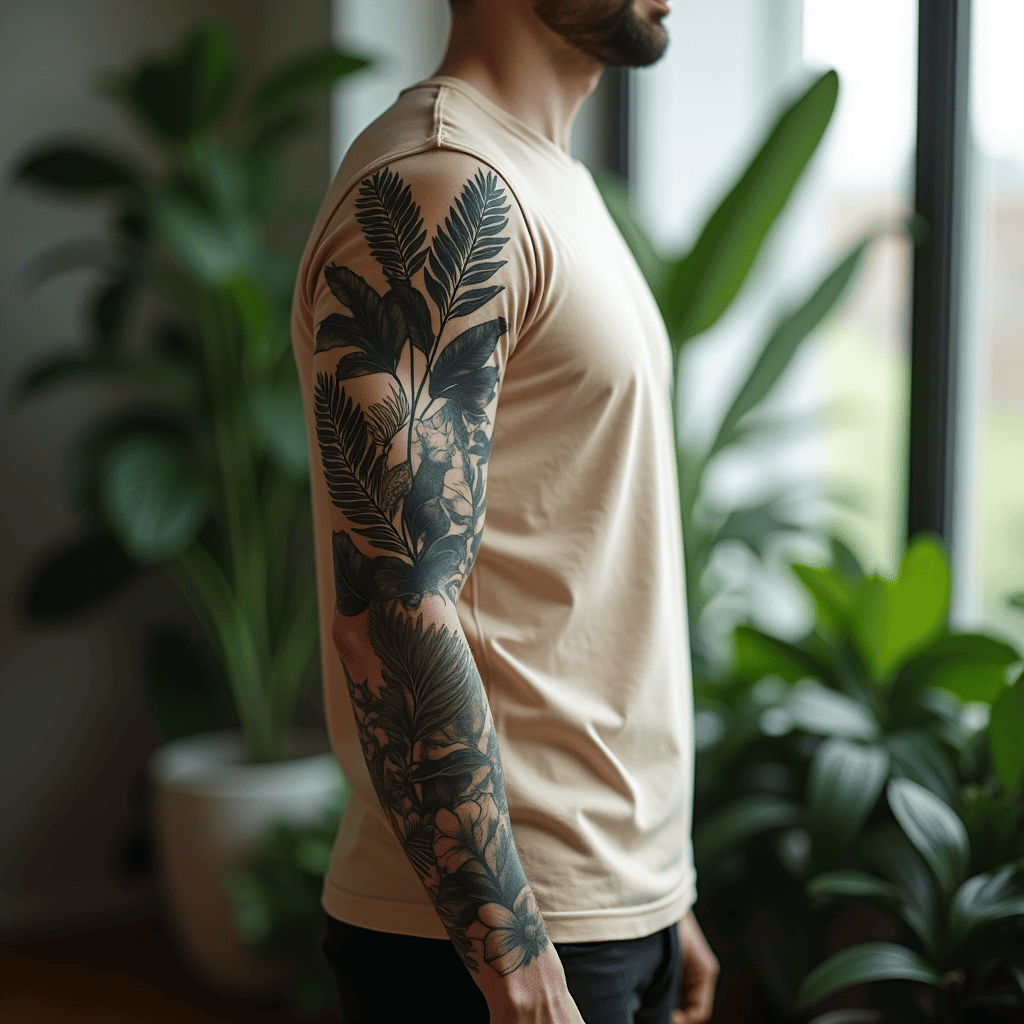
A botanical sleeve can soften blackwork without making it delicate. Large fern leaves, palm forms, broad petals, thorny stems, and overlapping foliage can travel from shoulder to wrist, with some leaves rendered nearly solid and others defined mainly through black outlines. Skin left between clusters creates depth and stops the arm from becoming visually heavy. The best sleeves also change scale as they travel down the arm.
This suits men who want a full sleeve but don’t connect with skulls, predators, or geometric grids. Tell the artist, “Build the sleeve with large botanical shapes, varied leaf sizes, and open skin between the darkest sections.” Expect a project like this to require more planning than collecting separate small tattoos. The biggest mistake is filling every empty patch; the negative space is what keeps the foliage readable.
10. Blackwork Mountain Landscape
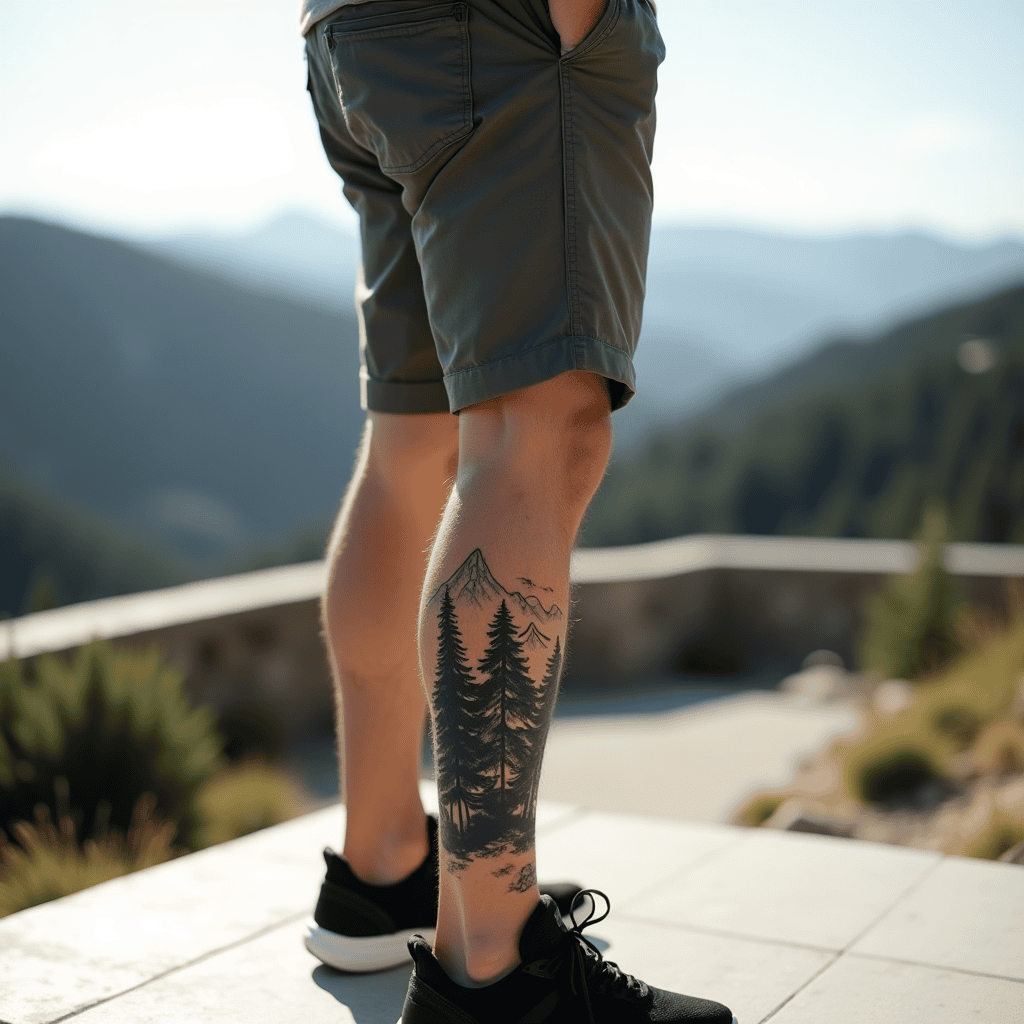
A mountain blackwork tattoo can turn a familiar nature theme into something much more graphic. Instead of shaded gray peaks, imagine heavy black ridgelines rising above a narrow strip of untouched skin that becomes snow or atmosphere. Pine silhouettes can sit beneath the mountains, but they need to stay large enough to avoid becoming visual noise. A horizontal composition fits particularly well around the upper forearm or calf.
This design suits outdoors-oriented men who want landscape imagery without a postcard-like realism style. Ask for, “A simplified mountain scene made from bold black shapes, with negative space creating the snow lines and depth.” Resist adding every possible nature symbol to the same piece. The drawback is that tiny trees, birds, stars, and peaks can make a small landscape feel cluttered instead of expansive.
Geometric and Ornamental Blackwork Tattoo Ideas
Geometric and ornamental work rewards patience. Repeated circles, mandalas, lines, architectural motifs, and symmetrical shapes can look exceptionally clean in black ink, but these designs expose inconsistent spacing faster than most illustrative tattoos. Large placements usually give the artist more room to keep the pattern open.
11. Negative-Space Mandala Tattoo
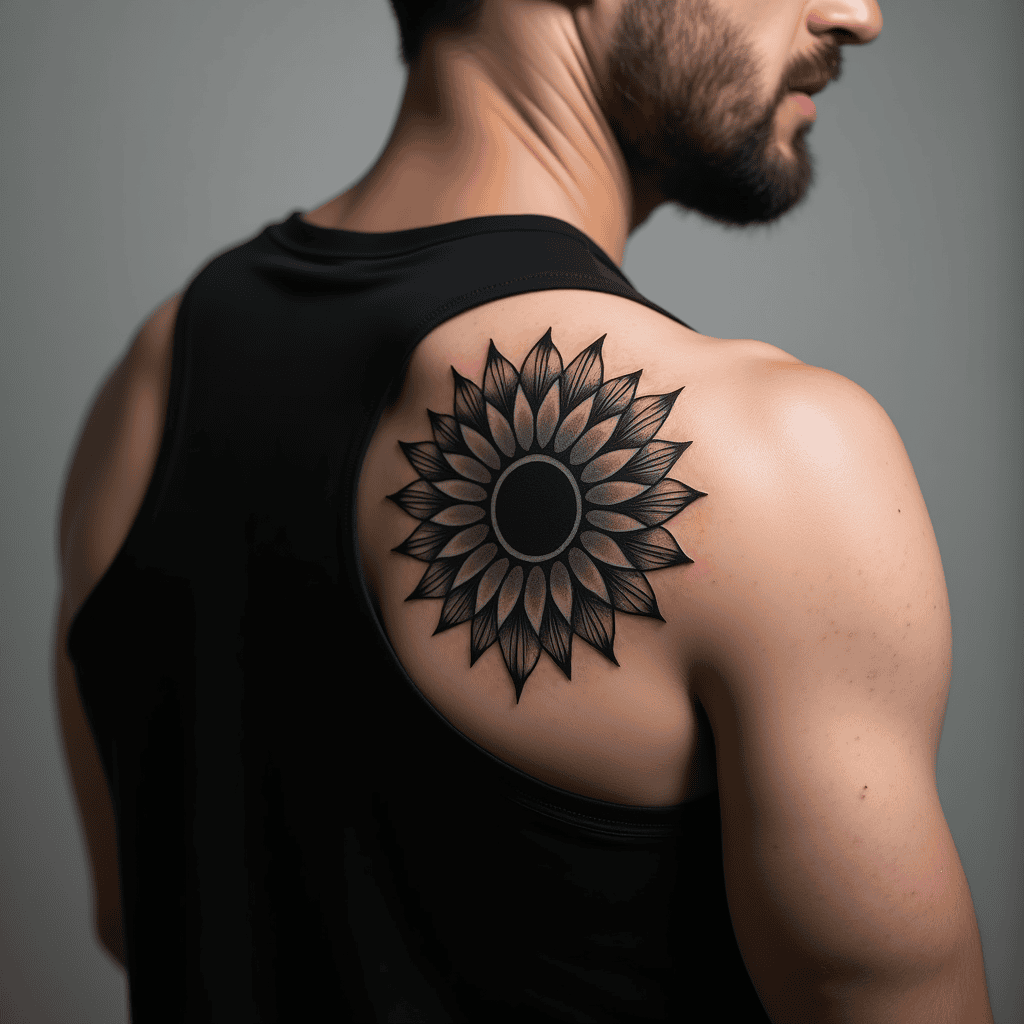
A negative-space mandala uses the skin itself as part of the pattern. Petal shapes can radiate from a central black circle, alternating between saturated sections and untouched lines as the design expands outward. On the shoulder, the natural roundness of the joint helps the mandala feel integrated rather than stamped on. Larger outer petals also keep the piece readable from a normal distance.
Men who want symmetry without filling an entire limb often like this approach. Ask your tattoo artist, “Use solid black sections around clean negative-space petals and size the mandala to follow my shoulder.” Precise spacing is more important than loading the pattern with extra detail. One downside is that mandalas can feel generic when the artist starts from a common template and changes almost nothing.
12. Sacred-Geometry-Inspired Chest Pattern
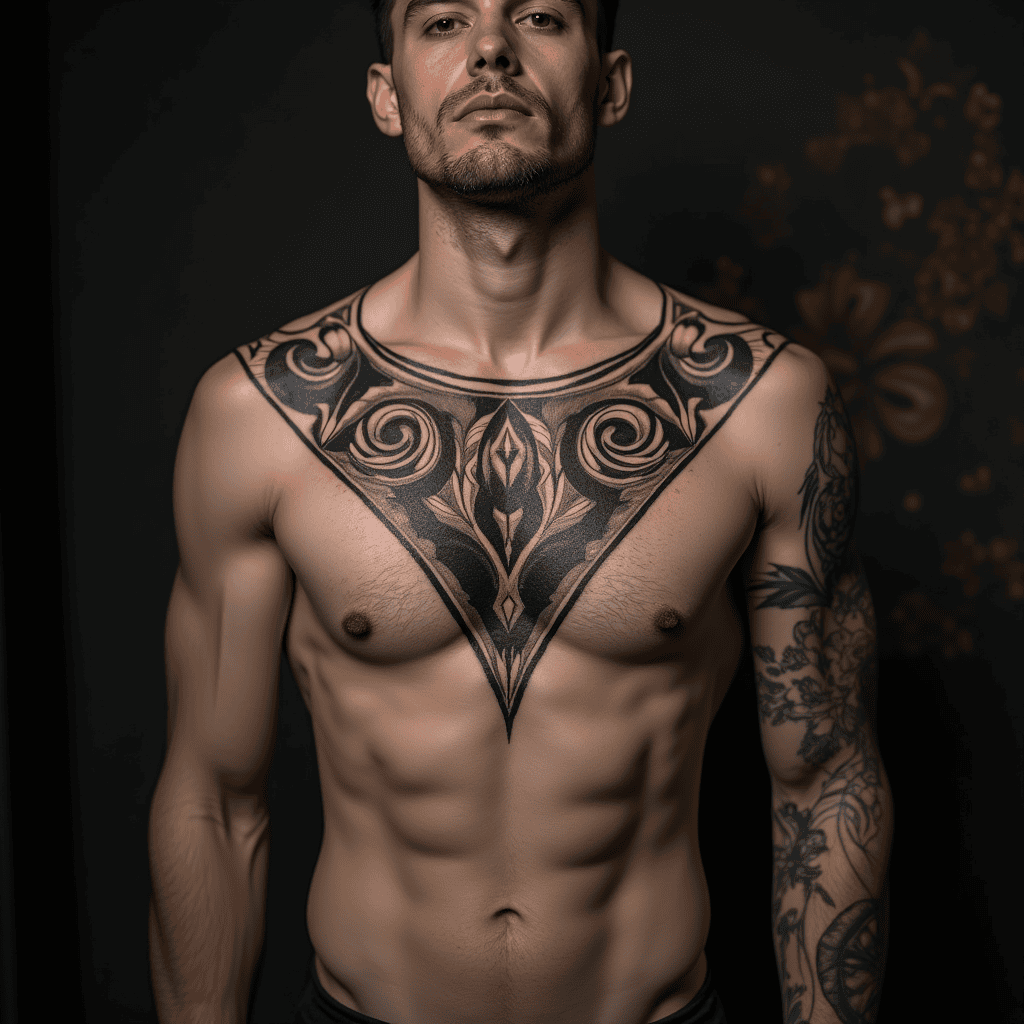
A geometry-focused chest tattoo can spread symmetrically from the sternum while keeping the centerline as its anchor. Interlocking circles, diamonds, angular petals, and repeating line structures can extend toward each collarbone without needing to fill the entire chest. Black wedges placed between finer outlines create hierarchy. The strongest composition leaves open skin near the outer edges so the tattoo doesn’t look boxed in.
This is for someone ready to commit to a highly visible central piece. Tell the artist, “Design the geometry from my sternum outward and keep the left and right sides balanced without overcrowding my chest.” For visualization and appointments, a sleeveless or open-neck garment can expose only the necessary area while maintaining coverage. The main drawback is that complex symmetry gives the artist very little room for careless stencil placement.
13. Geometric Shoulder Cap
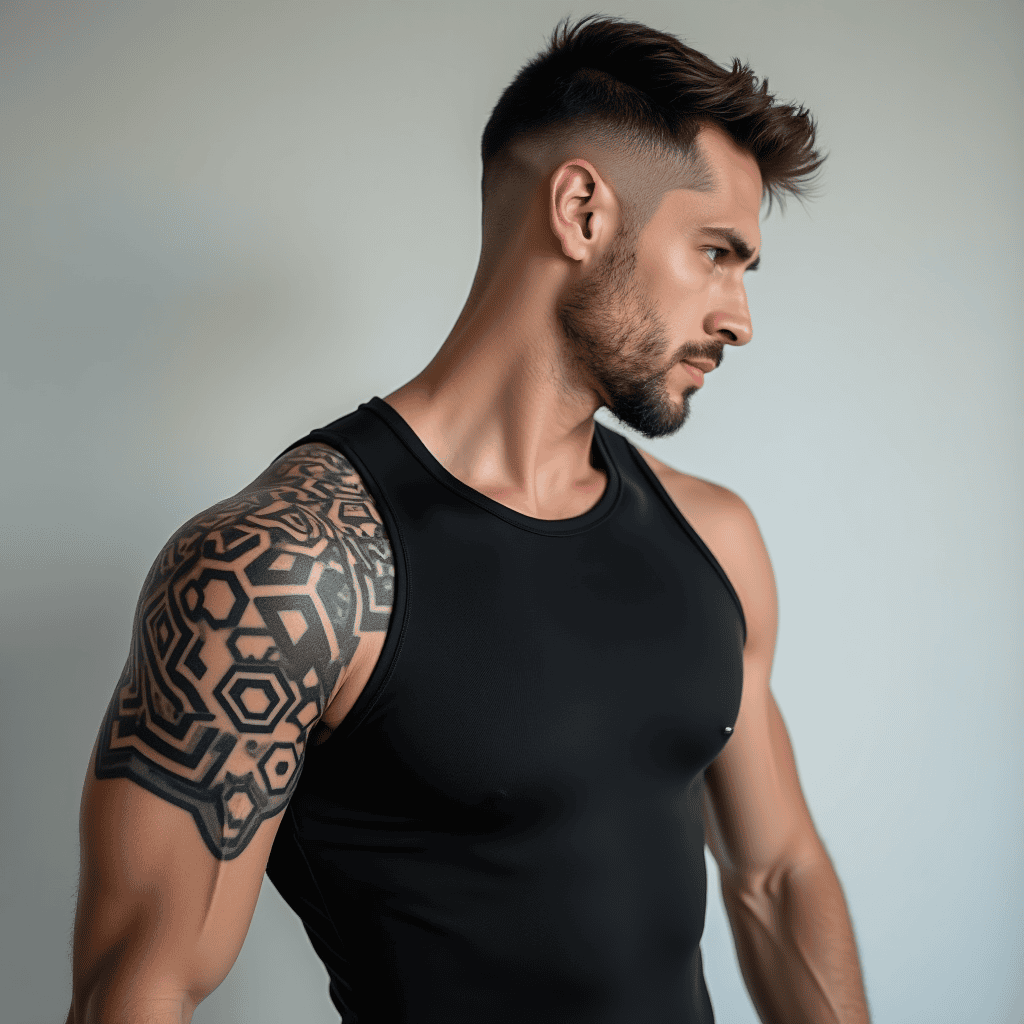
A shoulder-cap tattoo works with the deltoid instead of fighting it. Layered hexagons, segmented circles, diagonal black fields, and radial lines can curve over the shoulder before tapering near the upper arm. From the front, only part of the pattern shows; from the side, the complete geometry becomes visible. That changing view is what makes the placement interesting.
Choose this if you want blackwork tattoo ideas that feel architectural but don’t extend down the full arm. Ask the artist, “Build a geometric cap that wraps over my deltoid and looks complete from the side without ending in a hard square edge.” It can later become the top of a sleeve. The drawback is that designs created flat on paper can distort badly if the artist doesn’t redraw them for the curve of the shoulder.
14. Ornamental Sternum-to-Chest Design
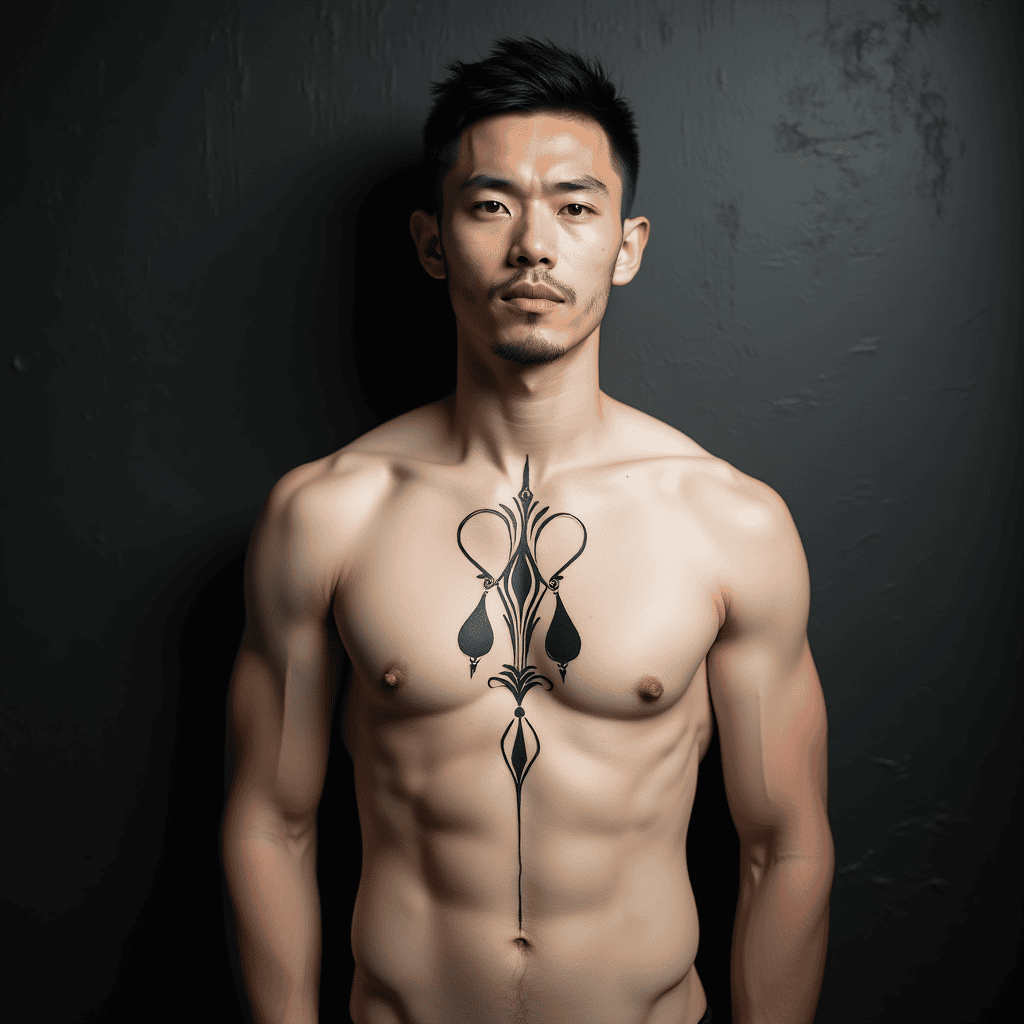
An ornamental blackwork design can borrow the balance of decorative architecture without becoming overly ornate. A central vertical motif may rise from the sternum while mirrored curved shapes spread across the upper chest. Solid black teardrops and spear-like forms create visual weight, while thin skin breaks keep the pattern from feeling too dense. Symmetry gives this style most of its authority.
It suits men who like decorative work but still want a sharp, masculine finish. Ask for, “An original symmetrical ornamental pattern with a strong centerline, bold black accents, and enough open skin to keep the details separate.” Plan the neckline of your usual shirts before deciding how high the tattoo should rise. Its limitation is commitment: a large central chest design influences almost anything you may want to add around it later.
15. Blackwork Dot-and-Line Geometry
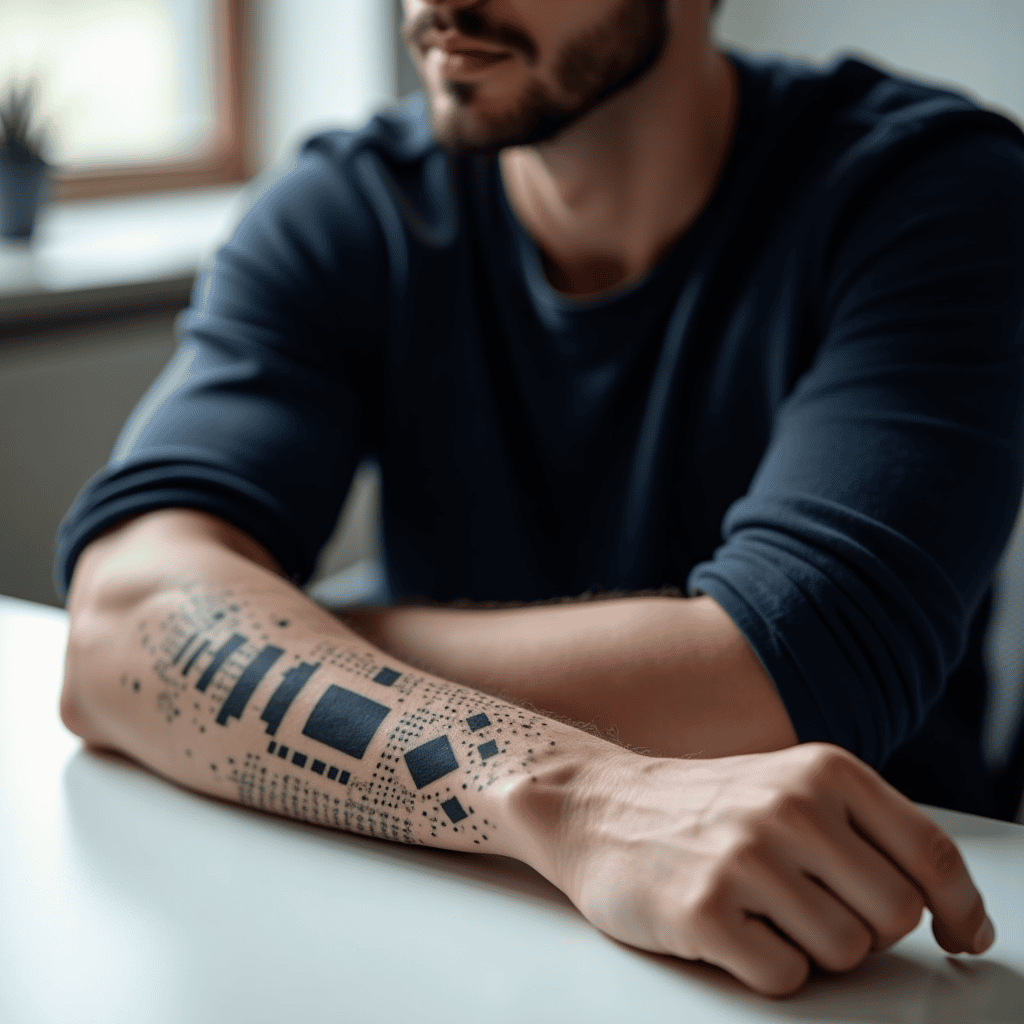
Blackwork doesn’t have to mean every section is completely filled. Thick black bars and polygons can be linked through fields of carefully spaced dots and thin connecting lines, giving the composition a gradual transition between heavy and light areas. On the forearm, that shift can move from a dense elbow section toward a more open wrist. It feels technical without needing dozens of tiny symbols.
This suits men who want a geometric tattoo with more texture than pure solid-fill work. Ask your artist, “Combine bold black geometry with controlled dot shading, but keep the main silhouette readable from a distance.” Dot-heavy sections can demand patience because consistency matters. The drawback is that adding excessive micro-detail can undermine the bold quality that made you choose blackwork in the first place.
Dark Illustrative Blackwork Tattoo Ideas for Men
Illustrative blackwork keeps the strong contrast of traditional black ink while allowing more recognizable subjects. The trick is editing. A good piece doesn’t try to reproduce every possible texture; it chooses the few dark shapes and open areas that make the subject immediately identifiable.
16. Blackwork Tiger Tattoo
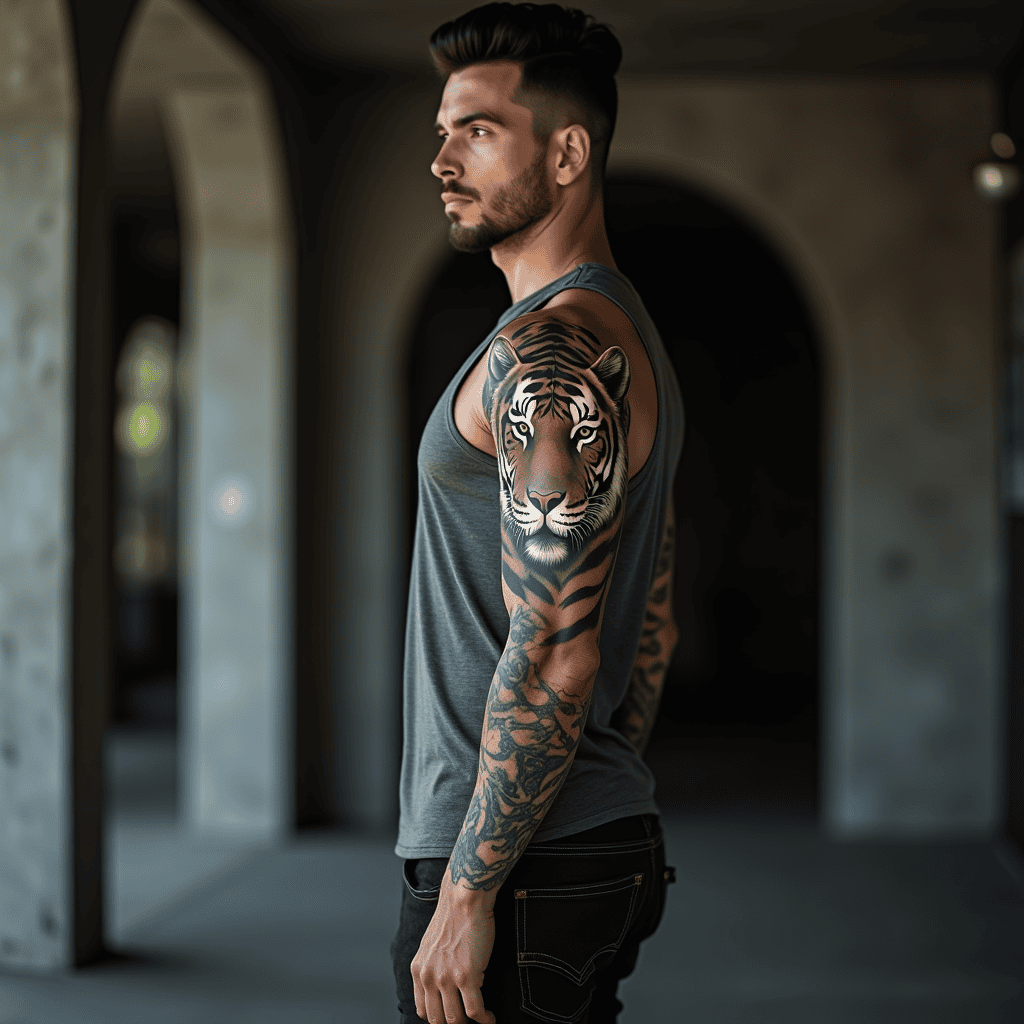
A tiger portrait can carry a lot of energy through contrast alone. Deep black stripes can frame the forehead, cheeks, and jaw while the open skin between them creates the lighter fur. A front-facing head feels powerful and symmetrical; a side profile creates more motion. I’d keep the eyes and muzzle relatively open so the face doesn’t disappear under heavy saturation.
Men who want a traditional animal subject with a modern finish should consider this before jumping straight to realism. Tell the artist, “Use broad black tiger stripes and clean negative space, and keep the facial features readable without tiny shading.” The upper arm or thigh gives it enough room to work. The drawback is that packing the stripes too tightly can make the head look like an abstract dark shape from several feet away.
17. Blackwork Skull With Botanical Details
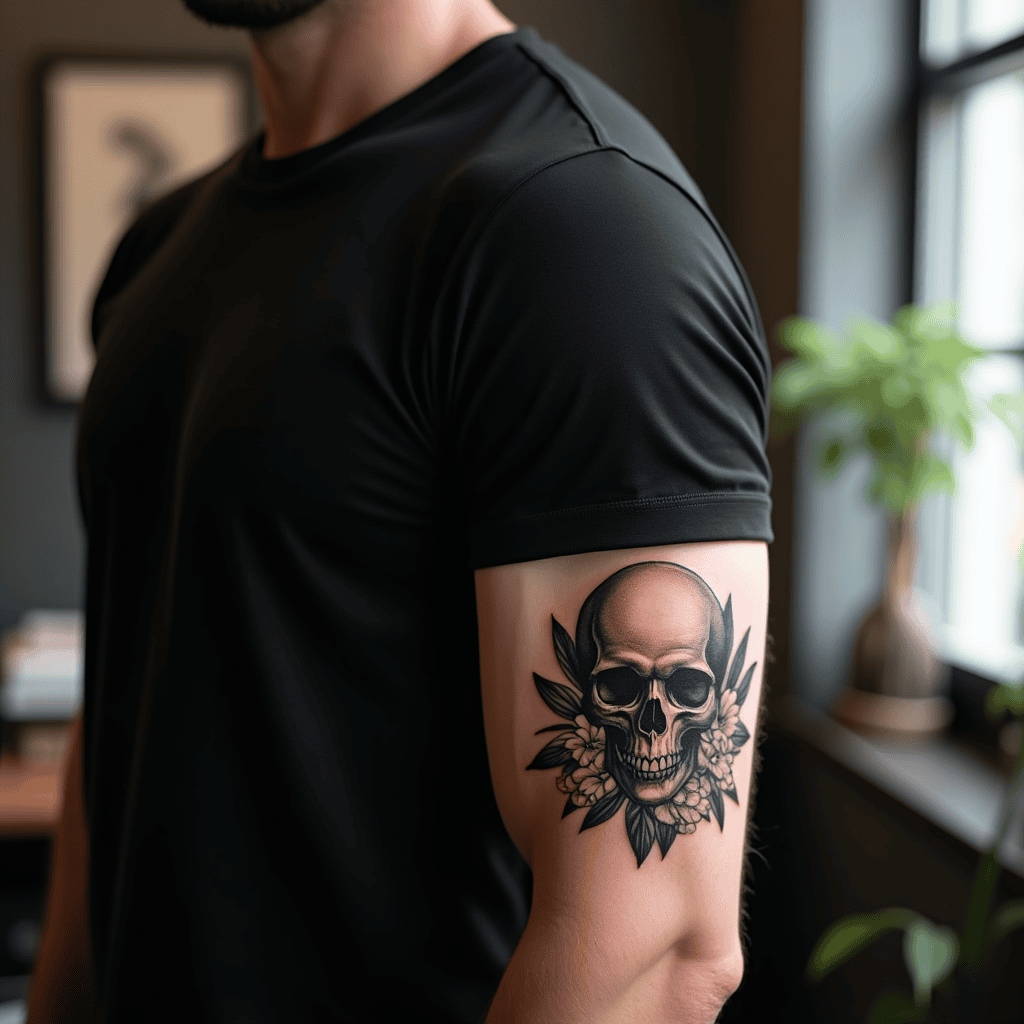
A skull doesn’t have to become a horror tattoo. A simplified skull can use heavy black eye sockets and shadow shapes while leaves or flowers break up the harder anatomy around it. The botanical elements work best when they overlap part of the skull instead of being scattered around like decoration. Keeping the composition stylized avoids graphic realism.
This design suits men who enjoy traditional tattoo imagery but want something more layered than a plain skull. Ask your artist, “Keep the skull graphic rather than gruesome, and weave the botanical shapes through the composition so they feel connected.” It works particularly well on the upper arm or thigh. The obvious drawback is that extra flowers, insects, banners, and symbols can push the design into visual overload.
18. Blackwork Dragon Tattoo
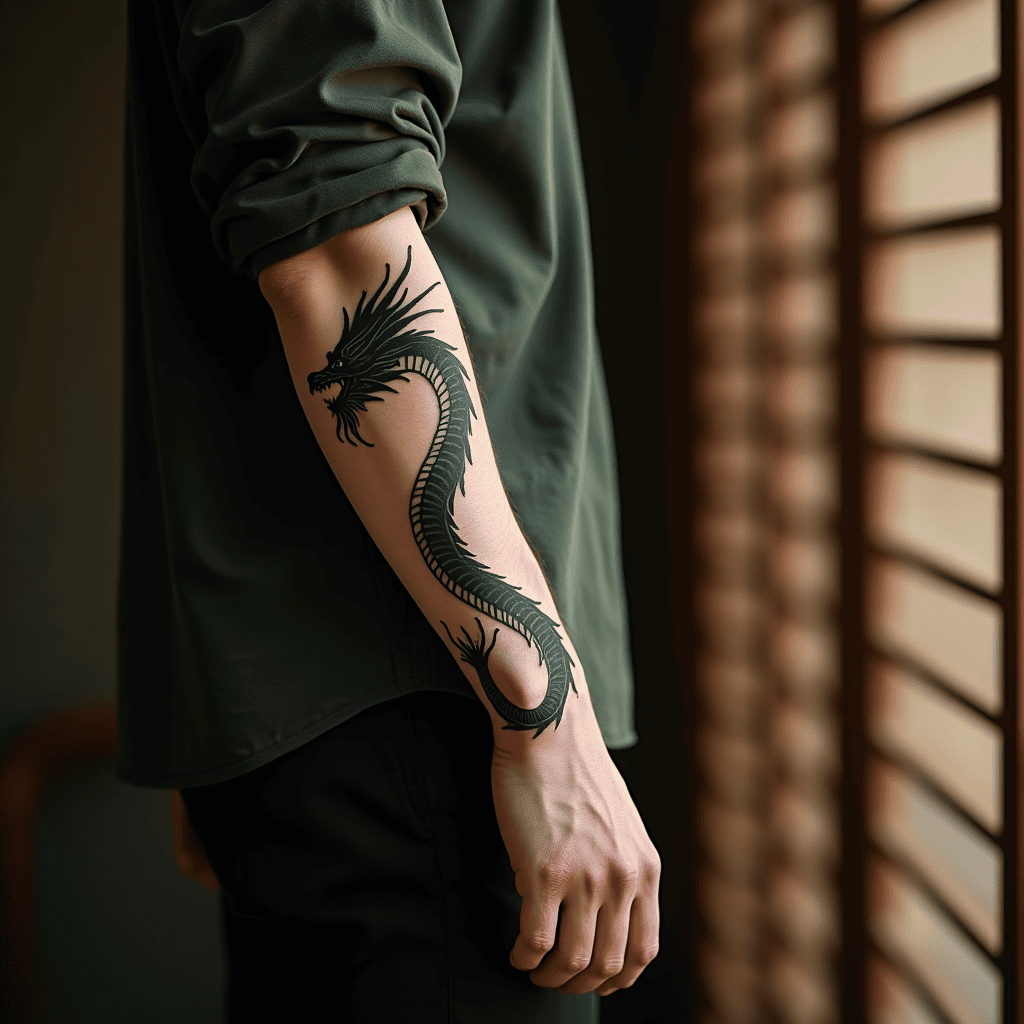
A blackwork dragon works best as a long flowing composition rather than a compressed emblem. The body can curve along the forearm, upper arm, or calf, with dark scales simplified into repeated black sections and the spine picked out through negative space. The head deserves more detail than the body because that’s where the eye naturally lands. Long whiskers, horns, and claws should stay clean rather than tangling together.
This fits men willing to use a larger placement so the design can breathe. Tell the artist, “Give the dragon a flowing body with simplified black scales and keep the head clearly separated from the coils.” A narrow vertical design also leaves room for future background work. The compromise is that a dragon reduced to a small wrist tattoo usually loses the sweeping movement that makes the subject effective.
19. Blackwork Moth Tattoo
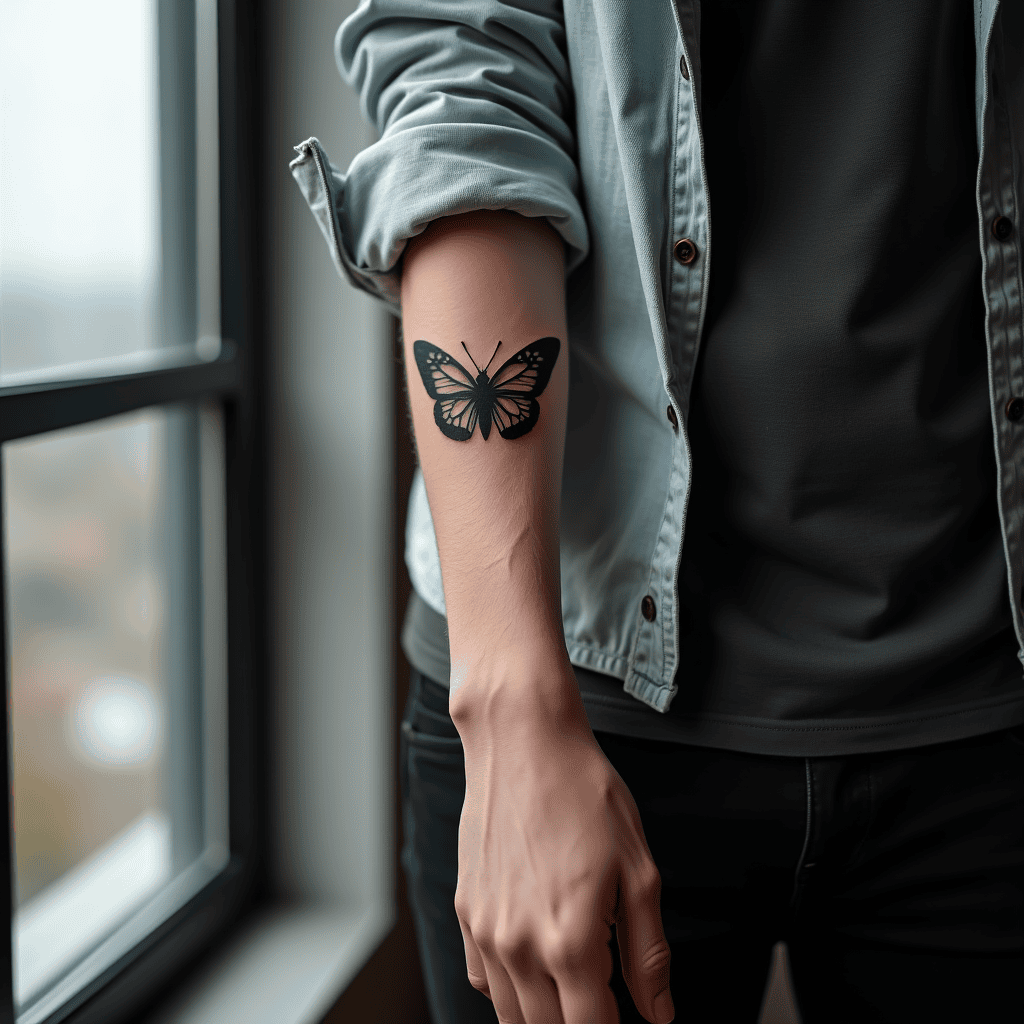
A moth gives you symmetry without the mechanical feel of strict geometry. Wide wings can be built from solid outer borders, black oval markings, and open skin channels that mirror from left to right. A longer body makes the design useful for the forearm, shin, or center of the upper back. The antennae should stay simple enough that they don’t become the weakest part of the design.
This is a good option for men who want dark natural imagery that’s quieter than a wolf or tiger. Ask for, “A symmetrical moth with bold black wing shapes and negative-space patterning rather than tiny decorative lines.” Medium-to-large sizing gives the wing pattern room to stay distinct. Its main drawback is that overly ornate versions can drift away from blackwork and start looking like generic decorative line art.
20. Blackwork Samurai Helmet Motif
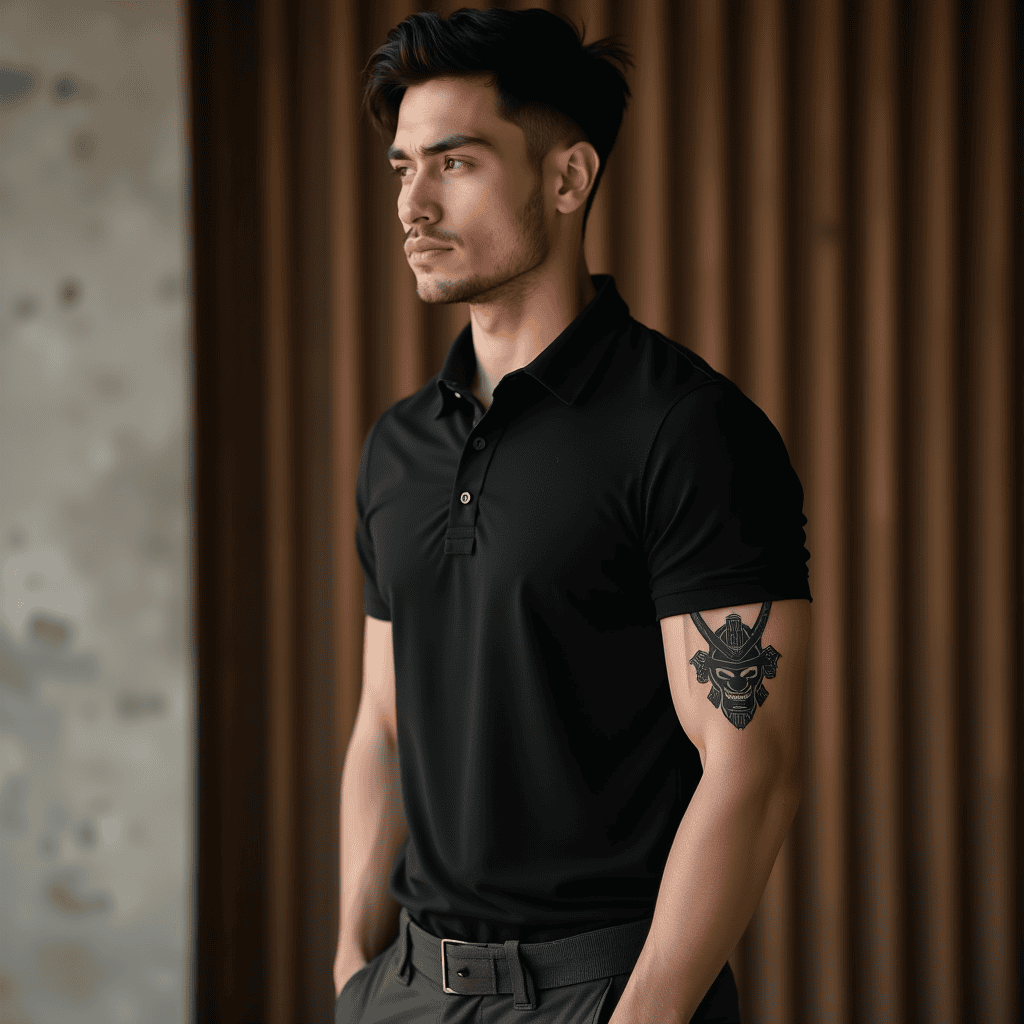
A samurai-helmet-inspired tattoo can focus on armor shapes rather than depicting a battle scene. A frontal helmet silhouette can use broad black plates, curved horns, layered guards, and selective negative-space cuts through the face area. The piece becomes more graphic when the artist avoids trying to reproduce every historical surface detail. A shoulder or upper-arm placement gives those shapes enough width.
This suits men drawn to Japanese-inspired visual structure but who want a compact standalone motif. Ask the artist, “Create an original blackwork helmet composition with strong armor shapes and no battle scene or graphic imagery.” If historical accuracy matters to you, discuss the reference material carefully instead of mixing random decorative elements. The drawback is that overloading the helmet with tiny ornaments can make the silhouette difficult to read.
Bold Blackwork Tattoo Ideas for Maximum Impact
Some blackwork is supposed to dominate the body area rather than decorate it lightly. Blackout sections, oversized abstract shapes, brush-inspired marks, and large back compositions sit at the higher-commitment end of the category. These deserve more planning because they leave less flexibility for easy redesign later.
21. Blackout Forearm With Negative-Space Bands
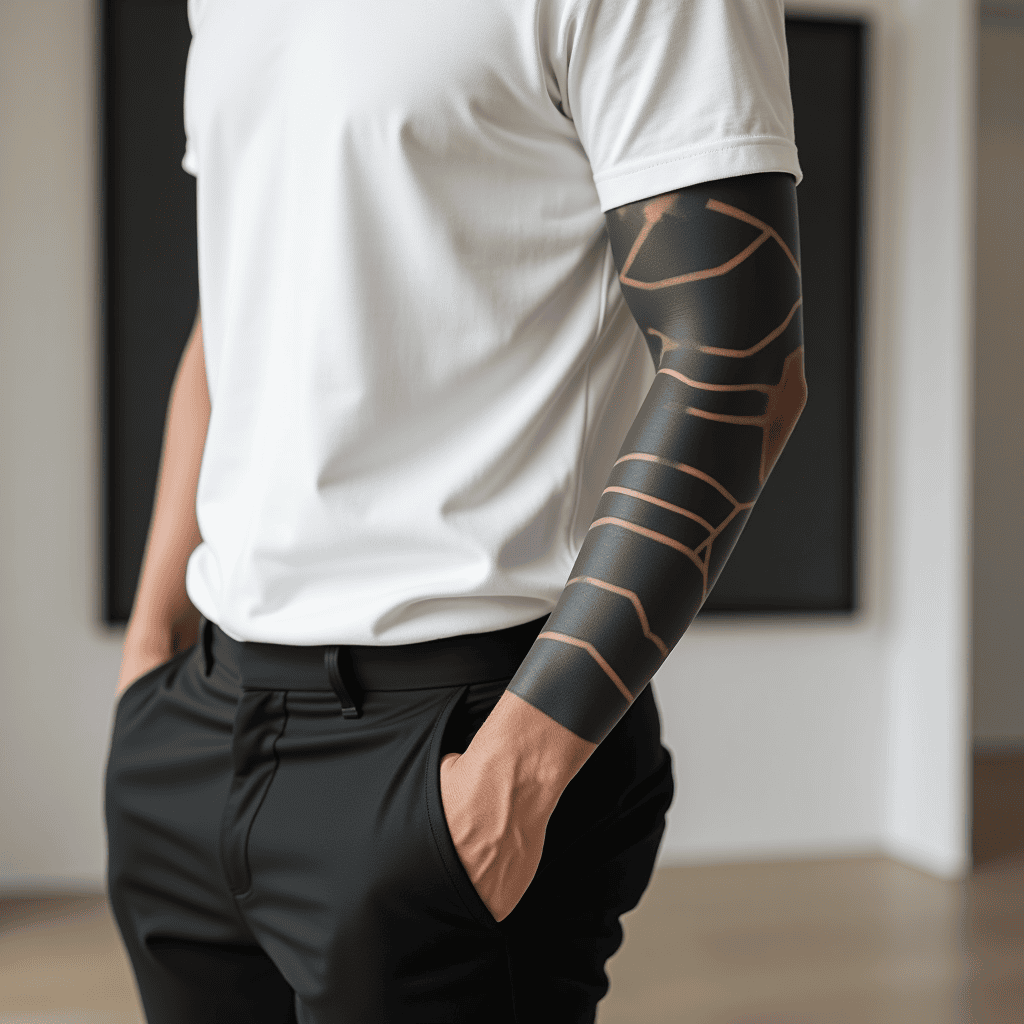
A blackout forearm can look dramatically cleaner when the artist leaves narrow rings or diagonal channels of skin running through the dark area. Instead of an uninterrupted block from wrist to elbow, those breaks give the arm structure and prevent the piece from reading like a sleeve-shaped shadow. The upper edge can finish straight, angled, or with a deliberate geometric transition into untouched skin.
This is for men who already know they want a high-coverage tattoo rather than someone testing blackwork for the first time. Ask the artist, “Keep the blackout smooth and saturated, but build clear negative-space bands into the layout before we start.” Discuss the entire future arm plan first because large dark areas limit what can easily be layered over them. The major drawback is simple: it’s a much bigger commitment than adding another conventional tattoo.
22. Abstract Brushstroke Blackwork
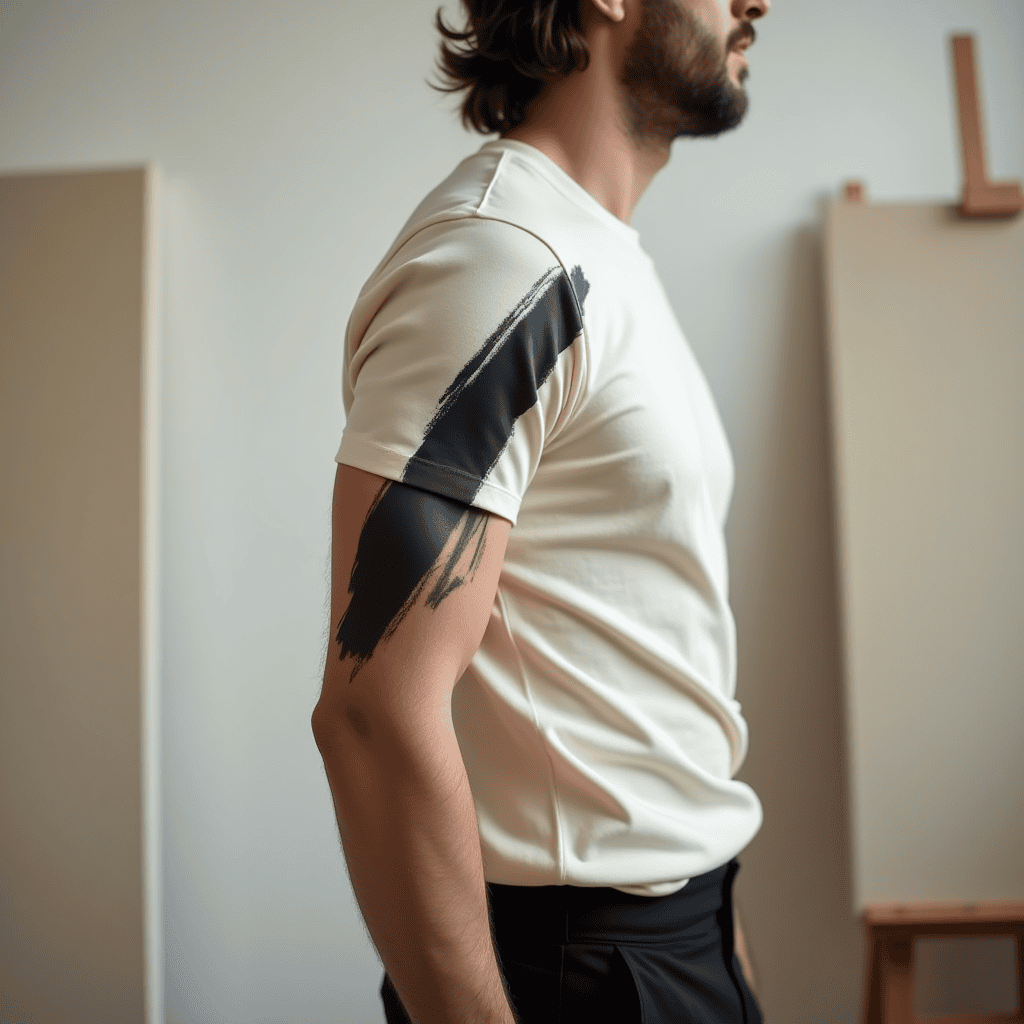
Brushstroke blackwork deliberately avoids perfect edges. A broad swipe of black can move diagonally across the upper arm or calf, with dry-brush textures, splattered-looking edges, and thin streaks creating the impression of paint dragged across skin. The composition still needs intention; random messiness isn’t the same thing as controlled abstraction. One dominant mark is often stronger than five competing strokes.
Men who prefer art-driven tattoos over symbolic subjects tend to connect with this style. Tell the artist, “I want an abstract brushstroke with a clear direction and controlled rough edges, not a random splash pattern.” It can pair well with a small geometric element if the composition needs an anchor. The drawback is that loose marks are subjective, so artist selection matters more than bringing an exact stencil.
23. Heavy Blackwork Leg Panel
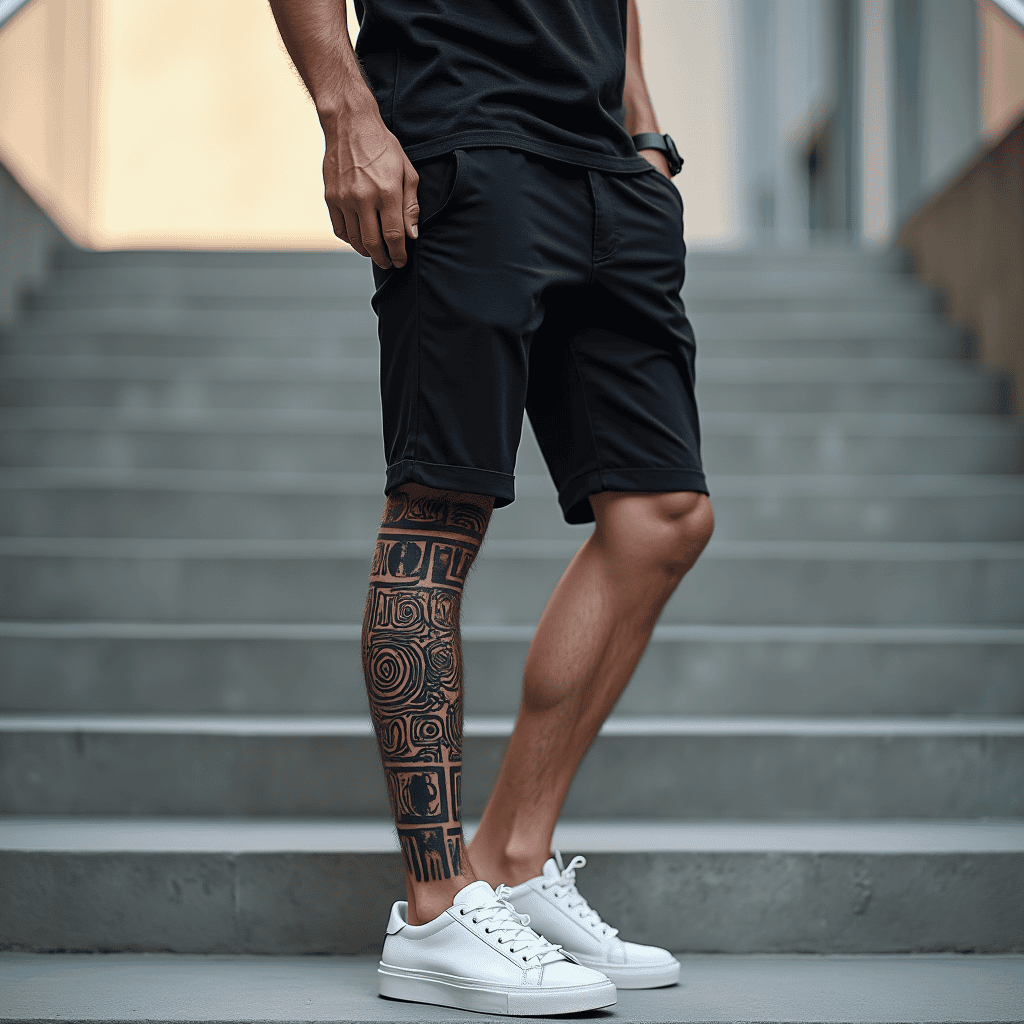
A leg panel creates the visual weight of a sleeve without covering the whole circumference of the limb. One tall section can run down the outer calf using stacked geometric blocks, organic black curves, or a mix of large symbolic shapes. Negative-space corridors between the sections help the panel read vertically. From the front, only part of it appears; from the side, the complete composition becomes visible.
This works well for someone who wants a major tattoo that can still be partly concealed under trousers. Ask your artist, “Build a vertical blackwork panel that follows the outside of my calf and leaves a clean border rather than wrapping all the way around.” The layout can be expanded later if you decide on full leg coverage. Its drawback is that tall rectangular compositions can look stiff unless the outer edge reacts to the calf’s natural curve.
24. Geometric Full Back Blackwork
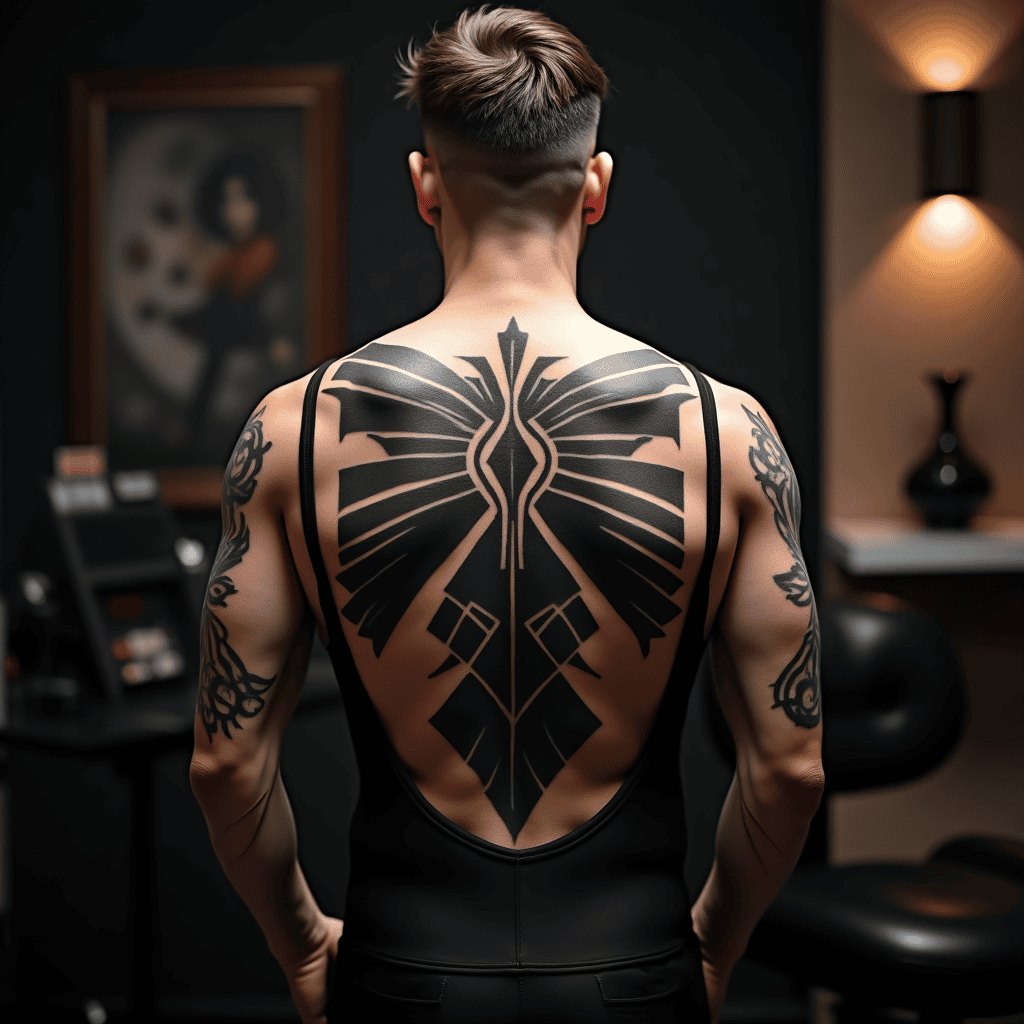
The back offers enough uninterrupted space to let geometry become architectural. A central vertical spine can anchor large circles, angular wings, layered diamonds, and sweeping symmetrical shapes extending toward the shoulder blades. Solid black sections should be distributed rather than concentrated in one place so the composition doesn’t feel top-heavy. Open skin around the outer edges helps preserve the body’s shape.
This is a serious project for men who want one unified piece rather than a collection of unrelated tattoos. Ask the artist, “Design the entire back as one composition with a strong centerline, large negative-space areas, and geometry that follows my shoulder blades.” For concept imagery and consultations, the design can be visualized on a fitted open-back tattoo-session garment that maintains appropriate coverage. The drawback is the amount of planning and commitment required before the first major section is even started.
25. Blackwork Patchwork Sleeve

A patchwork sleeve offers a different route from one continuous composition. Separate blackwork pieces—an animal head, geometric symbol, plant form, abstract mark, small ornamental motif—can occupy distinct sections of the arm while generous gaps of bare skin keep each image independent. Repeating similar line weights and black density helps the separate tattoos feel intentional. It should look collected, not crowded.
This suits men who enjoy adding tattoos over time rather than completing an entire sleeve from one drawing. Ask the artist, “Help me plan the spacing so every blackwork piece stands alone but the whole arm still feels related.” Start with two or three stronger anchor tattoos before filling smaller gaps. The downside is temptation: once every empty patch becomes a target, the clean patchwork effect can disappear under unnecessary filler.
How to Choose the Right Blackwork Tattoo Idea
Start with placement before obsessing over the subject. A narrow forearm naturally suits snakes, vertical geometry, botanical stems, and stacked symbols. The shoulder gives circular designs room to curve. The thigh and back can handle larger animal portraits or compositions with broad solid-black areas.
Next, decide how much negative space you want. Some blackwork tattoo ideas are mostly open skin with heavy outlines, while others place saturated black sections across a large percentage of the design. Save a few references showing the amount of darkness you like rather than bringing twenty unrelated tattoo pictures.
Scale matters too. A complex wolf, tiger, dragon, or mandala needs enough space to separate its important shapes. Shrinking a large composition doesn’t preserve the same design; it forces details closer together. In many cases, simplifying the artwork produces a stronger small tattoo than miniaturizing the original concept.
Bring your tattoo artist references for mood, contrast, placement, and shape rather than demanding an exact copy of somebody else’s tattoo. A useful consultation request is: “I like this level of black coverage, this placement, and this type of negative space, but I want an original composition built for my body.”
And look carefully at an artist’s healed blackwork portfolio when available, not only fresh photographs. Dense black areas, geometric borders, intentional skin breaks, and large-scale compositions each require slightly different strengths. If an artist’s portfolio mainly shows another style, a complicated blackout or geometric project may not be the best place to experiment.
Frequently Asked Questions
What are blackwork tattoos?
Blackwork tattoos are designs built primarily from black ink, often using solid filled areas, heavy outlines, graphic shapes, negative space, or high-contrast illustration. The category is broad enough to include geometric patterns, ornamental work, animals, botanical designs, abstract pieces, and extensive blackout coverage.
What are the best blackwork tattoo ideas for men?
Strong options include geometric forearm tattoos, wolves, ravens, snakes, botanical sleeves, negative-space mandalas, ornamental chest pieces, abstract brushwork, and larger blackout designs. The best choice depends less on what’s trending and more on placement, desired coverage, personal style, and how much visual weight you want.
Where do blackwork tattoos look best?
Forearms, upper arms, shoulders, thighs, calves, chests, and backs all give blackwork useful space. Forearms favor long compositions, shoulders work naturally with circular patterns, and the back allows large symmetrical designs. Placement should support the shape of the artwork instead of forcing a wide design into a narrow area.
Are blackwork tattoos always completely filled with black ink?
No. Some designs use extensive solid fill, but others depend heavily on untouched skin. Negative space can separate geometric bands, define animal features, create botanical details, or form entire patterns inside darker sections. Often, that contrast between saturated black and open skin is what makes the design readable.
Can a blackwork tattoo be small?
Yes, but simpler usually works better. Small blackwork tattoo ideas can include symbols, armbands, miniature geometric forms, bold insects, or uncomplicated botanical shapes. A highly detailed tiger, dragon, or mandala generally benefits from more room rather than squeezing the same number of elements into a small placement.
Do blackwork tattoos work as full sleeves?
They can work exceptionally well as sleeves because heavy black shapes create a consistent visual language across the arm. You can choose one flowing composition or build a patchwork sleeve from separate pieces. Either way, leaving planned negative space often keeps the sleeve clearer than filling every available gap.
What should I ask a blackwork tattoo artist before booking?
Ask to see work that matches the type of blackwork you want, especially comparable geometric, blackout, illustrative, or ornamental pieces. Discuss placement, black coverage, negative space, scale, and future additions. If possible, look at examples of healed work so you understand the artist’s finished results.
Are geometric blackwork tattoos difficult to design?
They can be demanding because symmetry, line direction, spacing, and body placement all need to work together. A pattern that looks perfect on flat paper may change once wrapped around a forearm or shoulder. Good geometric work is designed around the body rather than transferred without adjustment.
Can I mix blackwork tattoos with other tattoo styles?
Yes. Blackwork can sit beside fine-line, traditional, illustrative, ornamental, or dotwork tattoos when the overall spacing and contrast are planned carefully. The easiest combinations usually share at least one visual connection, such as black line weight, repeated shapes, similar subject matter, or consistent negative-space treatment.
How do I keep a blackwork sleeve from looking too crowded?
Choose a few anchor designs first and protect the empty space around them. Repeating solid-black density, line weight, or geometric shapes can connect separate pieces without filling every gap. A sleeve often becomes stronger when the skin between tattoos is treated as part of the design.
Are blackout tattoos a good first tattoo?
For most people, a smaller blackwork piece provides more flexibility when they’re still learning what scale and coverage they enjoy. Blackout tattoos occupy a large visual area and strongly influence future work on the same limb. They make more sense when the commitment to heavy coverage is already clear.
Should every blackwork tattoo have a meaning?
No. A tattoo can carry personal symbolism, but it can also be chosen because the shape, composition, or visual style genuinely appeals to you. What’s more important is choosing a design you’ll still appreciate once the novelty wears off and having it adapted rather than copied directly.
Blackwork rewards commitment to the composition more than commitment to complexity. A clean armband can look stronger than an overloaded sleeve, while a huge back piece can feel surprisingly controlled when enough skin is left open. Choose two or three blackwork tattoo ideas you genuinely respond to, decide where you want the tattoo to live, and take those references to an artist whose portfolio already shows the type of bold black work you want.
Best Tattoo Design Reports
Explore sleeve, minimalist, Japanese, blackwork and modern tattoo ideas created for men’s style inspiration.