
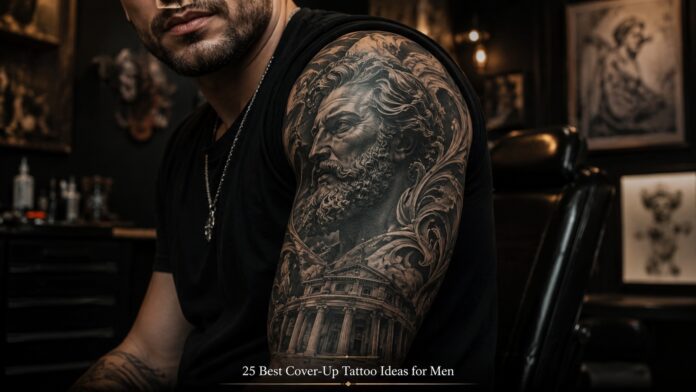
The best cover-up tattoo ideas for men turn old ink into something that looks intentional rather than patched over. Blackwork animals, Japanese-style designs, forest scenes, and geometric compositions are especially useful because they create enough depth, texture, and shadow to disguise what sits underneath. The strongest result usually comes from designing around the existing tattoo instead of trying to erase its shape visually.
A successful cover-up depends on placement, old-ink density, skin space around the tattoo, and how much freedom you give the artist. This guide focuses on designs that offer practical coverage while still looking like tattoos you would choose even if there were nothing underneath.
| Cover-Up Idea | Best Placement | Coverage Strength | Overall Look |
|---|---|---|---|
| Blackwork Raven | Forearm, upper arm | High | Dark and dramatic |
| Japanese Koi Fish | Arm, shoulder, calf | High | Flowing and detailed |
| Forest Landscape | Forearm, calf | Medium-high | Rugged and natural |
| Geometric Blackwork | Arm, chest | High | Modern and structured |
| Traditional Panther | Upper arm, thigh | High | Bold and classic |
| Dragon Design | Arm, shoulder, back | High | Powerful and detailed |
| Peony Flower | Shoulder, forearm | Medium-high | Artistic and balanced |
| Snake Wrap | Forearm, leg | Medium-high | Dynamic and masculine |
| Mandala Blackwork | Shoulder, chest | High | Symmetrical and clean |
| Full Sleeve Rework | Entire arm | Very high | Complete transformation |
Small and Practical Cover-Up Tattoo Ideas
Smaller tattoos do not always require an enormous replacement design. Some of the most useful cover-up tattoo ideas work by extending only slightly beyond the old tattoo while adding darker focal points where coverage is actually needed. These options suit men covering names, faded symbols, small lettering, or older minimalist tattoos.
1. Black Compass Cover-Up
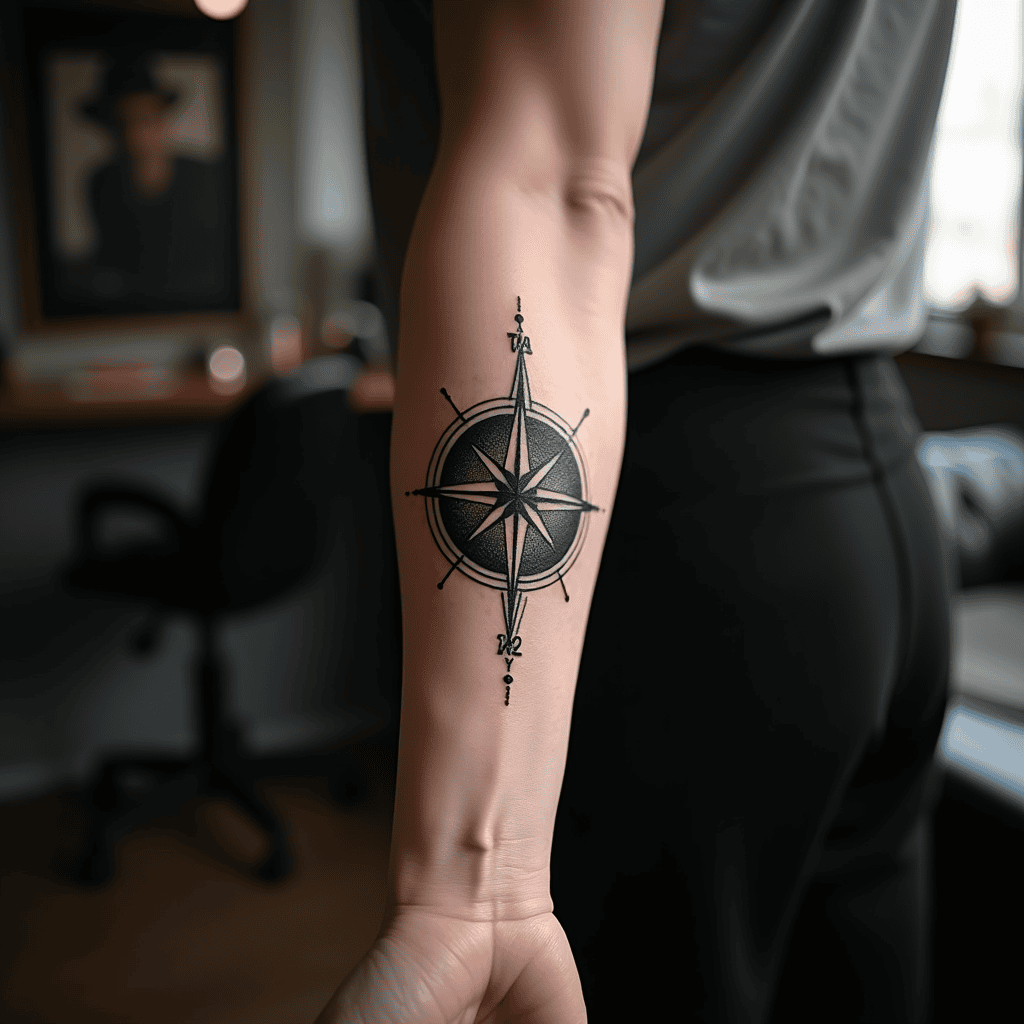
A black compass works particularly well over old circular symbols, lettering, and small geometric tattoos because its layered points naturally create darker intersections. Heavy black shading can sit through the center while thinner directional lines spread outward, making the design feel deliberate rather than oversized. Small dotwork transitions around the perimeter help soften the jump between dense coverage and untouched skin. The finished piece looks especially sharp on the inner forearm or upper arm.
This style works best when you like structured tattoos but do not want your cover-up turning into a huge sleeve. Tell your tattoo artist, “Build the darkest part of the compass directly over the old ink, then let the outer points open into lighter detail.” Expect the final compass to be somewhat larger than the tattoo underneath because hiding an outline without creating a cramped design usually requires extra room. Skip an extremely fine-line version if your old tattoo contains thick dark shapes.
2. Small Black Rose Cover-Up
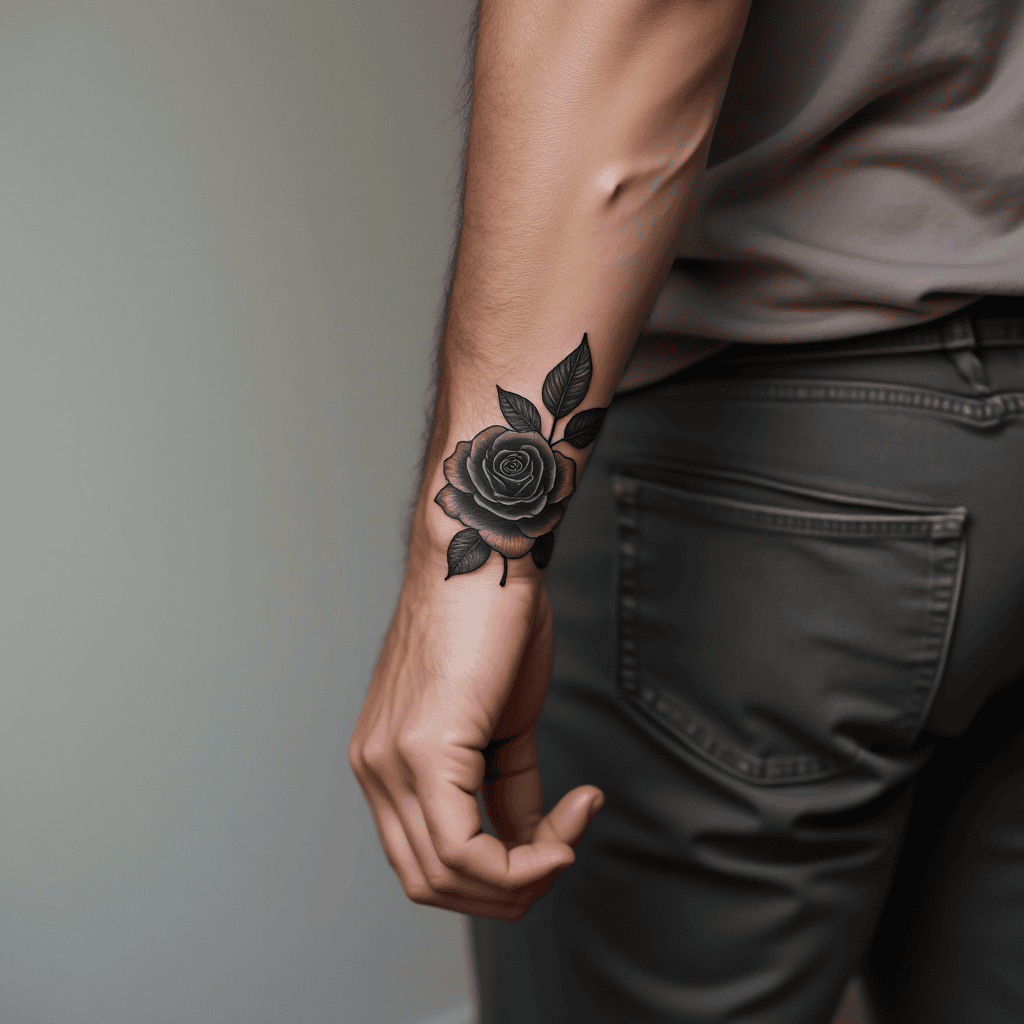
A compact black rose can bury an awkward old symbol inside overlapping petals without looking like an obvious correction. The deepest blacks sit between the petals and toward the flower’s center, while softer grey shading creates separation closer to the outside edge. An angled leaf or short stem can absorb a stray piece of old lettering that extends beyond the main tattoo. On a wrist, forearm, or shoulder, the result feels classic and easy to wear.
This is one of the more adaptable cover-up tattoo ideas for someone who wants recognizable imagery without moving into aggressive blackwork. Ask your artist, “Use the center petals as the main coverage area and keep the outside petals readable instead of making the whole rose solid black.” Roses need enough negative space between their shapes to remain recognizable after healing, so reducing the design too far usually works against you. Men who dislike floral imagery should choose a similarly layered animal or ornamental motif instead.
3. Feather Cover-Up Tattoo
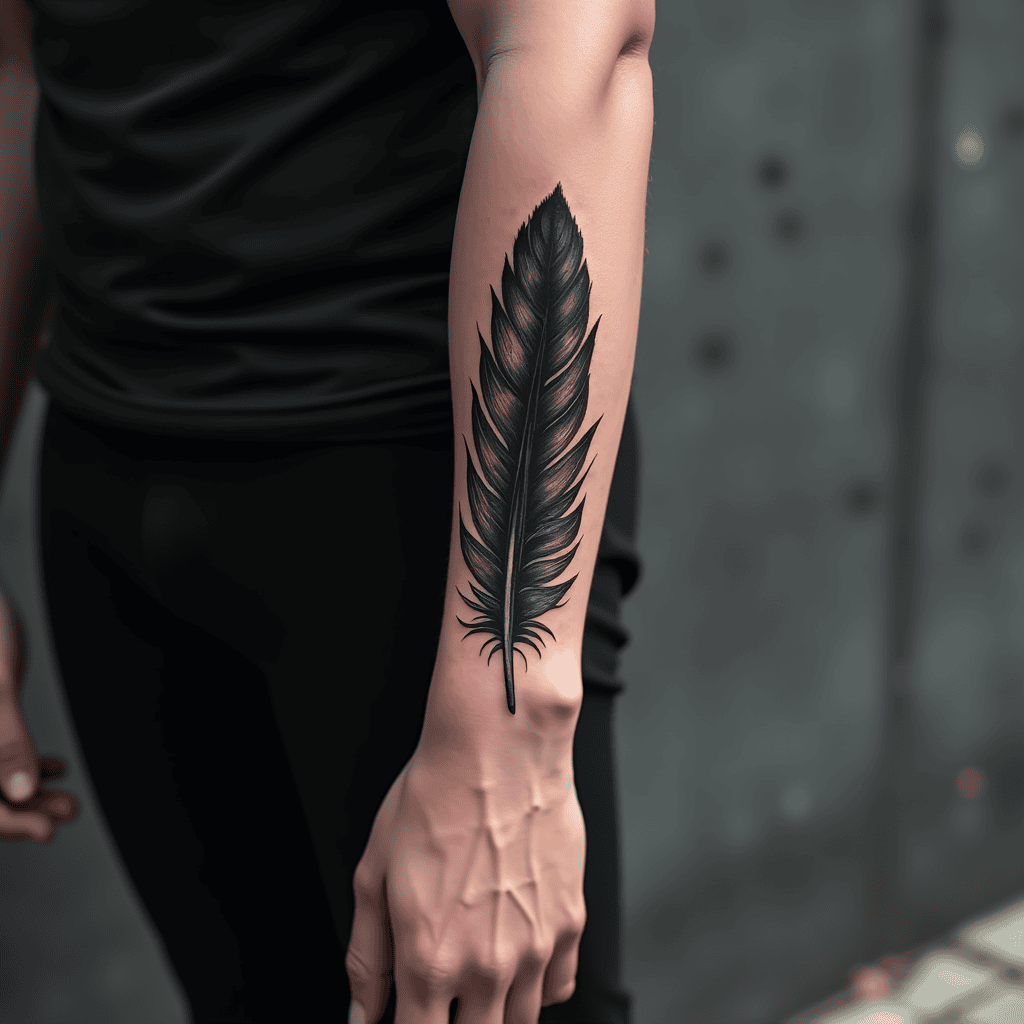
A feather gives the artist a useful mix of dark structure and loose edges. The central shaft can follow an old line or word, while overlapping barbs create repeated bands of black and grey that interrupt whatever was underneath. Rather than making the feather perfectly straight, a slight curve helps the new piece feel organic and opens more options for positioning dense areas. It fits naturally along the forearm, ankle, calf, or upper arm.
This approach suits older tattoos that are narrow rather than block-shaped. Tell the artist, “Follow the old tattoo with the feather’s central structure and concentrate the darkest sections where the existing ink is strongest.” The weak point is coverage capacity: a delicate feather will not magically hide a heavy black rectangle or a large saturated tribal design. For dense old work, the same concept needs to become noticeably darker and broader.
4. Mountain Silhouette Cover-Up
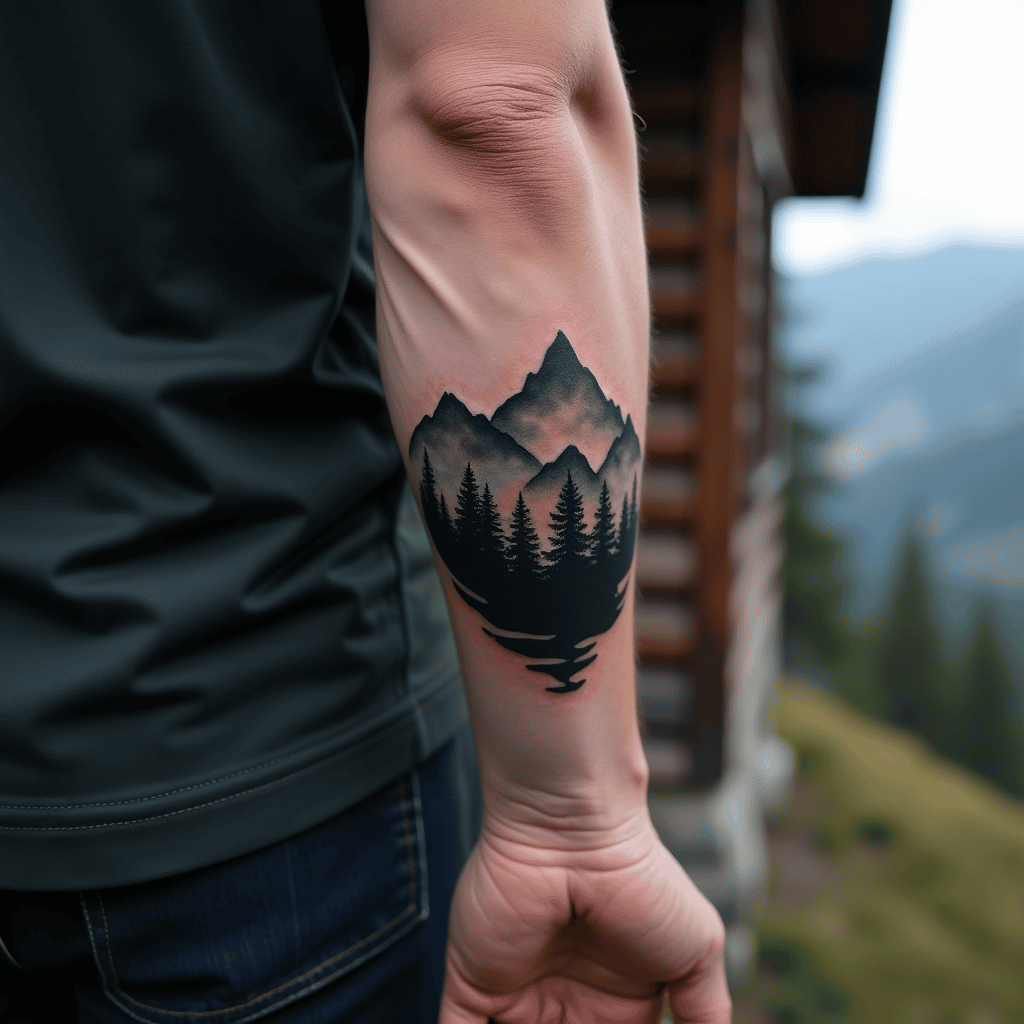
A mountain silhouette turns small old tattoos into the darkest point of a wider landscape. Deep black peaks can sit directly over unwanted lettering, while softer ridgelines and misty shading expand around them. Adding a moon, tree line, or restrained dotwork sky creates visual balance without forcing every inch of the design to become dark. The horizontal composition feels natural on the forearm, upper arm, chest, or calf.
Men who prefer outdoors imagery often find this easier to live with than an ornamental cover-up. Ask your artist, “Place the darkest mountain ridge over the old tattoo, then build lighter layers behind it so the piece still has depth.” The design loses its effect when every peak is filled at the same value because it starts reading as one black mass. A tall or irregular old tattoo may also require a forest or larger landscape rather than mountains alone.
5. Dagger Tattoo Cover-Up
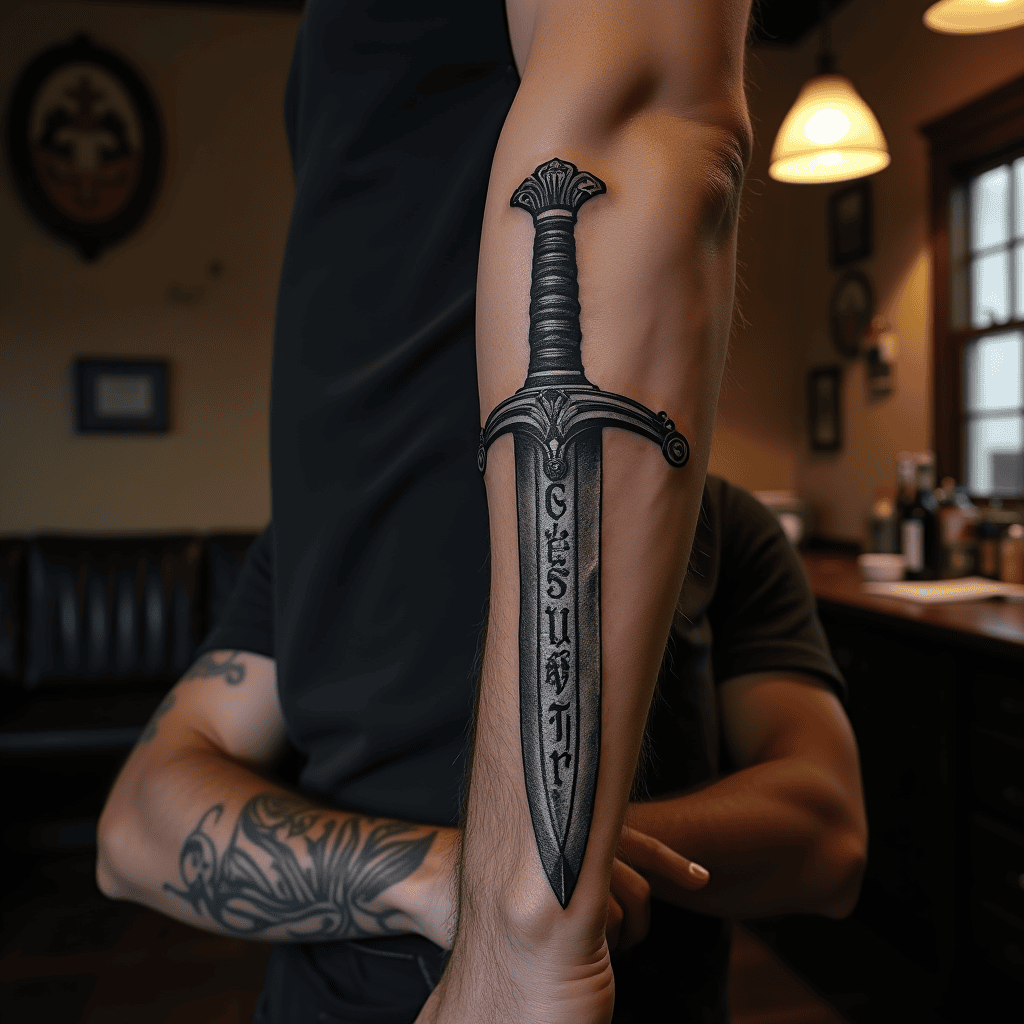
A traditional dagger offers a long, dark central shape that is useful for hiding vertical lettering, narrow symbols, or an older tattoo running lengthwise down the arm. The blade can carry smooth grey tones while the handle, guard, decorative scrollwork, or shadows supply heavier coverage where necessary. A slight diagonal position often looks stronger than forcing the dagger perfectly upright. Bold outlines keep the new design readable even when the center requires dense ink.
This works for men who want a tougher traditional look without committing to a full sleeve. Say to your artist, “Use the handle and darkest shadows over the most saturated old ink, but keep the blade open enough that it still reads as metal.” One drawback is the rigid shape; a dagger cannot bend around every awkward old tattoo the way a snake or floral composition can. Placement needs to be planned around the existing piece rather than selected only for symmetry.
Nature and Animal Cover-Up Tattoo Ideas
Animals and natural scenery give a tattoo artist plenty of irregular texture to work with. Fur, scales, feathers, leaves, branches, clouds, and water can redirect the eye while darker focal areas sit directly over existing ink. These cover-up tattoo ideas are especially useful when the old design does not have a neat geometric shape.
6. Blackwork Raven Cover-Up
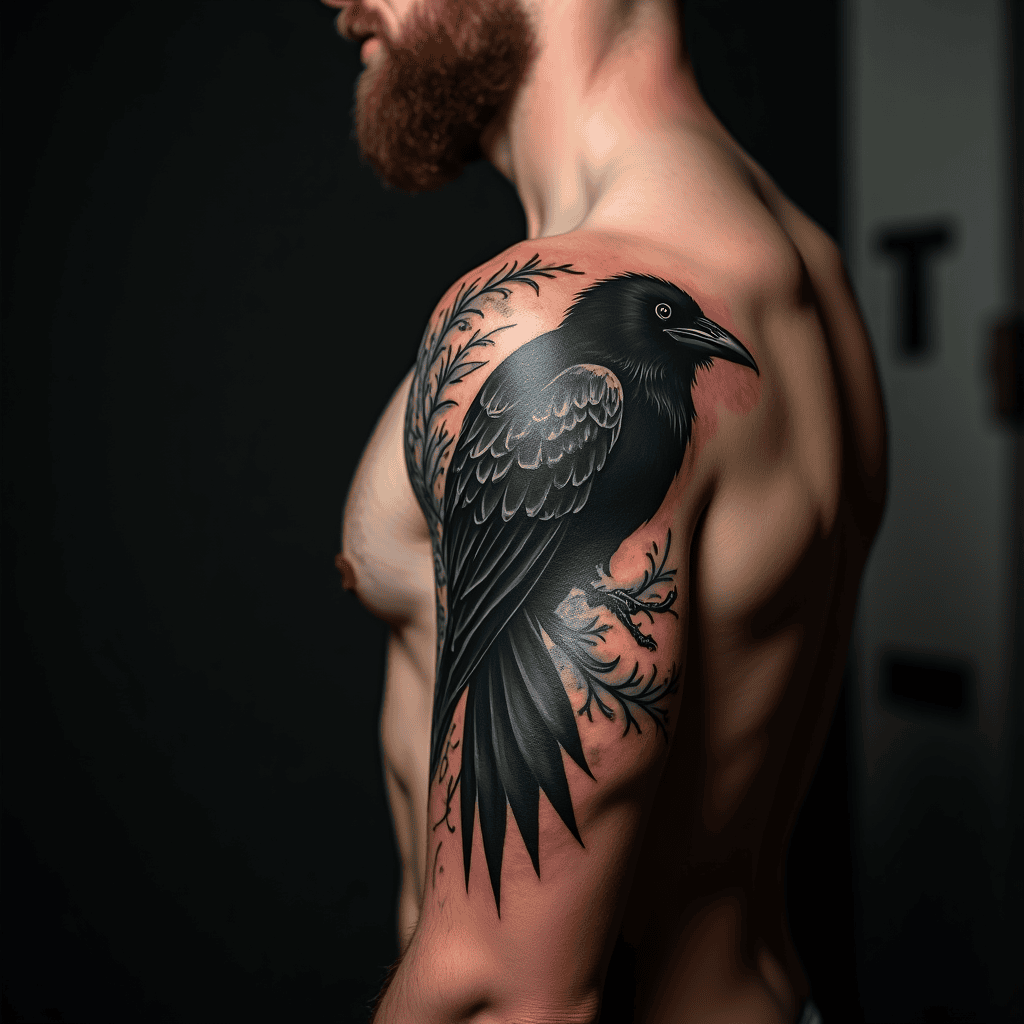
A raven offers almost everything a difficult cover-up needs: layered feathers, deep black sections, directional movement, and a silhouette that can be adjusted around old lines. One wing might open across the darkest area while the body absorbs thick lettering or a faded emblem. Grey feather edges can then taper outward, stopping the tattoo from becoming an unreadable black patch. It looks strong across the shoulder, upper arm, forearm, or chest.
This design is best for someone comfortable with a noticeably darker new tattoo. Ask your artist, “Let the body and inner wing carry the cover-up, then keep detail in the outer feathers so the raven still has separation.” The old tattoo may influence the bird’s position more than you expect, so forcing an exact reference pose can make the job harder. A good cover-up raven should be designed around your existing ink, not traced from a generic image.
7. Wolf Portrait Cover-Up
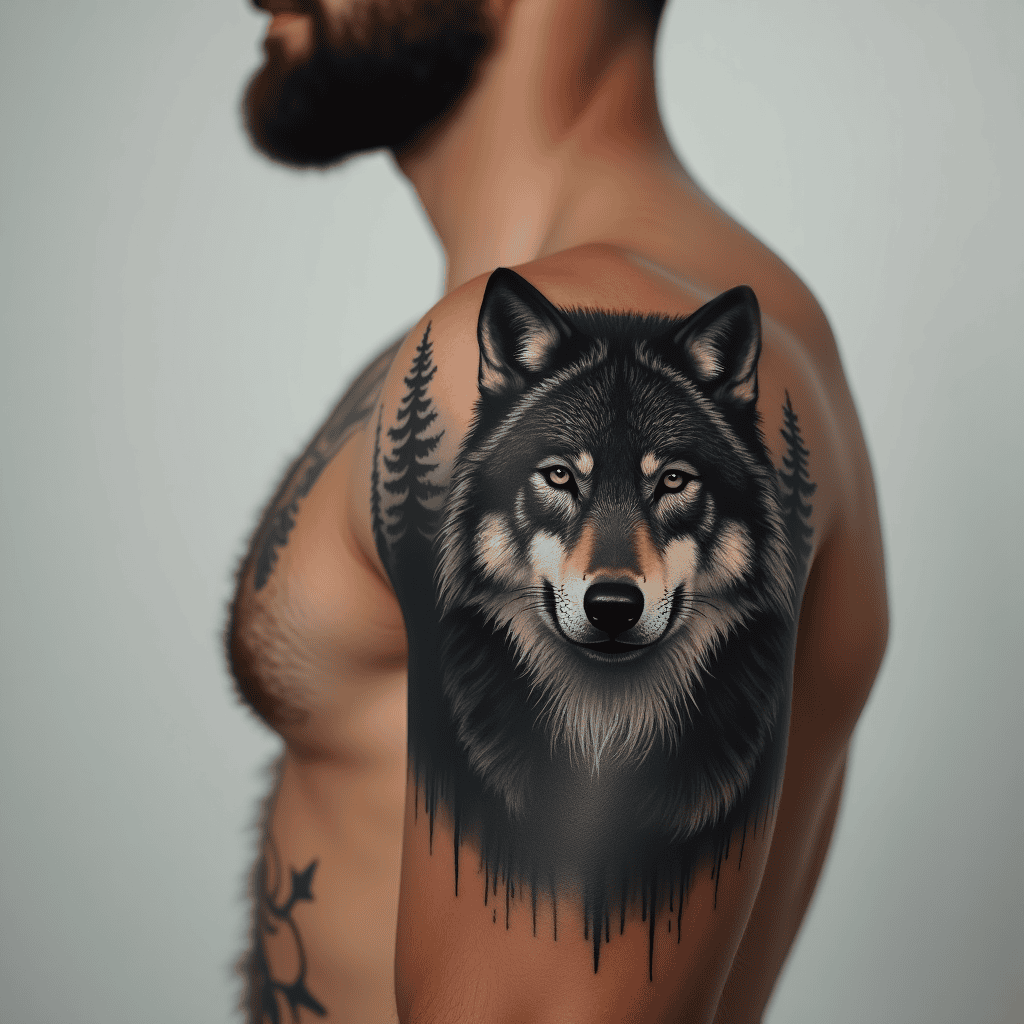
A wolf portrait uses dark fur, facial shadows, and layered background elements to cover old work without making the final image feel flat. The darkest section can fall around the ears, neck, or shadowed side of the face while the muzzle and eyes stay lighter enough to remain expressive. Forest silhouettes or smoky shading can extend coverage when the original tattoo stretches beyond the portrait. A vertical format suits the upper arm, thigh, or calf particularly well.
Realistic animal tattoos demand enough scale, so this is rarely the answer for someone insisting on the smallest possible replacement. Tell your artist, “Use the dark fur and background for coverage, but protect enough contrast around the eyes and muzzle to keep the wolf readable.” Portrait detail can muddy when squeezed into a tiny area. If available space is limited, a stylized wolf head may age more clearly than a miniature realistic one.
8. Snake Wrap Cover-Up
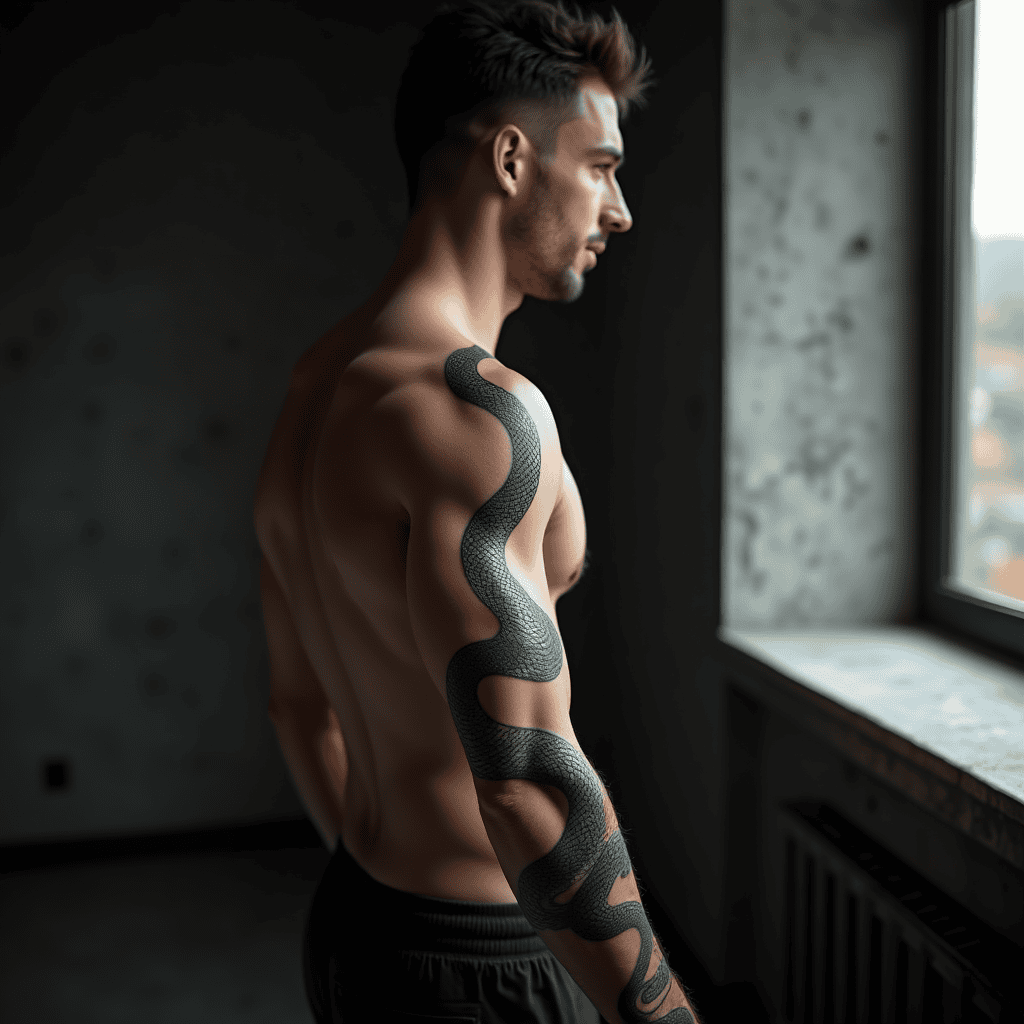
A snake can bend around inconvenient tattoos instead of forcing them into a rectangular composition. Dark scales and shadowed coils sit over the existing ink, while lighter belly sections provide contrast where coverage is not necessary. The body can twist around the forearm, bicep, calf, or thigh, giving the artist several opportunities to position its deepest blacks strategically. Leaves, flowers, or smoke can fill small gaps without making the main snake excessively thick.
This is one of the strongest cover-up tattoo ideas when the old piece has a long or irregular footprint. Ask for, “A snake that follows the old tattoo rather than sitting beside it, with the darkest scale sections directly over the existing lines.” The composition needs careful spacing because coils packed too closely can merge visually from a distance. If you want a minimal tattoo, this probably is not the right correction.
9. Forest Sleeve Section
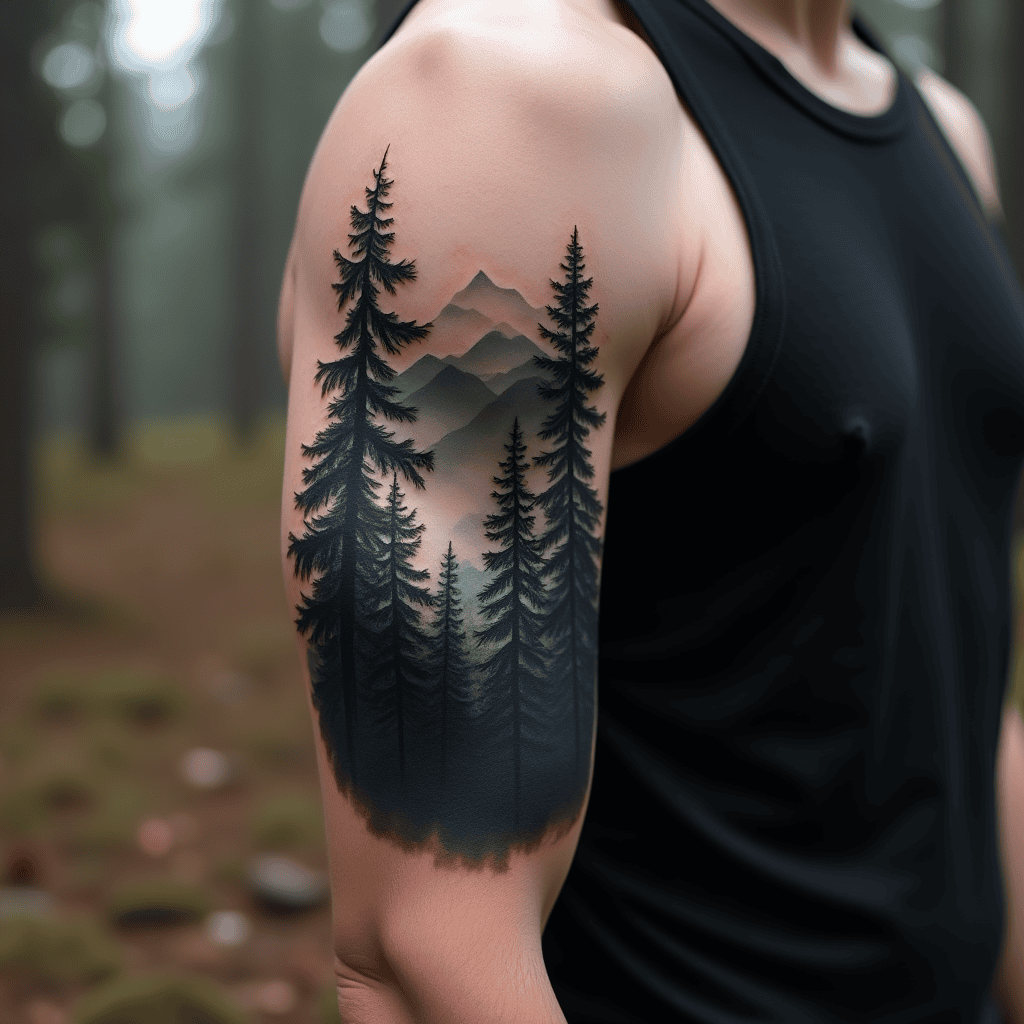
A dense pine forest is naturally forgiving because trunks, shadows, foliage, atmospheric haze, and uneven terrain create layers of visual information. Old ink can disappear into a cluster of dark trees while lighter distant pines establish depth above or beside it. A mountain ridge or moon can be introduced if the artist needs more space to connect several existing marks. Forearms and calves give the vertical tree shapes room to breathe.
Nature lovers often gravitate toward these cover-up tattoo ideas because the resulting design does not need to look aggressive despite using substantial black ink. Ask your artist, “Use the foreground trees for the actual cover-up and let the background fade gradually instead of filling the whole area equally dark.” Thin trees alone will not cover broad solid ink. The artist may need several overlapping layers of forest rather than a sparse landscape.
10. Lion With Shadowed Mane
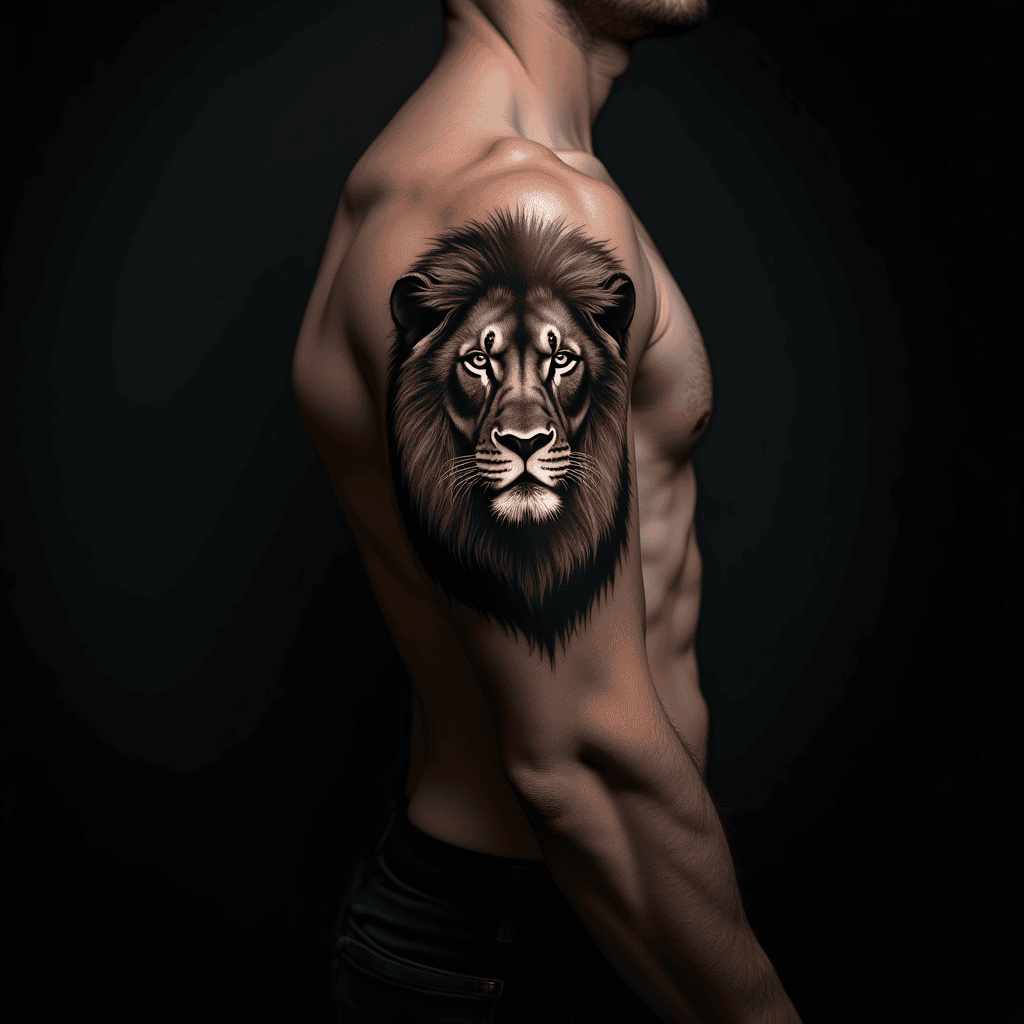
A lion portrait provides a broad mane that can absorb old lettering or uneven shapes while keeping the face as the visual focus. Dark strands around the sides create coverage, and a lighter forehead, muzzle, and eyes prevent the entire tattoo from turning into one heavy block. The artist can angle the head or add background smoke to reach an awkward section of old ink. Upper arms, shoulders, thighs, and chest panels provide enough space for this treatment.
A lion works best when the original tattoo is large enough that a substantial replacement already makes sense. Tell your artist, “Hide the old work through the darkest part of the mane and keep the face cleaner so the composition has somewhere for the eye to rest.” Going too small sacrifices facial detail quickly. It also requires someone comfortable with prominent imagery rather than a quiet, low-profile cover-up.
Traditional and Japanese-Inspired Cover-Ups
Traditional tattooing relies on bold outlines and strong blocks of color or black shading, while Japanese-inspired compositions use flowing backgrounds, overlapping subjects, wind bars, waves, and clouds. That makes both approaches naturally suited to challenging old tattoos where a tiny correction would never provide enough visual weight.
11. Traditional Panther Cover-Up
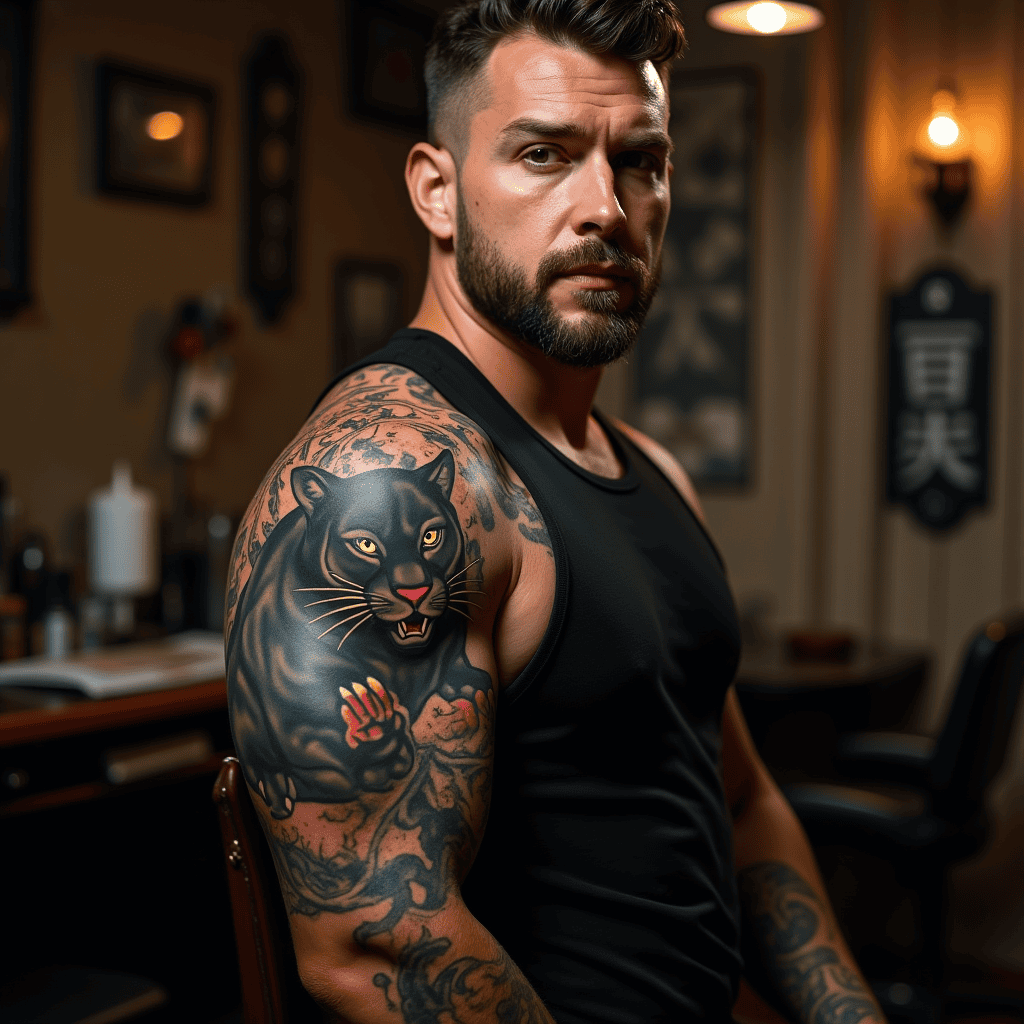
The traditional crawling panther remains an effective cover-up because much of its body can legitimately be rendered in deep black. Open skin breaks, teeth, claws, and small facial details stop the silhouette from becoming featureless, while the curved body can follow an arm or thigh. Red accents in the mouth or surrounding elements can add energy without competing with the coverage. It is unapologetically bold and looks intentional at a glance.
This style makes sense for anyone willing to replace an old tattoo with something darker and more traditional. Ask the artist, “Position the black torso over the old piece, but leave strong negative-space breaks around the face and legs so the panther doesn’t become a blob.” The tradeoff is obvious: you are exchanging flexibility for coverage strength. Someone who wants pale, airy tattooing should look elsewhere.
12. Japanese Koi Fish Cover-Up
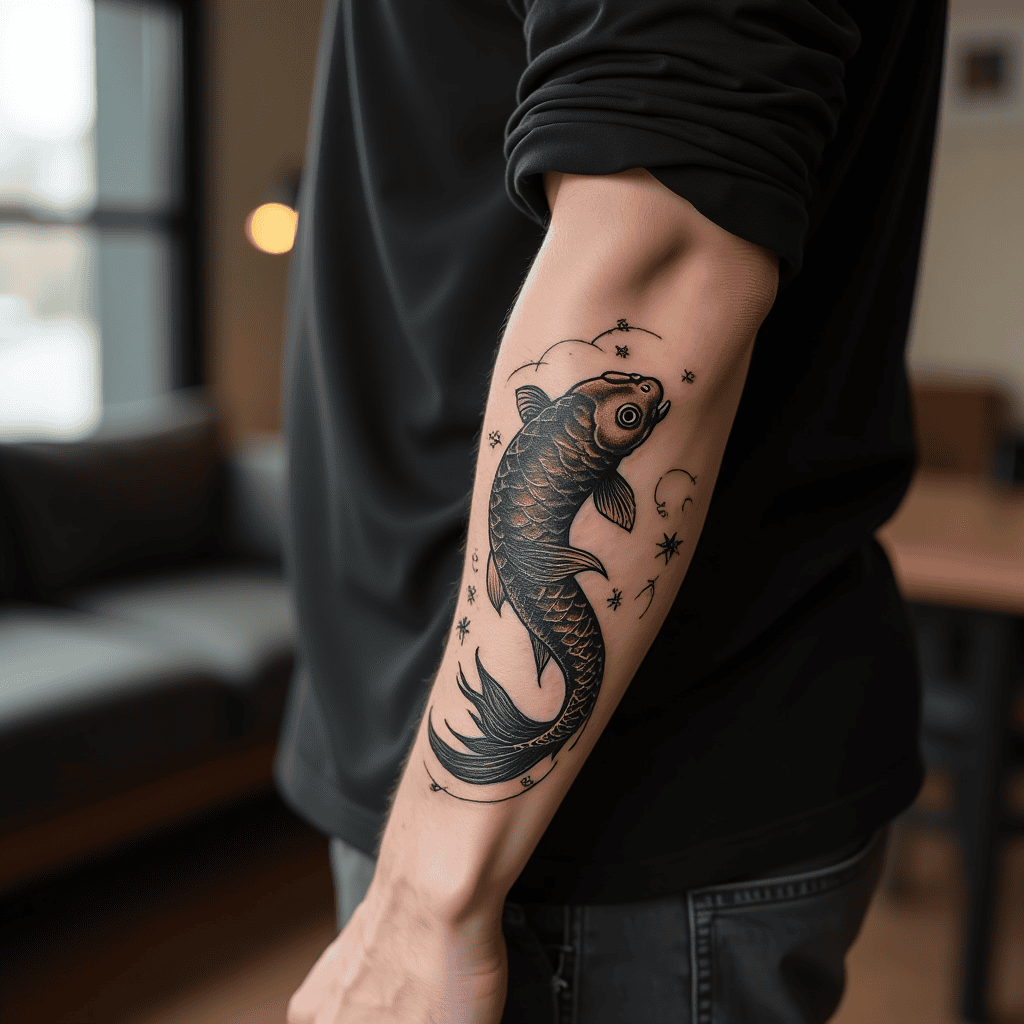
A koi gives the artist scales, fins, flowing water, dark contours, and a flexible body shape that can move through an existing tattoo instead of fighting it. Deep shading can sit along the back of the fish while water swirls overlap smaller unwanted sections. Orange, red, black, or grey palettes can all work depending on what the existing ink allows. The design fits particularly well on the upper arm, forearm, calf, or thigh.
For complex older work, Japanese-inspired cover-up tattoo ideas can be more forgiving than isolated symbols because the background is part of the composition. Tell the artist, “Let the koi’s darkest body section handle the main cover-up and use water or waves to connect anything that remains outside it.” The downside is scale; these designs become stronger as they gain room. Trying to compress the fish and background into a tiny patch usually weakens both.
13. Japanese Dragon Cover-Up
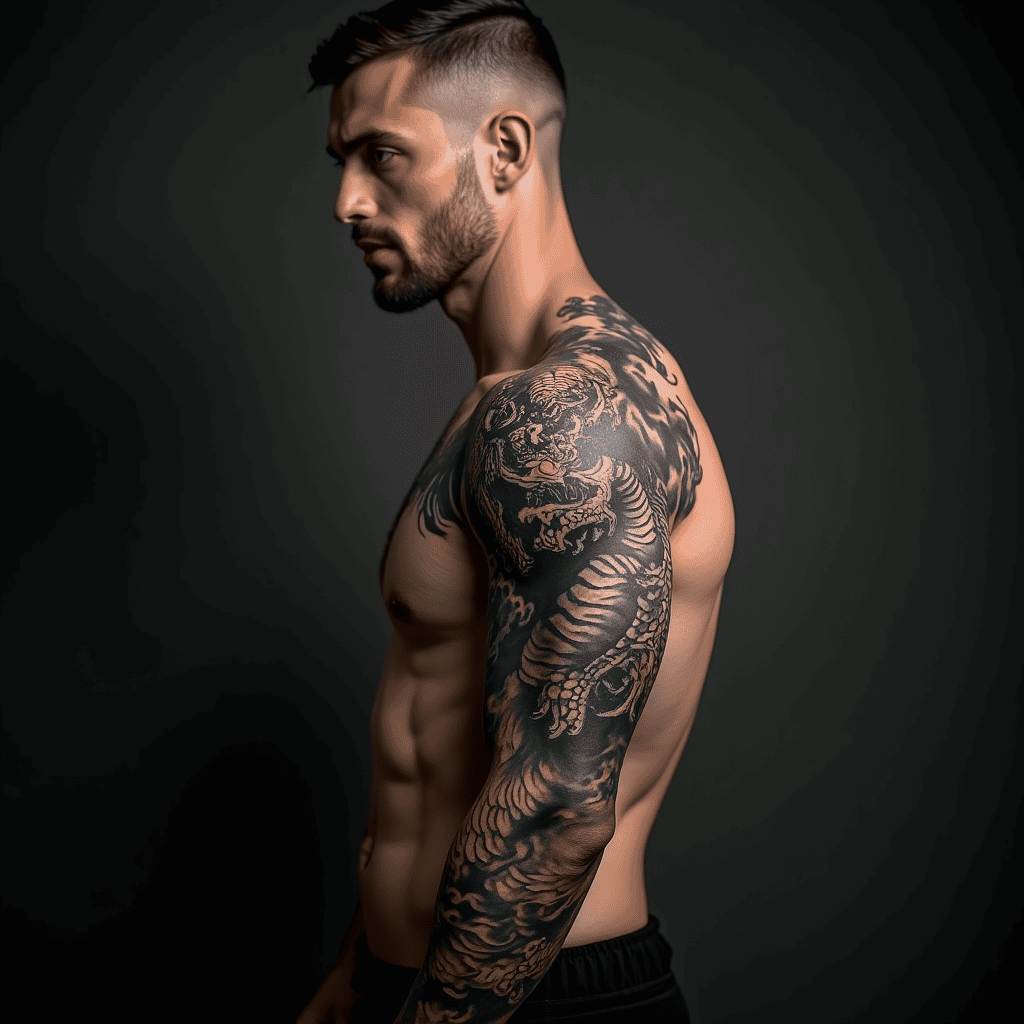
A dragon can stretch, coil, and change direction through a surprisingly complicated patch of old ink. Its scales, belly plates, claws, mane, and cloud background give the artist numerous textures to hide previous lines without relying on one solid shape. The head can remain the crisp focal point while darker body sections do most of the concealment. Shoulder-to-arm and thigh compositions are especially effective.
This is a serious visual commitment, which is exactly why it works for difficult cover-ups. Ask your tattoo artist, “Design the dragon around the old tattoo first, then position the head where it reads best rather than forcing the old ink underneath the face.” An intricate dragon needs enough surface area to retain separation between scales and background. If the available space is small, a dragon head alone may be the cleaner choice.
14. Oni Mask Cover-Up
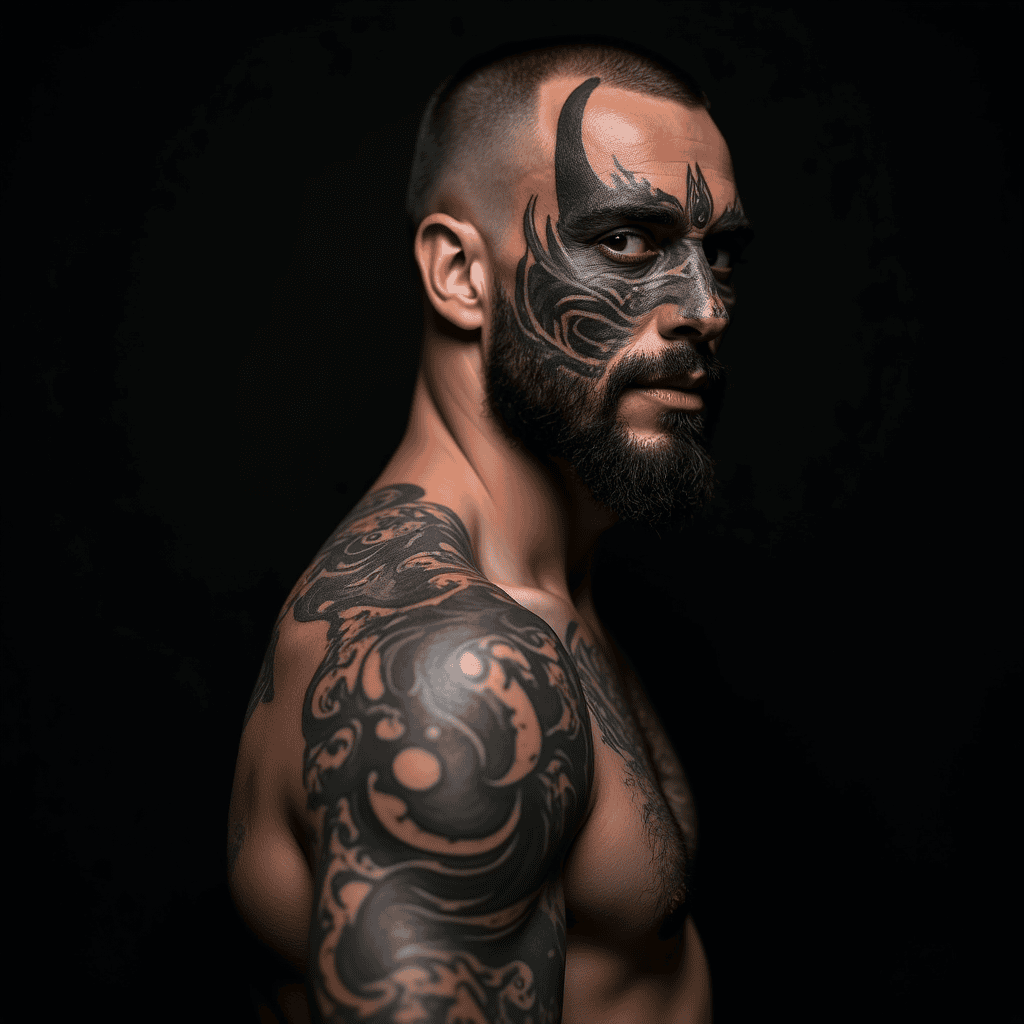
An oni mask creates broad shadow areas around the forehead, cheeks, hair, and background, giving the artist substantial room to place dense coverage. The exaggerated facial features remain readable even when parts of the design need to become darker than they would in a fresh tattoo. Horns and flowing background elements can extend beyond the old piece naturally. The result suits an upper arm, thigh, calf, or larger forearm.
The style is best for men who already like intense Japanese-inspired imagery rather than choosing it only because it covers well. Tell the artist, “Use the shadowed areas of the mask and background for the old tattoo, but keep the teeth, eyes, and major facial planes separated.” If every detail gets packed with black, the expression can disappear. Strong contrast matters as much as raw coverage.
15. Traditional Eagle Cover-Up
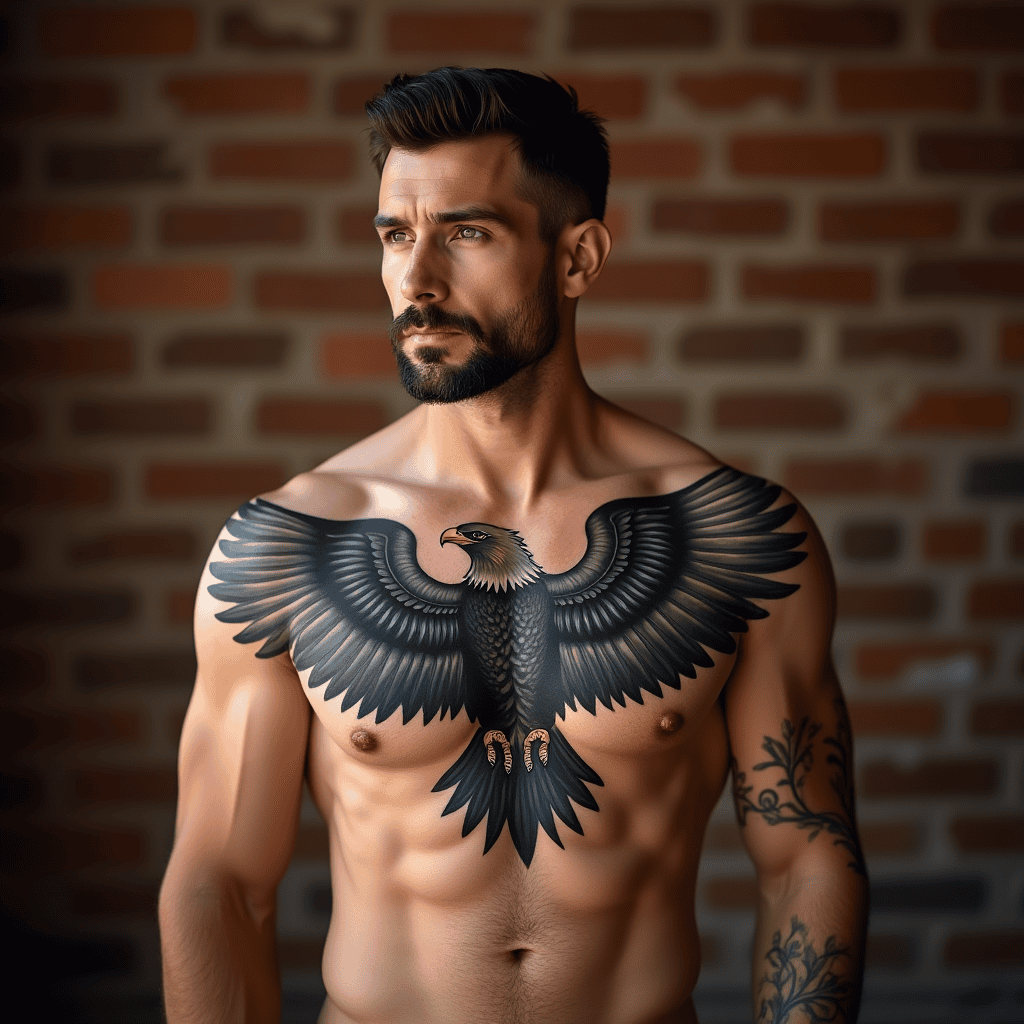
Spread wings give a traditional eagle enough width to hide names, old banners, or compact horizontal tattoos. Feather layers allow the artist to alternate saturated blacks with open skin, while the body and wing joints handle the darkest existing sections. A small branch, sun, or redesigned banner can extend the composition if needed. The chest, upper arm, shoulder blade, and thigh all give this design useful space.
Traditional eagle cover-up tattoo ideas work best when bold outlines already match your taste. Ask for, “Dark inner wings over the existing tattoo with clearer feather breaks toward the outside, so the cover-up stays readable from across the room.” Wing anatomy becomes crowded when the design is shrunk too aggressively. If your old tattoo is narrow and vertical, a raven or dagger may fit the footprint more naturally.
Geometric, Ornamental, and Blackwork Cover-Ups
When old ink is especially dark, decorative blackwork often gives the artist more freedom than realism. Repeated geometry, mandala layers, blackout transitions, and ornamental panels can incorporate heavy saturation as part of the final design instead of pretending it is not there.
16. Geometric Blackwork Panel
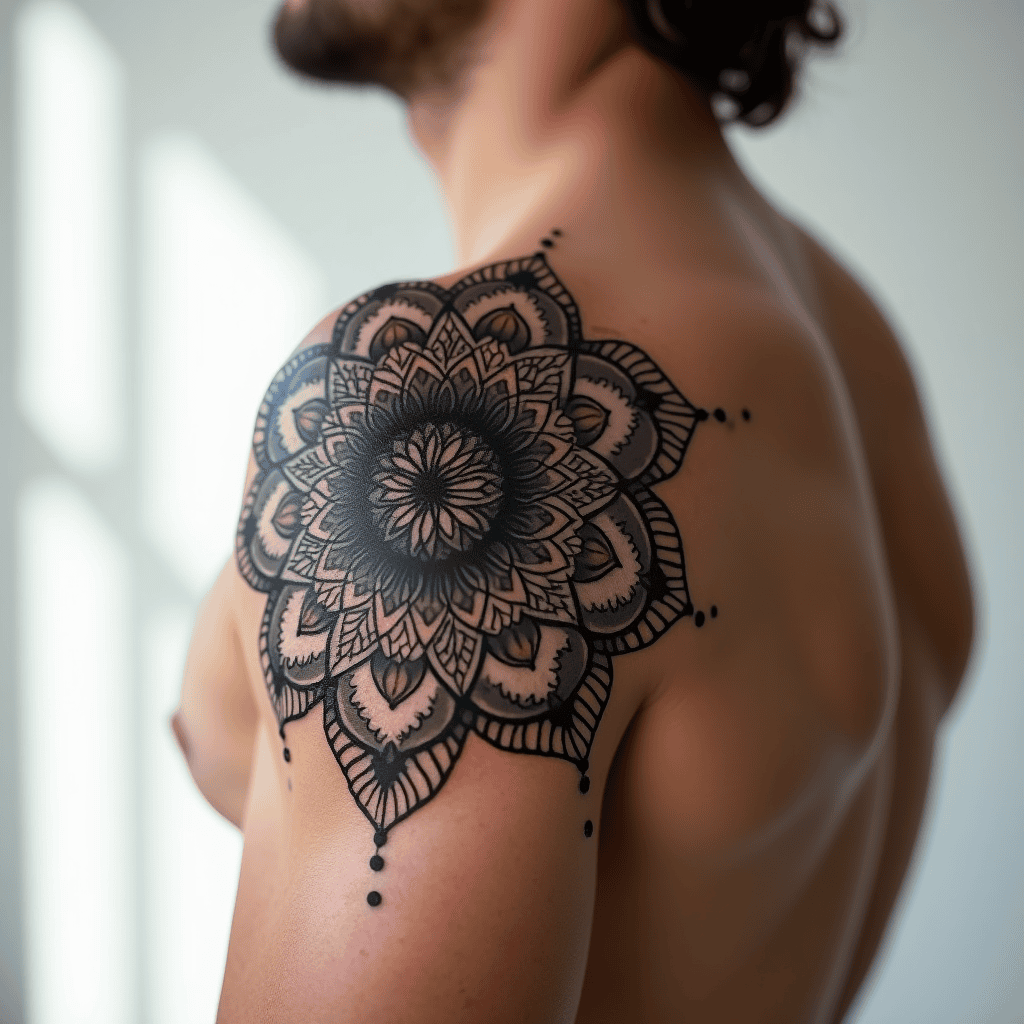
A geometric panel uses overlapping diamonds, circles, lines, and solid black sections to turn an old tattoo into part of a larger structured pattern. Dense areas can be placed precisely where coverage is needed, while thinner surrounding geometry gives the composition air. On an arm or calf, the pattern can taper toward either end instead of stopping abruptly. The finished result feels architectural and contemporary.
This is among the most practical cover-up tattoo ideas for old geometric or tribal work because the original angles can sometimes be absorbed into a new visual system. Tell the artist, “Build the solid geometry around the old tattoo first, then use finer linework only where the skin is clear.” The drawback is precision: crooked placement or inconsistent spacing is unforgiving. Choose an artist whose portfolio shows healed geometric work, not only fresh stencil photos.
17. Mandala Shoulder Cover-Up
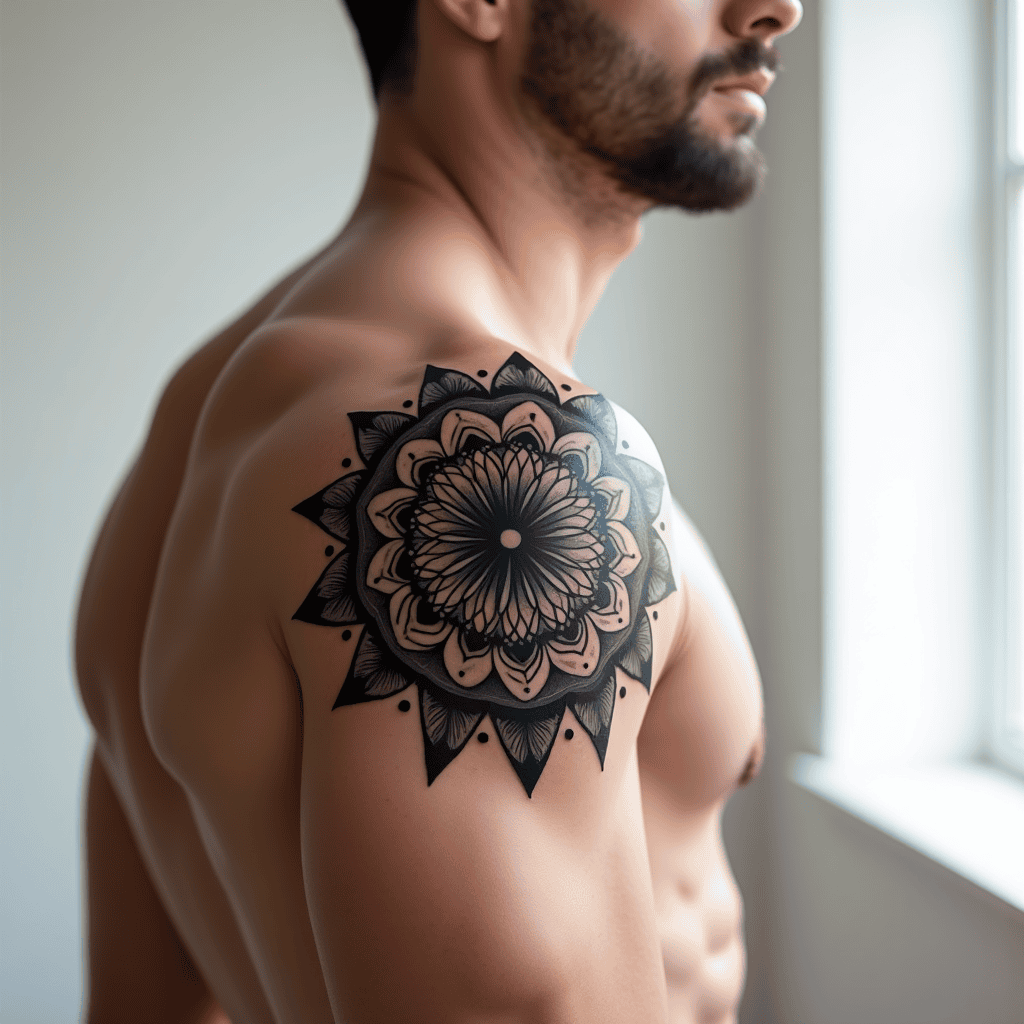
A mandala naturally places its darkest repeated shapes around a central point, making it useful for covering a compact tattoo on the shoulder, elbow area, chest, or thigh. Layers of petals and geometric segments grow outward, allowing the artist to shift individual sections slightly around existing ink. Black fills can be concentrated toward the center while dotwork and open skin lighten the perimeter. Symmetry gives the final piece a controlled, finished appearance.
The old tattoo still determines where the mandala’s center can realistically sit. Ask the artist, “Anchor the darkest central layers over the original tattoo, but protect negative space as the pattern expands outward.” This design requires careful mapping on curved body areas, and exact mathematical perfection is not always compatible with an awkward old tattoo. A slightly more ornamental interpretation can give the artist needed flexibility.
18. Ornamental Chest Piece
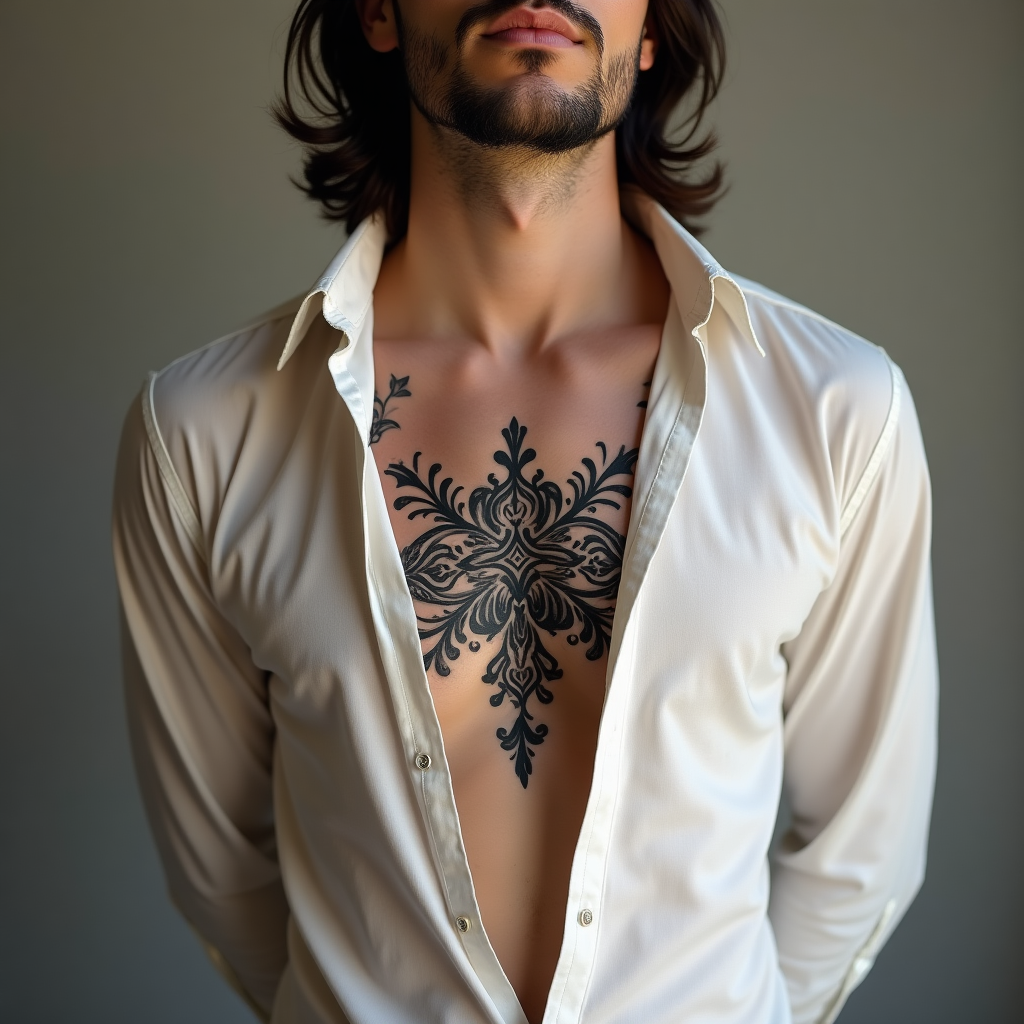
Ornamental tattooing uses curved black shapes, repeating flourishes, tapered points, and symmetrical framing to transform a scattered old tattoo into something intentionally decorative. Dense sections can sit over unwanted lines while finer extensions spread toward the collarbone or sternum. The contrast between heavy and delicate marks is what prevents the design from feeling like a simple black patch. It can also connect older tattoos on either side of the chest.
Men who enjoy graphic body art but do not want an animal or portrait may prefer this approach. Tell your artist, “Treat the old tattoo as the darkest anchor of the ornament and build the symmetry around my body rather than around a flat reference image.” Chest symmetry exposes small alignment problems quickly. Anyone uncertain about a large central composition should test placement carefully before committing.
19. Abstract Brushstroke Blackwork
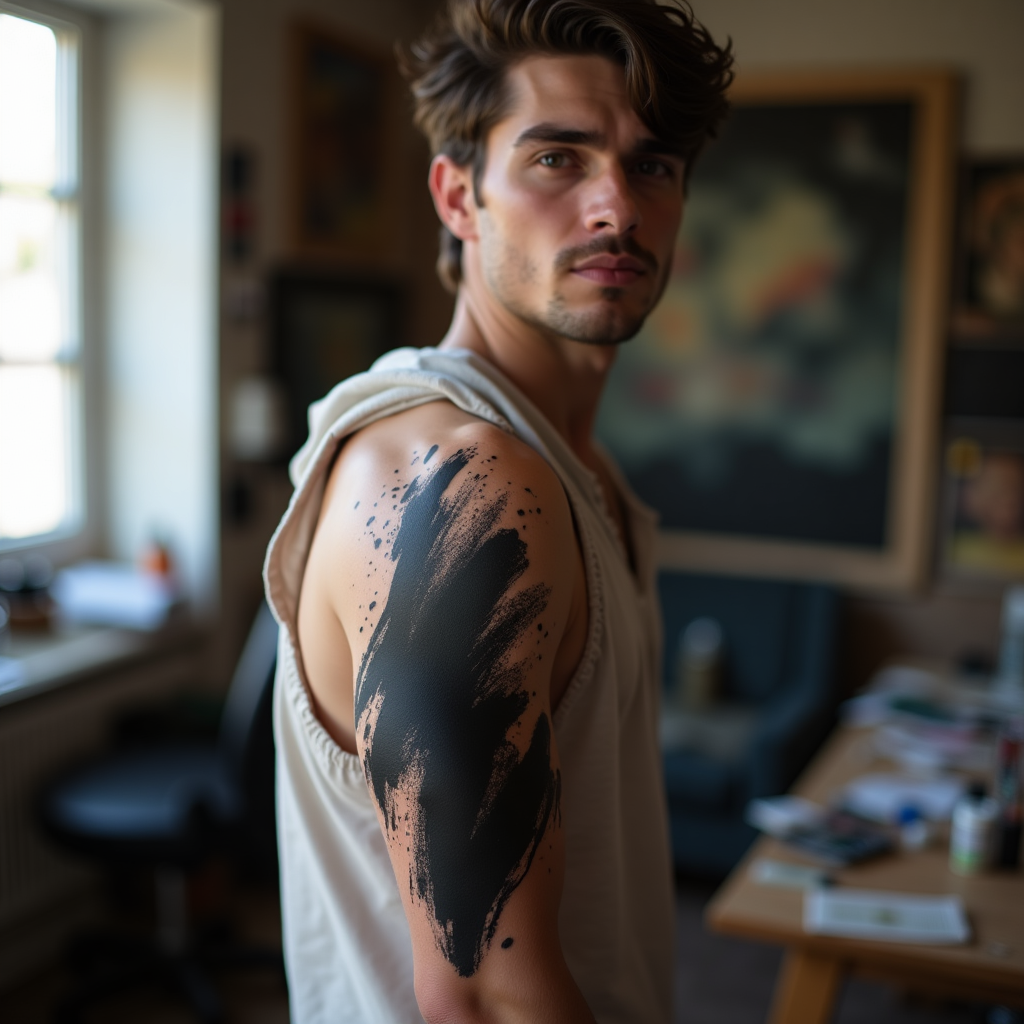
Brushstroke blackwork deliberately uses irregular edges, ink-like sweeps, broken texture, and overlapping dark fields. That freedom makes it excellent for an old tattoo whose shape would be difficult to hide inside a perfectly recognizable object. Some sections can be nearly solid while others break into dry-brush texture and scattered marks. Forearms, upper arms, calves, and shoulder blades give the movement enough room to look purposeful.
This style is for someone comfortable with abstract art rather than needing every tattoo to represent a specific object. Ask the artist, “Cover the old tattoo with the densest brushstroke, then let the remaining strokes break apart as they move into clean skin.” The line between intentional abstraction and random black marks is thin. Look for an artist who already understands composition in this style rather than asking a traditional specialist to improvise it.
20. Blackout With Negative-Space Pattern
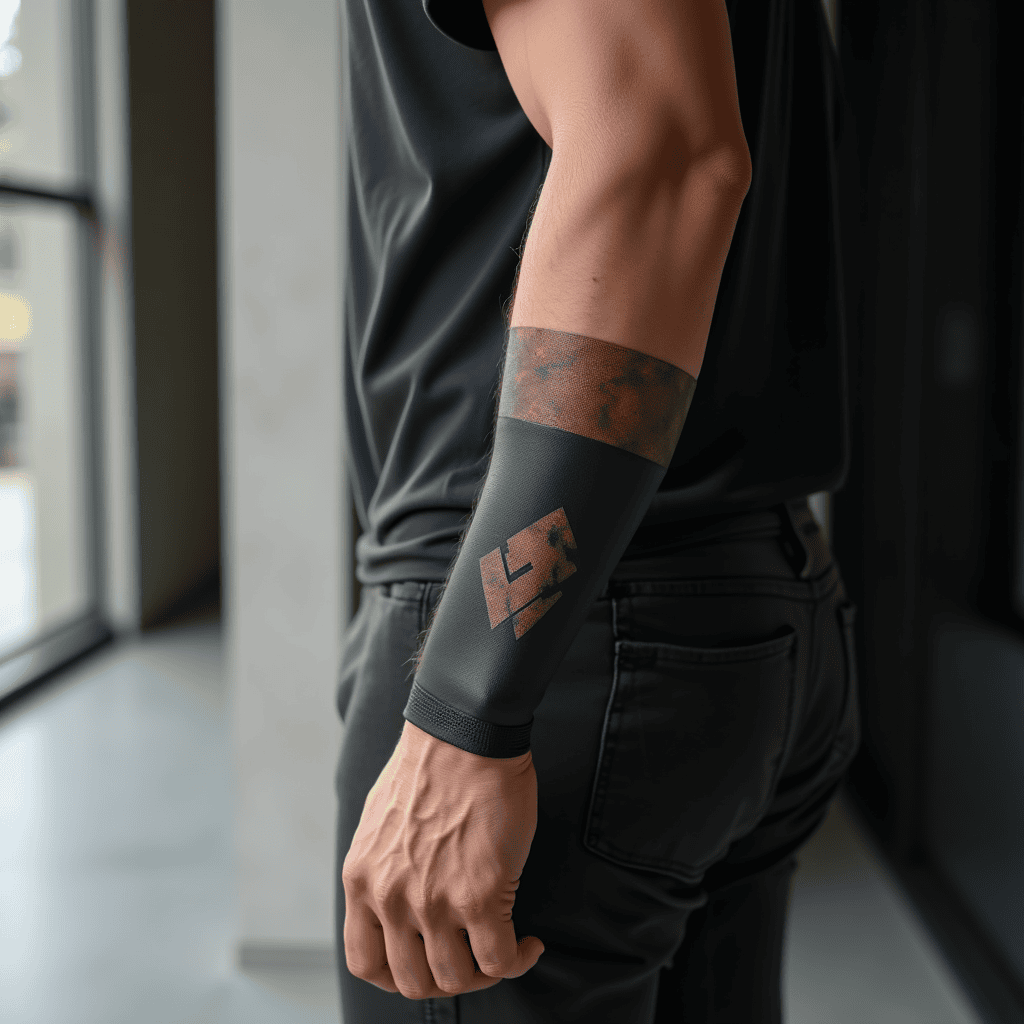
For extremely dark old ink, a partial blackout can stop pretending the previous tattoo can be hidden with delicate shading. A broad saturated section becomes the new foundation, while clean negative-space bands, geometric cutouts, or softer dotwork transitions give it design rather than leaving a plain rectangle of black. The strongest versions follow the natural direction of the arm or leg. Used thoughtfully, the effect can feel modern rather than corrective.
This is one of the boldest cover-up tattoo ideas, and it deserves more consideration than a small replacement tattoo because so much skin becomes intentionally dark. Tell your artist, “I want the blackout to follow the anatomy, with negative-space structure built into the design rather than adding a solid block around the old tattoo.” It is a poor choice for anyone already uncertain about heavy blackwork. Discuss the existing tattoo and long-term design plan thoroughly before extending the coverage area.
Large-Scale Cover-Up Tattoo Ideas
Some tattoos simply need more room. When the old piece is large, saturated, badly positioned, or surrounded by several unrelated tattoos, expanding the project can produce a cleaner final result than trying to squeeze a new image into the same footprint. Large cover-up tattoo ideas give the artist space to establish fresh focal points instead of allowing the previous tattoo to dictate everything.
21. Full Forearm Sleeve Rework
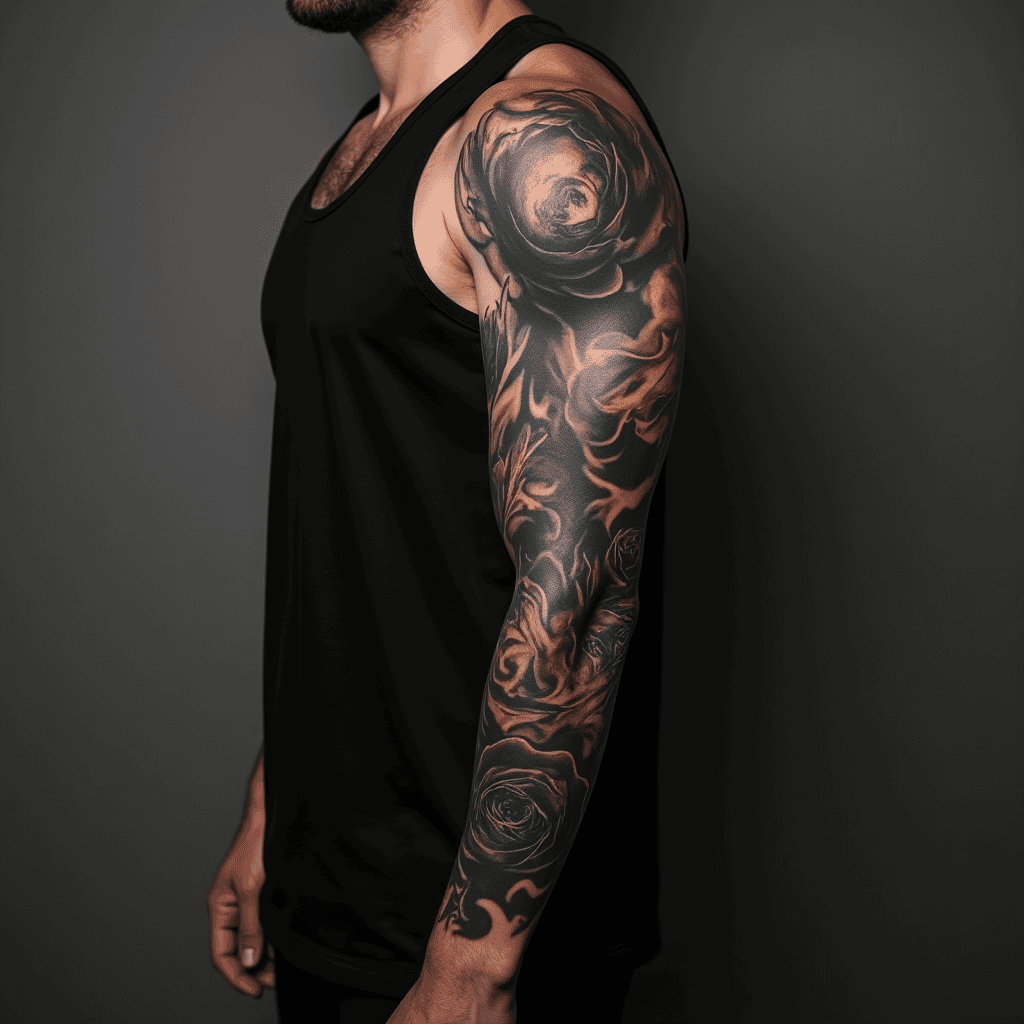
A forearm sleeve can combine one strong subject with secondary textures so the old tattoo becomes a small part of a larger visual story. An animal, mask, or figure might serve as the focal point while foliage, smoke, waves, geometry, or shadow does the real coverage work. Dark values can concentrate around the old tattoo and gradually lighten elsewhere. The entire forearm then reads as one composition instead of a patch placed over another patch.
This is smart when several small tattoos have started making the area look disconnected. Tell your artist, “Design the whole forearm as one piece and let the old tattoos determine where the darkest background areas go, not where every focal subject has to sit.” The obvious drawback is commitment: even if the original tattoo is small, the solution is not. It also makes future additions to the same arm more dependent on the new overall style.
22. Shoulder-to-Bicep Dragon
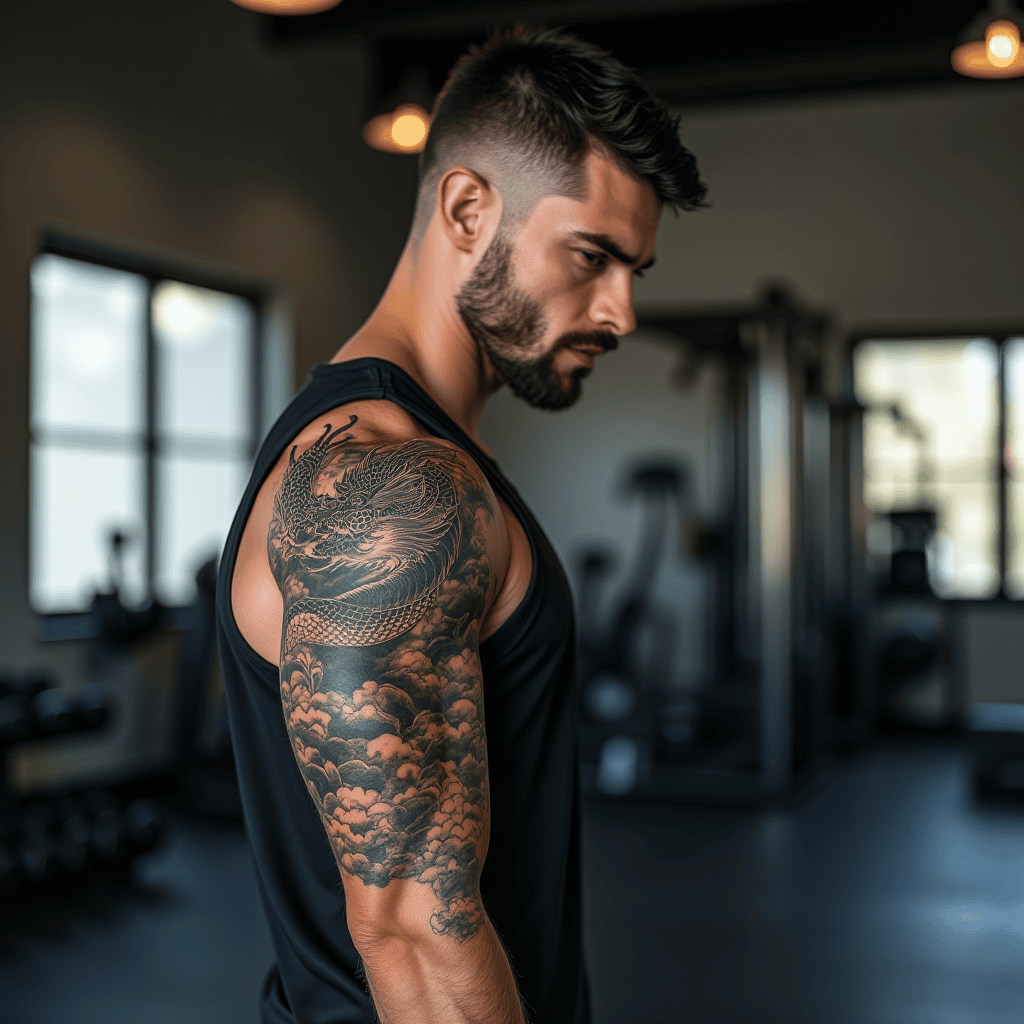
A dragon sweeping from shoulder to bicep creates enough movement to cover an older upper-arm tattoo without placing every detail directly on top of it. The shoulder can hold the head or a large curve of the body, while scales and dark clouds descend over the problem area. The composition follows the roundness of the deltoid instead of treating the skin as a flat page. That three-dimensional movement is a major part of its appeal.
Ask the tattoo artist, “Use the shoulder shape to establish the dragon first, then route the darkest body and clouds across the old tattoo on the bicep.” This is not a quick, discreet fix for a small mistake. The larger composition should be something you genuinely want, because it becomes one of the most visible tattoos on the arm whenever you wear a short-sleeved shirt.
23. Chest-to-Shoulder Floral Blackwork
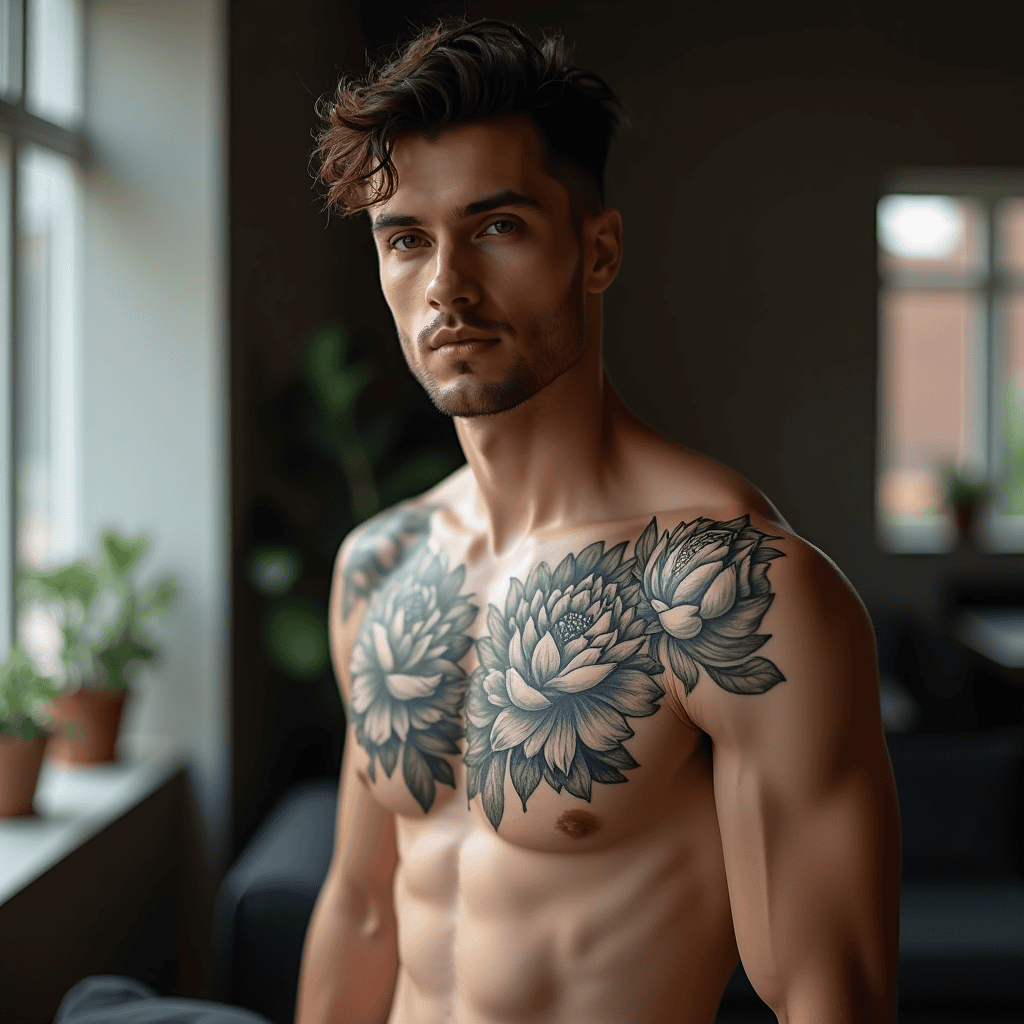
Large flowers, leaves, and dark botanical shadows can create a strong masculine cover-up when the composition uses scale and contrast rather than delicate decoration. A peony or chrysanthemum may sit across the chest or shoulder while overlapping leaves and shadowed petals consume old lettering underneath. Thick black areas stay concentrated around the original tattoo, and lighter outer petals prevent the entire piece from becoming heavy. The design can flow naturally into an existing arm tattoo later.
This option suits men who appreciate organic shapes and want something less literal than a lion or dragon. Ask for, “Large petals with the deepest overlaps directly over the old tattoo, then lighter outer leaves following the shoulder and chest.” Floral cover-ups need generous scale because tiny petals cannot carry much unwanted ink. If you insist on a small flower over a large dark tattoo, the artist will have little room to create readable layers.
24. Full Back Landscape Cover-Up
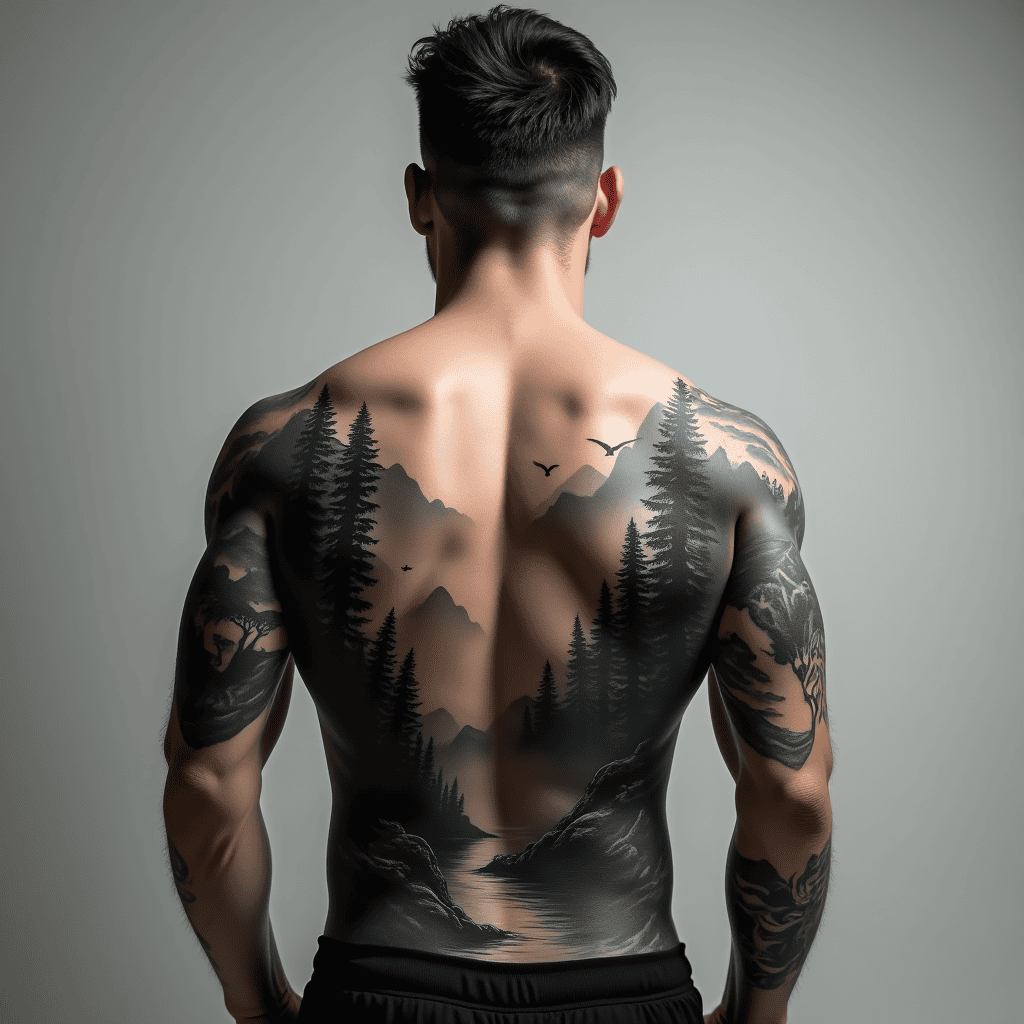
A large back gives the artist freedom to place an entirely new scene around an old central tattoo rather than forcing one image directly over it. Mountains, pines, cliffs, storm clouds, birds, and water can establish several depth planes, with the darkest foreground element positioned over the unwanted work. Lighter atmospheric sections pull the eye outward. A successful back cover-up feels like a planned mural rather than an enlarged correction.
This is an advanced option for substantial old tattoos or multiple pieces you no longer want to remain separate. Tell your artist, “Build the landscape for the whole back first, then position the strongest foreground shadows where the old tattoo needs hiding.” The drawback is the project’s size and commitment. A large design also benefits enormously from careful planning, so rushing the composition because you dislike the old tattoo is a poor trade.
25. Complete Sleeve Transformation
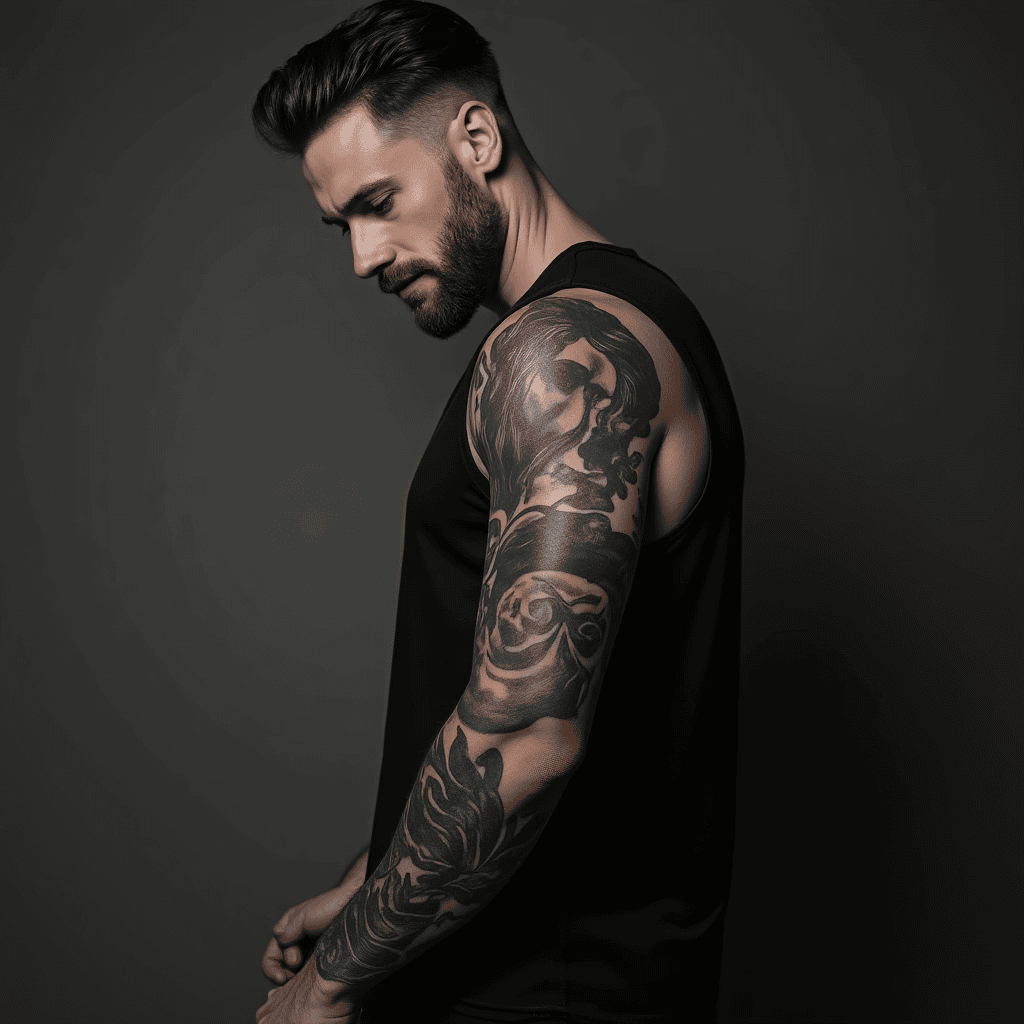
A complete sleeve gives an experienced artist the greatest ability to redirect attention away from old ink. Instead of making one replacement image carry the entire burden, the sleeve uses focal pieces, darker connectors, transitions, and deliberate open areas to build hierarchy across the arm. Existing tattoos may disappear inside backgrounds or become modified components of the new design. Done well, nobody looking at the finished sleeve should immediately think “cover-up.”
A sleeve is the right answer only when you actually want a sleeve, not because you are panicking over one tattoo. Tell your artist, “Treat the old piece as one technical problem inside a full-arm design, and show me where the dark values, focal points, and open skin will sit before we start.” This is the biggest commitment among these cover-up tattoo ideas. Give the planning stage as much attention as the artwork itself.
How to Choose the Right Cover-Up Tattoo
Choosing among cover-up tattoo ideas starts with the tattoo you already have, not the design you saved five minutes ago. Size matters, but darkness matters just as much. A faded outline gives an artist far more freedom than a compact area of heavily saturated black.
Take clear photos of the current tattoo in neutral daylight before speaking with an artist. A useful consultation should focus on what parts must become darkest, how far the new composition needs to extend, and whether any elements of the old piece can be incorporated rather than hidden.
Placement also changes what works. Long forearm tattoos pair naturally with snakes, feathers, daggers, forests, and vertically arranged geometric pieces. Shoulder tattoos give circular mandalas, animal heads, flowers, dragons, and Japanese compositions more room to follow the body.
Style should come before desperation. If you have never wanted blackout tattooing, do not pick it only because it seems convenient. The best cover-up is still a tattoo you would willingly choose on untouched skin.
Bring two or three references that explain the mood you like rather than expecting an artist to copy one exact picture. More importantly, show them what you dislike about your existing piece. Clear boundaries make the design conversation faster.
And ask to see healed examples of previous cover-up work. Fresh tattoos can appear extremely dark and clean in photos, while healed results tell you more about how an artist manages contrast and readability over time.
Where Cover-Up Tattoos Go Wrong
The biggest mistake is trying to make the replacement tattoo the same size as the old one. Good cover-up tattoo ideas usually need additional room so darker areas can hide previous ink while cleaner details live on unaffected skin. That contrast is what makes the new image readable.
The second problem is choosing a design based only on how much black it contains. A giant patch of darkness may technically conceal an old tattoo, but concealment alone does not create good composition. The black needs to belong to the new artwork.
Overloading a design with tiny detail causes another problem. When an artist is already working around previous lines and pigmentation, stacking miniature textures everywhere can make the new piece harder to read. Bigger shapes often give the eye a clearer path.
Color also cannot be treated like opaque house paint. Tattoo ink sits in skin rather than forming a solid layer over the surface, so the artist has to design around what is already visible. That is why placement of dark values matters more than trying to match one new color to an old one.
And sometimes the smartest move is not tattooing immediately. If the area is not fully healed, has unusual skin changes, or involves scarring that concerns you, talk with an appropriately qualified professional before proceeding. A responsible tattoo artist should be comfortable telling you when a project needs more evaluation rather than forcing a session.
Frequently Asked Questions
What are the best cover-up tattoo ideas for dark old tattoos?
Blackwork animals, Japanese-inspired compositions, ornamental panels, geometric blackwork, and partial blackout designs give an artist substantial dark areas to work with. The right choice depends on the shape and saturation of the existing tattoo. Heavily saturated work usually requires more size and stronger contrast than faded linework.
Does a cover-up tattoo have to be bigger than the original?
Usually, some extra space helps. Expanding beyond the original edges allows the artist to place darker coverage where it is needed while keeping other parts of the design more open. Trying to match the old tattoo’s exact footprint can leave too little room for a convincing new composition.
Can a black tattoo be covered with another tattoo?
Dark tattoos can sometimes be incorporated into substantially darker or more complex designs, but options become more limited as saturation increases. A tattoo artist needs to evaluate the existing piece in person to judge how much can realistically be disguised and what style will give the strongest result.
What tattoo styles are easiest to use for cover-ups?
Blackwork, Japanese-inspired work, traditional designs, dark realism, ornamental tattooing, and layered nature scenes tend to offer useful coverage because they naturally contain strong shadows and overlapping shapes. Fine-line or minimalist designs generally provide less room to conceal dense existing ink.
Are colorful cover-up tattoo ideas possible?
Yes, depending on what sits underneath. Color can be included within a cover-up, but the composition still needs enough darker structure to control visible old lines. Brighter sections often work better on clearer surrounding skin while saturated areas handle the actual concealment.
Can names and lettering be covered with tattoos?
Names and short lettering are common candidates for cover-ups because their shapes can often disappear inside feathers, petals, animal fur, scales, shadows, trees, or ornamental patterns. Long lines of text may require a wider composition so the replacement does not look unnaturally stretched.
What is a good cover-up tattoo for the forearm?
Snakes, forests, daggers, feathers, geometric panels, koi fish, ravens, and full forearm compositions all suit the forearm’s long shape. The best option depends on whether the old tattoo runs vertically, wraps around the arm, or occupies one concentrated section.
What are good cover-up tattoo ideas for the upper arm?
Lion portraits, wolves, panthers, dragons, mandalas, oni masks, flowers, ravens, and Japanese-style compositions work well because the upper arm provides a broad curved surface. Larger subjects can wrap around the bicep rather than appearing like a flat sticker placed directly over the old tattoo.
Can a small tattoo cover a larger tattoo?
Not realistically in the normal sense of a cover-up. A replacement design needs enough visual area to disguise the old work rather than leaving its edges visible around the new one. If keeping the final tattoo small is essential, discuss realistic limitations with an experienced cover-up artist.
Should I choose the design before finding a tattoo artist?
Have preferences, but avoid locking every detail first. Different artists specialize in different visual languages, and cover-ups require adapting the new composition to existing ink. Finding an artist whose healed portfolio matches your preferred style gives you a better foundation for choosing the final design.
How do I choose an artist for a difficult tattoo cover-up?
Look specifically for healed cover-up examples rather than judging only fresh tattoos. Pay attention to whether the new artwork has readable contrast and whether you can immediately spot the old design underneath. During consultation, ask how the existing ink affects scale, orientation, and dark-value placement.
Can geometric tattoos work as cover-ups?
They can work extremely well when the existing tattoo’s shape fits into darker geometric sections. Solid diamonds, bands, overlapping patterns, and ornamental geometry provide strong coverage. Precision matters, though, because uneven spacing and alignment are especially noticeable in structured designs.
Are animal tattoos good for covering old tattoos?
Animals offer useful textures such as feathers, fur, scales, and shadow, which can disguise irregular lines without making every section equally dark. Ravens, wolves, lions, panthers, snakes, and dragons are particularly adaptable when designed specifically around the existing tattoo.
How should I prepare for a cover-up consultation?
Take clear photos of the tattoo, decide which styles you would genuinely wear, and collect a few reference images that communicate your preferred direction. At the consultation, ask the artist what size they need, where the darkest sections would fall, and which parts of your original idea need changing.
Which cover-up tattoo ideas look the least like cover-ups?
Large designs with clear focal points tend to disguise their purpose best. A well-planned sleeve, Japanese composition, animal portrait, forest scene, or ornamental piece directs attention toward the new artwork rather than toward the location of the old tattoo. Strong composition matters more than simply adding darkness.
A successful cover-up begins with accepting that the existing tattoo sets some boundaries, but it does not have to dictate the final artwork. Give the new design enough space, choose a style you would want even without anything underneath, and judge artists by healed work rather than dramatic fresh photos. Once you have narrowed your direction, book a consultation and ask one clear question: “How would you design this so the new tattoo works as a complete piece rather than looking like a cover-up?”
Best Tattoo Design Reports
Explore sleeve, minimalist, Japanese, blackwork and modern tattoo ideas created for men’s style inspiration.