
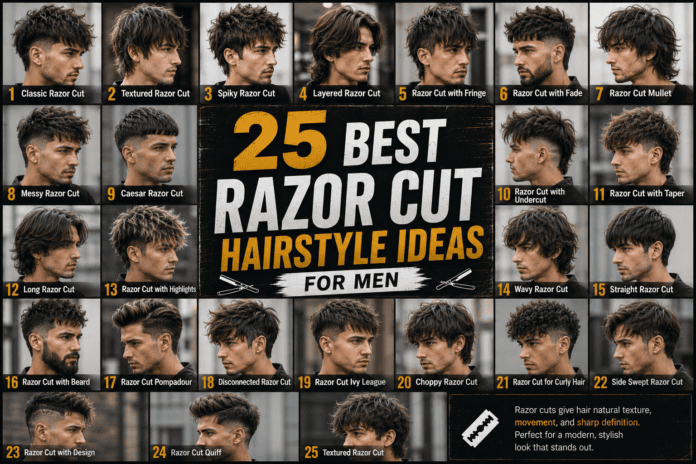
The strongest razor cut hairstyle ideas for men include the textured crop, feathered medium cut, messy razor shag, and layered razor fringe. Each uses a razor to soften weight, break up hard lines, and create movement that scissors alone can struggle to copy. The catch is simple: razor work depends heavily on hair texture and the barber’s control.
A barbering-minded approach matters here because razor cutting is less about chasing a trendy outline and more about deciding where the hair should separate, collapse, or flick outward. Good results look loose without looking accidentally thinned, and that distinction shapes every style below.
For a fast comparison, these razor cut hairstyle ideas show how dramatically the same cutting technique can change depending on length, texture, and finish.
| Style | Best For | Defining Detail |
|---|---|---|
| Textured Razor Crop | Straight to slightly wavy hair | Broken, airy top texture |
| Soft Razor Fringe | Medium-density hair | Light separated fringe |
| Razor Shag | Wavy or loose curly hair | Layered movement |
| Feathered Medium Cut | Straight or wavy hair | Swept tapered ends |
| Razor Cut Quiff | Medium to thick hair | Lift with softened edges |
| Razor Mullet | Wavy medium-length hair | Disconnected movement |
| Razor Wolf Cut | Thick or textured hair | Crown volume and tapered ends |
| Razor Side Sweep | Straight medium hair | Fluid diagonal movement |
| Razor Curtain Cut | Straight to wavy hair | Feathered center part |
| Long Razor Layers | Medium to long hair | Weight reduction through ends |
Short Razor Cut Hairstyle Ideas With Easy Texture
Short razor cut hairstyle ideas work best when you want movement without growing enough length for full layers. The razor can open the surface of the haircut, loosen heavy areas, and keep compact shapes from looking too square.
1. Textured Razor Crop
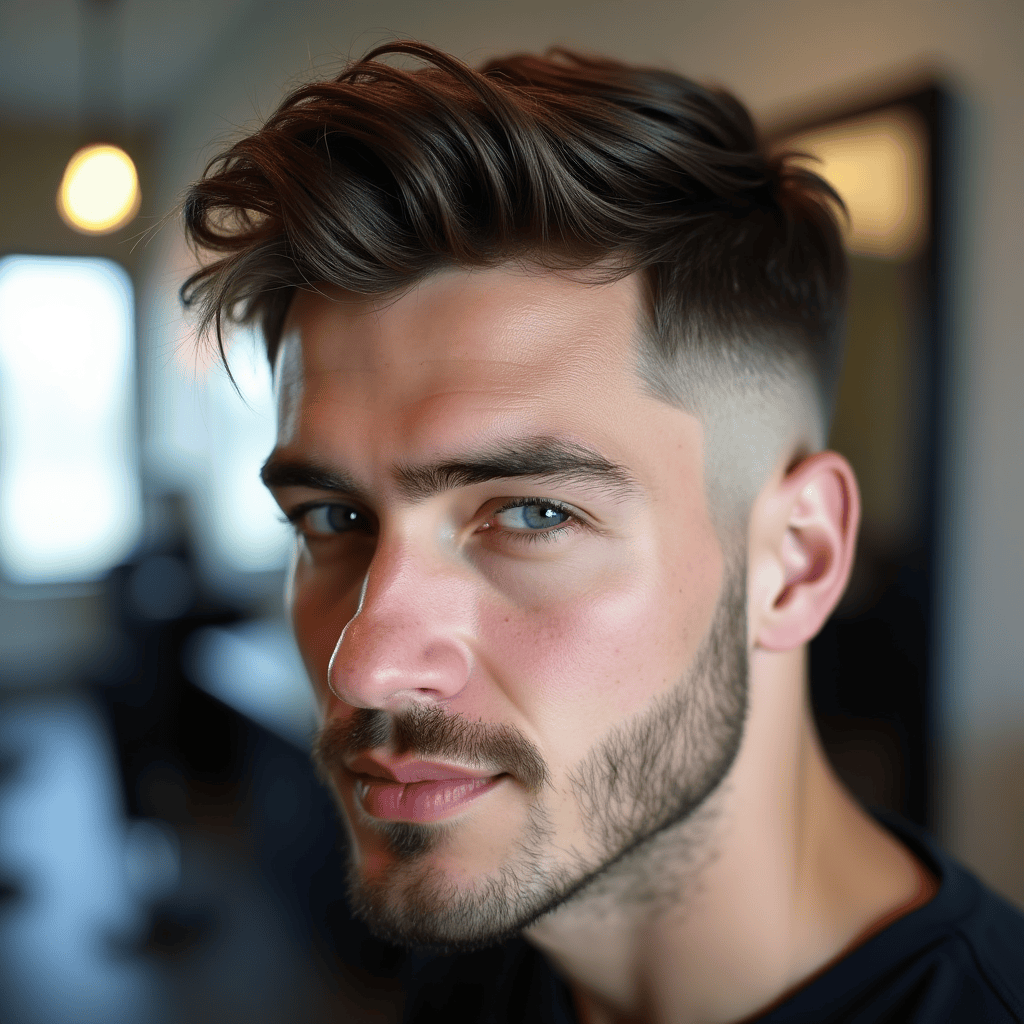
A textured razor crop keeps the sides neat while leaving enough length through the top for small, irregular pieces to separate naturally. The fringe sits forward with a slightly jagged outline instead of forming one blunt horizontal edge. Short sections around the crown overlap softly, giving the haircut a dry, lived-in texture rather than a polished helmet shape. Among practical razor cut hairstyle ideas, this is one of the easiest to wear daily.
It suits straight, slightly wavy, and medium-density hair especially well, along with oval, square, and longer face shapes. Ask your barber, “Keep the crop short, but use the razor to break up the top and leave the fringe soft rather than blunt.” A light matte paste usually gives enough control without flattening those separated pieces. Men with extremely fine or fragile hair should be cautious because aggressive razor thinning can make the ends look sparse.
2. Choppy Razor Caesar
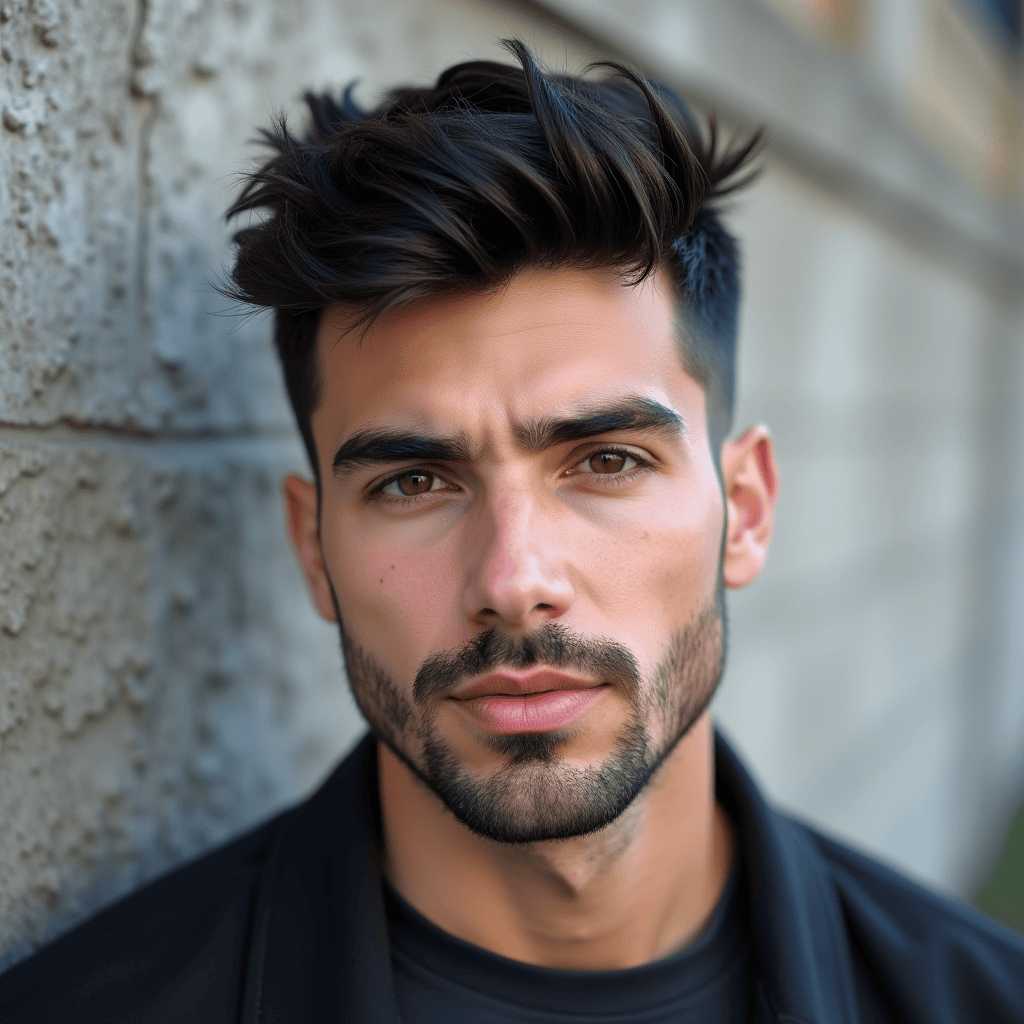
The choppy razor Caesar keeps the familiar forward direction of a Caesar cut but removes its traditionally rigid finish. Short layers travel toward the forehead, where the fringe breaks into uneven narrow points rather than forming a dense straight line. The sides stay compact, allowing the rougher surface texture on top to carry the look. It is one of the razor cut hairstyle ideas that makes a conservative short haircut feel noticeably less formal.
This shape works well for straight hair and mild waves, particularly when the hair has enough density to hold visible texture. Tell your barber, “Give me a short Caesar shape with a razor-textured fringe and small broken sections through the top.” Styling can stay simple with a fingertip amount of matte cream pushed forward. Skip heavy razor work if your hairline is already thin at the front, since extra separation may expose more scalp than you want.
3. Razor Cut French Crop
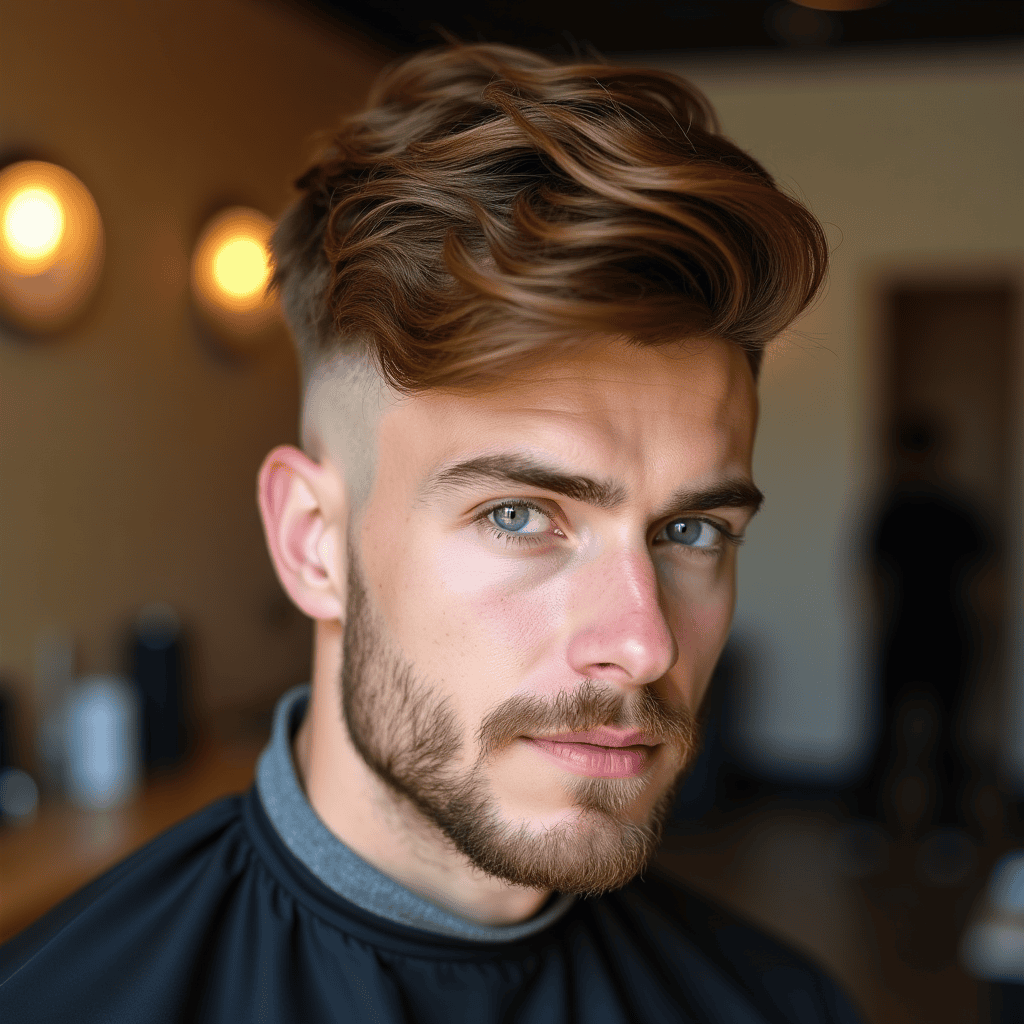
A razor cut French crop has a cleaner overall silhouette than the previous styles, but the surface stays deliberately imperfect. The top runs forward from the crown, gradually breaking into finer pieces as it reaches the forehead. Instead of a sharply stamped fringe, the front edge has small changes in length that make it appear lighter. The contrast between disciplined sides and loose top texture keeps the haircut modern.
Men with thick straight or slightly wavy hair get the clearest effect because there is enough bulk for the razor to remove selectively. Ask for “a French crop with clean sides, but keep the top soft and razor-cut the fringe so it doesn’t look heavy.” A small amount of clay can emphasize individual strands without making them shiny. Very curly hair can wear a crop beautifully, but a traditional razor technique may not produce this exact separated finish.
4. Short Spiky Razor Cut

The short spiky razor cut uses tapered pieces rather than stiff gelled spikes. Hair through the top is sliced into different lengths, with the shortest pieces supporting longer tips that rise at changing angles. The front can tilt slightly upward while the crown remains intentionally rough. This creates sharper visual energy without bringing back the rigid wet-look spikes associated with older versions of the style.
It works best on straight to slightly wavy hair with medium or thick density. Tell your barber, “Keep it short enough to style fast, then razor the top into uneven pieces that I can push upward without hard spikes.” Use a dry paste and pinch only a few sections instead of sculpting every strand. Men who prefer zero styling should choose a crop instead because this shape needs a little direction after washing.
5. Razor Cut Ivy League

A razor cut Ivy League keeps the tidy proportions of the classic haircut while replacing hard internal lines with softer movement. The top remains longest toward the front and gradually shortens toward the crown, but razor detailing lets the front sweep sideways without sitting as one solid section. The result looks groomed from a distance and more textured when seen close. That subtlety makes it office-friendly without being dull.
This version favors straight or lightly wavy hair and works especially well for men balancing professional clothes with casual weekend styling. Ask your barber, “Keep an Ivy League shape with enough length to side-sweep, then use light razor texture so the top doesn’t sit too solid.” Comb it cleanly with cream for work or loosen it with your fingers afterward. Fine hair needs conservative texturizing because too much removal can weaken the shape.
Medium Razor Cut Hairstyle Ideas With More Movement
Medium length gives a razor room to create visible direction. These razor cut hairstyle ideas rely less on short surface texture and more on how longer sections fall across the forehead, temples, ears, and neckline.
6. Feathered Medium Razor Cut

A feathered medium razor cut allows the hair to sweep backward in thin overlapping sections rather than moving as one heavy sheet. Length around the temples and ears narrows into tapered ends, while the crown stays full enough to support the shape. From the side, the ends appear almost brushed by wind. The effect is softer than conventional layering and works particularly well when the hair already has gentle movement.
Straight and naturally wavy hair respond best, especially at medium to thick density. Tell your stylist, “Keep my medium length, build soft layers, and razor the ends so they sweep back instead of looking chunky.” A light styling cream and blow-dryer can direct the front away from the face. The drawback is that overgrown ends quickly lose their deliberate shape, so this cut rewards regular cleanup.
7. Razor Cut Side Sweep

The razor cut side sweep carries medium-length hair diagonally across the head with a lighter finish than a traditional side-part style. The front begins with generous length, then narrows as it travels across the forehead and blends toward the temple. Instead of a visible comb line, the part can remain loose and slightly imperfect. This is one of the more adaptable razor cut hairstyle ideas for men who dislike tightly structured styling.
Oval, heart, and longer face shapes usually handle the diagonal movement well, while straight and wavy textures make the tapering most visible. Ask for “medium layers with a loose side direction and razor-softened ends around the front.” Blow-dry across rather than straight back, then separate the ends with a tiny amount of cream. Heavy curls will need a different cutting and styling approach to preserve their natural pattern.
8. Soft Razor Fringe

A soft razor fringe brings the attention forward without dropping a thick curtain over the forehead. Longer pieces sit near the center and gradually become lighter toward the corners, allowing small spaces to appear between individual sections. The crown and upper sides carry enough layering to prevent the fringe from feeling disconnected. It looks casual even when the overall cut has been carefully planned.
This cut favors straight or loose wavy hair, particularly for men who want to soften a long or angular face. Tell your barber, “Leave me a medium fringe, but taper and separate the ends with the razor so it stays light.” Styling requires little more than drying the fringe forward and nudging individual pieces with your fingers. If your forehead becomes oily quickly, the separated fringe can clump sooner than a swept-back style.
9. Razor Cut Curtains

Razor cut curtains part near the middle and fall toward both sides with narrow, feathered ends. The longest front pieces frame the cheekbones while shorter interior layers stop the hairstyle from collapsing flat against the head. Around the ears, the ends can flick backward rather than hanging vertically. Compared with a blunt curtain cut, this version looks looser and reacts more noticeably when the wearer moves.
Straight, wavy, and softly textured hair can all carry this shape if there is enough front length. Ask your stylist, “Keep curtain length around my face, layer through the top, and razor the ends so the sides feather instead of dropping heavily.” A middle part does not need perfect symmetry; slightly shifting it often looks more natural. The cut becomes harder to control in strong humidity if your hair is naturally prone to expanding.
10. Medium Razor Cut Quiff

A medium razor cut quiff gives the front enough length to rise, but the ends remain soft rather than forming one dense roll. Pieces near the hairline lift upward and slightly backward at different heights, while shorter layers behind them create support. The sides can stay scissor-length or transition into a restrained taper. Among medium razor cut hairstyle ideas, this gives noticeable shape without demanding a highly polished finish.
Medium to thick hair provides the easiest foundation, while light waves can make the quiff look even more relaxed. Ask your barber, “Keep enough length in front for a quiff, but razor through the upper layers so it breaks apart instead of forming one block.” Blow-dry upward first and finish with matte paste. Extremely fine hair may lose too much structure if the front is aggressively razor-textured.
Longer Razor Cut Hairstyle Ideas With Layered Shape
Longer hair makes the cutting pattern easier to see. These razor cut hairstyle ideas depend on controlled weight removal, especially through the perimeter, where blunt ends can otherwise make medium-long hair look heavy.
11. Modern Razor Shag

The modern razor shag builds volume around the crown and lets progressively longer layers drop toward the ears and neckline. Ends split into narrow pieces, so the silhouette remains airy even when there is substantial length. A slightly messy fringe can blend directly into the side layers rather than sitting as a separate feature. The haircut looks strongest when its natural movement stays visible instead of being brushed completely smooth.
Wavy and loose curly hair give this shape its easiest texture, while thick straight hair can benefit from the weight removal. Ask your stylist, “Give me a medium shag with crown layers and razor-softened lengths, but don’t thin the perimeter until it disappears.” Air-drying can work well if your natural pattern behaves consistently. The main drawback is that badly placed layers can make thick hair expand at the wrong point.
12. Razor Wolf Cut
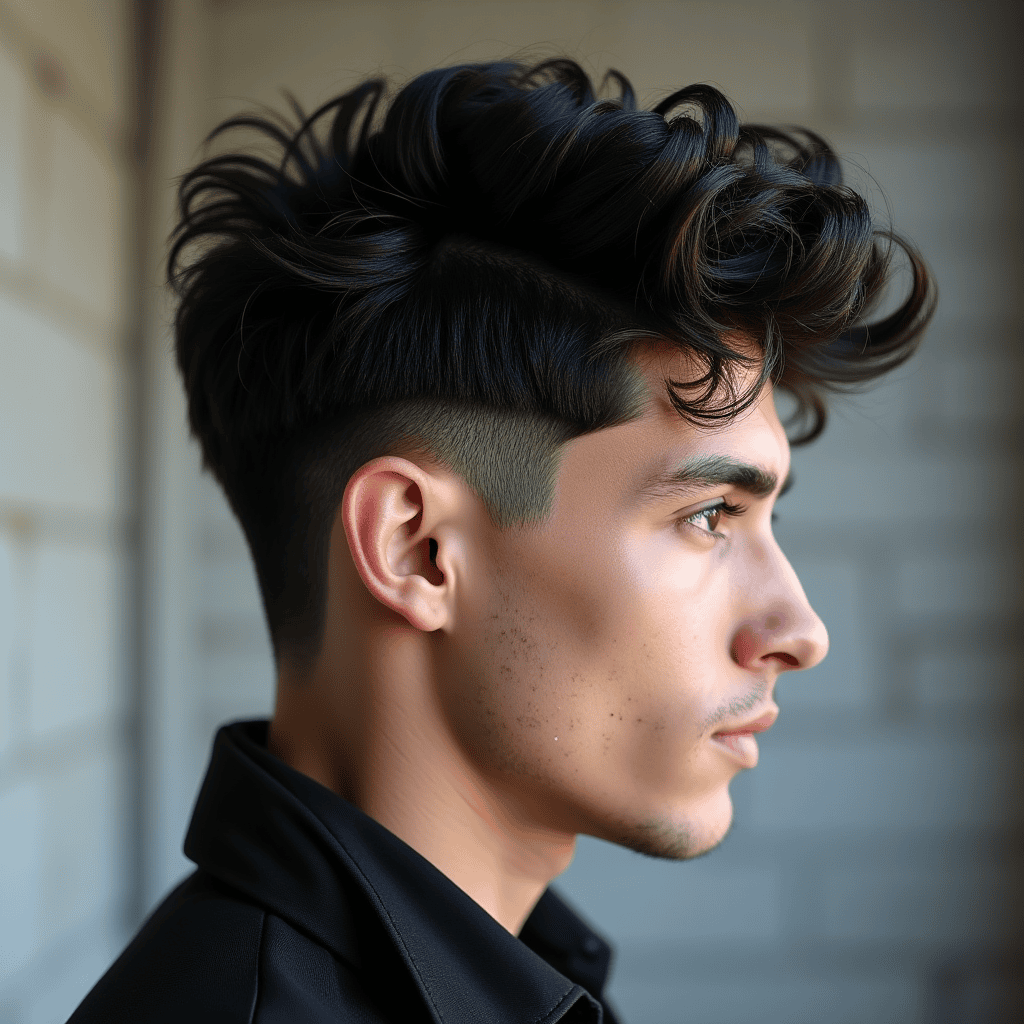
The razor wolf cut pushes more volume into the crown while allowing the lower layers to taper dramatically toward the neck. Shorter sections around the upper head create a rounded, slightly untamed shape, followed by leaner lengths underneath. The fringe can remain broken and irregular, linking the front to the upper layers. It is bolder than a standard shag and deliberately less balanced than a traditional medium cut.
Thick straight, wavy, and textured hair can support the contrasting layers, making this one of the more expressive razor cut hairstyle ideas. Tell your stylist, “Build volume through my crown, taper the lower lengths heavily, and keep the razor texture visible without making the bottom stringy.” Styling cream or texture spray can reinforce the separation. Men wanting a conservative corporate haircut should probably skip this one because the silhouette is intentionally noticeable.
13. Razor Cut Mullet
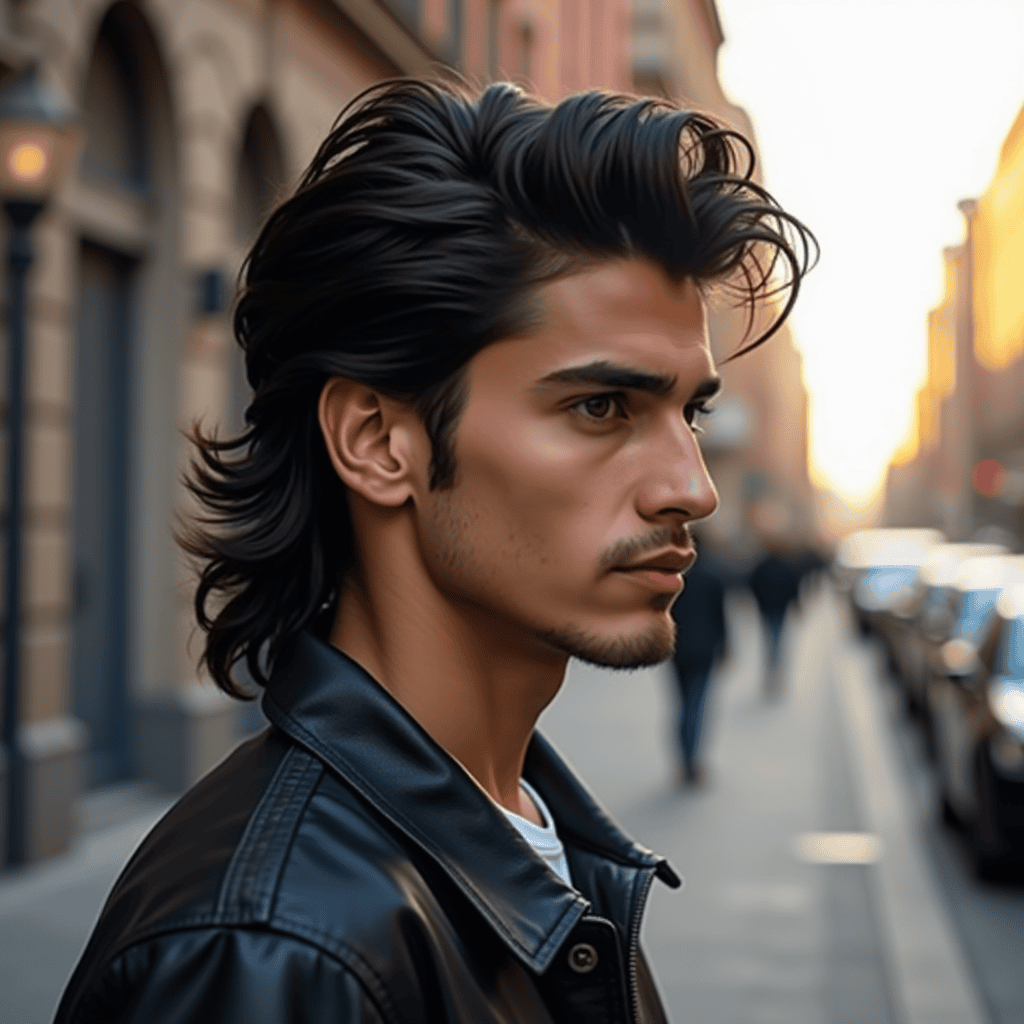
A razor cut mullet keeps visible length at the back but avoids a heavy, disconnected tail. The upper section is layered and broken, while the sides narrow closely around the ears before opening into longer pieces behind them. Razor work through the rear lengths creates flicks and gaps that move instead of forming a solid block. The shape can look understated from the front and much more expressive in profile.
Wavy medium-density hair is particularly forgiving here, although straight hair can show the technical details more sharply. Ask your barber, “Keep a modern mullet shape with length behind the ears, then razor the back and top so it moves instead of sitting heavy.” Expect to style the crown with some lift to prevent the shape from going flat. Anyone uncomfortable with a clearly fashion-led haircut should choose a shag instead.
14. Long Razor Layers

Long razor layers keep the main length intact while removing visual heaviness from the ends and interior sections. Layers begin around the cheek or jaw and continue gradually toward the shoulders, with each section narrowing into a soft point. The perimeter still looks healthy and intentional rather than shredded. For men growing their hair out, this can create movement without sacrificing the sense of length they worked for.
Straight, wavy, and dense hair usually provide the best canvas. Ask your stylist, “Keep my overall length, add long blended layers, and use the razor only where it will soften the ends without making them thin.” Conditioning matters because dry ends exaggerate every bit of separation created by the blade. If your hair already breaks easily, a cleaner scissor perimeter may be a better choice.
15. Shoulder-Length Razor Sweep

The shoulder-length razor sweep sends the front and side layers backward while allowing the lower lengths to rest around the shoulders. Instead of forming a triangular curtain of hair, the interior layers remove enough weight for the sides to curve away from the face. Thin feathered tips create movement at the collar. It has a slightly dramatic finish without needing extreme layering through the crown.
This is among the more polished razor cut hairstyle ideas for men with straight or lightly wavy long hair. Tell your stylist, “Keep it around shoulder length, open the front away from my face, and taper the lower layers with a razor while keeping the ends full enough.” A blow-dryer and vent brush help create the backward sweep. Men who almost always wear their hair tied up will see less benefit from the carefully shaped front.
Razor Cut Hairstyle Ideas for Waves and Natural Movement
Texture changes how a razor behaves. These razor cut hairstyle ideas keep more respect for the hair’s natural pattern, using the blade to shape movement rather than trying to erase it.
16. Wavy Razor Crop
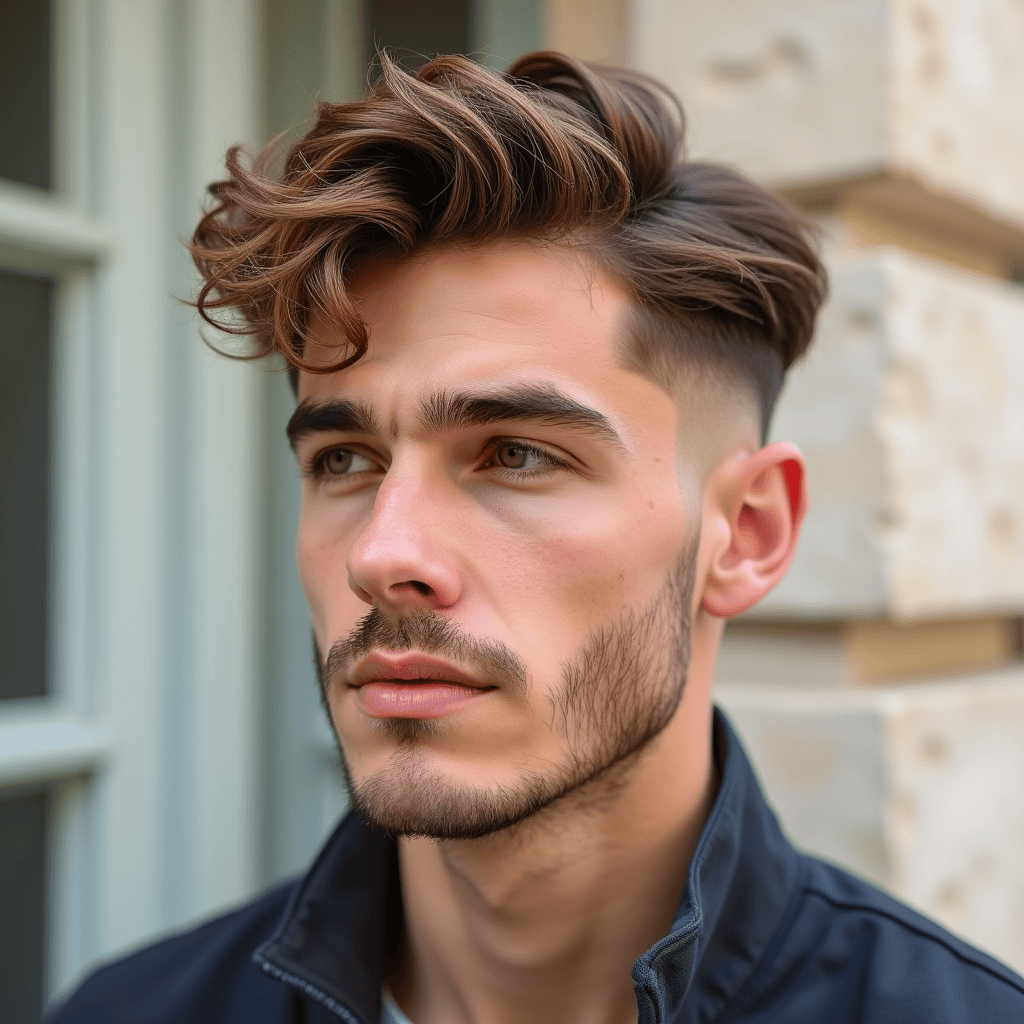
The wavy razor crop keeps enough top length for each bend in the hair to remain visible. Instead of flattening those waves into one direction, the cut allows them to turn independently, creating small rises and dips across the crown. The sides stay shorter but do not need to be skin-tight. A softly irregular front prevents the hairstyle from looking overly geometric.
Loose waves with medium or thick density are the obvious match. Ask your barber, “Keep my natural wave visible on top and use the razor lightly to separate the surface without thinning through the whole haircut.” Apply a small amount of curl-friendly cream and let the pattern settle before touching it again. Heavy manipulation can turn intentional separation into frizz.
17. Tousled Razor Layers

Tousled razor layers create a loose broken surface from the front hairline through the crown and into the sides. Sections sit at slightly different heights, giving the impression that the hair has been casually pushed around by hand. The ends narrow enough to move freely but still retain enough density to look healthy. It is deliberately less controlled than a side sweep or quiff.
Medium wavy hair handles this shape particularly well, especially for oval and square faces. Tell your stylist, “I want medium layers that look naturally tousled, with light razor separation through the ends rather than aggressive thinning.” Styling works best when you stop before everything is perfectly placed. The drawback is that high humidity can exaggerate the messy effect beyond what you intended.
18. Razor Cut Surfer Hair

Razor cut surfer hair combines medium-long waves with faded-looking, feathered ends rather than a hard perimeter. The front falls loosely backward or sideways, while the sides move around the ears in narrow sections. Layers remain long enough to preserve the relaxed wave pattern. Of all the casual razor cut hairstyle ideas, this one depends most on leaving a little imperfection in the finish.
Naturally wavy hair makes the styling easiest, though straight hair with body can imitate the effect with some work. Ask for “long, relaxed layers with razor-softened ends and enough weight left so the hair still forms natural bends.” Letting the hair dry with minimal brushing usually produces a more convincing finish than forcing each piece into position. Fine hair can look thin at the perimeter if the ends are overworked.
19. Razor Cut Bro Flow

The razor cut bro flow pushes medium hair backward from the forehead and lets it bend naturally around the sides. Unlike a heavily styled slick-back, the surface stays open and touchable, with individual sections separating as they move behind the ears. The ends become progressively lighter near the lower sides. That keeps the flow from bunching into thick wedges above the collar.
Medium to thick wavy hair is the natural fit. Tell your barber, “Keep enough length to push everything back, then lightly razor the ends so the flow stays airy around my ears and neck.” Dry it backward with your fingers and stop before it becomes too neat. If your hair grows strongly forward at the front, you may need extra styling time to train the direction.
20. Razor Cut Messy Fringe

The razor cut messy fringe lets waves fall forward in staggered pieces rather than organizing them into a uniform curtain. Some sections stop above the brows while others reach slightly lower, with shorter crown layers feeding the movement from behind. The upper sides remain soft enough to connect naturally to the fringe. The result looks spontaneous but still has a recognizable shape.
This works best for loose waves and medium-density hair. Ask your barber, “Leave me a forward messy fringe with uneven lengths, then use the razor lightly so the pieces separate without looking thin.” A small amount of styling cream scrunched into damp hair is usually enough. If your hair naturally forms tight curls, preserving the curl pattern should take priority over forcing this exact fringe structure.
Bold Razor Cut Hairstyle Ideas With Stronger Personality
The final group moves beyond quiet texture. These razor cut hairstyle ideas use stronger disconnection, asymmetry, or directional styling, so the haircut becomes a visible part of the wearer’s overall look.
21. Disconnected Razor Fringe
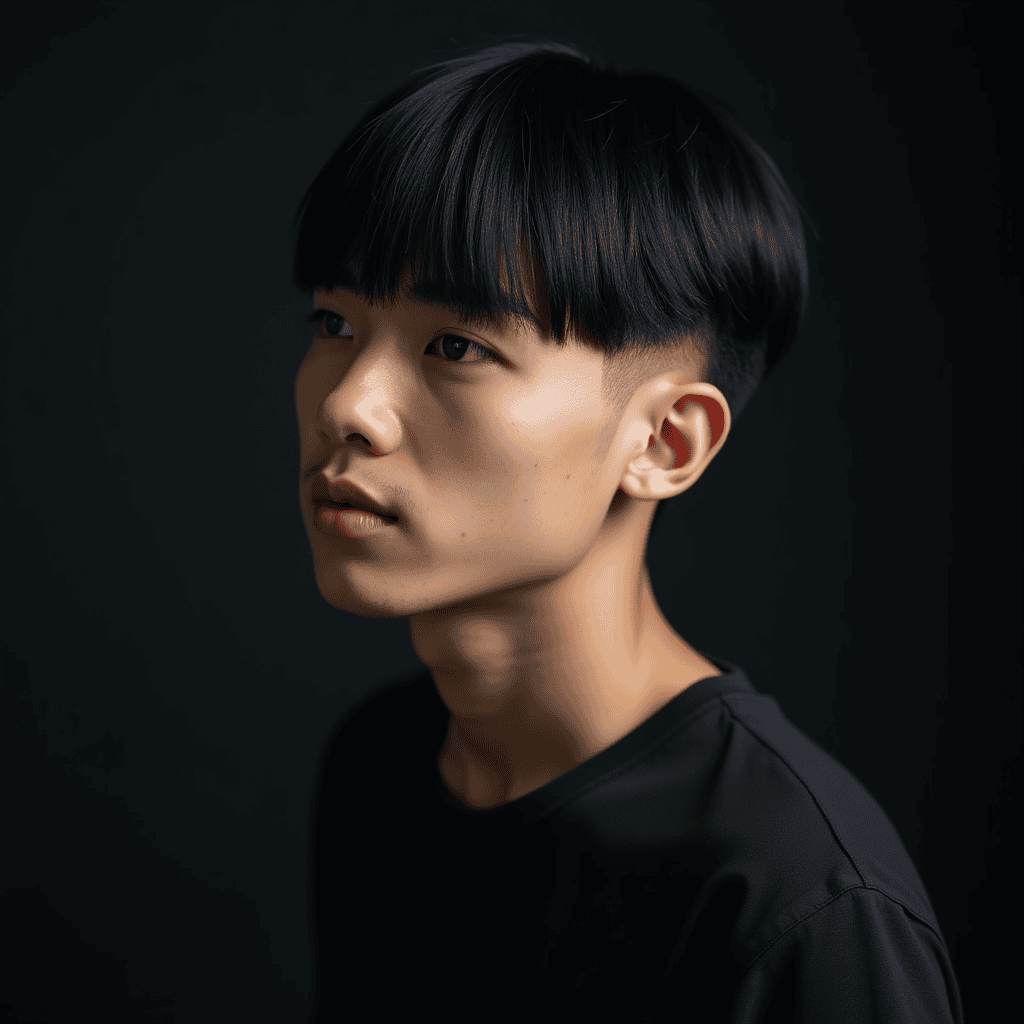
A disconnected razor fringe keeps obvious length through the front while cutting the sides significantly shorter, creating a sharp change in silhouette. The fringe itself remains feathered rather than blunt, with narrow pieces pointing in slightly different directions. The top bridges those two zones only lightly. From the side, the contrast between compact temples and loose frontal movement becomes the defining detail.
Straight and lightly wavy hair make the separation easiest to control. Tell your barber, “Keep the sides tight, leave clear length through the front, and razor the fringe into separate pieces without blending everything away.” Expect the front to require deliberate styling after sleep or washing. Men who want a haircut that grows out invisibly should skip it because the disconnected structure becomes obvious between appointments.
22. Asymmetrical Razor Sweep

The asymmetrical razor sweep directs most of the visible length toward one side, with the opposite side sitting shorter and closer to the head. The long section crosses diagonally from the crown and breaks into thin tapered ends near the temple or cheek. There is no need for perfect geometric asymmetry; the movement itself creates the imbalance. It feels sharper and more fashion-led than a conventional side sweep.
Straight and soft wavy hair show the diagonal structure clearly, making this one of the bolder razor cut hairstyle ideas for medium hair. Ask your stylist, “Keep one side visibly longer and create a diagonal sweep with feathered razor ends, but don’t turn it into a hard undercut.” Styling takes a little practice because the longer side needs consistent direction. Skip it if you regularly switch your part from side to side.
23. Razor Cut Faux Hawk
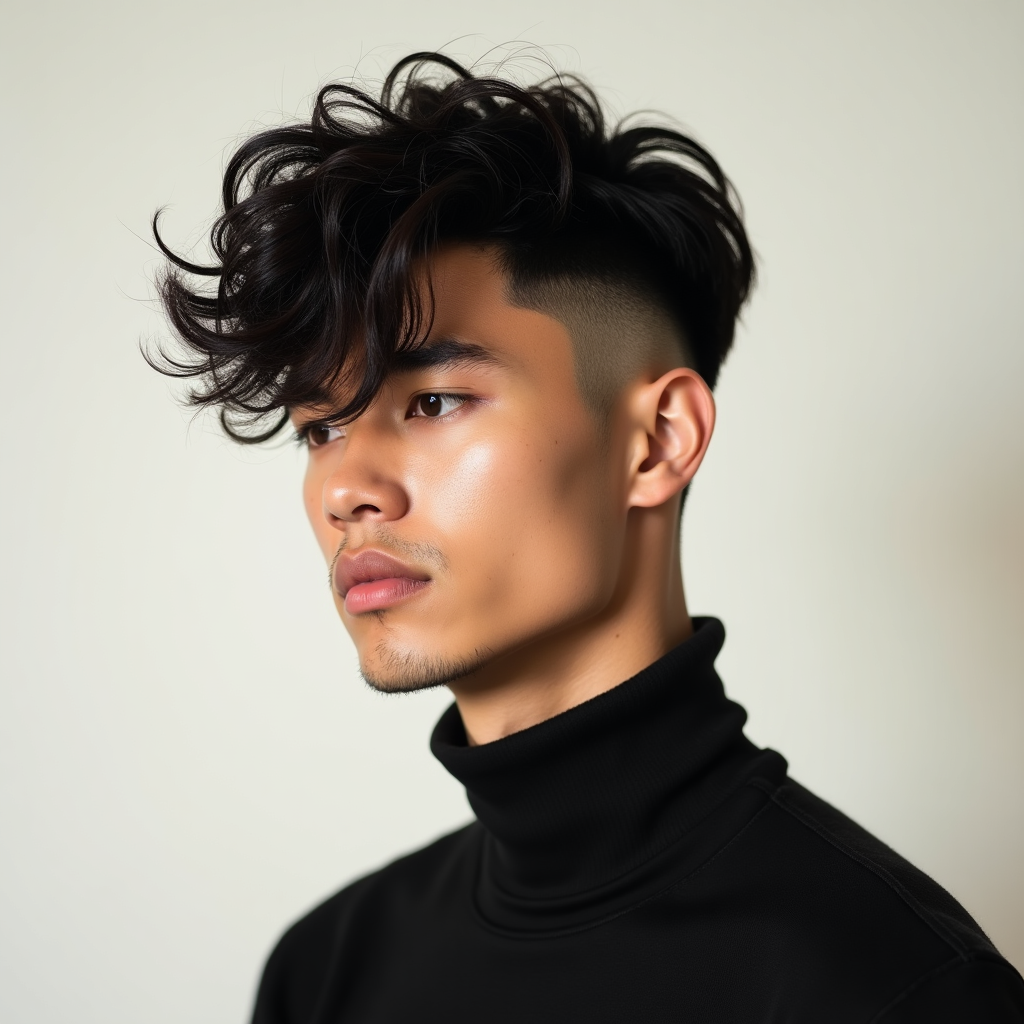
The razor cut faux hawk concentrates length along the center of the head while keeping the sides noticeably quieter. Instead of one hard ridge, the central section breaks into irregular tapered pieces that can rise, lean forward, or fall slightly sideways. The back gradually settles toward the crown rather than staying upright all the way down. The softer ends make the style more wearable than a sharply sculpted faux hawk.
Thick straight and slightly wavy hair provide enough support for the lifted center. Ask your barber, “Build a soft faux hawk shape, keep the center longer, and razor the top into separate pieces instead of making one solid ridge.” Matte paste works better than wet gel if you want the razor texture to remain visible. Anyone unwilling to style the center after every wash should choose a simpler crop.
24. Edgy Razor Shag With Micro Fringe
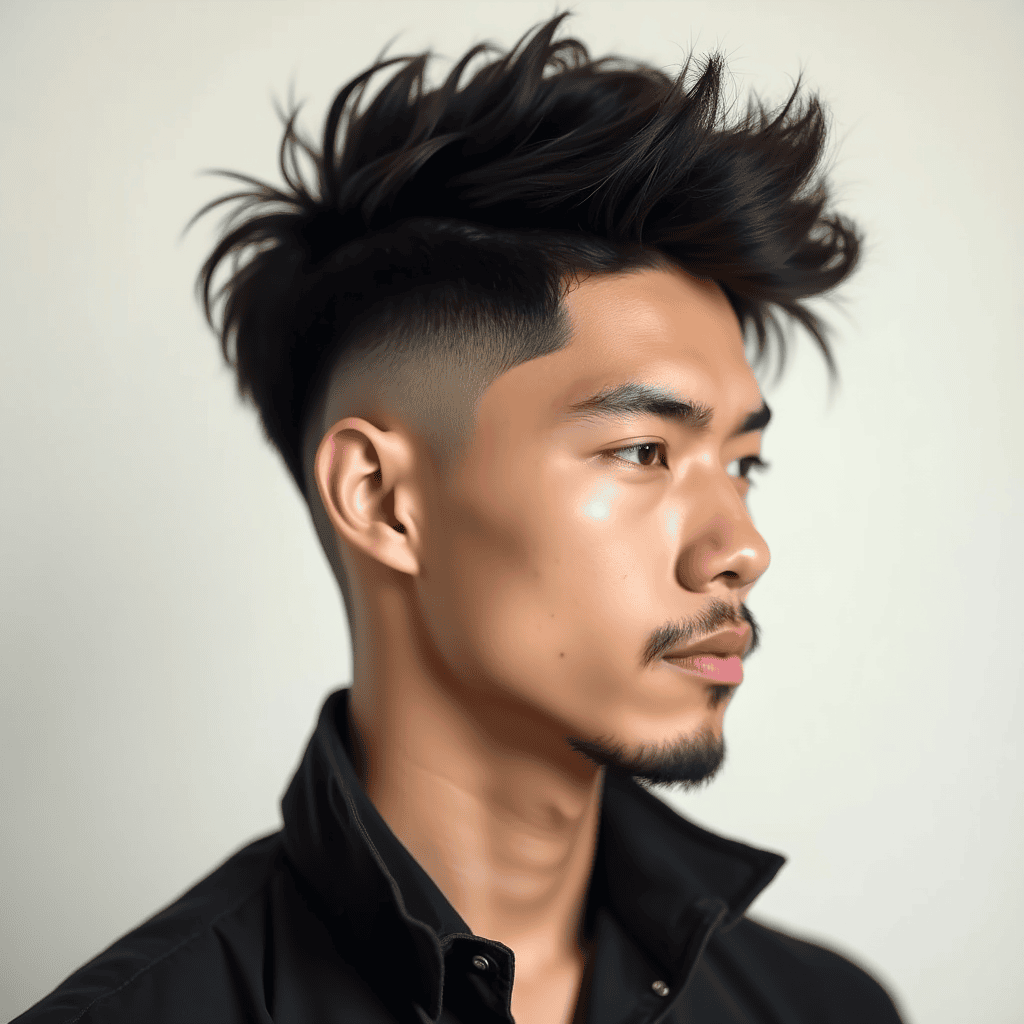
An edgy razor shag with micro fringe combines a short broken fringe with much longer layered movement around the crown, ears, and neckline. The tiny front pieces sit well above the brows, creating an immediate contrast with the expanding shape behind them. Narrow sections flick outward at the sides while the back remains longer and intentionally irregular. This is not supposed to disappear quietly into the crowd.
Wavy and thick straight hair can both support the contrast if the stylist manages the weight correctly. Ask for “a layered razor shag with a short broken fringe, lots of movement through the sides, and enough weight at the back that it doesn’t look shredded.” Upkeep involves maintaining the fringe separately from the longer sections. Men wanting a timeless cut with long intervals between appointments should choose something less specific.
25. Dramatic Long Razor Shag

The dramatic long razor shag takes the layering farther, placing shorter volume around the crown and upper sides while letting long narrow sections descend beyond the shoulders. The front opens around the face through tapered pieces that can sweep outward or fall loosely beside the cheeks. Lower layers remain visibly separated, giving the haircut movement even when the wearer stands still. It is the most committed interpretation among these razor cut hairstyle ideas.
Thick wavy or straight hair with substantial length gives the stylist enough material to create the contrast without emptying out the ends. Tell your stylist, “Keep my long length, build a strong shag shape through the crown, and razor the layers for separation while protecting density at the bottom.” Expect more conditioning and detangling than a short cut requires. If your ends are already fragile or thin, preserving strength should matter more than maximizing feathered texture.
How to Choose the Right One
Choosing between razor cut hairstyle ideas starts with your natural texture, current length, and how much styling you are prepared to do. A photograph can show the silhouette you want, but your barber still has to decide whether your density and growth pattern can support the same amount of separation.
Match the Razor Work to Your Hair Density
Dense hair usually gives a barber more room to remove internal weight without making the perimeter look weak. Medium-density hair can also respond well, but the blade should be used more selectively around exposed areas such as the temples and front hairline.
Fine hair needs the most restraint. You may still want the movement associated with razor cut hairstyle ideas, but ask for softness at specific ends rather than heavy razor work throughout the entire cut.
Choose by Daily Styling Time
A textured crop, Caesar, or short French crop can usually be reset quickly with your fingers and a small amount of product. Medium quiffs, asymmetric sweeps, wolf cuts, and longer shags demand more attention because their appeal depends on several layers sitting in intentional directions.
Bring two or three reference photos to the appointment, including at least one side view. Rather than saying only, “I want this haircut,” point to the exact fringe, crown volume, side length, and perimeter texture you want copied.
Think About Your Clothing and Routine
A razor Ivy League or side sweep sits comfortably with tailoring, business-casual clothes, and cleaner wardrobes because the silhouette remains controlled. Shags, mullets, wolf cuts, and asymmetrical styles naturally draw more attention and pair easily with relaxed, creative, or fashion-forward clothing.
That does not mean your haircut and wardrobe need to belong to one rigid aesthetic. The useful question is whether you want your hair to act as a quiet frame or become one of the first things people notice.
Where Razor Cuts Can Go Wrong
The weak versions of razor cut hairstyle ideas usually fail for one reason: too much hair gets removed simply because a razor is available. Texture should create shape and movement, not leave every section equally thin.
Excessive Thinning Can Destroy the Perimeter
Feathered ends look intentional when there is enough density behind them. If the stylist continues slicing into already fine sections, the bottom edge can become wispy and disconnected from the rest of the haircut.
Be specific about where you want movement. Asking the barber to preserve density through the perimeter while softening selected sections gives a much clearer instruction than requesting “lots of texture.”
The Tool Should Suit the Hair
A razor is not automatically the best tool for every head of hair. Hair condition, density, curl behavior, and the finish you want all matter, and some textures may benefit from mostly scissor work with only limited razor detailing.
A skilled professional should be comfortable saying when a reference photo requires a different technique on your hair. That judgment matters more than copying the cutting method used to create somebody else’s hairstyle.
Frequently Asked Questions
What are razor cut hairstyles for men?
Razor cut hairstyles use a hair-cutting razor to create softer, more tapered ends and visible separation through selected sections. The technique can produce crops, fringes, shags, flowing medium cuts, and longer layers. The exact result depends heavily on hair density, texture, length, and how aggressively the razor is used.
Are razor cut hairstyle ideas good for thick hair?
Many razor cut hairstyle ideas work especially well on thick hair because controlled razor work can remove excess weight and make dense sections move more freely. The important word is controlled. Removing too much can weaken the perimeter, so the barber should decide precisely where softness or separation is useful.
Can men with fine hair get a razor cut?
Yes, but fine hair usually needs a restrained approach. Light detailing through selected ends can add softness, while heavy razor thinning may make already fine sections appear weaker. Show your barber the movement you want and ask whether scissors, point cutting, or limited razor work would preserve more density.
Is a razor cut good for wavy hair?
Wavy hair can look excellent with razor detailing because feathered layers often help its natural movement show more clearly. However, technique matters. The barber should work with the way your waves group and bend rather than slicing indiscriminately through them, which can create unwanted frizz or uneven density.
How long does a men’s razor cut hairstyle last?
The shape generally grows out at roughly the same pace as any comparable haircut, but highly textured sections can start looking different once the carefully tapered ends become longer. Short crops may need more frequent reshaping than shoulder-length layers. Your preferred level of neatness matters more than a fixed timetable.
What should I ask my barber for when getting a razor cut?
Describe the finished appearance rather than requesting the tool alone. Say where you want softness, separation, movement, or reduced weight, and show photographs from several angles. If you’re comparing razor cut hairstyle ideas, identify the fringe, side length, crown shape, and neckline you actually want reproduced.
What is the difference between a razor cut and a scissor cut?
Scissors create a wide range of results, from crisp blunt lines to detailed point-cut texture. Razor work tends to produce narrower, softer ends when used appropriately. Neither tool is automatically superior. Experienced barbers and stylists often choose or combine techniques according to the hair and intended finish.
Do razor cuts make hair look thinner?
They can if too much weight is removed. Thoughtful razor cutting can make thick hair feel lighter while still looking full, but aggressive work on fine hair may expose more space between sections. Preserving density at the perimeter is particularly important when the wearer already has naturally fine strands.
Which razor cut hairstyle is easiest to maintain?
A short textured crop is one of the easier options because the hairstyle does not depend on elaborate direction or long layers. A French crop and short Caesar are also practical choices. Longer razor cut hairstyle ideas such as shags and wolf cuts need more attention to preserve their intended movement.
Can a razor cut work with a fade?
Yes. A fade can control the sides while razor work creates softness and texture through the longer hair above it. The contrast is strongest when the top remains visibly separated. Tell your barber how high you want the fade before discussing texture because that decision changes the overall silhouette more dramatically.
Should I use gel on a razor cut hairstyle?
Usually, lighter products show razor-created texture more clearly than heavy wet gel. Matte paste, cream, or another flexible product can let tapered pieces remain separated while still moving naturally. Product choice should follow the hairstyle, though; a lifted quiff needs more hold than a relaxed curtain cut.
Are razor cut hairstyle ideas suitable for professional settings?
Several razor cut hairstyle ideas fit professional settings easily, especially the Ivy League, side sweep, textured crop, and restrained quiff. The cutting technique itself does not make a hairstyle casual or formal. Length, silhouette, styling, and how deliberately the haircut is maintained have a larger effect.
Can I get a razor cut if I am growing my hair longer?
Yes. Long razor layers can remove bulk and introduce movement while keeping most of the overall length. Tell your stylist that growth remains the priority so the perimeter is not thinned unnecessarily. A subtle face frame or a few longer layers may be enough during the transition.
Is a razor wolf cut the same as a razor shag?
They overlap, but the wolf cut usually pushes stronger volume toward the crown and creates a more dramatic transition into tapered lower lengths. A shag can distribute its layers more evenly. Your reference photos matter because modern versions of both styles vary considerably from one wearer to another.
How do I pick the best razor cut for my face shape?
Treat face shape as a starting point rather than a strict rule. Longer fringes can visually shorten a long face, upward volume can add height, and side movement can break up a strongly vertical outline. Hair density and growth pattern still matter, so choose the shape your hair can reproduce reliably.
The best razor cut hairstyle ideas do not begin with asking a barber to use a razor everywhere. They begin with deciding where you want the hair to feel lighter, move more freely, or lose a hard edge. Pick two reference photos from this list, identify the specific texture and silhouette you want, and bring those details to your next appointment.
Best Men’s Hairstyle Reports
Explore disconnected cuts, barber techniques, modern fades and textured twist hairstyle ideas for men.