
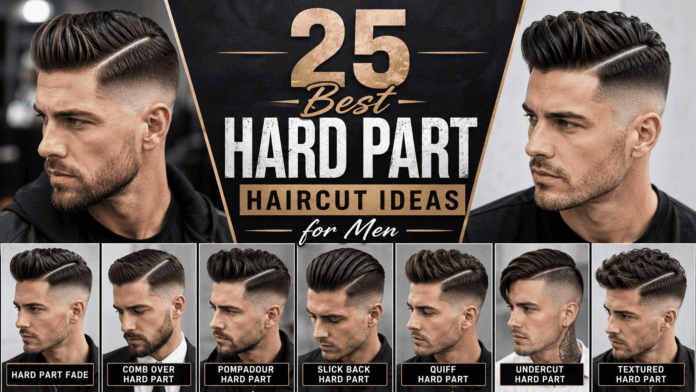
The strongest Hard Part Haircut Ideas right now are the Classic Side Part, Low Fade Hard Part, Textured Crop Hard Part, and Pompadour Hard Part. Those four cover most needs: clean office styling, low-maintenance everyday wear, modern texture, and sharper statement grooming without turning the shaved line into the entire haircut.
The approach here follows professional barbering logic: head shape, growth direction, contrast, blend placement, and how the cut behaves two or three weeks after the appointment. A good hard part should organize the haircut, not look like a stripe added as an afterthought.
I ranked these looks by how naturally the shaved part works with the surrounding length, how clearly you can explain the cut to a barber, and how realistic the upkeep is. Some styles reward weekly precision; others still look respectable when the line starts softening.
| Quick Pick | Best For | Main Shape | Upkeep |
|---|---|---|---|
| Classic Side Part Hard Part | Most men | Neat side sweep | Moderate |
| Low Fade Hard Part | Subtle contrast | Clean sides, fuller top | Moderate |
| Mid Fade Hard Part | Everyday modern style | Balanced fade | Moderate |
| High Fade Hard Part | Strong contrast | Tight sides, sharp top | High |
| Textured Crop Hard Part | Easy styling | Choppy forward texture | Low to moderate |
| Ivy League Hard Part | Office wear | Short controlled top | Moderate |
| Pompadour Hard Part | Statement styling | High swept volume | High |
| Wavy Hard Part | Natural movement | Loose directional texture | Moderate |
| Skin Fade Hard Part | Maximum definition | Bare fade contrast | High |
| Business Taper Hard Part | Professional settings | Conservative graduation | Low to moderate |
These quick picks only scratch the surface. The best Hard Part Haircut Ideas depend less on trends than on how much top length you want, how visible you want the shaved line to be, and whether you’re willing to revisit the barber before the cut loses its geometry.
Classic Hard Part Haircut Ideas for Men
Short, traditional shapes are where the hard part makes the most immediate sense. The line follows a natural styling direction, giving the barber a clean border between the longer top and shorter side without asking you to build huge volume every morning.
1. Classic Side Part With a Hard Line
The classic side part is still the cleanest introduction to a shaved part because every element already wants to move in the same direction. The top usually stays long enough to comb diagonally across the head, while the sides sit noticeably shorter without disappearing into skin. The razor line follows the natural division, creating a narrow, controlled break. It photographs especially well from a three-quarter angle because the contrast gives the haircut instant structure.
Ask your barber, “Keep a traditional side-part shape, find my natural part, and shave a thin line into it without making it too wide.” It works particularly well on straight or lightly wavy hair and suits oval, square, and many rectangular faces. A small amount of pomade or styling cream usually keeps the top organized. The drawback is regrowth: once the line becomes fuzzy, the haircut loses some of the deliberate finish that makes this version work.
2. Low Fade Hard Part
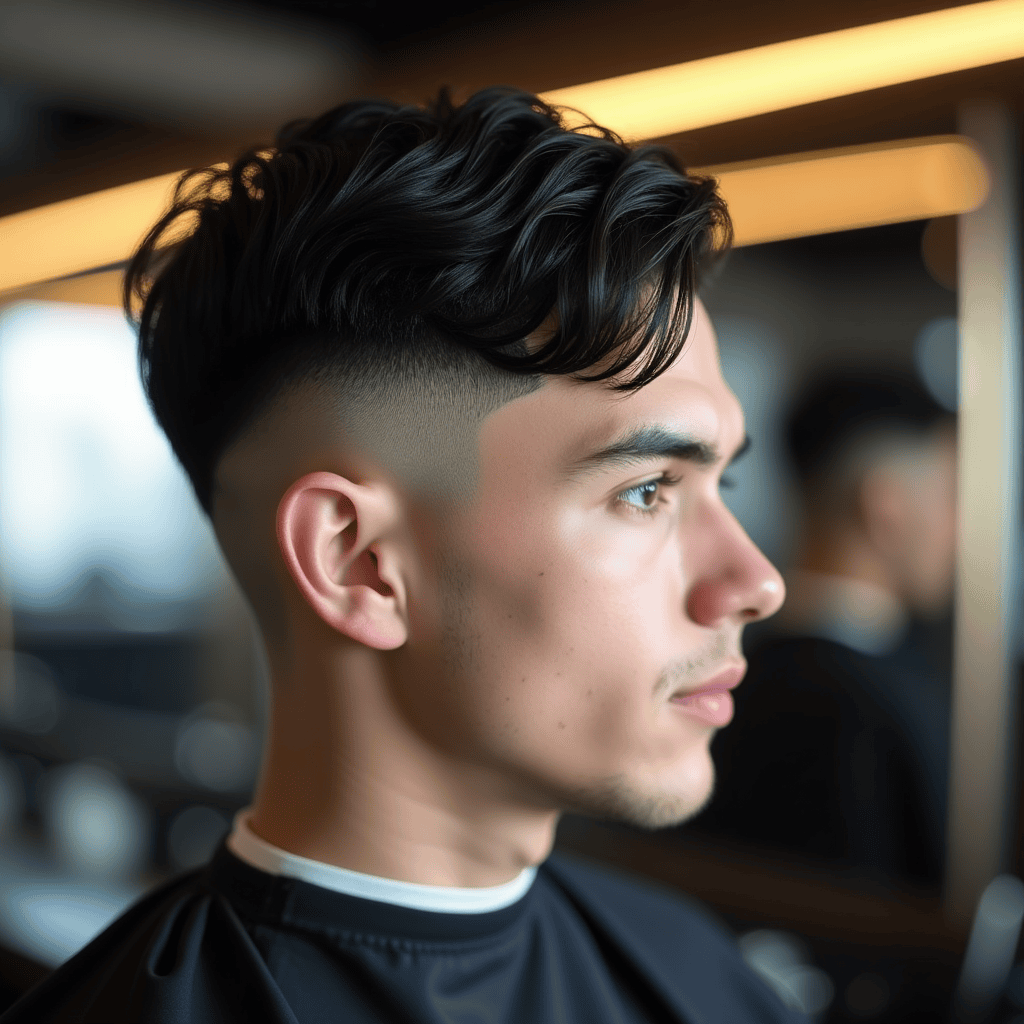
A low fade keeps the drama near the bottom of the head while letting the hard line handle the definition above it. The fade begins around the sideburn and lower temple, then climbs gradually into darker hair beneath the part. Up top, two to three inches gives you enough length for a restrained side sweep. Among Hard Part Haircut Ideas, this is one of the easiest ways to get noticeable detail without making the whole haircut aggressive.
Tell your barber, “Give me a low fade that stays low around the ear, leave enough weight above it, and put a fine hard part on my natural side.” This version suits men who want something sharper than a taper but still need to look polished at work. Thick straight hair behaves especially well, though light waves can make the top less formal. The weak point is the transition area; if too much weight gets removed above the fade, the part can look detached rather than integrated.
3. Mid Fade Hard Part
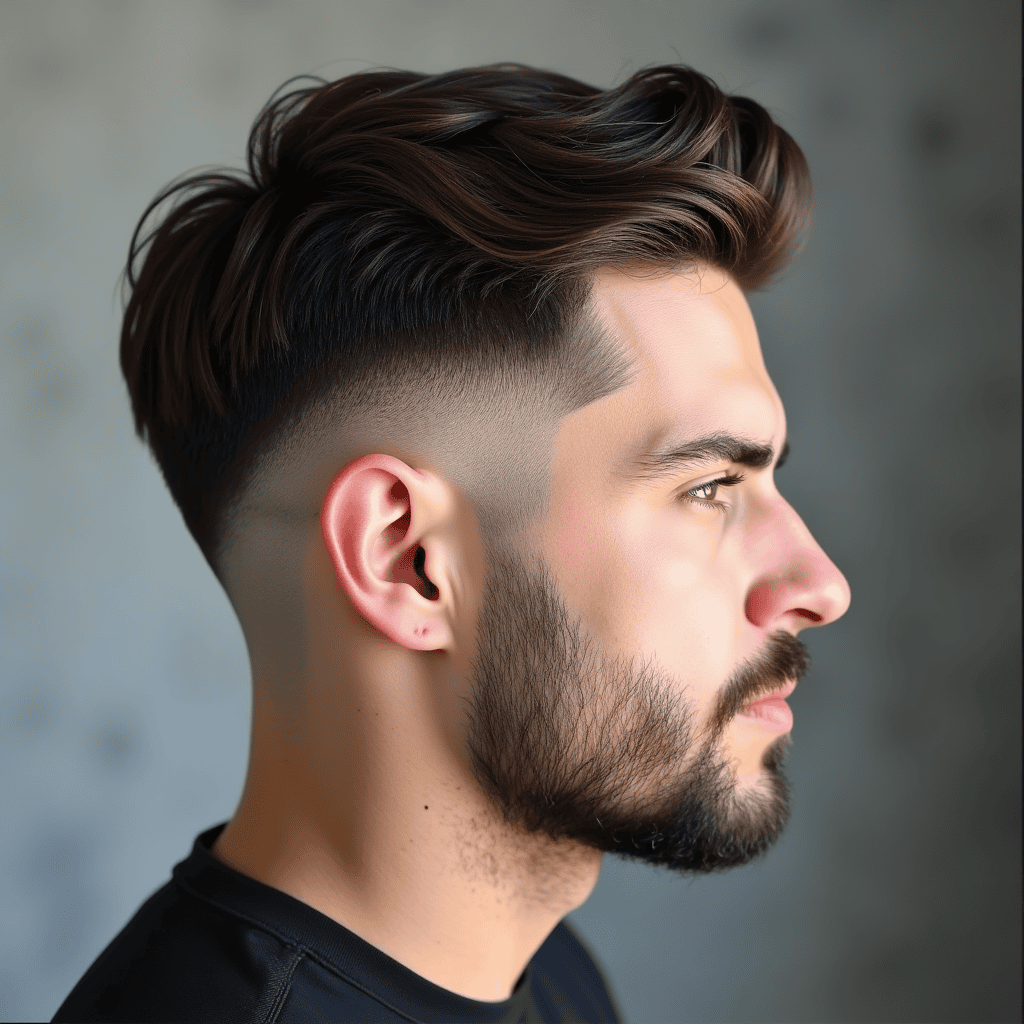
The mid fade hard part splits the difference between conservative and bold. The shortest area starts around the middle of the temple, leaving enough darkness below the shaved line to stop the top from appearing disconnected. The top can sit almost flat or carry a little lift at the front. That middle placement makes the haircut look balanced from the front as well as the side.
Ask for “a mid fade blended into a side-parted top, with a narrow razor line placed exactly where the hair naturally separates.” Men with thick or medium-density hair usually get the cleanest silhouette, while finer hair benefits from keeping the top slightly shorter. Rounder faces often gain useful vertical shape from a lifted front. You’ll need to maintain the fade and the shaved line together, which means this isn’t the best pick if you stretch barber appointments far apart.
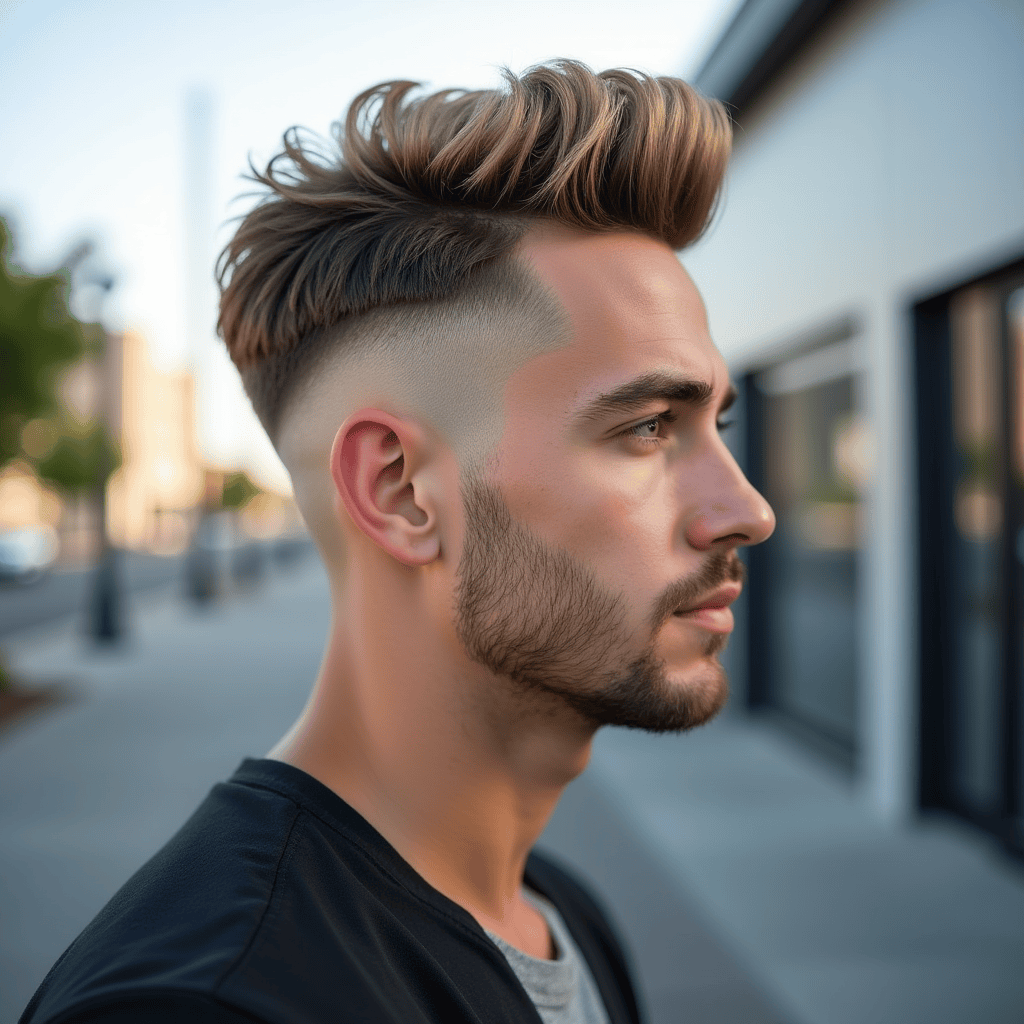
4. High Fade Hard Part
The high fade pushes contrast much farther. Short hair rises toward the upper temple before meeting the heavier top, so the hard line reads almost like a boundary between two separate zones. A compact comb-over or short side sweep keeps the top controlled. The result is crisp, graphic, and noticeably less traditional than the low-fade version.
Say, “Take the fade high but leave a dark enough ridge under the top, then add a thin hard part instead of a wide shaved track.” This cut makes sense for thick hair and men who actually enjoy a freshly barbered look. It can visually tighten fuller sides on round or broad face shapes. Skip it if you prefer forgiving grow-out, because a high fade and visible razor part both announce themselves when they start losing precision.
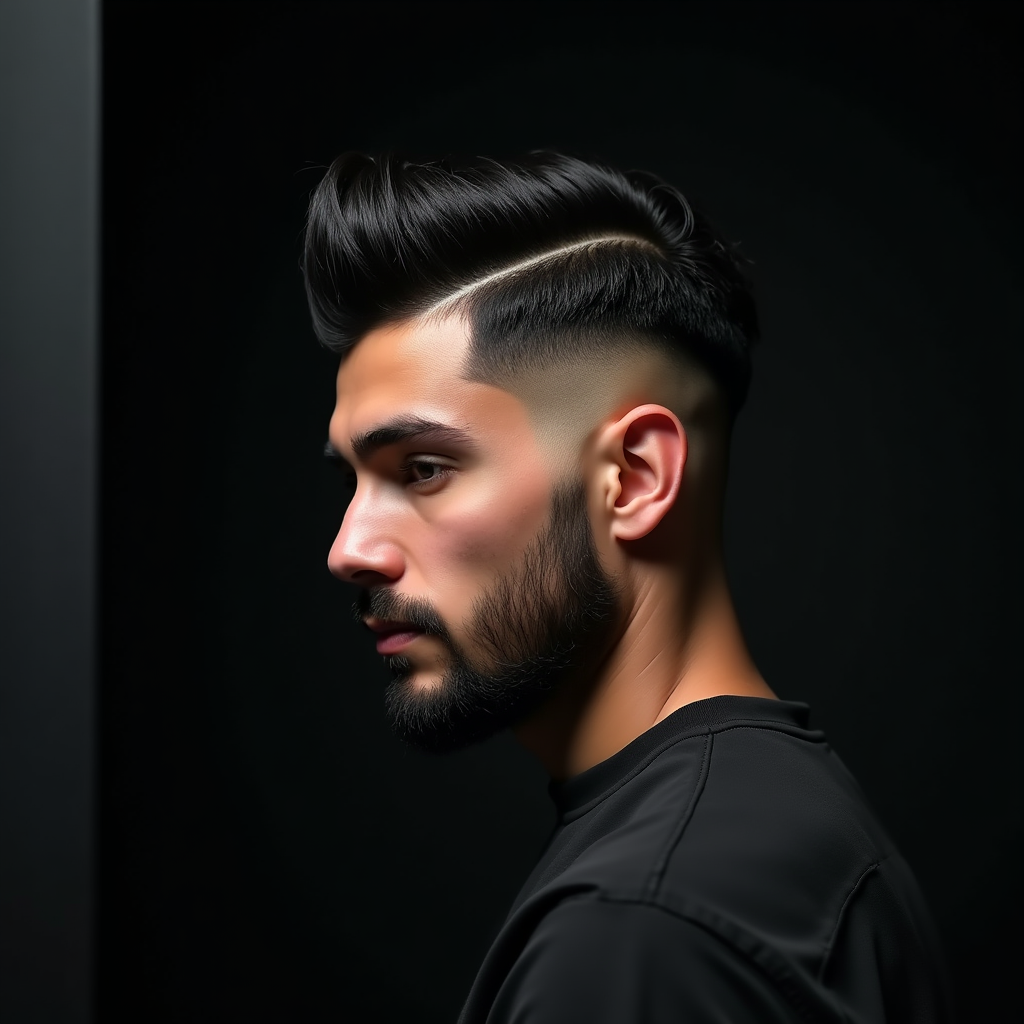
5. Taper Fade Hard Part
A taper fade hard part gives you precision without removing much bulk from the sides. The hair gradually shortens only around the sideburns and neckline, while the temple area remains fuller than it would with a standard fade. That extra weight makes the shaved line look less severe. From the front, it still reads like a classic men’s haircut rather than a high-contrast barber design.
Ask your barber, “Keep the sides mostly full, taper the sideburns and neckline, and cut a clean hard part into my natural separation.” This is one of the more practical Hard Part Haircut Ideas for Men who dress conservatively or work in formal offices. Straight, wavy, thick, and moderately fine hair can all carry it. The only catch is that the fuller sides need careful scissor work; poor weight control can make the area beneath the part look bulky.
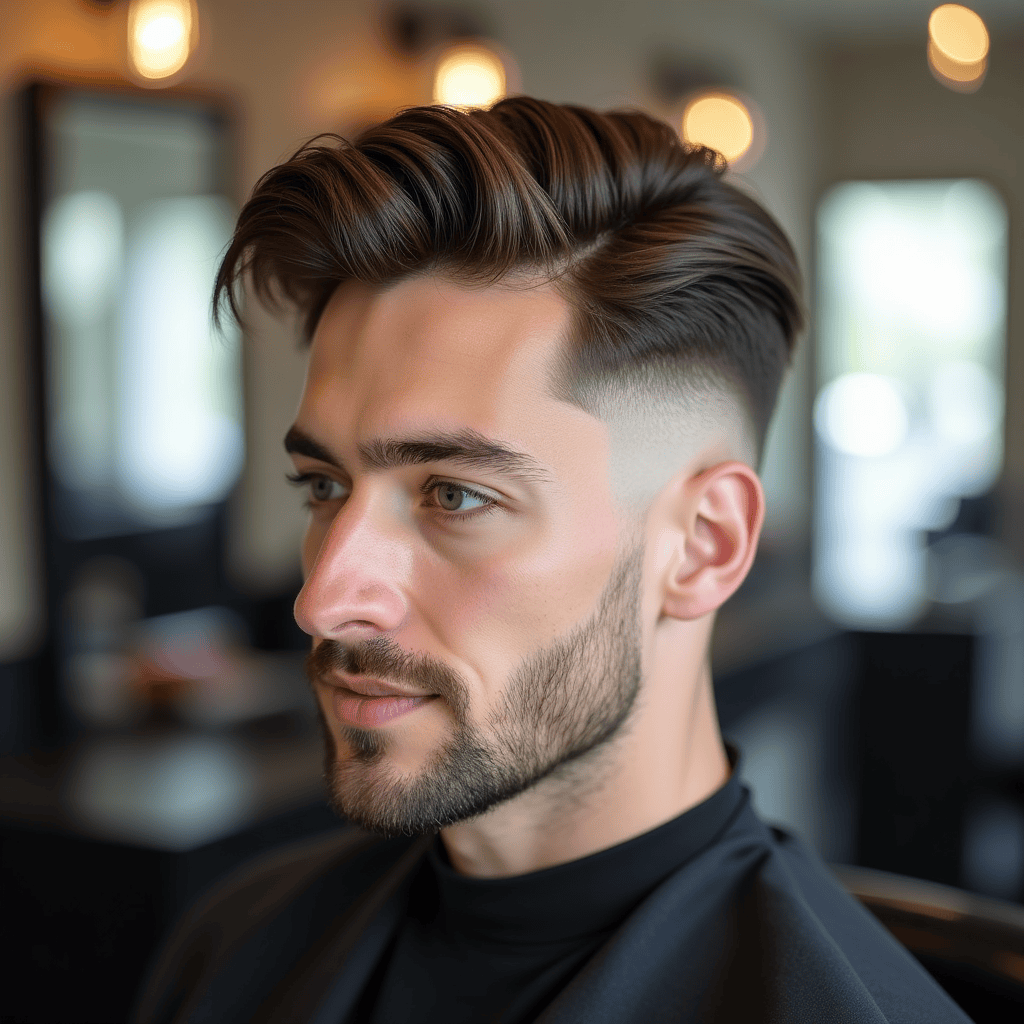
6. Crew Cut With a Hard Part
The crew cut version proves that a hard part doesn’t require a long comb-over. The hair stays short across the crown with a little extra length toward the front, while a fine shaved line separates the top from the shorter side. Because there isn’t much hair to move around, the part becomes a graphic detail rather than a styling guide. The whole shape looks tight and deliberate.
Tell your barber, “Keep a short graduated crew cut, leave a bit more length in front, and add a fine hard line on the natural part side.” It works for men who want quick morning grooming and don’t mind visible barber precision. Coarse or dense hair usually gives the strongest outline. Fine hair can work too, but an oversized shaved line may expose too much scalp, so restraint matters more than usual.
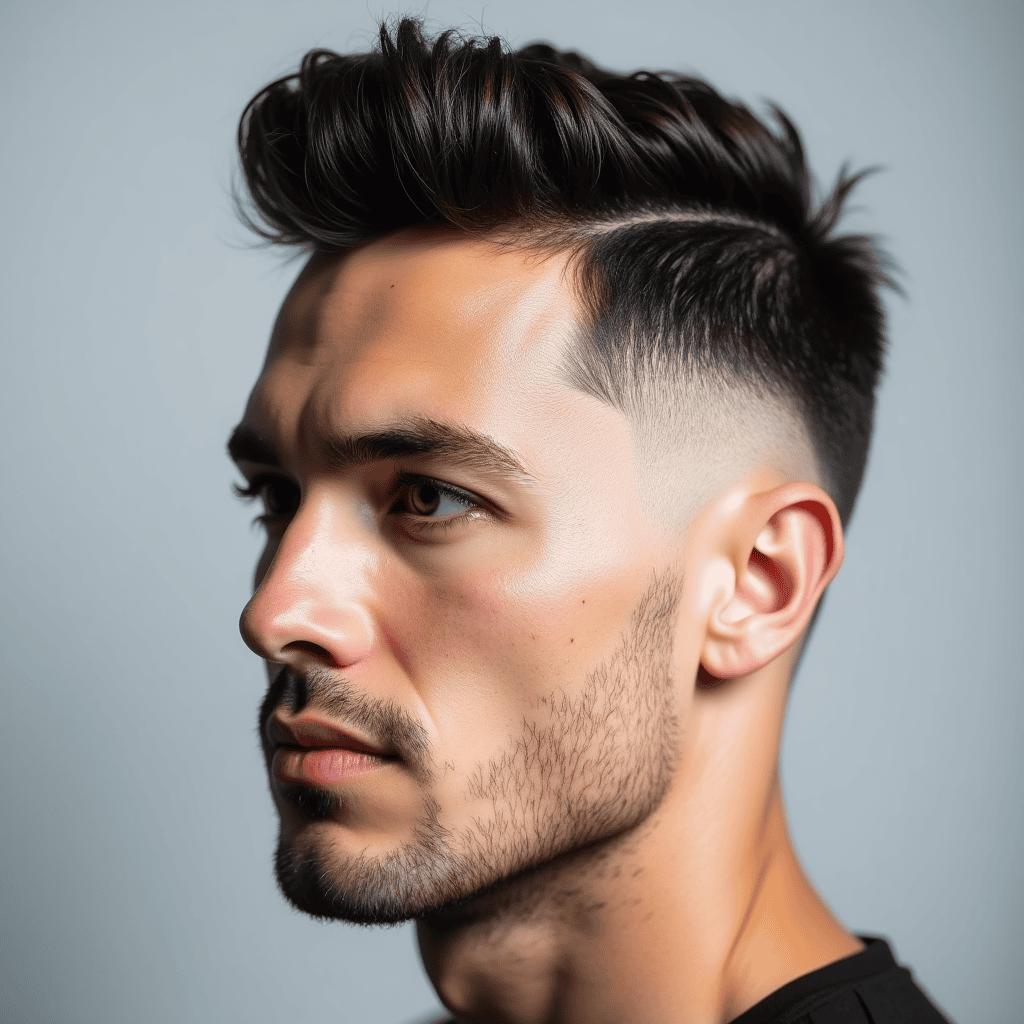
Textured Hard Part Haircut Ideas With More Top Length
Extra length changes the job of the shaved part. Instead of simply organizing a neat side sweep, it becomes an anchor for texture, lift, and movement. These Hard Part Haircut Ideas work best when the top has enough character to justify the stronger line underneath it.
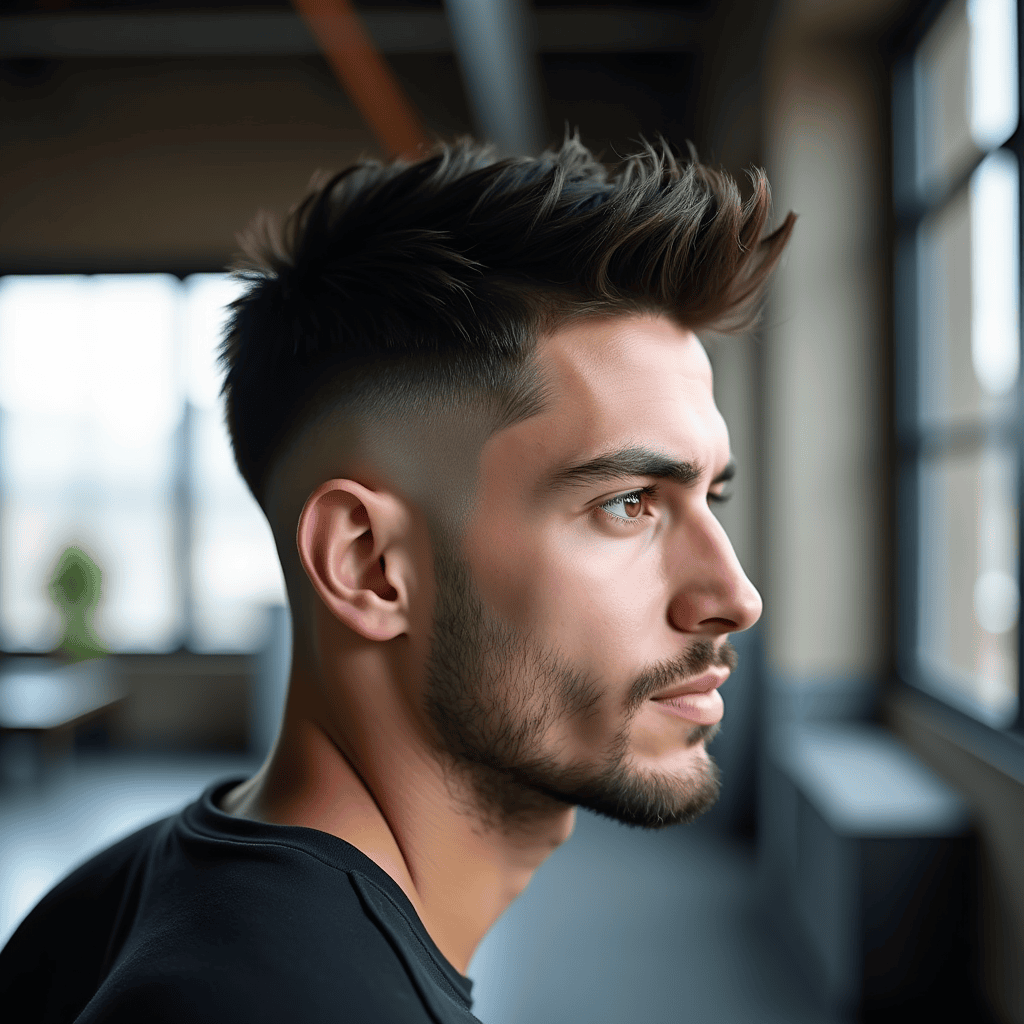
7. Textured Crop Hard Part
A textured crop puts rough movement on top against a surprisingly precise side division. The crown and front are cut into short, uneven sections, often moving forward rather than slicking sideways. The shaved line starts near the front corner and runs back above a faded or tightly tapered side. That mix of deliberately messy texture and one perfect line gives the haircut its personality.
Ask for “a short textured crop with point-cut movement on top, a clean fade, and a thin hard part placed off-center rather than too high.” Men with thick straight or slightly wavy hair usually get the most convincing texture. It’s also useful if you dislike combing every strand into position. The downside is that the hard part can fight the crop if the top is cut too uniformly, so the stylist needs to create genuine separation rather than fake texture with product.
8. Ivy League Hard Part
The Ivy League keeps the top short enough to behave but long enough to part. The front carries a little more length than a standard crew cut, then gradually shortens toward the crown. A narrow hard line gives the side styling a fixed starting point, while a soft taper prevents the haircut from feeling overly sculpted. It’s tidy without looking lacquered.
Tell the barber, “Cut an Ivy League with enough front length to sweep over, taper the sides naturally, and shave a subtle part line.” This is one of the safer Hard Part Haircut Ideas for interviews, client meetings, weddings, and similar situations where a dramatic fade might feel out of place. It works on many straight and lightly wavy textures. Its limitation is simple: if your cowlick crosses the intended part, forcing a razor line through it can make daily styling more annoying instead of easier.

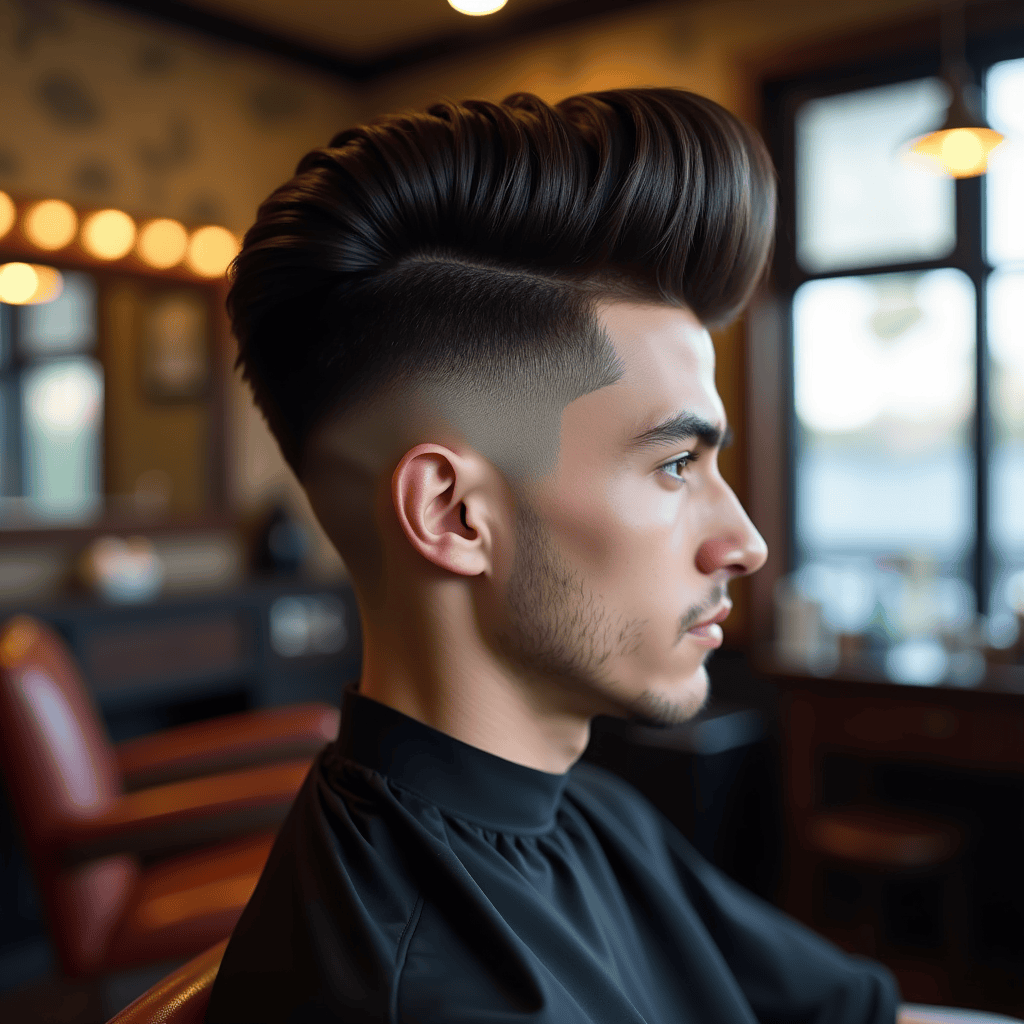
9. Pompadour Hard Part
A pompadour gives the shaved line a much bigger shape to support. The front rises high before sweeping backward, with the top gradually settling toward the crown. Along one side, the hard part separates that volume from a fade or short scissor cut. Viewed from the side, the line creates a sharp base beneath the curved pompadour silhouette.
Ask your barber, “Leave enough front length to build a pompadour, keep weight through the top, fade the side cleanly, and put a thin hard part under the heavy side.” Dense straight or wavy hair is easiest to lift and hold. You’ll probably need a blow dryer plus a workable pomade, clay, or cream depending on the finish you want. The drawback is time: this cut loses much of its point when the front collapses, so it rewards men who genuinely enjoy styling.
10. Quiff Hard Part
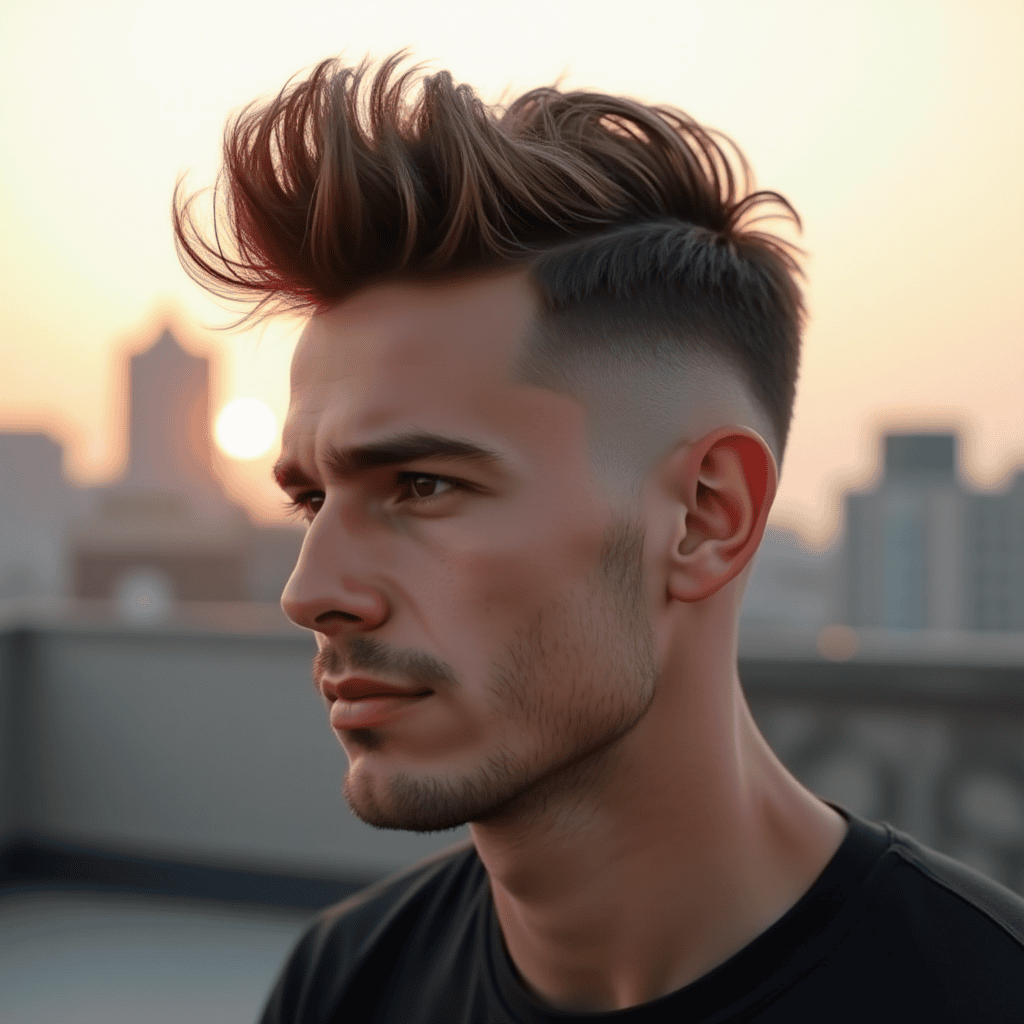
The quiff is looser than the pompadour and usually concentrates its height nearer the forehead. The front is pushed upward and slightly back, while the rest of the top keeps more visible texture. A hard line along one side prevents that movement from spreading into the shorter section. The result looks styled, but not perfectly combed.
Say, “Give me a textured quiff with about enough front length to lift, keep the sides tight, and shave a clean narrow part that doesn’t run too far back.” This version suits medium to thick hair and can give round or shorter faces some added vertical emphasis. You can wear it matte for a casual finish or smoother for evening. Fine hair may struggle if the top is left too long, and heavy products can flatten the exact lift the haircut needs.
11. Slick Back Hard Part
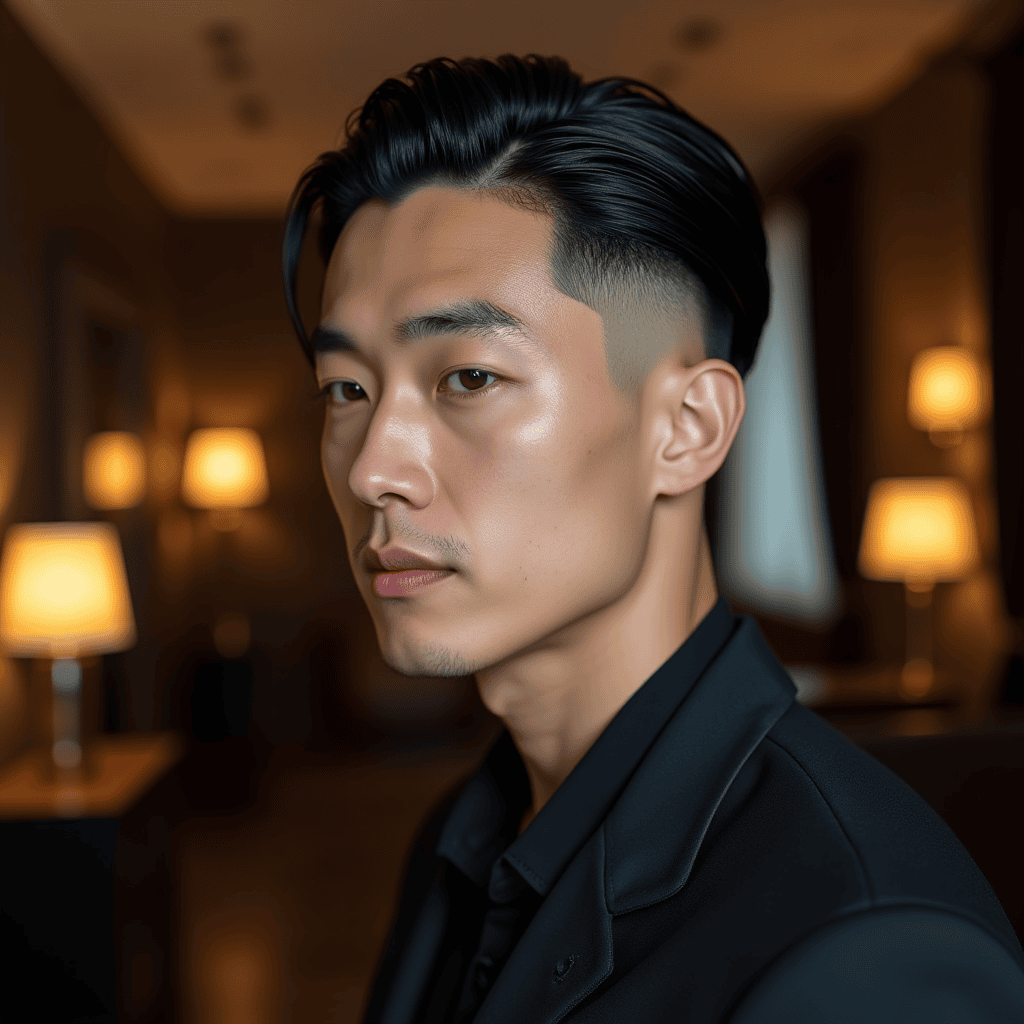
The slick back hard part draws long, uninterrupted lines from the forehead toward the crown. The top sits close to the head rather than rising dramatically, while the razor part forms a sharp side boundary. A medium or low fade underneath can modernize it, but keeping some side weight produces a more traditional result. Shine makes the line appear even cleaner.
Ask for “a longer slick-back top, a controlled taper or low fade, and a narrow hard part that follows the natural corner.” Men with straight hair tend to get the easiest daily routine, although wavy hair can produce a softer version with more character. This is one of those Hard Part Haircut Ideas that looks excellent when intentionally styled and surprisingly unfinished when it isn’t. If you prefer leaving the house with damp hair and no product, choose something shorter.
12. Comb Over Hard Part
The comb over is built around side-to-side direction, making the razor line especially functional. Hair from the heavier side moves across and slightly backward, creating width through the top without requiring huge height. The hard part sits underneath that movement and gives the combed section a precise starting edge. A fade turns it modern; a taper keeps it classic.
Tell your barber, “Leave two to three inches on top for a natural comb-over, blend the side cleanly, and shave a fine part line without widening it at the front.” This shape is adaptable across many ages and works best when you still have enough density to create an intentional sweep. One warning: aggressively stretching longer hair across visibly sparse areas rarely looks convincing. In that situation, a shorter textured cut usually reads cleaner.

Hard Part Haircut Ideas for Wavy, Curly, and Coiled Hair
Texture doesn’t need to be flattened for a hard part to work. In fact, the line can be more striking beside curls and coils because its precision contrasts with natural movement. These versions depend on thoughtful placement rather than trying to make textured hair behave like straight hair.
13. Wavy Side Part Hard Part
The wavy side part leaves enough length for natural bends to show across the top. Instead of pressing every wave flat, the hair follows the general direction of the part while individual sections curve and separate. The shaved line stays crisp beneath that movement, usually above a taper or low fade. This creates definition without sacrificing texture.
Ask your barber, “Keep my waves visible on top, shape them toward the side instead of straightening them, and cut a narrow hard part with a low taper underneath.” Wavy medium-density hair is the obvious match, especially if you want structure without a polished combed finish. Use a light cream rather than heavy pomade if you want movement. The catch is humidity and natural expansion, which can soften the clean contrast around the part between cuts.

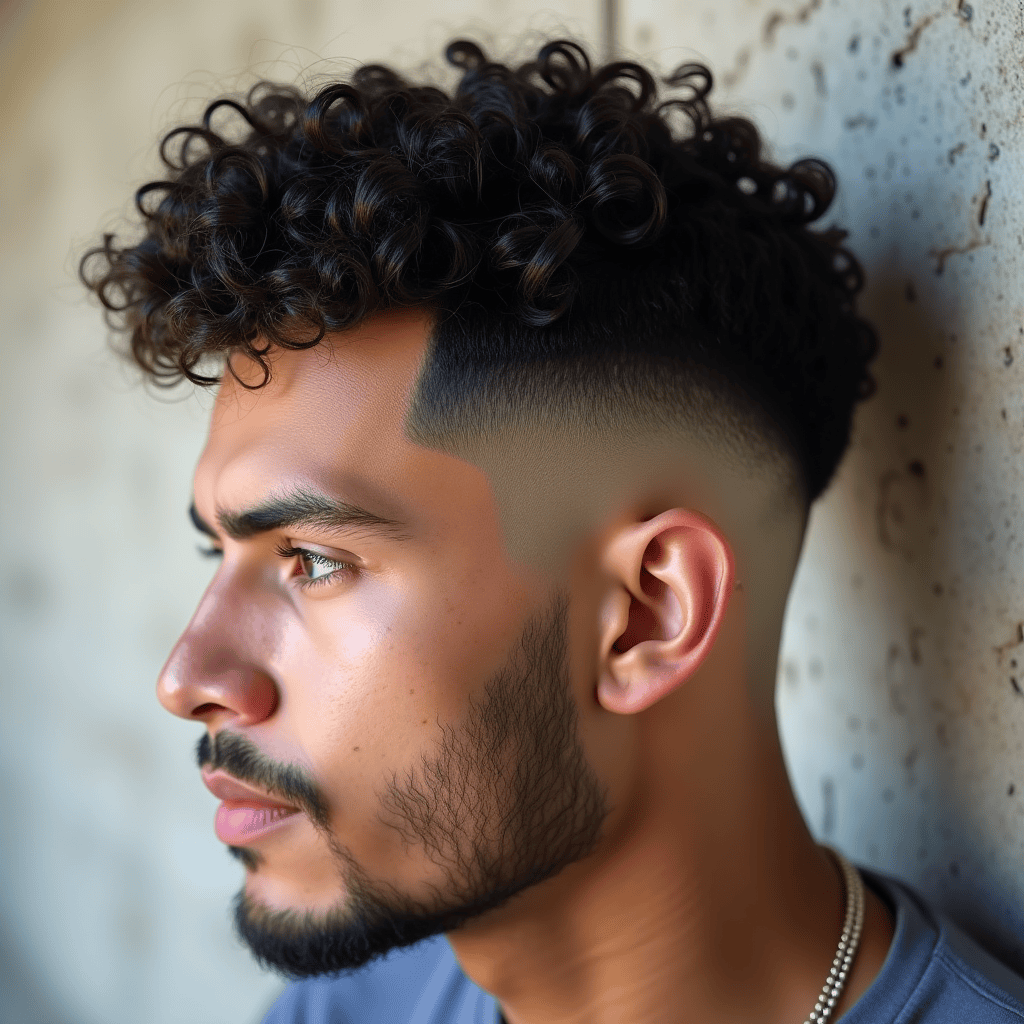
14. Curly Top Hard Part
A curly top hard part keeps compact curls full above the temple while the side is faded tightly underneath. The shaved part forms a straight, deliberate line between the rounded curl mass and the cleaner side. That geometry is why the cut works: the curls stay lively and irregular while the border beneath them looks almost architectural. The contrast is especially visible from the side.
Say, “Keep the curl length on top, shape the silhouette rather than flattening it, give me a clean fade, and shave a narrow part along the heavier side.” This suits defined curls with enough density to create a continuous top shape. It’s one of the more characterful Hard Part Haircut Ideas for Men who want to keep their natural curl pattern obvious. The part needs disciplined placement, though; cutting it too high can remove useful density from the edge of the curls.
15. Afro Taper With Hard Part
An Afro taper hard part keeps the main shape full while introducing a precise side detail. The top and upper sides retain rounded volume, while the temple and sideburn areas taper down sharply. The shaved part can be short and restrained rather than running all the way toward the crown. That shorter placement often looks more natural with the rounded silhouette.
Ask for “a shaped Afro with clean temple and neckline tapers, plus a short hard part that follows the front-side separation instead of cutting deep into the top.” Dense coiled hair carries this cut beautifully because the contrast between the razor line and full texture is immediate. Regular shaping matters more than product. The main mistake is overextending the part; a long line can divide the rounded shape in a way that feels forced.
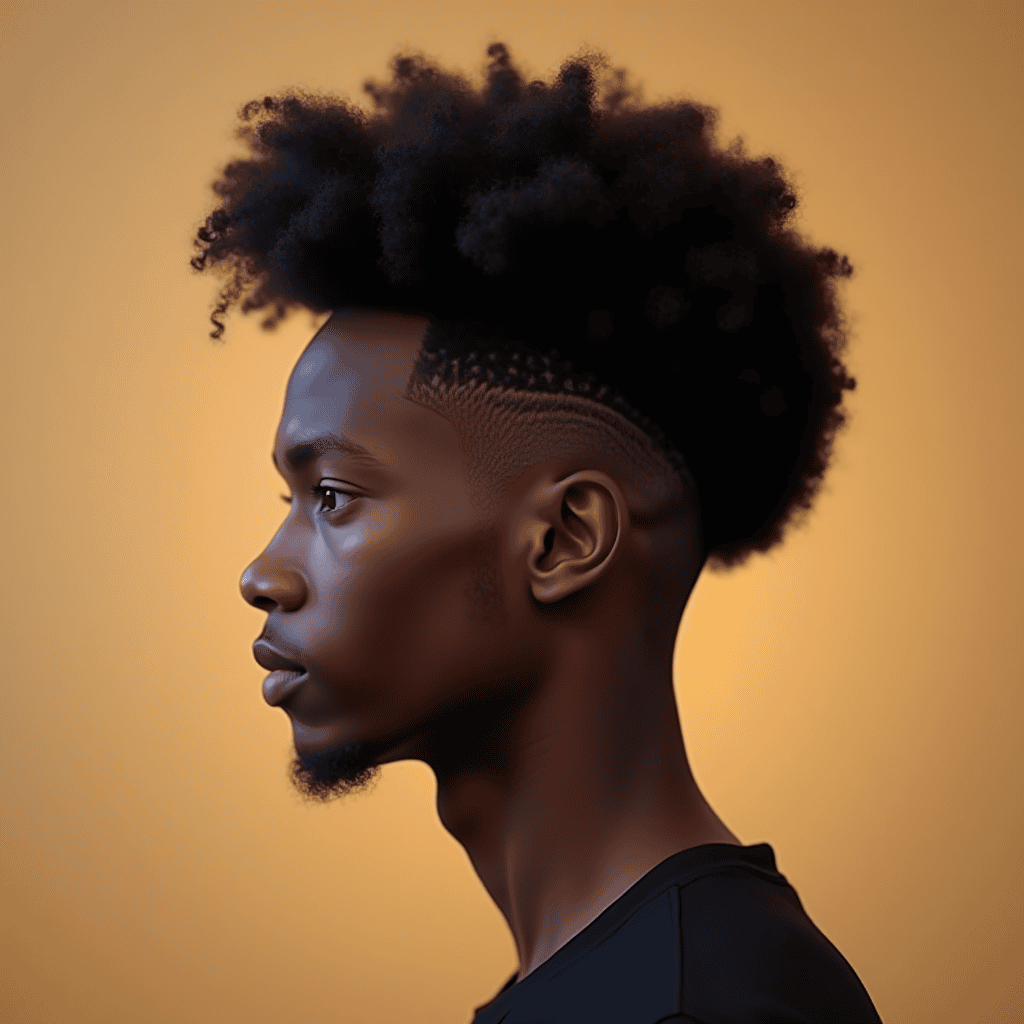
16. Coiled High Top Hard Part
The coiled high top raises the texture vertically while keeping the sides dramatically shorter. A hard line sits close to the transition, emphasizing the separation between the elevated top and faded side. The upper shape can stay slightly rounded or be cut flatter depending on how structured you want the finish. Either way, the silhouette is much bolder than a classic part.
Tell the barber, “Keep a tall coiled top with a clean overall shape, fade the sides, and put a narrow hard part along the heavier edge without carving into the top.” This is for men comfortable with visible height and frequent shape maintenance. Dense coils give the top enough body to hold the silhouette naturally. The downside is grow-out around the sides, which can quickly reduce the strong vertical contrast that gives this version its impact.

Bold High-Contrast Hard Part Haircut Ideas
These cuts turn up the contrast. Higher fades, bare skin, undercuts, and disconnected sections make the razor line impossible to miss. They can look fantastic fresh out of the chair, but they also demand more attention once the shortest areas begin growing.
17. Skin Fade Hard Part
A skin fade hard part takes the side down to bare or nearly bare skin before gradually building density upward. Above that transition, the shaved part separates the fade from a longer side-swept top. The absence of hair at the bottom makes the dark razor line stand out sharply. Few Hard Part Haircut Ideas produce this much definition without adding a second design line.
Ask for “a skin fade that blends smoothly into the upper side, a narrow natural hard part, and enough top length for a controlled sweep.” It suits men who like extremely clean edges and don’t mind frequent appointments. Thick hair provides the strongest dark-to-light contrast. Sensitive scalps or anyone who dislikes seeing visible regrowth within days may prefer a number-one fade instead of taking the bottom completely down.
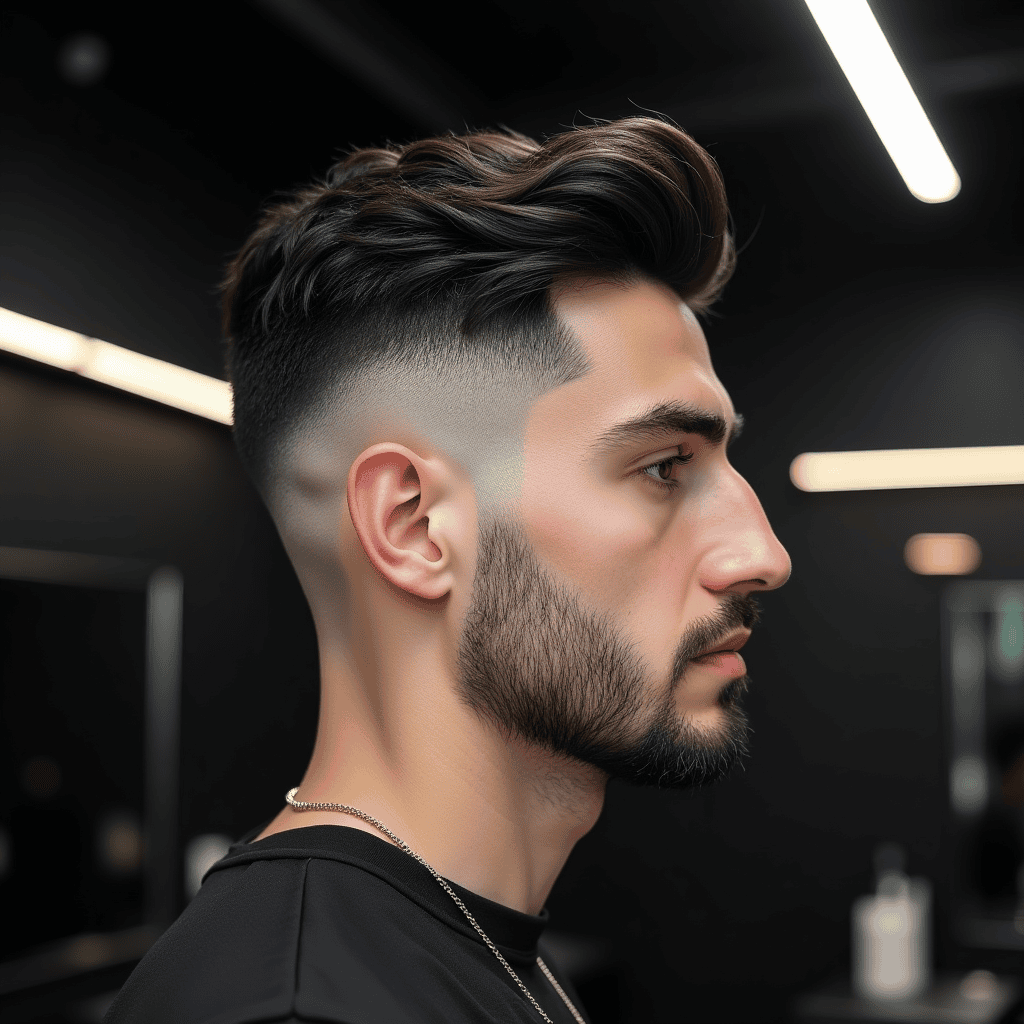
18. Drop Fade Hard Part
The drop fade curves downward behind the ear rather than following a straight horizontal path around the head. Pairing that arc with a hard part creates two different directional lines: one above the temple and one wrapping lower around the back. The top can stay compact and side-swept so the shapes remain readable instead of competing with excessive volume.
Tell your barber, “Give me a drop fade that falls behind the ear, keep the top controlled, and cut a precise hard part on the heavier side.” This works especially well if you like seeing shape from the side and rear rather than caring only about the front mirror view. The cut requires a barber comfortable with graduation around the occipital area. A poorly placed drop can look like an accidental dip rather than an intentional contour.
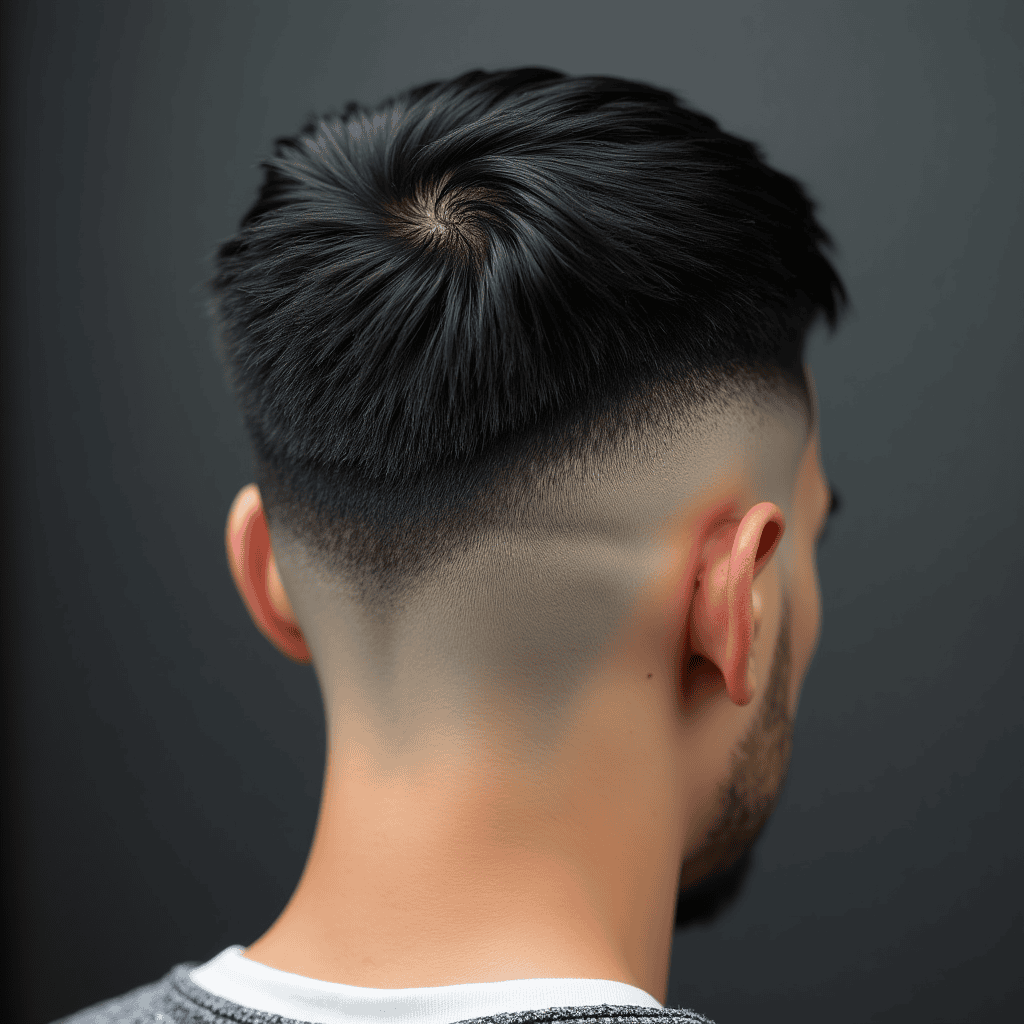
19. Burst Fade Faux Hawk With Hard Part
The burst fade concentrates its shortest area in a semicircle around the ear while leaving more length toward the back. Add a narrow hard part near the front side and the haircut gains a second strong structural feature. The central top can be pushed upward into a restrained faux hawk rather than a tall spike. From different angles, the cut changes character.
Ask for “a burst fade around the ear, keep length through the center for a textured faux hawk, and add one thin hard part near the front side.” Men with thick straight, wavy, or curly hair can all adapt the top differently. This is a much louder choice than a business side part, so it makes more sense if your wardrobe and work environment already lean casual or expressive. Too many extra razor details will overcrowd it fast.
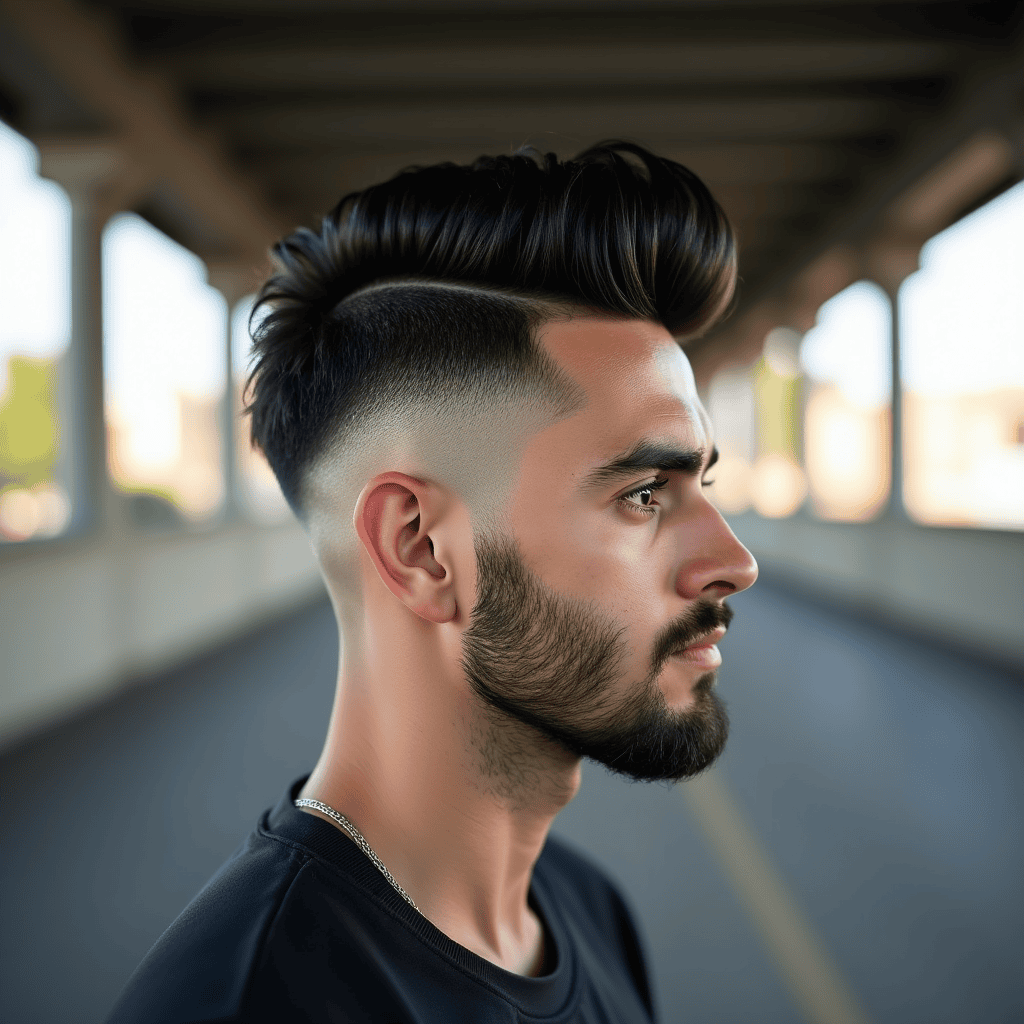
20. Disconnected Undercut Hard Part
The disconnected undercut removes the gradual transition between the long top and short side. The hard part sits right at that boundary, making the separation even more deliberate. Hair above it can sweep sideways or backward, while the undercut stays one relatively consistent short length. It’s geometric, sharp, and less forgiving than a blended fade.
Say, “Keep the top clearly disconnected from the short side, preserve enough length for a side sweep, and shave a narrow hard part exactly along the transition.” Straight, dense hair usually gives the strongest result because the top holds together as one visible panel. Among Hard Part Haircut Ideas, this is one of the least subtle choices. The grow-out can become awkward because the disconnected side doesn’t merge gradually into the top, so reshaping takes patience if you later change styles.
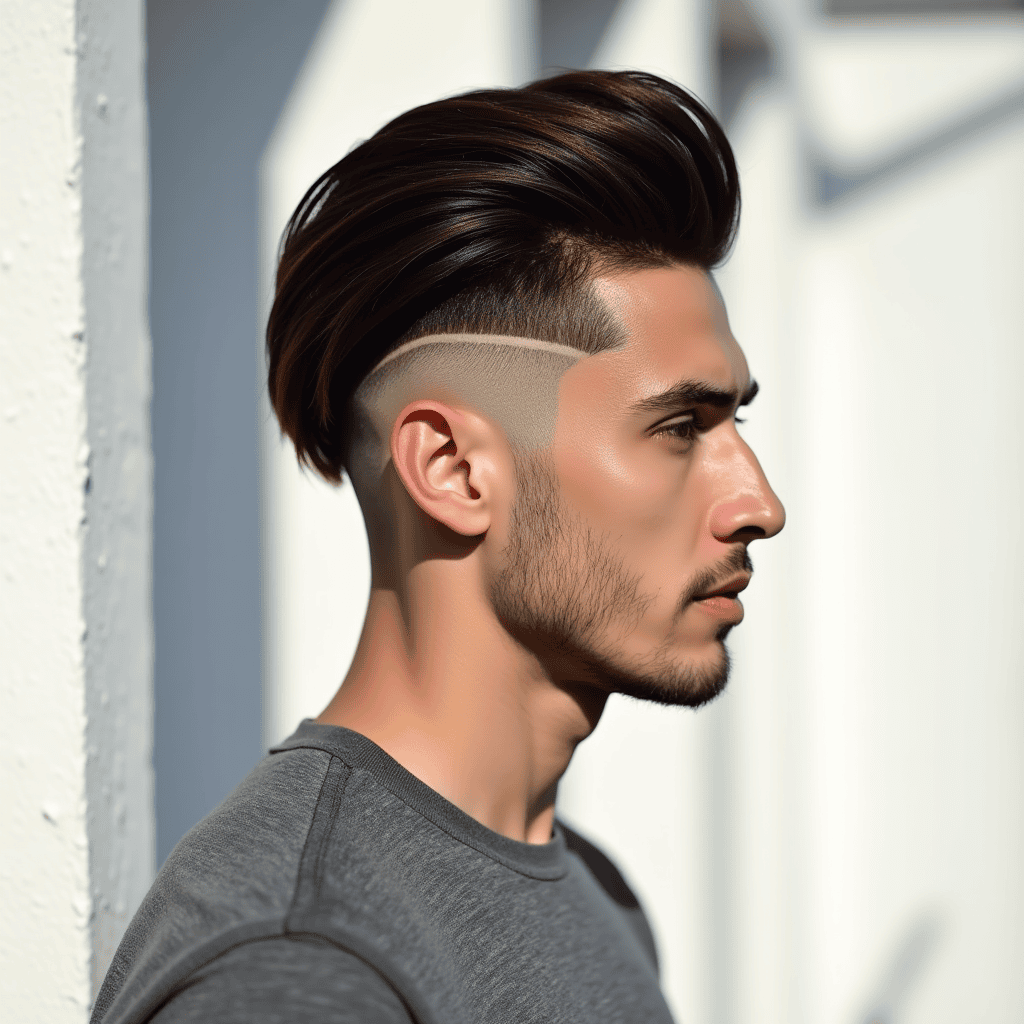
21. Disconnected Comb Over Hard Part
This version takes the familiar comb over and exaggerates the separation underneath it. The top is long enough to sweep clearly across the head, while the side beneath the hard part stays extremely short. There is little attempt to blend the two areas together. The line becomes the hinge between long and short rather than a subtle detail inside the haircut.
Ask the barber, “Leave the top long enough for a broad comb-over, disconnect it from the side, and shave a thin straight hard part where the two lengths meet.” It suits dense hair and men who like a polished top with a sharper street-style edge underneath. You’ll need enough product to keep longer sections from falling across the line. If you dislike seeing dramatic length differences once the haircut grows, a blended mid fade will age more gracefully.
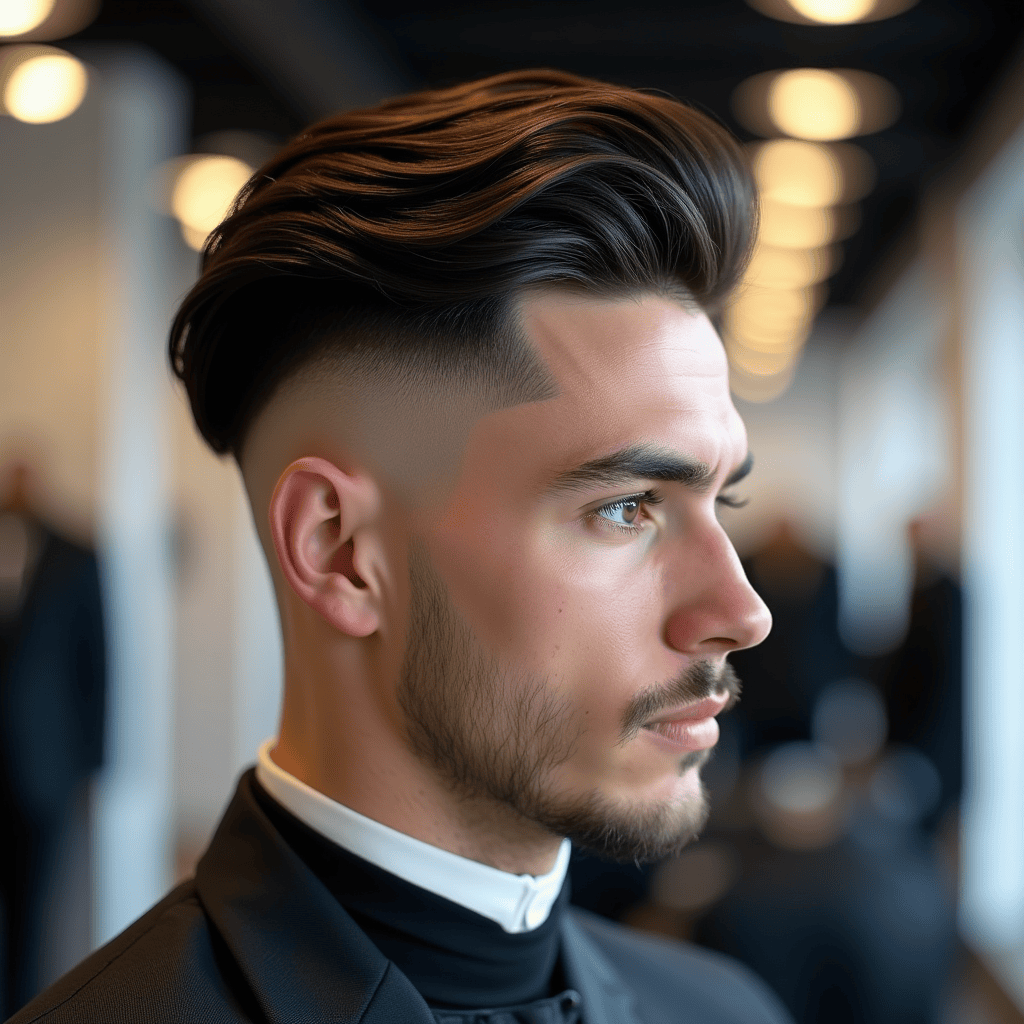
Polished and Wearable Hard Part Haircut Ideas for Men
Not every shaved part needs a skin fade or dramatic wall of volume. These final looks are built around real-life wearability: office clothes, smart casual outfits, regular grooming schedules, and men who want a sharper haircut without redesigning their whole appearance.
22. Business Taper Hard Part
The business taper keeps nearly everything conservative except the precision of the part. The top stays medium-short and combs cleanly to the side, while the sides graduate gently toward the ears and neckline. The razor line is narrow enough to register up close without dominating the front view. With a suit or collared shirt, the haircut reads polished first and trendy second.
Tell your barber, “Keep this office appropriate with scissor-cut weight on the sides, a neat taper around the edges, and a fine hard part rather than a thick line.” It’s one of the most adaptable Hard Part Haircut Ideas for Men who move between formal meetings and casual weekends. Most straight or softly wavy textures can handle it. The limitation is that the effect is intentionally restrained, so anyone chasing dramatic contrast may find it too quiet.

23. Short Brush Up Hard Part
The short brush up directs the front vertically instead of laying it entirely to the side. Behind the front, the top gradually settles toward the crown, while a shaved part creates definition on one edge. The sides can be tapered or faded depending on how sharp you want the contrast. From the front, you get height; from the side, you get the line.
Ask for “a short brush-up top with enough front length for lift, clean blended sides, and a narrow hard part along my natural heavier side.” It works well on straight and slightly wavy hair with enough density to stand away from the scalp. A blow dryer makes styling easier, but the shorter length keeps the routine manageable. The drawback comes with stubborn forward-growing hair, which may resist the upright direction unless the front is cut and trained carefully.
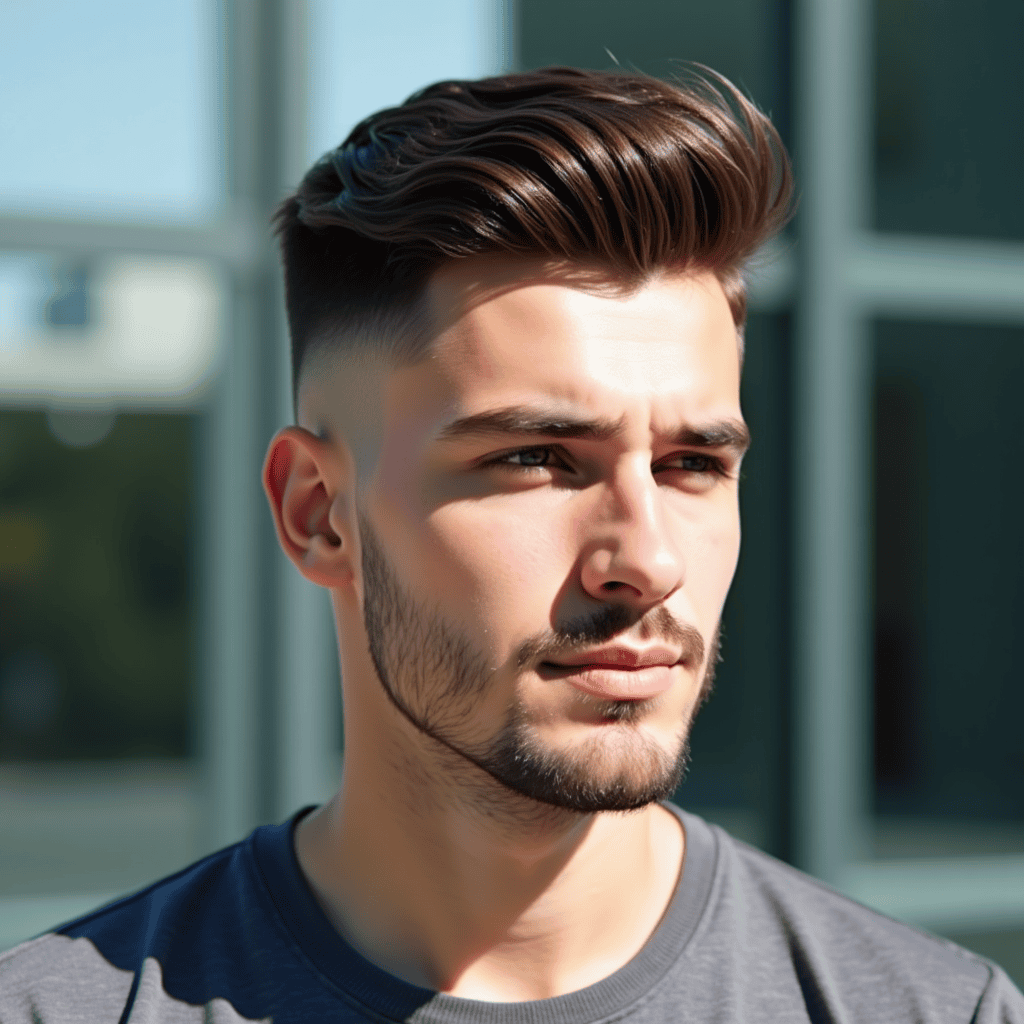
24. Side-Swept Fringe Hard Part
The side-swept fringe keeps more length toward the forehead and lets it travel diagonally across rather than straight backward. The hard part sits on the opposite side, creating a clean starting point for that movement. Unlike a classic comb over, some strands can fall loosely rather than lining up perfectly. The look feels younger and less formal without becoming messy.
Tell your stylist, “Leave a longer side-swept fringe in front, keep texture through the top, taper the sides, and put a fine hard part where the heavier section begins.” Men with straight or loose wavy hair usually get the easiest movement. It can also soften angular facial features because the fringe breaks up hard vertical lines. The obvious drawback is forehead interference; if you hate adjusting hair during the day, a shorter Ivy League is easier.

25. Hard Part With a Beard Blend
This cut treats the head and facial hair as one connected shape. The top follows a clean side part, the hard line defines the heavier section, and the fade travels downward through the sideburn before gradually meeting the beard. When done well, there’s no abrupt block between haircut and facial hair. The strongest detail is the controlled transition around the temple and upper cheek.
Ask for “a clean hard part with a mid or low fade, then blend the sideburn gradually into my beard instead of separating the two.” This is one of the strongest Hard Part Haircut Ideas for men who already maintain short or medium facial hair and want the whole grooming setup to look intentional. It suits several hair textures because the key feature is the transition. The downside is maintenance: beard length and fade length can drift apart quickly if you trim them on different schedules.
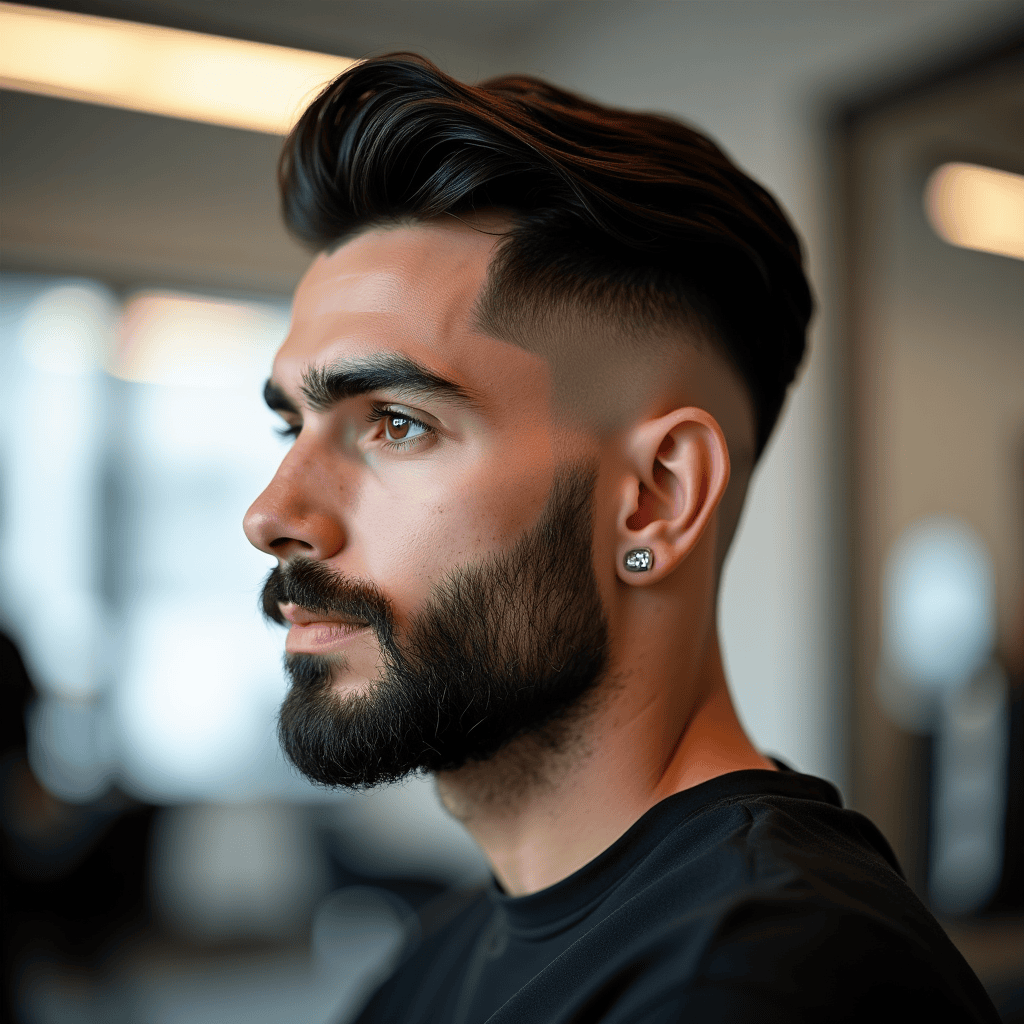
How to Choose the Right Hard Part Haircut
Choosing between these Hard Part Haircut Ideas gets easier once you stop looking at the shaved line by itself. Start with the haircut you’d wear even without a hard part. Then decide whether the line improves that shape. A natural side part, comb over, Ivy League, pompadour, or controlled textured top already has a directional break, so the razor detail usually feels earned.
Hair density matters next. Thick hair can handle stronger contrasts, high fades, and wider visual separation without exposing more scalp than intended. Fine hair usually benefits from a thinner line, softer taper, and less extreme disconnection. With curls or coils, the barber should respect the existing texture pattern rather than carving a ruler-straight line somewhere the hair doesn’t naturally divide.
Face shape changes the balance more than people expect. Rounder faces often benefit from extra height through a quiff, brush up, or pompadour. Longer faces usually look better when the top stays controlled instead of towering upward. Square faces can carry many versions because the hard part echoes an already angular outline, though you don’t need to exaggerate every edge at once.
Bring two or three reference images to your appointment, preferably showing the haircut from the side as well as the front. Saying “hard part” isn’t enough. Tell the barber how low or high you want the fade, whether you want skin exposed, how much top length you actually style, and whether the shaved line should look subtle or intentionally bold.
For formal events, interviews, weddings, or professional photos, get the cut a few days before rather than experimenting the morning of the event. That gives the shortest areas a tiny amount of settling time while keeping the hard line sharp. A business taper, low fade, or Ivy League usually pairs more easily with tailoring than the most disconnected options.
Where Hard Part Haircuts Can Go Wrong
A hard part is simple in theory, which is exactly why mistakes show. The most common problem is width. A line that looks impressively sharp under a barber’s light can become a conspicuous strip of exposed scalp in daylight. Unless you’re deliberately chasing a design-heavy finish, thinner usually ages better.
Placement matters even more. The strongest Hard Part Haircut Ideas work with your natural separation, crown, and growth direction. If the razor line is forced several centimeters away from where your hair wants to split, you’ll spend every morning fighting strands that fall back across it. No amount of pomade fully fixes poor placement.
Overcomplication is another issue. A skin fade, hard part, lineup, disconnected top, beard design, and extra shaved lines can all be executed well individually and still feel crowded together. One strong feature often makes the haircut look more confident than five competing ones.
There’s also the maintenance question nobody can dodge. A shaved part begins growing back immediately. You don’t necessarily need a complete haircut every week, but the razor-sharp effect has a short visual lifespan. If you normally wait six or eight weeks between barber visits, choose a subtle line with a taper rather than building the whole haircut around extreme precision.
Finally, don’t use the hard part to disguise a haircut that doesn’t suit your hair. It can’t create density where the top is too thin, change a difficult cowlick, or make an oversized pompadour practical for someone who refuses to blow-dry. The line should finish a good cut, not rescue the wrong one.
Frequently Asked Questions About Hard Part Haircut Ideas for Men
What is a hard part haircut?
A hard part haircut uses clippers or a razor to create a narrow, visible line where the hair is intended to separate. Unlike a natural part formed only with a comb, the division stays visible even when the hair moves slightly. It is usually paired with a taper, fade, comb over, quiff, or similar directional style.
Which Hard Part Haircut Ideas are easiest to maintain?
A business taper, Ivy League, short crew cut, and low fade are among the easier Hard Part Haircut Ideas because the surrounding haircut doesn’t depend on extreme contrast. The line will still soften as it grows, but these styles remain presentable longer than a skin fade or sharply disconnected undercut.
How often should men refresh a hard part?
Men who want the line to stay razor sharp often prefer fairly frequent barber visits, while anyone comfortable with softer regrowth can wait longer. Your fade usually determines the schedule more than the line itself. High and skin fades show growth quickly; tapered sides are more forgiving.
Is a hard part good for thin hair?
It can be, but restraint helps. A narrow part paired with a short Ivy League, taper, or textured top can create useful structure. A thick shaved line may expose more scalp and make lower density more noticeable. Ask the barber to evaluate the natural part before removing hair permanently along that line.
Do Hard Part Haircut Ideas work with curly hair?
Yes. Several Hard Part Haircut Ideas work particularly well with curls because the precise line contrasts with natural texture. A curly top with a fade, an Afro taper, or a controlled coiled style can all carry one. The barber should place the line according to growth pattern rather than forcing a straight-hair side-part template.
Can I get a hard part without a fade?
Yes. A fade isn’t required. You can combine a hard part with scissor-cut sides, a traditional taper, or even a fuller classic side-part shape. Keeping more weight on the sides produces a softer, more conservative result and usually makes the grow-out less obvious than a skin fade.
Is a hard part professional enough for work?
Many versions are. A subtle hard part paired with an Ivy League, side part, or business taper can look clean with office clothing and formal tailoring. For conservative workplaces, avoid making the line unusually wide or pairing it with extreme disconnection. The surrounding haircut determines most of the overall impression.
What should I tell my barber when asking for a hard part?
Explain the complete haircut rather than saying only “give me a hard part.” Mention your preferred fade or taper height, how much hair you want left on top, which direction you style it, and whether the shaved line should be subtle or bold. A reference photo from the side helps considerably.
Which Hard Part Haircut Ideas for Men suit round faces?
Quiffs, short brush-ups, pompadours, and controlled comb overs can work well because they move visual weight upward rather than outward. Keep the sides relatively tidy and avoid excessive width through the temples. The hard line then reinforces that vertical structure instead of adding unnecessary bulk to the side.
Can a hard part follow either side of the head?
Usually, but the better side is the one that agrees with your natural growth pattern. Many men have a noticeably easier direction for parting because of the crown and front hairline. A barber can dampen and comb the hair both ways before choosing which side gives the cleanest separation with the least resistance.
Does a hard part look good with a beard?
A hard part can pair especially well with a beard when the side fade transitions gradually through the sideburn. That connection keeps the head and facial hair from looking like separate grooming decisions. If the haircut already has high contrast, keep the beard outline controlled rather than adding more shaved design details.
Are hard part haircuts still a good choice for men?
They remain useful because the technique solves a practical styling problem: it makes the intended separation obvious. The better question is whether the line improves your specific haircut. Subtle Hard Part Haircut Ideas for Men tend to age more gracefully than oversized razor lines chosen only because they look dramatic immediately after the cut.
Can I style a hard part without pomade?
Yes, depending on the haircut. Short crops, crew cuts, naturally wavy tops, and some Ivy League cuts can work with light cream, clay, or even minimal product. Longer slick backs and pompadours need more control. The hard part defines the division, but it doesn’t hold the top hair in position by itself.
Is a hard part better with a low fade or high fade?
A low fade is easier to wear and keeps more visual weight beneath the part, making it a strong default for most men. A high fade creates much stronger contrast and exposes the line more aggressively. Choose the high version only if you actually want the shaved division to become one of the haircut’s main features.
How do I know whether a hard part will suit me?
Start by parting your hair naturally and checking whether the separation already creates a flattering shape. If the hair sits comfortably on either side and the resulting style suits your face, sharpening that division can work well. Before any razor work, ask your barber to show you exactly where the line would sit.
The best hard part isn’t necessarily the sharpest one in the room. It is the version that still makes sense after the fresh-fade effect wears off and you’re styling it yourself on a rushed weekday morning. Use these Hard Part Haircut Ideas as references, choose the underlying haircut first, then ask your barber to mark your natural separation before shaving anything.
Best Men’s Hairstyle Reports
Explore sharp barber cuts, textured styles, fringe looks and relaxed men’s hairstyles for modern grooming inspiration.