

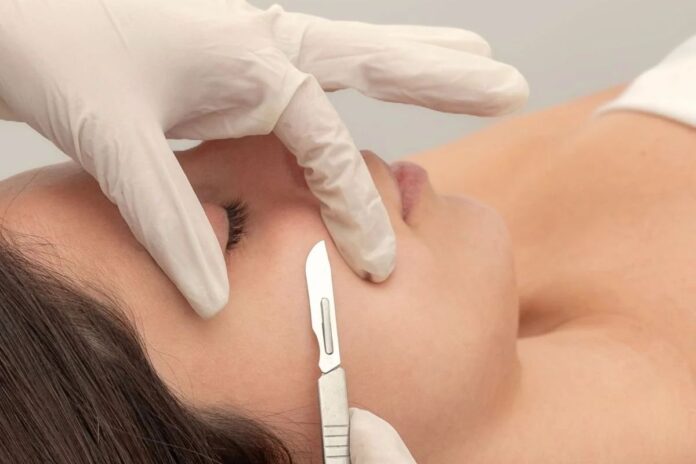
Dermaplaning is a surface-level cosmetic treatment that removes fine facial hair and loose dead skin with a blade, leaving the face noticeably smoother almost immediately. The payoff is fast: makeup tends to sit more evenly, skin feels softer, and peach fuzz disappears. The catch is equally simple—the effect is temporary, and poor technique can leave skin irritated or nicked.
For this kind of service, technique matters more than spa-room theatrics. A careful provider pays attention to active breakouts, irritated areas, blade control, and what you have been putting on your skin before the appointment. The treatment itself is uncomplicated; knowing when not to do it is where good judgment shows.
| What to Know | Typical Expectation |
|---|---|
| Main purpose | Remove vellus hair and surface buildup |
| Session length | Often around 30–60 minutes for a cosmetic facial session |
| Typical U.S. cost | Often roughly $75–$250, depending on provider and location |
| Downtime | Usually minimal after superficial cosmetic dermaplaning |
| Visible result | Smoother, fuzz-free skin immediately |
| Best suited to | People mainly bothered by peach fuzz, dullness, or rough surface texture |
| Poor timing | Active breakouts, inflamed or damaged skin |
| Hair regrowth | Returns normally; cutting it does not make it grow thicker |
| Repeat timing | Usually spaced according to skin recovery and hair regrowth |
| Upkeep | Gentle skin care, moisturizer, and sun protection |
Current U.S. price guides commonly place professional sessions somewhere around the $75–$250 range, although location, provider experience, and whether dermaplaning is bundled into a larger facial can move the bill substantially.
What Dermaplaning Actually Is
Dermaplaning is mechanical exfoliation performed with a blade. In the cosmetic version most people mean today, the provider works across the face to remove fine vellus hair—what everyone calls peach fuzz—along with superficial dead skin. Cleveland Clinic also describes dermaplaning as removing upper layers of skin with a specialized instrument, although medical sources sometimes use the term for deeper resurfacing techniques than the light facial service sold in spas.
That terminology difference matters. If you are booking a salon or med-spa appointment because you want fuzz-free cheeks before a wedding, you are usually talking about superficial cosmetic dermaplaning, not surgical skin resurfacing.
How It Works in Plain Terms
The blade passes across clean skin in controlled strokes. Hair that sits above the skin surface is cut away while loose surface cells are lifted at the same time. Cleveland Clinic’s discussion of at-home dermaplaning describes the same basic combination: facial-hair removal plus gentle exfoliation.
The visible change is mostly about surface finish. Under side lighting, fine facial hair can catch light and make foundation look slightly fuzzy around the cheeks and jaw. Once that hair is removed, makeup can look cleaner because it is sitting directly against a smoother surface.
How It Differs From Microdermabrasion
Microdermabrasion exfoliates with an abrasive device rather than deliberately shaving away facial hair with a blade. The American Academy of Dermatology describes microdermabrasion as a noninvasive exfoliating treatment intended to make the complexion appear smoother and brighter.
Dermaplaning is the more obvious choice when peach fuzz itself is the annoyance. Someone who mainly wants surface exfoliation but does not care about facial hair may have several other options worth discussing with a skin professional.
Who Dermaplaning Is Really For
Dermaplaning makes the most sense when the goal is cosmetic and immediate: smoother-feeling skin, less visible fine hair and a cleaner surface for makeup. It does not need an elaborate problem to solve.
That is also why I would keep expectations modest. Removing hair and surface buildup can change how polished the face looks, but it cannot replace treatments designed for deeper texture, significant scarring or other concerns below the surface. The American Society of Plastic Surgeons likewise warns that skin-refinishing procedures cannot remove every flaw or stop aging.
Skin Types That May Respond Well
Someone with relatively calm skin and noticeable vellus hair is the easiest fit. Dry-looking surface buildup can also make the result feel more dramatic because exfoliation leaves the face smoother to the touch.
It can be especially useful before a photographed event. If you are wearing full-coverage foundation for a wedding, formal dinner or fashion shoot, removing peach fuzz can create a flatter canvas around the cheeks, jaw and upper lip. Book early enough that you know how your own skin reacts rather than experimenting hours before makeup.
Who Should Skip It
Active irritation changes the calculation. Cleveland Clinic advises against dermaplaning in the presence of active acne and lists several other active skin problems as reasons to speak with a healthcare provider before having the procedure. Its at-home guidance similarly recommends avoiding dermaplaning during breakouts or active eczema.
Running a blade across angry skin because you want a smoother finish usually creates the opposite of what you wanted.
Conditions That Mean Asking a Professional First
If your face has an unexplained rash, open areas, an active cold-sore outbreak, significant inflammation or another ongoing skin problem, get professional guidance instead of treating around it yourself. Cleveland Clinic specifically identifies active acne, cold sores, eczema, psoriasis, burns and contact dermatitis among concerns that warrant caution.
Persistent redness, allergic-looking reactions or anything you cannot identify belongs with a qualified healthcare professional rather than a cosmetic experiment.
Timing Conflicts With Other Services
Be careful about stacking aggressive exfoliation. If you are already using strong prescription or exfoliating products, recently had a peel, or have another resurfacing service booked, tell the provider exactly what you have used and when.
The smartest booking question is not “Can you add this?” It is “Is my skin ready for another exfoliating treatment?”
What Happens During a Dermaplaning Appointment
A cosmetic dermaplaning appointment should feel methodical rather than dramatic. Skin is cleaned, the surface is prepared, hair and superficial buildup are removed in sections, and the appointment usually finishes with simple soothing skin care.
A blade near your face sounds more intimidating than the service usually looks.
Before You Arrive
Go in with your recent skin-care history available. Tell the provider about irritation, breakouts, prescription topicals, recent peels or other facial procedures rather than assuming they will be able to see everything during a quick consultation.
For an important outfit or event, avoid making your first-ever session the same day. A red cheek is still a red cheek even when the dress is perfect.
What to Do the Night Before
Keep things simple. Do not deliberately scrub your face harder because you think it will “prepare” the skin.
If your provider has given specific pre-treatment instructions about exfoliating ingredients or prescription products, follow those instructions rather than generic advice online.
What to Bring and What to Wash Off
Arriving without heavy makeup can make preparation easier, although the provider should cleanse the treatment area regardless. Bring details of any skin products or medications that could affect treatment decisions.
More information beats guesswork when a sharp tool is involved.
The Appointment, Stage by Stage
Most of the appointment is repetitive precision. That is a good thing.
Cleansing the Surface
Makeup, sunscreen and surface residue are removed so the provider can clearly see the skin and work without dragging cosmetic product underneath the blade.
Working in Small Sections
The provider keeps the skin controlled while passing the blade across manageable areas rather than sweeping across the whole face at once.
The Part People Notice
The surprising moment is often seeing how much soft hair and surface debris collects despite the face looking clean beforehand. That visual payoff partly explains why the service became so easy to demonstrate on social media.
Finishing the Skin
A professional may finish with soothing or moisturizing products appropriate for freshly exfoliated skin. Cleveland Clinic notes that soothing gel or ointment may be applied after professional dermaplaning to reduce irritation.
How Long It Takes Start to Finish
For the superficial beauty service, many appointments fall somewhere around the half-hour mark, although a full facial that includes dermaplaning can run longer. Recent beauty coverage commonly describes sessions in roughly the 30–60 minute range.
The face being treated, provider technique and add-on services matter more than chasing an exact number.
Dermaplaning Results: What to Expect and When
The strongest argument for dermaplaning is speed. There is no waiting several weeks for peach fuzz to disappear; the hair is physically removed during the appointment.
The smoother finish is temporary because facial hair grows again and skin continues its normal renewal cycle. That is not a treatment failure. It is simply how a surface service works.
The First Day
The face should look and feel smoother, although temporary sensitivity or mild irritation can occur. Cleveland Clinic notes that superficial at-home dermaplaning can leave skin irritated for a day or so and recommends moisturizer and continued sunscreen use.
This is why I would not treat “zero downtime” as permission to be careless with timing.
Week One to Week Four
The freshly shaved feel gradually fades as vellus hair returns. Current consumer guidance commonly puts the cosmetic effect at around several weeks rather than months.
Hair does not become biologically thicker because you cut it. Cleveland Clinic explains that shaved hair can initially feel coarser because its tapered end has been cut bluntly, but shaving does not change the underlying growth pattern.
Where Expectations Run Ahead of Reality
“Instantly smoother” is believable. “Completely transformed skin” is where the sales pitch starts wandering.
Dermaplaning can remove surface hair and exfoliate. It cannot permanently stop facial-hair growth, freeze aging or solve every texture issue. If your real concern is something deeper, paying for repeated blade exfoliation because the treatment photographs well may become expensive procrastination.
Cost, Frequency and Booking
Professional dermaplaning is not priced uniformly. Current U.S. consumer pricing data shows basic sessions commonly landing around the low hundreds, with broader ranges extending from roughly $75 toward $250 depending on provider, market and extras.
Treat those figures as shopping context, not a quote.
What It Typically Runs and Why Prices Swing
A stand-alone session may cost less than an appointment bundled with masks, peels or other facial services. Major-city pricing, medical-office settings and experienced providers can also push the total upward.
Do not pick purely on the cheapest number. Ask who performs the service, what type of blade is used, what happens if the provider sees an active breakout, and what is included afterward.
How Often to Repeat It
There is no reason to attack the skin every few days because you spotted the first returning hairs. Professional timing should account for skin recovery as well as hair regrowth.
Cleveland Clinic’s at-home guidance cautions against doing it daily or every other day and recommends giving facial skin time to recover.
Questions to Ask Before You Book
Ask whether the appointment is a stand-alone dermaplaning service or part of a facial. Ask who performs it. Ask what products you should pause beforehand and what the provider recommends afterward.
And if you are booking before a wedding, interview or photoshoot, say so. Good timing is part of the treatment plan.
Aftercare That Actually Protects the Result
Freshly exfoliated skin does not need a punishment routine afterward. The sensible move is usually simpler care, enough moisture and serious attention to sun protection.
Cleveland Clinic specifically recommends moisturizing and continuing sunscreen after superficial dermaplaning because temporary irritation can follow treatment.
The First 24 Hours
Treat the face gently. Avoid picking, scrubbing or repeatedly touching it to admire how smooth it feels.
If you are preparing for an event, follow the provider’s instructions about when to apply makeup. Building an elaborate evening routine immediately after exfoliation adds variables at exactly the wrong moment.
The Rest of the Cycle
Once the skin feels normal again, return gradually to your regular routine according to professional advice. Daily sun protection still matters whether you dermaplane or not.
The goal is to enjoy the finish without turning maintenance into a second exfoliation project.
Products to Pause
Strong exfoliating acids, retinoids and other potentially irritating actives may need timing adjustments around cosmetic procedures. The right interval depends on the product and your skin, so ask the professional performing the treatment rather than relying on a universal online timetable.
Prescription products deserve specific guidance from the clinician who prescribed them.
Habits That Undo the Work
Picking at the skin, using dirty tools, aggressive scrubbing and piling exfoliants on top of freshly treated skin all increase the chance that a simple beauty appointment becomes an irritation story.
More exfoliation is not automatically more polished skin.
Risks, Side Effects and Sensible Caution
Dermaplaning still involves a blade and temporary disturbance of the skin surface. Possible problems include irritation, nicks and bacterial exposure if technique or hygiene is poor. Cleveland Clinic also identifies infection, scarring and discoloration among potential complications of professional dermaplaning procedures.
The safest response to unusual or persistent symptoms is not another beauty hack. Cleveland Clinic advises contacting a healthcare provider for problems such as bleeding, blistering, signs of infection or swelling that persists.
Pregnancy-related questions, allergies, unexplained rashes and medical skin conditions should also be discussed with an appropriate healthcare professional before treatment.
At-Home Dermaplaning: What Works, What Doesn’t
An at-home facial razor can remove peach fuzz and some loose surface cells. Cleveland Clinic describes these small single-blade tools as readily available and confirms that home dermaplaning can provide gentle exfoliation and smoother-feeling skin.
But a drugstore facial razor and a trained professional working with professional equipment are not automatically equivalent experiences.
Clean technique matters. Using a contaminated blade or nicking the skin creates an opening for bacteria, which is why Cleveland Clinic specifically emphasizes cleaning dermaplaning tools and avoiding the procedure during active breakouts.
If your only objective is reducing visible fuzz before makeup, careful facial shaving may deliver much of what you want for far less money. If your skin is reactive, actively breaking out or difficult to assess, experimentation has a much lower upside.
Where Dermaplaning Gets Oversold
The phrase remove peach fuzz instantly is fair because the blade physically cuts that hair during the session. Where marketing gets slippery is when temporary surface smoothing gets presented as a dramatic long-term skin transformation.
The service is also oversold to people whose main problem is not peach fuzz. If you barely notice your facial hair and already tolerate a sensible exfoliation routine, paying every few weeks may give you a smaller visual improvement than the treatment videos suggest.
And there is the cheaper 80-percent solution: shaving the face carefully with an appropriate facial tool. It will not duplicate every aspect of professional dermaplaning, but for someone focused almost entirely on removing vellus hair before makeup, the difference may not justify repeated appointments.
Frequently Asked Questions
Does dermaplaning make facial hair grow back thicker?
No. Cutting hair at the skin surface does not change its follicle or underlying growth pattern. Regrowing hair may briefly feel blunter because the tapered tip was cut away, which can create the impression that it became coarser. Cleveland Clinic specifically identifies thicker regrowth as a myth.
How quickly does dermaplaning remove peach fuzz?
The hair is removed during the session, so the fuzz-free effect is immediate. That makes dermaplaning attractive before occasions where makeup finish matters. Give yourself some scheduling room before a major event, though, especially if it is your first appointment and you do not know how your skin reacts.
Can I wear makeup after dermaplaning?
Freshly exfoliated skin may be more sensitive, so follow the provider’s post-treatment instructions rather than rushing into a heavy makeup application. If the treatment is part of wedding or photoshoot preparation, booking ahead gives any temporary redness or irritation time to settle.
Is dermaplaning the same as shaving your face?
They overlap because both cut hair at the skin surface. Cosmetic dermaplaning is generally performed with exfoliation as part of the purpose, while ordinary facial shaving may focus almost entirely on hair removal. Tool design, technique and professional supervision can also differ.
How often should you get dermaplaning?
Frequency should follow how your skin recovers rather than a rigid calendar. Hair will return gradually, and repeated exfoliation too close together can irritate the skin. Cleveland Clinic specifically warns against frequent at-home dermaplaning and recommends allowing recovery time between sessions.
Is dermaplaning good before a wedding?
It can be useful when the goal is a smoother surface under foundation and less visible peach fuzz. The bad idea is trying it for the first time immediately before the ceremony. Schedule a trial well ahead of the event so you know how your skin responds before repeating it closer to the date.
Can dermaplaning be done on active acne?
It is generally poor timing. Passing a blade across actively inflamed or broken-out areas can aggravate already vulnerable skin. Cleveland Clinic advises people with active acne to avoid dermaplaning and seek professional guidance when active skin conditions are present.
Does dermaplaning permanently remove facial hair?
No. Dermaplaning cuts vellus hair at the surface rather than permanently altering the follicle, so the hair grows back. Anyone looking for permanent hair reduction should discuss appropriate alternatives with a qualified professional instead of expecting repeated dermaplaning appointments to change their natural hair-growth cycle.
Is professional dermaplaning worth the money?
It can be if peach fuzz bothers you, you value the smoother makeup finish and you prefer professional blade handling. It becomes harder to justify when facial hair is barely noticeable or when inexpensive facial shaving already gives you the cosmetic result you wanted.
What should I ask when booking dermaplaning?
Ask exactly who performs the service, whether your current skin-care products should be paused, whether your skin looks suitable for treatment, what aftercare is recommended and whether the quoted price is for stand-alone dermaplaning or a larger facial. Those answers tell you more than a glamorous before-and-after photo.
A good dermaplaning appointment should leave you thinking about smoother skin, not recovering from an overworked face. If you want to try it, call the provider with your current skin-care routine in hand and ask one specific question first: “Is my skin suitable for dermaplaning right now?”
Premium Skin Treatment Reports
Expert guides to facials, chemical peels, resurfacing treatments and modern skin-renewal procedures.