

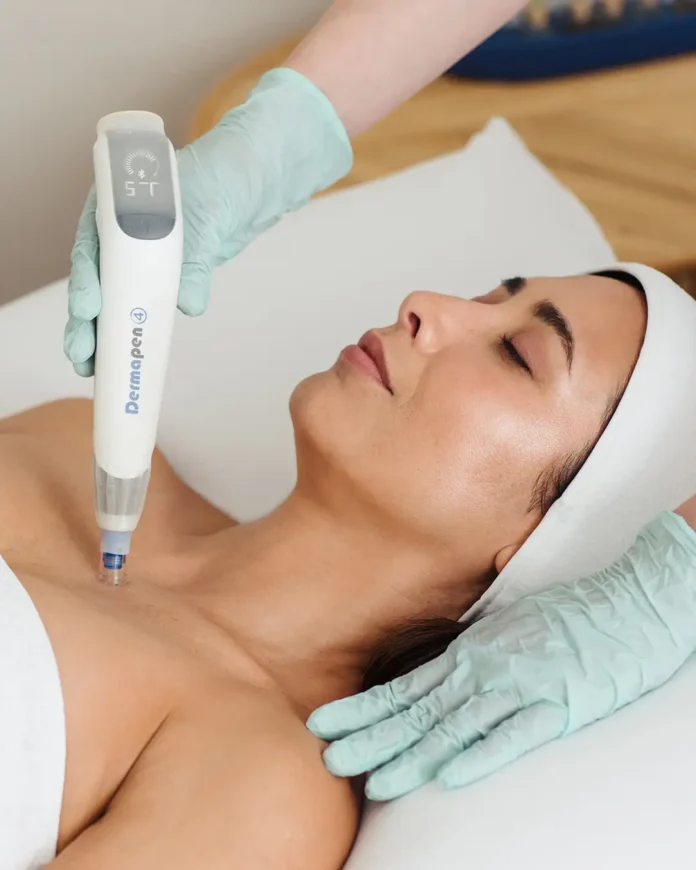
Microneedling uses fine needles to create controlled micro-injuries in the skin, prompting a repair response that includes new collagen formation. For acne scars and uneven texture, that can soften the look of depressed marks over time. The catch: results build gradually, several sessions may be needed, and the person holding the device matters as much as the device itself.
The perspective here is beauty-service editorial rather than clinic marketing, grounded in current guidance from dermatologists and the FDA. That matters with a procedure that sits somewhere between a familiar facial appointment and a legitimate medical-device treatment.
| Quick detail | What to expect |
|---|---|
| Active treatment time | Often around 15–30 minutes for smaller areas, though larger areas take longer |
| Full appointment | Usually longer once consultation, cleansing and numbing time are included |
| Typical U.S. cost | Commonly several hundred dollars per session; provider, city and treatment area can move the quote substantially |
| Number of sessions | More than one is common, especially when treating visible acne scarring |
| Spacing | Often a few weeks between sessions, depending on the treatment plan |
| Downtime | Redness, tightness, dryness or mild swelling can linger for several days |
| Best suited to | People seeking gradual improvement in the appearance of certain scars and uneven texture |
| Results window | Early change can appear within weeks, while collagen remodeling can continue for months |
| Upkeep | Some people return for maintenance after their initial series |
| Biggest caution | Training, sterile technique, device choice and realistic expectations matter |
The timing and recovery ranges above vary with treatment depth and area. Dermatology sources note that collagen-related improvement develops over weeks to months, while U.S. patient-reported pricing varies widely by provider and market.
What Microneedling Actually Is
Microneedling is sometimes sold as a facial with needles, which makes it sound simpler than it is. Medical microneedling devices repeatedly insert very small needles into the skin at controlled depths. The goal is not aggressive surface scraping; it is a controlled injury-and-repair process that can change the appearance of texture and certain scars.
How it works, in plain terms
Think of collagen as part of the support structure beneath the visible surface of your skin. Microneedling creates many tiny punctures, and the body’s repair response includes production and remodeling of collagen and elastin. That is why the technique is also called collagen induction therapy.
For scars, the important word is appearance. The procedure does not erase scar history or guarantee perfectly flat skin. With suitable acne scars, however, gradual remodeling can make edges and depressions less obvious. The American Academy of Dermatology lists microneedling among procedures dermatologists use to make acne scars less noticeable.
How it differs from microdermabrasion
Microdermabrasion works mainly through exfoliation at the surface. Microneedling penetrates farther into the skin, which is why the two services are not interchangeable when the concern sits below the surface, such as indented acne scarring.
That distinction matters when shopping by price. A cheaper exfoliating facial may leave skin temporarily smoother, but it should not be sold as the same treatment simply because both services mention texture.
Who Microneedling Is Really For
Microneedling makes the most sense when the problem and the treatment actually match. Someone bothered by visible acne-scar texture may have a stronger reason to consider it than someone expecting one appointment to create an entirely different face.
Skin types that may respond well
Professional microneedling is used across different skin tones, and dermatology guidance includes it as an option for acne scars and other texture concerns. Unlike some energy-based resurfacing approaches, it does not depend on targeting pigment with light.
Still, skin tone does not remove the need for careful technique. The FDA notes that changes in pigmentation are a possible complication and that some authorized devices were not studied equally across every skin type.
For event planning, give yourself breathing room. If you have a wedding, editorial shoot, interview or formal evening ahead, do not book your first aggressive session the day before. Temporary redness, swelling, tightness or peeling can interfere with makeup and with outfits that put the treated neck, chest or other area fully on display.
Who should skip it
A consultation matters because some people should delay the procedure or avoid it entirely. Active skin infections, active rashes, poor wound healing and certain medications or health situations can change whether treatment is appropriate. The FDA and AAD both recommend professional screening rather than assuming everyone is automatically a candidate.
Conditions that mean asking a professional first
Tell the provider about medications, bleeding concerns, immune-system issues, a tendency toward raised keloid scars, recent tanning, active cold sores, pregnancy or breastfeeding, and current skin problems before anything touches your face. FDA guidance specifically identifies a number of these situations as reasons microneedling may not be suitable.
This is one appointment where leaving something off the consultation form to avoid being turned away makes no sense. A delayed cosmetic treatment is easier to deal with than a complication.
Timing conflicts with other services
Recent sun exposure, irritating skincare and other procedures can affect the timing. The AAD notes that dermatologists may recommend a pretreatment routine and may have patients stop retinoids or other ingredients for several days while emphasizing sun protection.
If you are stacking peels, lasers, injectables or other skin services around the same event, have one qualified provider map the sequence instead of booking each treatment independently.
What Happens During a Microneedling Appointment
A professional appointment is more controlled than the dramatic close-up videos online make it look. There is usually preparation, cleansing, some form of comfort management when appropriate, systematic treatment of the selected area and specific aftercare instructions.
Before you arrive
Your provider should already know what you want treated and why. Scar depth, active breakouts, recent sun exposure, medication use and previous procedures can all influence the plan.
What to do the night before
Follow the clinic’s instructions rather than copying a universal internet routine. Depending on your skin and treatment, you may be asked to pause exfoliating ingredients or retinoids beforehand. Dermatology sources also stress avoiding excess sun exposure around treatment.
Do not decide on your own to stop prescribed medication. That conversation belongs with the clinician who prescribed it and the provider performing the procedure.
What to bring and what to wash off
Arrive with the treatment area clean if your clinic asks for that, and be prepared to remove makeup, heavy skincare or sunscreen before treatment begins. Bring your current skincare and medication list if the provider has not already reviewed it.
Also bring the unglamorous questions: Which device are you using? Is it FDA authorized for this use? Is the cartridge new? How is equipment cleaned? The FDA specifically advises patients to ask about provider training and single-use needle cartridges.
The appointment, stage by stage
The exact sequence changes by provider, device and treatment area, but a conventional professional session generally follows a recognizable rhythm.
Cleansing and preparation
The skin is cleaned and inspected. If topical numbing is appropriate, it is commonly used to reduce discomfort before the needling begins.
This stage should feel methodical, not rushed. If a provider is treating over an obvious active problem that was never discussed, that is a reason to ask questions before proceeding.
Controlled passes over the skin
A pen-style or other professional device places needles into the treatment area in repeated passes. Motorized devices can allow practitioners to adjust penetration depth and speed according to the device and treatment plan.
You may feel scratching, vibration, pressure or extra sensitivity around bonier areas. Pinpoint bleeding can occur with deeper professional treatment.
The part that surprises people
The face may look far more dramatic immediately afterward than the procedure felt. Redness, tightness and a freshly treated appearance are expected reactions, not the finished result.
That matters if you scheduled the appointment because you want to wear minimal makeup with an open neckline at an event. Book around the recovery window rather than assuming you will walk out camera-ready.
The finish
The provider should tell you what can safely go onto the treated skin and what should stay off it. The FDA warns that skin can become more sensitive to skincare and cosmetic products after microneedling.
This is not the moment to improvise with five strong serums because social media says the skin is “open.”
How long it takes start to finish
The needling itself may take roughly 15 to 30 minutes for some areas, while larger treatment zones can take considerably longer. Preparation and topical numbing can lengthen the total appointment.
For scheduling purposes, ask the clinic for total door-to-door time rather than the advertised device time.
Results: What to Expect and When
Microneedling does not produce its main scar-improving effect while you are lying on the treatment bed. The visible change develops afterward as skin heals and collagen remodeling progresses.
The first day
Expect treated skin to look irritated rather than perfected. Redness, swelling, tightness, dryness, itching, minor bruising and pinpoint bleeding are among reactions reported with professional microneedling devices.
That first-day flush should never be judged as your final outcome.
Week one to week four
Surface redness often settles sooner than the underlying remodeling process. Some people start noticing change within weeks, but fuller collagen-related results can take several months. Multiple sessions may be recommended depending on the scar pattern and treatment goal.
This slow build is one reason scar treatment should be planned well ahead of a wedding season or professional photo shoot. Starting months earlier gives you room for healing, provider review and additional sessions rather than forcing an aggressive treatment close to the date.
Where expectations run ahead of reality
The phrase collagen boost for scars can sound like every mark will disappear. That is where marketing gets ahead of biology.
Scar type matters. Deep, tethered or complex scars may require a different approach or a combination plan. The AAD describes acne-scar treatment as highly individualized and lists options including microneedling, lasers, fillers, radiofrequency procedures and scar surgery, depending on what is being treated.
Cost, Frequency and Booking
Microneedling is rarely a useful purchase when chosen only because one clinic posted the lowest promotional number. Your actual cost is the treatment plan, not the teaser price.
What it typically runs and why prices swing
U.S. pricing commonly reaches several hundred dollars per professional session. Patient-reported RealSelf data has shown a wide range, with geography, provider credentials, treatment area, device and add-ons all affecting the total. Treat those figures as shopping context rather than a fixed national rate.
Ask for the full quote before paying for a package. Clarify whether the consultation, numbing, follow-up and any proposed add-on are included.
How often to repeat it
Treatment plans vary. Dermatology sources commonly describe a series rather than a single appointment, with sessions separated by weeks and the final result developing over months.
More treatment is not automatically better. Depth, interval and session count should be chosen around your skin and scars, not around how many appointments a package happens to contain.
Questions to ask before you book
Ask who will actually perform the procedure, what training they have, which device they use, what type of scars they believe you have, why this procedure fits them, what recovery they expect and what result would count as realistic.
Also ask whether a fresh cartridge is used for every session. The FDA says reuse of microneedling cartridges is unsafe and inconsistent with authorized use.
Aftercare That Actually Protects the Result
Aftercare is less exciting than the procedure, but it is where many avoidable problems begin. Freshly treated skin may react differently to sunlight, makeup and active skincare ingredients.
The first 24 hours
Follow the provider’s instructions on cleansing, moisturizing, makeup and sun exposure. Skin may remain red and sensitive, and products that normally feel fine can sting after treatment.
Do not treat redness as permission to scrub, exfoliate or “speed up” peeling.
The rest of the cycle
As visible irritation settles, keep the routine simple until your provider says normal products can return. Sun protection deserves particular attention because newly treated skin can be more sensitive during recovery.
Products to pause
Retinoids, exfoliating acids and other irritating actives may need a temporary break before or after treatment. The exact pause depends on the product, skin and provider instructions rather than a single rule that fits everyone.
Habits that undo the work
Picking at flaking skin, exposing a fresh treatment to strong sun, piling on irritating products or ignoring signs of a complication can turn a simple recovery into something more difficult.
Good aftercare is boring. That is often the point.
Risks, Side Effects and Sensible Caution
The usual reactions are cosmetic and temporary, but microneedling still deserves more respect than a standard facial. The FDA lists common effects including redness, dryness, tightness, itching, peeling, bruising, burning, discomfort and bleeding. Less common problems include infection and changes in pigmentation.
Persistent, worsening or unusual symptoms should be assessed by a licensed healthcare professional rather than diagnosed through social media.
It is also important not to confuse traditional microneedling with radiofrequency microneedling. RF devices add energy and heat. In October 2025, the FDA issued a safety communication after reports of serious complications with certain RF microneedling uses, including burns, scarring, fat loss and nerve damage. The agency advises choosing a trained licensed healthcare provider and says RF microneedling should not be performed at home.
At-Home Versions: What Works, What Doesn’t
Home rollers and professional microneedling should not be treated as cheaper versions of the same procedure. Consumer products that only act superficially may offer mild exfoliating or smoothing effects, but FDA-authorized medical microneedling devices penetrate living skin and are a different category of treatment.
The AAD warns that at-home needling can irritate skin, spread infections or viruses and cause scarring or changes in skin color or texture if the skin is pierced or the tool is used incorrectly. Professional treatment also tends to produce more noticeable results than superficial home devices.
Trying to reproduce clinic depth at home is where the bargain stops being clever.
Where Microneedling Gets Oversold
Microneedling gets oversold when it is presented as a universal fix for every scar, pore, wrinkle and patch of uneven skin. It is a tool. Good tools have limits.
The treatment also gets oversold through add-ons. The FDA says microneedling devices have not been authorized specifically for delivering cosmetics, topical medications, vitamin solutions, drugs or blood products into the skin, and the agency has not reviewed the safety and effectiveness of many such combinations.
And sometimes the cheaper answer is not another procedure at all. If the concern is mild surface dullness rather than depressed scarring, sensible skincare and sun protection may get you closer to the look you want without paying for a series of appointments.
Frequently Asked Questions
Does microneedling actually help acne scars?
Professional treatment can make certain acne scars less noticeable by triggering a healing response that includes new collagen formation. It is an established option in dermatologic acne-scar treatment, but scar type and depth influence the result, and some scars need other procedures or combination treatment.
How many microneedling sessions do you need for scars?
There is no universal number. Multiple sessions are common, and the AAD notes that acne-scar treatment may involve a series spaced several weeks apart. Your starting texture, scar pattern, treatment depth and response between sessions should determine the plan.
How long before you see collagen results?
Early improvements can appear within weeks, but the larger collagen-remodeling effect develops gradually. Dermatology and cosmetic-surgery sources describe fuller results emerging over several months rather than immediately after the appointment.
Is microneedling painful?
Topical numbing is commonly used for professional procedures. People may still notice scratching, warmth, pressure or greater sensitivity around areas such as the cheekbones. Treatment depth and individual sensitivity make the experience different from one person to another.
Can I wear makeup after microneedling?
Follow the treating provider’s instructions. Skin can be red, sensitive and more reactive to cosmetic products during early recovery. Cleveland Clinic notes that many people return to their routine quickly, but timing should be individualized rather than planned around a fixed social-media rule.
Is microneedling safe for darker skin?
Dermatologists use the procedure across skin tones, and the AAD describes microneedling as suitable for all skin tones. However, pigmentation changes remain a recognized possible complication, and provider experience is still important.
Is an at-home dermaroller the same as professional microneedling?
No. Home devices are generally more superficial, while professional medical devices can penetrate into living layers of skin. At-home treatment therefore has a lower ceiling for results, while improper needling can also irritate, scar or spread infection.
Can microneedling completely remove scars?
Complete removal is the wrong expectation. The realistic aim is improving how noticeable suitable scars look. Some scars respond better to lasers, fillers, radiofrequency procedures, surgery or combination treatment, which is why assessment of the scar type should come before buying a treatment package.
Is collagen boost for scars permanent?
The collagen remodeling created after treatment can produce lasting visible improvement, but skin continues to age and change. Some people eventually return for maintenance, and dermatology sources note that results fade at different rates depending on the person.
What should I ask before booking microneedling?
Ask who performs the procedure, what training they have, which device will be used, whether a new needle cartridge is used each session, what your scar type is, how much improvement is realistic and what recovery should look like. Those answers tell you more than a discount package ever will.
Microneedling earns its place in scar-focused skincare because the mechanism and professional use are more substantial than a quick surface facial, but patience is part of the deal. A collagen boost for scars develops on your skin’s timetable, not the clinic’s promotional calendar. Before booking, choose a qualified provider who can explain exactly why your scar pattern is a good match. Your concrete next step is simple: ask, “What type of scars do I have, and why is this device and treatment plan appropriate for them?”
Premium Skin Treatment Reports
Expert guides to facials, chemical peels, resurfacing treatments and modern skin-renewal procedures.