

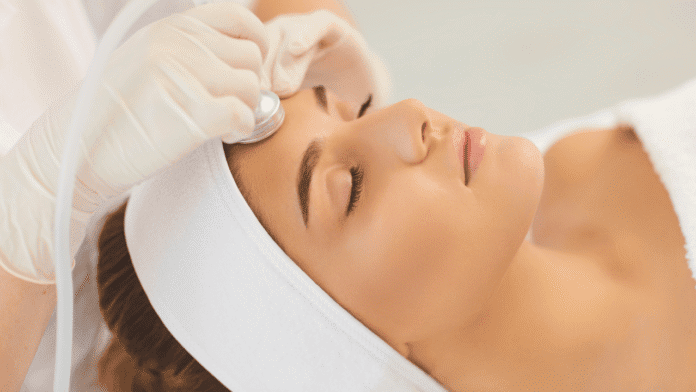
Microdermabrasion is a surface-level exfoliation treatment that removes some of the outermost dead skin cells with a crystal or diamond-tip device. The immediate payoff is usually softer, brighter-looking skin with a more polished finish. The catch is equally simple: results tend to be subtle and temporary, and stronger concerns usually need something more intensive.
This guide takes a beauty-editor approach rather than treating an exfoliating facial like a medical transformation. The useful questions are practical ones: how the appointment feels, what your skin may look like afterward, when to book it before an event, and whether the result is worth repeating.
| What to Know | Typical Expectation |
|---|---|
| Session length | Usually around 30–40 minutes for the face |
| Typical US cost | Often roughly $90–$350 per session in consumer-reported pricing; local quotes vary |
| Main goal | Smoother-looking texture and a brighter surface |
| Techniques | Crystal-based or diamond-tip exfoliation |
| Downtime | Usually none, although temporary redness or sensitivity can happen |
| Results window | Skin may feel smoother after one session; larger changes usually build gradually |
| Frequency | Can range from weekly to monthly depending on skin response and provider advice |
| Best suited to | Mild dullness, uneven surface texture and minor cosmetic concerns |
| Not suited to | Skin that is irritated, unusually reactive, or needs medical evaluation first |
| Upkeep | Gentle skin care and reliable sun protection |
Session length and recovery guidance align with the American Academy of Dermatology and Cleveland Clinic, while actual pricing can shift considerably with provider credentials, treatment area and location.
What Microdermabrasion Actually Is
Microdermabrasion is mechanical exfoliation performed with a handheld device rather than an acid solution or surgical resurfacing tool. It works at the skin’s outer surface, which is why the treatment can leave the face feeling polished without the recovery associated with deeper procedures.
How it works, in plain terms
With crystal microdermabrasion, fine particles move across the skin while suction collects the loosened material. Diamond-tip systems use an abrasive-tipped wand and suction instead. Both approaches are designed to remove superficial dead cells rather than intentionally reach deep skin layers.
That distinction matters. You’re not getting a dramatic resurfacing treatment disguised as a lunchtime facial. You’re getting controlled physical exfoliation. Done at an appropriate intensity, that can make roughness and dullness look less obvious and can leave makeup sitting more evenly across the surface.
How it differs from dermabrasion
The similar names cause more confusion than they should. Dermabrasion is considerably more aggressive and removes deeper layers of skin using a high-speed abrasive instrument. It can involve meaningful healing time. Microdermabrasion stays superficial and generally doesn’t require anesthesia or a recovery period.
If you’re mainly bothered by a tired-looking surface or minor texture, the lighter option can make sense. If you’re expecting it to erase deep scars or significant wrinkles, the treatment is being asked to do a job it wasn’t built to do.
Who Microdermabrasion Is Really For
The best candidate isn’t necessarily someone chasing flawless skin. It’s someone with a modest cosmetic goal who values a quick appointment and limited disruption. Dermatology guidance commonly discusses the procedure for dullness, uneven tone and texture, age spots, minor discoloration and other superficial concerns.
Skin types that tend to respond well
Skin that feels rough, looks flat under makeup, or has mild surface irregularity is where this type of exfoliation makes the most visual sense. The American Academy of Dermatology notes that dermatologist-performed treatment can be used across skin colors, though individual risk still depends on the person’s skin and history.
I wouldn’t book it simply because a facial menu promises “perfect pores.” Pores don’t disappear because a wand passed over them. The more realistic win is a cleaner-looking surface and a smoother tactile finish.
Who should skip it
Any questionable or changing skin spot deserves proper medical assessment instead of cosmetic exfoliation. The AAD also specifically recommends speaking with a dermatologist before spa or home microdermabrasion if you scar easily or have recently used isotretinoin.
Conditions that mean asking a professional first
Persistent redness, unexplained irritation, open or broken skin, unusual lesions, recent skin procedures, or anything being treated medically should move the conversation away from the spa menu and toward an appropriate licensed professional.
A cosmetic appointment shouldn’t become an experiment on skin that’s already unhappy.
Timing conflicts with other services
Recent waxing, peels and stronger exfoliating routines can matter because you’re stacking irritation on top of irritation. Cleveland Clinic’s preparation guidance, for example, advises avoiding certain exfoliating products and several other treatments before professional microdermabrasion.
This is also where event planning comes in. Don’t try a new resurfacing service the afternoon before engagement photos or a formal dinner. Even a treatment with little downtime can leave some people pink or sensitive for a day or two.
What Happens During a Microdermabrasion Appointment
A professional appointment is usually more routine than the machinery makes it sound. The skin is assessed and cleansed, the device is passed over the treatment area, debris is removed through suction, and soothing skin care commonly follows. A facial treatment itself often takes roughly half an hour.
Before you arrive
Providers may give different preparation instructions because your current products and recent treatments matter. That conversation is worth having before appointment day rather than while you’re already lying on the treatment bed.
What to do the night before
Keep things boring. Don’t decide that the night before your appointment is the perfect moment for an aggressive scrub or a home peel.
Your provider may ask you to pause particular exfoliating or retinoid products ahead of treatment. Follow their instructions instead of applying a universal internet schedule to your own skin.
What to bring and what to wash off
Arrive with the treatment area clean if that’s what the provider requests, and be ready to disclose the products and medications you’re using. The AAD specifically recommends discussing medications and relevant skin history during the consultation.
If you’re heading to the appointment from work, bringing a gentle sunscreen for afterward is far more useful than packing a full makeup bag.
The appointment, stage by stage
The sensation is often the biggest unknown for first-timers. Cleveland Clinic describes scratching, stinging, suction or vibration sensations as possible, but anesthesia generally isn’t needed for standard microdermabrasion.
The cleanse
Makeup, sunscreen, oil and surface debris need to be out of the way. This also gives the provider a clean look at what they’re actually treating rather than guessing through foundation.
The exfoliating passes
The wand moves methodically over the skin. Crystal systems propel fine abrasive material; diamond-tip versions make direct contact with the surface. Suction helps collect loosened cells and debris.
The suction that surprises people
This is the part people sometimes notice more than the abrasion. You’ll feel the skin being lightly pulled by the device as it travels.
More suction isn’t automatically better. If the technician is treating aggressiveness as a competition, speak up.
The finish
Once the passes are done, the face is cleaned and typically finished with moisturizing or soothing skin care. A dermatologist may also provide a post-treatment plan that emphasizes moisturization and sun protection.
How long it takes start to finish
AAD guidance puts treatment of the entire face at roughly 30 to 40 minutes, while the neck may take around 20 minutes. Added cleansing, consultation or spa extras can make the total appointment longer.
That makes it easy to fit into a normal day, but don’t confuse convenience with invisibility. Give your complexion breathing room if photographs or a formal event matter.
Results: Smooth, Polished Skin Texture and What to Expect
Microdermabrasion earns its place when your expectation is refinement rather than reinvention. Skin may feel smoother following the first treatment, while more noticeable cosmetic improvement can take repeated sessions. Both AAD and Cleveland Clinic describe a series of treatments as common.
The first day
The satisfying part is tactile. Freshly exfoliated skin can feel unusually smooth, which is why people often like the treatment ahead of makeup-heavy occasions.
The less glamorous possibility is pinkness, mild swelling, dryness or sensitivity. Those reactions are generally short-lived, but they make same-day scheduling before a major event unnecessarily risky.
Week one to week four
Once any initial sensitivity settles, the result becomes less about that freshly polished feeling and more about whether the overall texture appears cleaner and more even.
For a wedding, professional shoot or major interview, I’d rather see someone test the service well in advance and learn how their skin reacts. If they already know microdermabrasion suits them, the final timing should still follow their provider’s advice rather than chasing a last-minute glow.
That also helps with wardrobe planning. A treatment extending to the neck or upper chest may be relevant before a strapless dress, open-collar shirt or low neckline, but only if those areas have already been assessed as appropriate for treatment. Cleveland Clinic lists the neck, chest and other body areas among possible treatment sites.
Where expectations run ahead of reality
This isn’t a deep scar eraser. It isn’t a facelift. It doesn’t permanently stop skin from aging, and the visible effect isn’t permanent. Cleveland Clinic notes that results vary and build over time, while the AAD describes maintenance treatments as commonly necessary.
That’s the part marketing photos tend to bury.
Cost, Frequency and Booking
Microdermabrasion pricing makes more sense when you calculate the possible series rather than staring at the single-session number. Consumer-reported US pricing on RealSelf currently lists an average around $177 with a reported range of roughly $90 to $350, but provider, location and treatment area can all shift the bill.
What it typically runs and why prices swing
A dermatologist’s office in a high-cost city may quote differently from an esthetician at a salon. Credentials, geography, treatment area and the exact service format all affect pricing. The American Society of Plastic Surgeons likewise notes that practitioner qualifications, procedure type, time and location influence cosmetic resurfacing fees.
Ask whether the quote is for microdermabrasion alone or bundled with masks, extractions, serums or other facial services. That’s how a supposedly simple price comparison gets messy.
How often to repeat it
There isn’t one schedule everyone needs. AAD says treatment may be performed weekly, every two weeks or monthly depending on the goal, while Cleveland Clinic notes that repeated sessions are often used before moving into maintenance.
I go back and forth on packages for this reason. A package can lower the effective session cost, but buying six appointments before seeing how your skin responds once is backwards.
Questions to ask before you book
Ask who performs the treatment, what technique they use, what result they consider realistic for your skin, what reactions you should expect, how many appointments they anticipate, and what the full cost will be.
Those are close to the questions dermatology and plastic-surgery organizations encourage patients to raise before treatment.
Aftercare That Actually Protects the Result
The finish can look good immediately, but freshly exfoliated skin isn’t the moment to prove how many active products you own. Gentle care and sun protection matter more than trying to intensify the treatment at home.
The first 24 hours
Follow the instructions given by your provider. Moisturizer and sun protection commonly feature in post-treatment guidance, while redness or sensitivity can persist temporarily.
If you have a photo shoot the next morning, this is why doing a trial appointment weeks earlier was smart. You’ll know whether your own skin looks camera-ready the next day or needs longer.
The rest of the cycle
Once everything feels normal again, return to your routine according to professional guidance rather than piling exfoliation on top of the treatment.
Products to pause
The exact pause depends on your products and skin. Strong exfoliating acids, scrubs or prescription actives shouldn’t be restarted according to an arbitrary social-media timetable.
Ask the provider who examined your skin.
Habits that undo the work
Excess sun exposure is the obvious one. Both AAD and plastic-surgery guidance emphasize sun protection after microdermabrasion because treated skin can be more sensitive.
Over-exfoliating at home is the other trap. Polished skin doesn’t need to be polished again the same evening.
Risks, Side Effects and Sensible Caution
The common short-term downsides are decidedly unglamorous: redness, slight swelling, dryness, tenderness, bruising or increased sun sensitivity can happen. Pigment changes are another consideration for some people. Persistent, severe or unusual reactions belong with a licensed medical professional, not a DIY troubleshooting thread.
Pregnancy-related questions, medication concerns, allergic reactions, changing moles, open skin and ongoing medical skin problems should be discussed with an appropriate healthcare professional before treatment.
And if you’re choosing between a casual spa and a qualified professional for skin with a complicated history, credentials matter more than candles and a nice waiting room.
At-Home Versions: What Works, What Doesn’t
Home microdermabrasion devices can provide mechanical exfoliation, but they shouldn’t be treated as interchangeable with professional treatment. The AAD specifically notes that dermatologist-performed microdermabrasion goes deeper than home kits.
The useful ceiling at home is modest surface smoothing. That’s fine. It may be all you wanted.
The mistake is increasing passes, pressure or frequency because one treatment didn’t create an airbrushed result. More abrasion can mean more irritation, not more sophistication. Follow the device instructions, avoid compromised skin, and get professional advice when you’re uncertain whether exfoliation is appropriate.
Where Microdermabrasion Gets Oversold
Microdermabrasion gets oversold whenever a simple exfoliation treatment is marketed like reconstruction. Deep scars, substantial wrinkles and major textural changes sit beyond the realistic promise of a superficial procedure. Even reputable clinical guidance stresses that repeated treatments may be required and that results are temporary.
Who wastes money on it? Usually the person chasing a dramatic correction from a deliberately gentle treatment.
For someone who mainly wants smooth, polished skin texture before makeup, a well-chosen professional session can be satisfying. For someone whose issue is ordinary dryness or a little dullness, a consistent gentle skin-care routine may deliver much of the cosmetic payoff for far less money. And for deeper concerns, spending repeatedly on weak treatment can cost more than getting the right professional assessment at the beginning.
Frequently Asked Questions
Microdermabrasion sounds simple until you start comparing appointment timing, makeup, maintenance and other exfoliating treatments. These are the questions worth settling before you put down a deposit.
Does microdermabrasion hurt?
It generally doesn’t require anesthesia. You may feel scratching, vibration, stinging or suction as the device moves over the skin, but Cleveland Clinic describes the procedure as typically not painful. Sensitivity varies, so tell the provider immediately if the treatment feels excessively uncomfortable.
How long does a microdermabrasion facial take?
Treating the full face generally takes about 30 to 40 minutes according to the AAD. The complete appointment can run longer if consultation, cleansing, masks or other facial services are added around the actual exfoliation step.
Can microdermabrasion give smooth, polished skin texture after one session?
It can make skin feel softer and smoother after the first treatment, but the degree of visible change varies. More substantial improvement often requires multiple sessions, and neither AAD nor Cleveland Clinic presents the result as permanent.
Can I wear makeup after microdermabrasion?
Because temporary redness and sensitivity can occur, follow your provider’s instructions on makeup rather than assuming your normal routine is appropriate immediately afterward. If makeup performance is the reason you’re booking the treatment, test your skin’s reaction well before the important event.
How long does redness last after the treatment?
Some people have little visible reaction, while others develop pink or red skin and slight swelling. AAD says these effects may resemble mild sunburn or windburn and can last around a day or two in some patients.
How often should I get microdermabrasion?
Frequency depends on your skin and cosmetic goal. Dermatologists may schedule treatments weekly, every two weeks or monthly, and some people move to periodic maintenance after reaching the result they want. Your skin’s response should determine the schedule rather than a prepaid package.
Is microdermabrasion the same as dermabrasion?
No. Dermabrasion is a much deeper resurfacing procedure with considerably more recovery, while microdermabrasion works superficially and usually has little or no downtime. The shared word in their names makes the treatments sound closer than they are.
How far before a wedding should I book microdermabrasion?
Don’t make the first appointment immediately before the wedding. Because redness and sensitivity are possible, try the service well ahead of the event and learn how your own skin behaves. Once you know your response, ask your provider to recommend timing for the final pre-event session.
Are home microdermabrasion kits as effective as professional treatment?
They shouldn’t be assumed to deliver the same treatment depth. The AAD states that dermatologist-performed microdermabrasion goes deeper than home treatment. A home device may still provide surface exfoliation, but expectations and technique should remain conservative.
Is microdermabrasion worth the money?
It can be if your goal is subtle surface refinement and you accept that maintenance may be required. It’s harder to justify if you’re expecting dramatic correction of deep texture. Before booking a series, pay for the right goal: ask what one session can realistically change on your skin.
A good booking call should end with one question: “Based on my skin, what result do you realistically expect from one session, and what should I stop using beforehand?” If the answer sounds measured rather than miraculous, you’re probably having the right conversation. Then book only when the timing leaves room for your skin to settle before the occasion that matters.
Premium Skin Treatment Reports
Expert guides to facials, chemical peels, resurfacing treatments and modern skin-renewal procedures.